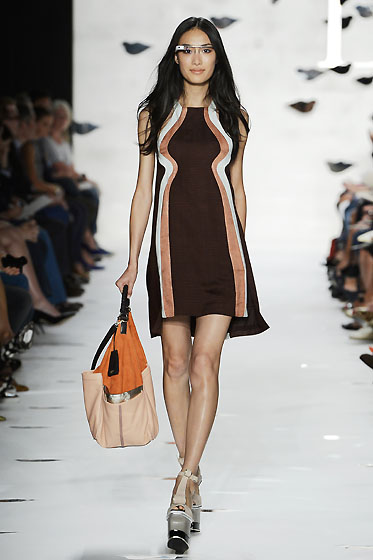
When Diane von Furstenberg and her models walked the runway at NYC’s recently concluded Fashion Week, they decided to give the world an inside peek at how it feels by recording the experience with Google Glass, the still-in-Beta avant-eyewear.
The innovative accessory shoots video, snaps pix, streams messages, and apparently looks good, so Diane decided to snap on the specs and take you with her (and her posse) on a fashion-tech flashbulb-popping stroll.
What’s cooler than Diane’s embrace of the new? Her Spring/Summer 2013 collection and her attitudes about life, potential, and empowerment. Take a look. Thanks, Diane!
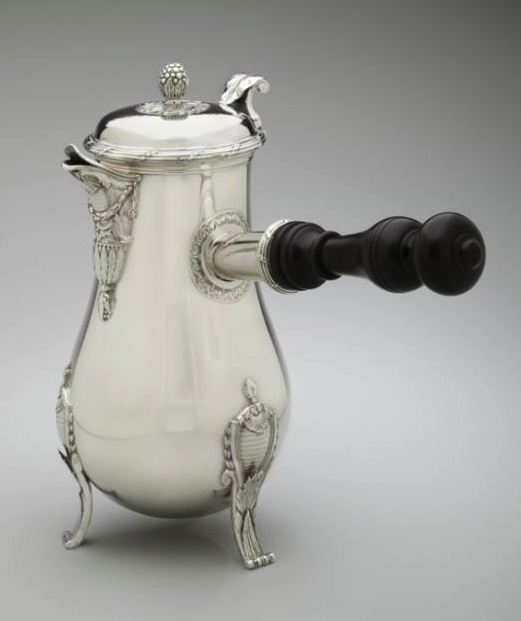
Silver coffeepot by Jacques-Nicolas Roettiers (1775-1776) sold by Gouvernor Morris to Robert R. Livingston, his successor as minister to France. NYHS, Gift of Mr. Goodhue Livingston
The New York Historical Society has done it again, hauling out all sorts of ornate, expensive, lovely silver items to tell the City’s history in the soon-closing exhibition Stories in Sterling: Four Centuries of Silver in New York.
Every time you peer into the reflections of dozens of silver pieces, the curators draw you into an historic event, person, or point in time in our collective urban history – silver brandywine bowls used by 1700s Dutch women to celebrate new babies, silver German medals modified into “passports” for travelers crossing Indian land in the 1750s, a silver coffeepot sold by Gouverneur Morris in 1801 to Robert Livingston after Thom J turned it down, and an elaborate 1863 Tiffany sugar bowl presented to the heroic engineer manning the guns on the Monitor in its showdown with the Merrimac the year before. Take a look at the on-line gallery.
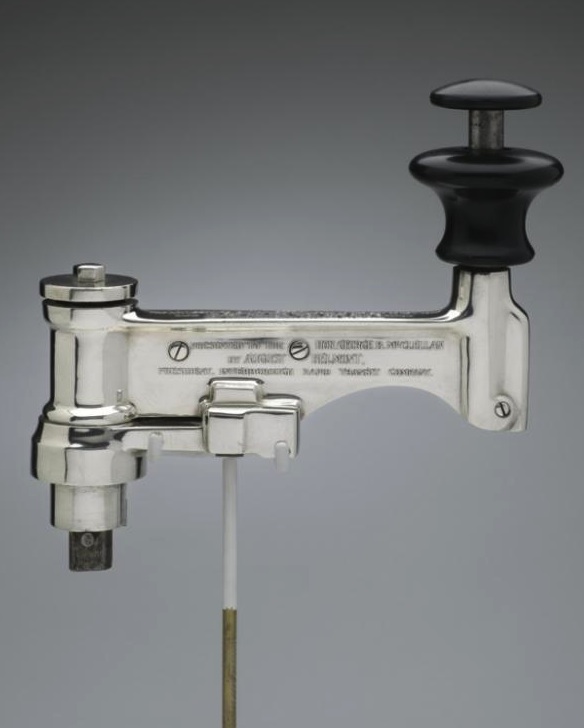
Silver subway controller handle (1904). NYHS, Gift of George B. McClellan, Jr.
Did you know that consumer culture of the 1880s required that up-to-date Victorian families have specialized serving implements and devices for every food imaginable? To prove this point, NYHS features just a smidgen of the 381 silver dinner service items presented to Commodore Perry in 1885 by the City’s Chamber of Commerce as thanks for his success in opening up trade with Japan — silver berry spoons, asparagus tongs, mustard spoons, nutpicks, bonbon dishes, and a zillion other things.
Most unexpected item: the Tiffany silver subway control handle that Mayor George B. McClellan Jr. used to drive our first subway train in 1904. He was supposed to take the IRT only as far as 42nd Street, but couldn’t let go of this slice of silver until he reached 103rd .
But what happens when the party ends? That question is what inspired two curators from Saratoga Springs to create a micro-show from fashion museum cast-offs — Tattered and Torn (On the Road to Deaccession).
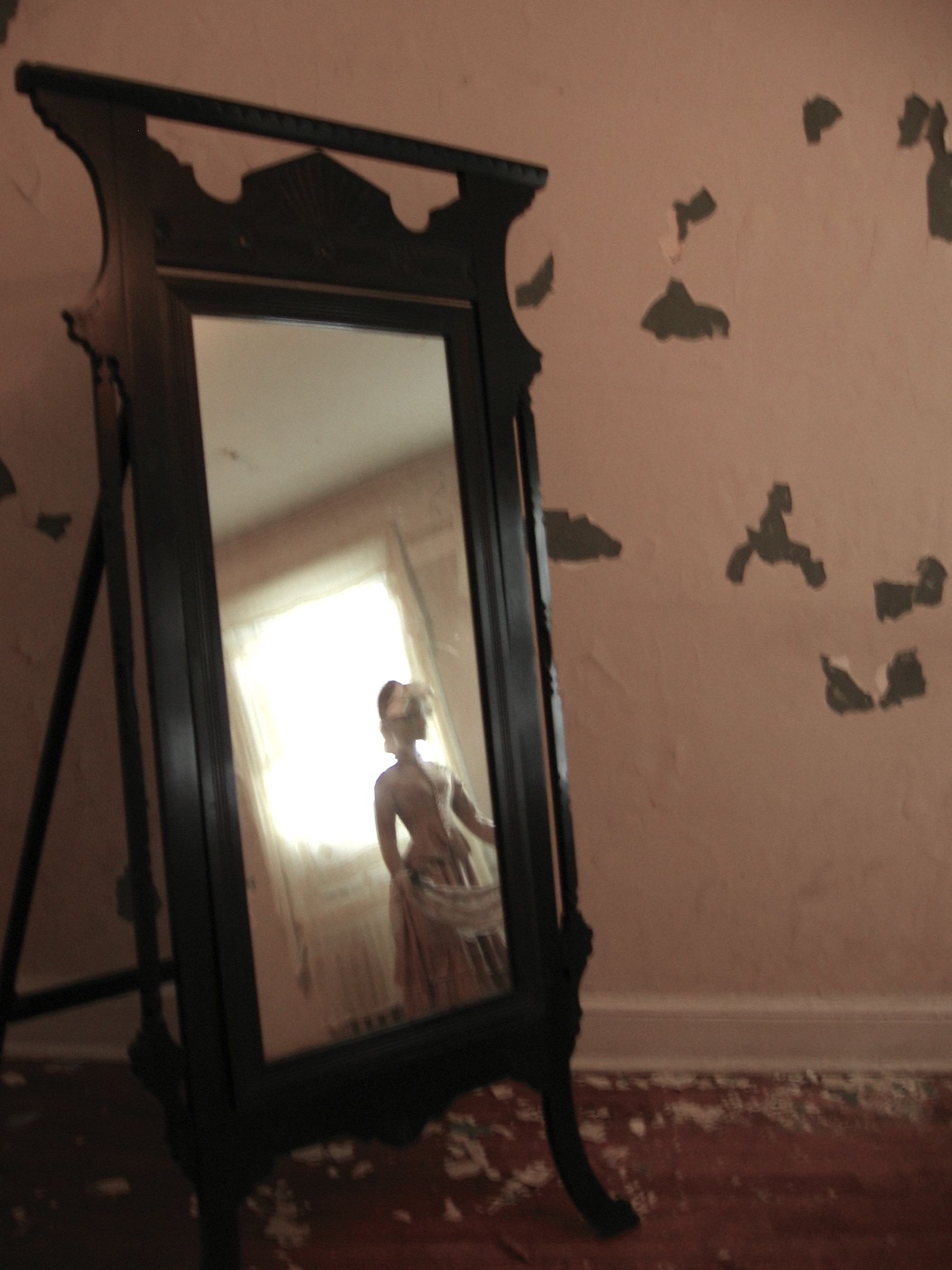
Empire Historic Arts Fund (founded by curators Rodney DeJong and Michael Levinson) gathered together less-than-perfect examples of 19th-century couture and used the abandoned rooms of the Governor’s Galleries on Governors Island to evoke the passage of time for fashion, finery, and fanfare. Rooms that once housed the U.S. Coast Guard as recently as the 1960s felt far older, perhaps due to the dreamlike state evoked by the presence of peeling paint, claustrophobic rooms, and props with which the curators surrounded their proud mannequins.
When you enter, the dresses look glamorous, but upon closer inspection, you can see that the silk has peeled away, seams have come apart, and the total elegance that must have accompanied these dresses’ debuts has passed into history. Take a look.
Considering the $250 budget for this installation, the curators have done a fine job of paying tribute to the history of fashion, creating a memorable experience on the Island, and letting us meditate on the still-beautiful details of fabric and design up close in a quiet place.
(The show is tucked away the far east side of the Island, beyond the Parade Ground, in Building 315 facing the Brooklyn waterfront. It’s the last building on your way toward Yankee Pier.)
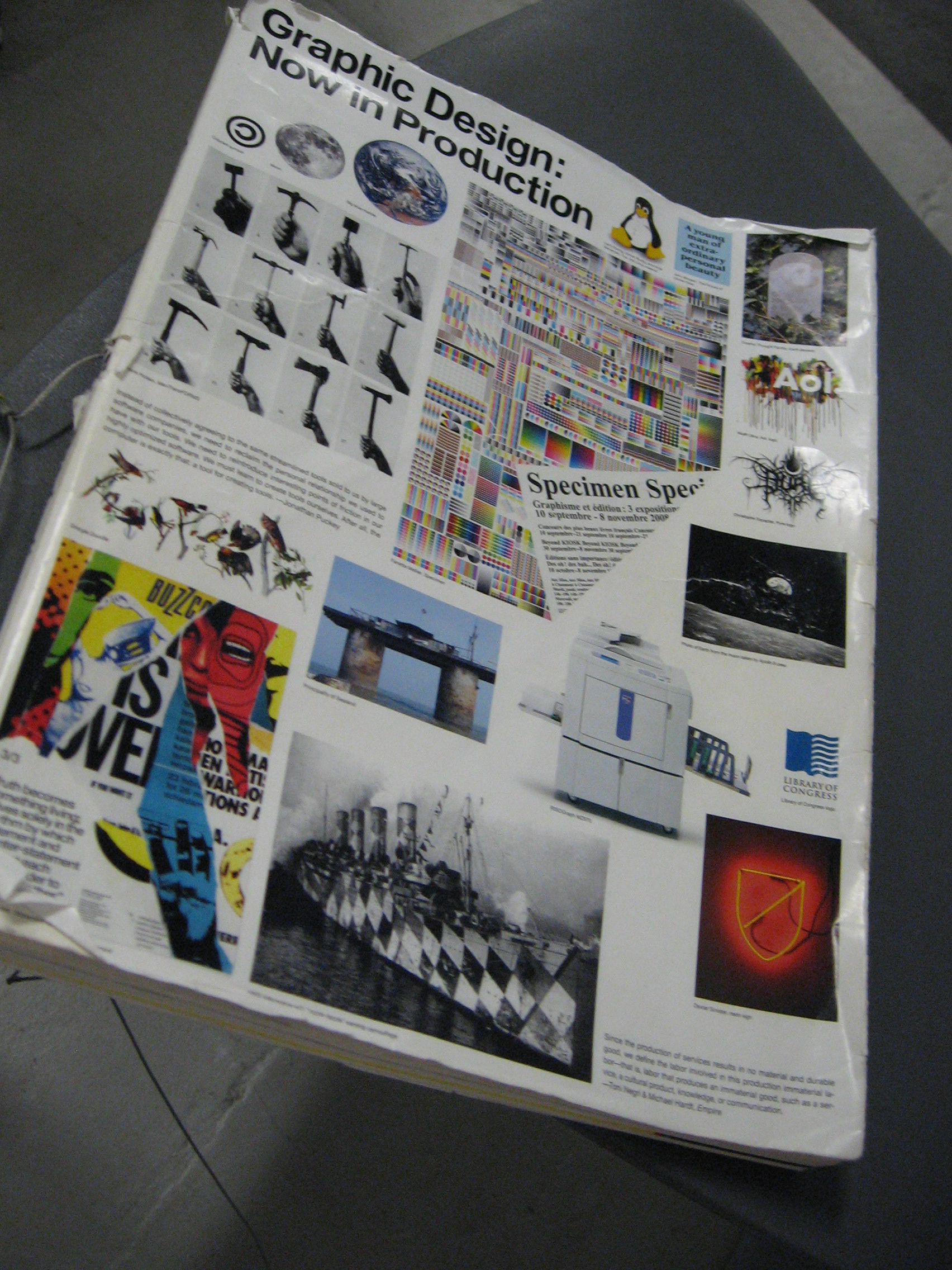
Let me guess. You didn’t get to see the spectacular design show that ended yesterday on Governor’s Island. While their mansion up on 91st Street is being renovated, The Cooper-Hewitt (a.k.a. Smithsonian) outdid itself by mounting a show inside Building 110 on New York Harbor’s hottest party-picnic location.
Graphic Design: Now in Production gathers great design produced since 2000 to feature what creative minds are offering. The summertime crowd loved it, and people flowed right from the ferry into the show and through the aisles where works were grouped around themes like storefronts, branding, typography, and print (it lives!). Check out the action on the Flickr feed.
The show is vibrant, interactive, mind-blowing, provocative, and fully documented in a 10-minute walk-through video with the curator Elleln Lupton that pretty much replicates the experience.
If you’re in LA, the show opens September 30 at UCLA’s Hammer Museum before migrating in 2013-2014 to Grand Rapids, Houston, Winston-Salem, and RISD.
Among our favorites are Brand New’s display, which asks visitors to vote (“before” or “after”) on redesigned corporate logos, and CognitiveMedia’s “RSA Animate: Changing Education Paradigms.”
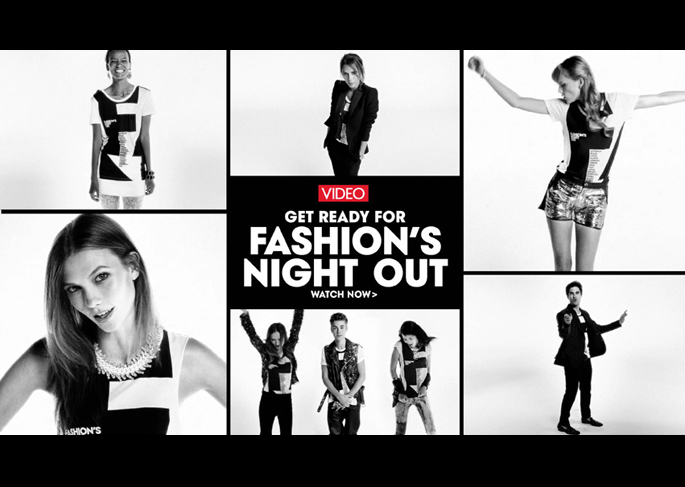
Better use the holiday weekend to rest up, since Fashion’s Night Out happens next Thursday!
The tents are going up at Lincoln Center, the stores are getting ready for the onslaught, and the NYPD is gearing up for crowd control everywhere in the City.
Check out the New York event listings at the web site, or (if you’re not in NYC that night) the FNO worldwide or elsewhere US sites. Hey, there are even events planned in Wyoming and online, so there’s no excuse not to shop, contribute to a cause (by buying stuff from the collection), and have fun all night!
If you’re in NYC, start early, have a strategy, and be prepared for crowds. The web site lets you sort the 800-plus events by neighborhood, shopping category, and the type of event you’re hankering for (pop-ups, fashion shows, new product launches, charity-focused, DJs, designer appearances, and block parties).
When the Brooklyn Museum invited four artists into their period rooms for Playing House, who knew that one would be channeling her own family history, complete with her ancestors’ dramatic flight to America over 380 years ago and a tribute to the first girl in her family born in New Amsterdam?
Mary Lucier’s video Still Life #1 atop the table inside the 1675 Jan Martense Schenck House in the Brooklyn Museum
Mary Lucier created a compelling multipart installation above, around, and inside the Jan Martense Schenck House (1675), which stood in Brooklyn for about 275 years and is currently the oldest “home” in the gallery. Lucier evokes the 1572 persecution of the Huguenots in Europe through a clip from D.W. Griffith’s Intolerance overhead, and invites visitors to sit in a modern replica of an old Dutch chair to watch a slide presentation about the Rapaljie family – a story that also happens to be her own.
The chronology takes you graphically from the religious wars in Europe to a 19-year old couple who escaped, to their colonization of Albany in 1624, and to the 1625 birth of their daughter Sara at their homestead in Wallabout Bay (now the Brooklyn Navy Yard). Lucier’s video installation inside the older Schenck house evokes New Amsterdam; her transformation of his grandson Nicholas’s house (right next door in the gallery) depicts the faces and stories of Sarah’s over one million current descendants 380 years later.
Take a look at my Flickr feed to glimpse installations by Lucier, Ann Agee, Ann Chu, and Betty Woodman. Then go to Brooklyn’s site to see all four at work installing their art in the period rooms.
When the 1675 Jan Martense Schenck House stood in Brooklyn. From the digital archive of the Brooklyn Museum of Art
Don’t despair if you haven’t gotten to the Met’s Costume Institute show Schiaparelli and Prada: Impossible Conversations. The Met’s put up a spectacular web site that lets you in behind the scenes, around the dining table, and inside the head of everyone’s favorite fashion icon, Iris Apfel.
If you get to the gallery this week before the show ends, expect large crowds (“normal” large, not like McQueen). Hopefully you’ll get close enough to the clothes to check out Schiaparelli’s innovative tree-bark rayon. If you can’t get there, preview the exhibition set-up on line, and go take the curator’s walk through (the second video from the top).
You can look through some of the images that the Met is sharing on line, but they don’t feature some of the in-person eye-poppers – the blue-squiggled Schiaparelli bridal veil on loan from Philadelphia, a color photo of Schiaparelli’s gold sari dress and veil (although the Horst photo is great), or Prada’s stuff with monkey and banana prints. [Prada quote: “I never thought people would want to wear clothes with monkeys and bananas on them.”]
One of the biggest complaints visitors have about the show is that it’s so hard to see and hear the “conversation” videos between Prada and Schiaparelli (played by Judy Davis, and, yes, someone did ask me “who played Prada?”). Not a problem, because all eight conversation videos are posted online (scroll to the bottom of the page).
If you have an extra hour in front of the computer, here’s the added bonus: the video of Iris Apfel discussing good and bad taste in contemporary fashion at the Met last June. Who doesn’t want Iris’s amazing perspective on style?
If you don’t have the time, just check out The Rules by Elsa Schiaparelli, courtesy of Philadelphia’s 2005 exhibition site. Agree? Disagree? Well, maybe you’ll concur with Prada’s side of the conversation.
During the summer heat wave, there’s a way to cool down in Chelsea and let the team from the Science Gallery at Trinity College challenge you to think differently about the splashing water you take for granted.
Take advantage of the final weeks of Surface Tension: The Future of Water at Eyebeam Art & Technology Center on West 21st Street, an incubator for digital art/design experimentation. For the past two-plus months, they’ve hosted an exhibition (first curated in Dublin) on the social-economic-political tensions created by water scarcity.
As soon as you walk into Eyebeam, you’ll be struck by the plethora of infographics that show you just how much water bounty that we have in the United States versus the availability and consumption per capita in the rest of the world. What’s your water footprint?
One of the ways you’ll find out is by looking at The Virtual Water Project, a celebrated infographic by German designer Tim Kekeritz, that depicts everyday objects and the amount of water required to produce them. Download the iPhone app. For $1.99, it will blow your mind (but not your budget) and continue to deliver a truly a conscious-raising experience of epic proportion.
Another unforgettable experience is Bit.Fall by artist Julius Popp, an installation that translates words from Internet newsfeeds into bits that are reconverted into a stunning waterfall of words:
There’s so much great stuff: multiple takes on water consumption, conservation, next-gen thinking, third-world innovations, and art-meets-technology solutions. Like Tele-Present Water by David Bowen, which recreates actual water movements from NOAA data being collected from a random buoy out in the ocean.
If you can’t get over to Chelsea for an hour, just click through the thought-provoking objects, artworks, design solutions, documentaries, and thought pieces by the scientists, artists, engineers, and designers whose works are on display on the Dublin microsite.
Unfortunately, the show has closed: The Great American Revue exhibition at NYPL’s Library of Performing Arts at Lincoln Center ended its run last weekend.
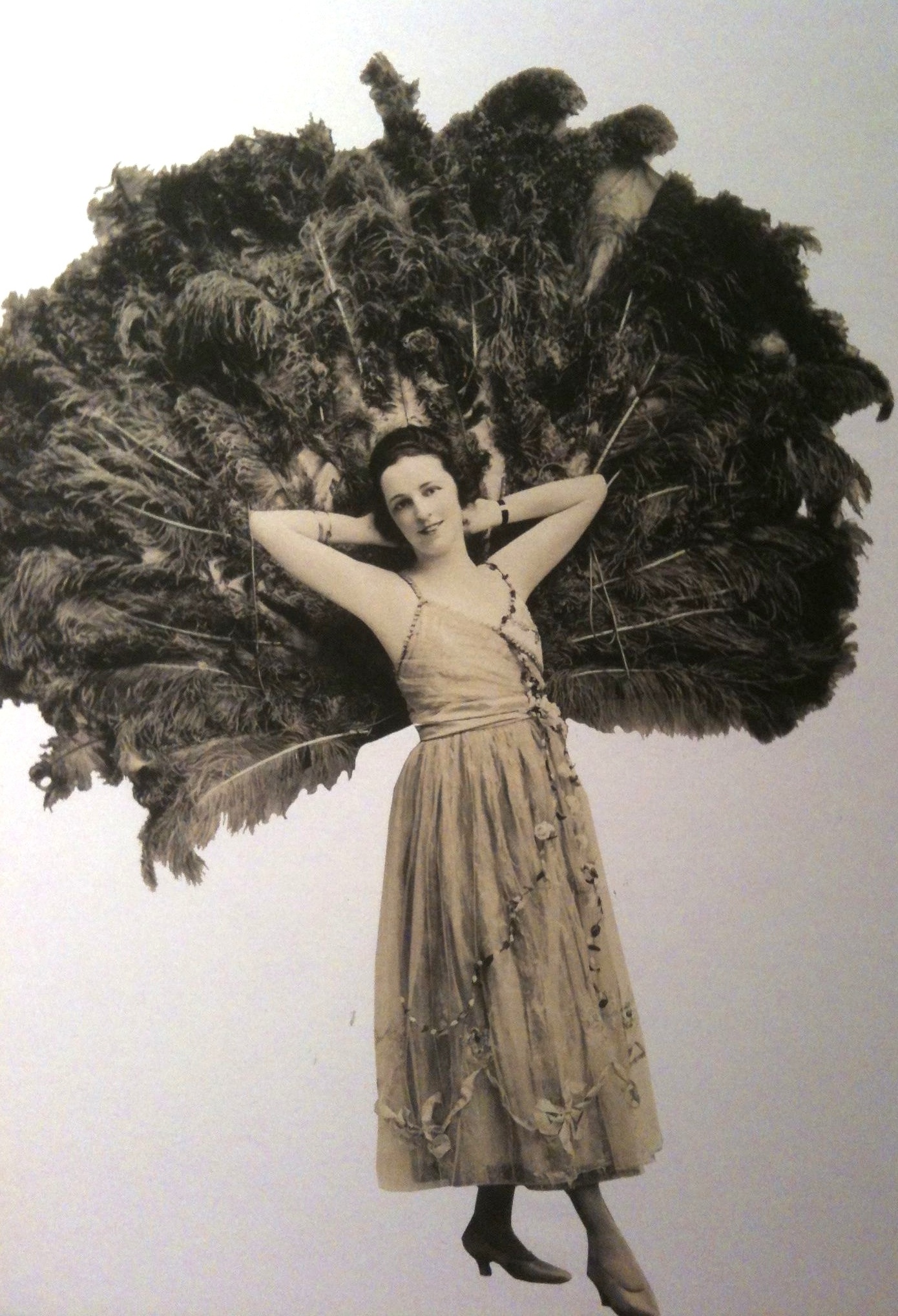
Performer in one of The Passing Show revues (1912-1919), which spoofed politicians and Broadway shows (kind of like “Forbidden Broadway”)
Today, Broadway pretty much consists of musicals and dramas, but back in the day, the “tired businessman” was entertained by chorus lines, comics, impersonators, satirists, and the best songwriters. (Think Cohan, Berlin, Rogers & Hart.)
Perhaps the note found in the archives inside a Follies costume swatch book sums it up: “Costume designs are attached. Lyrics will be written if you are interested.”
This terrific NYPL show explored how follies and revues evolved between the years 1902 (the dawn of the Hammerstein Roof Garden shows) to 1938 (when topical revues of the Great Depression, such as Pins and Needles made their mark).
The curators’ chronology and commentary is brilliant, chronicling the four stages of development: beginnings, experimenting with formats, celebrating the “body as performance”, and the emergence of political satires (1930s). (Download the show’s mini-program to get the Cliff Notes version.)
Chorus line from Earl Carroll’s Vanities (1923-1940), which featured the Most Beautiful Girl in the World
Who knew that the original Hippodrome was also built by the team that built Coney Island’s Luna Park? Who knew that George White invented “souvenir programs”? Who knew that Martha Graham got her start in settlement-house venues way back when the Neighborhood Playhouse was at the Henry Street Settlement? Who knew that audience participation shows and mini-revues on rooftop eating-drinking gardens predated the Brooklyn Bowl mash-up by 100 years?
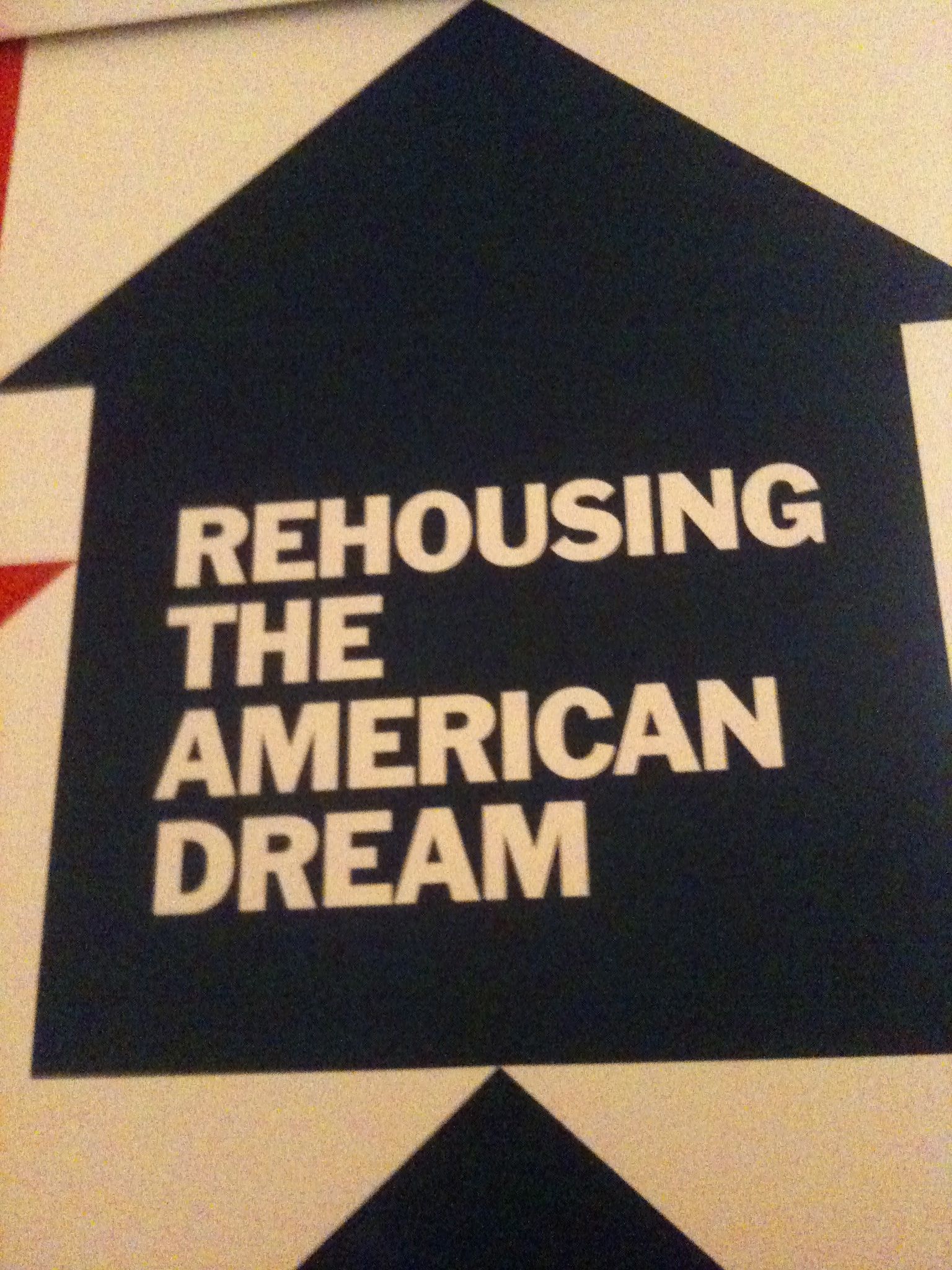
You’ve seen Danny Boyle transform the Olympic stadium from a 19th Century industrial landscape into the digital home of today. What happens when you give a 21st century design team the chance to do the same with Chicago’s suburban industrial wasteland?
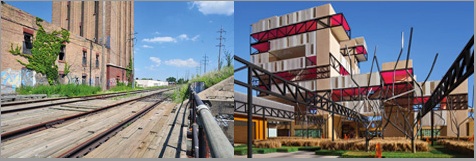
The proposed transformation of Cicero’s abandoned railside factories into a 21st century village where people work and live is particularly interesting. Abandoned factories currently take up 30% of Cicero. What if you redesigned it and let people buy only the parts of the home they need (vs. everyone living in a brick bungalow with a yard)? See the video and solution by Studio Gang Architects.
Also, check out WORKac’s creation of “Nature-City” in a down-and-out Oregon suburb, Keizer. What happens when you integrate organic farming businesses and wildlife crossings into a village? Or MOS’s proposed transformation of The Oranges, New Jersey from a grid to a walking city.








 itsnewstoyou