Gus Baumann’s Legacy of Art and Fun in Santa Fe

Gus Baumann, America’s greatest master of color woodblock prints, never considered himself a fine artist. Nevertheless, his prints, sculptures, paintings, commercial art, furniture, and marionette stages fill four galleries in his grand retrospective at the New Mexico Museum of Art – Gustave Baumann: The Artist’s Environment, on view through February 22, 2026.

Demand for Gus’s intricate block-printed sun-dappled Western landscapes from the 1920s through the 1950s still runs high. So, it’s a treat to learn how Gus achieved such a high degree of technical proficiency early in his career, lived Arts and Crafts philosophy, relished immersion in art colonies, and found his family in Santa Fe.
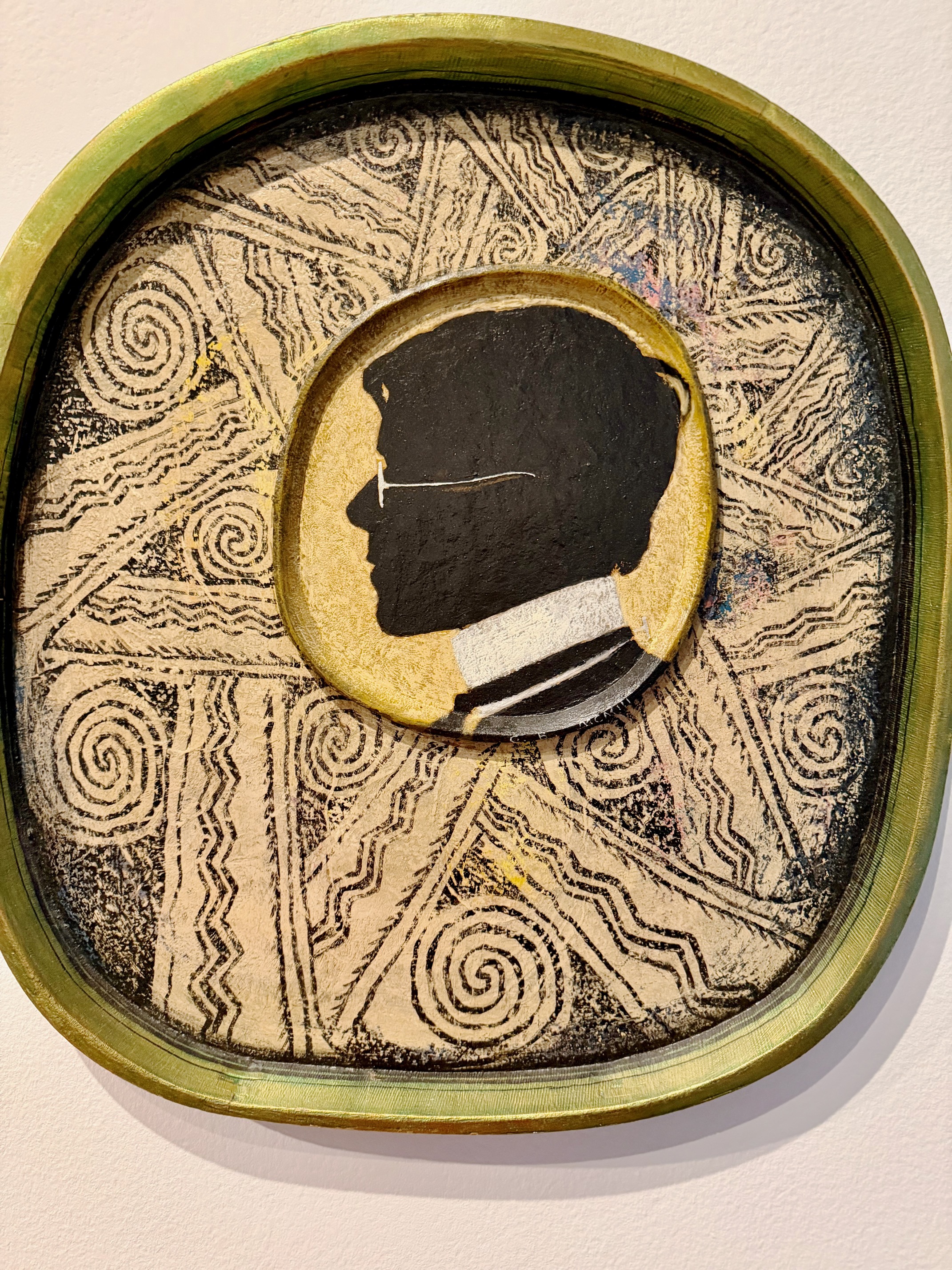
Gus Baumann’s 1903 oil Self-portrait (Silhouette) painted in his Chicago studio; reworked in Santa Fe after 1920 with a border inspired by Mimbres pottery.

See some of our favorites in our Flickr album.

Although Gus was born in Germany in 1881, his family emigrated to Chicago when he was around ten. His father was a craftsman and woodcarver, and it left an impression.  The first themed section of the exhibit – “Finding His Way”– gives a glimpse into his family background, early commercial art work, wood carving expertise, and furniture he designed later in the 1930s.
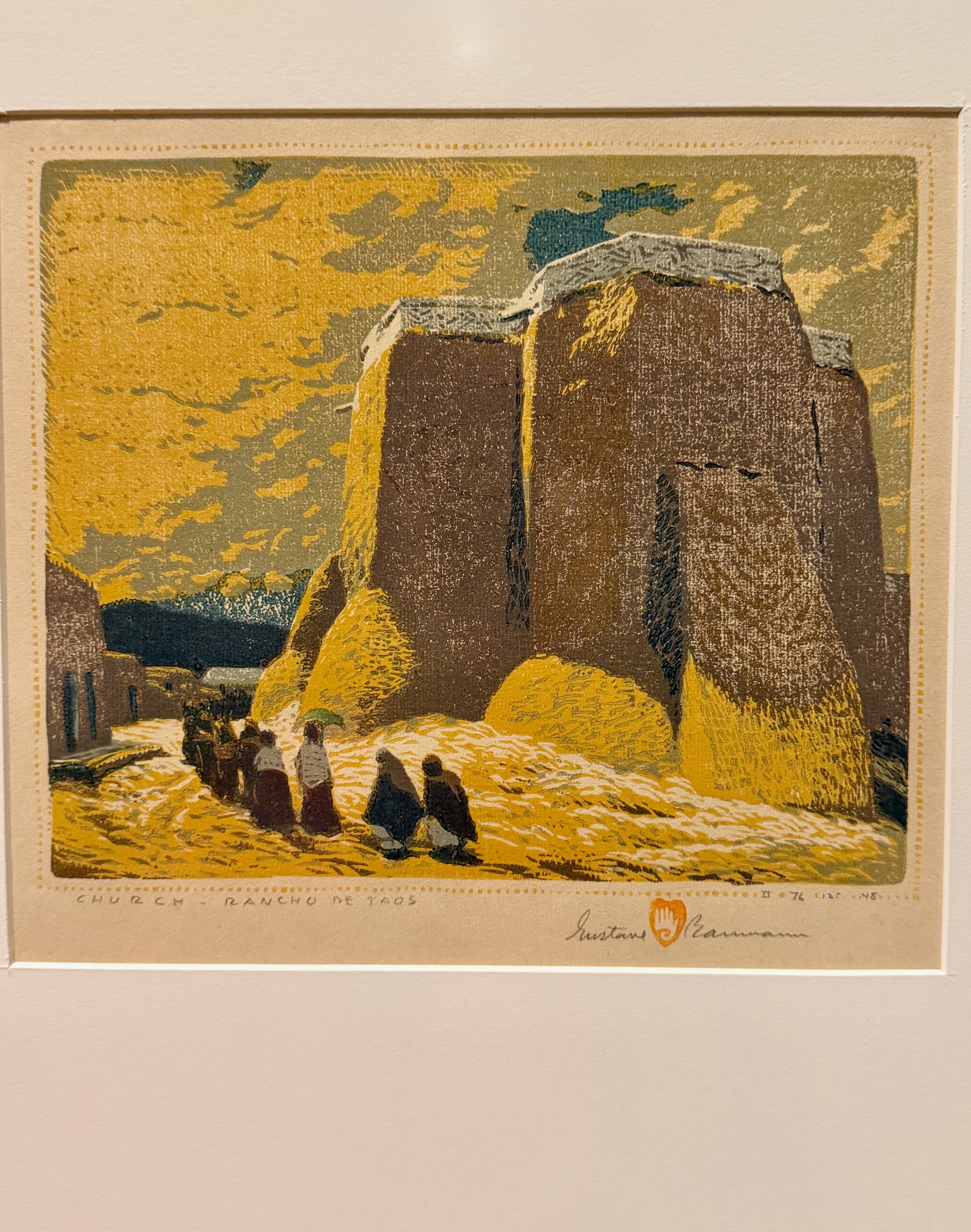
Gus Baumann’s 1919 color woodblock print Church Ranchos de Taos – one of the first modern artists to depict this iconic church; printed in 1948.
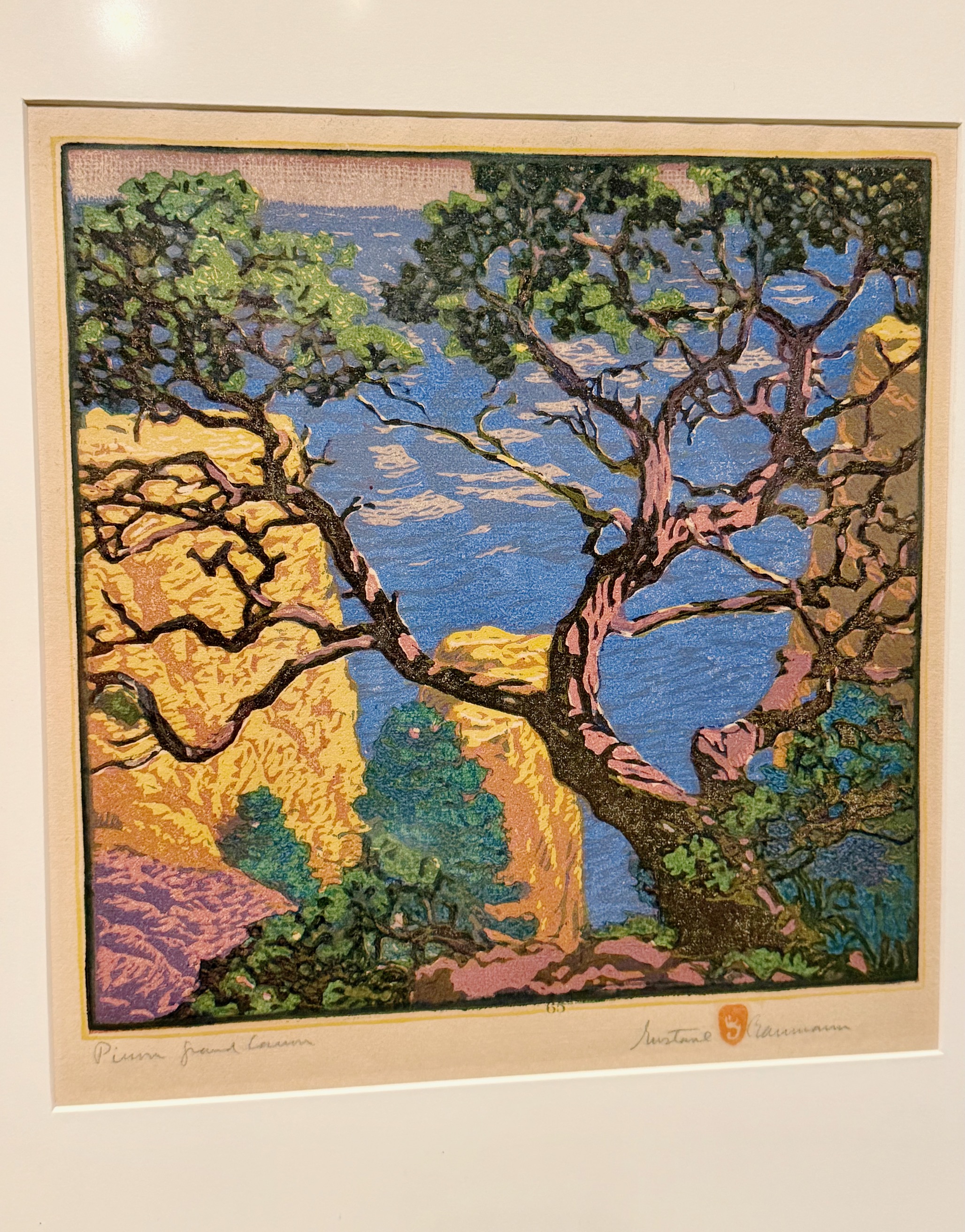
Gus Baumann’s 1921 color woodblock print Piñon Grand Canyon – one of four landscapes created after his first visit.

When he was 17 and his dad left the family, Gus had to find work to help his mom make ends meet.  He worked full time at a Chicago wood-engraving shop that cut illustrations for books, magazines, and newspapers. When he was 20, Gus opened his own wood-engraving studio.

To fine tune his skill, he attended Munich’s Royal Arts and Crafts School for a year to learn from the best German color wood-block print masters – a move that chose traditional skills over academy fine-arts training. When he returned to Chicago, he opened Baumann Graphic Art Service.
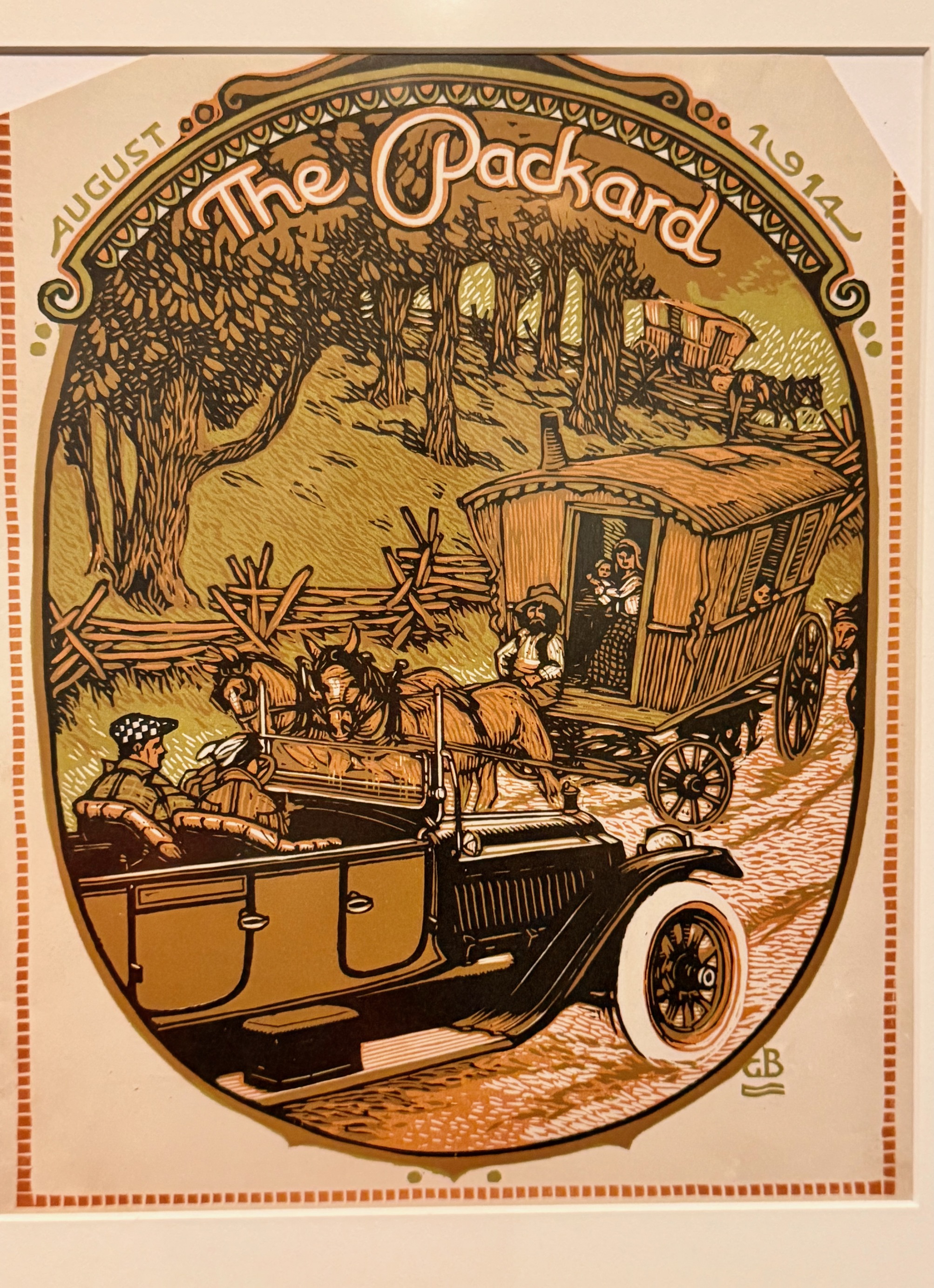
Gus Baumann’s 1913 Illustration for a Calendar: The Packard Car Motor Company, August 1914 – one of four he created for Packard.
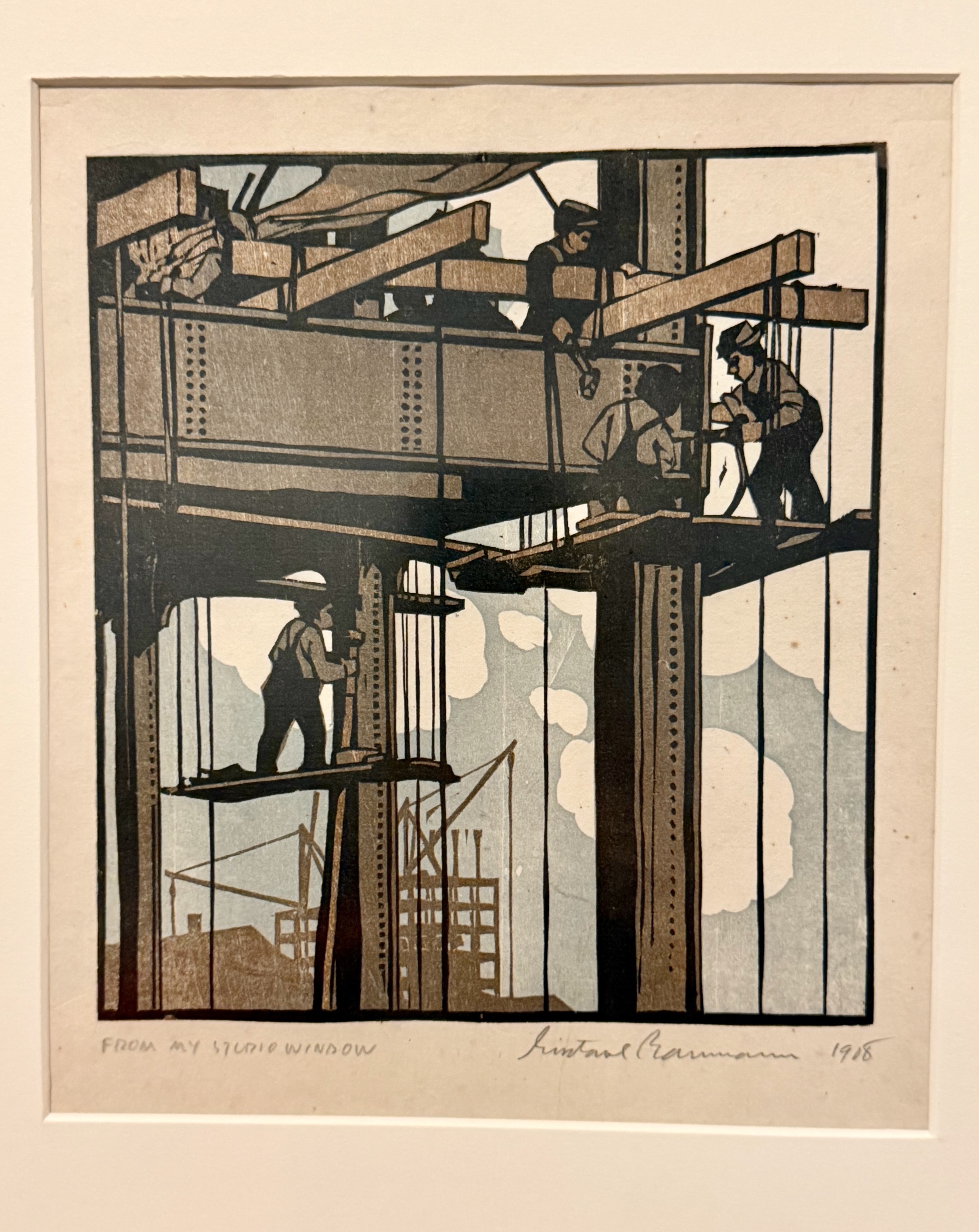
Gus Baumann’s 1908 color woodcut From My Studio Window in downtown Chicago –the high-rise McCormack Building going up on South Michigan Avenue.

Although Gus found success, his love of craft and traditional printmaking methods drew him to an art colony in Nashville, Indiana that revered traditional crafts and a slower pace of life.  The second section of the exhibition – “A Rolling Stone” – highlights work he did in Munich, his acclaimed print series featuring Indiana craftsmen, coastal life in Provincetown, and the electricity he felt in New York.
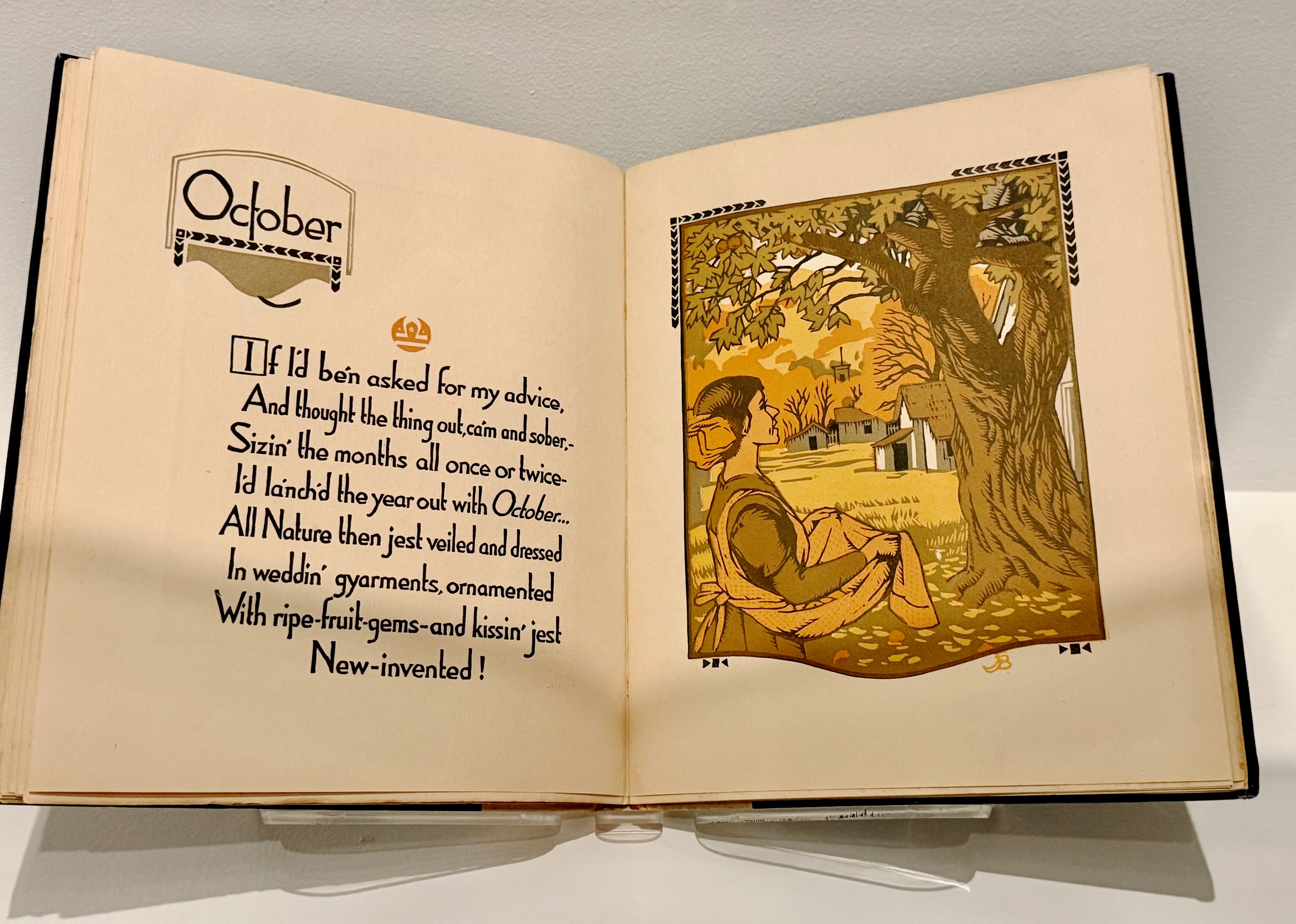
Gus Baumann’s 1912 book All the Year Round – woodcut illustrations and poetry James Whitcomb Riley, featuring scenes of daily rural life for each month of the year.

But his life would change forever when he traveled West and landed in New Mexico in 1918. Due to his reputation as an award-winning printmaker, Santa Fe welcomed him with open arms. Gus was struck by the unique Hispanic and Pueblo ways of life, the beauty of the Southwest, and the growing art colony in Santa Fe. 
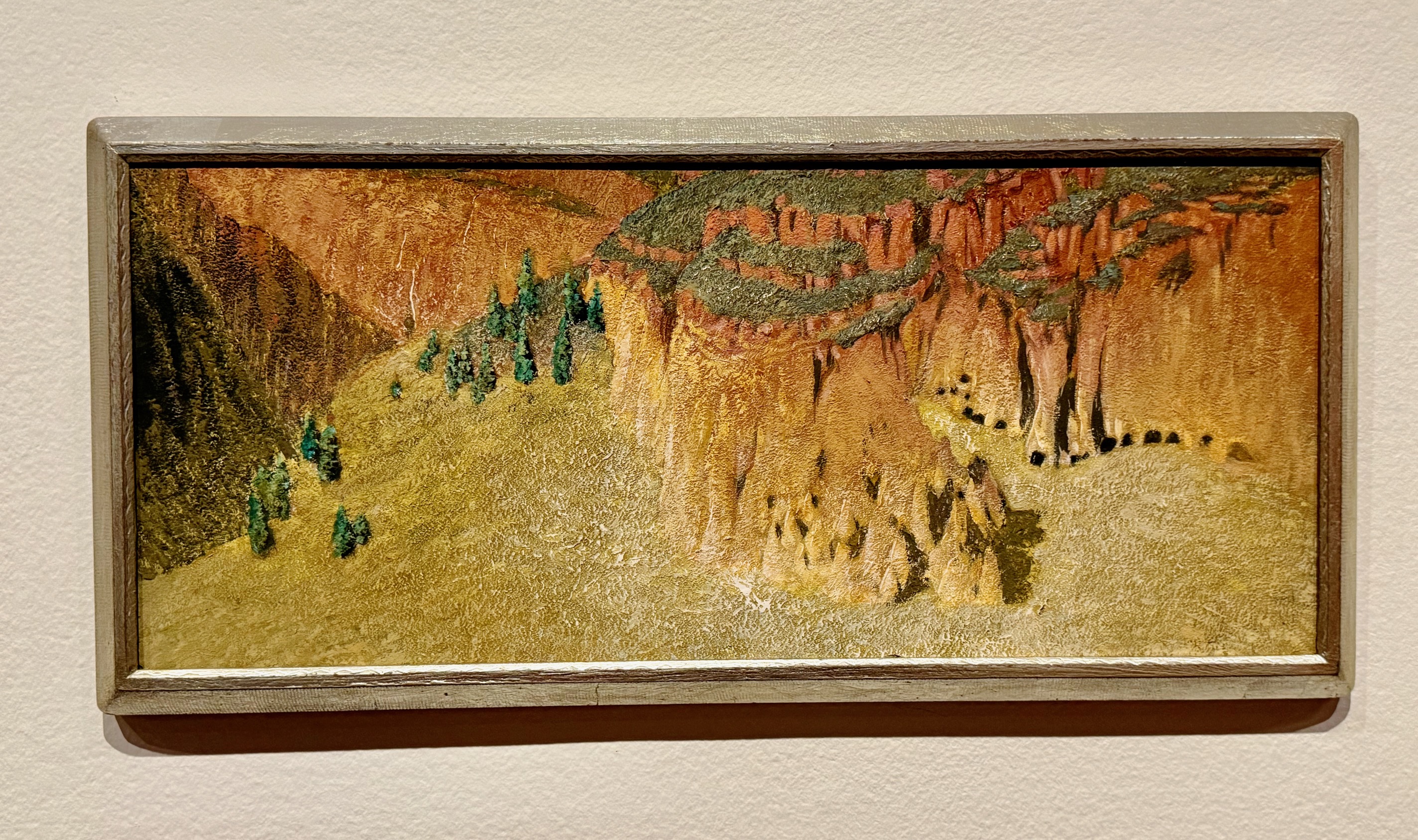
Gus Baumann’s 1925 oil painting Frijoles Canyon – a panorama of ancient tuff dwellings of Tuyoni Pueblo at Bandelier.

Before long, Gus was making and selling gorgeous prints, traveling to archeological sites, attending dances at the pueblos, soaking up the ambience of ancient Spanish churches, and putting brush to canvas, and partying with his new artist friends. And he met Jane, the love of his life, and started a family – creating a life full of fun, art, play, and community service.
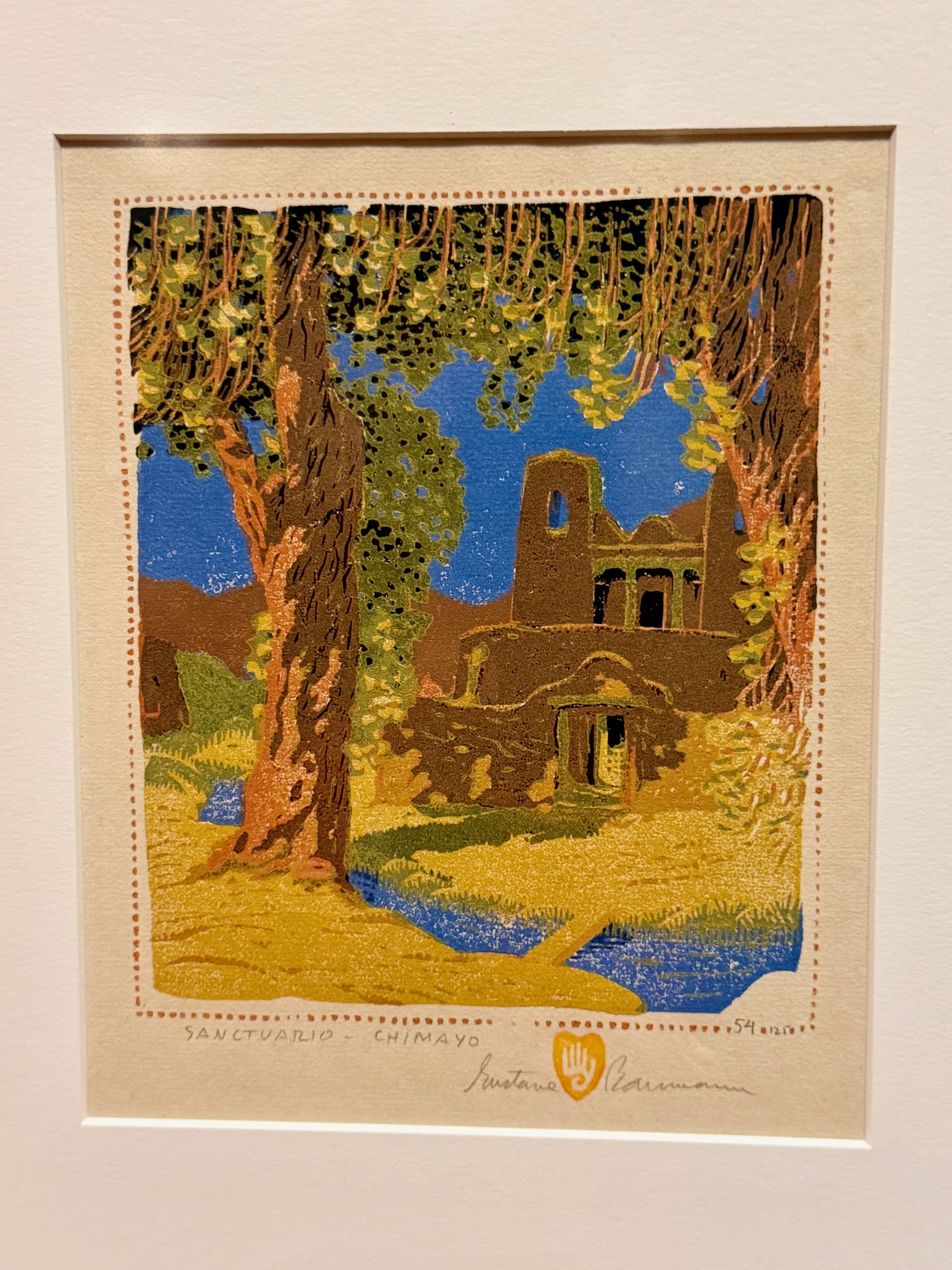
Gus Baumann’s 1924 color woodblock print Sanctuario Chimayo – learning of the historic church’s imminent sale on a sketching trip, he lobbied successfully for its preservation.
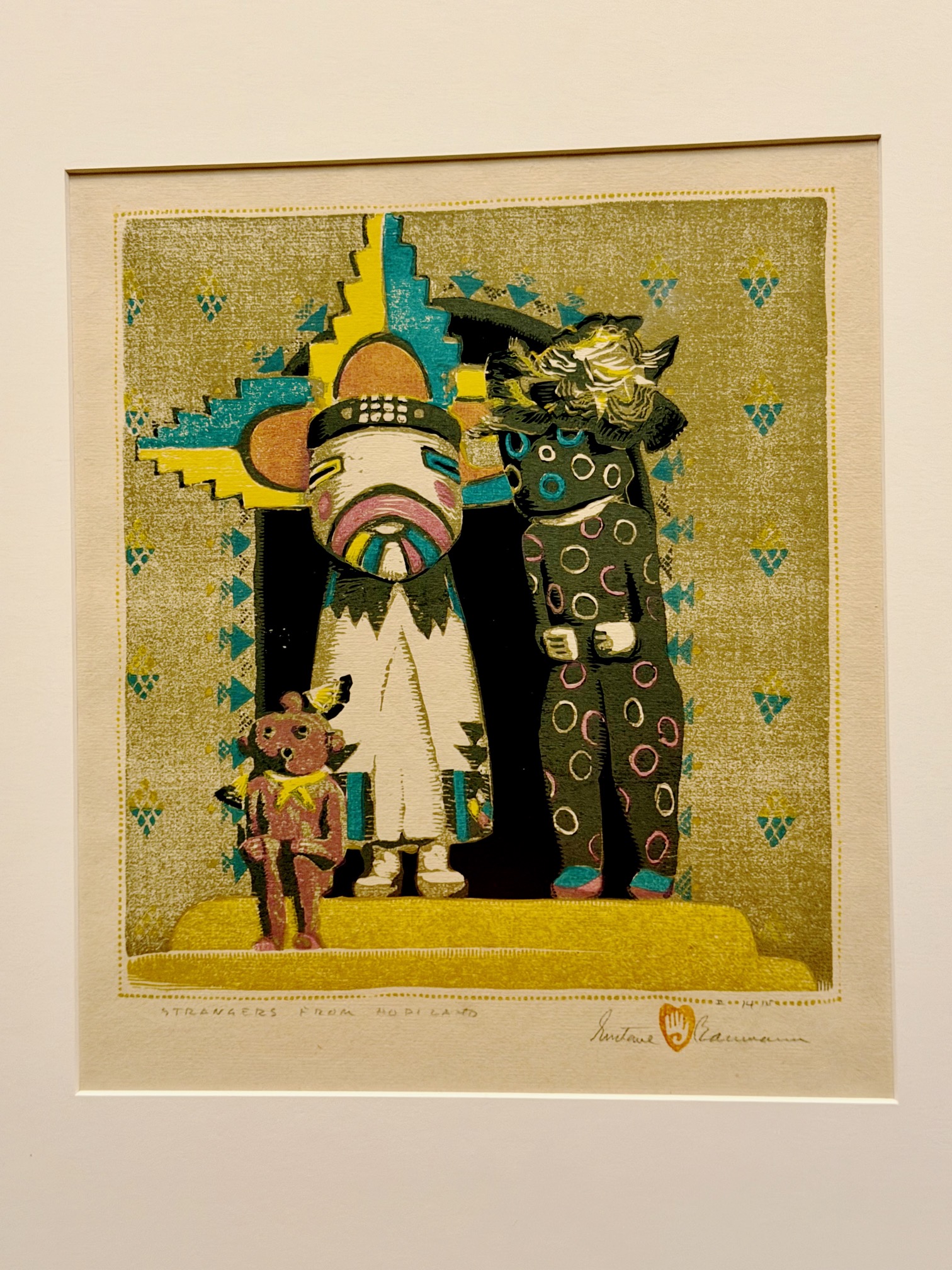
Gus Baumann’s 1921 color woodblock print Strangers from Hopiland, featuring kachinas from his collection; printed in the 1930s.

Since Jane and Ann Baumann donated so much of Gus’s work to the New Mexico Museum of Art, the curators were able to display finished prints alongside drawings and wood blocks that give visitors insight to his process.  One long wall dissects his multi-color printing process for his famed Old Santa Fe – the initial drawing, the separately carved color blocks, single-color proofs, multi-color runs, and the finished six-color print.
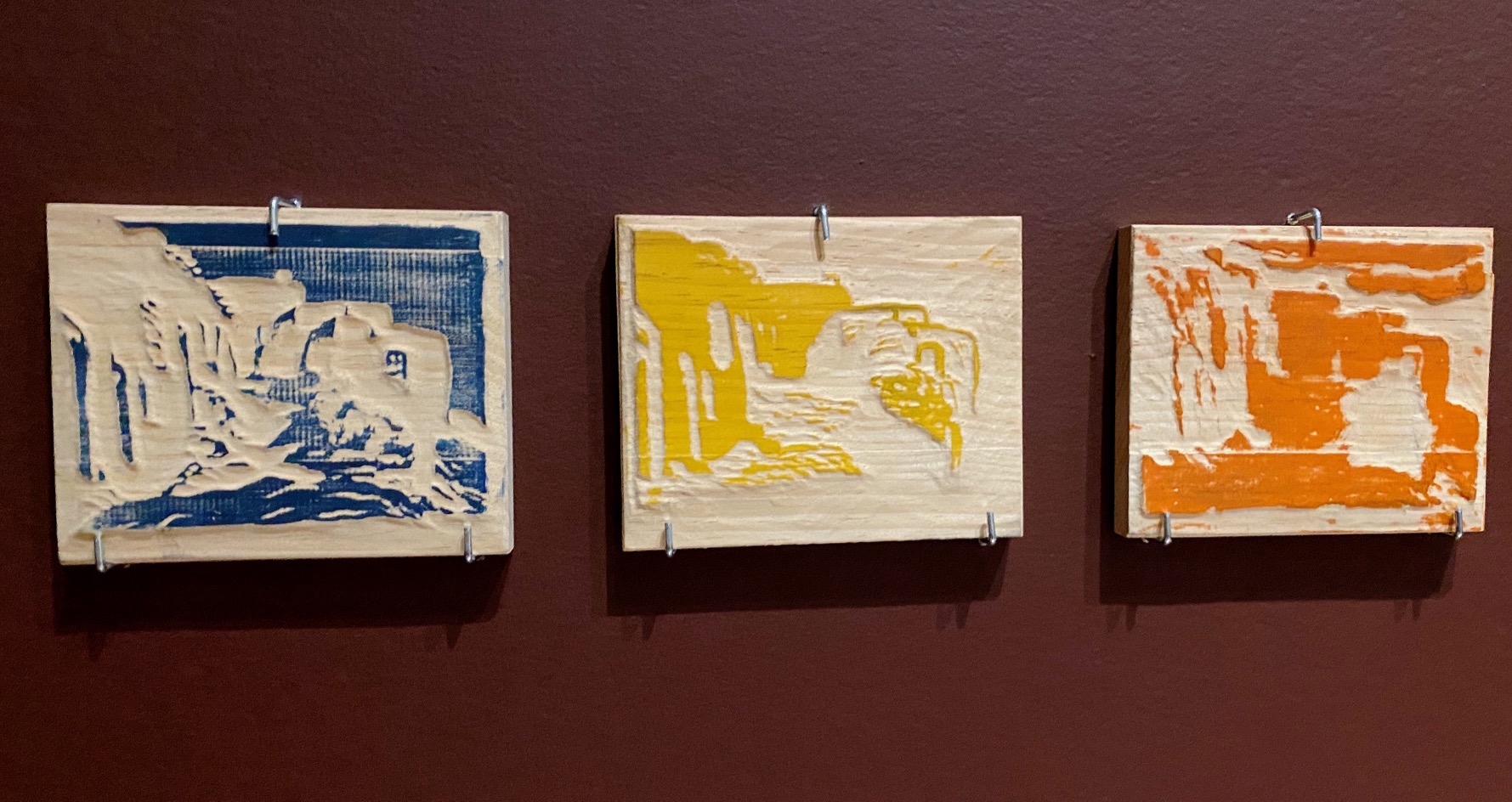
Reproductions of Baumann’s blue, yellow, and orange woodblocks for his 1925 print Old Santa Fe.

Nearly a half-dozen example of Gus’s watercolor paintings and finished prints are displayed side by side. Visitors are delighted to stand, look, compare, and wonder how he conceptualized steps to carve blocks for each color and achieve images of such depth and vibrancy.
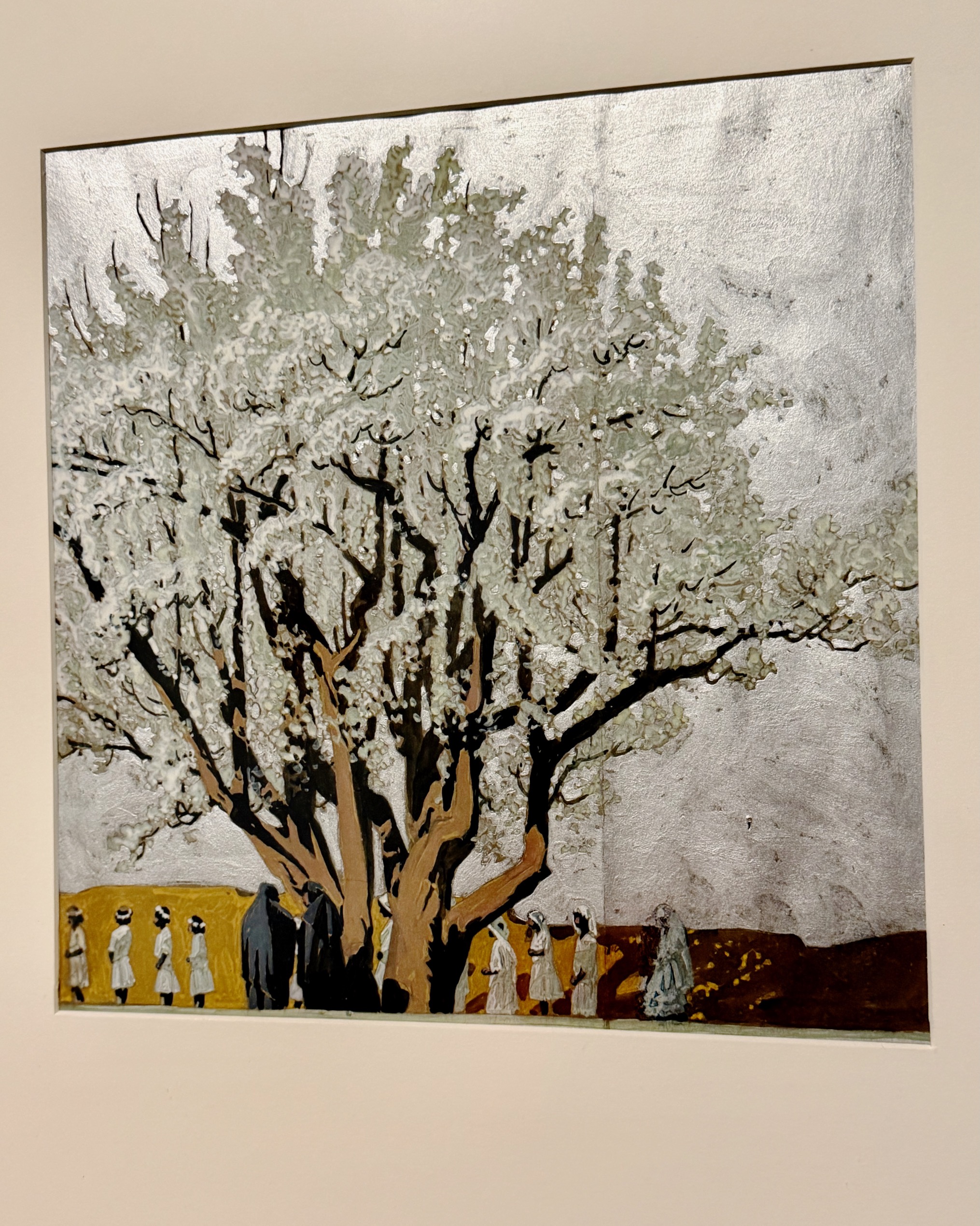
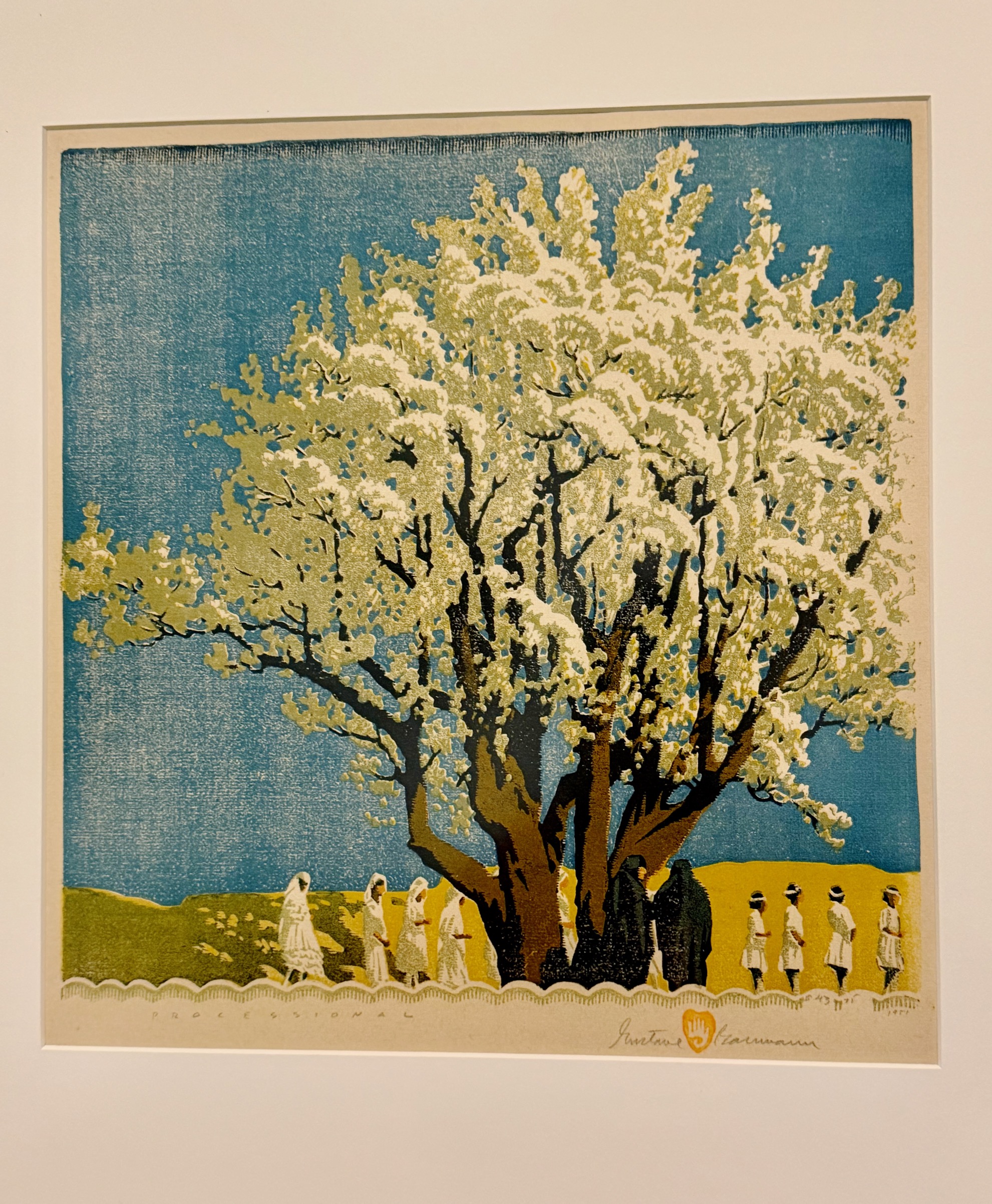
Gus Baumann’s 1930 watercolor Processional (Study), featuring girls walking to their First Holy Communion under a blooming tree and silver sky.
Gus Baumann’s 1930 color woodcut print Processional (printed 1951), based upon his watercolor.

The final gallery “An Artist by Accident” displays an array of intricate color woodcuts, experimental paintings, satirical works, paintings Spanish religious icons, whimisical wood carvings, and everyone’s favorites – Baumann’s marionettes.

It’s the first time Gus and Jane’s marionette casts have been displayed in decades, complete with hand-painted backdrops – scenes representing just a few of the couple’s scripted shows that they performed at home, in venues around Santa Fe, at world fairs, and on tour. 
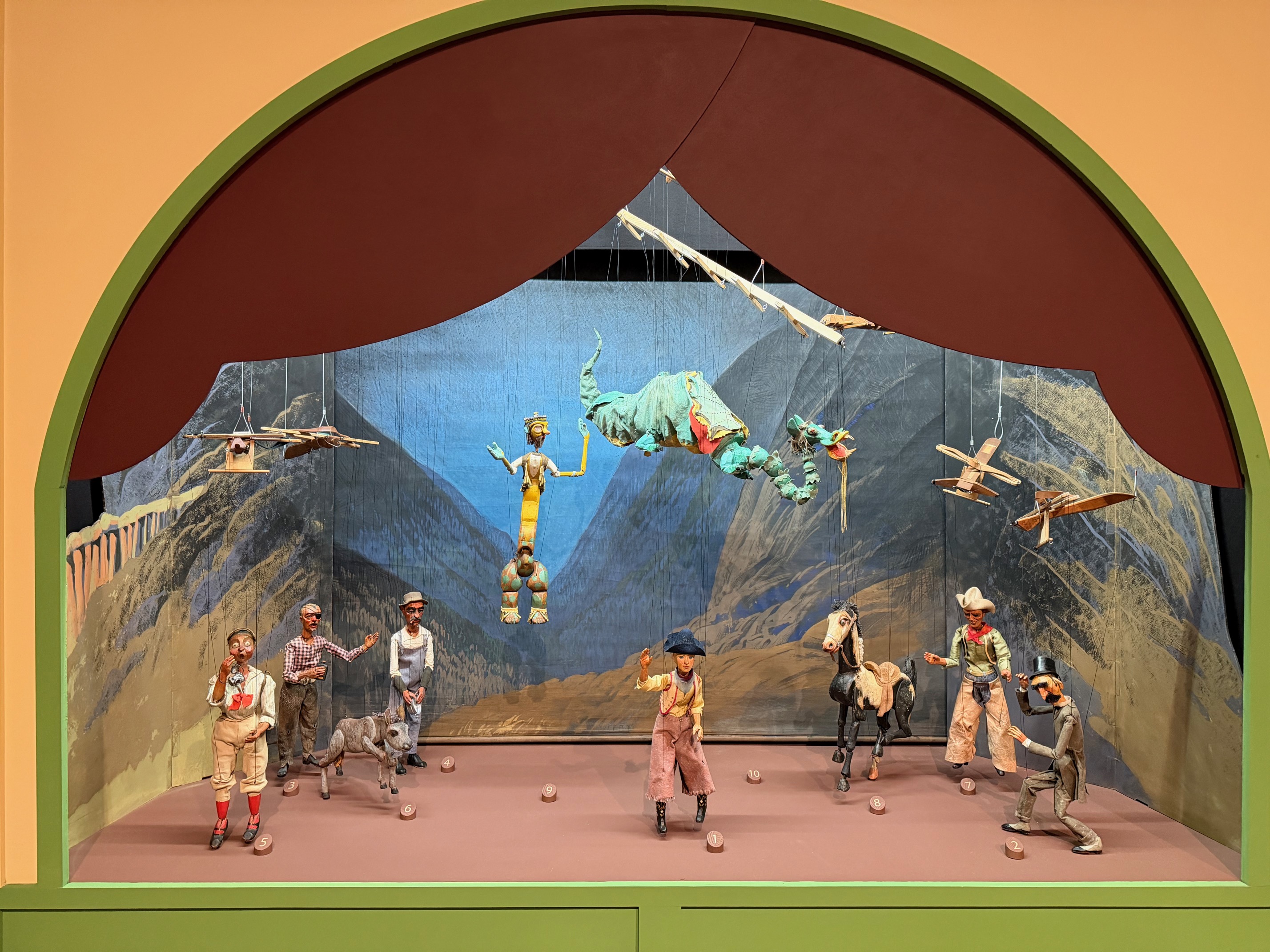
Gus and Jane Baumann’s stage set for the Santa Fe Puppett Wranglers’ 1932 marionette production of the comic melodrama The Golden Dragon Mine –starring The Tourist Lady, Temperence the Miner, Hardpan, Burro, Old Man of the Mountain, the Green Dragon, Nambé Nell, Coco the Horse, Pecos Bill, and Lord Leffinghoop.

Whimsey, delight, innovation, social commentary, and fun are all there, with surprises unfolding around every corner.  And this is all just a fraction of Gus’s creative output from his coming-of-age in the horse-and-buggy era to the Atomic Age.
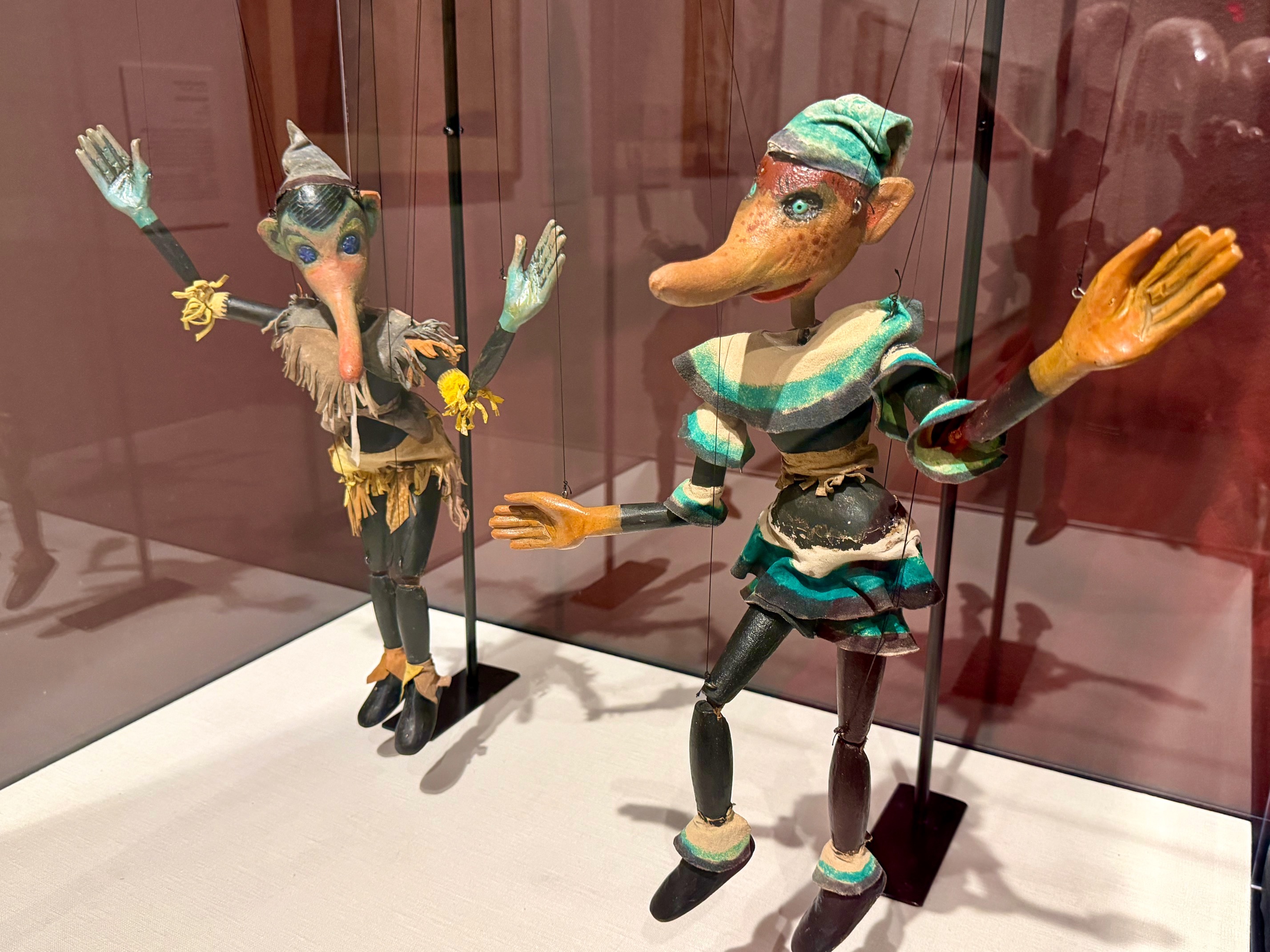
Gus Baumann’s 1940 marionette comedy stars of Teatro Duende – Long Nose (“Nosey”), the Duendi and Freckles the Duende – mischief-making Iberian elves.

No, he didn’t follow the traditional academic path, but he did leave his creative touch on America’s printmaking traditions, the foundation of many Santa Fe cultural and historical institutions, and the care and feeding of a state full of artists as head of New Mexico’s New Deal artist programs.
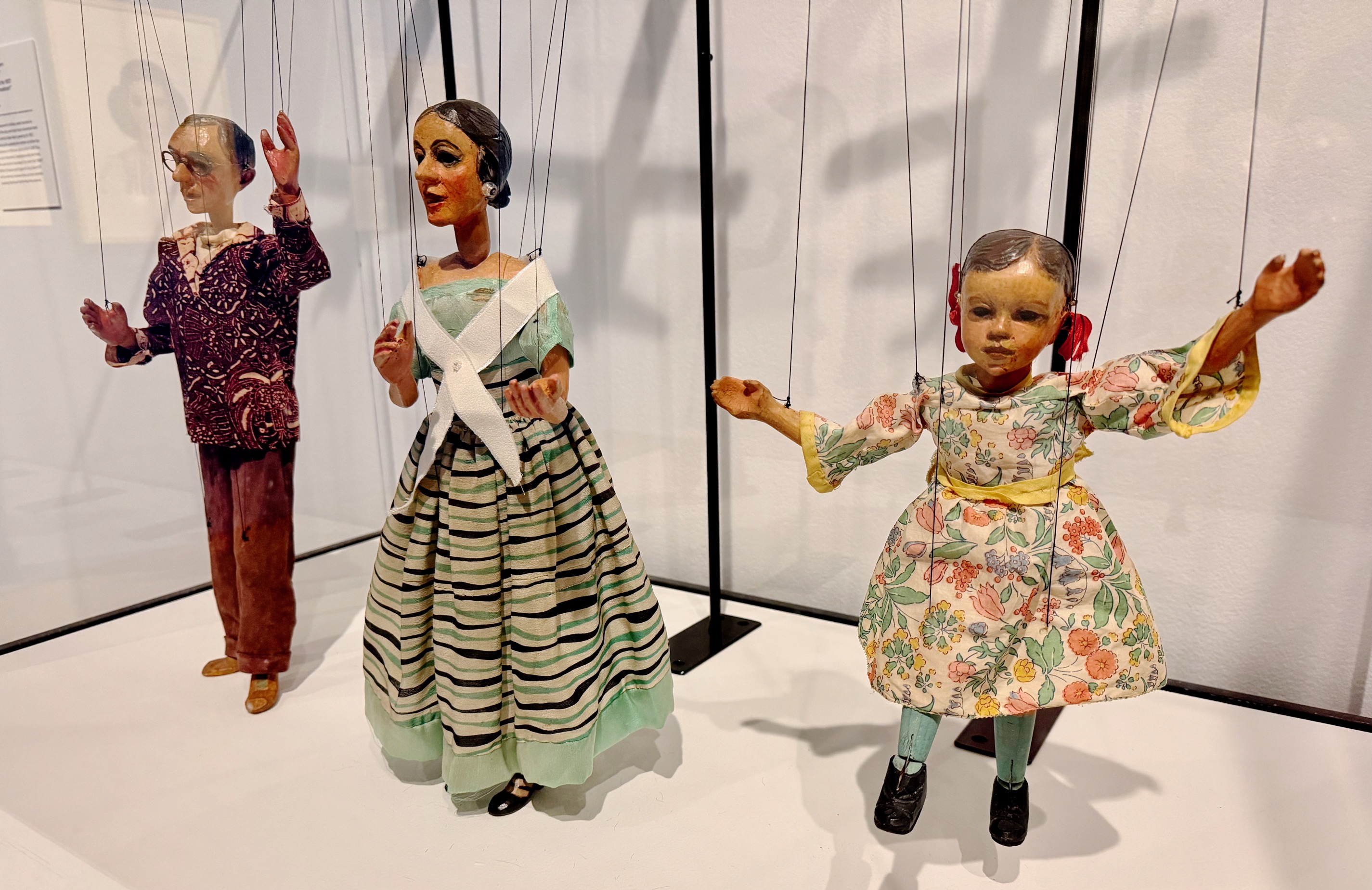
Gus Baumann’s 1932 carved family portrait – marionettes Gus, Jane, and Ann – with costumes by Jane.

Visionary Collector Amasses Trove of Radical Works

It’s quite a leap from taking an art appreciation class with your daughter in your mid-thirties to assembling an enormous collection of paintings by radical art-world revolutionaries and anarchists. But that’s what one woman did and and the work is on display in Radical Harmony: Helene Kröller-Müller’s Neo-Impressionists, on view at the National Gallery in London through February 8, 2026.

Crowds have been flocking to see incredible works by Seurat, Signac, and Van Gogh, and meet the Dutch and Belgian painters who adopted their breakthroughs and ran with these innovations for two decades at the end of the 19th century. 

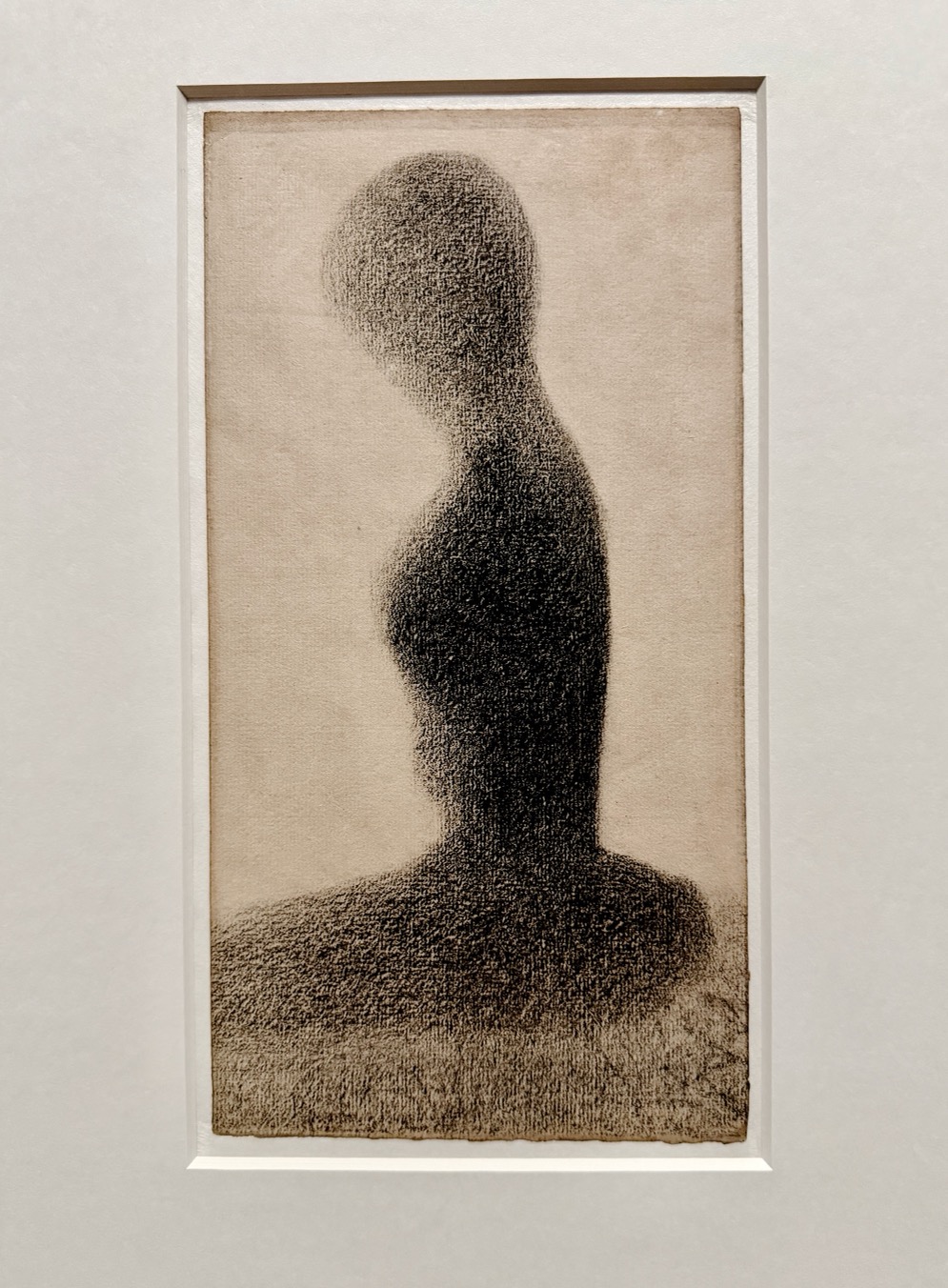
Seurat’s 1884-1885 Young Woman: Study for ‘A Sunday on Le Grande Jatte’” – a radical abstracted, dematerialized image. Courtesy: Kröller-Müller Museum

Maginificent, much-loved works were collected in the early 20th century by Helene Kröller-Müller, the daughter of a wealthy German industrialist.  Her husband ran businesses for her father (and eventually his entire company) in Rotterdam, where they lived.

Helene was always encouraged to follow her intellectual interests, and new ideas. After taking a class about art in 1905 from Dutch artist/dealer/critic H.P. Bremmer, Helene began to understand why the radical colors, compositions, and subjects in paintings by Van Gogh, Seurat, and others moved her so deeply. Working with Bremmer as an advisor, Helene eventually amassed the largest collection of Van Gogh paintings and drawings in the world (outside of the Van Gogh Museum itself).

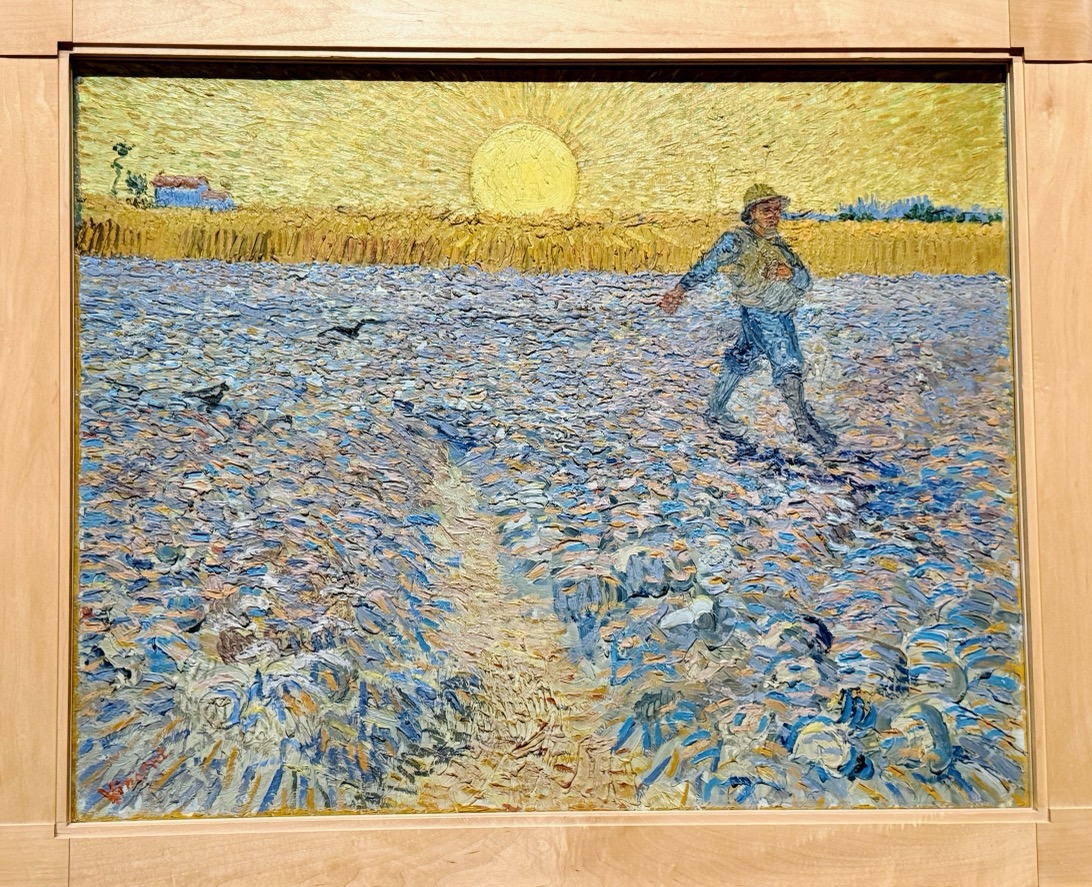
Van Gogh’s 1888 oil The Sower with the Sun rising hopefully over a rural worker. Courtesy: Kröller-Müller Museum

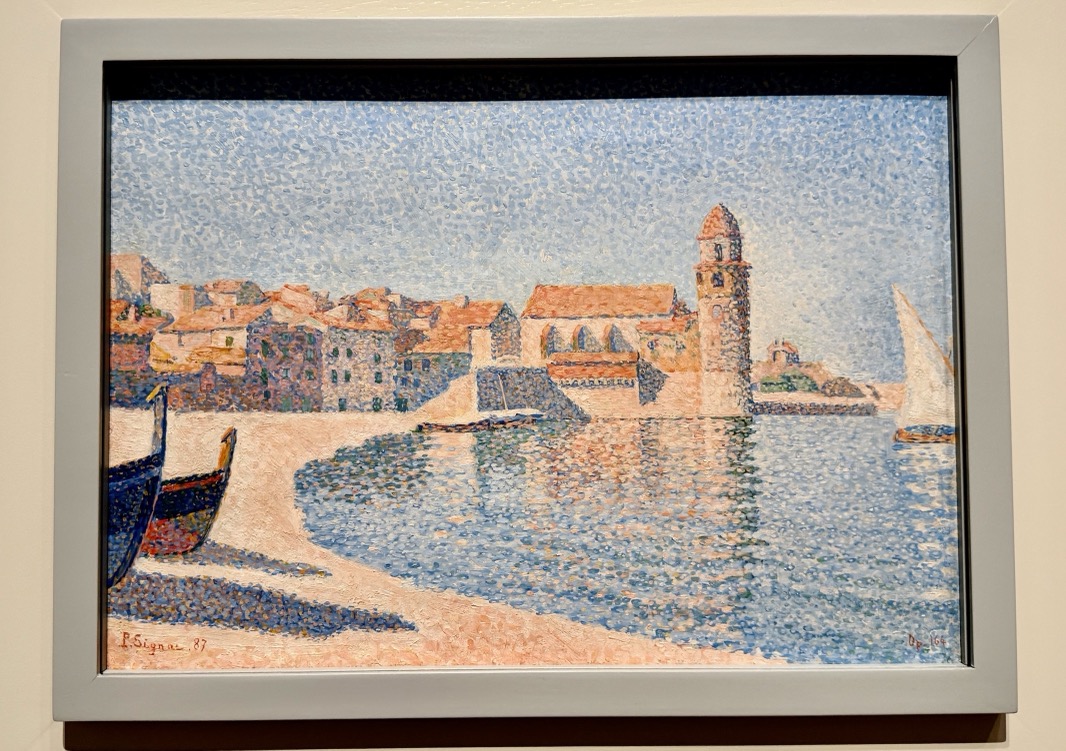
Helene sometimes accompanied Bremmer on buying trips with the goal of creating a public collection where people could see and experience the genesis of modern art.  In 1912, they even visited Signac in his studio, where Helene purchases two magnificent tranquil harbor views – one by Signac and one by his late friend, Seurat.

One of Helene’s first “new art” purchases on a buying trip to Paris: Signac’s 1887 oil pof the French Riviera capturing the Sun’s reflected light – Collioure, The Bell Tower, Opus 164. Courtesy: Kröller-Müller Museum

Here’s a brief video about Helene Kröller-Müller’s passion for art, how she built her massive collection, and the beautiful museum in the Netherlands countryside that should be on every art lover’s bucket list :

This gorgeous exhibition in central London shines a light on this visionary collector, but the focus is less on Helene’s history and fully on her stellar collection of Neo-impressionist painting and related works from the National Gallery and other collections. See some of our favorites in our Flickr album.

The exhibition begins with paintings by Seurat and Signac, who adopted color theory for their pointillist techniques to create shimmering images of simplified, tranquil harbors and seascapes. This new radical painting approach electrified artists across Europe, such as Belgian painter Theo van Rysselberghe and Dutch artist Jan van Toroop, whose works are also hung in the first gallery.

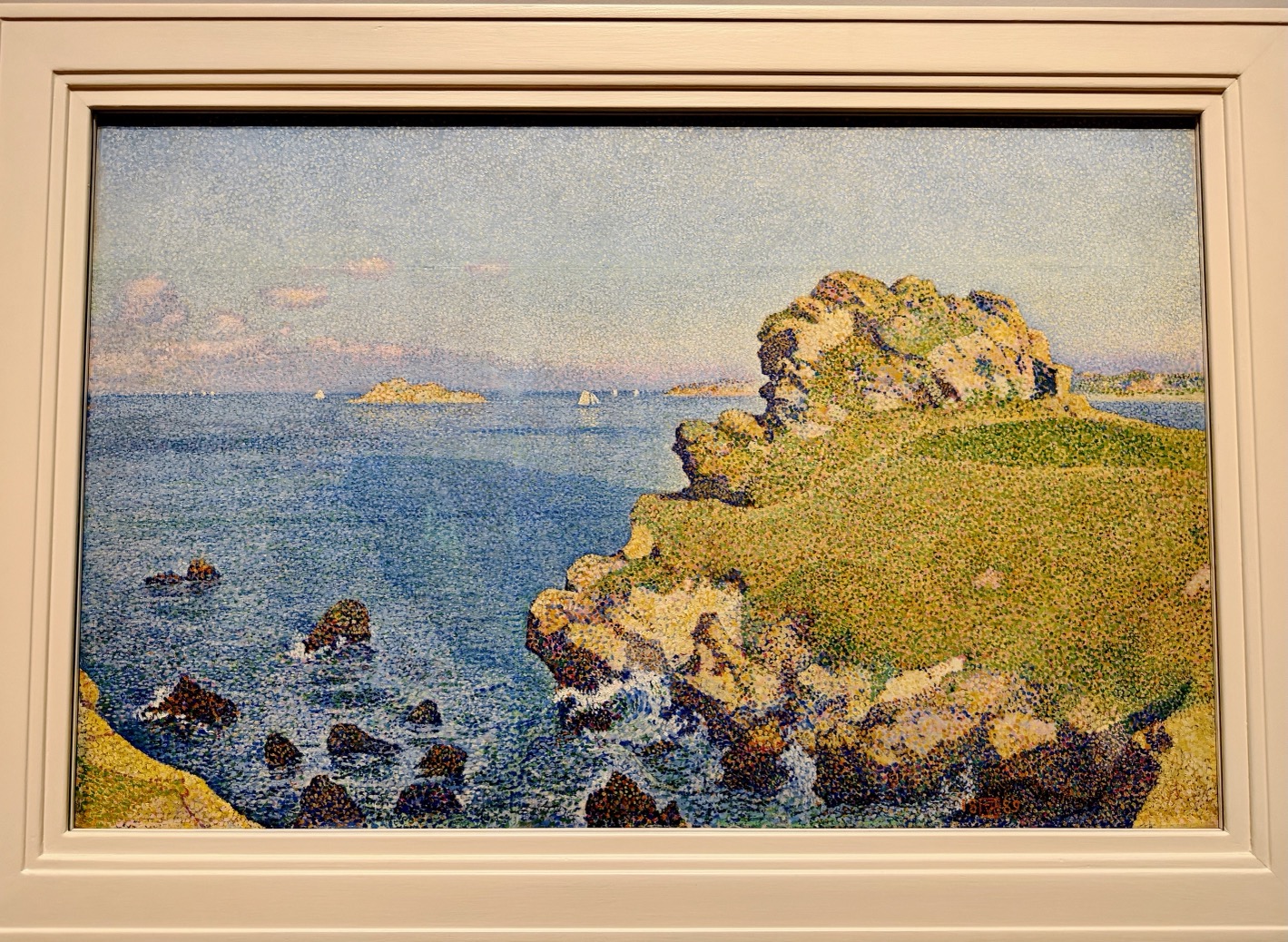
Van Rysselberghe’s 1889 oil inspired by Seurat ‘Per-Kiridy’ at High Tide. Courtesy: Kröller-Müller Museum

At a time when industrialization was transforming life, Helene did not shy away from acquiring works made by artists proud of their radical, progressive politics. Many of the artists featured in the exhibition were proud to call themselves anarchists – passionate radicals who used art to advocate for workers’ rights, elevate the image of working people, and create a hope of increasing harmony with nature.

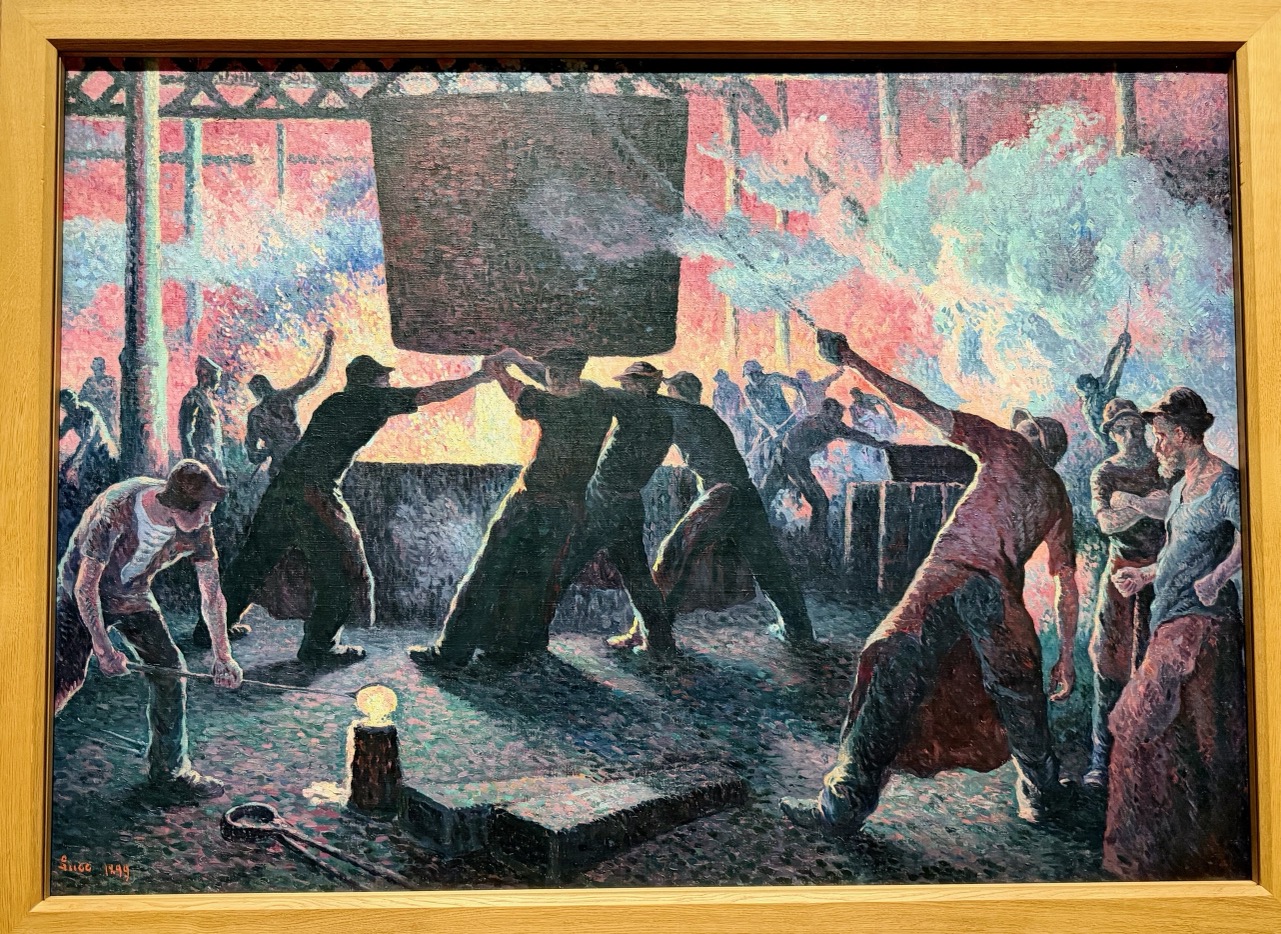
Maximilien Luce’s 1899 The Iron Foundry showing strength and integrity of Belgian steel workers amid dangerous conditions – an acquisition that hung in the office of Helene’s industrialist husband. Courtesy: Kröller-Müller Museum

To create the pictoral harmony that they sought, these painters often stripped details out of landscapes. When people are present, they are depicted with highly simplified, streamlined faces – pleasing, but impersonal. These stand in contrast to paintings by Belgian and Dutch painters who applied their new color techniques to beautiful large portraits of their politically progressive friends and patrons.

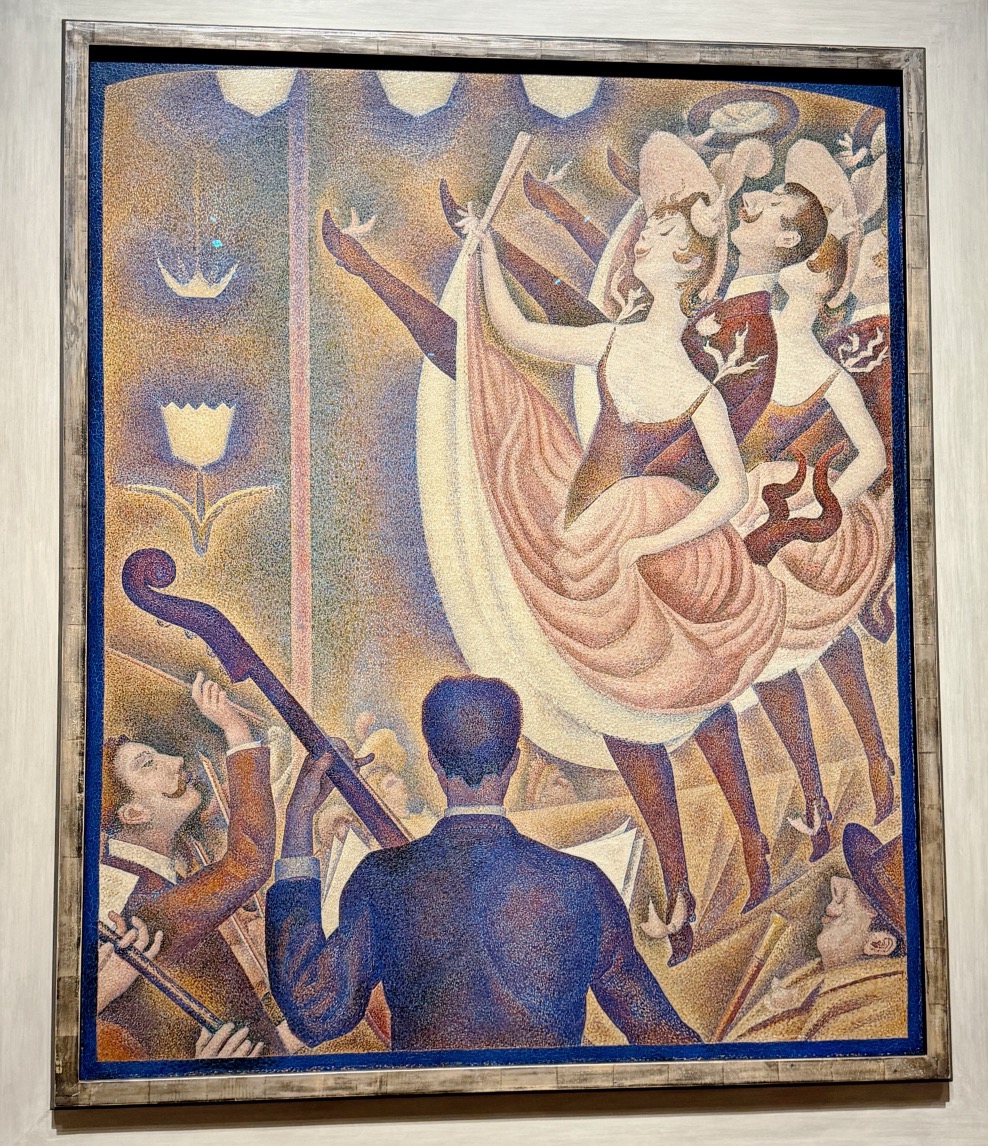
Seurat’s 1889-1890 grand Chahut – a stylized manifesto of his painting philosophy; features artificial, compressed, stylized figures and space. Courtesy: Kröller-Müller Museum

The centerpiece of the show is Seurat’s enormous painting of the scandalous can-can dance at a raucous late-night Paris venue. It’s the biggest, baddest, Neo-Impressionist work in Helene’s collection. The curators surrounded it with works showing how much other radical painters enjoyed music and nightlife.

But just beyond this gallery, you’re surrounded by still, quiet domestic interiors and sun-dappled garden scenes in a gallery titled “The Silent Picture.” People are introspective, lost in thought, or lost in a book. Helene loved collecting large-scale works that seem to envelope viewers with stillness and calm.

And she truly loved the serene, nearly empty landscapes that this group of painters created. The long horizon of the sea only adds to these works’ peaceful presence.  Helene wanted her museum to have clean lines, and unadorned galleries so that visitors could stand, contemplate, and find peace with these works. She truly felt these new, modern paintings had the ability to provide respite and even feel something spiritual.

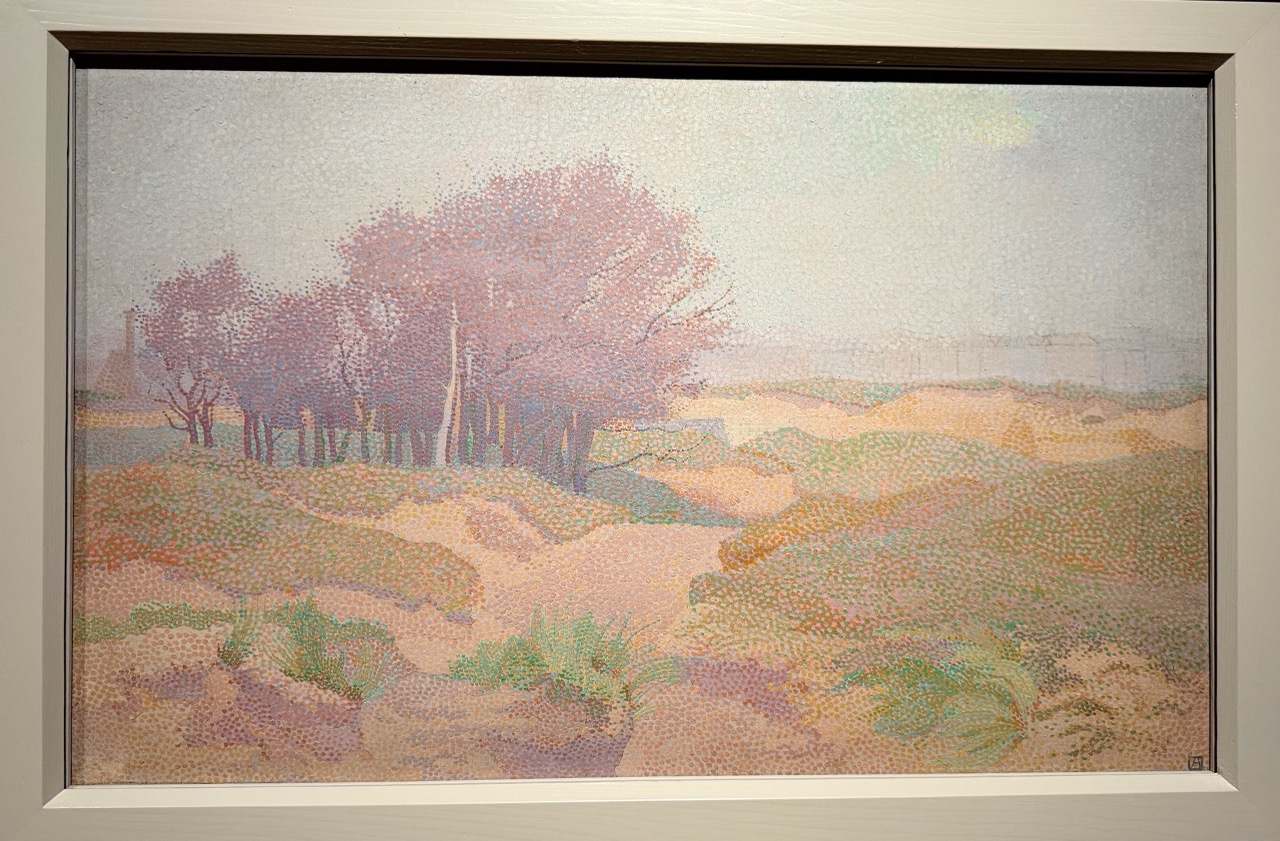
Johann Aarts’s 1895 oil Landscape with Dunes – a tranquil, simplified view of an urban seaside town, indicated by faint buildings on the horizon. Courtesy: Kröller-Müller Museum
Signac’s 1890 Saint-Briac, The Beacons, Opus 120 – the most radical of his four views of the River Fémur along the Breton coast. Courtesy: private collection

Take a walk through this incredible show with the curators from the National Gallery, and hear how Seurat, Signac, and their contemporaries broke the rules and made history: