
Fans of Mr. Mucha, the grand master of sinuous line, have been lining up across North America to admire some of his greatest works – epic posters of Sarah Bernhardt, beautiful women hawking products surrounded by swirling halos or smoke, and exotic details on small-scale, affordable decorative panels representing the seasons, flowers, or arts.
Created by the Mucha Foundation in Prague, Timeless Mucha: The Magic of Line presents Mucha’s own collection of art and books that inspired his creativity, his early works as an in-demand illustrator, and his most famous posters and viral images. It’s all on display at the Boca Raton Museum of Art through March 1, 2026 after successful stops at the Phillips Collection in Washington, D.C. and Santa Fe’s Vladem Museum of Contemporary Art.
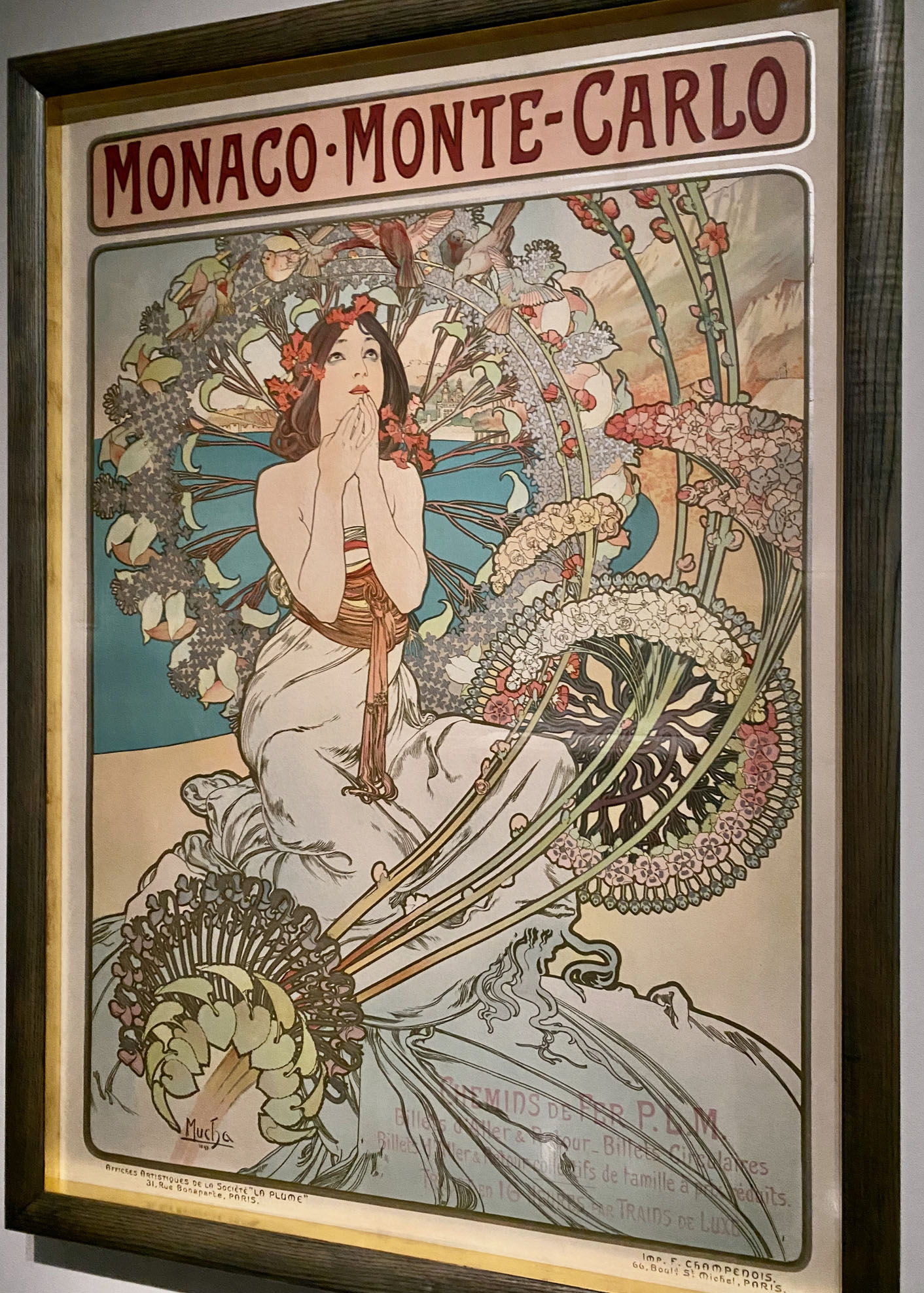
See some of our favorite works from the Vladem installation in our Flickr album.
So how did a designer who was all the rage for Art Nouveau at the 1900 Paris Expo inspire Sixties psychedelic rock illustrators, Marvel Comics creators, and Japanese manga artists? You’ll see that in the exhibition, too. Check out this promo from Boca:
A portion of the exhibit features drawings, sketches, and acquisitions that suggest the building blocks that formed his mature style – Moravian folk style, the mix and match of multicultural design elements seeping into European designers’ consciousness, and the super-flat design in Japanese prints, and fantastical embellishments on Japanese collectibles in late 19th century Paris.
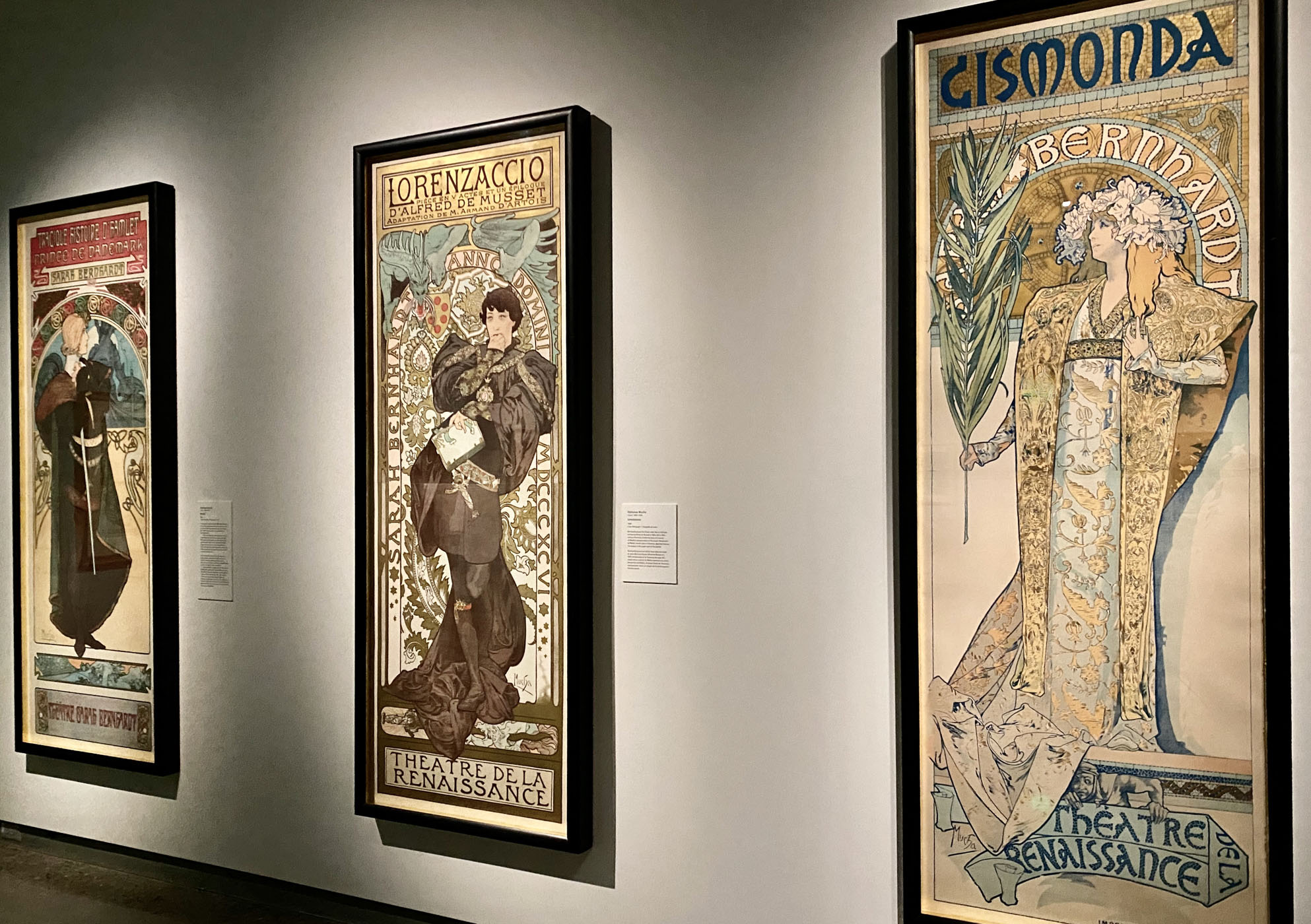
Just take a look at how many of these design influences Mucha packed into his viral street posters advertising actress Sarah Bernhardt’s new plays – mosaics like those in Eastern European churches, exotic decorative elements, and arcs functioning as halos.
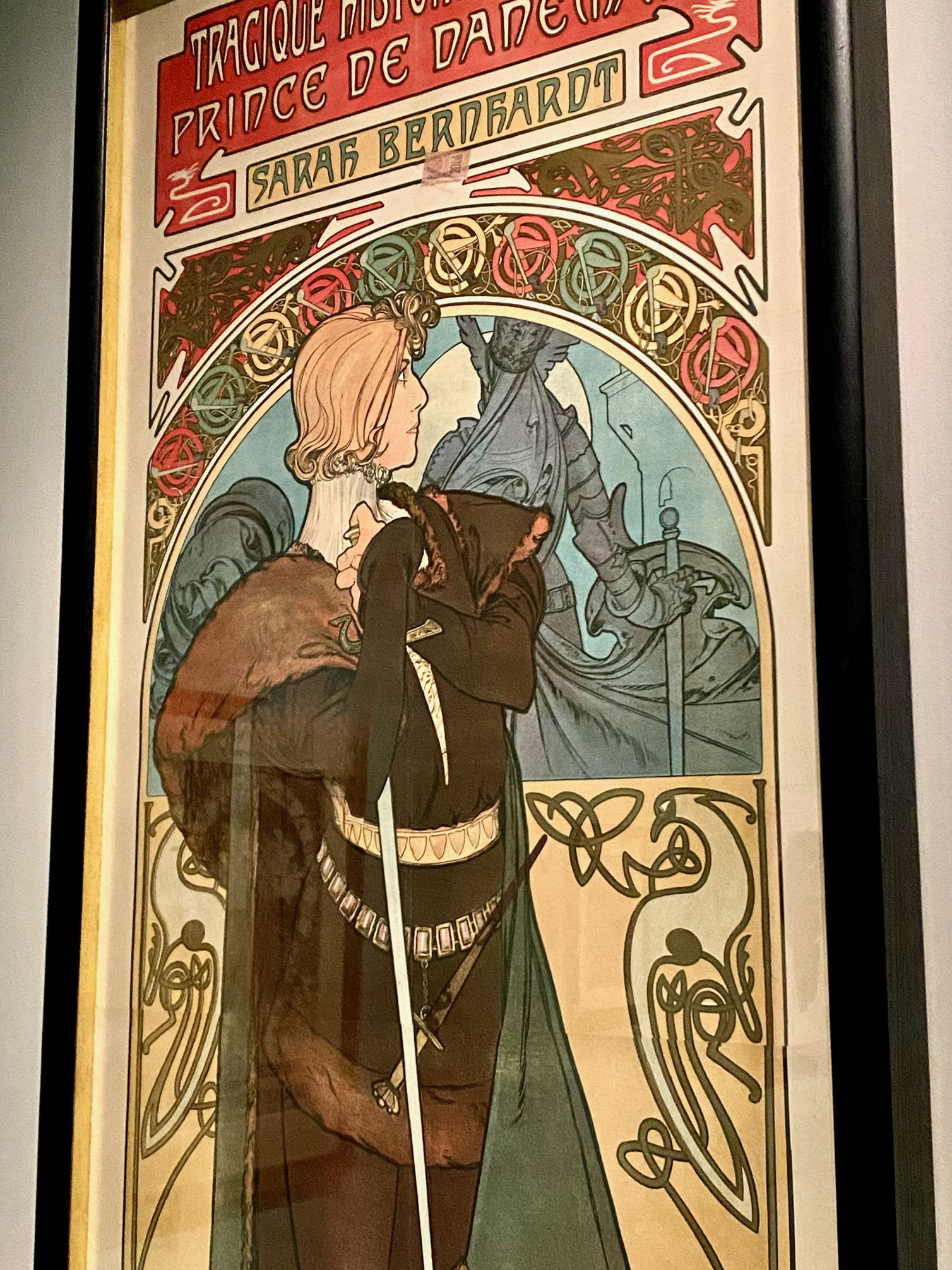
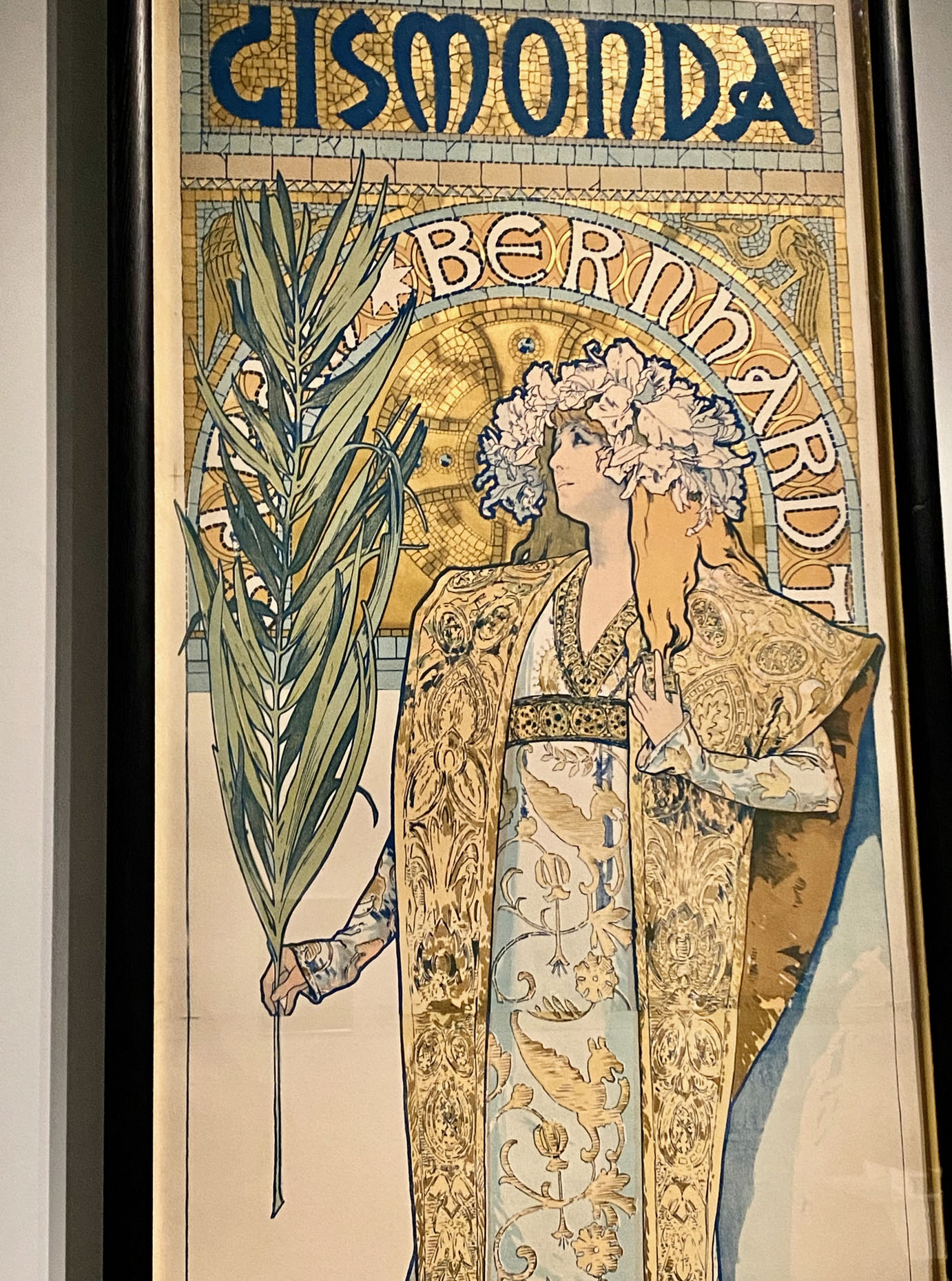
Listen to the Foundation’s curator Tomoko Sato (shown in Phillips Collection galleries) explain how Mucha’s 1894 poster commission – his first – immortalized superstar actress Sarah Bernhardt:
When Mucha’s Gismonda poster appeared on the streets of Paris in 1894, it was a sensation and cemented Mucha’s status as the hottest designer of the day. Bernhardt signed him to a six-year contract (including designing her jewelry), and other offers started rolling in.
Everyone considered Mucha the leading practitioner of Art Nouveau, although Mucha never cared for this label. As the exhibition shows, Mucha’s style was a flat application with bold outlines around ethereal depictions of independent women, swirling vines and/or hair, and a sinuous spiral curving through his layout.
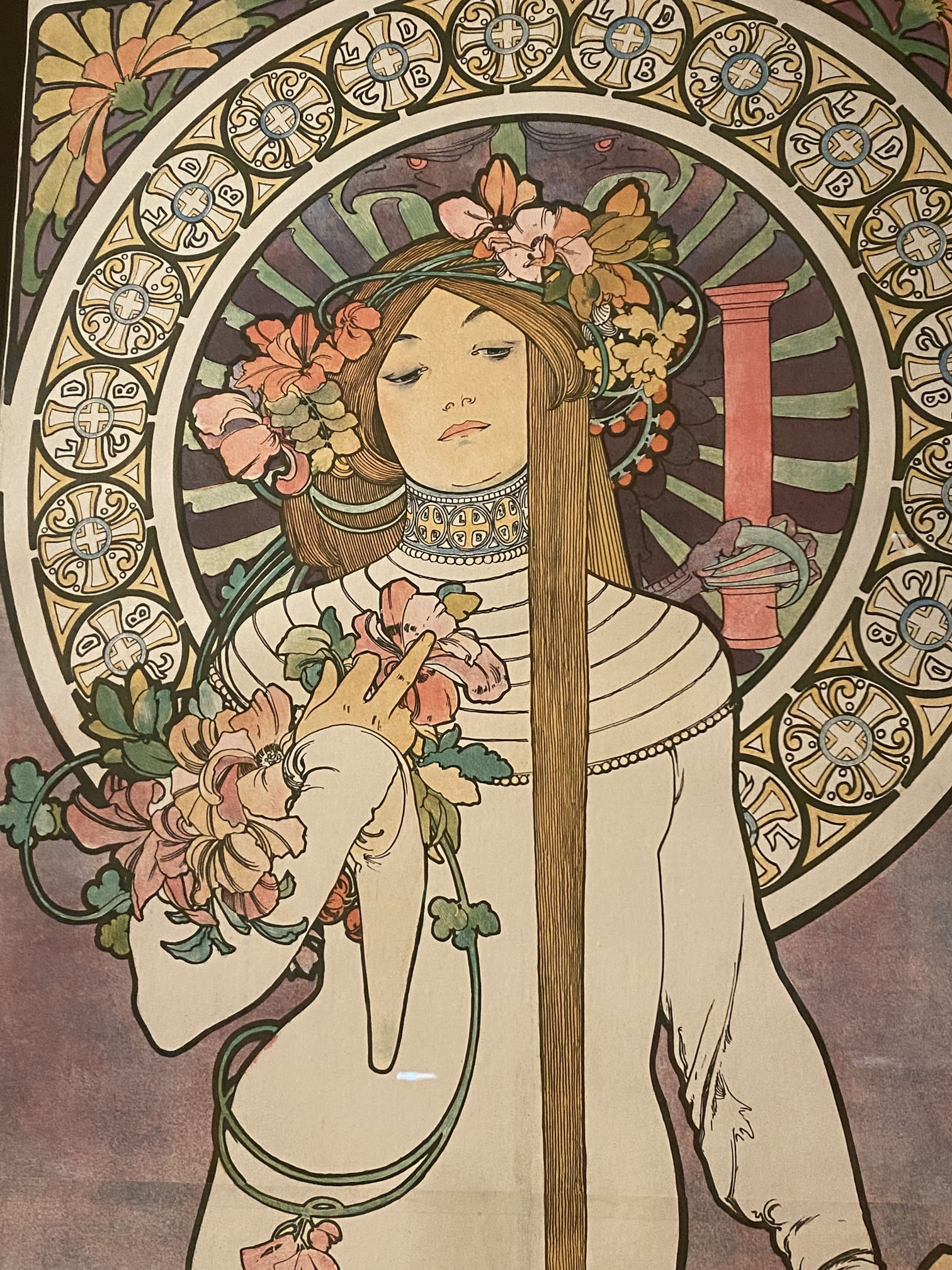
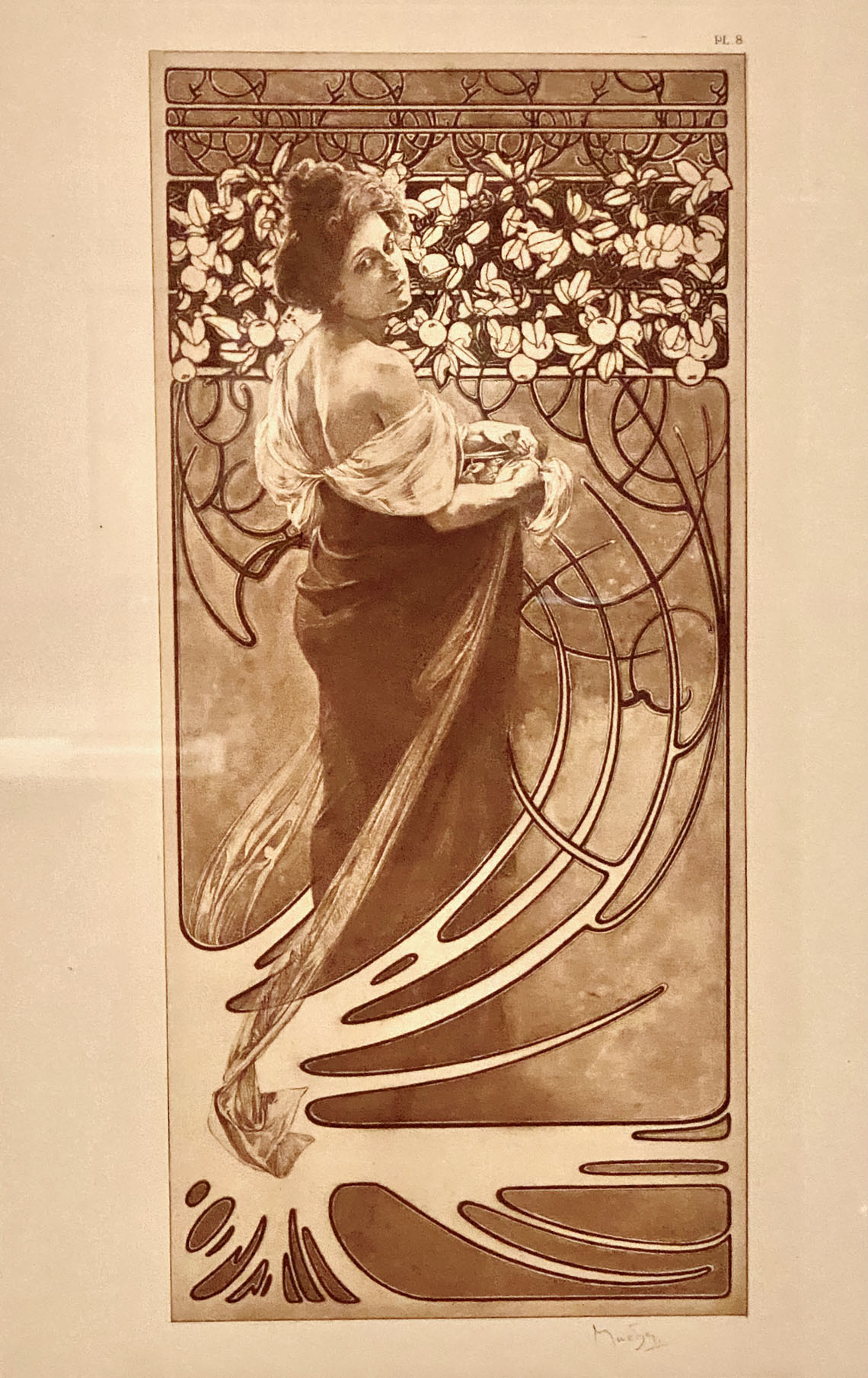
As his fame grew, publishers licensed his images and published them at affordable prices worldwide. Mucha himself traveled abroad, teaching sold-out classes in drawing, line, and figures. He was in such demand that he eventually created books showing up-and-coming designers how to create universally appealing designs in his style.
When Mucha produced these design look-books in the early 1900s, could he have envisioned that illustrators and designers of the late 20th and early 21st century would take note? The exhibition showcases Fillmore West posters and Sixties’ rock album covers that repurposed Mucha’s style, such as this transformation of Mucha’s cigarette paper ad into a nearly identical promo for the Jim Kweskin Jug Band.
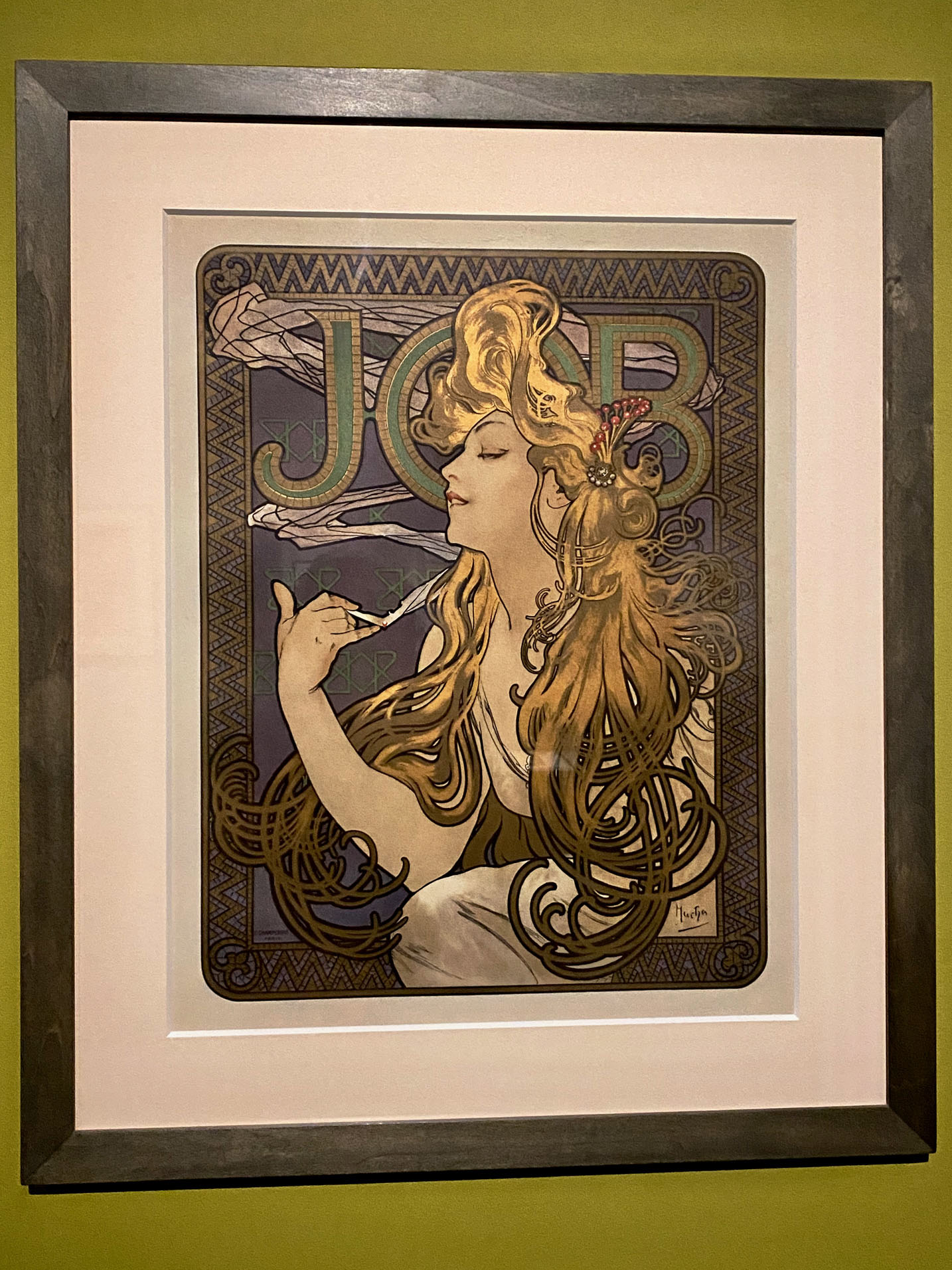
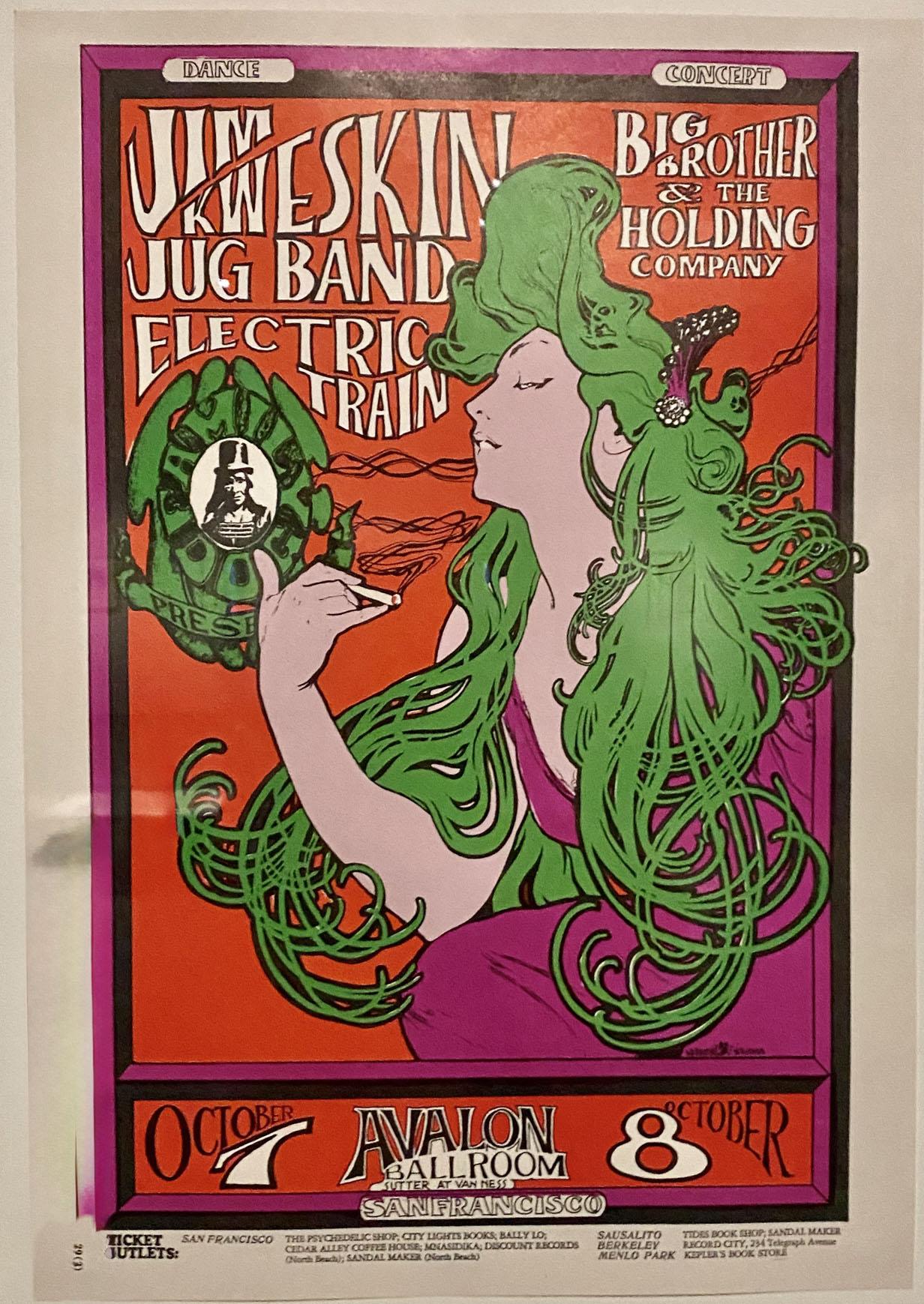
Flowers in your hair? Swirling hair, flowers, and stars were part of Mucha’s “universal language” that took design in a new direction in the 1900s. Museum visitors love pouring over the Sixties album covers and posters detail in the exhibition, remembering which albums they owned and acts they saw, delightedly pointing out the Mucha design influences to their friends.
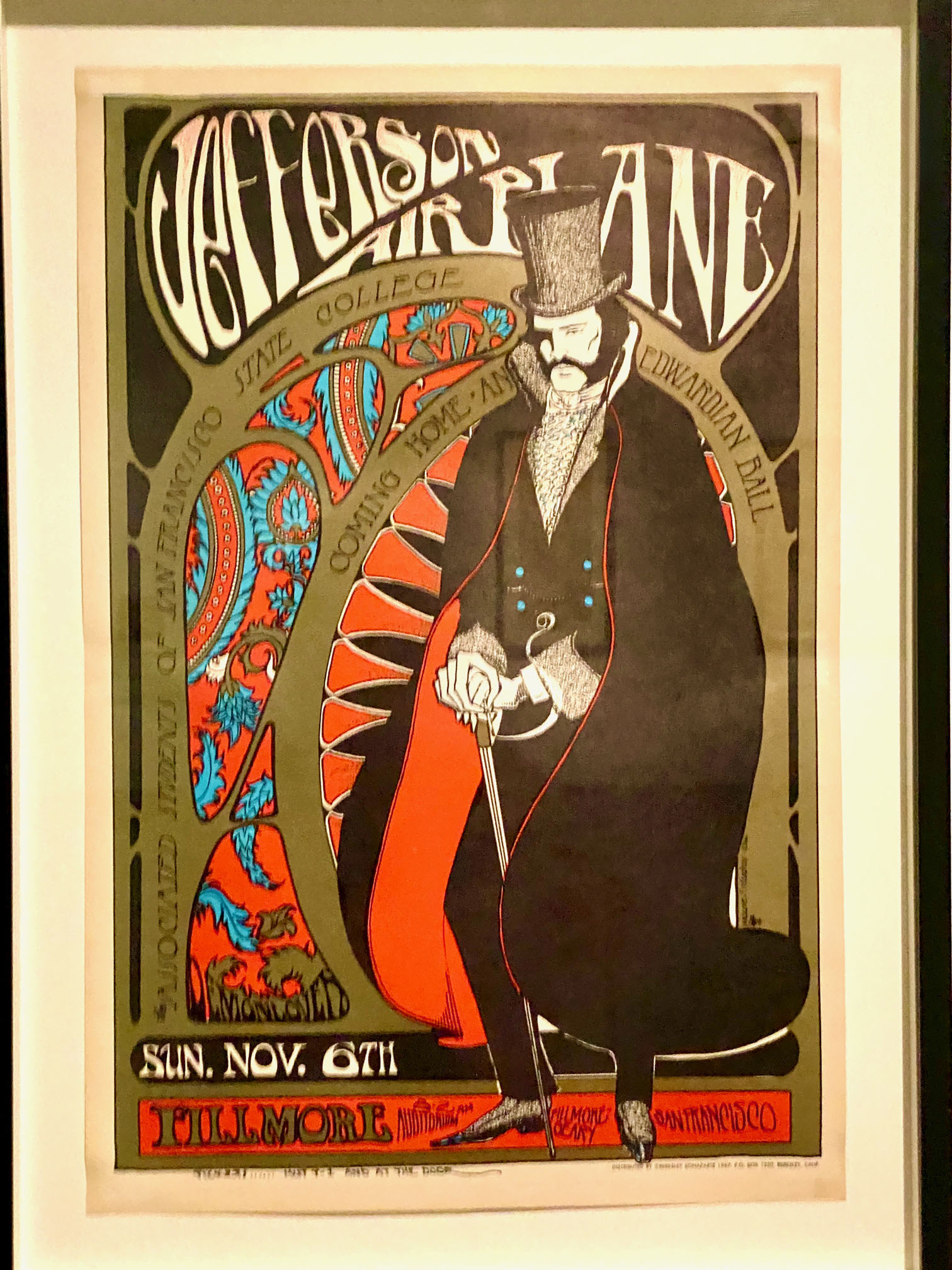
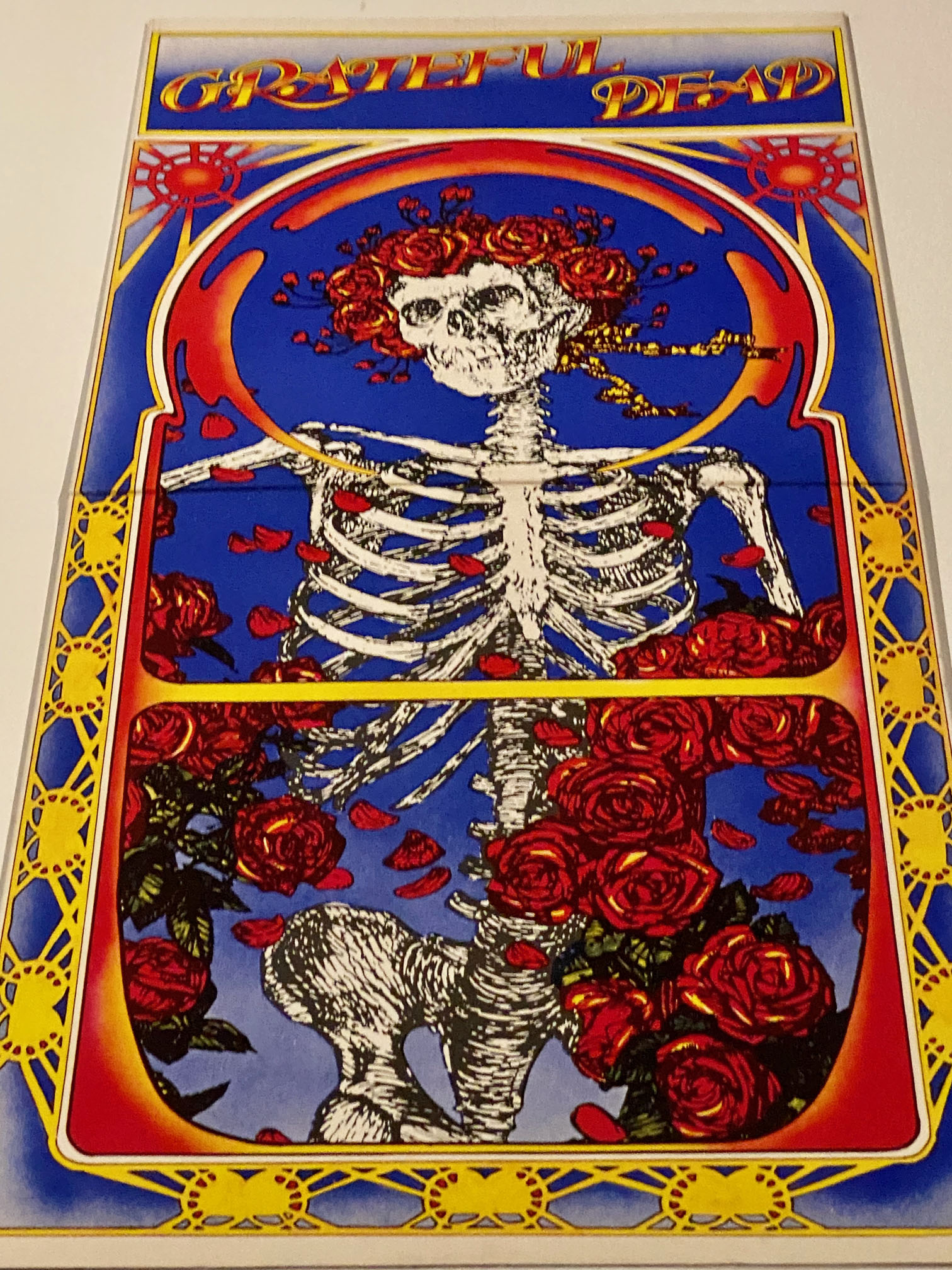
But subsequent generations of media makers also adapted Mucha style – comic book and manga artists.
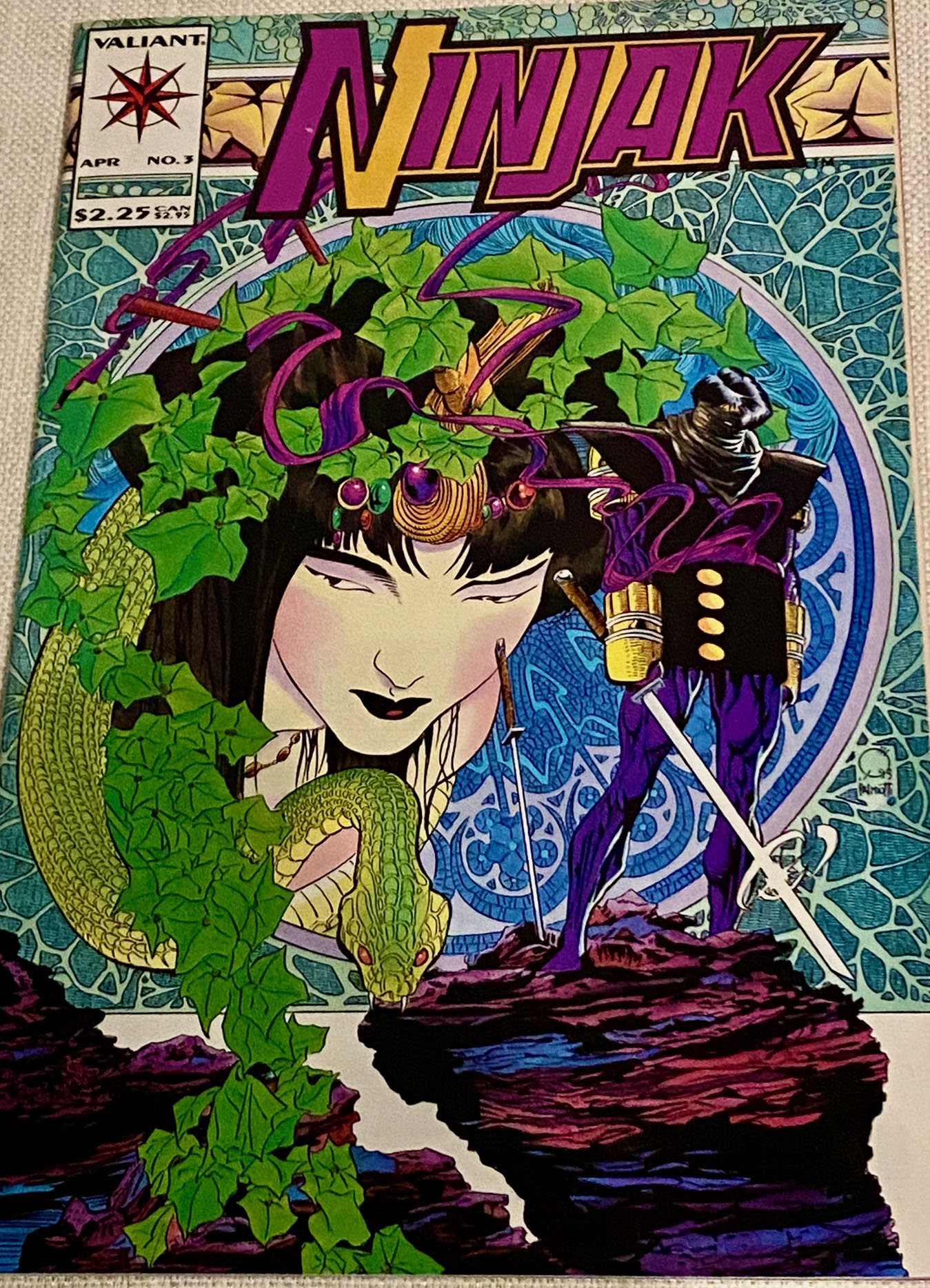
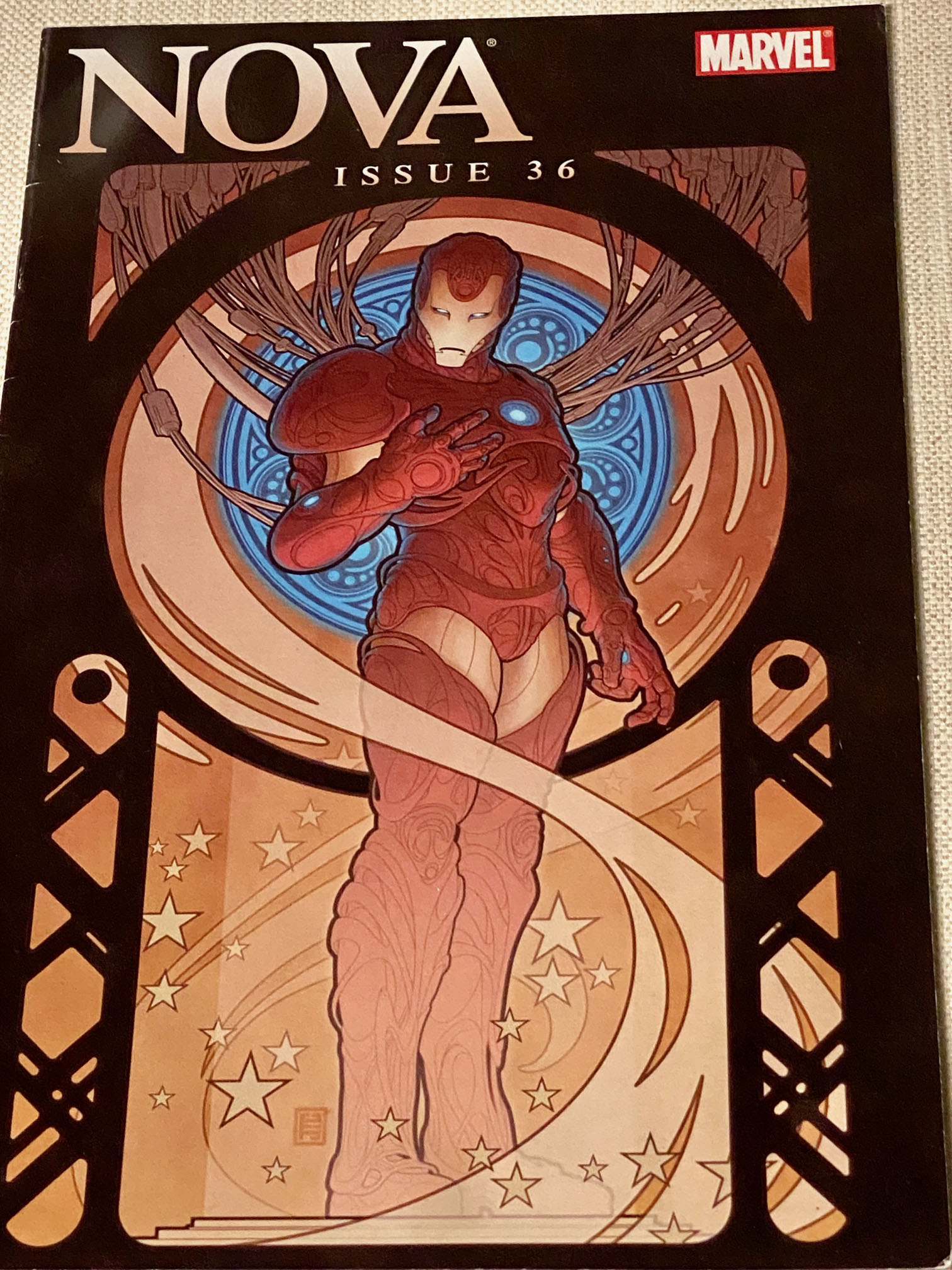
Listen to curator Sato about how Japanes artists adapted Muca’s design breakthroughs for 21st manga fans:
Next on the tour for this beautiful exhibition – the Nelson-Atkins Museum of Art in Kansas City, Missouri (April 11-August 30, 2026) and Museo Kaluz in Mexico City (October 8, 2026 – February 7, 2027).
The riches on display in this exhibition are also a reminder that much more is on view at the Mucha Museum – a spectacular new venue in Prague opened by the Mucha Foundation at the Savarin Palace in 2025, right on the western edge of Old Town.
 itsnewstoyou