Mayans Dispute 2012 Ending

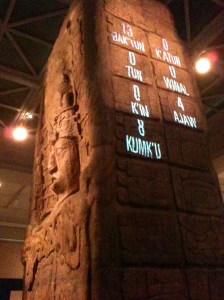
Illumination translates glyphs into numbers on stele, marking the end of the Long Count cycle on December 29, 775 CE

Illumination translates glyphs into numbers on stele, marking the end of the Long Count cycle on December 29, 775 CE

One of the best things about the Penn Museum’s “Maya 2012: Lord of Time” exhibition is the manner in which the curators meld the ancient, the mathematical, the historic, and the modern to answer the question “Will the world end at the end of the Mayan Long Count calendar in December 2012?”

The exhibition is built around the spectacular work that Penn’s archeological teams have done for decades in Copan, an ancient Mayan city located in today’s Honduras not far from the Guatemalan border – excavating tombs, uncovering clues to the succession of rulers, and figuring out exactly what all the once-cryptic hieroglyphics tell us. Check out the Flickr photos.

It turns out that the rulers kept a tight rein on the calendar, astronomic phenomenon, and various time-counting cycles to assert their right to rule. As some of the most spectacular stele show, the stone monuments actually enabled kings to embody dates, such as October 21, 731 (Copan Stele A).

Censor lid depicting founder of the Copan dynasty (695 CE)

Censor lid depicting founder of the Copan dynasty (695 CE)

The towering Quirigua Stele C from Guatemala associates the ruler with December 29, 775, the last time that the calendar flipped to the number 13.0.0.0 to signal the end of the Long Count.

There are many beautiful altars, sculptures, and pieces from the Penn’s collection, but the curators also went further, including the famous Dresden Codex, the Popol Vuh, and a phenomenal digital blow-up of a map showing how and where the Aztecs and Spaniards brought down the Maya. But one of the best contributions to the show are the video interviews with contemporary Maya commenting on their still-thriving culture and debunking the worries of their global neighbors about events later this month.

It’s obvious the view that Penn is taking, since the show is scheduled to run through January 13, 2013. Here’s Penn’s YouTube preview:

Coe Multimedia Accessory Collection at The Met

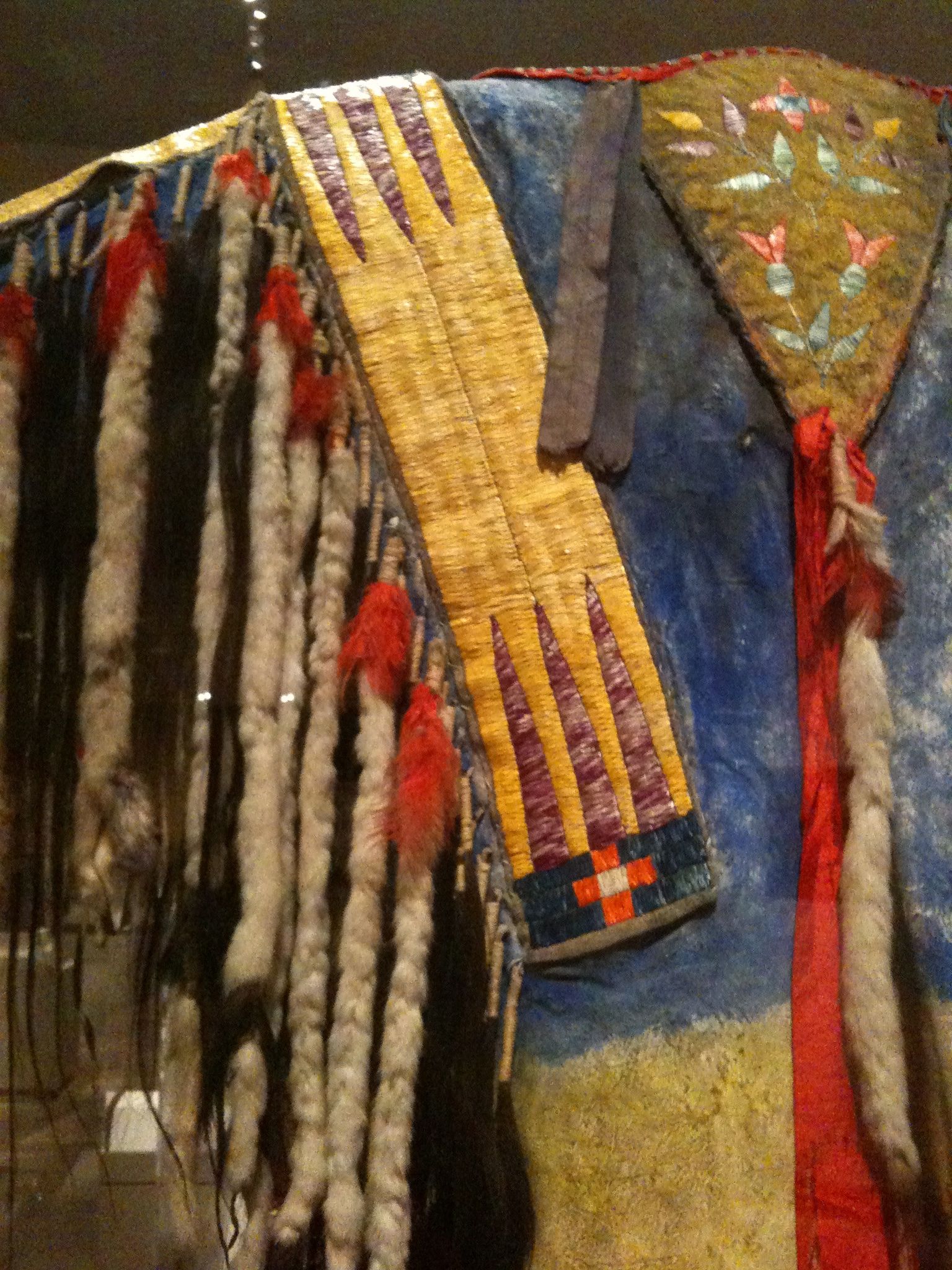
Detail of Possible bag (1900) from the Coe Collection at The Met

McQueen and the Paris runways have nothing over the 18th and 19th-century Native Americans who knew how to mix unusual materials and meanings into symbolic, functional, innovative, and salable accessories. A collector with an eye for the interesting is honored in the Met’s Michael C. Rockefeller wing in the micro-show, The Coe Collection of American Indian Art.

Ted Coe of Santa Fe was inspired to collect both ancient and contemporary works by Native Americans that caught his attention, amassing thousands of pieces that he bequeathed to the Met. He mounted a truly innovative show at AMNH in 1986, which linked old and new traditions in Native American art making, Lost and Found Traditions: Native American Art 1965-1985. The Met’s curators decided to honor his work by selecting forty objects.

Detail of Arikara Leadership shirt (1860) from Coe collection at The Met

The show isn’t all about wearable art, but we decided to focus on a few details that you might find of interest. We’ve organized the Flickr feed to document some of the oldest to the newest creations on display, ranging from mid-Mississippian carved stone tools from 4,000 B.C. to the cheeky dough bowl (1994) made by Chochiti potter Diego Ramirez.

In between, you’ll see an array of sophisticated and rough creations made by artists from the 1700s to early 1900s for Native American leaders, nomads, and tourists – all designed, embellished, and crafted in a variety of materials. Who knew that nuns taught Canadian tribal artists to embroider with moose hair? Enjoy the details.

What’s Up with Those Dots, Yayoi?

You’ve seen them everywhere over town…the enigmatic dotted signs with the face of Yayoi Kusama peering out. During Fashion’s Night Out, the Vuitton store was ablaze in polka dots, all a tribute to this reclusive Japanese pop-art sensation who burst upon the Manhattan art scene in the 1960s.

This is the last weekend to see her retrospective in person at The Whitney, but if you can’t make it, enjoy the Vuitton collection that she inspired (they’ve created a whole website).

Take a peek into the show.

And click on this link to see a documentary clip about this Kusama’s life. Be surprised and find out how to merge into infinity!

Girls Who Wear (Google) Glasses

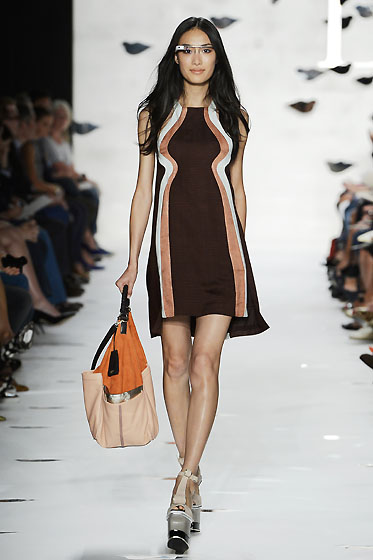
DVF’s Look #17 for Spring/Summer 2013

When Diane von Furstenberg and her models walked the runway at NYC’s recently concluded Fashion Week, they decided to give the world an inside peek at how it feels by recording the experience with Google Glass, the still-in-Beta avant-eyewear.

The innovative accessory shoots video, snaps pix, streams messages, and apparently looks good, so Diane decided to snap on the specs and take you with her (and her posse) on a fashion-tech flashbulb-popping stroll.

What’s cooler than Diane’s embrace of the new? Her Spring/Summer 2013 collection and her attitudes about life, potential, and empowerment. Take a look. Thanks, Diane!

Historic Silver Hoard on 77th Street

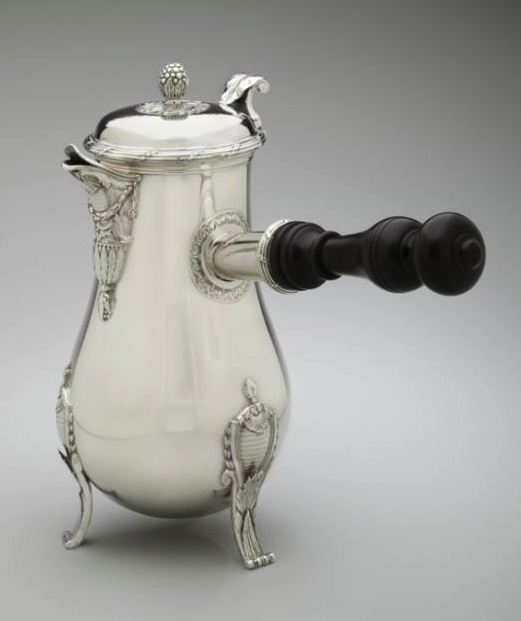
Silver coffeepot by Jacques-Nicolas Roettiers (1775-1776) sold by Gouvernor Morris to Robert R. Livingston, his successor as minister to France. NYHS, Gift of Mr. Goodhue Livingston

The New York Historical Society has done it again, hauling out all sorts of ornate, expensive, lovely silver items to tell the City’s history in the soon-closing exhibition Stories in Sterling: Four Centuries of Silver in New York.

Every time you peer into the reflections of dozens of silver pieces, the curators draw you into an historic event, person, or point in time in our collective urban history – silver brandywine bowls used by 1700s Dutch women to celebrate new babies, silver German medals modified into “passports” for travelers crossing Indian land in the 1750s, a silver coffeepot sold by Gouverneur Morris in 1801 to Robert Livingston after Thom J turned it down, and an elaborate 1863 Tiffany sugar bowl presented to the heroic engineer manning the guns on the Monitor in its showdown with the Merrimac the year before. Take a look at the on-line gallery.

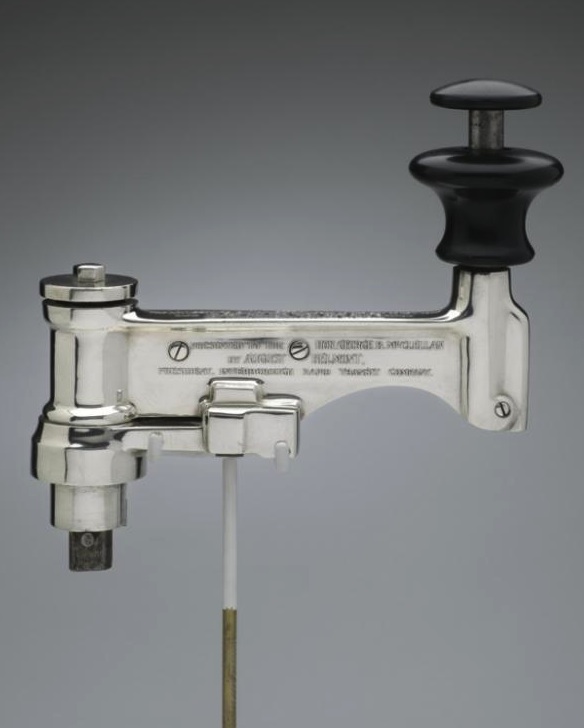
Silver subway controller handle (1904). NYHS, Gift of George B. McClellan, Jr.

Did you know that consumer culture of the 1880s required that up-to-date Victorian families have specialized serving implements and devices for every food imaginable? To prove this point, NYHS features just a smidgen of the 381 silver dinner service items presented to Commodore Perry in 1885 by the City’s Chamber of Commerce as thanks for his success in opening up trade with Japan — silver berry spoons, asparagus tongs, mustard spoons, nutpicks, bonbon dishes, and a zillion other things.

Most unexpected item: the Tiffany silver subway control handle that Mayor George B. McClellan Jr. used to drive our first subway train in 1904. He was supposed to take the IRT only as far as 42nd Street, but couldn’t let go of this slice of silver until he reached 103rd .

Virtual Trip to Design Island

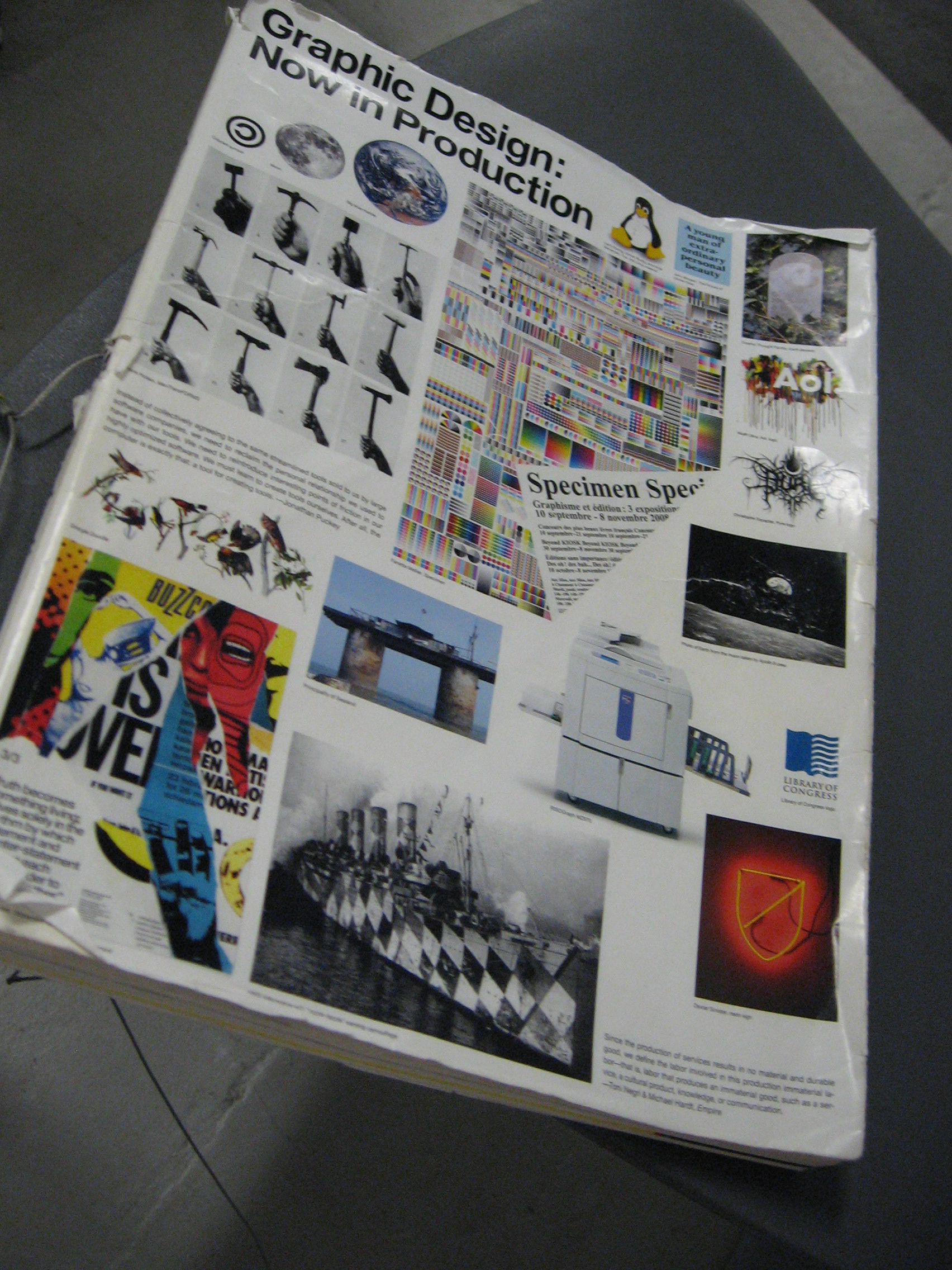
Let me guess. You didn’t get to see the spectacular design show that ended yesterday on Governor’s Island. While their mansion up on 91st Street is being renovated, The Cooper-Hewitt (a.k.a. Smithsonian) outdid itself by mounting a show inside Building 110 on New York Harbor’s hottest party-picnic location.

Graphic Design: Now in Production gathers great design produced since 2000 to feature what creative minds are offering. The summertime crowd loved it, and people flowed right from the ferry into the show and through the aisles where works were grouped around themes like storefronts, branding, typography, and print (it lives!). Check out the action on the Flickr feed.

The show is vibrant, interactive, mind-blowing, provocative, and fully documented in a 10-minute walk-through video with the curator Elleln Lupton that pretty much replicates the experience.

If you’re in LA, the show opens September 30 at UCLA’s Hammer Museum before migrating in 2013-2014 to Grand Rapids, Houston, Winston-Salem, and RISD.

Among our favorites are Brand New’s display, which asks visitors to vote (“before” or “after”) on redesigned corporate logos, and CognitiveMedia’s “RSA Animate: Changing Education Paradigms.”

Channel Your Inner Coward

Noel Coward, that is, by going for the full immersion experience at NYPL of the Performing Arts at Lincoln Center’s show that covers every inch of his creative life. Spend an hour or two probing the films, videos, music, and items that overflow at the exhibition, Star Quality: The World of Noel Coward.

It will definitely inspire you to write that musical revue, star in your own drama, entertain around a piano, paint a landscape that you love, snag a cameo in a film, be a friend to one and all, and party like it’s 1999.

You can begin by visiting the special website the NYPL has created and digging around in the decade-by-decade archive that keeps unfurling before you. Not all of the photos are dated, but you’ll see stage production photos from the original 1920s productions of Easy Virtue and The Vortex, Private Lives from the 30s, and Blithe Spirit from the 40s (go, Mildred Natwick!). There’s plenty of Lunt-Fontanne to go around in subsequent decades, and some classic shots of Elaine Stritch in Sail Away from the 60s.

If you need a quick refresher on all Coward’s shows, check out his portion of the Playbill vault.

But the walk-through at Lincoln Center goes well beyond just the songs, reviews, and drawing-room comedies with tales of his debut as a precocious child actor, iconic dressing gowns, inscribed gold and silver cigarette cases, a piano festooned with his favorite celebrity portraits, his “spy” career during WWII, his Vegas career (tuxedo in the desert?), and his TV/film work.

In fact, the lights, camera, and action are on full display with NYPL’s multiple viewing stations around the show, including some early 1930s footage of Coward’s musical stage reviews that are filmed from the wings, including a parade of “Children of the Ritz” and the Broadway debut of “Mad About the Boy”.

Go to see this now, and don’t miss the slide show of recently discovered private 3-D photos from the 1950s that is just inside the door.

Cool Off in Dublin Water Works

During the summer heat wave, there’s a way to cool down in Chelsea and let the team from the Science Gallery at Trinity College challenge you to think differently about the splashing water you take for granted.

Take advantage of the final weeks of Surface Tension: The Future of Water at Eyebeam Art & Technology Center on West 21st Street, an incubator for digital art/design experimentation. For the past two-plus months, they’ve hosted an exhibition (first curated in Dublin) on the social-economic-political tensions created by water scarcity.

As soon as you walk into Eyebeam, you’ll be struck by the plethora of infographics that show you just how much water bounty that we have in the United States versus the availability and consumption per capita in the rest of the world. What’s your water footprint?

One of the ways you’ll find out is by looking at The Virtual Water Project, a celebrated infographic by German designer Tim Kekeritz, that depicts everyday objects and the amount of water required to produce them. Download the iPhone app. For $1.99, it will blow your mind (but not your budget) and continue to deliver a truly a conscious-raising experience of epic proportion.

Another unforgettable experience is Bit.Fall by artist Julius Popp, an installation that translates words from Internet newsfeeds into bits that are reconverted into a stunning waterfall of words:

There’s so much great stuff: multiple takes on water consumption, conservation, next-gen thinking, third-world innovations, and art-meets-technology solutions. Like Tele-Present Water by David Bowen, which recreates actual water movements from NOAA data being collected from a random buoy out in the ocean.

If you can’t get over to Chelsea for an hour, just click through the thought-provoking objects, artworks, design solutions, documentaries, and thought pieces by the scientists, artists, engineers, and designers whose works are on display on the Dublin microsite.

Curtain Comes Down on Follies

Unfortunately, the show has closed: The Great American Revue exhibition at NYPL’s Library of Performing Arts at Lincoln Center ended its run last weekend.

Performer in one of The Passing Show revues (1912-1919), which spoofed politicians and Broadway shows (kind of like “Forbidden Broadway”)

Today, Broadway pretty much consists of musicals and dramas, but back in the day, the “tired businessman” was entertained by chorus lines, comics, impersonators, satirists, and the best songwriters. (Think Cohan, Berlin, Rogers & Hart.)

Perhaps the note found in the archives inside a Follies costume swatch book sums it up: “Costume designs are attached. Lyrics will be written if you are interested.”

This terrific NYPL show explored how follies and revues evolved between the years 1902 (the dawn of the Hammerstein Roof Garden shows) to 1938 (when topical revues of the Great Depression, such as Pins and Needles made their mark).

The curators’ chronology and commentary is brilliant, chronicling the four stages of development: beginnings, experimenting with formats, celebrating the “body as performance”, and the emergence of political satires (1930s). (Download the show’s mini-program to get the Cliff Notes version.)

Chorus line from Earl Carroll’s Vanities (1923-1940), which featured the Most Beautiful Girl in the World

Who knew that the original Hippodrome was also built by the team that built Coney Island’s Luna Park? Who knew that George White invented “souvenir programs”? Who knew that Martha Graham got her start in settlement-house venues way back when the Neighborhood Playhouse was at the Henry Street Settlement? Who knew that audience participation shows and mini-revues on rooftop eating-drinking gardens predated the Brooklyn Bowl mash-up by 100 years?

Enlightenment Under the BQE

Strolling along The Fence under the BQE

Actually, it’s in the part of Brooklyn Bridge Park that sits next to the tiered speedway, over at under-construction Pier 3, just beyond the cattail ponds flanking Pier 1. Today and next weekend (Thurs-Sun) is an opportunity to peek at the work of some of the best young photographers on the planet, get some insights into the human condition, and eat/drink in the best Brooklyn style for free. Check out the photos.

Photoville’s long fence of photos is the preamble to this free shipping-container-based photo show. Once you get to Pier 3, you’ll step into other worlds through the eyes of high-quality photo documentarians.  Check out the portraits of homeless transgender teens by Josh Lehrer, or see what it’s like to live in a tent in Haiti (Wyatt Gallery) or a basement in Beijing (Magnum’s Sim Chi Yin). Two Nooderlicht containers feature the work of eleven female photographers that have documented live in prisons in South Africa, Burundi, the United States, and elsewhere.

Josh Lehrer’s shipping-container gallery with portraits of homeless transgender teens at Photoville

Different food trucks rotate through Brooklyn Lager’s beer garden every day, but on Saturday we scored with Rickshaw Dumpling (remember them from The Lot last summer?) and the “grilled cheese truck” (@morristruck) that’s always catering to long lines in DUMBO.

There’s no excuse not to stroll over, and bring your dog, too. They’re welcomed in the containers, in the beer garden, and in the fully outfitted dog run.