Learn Your ABCs (of Fashion)

Can you name a fashion designer for every letter of the alphabet? Test your skills by visiting FIT Fashion and Textile History Gallery to see Fashion, A-Z.

FIT uses its street-level gallery to showcase its permanent collection of 50,000 garments and 30,000 textiles, and this time they’ve decided to test your alphabet skills as well, by starting with Armani and Alaia arranging the installation mannequins right through to Yohlee and Zoran.

Boudicca ensemble, Fall 2006, England, museum purchase

If you miss it, don’t worry. This is only Part 1 of the total extravaganza. Part 2 begins May 23.

Oil Drills in Manhattan

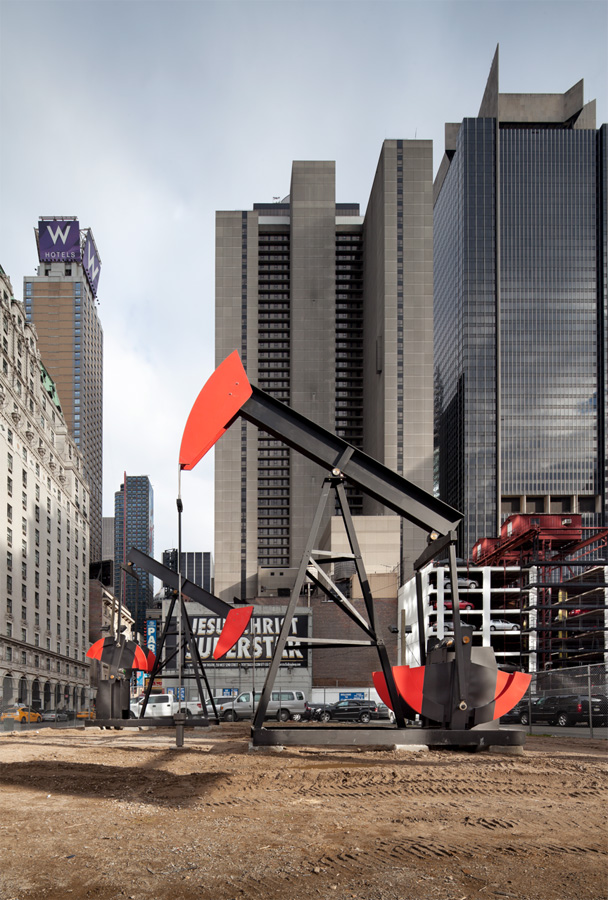
 Have you seen the latest art installation in the Theater District? It’s Josephine Mecksper’s Manhattan Oil Project – two 25-foot tall oil pumps churning away 4 hours a day (twice a day) weekdays and 8 full hours each weekend.

Go to the undeveloped land on the southeast corner of Eighth Avenue and 46th Street and bring your friends (and camera) before it’s gone.

Sponsored by Yvonne Force Villareal’s Art Production Fund, which produces hard-to-produce artist installations, this one had special help from Sotheby’s and The Shubert Organization, which know a thing or two about mining riches in Manhattan.

Is it actually pumping oil? Feel free to stand there and answer out-of-towners questions on that one.


Hey, Socrates, What Do You See?

If you’re hankering for last summer’s BMW Idea Lab, zoom in on the conversation on the future of Long Island City and the shoreline near Socrates Sculpture Park at the Noguchi Museum’s visionary show Civic Action.

Noguchi and Socrates have commissioned four artists to work with architects, designers, and urban planners to reimagine the surrounding neighborhood, a mélange of homes, high rises, light industry, and Costco. The proposals by Mary Miss, George Trakas, Natalie Jeremijenko, and Rirkrit Tiraanija are on display at the Noguchi for a few more days. Other related installations will appear at Socrates in May.

If you can’t get to Queens, go virtual by checking out three videos and watch the brainstorming among artists and planners:

Enjoy the discussion and contemplate some exciting futures.

Beaton Leaving New York

It’s the final countdown at the Museum of the City of New York’s tribute to Cecil Beaton’s New York Years – an installation of scrapbooks, books, drawings, stage costumes, set designs, and photographs by one of the 20th century’s leading chroniclers of celebrity, night life, and royalty.

The array of fashion, society, stage and screen icons is astonishing – from deWolfe and Elsa Maxwell through Monroe, Garbo, both Hepburns, and right up to Jagger…all shot in New York, many for Vogue (including that famous photo of those Charles James gowns).

You’ll get the idea as you step back in time via this British Pathé film documenting Beaton’s 1968 exhibition at London’s National Portrait Gallery.

And who knew there was a licensed fabric collection inspired by his work? Check out this blog featuring some his best photos.

Walk the US Fashion Timeline

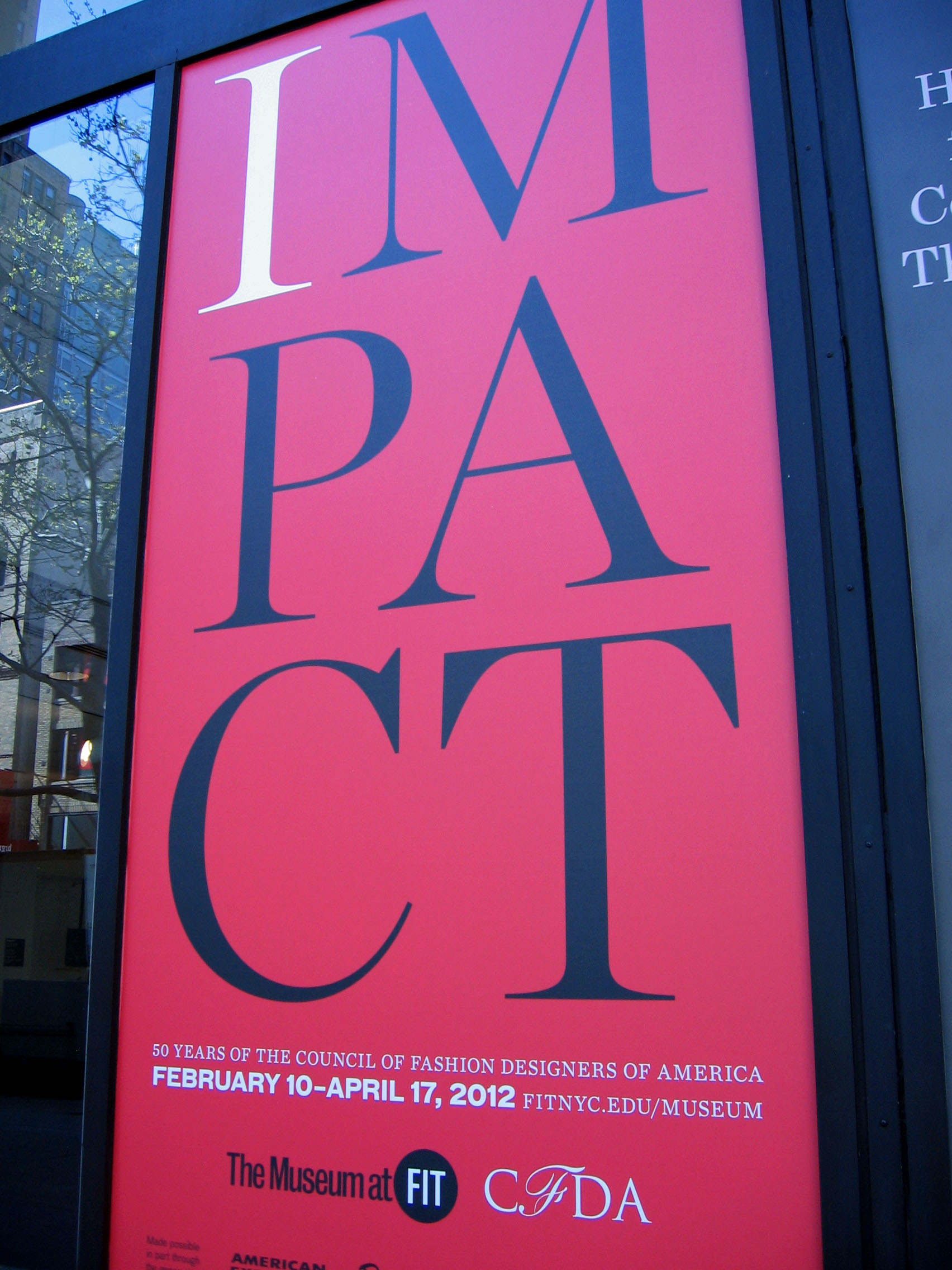
There’s a few more days to walk among 50 years of American fashion history at FIT in Impact: 50 Years of the CDFA, a partnership between FIT and the Council of Fashion Designers of America.

The collaboration includes an interactive timeline that steps through some of the most significant moments in the industry over five decades.  If you can’t get to the gallery to play with this iPad production, take a walk through history online, or enjoy E!’s  YouTube tour with the show’s curator.

Oscar, Geoffrey, Zac, Carolina – They’re all here. The main exhibition space is lined with 100 iconic work, each chosen by the designer to reflect their best – Halston’s liquid gold strapless dress (1976), Diane’s leopard print wrap ensemble (1974), Ralph’s Navajo-inspired knit jacket and concha belt (1981), and Donna’s wrap skirt with oversize belt and matching cuff (1985).

High-drama awards go to Zac Posen’s sculpted red gown (think Charles James) and Norma Kamali’s parachute fabric and feather creation (think Alexander McQueen).


When Coffee Houses Were Facebook

You have one more week to find out what the 18th century social network was like at the intriguing exhibition at New-York Historical on the events that propelled simultaneous American, French, and Haitian revolutions.

Girodet’s 1797 painting of Jean-Baptiste Belley from Versailles

As soon as you enter Revolution! The Atlantic World Reborn at the New-York Historical, you find yourself inside the social hub a Caribbean seaport city in the mid-1770s – the coffee house, where people reread month-old newspapers, asked arriving seamen for news, discussed European imperials, and complained about taxes, trade, and tyranny.

Winding your way through the history maze, you’ll encounter the original penned version of the Stamp Act (1765), the first edition of Thomas Paine’s Common Sense (1776), and Napolean’s approval to sell Louisiana to the United States (1803). The story line weaves in the slave trade, the Haitian revolution, and the rise of voodoo in the Caribbean – a unique retelling of rebellion in the time of colonialism.

See the artifacts on line, but connect the dots to revolution by dropping into the exhibition this weekend.

And don’t miss the lobby painting featuring New York’s first big-time 18th c. social network — the Tontine Coffee House on Wall and Water, built by the brokers in 1793 to organize The New York Stock Exchange.

After Easter Bonnets

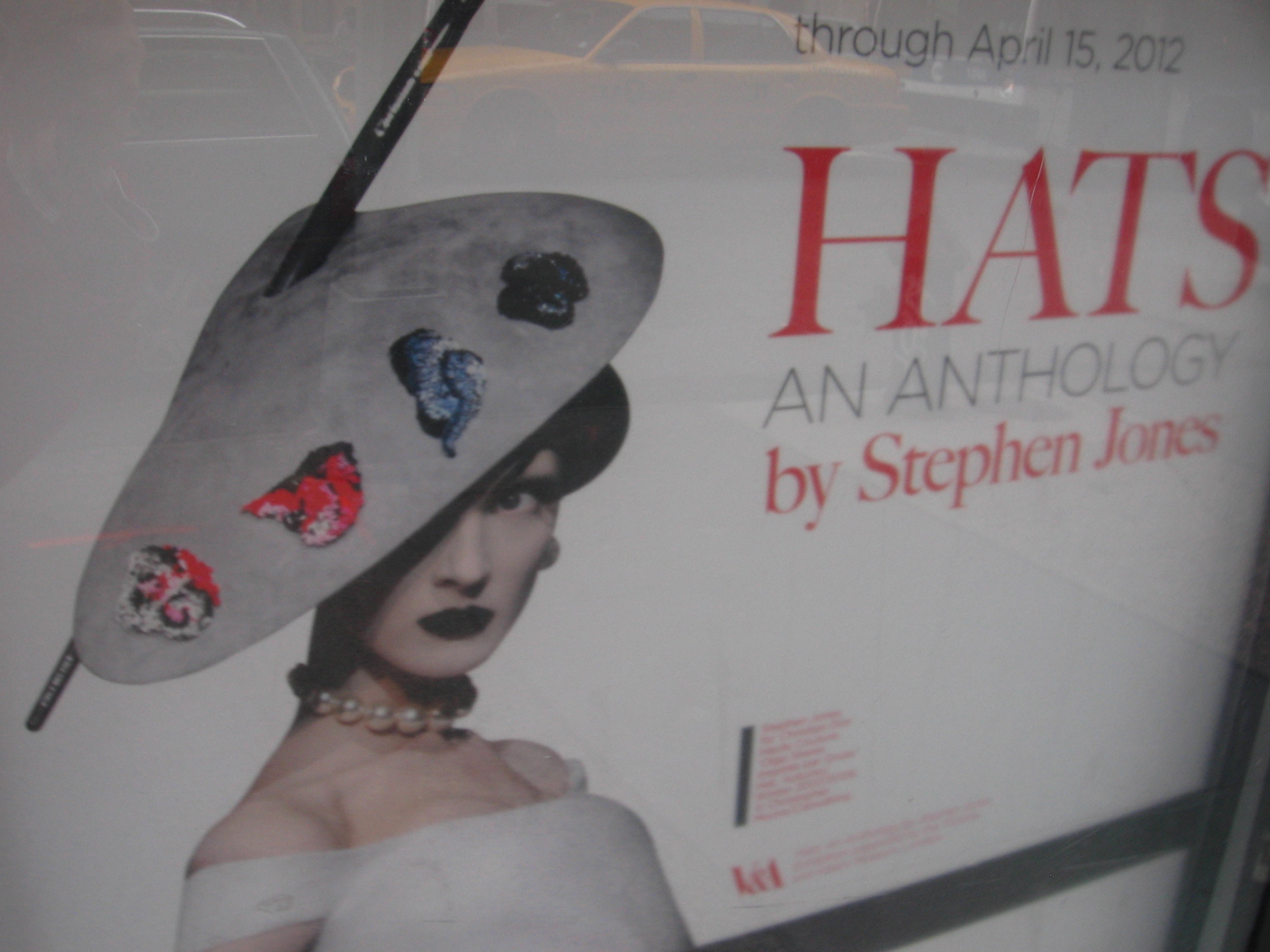
Easter’s over, but the bonnets are still on display for one more week at Bard. Be sure to catch Hats: An Anthology by Steven Jones, with significant historic headwear pulled from the stellar collection at the Victoria & Albert Museum in London.
It’s three stories of mini-collections grouped into themed cases for Helmets, Turbans, Hoods, Straw, Paper, Felt, Feathers, and Flowers. The surprise is trying to decide which are contemporary, vintage, or truly antique. Typically here in the States we don’t get to see gems such as a knit wool apprentice cap from 1550 London, and a leather jester’s hat from the 1600s.

More modern chapeaux include a case of NYC designers (Eugenia Kim and Patricia Underwood), a felt beret from Mary Quant, a creation from Lola Hats made entirely of The New York Times, and many, many celeb hats, including those worn by Maurice Chevalier, Gypsy Rose Lee, Leigh Bowery, Mick Jagger, Cecil Beaton, the Mousketeers, and Warhol’s wig.

Perhaps the most startling object in the display isn’t a hat at all, but a facsimile of a handwritten letter (dated November 14, 1960) from Jackie Kennedy to Bergdorf’s custom millinery sales chief Martha O’Conner, describing and sketching the pillbox hats (to be made by Halston) she envisioned for JFK’s upcoming inauguration. In the bottom margin, Jackie adds, “P.S. It was so pleasant when I didn’t have to wear hats. I still feel absurd in them.”

Check out the on-line highlights and the installation views, (or the client salon or the gallery from the original 2009 V&A show) but there’s no substitute for experiencing three stories of creative, delightful, and historic hats in person.

Google Collects NYC Museums

Take a trip around the world in art via the galleries of the Google Art Project – an on-line collection of the best from 151 museums around the world.

In our museum-rich city, here’s how NYC stacks up with its images (so far):

  • Cooper-Hewitt 1,568 mostly decorative prints, patterns, watercolors, with a few objects
  • Rubin 111 masks, statuary, but mostly (what else?) our favorite tangkas (featuring Mahakela, our favorite demon)
  • MoMa 108 all-stars and then goes wild from all the other departments
  • The Met 80 paintings and images from just about every curatorial department
  • The Frick 16 of the big guns (who needs more when you have these?)

Pick out a museum, click on an artwork, and learn all the details of the piece. Easy.

When Theater was Fashion

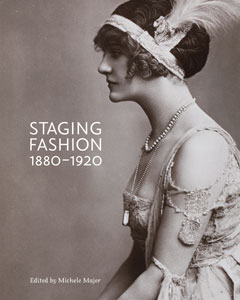
With everyone still mourning the demise of Bill’s Gay Nineties, fans of US theater of the early 1900s can gaze for one more week at the fashionable women who trod the boards way back then at the Bard Graduate Center’s show, Staging Fashion, 1880-1920.

Like the FIT’s Youthquake show, graduate students contributed heavily to this exhibition gem, which explores the intersection of theater and fashion back when stage actresses first became pop icons. Photographers needed celebrities to promote their studios; actresses needed to keep fans supplied with a steady flow of images; and designers wanted the latest to be seen on glamorous, trend-setting actresses.

The show on Bard’s top-floor gallery features clothes and images of three of the most popular actresses – Jane Hading, Lily Elsie, and Billie Burke. Check out the highlights – mass-produced postcards, theater fan magazines, advertisements, and personal testimonials for consumer products. Has pop culture really changed much? Judge for yourself.

Neue Gives the Met and MoMA a Run for Their Money

April 2 is the last opportunity to see for the spectacular array of riches acquired by Ronald S. Lauder and on glorious display in the 1914 rooms of the Neue Galerie as part of this establishment’s tenth anniversary.

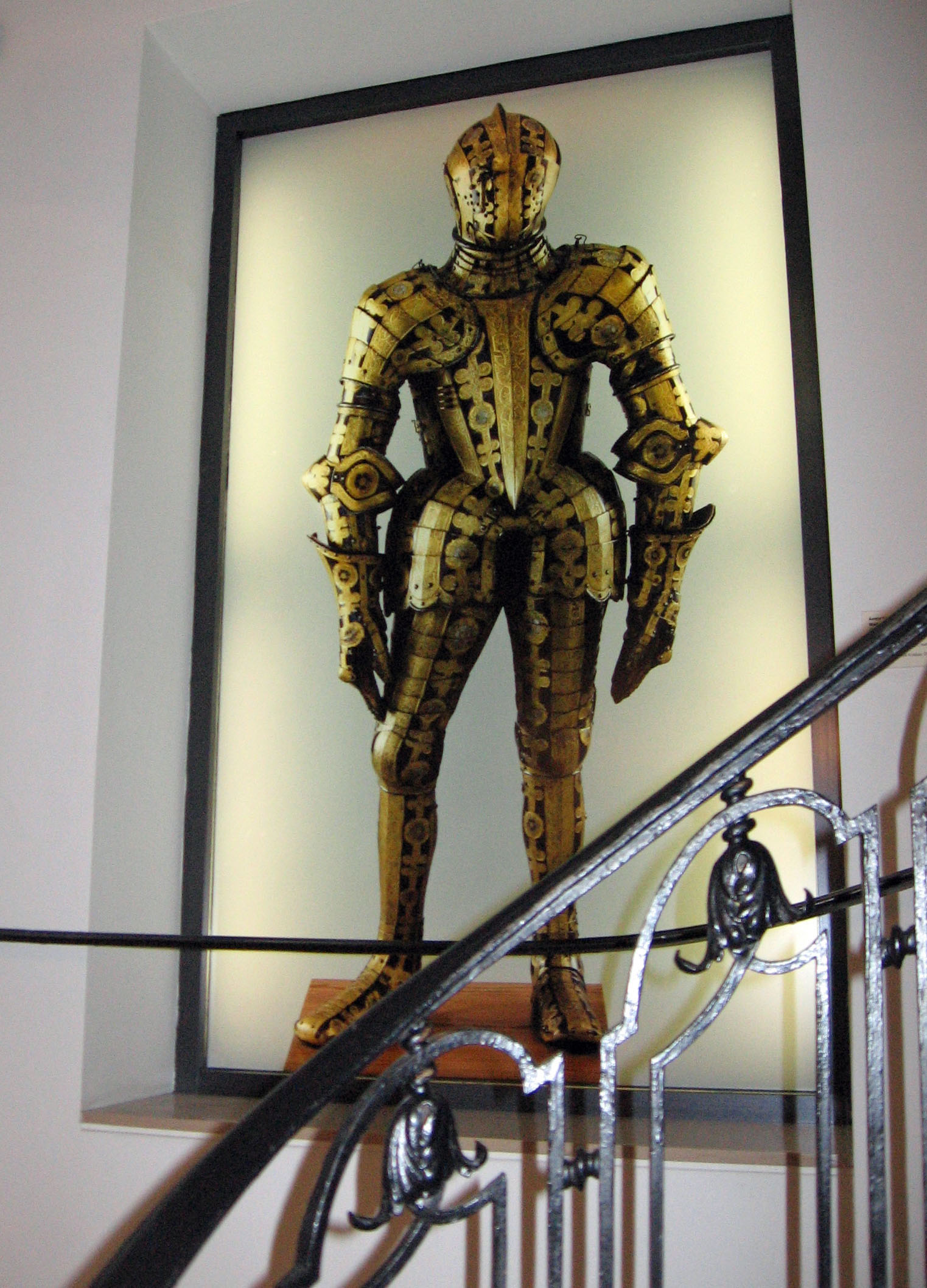
Did you ever think that you’d see a wall of Cezannes (including a self-portrait) gazing down at full-standing suits of Renaissance armor, inlaid pistols, a German crossbow, and two fully armored knights astride bedecked horse mannequins? You really don’t know where to look first, and neither, it appears, does Cezanne.

If you took the entire 5th Floor at MoMA and shrunk it down to fit the second and third stories of the Neue mansion, that’s what you get – incredible works by Picasso, Degas, Matisse, Kandinsky, Klimt, Shiele, and Brancusi alongside Adele and all the other Klimt favorites. Even Gerhard Richter and Sigmar Polke are there.

Wish you could see the Seurat show at MoMA? Or the Van Gogh drawing show that was at the Met? There’s an exquisite, dimly lit room packed with drawings that will make you feel that you’re right back at those historic exhibitions.

Take a look at the slides from the show, but try to get there now and enjoy the wealth. Bravo to Lauder.