Hirschhorn Goes Overboard at Gladstone

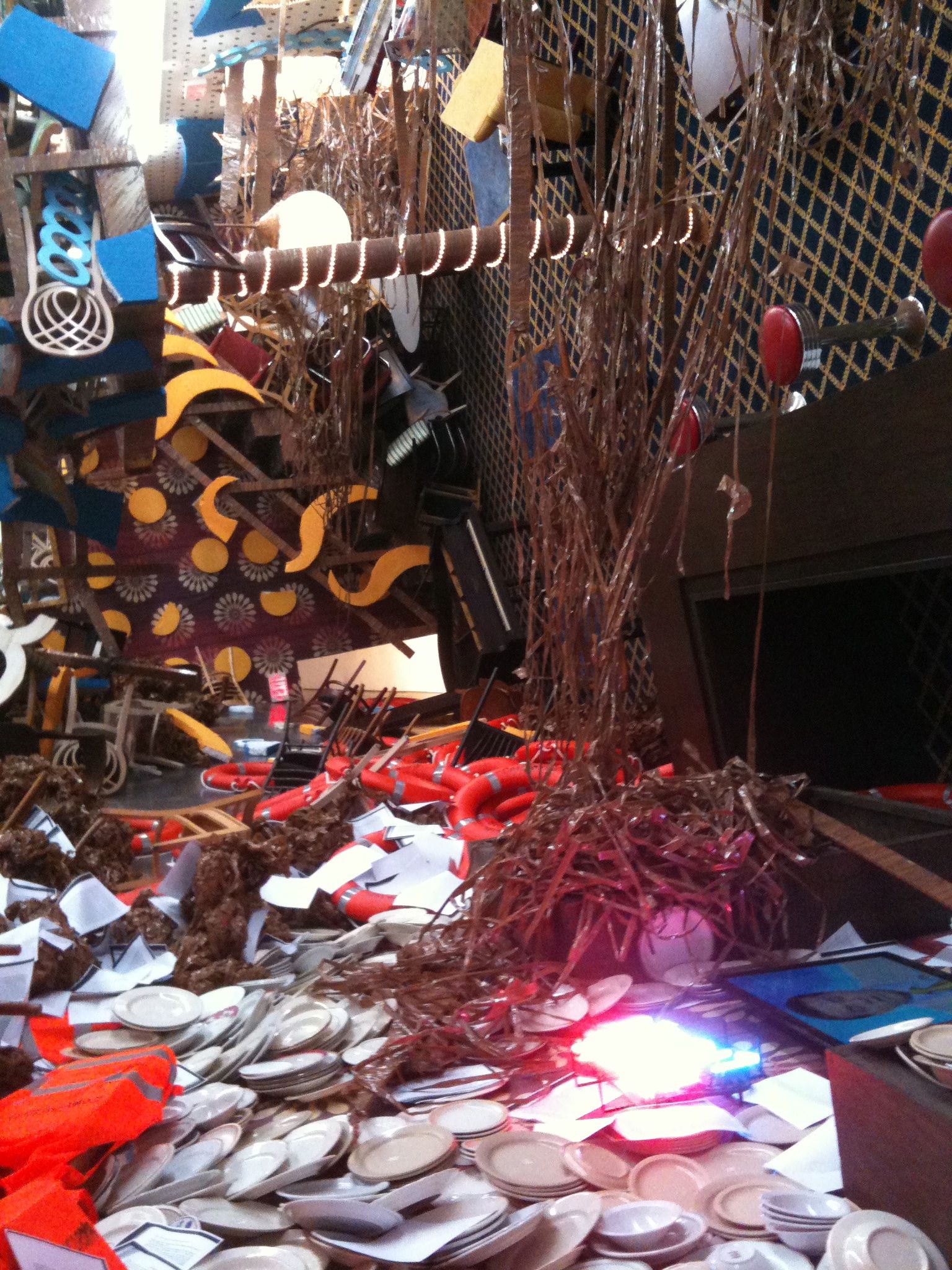
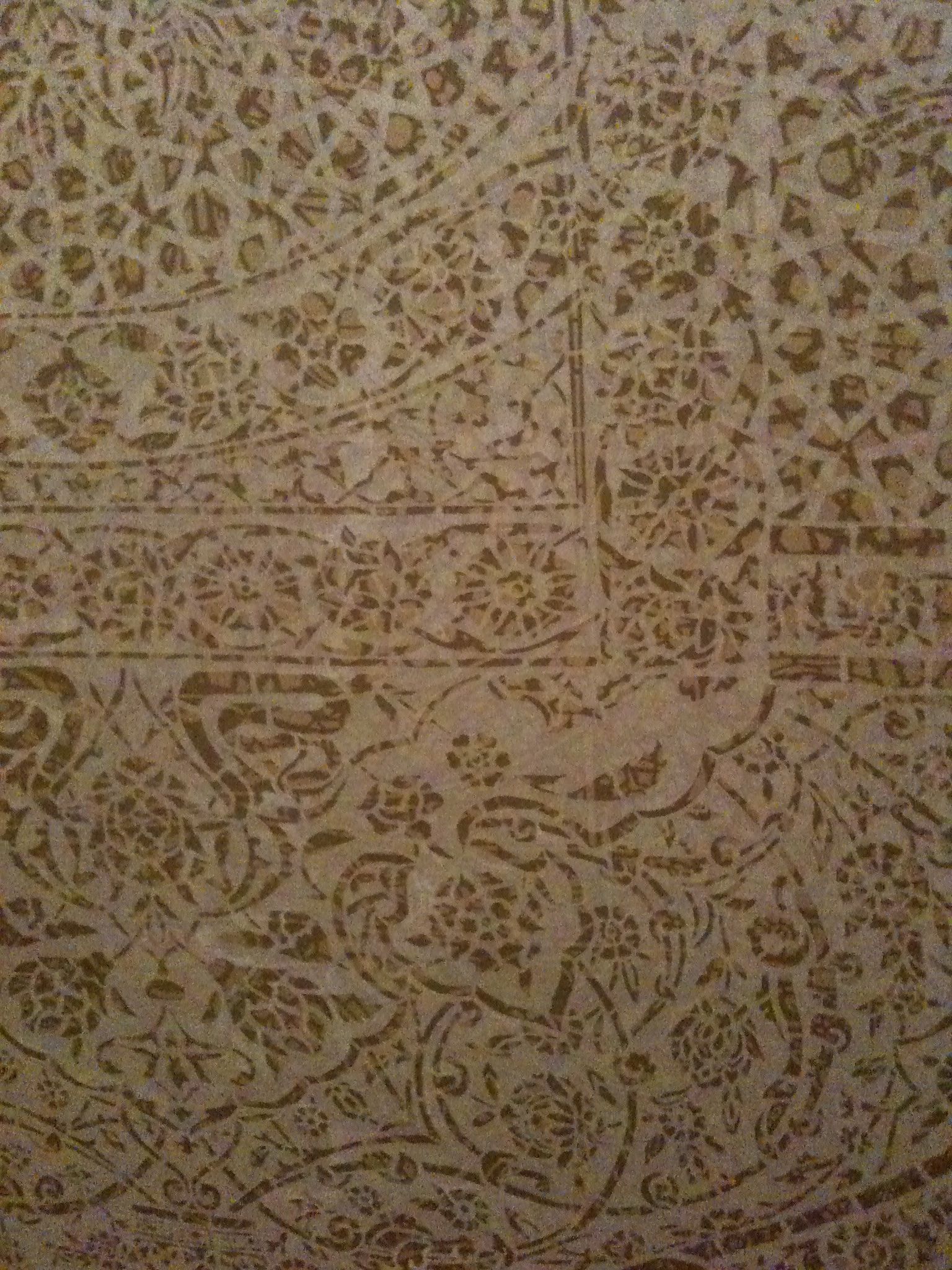
This may look like a Judy Pfaff installation, but it’s a close-up of the engaging, room-size environmental work by social commentator Thomas Hirschhorn on view until October 20 at Gladstone Gallery in Chelsea.

Concordia, Concordia is a riff on the tumultuous, larger-than-life grounding tumble of the Italian cruise ship, Costa Concordia in January 2012. Gladstone has other close-ups on its website, but its worth a walk over to 530 West 21st to get the full experience for yourself.

Hirschhorn was inspired by the furniture-akimbo nature of the interior photos of the luxury liner and the refusal of the ship’s captain to tend to the self-inflicted disaster.  There’s a lot to look at – including Hirschhorn’s cheeky inclusion of The Raft of the Medusa.  Look hard. You’ll find it. There’s no safe place.

Afghanistan in MoMA’s Atrium

Afghanistan is in the house as part of MoMA’s tribute to Italy’s art povera superstar in their soon-to-close exhibition Alighiero Boetti: Game Plan. Although Boetti’s retrospective takes up room on MoMA’s other floors, it’s the Afghanistan-made kilims and other art works that really serve as the focal point of the visitor experience. Check out the photos.

Get there to see the series of embroideries on tissue and the grid-within-grid rugs with patterns designed by art students and woven by Afghan artisans. Up until the Soviet invasion in 1979, Boetti worked with artists there to carry out intricate woven collaborations – including over 150 maps of the world. Boetti traced the maps on canvas and let the weavers add whatever text they wanted and pick all the colors. A few are on display here, and you can hear a pretty amazing description about the logistics of Boetti’s collaborations from MoMA curators in a short audio.

Installation view of Alighiero Boetti map (1979), embroidered by Afghani craftswomen

You’ll enjoy the densely packed embroidery Everything, and the amazing tapestry of the thousand longest rivers in of the world (1976-1982). It took Botetti and his wife years to classify all of the rivers, and if you’ve ever seen this on display before at MoMA (it’s in their collection), it’s an amazing textile that never fails to draw a crowd.  You’ve got to see it in person.

Check out MoMA’s interactive site for the exhibition, but run over to examine all the Afghani creations up close. Enjoy the trip.

How di Suvero Makes Steel Move

Rust Angel sculpture (1995) by Mark di Suvero at the edge of the Parade Ground at Governors Island

Even if you haven’t caught the monumentally good outdoor installation of Mark di Suvero’s work on Governors Island (check out the photos), the folks at Storm King Art Center are making sure that you don’t miss it.

Thankfully they asked filmmaker Dirk Van Dall to capture how it was all transported down the Hudson from Storm King’s 500-acre campus an hour north of the City. The short film follows di Suvero around the Island to inspect the (literal) heavy lifting.

In 2010, di Suvero won National Medal of Arts, and in the film he talks about his lifelong fascination with steel, his early employment at the Fulton Fish Market, how neighborhood kids inspired him to begin creating large-scale fun works, and how he makes the seemingly immobile move. Listen in.

Drop in at the Governors Galleries this weekend to talk with the Storm King folks, and join their walking tour of the works at 2pm.

Ride the M-15 to the 19th Century

The SBS M-15 (First Avenue) bus drops you right at the door to the 19th century lifestyles and handiwork inside the South Street Seaport Museum’s Compass: Folk Art in Four Directions show, mounted by the American Folk Art Museum (which has just hired a new director and is now on better financial footing after selling its 53rd Street building to MoMA and decamping back to its space near Lincoln Center).

The Seaport (currently under the management of the Museum of the City of New York) invited the Folk Art folks to curate a show for four of its newly opened galleries, and it’s a joyful, informative stunner. Stacy Hollander, senior curator, selected art that reflects the spirit of the Seaport’s Schemerhorn Row, a series of six 1810 buildings that originally housed coffeehouses, hotels, and other small businesses serving the bustling sea trade.

Whale ivory and bone canes (1860); AFAM

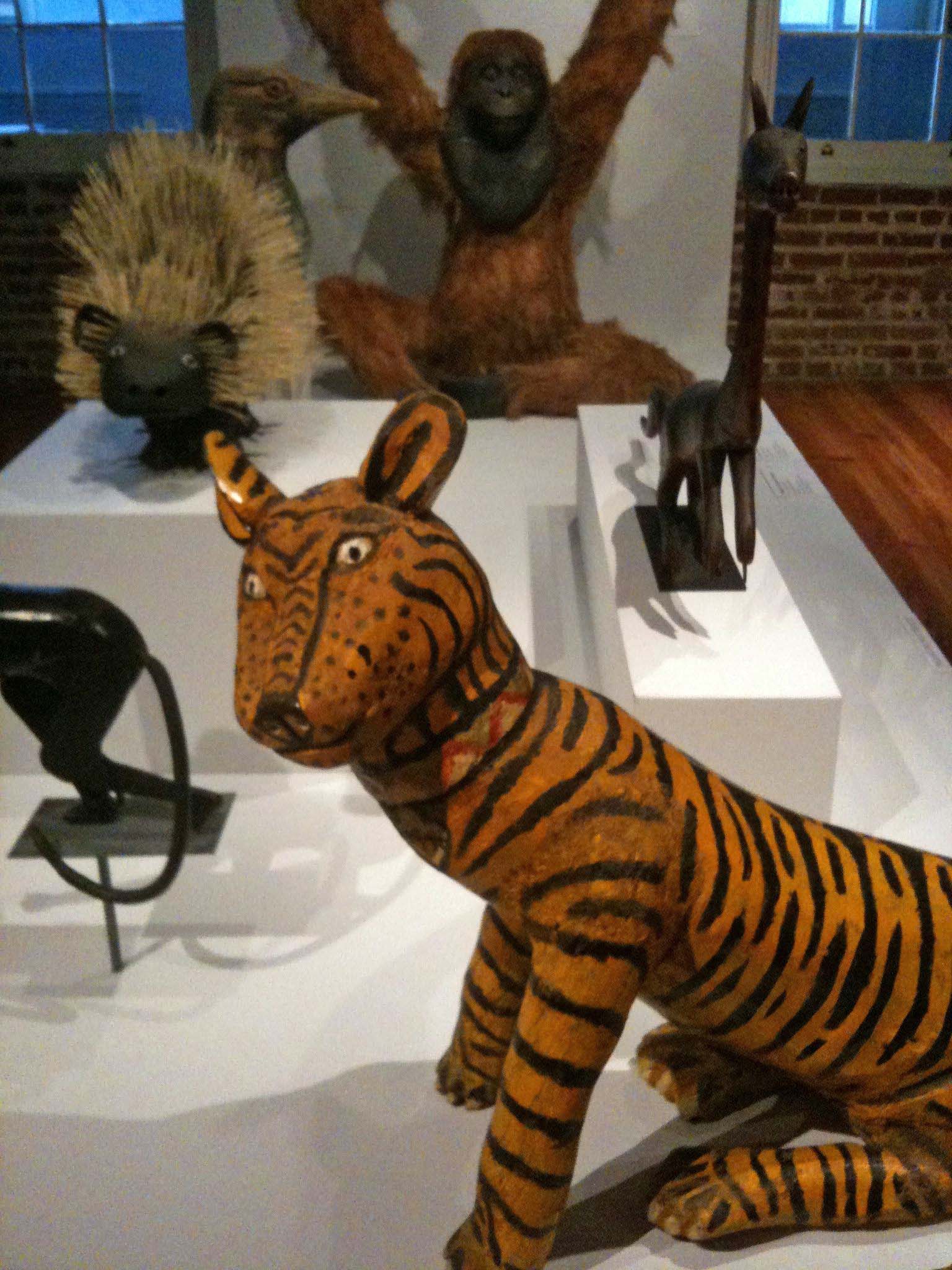
In the Exploration gallery, you’ll encounter a vibrant folk-art menagerie, evoking the exotic adventures awaiting seafarers, who would be gone for years at a time, carvings done during the voyages, whale-bone walking canes, and imports from China. In the “social networking” gallery, the Seaport has exposed an original wall, covered in 19th-century graffiti, from the coffee houses of old downtown, when Water Street was the actual East River waterfront.

Everyone should support both of these museums (and get free admission if you sign up for the Seaport’s mailing list). The Museum and the SBS M-15 are in operation seven days a week.

Get Out Your Credit Cards for FNO

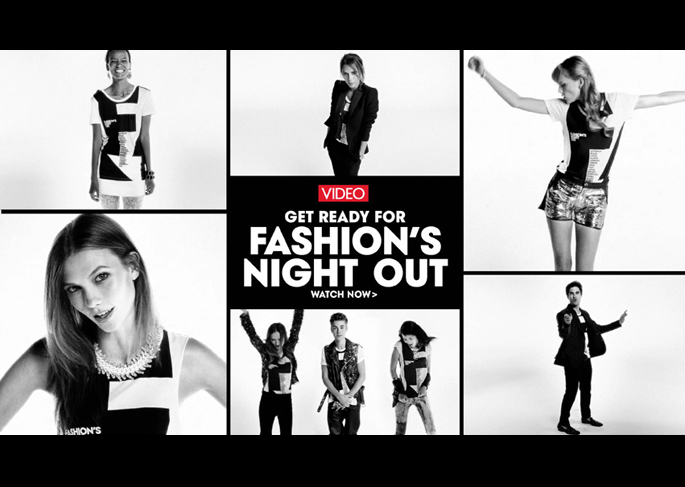
Better use the holiday weekend to rest up, since Fashion’s Night Out happens next Thursday!

The tents are going up at Lincoln Center, the stores are getting ready for the onslaught, and the NYPD is gearing up for crowd control everywhere in the City.

Check out the New York event listings at the web site, or (if you’re not in NYC that night) the FNO worldwide or elsewhere US sites. Hey, there are even events planned in Wyoming and online, so there’s no excuse not to shop, contribute to a cause (by buying stuff from the collection), and have fun all night!

If you’re in NYC, start early, have a strategy, and be prepared for crowds. The web site lets you sort the 800-plus events by neighborhood, shopping category, and the type of event you’re hankering for (pop-ups, fashion shows, new product launches, charity-focused, DJs, designer appearances, and block parties).

Check out the video to get in the mood.

Hidden Iranian Gems at The Met

Contemporary Iranian Art installation at The Met with Tanavoli’s sculpture and Farmanfarmaian’s mirrored glass mosaic.

You really don’t expect to find stunning contemporary art works way, way back in a remote corner of the Islamic Art wing, and you really don’t expect to see new, sparkly stuff from Iran. Surprise!

Once you make your way back on the second floor, past the 13th century enameled and gilded glass from Syria, you’ll spy a secluded gallery with shimmering light. It’s Parviz Tanavoli’s dramatic Sufi-inspired sculpture at the center and Flight of the Dolphin, a mirrored mosaic by Iran’s most famous female artist casting its magic.

Monir Shahroudy Farmanfarmaian, who made the mirrored mosaic, is probably Iran’s best-known female artist. In 1944, she studied in New York at Cornell and Parsons and got to know art-world luminaries like Pollack, Stella, and Warhol. It changed her life and her art, as you’ll hear in this video shot inside the gallery by ArtAsiaPacific.

Detail of Still Garden (2011) by Afruz Amighi.

Last weekend, the tiny show enjoyed a steady stream of visitors. Most were captivated by another truly remarkable piece – Afruz Amighi’s Still Garden. The closer you get to the wall-size hanging, the more amazement you’ll have. Afruz has cut intricate patterns into thin polyester fabric that’s commonly used to construct refugee tents and has projected white light through it. The light-shadow play inches behind have a mesmerizing effect that you just have to experience in person.

Although everything’s now in the Met’s permanent collection, it’s worth making the journey through the Arab Lands upstairs and experience the light from Iran at the end.

Weegee’s New York Nights, Gangster-Style

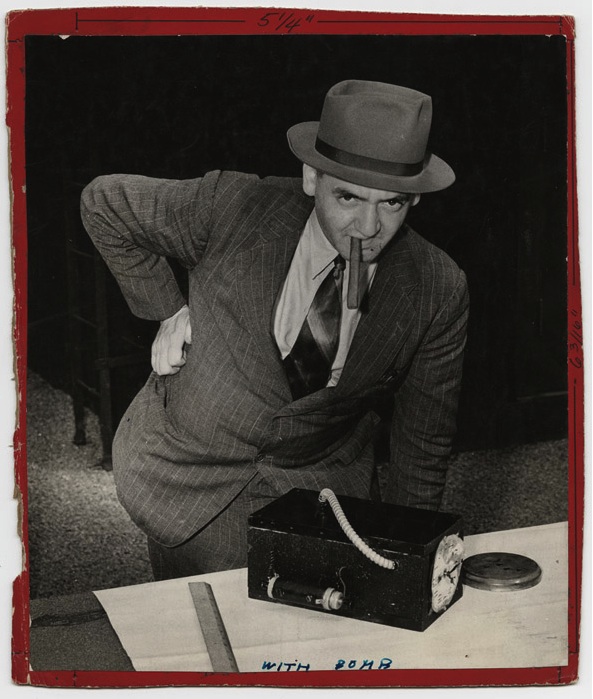
Weegee, With Bomb, 1940. © Weegee/International Center of Photography.

See for yourself if much has changed in New York since the late 1930s, when Weegee worked the night beat, listening on the police-band radio for unfolding action, zeroing in on lurid murders, capturing the stares of bystanders, and doggedly getting the photo-story every night.

Check out the final days of the exhibition Weegee: Murder is My Business to see plenty of action. Weegee (Arthur Fellig) slept in a cold-water flat across from Police Headquarters downtown and sold his photos to one of twelve dailies published in the City in the late 1930s. He tried to “humanize” the news, so lots of the photos in the show feature reactions of bystanders to sensational crimes and scenes of mayhem.

The show occupies most of the International Center of Photography’s lower level, and is filled with a recreation of Weegee’s room, his camera equipment, flash bulbs, press passes, and terrific interactive displays that bring you closer to one New York’s great documentarians of the Thirties and Forties. There’s even a set of photos of a gangster rub-out alongside the actual police crime ledger that documents what happened in Little Italy that night.

Installation view of Weegee’s flat. © International Center of Photography, 2012. Photograph by John Berens.

Maybe the curators are having fun with us, but it’s interesting that there’s a slightly out-of-the-way wall of Weegee photos of cross-dressers being arrested in 1939 alongside a gallery of 19th-century images of Jefferson Davis in a dress (President in Petticoats!), and another gallery with Christer Strömholm’s gorgeous shots of the early Sixties “ladies” working the Place Blanche in Paris.

It’s all sensational(istic) and Weegee would approve.

Christer Strömholm, Belinda, 1967. © Christer Strömholm/Strömholm Estate.

Museum as Model with Temple and Condo Plans

Did you miss the Francesca Woodman show at the Guggenheim? You can catch one of her spectacular pieces at the Met in the small contemporary photography exhibit, Spies in the House of Art.

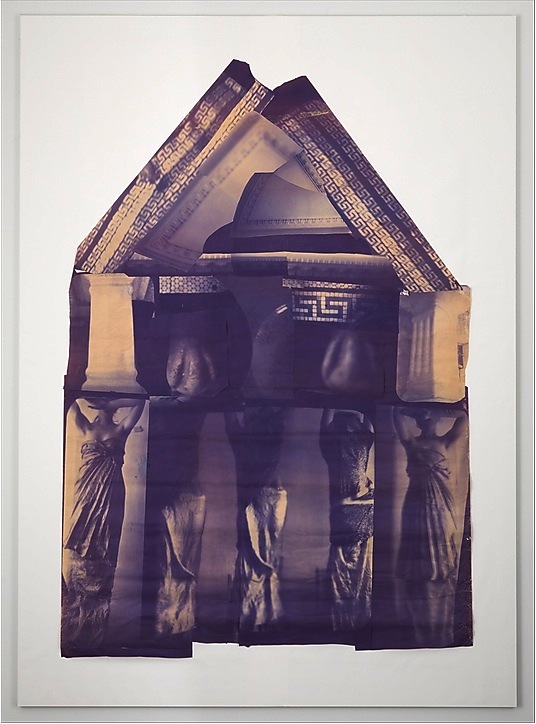
Francesca Woodman’s Blueprint for a Temple, 1980. Diazo collage. Gift of George and Betty Woodman to the Metropolitan Museum, 2001.

The show features works by photographers, filmmakers, and video artists inspired by museums, collections, and exhibitions. The standout (Cindy Sherman’s Italian history portrait notwithstanding) is the epic piece by Woodman:  the large-scale Blueprint for a Temple made up of 29 photographs on blueprint paper. The piece uses live models as caryatids and everyday stuff to evoke classical architecture, and it’s an experience.

The Met’s also given over a large, dark exhibition area to show Rosalind Nashashibi and Lucy Skaer’s film shot with strobes late at night when the Met’s ancient-art halls look particularly magical and spooky. Perhaps the most startling aspect of the installation is the medium. We’ve become accustomed to digital projection, but this experience is enhanced by the sight and sound of a 16mm film loop clicking through a 16mm projector.

For some fun, be sure to sit down, put on the headsets, and listen in to Andrea Fraser’s 1989 fictional museum walk that’s also part of the show. And check out Peter Nagy’s 1985 work done when there was a citywide kerfuffle over the MoMA’s plans to renovate (remember that?). Nagy layers condominium floor plans over the old layout of the MoMA galleries. It’s hilarious.

380-Year Old Dutch Girl Plays House

When the Brooklyn Museum invited four artists into their period rooms for Playing House, who knew that one would be channeling her own family history, complete with her ancestors’ dramatic flight to America over 380 years ago and a tribute to the first girl in her family born in New Amsterdam?

Mary Lucier’s video Still Life #1 atop the table inside the 1675 Jan Martense Schenck House in the Brooklyn Museum

Mary Lucier created a compelling multipart installation above, around, and inside the Jan Martense Schenck House (1675), which stood in Brooklyn for about 275 years and is currently the oldest “home” in the gallery. Lucier evokes the 1572 persecution of the Huguenots in Europe through a clip from D.W. Griffith’s Intolerance overhead, and invites visitors to sit in a modern replica of an old Dutch chair to watch a slide presentation about the Rapaljie family – a story that also happens to be her own.

The chronology takes you graphically from the religious wars in Europe to a 19-year old couple who escaped, to their colonization of Albany in 1624, and to the 1625 birth of their daughter Sara at their homestead in Wallabout Bay (now the Brooklyn Navy Yard). Lucier’s video installation inside the older Schenck house evokes New Amsterdam; her transformation of his grandson Nicholas’s house (right next door in the gallery) depicts the faces and stories of Sarah’s over one million current descendants 380 years later.

Take a look at my Flickr feed to glimpse installations by Lucier, Ann Agee, Ann Chu, and Betty Woodman. Then go to Brooklyn’s site to see all four at work installing their art in the period rooms.

When the 1675 Jan Martense Schenck House stood in Brooklyn. From the digital archive of the Brooklyn Museum of Art

If you have time, browse through Brooklyn’s digital archive for the Schenck house and what it took to get it installed inside the museum in 1971.

Eavesdropping on Schiaparelli, Prada, and Iris

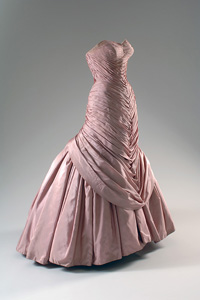
Don’t despair if you haven’t gotten to the Met’s Costume Institute show Schiaparelli and Prada: Impossible ConversationsThe Met’s put up a spectacular web site that lets you in behind the scenes, around the dining table, and inside the head of everyone’s favorite fashion icon, Iris Apfel.

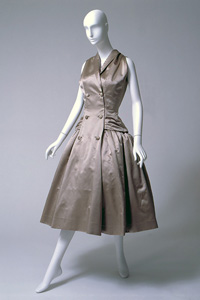
If you get to the gallery this week before the show ends, expect large crowds (“normal” large, not like McQueen). Hopefully you’ll get close enough to the clothes to check out Schiaparelli’s innovative tree-bark rayon. If you can’t get there, preview the exhibition set-up on line, and go take the curator’s walk through (the second video from the top).

You can look through some of the images that the Met is sharing on line, but they don’t feature some of the in-person eye-poppers – the blue-squiggled Schiaparelli bridal veil on loan from Philadelphia, a color photo of Schiaparelli’s gold sari dress and veil (although the Horst photo is great), or Prada’s stuff with monkey and banana prints. [Prada quote: “I never thought people would want to wear clothes with monkeys and bananas on them.”]

One of the biggest complaints visitors have about the show is that it’s so hard to see and hear the “conversation” videos between Prada and Schiaparelli (played by Judy Davis, and, yes, someone did ask me “who played Prada?”).  Not  a problem, because all eight conversation videos are posted online (scroll to the bottom of the page).

If you have an extra hour in front of the computer, here’s the added bonus: the video of Iris Apfel discussing good and bad taste in contemporary fashion at the Met last June.  Who doesn’t want Iris’s amazing perspective on style?

If you don’t have the time, just check out The Rules by Elsa Schiaparelli, courtesy of Philadelphia’s 2005 exhibition site. Agree? Disagree? Well, maybe you’ll concur with Prada’s side of the conversation.