70s East Village and Catholic School Mash-Up at MoMA PS1

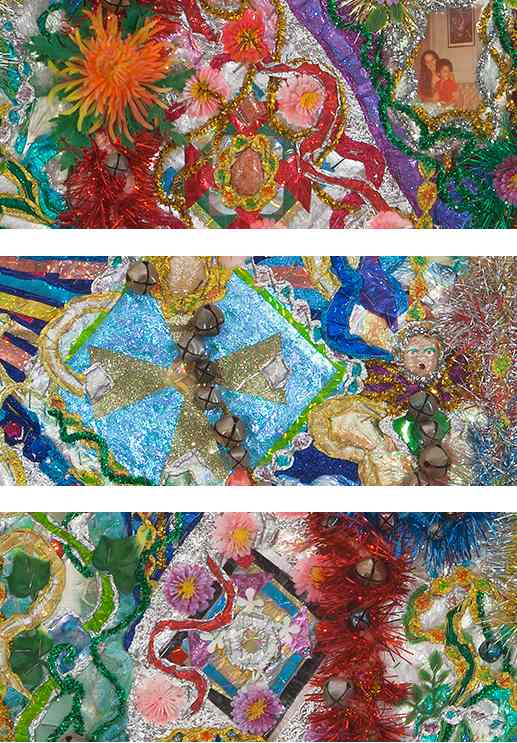
Glittery details from Thomas Lanigant-Schmidt’s 1986 collage, The Infant of Prague as a Personification of Liberation Theology. Source: International Collage Center.

Glittery details from Thomas Lanigant-Schmidt’s 1986 collage, The Infant of Prague as a Personification of Liberation Theology. Source: International Collage Center.

As a young gay runaway in the 1960s, Thomas Lanigan-Schmidt landed in New York City, looked at the trash littering the East Village streets where he roamed, and felt a strange attraction to the cellophane wrappers, fabric, and other dumpster treasures he retrieved. This is the jumping off point for the glittery art retrospective at MoMA PS1, Thomas Lanigan-Schmidt: Tender Love Among the Junk.

From his years of Catholic schooling and altar-boy duty, it wasn’t a stretch for Lanigan-Schmidt to use his street stuff to create glimmering duplicates of chalices, patents, and other altar accouterments. Or to work in the occasional high-school or East Village gay-life reference.

Soon, dozens of precious tin-foil creations were filling his walls. Why not go for an entire transformation? He hung diaphanous painted veils, dressed in drag as a “Czarina Tatlina” (an art-world reference to Russian Constructivism), and began to offer tours of his Gilded Summer Palace to friends. Word of this trash-to-fantasy performance spread, and he soon had a group of fans, including downtown theater innovator Charles Ludlam and famed Metropolitan Museum curator Henry Geldzahler.

Installation view. © MoMA PS1. Photo: Matthew Septimus

Installation view. © MoMA PS1. Photo: Matthew Septimus

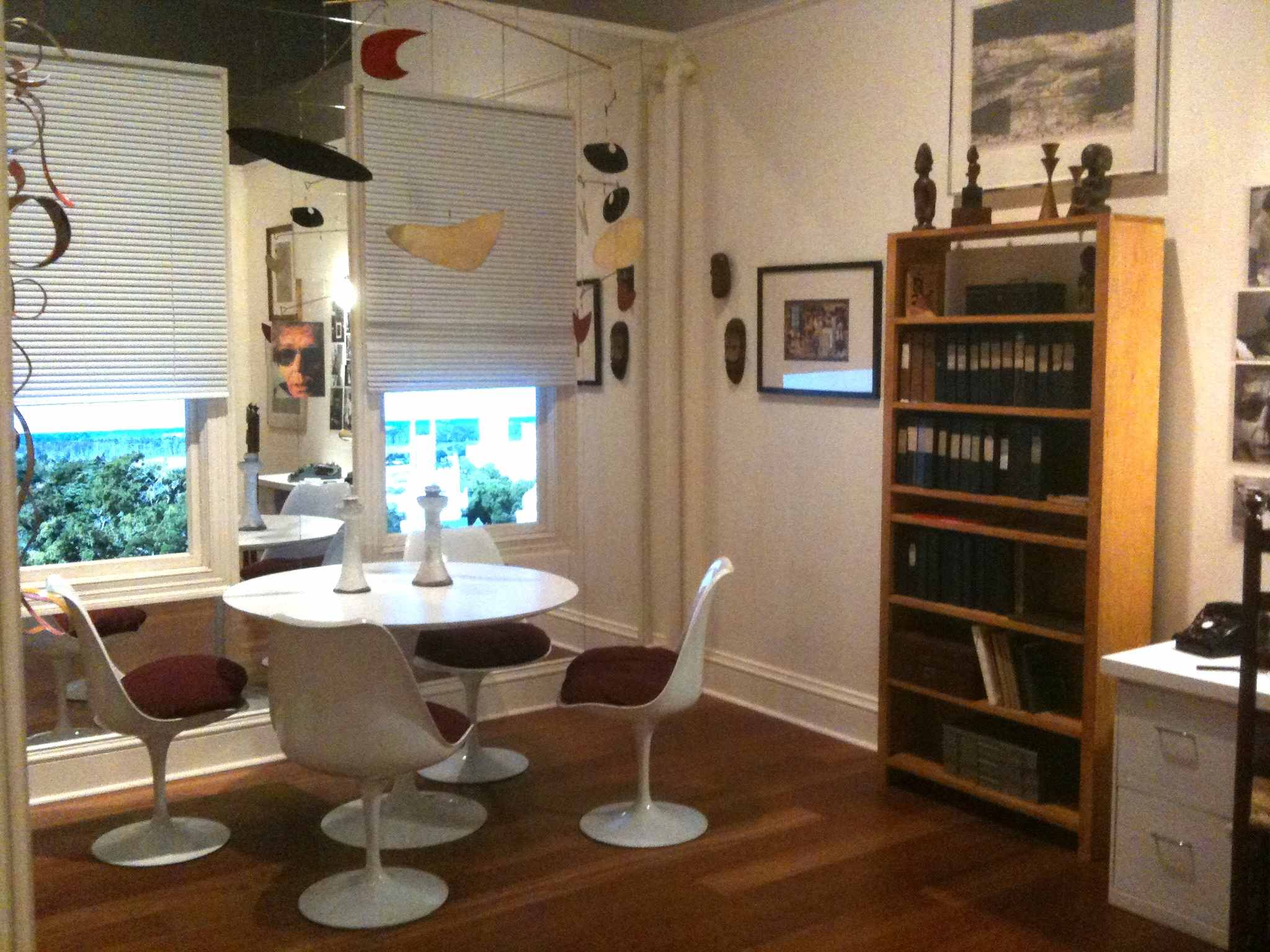
Get out to PS1 for this trip. The installation photo here gives you an idea of his brilliance. The area is decorated as a chapel with icons, pilgrims, brownstones, and 1950s school posters. The devotional ledges are packed with tennis figures, aerosol-can consumer products (Secret, Wizard), and Perrier bottles. The walls are filled with Smurf and Miss Piggy plates with bugs in between. And there’s a sort-of East Village Gregorian chant playing in the room.

You’ll enter the recreation of his Czarina’s Gilded Summer Palace and Sacristy of the Hamptons (1969), see many gold-foil Rats (yes, there was a time before gentrification on Ave B/C!), and read through his actual Catholic school workbooks. You’ll love the vibe of experiencing this in an old public school building, too.

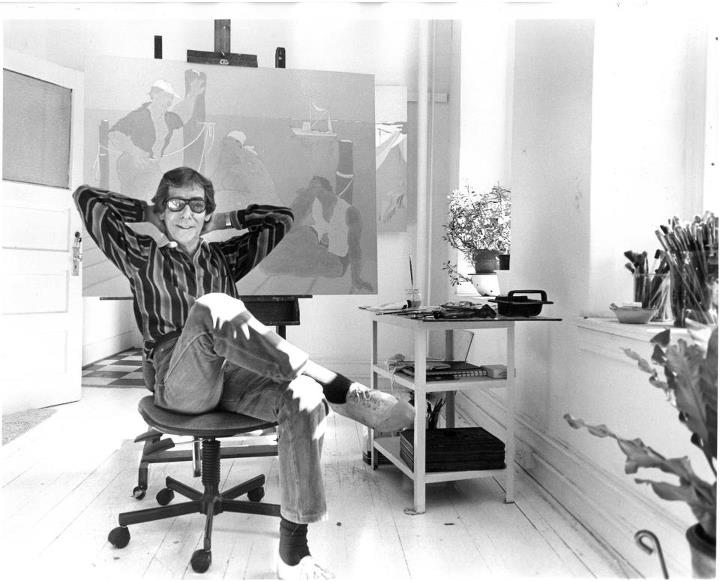
As soon as you walk in the door, you’ll find a piece of paper with a copy of his 1989 essay “1969 Mother Stonewall and the Golden Rats”, his first-hand recollection of the night that made history. So, take a walk back in time by seeing this important, unforgettable retrospective. In the meantime, enjoy a virtual visit with this former altar-boy/chronicler of the East Village past in his studio today:

Met Uses Dress to Deconstruct Matisse’s Creative Process

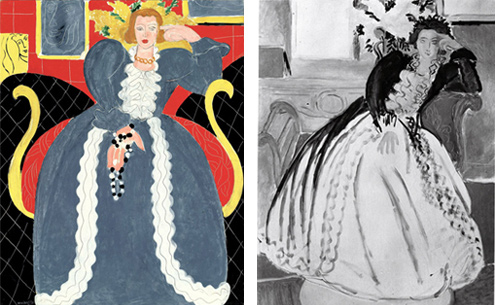
Finished product and earlier stage of Matisse’s The Large Blue Dress (1937). Source: Philadelphia Museum of Art. © 2012 Succession H. Matisse / Artists Rights Society (ARS), New York

Finished product and earlier stage of Matisse’s The Large Blue Dress (1937). Source: Philadelphia Museum of Art. © 2012 Succession H. Matisse / Artists Rights Society (ARS), New York

After walking through gallery after gallery of spectacular Matisse works, it’s a little shocking to turn enter Gallery 6 and see the actual skirt that his model wore to inspire one of his most loved works. Maybe it’s not so shocking, considering how much he loved textiles.

This surprise is just one part of a fascinating eight-gallery blockbuster that deconstructs the master’s creative process – the Metropolitan Museum of Art’s show Matisse: In Search of True Painting.

The show features nearly 50 works from Matisse’s career, chosen especially to reveal his thoughts behind selecting the colors, shapes, and patterns that we know so well. They’ve brought together versions of the same work and hung them next to one another. The Met’s website has views of each gallery.

The Gallery 2 view shows how the Met has displayed some of Matisse’s 1906 experiments. Check out this video narrated by curator Rebecca Rabinow:

Since Matisse liked to have visual reference points, by the 1930s he began more formal documentation of the various stages of each work. His famous Large Blue Dress painting (1937), lent by the Philadelphia Museum of Art, not only features photos of the painting’s stages but the actual blue dress made and worn by the model, Lydia Delectorskaya. Let the curator tell you more about it:

Take a look at some of the selected highlights of the show on the web, but get over to see it all in person to experience fully the power of Matisse’s color and light in a unique, exceptional, and illuminating context.

The Armory Show 2013: It’s a Wrap

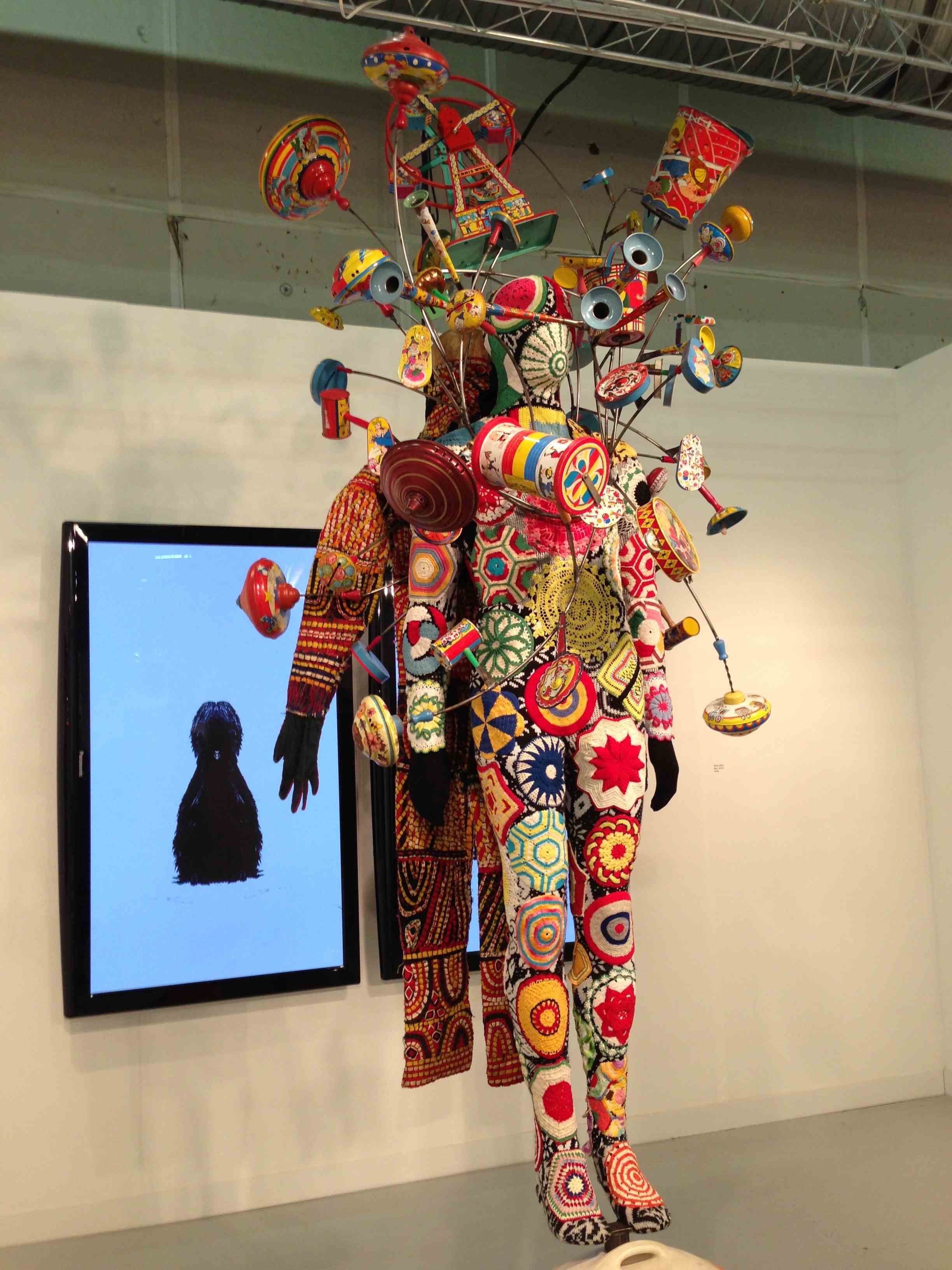
Nick Cave soundsuit (2012) and video featured at Jack Shaniman Gallery booth at the Armory Show’s Contemporary pier

Nick Cave soundsuit (2012) and performance video featured at Jack Shaniman Gallery at the Armory Show’s Contemporary pier

One hundred years ago, The Armory Show blew the roof off New York City as Matisse, Monet, Picasso, Seurat, Lautrec, Kandinsky and The Eight made history at Lexington and 26th Street. It was the beginning of Modern in America, and even Whistler’s Mother showed up.

This week, the 2013 edition of The Armory Show glamorized the West Side with its wall-to-wall extravaganza of modernist and contemporary sculpture, painting, and installation art at Piers 92/94. Take a walk-through of both shows via our Flickr photo feed.

Tributes to the original were in view in the Modern portion of the show, such as Munch’s intense woodcut Vampire II (1895-1902), as were edible Parisian imports from the Laudrée macaroon cart just inside the entrance. The show began right at coat check, where a few people were walking around carrying flattened-out versions of Andy’s Brillo boxes. Around the bend, there was the source: a silver chamber where the Pittsburgh’s Warhol Museum was inviting art-lovers to sit in front of a video camera to record a Warhol screen test. Obviously, the box carriers had claimed their 2.5 minutes of fame.

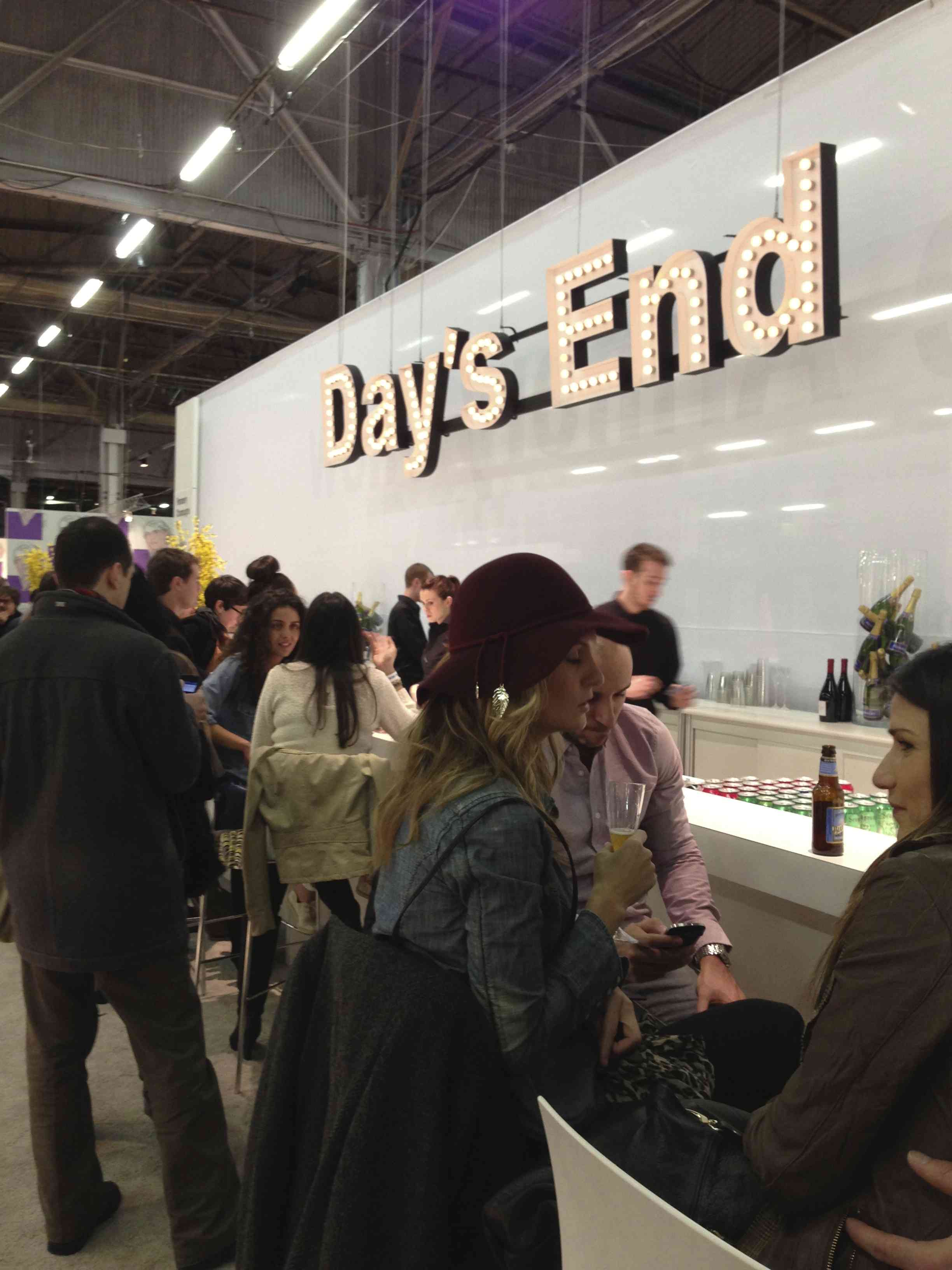
All-important champagne bar at the Armory Show’s Contemporary pier

All-important champagne bar at the Armory Show’s Contemporary pier

The Modern show featured a mix of new and old, but everything certainly looked fresh. People were even taking turns having their pictures taken with a large Basquiat painting at the Tokyo’s Galerie Sho Contemporary Art booth.

The Contemporary pier was filled with twice as much art. Although there were no actual performance installations on Saturday (as there were in last year’s show), two booths attracted lots of bystanders with performance videos – Marlborough’s Shade Composition video by Rashaad Newsome (evoking 80s Harlem ballroom voguing) and one of superstar Nick Cave’s soundsuit performances on a sharp, clean screen mounted right behind an actual, riotous soundsuit. (Be sure to catch his “horses” performing at Grand Central March 25-31 for Creative Time/MTA Arts for Transit.)

Other hits from the Contemporary pier (besides the champagne bar) included Tony Tasset’s snowman made entirely from inert material, right down to the bronze twigs and leaves (Kavi Gupta Gallery) and Kysa Johnson’s monumental recreation and embellishment of a Bank of America waiting room at Morgan Lehman, layered with the calculated, rational precision of Piranesi’s perspective.

Take a look, because it’s all being packed up and shipped back to Dusseldorf, Istanbul, Oslo, London, Paris, and Chelsea today.

Inhale…The MAD Exhibit They Won’t Let You See

JickeyThere’s nothing to see…only to experience…in The Art of Scent 1889-2012 currently at the Museum of Art and Design. Designed by Diller, Scofidio + Renfro, the exhibition space is completely bare, save for gentle depressions pressed into the wall where visitors can lean in and experience fragrances considered masterworks of innovation and complexity.

Thank you to curator Chandler Burr for paying tribute to the artists that created these scents. The earliest is Jicky, created by Guerlain in 1889 when the Eiffel Tower was on the rise, the first designer fragrance to use synthetic components.

Walking through these design innovations is an experience you won’t forget. Can you tell that a 1980s fragrance was inspired by the smell of laundry detergent (the essence of “clean”)? Do you agree with Prada’s 1990s take on the romanticism of the 19th century? Do you think Untitled by Daniela Andrier for Margiela in 2010 combines “excitement and unease”, as MAD purports?

MAD has many videos to let you in on the process behind the ephemeral. Listen as Jean-Marc Chaillon discusses what it’s like to create something that can’t be touched:

Ever wonder about the work that goes into designing a celebrity fragrance? Listen in on this enlightening and entertaining curator’s panel on the design and structure of olfactory art:

Revolutionary Counterculture Gives Birth to Soho

George Maciunas, Self-Portrait, 1961/2012. Installation view. Source: Jonas Mekas Visual Arts Center.

George Maciunas, Self-Portrait, 1961/2012. Installation view. Source: Jonas Mekas Visual Arts Center.

A revolutionary Lithuanian studies at Cooper Union, decides to thumb his nose at elitist art, leads a group genre-busting artists, asks why not use vacant industrial space in a down-and-out part of the city, petitions the City to create artist cooperative-lofts, and…voilà, Soho is born.

Remarkably enough, it’s a story that’s never been told, so kudos to Cooper Union School of Art for the collaboration with Lithuania’s Jonas Mekas Visual Arts Center to mount the exhibition at 41 Cooper Square, Anything Can Substitute Art: Maciunas in Soho. Who better to make the connection between art history, the avant-garde, and real estate?
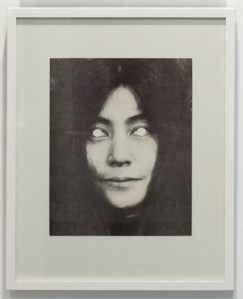
Yoko Ono Mask (1970) by George Maciunas. Source: Jonas Mekas Visual Arts Center

Yoko Ono Mask (1970) by George Maciunas. Source: Jonas Mekas Visual Arts Center

The show documents the early work of George Maciunas, who emigrated from Lithuania in 1948, studied at Cooper Union in the 1950s, became fascinated with the history of migrations and revolutions in the then-Soviet Union, wrote the famous Fluxus manifesto calling for a revolution against “elitist” art in New York, and gathered a group of downtown provocateurs around him.  He drew a map of the most influential art events of 1965-1967. The roster reads like a who’s who today, but at the time, they were newbies living on the edge — Kaprow, Schneeman, Moorman, Paik, Satie, Rauchenberg, Trish Brown, Gordon and Setterfield, and Yoko.

Thinking about Russian revolutions since the 1230s encouraged Maciunas to ask why a revolution couldn’t be mounted against the art “establishment” by declaring that “anything can be art”. He and his friends produced an avalanche of work that kept things simple and cheap, playing with the concepts of ephemeral events, experiences, packaging, context, and games. You know them today as happenings, performance art, conceptual art, multiples, boxed sets, word art, multimedia, and (possibly) Occupy Wall Street.

Installation view of Ay-O’s Tactile Box (No. 25) (1964). You put your hand into the hole to feel what’s inside. Source: Jonas Mekas Visual Arts Center.

Installation view of Ay-O’s Tactile Box (No. 25) (1964). You put your hand into the hole to feel what’s inside. Source: Jonas Mekas Visual Arts Center.

Mekas, another Lithuanian immigrant and founder of Anthology Film Archives, kept a lot of his friends’ early work, so the gallery is filled with never-before-seen Fluxus art, posters, letters, and maps that normally reside in Vilnius.

Maciunus thought Fluxus principles could also be applied to urban living, business, and real estate, so the show includes correspondence with government officials about permission to establish cooperative artist spaces. A highlight is a hand-drawn map showing where Fluxhouse co-ops would transform abandoned industrial lofts in the 25-square blocks of Soho. His first transformation was 80 Wooster, which gave Fluxus artists a chance to live and work together, unencumbered by walls and tradition — a socially conscious, revolutionary move that eventually influenced the course of art, lifestyles, and real estate here and around the world.

Never Too Late to Fake it at The Met

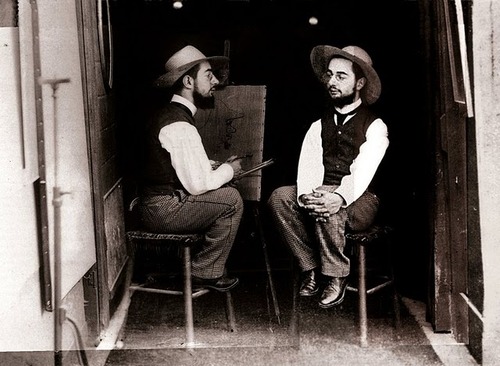
Maurice Guibert’s Henri de Toulouse-Lautrec as Artist and Model (ca. 1890). Gelatin silver print. Source: Philadelphia Museum of Art: Gift of Henry P. Mcllhenny.

Maurice Guibert’s Henri de Toulouse-Lautrec as Artist and Model (ca. 1890). Gelatin silver print. Source: Philadelphia Museum of Art: Gift of Henry P. Mcllhenny.

Even though it’s the last day, the Metropolitan Museum of Art has you covered: they’ve put the entire show, Faking It: Manipulated Photography Before Photoshop on the web and into a free iPad app.

So whether you’re living in New York or not, you can enjoy the wonderful history of how photos have been manipulated since the birth of photography (around the 1840s) until the birth of Photoshop (around the early 1990s). As if you couldn’t guess, this provocative show is sponsored by Adobe.

Who doesn’t get a kick out of double exposures, double portraits, and fake stuff inside the photo? Certainly Montmartre pals Maurice Guibert and Toulouse-Lautrec did. Even the great Steichen used some photo-manipulation to create his iconic portrait of Rodin with The Thinker.

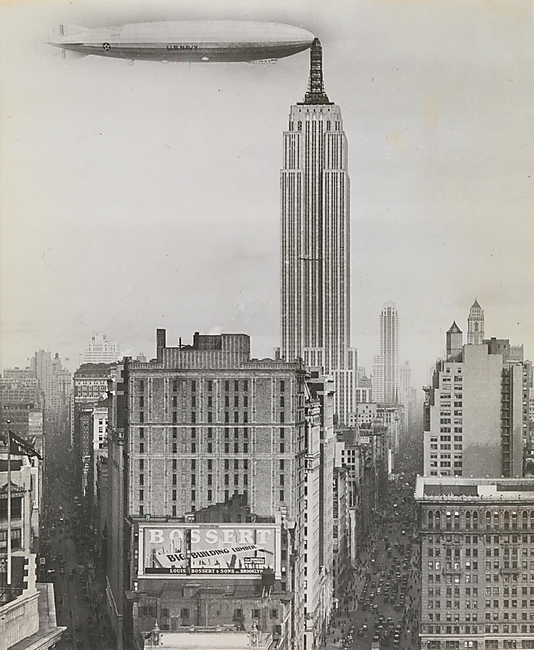
Dirigible Docked on Empire State Building, New York, 1930. This never happened. Source: The Metropolitan Museum of Art, Twentieth-Century Photography Fund Fund

Dirigible Docked on Empire State Building, New York, 1930. This never happened. Source: The Metropolitan Museum of Art, Twentieth-Century Photography Fund Fund

In a nutshell, professionals and amateurs have been fiddling with negatives, creating photomontages, rephotographing images, and retouching since the beginning. So, really, there’s nothing new about all the creativity that goes into today’s digital imagery, except that it’s easier to do on a computer.

One of the first innovations was faking color to make the black-and-white photos in the late 1800s more “real.” The V&A Museum even hired expert photographer-lithographer J.I. Williamson to hand-color the pictures he took of their decorative arts collection.

Another early innovation was taking two (or more) exposures for land and sky, masking out parts of the negative (just like in Photoshop), and printing it all on a single sheet of paper.

And what about the masters of the wacky postcards of the early 1900 Americana that predate the Jackalope?

The Met has posted a brief guide to the themes in the show as well as the full, rich archive of 202 photos that hung on the walls until today. Really a fun treasure trove to explore.

Is David Roentgen the 18th Century Steve Jobs?

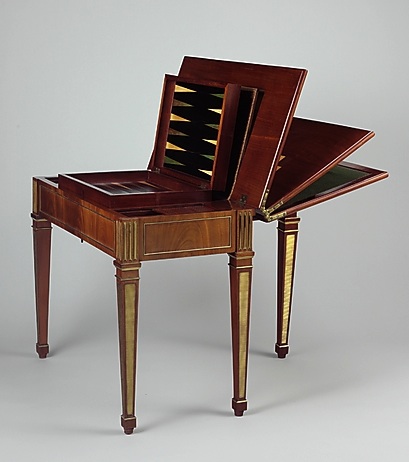
David Roentgen’s Game Table (ca. 1780–83). Oak, walnut, veneered with mahogany, maple, stained maple, holly, stained holly; felt; leather, partially tooled and gilded; iron and steel fittings; brass and gilt bronze mounts. Source: Metropolitan Museum, Pfeiffer Fund, 2007.

David Roentgen’s Game Table (ca. 1780–83). Oak, walnut, veneered with mahogany, maple, stained maple, holly, stained holly; felt; leather, partially tooled and gilded; iron and steel fittings; brass and gilt bronze mounts. Source: Metropolitan Museum, Pfeiffer Fund, 2007.

Even if David Roentgen didn’t produce for the mass-market, he certainly seemed to have written Steve’s playbook  — wow them with innovative design, refined surfaces, exacting craftsmanship, playful art, and sophisticated multimedia integration. Oh, and if that’s not enough, why not make it passkey protected and portable, too? Like Steve, David knew how to turn engineering into art and ka-ching.

Experience out-of-the-box design innovation in the closing week of the Metropolitan Museum’s unforgettable show, Extravagant Inventions, Princely Furniture of the Roentgens. The beauty of the marquetry and fittings on the displayed desks, sofas, clocks, commodes, and rolltop desks would be enough, even if they simply occupied a quiet corner of a drawing room or boudoir.

But if an 18th-century king, queen, or royal saw them in action – revealing hidden apps for writing, reading, drawing, music, games, curios, and hiding the desktop – there was no turning back. The mechanical furniture was so desirable that wealthy trend-setters just had to have it (like iPads).

What social-minded gamer could resist Roentgen’s 1780s Game Table if they saw David’s demo?

The desire to own and show off the most up-to-date artistic engineering marvel had royals running for their strongboxes to put down deposits on anything Roentgen could produce. In fact, the Met tells us that the Berlin Secretary Cabinet, the star of the show, is probably the most expensive piece of furniture ever produced. And we can’t even begin to discuss robot Marie Antoinette playing the dulcimer, or the clocks that turn into orchestras.

When the French Revolution put an end to sales at Versailles, Roentgen cut out the curliques, tailored the outer design to a sleeker look, and shifted his retail operations to Russia. Catherine and her court bought the newer stuff by the cartload.

The Met has an entire YouTube playlist devoted to these 18th century wonders, and you really should peruse them all. Get to the show in the final week and see what another style and multimedia-obsessed generation spent their money on.

And lest it slipped your mind, Steve and Woz’s first Apple 1 computer was assembled within a wooden case. Maybe it’s good that David and his engineering/sales team weren’t around to critique it.

Sparkle Plenty, Move Over Manet

Installation view of Mickalene Thomas's Les Dejeuner sur l’herb Les Trois Femmes Noires, 2010.

Installation view of Mickalene Thomas’s Les Dejeuner sur l’herb Les Trois Femmes Noires, 2010.

It’s large-scale, monumental painting of beautiful women languishing amidst patterned profusion, but it’s not Manet or Monet. Unlike MoMA’s modern masters, you’re encountering Afro-wearing, rhinestone-studded Black lovelies with an ambiance of the 1970s and Blaxploitation about them.

It’s all the work of Mickalene Thomas (originally from Camden, New Jersey, and now Brooklyn) in the grand show, Mickalene Thomas: Origin of the Universe, mounted first by the Santa Monica Museum of Art and now expanded by the Brooklyn Museum.

Thomas uses an encyclopedic knowledge of art history and museum-world references to tease viewers to reflect on how her fancy, sparkly ladies are equally worthy of fine-art treatment as any ruffed Dutch gal from the 1600s or French odalisque.

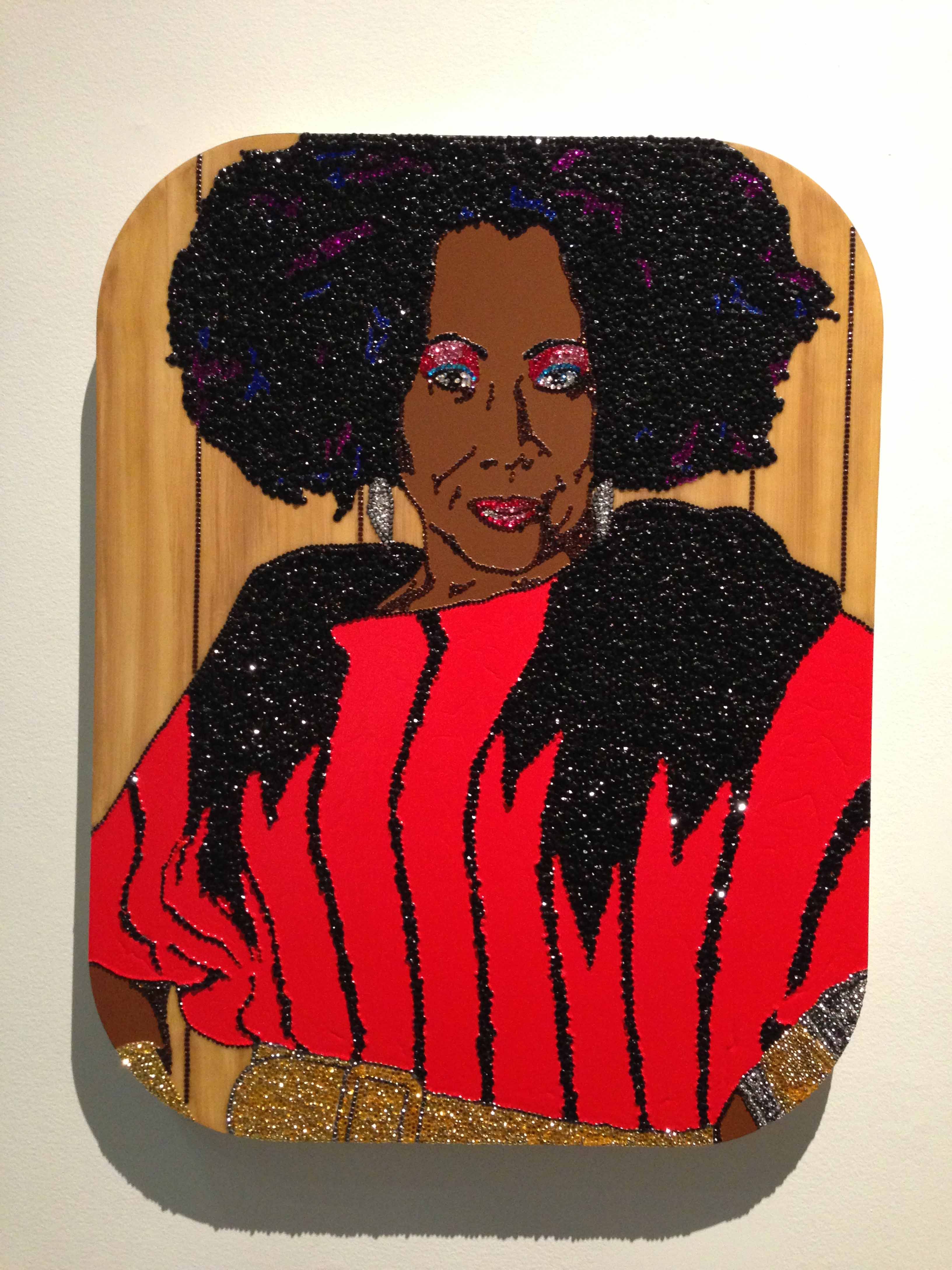
Installation view of part of Mickalene Thomas's depiction of her mother: "Ain’t I Woman, Sandra," 2009. Rhinestones, acrylic paint, and oil enamel on wood panel. DVD and framed monitor; rhinestones, acrylic paint, and enamel on wood.

Installation view of part of Mickalene Thomas’s depiction of her mother: Ain’t I Woman, Sandra, 2009. Rhinestones, acrylic paint, and oil enamel on wood panel. DVD and framed monitor; rhinestones, acrylic paint, and enamel on wood.

Enamored of slightly vintage interior decor magazines, Thomas constructs settings in her studio corner and photographs her subjects dressed in 70s prints laying on 70s sofas in wood-paneled rooms. Later she turns these into paintings merged with old photos, faux wood paneling, and Photoshop fracturing on a large scale. Check out the Flickr gallery.

On every visit, crowds gather in the back video gallery to hear her mother tell the story of how she changed her ways from a drug-addicted girl to a clean and sober, meditation-minded fine-art model for her brilliant, fantastically creative daughter. She’s a stunning model.

See these large-scale works in person this week. Otherwise, catch her work at ICA in Boston through April.

For more, listen in on this discussion between Mickalene Thomas and Carrie Mae Weems. It’s a great insight to how an established artist inspires an emerging artist to forget about law school and do great things in the art world.

Cage’s Zen Den at the Academy

Cage's New River Watercolor Series I on parchment paper. Courtesy: Mountain Lake Workshop

Cage’s New River Watercolor Series I on parchment paper. Courtesy: Mountain Lake Workshop

Take one of the most controversial composers of the 20th century, give him some watercolors, drop him at the foot of the Blue Ridge Mountains, and leave everything to chance. See what happens.

You’ll see the results at the National Academy Museum’s John Cage: The Sight of Silence show this weekend. Back in 1988, Cage was the artist in residence at the Mountain Lake Workshop in Blacksburg, Virginia. He spent his time making a series of watercolors inspired by his trip to a Zen garden and temple in Kyoto, where he saw stones floating on a field of raked gravel.

Cage, whose lifelong interest in using chance (via the I Ching) to select and structure his musical compositions, decided to apply the same principles to watercolors, drawings, and prints. He customized some large-scale brushes that he could drag across wet paper like rakes, picked up feathers, and collected stones from the New River.

The brush, paper wetting, colors, stones, and actions are all determined by chance to stunning effect. Watch the artist at work and hear him talk about his process here:

Now see the results at the Academy and witness pure Zen.

3D Cave Art Revealed at NYU

Left Hand of Maitreya, Buddha of the Future, Holding the Looped End of His Robe
Xiangtangshan: Northern Group of Caves, North Cave, south face altar of central pillar, 550-559 ce., limestone. Source:
Asian Art Museum of San Francisco, Transfer from the Fine Arts Museum of San Francisco

Left Hand of Maitreya, Buddha of the Future, Holding the Looped End of His Robe
Xiangtangshan: Northern Group of Caves, North Cave, south face altar of central pillar, 550-559 ce., limestone. Source:
Asian Art Museum of San Francisco, Transfer from the Fine Arts Museum of San Francisco

The exhibition closing today on 84th Street isn’t about Herzog’s 12,000-year old French cave art, but about truly monumental art that has been largely unknown in the West until the University of Chicago unveiled a truly spectacular achievement – the digital recreation of a Sixth Century Buddhist cave temple destroyed in the 20th century by vandals selling to the international Asian art market.

Echoes of the Past: The Buddhist Cable Temples of Xiangtangshan was brought here by NYU’s Institute for the Study of the Ancient World after the show’s run at the Sackler in Washington.

The story of this cave temple’s recreation began when the University of Chicago started asking what happened to all the stuff from the vandalized cave temples that were originally built as hostels for wandering Buddhist monks in the Fourth Century in Northern China along the old East-West trade routes. UC ultimately identified about 100 statue fragments in museums and collections all over the world.

Take a look at the cave temples today and the techniques used by the University to bring an amazing collection back together in virtual reality:

At NYU, you first immerse yourself in the Digital Cave and then enter the elegant gallery to see the works themselves – holy men, heads and hands of Bodhisattvas, and little monsters all gathered from collections from Penn, the Met, the V&A, the Nelson-Atkins of Kansas City, and the Asia Art Museum of San Francisco. Check out the highlights on line.