Whitney to Remove Gigantic Rose (Again)

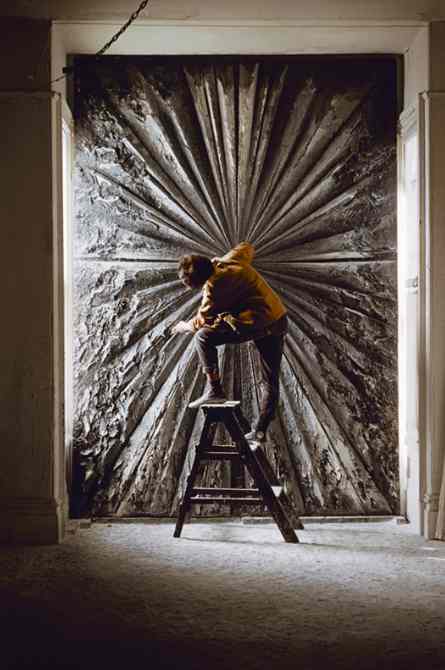
Jay DeFeo working on what she then called The Death Rose, 1960. Photo: Bert Glinn. © Bert Glinn/Magnum Photos

Jay DeFeo working on what she then called The Death Rose, 1960. Photo: Bert Glinn. © Bert Glinn/Magnum Photos

It was hard enough to get it out of the apartment after she created it nearly 50 years ago. Get to The Whitney’s show Jay DeFeo: A Retrospective this week before the moving crews come back. The Rose, DeFeo’s legendary painting (or is it a sculpture?) is the focal point of this Bay Area artist’s exhibition.

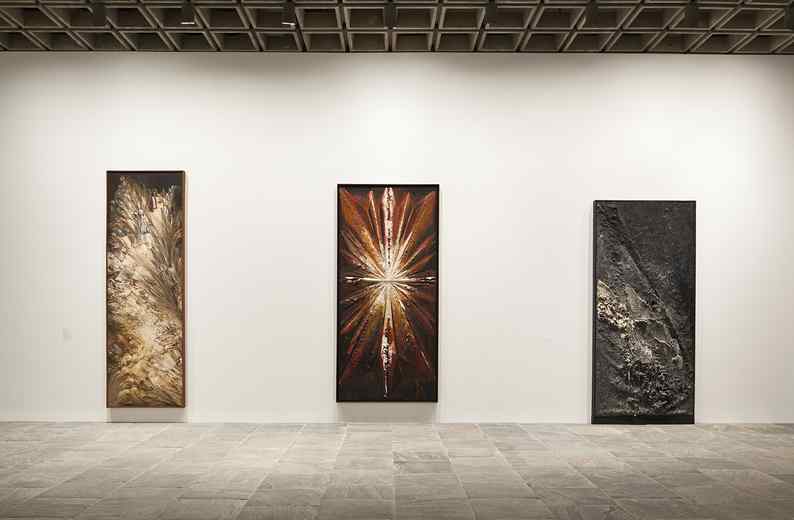
Early in her career, DeFeo drew inspiration from prehistoric art, the cosmos, and terrestrial forces of nature. In the late 1950s and early 1960s, she painstakingly built up the surfaces of her oil paintings, which often evoked geologic forces – slow, large-scale shifts of monumental proportion. (See the installation view of three of these works).

DeFeo was invited to show at MoMA in the historic, 1959 all-star show, Sixteen Americans, which included Rauchenberg, Johns, Kelly, Stella, de Kooning and Nevelson. She sent some of her 3D impasto works, but didn’t consider her largest piece, The Rose, quite finished. She became obsessed and spent six more years layering paint on the canvas. Listen to DeFeo herself talk about the difficulty in creating the 3D effects in The Rose in a drafty apartment in the late 1950s.

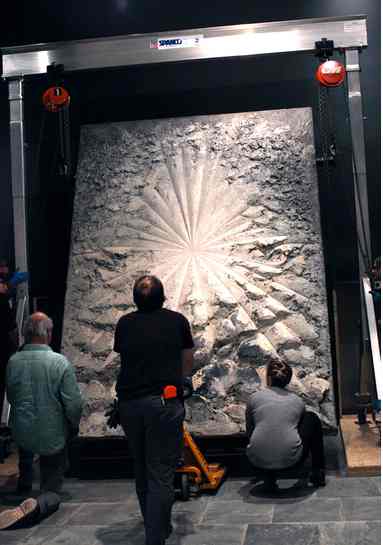
The Whitney removed the side panels of The Rose and used a two-ton gantry to get it as close to the wall as possible. Source: Whitney Museum. Photo: Paula Court.

The Whitney removed the side panels of The Rose and used a two-ton gantry to get it as close to the wall as possible. Source: Whitney Museum. Photo: Paula Court.

Unfortunately, she couldn’t even get it out of her apartment, because the 3D surface she created ended up being too big to fit through the door and weighing…oh, about a ton. DeFeo had a small army of movers come upstairs to her apartment-studio, rip out the wall, and lower it to the street with a forklift. Watch and listen to Bruce Connor’s take on how it all came down in his interview with SFMoMA).

After that, The Rose went on display in California, but ultimately was installed as the showpiece of a conference room at the San Francisco Art Institute. For all the right reasons, temporary wall was built to conceal and protect it, but ultimately The Rose was hidden from view from 1979 until 1995, when the Whitney team unearthed it. Now, they own it.

Recently, the Whitney had the task of getting a truly monumental work out of storage, shipping it to the West Coast for the SF edition of the show, and bringing it back to New York.

Recently, The Rose arrived back at the Whitney from the show’s run at the San Francisco Museum of Modern Art. It’s one of the most complicated pieces for the museum to ship, move, and install – just like the original transfer.

Click on this link and scroll down to find the Whitney’s photo show of what it took to get it up to the Fourth Floor. See how a crew of handlers got a one-ton work from the street to the gallery.

Get to the show before it closes June 2, and enjoy DeFeo’s jewelry, geology-inspired work, drawings, and never-before-seen photos of this Beat-era innovator.

Installation view at The Whitney. Photo: Sheldan C. Collins

Installation view at The Whitney. Photo: Sheldan C. Collins

Monumental Impression of Fashion at the Met

Monet’s
Women in the Garden (1866) from the
Musée d'Orsay, Paris features impressions of fast-changing dappled sunlight and ladies’ fashions (e.g. the fad for soutache)

Monet’s
Women in the Garden (1866) from the
Musée d’Orsay, Paris featuring impressions of fast-changing dappled sunlight and ladies’ fashions (e.g. the fad for soutache)

You can witness the collisions of the new crashing into the old in the Metropolitan Museum’s joyous show, Impressionism, Fashion, and Modernity. Impressionism’s heaviest hitters (Manet, Monet, Renoir, Cassatt, and Morisot) are displayed alongside stunning 19th Century dresses, suits, accessories, and underthings to prove a point — that incorporating the latest fashions was one of the cudgels that these rule-breakers used to facilitate their revolution in painting.

The show features paintings from three grand Impressionist collections (the Met, the Art Institute of Chicago, and the Musée d’Orsay), and includes breathtaking dresses from NYC’s fashion-collection superpowers – the Met, the Brooklyn Museum, FIT, and Museum of the City of New York.

The Met’s website explains the key themes of the show, but it’s no substitute for going through the galleries in person. Why? The tiny photos cannot do justice to the monumentality of these paintings, where scandalous 19th-century fashionistas stormed the barricades of the French Salon, in large-format framed paintings normally reserved for staid, moralistic history paintings.

Summer day dress worn by Madame Bartholomé in her husband’s painting In the Conservatory 
(1880) 
Source:
Musée d'Orsay

Crisp summer day dress worn by Madame Bartholomé in her husband’s 1880 painting In the Conservatory. Source:
Musée d’Orsay

The size, colors, and techniques are amazing, especially as the Impressionists moved outdoors just as new technology was encouraging lifestyle and fashion revolution. Steam-powered train lines were inventing the concept of the weekend getaway for City hipsters, so a lot of the paintings feature dappled sunlight with high-fashion young people lolling about in nature. (See the show’s highlights.)

The show’s curators shine the spotlight on how fashion, innovation, and the art world influenced one another: New aniline dyes allowed hot pink, bold color-blocking and vivid hues for extravagant skirts and dressing gowns. New fabric-finishing technology enabled super-white cotton fabric to be crafted into diaphanous, desirable, but high-maintenance dresses and gowns for the first time in fashion history.

The Met scatters mass media throughout the galleries, just to demonstrate fashion’s democratization during 1850-1890. New printing technology enabled trendy fashion magazines to be consumed by the masses. New-fangled duplication techniques revolutionized the studio photograph by inventing the eight-image carte-de-visite – a paper-based way to market your “celebrity” self and show off your fashion chops long 150 years before Facebook and YouTube.

Silk and ivory French parasol (1860-69) from Brooklyn Museum Costume Collection at The Met (Source: gift of Mrs. William Ashbaugh)

Silk and ivory French parasol (1860-69) from Brooklyn Museum Costume Collection at The Met (Source: gift of Mrs. William Ashbaugh)

Pop-art pink velvet, boleros with pompoms, lace parasols, Worth gowns, kid gloves, top hats, corsets, hat shop girls, high-end boutiques, and Cezanne’s surprising oil painting based on a fashion-magazine layout. Which part of this show is the best?

Go before May 29, when the show decamps for Chicago for its June 26 opening.

Morgan Deconstructs Degas’s 19th c. Cirque-du-Soleil Experience

Edgar Degas, Miss La La at the Cirque Fernando, 1879. Oil on canvas. Source: National Gallery © National Gallery, London / Art Resource, NY

Edgar Degas, Miss La La at the Cirque Fernando, 1879. Oil on canvas. Source: National Gallery © National Gallery, London / Art Resource, NY

Long before Cirque du Soleil began selling $180 seats to eight shows in Las Vegas or Floating Kabarette came to Brooklyn, high society and avant-garde crowds were flocking to extravagant theaters on Montmartre in Paris to see the finest aerialists from Europe.

The Morgan Library’s exquisite micro-show, Degas, Miss La La, and the Cirque Fernandodocuments the meticulous work of Mr. Degas to portray the magic, daring, and wonder inside a 2,000-seat arena where he experienced the artistry of one of the must-see acts of 1879 – a mixed-race German aerialist who hung from a trapeze clenching an apparatus in her teeth from which she dangled a firing cannon.

As in the Met’s blockbuster show, Impressionism, Fashion, and Modernity (which also features a circus-themed painting in its last gallery), the Morgan makes the case that Degas selected this subject because was associated with the height of fashion (along with café concerts and racetracks). Although this particular work was the only circus image Degas would ever paint, just tackling the dazzle and glamour of Miss La La dangling 70 feet in the air (before the cannon stunt) showed that he was capturing what was “happening” among high society and artsy types in their “modern” life.

A vibrant pastel study of the artist by Mr. Degas. Source: Tate, London/Art Resource, NY

A vibrant pastel study of the artist by Mr. Degas. Source: Tate, London/Art Resource, NY

Although we can marvel at how well Degas captured this fleeting moment, the Morgan lays bare that this work was planned in meticulous detail. They’ve displayed preparatory works, sketchbooks, and even architectural drawings of the theatre’s interior that Degas created to work out the feeling, look, composition, and setting for this spectacular work. As Degas said, “No art was less spontaneous than mine.”

If you love Impressionism and theatricality, get over to the Morgan to enjoy the mechanics behind the creative process and flip through the digital version of our artist’s sketchbook (which was to fragile to be sent from France) right inside the colorful upstairs gallery.

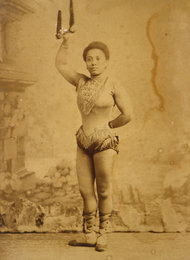
Visit Mr. Degas and Ms. La La before May 12, when they leave for the Continent. (Sorry, no video, but here’s a photo of the star herself.)

Photograph of the artist, Miss La La (c. 1880). Albumen silver print. Source: Zimmerli Art Museum, Rutgers University

Photograph of the artist, Miss La La (c. 1880). Albumen silver print. Source: Zimmerli Art Museum, Rutgers University

Fluffy AMNH Animal Superstars Win Webby

Steve Quinn, diorama curator

Steve Quinn, diorama master

Steve Quinn couldn’t send them to the L’Oreal Paris hair and make-up room like Tim Gunn does on Project Runway. They’re just too big, too famous, and too fragile. We’re talking about the furry animals that populate the 43 dioramas on Floor 1 of the American Museum of Natural History’s in the Hall of North American Mammals.

So how do you buff, puff, make up, color, groom, blow dry, restore eyelashes, color brows, and repair noses on New York superstars that have been in the (literal) spotlight since the early 1940s? That’s the subject of AMNH’s YouTube sensation, Restoring Dioramas in Hall of North American Mammals a 16-show reality series that won a prestigious Webby Award earlier this month. Download the North American Mammal app (with before and after looks at the enhanced fur).

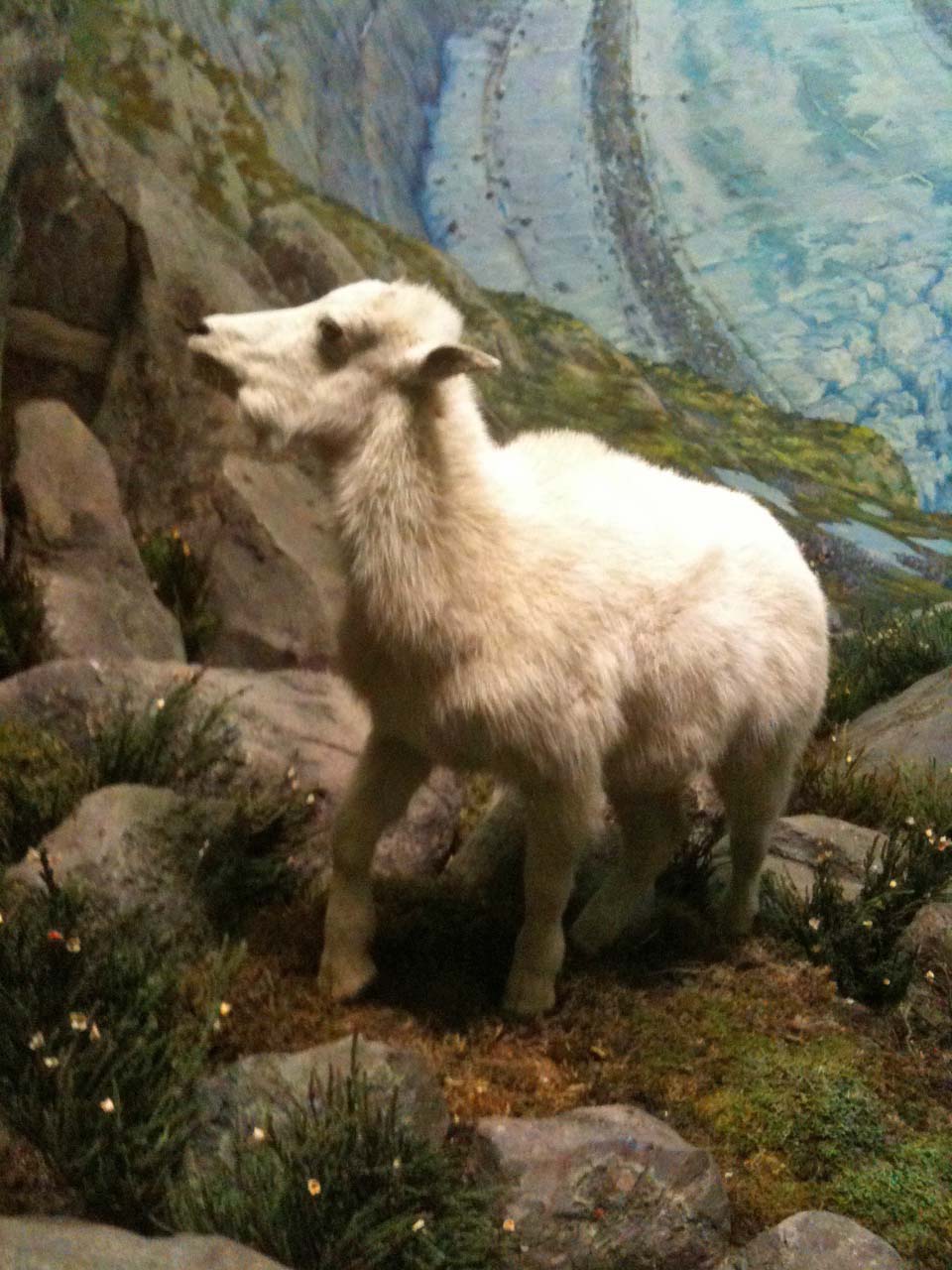
No more "demon" eye in the baby Mountain Goat, who is surrounded by thousands of flowers refurbished by AMNH volunteers

No more “demon” eye in the baby Mountain Goat, who is surrounded by thousands of flowers refurbished by AMNH volunteers

Steve Quinn leads a team of accomplished artists to, well, perform makeovers on the animals, plants, and background paintings that reside inside some of the most famous 3D attractions inside the AMNH. Steve told us that the first step was to update the decades-old lighting inside each case with state-of-the-art illumination that would inflict much less damage on the mammal coiffures.

His team engineered wooden platforms that extended into each scene so that leaf-turning and snow repair could occur with minimal disruption to the diorama floor. If you watch the 4-minute videos, you’ll see how they fixed a bison’s nose, put whiskers on cougars, restored the grass on the Great Plains, and restored the jackrabbit’s ears. The runaway hit of the series is Updating the “Moon Shadow” in the Wolf Diorama. With over 8,000 views, it’s not going to knock Dr. Neil off the AMNH charts any time soon, but Steve’s magical artistry is something to savor.

Go to the AMNH YouTube channel and scroll down to find the North American Mammal diorama series, depicting Steve and his crew at work. Check out this series trailer:

Just before Steve retired the other week, he gave us a special Night at the Museum, walking around and visiting his favorite dioramas after the visitors left.

Steve, you’re a total rock star. Thanks for all your spectacular work at AMNH over the years, and congratulations on the Webby.

Elvis has left the building.

Surrealists Get Out Pencils and Scissors at The Morgan

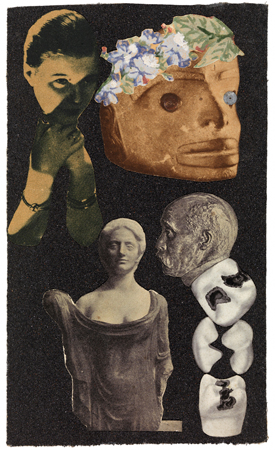
César Moro’s Adorée au grand air (1935). Source: The Getty Research Institute.

César Moro’s Adorée au grand air (1935). Source: The Getty Research Institute.

Automatic drawing, games, rubbings, collage, and dreams are all chronicled in the spectacular Drawing Surrealism show closing today at The Morgan. It’s an encyclopedia of what you can do with a scissors and pencil and demonstrates that these forms of play were critical to the most famous Surrealist works by superstars Ernst, Dali, Masson, and their European colleagues.

Some of the off-the-wall creations born out of the Surrealist’s drawing games eventually made their way into big-time oil paintings. The curators also contend that the monochrome grey-scale of some famous paintings is actually a tribute to the importance they attached to charcoal and pencil media.

The show, co-organized with the LA County Museum of Art, is the first time that Surrealist drawings have been the subject of an exhibition, and curators make quite the case for drawing technology transfer by showing us how these techniques (especially collage) spread to the rest of the world.

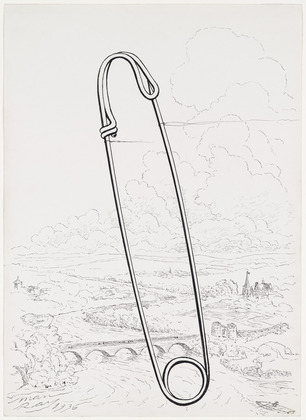
Man Ray’s Safety Pin (1936). Ink and pencil on paper. Source: MoMA. © 2013 Man Ray Trust / Artists Rights Society (ARS)

Man Ray’s Safety Pin (1936). Ink and pencil on paper. Source: MoMA. © 2013 Man Ray Trust / Artists Rights Society (ARS)

One of the genuine revelations is the work and importance of César Moro, a Parisian-trained Peruvian who brought Surrealism to Mexico and the rest of Latin America.

You can’t help but be struck by the forerunners of Pop: Man Ray’s Safety Pin sure looks like a precursor to Claes Oldenburg’s 1970s Clothespin, and there’s no question about the influence of Eduardo Paolozzi’s 1940s Surrealist-influenced collages: He and Richard Hamilton invented Pop Art in Britiain.

When the show was installed at LACMA, several contemporary artists were asked to create Surrealist-inspired works. Listen as Alexandra Grant, Mark Licari, and Stas Orlovski show and tell how European mind-and-hand games of the 1930s inspire work today:

Get Out into the Fresh Air (in Italy and France)

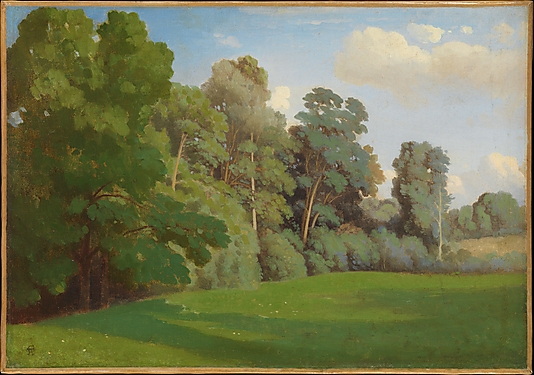
Théodore Caruelle d'Aligny’s Edge of a Wood (1850). Oil on canvas done northeast of Paris. The flattening technique was developed with his hiking companion, Corot.

Théodore Caruelle d’Aligny’s Edge of a Wood (1850). Oil on canvas done northeast of Paris. The flattening technique was developed with his hiking companion, Corot.

There’s nothing like stepping out into the fresh air to get a little perspective – exactly the view taken by the group of landscape painters featured in the Met’s exhibition, The Path of Nature: French Paintings from the Wheelock Whitney Collection, 1785-1850, on display in the Lehman Wing for a few more days.

Most of them feature Italian or French landscapes, and you’ll be surprised to know these tranquil, beautiful visions of nature were considered a little bit radical at the time. Apparently, there once was a time when painters didn’t travel beyond the studio, and certainly did not work outdoors.

Installation view of The Gate to the Temple of Luxor (1836) by La Bouëre. After Napolean invaded Egypt, the exotic Middle East became all the rage. The missing obelisk ended up in the Place de la Concorde.

Installation view of The Gate to the Temple of Luxor (1836) by La Bouëre. After Napolean invaded Egypt, the exotic Middle East became all the rage. The missing obelisk ended up in the Place de la Concorde.

The artists in this collection (gifted to the Met 10 years ago by Mr. Whitney) literally went on the road, took to the hills, and created spectacularly perfect outdoor oils to record a bit of the exotic, wild, and ruined visions they experienced. And it all happened long before Monet went outside to serialize his haystacks.

If you’ve ever wanted to take a Grand Tour of the wonders of Europe and the Middle East, now is your chance. Check out the Met’s online gallery of these works, and enter the mountains, hillsides, parks, ruins, and vistas with new 18th and 19th century friends.

If you have some time, you can listen to the Met’s curator, Asher Miller, discuss how adventure travel inspired a generation of painters to break the rules.

Abstraction All-Stars Featured in MoMA’s LinkedIn

Installation view of the network behind the birth of abstract art

Installation view of the network behind the birth of abstract art, according to MoMA and Columbia Business School

As soon as you arrive at Inventing Abstraction 1910-1925, MoMA’s soon-to-close extravaganza featuring the relationships among painters, poets, composers, and dance innovators, you encounter a big, bold infographic on the wall – a web showing who was collaborating with, influencing, viewing, and reading each other as “abstract art” was born.

The stunning exhibit is a who’s who of modern art, with work by Picasso, Kandinsky, and Malevich (of course), but pulls in works from lesser-known early innovators from Britain, Poland, Italy, and America (hi, Georgia!) and across disciplines. So many connections, so little time! The show has books, music, pioneers of modern dance…just about everything.

If you can’t get to it, don’t worry. MoMA’s put it all on the web so you can explore all the connections yourself. The highlighted names show the artists with over 25 connections, like an early 20th century LinkedIn or really popular Facebook friends. Who knew that Russian fine-art diva Goncharova was more connected than, say, Malevich or El Lissitsky?  I guess inventing Rayism and designing sets for the Ballet Russes paid off in getting her positioned in this MoMA pantheon.

Created by MoMA curators, designers, and pros from the Columbia Business School, the interactive web highlights every artist featured in the massive MoMA show. The infographic allows you to zoom in to see how the buzz, particularly in 1911-1915, brought abstract art into being.  No matter which name you click on, you’ll get to view the works, play the music, and watch the dances – a web-based multimedia tour-de-force.

Now dive into one of the best art-websites ever, and get to know the network and likes of the hot, emerging artists who made the art world of 100 years ago into what we know today.

Watch how this show and web project were brought to life with Excel, great minds, and graphic design. And be sure to check out Paul Ingram’s views on the value of networks at the MoMA video site.

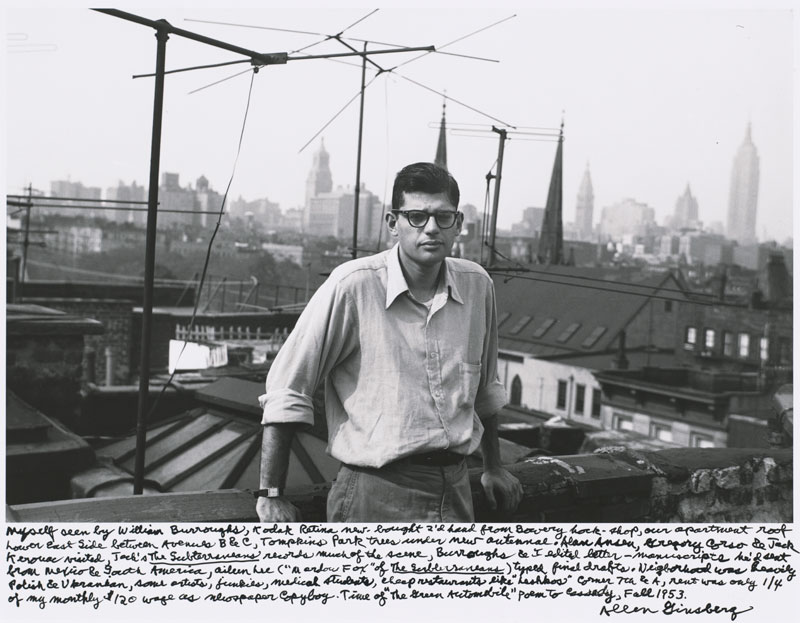
Allen Ginsberg’s Time Machine Walkabout at NYU

Myself seen by William Burroughs, Kodak Retina new-bought 2'd hand from Bowery hock-shop..., 1953, printed 1984-97. National Gallery of Art, Gift of Gary S. Davis. 
Images © 2012 Allen Ginsberg LLC. All rights reserved.

Myself seen by William Burroughs, Kodak Retina new-bought 2’d hand from Bowery hock-shop…, 1953, printed 1984-97. National Gallery of Art, Gift of Gary S. Davis. 
Images © 2012 Allen Ginsberg LLC. All rights reserved.

Walking through the Grey Art Gallery’s show Beat Memories: The Photographs of Allen Ginsberg is pretty much a stroll through the neighborhood circa 1953 – Tompkins Square Park, Avenue B, three-room apartments for $29 per month.

This incredible tribute to all things Beat was initially mounted by the National Gallery, but the best place to see it is NYU’s gallery in the Village, just steps away from where it all happened. Get to Washington Square to see what it was like to be young, broke, ambitious, and at the edge of a generational shift in America.

Allen Ginsberg had just gotten a $13 Kodak camera in a Bowery pawnshop and began taking photos of himself and his friends – Jack Kerouac, William S. Boroughs, and Gregory Corso. No one was famous yet. About thirty years later, Ginsberg found the snapshots, printed and enlarged them, and wrote in the margins his memories of sharing the flat, living on nothing, and breaking the rules.

The photos tell quite a coming-of-age story – the first publication of Howl, Ferlinghetti’s bookstore in San Francisco, emerging Beat sensibility, and life in a flat at 206 East 7th Street while Kerouac took to the road. The earlier photos were all taken from 1953 to 1963, but later photos of his from the 1980s include Dylan, Larry Rivers, Francesco Clemente, and even Madonna.

As an extra bonus, Grey Art Gallery interns developed a walking tour of Ginsberg’s East Village haunts, so you can actually experience Café Reggio, Café Wha?, and over 25 other spots where it all took place. Download the PDF tour inside the Beat Memories site and walk the walk of literary and cultural rebellion.

Get to this show right now in New York, or catch it in San Francisco’s Contemporary Jewish Museum later this year. If you can’t do either, poke through the online photos with Ginsberg’s commentary at either the Grey or the National Gallery sites (at the latter, you can enlarge the photos to read Ginsberg’s addendums). Here’s a promo from WNET:

Easter Parade with Horses at Grand Central

GCT security keeping an eye on the red horse

GCT security keeping an eye on the red horse

The colors, crowds, finery, and promenade in Grand Central is every bit as celebratory as the famed Easter Parade on Fifth Avenue, except there’s live music and horses. It’s all part of Nick Cave’s monumental performance Heard NY going on each day at 11am and 2pm in Vanderbilt Hall.

Get there early and take your cameras to see The Ailey School students don the two-person horse costumes, created out of raffia, to whoosh and swirl away to the drums and harp. Take a look at the Flickr photos of yesterday’s 11am performance.

Creative Time and MTA Arts for Transit have decided to use both sections of Vanderbilt Hall for simultaneous performances, so you have lots of options to see the 30 magnificent horses close up. Afterward, you’ll see the volunteers grooming the horses, so there’s lots of opportunity to check out the loving detail that Cave has given each of them.

Half of the 30-horse herd

Half of the 30-horse herd

The raffia flies, the dancers whirl, and it’s breathtaking to see the horses come alive before your eyes and cavort about with their distinct personalities. Even if you go to the Easter Parade at St. Patrick’s on Sunday, you’ll still have time to catch their final 2pm performance.  If you want to see another example of Nick’s work, check out our post on The Armory Show a few weeks ago. For now, enjoy this wonderful promo:

I Sat in the Saarinen Chair

The Saarinen chair at the Met

The 1956 Saarinen Tulip chair at the Met

If you’ve been to the Metropolitan Museum’s Modern Design gallery on the first floor, you’ve seen the iconic Eero Saarinen chair sitting on its platform at the back of the gallery with a “do not sit” sign prominently displayed.

Too bad you aren’t down in Wilmington, North Carolina at the Cameron Art Museum, where a tribute to three famous local artists provides you with an opportunity not only to sit in one, but at a Saarinen table with four of them, all surrounded by classy contemporary art in a setting only an artist can create. It’s a recreation of Claude Howell’s apartment 44, collecting and making art and holding salons for his entire life. Check out the Flickr photos of his fantastic place (yes, it’s a recreation, right down to the views of the Cape Fear River outside!).

The Cameron invites you to sit down to enjoy Claude Howell’s beloved Saarinen set

The Cameron invites you to sit down to enjoy Claude Howell’s beloved Saarinen set

It’s part of the fantastic tribute “From Gatehouse to Winehouse” that is extended to April 14. Besides Claude’s apartment, the curators have also built the ramshackle botanical garden gatehouse where Minnie Evans sold tickets and created her visionary masterworks from 1948 to 1974. (By the 1970s, her work was displayed at the Whitney.) Take a look. The surrounding gallery walls are filled with projected “visions” and crayon drawings hung on a line. The third studio belongs to mysterious, mystical woman of the 1920s, Elisabeth Chant (and Claude’s art teacher.)

Claude at home in his salon-studio. Source: Cameron Art Museum

Claude at home in his salon-studio. Source: Cameron Art Museum

Enjoy seeing how Claude lived and worked with his museum-quality dining set, and if you are anywhere near Wilmington, be sure to go sit in the chairs for real. Claude would be glad to have you over!