Do-It-Yourself Fashion Alphabet

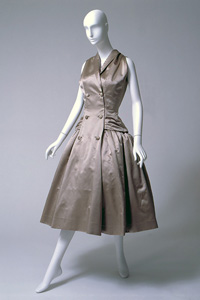
Christian Dior, dress in satin, 1954, France, gift of Sally Cary Iselin.

You’ve probably been too busy looking for electrical outlets below 34th Street to have noticed that today is the last day of the exhibition Fashion, A-Z: Highlights from the Collection of the Museum at FIT, Part Two.

Don’t worry, because as your power (and Internet) comes back on, you can get your fashion fix via FIT’s new digital archive that lets you surf by alphabet to see all the famous designers and dresses that are in the collection. Search by designer or brand, they’re all there.

The gallery show has the outfits arranged A (for Adrian with a MoMA-inspired creation) to Z (Zoran) in its upstairs gallery. The curators often placed two designer ensembles side-by-side, emphasizing the original designer (for example, Dior) and the younger designer who took over creative duties for the house over time (for example, YSL for Dior).

It’s a treat to see side-by-side examples of new and old Hermes (featuring Gaultier vs. the Kelly bag), Valentino, Balmain, Kenzo, YSL, Dior, and Comme des Garcon creatives.
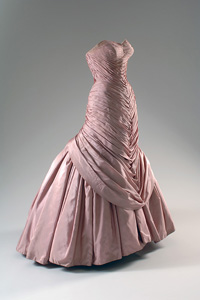
Charles James, evening dress in silk taffeta and net, 1955, USA, gift of Robert Wells In Memory of Lisa Kirk.

Is Charles James still the reigning world champion? Take a trip to Seventh Avenue today or start surfing fashion history to make your own determination.

MoMA Displays Post-Sandy Boardwalk Episode

Maybe it’s a bridge and not a coastal boardwalk, but the character in Munch’s pastel on view at MoMA through April 2013 pretty much sums up the experience of so many Tri-State residents in the last week.  Ironically, the privately owned drawing went up only a few days before the hurricane stormed through the region, devastating homes, beaches, and the Chelsea galleries.

Many downtown museums remain closed, including the South Street Seaport Museum, the New York City Police Museum, the National Museum of the American Indian, and the Skyscraper Museum, although the Museum of Jewish Heritage at the Battery has just announced its reopening. On the West Side, the Intrepid is closed until it can fix its inundated welcome center and repair the outdoor protective bubble around the space shuttle Enterprise, which got a little beat up. The High Line is repairing all of its electrical infrastructure.

To help the arts and museum community during this difficult week, MoMA has posted a PDF with instructions on conserving art works that have sustained flood damage and held a workshop with conservators from the American Institute for Conservation Collections Emergency Response Team for afflicted dealers and collectors this past weekend.

While the repairs and restoration will take time and with another windy storm on the way toward New York, Mr. Munch’s 117-year-old evocation remains pretty much on point.

NYC High Line Wilderness Being Swept Away

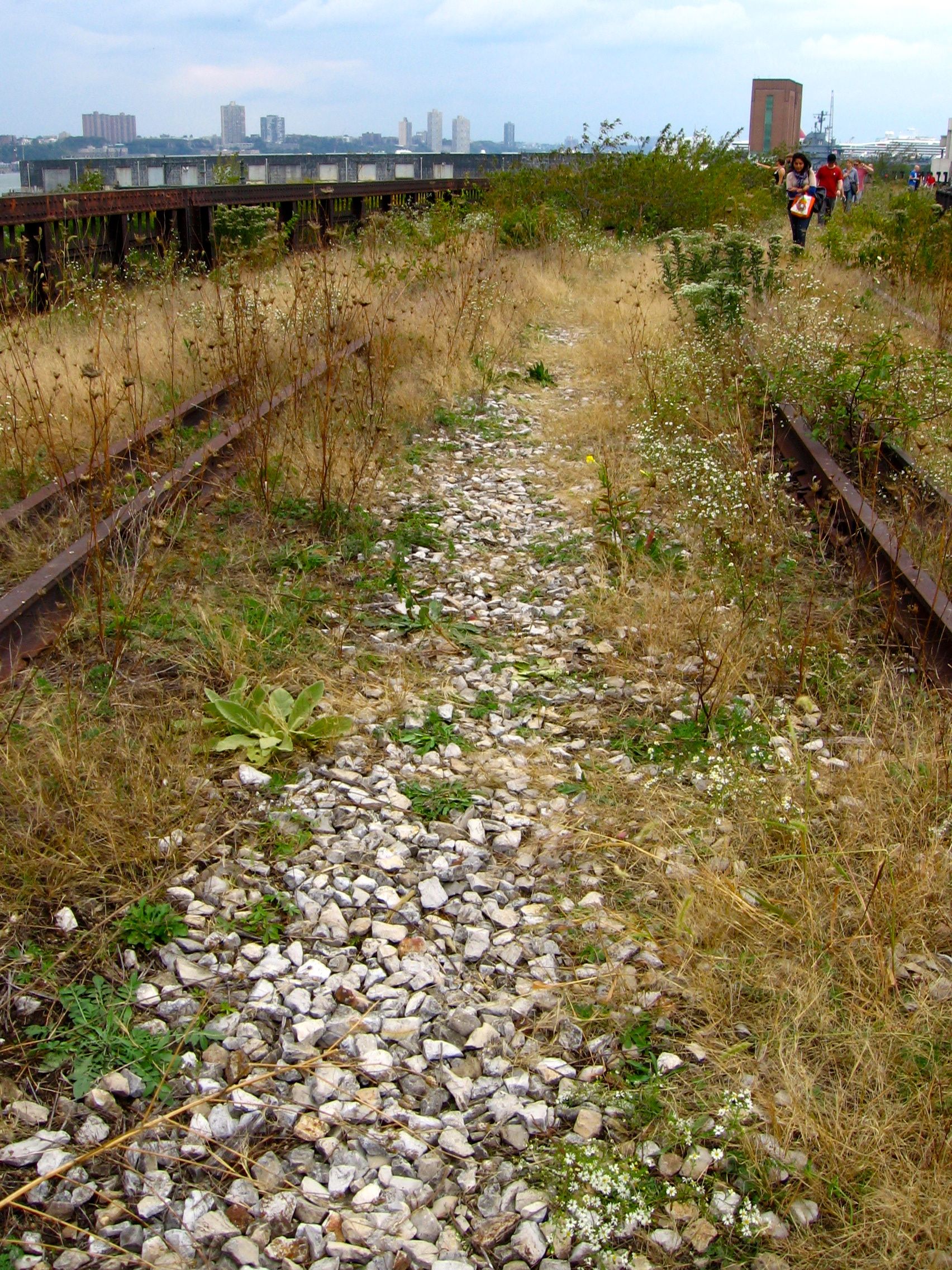
It’s not going to be swept away by Hurricane Sandy…We’re just alerting you to the fact that the last section of the High Line looping the West Side Rail Yards is about to undergo its final construction transformation from 30th Street up to 34th Street, right across the street from the Javits Convention Center.

As soon as the hurricane subsides, crews will start transforming the railroad-bed wilderness into a beautiful promenade designed by James Corner Field Operations, Diller Scofidio + Renfro, and planting designer Piet Oudolf. The City acquired the property from CSX Transportation this summer – the final piece of rail property to complete the High Line vision.

Earlier this month, the High Line opened up this final frontier to foot traffic as part of Open House New York, and we’re providing a last virtual look on the Flickr site.  Enjoy the trees, the views, the historic photos, and graffiti of the old elevated railway before the skyscrapers start rising over the old Penn Central yards.

And be sure to find the theropod dinosaur lurking in the weeds above Eleventh Avenue!

Hirschhorn Goes Overboard at Gladstone

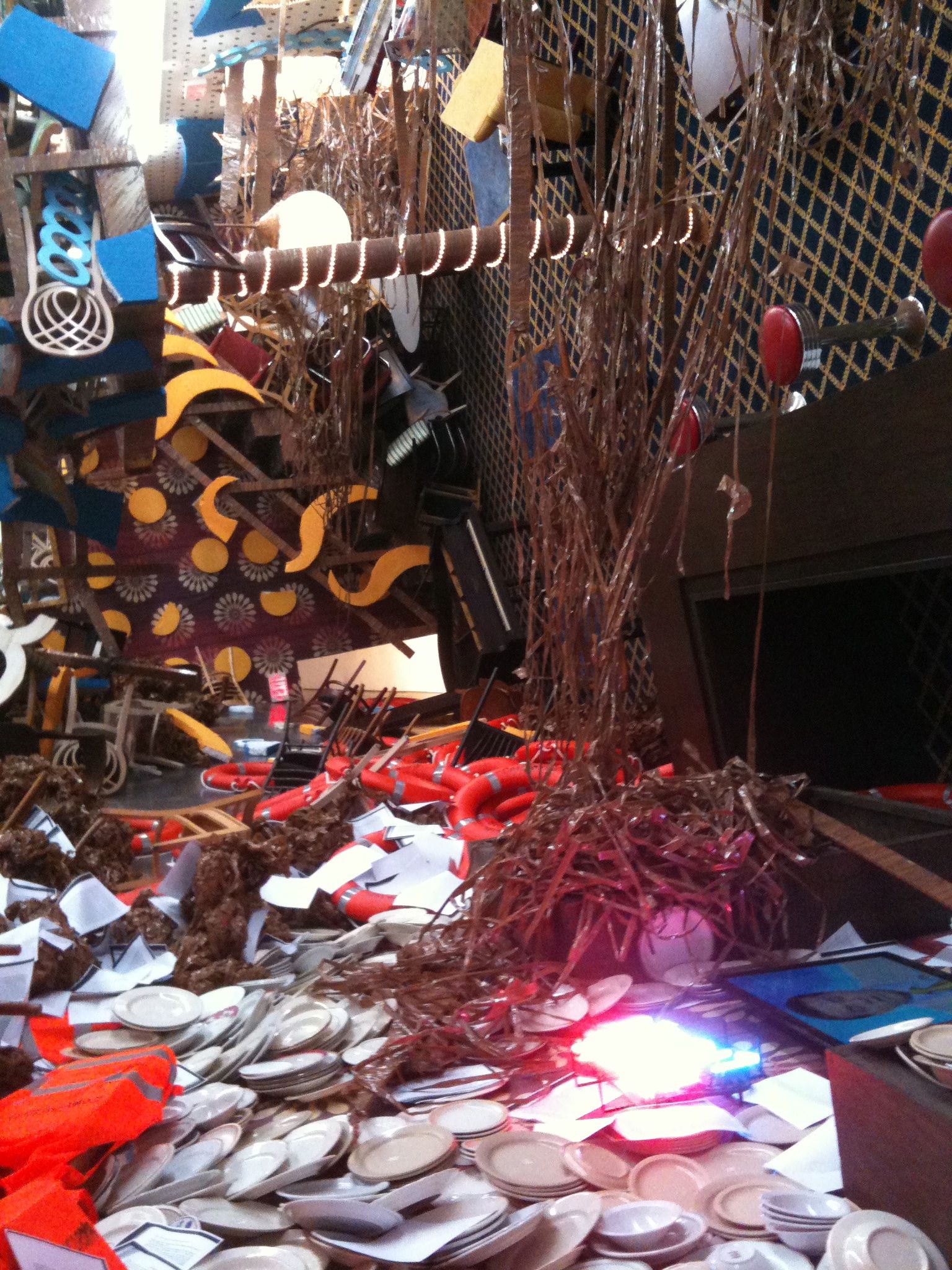
This may look like a Judy Pfaff installation, but it’s a close-up of the engaging, room-size environmental work by social commentator Thomas Hirschhorn on view until October 20 at Gladstone Gallery in Chelsea.

Concordia, Concordia is a riff on the tumultuous, larger-than-life grounding tumble of the Italian cruise ship, Costa Concordia in January 2012. Gladstone has other close-ups on its website, but its worth a walk over to 530 West 21st to get the full experience for yourself.

Hirschhorn was inspired by the furniture-akimbo nature of the interior photos of the luxury liner and the refusal of the ship’s captain to tend to the self-inflicted disaster.  There’s a lot to look at – including Hirschhorn’s cheeky inclusion of The Raft of the Medusa.  Look hard. You’ll find it. There’s no safe place.

Coe Multimedia Accessory Collection at The Met

Detail of Possible bag (1900) from the Coe Collection at The Met

McQueen and the Paris runways have nothing over the 18th and 19th-century Native Americans who knew how to mix unusual materials and meanings into symbolic, functional, innovative, and salable accessories. A collector with an eye for the interesting is honored in the Met’s Michael C. Rockefeller wing in the micro-show, The Coe Collection of American Indian Art.

Ted Coe of Santa Fe was inspired to collect both ancient and contemporary works by Native Americans that caught his attention, amassing thousands of pieces that he bequeathed to the Met. He mounted a truly innovative show at AMNH in 1986, which linked old and new traditions in Native American art making, Lost and Found Traditions: Native American Art 1965-1985. The Met’s curators decided to honor his work by selecting forty objects.

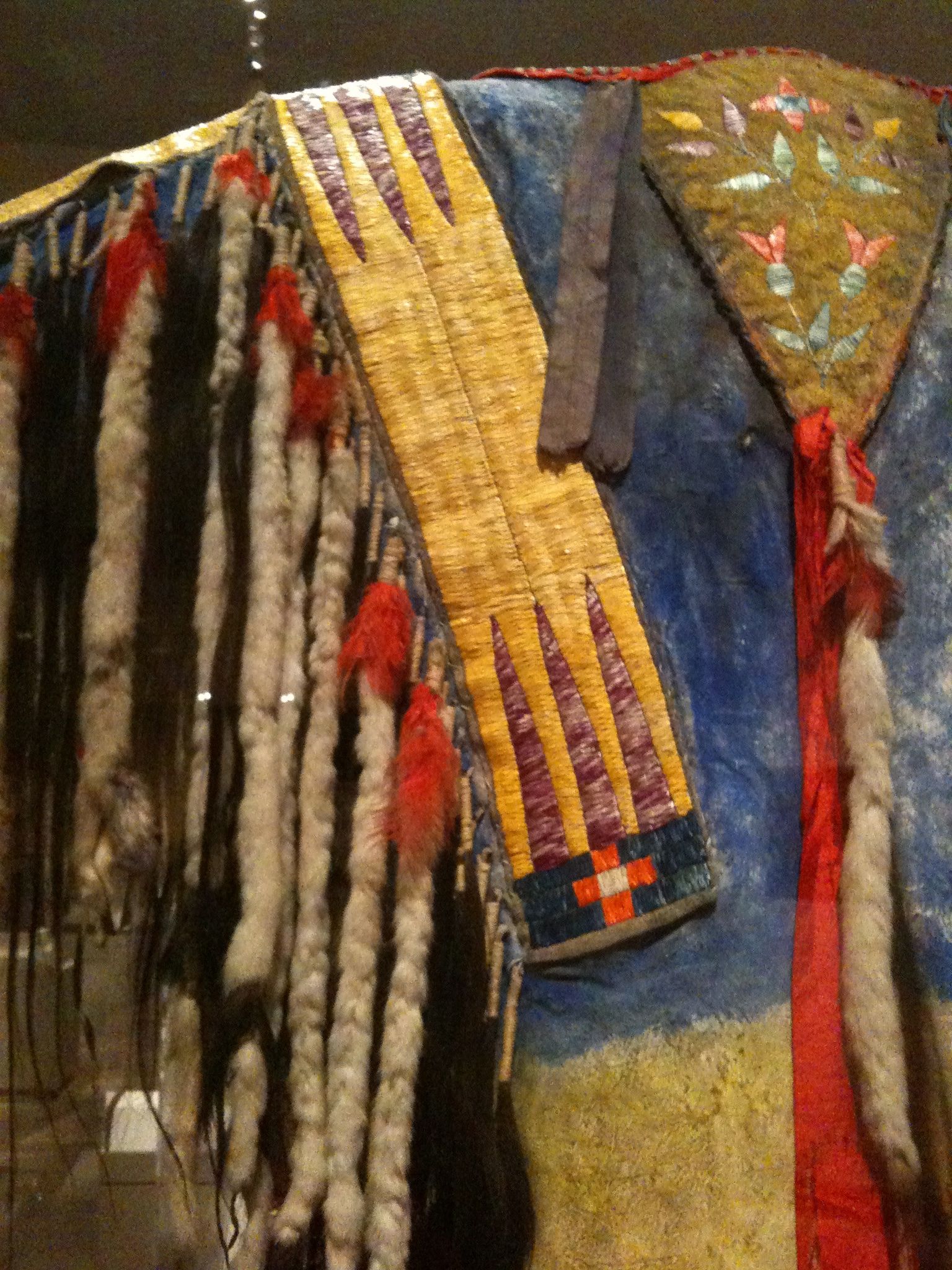
Detail of Arikara Leadership shirt (1860) from Coe collection at The Met

The show isn’t all about wearable art, but we decided to focus on a few details that you might find of interest. We’ve organized the Flickr feed to document some of the oldest to the newest creations on display, ranging from mid-Mississippian carved stone tools from 4,000 B.C. to the cheeky dough bowl (1994) made by Chochiti potter Diego Ramirez.

In between, you’ll see an array of sophisticated and rough creations made by artists from the 1700s to early 1900s for Native American leaders, nomads, and tourists – all designed, embellished, and crafted in a variety of materials. Who knew that nuns taught Canadian tribal artists to embroider with moose hair? Enjoy the details.

Afghanistan in MoMA’s Atrium

Afghanistan is in the house as part of MoMA’s tribute to Italy’s art povera superstar in their soon-to-close exhibition Alighiero Boetti: Game Plan. Although Boetti’s retrospective takes up room on MoMA’s other floors, it’s the Afghanistan-made kilims and other art works that really serve as the focal point of the visitor experience. Check out the photos.

Get there to see the series of embroideries on tissue and the grid-within-grid rugs with patterns designed by art students and woven by Afghan artisans. Up until the Soviet invasion in 1979, Boetti worked with artists there to carry out intricate woven collaborations – including over 150 maps of the world. Boetti traced the maps on canvas and let the weavers add whatever text they wanted and pick all the colors. A few are on display here, and you can hear a pretty amazing description about the logistics of Boetti’s collaborations from MoMA curators in a short audio.

Installation view of Alighiero Boetti map (1979), embroidered by Afghani craftswomen

You’ll enjoy the densely packed embroidery Everything, and the amazing tapestry of the thousand longest rivers in of the world (1976-1982). It took Botetti and his wife years to classify all of the rivers, and if you’ve ever seen this on display before at MoMA (it’s in their collection), it’s an amazing textile that never fails to draw a crowd.  You’ve got to see it in person.

Check out MoMA’s interactive site for the exhibition, but run over to examine all the Afghani creations up close. Enjoy the trip.

What’s Up with Those Dots, Yayoi?

You’ve seen them everywhere over town…the enigmatic dotted signs with the face of Yayoi Kusama peering out. During Fashion’s Night Out, the Vuitton store was ablaze in polka dots, all a tribute to this reclusive Japanese pop-art sensation who burst upon the Manhattan art scene in the 1960s.

This is the last weekend to see her retrospective in person at The Whitney, but if you can’t make it, enjoy the Vuitton collection that she inspired (they’ve created a whole website).

Take a peek into the show.

And click on this link to see a documentary clip about this Kusama’s life. Be surprised and find out how to merge into infinity!

How di Suvero Makes Steel Move

Rust Angel sculpture (1995) by Mark di Suvero at the edge of the Parade Ground at Governors Island

Even if you haven’t caught the monumentally good outdoor installation of Mark di Suvero’s work on Governors Island (check out the photos), the folks at Storm King Art Center are making sure that you don’t miss it.

Thankfully they asked filmmaker Dirk Van Dall to capture how it was all transported down the Hudson from Storm King’s 500-acre campus an hour north of the City. The short film follows di Suvero around the Island to inspect the (literal) heavy lifting.

In 2010, di Suvero won National Medal of Arts, and in the film he talks about his lifelong fascination with steel, his early employment at the Fulton Fish Market, how neighborhood kids inspired him to begin creating large-scale fun works, and how he makes the seemingly immobile move. Listen in.

Drop in at the Governors Galleries this weekend to talk with the Storm King folks, and join their walking tour of the works at 2pm.

Ride the M-15 to the 19th Century

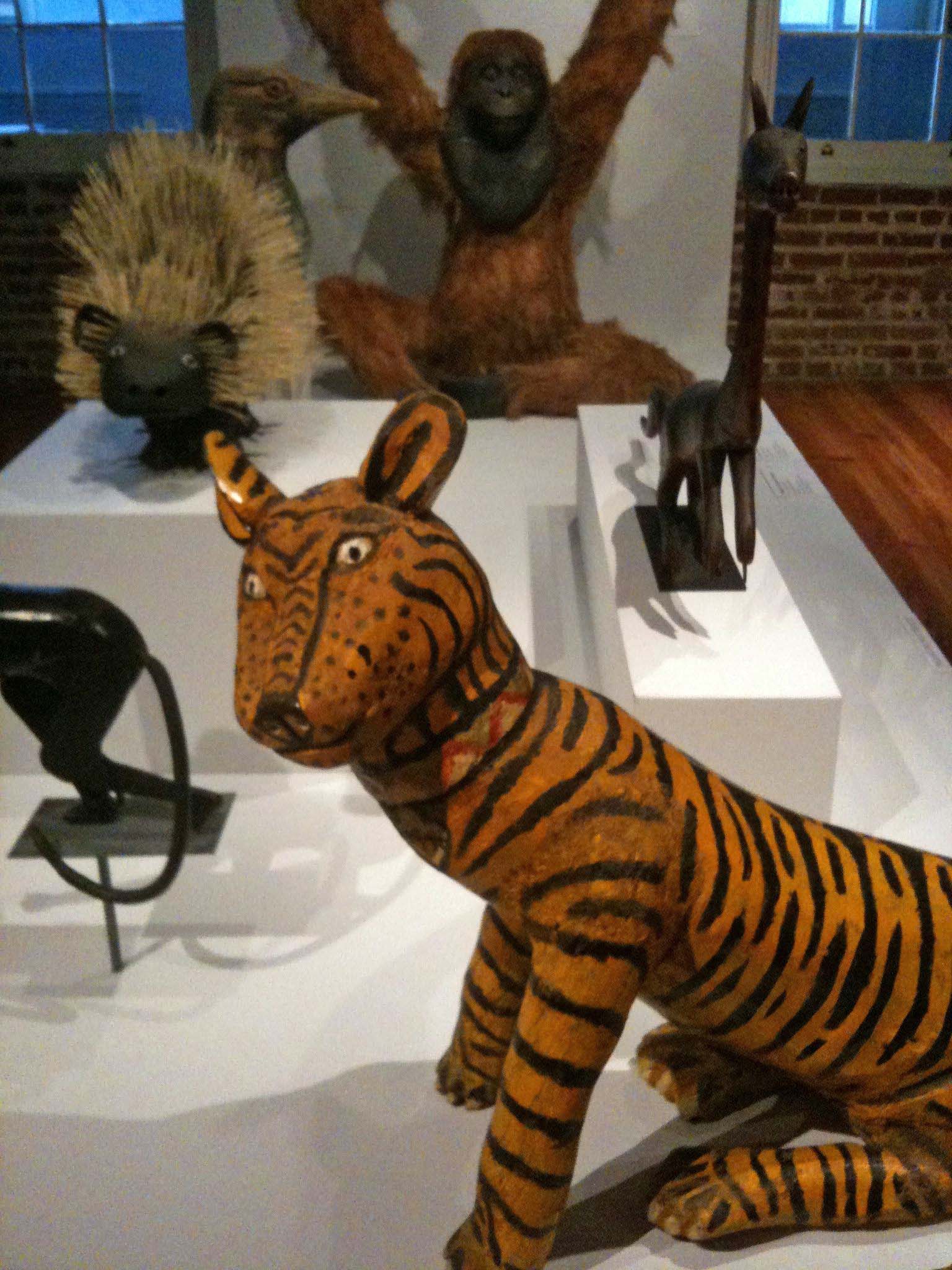
The SBS M-15 (First Avenue) bus drops you right at the door to the 19th century lifestyles and handiwork inside the South Street Seaport Museum’s Compass: Folk Art in Four Directions show, mounted by the American Folk Art Museum (which has just hired a new director and is now on better financial footing after selling its 53rd Street building to MoMA and decamping back to its space near Lincoln Center).

The Seaport (currently under the management of the Museum of the City of New York) invited the Folk Art folks to curate a show for four of its newly opened galleries, and it’s a joyful, informative stunner. Stacy Hollander, senior curator, selected art that reflects the spirit of the Seaport’s Schemerhorn Row, a series of six 1810 buildings that originally housed coffeehouses, hotels, and other small businesses serving the bustling sea trade.

Whale ivory and bone canes (1860); AFAM

In the Exploration gallery, you’ll encounter a vibrant folk-art menagerie, evoking the exotic adventures awaiting seafarers, who would be gone for years at a time, carvings done during the voyages, whale-bone walking canes, and imports from China. In the “social networking” gallery, the Seaport has exposed an original wall, covered in 19th-century graffiti, from the coffee houses of old downtown, when Water Street was the actual East River waterfront.

Everyone should support both of these museums (and get free admission if you sign up for the Seaport’s mailing list). The Museum and the SBS M-15 are in operation seven days a week.

Girls Who Wear (Google) Glasses

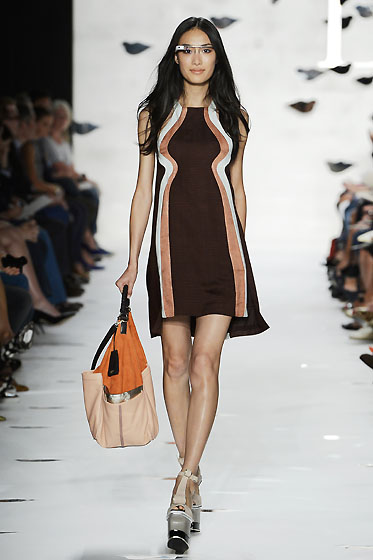
DVF’s Look #17 for Spring/Summer 2013

When Diane von Furstenberg and her models walked the runway at NYC’s recently concluded Fashion Week, they decided to give the world an inside peek at how it feels by recording the experience with Google Glass, the still-in-Beta avant-eyewear.

The innovative accessory shoots video, snaps pix, streams messages, and apparently looks good, so Diane decided to snap on the specs and take you with her (and her posse) on a fashion-tech flashbulb-popping stroll.

What’s cooler than Diane’s embrace of the new? Her Spring/Summer 2013 collection and her attitudes about life, potential, and empowerment. Take a look. Thanks, Diane!