Mucha’s Timeless Legacy of Line

Fans of Mr. Mucha, the grand master of sinuous line, have been lining up across North America to admire some of his greatest works – epic posters of Sarah Bernhardt, beautiful women hawking products surrounded by swirling halos or smoke, and exotic details on small-scale, affordable decorative panels representing the seasons, flowers, or arts.

Created by the Mucha Foundation in Prague, Timeless Mucha: The Magic of Line presents Mucha’s own collection of art and books that inspired his creativity, his early works as an in-demand illustrator, and his most famous posters and viral images. It’s all on display at the Boca Raton Museum of Art through March 1, 2026 after successful stops at the Phillips Collection in Washington, D.C. and Santa Fe’s Vladem Museum of Contemporary Art. 
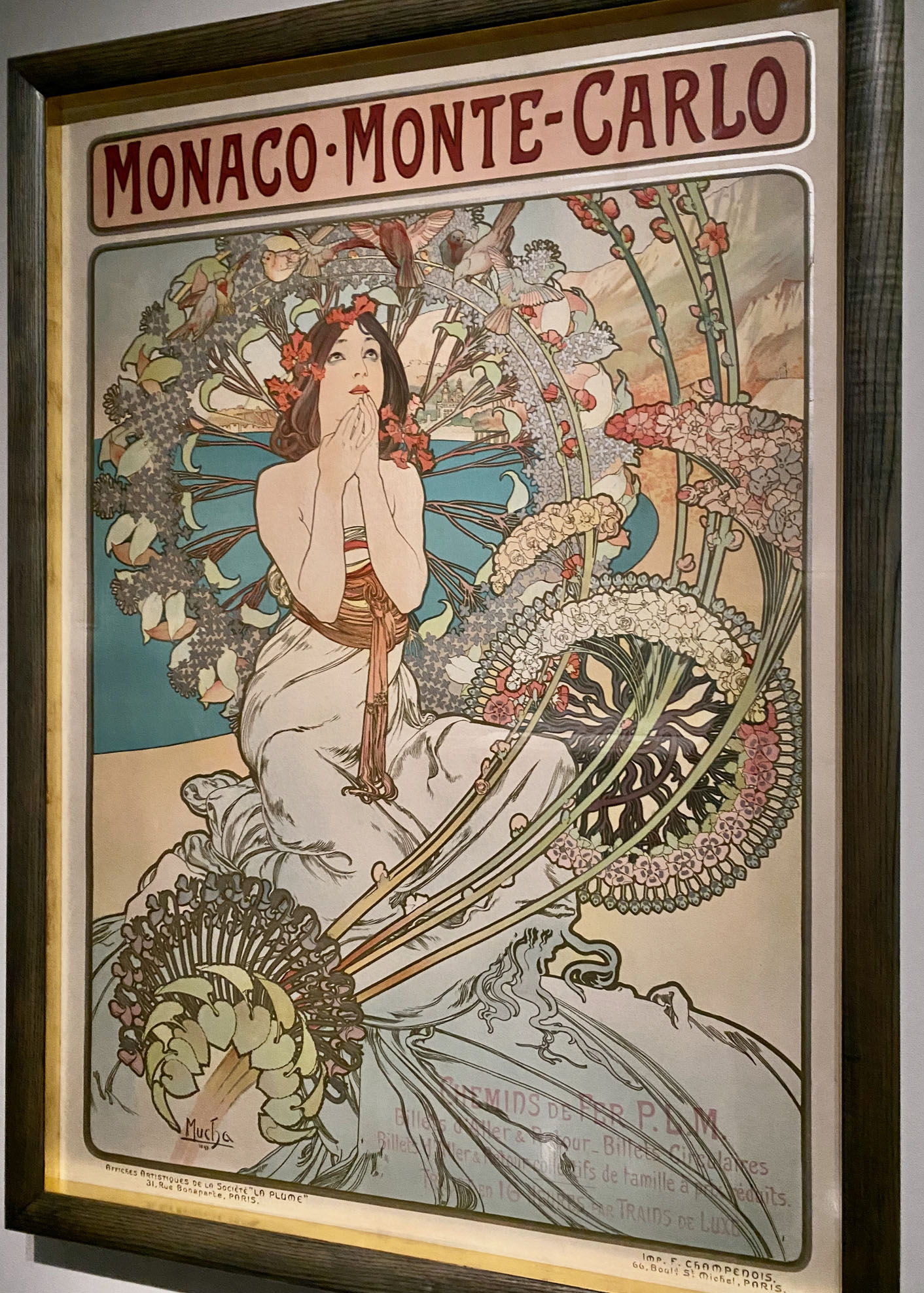
Mucha’s 1897 lithograph Monaco – Monte Carlo, an ad for the Paris- Côte d’Azur railway featuring a young woman dreaming about her beach trip. Courtesy: Mucha Foundation.

See some of our favorite works from the Vladem installation in our Flickr album.

So how did a designer who was all the rage for Art Nouveau at the 1900 Paris Expo inspire Sixties psychedelic rock illustrators, Marvel Comics creators, and Japanese manga artists? You’ll see that in the exhibition, too. Check out this promo from Boca:

A portion of the exhibit features drawings, sketches, and acquisitions that suggest the building blocks that formed his mature style – Moravian folk style, the mix and match of multicultural design elements seeping into European designers’ consciousness, and the super-flat design in Japanese prints, and fantastical embellishments on Japanese collectibles in late 19th century Paris.

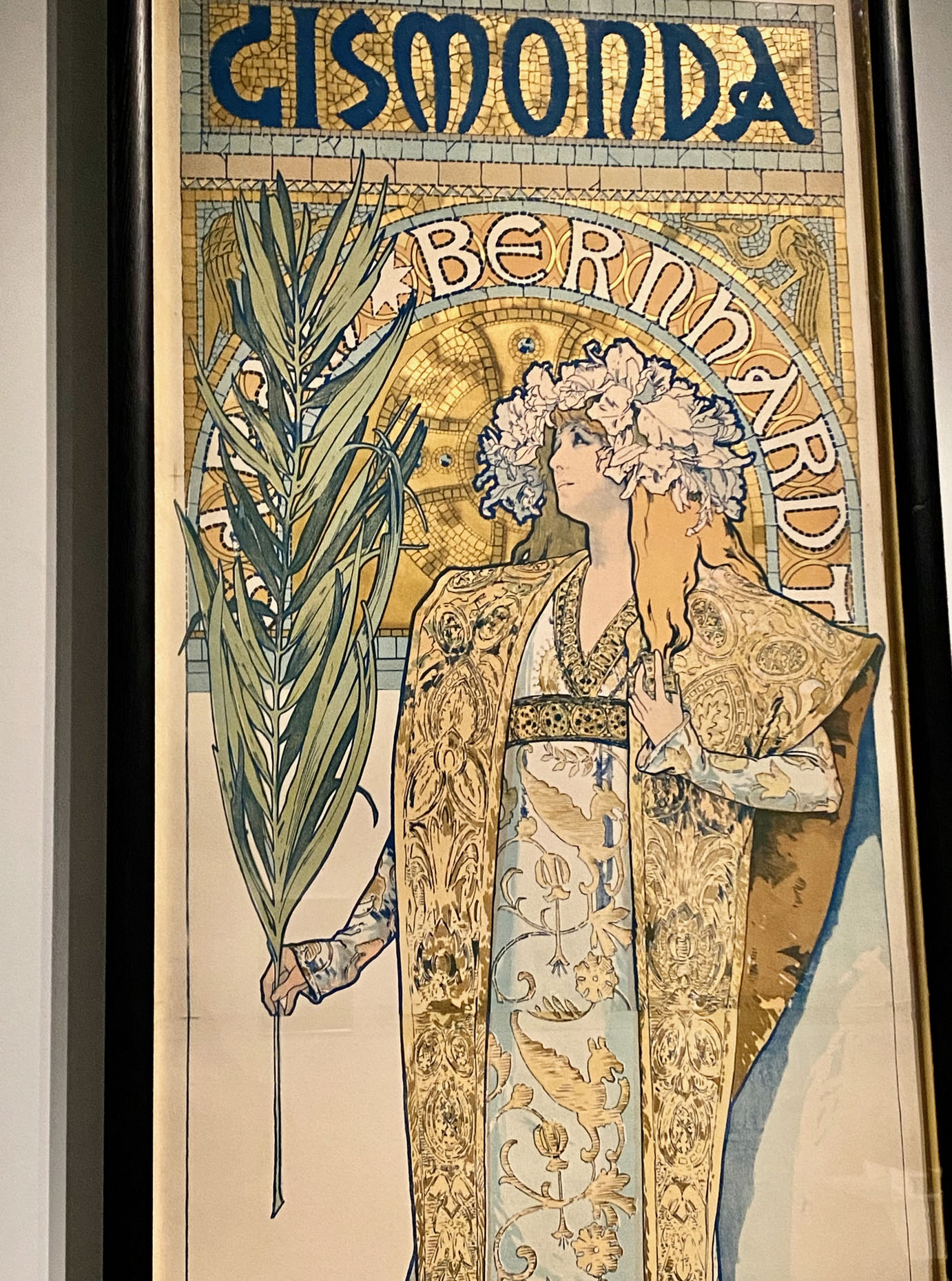
Just take a look at how many of these design influences Mucha packed into his viral street posters advertising actress Sarah Bernhardt’s new plays – mosaics like those in Eastern European churches, exotic decorative elements, and arcs functioning as halos.
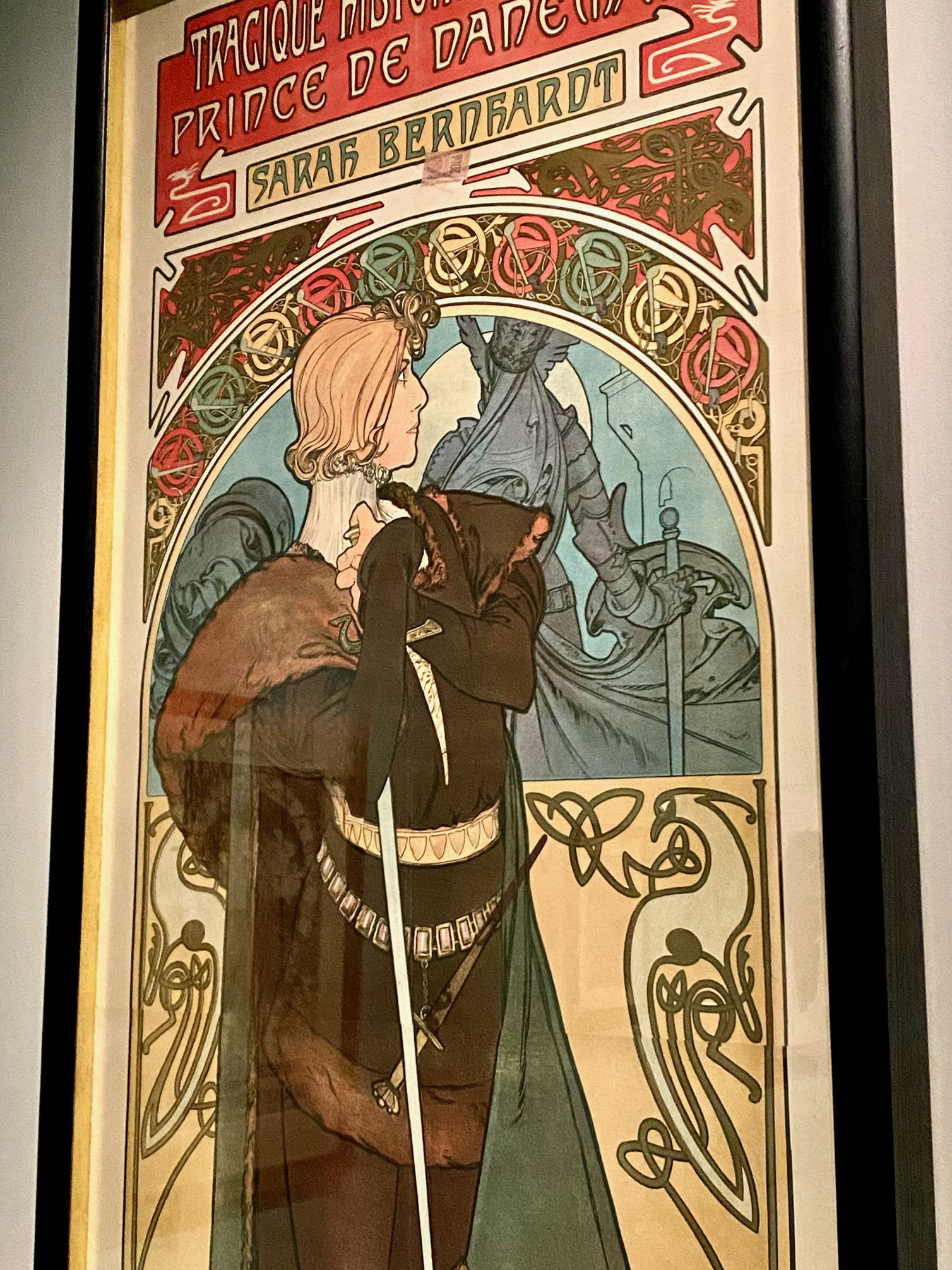
Close-up of Mucha’s life-size 1899 poster of Sarah Bernhardt starring in Hamlet, with Celtic motifs. Courtesy: Mucha Foundation.
Close-up of Mucha’s life-size 1894 poster of Sarah Bernhardt starring in Gismonda featuring a Byzantine mosaic, Orothodox cross, and Slavic designs. Courtesy: Mucha Foundation.

Listen to the Foundation’s curator Tomoko Sato (shown in Phillips Collection galleries) explain how Mucha’s 1894 poster commission – his first – immortalized superstar actress Sarah Bernhardt:

When Mucha’s Gismonda poster appeared on the streets of Paris in 1894, it was a sensation and cemented Mucha’s status as the hottest designer of the day. Bernhardt signed him to a six-year contract (including designing her jewelry), and other offers started rolling in.

Everyone considered Mucha the leading practitioner of Art Nouveau, although Mucha never cared for this label. As the exhibition shows, Mucha’s style was a flat application with bold outlines around ethereal depictions of independent women, swirling vines and/or hair, and a sinuous spiral curving through his layout.
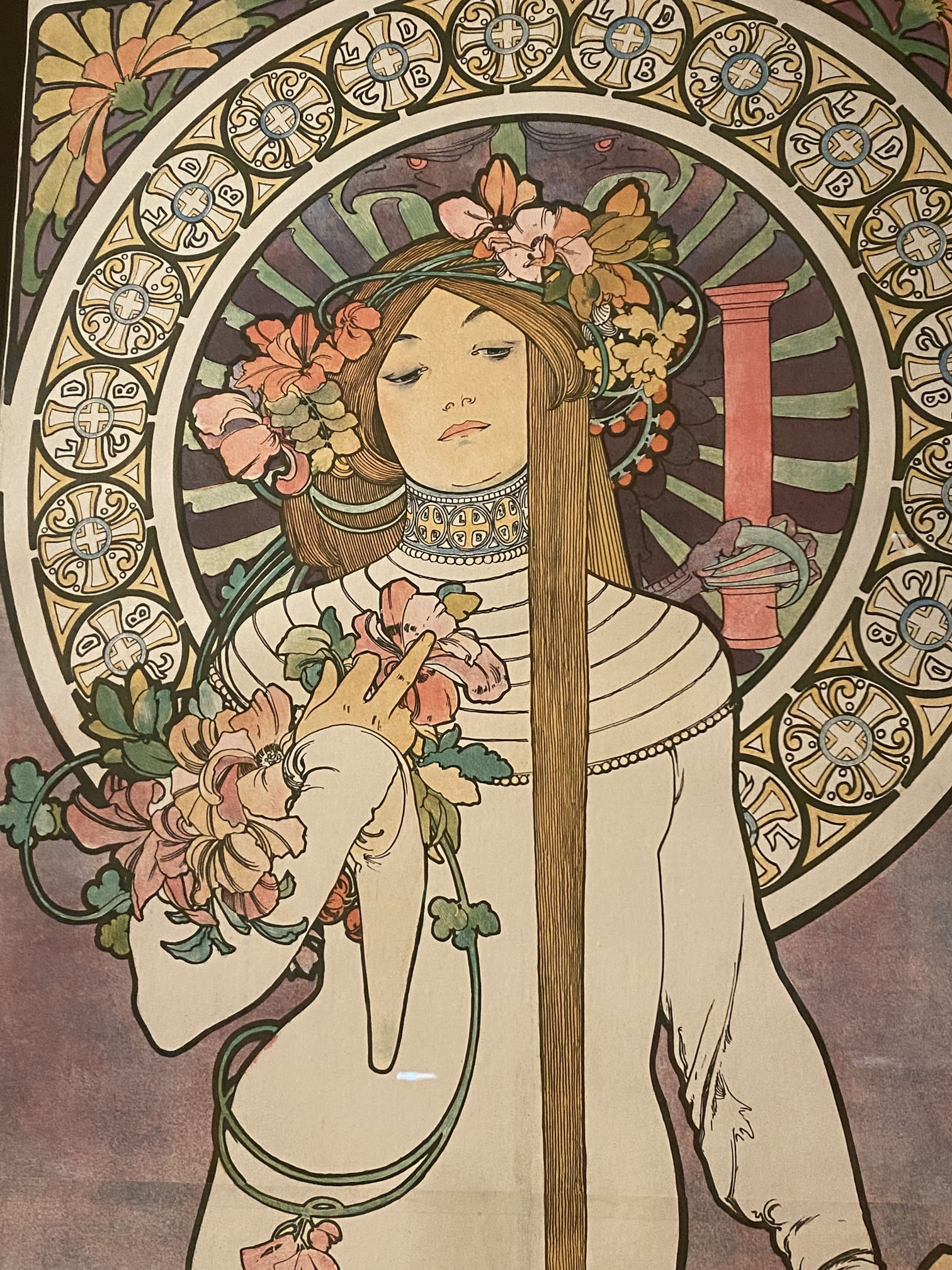
Detail of Mucha’s 1897 lithograph La Trappestine, a liqueur ad featuring a halo, Celtic designs, and a floral wreath. Courtesy: Mucha Foundation.
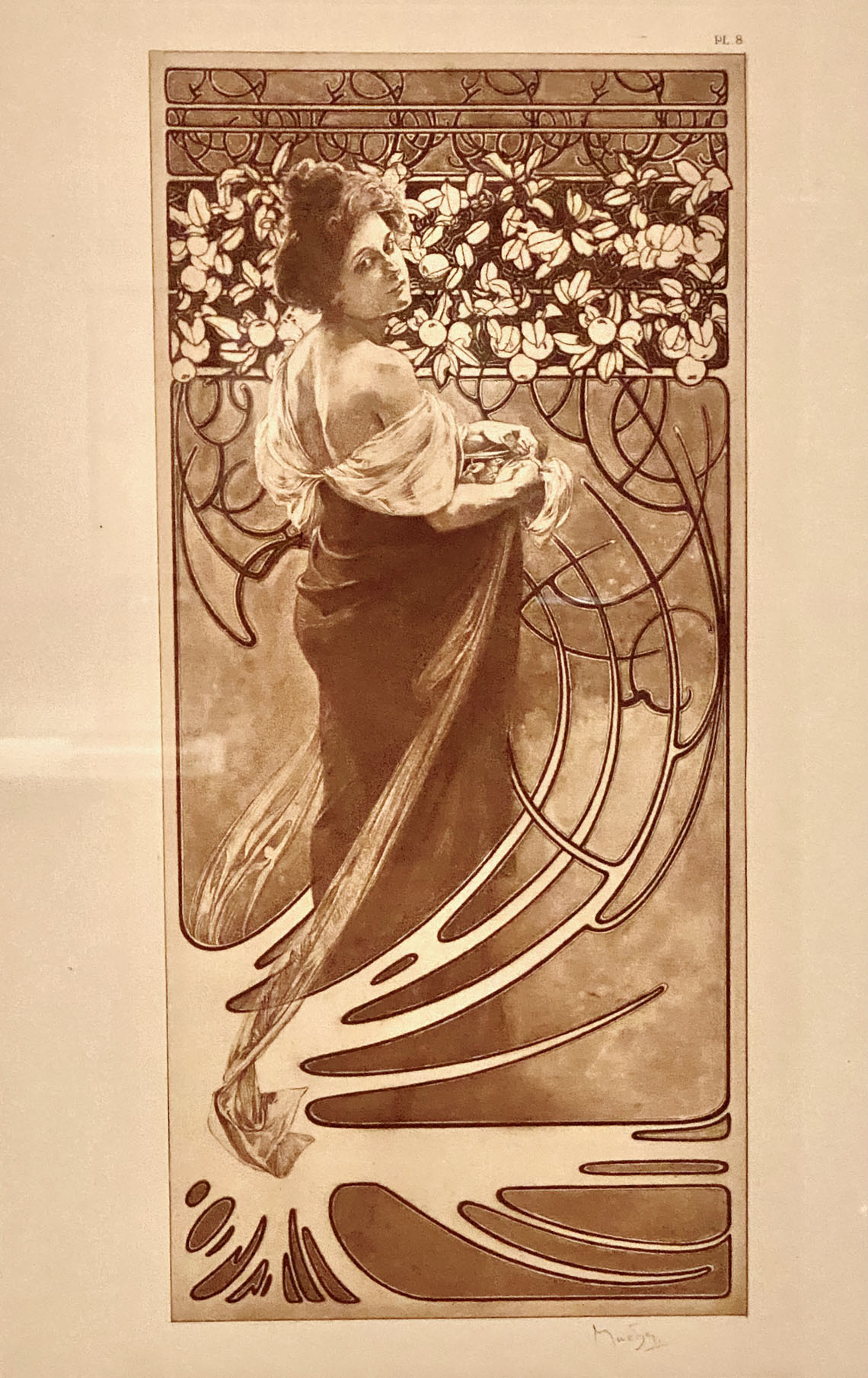
Plate from Mucha’s 1902 Documents dècoratifs, his designer handbook on how to combine human figures with decorative elements. Courtesy: Mucha Foundation.

As his fame grew, publishers licensed his images and published them at affordable prices worldwide. Mucha himself traveled abroad, teaching sold-out classes in drawing, line, and figures. He was in such demand that he eventually created books showing up-and-coming designers how to create universally appealing designs in his style.

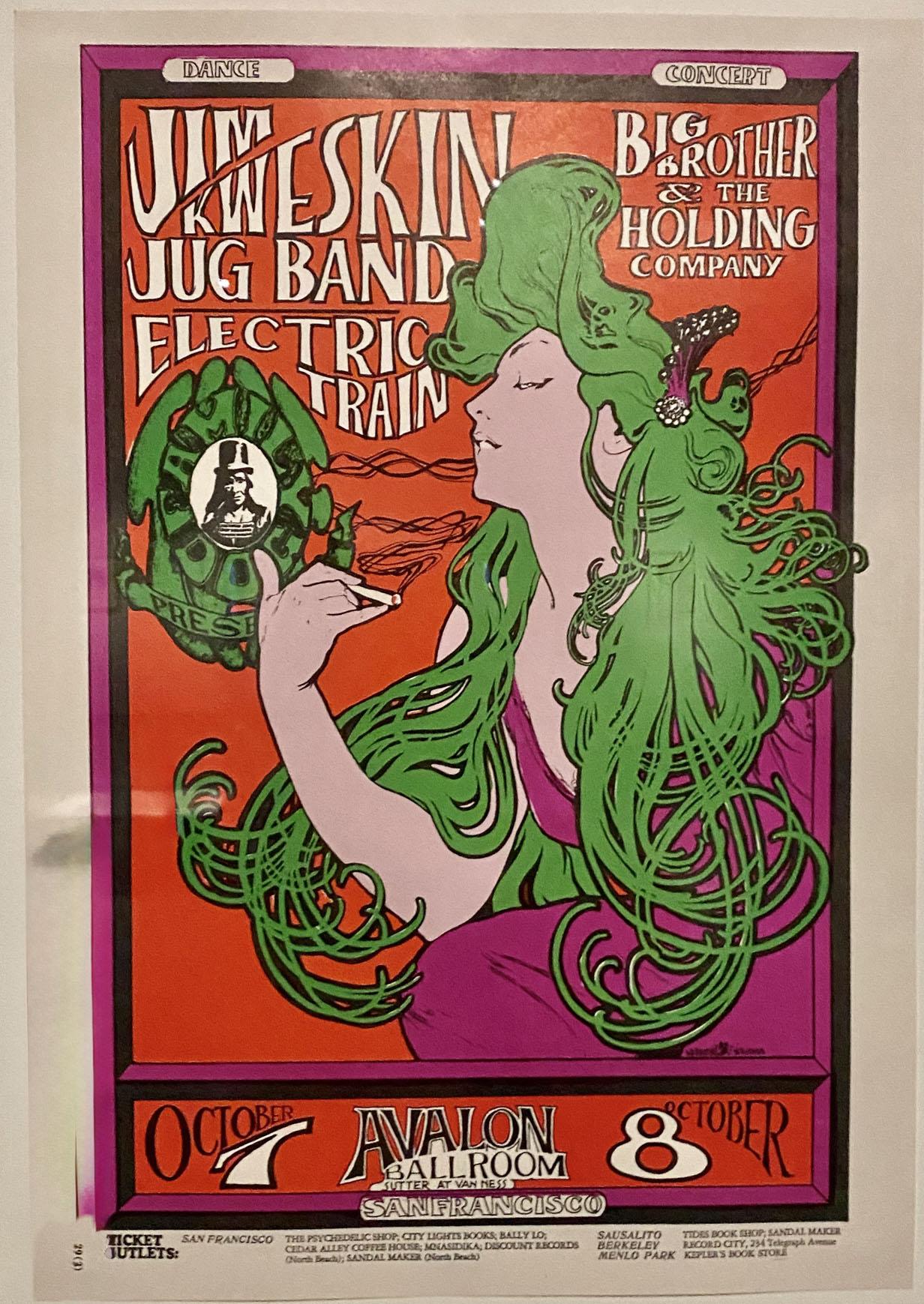
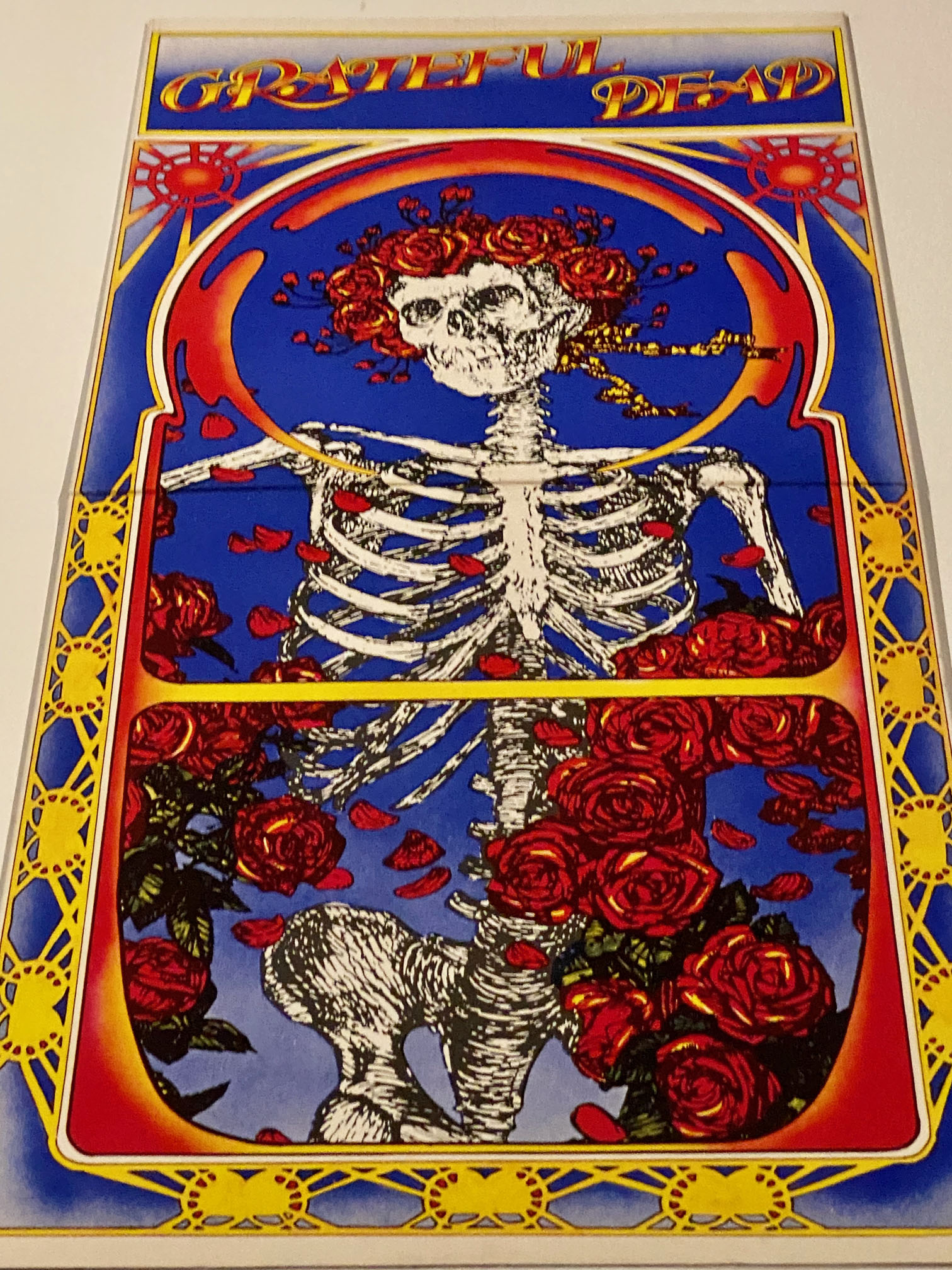
When Mucha produced these design look-books in the early 1900s, could he have envisioned that illustrators and designers of the late 20th and early 21st century would take note? The exhibition showcases Fillmore West posters and Sixties’ rock album covers that repurposed Mucha’s style, such as this transformation of Mucha’s cigarette paper ad into a nearly identical promo for the Jim Kweskin Jug Band.
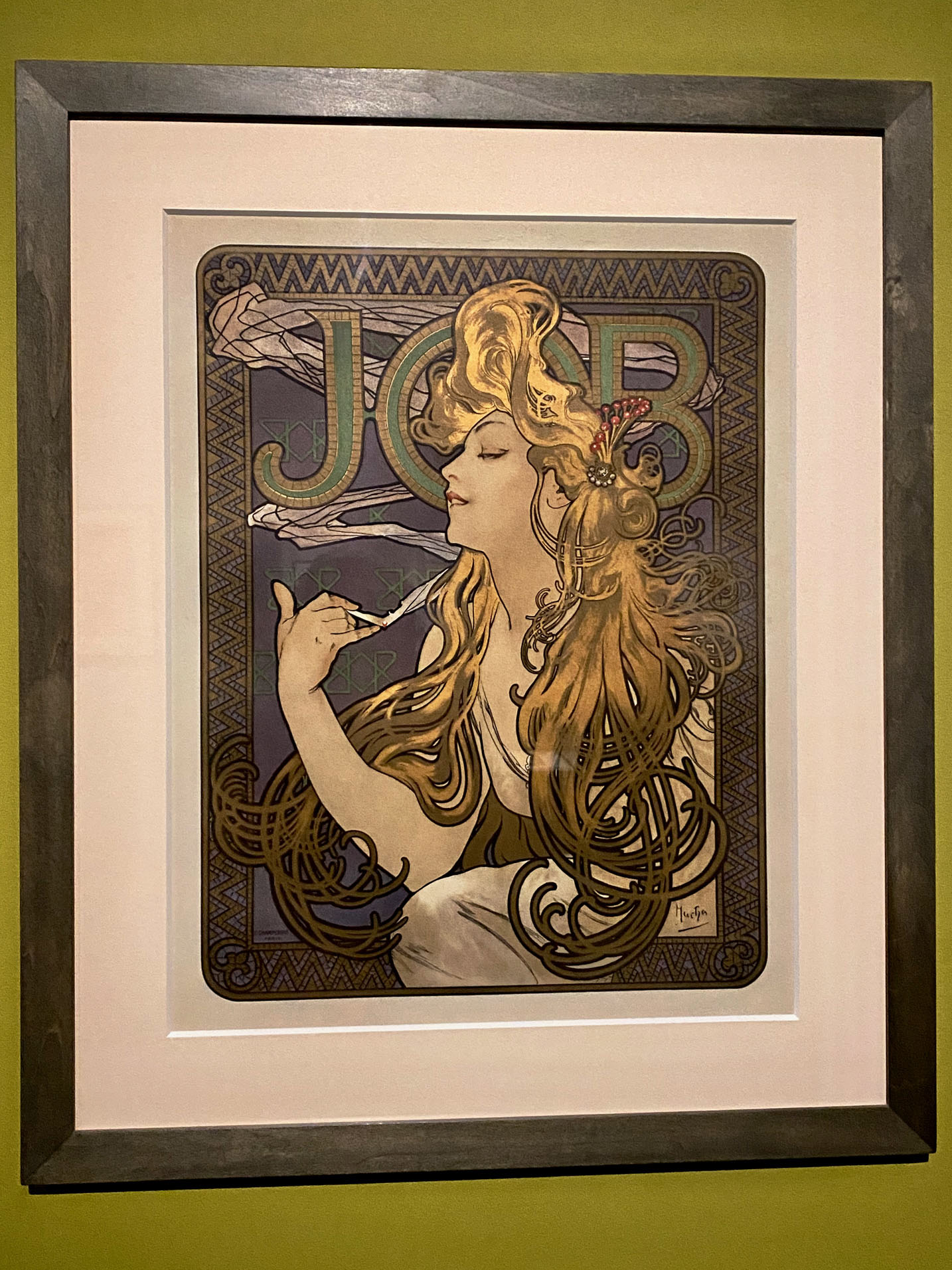
Mucha’s first product advertising poster – 1896 promo for JOB rolling papers featuring a sensuous smoker and a Byzantine border. Courtesy: Mucha Foundation.
1966 poster by Stanley Mouse and Alton Kelley for a San Francisco concert headlining the Jim Kweskin Jug Band and Big Brother and the Holding Company.

Flowers in your hair? Swirling hair, flowers, and stars were part of Mucha’s “universal language” that took design in a new direction in the 1900s. Museum visitors love pouring over the Sixties album covers and posters detail in the exhibition, remembering which albums they owned and acts they saw, delightedly pointing out the Mucha design influences to their friends.
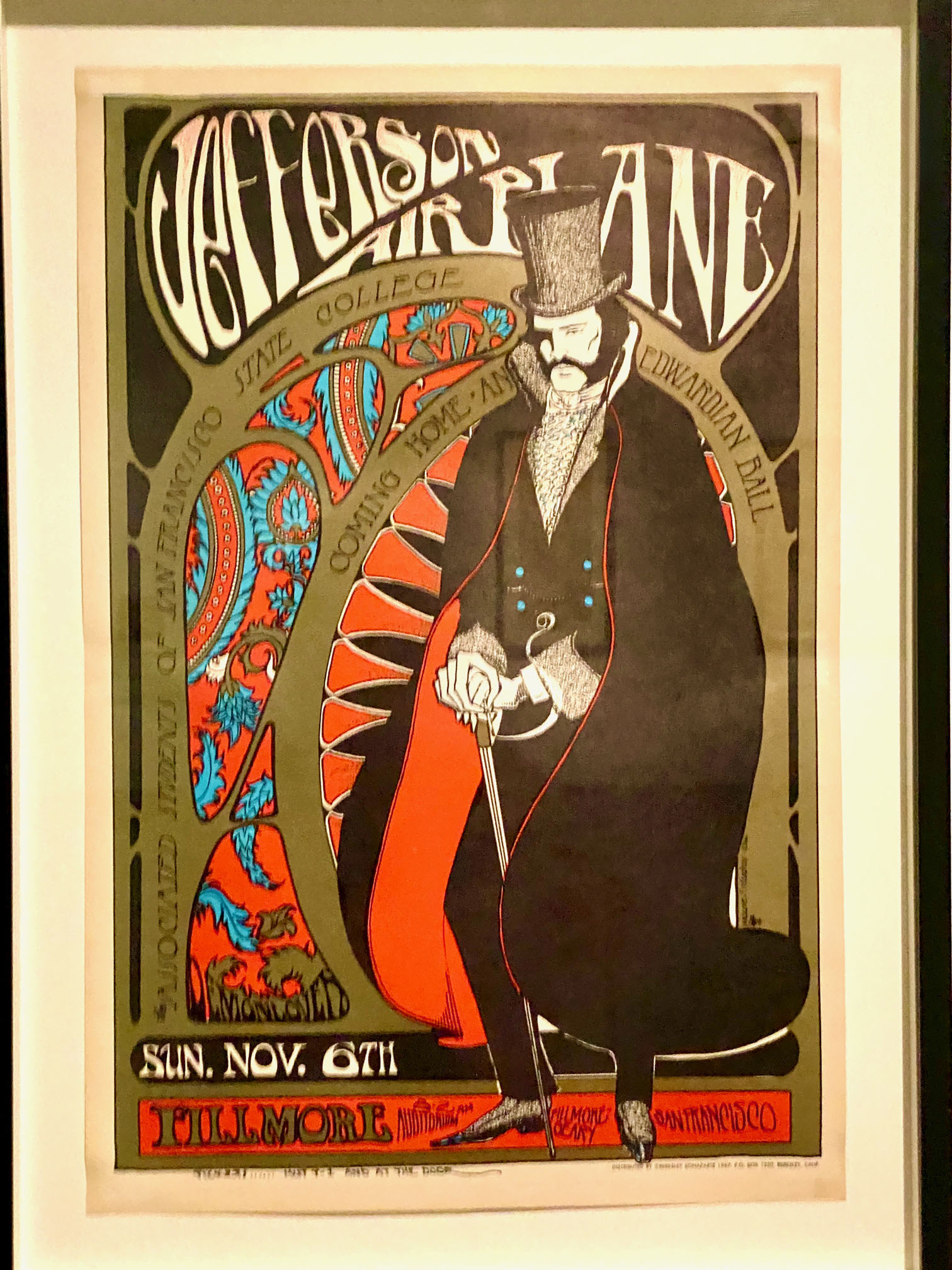
1966 tour poster for Jefferson Airplane at the Fillmore Auditorium by Stanley Mouse and Alton Kelley.
1971 Skull and Roses tour poster for Grateful Dead by Alton Kelley.

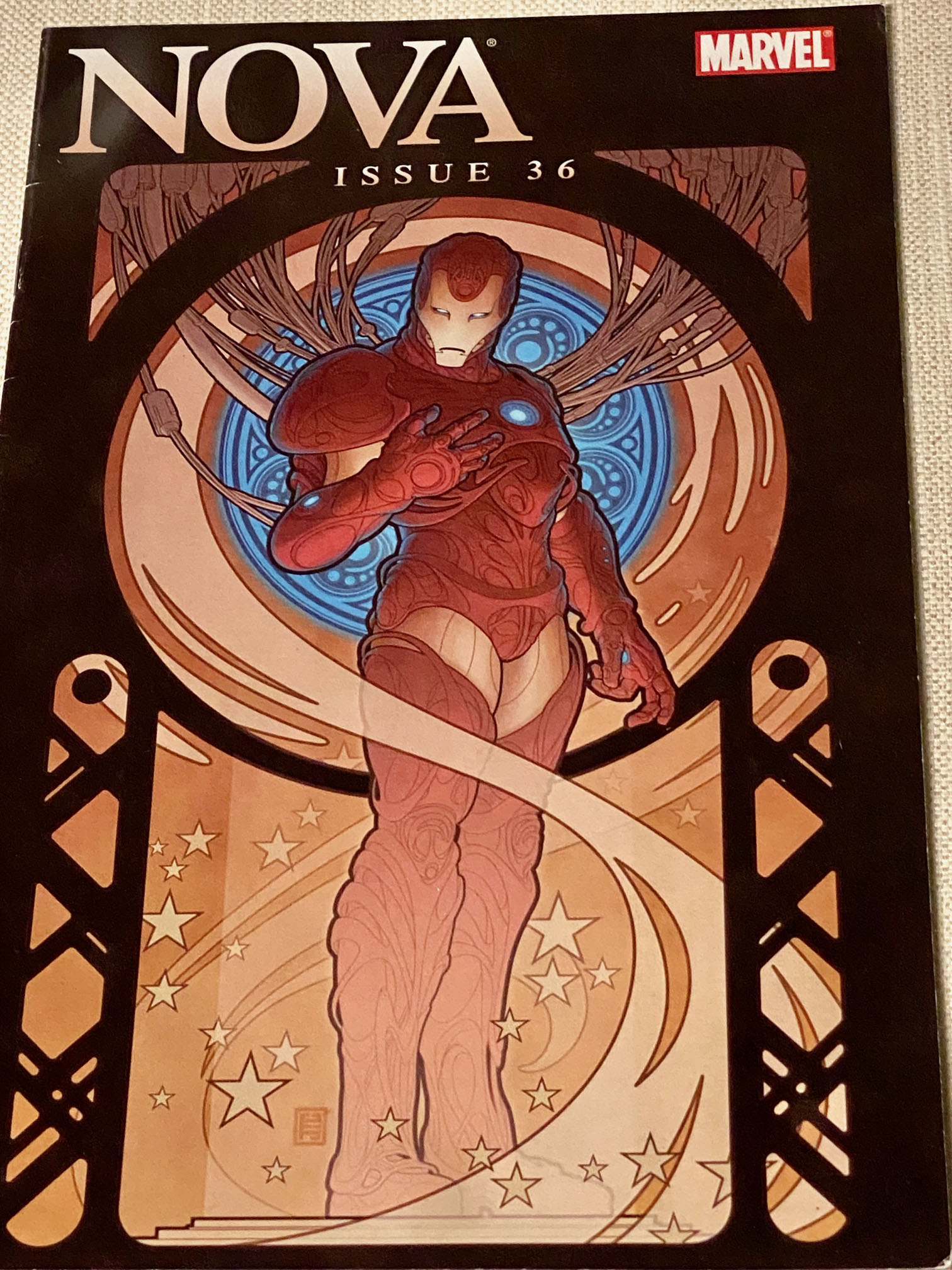
But subsequent generations of media makers also adapted Mucha style – comic book and manga artists.
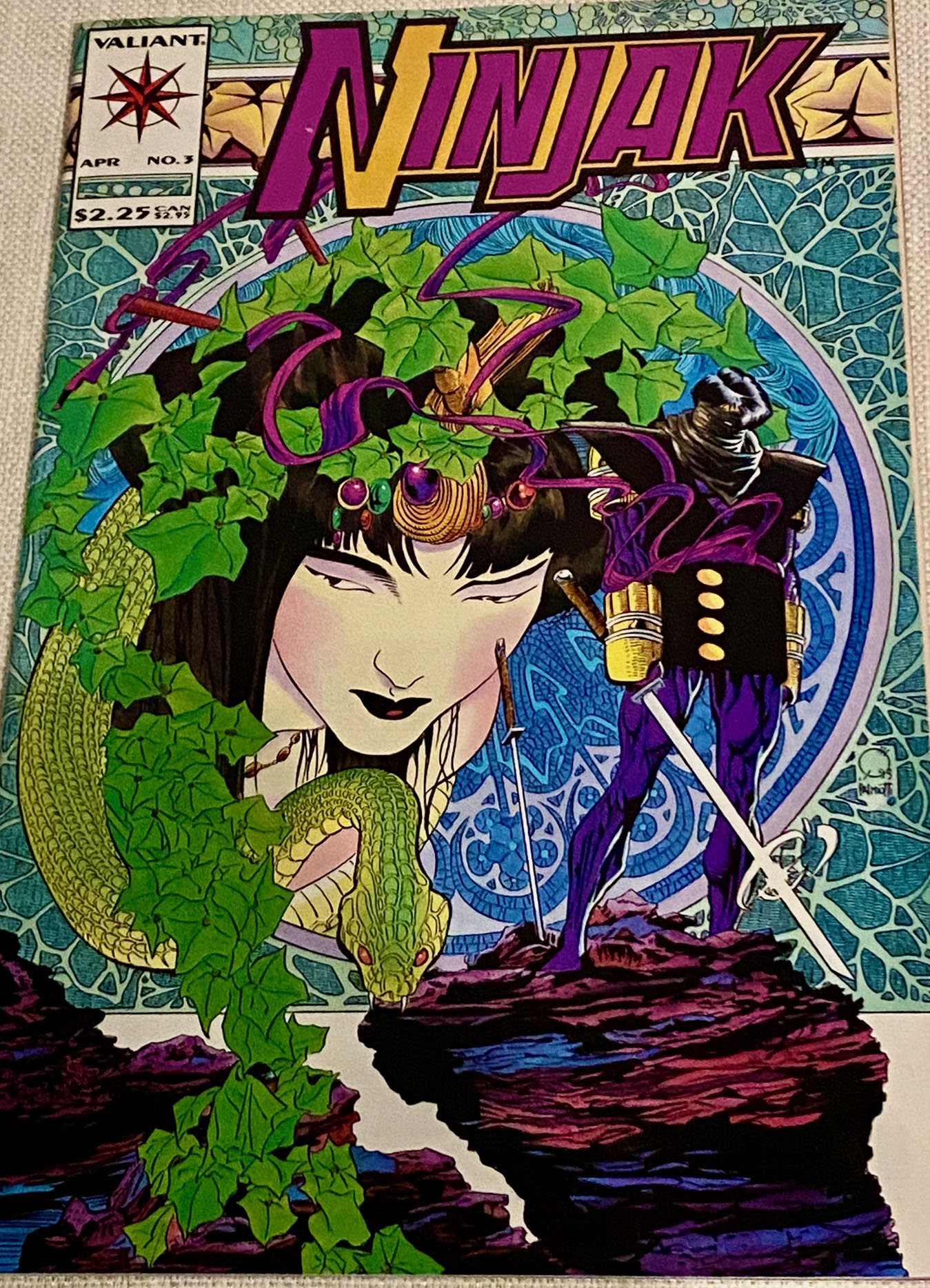
Joe Quesada’s 1994 Spread, Ninjak cover for Valient Comics.
John Tyler Christopher’s 2007 cover for Marvel’s Nova, no. 36B.

Listen to curator Sato about how Japanes artists adapted Muca’s design breakthroughs for 21st manga fans:

Next on the tour for this beautiful exhibition – the Nelson-Atkins Museum of Art in Kansas City, Missouri (April 11-August 30, 2026) and Museo Kaluz in Mexico City (October 8, 2026 – February 7, 2027).  

The riches on display in this exhibition are also a reminder that much more is on view at the Mucha Museum – a spectacular new venue in Prague opened by the Mucha Foundation at the Savarin Palace in 2025, right on the western edge of Old Town. 
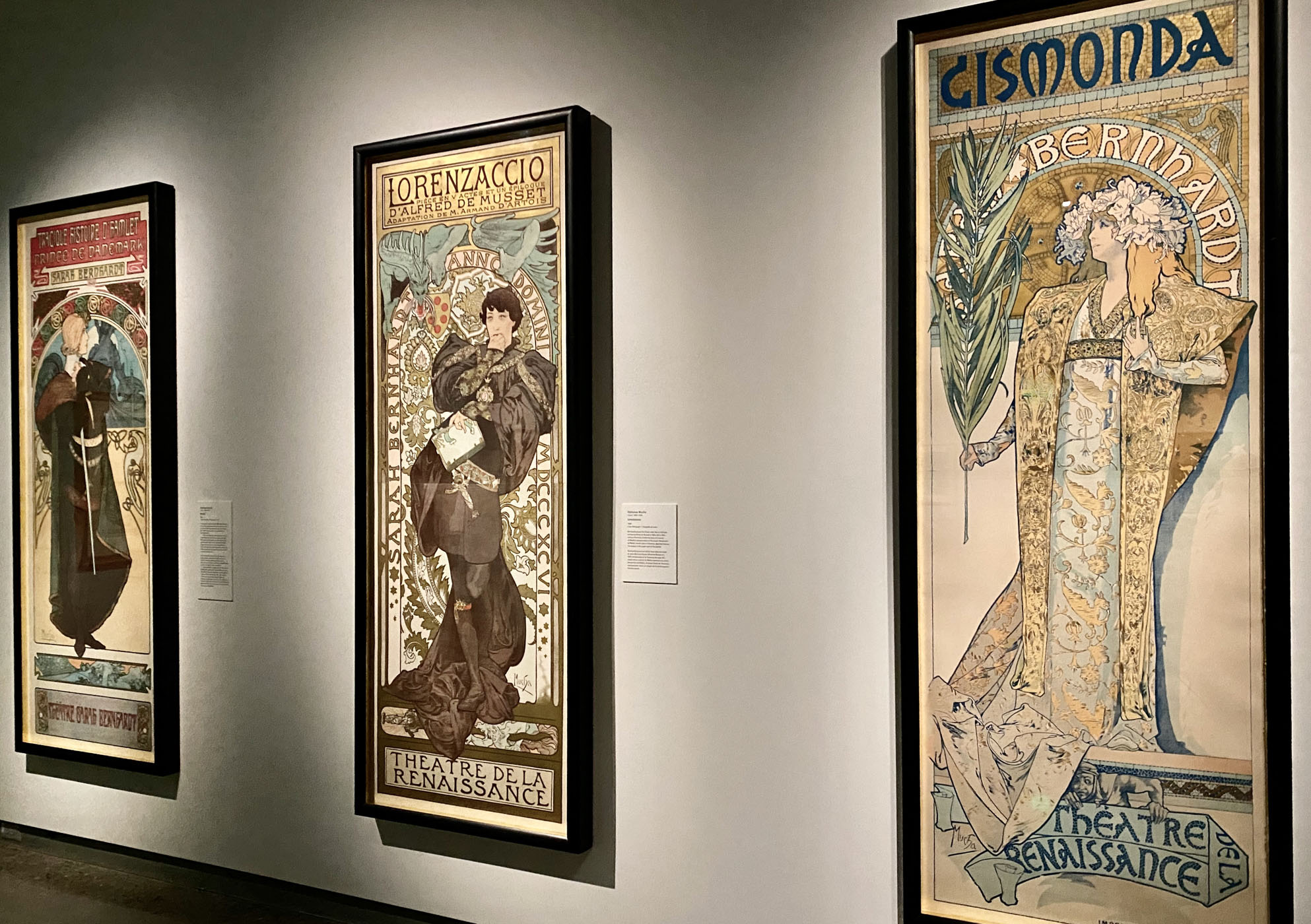
A star framed by a halo: years of Mucha’s poster ads for Sarah Bernhardt’s 1894-1899 plays – Hamlet, Lorenzaccio, and Gismonda. Courtesy: Mucha Foundation.

Gus Baumann’s Legacy of Art and Fun in Santa Fe

Gus Baumann, America’s greatest master of color woodblock prints, never considered himself a fine artist. Nevertheless, his prints, sculptures, paintings, commercial art, furniture, and marionette stages fill four galleries in his grand retrospective at the New Mexico Museum of Art – Gustave Baumann: The Artist’s Environment, on view through February 22, 2026.

Demand for Gus’s intricate block-printed sun-dappled Western landscapes from the 1920s through the 1950s still runs high. So, it’s a treat to learn how Gus achieved such a high degree of technical proficiency early in his career, lived Arts and Crafts philosophy, relished immersion in art colonies, and found his family in Santa Fe.

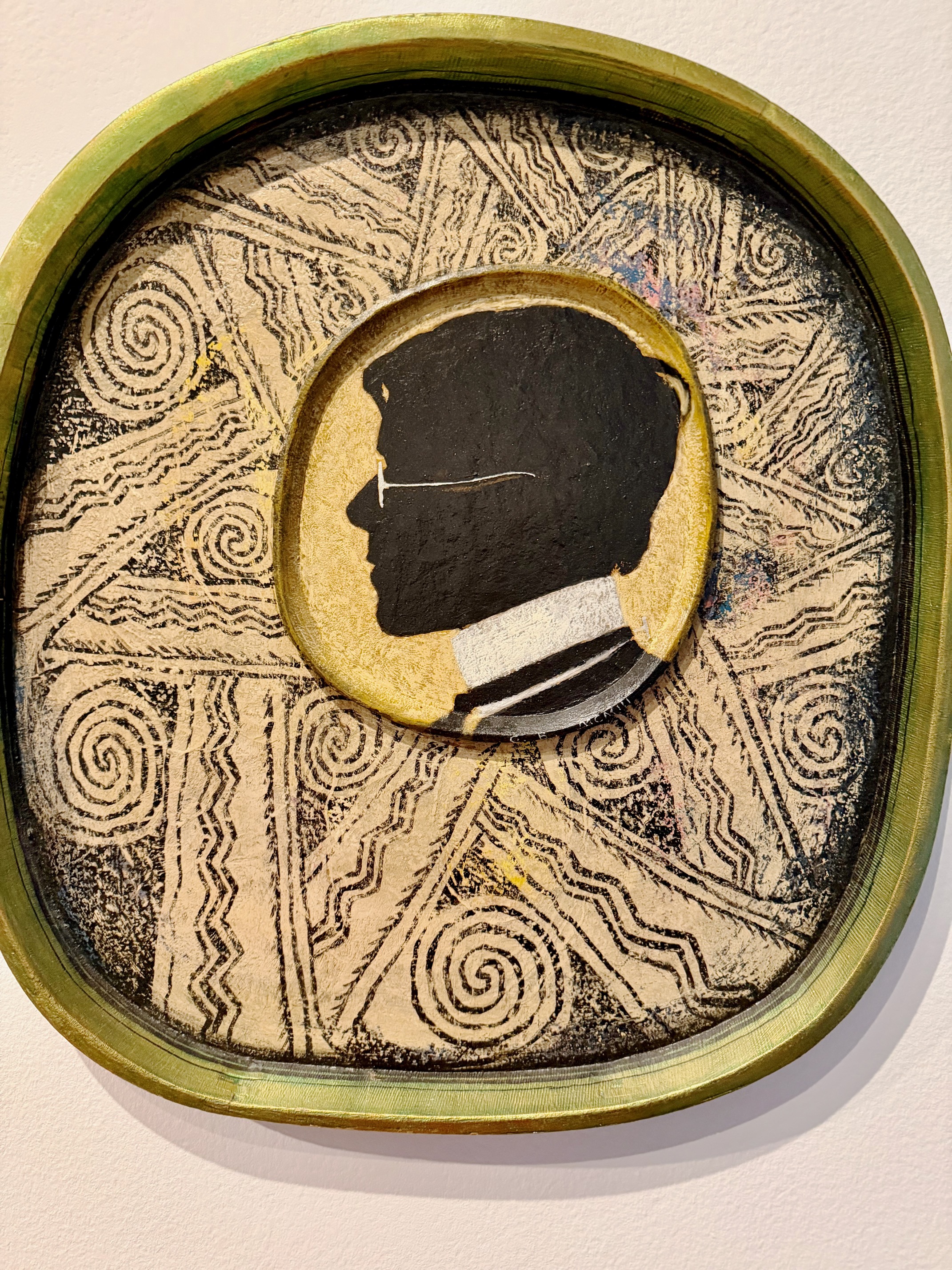
Gus Baumann’s 1903 oil Self-portrait (Silhouette) painted in his Chicago studio; reworked in Santa Fe after 1920 with a border inspired by Mimbres pottery.

See some of our favorites in our Flickr album.

Although Gus was born in Germany in 1881, his family emigrated to Chicago when he was around ten. His father was a craftsman and woodcarver, and it left an impression.  The first themed section of the exhibit – “Finding His Way”– gives a glimpse into his family background, early commercial art work, wood carving expertise, and furniture he designed later in the 1930s.

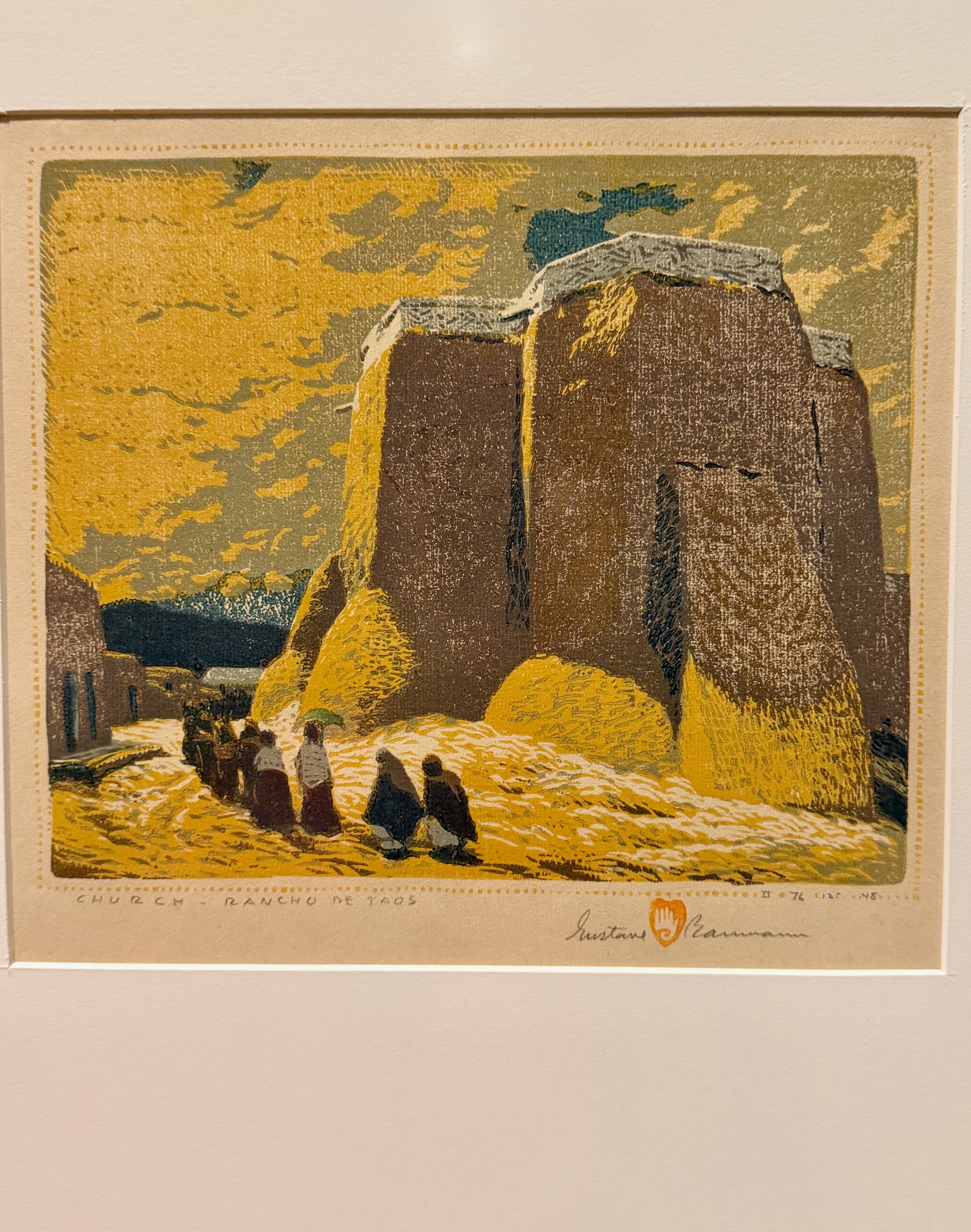
Gus Baumann’s 1919 color woodblock print Church Ranchos de Taos – one of the first modern artists to depict this iconic church; printed in 1948.
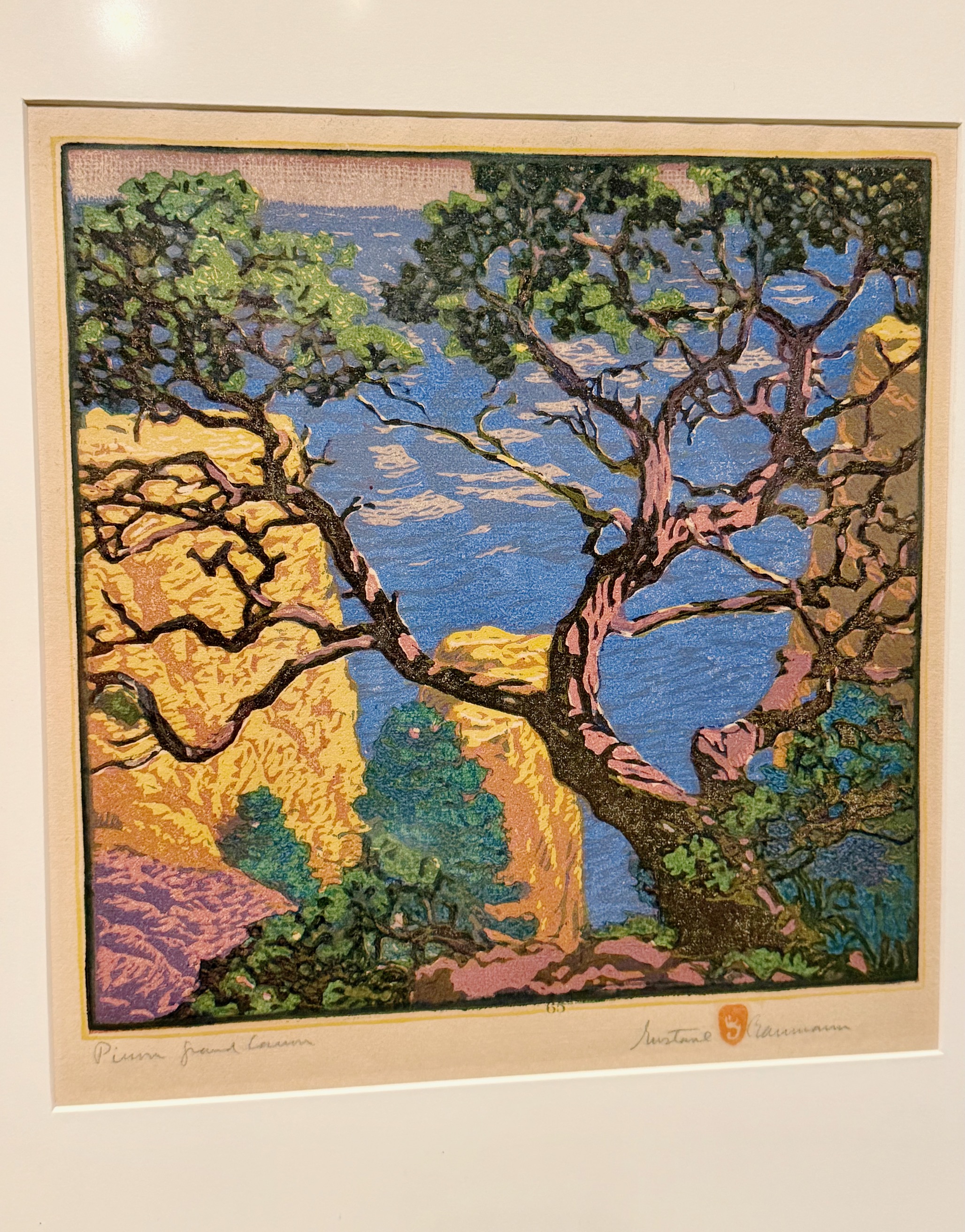
Gus Baumann’s 1921 color woodblock print Piñon Grand Canyon – one of four landscapes created after his first visit.

When he was 17 and his dad left the family, Gus had to find work to help his mom make ends meet.  He worked full time at a Chicago wood-engraving shop that cut illustrations for books, magazines, and newspapers. When he was 20, Gus opened his own wood-engraving studio.

To fine tune his skill, he attended Munich’s Royal Arts and Crafts School for a year to learn from the best German color wood-block print masters – a move that chose traditional skills over academy fine-arts training. When he returned to Chicago, he opened Baumann Graphic Art Service.

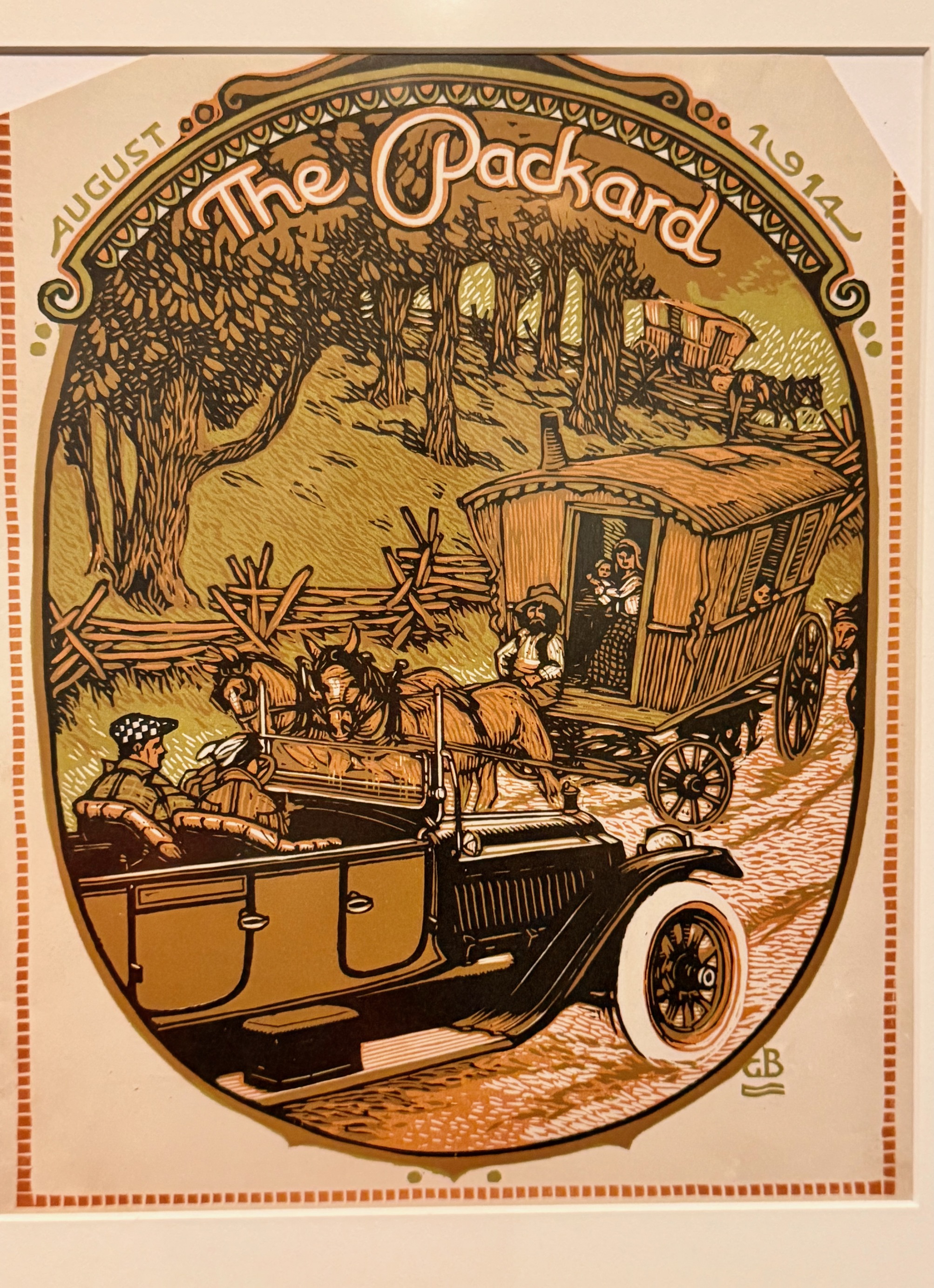
Gus Baumann’s 1913 Illustration for a Calendar: The Packard Car Motor Company, August 1914 – one of four he created for Packard.
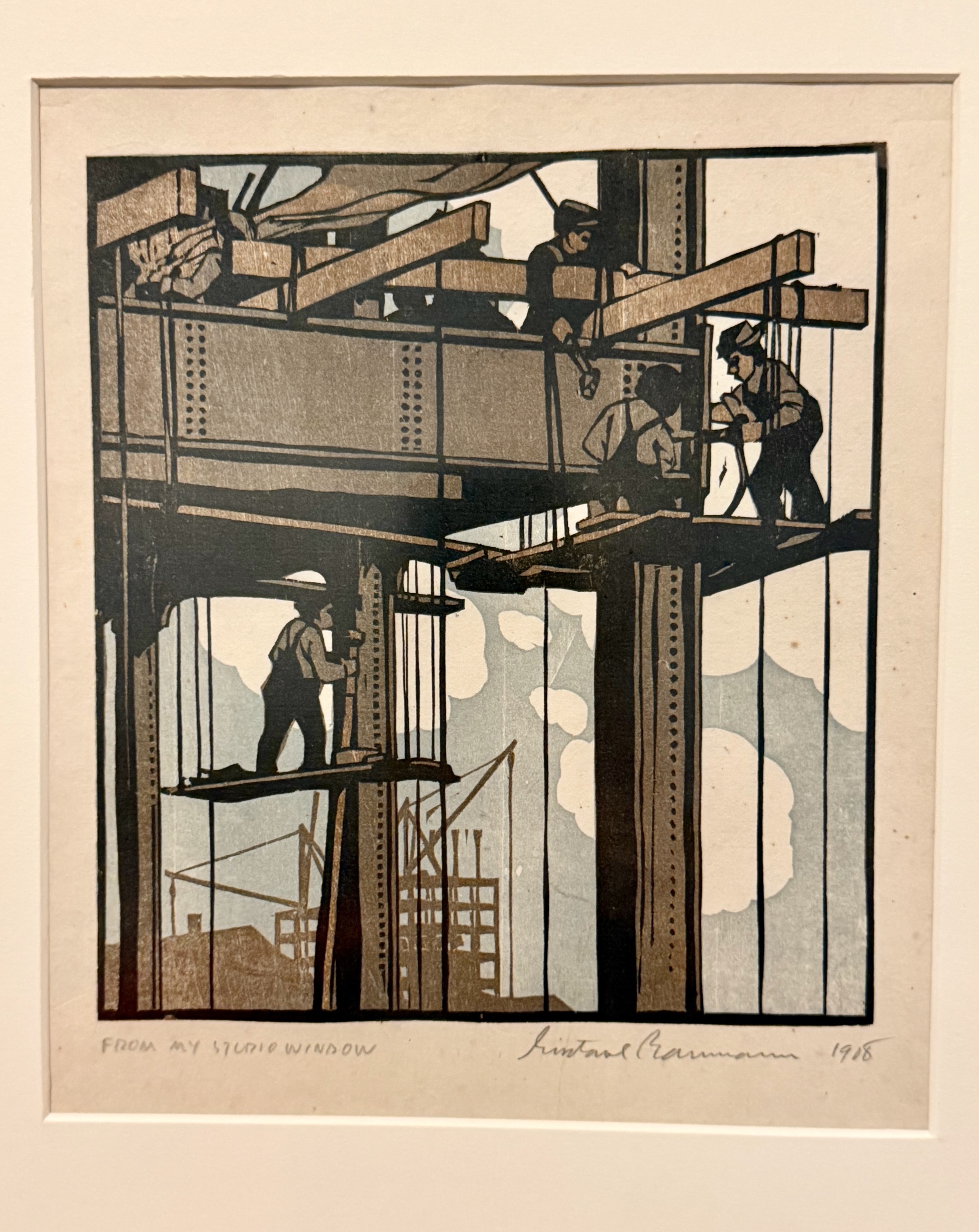
Gus Baumann’s 1908 color woodcut From My Studio Window in downtown Chicago –the high-rise McCormack Building going up on South Michigan Avenue.

Although Gus found success, his love of craft and traditional printmaking methods drew him to an art colony in Nashville, Indiana that revered traditional crafts and a slower pace of life.  The second section of the exhibition – “A Rolling Stone” – highlights work he did in Munich, his acclaimed print series featuring Indiana craftsmen, coastal life in Provincetown, and the electricity he felt in New York.

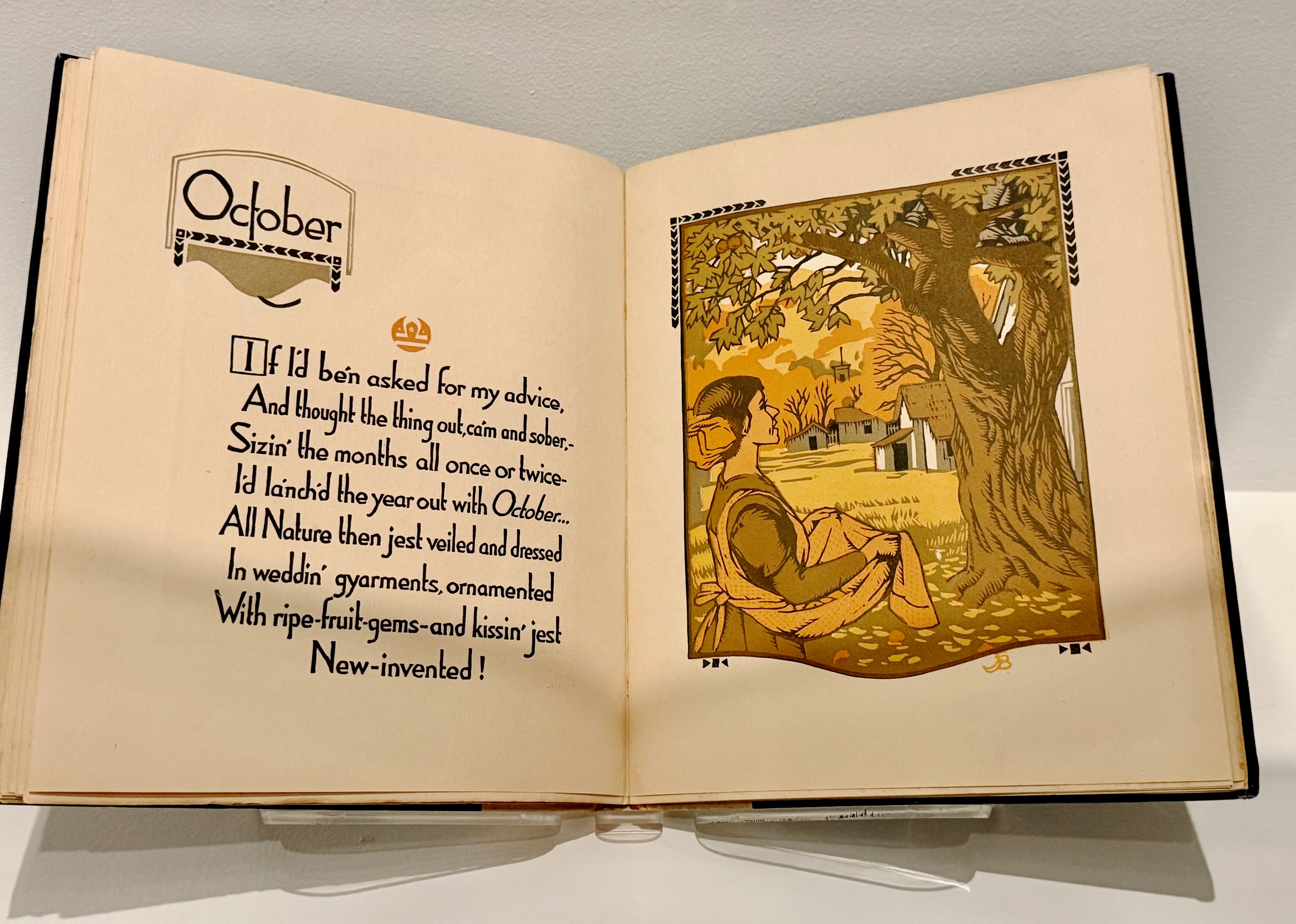
Gus Baumann’s 1912 book All the Year Round – woodcut illustrations and poetry James Whitcomb Riley, featuring scenes of daily rural life for each month of the year.

But his life would change forever when he traveled West and landed in New Mexico in 1918. Due to his reputation as an award-winning printmaker, Santa Fe welcomed him with open arms. Gus was struck by the unique Hispanic and Pueblo ways of life, the beauty of the Southwest, and the growing art colony in Santa Fe. 

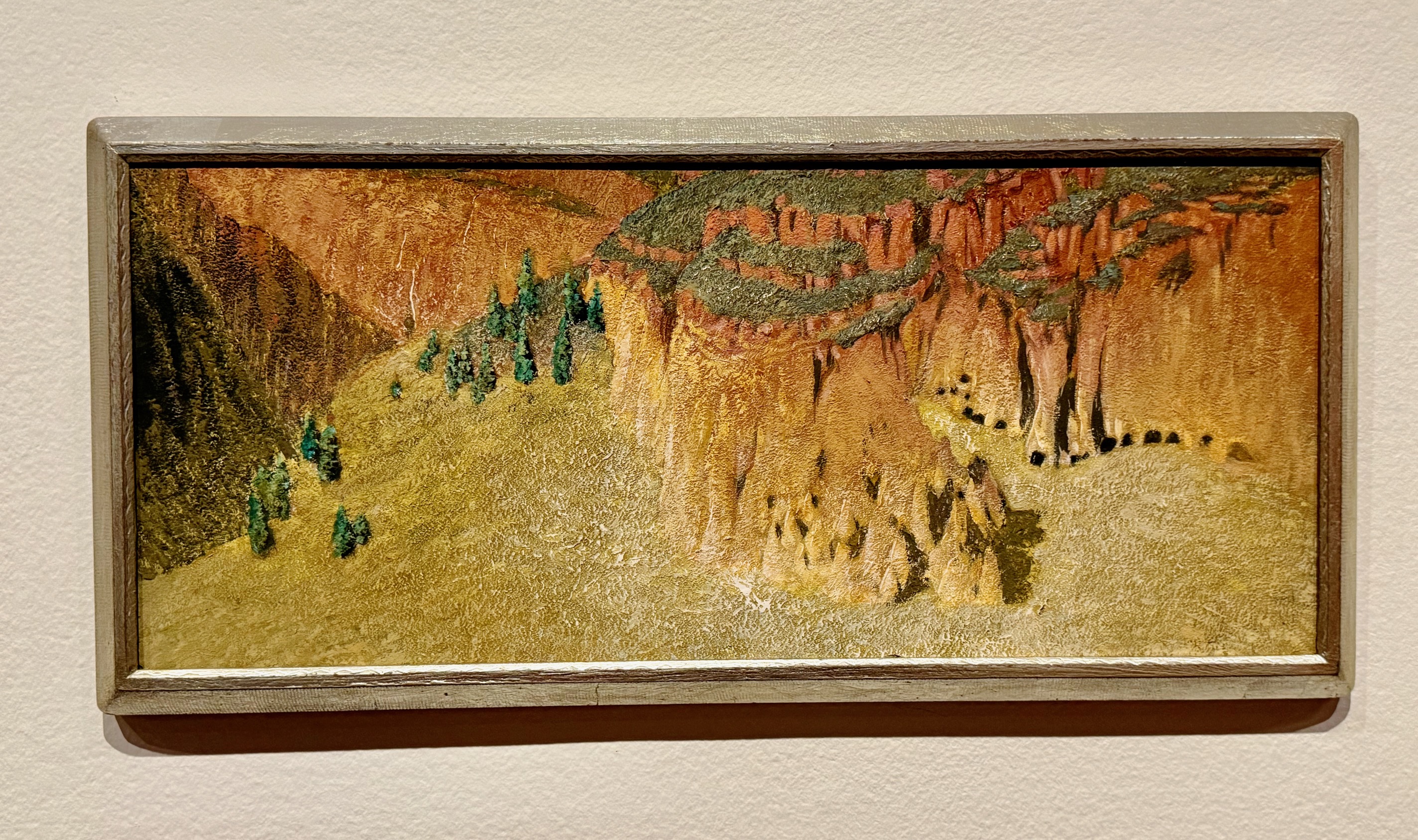
Gus Baumann’s 1925 oil painting Frijoles Canyon – a panorama of ancient tuff dwellings of Tuyoni Pueblo at Bandelier.

Before long, Gus was making and selling gorgeous prints, traveling to archeological sites, attending dances at the pueblos, soaking up the ambience of ancient Spanish churches, and putting brush to canvas, and partying with his new artist friends. And he met Jane, the love of his life, and started a family – creating a life full of fun, art, play, and community service.

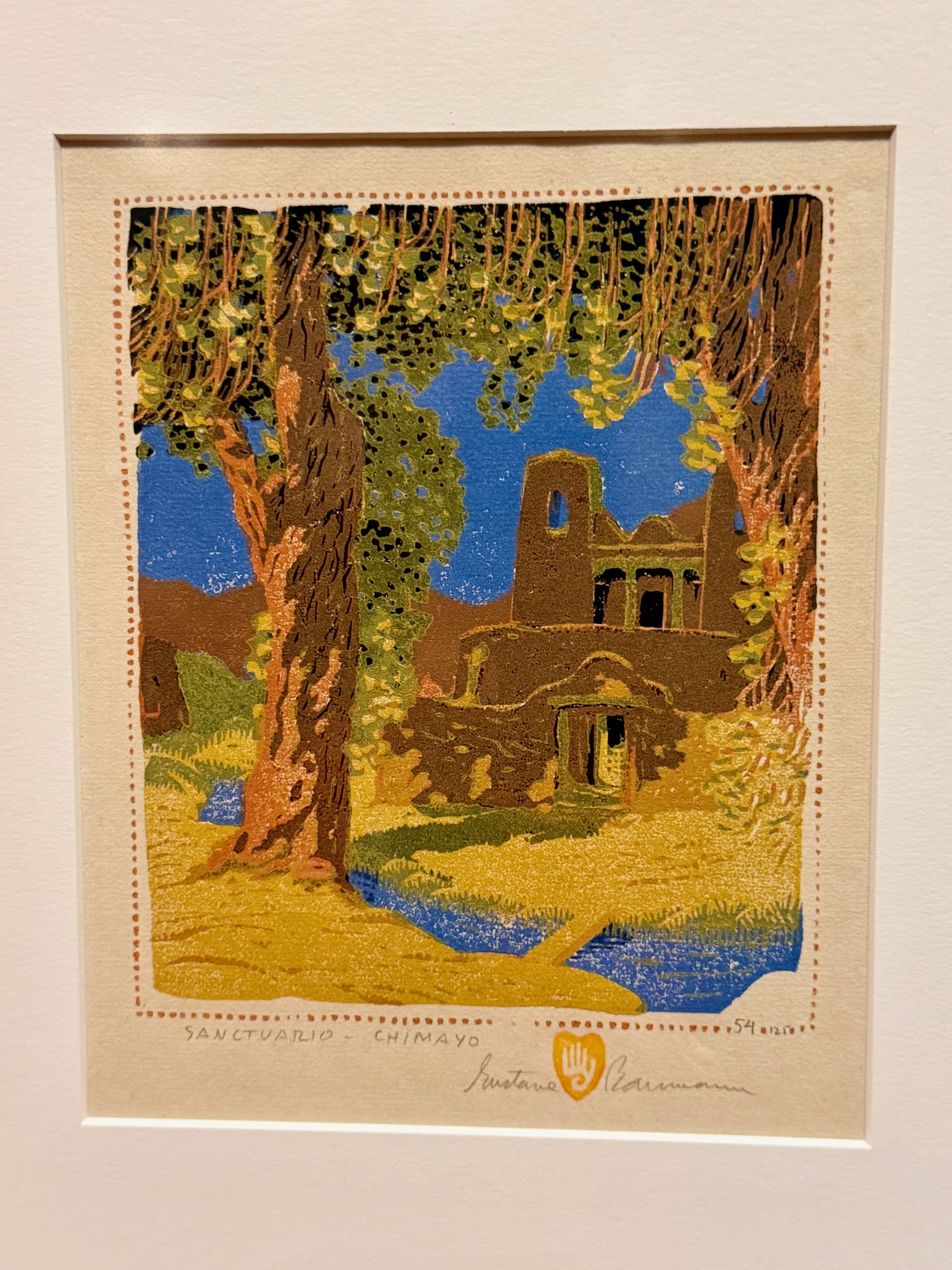
Gus Baumann’s 1924 color woodblock print Sanctuario Chimayo – learning of the historic church’s imminent sale on a sketching trip, he lobbied successfully for its preservation.
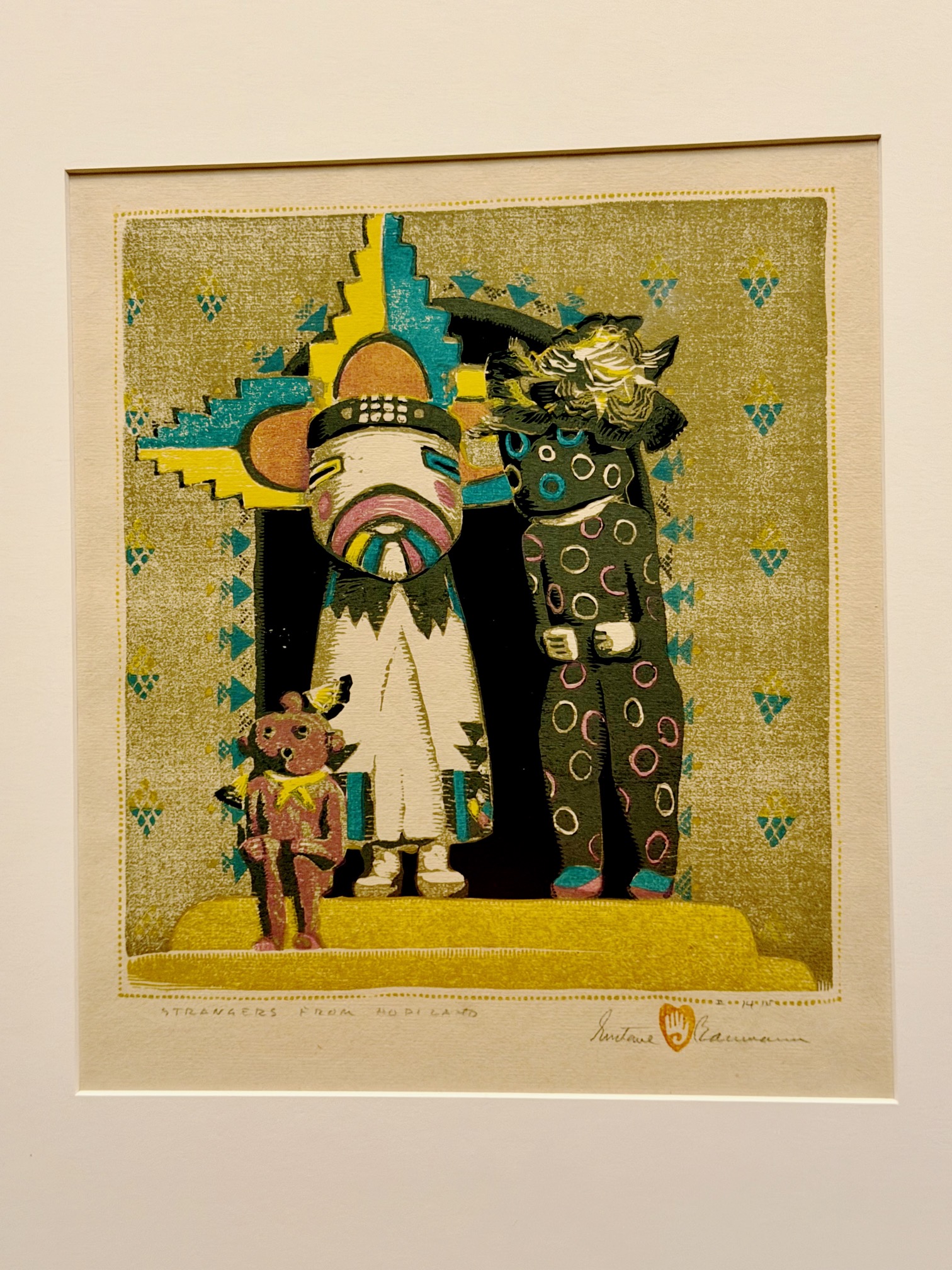
Gus Baumann’s 1921 color woodblock print Strangers from Hopiland, featuring kachinas from his collection; printed in the 1930s.

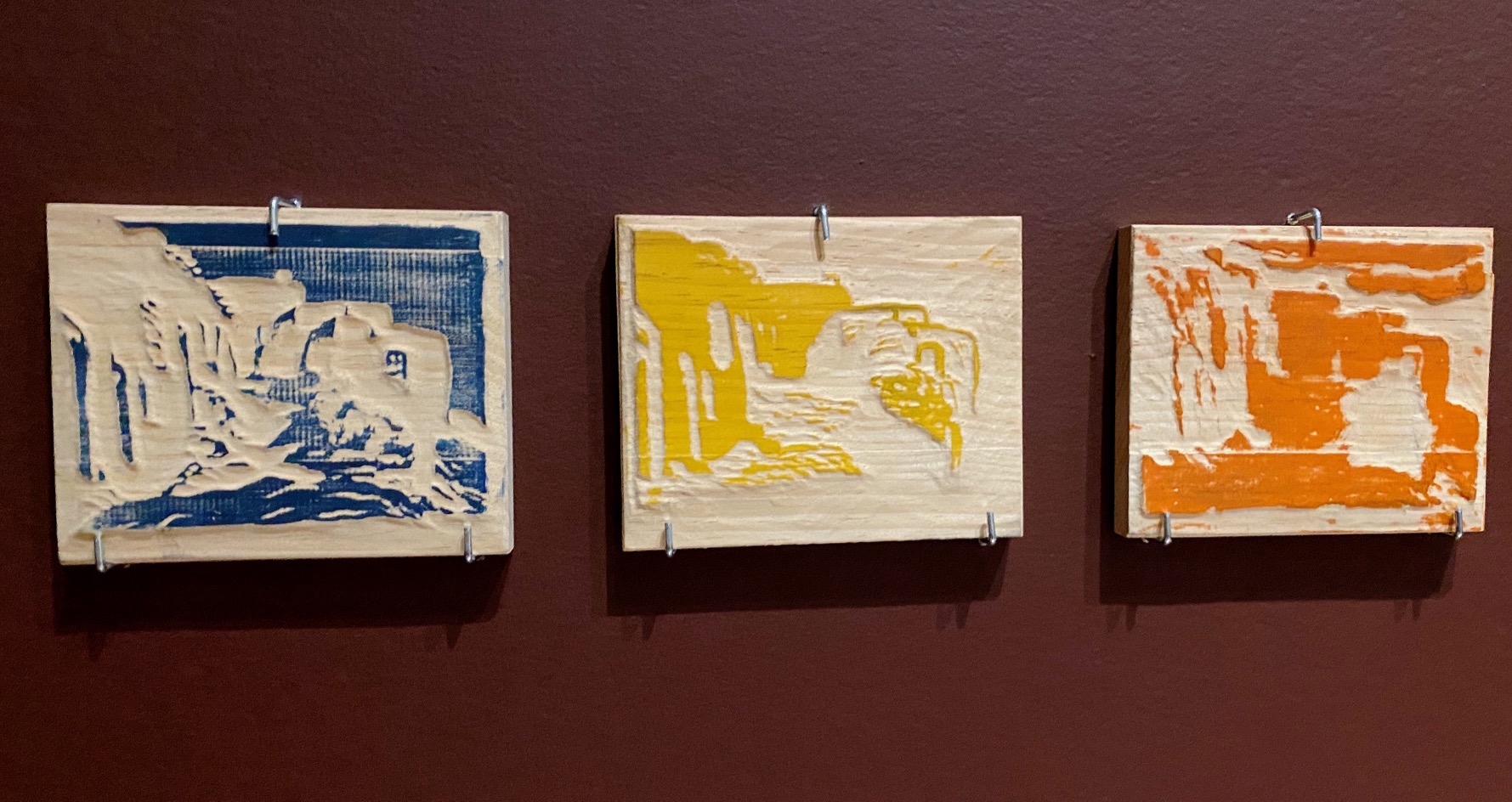
Since Jane and Ann Baumann donated so much of Gus’s work to the New Mexico Museum of Art, the curators were able to display finished prints alongside drawings and wood blocks that give visitors insight to his process.  One long wall dissects his multi-color printing process for his famed Old Santa Fe – the initial drawing, the separately carved color blocks, single-color proofs, multi-color runs, and the finished six-color print.

Reproductions of Baumann’s blue, yellow, and orange woodblocks for his 1925 print Old Santa Fe.

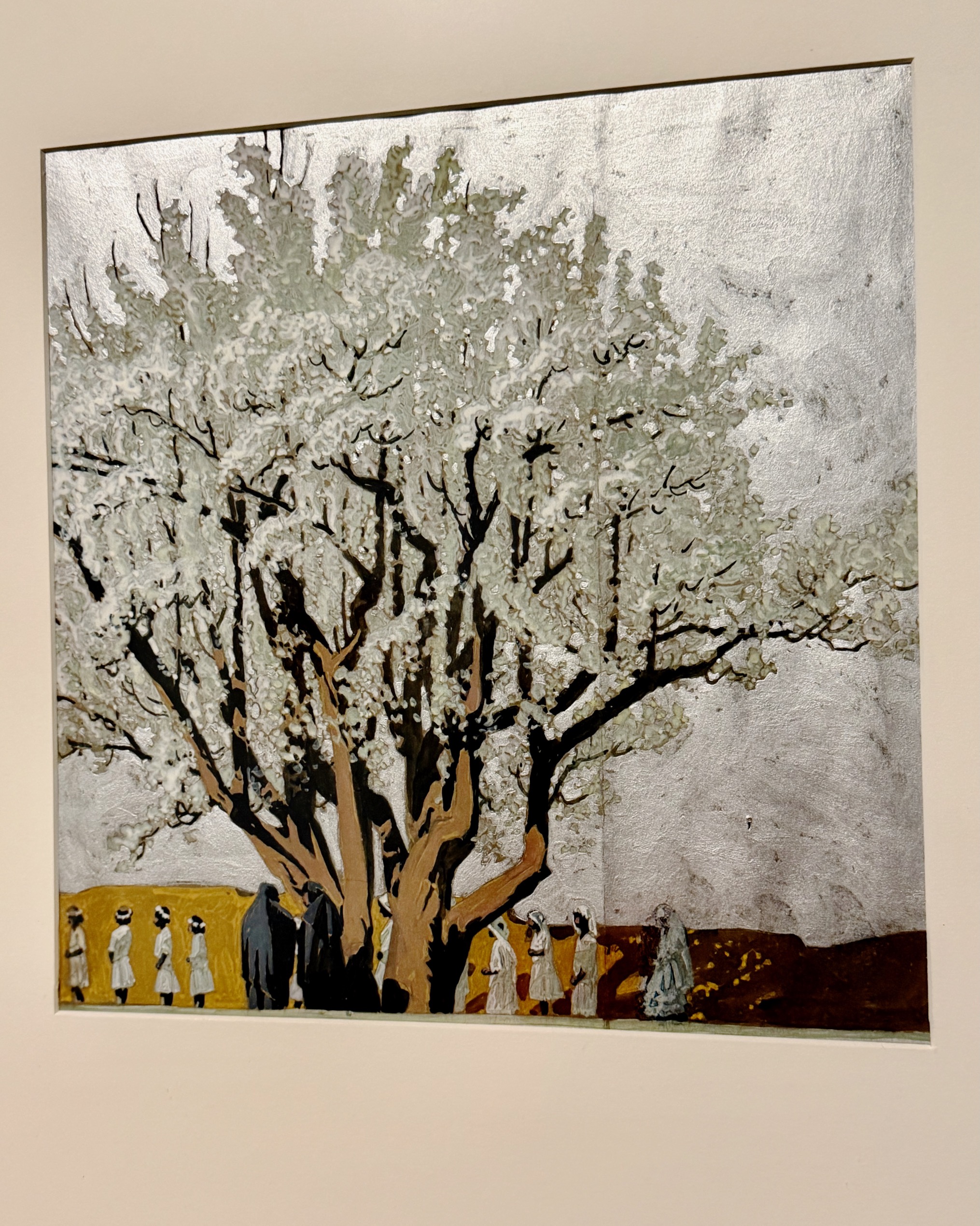
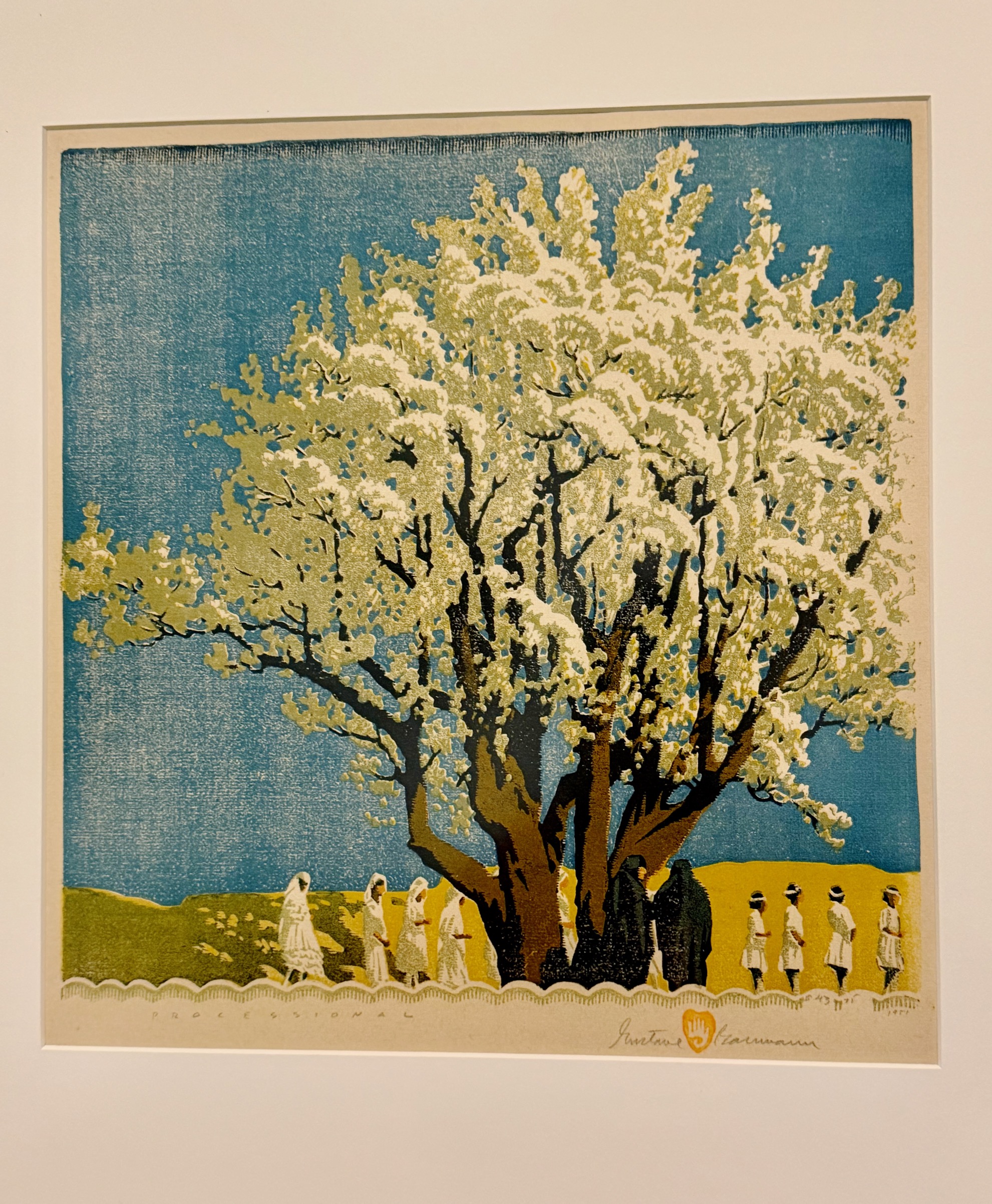
Nearly a half-dozen example of Gus’s watercolor paintings and finished prints are displayed side by side. Visitors are delighted to stand, look, compare, and wonder how he conceptualized steps to carve blocks for each color and achieve images of such depth and vibrancy.

Gus Baumann’s 1930 watercolor Processional (Study), featuring girls walking to their First Holy Communion under a blooming tree and silver sky.
Gus Baumann’s 1930 color woodcut print Processional (printed 1951), based upon his watercolor.

The final gallery “An Artist by Accident” displays an array of intricate color woodcuts, experimental paintings, satirical works, paintings Spanish religious icons, whimisical wood carvings, and everyone’s favorites – Baumann’s marionettes.

It’s the first time Gus and Jane’s marionette casts have been displayed in decades, complete with hand-painted backdrops – scenes representing just a few of the couple’s scripted shows that they performed at home, in venues around Santa Fe, at world fairs, and on tour. 

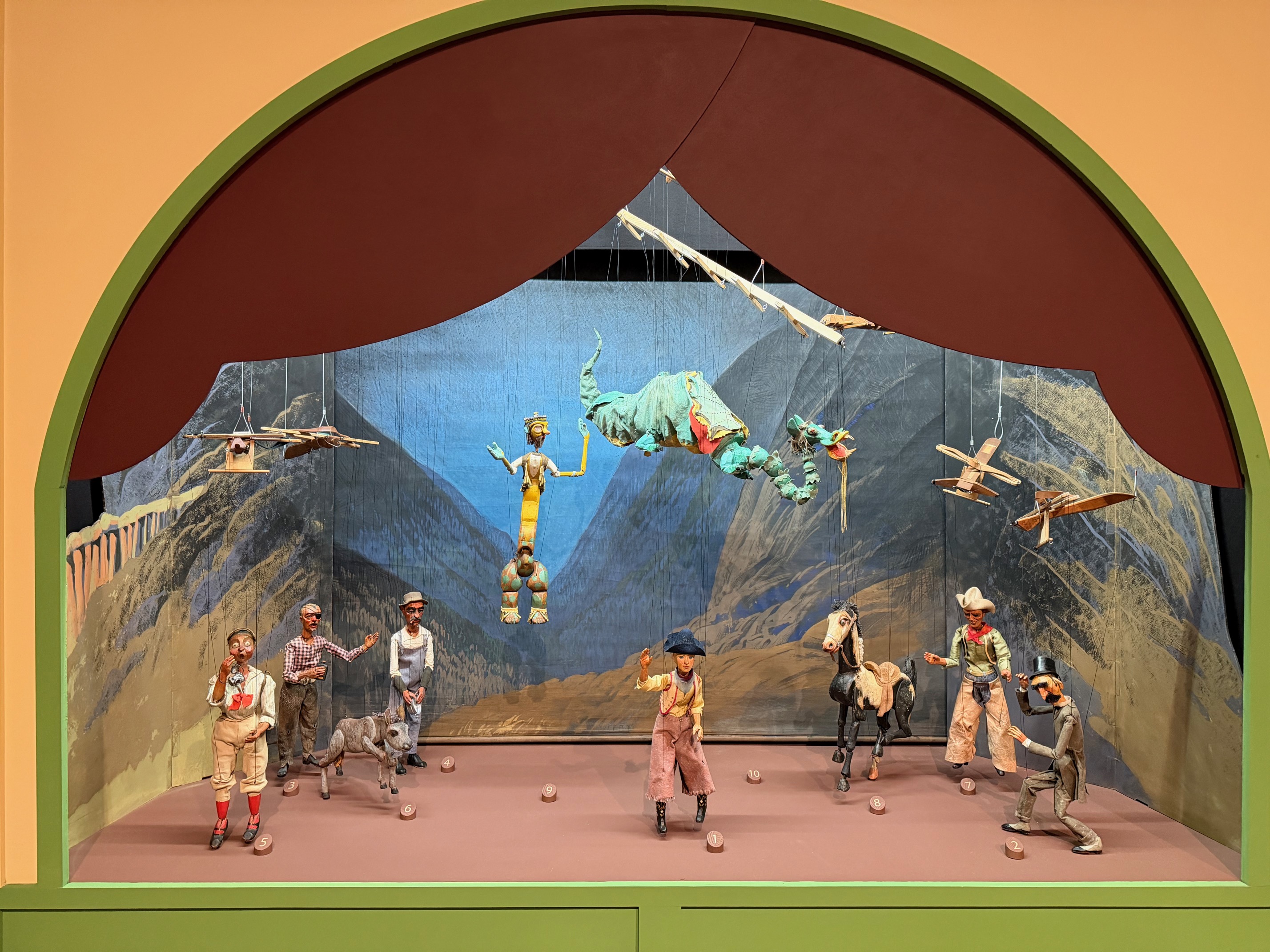
Gus and Jane Baumann’s stage set for the Santa Fe Puppett Wranglers’ 1932 marionette production of the comic melodrama The Golden Dragon Mine –starring The Tourist Lady, Temperence the Miner, Hardpan, Burro, Old Man of the Mountain, the Green Dragon, Nambé Nell, Coco the Horse, Pecos Bill, and Lord Leffinghoop.

Whimsey, delight, innovation, social commentary, and fun are all there, with surprises unfolding around every corner.  And this is all just a fraction of Gus’s creative output from his coming-of-age in the horse-and-buggy era to the Atomic Age.

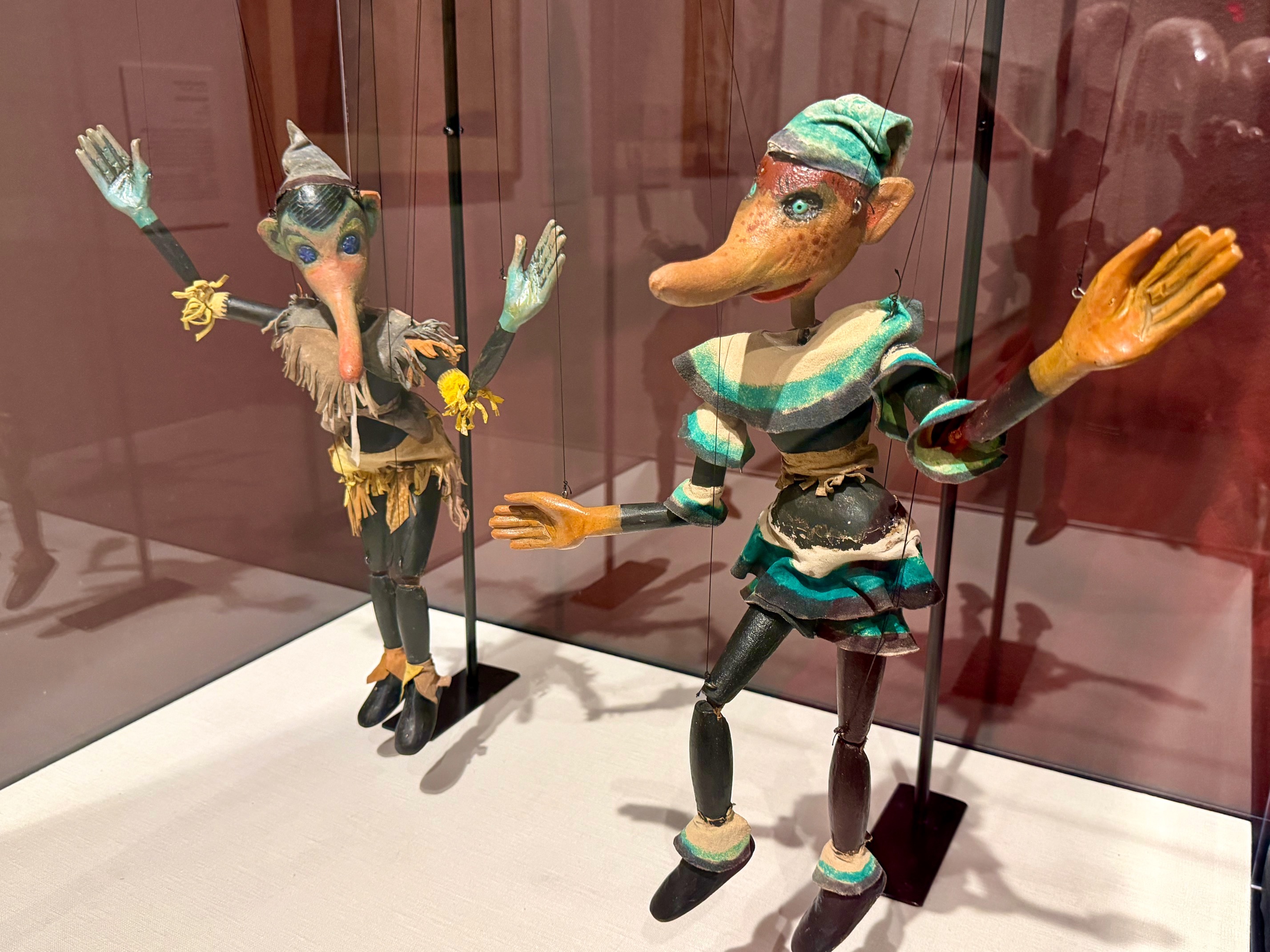
Gus Baumann’s 1940 marionette comedy stars of Teatro Duende – Long Nose (“Nosey”), the Duendi and Freckles the Duende – mischief-making Iberian elves.

No, he didn’t follow the traditional academic path, but he did leave his creative touch on America’s printmaking traditions, the foundation of many Santa Fe cultural and historical institutions, and the care and feeding of a state full of artists as head of New Mexico’s New Deal artist programs.

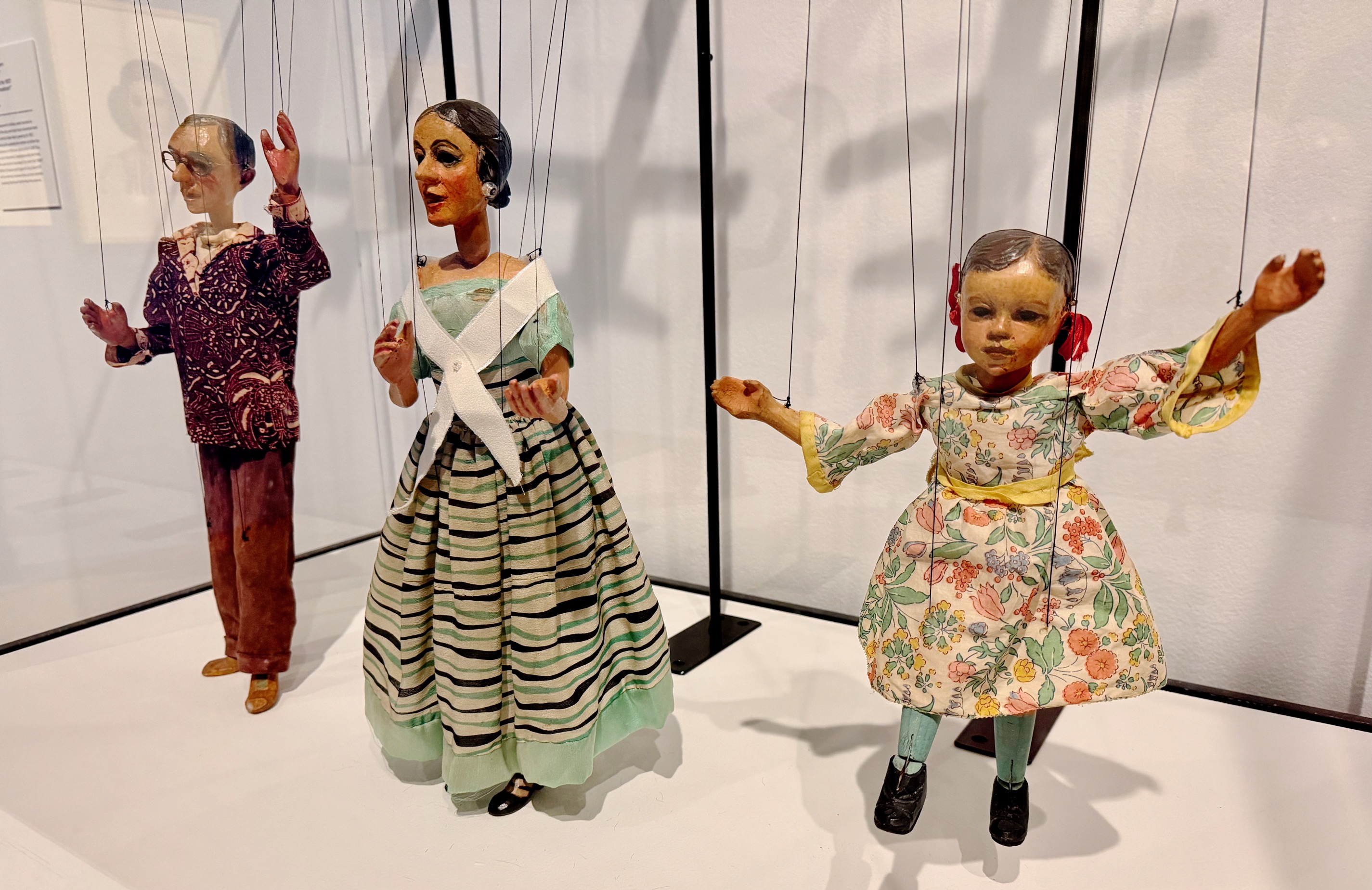
Gus Baumann’s 1932 carved family portrait – marionettes Gus, Jane, and Ann – with costumes by Jane.

Virtual NYC Museum Events – Broadway, Brooklyn, Karma, Kusama, and McQueen

New York museums are offering a full calendar of virtual events this week, including trips to Broadway history, hipster restaurants of the world, Buddhist virtual reality, and tributes to artistic genius. Take a look at the list here! Here are just a few highlights:

2002 Broadway revival of Rogers & Hammerstein’s Flower Drum Song

Do you miss Broadway? Learn about some little-known secrets behind hit shows today, Monday (April 12) at 5:30pm. It’s a rare chance to meet the president of the Rogers & Hammerstein Organization, Ted Chapin, who will be giving a behind-the-scenes look at the Great White Way in his program, From Follies to Flower Drum Song and Beyond. It’s the premiere of a conversation recorded last Fall with Broadway World’s Richard Ridge, courtesy of the New York Public Library for the Performing Arts at Lincoln Center.

Did this global restaurant trend actually start in Brooklyn? Find out with MOFAD and the creators of Global Brooklyn: Designing Food Experiences in World Cities.

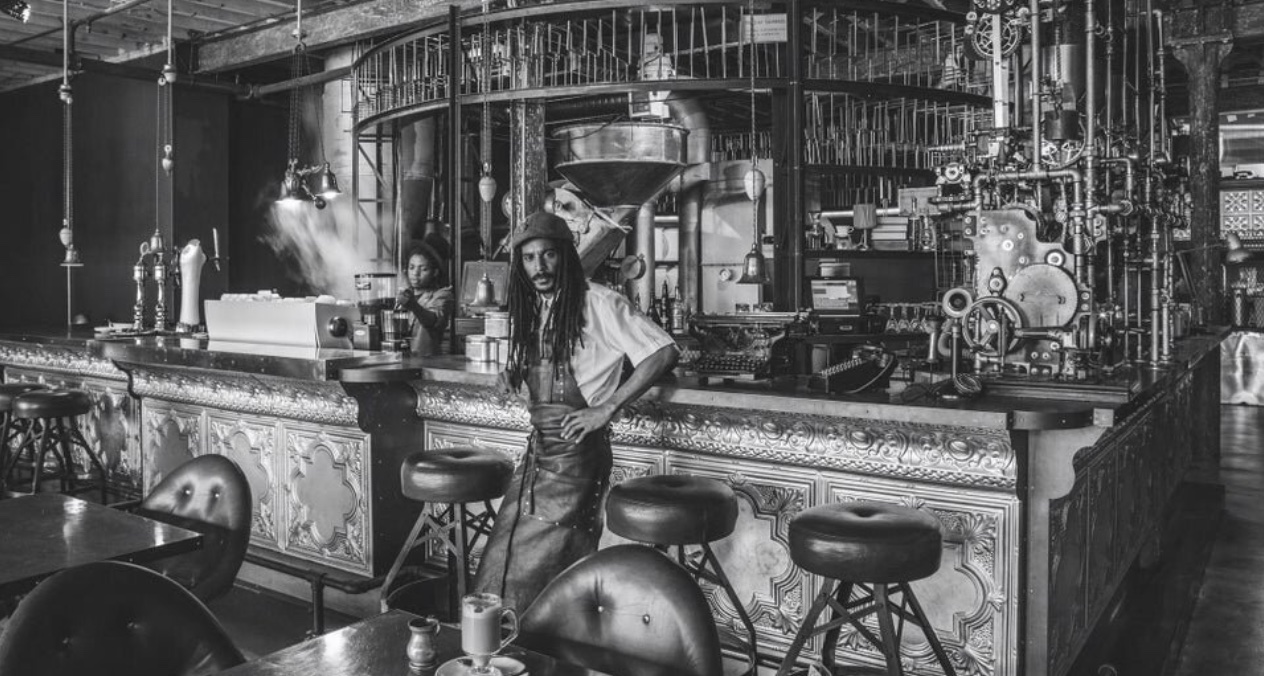
Love restaurants? Especially ones with slightly nostalgic post-industrial interiors decorated with that hand-crafted look? At 7pm, join the Museum of Food and Drink to meet the authors who explored how the Brooklyn aesthetic for How a Restaurant Aesthetic Became a Global Phenomenon. Learn how restaurants around the world adopted the style, and find out if this brand of hip actually started in Brooklyn.

On Tuesday (April 14) at 6pm, join the architecture crowd at the Skyscraper Museum to hear Mark Sarkisian, the structural and seismic engineer who is a partner at SOM in San Francisco. Mark designed one of Shanghai’s first supertalls back in 1999. His talk Pivot to China: How Jin Mao Portended Future Supertalls will explain how this tower’s innovations influenced the generation of supertall skyscrapers that followed.

Shanghai’s Jin Mao tower, 1999
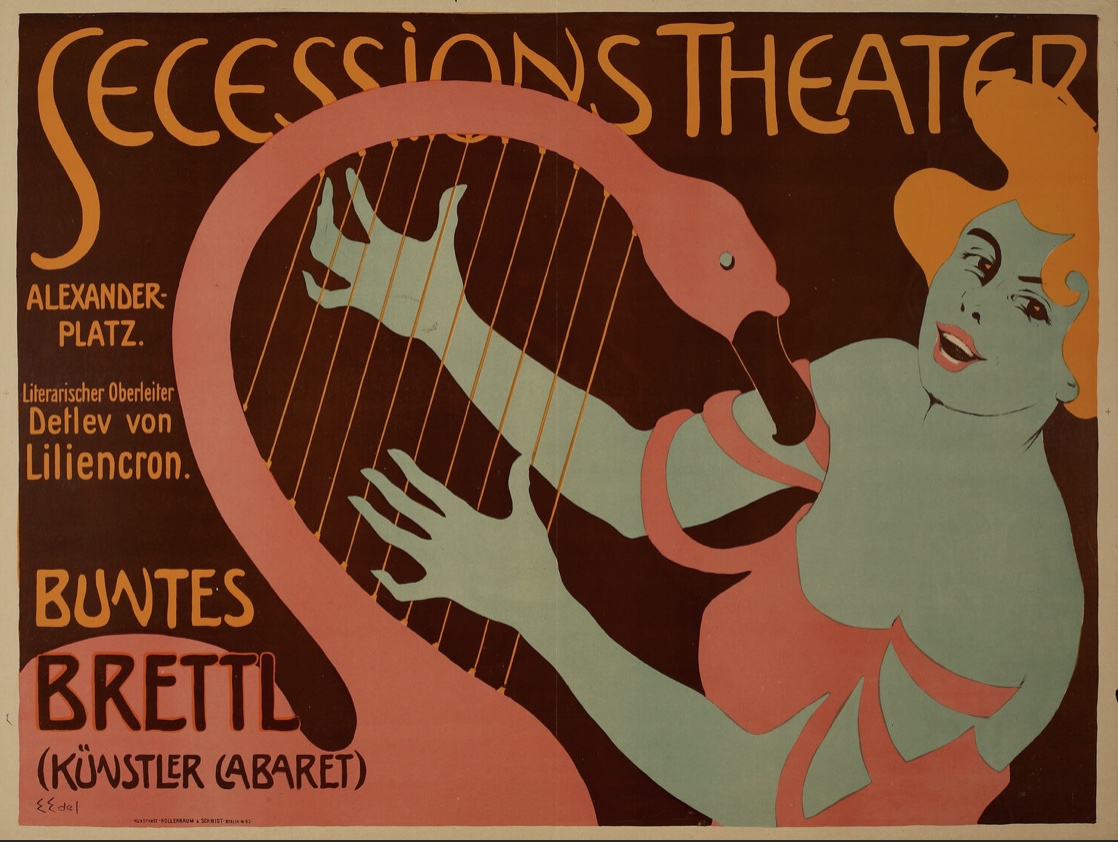
Berman Collection poster part of the Youth Style talk at Poster House.

On Wednesday (April 14) at 6:30pm, take a journey back to early modernist Europe at Poster House, who will be hosting A Tale of Three Cities: Youth Style in Berlin, Munich, & Vienna with the Kaller Research Institute. The evening will focus on how young designers made their mark on design from 1895 to 1910. You’ll see works from the Merrill C. Berman Collection (the collection featured at MoMA in Engineer Agitator Constructor), and works from the Poster House’s current Julius Klinger exhibition.

Also at 6:30pm – an opportunity to understand your karma. Join the Rubin Museum of Art for The Game of Life: An Interactive Virtual Experience. A contemplative psychotherapist will guide participants through a virtual Buddhist Wheel of Life to finding liberation from negative habits and patterns. The virtual game takes you throughout the different floors of the museum, and provides twists and turns. There are “Hell” and “God” Zoom rooms, but the payoff is higher awareness of one’s state of mind.

The Rubin’s reimagined Wheel of Life by eight graphic artists.
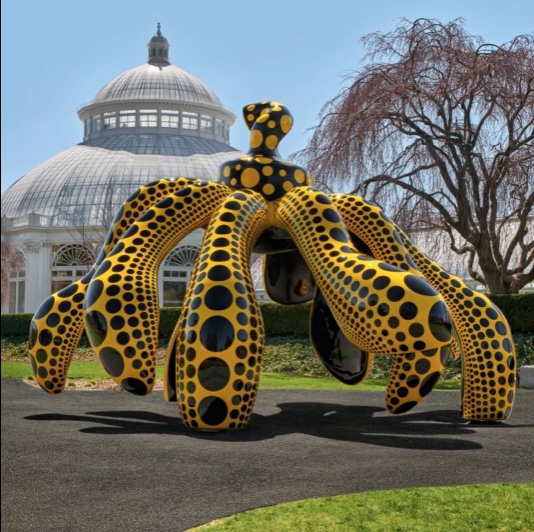
Kusama at New York Botanical Garden

On Thursday (April 15) at 11am, it’s what all of New York has been waiting for! Mika Yoshitake, the curator of New York Botanical Garden’s KUSAMA: Cosmic Nature will provide a look at how Kusama’s blockbuster installation reflects nature, the earth, the microscopic, and the cosmos. Cosmic Nature: Embracing the Unknown will present Mike’s insights about Kusama’s artistic language and her unrelenting, lifelong journey into new territory.

McQueen models backstage, as photographed by Richard Fairer

Want to go backstage at a McQueen show? At 6pm you can. Join Vogue photographer Robert Fairer at Museum at FIT for a live Q&A about his new book, Alexander McQueen: Unseen. Experience memorable moments of fashion’s greatest, most outrageous showman and see what a genius at work backstage before the show.

There’s a lot more happening this week, so check the complete schedule. Most of the events are free, but it’s always nice to add a thank-you donation.

The Man Who Revolutionized US Rock

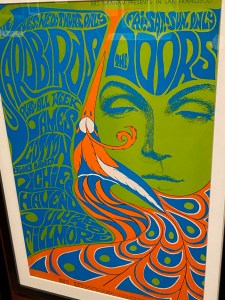
Bonnie McLean poster for Fillmore Auditorium July 1967. Courtesy: Bahr Gallery

It’s a trip back to the birth of Sixties youth culture, guitar virtuosos, the Fillmore, and multimedia extravaganzas in the New-York Historical Society exhibition, Bill Graham and the Rock & Roll Revolution, on display through January 3.

The show, originally organized by LA’s Skirball Cultural Center, tells the story of the man who created the Fillmore, catapulted legendary bands to fame, grew concert audiences to stadium size, and gave back to society by organizing once-in-a-lifetime benefit concerts televised throughout the world.

Photos, show posters, videos, rock and soul music, and even a wall from the legendary Joshua Light Show bring the story of Bill Graham to life.

Bill Graham in 1968 Fillmore Auditorium office. Gene Anthony photo in Graham collection

Graham’s life was saved by Kindertransport during World War II – a dramatic story told inside the entry to the exhibition. He was adopted and grew up in the Bronx, moved to San Francisco, and had the right skills in the right place at the right time to bring bands like Jefferson Airplane, The Grateful Dead, Hendrix, and Big Brother and the Holding Company to a larger audience.

In preparing the exhibition, the curators did original research into Graham’s early life and pulled artifacts, paraphernalia, and stories related to each decade of his concert-promotion career – leasing the Fillmore Auditorium in a largely African-American neighborhood, creating events that interspersed rock-and-roll acts with poets and new-age philosophers, securing larger venues in the Bay Area, opening the Fillmore East in 1968 in New York inside a former Yiddish vaudeville house on Second Avenue.

Joshua Light Show backs 1968 Mothers of Invention at Fillmore East. Courtesy: Joshua White

The show has plenty of the Fillmore’s promotional posters, and pays tribute to the artists who created them, such as Wes Wilson and Graham’s wife, Bonnie McLean. The curators also provide a few side-by-side displays of the original ink drawings for the psychedelic broadsides with the full-color printed versions. See some of our favorites in our Flickr album.

Despite the legendary status of the Graham’s two Fillmore stages, they only lasted until 1971. Although they were highly profitable, the writing was on the wall – the demand (particularly after Woodstock) to see the Stones, The Who, Santana, and other frenzy-inducing performers was too big to be satisfied inside the constraints of traditional theaters.

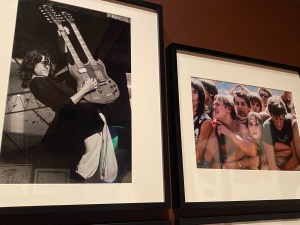
Led Zeppelin’s Jimmy Paige in 1977 and 1985 Metallica fans. Photos: Michael Zagaris and Ken Friedman

Through it all, Graham managed some stars, like Santana; created festivals featuring bands like Fleetwood Mac, Led Zeppelin, Metallica, the Eagles in the Seventies; organized Dylan’s historic 1974 tour; and produced The Last Waltz for The Band’s farewell.

The exhibition lets visitors savor these memories and moments through behind-the-scenes stories about Bill’s relationships with the artists, who often said yes to Bill’s ideas because they knew he was a perfectionist who would deliver his promises, understood what made fans happy, and always saw the epic, historic perspective behind that moment in culture.

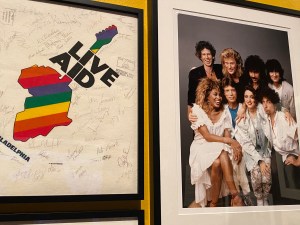
1986 Live Aid T-shirt with Ken Regan’s photo of US benefit stars. Graham and Regan collections

The exhibition puts special focus on Bill’s willingness to tackle the monumental challenges of producing nationally televised benefit concerts, such as Live Aid, and taking tours and bands to places in the world that had never seen super-sized rock events before – Moscow’s 1987 concert for peace and the 1988 five-continent tour for Amnesty International with Bruce Springsteen, Peter Gabriel, and Sting to commemorate the 40th anniversary of the Universal Declaration of Human Rights.

Watch the trailer for the show:

If you’re in NYC, go over to hear the music and see the show before it closes January 3.  If not, take this “Curator Confidential” walk through the exhibition with the people behind the Bill Graham Memorial Foundation, who talk about the life of Bill Graham and the history they lived with him – a Zoom session produced by NYHS last August while the museum was still closed.

Studio 54 Designers Turn Swimsuits into Evening Wear

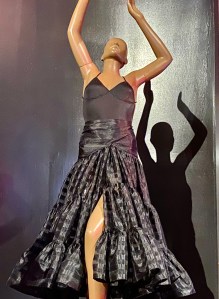
Studio 54 fashion: Fiorucci blouse by Antonio, Stephen Burrows dress, and Zandra Rhodes gown. Courtesy: Pat Cleveland
The Seventies fashions in Studio 54: Night Magic, on display through November 8 at the Brooklyn Museum, slip, slide, drape, glitter, and sometimes seem like they’re not even there.

The entire point of going to the Studio 54 nightclub – assuming you could get in – was to shimmer, startle, reveal, exude fabulousness, and shine, shine, shine in the crowd and on the dance floor.

The Brooklyn Museum exhibition, a masterful curatorial achievement, pumps the music, flashes the lights, and runs the videotape while showing off the wunderkinds that made the Seventies 54 scene drip with glamour – Halston, Calvin, Kamali, and Burrows.

See our photos in our Flickr album.

Norma Kamali’s swimsuit top and skirt made for dancing

Although Halston and others made custom gowns for clients (and there are plenty for Liza and Liz in the exhibition), the show highlights one of their other fashion innovations that the 99 percent adopted in the Seventies ­– the swimsuit. If you had a great body, fantastic hair, and dramatic make-up, you could just throw on a bathing suit, tie on a net skirt with little sparkle, and you were ready for the club!

Designers like Kamali and Sant’Angelo partnered with fabric companies to innovate body-hugging solutions, and turned out sexy bathing suits that doubled as disco-ready separates.

One of the galleries features the fun, transparent dance skirts Antonio designed for Fiorucci that he featured in the 1977 “Fiorucci Fantasy” event he staged at Rubell and Schrager’s Queens club, The Enchanted Garden, which predated Studio 54. A video shows how Antonio’s supermodels set the New York fashion and nightlife scene ablaze.

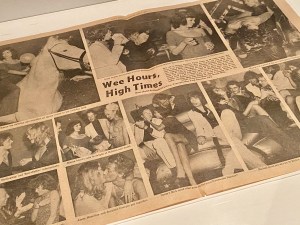
Studio 54 coverage in the Daily News, May 4, 1977. Courtesy: Ian Schrager

For all of its influence in pop culture, it’s hard to think that Studio 54 had a lifespan of only 33 months between 1977 and 1979. The exhibition explores all of facets of the phenomenon – paparazzi, the daily tabloid fodder, Grace Jones, Andy Warhol’s goings-on, disco jeans, Interview magazine, fashion shows, and product launches.

It’s surprising to think that Doris Duke, Alan Greenspan, Lillian Carter, and Bella Abzug were just as likely to be in the club as street performance artists, Bianca Jagger, and Yves Saint Laurent.

Halston’s 1979 beaded chiffon ensemble for Liza Minelli.

To transform the old Twenties theater and TV studio into Studio 54, Schrager and Rubell tapped into the technical and artistic community to figure out how flying disco poles, set changes, and special effects could be orchestrated into a continual surprise for the partygoers. When the musical Chicago closed, designer Tony Walton repurposed his dramatic neon “Roxy” sign as a centerpiece for 54’s stage.

Some of our favorite items are the opening night guest list, Ron Galella’s celebrity photos, Antonio’s costume sketches for opening-night show by the Alvin Ailey dancers, the slideshow of their rehearsal by Juan Ramos, and the giant sapphire that Elizabeth Taylor famously wore to the club in 1979 (it’s in a safe).

Original celebrity photo portraits and Richard Bernstein illustrations for Warhol’s Interview magazine covers

Congratulations to the Brooklyn Museum staff who found and presented this amazing exhibition that lets everyone into Studio 54 to celebrity-watch nearly 40 years after the door closed on the party, and to show us how its influence still reverberates today.

Beer Makes Pots Sing at Met Breuer

Vessels from a range of eras, wired to amplify their ambient tone

Take 5,000 years of ceramic vessels from the Met’s collection, give them to art-installation genius Oliver Beer, and he’ll create something that will never let you think about fired clay or cast bronze the same way again.

Beer has unleashed the “voices” of 32 precious objects in the beautiful, unforgettable installation Oliver Beer: Vessel Orchestra, in a fifth-floor showcase at the Met Breuer through August 11.

Beer recognized that ceramic and metal containers each have their own distinctive ambient note. It took him three years of searching through the Met’s collection to find which vessels among thousands could emit precise notes.

Oliver Beer at the mixing board and keyboards, demonstrating how the voices of the vessels are activated.

When you enter the Met Breuer gallery, you’ll meet his perfect cast. Beer has a sound mixer and keyboard to activate and amplify different combinations of sound from the 32 installation stars. A single microphone captures the natural, ambient sound of each vessel.

After spending decades on the Met’s shelves and in storage, each vessel’s distinctive voice is brought life in contemporary performance. As Beer and other artists play the keyboard, objects created in different eras and cultures blend their singular voices. They sound perfect.

Met LiveArts has invited guest artists to perform on Friday nights throughout the run of the show. When we were there, Helga Davis, a soloist who has triumphed in avant-garde operas like Einstein on the Beach, explained why she found the sensation so satisfying.

Vocalist Helga Davis

She said that she loved feeling her own voice “disappear” when the note she sang blended with a vessel’s own singular note. Listen in on our video clip.

Recently, the Brooklyn Raga Massive collaborated with the vessels in live performance to create a meditative, transcendental experience. Upcoming collaborators include composers Nico Muhly (August 4) and John Zorn and company (August 9).

Vessels in the orchestra — Qing Dynasty porcelain vase (1644-1911) and the back of one of Betty Woodman’s 2003 series The Ming Sisters.

When live performers are not present, Beer has programmed the keyboard to activate his ensemble. A little light on the cord running to each vessel illuminates when the vessel is singing, so viewers can see exactly who’s contributing to the ambiance at any given moment.

The vessels are quite an elegant crew, including a sinuous art nouveau porcelain, a sleek modern bronze portraits by Lachaise, and a monumental angular slab pot by American master William Daley.

Visually, the vessel presentation is clever. Betty Woodman’s whimsical 2003 ceramic trio The Ming Sisters knocks a bit of seriousness off their otherwise tightly controlled neighbor — turquoise-and-gold Qing Dynasty porcelain masterwork.

Vessels wired to amplify their ambient tone, including a female effigy (7th – 6th c. B.C.), Beatrice Wood’s fish, an Iranian storage jar (3800 – 3700 B.C.), and a Canaanite jar (1500 – 1400 B.C.).

And Beatrice Wood’s 1947 fish pot is swimming, singing, and bringing the fun out of a totally ancient threesome – an old, tipped-over Canaanite jar, an ibex wandering across a 4th millennium B.C. Iranian pot, and a 7th century B.C. lady.

Some things that look ancient aren’t. A simple, unassuming, unembellished creation seems to have been made at a more primitive, far-away time. But it’s a 1975 stoneware pot created by artist Juan Hamilton, Ms. O’Keefe’s friend and assistant, who taught her how to make pots in her later years at Ghost Ranch.

There’s so much to hear and see in this show, so be sure to experience this extraordinary ensemble before August 11. See close-ups of some of our favorite Met singers on Flickr.

Here, the engaging and brilliant Oliver Beer explains how it all comes together:

Nick Mauss Brings NYC Modern Art/Dance Influences to Life at The Whitney

Dancers strike poses inspired by the surrounding works of art in a piece collaboratively choreographed with Nick Mauss

Cecil Beaton’s 1937 Vogue photo of poet Charles Henri Ford in a costume by Salvador Dali

Go when the dancers are there. Entering Nick Mauss: Transmissions, installed on the top floor of the Whitney through May 14, you’ll see them moving behind a transparent scrim as the elevator doors open.

The artist had a vision and the Whitney curators gave him the freedom to scour their deep-storage archives, delineate a space for dancers, install works of art, and write scintillating details about the fruits of his research.

Nick’s vision was to create a visual conversation about the collisions between modern art and dance in New York between 1930 and 1950 – a time when bon vivants, peripatetic painters, scandalous artistes, and boundary-pushing dancers expressed themselves in every manner possible.

He succeeds spectacularly. But the show isn’t laid out in a chronological manner like a history show. It’s more of a curated, free association experience that genuinely works.

Visitors encounter Whitney works that are almost never displayed, photos from the Kinsey Institute, works from the NYPL’s Jerome Robbins Division archive, ephemera from personal collections, and Nick’s own creations.

1928 dancer-inspired sculptures by Elie Nadelman stand in front of Nick’s mirrored mural.

Nick’s put a quartet of live dancers at the center of the swirl, encouraging and challenging visitors to explore clues surrounding them – private artistic photos, Diaghilev’s calling card, costume designs by Dorothea Tanning, a video of Balanchine in rehearsal.

As dancers quietly assume poses, visitors are left to move about and make their own connections. Do the dance poses echo the quiet Gaston Lachaise or Elie Nadelman sculptures, or the over-the-top expressions of NYC ballet superstars in Carl Van Vechten’s slide show splashed across the opposite wall?

Nick’s research unearthed an extraordinary wealth of information about relationships among artists, cross-currents of artistic influence, intimate social circles, and gay life. His idea was to inject a little more color to the American modern-art narrative.

One of 830 slides taken of American Ballet Theatre dancers by Carl Van Vechten, America’s first dance critic.

When the Whitney staff read the captivating associations that Nick uncovered as he selected objects for the installation, they decided that it was too rich to simply identify things in the traditional cut-and-dried museum label card format

The curators mounted Nick’s extraordinary background stories next to the artworks, photos, stage set mock-ups, and costume designs to let visitors get inside Nick’s head and share in his fun.

The stories – like the dance quartet – encourage visitors to connect their own knowledge about the origins of modern dance and modern art in New York with what they see and read:

What impact did modern dance pioneers Loie Fuller and Ruth St. Denis have on 1920s sculpture? How did a Ballet Russe-obsessed cultural impresario convince George Balanchine to start the New York City Ballet?

Reflected in Nick’s mirrored mural, a monitor shows videos of Balanchine rehearsing the New York City Ballet.

What was a sophisticated dance critic doing in his studio with props, costumes, Agnes de Mille, and stars of the New York ballet world?

The beauty of Nick’s installation is that people wandering about the space are able construct their own visual and mental narratives and understand the swirl of modernism from that time in a new way. Take a look at our Flickr album to view some of our favorite works in the show.

The choreographed piece was developed collaboratively by Nick and the dancers. The complete experience is poetic, revelatory, interactive, and constantly in motion.

The dancers perform from 12 p.m. to 4 p.m. daily, and also on Friday nights from 6 p.m. to 10 p.m.

Here’s a short clip of the quartet of dancers performing in the gallery:

And another short clip of duets:

How William Wegman Turned His Dog Into a Conceptual Artist

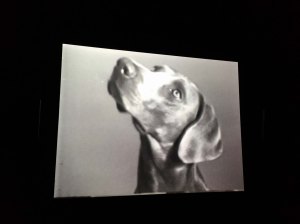
Still from 1972 video “Man Ray, Do You Want To…” featuring Man Ray’s reaction to various questions

Sometimes losing a job is a good thing. Or at least that seems to be what happened to William Wegman, when his contract to teach in the art department didn’t get renewed by the University of Wisconsin – Madison back in 1970.

Like so many others Midwesterners, he packed up and moved to sunny Los Angeles, where the contemporary art scene was just starting to take off.

It ended up being a career-making move that he didn’t see coming.

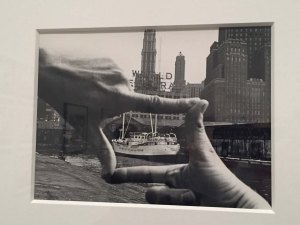
Photo of 1971 performance-art piece by California artist John Baldassari, “Hands Framing New York Harbor, from Pier 18”

The Metropolitan Museum of Art’s exhibition, “Before/On/After: William Wegman and California Conceptualism”, on view through July 15, harkens back to the three years that Wegman lived in SoCal, populated by other up-and-comers like Ed Ruscha, John Baldassari, David Salle, and Vija Celmins.

The Seventies-era Chicago, Madison, and California art scenes generally had more wit, whimsy, and lightheartedness than the super-serious East Coast art scene, which was showcasing droves of red-hot Conceptual and series artists from New York and Europe, such as Hanne Darboven, Lawence Weiner,  and the Belchers.

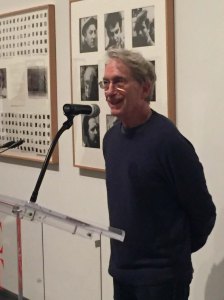
William Wegman recollecting his early California years in January 2018

At the time, New York gallery walls were full of framed mathematical series and formulas, endlessly rigorous permutations, semiotic variations, deconstructed analyses, and meticulously documented minimalist photo series. California was the antithesis, with artists poking gentle fun and creating works that were more pop-culture-oriented head-fakes.

By 1970, artists were experimenting with video for the first time, courtesy of Sony’s invention of the Portapak. It was grainy, but you could monitor what you were shooting as you were doing it.

When Wegman arrived in LA, he planned to continue his work, including making short, witty performance videos involving props and sets. But he had an unexpected problem: his wife’s insistence on getting a large dog in LA saddled him with babysitting Man Ray, a big, busy Weimaraner that continuously investigated the props in the studio and gave him spooky, soulful looks as he performed.

Wegman’s 1972 photo series where he tries to teach Man Ray about Conceptual Art practice

When Wegman decided to involve Man Ray in the set-ups and teach him about the serial nature of East-Coast conceptual art, the short videos became insightful and engaging. The first canine art-world star was born.

Although Wegman and Man Ray left California to move back East a few years later, the collaboration was a watershed moment in Wegman’s career.  Every New York and European gallery clamored to include works with Man Ray alongside Wegman’s other photos and performance videos.

1972 Wegman photo “Dull Knife/Sharp Knife”, referring both to the object and the viewer’s own mental acuity in deciphering art

The Met’s show, near the second-floor photography galleries, is a tribute to the fun, inquisitive nature of the Southern California art scene at this turning point in Wegman’s life and was created to honor a special gift: Wegman and Christine Burgin, his wife, donated 174 of these short videos to the Met, along with some of the California photographs and drawings.

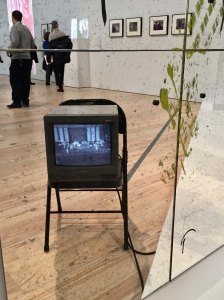
To honor this bequest, the Met has created a small black-box theater inside the gallery, where everyone can delight to 99 minutes of less-than-two-minute videos featuring Man Ray and his owner, mostly from the early years.

It’s a chance to see what everyone saw at The Kitchen and Sonnebend when Soho was still an industrial neighborhood.

Still from 1972 video of Man Ray methodically investigating a biscuit trapped inside a glass bottle

The videos are all rough low-resolution snippets that seem to have several layers of meaning. In one, Man Ray propels a glass bottle around the floor of the studio in an effort to extract a biscuit that is trapped inside. In another, the camera stays tight on Man Ray’s face to record the subtle changes in expression as he silently responds to a series of Wegman’s questions, which all begin with “Man Ray, do you want to….?”

East Coast audiences for painstaking methodological investigation and serial word-art never had it so good! Man Ray was everyone’s favorite canine conceptual artist.

The rest of the show features books and photographs from the Met’s collection by Ed Ruscha, Baldessari, and other artists that Wegman knew when he was just starting out.

Still from 1972 video featuring William Wegman in his LA studio, where Man Ray became an art star

Take a look at all of the work in the exhibition on the Met’s website, which also includes stills from many of the videos in the show. Check out the photos on our Flickr site.

But spend some time on the second floor of the Met, enjoying the early work of a witty, shaggy, out-of-the-box artist and his clever, not-so-shaggy dog.

The Met — and Wegman’s black-box cinema — is open 7 days a week and until 9pm Friday and Saturday.

Club 57 Rejects at MoMA 35 Years Later

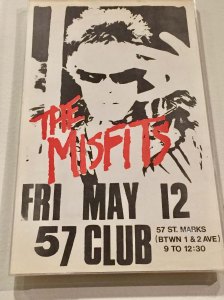
Music poster for Club 57

They didn’t fit in to any of the scenes back in the Eighties, but now they have their own show at MoMA in a basement club all their own – just like in the old days.

Entering Club 57: Film, Performance, and Art in the East Village, 1978–1983, on view at the Museum of Modern Art through April 8, you’ll be required to find the right way downstairs, peek behind curtains, and lurk around corners where transgressive, challenging art is on display.

The show is a tribute to the ultimate DIY art scene in Alphabet City at a time in New York when things were just plain tough.

Housed in the basement of the Polish National Church on St. Mark’s Place, the misfits invited their friends to imagine and create performance art on a regular basis.

Klaus Nomi’s cape, from his 1978 New Wave Vaudeville finale

Although Danceteria and The Pyramid Club were contemporaneous music scenes, Club 57 was the place to create characters, imagine scenarios, revel in kitsch, celebrate “bad” art, and create performance art or a DIY film festival every night.

The kids – many classmates from School of the Visual Arts – created and handed out flyers to entice the adventurous to witness the uncensored experimentation.

It’s where Keith Haring, Joey Arias, Ann Magnuson (MoMA’s guest curator), and others spent their formative years dressing up, wigging out, and pushing boundaries.

The show displays ephemera from those years and experiments, from Klaus Nomi’s transparent cape (when he appeared as the closing act in New Wave Vaudeville in 1978) to Clayton Patterson’s flyers based on the latest in new technology in 1983, the color Xerox. See it, start to finish, in our Flickr album.

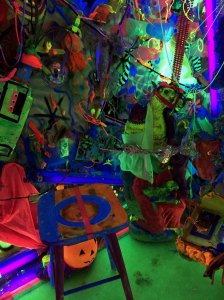
Kenny Scharf’s recreation of his 1979 Cosmic Closet

The installation is on two levels, but downstairs is where it’s all happening. Silkscreened posters by John Sex poke out of the dark. A secret hideaway reveals Kenny Scharf’s black-light psychedelia “Cosmic Closet.”

Hand-crafted calendars by Ann Magnuson illustrate the variety of activities that took place nightly – film screenings, performance, music, and lady wrestling.

Collaged and Xeroxed zines, drag performances with small casts of thousands, and graffiti art jolted life into a subculture struggling to make ends meet, live in a city clawing its way back from financial ruin and high crime, and trying to make sense of the mysterious illness that was plaguing the gay community.

Richard Hambleton’s 1983 Shadowman series

One person’s trash is another one’s art. And the reverse is true — Basquiat was busy sprinkling his moniker all over the decaying walls of the East Village, and Richard Hambleton’s epic Shadowman paintings were popping up in the neighborhood where you’d least expect them. The street and the art were in an ever-renewing cycle.

This immersive journey back in time is stupendous. Be sure to hang out in the basement to watch two or three of the videos from Club 57’s heyday.

For now, take a walk through the show with Frank Holliday, one of the founding members of Club 57.

Also, watch and listen to the artists recollect club experiences during MoMA’s opening night party.

Curtain Up on Theater’s Best at NYPL

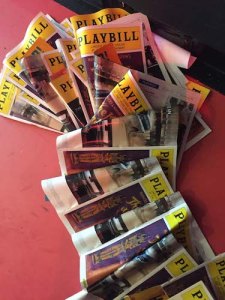
All the Playbills you ever collected

The excitement of Broadway and West End theater is fully on display at the New York Public Library’s show at Lincoln Center, Curtain Up: Celebrating the Last 40 Years of Theatre in New York and London, closing July 30.

It’s a theater-lover’s fantasy journey through four decades of smash hits that cross-pollinated two shores – costumes, stage sets, video clips, lights, sound, and awards. And as the curators point out, the two theatrical epicenters are mirror images of one another.

The Victoria & Albert (V&A) Museum in London, the Society of London Theaters, and our own NYPL assembled this extravaganza with the help of producers, costume designers, actors, theaters, and other owners theatrical history.

The foyer is awash in Playbills, hanging from the ceiling and piled up in corners. It feels like home. It’s hard to know where to look or what to process first. Is it Michael Crawford’s Phantom mask (direct from his own collection)? Is it the overscale streetplan of Times Square or Shaftsbury Avenue? Lola’s thigh-high hot pink Kinky Boots?

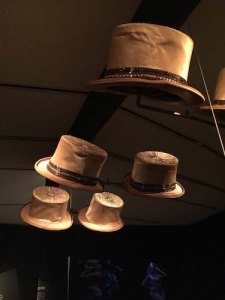
A Chorus Line finale top hats by Theoni V. Aldridge from TDF’s Costume Collection.

Take a short walk-through of the show on our Flickr album.

Look closely for windows into innovative set designs (An Inspector Calls, War Horse) amid towering costumed mannequins. But the overpowering sound throughout is One. Who can concentrate on anything else once you see a corridor sprinkled with glittery top hats overhead and Broadway-sized media screen showing the multi-mirrored finale of A Chorus Line.

Besides being everyone’s favorite musical (the first to win London’s coveted Olivier award), the show ushered in the digital age of theater. When it debuted at the Public Theater, the lighting was the first musical to depend on an electronic light board, which made the transitions just as precise at the choreography.

There are backstage notes for The History Boys, box office totals from Evita, period costumes from the theater’s grande dames, and a brief video showing one of the all-time great moments of inspiration and awe onstage — the seconds-long flash accompanying the finale appearance of the magnificent angel in Angels in America.

Julie Taymor’s 1997 masks for The Lion King’s Scar, Simba, and Nala

The most dramatic encounter is an area populated with costumes and masks from The Lion King and the swan costume from Matthew Bourne’s all-male Swan Lake.

The “fliers” are aloft, too – Marry Poppins and Elphaba – with a big-finish wall of televisions showing coverage of the Olivier Awards, currently celebrating their 40th anniversary.

The result is a theatrical show together that sings, dances, and reminds everyone of what a life in the theater – either as an actor, technician, or audience member – can be.

To prepare for your next visit to the West End, here’s a short primer on the stats, lingo, and facts about theater culture on both sides of the Atlantic: