Is David Roentgen the 18th Century Steve Jobs?

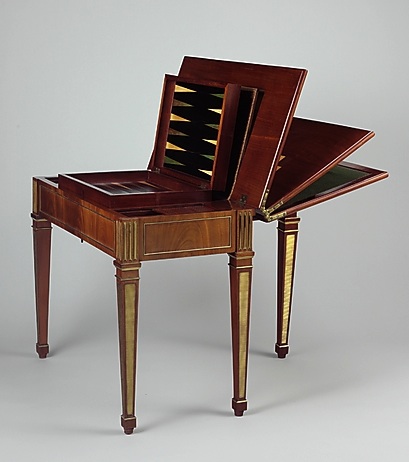
David Roentgen’s Game Table (ca. 1780–83). Oak, walnut, veneered with mahogany, maple, stained maple, holly, stained holly; felt; leather, partially tooled and gilded; iron and steel fittings; brass and gilt bronze mounts. Source: Metropolitan Museum, Pfeiffer Fund, 2007.

David Roentgen’s Game Table (ca. 1780–83). Oak, walnut, veneered with mahogany, maple, stained maple, holly, stained holly; felt; leather, partially tooled and gilded; iron and steel fittings; brass and gilt bronze mounts. Source: Metropolitan Museum, Pfeiffer Fund, 2007.

Even if David Roentgen didn’t produce for the mass-market, he certainly seemed to have written Steve’s playbook  — wow them with innovative design, refined surfaces, exacting craftsmanship, playful art, and sophisticated multimedia integration. Oh, and if that’s not enough, why not make it passkey protected and portable, too? Like Steve, David knew how to turn engineering into art and ka-ching.

Experience out-of-the-box design innovation in the closing week of the Metropolitan Museum’s unforgettable show, Extravagant Inventions, Princely Furniture of the Roentgens. The beauty of the marquetry and fittings on the displayed desks, sofas, clocks, commodes, and rolltop desks would be enough, even if they simply occupied a quiet corner of a drawing room or boudoir.

But if an 18th-century king, queen, or royal saw them in action – revealing hidden apps for writing, reading, drawing, music, games, curios, and hiding the desktop – there was no turning back. The mechanical furniture was so desirable that wealthy trend-setters just had to have it (like iPads).

What social-minded gamer could resist Roentgen’s 1780s Game Table if they saw David’s demo?

The desire to own and show off the most up-to-date artistic engineering marvel had royals running for their strongboxes to put down deposits on anything Roentgen could produce. In fact, the Met tells us that the Berlin Secretary Cabinet, the star of the show, is probably the most expensive piece of furniture ever produced. And we can’t even begin to discuss robot Marie Antoinette playing the dulcimer, or the clocks that turn into orchestras.

When the French Revolution put an end to sales at Versailles, Roentgen cut out the curliques, tailored the outer design to a sleeker look, and shifted his retail operations to Russia. Catherine and her court bought the newer stuff by the cartload.

The Met has an entire YouTube playlist devoted to these 18th century wonders, and you really should peruse them all. Get to the show in the final week and see what another style and multimedia-obsessed generation spent their money on.

And lest it slipped your mind, Steve and Woz’s first Apple 1 computer was assembled within a wooden case. Maybe it’s good that David and his engineering/sales team weren’t around to critique it.

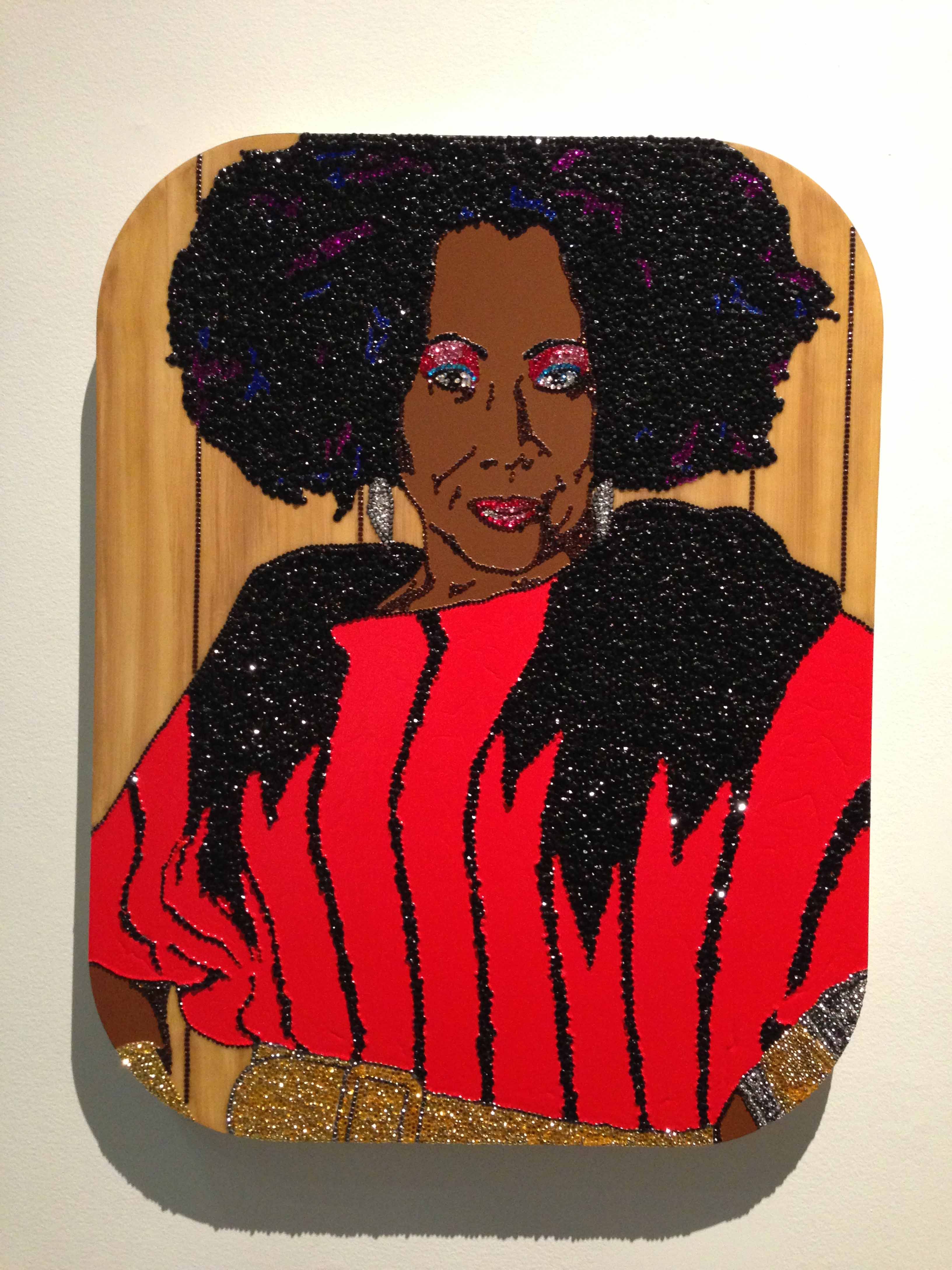
Sparkle Plenty, Move Over Manet

Installation view of Mickalene Thomas's Les Dejeuner sur l’herb Les Trois Femmes Noires, 2010.

Installation view of Mickalene Thomas’s Les Dejeuner sur l’herb Les Trois Femmes Noires, 2010.

It’s large-scale, monumental painting of beautiful women languishing amidst patterned profusion, but it’s not Manet or Monet. Unlike MoMA’s modern masters, you’re encountering Afro-wearing, rhinestone-studded Black lovelies with an ambiance of the 1970s and Blaxploitation about them.

It’s all the work of Mickalene Thomas (originally from Camden, New Jersey, and now Brooklyn) in the grand show, Mickalene Thomas: Origin of the Universe, mounted first by the Santa Monica Museum of Art and now expanded by the Brooklyn Museum.

Thomas uses an encyclopedic knowledge of art history and museum-world references to tease viewers to reflect on how her fancy, sparkly ladies are equally worthy of fine-art treatment as any ruffed Dutch gal from the 1600s or French odalisque.

Installation view of part of Mickalene Thomas's depiction of her mother: "Ain’t I Woman, Sandra," 2009. Rhinestones, acrylic paint, and oil enamel on wood panel. DVD and framed monitor; rhinestones, acrylic paint, and enamel on wood.

Installation view of part of Mickalene Thomas’s depiction of her mother: Ain’t I Woman, Sandra, 2009. Rhinestones, acrylic paint, and oil enamel on wood panel. DVD and framed monitor; rhinestones, acrylic paint, and enamel on wood.

Enamored of slightly vintage interior decor magazines, Thomas constructs settings in her studio corner and photographs her subjects dressed in 70s prints laying on 70s sofas in wood-paneled rooms. Later she turns these into paintings merged with old photos, faux wood paneling, and Photoshop fracturing on a large scale. Check out the Flickr gallery.

On every visit, crowds gather in the back video gallery to hear her mother tell the story of how she changed her ways from a drug-addicted girl to a clean and sober, meditation-minded fine-art model for her brilliant, fantastically creative daughter. She’s a stunning model.

See these large-scale works in person this week. Otherwise, catch her work at ICA in Boston through April.

For more, listen in on this discussion between Mickalene Thomas and Carrie Mae Weems. It’s a great insight to how an established artist inspires an emerging artist to forget about law school and do great things in the art world.

Tinsel’s Not Just for Christmas

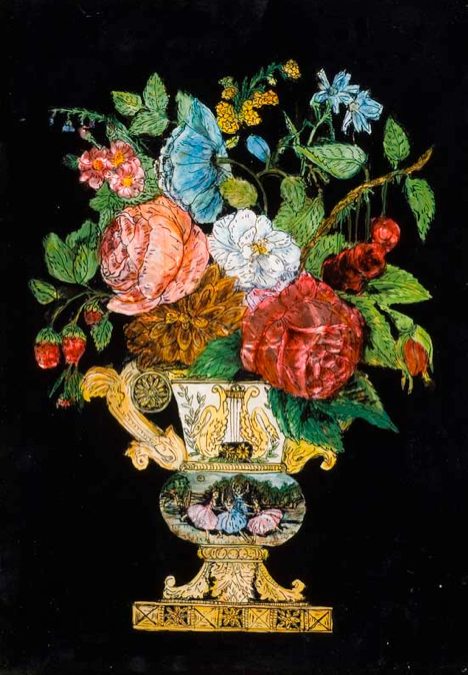
Alice Knight’s Urn of Flowers with Scene from Ballet Swan Lake. Reverse painting and foil on glass, c. 1940. Source: American Folk Art Museum, gift of Susan and Laurence Lerner.

Alice Knight’s Urn of Flowers with Scene from Ballet Swan Lake. Reverse painting and foil on glass, c. 1940. Source: AFAM, gift of Susan and Laurence Lerner.

Before the Internet, Etsy, TV, and mass media, creative women used foil as a flashy additive to reverse-glass paintings that decorated pre-electric homes. The American Folk Art Museum has seen fit to honor this delightful pastime in Foiled: Tinsel Painting in America.

There’s a prequel to the show focusing on reverse-glass painting to the left of the main gallery that’s chock full of examples of the glimmering media from dozens of anonymous women artists who decorated homes, shops, and gaming tables with the shimmery stuff.

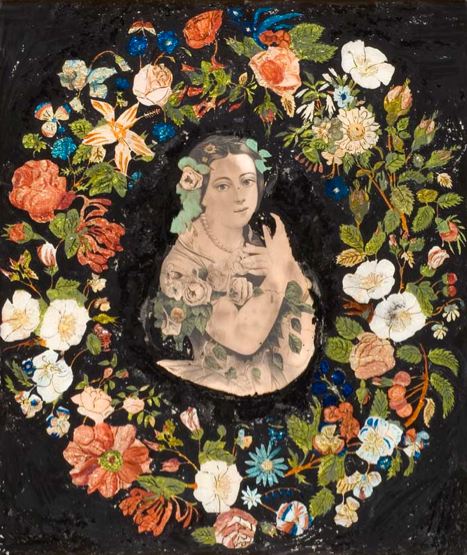
Tinsel painting isn’t seen much today, since it’s so fragile, but when Alice Knight (one of the few known tinsel artists) came of age in the 1880s, she would have seen creations like this tribute to Jenny Lind. In the 1920s, Abby Aldrich Rockefeller acquired some for her folk art collection now enshrined in Colonial Williamsburg.

Artist unknown. Wreath of Flowers with Lithograph of Jenny Lind. Reverse painting and foil on glass with lithograph, c. 1850. Source: American Folk Art Museum, gift of Susan and Laurence Lerner.

Artist unknown. Wreath of Flowers with Lithograph of Jenny Lind. Reverse painting and foil on glass with lithograph, c. 1850. Source: AFAM, gift of Susan and Laurence Lerner.

By 1930, tinsel painting (also known as oriental, crystal, or pearl painting) made its art-world debut in a show at the Newark Museum. Eventually, even New York souvenirs were sporting a little bit of the flash.

Today, the American Folk Art Museum has the largest collection of tinsel paintings in America. Take a look at the show in this short piece produced by WNET for NYC-Arts with the curator:

Alice, who lived past 100 and created works even then, would have loved Etsy.

Cage’s Zen Den at the Academy

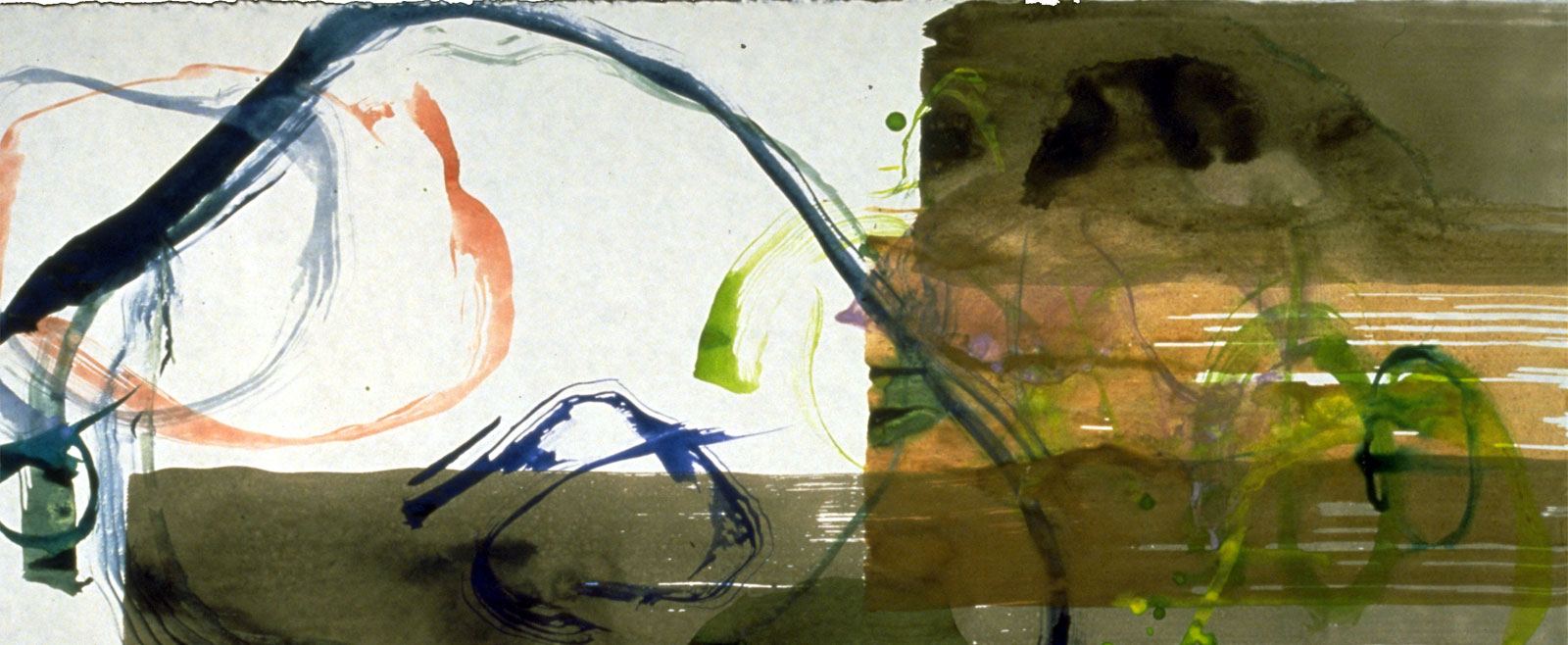
Cage's New River Watercolor Series I on parchment paper. Courtesy: Mountain Lake Workshop

Cage’s New River Watercolor Series I on parchment paper. Courtesy: Mountain Lake Workshop

Take one of the most controversial composers of the 20th century, give him some watercolors, drop him at the foot of the Blue Ridge Mountains, and leave everything to chance. See what happens.

You’ll see the results at the National Academy Museum’s John Cage: The Sight of Silence show this weekend. Back in 1988, Cage was the artist in residence at the Mountain Lake Workshop in Blacksburg, Virginia. He spent his time making a series of watercolors inspired by his trip to a Zen garden and temple in Kyoto, where he saw stones floating on a field of raked gravel.

Cage, whose lifelong interest in using chance (via the I Ching) to select and structure his musical compositions, decided to apply the same principles to watercolors, drawings, and prints. He customized some large-scale brushes that he could drag across wet paper like rakes, picked up feathers, and collected stones from the New River.

The brush, paper wetting, colors, stones, and actions are all determined by chance to stunning effect. Watch the artist at work and hear him talk about his process here:

Now see the results at the Academy and witness pure Zen.

Celebrity Lace at the Met

EuropeanLace_posterIt was all the rage 100 years ago – who could amass the best collection of antique lace owned by the rich and powerful, and what could you do with it to make a fashion statement?

The Met still has its Gems of European Lace micro-exhibit on display in a lower-level nook for a few more days, right outside of the Ratti Textile Center. (It’s down the stairs on the left side of the tiled medieval Gallery 304 on the first floor.)

The show blends astonishing craftsmanship with an object lesson in conspicuous consumption of the rich and famous of a century ago. It seems that in the late 1800s, wealthy American women tried to outdo one another with lace collections, vying for little masterpieces that might have been owned by European royalty.

Adolf de Meyer’s photo of Rita de Acosta Lydig in Harper’s Bazaar in 1917 (Source: The Met; gift of Mercedes de Acosta)

Adolf de Meyer’s photo of Rita de Acosta Lydig in Harper’s Bazaar in 1917 (Source: The Met; gift of Mercedes de Acosta)

One gem is the bobbin-made lace cravat end (featured above), allegedly commissioned by Austrian empress Maria Therese and later given to her daughter, Marie Antoinette. The Met cites this provenance, but will only say that it’s “maybe” true.

In the race by society ladies to amass the best lace collections, international lace-dealers made out like bandits. The frenzy only benefits us today, since so many patrons ultimately bequeathed their collections to the Metropolitan and the Brooklyn Museum.

By the early 20th century, the super-wealthy were also acquiring antique lace and asking for it to be refashioned into stylish haute couture. The example on display in Gems is a Callot Soers original made of 16th-century-style lace for the style icon Rita de Acosta Lydig, known for her celebrity-filled New York salons; lace-covered accessories and bedecked couture; and having her portraits done by Rodin, Sargent, and anyone who was anyone at the turn of the century.

Rita's 16th c. style lace remade by Callot Soers in the 1920s (Brooklyn Collection at the Met)

Rita’s 16th c. style lace remade by Callot Soers in the 1920s (Brooklyn Collection at the Met)

Check out the Met site for close-ups of masterworks of needle and bobbin.


3D Cave Art Revealed at NYU

Left Hand of Maitreya, Buddha of the Future, Holding the Looped End of His Robe
Xiangtangshan: Northern Group of Caves, North Cave, south face altar of central pillar, 550-559 ce., limestone. Source:
Asian Art Museum of San Francisco, Transfer from the Fine Arts Museum of San Francisco

Left Hand of Maitreya, Buddha of the Future, Holding the Looped End of His Robe
Xiangtangshan: Northern Group of Caves, North Cave, south face altar of central pillar, 550-559 ce., limestone. Source:
Asian Art Museum of San Francisco, Transfer from the Fine Arts Museum of San Francisco

The exhibition closing today on 84th Street isn’t about Herzog’s 12,000-year old French cave art, but about truly monumental art that has been largely unknown in the West until the University of Chicago unveiled a truly spectacular achievement – the digital recreation of a Sixth Century Buddhist cave temple destroyed in the 20th century by vandals selling to the international Asian art market.

Echoes of the Past: The Buddhist Cable Temples of Xiangtangshan was brought here by NYU’s Institute for the Study of the Ancient World after the show’s run at the Sackler in Washington.

The story of this cave temple’s recreation began when the University of Chicago started asking what happened to all the stuff from the vandalized cave temples that were originally built as hostels for wandering Buddhist monks in the Fourth Century in Northern China along the old East-West trade routes. UC ultimately identified about 100 statue fragments in museums and collections all over the world.

Take a look at the cave temples today and the techniques used by the University to bring an amazing collection back together in virtual reality:

At NYU, you first immerse yourself in the Digital Cave and then enter the elegant gallery to see the works themselves – holy men, heads and hands of Bodhisattvas, and little monsters all gathered from collections from Penn, the Met, the V&A, the Nelson-Atkins of Kansas City, and the Asia Art Museum of San Francisco. Check out the highlights on line.

Crisp Hepburn Clothing Tribute at Lincoln Center

There’s no surprise that the wardrobe on display in the Katherine Hepburn: Dressed for Stage and Screen exhibition is sharp, clean, and perfectly turned out. Finishing its run at NYPL at Lincoln Center this month, the Library has imported this stunning tribute developed by Kent State University. Check out this promo produced by WNET Channel 13:

The first clothes you encounter are a collection of her famous trousers and jodphurs, but tucked away in the corner to the right of the entrance is an item that underscores the purpose of this tribute – the Ernest Trova statuette that she received in 1985 from the Council of Fashion Designers of America for Lifetime Achievement (and inspiration).

Photo from NYPL’s Billy Rose Collection. This dress is in the show.

Photo from NYPL’s Billy Rose Collection, but the dress is in the show.

A fashion icon for the 20th Century, the show highlights her collaborations with the best designers throughout her life. The first gallery features her stage clothes – Valentina’s creations for the Broadway production of The Philadelphia Story, which look like they were made yesterday, and the Chanel outfits that she commissioned for her performances in Coco. Apparently she did not think that Cecil Beaton’s vision could compare to the real thing, so she wore genuine Chanel in the play. Beaton did get Hepburn to wear some of his creations, and you’ll see a gorgeous black gown there, too.

It was the same story for films. Edith Head said, ““One does not design for Miss Hepburn, one designs with her.” Hepburn bought hats directly from Hattie Carnegie for Alice Adams.  Margaret Furse, who loved working with the perfectionist Hepburn, said that she was glad to “share credit” for the contemporary designs in A Delicate Balance. You’ll see her solution – to simply let Bergdorf Goodman make the leopard-print caftan and other stuff.

Almost everything for Hepburn later in life had high necklines and longish sleeves. Still, the stunner is the revealing form-fitting black gown she wore in Adam’s Rib (1949) by Walter Plunkett, the designer who also did Gone With The Wind. (It’s the one in the video promo.)

Her theatrical make-up kit is also on display in the back room. Who else? Max Factor.

Ivy Style or Gangnam Style?

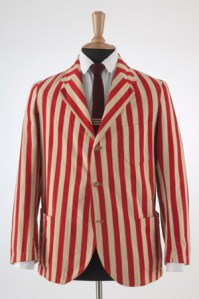
Red and white cotton flannel blazer, c.1928. Museum at FIT purchase.

Red and white cotton flannel blazer, c.1928. Museum at FIT purchase.

It’s hard to remember a time without Gangnam Style, but it’s even harder to remember before there was Ivy (as in Preppie) Style. There’s just a few more days to trek to The Museum at FIT for its revealing show on the roots of American menswear, Ivy Style.

Sure, the show is peppered with references and examples of the current Kings of Prep –Lauren, Hilfiger, and (prep with a twist) Thom Browne. But the real eye-opener here is the manner in which the curators journey back in time to show you how something so familiar today was once so radical – how “Ivy” got its name in 1876, how students set the sportswear trends before WWI, and the debut of the now-forgotten (but influential) “beer suits” at Princeton in 1912.

It’s also startling to learn that Brooks Brothers industrialized wardrobes as far back as 1818, and that J. Press “owned” the market for natural-shoulder jackets for pretty much the entire 20th Century.

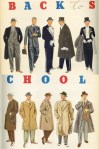
1937 illustration of college men’s fashions from FIT Library and Archives.

1937 illustration of college men’s fashions from FIT Library and Archives.

Thankfully, FIT has packed enormous amounts of menswear history on its special exhibition web site, so work your way through it and mine it for your own favorite tidbits (e.g. origins of saddle shoes, polo coats, and blazers).

Favorite factoid: In 1931, the average college student spent 51% more on clothes than the average man-on-the-street – a college trend that kept going right through the Great Depression. So, maybe it’s like Gangnam Style, after all? Psy sports it too, you know.

If you can’t get to the show in the next few days, take the virtual walkthrough with the Richard Press, the former President of J. Press, who interprets the who, what, why, and when of menswear history (including the roots of the most memorable scene in Animal House). Don’t ask, just watch:

Clock Ticks All Night at MoMA

Christian Marclay. Video still from The Clock. 2010. Single-channel video with sound, 24 hours. © Christian Marclay. Courtesy Paula Cooper Gallery, New York

Christian Marclay. Video still from The Clock. 2010. Single-channel video with sound, 24 hours. © Christian Marclay. Courtesy Paula Cooper Gallery, New York

If you didn’t get to see it last summer in the Atrium at Lincoln Center, Christian Marclay’s The Clock is back, just in time for the countdown to the New Year.

MoMA is offering the first 24-hour screening of the 24-hour art film tonight on New Year’s Eve, so art lovers can experience the 24-hour countdown of clocks in real time. To keep its guests satisfied, MoMA is extending café hours until 1am and keeping its espresso bar open all night.

If you have other plans for this New Year’s Eve, don’t worry. The Clock screens at MoMA until January 21 and you’ll have ample opportunity to catch the non-stop action. On subsequent Fridays (January 4, 11, and 18), MoMA will start The Clock at 10:30am and keep it ticking in the Contemporary Galleries until 5:30pm the following Sunday.

First come, first served, with no time limits.

Warhol’s New Year’s Eve Finale at the Met

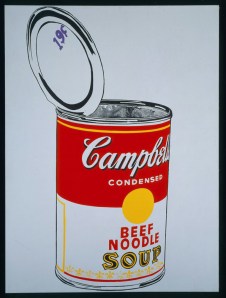
Andy Warhol. Big Campbell's Soup Can, 19¢ (Beef Noodle), 1962. Acrylic and graphite on canvas, The Menil Collection, Houston. © 2012 The Andy Warhol Foundation for the Visual Arts, Inc. / Artists Rights Society (ARS), New York

Andy Warhol. Big Campbell’s Soup Can, 19¢ (Beef Noodle), 1962. Acrylic & graphite on canvas, The Menil Collection, Houston. © 2012 The Andy Warhol Foundation for the Visual Arts, Inc. / ARS, New York

New Year’s Eve is the last day of a major tribute to the man who encouraged us to view brands, news, celebrities, identity-shifting, multiples, and commerce as art – Regarding Warhol: Sixty Artists, Fifty Years.

 The curators have organized the big, second-floor galleries along these themes, and paired Andy’s work with the work of fifty contemporary artists whose own work is indebted to Andy’s redefinition of modern life.

As the show begins, it’s almost as if Andy’s contemplating the implications of the upcoming fiscal cliff talks with the wall quote, “Buying is much more American than thinking.”

To prove his point, you’ll find Andy’s little-seen Dr. Scholl’s Corns (1961) (a gift from Halston to the Met), alongside better-known Brillo boxes and other brand icons from the Whitney, Menil, and Warhol Foundation collections. The curators have included Tom Sach’s Chanel Chainsaw (1996) and Hans Haake’s political pop masterwork, a giant cigarette box created in 1990 in response to Jesse Helms’s attack on Mapplethorpe and the NEA with the cigarettes wrapped in the Bill of Rights and branded “Phiip Morris Funds Jesse Helms”.

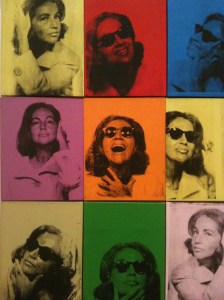
Fragment of Andy Warhol’s silkscreen on canvas, Ethel Scull 36 Times. Jointly owned by the Whitney Museum of American Art and The Metropolitan Museum of Art; Gift of Ethel Redner Scull, 2001

Fragment of Andy Warhol’s silkscreen on canvas, Ethel Scull 36 Times. Jointly owned by the Whitney Museum of American Art and The Metropolitan Museum of Art; Gift of Ethel Redner Scull, 2001

Alongside Andy’s Screen Test films are portraits by Tillman, Close, and Avedon, as well as a needlepoint of Liza in her heyday and a brilliant Sugimoto portrait of Fidel Castro (except that it’s a wax museum likeness).  Andy’s dollar-sign print multiples are hung near another quote: “Being good in business is the most fascinating kind of art.” An entire wall covered in Takashi Murakami and Koons multiples stand in evidence.

If you can’t celebrate in person at the Met, download Rebecca Lowery’s timeline of Warhol’s impact from the exhibition catalog. Or watch the 90-minute video featuring the curator Mark Rosenthal debating if Warhol actually is the most influential artist of the last fifty years. Or, view the films and listen to the music that the Met streamed live last October:  The Metropolitan Museum of Art – Dean and Britta—13 Most Beautiful: Songs for Andy Warhol’s Screen Tests.