235 Years of Veteran History in a High-Tech Park

Open again after the hurricane, best-kept-secret BLDG 92 has opened its doors to honor veteran, industrial, medical, and military history at the Brooklyn Navy Yard Center.

The stunning displays of over 235 years of history in New York Harbor inside are nothing compared to the experience of traipsing around by bus and foot to poke in and around the mix of crumbling 19th-century architecture, active dry docks, overgrown campuses, historic streets, and state-of-the-art sustainable design.

Take a look at the sights seen during the sunny days of summer on the Flickr feed, and book your trip now. It’s an adventure to get there (subways aren’t exactly close), but you will feel amazing to walk in the footsteps of so many heroes of American history and innovation, like Commodore Perry, Dr. Squibb, the North Atlantic Command for WWII, and Rosie the Riveter.

If it all feels and looks a little like a back lot, it is. (Boardwalk Empire shoots at the Steiner Studios and SNL builds sets there.)

Check out the photo of the tugboat under repair in the third oldest dry dock in the country – right where the Monitor was built for combat during the Civil War.  And if you’re a Navy history buff, immerse yourself in BLDG 92’s Flickr stream courtesy of the National Archives, stereoscopes and all.

What have you been missing?  Just check out this video, and then go see the real thing on foot, by bus,  by bicycle, or on an industrial tour:
Do-It-Yourself Fashion Alphabet

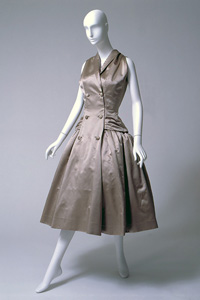
Christian Dior, dress in satin, 1954, France, gift of Sally Cary Iselin.

You’ve probably been too busy looking for electrical outlets below 34th Street to have noticed that today is the last day of the exhibition Fashion, A-Z: Highlights from the Collection of the Museum at FIT, Part Two.

Don’t worry, because as your power (and Internet) comes back on, you can get your fashion fix via FIT’s new digital archive that lets you surf by alphabet to see all the famous designers and dresses that are in the collection. Search by designer or brand, they’re all there.

The gallery show has the outfits arranged A (for Adrian with a MoMA-inspired creation) to Z (Zoran) in its upstairs gallery. The curators often placed two designer ensembles side-by-side, emphasizing the original designer (for example, Dior) and the younger designer who took over creative duties for the house over time (for example, YSL for Dior).

It’s a treat to see side-by-side examples of new and old Hermes (featuring Gaultier vs. the Kelly bag), Valentino, Balmain, Kenzo, YSL, Dior, and Comme des Garcon creatives.

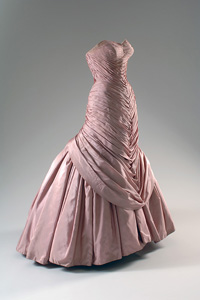
Charles James, evening dress in silk taffeta and net, 1955, USA, gift of Robert Wells In Memory of Lisa Kirk.

Is Charles James still the reigning world champion? Take a trip to Seventh Avenue today or start surfing fashion history to make your own determination.

NYC High Line Wilderness Being Swept Away

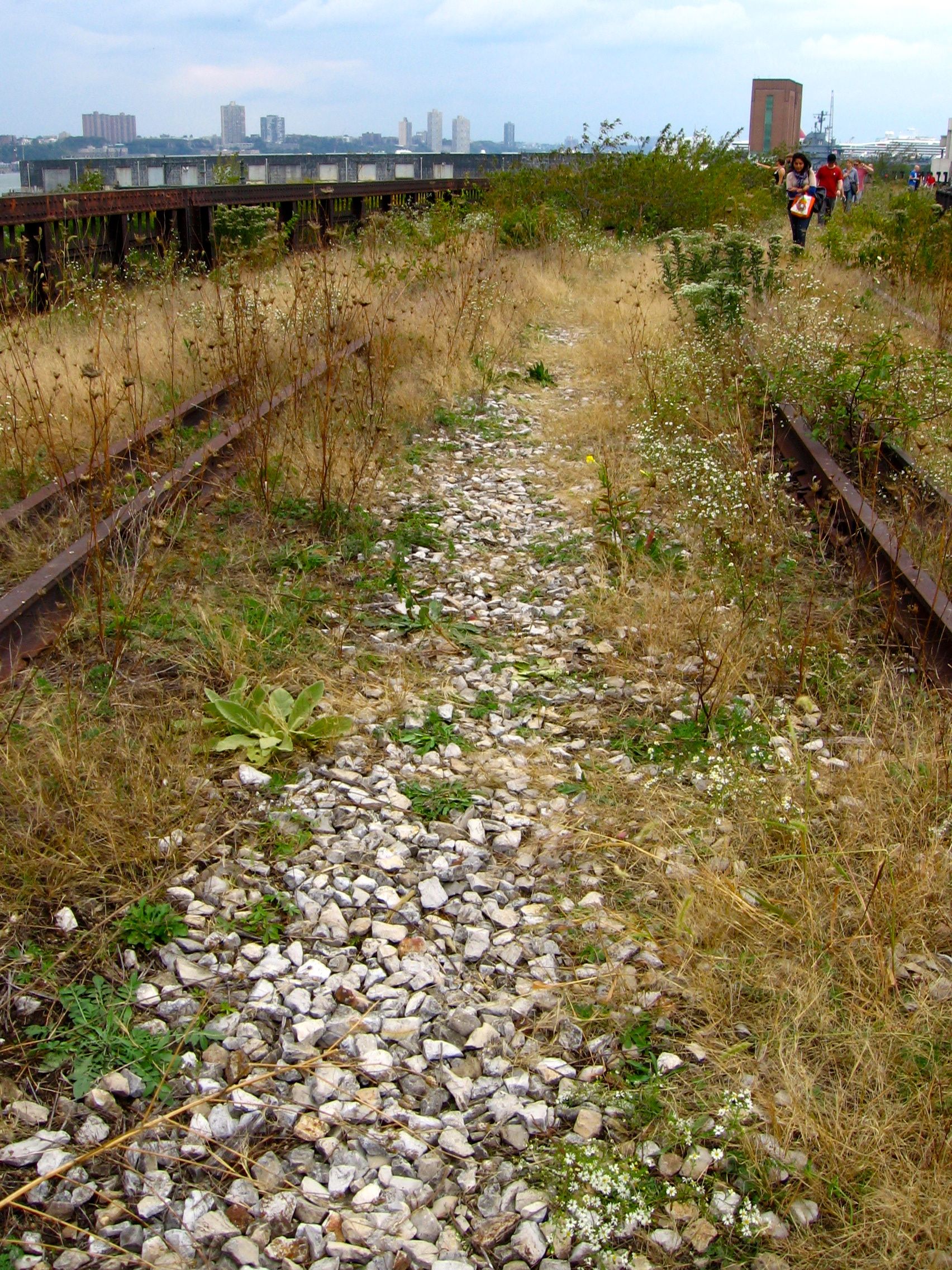
It’s not going to be swept away by Hurricane Sandy…We’re just alerting you to the fact that the last section of the High Line looping the West Side Rail Yards is about to undergo its final construction transformation from 30th Street up to 34th Street, right across the street from the Javits Convention Center.

As soon as the hurricane subsides, crews will start transforming the railroad-bed wilderness into a beautiful promenade designed by James Corner Field Operations, Diller Scofidio + Renfro, and planting designer Piet Oudolf. The City acquired the property from CSX Transportation this summer – the final piece of rail property to complete the High Line vision.

Earlier this month, the High Line opened up this final frontier to foot traffic as part of Open House New York, and we’re providing a last virtual look on the Flickr site.  Enjoy the trees, the views, the historic photos, and graffiti of the old elevated railway before the skyscrapers start rising over the old Penn Central yards.

And be sure to find the theropod dinosaur lurking in the weeds above Eleventh Avenue!

Coe Multimedia Accessory Collection at The Met

Detail of Possible bag (1900) from the Coe Collection at The Met

McQueen and the Paris runways have nothing over the 18th and 19th-century Native Americans who knew how to mix unusual materials and meanings into symbolic, functional, innovative, and salable accessories. A collector with an eye for the interesting is honored in the Met’s Michael C. Rockefeller wing in the micro-show, The Coe Collection of American Indian Art.

Ted Coe of Santa Fe was inspired to collect both ancient and contemporary works by Native Americans that caught his attention, amassing thousands of pieces that he bequeathed to the Met. He mounted a truly innovative show at AMNH in 1986, which linked old and new traditions in Native American art making, Lost and Found Traditions: Native American Art 1965-1985. The Met’s curators decided to honor his work by selecting forty objects.

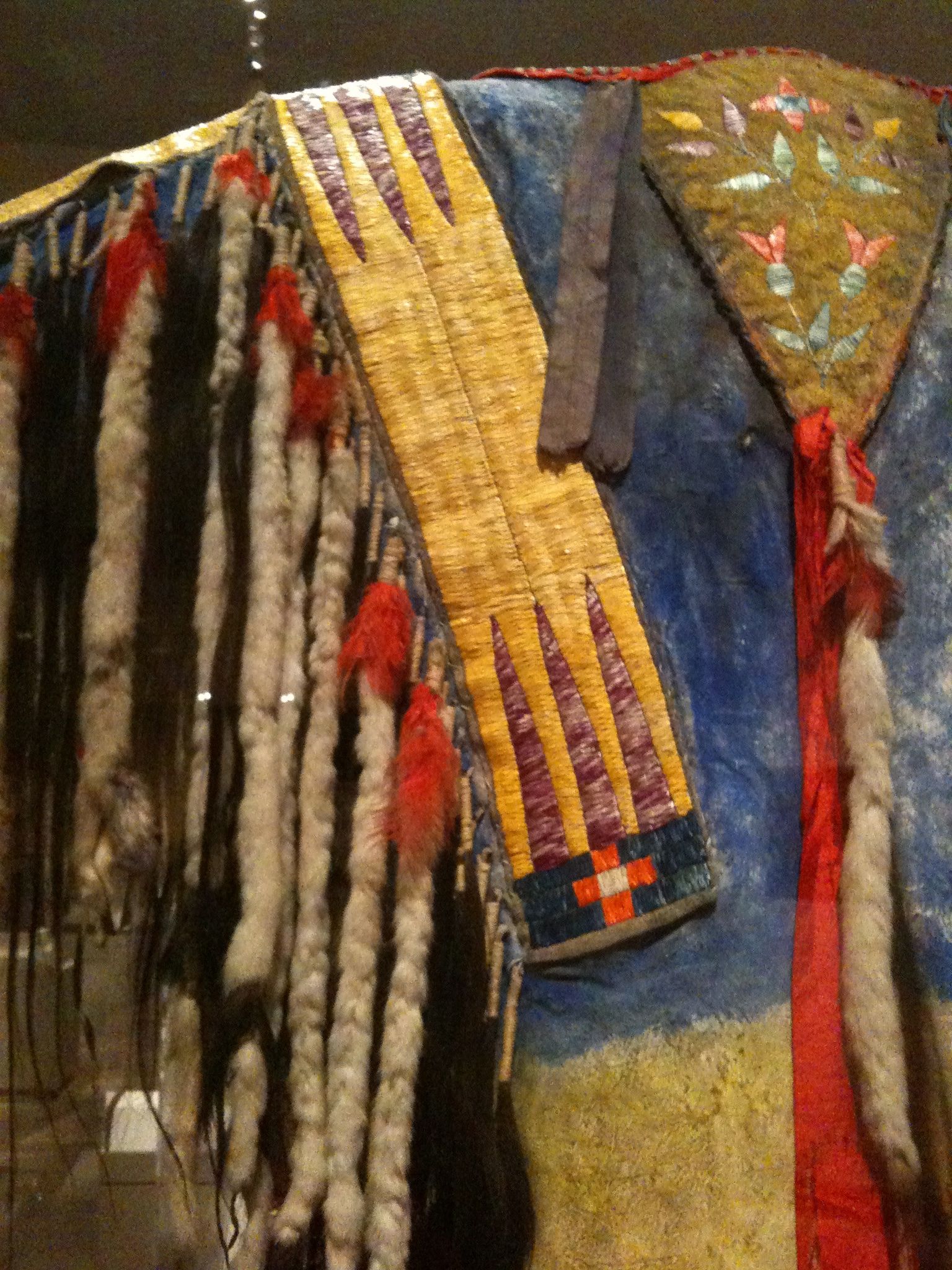
Detail of Arikara Leadership shirt (1860) from Coe collection at The Met

The show isn’t all about wearable art, but we decided to focus on a few details that you might find of interest. We’ve organized the Flickr feed to document some of the oldest to the newest creations on display, ranging from mid-Mississippian carved stone tools from 4,000 B.C. to the cheeky dough bowl (1994) made by Chochiti potter Diego Ramirez.

In between, you’ll see an array of sophisticated and rough creations made by artists from the 1700s to early 1900s for Native American leaders, nomads, and tourists – all designed, embellished, and crafted in a variety of materials. Who knew that nuns taught Canadian tribal artists to embroider with moose hair? Enjoy the details.

Ride the M-15 to the 19th Century

The SBS M-15 (First Avenue) bus drops you right at the door to the 19th century lifestyles and handiwork inside the South Street Seaport Museum’s Compass: Folk Art in Four Directions show, mounted by the American Folk Art Museum (which has just hired a new director and is now on better financial footing after selling its 53rd Street building to MoMA and decamping back to its space near Lincoln Center).

The Seaport (currently under the management of the Museum of the City of New York) invited the Folk Art folks to curate a show for four of its newly opened galleries, and it’s a joyful, informative stunner. Stacy Hollander, senior curator, selected art that reflects the spirit of the Seaport’s Schemerhorn Row, a series of six 1810 buildings that originally housed coffeehouses, hotels, and other small businesses serving the bustling sea trade.

Whale ivory and bone canes (1860); AFAM

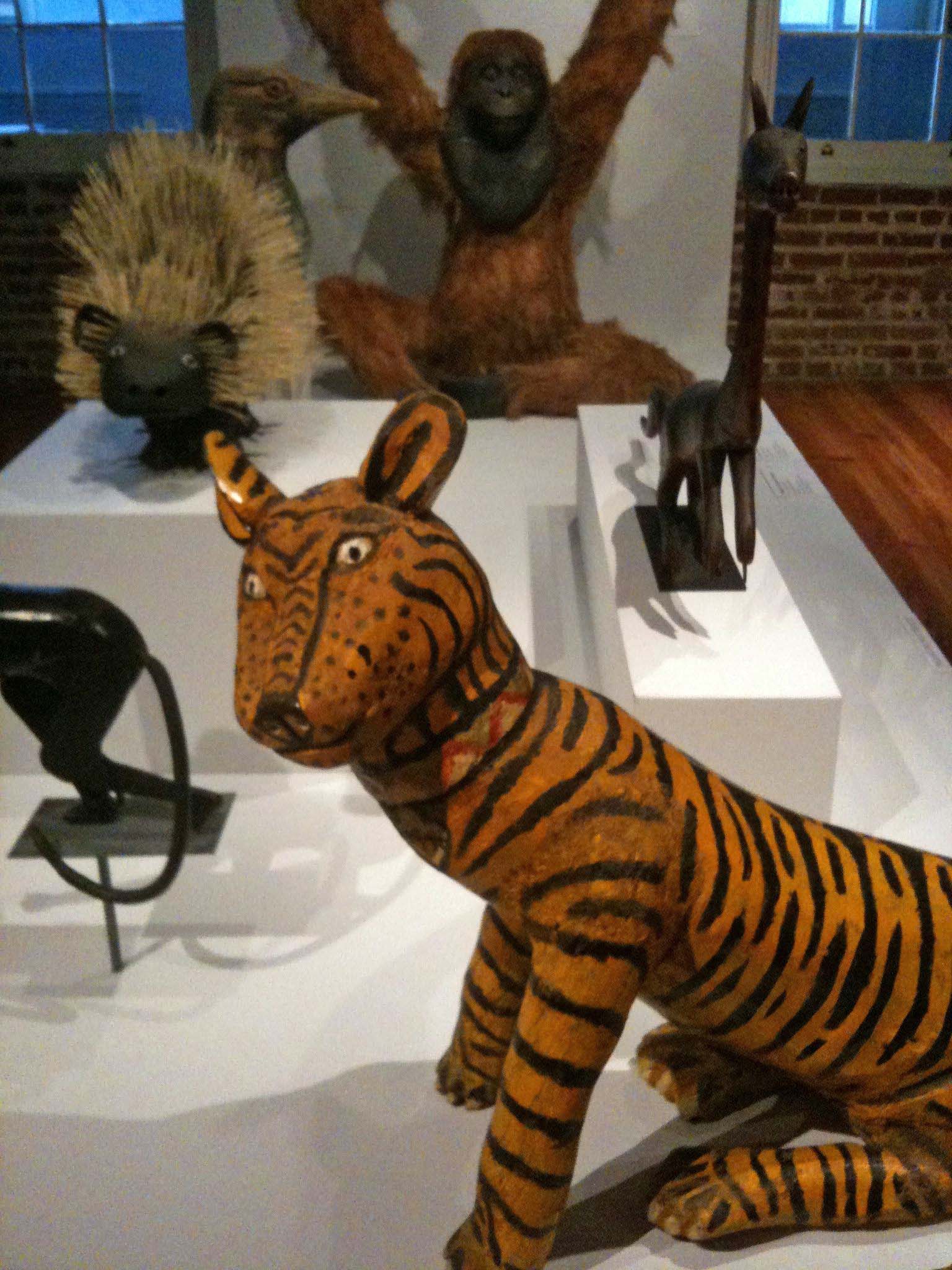
In the Exploration gallery, you’ll encounter a vibrant folk-art menagerie, evoking the exotic adventures awaiting seafarers, who would be gone for years at a time, carvings done during the voyages, whale-bone walking canes, and imports from China. In the “social networking” gallery, the Seaport has exposed an original wall, covered in 19th-century graffiti, from the coffee houses of old downtown, when Water Street was the actual East River waterfront.

Everyone should support both of these museums (and get free admission if you sign up for the Seaport’s mailing list). The Museum and the SBS M-15 are in operation seven days a week.

Historic Silver Hoard on 77th Street

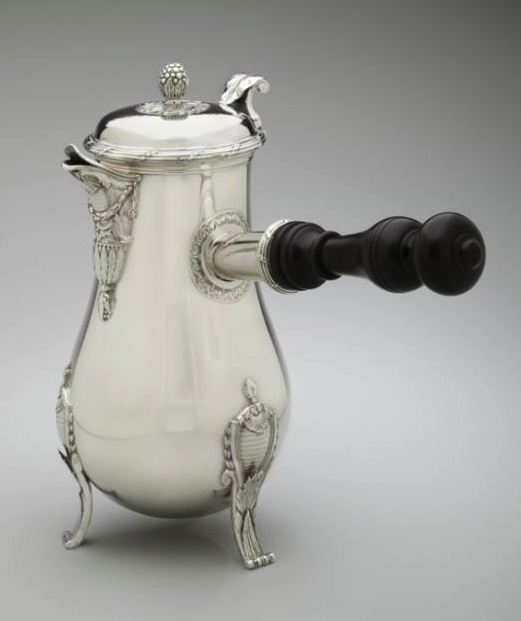
Silver coffeepot by Jacques-Nicolas Roettiers (1775-1776) sold by Gouvernor Morris to Robert R. Livingston, his successor as minister to France. NYHS, Gift of Mr. Goodhue Livingston

The New York Historical Society has done it again, hauling out all sorts of ornate, expensive, lovely silver items to tell the City’s history in the soon-closing exhibition Stories in Sterling: Four Centuries of Silver in New York.

Every time you peer into the reflections of dozens of silver pieces, the curators draw you into an historic event, person, or point in time in our collective urban history – silver brandywine bowls used by 1700s Dutch women to celebrate new babies, silver German medals modified into “passports” for travelers crossing Indian land in the 1750s, a silver coffeepot sold by Gouverneur Morris in 1801 to Robert Livingston after Thom J turned it down, and an elaborate 1863 Tiffany sugar bowl presented to the heroic engineer manning the guns on the Monitor in its showdown with the Merrimac the year before. Take a look at the on-line gallery.

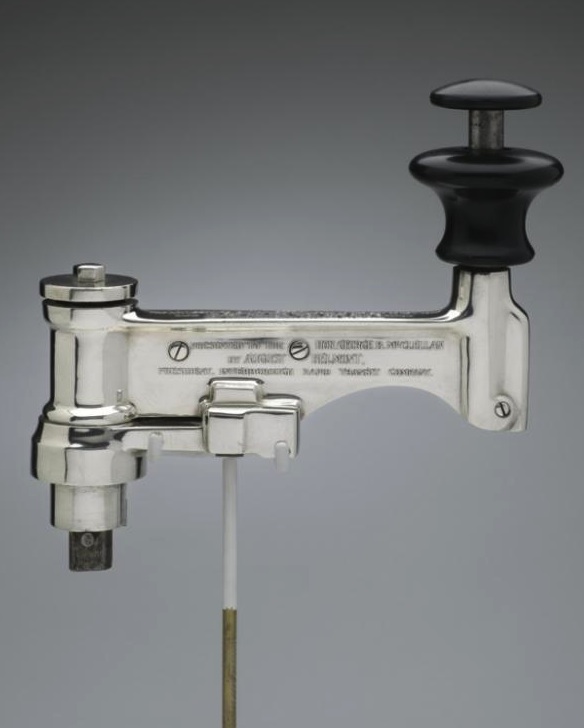
Silver subway controller handle (1904). NYHS, Gift of George B. McClellan, Jr.

Did you know that consumer culture of the 1880s required that up-to-date Victorian families have specialized serving implements and devices for every food imaginable? To prove this point, NYHS features just a smidgen of the 381 silver dinner service items presented to Commodore Perry in 1885 by the City’s Chamber of Commerce as thanks for his success in opening up trade with Japan — silver berry spoons, asparagus tongs, mustard spoons, nutpicks, bonbon dishes, and a zillion other things.

Most unexpected item: the Tiffany silver subway control handle that Mayor George B. McClellan Jr. used to drive our first subway train in 1904. He was supposed to take the IRT only as far as 42nd Street, but couldn’t let go of this slice of silver until he reached 103rd .

What Happens (to Dresses) after Fashion’s Night Out

Everyone enjoyed the party atmosphere last Thursday during Fashion’s Night Out, with beautiful people, clothes, and accessories on display and tributes to retail and design history. (Check out the Flickr feed of the action on Madison and down Fifth.)

But what happens when the party ends? That question is what inspired two curators from Saratoga Springs to create a micro-show from fashion museum cast-offs — Tattered and Torn (On the Road to Deaccession).

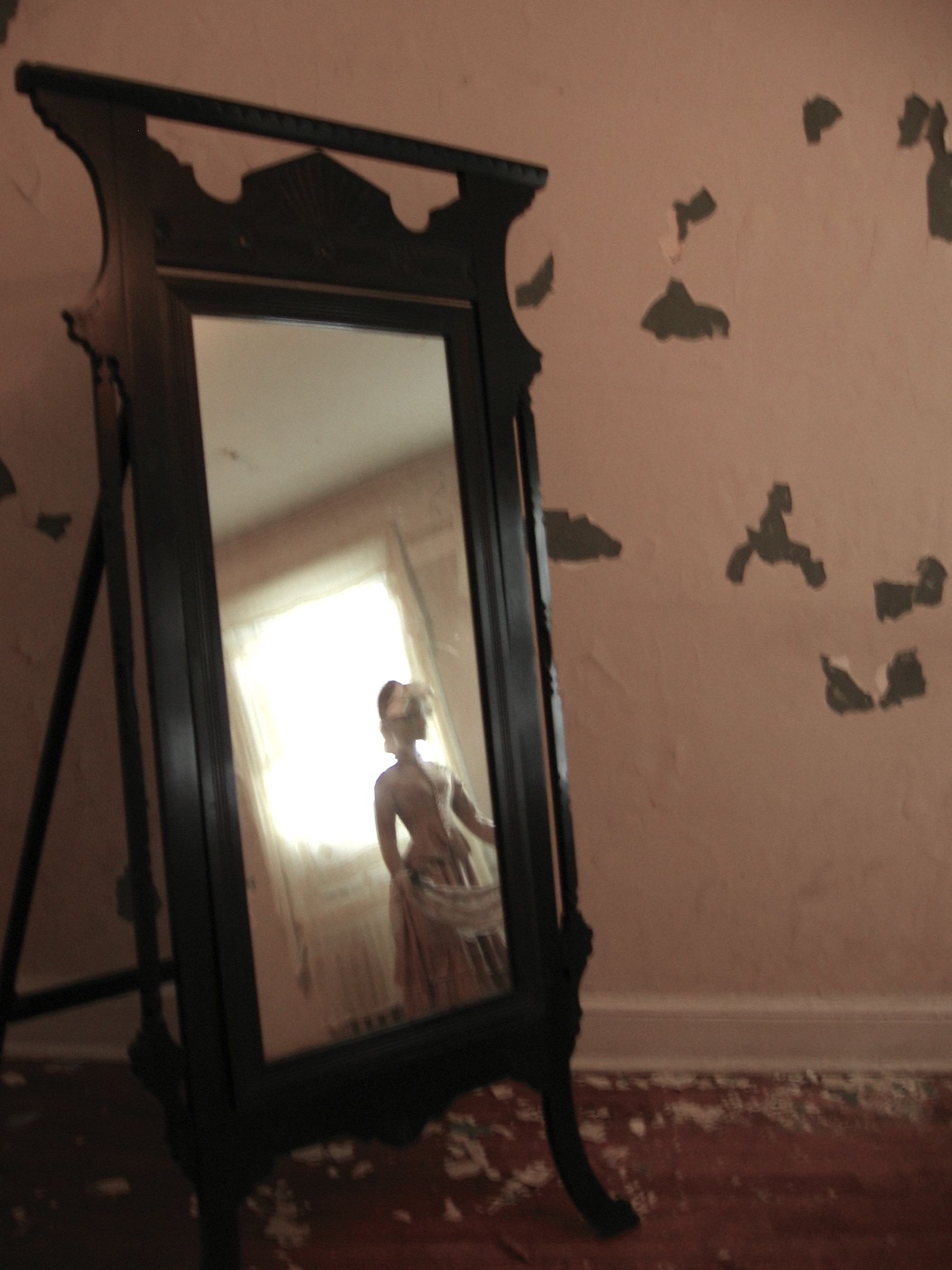
Empire Historic Arts Fund (founded by curators Rodney DeJong and Michael Levinson) gathered together less-than-perfect examples of 19th-century couture and used the abandoned rooms of the Governor’s Galleries on Governors Island to evoke the passage of time for fashion, finery, and fanfare. Rooms that once housed the U.S. Coast Guard as recently as the 1960s felt far older, perhaps due to the dreamlike state evoked by the presence of peeling paint, claustrophobic rooms, and props with which the curators surrounded their proud mannequins.

When you enter, the dresses look glamorous, but upon closer inspection, you can see that the silk has peeled away, seams have come apart, and the total elegance that must have accompanied these dresses’ debuts has passed into history. Take a look.

Considering the $250 budget for this installation, the curators have done a fine job of paying tribute to the history of fashion, creating a memorable experience on the Island, and letting us meditate on the still-beautiful details of fabric and design up close in a quiet place.

(The show is tucked away the far east side of the Island, beyond the Parade Ground, in Building 315 facing the Brooklyn waterfront. It’s the last building on your way toward Yankee Pier.)

Massachusetts Fishermen Outperform Houdini

Although we expect great things from Hugh Jackman in the upcoming Schwartz-Sorkin Broadway musical Houdini, Harry’s Vanishing Elephant trick won’t hold a candle to the feat of making Washington and the entire Continental Army disappear from the shores of Brooklyn exactly 236 years ago.

Reenactors assembled this weekend at the pebble beach in Brooklyn Bridge Park to explain exactly how some fishermen from Marblehead, Massachusetts, under the command of General John Glover, accomplished the disappearing act for General Washington, so soon after the Continental Army suffered its first round of defeats from the British. Check out the Flickr feed.

The Marblehead Regiment fire muskets, noise that wasn’t permitted during the August 29, 1776 nighttime evacuation

The backstory: The Continental Army was surrounded on three sides and pinned against the East River. While the British Army was recovering from pretty intense of hand-to-hand fighting, it began to rain. Then a thick fog rolled in. Glover and his Massachusetts seamen, undaunted by the weather, had no problem ferrying ammo, muffled equipment, and people all night on August 29, with Washington finally crossing at daybreak. In total, they made 9,000 troops disappear without a sound, all before the British woke up and discovered the escape.

The reenactors who paid us a visit are the same Pennsylvania crew that recreate Washington’s Delaware River crossing each Christmas, and for many it was their first trip to New York. They promise to try to get the “big boats” for next year’s appearance.

Battle Week bonus: Take a peek at Paul Benney’s “Battle of Bergen” performance last night, courtesy of Proteus Gowanus, which had Redcoats and Americans spilling all over the intersection of Smith and Bergen.

Pub Finale to NY Beer History Walk

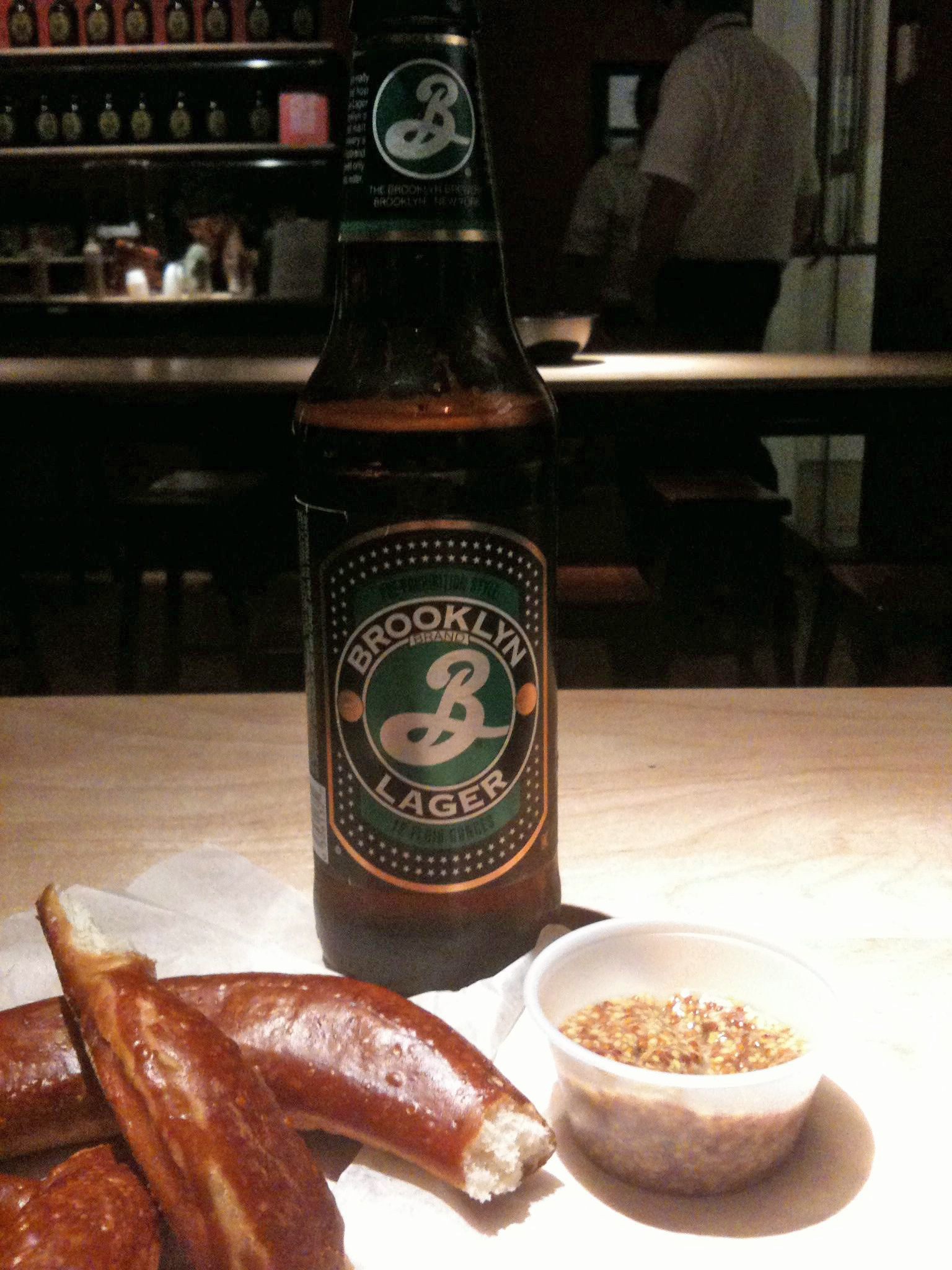
Although we missed Brooklyn Brewery’s ’05 Black Chocolate Stout yesterday, there was plenty of beer and ambiance to welcome weary time-travelers relaxing in the beer hall at the finale of New-York Historical Society’s exhibition Beer Here: Brewing New York’s Historya friendly (and informative) barkeep, giant pretzels, and Brooklyn’s finest.

It’s a walk through time, starting with the American Revolution era, where taverns could be found everywhere in lower Manhattan with their own unique recipes for spruce beer and table ale.

Because we take water for granted today, the show emphasizes how important it was for breweries in the City to have access to a steady supply of fresh water and features a collection of 1804 wooden water pipes installed by the Manhattan Water Company in 1799. (Spoiler alert: Aaron Burr was an investor.)

Section of Manhattan Water Company wooden water pipe, ca. 1804. Source: NYHS

Hops growing became a key crop around 1808, but it wasn’t until the Croton Aqueduct was built in 1825 at Fifth and 42nd (yes, where NYPL is today) that brewing could really take off in quantity. Wagons loaded with ice rolled in from Rockland Lane (north of Nyack).

Of course, German immigration in 1835 really blew the lid off, and by the 1890s, the City was chock-a-block (literally) with beer halls, gardens, breweries, and bottlers. And who knew that our ubiquitous beer bottle cap was born with the 1892 advent of the “crown” cap?

1950s ad shows Rheingold beer representative at work. Source: NYHS

You’ll enjoy lots of historic bottles and experimental beer containers, Miss Rheingold of 1956’s gold gown, and plenty of other colorful memorabilia to whet your thirst for real thing from Brooklyn, the Bronx, and upstate New York (in the beer hall).

Join the Revolution This Week in Brooklyn

Did you know that the British landing of 22,000 troops in Brooklyn in August 1776 was the largest sea invasion until D-Day? Or that the face-off along Flatbush was the largest and most fateful battle of the Revolution?

The site of the Continental Army’s line of defense at Battle Pass along the Flatbush Road during the Battle of Brooklyn on August 27, 1776 (Prospect Park)

It will be easy to get up to speed on this historic turning point this week by joining any of the activities happening in and around the key sites (Prospect Park, The Old Stone House, Green-Wood Cemetery, Fulton Ferry, and The Brooklyn Navy Yard) as Brooklyn hosts Battle Week 2012.

Yesterday was the vigorous, cross-country hike up to Battle Pass in Prospect Park to learn about the brave defense, and on to the grand finale at The Old Stone House to relive the historic battle with expert William Parry.  The good news is that Parry will be doing it all again on Tuesday, August 21. Don’t miss this or the rest of the schedule posted on the Stone House’s Battle Week calendar. Highlights:

August 22: You’ll have to decide between a canoe tour with the Gowanus Dredgers or a history lecture on our waterfront’s role in the battle at Pier 1 at Brooklyn Bridge Park.

August 23: The spectacular pub at the top of BLDG 92 at the Navy Yard hosts Battle of Brooklyn-inspired team trivia.

August 25: Witness a reenactment of how Glover’s Marblehead Regiment facilitated Washington’s undercover escape with our Army at Brooklyn Bridge Park’s pebble beach.

August 26:  Have a full day at the big battle site, Green-Wood Cemetery, with tours, parades, the Continental Army, horses, cannons, muskets, Hessians, Redcoats, and George Washington. (We’ve also heard that Ben Franklin could make an appearance, but shouldn’t he be concentrating on the U.S. Postal Service?)

The Old Stone House, where 400 brave Marylanders fought against 2,000 British, Hessians, and Cornwallis to delay their assault on the Continental Army, which escaped

August 27: The Battle on Bergen art performance by Proteus Gowanus at Smith & Bergen at their Liberty Pole.

August 29: A follow-up talk about Washington’s Retreat at Pier 1 of Brooklyn Bridge Park.

If you want to prepare, watch the video tour recorded by John Turturro, and check out the interactive map on the Old Stone House website.