Meet The Building You Didn’t Know at NYHS

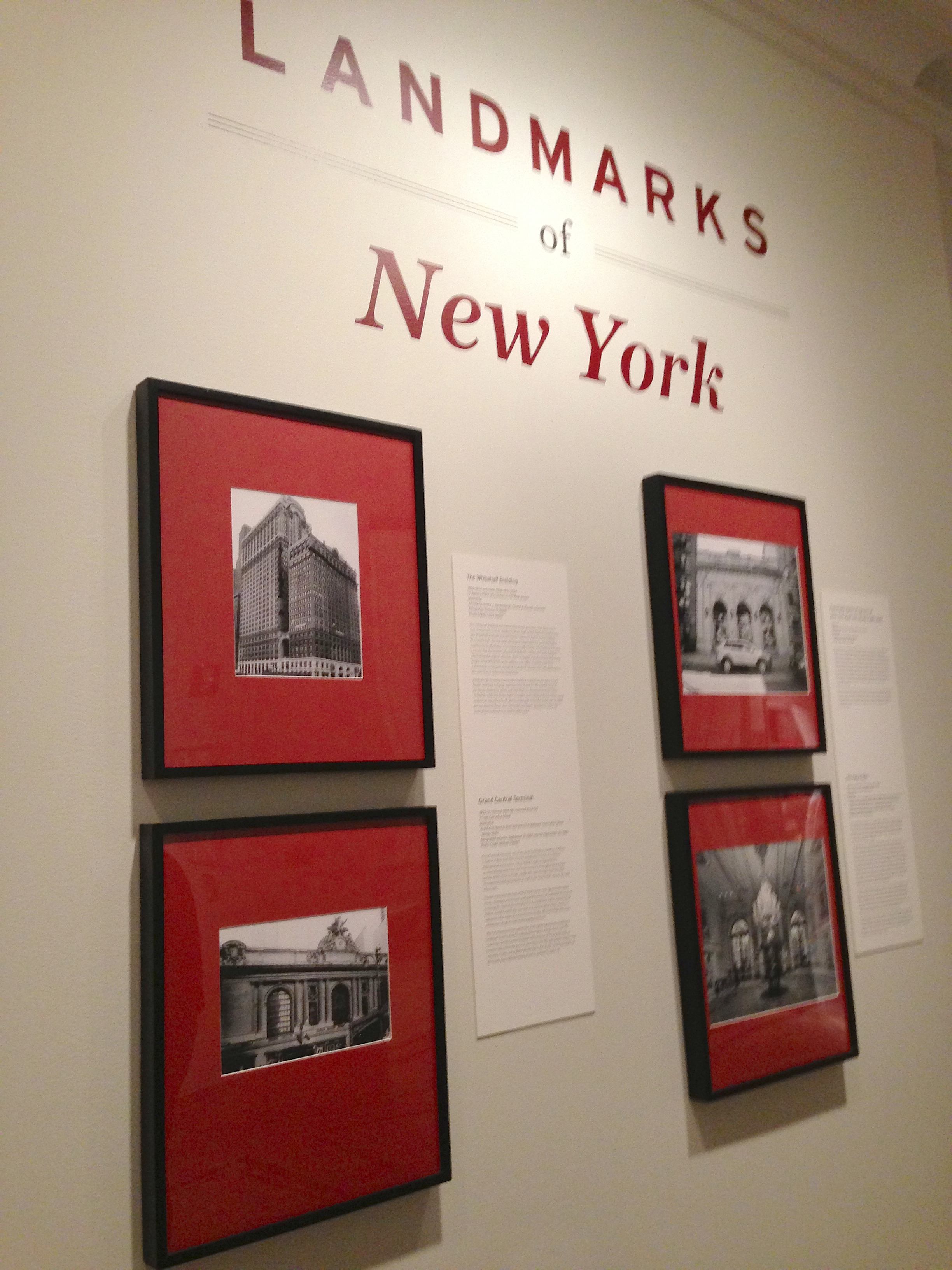
Installation view featuring photos of the Whitehall Building (17 Battery Place), Grand Central Terminal, the Free Public Baths (538 East 11th), and the interior of the Plaza Hotel

Installation view featuring photos of the Whitehall Building (17 Battery Place), Grand Central Terminal, the Free Public Baths (538 East 11th), and the interior of the Plaza Hotel

In one of the most deceptively simple installations at the New-York Historical Society, visitors can’t stop looking, reading, absorbing, talking, and pointing.  The Landmarks of New York show was humming all last weekend, with exhibition goers moving up and down the staid second-floor hallway, quietly moving from photo to photo learning stuff about buildings they’ve seen a million times.

Did you ever think the entire history of New York could be told in 90 identically framed photographs? Take a look at a few of the 1,287 landmarked buildings in NYC. Since the NYHS web site does not contain any of these buildings’ compelling stories, run up to their second floor before the show closes.

The show pays tribute the 1965 Landmarks Law and resulting Landmarks Commission, established in the wake of the greatest architectural disaster in the history of the modern City – the 1963 destruction of the historic Penn Station.  Today, 30,000 structures are protected, and the photos show you some of the exteriors, interiors, and scenic landmarks of our five boroughs.

Installation view of John Bowne House (1661) photo by Jeanne Hamilton

Installation view of John Bowne House (1661) photo by Jeanne Hamilton

Which are the oldest? The Wyckoff House, built sometime before 1641, at 5816 Clarendon Road, Brooklyn, and the oldest surviving home in Queens, the 1661 John Bowne House. The label copy says that Bowne had a huge flare-up with Peter Stuyvesant over his ban on the Quaker religion (actually, he was arrested), which led Bowne to lend his sliver of Flushing to regular meetings of the Quaker community.

Nothing in Manhattan even come close, although 1764 St. Paul’s Chapel is the oldest surviving church. Did you know it was modeled upon St. Martin-in-the-Fields on London’s Trafalgar Square?

This exhibit is packed with story after story of places you pass all the time. Charlie Parker’s Residence at 151 Avenue B is a landmark, partly because Charlie lived there between 1950-1954, but also because Franz Kline did, too.

Lucky for us, that the City has posted all of the Historic District Maps for each borough. Or go to the interactive city map and click on “Landmarks” to see what’s in your neighborhood. Who knew Greenpoint has the Eberhard Faber Pencil Company Historic District? Adventures await. Get to know a building.
1890s Pleasure Island (Staten) Honored at MCNY

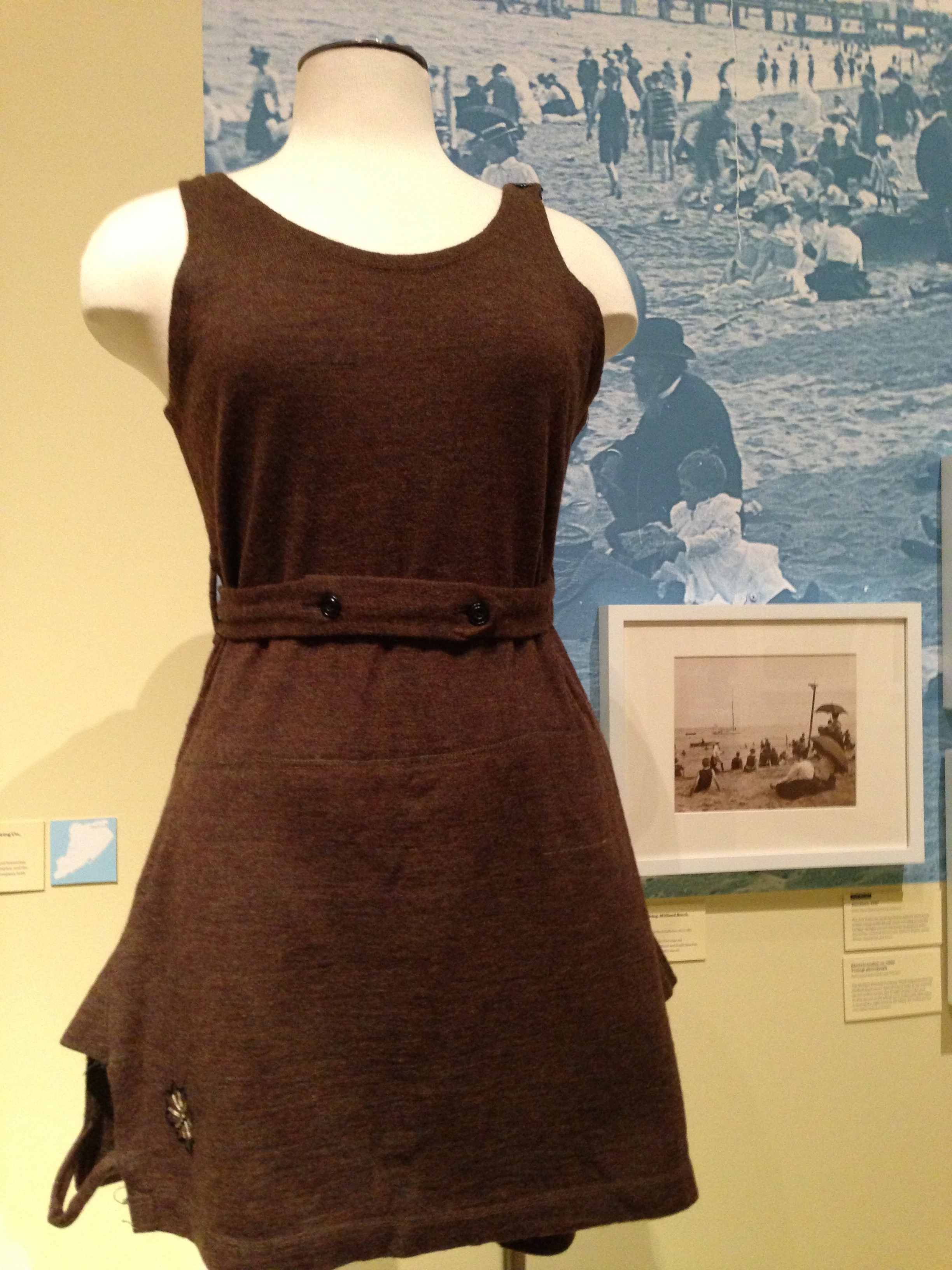
Installation view of woolen bathing suit (1905) and images of the 1890s Staten Island shore

Installation view of woolen bathing suit (1905) and images of the 1890s Staten Island shore

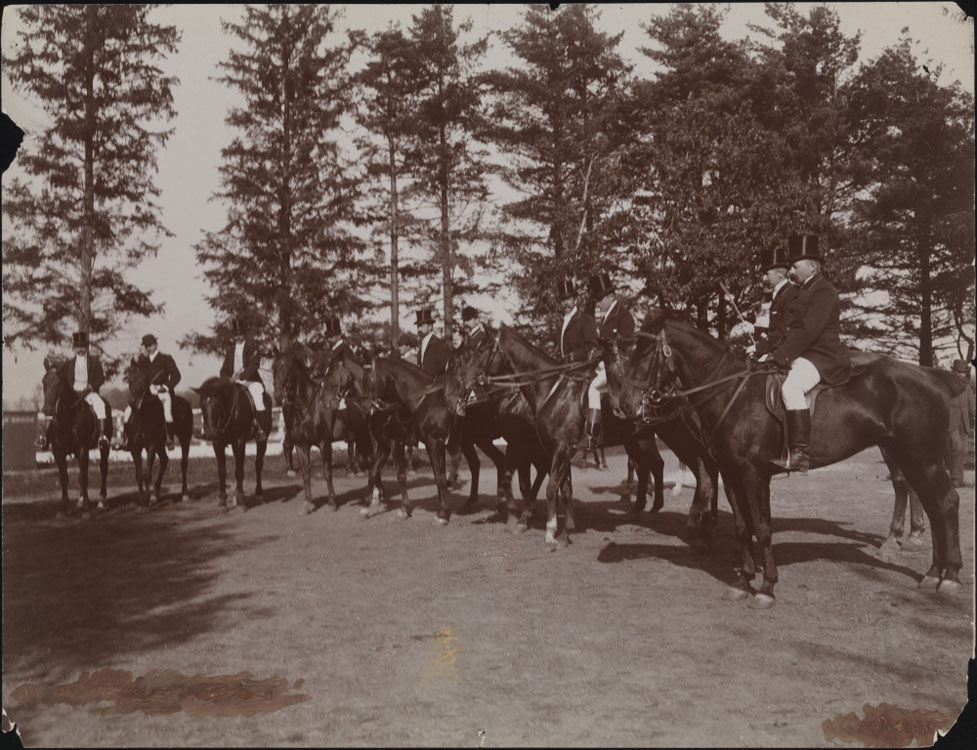
Over 100 years ago, the 59-mile square island rising up over New York harbor was the epitome of chic, cool sport – fantastic beaches, sunny farmland through which the well-heeled could enjoy an energetic fox hunt, and where one could witness the latest in tennis and cricket gear, to say nothing of the first tennis tournament in the United States.

It was all happening on Staten Island, playground to the upper, upper middle class, as chronicled in the Museum of the City of New York’s show, From Farm to City: Staten Island, 1661-2012. The shows covers the recent history of bridge-building and suburban development, but among the most fascinating parts of the show are those chronicling how our sometimes-forgotten borough gave the birth to modern sporting culture.

The Dutch bought it all from the Lenape in 1657, and SI thrived for centuries as the food supplier to Manhattan and the home of the overland stage service, operating between Philadelphia and Manhattan.

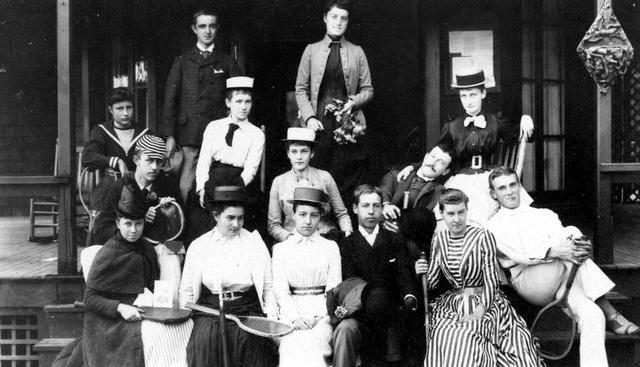
Alice Austen's photo of Tennis Clothing (1893). Source: Alice Austen House

Alice Austen’s photo of Tennis Clothing (1893). Source: Alice Austen House

But in the late 1870s, the Staten Island Cricket and Baseball Club became the epicenter of the lawn tennis craze (imported from England via Bermuda), and by the 1890s, the edge of the island had boardwalks and amusements to rival Coney Island.

Victorian sporting culture was well documented by Staten Island photography pioneer Alice Austen, whose photos have been enlarged to wall murals by the curators to convey the sense of fun, sun, and cachet in the exhibition. The historic home where she grew up has recently posted her work online, an incomparable look at everyday life here in the 1890s.

Richmond County Hunt Club in 1895. Source: MCNY

Richmond County Hunt Club in 1895. Source: MCNY

If you want to compare the past with today on Staten Island, MNCY has done a spectacular job of taking its historic maps and putting them into digital overlay of today’s world. Check out this great online resource to view the view in 1750 or 1829 compares to today. Click on the blue dots to see images of what used to be.

Extreme Renaissance Sportswear Back at The Met

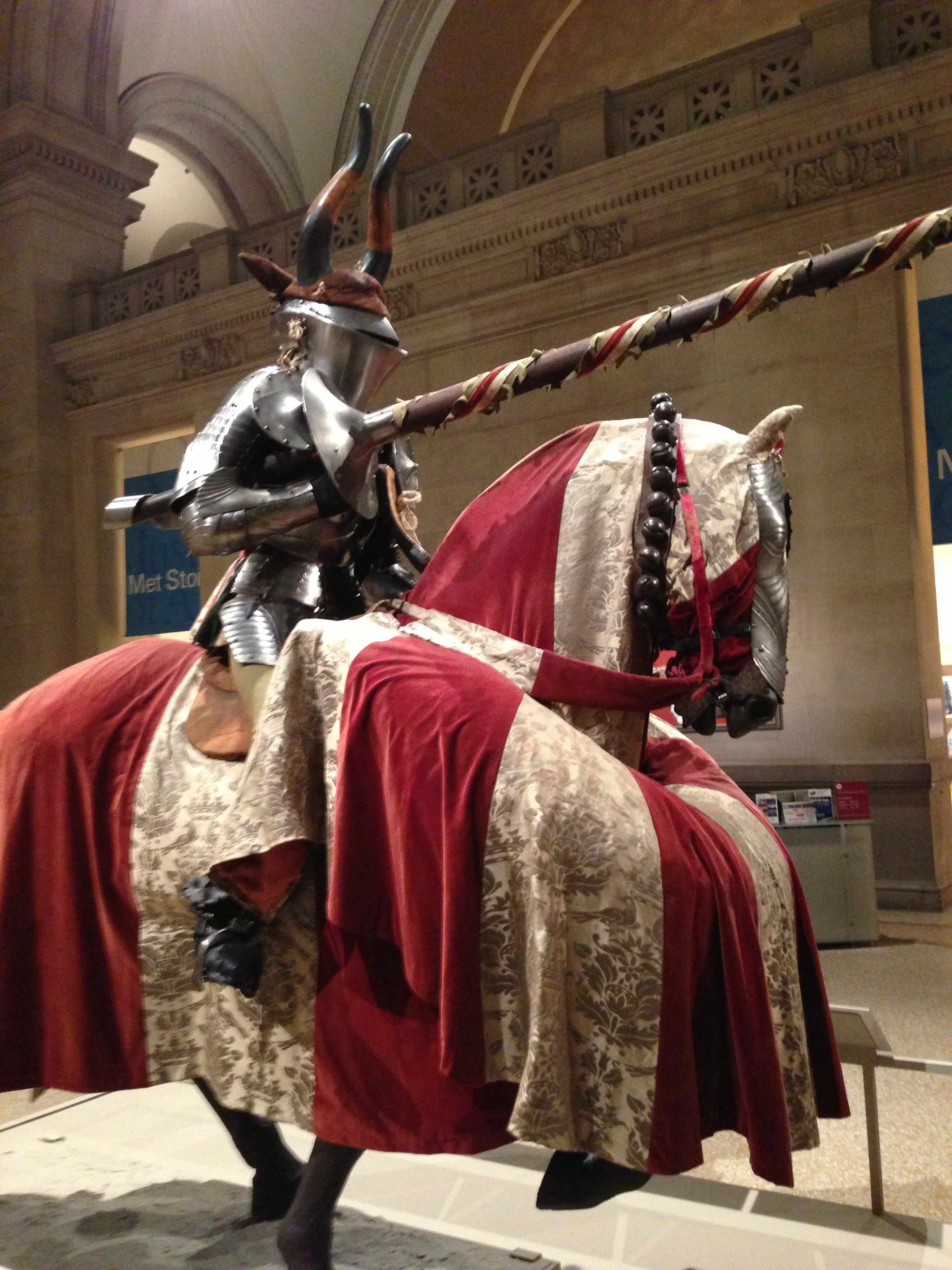
JoustAfter a brief Yuletide absence, the spectacular Armor for the Joust of Peace has been returned to the Great Hall of the Metropolitan Museum of Art, just inside the main entrance, to honor 100 years of the Arms and Armor Department.

Not seen in all its splendor since the 1980s, you’re looking at what extreme sports dressing looked like back in 1500. It all took place as the Renaissance was dawning across Europe, so this outfit was designed for safety and sport – not combat. The objective: unseat your opponent during a horseback charge across an open field with a blunt lance.

Jousts happened on open fields without barricades to separate the horses, so the horse’s head armor completely covered its eyes (yes, galloping blind). A straw-filled bumper hung around his chest for protection. This jouster’s wear was super-heavy (over 80 pounds for the body and 21 for the helmet), with the padded helmet physically bolted to the body armor to protect against whiplash when the inevitable impact occurred.

Solid covering over the horse's eye

Solid covering over the horse’s eye

The Met’s first curator of arms, Bashford Dean, found this German ensemble (even though some pieces were missing) and purchased it in 1904, setting the stage for many, many subsequent acquisitions (oh, about 14,000 more).  It lacked an original helmet, but when Dean saw the one on display (an 1891 recreation made by Parisian armorer superstar Daniel Tacheaux), Dean not only snapped it up, but hired Tacheaux to be the Met’s first armor conservator.

The shield and upper-thigh protectors are also restorations, and so is the horse’s brocade and velvet. But standing so close to this magnificent mount below the arches of the Great Hall, it’s easy to imagine you’re hearing the hoofbeats and roar of the sports crowd, and know that it’s not coming from the gift shop.Detail

Party Like It’s 1913 at Grand Central

Just after the clock strikes midnight on GCT's 100th birthday

After the clock struck midnight on GCT’s 100th birthday

At midnight tonight, the crews, security, police, and station manager were on hand to see the famous clock above the information desk signal the beginning of Grand Central Terminal’s 100th birthday. Just like a film set, everyone was concentrating on pulling magic out of a hat for the public birthday celebration that begins today.

If you’re within commuting distance, get over to Grand Central today to rub shoulders with celebrities, artists, and officials commemorating 100 years of our beautiful terminal.   At 10am, see Cynthia Nixon, our poet laureate Billy Collins, Keith Hernandez, Caroline Kennedy, Melissa Manchester, and (yes) the Vanderbilt family pay tribute in a rededication birthday celebration.

Check the web site for the afternoon schedule of honors, music, giveaways, and  1913 prices (one day only!)  for shoe shines (10¢), fries (10¢), loaves of rye bread (6¢), pasta (5¢), and cocktails at Michael Jordan’s (75¢).

IMG_1706Also, be sure you seek out the replica of the Terminal made out of Lego bricks in the Station Master’s Office. Then, dance the afternoon and night away (until 9:30) with Grammy Award-winning big band Vince Giordano and the Nighthawks. The celebration continues all year, but more on that later.

If you can’t get there, enjoy the new history timeline from your desktop (especially the part in 1976 with Jackie).

Or watch the Metro-North guys polishing up the chandeliers in Patrick Cashin’s photos on the MTA Flickr feed.

Revolutionary Counterculture Gives Birth to Soho

George Maciunas, Self-Portrait, 1961/2012. Installation view. Source: Jonas Mekas Visual Arts Center.

George Maciunas, Self-Portrait, 1961/2012. Installation view. Source: Jonas Mekas Visual Arts Center.

A revolutionary Lithuanian studies at Cooper Union, decides to thumb his nose at elitist art, leads a group genre-busting artists, asks why not use vacant industrial space in a down-and-out part of the city, petitions the City to create artist cooperative-lofts, and…voilà, Soho is born.

Remarkably enough, it’s a story that’s never been told, so kudos to Cooper Union School of Art for the collaboration with Lithuania’s Jonas Mekas Visual Arts Center to mount the exhibition at 41 Cooper Square, Anything Can Substitute Art: Maciunas in Soho. Who better to make the connection between art history, the avant-garde, and real estate?

Yoko Ono Mask (1970) by George Maciunas. Source: Jonas Mekas Visual Arts Center

Yoko Ono Mask (1970) by George Maciunas. Source: Jonas Mekas Visual Arts Center

The show documents the early work of George Maciunas, who emigrated from Lithuania in 1948, studied at Cooper Union in the 1950s, became fascinated with the history of migrations and revolutions in the then-Soviet Union, wrote the famous Fluxus manifesto calling for a revolution against “elitist” art in New York, and gathered a group of downtown provocateurs around him.  He drew a map of the most influential art events of 1965-1967. The roster reads like a who’s who today, but at the time, they were newbies living on the edge — Kaprow, Schneeman, Moorman, Paik, Satie, Rauchenberg, Trish Brown, Gordon and Setterfield, and Yoko.

Thinking about Russian revolutions since the 1230s encouraged Maciunas to ask why a revolution couldn’t be mounted against the art “establishment” by declaring that “anything can be art”. He and his friends produced an avalanche of work that kept things simple and cheap, playing with the concepts of ephemeral events, experiences, packaging, context, and games. You know them today as happenings, performance art, conceptual art, multiples, boxed sets, word art, multimedia, and (possibly) Occupy Wall Street.

Installation view of Ay-O’s Tactile Box (No. 25) (1964). You put your hand into the hole to feel what’s inside. Source: Jonas Mekas Visual Arts Center.

Installation view of Ay-O’s Tactile Box (No. 25) (1964). You put your hand into the hole to feel what’s inside. Source: Jonas Mekas Visual Arts Center.

Mekas, another Lithuanian immigrant and founder of Anthology Film Archives, kept a lot of his friends’ early work, so the gallery is filled with never-before-seen Fluxus art, posters, letters, and maps that normally reside in Vilnius.

Maciunus thought Fluxus principles could also be applied to urban living, business, and real estate, so the show includes correspondence with government officials about permission to establish cooperative artist spaces. A highlight is a hand-drawn map showing where Fluxhouse co-ops would transform abandoned industrial lofts in the 25-square blocks of Soho. His first transformation was 80 Wooster, which gave Fluxus artists a chance to live and work together, unencumbered by walls and tradition — a socially conscious, revolutionary move that eventually influenced the course of art, lifestyles, and real estate here and around the world.

Design Driven by Necessity at MoMA

The latest design show at MoMA features something that we can’t live without.

Installation view of @ (1971), ITC American typewriter medium, at MoMA

Installation view of @ (1971), ITC American typewriter medium, at MoMA

You’d never think that @ was a design invention, but it was created in 1971 by Ray Tomlinson, the inventor of the first email system in the United States. The @ made it into MoMA’s design collection and stars there in the show, Born Out of Necessity.

Tomlinson developed it for ARPAnet, because he thought it would be more efficient than using arcane programming language to tell data messages where to go. MoMA says that there’s not a lot agreement as @’s genesis – some say it goes back to the 6th century (from Latin scribes). Others say it’s from the 16th century (Venetian abbreviation for the “amphora” measurement unit), or Norman French  (for “each at” a particular price). Whatever.

The little symbol began appearing on typewriter keyboards in the 19th century, so it eventually migrated to our computer and iPad keyboards, and that’s where Tomlinson got ahold of it. History was made.

Another design star in the show came from the military budget, too — a Utility ¼-Ton 4 X 4 Jeep. Jeep

You may be surprised to know that Jeeps and MoMA go way back to 1951, when they included one in a design exhibit. Quick assembly, fast part-swapping, and portability (when disassembled) for transport made it a design winner. Although this Jeep is from 1952 (just light modifications over the previous model), MoMA says it’s the best military Jeep ever built anywhere.

The show includes an array of other interesting design innovations triggered by need – like Oxo’s Good Grip handles on kitchen items, new-fangled inflatable life rafts that don’t tip in high waves, collapsible wheelchairs, and hand-cranked radios (originally designed for the Third World, but just as useful here during blackouts and hurricanes).

The show closes today, but the @ and the other stuff will be with us for a long, long time.

Never Too Late to Fake it at The Met

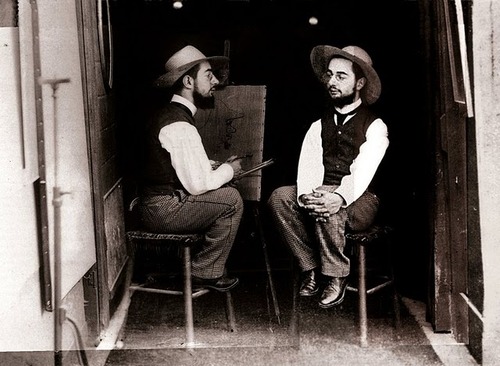
Maurice Guibert’s Henri de Toulouse-Lautrec as Artist and Model (ca. 1890). Gelatin silver print. Source: Philadelphia Museum of Art: Gift of Henry P. Mcllhenny.

Maurice Guibert’s Henri de Toulouse-Lautrec as Artist and Model (ca. 1890). Gelatin silver print. Source: Philadelphia Museum of Art: Gift of Henry P. Mcllhenny.

Even though it’s the last day, the Metropolitan Museum of Art has you covered: they’ve put the entire show, Faking It: Manipulated Photography Before Photoshop on the web and into a free iPad app.

So whether you’re living in New York or not, you can enjoy the wonderful history of how photos have been manipulated since the birth of photography (around the 1840s) until the birth of Photoshop (around the early 1990s). As if you couldn’t guess, this provocative show is sponsored by Adobe.

Who doesn’t get a kick out of double exposures, double portraits, and fake stuff inside the photo? Certainly Montmartre pals Maurice Guibert and Toulouse-Lautrec did. Even the great Steichen used some photo-manipulation to create his iconic portrait of Rodin with The Thinker.

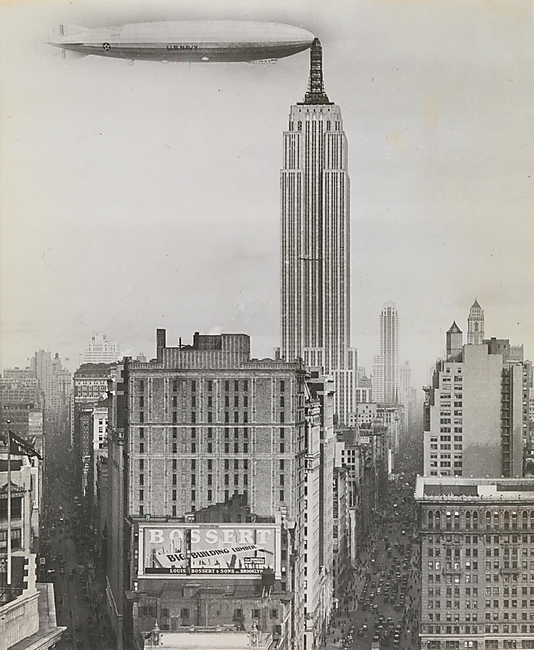
Dirigible Docked on Empire State Building, New York, 1930. This never happened. Source: The Metropolitan Museum of Art, Twentieth-Century Photography Fund Fund

Dirigible Docked on Empire State Building, New York, 1930. This never happened. Source: The Metropolitan Museum of Art, Twentieth-Century Photography Fund Fund

In a nutshell, professionals and amateurs have been fiddling with negatives, creating photomontages, rephotographing images, and retouching since the beginning. So, really, there’s nothing new about all the creativity that goes into today’s digital imagery, except that it’s easier to do on a computer.

One of the first innovations was faking color to make the black-and-white photos in the late 1800s more “real.” The V&A Museum even hired expert photographer-lithographer J.I. Williamson to hand-color the pictures he took of their decorative arts collection.

Another early innovation was taking two (or more) exposures for land and sky, masking out parts of the negative (just like in Photoshop), and printing it all on a single sheet of paper.

And what about the masters of the wacky postcards of the early 1900 Americana that predate the Jackalope?

The Met has posted a brief guide to the themes in the show as well as the full, rich archive of 202 photos that hung on the walls until today. Really a fun treasure trove to explore.

Theatrical Staging Suits Dickens Characters at NYPL

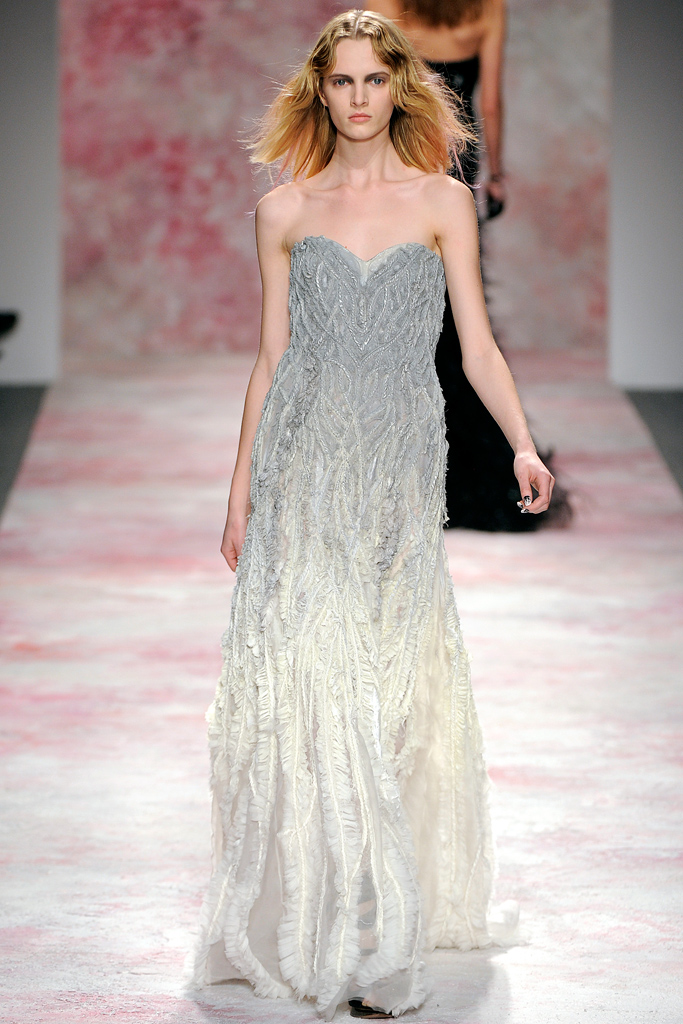
Daria Strokous walks the Fall 2011 runway in Prabal Gurung’s gown, part of a collection inspired by Miss Havisham. Photo: Caroloa Gualnari/GoRunway.com

Daria Strokous walks the Fall 2011 runway in Prabal Gurung’s gown, part of a collection inspired by Miss Havisham. Photo: Caroloa Gualnari/GoRunway.com

This runway model is surely not from a Dickens novel, but her dress was inspired by one of his characters. NYC designer Prabal Gurung, who first read Dickens in his native Nepal, used Great Expectation’s Miss Havisham as his inspiration for his Fall 2011 collection.

Lucky for us, the New York Public Library curators selected this evocative gown for inclusion in their 200th birthday tribute to the beloved author – NYPL’s exhibit Charles Dickens: The Key to Character.

Entering through the dramatic red-swagged doorway, you step back in time to a drawing room loaded with cabinets of curiosities, a crackling fire, a hanging birdcage, books, seashell collections, taxidermy, a zootrope, tiny Doulton porcelains, and Dickens-related treasures from NYPL and other collections, including the infamous cat-paw letter opener.

These worlds within worlds are arranged to shine a light on the over 3,592 characters created by Dickens in his lifetime. Above the fireplace is a reproduction photograph of his little nephew who inspired the character of Tiny Tim. Other ephemera posted near the case with the wooden leg show Warren’s Blacking Warehouse, where Dickens toiled away as a child laborer himself, many years before creating the characters of the Artful Dodger, Fagin, and Oliver Twist. A revealing letter demonstrates why his own father inspired him to create Micawber in David Copperfield.

Miss Havisham illustration by Charles Green (c. 1877) and installation view of the NYPL show

Miss Havisham illustration by Charles Green (c. 1877) and installation view of the NYPL show

See this beautifully designed show, which also delves into the author’s passion for theater and his own performances of particularly dramatic scenes. The décor, the Gurung gown, the 1870 edition of The Mystery of Edwin Drood, the 1867 ticket stubs from the Dickens reading tour, early films of his novels that you watch through peepholes, and photos from recent Broadway productions will have you sliding seamlessly back and forth through the last 200 years to meet truly remarkable characters.

Is David Roentgen the 18th Century Steve Jobs?

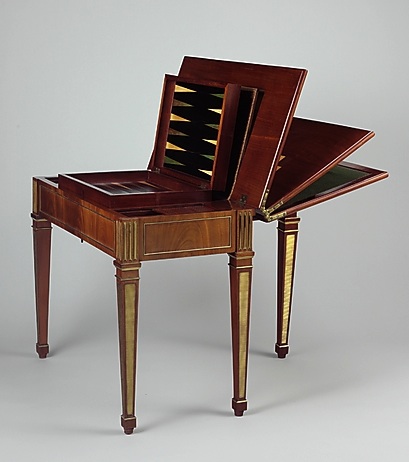
David Roentgen’s Game Table (ca. 1780–83). Oak, walnut, veneered with mahogany, maple, stained maple, holly, stained holly; felt; leather, partially tooled and gilded; iron and steel fittings; brass and gilt bronze mounts. Source: Metropolitan Museum, Pfeiffer Fund, 2007.

David Roentgen’s Game Table (ca. 1780–83). Oak, walnut, veneered with mahogany, maple, stained maple, holly, stained holly; felt; leather, partially tooled and gilded; iron and steel fittings; brass and gilt bronze mounts. Source: Metropolitan Museum, Pfeiffer Fund, 2007.

Even if David Roentgen didn’t produce for the mass-market, he certainly seemed to have written Steve’s playbook  — wow them with innovative design, refined surfaces, exacting craftsmanship, playful art, and sophisticated multimedia integration. Oh, and if that’s not enough, why not make it passkey protected and portable, too? Like Steve, David knew how to turn engineering into art and ka-ching.

Experience out-of-the-box design innovation in the closing week of the Metropolitan Museum’s unforgettable show, Extravagant Inventions, Princely Furniture of the Roentgens. The beauty of the marquetry and fittings on the displayed desks, sofas, clocks, commodes, and rolltop desks would be enough, even if they simply occupied a quiet corner of a drawing room or boudoir.

But if an 18th-century king, queen, or royal saw them in action – revealing hidden apps for writing, reading, drawing, music, games, curios, and hiding the desktop – there was no turning back. The mechanical furniture was so desirable that wealthy trend-setters just had to have it (like iPads).

What social-minded gamer could resist Roentgen’s 1780s Game Table if they saw David’s demo?

The desire to own and show off the most up-to-date artistic engineering marvel had royals running for their strongboxes to put down deposits on anything Roentgen could produce. In fact, the Met tells us that the Berlin Secretary Cabinet, the star of the show, is probably the most expensive piece of furniture ever produced. And we can’t even begin to discuss robot Marie Antoinette playing the dulcimer, or the clocks that turn into orchestras.

When the French Revolution put an end to sales at Versailles, Roentgen cut out the curliques, tailored the outer design to a sleeker look, and shifted his retail operations to Russia. Catherine and her court bought the newer stuff by the cartload.

The Met has an entire YouTube playlist devoted to these 18th century wonders, and you really should peruse them all. Get to the show in the final week and see what another style and multimedia-obsessed generation spent their money on.

And lest it slipped your mind, Steve and Woz’s first Apple 1 computer was assembled within a wooden case. Maybe it’s good that David and his engineering/sales team weren’t around to critique it.

Tinsel’s Not Just for Christmas

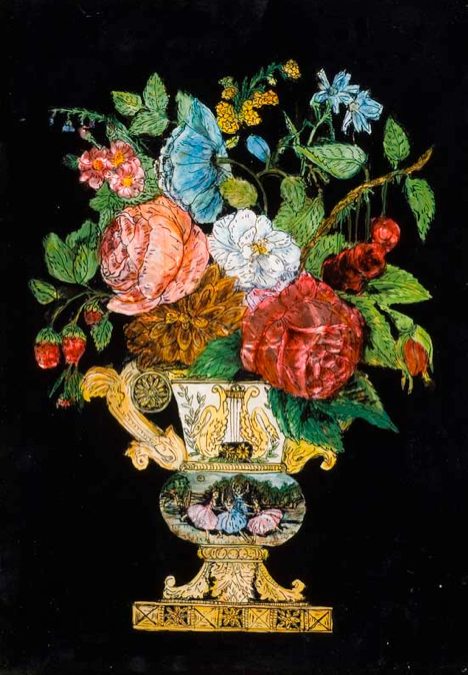
Alice Knight’s Urn of Flowers with Scene from Ballet Swan Lake. Reverse painting and foil on glass, c. 1940. Source: American Folk Art Museum, gift of Susan and Laurence Lerner.

Alice Knight’s Urn of Flowers with Scene from Ballet Swan Lake. Reverse painting and foil on glass, c. 1940. Source: AFAM, gift of Susan and Laurence Lerner.

Before the Internet, Etsy, TV, and mass media, creative women used foil as a flashy additive to reverse-glass paintings that decorated pre-electric homes. The American Folk Art Museum has seen fit to honor this delightful pastime in Foiled: Tinsel Painting in America.

There’s a prequel to the show focusing on reverse-glass painting to the left of the main gallery that’s chock full of examples of the glimmering media from dozens of anonymous women artists who decorated homes, shops, and gaming tables with the shimmery stuff.

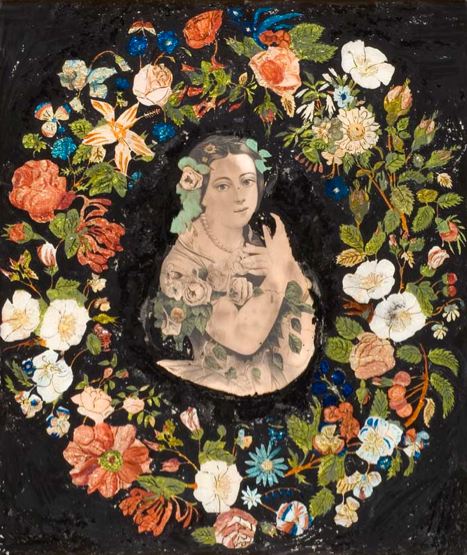
Tinsel painting isn’t seen much today, since it’s so fragile, but when Alice Knight (one of the few known tinsel artists) came of age in the 1880s, she would have seen creations like this tribute to Jenny Lind. In the 1920s, Abby Aldrich Rockefeller acquired some for her folk art collection now enshrined in Colonial Williamsburg.

Artist unknown. Wreath of Flowers with Lithograph of Jenny Lind. Reverse painting and foil on glass with lithograph, c. 1850. Source: American Folk Art Museum, gift of Susan and Laurence Lerner.

Artist unknown. Wreath of Flowers with Lithograph of Jenny Lind. Reverse painting and foil on glass with lithograph, c. 1850. Source: AFAM, gift of Susan and Laurence Lerner.

By 1930, tinsel painting (also known as oriental, crystal, or pearl painting) made its art-world debut in a show at the Newark Museum. Eventually, even New York souvenirs were sporting a little bit of the flash.

Today, the American Folk Art Museum has the largest collection of tinsel paintings in America. Take a look at the show in this short piece produced by WNET for NYC-Arts with the curator:

Alice, who lived past 100 and created works even then, would have loved Etsy.