Subversive Chinese Brush-Up at the Met

Yang Jiechang’s Crying Landscape (2003) shares the Gallery for Art of Ancient China with a sandstone stele from the Northern Wei dynasty (489-495) and the 1319 Buddha of Medicine.

Yang Jiechang’s Crying Landscape (2003) shares the Gallery for Art of Ancient China with a sandstone stele from the Northern Wei dynasty (489-495) and the 1319 Buddha of Medicine.

Normally, the galleries for Asian Art at the Metropolitan Museum of Art are pretty tranquil. But through April 6, you’ll find them buzzing with contemporary art lovers reveling in the hunt to find the most famous, subversive, subtle works by Chinese painters, sculptors, and digital artists residing amidst centuries-old treasures in the widely popular exhibition, Ink Art: Past as Present in Contemporary China.

The Met gave the Chinese art curators free reign to pluck sly works from the in-house contemporary collections created by Chinese artists over the last 20 years, grab monumental works from private collectors, and mount a tribute to how post-Cultural Revolution innovators parse the traditions associated with centuries-old art making in their ancestral country.

How do the hottest artists on the planet turn calligraphy and inked woodblocks into biting social commentary? Take a stroll through the second floor Asian art wing.

Inspired by Cultural Revolution posters, the letters in Wu Shanzhuan’s Character Image of Black Character Font (1989) have no meaning.

Inspired by Cultural Revolution posters, the letters in Wu Shanzhuan’s Character Image of Black Character Font (1989) have no meaning. Courtesy: Private collector, the artist.

Just past the balcony-bar area, the monumental 1319 Buddha of Medicine mural from Shanxi Province, China, casts a benign presence over the Gallery for Art of Ancient China. But just stage right, two larger-than-life works on paper preview how Chinese artists twist the “then” into the “now”.

Yang Jiechang’s Crying Landscape panels are painted in the beautiful, colorful “old school” flat Asian style but depict decidedly unbeautiful industrial and political subjects. Similarly, Qiu Zhirie’s Nanjing Yangzi River Bridge ink triptych features masterful, large-scale ink-brush technique but uses art-world icons to relay a disturbing story. It’s an installation triumph that will haunt you every time you pass through that room again.

Large-scale calligraphy by many of the artists makes ink-pot-and-brush tradition echo with gestures as large as Rothko’s. In the galleries with meticulously crafted “landscape” drawings and images, you’ll ask how this modern crew managed to produce scrolls with such heft and detail. Take a walk-through of the show through our Flickr site.

In 1995, Ai Weiwei corporatized a Han Dynasty (206 B.C. – 9 A.D.) earthenware jar.

In 1995, Ai Weiwei corporatized a Han Dynasty (206 B.C. – 9 A.D.) earthenware jar. Courtesy: M + Sigg, the artist

Along the way to back of the wing, the curators play hide-and-seek, putting Ai Weiwei’s “enhanced” Han Dynasty jar right in the aisle with the “unmodernized” earthenware vessels, and mounting Hong Hoo’s subtly colored, hilarious historical “atlas” silkscreens in a case that practically dares unfocused visitors to pass them by as they drift toward the Astor Court.

Hopefully by the time they get to the rock garden they will notice Zhang Jianjun’s crazy pink silicone rubber “scholar rock” right next to the real ones. Zhan Wang’s stainless steel scholar rock and Shou Fan’s side chairs are beautifully arranged in the Ming Dynasty room just off the Court, along with more of Ai Weiwei’s furniture hijinx.

After you’re done getting a feel for how the galleries have been transformed, go back into the Met’s exhibition web site to study the brushwork and details and get to know some of the artists.
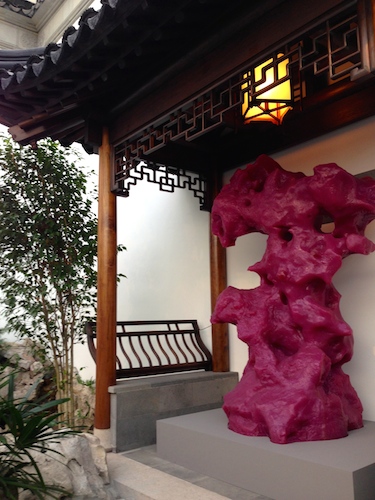
Zhang Jianjun’s 2008 silicone rubber Scholar Rock (The Mirage Garden) sits in a 17th-century pagoda in the Met’s Astor Court

Zhang Jianjun’s 2008 silicone rubber Scholar Rock (The Mirage Garden) sits under a 17th-century pagoda in the Met’s Astor Court. Courtesy: Sigg Collection, the atist

Although the web site appears to be more plain-vanilla than jazzy, you’ll be surprised to see that the digital back-end of the Met archives lets you zoom into each of the paintings to see the handsome handwork of each of these wunderkinds from each thematic section of the show. You can even peruse the gigantic scrolls up close, section by section.

The video room, where art lovers can relax and watch a rotating collection of work, is a nice touch. The modern digital sign to the side tells you exactly where you are in the rotation.

Here’s a link to one of the featured videos: Get to know the constantly transforming cityscape of Beijing through Chen Shaoxiong’s 2005  Ink City, and see what happens when a contemporary artist paints daily life in Beijing with traditional tools and ports his day-to-night experience to video.

FIT Students Digitize and Unzip Biker Jacket History

The 1980 version of The Perfecto, which debuted in 1928 and is still sold by Schott Bros. Source: FIT

The 1980 version of The Perfecto, which debuted in 1928 and is still sold by Schott Bros. Source: FIT

The FIT fashion and textile grad students always pull out the stops on their shows in the Museum at FIT’s side gallery, turning mini-shows into main events, as in their current exhibition, Beyond Rebellion: Fashioning the Biker Jacket. The gallery installation highlights the jacket’s role in history, culture, couture, and street fashion, but the team makes its history come alive even further on their superb companion digital site featuring photos, videos, and the historical context. See the jackets in person and touch the leather swatches before April 5, and go play with the web site at any time.

The digital timeline begins with the birth of the motorcycle in the UK in 1902, but the fashion story starts in 1928 with the debut of the leather riding jacket, The Perfecto by the Schott Bros. It’s the template upon which all other cool looks – street, couture, punk, ready-to-wear – are based. It combines the swag of a WWI aviator jackets with the utility and protection needed by one of the original road warriors. Retail: $5.50.

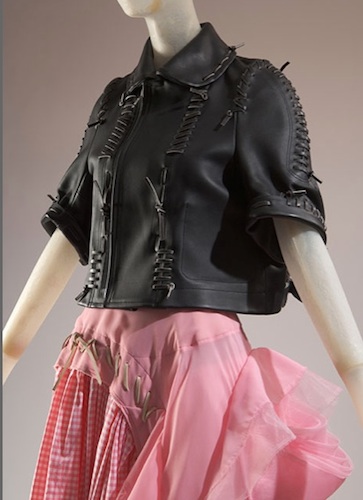
From Rei Kawakubo’s 2005 Biker + Ballerina collection (leather, gingham, and tulle) for Comme des Garcons. Source: FIT.

From Rei Kawakubo’s 2005 Biker + Ballerina collection (leather, gingham, and tulle) for Comme des Garcons. Source: FIT.

In the first gallery next to The Perfecto, fashionable visitors were hovering to take in all the information in Paula Sim’s excellent illustrated deconstruction of the jacket’s iconic design features as if it were the Rosetta Stone. How and why did the details we know so well all originate? The asymmetrical zip thwarts wind, epaulets secure riding gloves during breaks, the belt keeps wind from whistling up your back, and zips at the wrist do the same for the glove-sleeve juncture. The extensive use of hardware was a desirable touch inspired by chrome and metal features on the just-taking-off auto industry. Want or need?

It didn’t take long for motorcycle-loving vets to start applying patches and insignias to the aviator-inspired jackets, just as they had done with patches, insignias, and pins during the war. By the 1930s, as shown on the timeline, club patches gradually became associated with “outlaw” clubs. Nevertheless, the popularity of motorcycle riding grew, documented by the curators with a 1951 Sears catalog showing a premium $33.95 leather moto jacket featuring a snap-off lamb collar and “built-in kidney support”.

Screenshot from the FIT show timeline

Screenshot from the FIT show timeline

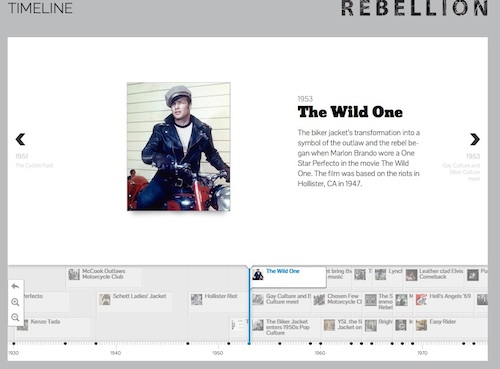
As the curators note, the watershed year for this utility bomber was 1953, when Brando sported cuffed-jeans-and-jacket attire in The Wild One. Banned initially in the UK, the film (and Brando) became a sensation, giving mass audiences a pop-culture version of what happened in the 1947 Hollister, California motorcycle club riots.

The style went viral, pushed further into street-style consciousness by emerging rock-and-rollers and The King himself, Elvis. Take a look at some iconic 50s performances that the digital curators included on the show’s website. Scroll up to 1956 in the timeline to see Gene Vincent tear it up onstage and to 1968 to see Elvis rocking his leather look doing Jailhouse Rock in his NBC comeback special.

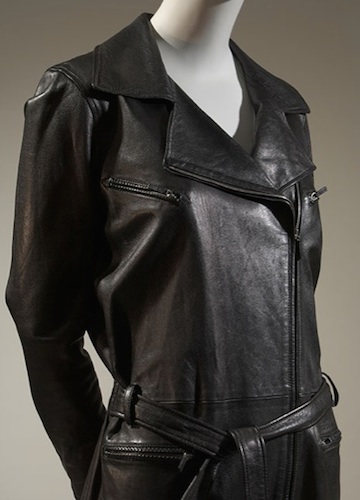
It's so Schott: Stefano Pilati’s Fall 2009 jumpsuit for YSL. Source: FIT, gift of YSL.

It’s so Schott: Stefano Pilati’s Fall 2009 jumpsuit for YSL. Source: FIT, gift of YSL.

In 1960, YSL became the first high-fashion designer to bring the biker look to the runway – a move that contributed to his exit from the House of Dior. Never mind, though. When he opened his own house two years later, he continued riffing on the bad-girl theme.  The rest was history, with plenty of rock musicians, high-end designers, and Vogue stylists following suit.

The curators feature New York’s own Ramones as the epitome of the 1970s motorcycle-jacket-wearing punk-music rebels, and present lots of album covers as evidence of the jacket’s enduring presence.

As for fashion from the FIT collections, the team has pulled together a dozen high-end interpretations, beginning with Mr. Versace’s 1993 gold-stitched biker jacket with pull-tab logo hardware and a more subdued version by Emporio Armani. Fashion lovers have plenty of other versions to savor from Ms. Herrera, Rick Owens, JPG, Rei Kawakubo, and others.

All the techniques rolled into one in Jean Paul Gaultier’s 1987 creation of leather, fake fur, suede, and wool. Note the trapunto, elbow studs, fringe, and pin stripes. Source: FIT, gift of Anne Zartaian.

All the techniques rolled into one: Jean Paul Gaultier’s 1987 leather, fake fur, suede, and wool jacket with trapunto, elbow studs, fringe, and pin stripes. Source: FIT, gift of Anne Zartaian.

In the far corner, the team offers a wall where you can touch and compare different types of hides and treatments used for jackets, marvel at the trapunto-on-leather techniques Mr. Versace and JPG used so extensively, and learn that patent leather was invented in 1811.

If you can’t get to FIT in person, browse through the fantastic exhibition site, listen to the nine-minute audio tour, and download the exhibition brochure. Better yet, do both.

As for the current popularity of the biker jacket on the Streets of New York, enjoy the slide show by the FIT student team, shot on the only warm weekend day so far this year in Williamsburg:

The Armory Show: One Ends, One Begins

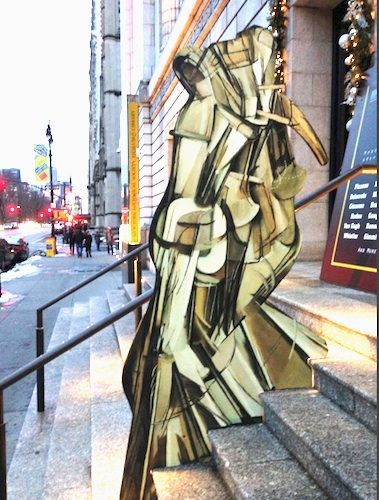
Mr. Duchamp’s 100 year-old icon exits NYHS on Central Park West after seeing the show.

Mr. Duchamp’s 100 year-old icon exits NYHS on Central Park West after seeing the show.

Challenging, ground-breaking art from all over the world under one roof, fashionable crowds, and buyers looking for the next big thing. On March 6, the 2014 edition of The Armory Show opens at the Hudson Piers 92 and 94; but for art-history lovers, there’s just a few days more to travel back in time to experience the 1913 edition that inspired it all at the New-York Historical Society’s show, The Armory Show at 100: Modern Art and Revolution, closing February 23. Check out the spectacular online exhibition site.

NYHS has gathered together 100 of the great art works that rocked Manhattan 100 years ago downtown at the 69th Regiment Armory on Lexington and 26th Street, where the Fighting Irish rented out their parade hall for a month to the newly formed Association of American Painters and Sculptors to show 1,400 works representing the latest trends in modernism.

One of the many postcards sold at the 1913 show’s merchandise table. Source: Smithsonian Archives of American Art

One of the many postcards sold at the 1913 show’s merchandise table. Source: Smithsonian Archives of American Art

Picasso, Cezanne, Matisse, Gauguin, and Munch were there in all their shocking glory – the first time many of these Europeans had been shown stateside. Take a look on the NYHS site and see what chaos ensued in the popular press. Even T. Roosevelt himself wrote an editorial about it.

NYHS not only shows us the work, but puts it all in the context of the times – the bohemian life in Greenwich Village, upstart galleries with an interest in the primitive and new, dissatisfaction with the confines of taste at the National Academy, and New York tastemakers yearning to make their mark on a world stage.

In the little low-light gallery next to the library, you’ll find all sorts of interesting ephemera – letters by the organizers of the show, registration cards with the insurance value of now-famous works, postcards for sale at the show, and a scrapbook of satirical telegrams read by the organizers at their celebratory dinner. This is where you can marvel at Gauguins selling for $8,100, Redon for $810, an oil by Braque for $200, a plaster Brancusi for $200, and Cezanne lithographs for $20 to $40. No wonder Stieglitz amassed such a great collection at these prices!

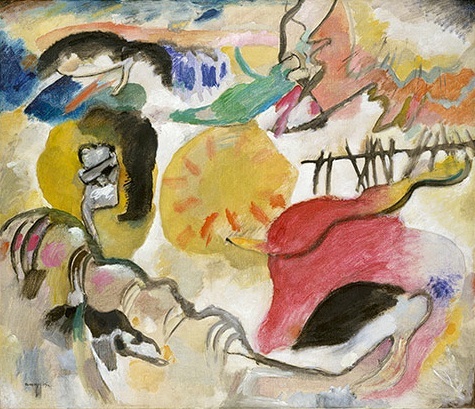
He had to have it. Stieglitz bought Kandinsky’s 1912 The Garden of Love (Improvisation Number 27) as soon as he saw it. Source: Metropolitan Museum/ © 2011 Artists Rights Society (ARS), NY / ADAGP, Paris

Stieglitz bought Kandinsky’s 1912 The Garden of Love (Improvisation Number 27) as soon as he saw it. Source: Metropolitan Museum/ © 2011 Artists Rights Society (ARS), NY / ADAGP, Paris

It’s interesting that the show would not have been such an affordable-art extravaganza without mega-dealer Vollard riding to the rescue, shipping crates of color lithographs and drawings to New York from Paris a scant three weeks before the show. Kuhn and his co-organizers devoted three galleries to works on paper. Works by Gaugin, Cezanne, Lautrec, and Munch flew off the walls, and when the show closed in New York, half of all the works sold had been supplied by Vollard.

Check out the price list and who-bought-what online. You can also probe the Smithsonian’s archive of Armory Show-related materials here.

The International Exhibition of Modern Art (a.k.a. Armory Show) installed in the 69th Regiment Armory at 25th & Lexington. Source: Smithsonian Archives of American Art, Kuhn family papers.

The International Exhibition of Modern Art (a.k.a. Armory Show) installed in the 69th Regiment Armory at 25th & Lexington. Source: Smithsonian Archives of American Art, Kuhn family papers.

The NYHS show is organized according to the original layout, including the grouping of Cubists with Mr. Duchamp’s iconic Nude Descending a Staircase, and the Fauve-Brancusi area – otherwise known in New York critic circles as the “Chamber of Horrors.” Looking at Matisse’s Blue Nude today, it’s hard to imagine that Art Institute of Chicago students found Matisse so shocking that they held a mock trial for him and burned it in effigy when the show arrived in the Windy City in April 1913.

And speaking of Chicago, the Armory Show was a huge success there – attracting over 180,000 art lovers, nearly double the attendance in New York. See the Art Institute’s gorgeous web site of exactly how everything looked in its grand galleries on Michigan Avenue. Everything really got the royal treatment. In turn, AIC can say it was the first museum in North America to show Picasso, Matisse, Duchamp, and Brancusi. No second-city status there.

Kuhn kept Picasso’s 1912 list of which artists should be shown. Source: Smithsonian Archives of American Art, Kuhn family papers.

Kuhn kept Picasso’s 1912 list of which artists should be shown. Source: Smithsonian Archives of American Art, Kuhn family papers.

Buy your ticket to this Armory Show before you buy one for the next one and feel what it’s like to walk through a turning point in American art history.

Top of the Pop 80s Style at NY Historical

Keith’s “Into 84” exhibition poster inspired by choeographer Bill T. Jones (1983). Photo: Tseng Kwong Chi. © Muna Tseng Dance Projects, Inc.; Keith Haring artwork © Keith Haring Foundation

Keith’s “Into 84” exhibition poster inspired by choeographer Bill T. Jones (1983). Photo: Tseng Kwong Chi. © Muna Tseng Dance Projects, Inc.; Keith Haring artwork © Keith Haring Foundation

When you stand in line to get your tickets for The Armory Show at 100 at the New-York Historical Society, look up and you’ll see a piece of history from the era of Madonna and Danceteria right above you – the entire beautiful, embellished ceiling of one of the must-see stops during the raging Eighties club culture in NYC, Keith Haring’s Pop Shop as part of the special installation Keith Haring All-Over.

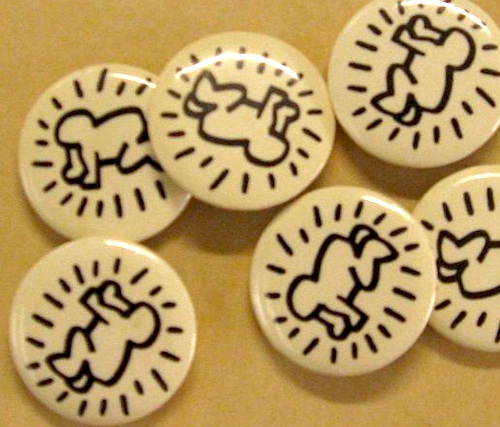
Although the Pop Shop closed its doors on Lafayette Street in 2005, it achieved worldwide pop-culture recognition for being the most iconic sites where art, music, dance, graffiti, celebrity, and the street mixed. Haring, whose Radiant Baby and other works ubiquitously plastered subway station walls in the 80s, decided to put Warhol’s commerce-as-art philosophy into practice. He created an art-filled shop downtown where the international art collectors, celebrities, club kids, and graffiti artists would feel comfortable.

Installation view of the Pop Shop ceiling over the cash registers at NYHS, right behind a video wall of Oertel’s Pulling Down the Statue of King George III. Courtesy: NYHS/John Wallen

Installation view of the Pop Shop ceiling over the cash registers at NYHS, right behind a video wall of Oertel’s Pulling Down the Statue of King George III. Courtesy: NYHS/John Wallen

The walls were covered in Haring’s instantly recognizable doodle-cartoon figures and stuff to buy, so when the Haring Foundation gave the ceiling to NYHS, it did so with the stipulation that it be hung somewhere where money is exchanged.  So, right inside the door in the same beautiful entrance hosting the treasures of Revolutionary New York, is the ceiling from a place where music blared, fun was had, all-night parties raged, and Downtown 80s life was celebrated.

Take the elevator to the Luce Center to see the rest of the show, which is on loan to NYHS by the Haring Foundation, which Keith established just before he succumbed to AIDS in 1990. Go to Keith’s website to see him in action in the subway, galleries, and performance and click through images of his amazing body of work in digital form by decade. It’s all here.

Keith’s “Radiant Baby” buttons in the NYHS collection, gifted by Roy Eddey.

Keith’s “Radiant Baby” buttons in the NYHS collection, gifted by Roy Eddey.

But back upstairs at NYHS, you’ll see Keith’s 1985 repeated-pattern design for a fabric run right above two NYC mile markers from the 1800s, a Haring-painted black-and-pink leather jacket (done with graffiti artist LAII), and Jeremy Scott’s Haring-inspired sneakers for Adidas. The NYHS is also screening some vintage video in the little 80s space, right next to the classical busts of New York’s 19th century high and mighty. Hang out to see Madonna’s 1984 performance of Dress You Up for the Keith’s Party of Life and the 1986 Grace Jones video I’m Not Perfect (But I’m Perfect For You), which Keith co-directed.

The show is tiny, but it’s a great little secret spot to time travel back to the Eighties. For more Keith, visit the Fales Library at NYU for Keith Haring: Languages through February 28 and NYPL’s Why We Fight: Remembering AIDS Activism through April 6. The NYHS installation is an open run.

Hey, and don’t forget to shop in the online Pop Shop, where revenue from (RED) items goes to combatting AIDS.

Must-See Skytop Panorama of NYC Past & Present at The Whitney

The installation view of T. J. Wilcox: In the Air, 2013. Photo: Bill Orcutt

The installation view of T. J. Wilcox: In the Air, 2013. Photo: Bill Orcutt

If you want to enjoy a beautiful view of Manhattan from the roof, don’t worry about the snow, rain, or cold weather. Go over to the Whitney Museum before February 9 and take in the film installation T.J. Wilcox, In the Air, that features a beautiful panorama (from the roof of Wilcox’s Union Square studio) that dreamily introduces six stories about the past and present of life, art, energy, fame, events, and cosmic forces that ebb and flow continuously below.

The big, in-the-round screen circles around you (duck and just walk into it), so you can really take in the view, all the way from the Battery to beyond the Empire State Building.

Still from T.J. Wilcox’s panoramic 2013 silent film installation, In the Air. Image courtesy of the artist and Metro Pictures.

Still from T.J. Wilcox’s panoramic 2013 silent film installation, In the Air. Image courtesy of the artist and Metro Pictures.

The film cycles from dawn to dusk, but along the way, Mr. Wilcox takes you on little journeys as you enjoy his movie panorama. The experience is one where you begin to see New York through his eyes, past and present together.

After a few minutes, one of his panorama screens fades you see a short, reflective, poetic, subtitled NYC story-movie. It’s a quiet experience — bringing you back to the Thirties when the Empire State Building was contemplated to be used as a zeppelin-docking station, to the present when 14th Street is one of the best vantage points to contemplate the out-of-this-world spectacle of Manhattanhenge, and the days of glitter, glamour, and grit of Warhol, Gloria Vanderbilt, and fashion-industry icon, Antonio Lopez.

Watching Wilcox’s Gloria Vanderbilt vignette from outside the installation. Photo: Bill Orcutt.

Watching Wilcox’s Gloria Vanderbilt vignette from outside the installation. Photo: Bill Orcutt.

He reminds you that Gertrude Whitney, the museum’s founder, long ago succeeded in a custody battle to care for little Gloria. The film takes you to her apartment and reflects on the fact that Gloria was “in the public eye from birth” and celebrates her vibrant artistic, business, and family accomplishments (re: plenty of shots of Anderson Cooper). Another mini-film focuses upon a nano-second in Warhol’s life, when his Factory crew unfurled Mylar balloons to welcome the arrival of the pope-mobile to New York City in 1965.

Weegee’s Variant of Untitled (Striking Beauty) is hung in an adjacent gallery. Courtesy: Whitney Museum

Weegee’s Variant of Untitled (Striking Beauty) is hung in an adjacent gallery. Courtesy: Whitney Museum

In his musing on the film about fashion-illustrator extraordinaire, Antonio, Wilcox reveals his surprise that Antonio’s studio was located right next to his own building, takes pleasure in asking us to gaze out over the community where so much magnificent art was made, careers enlivened, and life lived.

In a tiny back-room gallery, the Whitney has installed a few other reflections on skies over the City – Weegee’s lightening strike behind the Empire State Building and Yoko’s Sky TV, are two – but the big “wow” here is Mr. Wilcox’s ability to take us on a 35-minute journey in and among the streets and skyline that from his quiet, contemplative perch.

It’s quite a collage of memory, reflection, mythologies, politics, history, and beauty. Click here to see the Whitney’s slide show of the storyboards in Wilcox’s studio, and listen to him talk about it this beautiful work in this YouTube video:

Avant-Garde Designers Give High Fashion Ethnic Twist

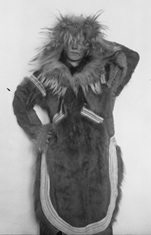
Striking a pose in an "Eskimo" hide, fur, and sinew coat in 1916. Source: AMNH

Striking a pose in an “Eskimo” hide, fur, and sinew coat in 1916. Source: AMNH

What if you took a group of young designers to a major NYC museum, threw open the doors to one of the largest textile and costume collections in the country, let them try on furs and dresses in the archives, seek inspiration, sketch, and create something that a major retailer could sell to a fashion-forward buyer?

It’s hard to imagine that FIT or the Met’s Costume Institute would ever agree to this (even under Tim Gunn’s watchful eye), but it’s exactly what happened in 1915 when a “fashion staff” inside the Anthropology Department of the American Museum of Natural History encouraged American designers and manufacturers to probe the AMNH collections to view the images, patterns, textiles, embroidery, beadwork, furs, and clothing of indigenous Great Plains, Mesoamerica, and the Andes people.

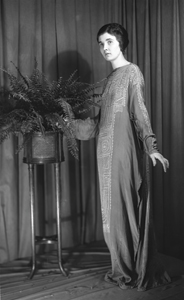
Mary Tannahill batik dress inspired by South Sea Island Art. 1919. Photo: Julius Kirschner. Source: AMNH

Mary Tannahill batik dress inspired by South Sea Island Art. 1919. Photo: Julius Kirschner. Source: AMNH

The Bard Graduate Center has seized upon this heretofore unknown fragment of museum and NYC history to create its own mind-bending reality show, An American Style: Global Sources for New York Textile and Fashion Design, 1915-1928, that weaves together fashion, industrial, museum, and scientific plot lines. Take this journey in person before February 2 or via the excellent digital site that BGC Digital Media has created.

In the wake of the 1913 Armory Show, three AMNH anthropology curators (Clark Wissler, Herbert J. Spinden, and Charles W. Mead) and one of Fairchild’s Women’s Wear journalists, M.D.C. Crawford, (who also held a Research Associate position at the museum) got a bee in their collective bonnet about leveraging AMNH’s extensive textile collection to convince designers that native Americas design could offer as much inspiration as Europe or primitive art from Africa.

M. D. C. Crawford, co-founder of the Costume Institute,  with artist-designer Ilonka Karasz (1916-1919) Courtesy: Brooklyn Museum Archives.

M. D. C. Crawford, co-founder of the Costume Institute, with artist-designer Ilonka Karasz (1916-1919) Courtesy: Brooklyn Museum Archives.

After the top brass from H.R. Mallison & Co. began visiting AMNH’s Peruvian textile collections for inspiration on how to improve their silk fabric line, it wasn’t long before other business managers, designers, and mill experts were delightedly poking around behind the scenes, too. Why look to William Morris arts-and-crafts style from Europe, when you can offer something “American” to the consumer?  Didn’t Aztec, Hopi, Cherokee, or Mesoamerican culture have something to offer? Soon, Wanamakers was hosting in-store displays of Mayan textiles and out-of-town retailers were heading uptown to the AMNH collections on their NYC buying trips.

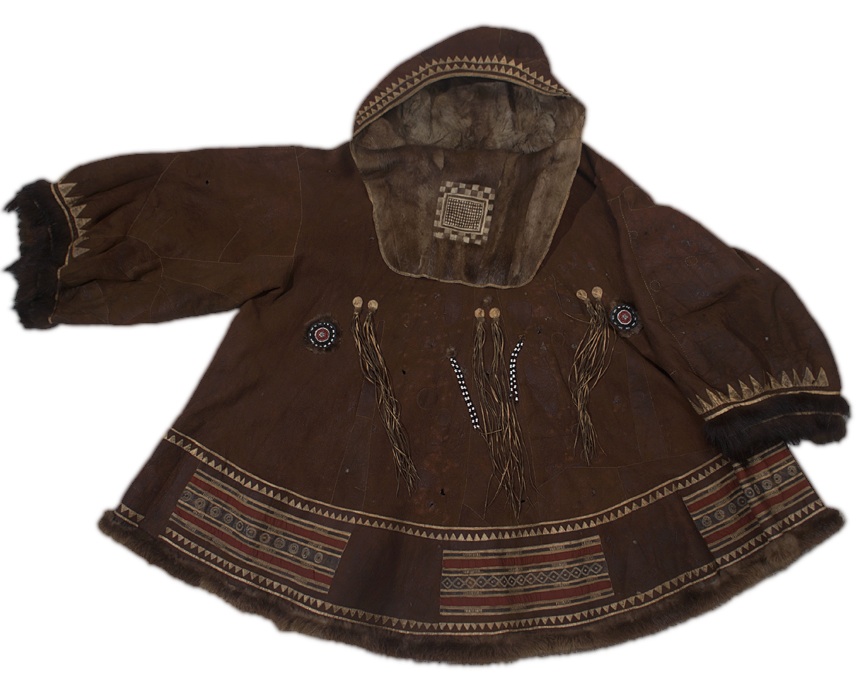
Bard has plucked many of the inspirational items from the AMNH collections for this show (like the stunning Koryak dancing coat and another embellished waterproof topper made entirely of embroidered and appliqued salmon skin), adding samples of the fabrics they inspired, gorgeous dresses with evocative trims and prints, design sketchbooks, multimedia interactives, and a fashion slide show — perhaps an hour’s worth of perusing inside their tiny fouth-floor Focus Gallery. It’s quite a story.

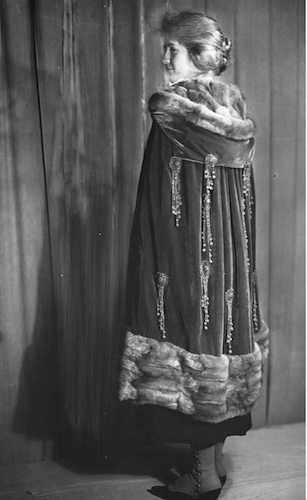
Max Meyer’s hooded evening coat, inspired by the AMNH Koryak coat. Source: AMNH

Max Meyer’s hooded evening coat, inspired by the AMNH Koryak coat. Source: AMNH

Crawford recounts the Museum’s foray into industrial-arts inspiration in two 1917/18 articles in The American Museum Journal, which you can read in the digital flipbook that Bard has on its website and inside the exhibition, which documents the original artifacts that inspired each retail look. (Check out our Flickr site to see some of the items you can find for yourself your next ramble through the AMNH second and third floors.)

Soon after, Stewart Culin opened the textile study room in the Brooklyn Museum, and by 1919, AMNH mounted the Exhibition of Industrial Art in Textiles and Costumes. Take a look at the silks, industrial embroidery display, tea gowns, and ultra-modern bohemian-style batik dresses on the Bard multimedia site. See silks inspired by Plains Indian war bonnets, gowns inspired by South Seas batik prints, and numerous other designers, stories, ethnic looks, photographs, and industrial wonders.

Koryak woman’s dancing coat from Kushka, Siberia; fur, hide, bead, cloth, sinew; acquired 1901 by AMNH.

Koryak woman’s dancing coat from Kushka, Siberia; fur, hide, bead, cloth, sinew; acquired 1901 by AMNH.

It’s surprising to discover that so many really sharp fashion photos were buried deep within the AMNH photo archives. The digital images, originally on lantern slides, look like they were taken yesterday.

The curators say that the AMNH initiative withered a few years later when some of the staff left and Mr. Mead passed away. But this museum-fashion story didn’t really end there. Mr. Spinder went to the Brooklyn Museum and worked with John Sloan and Abby Rockefeller to elevate tribal art’s status in the fine-arts world. Mr. Crawford, who became Women’s Wear design editor, co-founded the Met’s Costume Institute in 1937 and was a key advocate within the Brooklyn Museum to establish its influential Design Lab, which debuted in 1948. (Hello, Charles James!)

Curator Clark Wissler with the AMNH Anthropology accessories wall.

Curator Clark Wissler with the AMNH Anthropology accessories wall.

Could anyone imagine how much those sparks flying 100 years ago among AMNH’s and Mr. Boas’s snowshoes, bows, baskets, headdresses, teepee covers, and 19th-century Siberian armor would ignite such bright lights in fashion way out in Brooklyn and across the Park?

Thanks for unearthing this fashion story, Bard.

Brooklyn Museum Shows What Rich Americans Buy to Impress

Cabrera

Miguel Cabrera oil (1760) of Dona Maria de la Luz Padilla y Gomez de Cervantes sporting velvet beauty marks and bling

Conspicuous consumptions is nothing new, according to the Brooklyn Museum’s spectacular show, Behind Closed Doors: Art in the Spanish American Home 1492-1898, and they’ve gathered (mostly from their collection) four centuries of blindingly beautiful stuff to show how earlier generations of status-seekers showed off how special and rich they were. Catch it before January 12.

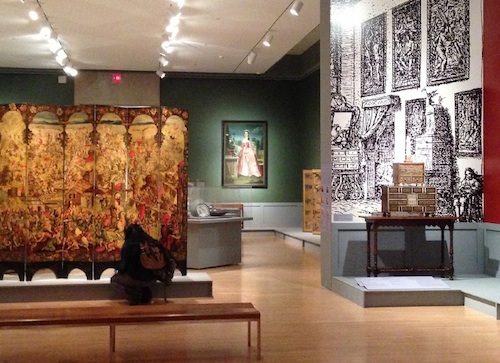
The Fourth-Floor show fills two huge galleries that have been partitioned by the curators into areas corresponding to rooms in a traditional Spanish-American home, where they’ve displayed the stuff that the colonial high and mighty would have put there.  Although two-thirds of the United States was once under Spanish rule, the paintings, furniture, textiles, and other treasures you’ll see are from homes south of the border, including the Caribbean and south of the Isthmus. Check out our Flickr feed.

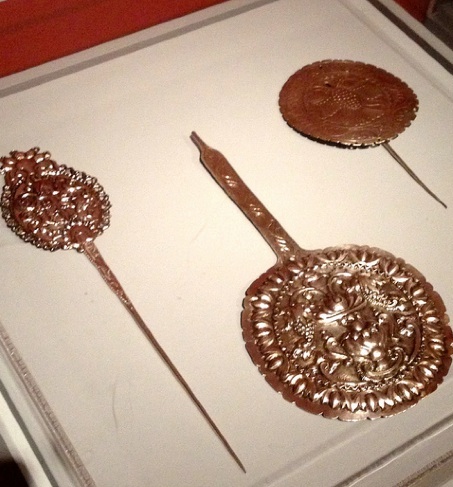
Silver Pins

Giant 18th century silver status pins for women, slightly Incan-style

First, you’d dress to impress and make sure that everyone knew that you were somehow aligned with the upper classes back in Spain. The show puts English and Spanish-American portraits side-by-side in the first gallery to illustrate that the latter weren’t shy about applying ostentatious tiaras and pearls to themselves, slapping on the velvet faux-beauty marks, and shoving royal proclamations into the frame to convey your wealth, status, and privilege. Wealthy English colonials and their portrait painters took a more austere, understated approach.

Second, if you were of mixed race but possibly had some Incan royalty in your blood, you’d hang gold-flecked portrait series of Incan chieftains where everybody could see them in your home. The lady of the house might wrap herself in a locally woven textile sporting mixes of South American deities with that oh-so-familiar-to-Europeans Hapsburg double eagle. Then she’d bling it up with a giant oversize pin made out of solid silver.

Visitor inspects painted screen in exhibit area with the objects from the grand reception room of an upscale home.

Visitor inspects painted screen in exhibit area with the objects from the grand reception room of an upscale home.

Third, you’d emphasize your casual elegance by actually draping the rugs and tapestries all over the floor, stairs, and risers in the ladies’ sitting room.  After gold, silver, and jewels, textiles were about the biggest luxury anyone could find, and Spanish Americans made and bought a lot. In British America, carpets were only used to cover tables, so the casual distribution of so much wealth below your feet was something only Spanish Americans could afford.

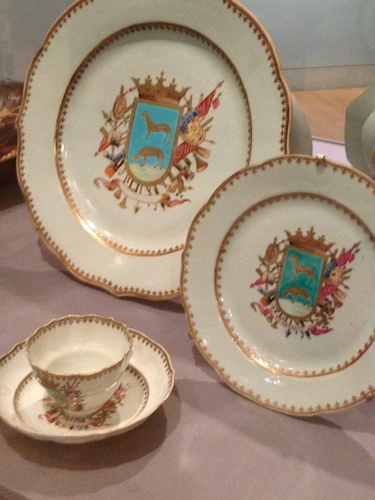
Because the Caribbean and coastal cities of South and Central America were right in the center of shipping and trade routes for centuries, wealthy people could buy pretty much anything they wanted and the curators show it to us – gorgeous Japanese screens, custom-printed Chinese porcelain, English-style sitting chairs, and Turkish rugs. No pennies were pinched in upwardly mobile, Spanish-speaking homes.

Peruvian bed of gilt wood (1700-1760) that would be shown off in a state bedroom.

Peruvian bed of gilt wood (1700-1760) that would be shown off in a state bedroom.

And let’s not forget what treasures were produced right inside the Spanish protectorates – silver shaving basins, polychromed statues of the saints, gigantic gold-framed “statue paintings”, gilded beds, embellished leather traveling trunks (to go to your country home), solid mahogany furniture, and custom-made books of your family’s geneaology. We won’t even get started on the private chapel décor.

This show throws open a window on the first wave of high-status interior design and decoration – a story that is normally confined to the castles in Europe or the palace at Versailles, and one that is perfectly suited to be told by Brooklyn’s extensive Latin American holdings with a couple of key pieces from the sumptuous collections uptown at the Hispanic Society of America.

Chinese import: 1770 porcelain featuring South American animals, purchased by Ignazio Lemez de Cervantes

Chinese import: 1770 porcelain featuring South American animals, purchased by Ignazio Lemez de Cervantes

If you want to do a deep dive into upscale living of past centuries, visit the exhibition archive on the Museum’s website and click on the Objects tab. Or, see it all in person when it goes on the road: it opens at the Albuquerque Museum on February 16, the New Orleans Museum of Art on June 20, and the Ringling Museum in Sarasota on October 17.

And congratulations to Brooklyn for making it onto the cover of the winter edition of Humanties, the NEH magazine.

Medieval Enthusiasts Throng to See Departing Treasure

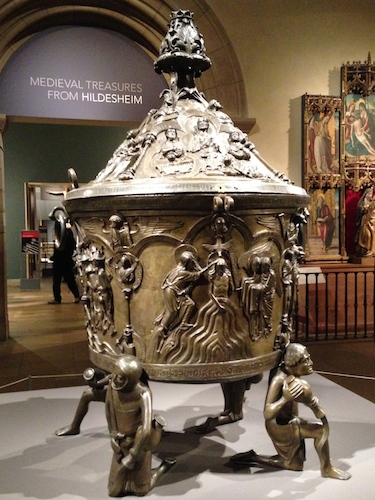
Hildesheim’s large cast 1226 baptismal font installed in the great Medieval Hall

Hildesheim’s large cast 1226 baptismal font installed in the great Medieval Hall

Before the Metropolitan Museum of Art takes down the Baroque Christmas tree, take a look at what’s sitting right behind it – a large, beautiful cast baptismal font that’s one of the treasures of a cathedral in Saxony that’s been transported to New York for the exhibition, Medieval Treasures from Hildesheim, closing January 5.

Like the medieval hall surrounding you, it will take you back to the Middle Ages, along with the manuscripts, castings, croziers, and spectacular rock crystal ornaments in Gallery 521, a few steps away in the special exhibition space that you pass going toward the Lehman wing.

During the holidays, the small space was packed with medieval-art lovers relishing the fact they were seeing treasures from a unique UNESCO World Heritage site right in the heart of Manhattan – the first time they have left Germany.

In the late 12th c., Bernward of Hildesheim, commissioned a dazzling new cover for the Gospel Book, which dates from the late 900s

In the late 12th c., Bernward of Hildesheim, commissioned a dazzling new cover for the Gospel Book, which dates from the late 900s

While renovations were being done at Hildesheim Cathedral, 50 amazing treasures were sent here to give their spiritual heft to the Met’s already hefty medieval holdings. Check out our Flickr site for some of our favorites.

The 1226 baptismal font is a true masterpiece of casting, along with the magnificent eagle that has sat upon a cathedral lectern since 1220. The Jesus figure of the Ringelheim Crucifix at the center of the exhibition is one of the most important (and awe inspiring) large-scale wood sculptures surviving from the post-1000 era in Europe.

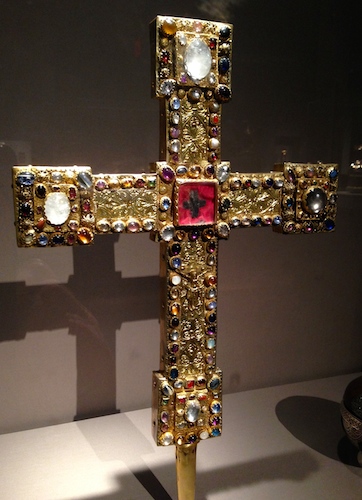
The chalices, reliquaries, croziers once held by medieval bishops, and bound books of the gospels and sacraments will stop you in your tracks.  Seek out the bejeweled cross with what was once believed to be a relic of the True Cross.

As quiet crowds milled around last weekend, savoring the beauty, one youngster came upon the Gospel Book that had been rebound in the second half of the 12th century and asked in a whisper, “Are those real jewels?”

A processional cross, made between 1170 and 1190, which is said to hold relics of the True Cross

A processional cross, made between 1170 and 1190, which is said to hold relics of the True Cross

Many of these treasures, including the bogglingly beautiful Gospel Book, were commissioned by Bishop Bernward of Hildesheim (960-1022), whose aesthetic vision transformed the cathedral into the must-see pilgrimage spot that it remains today.

One out-of-towner told us that they traveled to New York simply to see this show. See the baptismal font and the other works for yourself, and you’ll know why.

If you want to know more or if you’re a fan of the Middle Ages, take the time to sit in on this hour-long presentation about medieval alchemy, metalwork of the 1100s, and how these treasures came to New York:

AMNH Honors America’s Super-Early Explorers

Ronnie Cachini’s 2006 acrylic, Ho’n A:wan Dehwa:we/(Our Land), Source: AMNH/ of A:Shiw A:Wan Museum and Heritage Center

Ronnie Cachini’s 2006 acrylic, Ho’n A:wan Dehwa:we/(Our Land), Source: AMNH/ of A:Shiw A:Wan Museum

Long before John Wesley Powell steered his boats down the rapids and mapped the Grand Canyon for the US Geological Survey, another set of intrepid explorers had walked, mapped, documented, and guided travelers through the entire Colorado River system. Climb up to the hidden Audubon Gallery on the Fourth Floor of the American Museum of Natural History before January 12 and get a fresh perspective on pueblo cartography in the special exhibition, A:shiwi A:wan Ulohnanne: Zuni World.

 The show features 31 paintings by seven contemporary painters from the Zuni Pueblo of New Mexico – one of the ancient tribes whose ancestors built the cliff dwellings and multistory wonders of the Four Corners.

Installation view in the “quiet gallery” on the Fourth Floor of AMNH

Installation view in the “quiet gallery” on the Fourth Floor of AMNH

After 500 years of seeing their sacred places renamed by the conquistadors, Spanish land owners, government mapmakers, and the National Park Service, Zuni cultural leaders thought it was high time to start creating maps that reflected traditional Zuni place names, stories, and symbols. They asked some leading Zuni artists to choose the story, sacred sites, and landscapes that would “map” Zuni cultural history. According to some of the artists in the show, the exercise required them to look at what they knew in an entirely different way.

The Zuni people consider their place of origin to be the Grand Canyon. Back in deep time, the Zuni ancestors were instructed to find “the Middle Place”, so groups set out in journeys to the north, south, east, and west. The northern group, for example, settled in what is now called “Navajo National Monument” and eventually built multistoried dwellings inside the most spectacular red-rock shelter in the American Southwest.

Cliff dwellings in Betatakin alcove, a NPS site at Navajo National Monument where pueblo elders continue to hold sacred ceremonies. Photo: Dan Boone/Ryan Belnap, Bilby Research Center, Northern Arizona University

Cliff dwellings in Betatakin alcove at Navajo National Monument, where pueblo elders travel to hold sacred ceremonies. Photo: Dan Boone/Ryan Belnap, Bilby Research Center, Northern Arizona University

Each painter’s style is different, but when you take it all in, the exploration story is one of fairly mind-blowing proportions – the Zuni ancestors explored the entire Colorado River system, carved petroglyphs in canyons to point travelers to nearby communities, and even journeyed south to the “land of endless summer” –Central America’s coastal communities.

Although the paintings depict myths and symbols in the Southwestern landscapes, East Coast art-lovers should be aware that the Zuni expedition story isn’t fiction: Chaco Canyon’s great archeological sites contain the evidence — tropical shells, stones, Scarlet macaw skeletons, cacao, and the network of banked, engineered roads (circa 850 – 1100 A.D.) that actually lead to many of the places depicted by the Zuni painters.

Geddy Epaloose’s 2006 acrylic, The Middle Place. Source: AMNH/ of A:Shiw A:Wan Museum and Heritage Center

Geddy Epaloose’s 2006 acrylic, The Middle Place. Source: AMNH/ of A:Shiw A:Wan Museum and Heritage Center

Geddy Epaloose’s 2006 painting The Middle Place features an aerial view of Zuni’s Middle Village with sacred trails spiking out in all directions. Colorado River by Ronnie Cachini includes the edge of the distant ocean. Other paintings include the Zuni’s version of their Great Flood, the spiritual importance of their salt lake, and even unmarked lines representing some modern paved roads. Unless you’re Zuni, you’ll have to read the captions on each of the paintings.

Hunted deer is honored with a Zuni necklace

Hunted deer is honored with a Zuni necklace

AMNH has one of the largest collections of Zuni artifacts in the country, and has a good, close working relationship with that pueblo. Entering the Audubon Gallery on the Fourth Floor feels like a sacred space. You’ll be greeted by a hunted deer honored with a necklace of precious stones and ceremonial rods festooned with pieces of traditional Zuni clothing loaned by the painters and their children for us to see while their work is on display in New York.

Make a pilgrimage to this hidden gallery on AMNH’s Fourth Floor and learn about some remarkable people, places, origins, and cartography. (And stop into the First Floor rotunda to see some of the museum’s Chaco Canyon treasures.)

Enjoy this short YouTube video featuring Jim Enote, the director of A:Shiw A:Wan Museum and Heritage Center, who describes the exhibition when it debuted iat the Indian Pueblo Cultural Center.

World Wide Web (and Weft) of Past Centuries at The Met

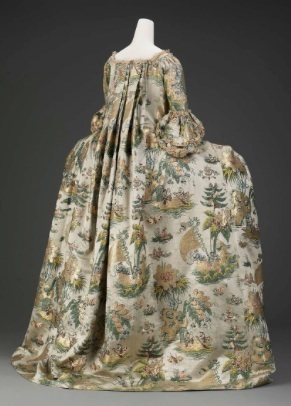
1730s Dutch brocaded satin, featuring exotic Asian islands and fauna, was refashioned into a more fashionable French frock in 1770. Source: Museum of Fine Arts, Boston. The Elizabeth Day McCormick Collection

1730s Dutch brocaded satin showing exotic Asian islands and fauna was refashioned in 1770 into a more fashionable French look. Source: Museum of Fine Arts, Boston.

A joyous collaboration among eight departments of the Metropolitan Museum of Art has written a new history of how a global network of fabric trade and manufacture once served the same purpose that YouTube, music videos, shelter magazines, Vogue, and The New York Times Style section do today – to present images of the latest trends and make anyone in the world that sees them understand the clothes or accessories needed to be “on trend” with other sophisticates.

Interwoven Globe: The Worldwide Textile Trade, 1500–1800, running through January 5, tells a monumental story about how trends went viral pre-Internet. It was a slower world dominated by sailing ships versus transoceanic cables, but the tale spanning centuries, continents, and cultures shows how gorgeous garments, incredible tapestries, bedazzled church vestments, quilted bedding, luxurious wall hangings, tour-de-force printed fabrics, and royal furniture telegraphed “trend” in a different way.

Embroidered muslin dress and fichu. The 18th c. craze for Neoclassical across Europe drove massive imports of lighter-than-air Bengali muslin. Source: The Met

Embroidered muslin dress. The 18th c. European Neoclassical craze drove massive imports of airy Bengali muslin. Source: The Met

The show can’t fully be appreciated in just one walk-through. Each textile and garment is incredible to behold, and the network of interrelationships among craftsmen, artisans, tradesmen, royal buyers, rich merchants, and brave sailors traversing strange shores is equally rich, complex, and layered.

This two-dimensional pageant, enhanced by exquisite gowns and garments whose fabrics were sourced from the four corners of the globe, is given the full-bore treatment in the top-floor galleries reserved for blockbusters.

How do you tell a story this big? The curators decided to put a large interactive map of the 16th- to 18th-century trade routes right inside the door, which brings you up to speed on the French, Portuguese, Spanish, Dutch, and British trade routes linking the Americas, India, the Orient, and islands.

Then come the galleries dedicated to the styles and fiber-tech associated with each – silks woven in China for Europe and Japan, Spanish embroideries that reference Islamic carpet borders, weavings made by Peruvian grand masters of the art, and Indian resist-dye masterpieces that turned into English chintz and fabrics for the King of Siam.

Japanese Jinbaori made from Dutch 17th century wool and Chinese silk, a luxury item worn over samurai armor. Source: John C. Weber Collection

17th c. Japanese Jinbaori made from Dutch wool and Chinese silk, a luxury item worn over samurai armor. Source: John C. Weber Collection

In the Spanish gallery, you’ll see how the crowned double-headed eagles of the Hapsburgs adopt kind of a Chinese-phoenix look when 16th-century Iberian traders commissioned silk artists in Macau to create silk they could sell back home. By the 17th century, everyone – East and West – had become accustomed to enjoying “exotic” images from halfway around the world – birds, animals, architecture, flowers, and landscapes. It had the same impact as Google Earth and World Wide Web access today.

One of the more startling facts is that before Commodore Perry “opened” Japan to the West (ref. Sondheim’s Pacific Overtures, the musical), Japan was more into luxury-goods consumption than production. Apparently, the trend was to import the ultra-luxury, Dutch wool, and make it into topcoats that Samurai warriors could drape over their armor.

If you don’t see this in person, visit the online exhibition site for an encounter that’s a real treat: You’ll get to zoom into each quilt, drape, embroidery, dress, shawl, and piece of fabric to see it all super-close.

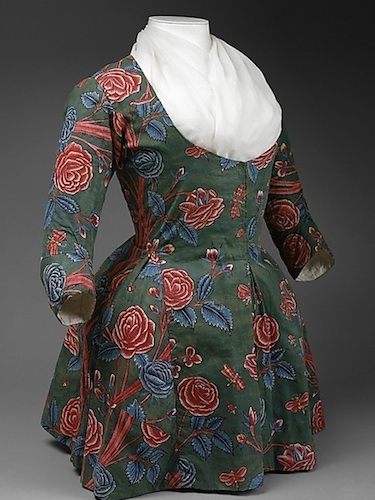
A late-18th century Indian-chintz Dutch jacket that knocked-off a French designer jacket in pink French fabric. Both have similar exotic floral prints. Source: The Met

A late-18th century Indian-chintz Dutch jacket that knocked-off a French designer jacket in pink French fabric. Both have similar exotic floral prints. Source: The Met

Click on the “full screen” button on each and toggle in to examine all of the glorious detail. The web site will tell you the story and show you the items in each gallery. You’ll be surprised to find the genesis of the fabrics-on-walls interior-decorating craze for country homes in the late 1700s and how men-only clubs adopted both plain and exotic dressing-gown dress from the Orient (a style also featured prominently in the current FIT show).

The King of Siam’s royal 18th century guard wore these resist-dye tunics. Fabrics were made in India and tailored in Siam. Source: Royal Ontario Museum, Toronto

The King of Siam’s royal 18th century guard wore these resist-dye tunics. Fabrics were made in India and tailored in Siam. Source: Royal Ontario Museum, Toronto