What Happens (to Dresses) after Fashion’s Night Out

Everyone enjoyed the party atmosphere last Thursday during Fashion’s Night Out, with beautiful people, clothes, and accessories on display and tributes to retail and design history. (Check out the Flickr feed of the action on Madison and down Fifth.)

But what happens when the party ends? That question is what inspired two curators from Saratoga Springs to create a micro-show from fashion museum cast-offs — Tattered and Torn (On the Road to Deaccession).

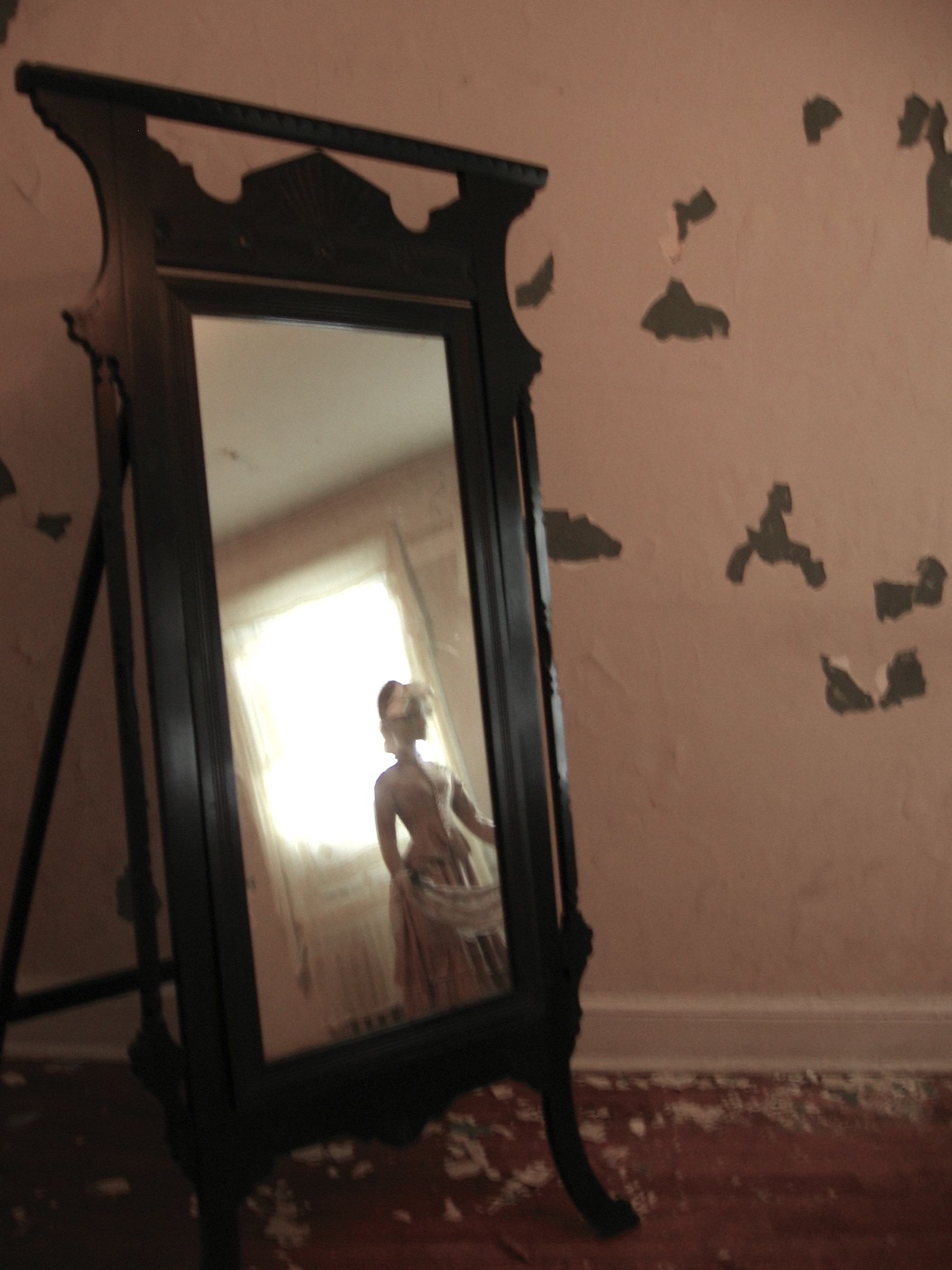
Empire Historic Arts Fund (founded by curators Rodney DeJong and Michael Levinson) gathered together less-than-perfect examples of 19th-century couture and used the abandoned rooms of the Governor’s Galleries on Governors Island to evoke the passage of time for fashion, finery, and fanfare. Rooms that once housed the U.S. Coast Guard as recently as the 1960s felt far older, perhaps due to the dreamlike state evoked by the presence of peeling paint, claustrophobic rooms, and props with which the curators surrounded their proud mannequins.

When you enter, the dresses look glamorous, but upon closer inspection, you can see that the silk has peeled away, seams have come apart, and the total elegance that must have accompanied these dresses’ debuts has passed into history. Take a look.

Considering the $250 budget for this installation, the curators have done a fine job of paying tribute to the history of fashion, creating a memorable experience on the Island, and letting us meditate on the still-beautiful details of fabric and design up close in a quiet place.

(The show is tucked away the far east side of the Island, beyond the Parade Ground, in Building 315 facing the Brooklyn waterfront. It’s the last building on your way toward Yankee Pier.)

Get Out Your Credit Cards for FNO

Better use the holiday weekend to rest up, since Fashion’s Night Out happens next Thursday!

The tents are going up at Lincoln Center, the stores are getting ready for the onslaught, and the NYPD is gearing up for crowd control everywhere in the City.

Check out the New York event listings at the web site, or (if you’re not in NYC that night) the FNO worldwide or elsewhere US sites. Hey, there are even events planned in Wyoming and online, so there’s no excuse not to shop, contribute to a cause (by buying stuff from the collection), and have fun all night!

If you’re in NYC, start early, have a strategy, and be prepared for crowds. The web site lets you sort the 800-plus events by neighborhood, shopping category, and the type of event you’re hankering for (pop-ups, fashion shows, new product launches, charity-focused, DJs, designer appearances, and block parties).

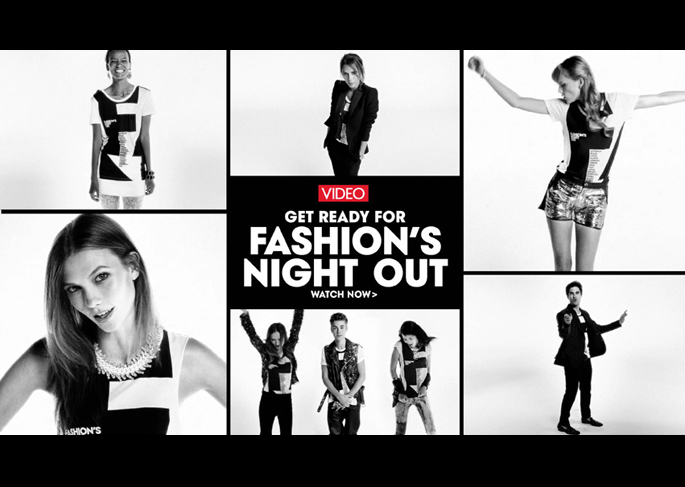
Check out the video to get in the mood.

Eavesdropping on Schiaparelli, Prada, and Iris

Don’t despair if you haven’t gotten to the Met’s Costume Institute show Schiaparelli and Prada: Impossible ConversationsThe Met’s put up a spectacular web site that lets you in behind the scenes, around the dining table, and inside the head of everyone’s favorite fashion icon, Iris Apfel.

If you get to the gallery this week before the show ends, expect large crowds (“normal” large, not like McQueen). Hopefully you’ll get close enough to the clothes to check out Schiaparelli’s innovative tree-bark rayon. If you can’t get there, preview the exhibition set-up on line, and go take the curator’s walk through (the second video from the top).

You can look through some of the images that the Met is sharing on line, but they don’t feature some of the in-person eye-poppers – the blue-squiggled Schiaparelli bridal veil on loan from Philadelphia, a color photo of Schiaparelli’s gold sari dress and veil (although the Horst photo is great), or Prada’s stuff with monkey and banana prints. [Prada quote: “I never thought people would want to wear clothes with monkeys and bananas on them.”]

One of the biggest complaints visitors have about the show is that it’s so hard to see and hear the “conversation” videos between Prada and Schiaparelli (played by Judy Davis, and, yes, someone did ask me “who played Prada?”).  Not  a problem, because all eight conversation videos are posted online (scroll to the bottom of the page).

If you have an extra hour in front of the computer, here’s the added bonus: the video of Iris Apfel discussing good and bad taste in contemporary fashion at the Met last June.  Who doesn’t want Iris’s amazing perspective on style?

If you don’t have the time, just check out The Rules by Elsa Schiaparelli, courtesy of Philadelphia’s 2005 exhibition site. Agree? Disagree? Well, maybe you’ll concur with Prada’s side of the conversation.

Seventh-Century Fashionable

If you’re running over to the Met to catch the Prada/Schiaparelli show in the next two weeks (don’t worry, it’s up until August 19), be sure to see the other rarely seen, worth-the-trip clothes – the robes, tunics, and kids’ stuff that’s straight from the Seventh Century.

It’s the textile/clothing room of the show Byzantium and Islam: Age of Transition. It’s not often you get to see clothes from 430-870 A.D., much less see a one-room summary of all the cross-cultural fashion trends.

It’s Byzantine fashion at it’s best, from a time when Greek Orthodox, Coptic, Christian, and Jewish lifestyles were all mixing and mingling across the Empire between the Seventh and Ninth Centuries.  Radio carbon dating of the fibers gave the curators a range of dates on the outfits, but let’s just call it even by saying “Seventh Century”.

In the fashion gallery of the show, you’ll see several tapestry-weave tunics (woven to shape), along with a small Egyptian kid’s fringed-trimmed hoodie (430-620 A.D.), a tunic with polychrome-pattered trim, and a huge, oversized Persian riding coat made of cashmere and wool. In a tapestry panel, you’ll see a veritable Vogue layout of various styles, including someone dressed in skins and boots below this more conservative tunic/mantle combo.  Did they really wear that?  You be the judge.

Amazingly enough, a lot of the coats and tunics come from the Met’s and the Brooklyn Museum’s own collections. Take a look and marvel at what curatorial care has wrought. (And check out the popular Samson silk fabric swatch in the adjacent gallery.)

Florence, Machine & McQueen

Nostalgic for the Met’s McQueen show last year? In the run-up to 2012’s Costume Institute Gala at the Met next Monday, Vogue is running its fantastic video of last year’s gala featuring, well…everybody. Just try to count the famous faces in this video.

You’ll get a glimpse of the red carpet, the grand staircase, cater waiters, celebs, designers, Scottish bagpipers, the exhibition itself, and Florence holding forth at the Temple of Dendur with vocals, charisma, and lighting that Lee would have loved (very Plato’s Atlantis).

In case you didn’t know, this year’s fete will celebrate Schiaparelli and Prada, who are taking up residence at the Met through mid-August in an exhibit that opens to the public on May 10, featuring videos by Baz Luhrmann with fictional “conversations” between these two design icons. Preview some of the featured fashions and theme.

And be sure to set your calendar to see the live web stream of the glitterati on this year’s Costume Institute red carpet on May 7, sponsored by the Met, Vogue, and Amazon.

Learn Your ABCs (of Fashion)

Can you name a fashion designer for every letter of the alphabet? Test your skills by visiting FIT Fashion and Textile History Gallery to see Fashion, A-Z.

FIT uses its street-level gallery to showcase its permanent collection of 50,000 garments and 30,000 textiles, and this time they’ve decided to test your alphabet skills as well, by starting with Armani and Alaia arranging the installation mannequins right through to Yohlee and Zoran.

Boudicca ensemble, Fall 2006, England, museum purchase

If you miss it, don’t worry. This is only Part 1 of the total extravaganza. Part 2 begins May 23.

Beaton Leaving New York

It’s the final countdown at the Museum of the City of New York’s tribute to Cecil Beaton’s New York Years – an installation of scrapbooks, books, drawings, stage costumes, set designs, and photographs by one of the 20th century’s leading chroniclers of celebrity, night life, and royalty.

The array of fashion, society, stage and screen icons is astonishing – from deWolfe and Elsa Maxwell through Monroe, Garbo, both Hepburns, and right up to Jagger…all shot in New York, many for Vogue (including that famous photo of those Charles James gowns).

You’ll get the idea as you step back in time via this British Pathé film documenting Beaton’s 1968 exhibition at London’s National Portrait Gallery.

And who knew there was a licensed fabric collection inspired by his work? Check out this blog featuring some his best photos.

Walk the US Fashion Timeline

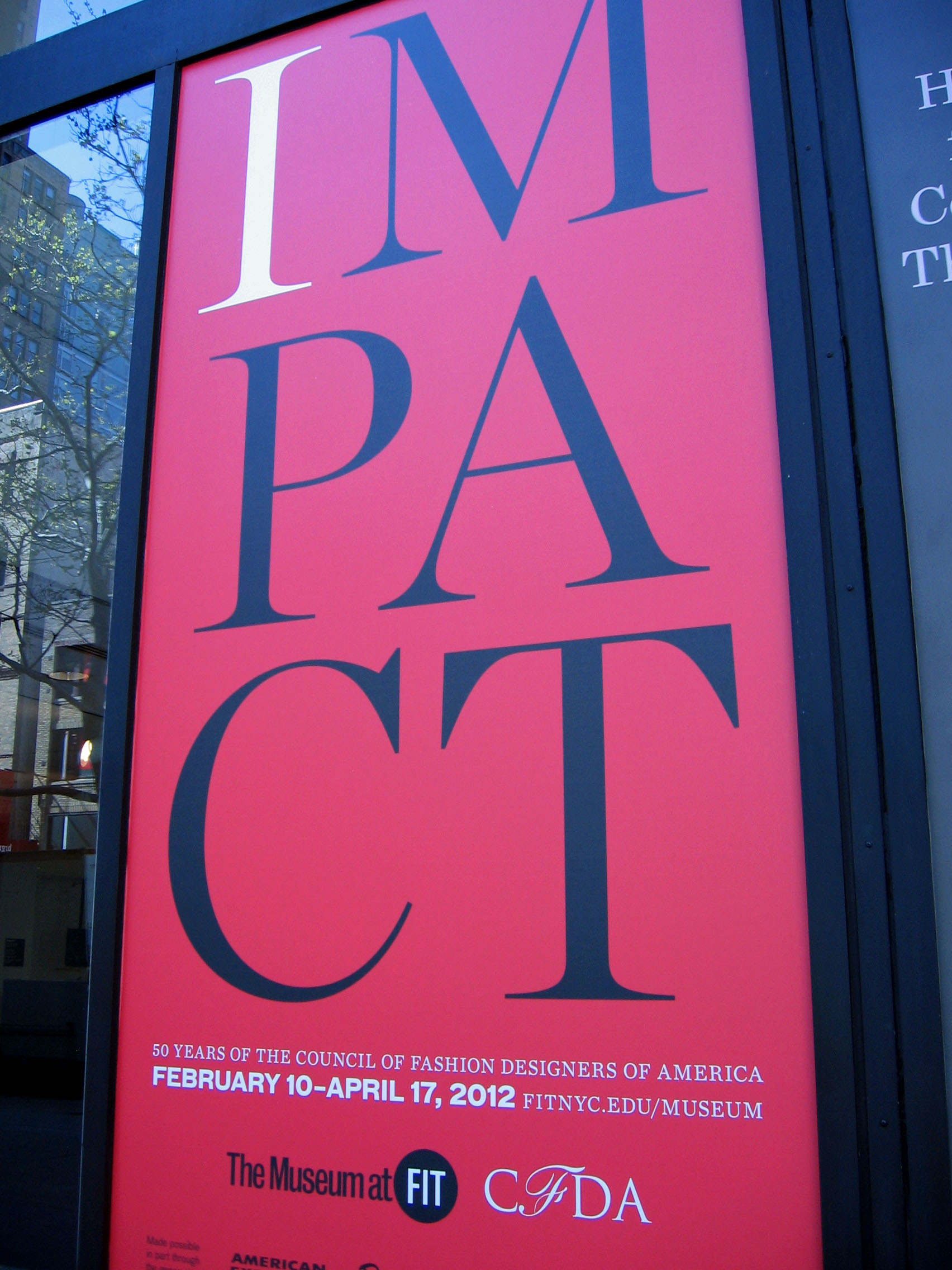
There’s a few more days to walk among 50 years of American fashion history at FIT in Impact: 50 Years of the CDFA, a partnership between FIT and the Council of Fashion Designers of America.

The collaboration includes an interactive timeline that steps through some of the most significant moments in the industry over five decades.  If you can’t get to the gallery to play with this iPad production, take a walk through history online, or enjoy E!’s  YouTube tour with the show’s curator.

Oscar, Geoffrey, Zac, Carolina – They’re all here. The main exhibition space is lined with 100 iconic work, each chosen by the designer to reflect their best – Halston’s liquid gold strapless dress (1976), Diane’s leopard print wrap ensemble (1974), Ralph’s Navajo-inspired knit jacket and concha belt (1981), and Donna’s wrap skirt with oversize belt and matching cuff (1985).

High-drama awards go to Zac Posen’s sculpted red gown (think Charles James) and Norma Kamali’s parachute fabric and feather creation (think Alexander McQueen).


When Theater was Fashion

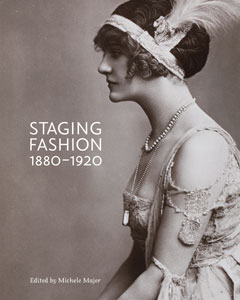
With everyone still mourning the demise of Bill’s Gay Nineties, fans of US theater of the early 1900s can gaze for one more week at the fashionable women who trod the boards way back then at the Bard Graduate Center’s show, Staging Fashion, 1880-1920.

Like the FIT’s Youthquake show, graduate students contributed heavily to this exhibition gem, which explores the intersection of theater and fashion back when stage actresses first became pop icons. Photographers needed celebrities to promote their studios; actresses needed to keep fans supplied with a steady flow of images; and designers wanted the latest to be seen on glamorous, trend-setting actresses.

The show on Bard’s top-floor gallery features clothes and images of three of the most popular actresses – Jane Hading, Lily Elsie, and Billie Burke. Check out the highlights – mass-produced postcards, theater fan magazines, advertisements, and personal testimonials for consumer products. Has pop culture really changed much? Judge for yourself.

Hey, Hey It’s the ‘60s!

You have two more weeks to explore the fab, new tribute to the Mod, Mod world of 1960s fashion at FIT’s grad-student-curated exhibit Youthquake! The 1960s Fashion Revolution.

If you can’t make it to Seventh & 27th Street, check out the paper dresses, boutiques, and YouTube videos from the era, all posted on the exhibition web site. What’s better than watching original Paco Rabanne and Andre Courreges fashion movies from the late 60s, Grace Slick, and Ready, Steady, Go?

And what about the Youthquake timeline!!

Closes April 7, but it’s open until 8pm Tuesdays through Fridays.