Find a Good Weave

Ernesto Neto, The Sun Lits Life, Let the Son installation at Tanya Bonakdar Gallery

This week is the time to see some really innovative weaving by three completely different artists.

In Chelsea, relax into the colorful crocheted poly-chord environmental sculptures created by Brazilian artist Ernesto Neto at Tanya Bonakdar’s 21st Street Chelsea gallery. The participatory experience is more intimate than Neto’s Park Avenue Armory installation three years ago, but features his signature dangling spice-filled pods. Be sure you climb to the second floor to recline on the Blue Hammock and Green Hammock. Enjoy the photos here, but experience it all in person before the final day, May 25.

If you missed Sheila Hicks’s 50-year retrospective last year at Philadelphia’s ICA, celebrate her achievement at Sikkema Jenkins one block away on 22ndStreet. The array of fiber work from 1958 to today is cooler and more high-concept. Runs until June 2.

Aricoco, nest-un-settled (aging), 2011

At Columbus Circle, meet young Brooklyn artist Aricoco upstairs at the studios on the 6th Floor of the Museum of Art and Design. Known for her interdisciplinary works and performances, such as her RUNawayHOME cocoon, ask her what she’s weaving out of the red and white plastic shopping bags she sourced in Chinatown.
Manhattan’s Digital Grid

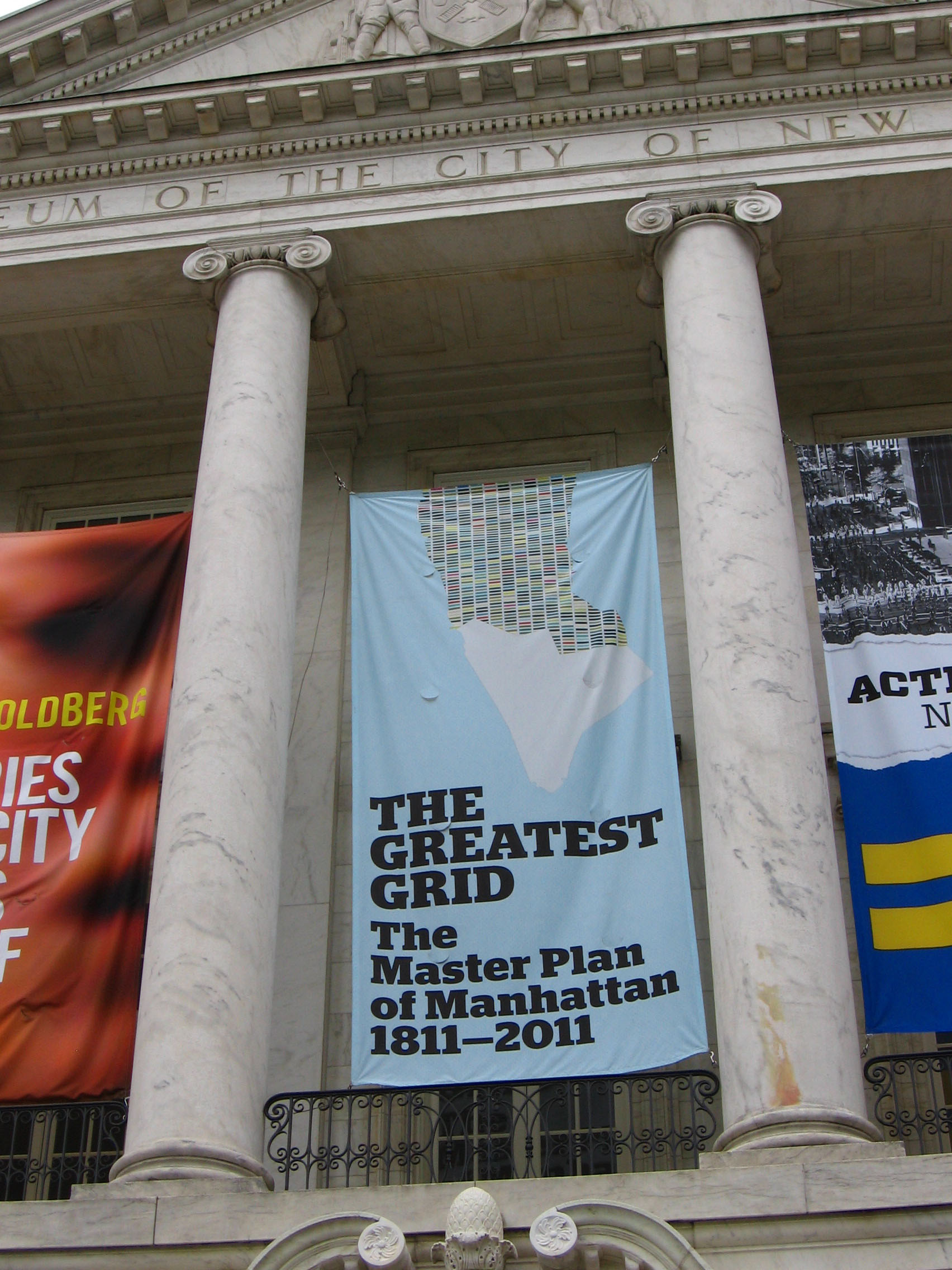
How much fun can you have with the Manhattan Grid? Plenty, if you have computer access and can make a trip (before July 15) to the The Greatest Grid exhibition at the Museum of the City of New York.

Plan to spend a couple of hours wrapping your mind around how the farmland in your neighborhood was leveled by hand and horse cart to make the wide, smooth streets and sidewalks we’re used to today. (You’ll quickly see that the East Side’s Second Avenue Subway construction isn’t that big a disruption after all!)

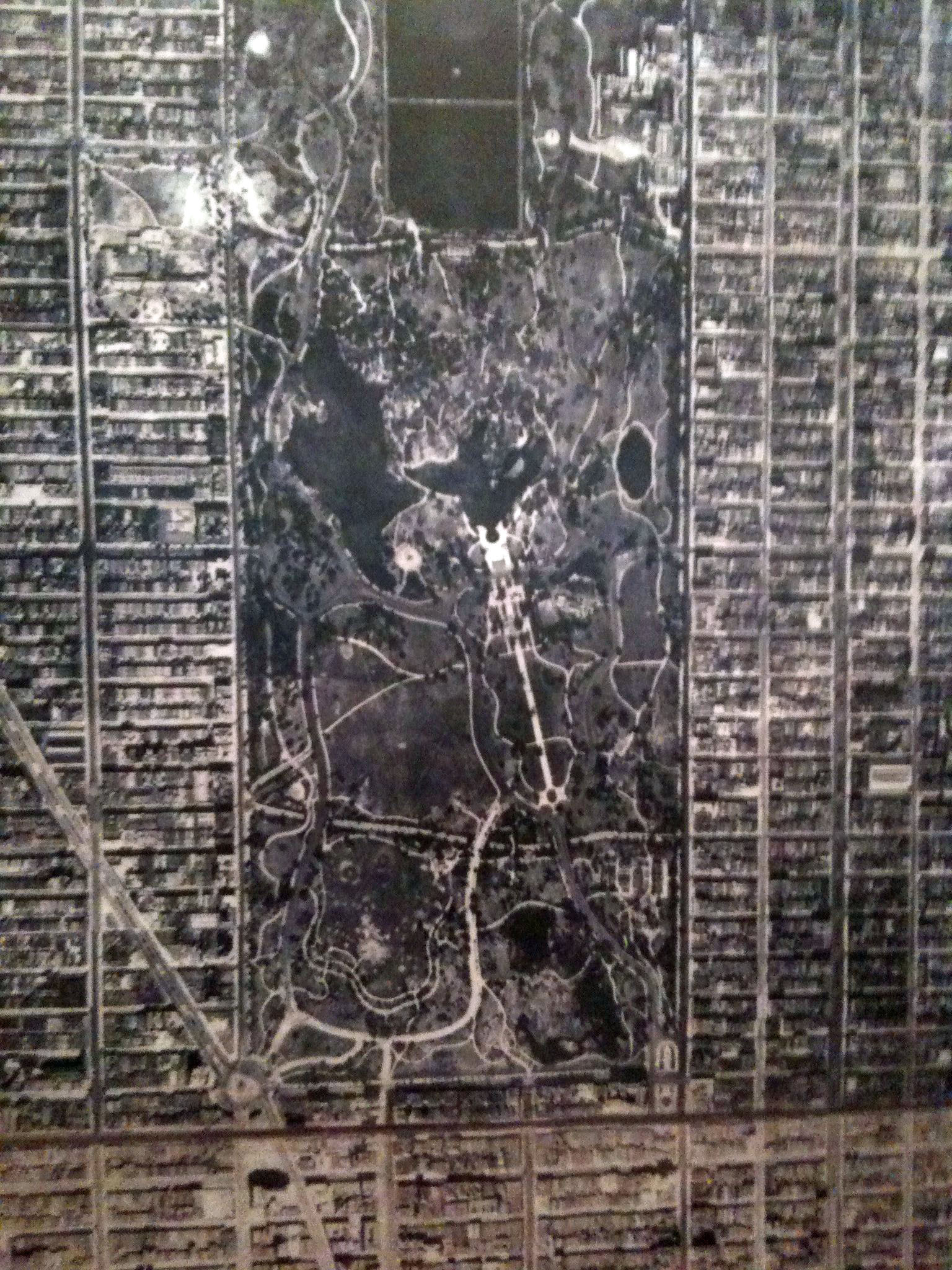
Go online and check out one of the exhibit’s highlights – a digital composite of 92 farm maps drafted in 1818-1820 by John Randel, Jr. to show how the grid would bisect various hills, rivers, streams, swamps and pastures in years to come. Zoom in on your street and see who owned your property in the early 1800s, and read how MCNY worked with the City create this cool online map.

Also, take a look at the digital maps posted by The New York Times, including Randel’s big 1811 map of the grid (the centerpiece of the MCNY show), the 1836 farm map, and other interactive images created by the NYT team. Clicking through the views on the left will reveal all sorts of interesting history.

Check out the Channel 7 Eyewitness News video, featuring an interview with the curator (NYU’s Hillary Ballon) and a peek inside the show.

Want to do a little time travel on the modern version of the Manhattan grid or another borough? It’s easy. Go to NYCityMap and type in an address. When the schematic map appears, clock on the “Photo Camera” icon at the top of the map and you’ll see an aerial view of the neighborhood. Move the slide bar to enjoy the view to any time between 1924 and today to see what the block was like way back when.

Ferry to Frieze

The international art crowd has descended upon a deserted island that is crammed with sculpture, installations, art talks, events, high-end food, and 180 galleries from all corners of the world. It’s the Frieze Art Fair (New York edition) and there are two more days to catch it on little-visited Randall’s Island in New York’s East River.

One of the nicest ways to get there is via the free New York Water Taxi, which offers a spectacular ride up the East River. Check out the photos. If you can’t get out there today or tomorrow, check out the virtual walk-through of the caterpillar tent and sculpture garden.

For other virtual fun, go shopping on the Frieze Art Fair virtual site, read more about the special projects that were commissioned for the fair, take advantage of the podcasts of the special talks, and listen to some of the sound projects.

Hope to see you at the fair!

Entrance to the Frieze Art Fair on Randall’s Island

Florence, Machine & McQueen

Nostalgic for the Met’s McQueen show last year? In the run-up to 2012’s Costume Institute Gala at the Met next Monday, Vogue is running its fantastic video of last year’s gala featuring, well…everybody. Just try to count the famous faces in this video.

You’ll get a glimpse of the red carpet, the grand staircase, cater waiters, celebs, designers, Scottish bagpipers, the exhibition itself, and Florence holding forth at the Temple of Dendur with vocals, charisma, and lighting that Lee would have loved (very Plato’s Atlantis).

In case you didn’t know, this year’s fete will celebrate Schiaparelli and Prada, who are taking up residence at the Met through mid-August in an exhibit that opens to the public on May 10, featuring videos by Baz Luhrmann with fictional “conversations” between these two design icons. Preview some of the featured fashions and theme.

And be sure to set your calendar to see the live web stream of the glitterati on this year’s Costume Institute red carpet on May 7, sponsored by the Met, Vogue, and Amazon.

Learn Your ABCs (of Fashion)

Can you name a fashion designer for every letter of the alphabet? Test your skills by visiting FIT Fashion and Textile History Gallery to see Fashion, A-Z.

FIT uses its street-level gallery to showcase its permanent collection of 50,000 garments and 30,000 textiles, and this time they’ve decided to test your alphabet skills as well, by starting with Armani and Alaia arranging the installation mannequins right through to Yohlee and Zoran.

Boudicca ensemble, Fall 2006, England, museum purchase

If you miss it, don’t worry. This is only Part 1 of the total extravaganza. Part 2 begins May 23.

Oil Drills in Manhattan

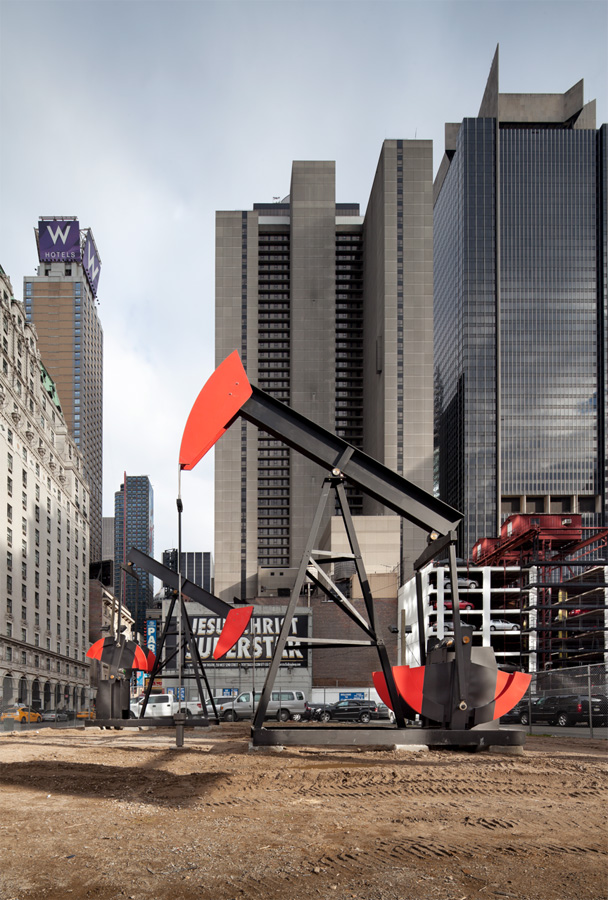
 Have you seen the latest art installation in the Theater District? It’s Josephine Mecksper’s Manhattan Oil Project – two 25-foot tall oil pumps churning away 4 hours a day (twice a day) weekdays and 8 full hours each weekend.

Go to the undeveloped land on the southeast corner of Eighth Avenue and 46th Street and bring your friends (and camera) before it’s gone.

Sponsored by Yvonne Force Villareal’s Art Production Fund, which produces hard-to-produce artist installations, this one had special help from Sotheby’s and The Shubert Organization, which know a thing or two about mining riches in Manhattan.

Is it actually pumping oil? Feel free to stand there and answer out-of-towners questions on that one.


Hey, Socrates, What Do You See?

If you’re hankering for last summer’s BMW Idea Lab, zoom in on the conversation on the future of Long Island City and the shoreline near Socrates Sculpture Park at the Noguchi Museum’s visionary show Civic Action.

Noguchi and Socrates have commissioned four artists to work with architects, designers, and urban planners to reimagine the surrounding neighborhood, a mélange of homes, high rises, light industry, and Costco. The proposals by Mary Miss, George Trakas, Natalie Jeremijenko, and Rirkrit Tiraanija are on display at the Noguchi for a few more days. Other related installations will appear at Socrates in May.

If you can’t get to Queens, go virtual by checking out three videos and watch the brainstorming among artists and planners:

Enjoy the discussion and contemplate some exciting futures.

Beaton Leaving New York

It’s the final countdown at the Museum of the City of New York’s tribute to Cecil Beaton’s New York Years – an installation of scrapbooks, books, drawings, stage costumes, set designs, and photographs by one of the 20th century’s leading chroniclers of celebrity, night life, and royalty.

The array of fashion, society, stage and screen icons is astonishing – from deWolfe and Elsa Maxwell through Monroe, Garbo, both Hepburns, and right up to Jagger…all shot in New York, many for Vogue (including that famous photo of those Charles James gowns).

You’ll get the idea as you step back in time via this British Pathé film documenting Beaton’s 1968 exhibition at London’s National Portrait Gallery.

And who knew there was a licensed fabric collection inspired by his work? Check out this blog featuring some his best photos.

Walk the US Fashion Timeline

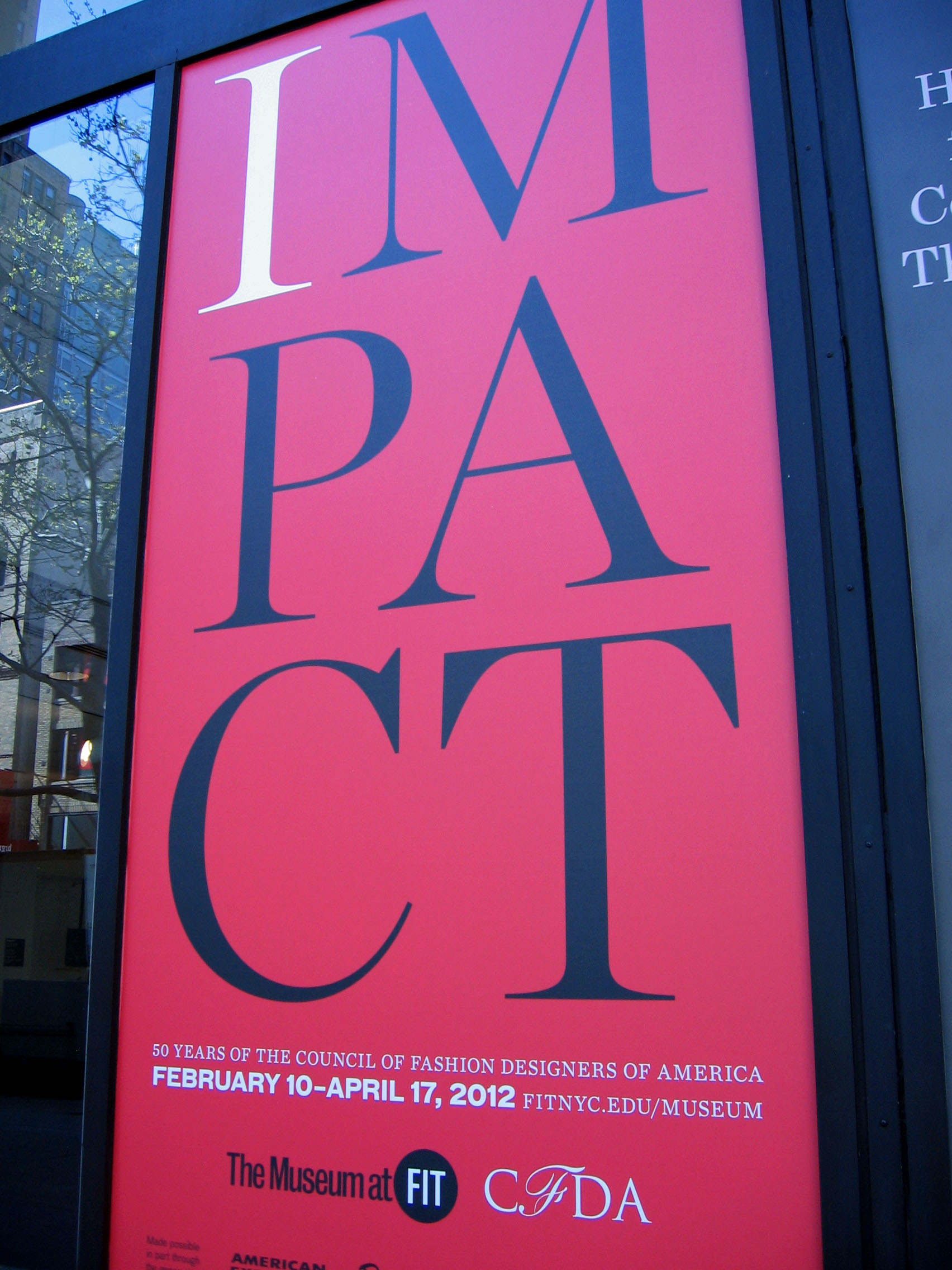
There’s a few more days to walk among 50 years of American fashion history at FIT in Impact: 50 Years of the CDFA, a partnership between FIT and the Council of Fashion Designers of America.

The collaboration includes an interactive timeline that steps through some of the most significant moments in the industry over five decades.  If you can’t get to the gallery to play with this iPad production, take a walk through history online, or enjoy E!’s  YouTube tour with the show’s curator.

Oscar, Geoffrey, Zac, Carolina – They’re all here. The main exhibition space is lined with 100 iconic work, each chosen by the designer to reflect their best – Halston’s liquid gold strapless dress (1976), Diane’s leopard print wrap ensemble (1974), Ralph’s Navajo-inspired knit jacket and concha belt (1981), and Donna’s wrap skirt with oversize belt and matching cuff (1985).

High-drama awards go to Zac Posen’s sculpted red gown (think Charles James) and Norma Kamali’s parachute fabric and feather creation (think Alexander McQueen).


When Coffee Houses Were Facebook

You have one more week to find out what the 18th century social network was like at the intriguing exhibition at New-York Historical on the events that propelled simultaneous American, French, and Haitian revolutions.

Girodet’s 1797 painting of Jean-Baptiste Belley from Versailles

As soon as you enter Revolution! The Atlantic World Reborn at the New-York Historical, you find yourself inside the social hub a Caribbean seaport city in the mid-1770s – the coffee house, where people reread month-old newspapers, asked arriving seamen for news, discussed European imperials, and complained about taxes, trade, and tyranny.

Winding your way through the history maze, you’ll encounter the original penned version of the Stamp Act (1765), the first edition of Thomas Paine’s Common Sense (1776), and Napolean’s approval to sell Louisiana to the United States (1803). The story line weaves in the slave trade, the Haitian revolution, and the rise of voodoo in the Caribbean – a unique retelling of rebellion in the time of colonialism.

See the artifacts on line, but connect the dots to revolution by dropping into the exhibition this weekend.

And don’t miss the lobby painting featuring New York’s first big-time 18th c. social network — the Tontine Coffee House on Wall and Water, built by the brokers in 1793 to organize The New York Stock Exchange.