Epic Histories of Kerry James Marshall Wow London

It’s fitting that Kerry James Marshall provides a master class in history painting at the Royal Academy of Arts in London – one of the most sensational shows to inhabit those hallowed galleries off Picadilly – Kerry James Marshall: The Histories, on view through January 18, 2026.

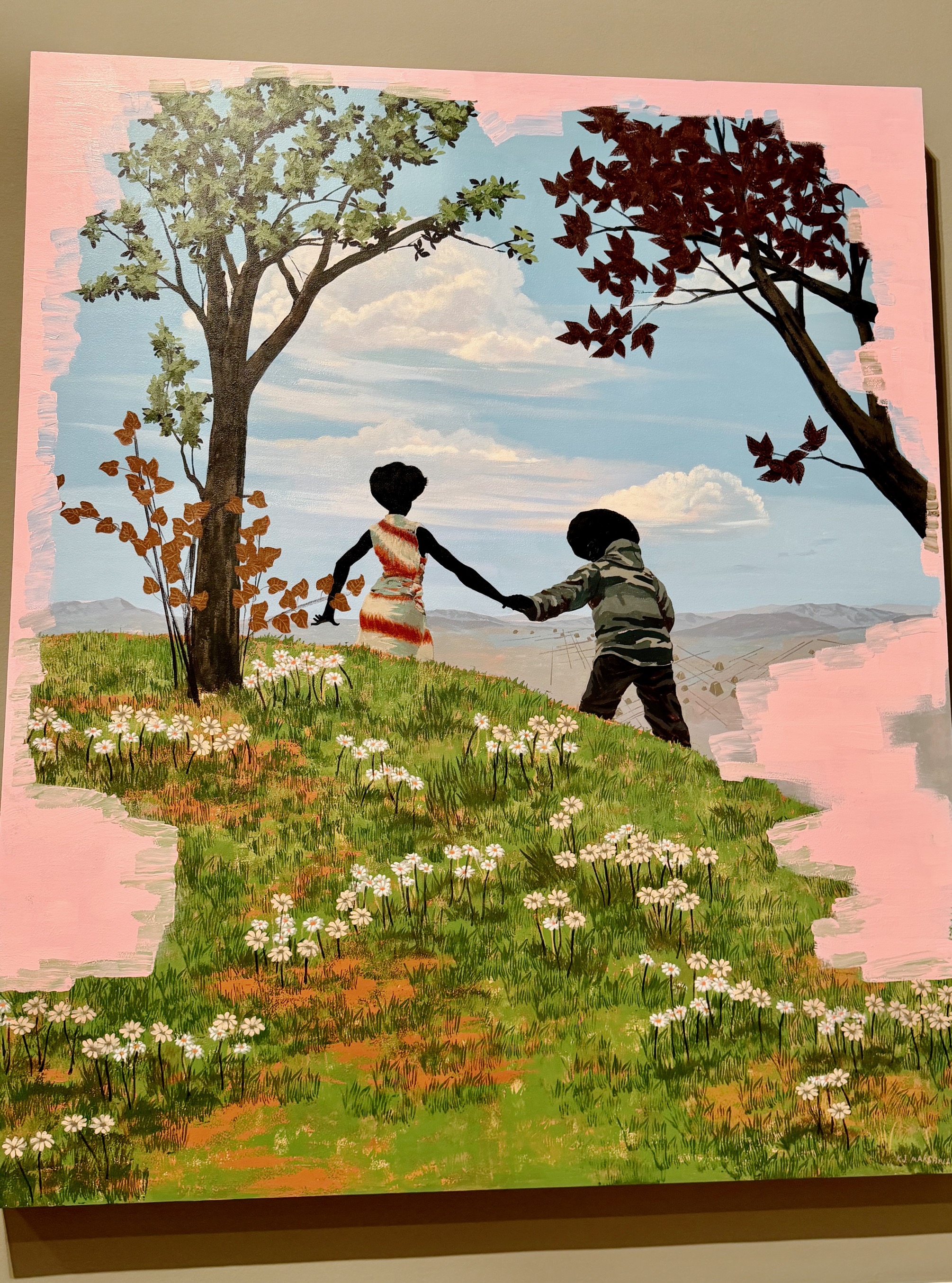
Marshall’s work fills eleven galleries of Burlington House with masterful paintings that put Black subjects back into the frame – Black citizens working in museums and art studios, delivering style in neighborhood barber and beauty shops, maintaining gardens in public housing projects, and wafting through floral fields à la Watteau and Fragonard.

Marshall’s 2008 acrylic Vignette #13 – a Rococo-inspired scene with a couple walkng through a meadow. Courtesy: private collection.

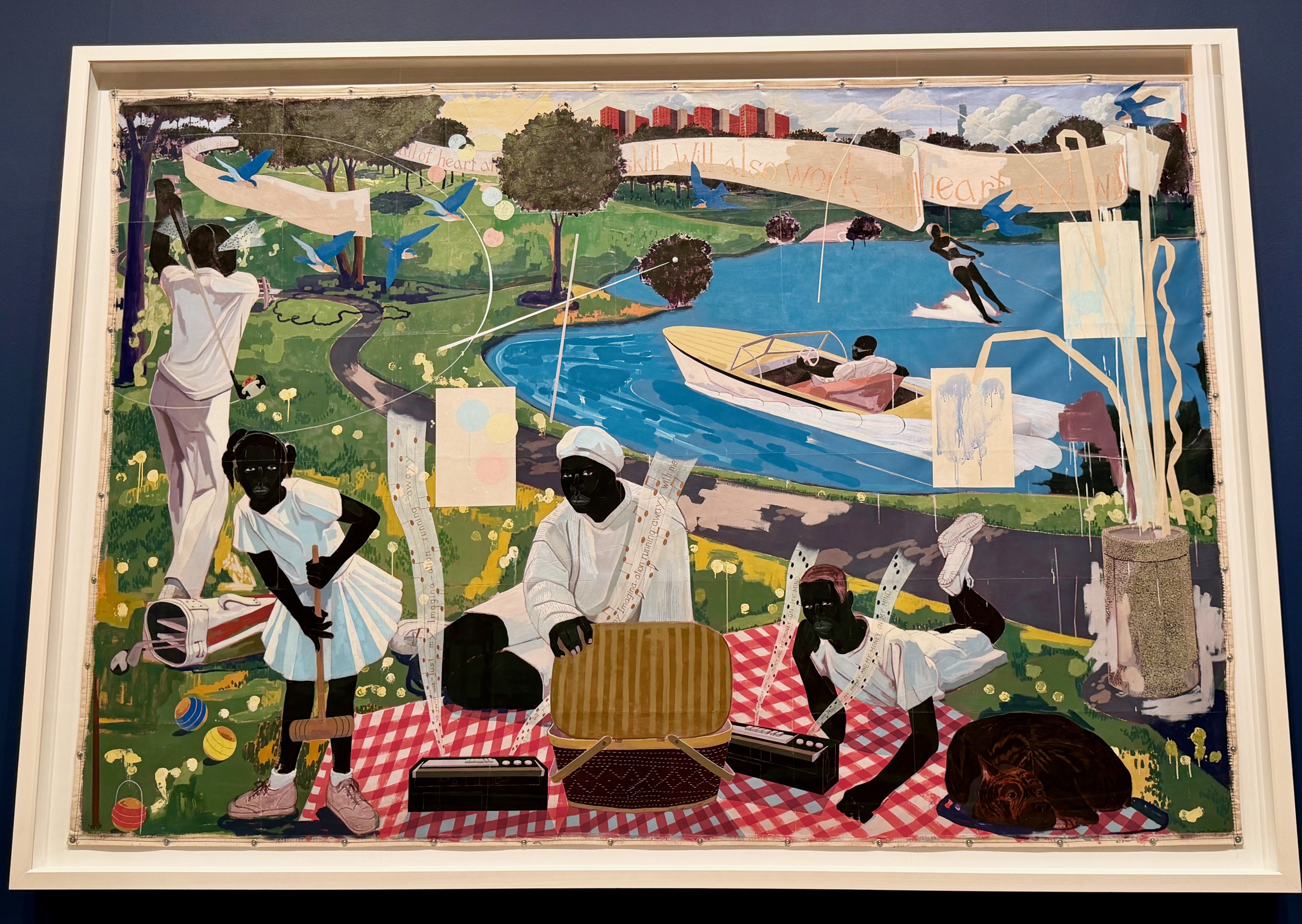
Most of these scenes are presented on a large scale and jam-packed with art-historical, literary, and world-history references. In The Painting of Modern Life-themed gallery, his grand Past Times certainly evokes Parisian leisure-class epics by Manet and the Post-Impressionists. Marshall’s twist is to depict a wholesome, all-white-clad Black family enjoying its picnic lunch lakeside as music and lyrics by The Temptations and Snoop Dogg (literally) drift up from the radios to ask if this is “just my imagination.”

Referencing Manet and Seurat, Marshall’s 1997 acrylic and collage Past Times, where a middle-class family enjoys a picnic and music in a lakeside park. Courtesy: Art Institute of Chicago.

Take a quick look at the Academy’s exhibition preview video and hear Marshall talk about his inspirations and approach:

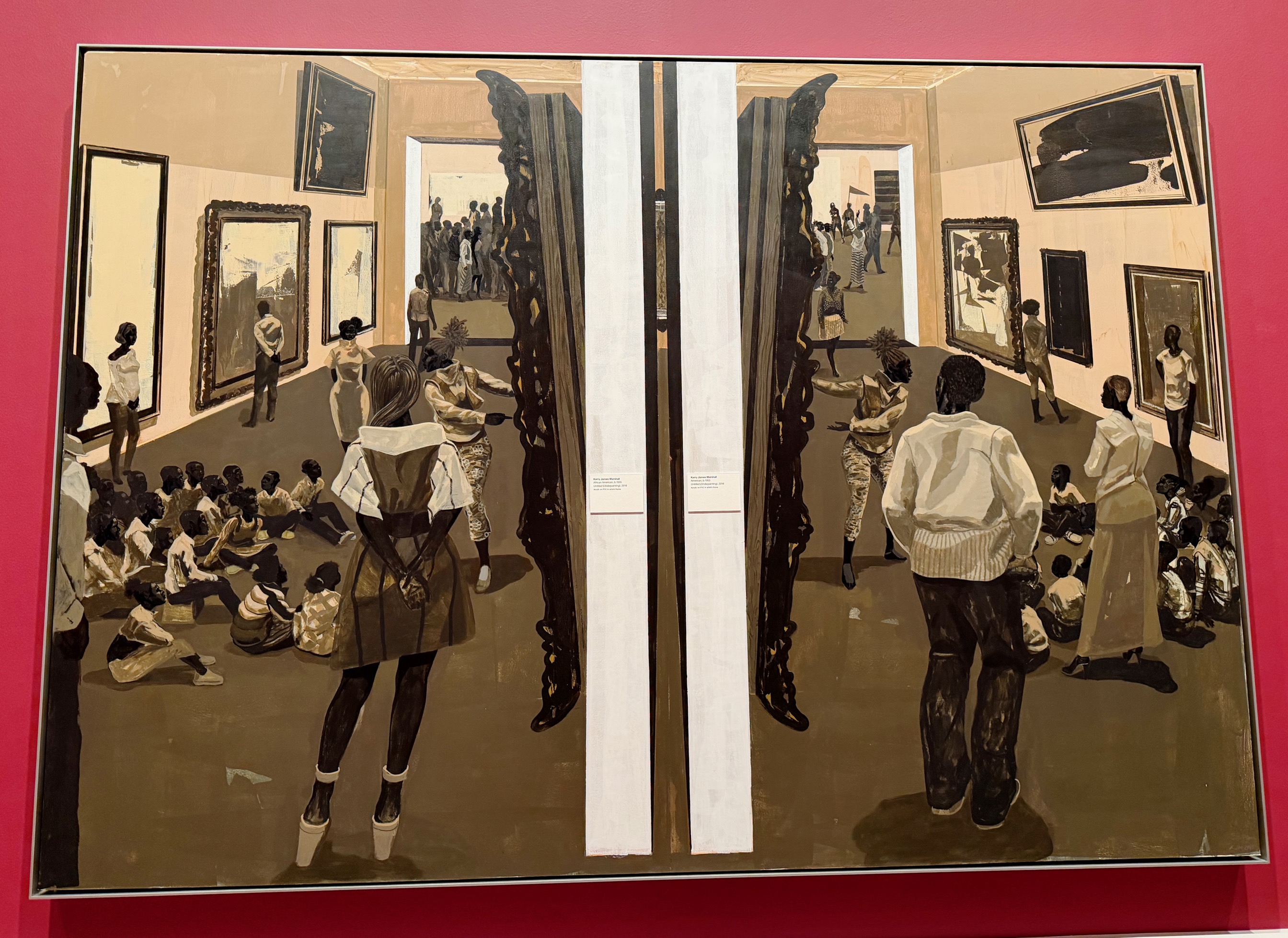
The exhibition begins with a gallery depcting self-confident artistic portraits, scenes from the academic art studio, and kids joyfully visiting a museum for the first time – a recollection of Marshall’s own exhilarating inauguration to a new world.

Marshall’s 2018 acrylic and collage Untitled (Underpainting), showing two rooms of Black kids on a museum school trip – reflecting on his earliest museum outings. Courtesy: Glenstone Museum

It’s followed by some of his earlier works inspired by Ralph Ellison’s 1952 Invisible Man and the similarly named 1897 book by H.G. Wells, with Marshall’s innovative black-on-black portraits.

Here’s a short video with Marshall describing all the different ways he uses black paint to create such vivid dimensionality:

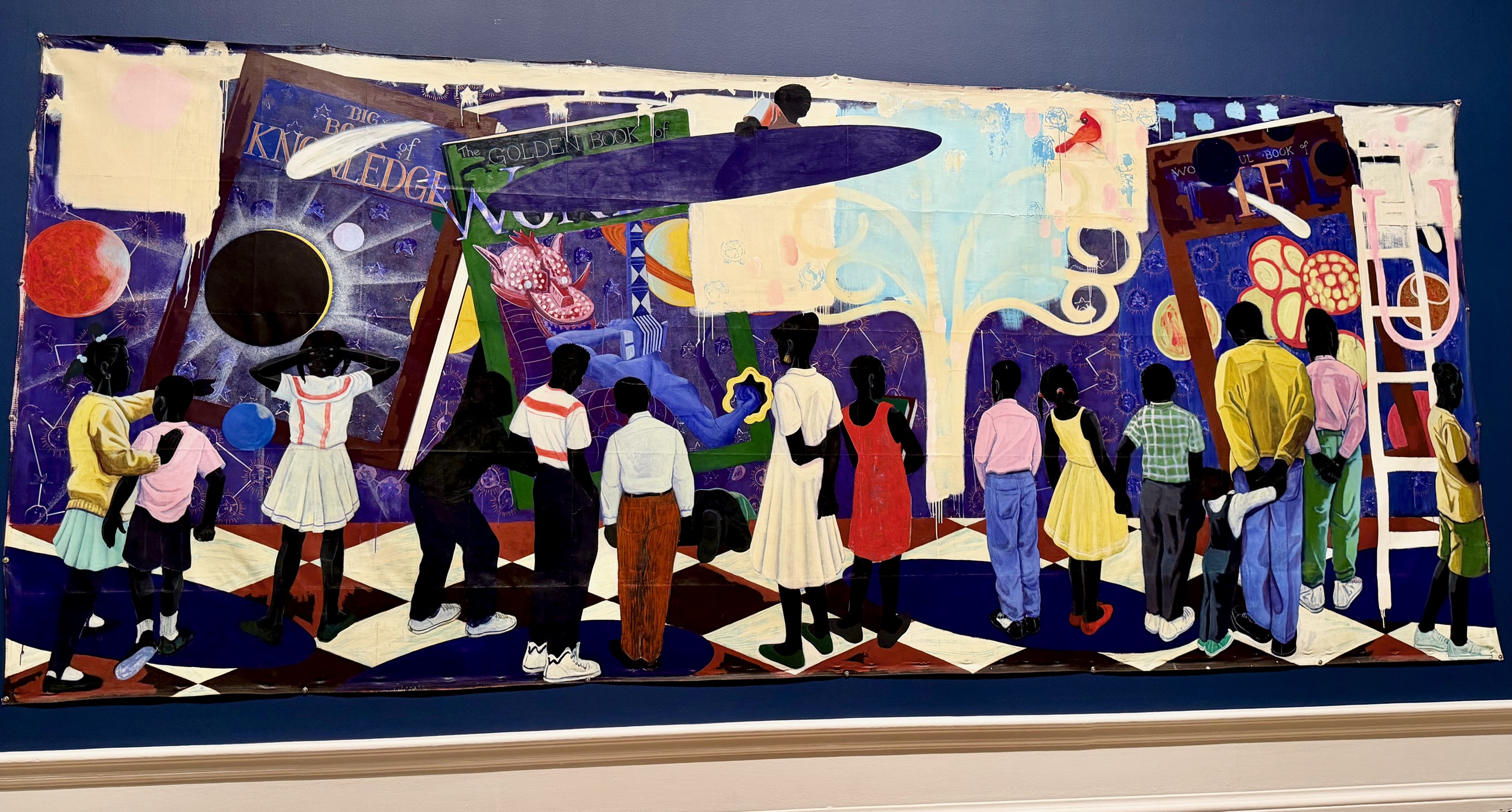
Other modern-life paintings bring viewers unexpectedly into a world of gardens among Chicago public-housing complexes and a magical world of books awaiting eager young readers.

Marshall’s 1995 mixed-media mural Knowledge and Wonder –showing inquisitive children surrounded by a world of books. Courtesy: City of Chicago Public Art Program and Chicago Public Library.

Other galleries are hung with Marshall’s assertive portraits of historic African-American abolitionist and literary figures, like Harriet Tubman and Phillis Wheatley-Peters, and tributes to 20th century political and cultural leaders.

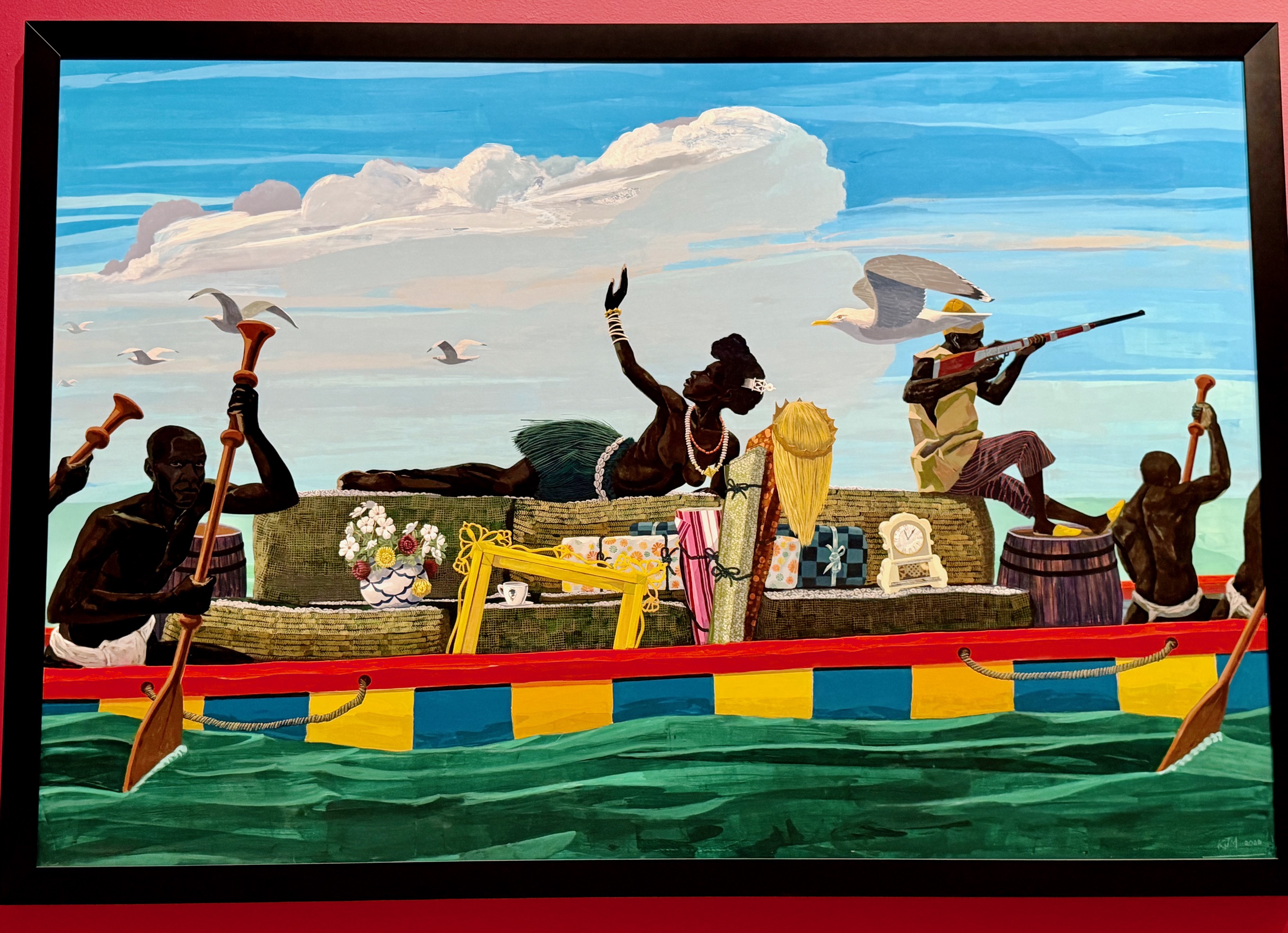
But the most talked-about works are Marshall’s grand canvases depicting the history of the trans-Atlantic slave trade – a group of symbolic works on the terrors of the Middle Passage (an Atlantic crossing where many souls never made it to the far shore) and dramatic murals of the Africans who successfully facilitated the capture and sale of fellow Africans.

Africa Revisited: Marshall’s 2025 acrylic Haul, showing Africans transporting payment from European slave traders for trafficked Africans. Courtesy: the artist and David Zwirner, London.

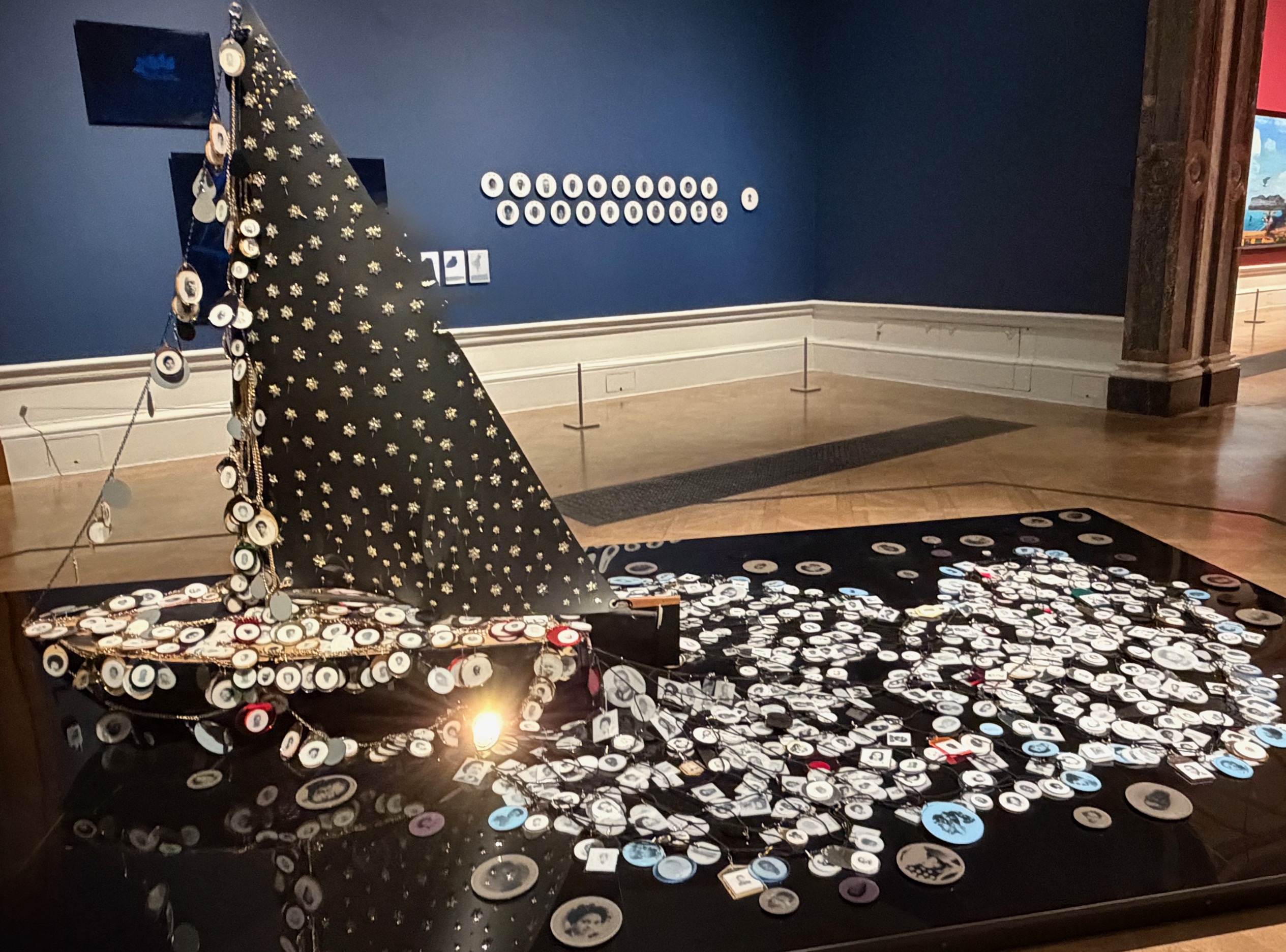
Visitors linger quietly in one of the last galleries devoted to Marshall’s installation at the 2003 Venice Bienniale. Most circumnavigate the sailing ship to get a better look at the hundreds with African-American achievement medals that are scattered about it. They also take close, respectful looks at each of the the commemorative ceramic plates that Marshall created with invented portraits of the first enslaved Africans brought to America.

Marshall’s 2003-ongoing mixed-media installation Wake originally displayed at the 2003 Venice Bienniale – a sailing ship covered with African-American achievement medals with other photographs and portraits. Courtesy: Rennie Collection, Vancouver.

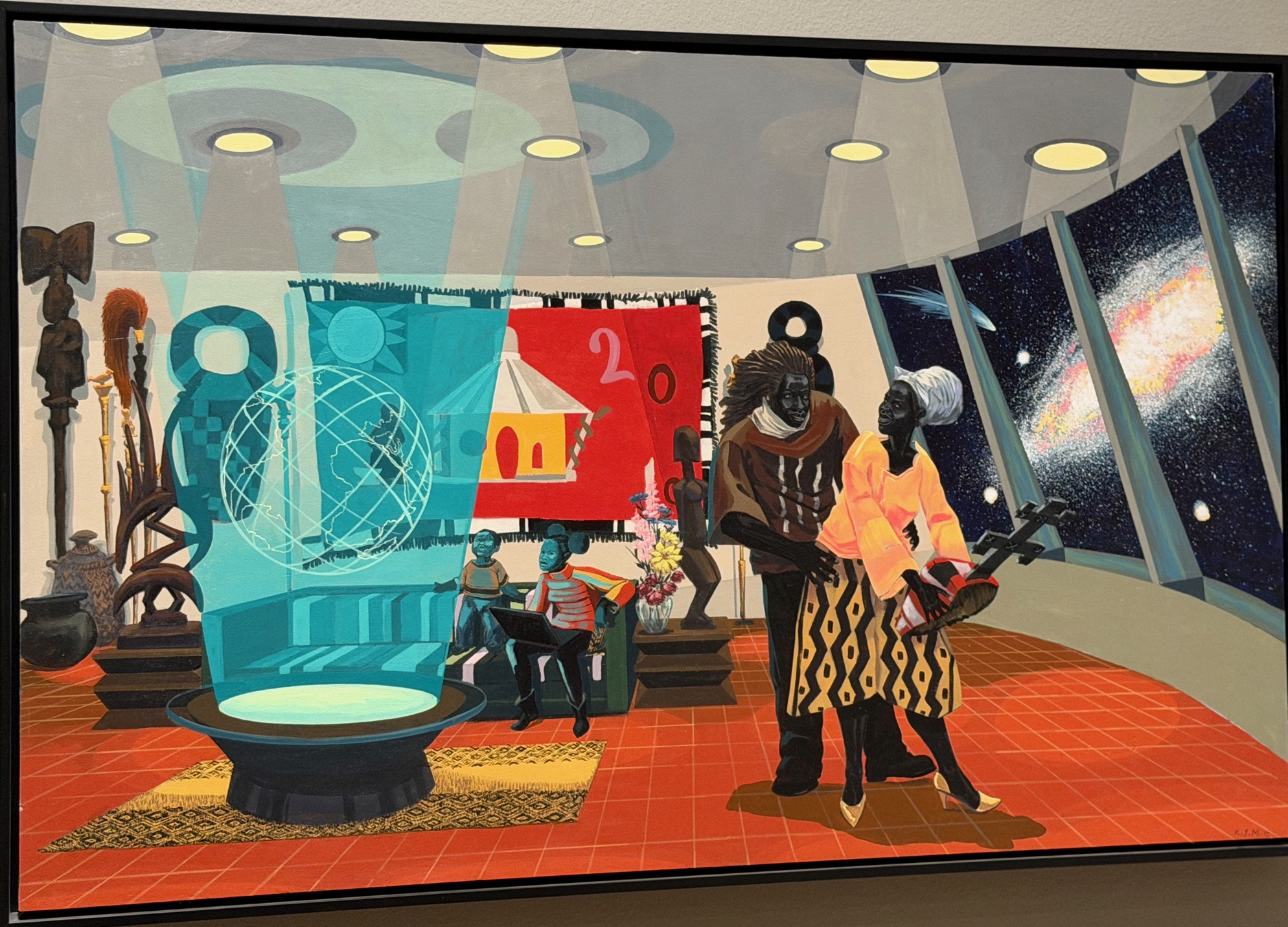
The show closes with an Afro-Futurist vision – a family in a beautifully appointed living room shooting through the universe with a view of the cosmos.

Marshall’s 2010 Afro-Futurist oil Keeping the Culture, a family of the future living in the cosmos. Courtesy: private collection.

Past, present, future, brilliant color, intriguing composition, successful Black protagonists – everything about the exhibition creates an indelible adjustment to what you thought you knew about daily Black life, lost history, and potential futures.

See more our favorite works in our Flickr album.

If you missed this show at the Royal Academy in London, Kerry James Marshall: The Histories will be shown at Kunsthaus Zürich from Februrary 27 to August 16 (2026) and at Musée d’Art Moderne de Paris from September 18, 2026 to January 24, 2027.

Marshall’s 2014 acrylic Untitled (Porch Deck). Courtesy: Kravis Collection.
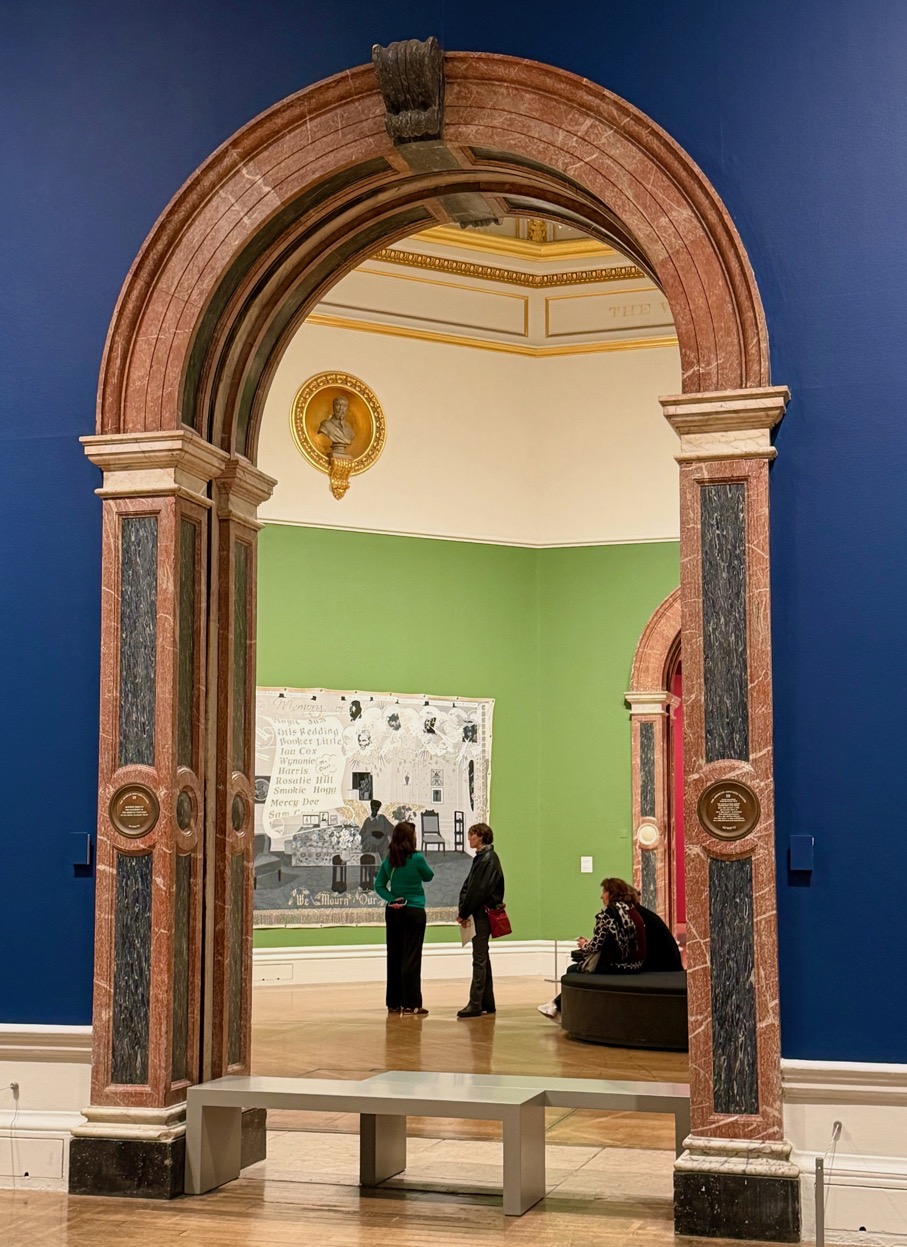
Through the arch of the central gallery; view of Marshall’s 1998 mourning tribute Souvenir IV.. Courtesy: Whitney Museum of American Art.
I

Modern Art and Political Survival in 20th Century Germany

How do artists – and their art – survive two world wars, an authoritatian dictatorship, and the bifurcation of nation’s premiere art institution? It’s the story told by the must-see exhibition, Modern Art and Politics in Germany 1910-1945: Masterworks from the Neue Nationalgalerie, on view at the Albuquerque Museum through January 4, 2026.

Berlin’s Neue Nationalgalerie mounted the show to bring never-before-seen works to the United States and tell the story of how modern art became an ideological battleground in Germany during the early 20th-century and how the history of politics, artistic innovation, and social commentary are reflected in the institution’s collections today.

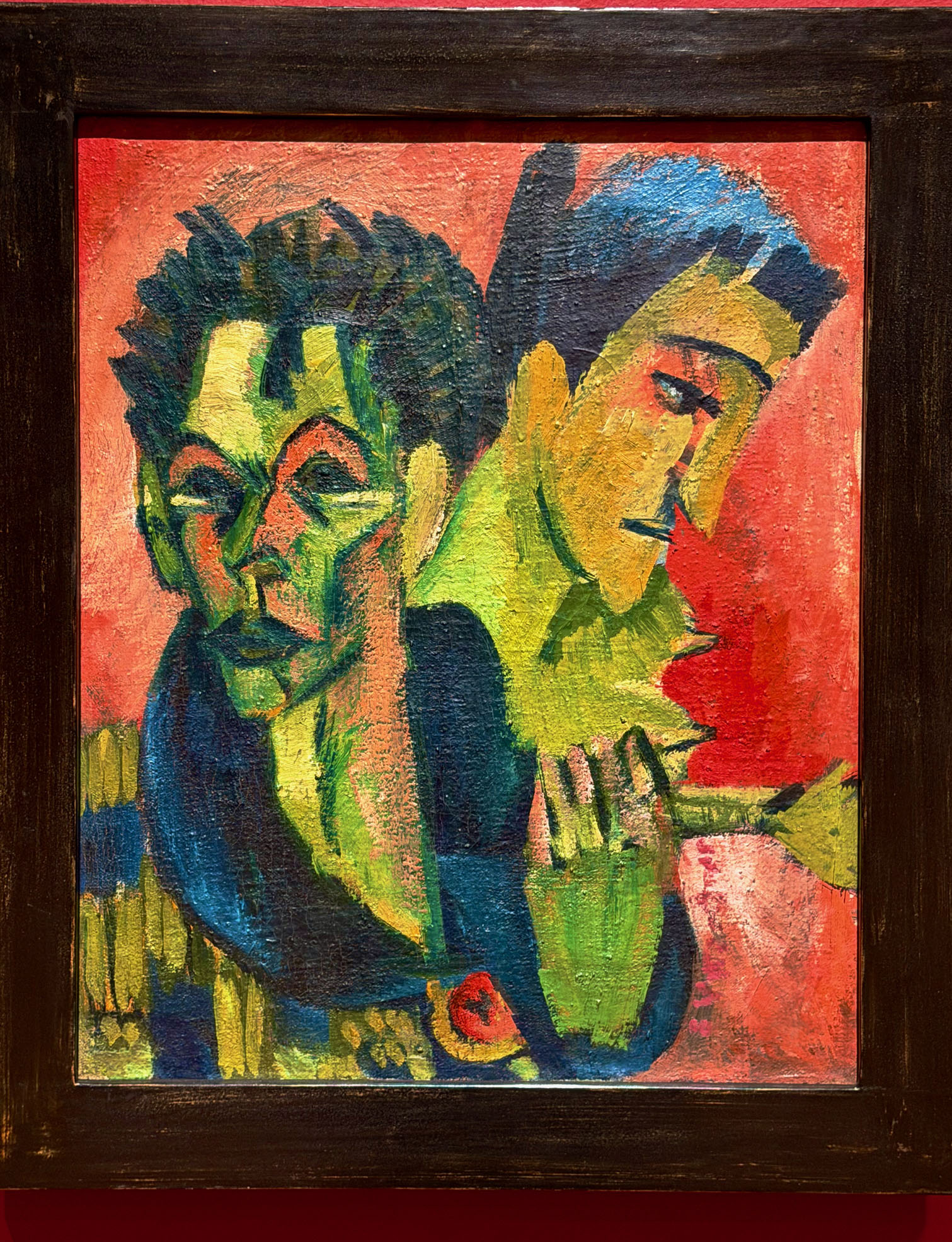
Ernst Kirchner’s 1914-1915 vividly expressionist Self-Portrait with a Girl.

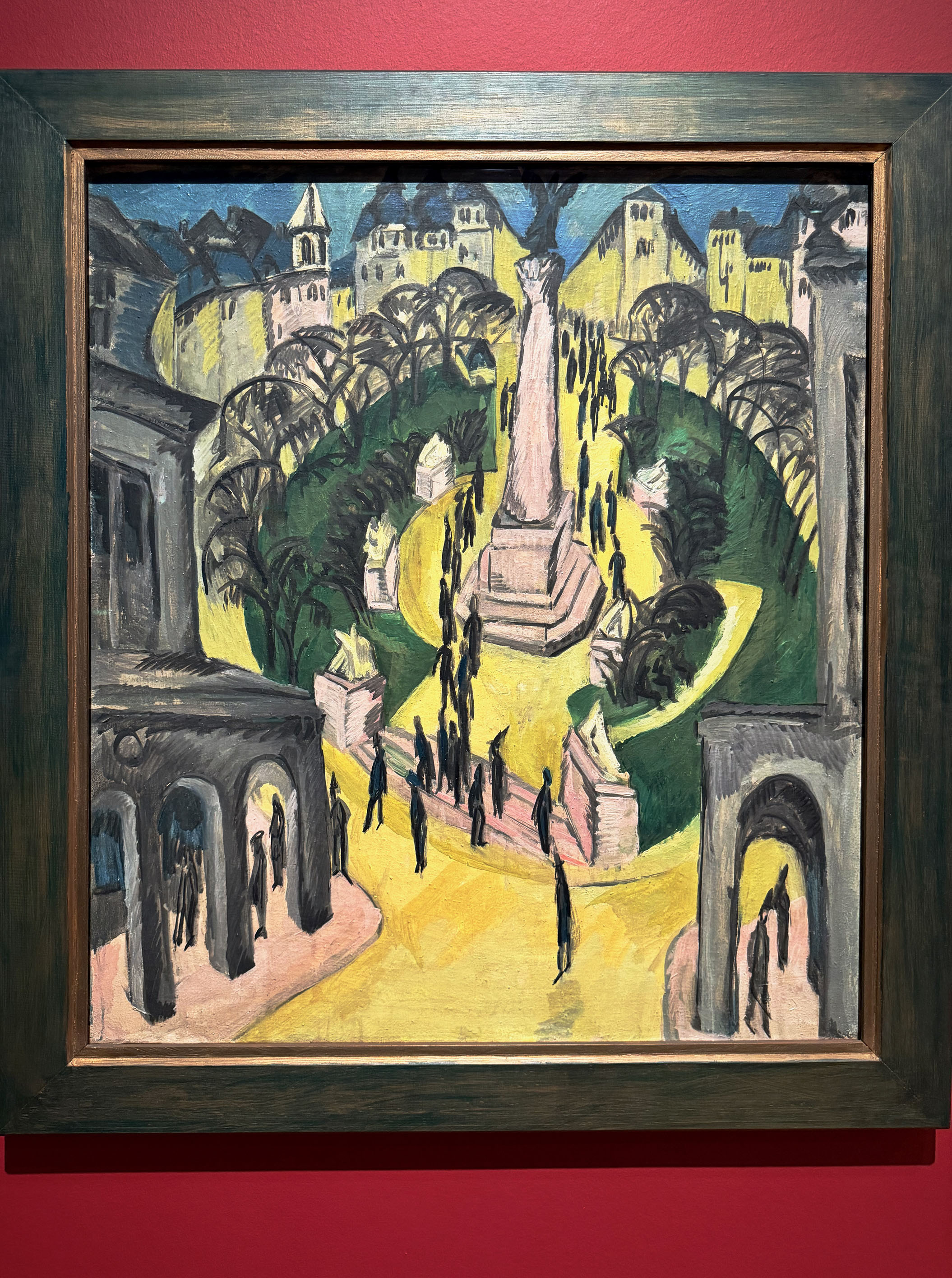
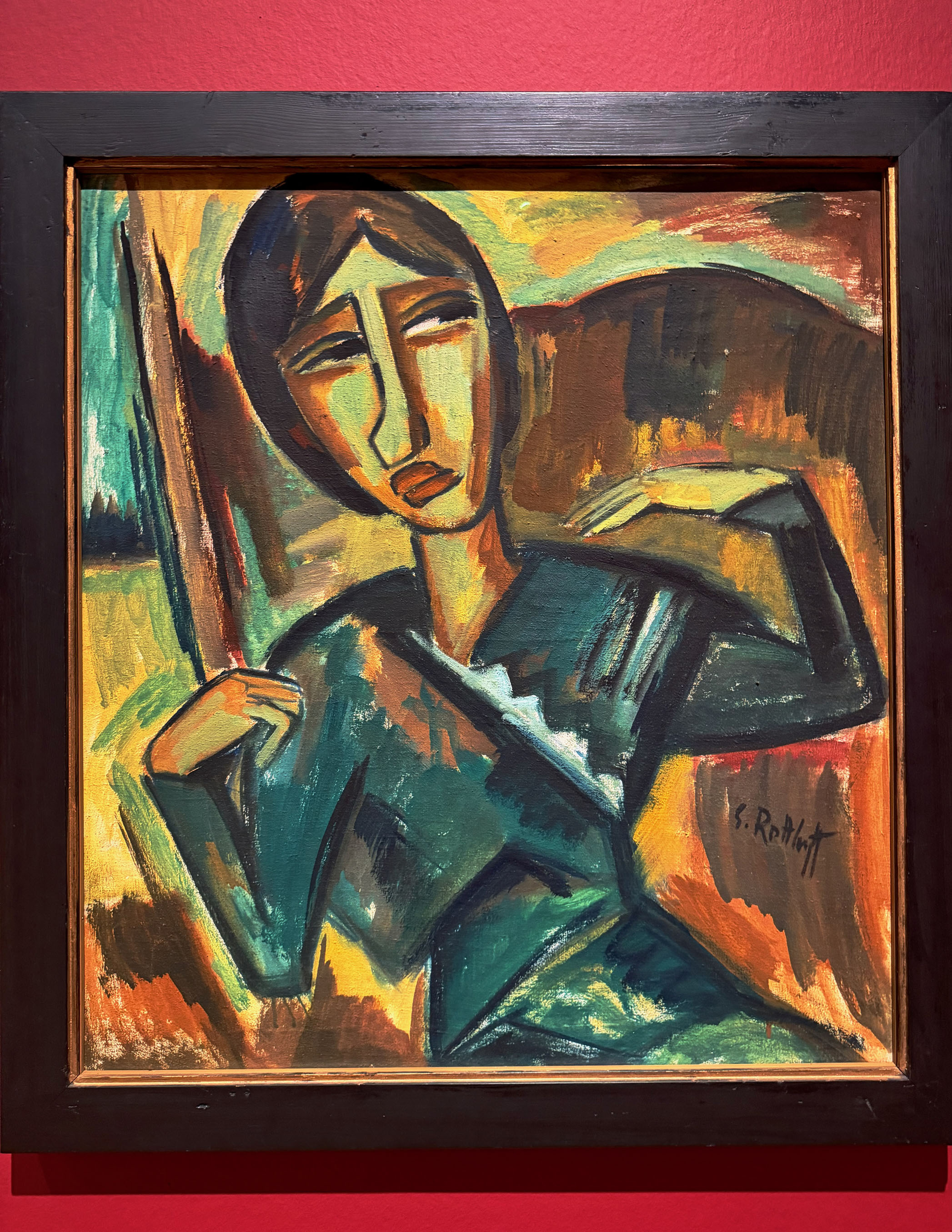
The exhibition opens with works from some of the best-known German expressionists – Kirschner, Pechstein, Schmitt-Rotluff, and Nolde. Slalshes of wild color, sharp angles, and modernist portraits nearly leap out of the frames of paintings, showing the influences of the French avant-garde fauves and Picasso’s angular Cubist planes.

Ernst Kirchner’s 1914 expressionistic city view Belle-Alliance-Platz in Berlin.
Karl Schmitt-Rotluff’s 1915 expressionist painting The Green Girl.

Another section of the exhibition presents portraits of influential German art dealers who brought the best of the avant-garde to Berlin, Munich, Dusseldorf, and other German culture capitals in the early 20th century. Works by influential modernists Picasso, Leger, and Kokolschka hang alongside works by the Russian ex-pats who formed the forerunner group to Die Brücke in 1909 – Kandinsky, Alex Jawlensky, and Marianne von Werefki.

See some of our favorite works in our Flickr album.

Austrian avant-garde: Oskar Kokoschka’s 1909 oil portrait of Viennese architect, Adolph Loos; both artists represented by Berlin gallery owner Herworth Walden.

In 1911, the German modernists formed Die Brücke – a group that celebrated getting an artist’s inner feeling out on the canvas – not just a formalist declaration against classical painting and historical norms. When World War I broke out, many went to the front. If they survived, they continued painting to process the psychological agony of the War and the economic toll it took on the homeland.

The exhibition also features a gallery full of works that are a logical outcome of experimentation – abstract works by German artists that merge the symbology and energy of Italian Futurism with the riotous colors of Orphism.

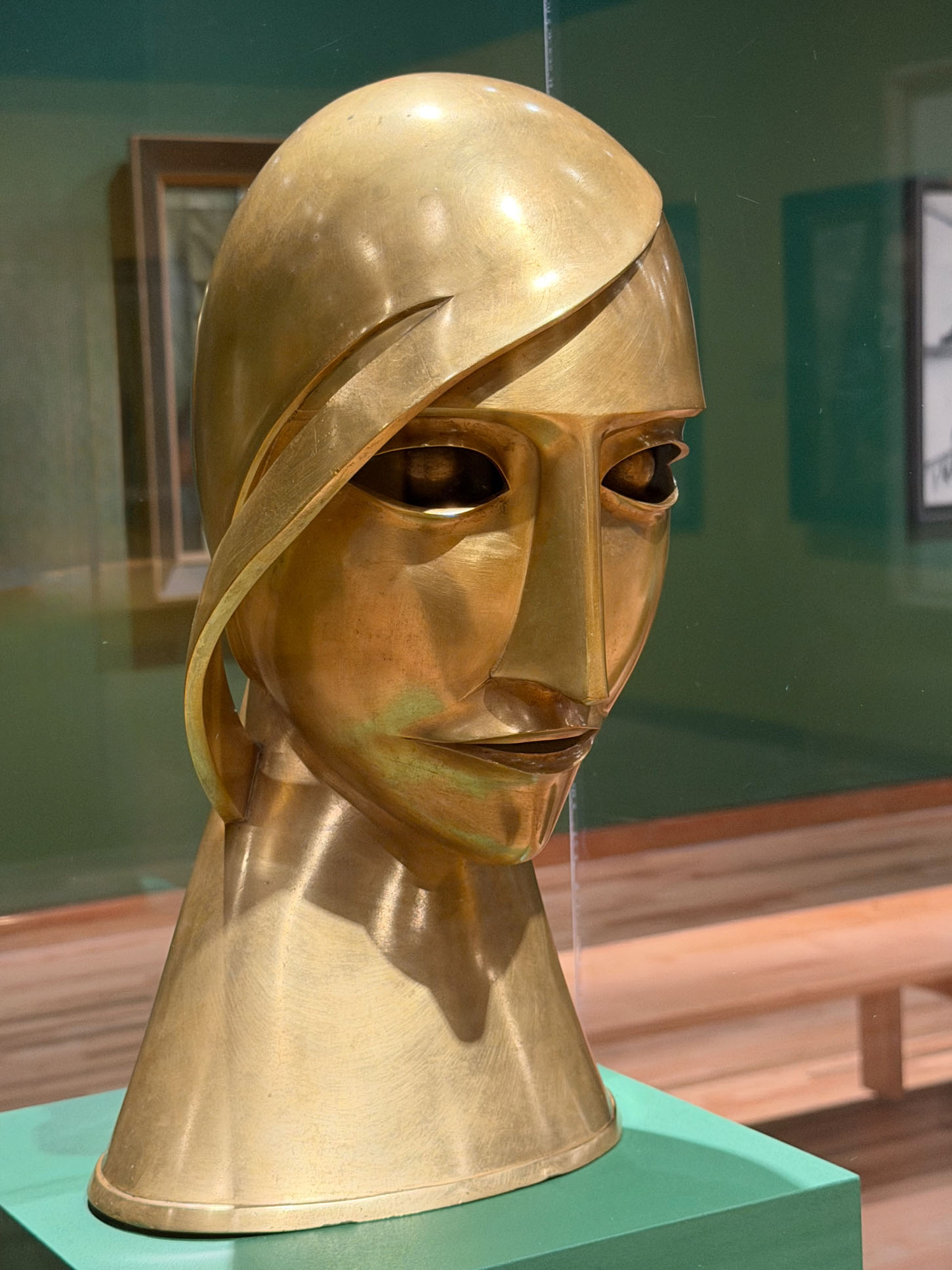
Abstract innovator: Rudolf Belling’s 1925 sculpture Head in Brass – confiscated and labeled “degenerate” by the Nazis in 1937.
Abstract innovator: Otto Möller’s 1921 oil painting City – influenced by Futurism.

Surviving hardship together, the end of World War I only motivated the survivors to come together, form societies and political action committees and keep creating.

Leading up to World War I, it seemed as though modernism would sweep the Continent and become the dominant art style collected by the progressive National Gallery. However, during the 1919-1933 democratic Weimar Republic, art preferences shifted to a highly literal, figurative style dubbed “the New Objectivity.”

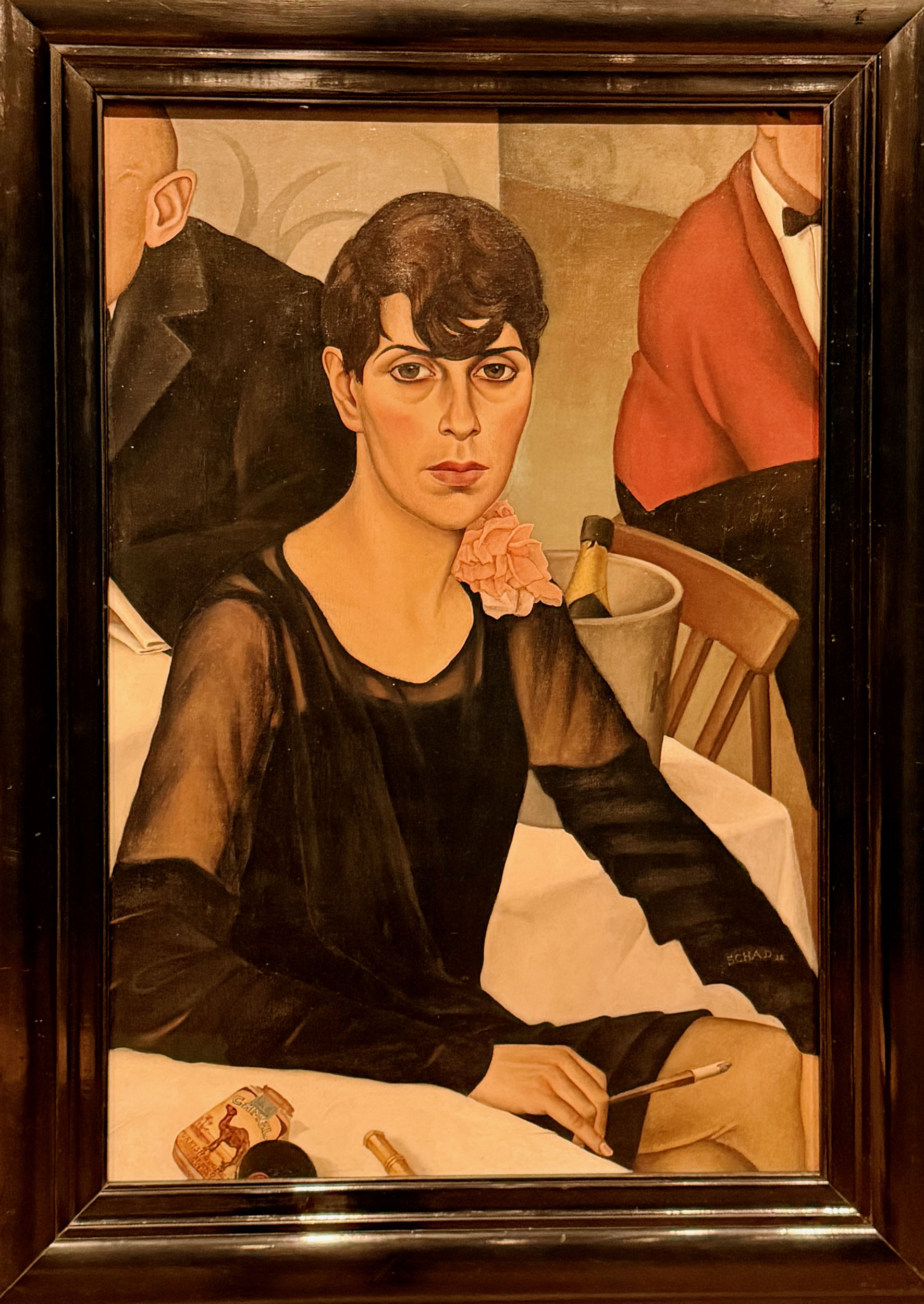
This gallery shows the artistic and political shift to realistic portraits with hints of social commentary, depictions of new technology, and a new culture of enfranchised, emamcipated women (exemplified by the museum’s iconic Sonja by Christian Schad).

But over time, the political mood shifted, and the National Socialist Party rose.

New Objectivity: Christian Schad’s 1928 Sonja– a portrait of the new emancipated women
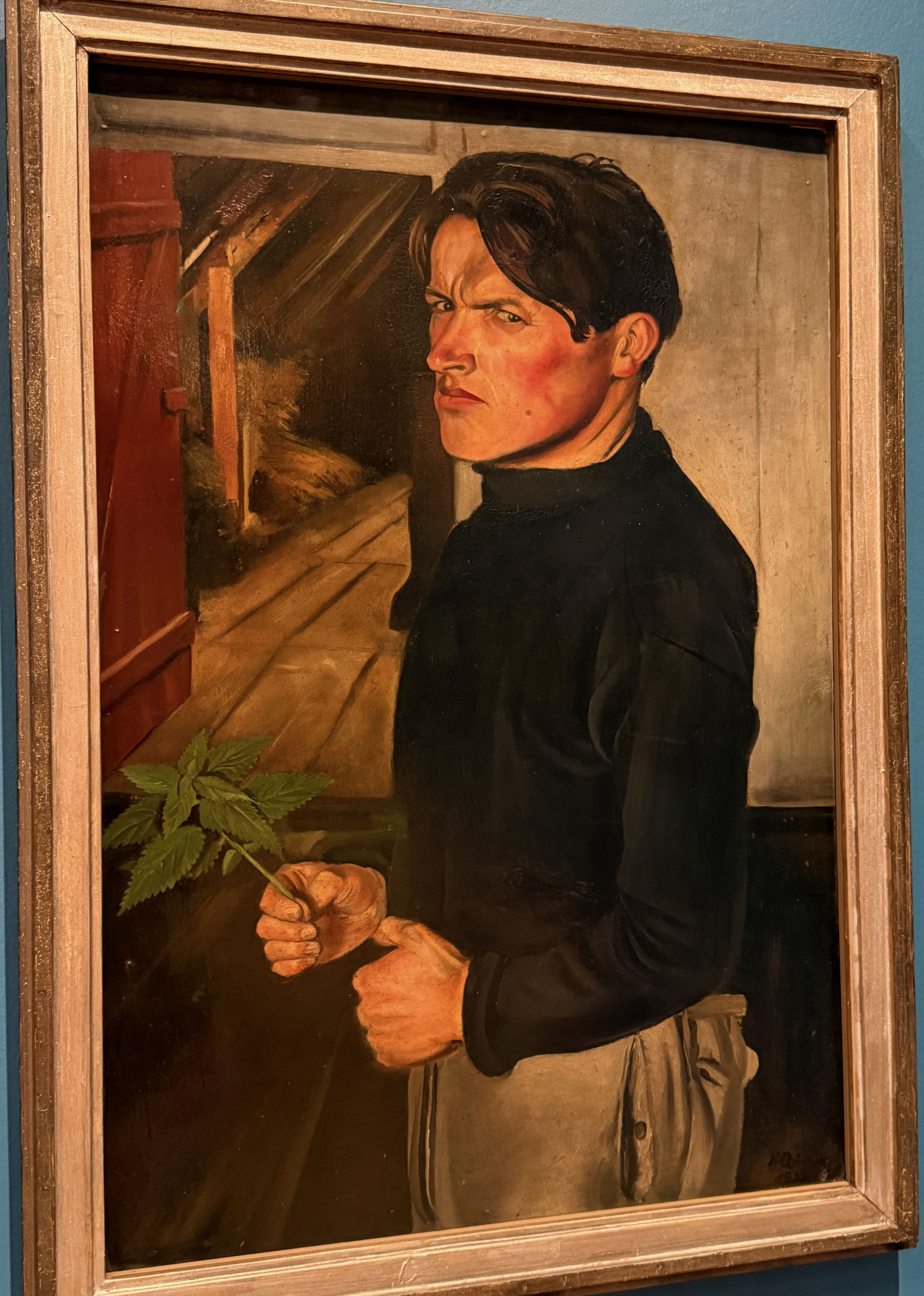
New Objectivity: Curt Querner’s 1933 oil on cardboard painting Self-Portrait with Stinging Nettle – painted in secret (and hidden) as a reaction to a violent police raid on a Communist Party meeting.

Throughout the 1930s, increasingly militaristic and anti-semetic groups formed in Germany, and as the National Socialists came to power, they fired heads of the leading art schools, shuttered the innovative Bauhaus, and banned abstract art and modernism because it did nothing to support their agenda. Artists either went underground (painting in basements) or fled the country entirely. 

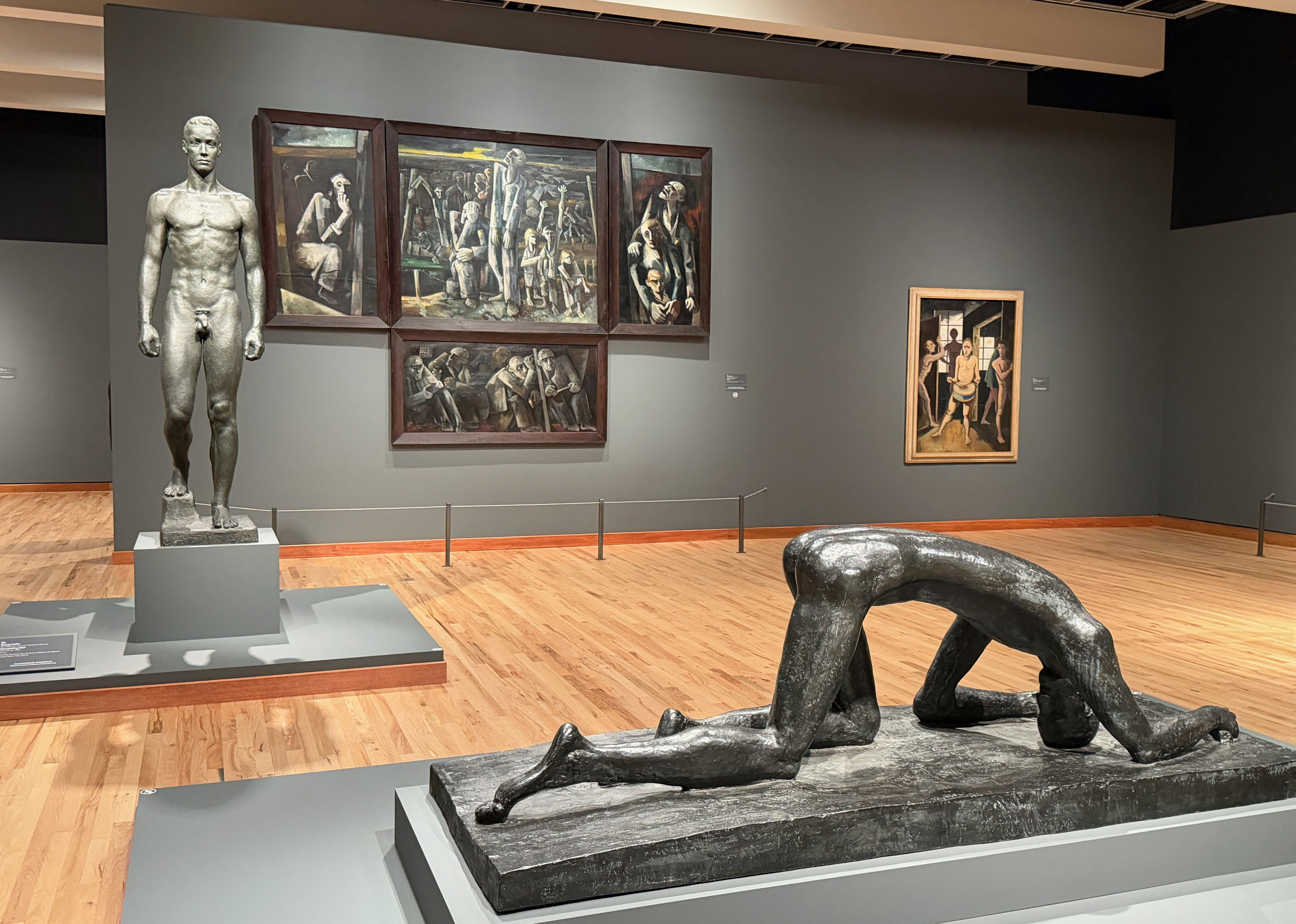
Art responding to WWI and WWII: Georg Kolbe’s 1939-1940 bronze Descending Man, Horst Strempel’s 1945-1946 oil on burlap Night Over Germany, and (foreground) Wilhelm Lehmbruck’s 1915-1916 bronze (cast 1972) Fallen Man.

The exhibition concludes by showcasing works made at the end of the war by German artists reacting to the societal disruption and atrocities.  In some cases, banned artists like Karl Kunz were able to paint in secret, wait until the War ended, and emerge to help a divided Germany revive the arts in the post-war years.

Watch the exhibition’s opening lecture by Berlin curator Irina Hiebert Grun, who provides an overview of the Neue Nationalgalerie’s collecting history, responses to the changing politics that affected early 20th century art, how the museum reassembled its collections and personnel after the Nazi-era persecutions.

The war destroyed the buildings and the Allies divided the country, but the story of this museum’s incredible 21st-century renaissance is one for the ages.

After the exhibition closes in Albuquerque, it be on view at the Minneapolis Museum of Art March 7 – July 19, 2026. Don’t miss it!
Banned modernist Karl Kunz was inspired by Picasso’s Guernica to paint Germany, Awake! in secret in 1942 – Kunz survived the war in Germany and participated in its post-War artistic resurgence.

Portrait Masterworks at Home in Taos

To see the works by one of the top virtuoso portraitists of the 20th century, drop into the home that Nicolai Fechin designed and built for his family in Taos, New Mexico. Masterful oil and charcoal portraits created throughout his life are hung in quiet, contemplative corners of his spectacular 1920s home as part of Masterful Expression: Nicolai Fechin’s Portraiture, on view at the Taos Art Museum at Fechin House through December 31, 2025.

The house itself is a masterwork with all the doors, railings, and embellishments carved by Fechin’s own hand, but the portraits and small, carved wooden busts show why he is considered one of the greatest Russian artists ever to take up residency in the United States.

Fechin’s undated charcoal portrait Manuelita. Courtesy: private collector
Fechin’s 1927-1933 oil painting Taos Studio Interior. Courtesy: private collection; Owings Gallery.

Fechin grew up during the time when Russia was ruled by the Czar, and thrived at the Higher Art School of the Russian Imperial Academy of Arts in St. Petersburg, where he studied with the acclaimed Russian history painter, Ilya Rapin.

Fechin’s classical training followed the principles advocated by the French virtuoso, Dominque Ingre – subtle human expression, anatomical awareness, and verisimilitude that jumps right of the page (or canvas).

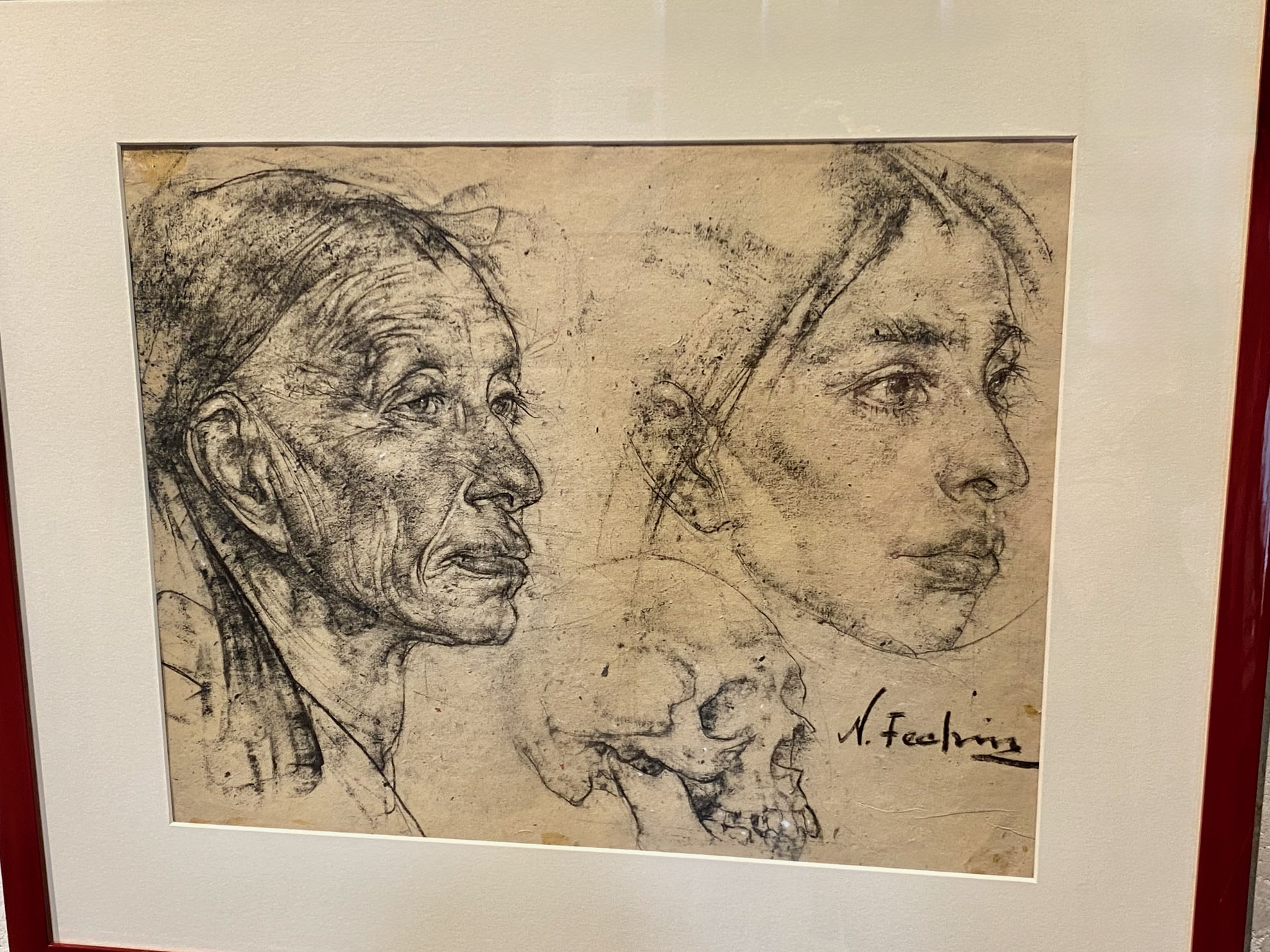
Fechin’s charcoal Head and Skull Study. Courtesy: private collector

Fechin learned his lessons well and won national acclaim in Russia by 1908 for his grand, epic depictions of peasant life, which provided an opportunity for his work to be shown internationally and gain fans in the United States.  But it was his reputation for portraits that captured the essence of human expression that cemented his reputation in the United States and provided him with continuing commissions.

When the Russian Revolution and civil war brought disruption to the domestic life he was starting to build with his new bride, Alexandra, an American benefactor arranged for them to emigrate to the United States.  As soon as the Fechin family landed in the United States, the commissions began, largely due to the enthusiastic public reaction his portraits in shows at the Grand Central Gallery and the Brooklyn Museum.

Fechin’s undated oil portrait Russian Singer with Fan. Courtesy: private collector
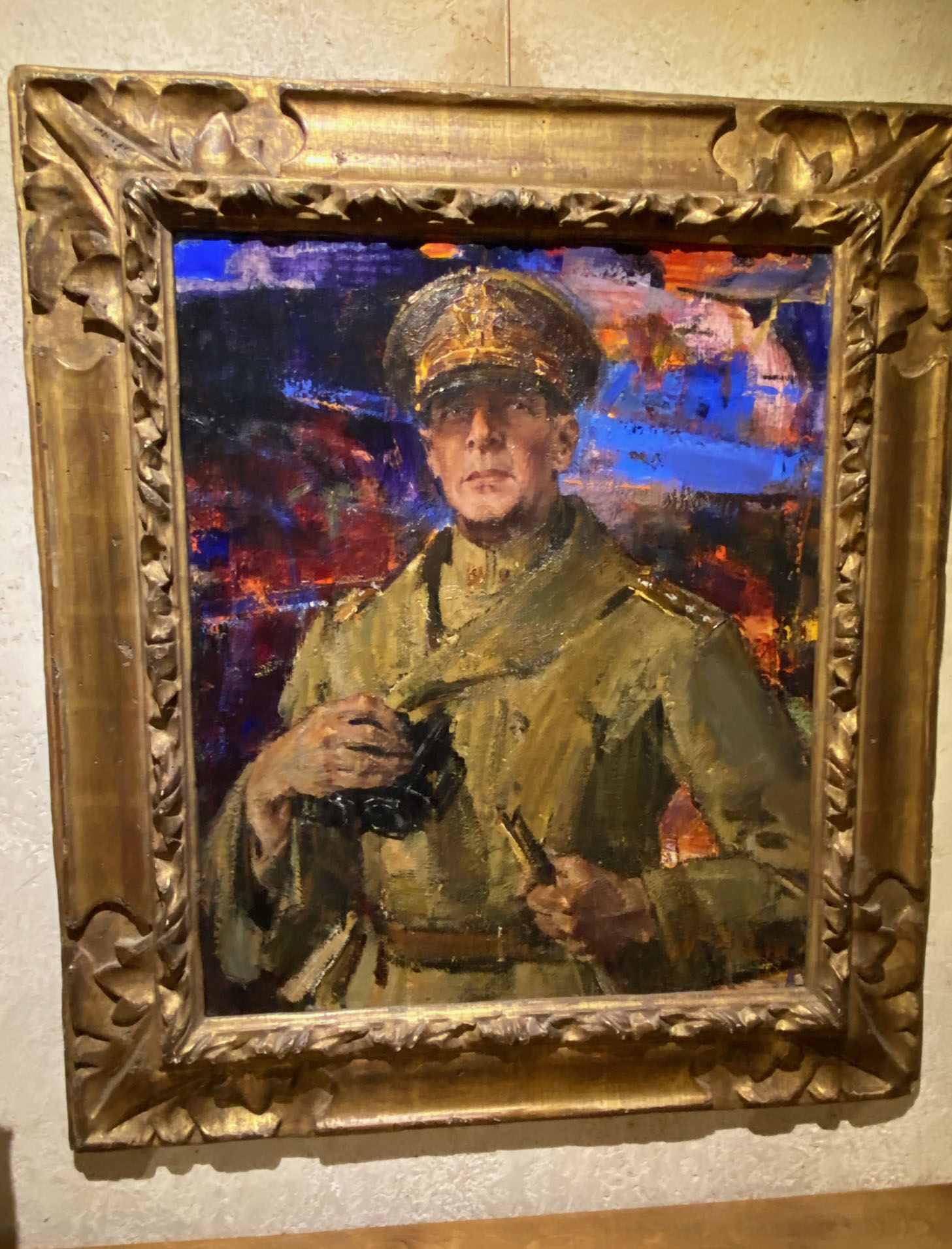
Fechin’s 1951 oil portrait of General Mac Arthur. Courtesy: Taos Art Museum

For health reasons, Fechin and his family left the sophisticated steets of New York City during the high-flying 1920s for the high desert of Taos – a thriving art community anchored by Mabel Dodge Luhan. Fechin figured that when the tumult in Russia died down, he would return. But that never happened.

The exhibition, with many works drawn from private collections, provides a glimpse of the Fechin family over time, with portraits and sculptures of his wife early in their courtship (an oil), a bronze bust, and drawn portraits in their life in New Mexico.

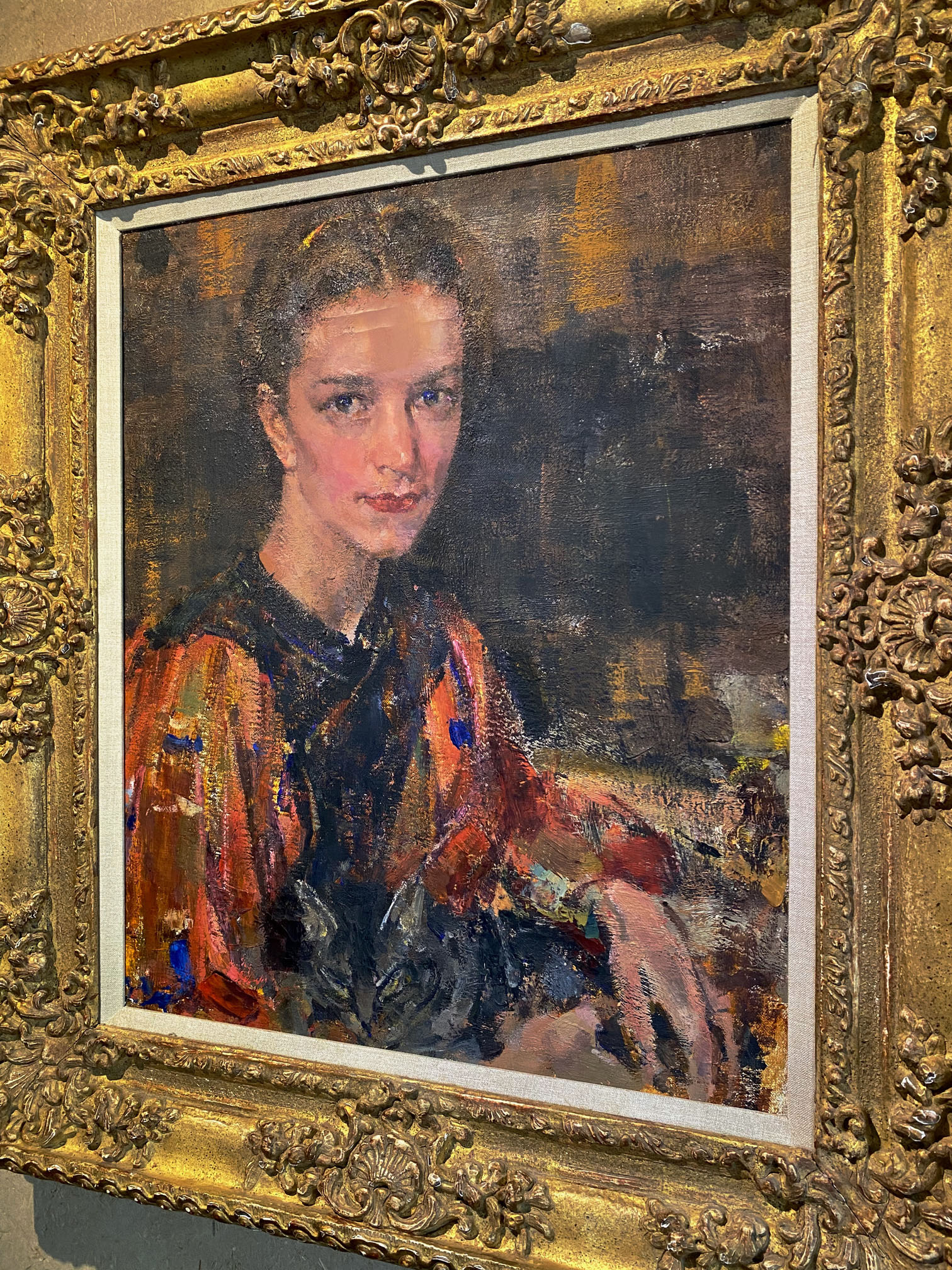
Fechin’s 1910 oil portrait of his wife Alexandra with Coral Beads. Courtesy: private collector
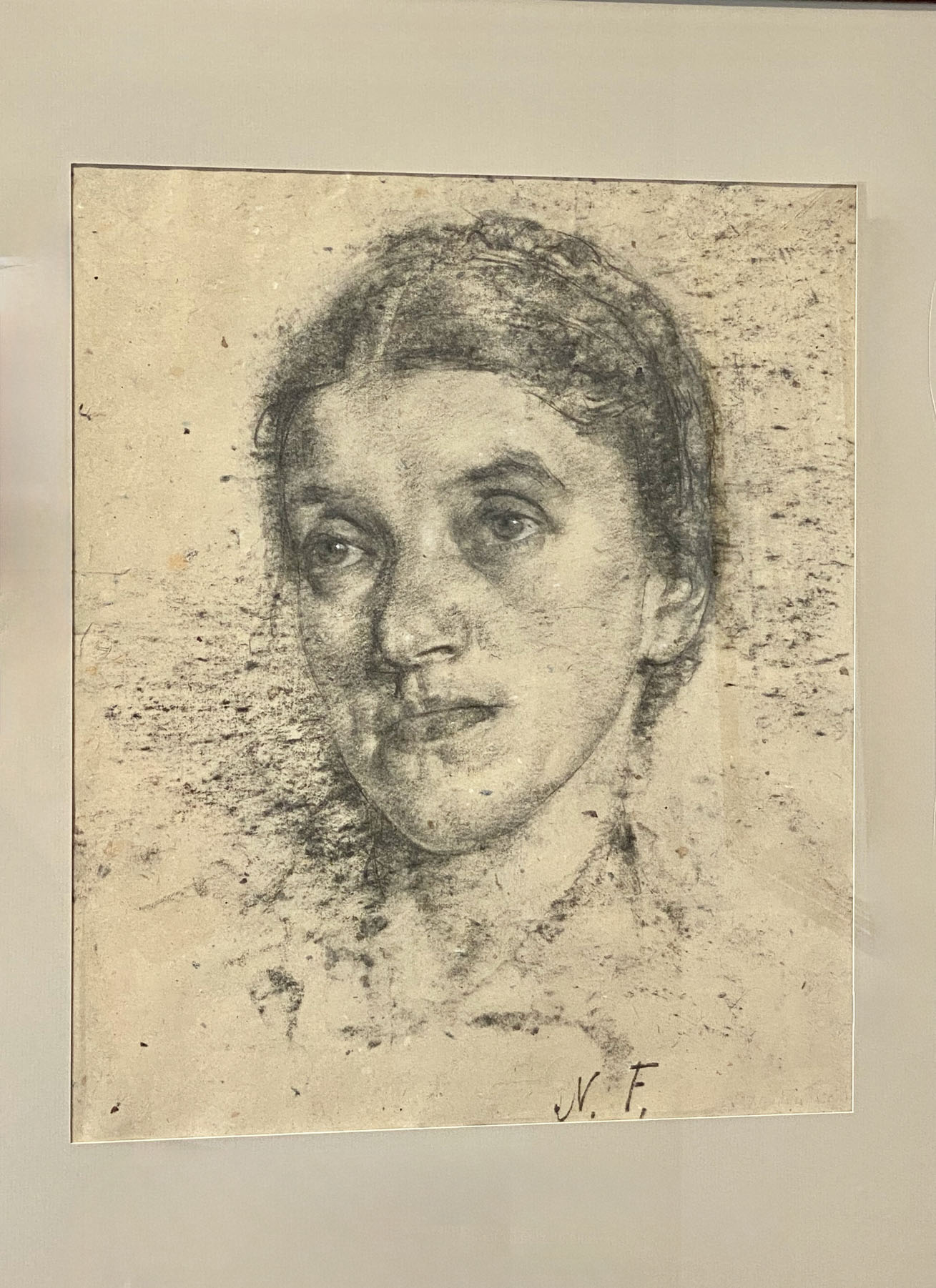
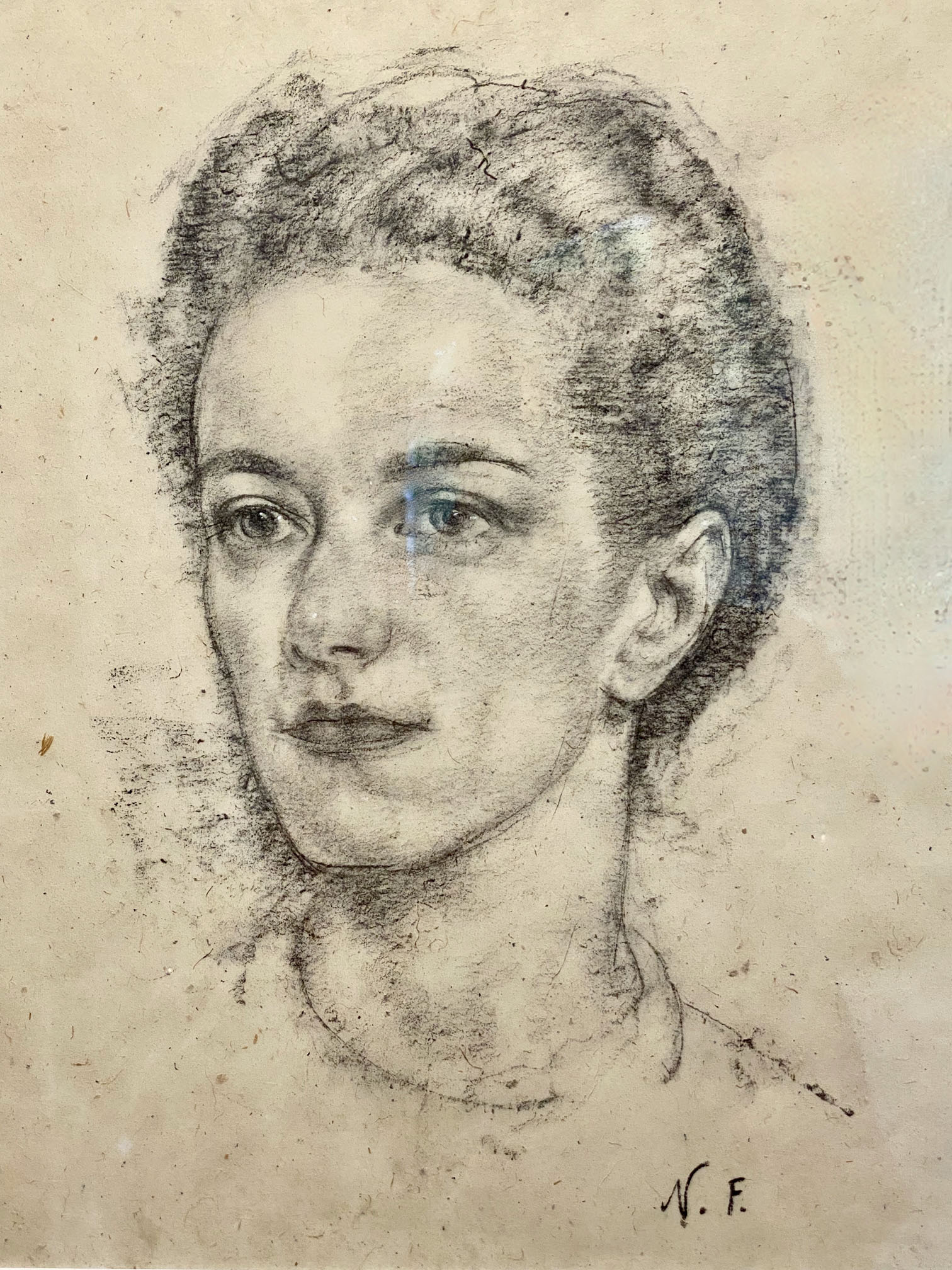
Fechin’s 1927-1933 charcoal portrait of his wife Alexandra; on rice paper. Courtesy: private collector

His beloved daughter Enya – who ultimately saved and restored this unforgettable home and her dad’s studio – is shown as a baby in Russia, as an older child in carved wooden busts, and in paintings in her coming of age, as well as a portrait of her as a grown woman looking out for her dad later in his life.

Fechin’s carved wooden bust of his daughter Eya.. Courtesy: private collector
Fechin’s 1940s charcoal portrait of his daughter Eya; on rice paper. Courtesy: private collector

The exhibit also includes sensitive, gorgeous portraits and studies that Fechin created in his five-month stay in Bali in 1938 – delicate features of young models and reflective expressions of respected elders. All have clean, sure lines and carefully observed, personalized nuances.

Fechin’s 1938 charcoal portrait Balinese Girl with Long Hair. Courtesy: private collector
Fechin’s 1938 charcoal portrait Balinese Man with Beard. Courtesy: private collector

This walk-through the Fechin home holds delight and awe at every turn – awe at the hand-carved interiors and delight at at the humanity and diversity of the faces greeting us in every room. Visit, if you can!

Take a look at more in our Flickr album.

Fechin’s 1950s charcoal self- portrait on rice paper. Courtesy: private collector
Fechin’s 1940s charcoal portrait of his daughter Eya; on rice paper. Courtesy: private collector
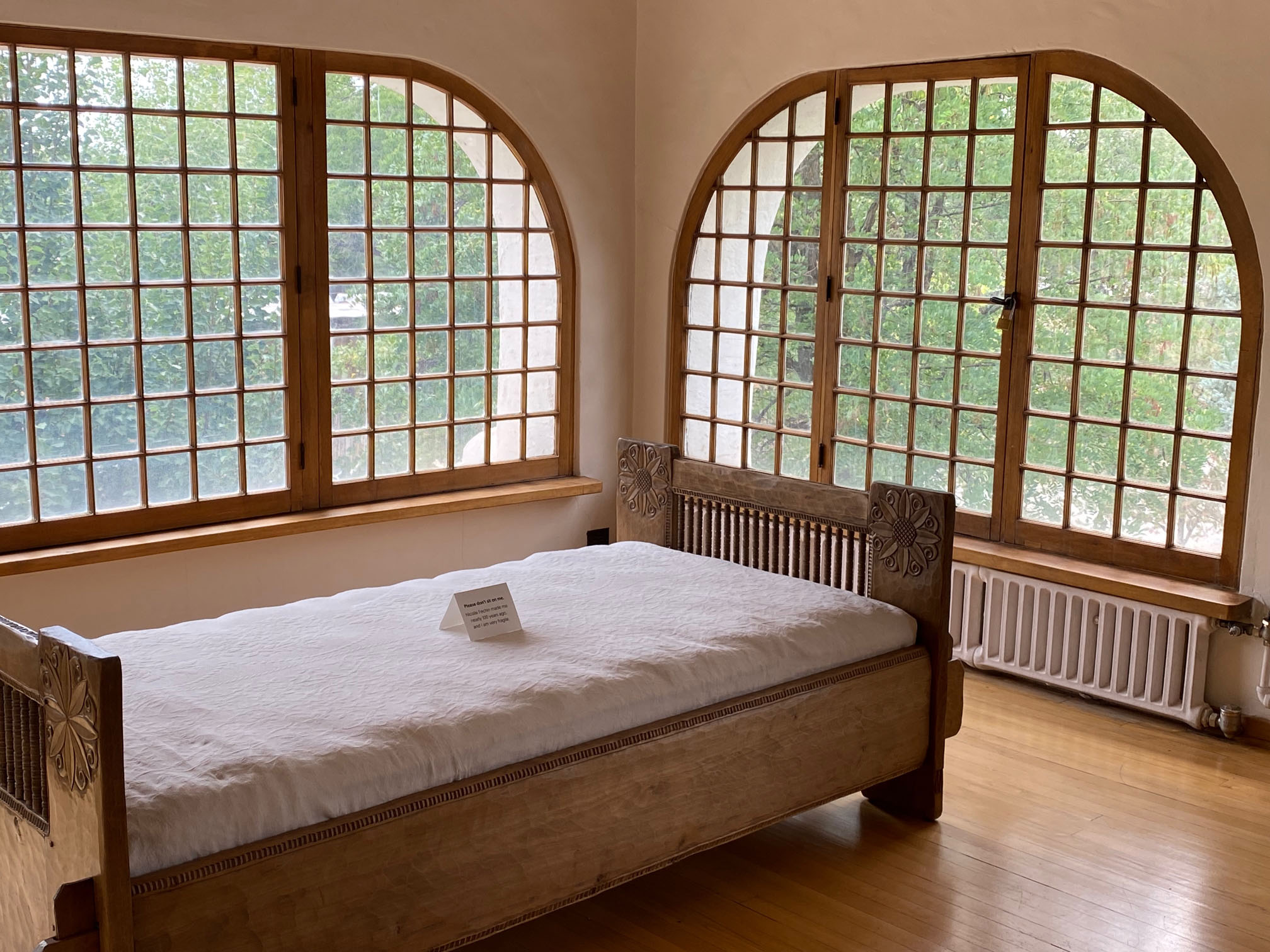
Inside the 1933 Fechin house: sunroom on the second floor features his hand-carved bed for his daughter, Eya.

How Philadelphia Made American Artists

How does it feel to have the eyes of 200 years of art history upon you, peering out from portraits, history paintings, and scenes of everyday people? What stories do they have to tell you? And who gets to tell the history and make the story?

Find out by contemplating works by over 100 artists nurtured and celebrated by PAFA in Making American Artists: Stories from the Pennsylvania Academy of Fine Arts, 1777-1976, currently on view at the Albuquerque Museum through August 11, 2024…but coming soon to a museum near you (see below)!

Charles Willson Peale’s 1779 George Washington at Princeton, painted during the War of Independence. Courtesy: PAFA

While renovations are happening at the Academy in Philadelphia, the curators have chosen some of PAFA’s most iconic works to be shipped cross-country and installed “in conversation” with works by PAFA artists who may not be household names but were nonetheless ahead of their time.

It’s all a tribute to legacies preserved in the oldest art museum + art school in the United States, founded in 1805 by the dynamic duo of William Rush and Charles Willson Peale, both Continental Army militia (and artists!) during the American Revolution.

1810 painted pine sculpture Eagle by PAFA co-founder and Revolutionary War veteran William Rush.

Mr. Rush carved the bow figures on most of the ships for America’s first Naval fleet. All of those ships are now long gone, so it’s nice to see that we can admire his majestic Eagle in this exhibit.

Mr. Peale, one of the Sons of Liberty who served under and painted General Washington, later founded America’s first natural history museum on the second floor of Independence Hall. He also passed his talent on to the next generation through his very large family of artistic prodigies.

These two artists of the Revolution walked the walk and talked the talk and passionately felt the young nation needed an art academy.

PAFA’s first hundred years had some ground-breaking firsts – the first exhibition that included both male and female artists (1811), admission for Black artists (1857), and first female instructor (1878).

Charles Willson Peale’s 1822 self portrait (painted at age 81), The Artist in His Museum proudly showing his collection, turkey, and mastodon. Courtesy: PAFA

The show kicks off with a masterful history painting by Benjamin West, a Pennsylvania painting genius who landed in England in 1763, helped to found the Royal Academy, and somehow remained best friends with both King George III and Benjamin Franklin at the same time. He revolutionized history painting by depicting contemporary subjects and taught (in London) a who’s who of Americans artists – Peale, Stuart, Sully, Morse (who invented the telegraph and code), and Fulton (who invented steamships).

Benjamin West’s 1771-1772 Penn’s Treaty with the Indians, an imaginary scene painted to rehabilitate Penn’s image at the time, although it does feature Lenape chief Tamanend;. Courtesy: PAFA

In addition to masterworks by West and Gilbert Stuart, the exhibition showcases many works by female and African-African artists associated with PAFA – Patience Wright (America’s first professional sculptor), Cecilia Beaux (first female teacher), Henry O. Tanner (first successful African-American painter), and superstar Mary Cassatt.

1784-1786 wax relief portrait of George Washington by Patience Wright, the oldest American sculpture in the PAFA collection
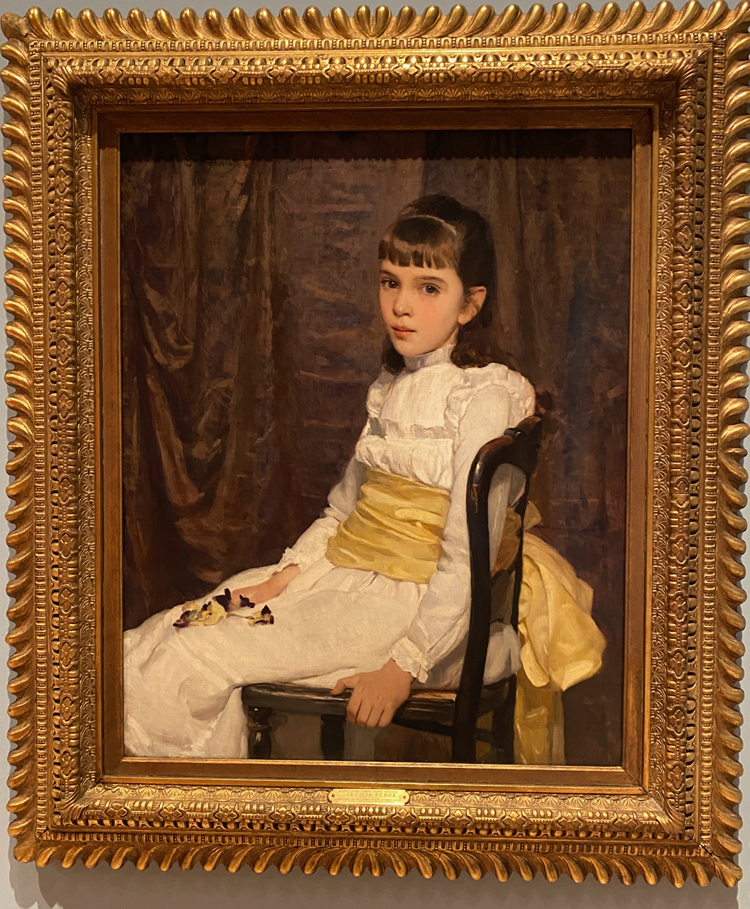
1887 A Little Girl by Cecilia Beaux, an acclaimed female portraitist known for her insightful psychological depictions of young women. Courtesy: PAFA

In the day, grand history paintings were primarily the work of men, but the exhibition emphasizes that many enterprising 19th century women still found ways to make it in the art world. They specialized in “lesser genres,” like portraits, still lifes, and scenes of everyday life. Check out our favorites in our Flickr album.

Making American Artists really comes alive by adding 20th century works on the walls. Alongside the Founding Fathers, the portrait section features liberated women, bohemian artists, and proud Black artists with attitude.

Margaret Foster Richardson’s 1912 A Motion Picture – an honest self-portrait reflecting society’s changing views of professional women. Courtesy: PAFA
Barkley L. Hendricks’ 1968 J.S.B III, a fashionable, life-sized, postmodern portrait of his PAFA classmate James Brantley. Courtesy: PAFA

The section of the exhibition on still life focuses on early female painters who made decent incomes from their work, as well as modernist superheroes O’Keeffe and Nevelson. The history painting section presents 20th century show-it-like-it-is artists, like Horace Pippin and Alice Neel.

Georgia O’Keeffe’s 1923 Red Cana, an early abstracted floral still life. Courtesy: PAFA
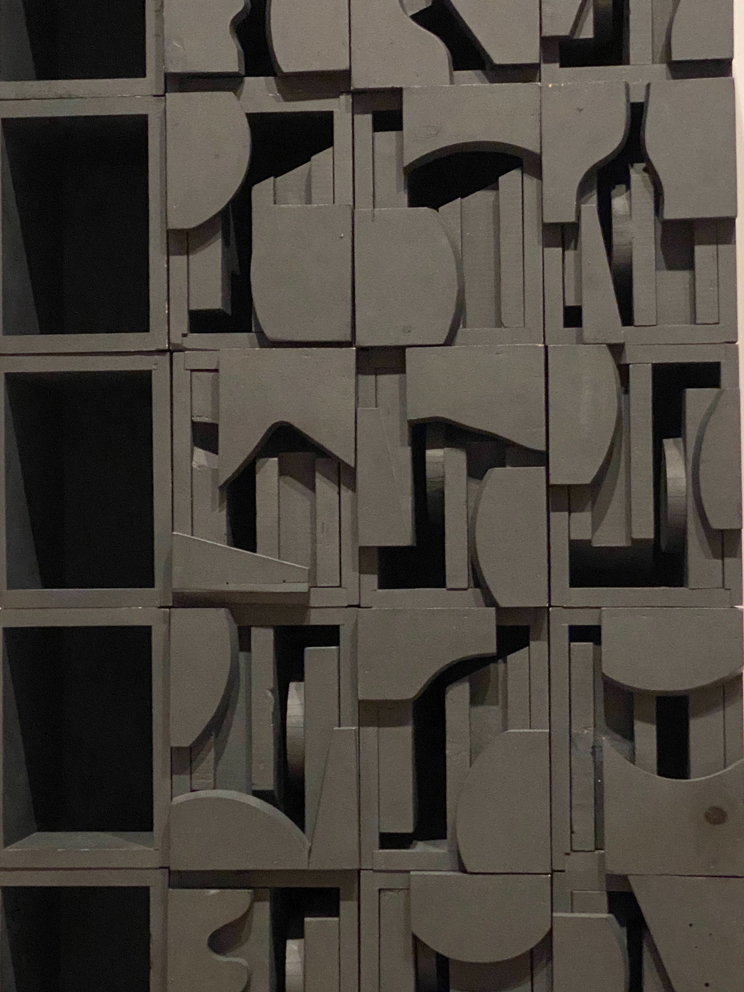
Detail of Louise Nevelson’s 1972 South Floral. Still life section. Courtesy: PAFA

We’re reminded that many of the great masters of American landscape, like Thomas Moran, got their starts by painting bucolic views of Philadelphia’s Wissahickon and Schulkyll Rivers. Painting Philadelphia’s river landscapes may have even inspired the rise of the Hudson River School.

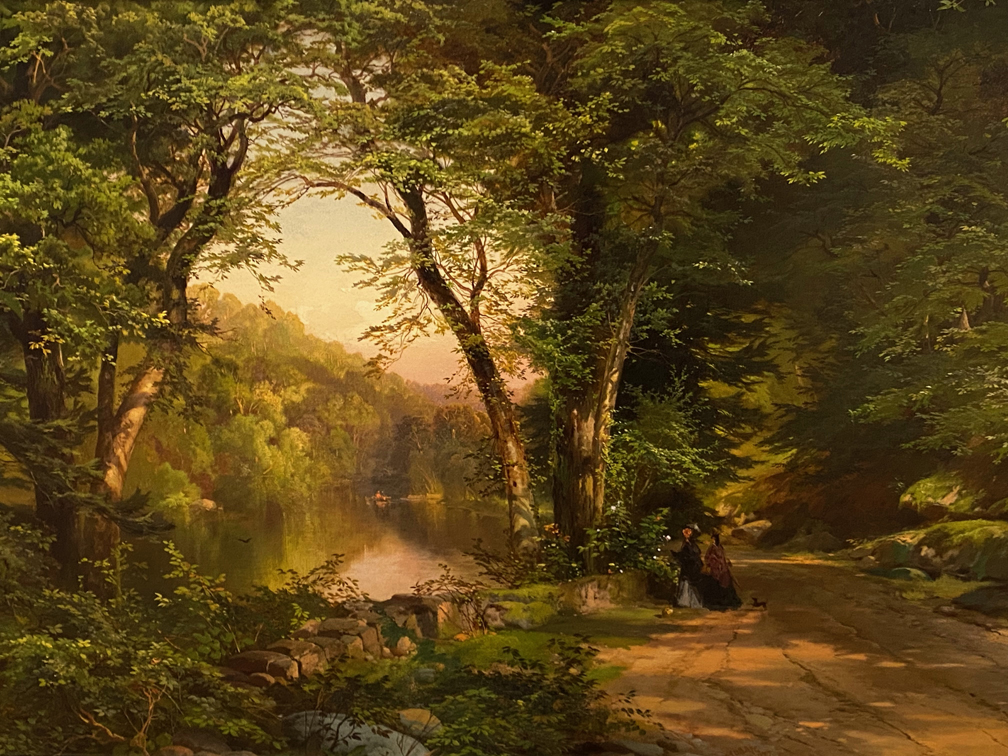
Thomas Moran’s 1870 Two Women in the Woods enjoying the green along the Wissahickon in Philadelphia. Courtesy: PAFA

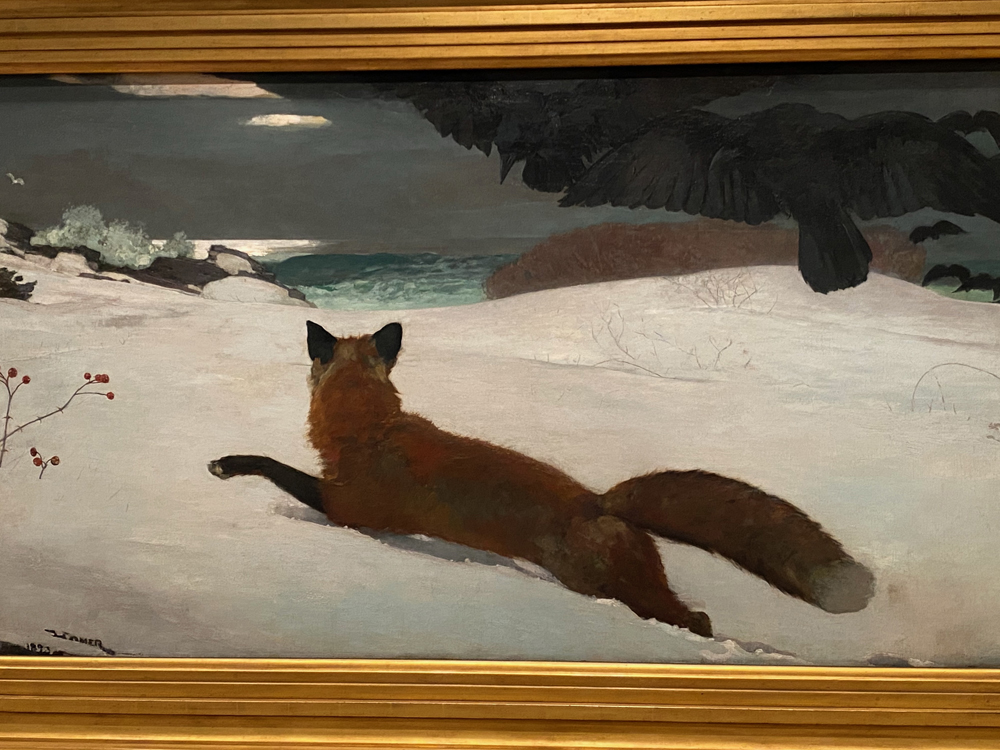
And it was PAFA that gave Winslow Homer his professional start.

Winslow Homer’s 1893 Fox Hunt, where predator becomes the prey; Homer’s first painting to enter a museum collection. Landscape section. Courtesy: PAFA

The entire exhibition is a fresh look at American masters who created an astonishing legacy at one of our oldest art institutions ­and upstarts who never quite got their due. There’s so much to appreciate from this fresh, 21st century perspective!

Earlier this year, Making American Artists was at the Wichita Art Museum. Its next stop is the Philbrook Museum of Art in Tulsa, Oklahoma (September 25, 2024), followed by a spectacular road show: Everson Museum of Art in Syracuse (February 2025), the Peabody-Essex in Springfield, Massachusetts (June 2025), and the Taubman Museum of Art in Roanoke, Virginia (October 2025).

Don’t miss it. While you’re waiting, listen in to curator Anna O. Marley’s May talk at the Albuquerque Museum: