Saints in the ‘Hood in Brooklyn

Kehinde Wiley’s Saint Amelie in stained glass, 2014

Kehinde Wiley’s Saint Amelie in stained glass, 2014

Take a look at the saints as you’ve never seen them in Kehinde Wiley: A New Republic through this weekend at the Brooklyn Museum of Art.

They’re not saints, exactly, but Mr. Wiley is asking you to look at the young African American men you pass in your everyday life in a slightly different way – through the lens of Byzantine icons and Medieval stained glass. The icons and would-be saints are magnificent, proud, and mysterious, just like his slightly earlier portraits that are grace the walls of Lucious Lyon’s mansion in the hit series Empire.

The Cantor Gallery is filled with these men of higher purpose, and the crowds love it. Bronze busts echo the 18th century marble work of Houdon, and visitors check them out from all angles.

The Archangel Gabriel, Wiley’s 22-karat gold leaf and oil on wood painting from his Iconic series

The Archangel Gabriel, Wiley’s 22-karat gold leaf and oil on wood painting from his Iconic series

Beyond this gallery, the curators have assembled a survey of Mr. Wiley’s 14-year career – dominated by his giant canvases in which guys from the neighborhood take on the heroic poses of European aristocrats and conquerors. In fact, when he began, Wiley would scan neighborhood streets for handsome, statuesque subjects and ask them if they would feel comfortable posing as other-era men of means in his painting studio. Those who said yes were asked to select the person they felt comfortable emulating from Wiley’s library of art books on European portraiture.

Elsewhere in the show are Wiley’s first-ever bronze sculpture of female subjects and selections from his world tour, where he found portrait subjects in Israel, Palestine, Africa, and the Indian subcontinent. Check out some of the works in our Flickr feed and on the museum website.

Although it’s common to see a gigantic Wiley portrait in another museum these days, Brooklyn is proud that it was among the first to collect his work. If you journey to another floor, you’ll see a five-panel painting installed on a ceiling like some Renaissance master’s and several portraits from his Passing/Posing series in 2003.

If you can’t get to Brooklyn to see this show, let Mr. Wiley take you through the exhibition via video:

Plains Indians Wearable Art at The Met

1780 Plains Indian horned headdress assembled from a powerful mix of materials including bison horns, deer and horsehair, porcupine quills, glass beads, wood, metal cones, cotton cloth, silk ribbon, and paint. From the Musée du quai Branly in Paris

1780 Horned headdress assembled from a powerful mix from mighty bison , deer, and horse. From Musée du quai Branly in Paris.

With all the attention this week on the couture gowns at the Metropolitan Museum of Art ball and Costume Institute show, don’t forget that some of the most elaborately embellished mixed-media wearable art is installed on the second floor in the expansive tribute, The Plains Indians: Artists of Earth and Sky, through this weekend.

The masterworks have been gathered from select European and North American collections and feature beadwork (mostly on leather), symbolic headdresses, and magical objects that directly telegraph the wearer’s connection to nature, the universe, and supernatural power.

The show was organized by the Musée du quai Branly, Paris, in collaboration with The Met, and in partnership with The Nelson-Atkins Museum of Art, Kansas City, and features works from the 18th century through today (like the China exhibition in the other wing).

All-over beading on contemporary platform shoes by artist Jamie Okuma, 2014.

All-over beading on 2014 platform shoes by artist Jamie Okuma.

The curators track changes in materials, styles, and concerns of the Osage, Quapaw, Omaha, Crow, Cheyenne, Arapaho, Lakota, Blackfeet, Pawnee, Kiowa, Comanche, and Meskwaki nations from the time they dominated the Midwest through the demise of the buffalo, the great wars, the transition to reservation life, and participation in 21st century art and culture.

Take a read through the curators’ story on this exhibition site and see some of our favorite looks on our Flickr feed, where we’ve organized the pieces in chronological order. We’re giving you a close-up view of some of the bead, quill, and embroidery work. You can see the transition from more shamanistic embellishment to use of imported Venetian glass beads, to the all-over bead style, and finally to current creations, such as Jaime Okuma’s beaded platform shoes.

Central painting on large-scale Mythic Bird robe from the Illinois Confederacy, 1700-1740. Courtesy: Musée du quai Branly in Paris

Central painting on Mythic Bird robe, Illinois Confederacy, 1700-1740. Courtesy: Musée du quai Branly in Paris

Much of the painting and handwork was divided according to gender – men painted figures and women did the beadwork and painted the geometric forms. This beautiful robe with a geometric mythological bird is one of the earliest surviving large-scale paintings from Plains tribes, and the beaded geometry of the 1895 Crow wedding robe is another marvel.

Compare the mixed-media horned headdresses from 1780s Missouri with Chief Red Cloud’s dramatic all-business trophy-feathered war bonnet of 1865. The fluffy-feathered 1925 creation from Cody’s Buffalo Bill Center almost makes you wonder if that version were strictly for wild west shows.

It’s also interesting to learn that the powerful symbolic paintings on shirts and shields were essentially “owned” by their creators.

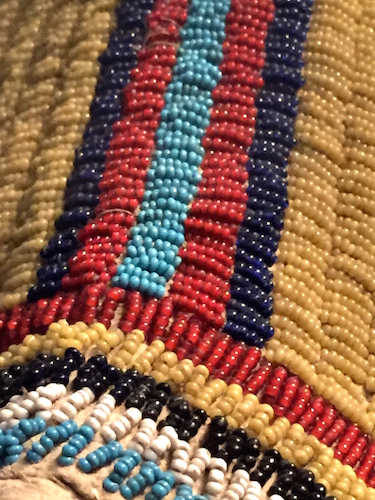
Close up of the tiny Venetian seed beads used to decorate a Lakota woman’s dress (Teton Sioux), 1865. From the Smithsonian’s NMAI

Tiny Venetian seed beads decorate a Lakota woman’s 1865 dress. From the Smithsonian’s NMAI

Similar to what we learned about 1920s French couture designers’ concerns about unlicensed copies in FIT’s recent Faking It show, anyone wanting to replicate a particular war shirt or shield, had to be granted formal permission. The Met exhibition explains that replication permission of Plains Indian designs were closely held and protected for generations.

A full database of the amazing objects in the show is on the Met’s website, as well as the complete audio guide to the exhibit on the museum’s Soundcloud site. As you click on the audio tracks, you’ll see a small thumbnail of the object.

Listen to curator Gaylord Torrence, explain how French culture and embroidery techniques collided with Plains Indians culture three hundred years ago to such magnificent result:


Bird Watching with Audubon: Forget the Binoculars

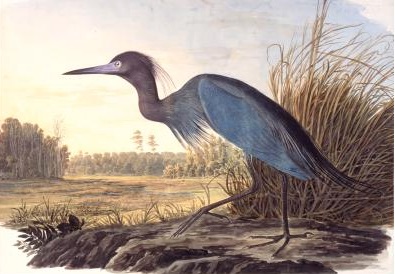
Little Blue Heron (Egretta caerulea), Havell plate no. 307, 1832

Little Blue Heron (Egretta caerulea), Havell plate no. 307, 1832

If you climb up to the second story of the New-York Historical Society to see Audubon’s birds, grab the magnifying glass right inside the gallery door. See the magnificent details painted by the watercolor master of all time in  Audubon’s Aviary: The Final Flight (Part III of The Complete Flock), running through this weekend.

NYHS is the lucky owner of every watecolor JJA produced to make his historic Birds of America subscription project in the early 1800s, which documented over 700 species.

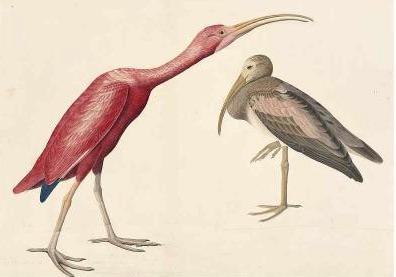
Scarlet Ibis (Eudocimus ruber), Havell plate no. 397, 1837

Scarlet Ibis (Eudocimus ruber), Havell plate no. 397, 1837

The watercolor collection – from which engravings were made – is so large that NYHS had to split the exhibition into three parts. It’s a joy to look at the life-size paintings that Audubon produced through the magnifying lens, seeing the tiny brushstrokes on lush feathers and miniscule detail on the small hummingbirds.

Paintings featured in all three shows are hung in the sequence that JJA painted them. Although JJA traveled extensively throughout the East and South, he never actually saw birds west of the Missouri in the wild.

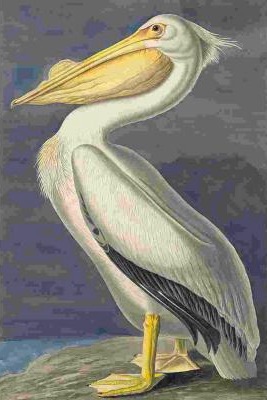
American White Pelican (Pelecanus erythrorhynchos), Havell plate no. 311

American White Pelican (Pelecanus erythrorhynchos), Havell plate no. 311

By the time Audubon began cranking out the watercolors needed for his final installment of his masterwork, lots of new birds were being discovered out West. Scrambling to keep up – after all, he committed to documenting every American bird – he accessed specimens collected by recent Western expeditions, Lewis & Clark’s trove, and other American specimens archived in Europe.

He holed up in Charleston, South Carolina in the winter of 1836 and worked, worked, worked to finish all the watercolors, which would be shipped to Mr. Havell in the UK for engraving.

How did Mr. Auduon’s studio work compare to the real thing? See for yourself in this bird-watching documentary shown inside the gallery. The birds featured are from the previous installation of the exhibit, including the rare, rambunctious Prairie Chicken at 1:25.

For more, go to the show’s excellent website, explore some of JJA’s works in more depth, and listen to the bird calls for the exhibition, courtesy of the Cornell Lab of Ornithology.

On Kawara: Time and Life as Art

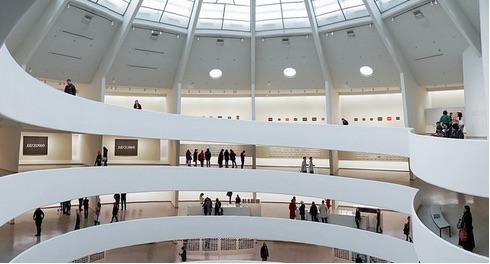
On Karawa always wanted to see his work on the timeless, spiritual spiral ramps of the Guggenheim and got his wish. Photo by David Heald

On Karawa always wanted to see his work on the Guggenheim’s timeless, spiritual spiral ramps. Photo by David Heald

Back in the 1970s, you couldn’t find a language-art or Conceptual art exhibition without the enigmatic world traveler On Kawara. Sometimes you would see canvases with a single day’s date, but other times you might encounter a single telegram sent from a major world city with simply the message: “I am still alive.”

The Guggenheim is paying tribute to this favorite through the weekend in its show On Kawara – Silence, and has done a magnificent job of displaying and interpreting the life work of an artist who always appeared barely there. Although he was fully immersed in the New York art scene, he seemed always to be on the go, traveling to some other major world capital. He managed to make art out of this peripatetic life.

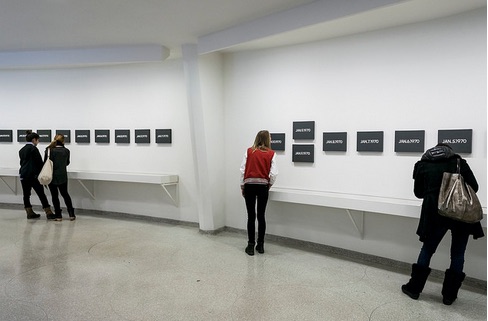
Visitors peruse On Karawa’s Today series paintings and peer into their newspaper-lined storage boxes below. Photo by David Heald

Visitors peruse On Karawa’s Today series paintings and peer into their newspaper-lined storage boxes below. Photo by David Heald

Indeed, at one point in his early life he thought he might like to be a travel agent, but an immersion in the ancient cave paintings of Altamira changed that. He decided to dedicate himself to art and set upon a unique course.

At the start of the walk up the spiral ramp, you encounter his Today series – a continuous set of rectangle canvases, painted each day with the day’s date, beginning with January 1, 1970. Over the next four decades, he would create more than 3,000 of these. In a twist, the Guggenheim displays many with its associated storage box that the artist assembled each day when he was done, lined with the newspaper from the same day.

From the I Got Up postcard series. Photo by David Heald

From the I Got Up postcard series. Photo by David Heald

Although the artist never intended the paintings to be shown with the storage boxes, the throngs of visitors have quite a time looking at the date and then peering down to see what else was happening in the world that day – for example, Golda Meir’s proclamations about Israeli-Egyptian standoffs, desegregation in the South, the Chicago Seven trial, and Vincent Canby reviews.

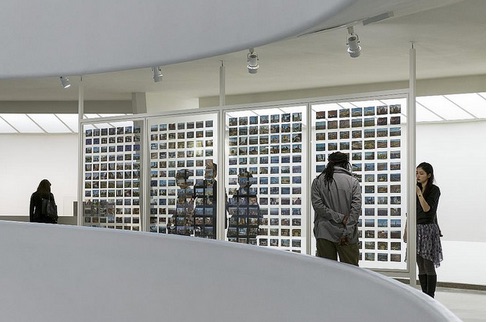
It’s stunning to see the assemblage of tourist postcards that he sent at the rate of two per day to friends and colleagues with the stamped inscription I Got Up Today with a time stamp of his rising. Travel and personal routine systematized and packaged into a series of projects he carried out from 1968 through 1979.

He didn’t want the moments or people to pass as he journeyed throughout the world, so he began the series I Met. He noted every single person he met every day for twelve years – friends, artists, waiters, store clerks – and typed their names on pieces of paper that were time-stamped and bound into books.

Viewers peruse a fraction of the 1,800 postcards that On Kawara sent to document the time he got up at various cities in his travels. Photo by David Heald

Viewers peruse a fraction of the 8,000 postcards that On Kawara sent to document the time he got up at various cities in his travels. Photo by David Heald

It’s amazing to encounter the bound volumes on the ramp, visitors circling the extensive set wondering what it must have been like to carry out this level of life documentation.

The curators explain more in the video below about how On Kawara took on monumental projects to translate his day-to-day life, travels, and schedule into the art that fills this meditative, peaceful, and mind-expanding show:

See more views of this thought-provoking installation here. For more curator videos, click here.

Benton’s Freebie Masterpiece at The Met

Viewer contemplates “The Changing West” panel of Thomas Hart Benton’s America Today mural (1930-1931)

Met visitor contemplates “The Changing West” panel of Thomas Hart Benton’s America Today mural (1930-1931)

When times get tough, did you ever take on a job or make something for free just to build up your resume and showcase what you could do? That’s exactly what one New York up-and-comer did, and it really paid off. The Metropolitan Museum of Art’s show, Thomas Hart Benton’s ‘America Today’ Mural Rediscovered, tells the story.

Back in 1930, the New School was just completing its modern building in the Village on West 12th Street and was seeking something to jazz up the boardroom.

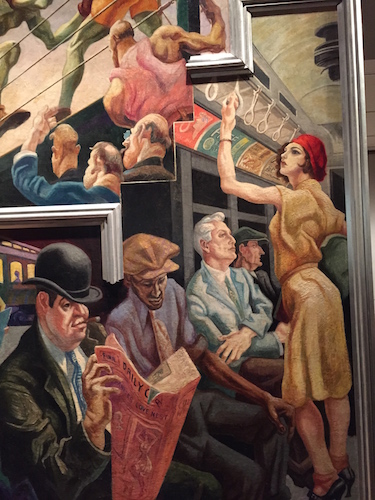
“City Activities with Subway” portion of America Today based on his portrait sketches

“City Activities with Subway” portion of America Today based on his portrait sketches. (It’s Pollack’s sister-in-law, Elizabeth)

Mr. Orozco, the famed Mexican muralist, had already been commissioned for the more visible dining room/lounge, and Mr. Benton, who was teaching at the Art Students League, saw an opportunity to showcase his painting chops.

Social realist chronicler Reginald Marsh had introduced Benton to the mysteries of mastering egg tempera, and Benton felt ready to go to town on a large-scale portrait of American life in all of its regional glory. Here’s the deal: no pay, just loft studio space about a block away.

Twenty years earlier, Benton had hung around Paris, soaking up the birth of the French Cubist and Italian Futurist movements in Europe. Ten years earlier, he roamed around the back roads of the United States, filling up sketchbooks with steel town landscapes, lumber camps, oil derricks popping up in Los Angeles, dives, diners, and small town stuff.

“Steel” portion of the mural, featuring model Jackson Pollack, Benton’s student

“Steel” portion of the mural, featuring model Jackson Pollack, Benton’s student

The mural began taking shape, crammed to the gills with swirling activities, people, industry, and pop culture that he saw. Need models? Why not ask Jackson Pollack, his art student, and his sister to pose?

It’s hard to imagine serious board meetings taking place in a room so alive with oversized ambition and action. Over the decades, the New School repurposed the room for classroom lectures, and over time, the scuffed mural was removed completely.

Lucky for us, Benton’s 1930s historic masterpiece found its way to the Met, which has lovingly restored and installed it in a rectangular room just beyond the Frank Lloyd Wright room.

The curators have filled the adjacent galleries with extra treats: the inspirational sketches from Benton’s earlier road trips and works by Mr. Pollack and Benton’s Village contemporaries.

See our Flickr album to glimpse the installation (and works by early Pollack, Abbott, Marsh from the Met’s collection), and watch the Met curators tell the story of how Mr. Benton’s freebie paid off and their joy in giving this ten-panel chronicle a new home.

Sturtevant’s Mini-MoMA Imitation Game

Sturtevant’s 2004 piece — a reproduction of an light bulb and cord installation “ Gonzalez-Torres Untitled (America)”. On far wall, “Study for Rosenquist’s Spaghetti & Glass”, an oil painted in 1965-1966

Sturtevant interprets Gonzalez-Torres Untitled (America) (2004). On far wall, Study for Rosenquist’s Spaghetti & Glass, an oil painted in 1965-1966

The free Friday night crowd at MoMA could not get enough of the Elaine Sturtevant tribute, Double Trouble, closing this weekend. Sturtevant spent her long career creating ready-mades out of other people’s art.

The show is a who’s who of 20th century art, except that all the pieces were done by Ms. Sturtevant. The show has it all – an entryway plastered with Warhol’s cow wallpaper (done by her), Lichtensteins, Rosenquists, Johns oil paintings – all done in her hand. Take a walk through our Flickr site and see more in the photos on the curator’s blog.

It’s all imitation, except that Elaine’s versions are really, really good. It’s hard to tell them from the originals displayed through the rest of the museum. Nothing in the show is a line-by-line copy, but you’ll have to go MoMA’s permanent galleries to compare them with the real thing.

Sturtevant’s 1967-1968 oil on canvas,Study for LIchtenstein’s ‘Happy Tears’

Sturtevant’s 1967-1968 oil on canvas, Study for LIchtenstein’s ‘Happy Tears’

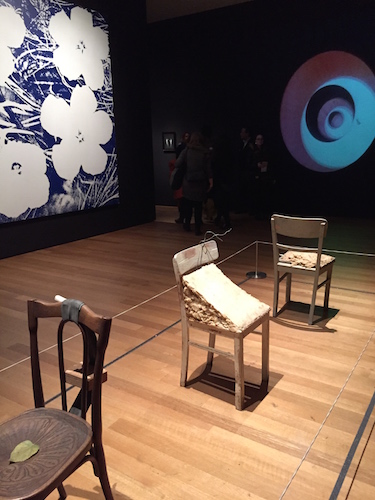
In fact, MoMA encourages a trek upstairs to compare Duchamp’s own ready-mades and whirligig. Or Mr. Beuys slabs of fat with those sitting on Sturtevant’s chairs in the darkened gallery.

Can anyone distinguish the Warhol Wall Flowers that Elaine made from the reproduced images of the originals on the stuff all over the gift shop?

The Gonzalez-Torres installation was the dramatic high point, all flashy bulbs in a charismatic, mysterious circle near the pretty perfect interpretations of early video games. Everyone is having a blast lining up to contemplate Sturtevant’s walk down digital memory lane with her interpretation of Pacman 1.0.

Is that Sturtevant’s Duane Hanson museum security guard reproduction in the corner? Oh, no, it’s an actual MoMa guard! Sorry. Just about everything else is a fool-the-eye art encounter. Total fun in the white cube.

Sturtevant’s 1990 vision of Warhol’s Flowers alongside her 1968 Duchamp film with interpretations of three Beuys chairs

Sturtevant’s 1990 vision of Warhol’s Flowers alongside her 1968 Duchamp film with interpretations of three Beuys chairs

Nature Meditations in the Land of Fire and Ice

Katrín Sigurðardóttir, Haul IV (2004) travelling landscape-in-a-box on loan from private collector. Courtesy: The artist.

Katrín Sigurðardóttir, Haul IV (2004) travelling landscape-in-a-box on loan from private collector. Courtesy: The artist.

When the weather dips below freezing and people think they’re in the Arctic, there’s no better place to get out of the elements and meditate on the landscapes of long, dark winters than the third floor of Scandinavia House on Park Avenue. Until tomorrow, January 10, you’ll join eleven contemporary artists from the sub-arctic on their journeys in a show mounted by the Katonah Museum of Art, Iceland Artists Respond to Place.

Bjork may get all the media attention, but do yourself a favor and walk through this three-gallery show, which beautifully and simply presents the work of Iceland’s other leading visual artists. See the land of fire and ice through their eyes.

Olafur Eliasson, The Aerial River Series, 2000 on loan from private collector. Courtesy: The artist. Installation photo: Ben Blackwell

Olafur Eliasson, The Aerial River Series, 2000 on loan from private collector. Courtesy: The artist. Photo: Ben Blackwell

Olafur Eliasson takes you on an aerial journey along a 60-mile meltwater river, from the mouth to the source. Ragna Róbertsdóttir splatters miniscule lava rocks against a wall but it’s not what it sounds like. Far from a violent eruption, it’s an undulating, mesmerizing meditation that you’ll spend time contemplating.

For sheer romantic and modernist punch, enjoy Georg Guðni Hauksson’s two works – a large landscape memory and a solid dark blue canvas evoking the long winter nights (like an emotional Ad Reinhardt).

Lava rocks “talk” in Egill Sæbjörnsson’s Pleasure Stones installation (2008) on loan from private collector. Courtesy: The artist.

Lava rocks “talk” in Egill Sæbjörnsson’s Pleasure Stones installation (2008) on loan from private collector. Courtesy: The artist.

Egill Saebjornsson takes home the whimsy award with a multimedia installation in which rocks speak (seriously!). Eggert Pétursson zeros in the microscopic natural phenomenon – painting flowers (life sized) in patterns that read like tapestries. You’ll wish you were on some hikes with him. Katrín Sigurðardóttir simply packs up her landscapes into boxes. Tiny, tiny recreations of vast, romantic landscapes.

When we visited the galleries this week, visitors were asking if there was more they could see. Scandinavia House always hosts classy, elegant shows, so although the exhibition space is limited, we have to admit they always leave us wanting to see what’s next from that part of the world.

Seth Myers was recounting his Icelandic adventures this week on Late Night. If you can’t get to the country like Seth or visit the show, at least you can spend chilly days and nights like the natives do, courtesy of this instructional video produced by Scandinavia House:


Folk Art Geniuses Take a Trip

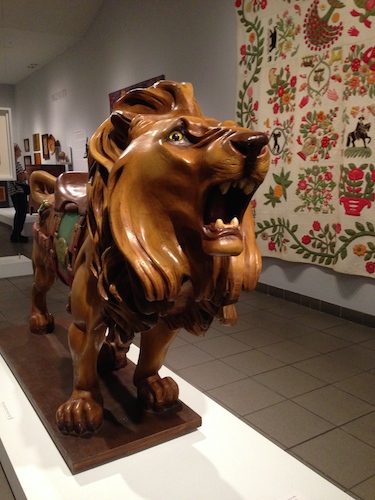
Brooklyn’s Lion, carved in 1910 by Marcus Charles Illions, who worked at the carousel shop and later set up his own studio

Brooklyn’s Lion, carved in 1910 by Marcus Charles Illions, who worked at the carousel shop and later set up his own studio

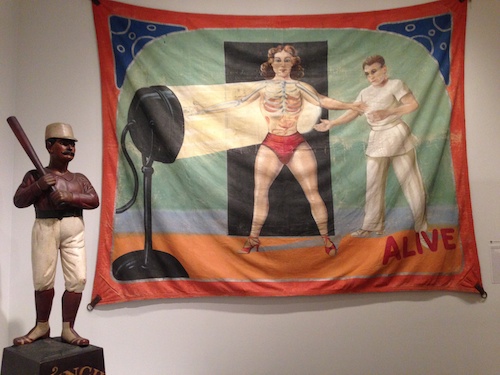
The American Folk Art Museum knows how to put on a show and take it on the road. After today, the staff will be packing up Self-Taught Genius: Treasures from the American Folk Art Museum and letting the Brooklyn Lion, Connecticut’s Weathervane Elephant, Chicago’s Sideshow “Radium Girl”, and a baseball old-timer from Centre Street see what’s up in Davenport, San Diego, Fort Worth, New Orleans, Saint Louis, and Tampa. We’re betting that there will be crowds waiting to greet them.

The museum’s staff has brought out its best to show off four centuries of made-in-America maker art – furniture, sculptures, textiles, painting, and what-not. It’s genius that they’ve put the spotlight on “genius” because their collection is jam-packed with some truly remarkable artists, visionaries, and craftsmen. Get the full view on the Museum web site and some close-ups on our Flickr page.

The curators say that the United States was a make-it-up-as-you-go-along democracy, so they felt “self taught” was right in line with this unique Americana theme – having a vision and making a masterwork.

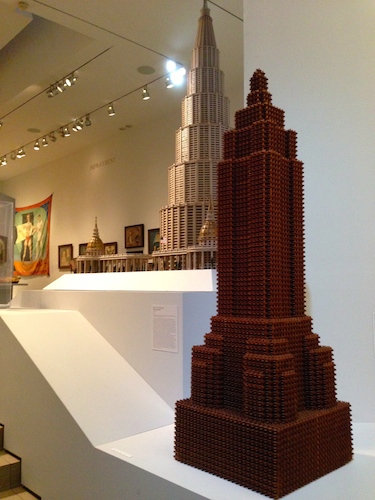
Empire State Building, carved in New Jersey in 1931 from precious cherry wood. Auriti's Palace is just behind.

Empire State Building, carved in New Jersey in 1931 from precious cherry wood. Auriti’s Palace is just behind.

Yes, there are some true eccentrics in the mix, but let’s momentarily focus on the People with a Plan from the section of the show on “Achievers”. Their works are immensely pleasurable and intense, and they’re right inside the entry.

You could spend hours contemplating the detail and work that went into the monumental Empire State Building made from cut cherry wood pieces in New Jersey in 1931. No one knows who created it, but legend has it that it was an ironworker that actually worked on that 13-month wonder and couldn’t let go of the achievement.

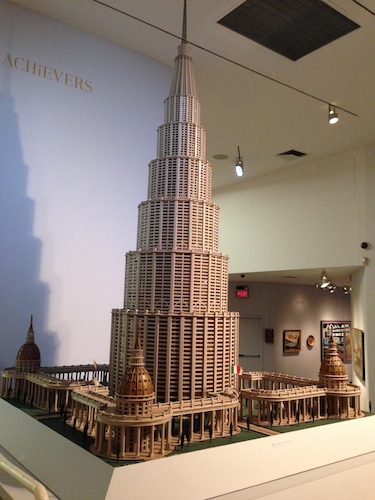
Consider The Encyclopedic Palace of the World, created by Maurino Auriti, an auto body worker who just loved designing and building architecture. Mind blowing. If his visionary campus was actually constructed, the skyscraper would be taller than that spire in Dubai.

The Encyclopedic Palace, created by Maurino Auriti, an auto body mechanic, in the 1950s from from wood, plastic, glass, metal, hair combs, and hobby kit parts

The Encyclopedic Palace, created by Maurino Auriti, an auto body mechanic, in the 1950s from wood, plastic, glass, metal, hair combs, and hobby kit parts

If you get to Lincoln Square today, you’ll enjoy one amazing treasure after another, but if not, check it out the beautiful web site archive created by the museum team for the tour. Browse by time period, theme, or artist.

And check out the Museum’s other brilliant online solution to letting you in on the world’s interpretation of these works. They’ve assembled all the media written and produced about the pieces in the show, which have often served as a springboard for scholarly research. This is a fun, serious treasure chest of work, so probe to your heart’s content — baseball folk art, mourning pictures, 18th century folk-art Washington portraits, and even more recent works.

What will it take to take this show of masterworks on the road? Last year, Auriti’s The Encyclopedic Palace was chosen as the theme of the  55th International Venice Biennial, so it got to go on its first trip to Italy.

Get a glimpse of where the folk art lives when it’s not on display and see how art gets packed to take a trip.

Baseball statue from 114 Centre Street and the sideshow’s Radium Girl banner from Chicago in the 1930s

Baseball statue from 114 Centre Street and the sideshow’s Radium Girl banner from Chicago in the 1930s

Gauguin’s Primitive Universe at MoMA

Be Mysterious (1890) Carved and painted lime wood from Musée d’Orsay, Paris. © RMN-Grand Palais /Art Resource NY.

Be Mysterious (1890) Carved and painted lime wood from Musée d’Orsay, Paris. © RMN-Grand Palais /Art Resource NY.

You can almost hear the rustling pandan leaves, waterfalls rushing into exotic coves, and the drums and chants of fiery Tahitian rituals around powerful idols long since banned by the Christian missionaries…but only if you take the time to get close to the smaller works in MoMA’s revealing sixth-floor show, Gauguin: Metamorphoses through June 8.

Yes, Gauguin’s bright, colorful paintings of island life are displayed, but the show is really about the darker, more primitive experience expressed in Mr. Gauguin’s ceramics, woodcuts, carvings, and monoprints – the works that we rarely get to see en masse.

Hina and Fatu (c. 1892) Carved tamanu wood. Courtesy: Art Gallery of Ontario, Toronto © 2013 AGO

Hina and Fatu (c. 1892) Carved tamanu wood. Courtesy: Art Gallery of Ontario, Toronto © 2013 AGO

After nearly two decades plugging away at his day job, weathering a stock-market crash, struggling to stay in the middle class, cranking out artworks in his spare time, and showing with the Impressionists, he just chucked it all, packed a bag, and went to Tahiti in 1891. From his young-adult years working in the merchant marine, he figured Tahiti was as far away as he could get from his family, responsibilities, and the frustrating Paris art scene where others were making it besides him.

Nothing’s perfect, and the Tahiti he arrived in was already changing from contact with the global trade networks of industrialized countries. No matter. Gauguin was captivated by the thought of connecting with the “true” primitive and savage that lived in the myths, lore, and natural beauty of Polynesia and shoving it all into the face of the avant-garde and art-buying public back home.

The curators have assembled all the images Gauguin created for three dramatic series of woodcuts. The rough edges really come out in Noa Noa (1893) and The Vollard Suite, with a few of the gouged-out woodblocks exhibited right next to several states of the same image.

Mahna no varua ino (The Devil Speaks), state IV / IV, from the suite Noa Noa (Fragrant Scent). (1893–94). Woodcut from private collection. Courtesy: Galleri K, Oslo. © Reto Rodolfo Pedrini, Zurich

Mahna no varua ino (The Devil Speaks), state IV / IV, from the suite Noa Noa (Fragrant Scent).
(1893–94). Woodcut from private collection. Courtesy: Galleri K, Oslo. © Reto Rodolfo Pedrini, Zurich

Black, dark, primitive, edgy – too edgy, in fact, for his dealer, Mr. Vollard, who felt that the prettier oil paintings were a lot more palatable to his clients. (Vollard kept the more expressive primitive prints in the drawer.)

Take a look on MoMA’s special website for the show, which has a detailed timeline for Gauguin’s travels. Clicking on images on the site allows you to zoom in closely on each work. A particularly nice touch is the full digitized version of Gauguin’s unpublished Noa Noa manuscript, which he assembled (but never published) to interpret all the exotic images and symbols of the series for the public and his hoped-for fans. Scroll down to the bottom of this page to see the manuscript, page by page.

Oviri (Savage). (1894) Partly enameled stoneware, from Musée d’Orsay, Paris. © RMN-Grasnd Palais /Art Resource NY

Oviri (Savage). (1894) Partly enameled stoneware, from Musée d’Orsay, Paris. © RMN-Grasnd Palais /Art Resource NY

So here’s your chance to examine what was boxed up for so long along alongside magnificently  disturbing sculptures, panels, and reliefs of goddesses, devils, spirits, waves, women, and mountains created out of tamanu and pua wood with the occasional daubs of colored paint. It’s clear that the design and detail of Gauguin’s beautiful symbolist color paintings got a further workout through all of these other works portraying the dark, mysterious side of life forces emanating from the mind of a struggling artist obsessed with the uber-primitive.

Some say that Picasso was inspired to transform his Demoiselles after seeing some of this raw work (exhibited after Gauguin’s death). Say hello to them seven days a week on MoMA’s 5th Floor.

Get Out of Town with JJ Audubon

Audubon’s Great Blue Heron (Ardea herodias), Study for Havell pl. 281 (1832). Watercolor, graphite, and pastel on paper, laid on thin board. Courtesy NYHS and Mrs. Audubon

Audubon’s Great Blue Heron (Ardea herodias), Study for Havell pl. 281 (1832). Watercolor, graphite, and pastel on paper, laid on thin board. Courtesy NYHS and Mrs. Audubon

If you need to get out of town Memorial Day weekend, there’s no better traveling companion than J.J. Audubon, whose original watercolors will transport you to another time and place better than any plane, car, or train. Experience his spectacular show at the New-York Historical Society, Audubon’s Aviary: Parts Unknown: Part II of the Complete Flock today and tomorrow.

Can’t make it in person to New York? Not a problem, because you can tour Mr. Audubon’s show (and more) on a fantastic website that shows you his birds, provides the maps of your journey, and more. True, you won’t enjoy the life-size paintings – shocking when you see them in person – but you’ll learn the entire backstory of JJ’s trips through the Southeast US and Northeast Canada as he did the best-job-ever for his epic Birds of America four-volume series.

In the NYHS gallery in the last several weeks, visitors have been running up to the second floor and grabbing the magnifying glasses to study each brushstroke of these magnificent works. Although they’re mostly watercolor, each painting is enhanced with graphite, pastel, gouache, and ink. Because no one’s perfect, a few have birds pasted in from other pieces of paper, but you really can’t tell unless you study them closely.

A second Great Blue Heron (1834), thought to be another species at the time, with the skyline of Key West, Florida. Courtesy NYHS and Mrs. Audubon

A second Great Blue Heron (1834), thought to be another species at the time, with the skyline of Key West, Florida. Courtesy NYHS and Mrs. Audubon

It’s the first time that NYHS has exhibited JJ’s complete watercolor series, but it’s so big – 474 original watercolors – that they had to break it into three separate shows.

Mrs. Audubon presented JJ’s entire set of original work to NYHS in1862. Her husband had worked so hard on these works of art (he didn’t consider them “scientific”) that she commented that sometimes the birds felt like “her rivals.” Better that NYHS preserve them for posterity.

The museum decided to mount the watercolors in the order in which JJ painted them. On the website, you can revisit Part I, but let’s turn our attention to Part II.

As you’d expect from his trips to the Carolinas, Georgia, Florida, Labrador, and Newfoundland in 1831-33, the majority of the birds you’ll see live in and around the water. Two spectacular works are of the Great Blue Heron in two color ways. In JJ’s lifetime, the white- and bluish-colored herons were thought to be two separate species (which they’re not), so we’re treated two very large paintings of one fishing from shore and the other enjoying a meal in sight of the Key West skyline across the bay.

Carte–de–visite of John James Audubon. The legacy lives. Courtesy: NYHS

Carte–de–visite of John James Audubon. The legacy lives. Courtesy: NYHS

It’s amazing to consider that JJ started many of these while he was on his journeys, totally outdoing Banksy as a premiere peripetatic creating-art-wherever road warrior. Of course, he did it all without electricity and frequent-flyer miles hauling around gigantic pieces of perfect paper.

Through it’s collaboration with the Cornell Ornithology Lab, the NYHS provides (on the web and on the gallery audio guides) clips of each bird’s distinctive voice. Another nice in-gallery touch is an iPad app that allows visitors to compare each watercolor with the engraved print made in London by Robert Havell, Jr. for the printed books.

Enjoy JJ’s images here.