It’s always fun when the MoMA design curators dig into the collection and present innovations that make you look – and think – twice. They’ve outdone themselves with the endlessly fascinating, super-popular, and throught-provoking exhibition, Pirouette: Turning Points in Design, on view through November 15, 2025.
Where (and why) did Crocs evolve? Who improved the paper bag? Who designed the first emojis? What’s the link between M&Ms and the US military? The exhibition celebrates designers and tells stories about eureka moments – a flash of genius in adapting industrial materials to solve everyday problems in unexpected ways.
Early 1930s invention for the military by Forrest Mars – M&M’s candy-coated chocolates.
Each design innovation has its own little curtained cubby, giving the exhibit a luxe red World’s-Greatest-Showman vibe with surprises revealed around each bend. The show has it all – beloved technology innovations, fashion twists, furniture innovations, and ubiquitous everyday items that we take for granted.
1950 Bic Cristal Ballpoint pen designed by Marcel Bisch and the Décolletage Plastique Design Team for Société Bic, which eliminated clogs and leaks.
1962 View-Master Model G, a lightweight stereoscope viewer remodeled by Charles Harrison for Sawyer Manufacturing.
Right at the start, there’s an entire wall where you learn about Shegetaka Kurita, the Japanese innovator who designed emojis in 1998.
Emojis, designed in 1998-1999 by Shigetaka Kurita for NTT DOCOMO in Japan; 176 designed for mobile phoes and pagers
The earliest innovation honored in the exhibition is the folding, flat-bottomed paper bag designed by Margaret E. Knight and Charles B. Stillwell in the 1870s. MoMA honors Margaret as one of the first women in the United States to obtain a patent for her invention of the paper-bag manufacturing machine. By unfolding a paper container that “stood up” on its own, clerks were able to pack everything with two hands! Revolutionary shopping efficiency!!
1870s-1880s flat-bottomed paper bag designed by Margaret E. Knight and Charles B. Stillwell
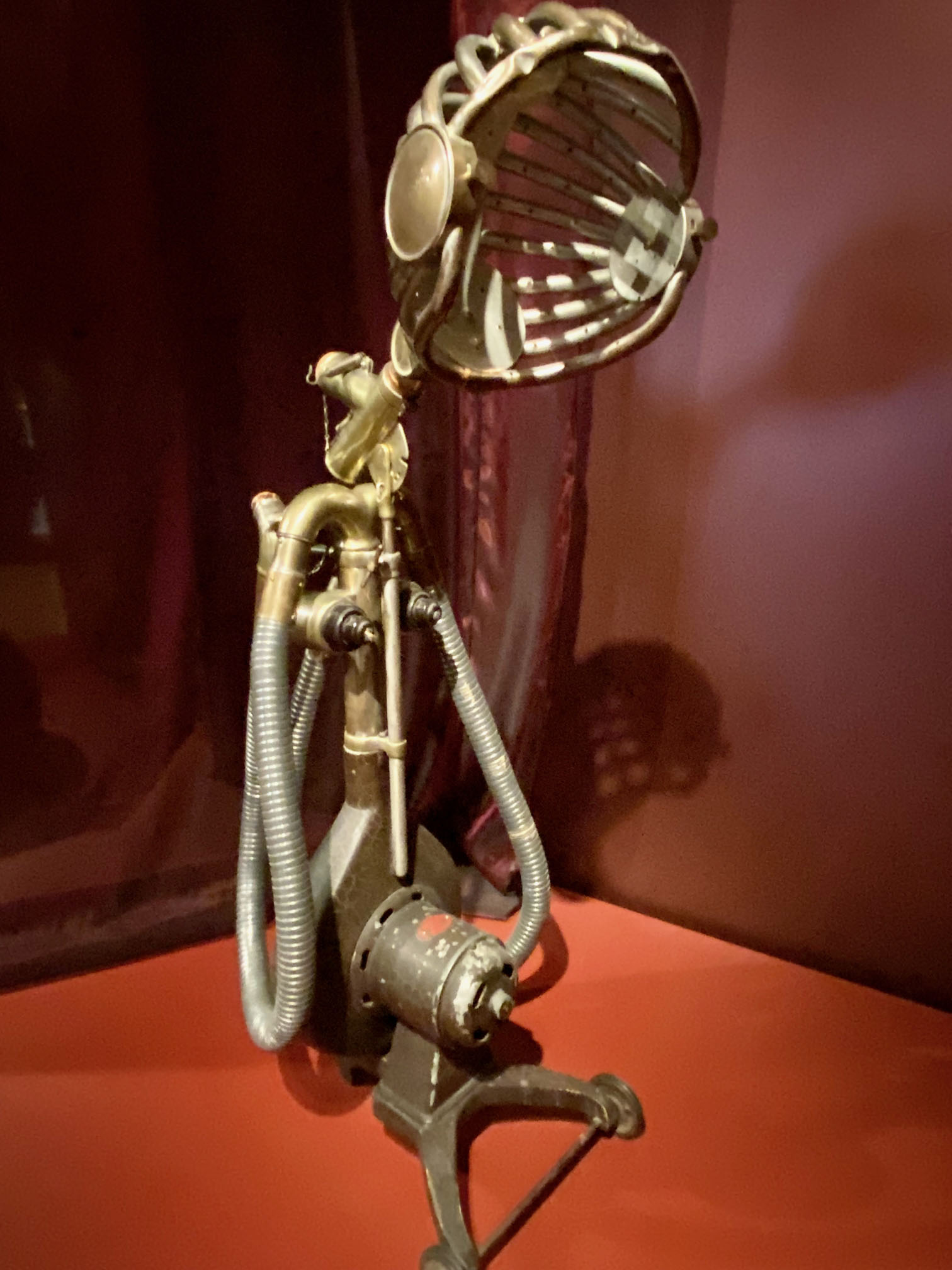
From the early 20th century, we have two European turning points in design – the electric hooded hairdryer and the at-home expresso maker. The Thirties’ version of the Müholos hairdryer is the first invention you see, but its heavy-duty industrial design is a shocker.
The innovative Moka Express expresso pot – invented in Italy during the Great Depresssion – is in every Italian home today. But it was revolutionary in the 1930s because it finally allowed people to economize by brewing at home instead of spending more at the café.
Highly intimidating 1930s hairdryer from the Müholos company of Leipzig, Germany, founded in 1909; innovators in electric hair clippers, too
2008 version of Moka Express designed in 1933 during the Great Depression by Alfonso Bialetti to enable Italians to brew espresso at home.
Going back to 1979, the team honors Sony Walkman, the portable music wearable that replaced ginormous boom boxes. Steve Jobs and his team gets a nod for their 1983 Mac desktop all-in-one and everything that came with it – the Oakland font designed by Zuzana Licko for the earliest Mac word processing and Susan Kare’s graphic OS icons. Kare invented the trashcan and didn’t even own a computer!
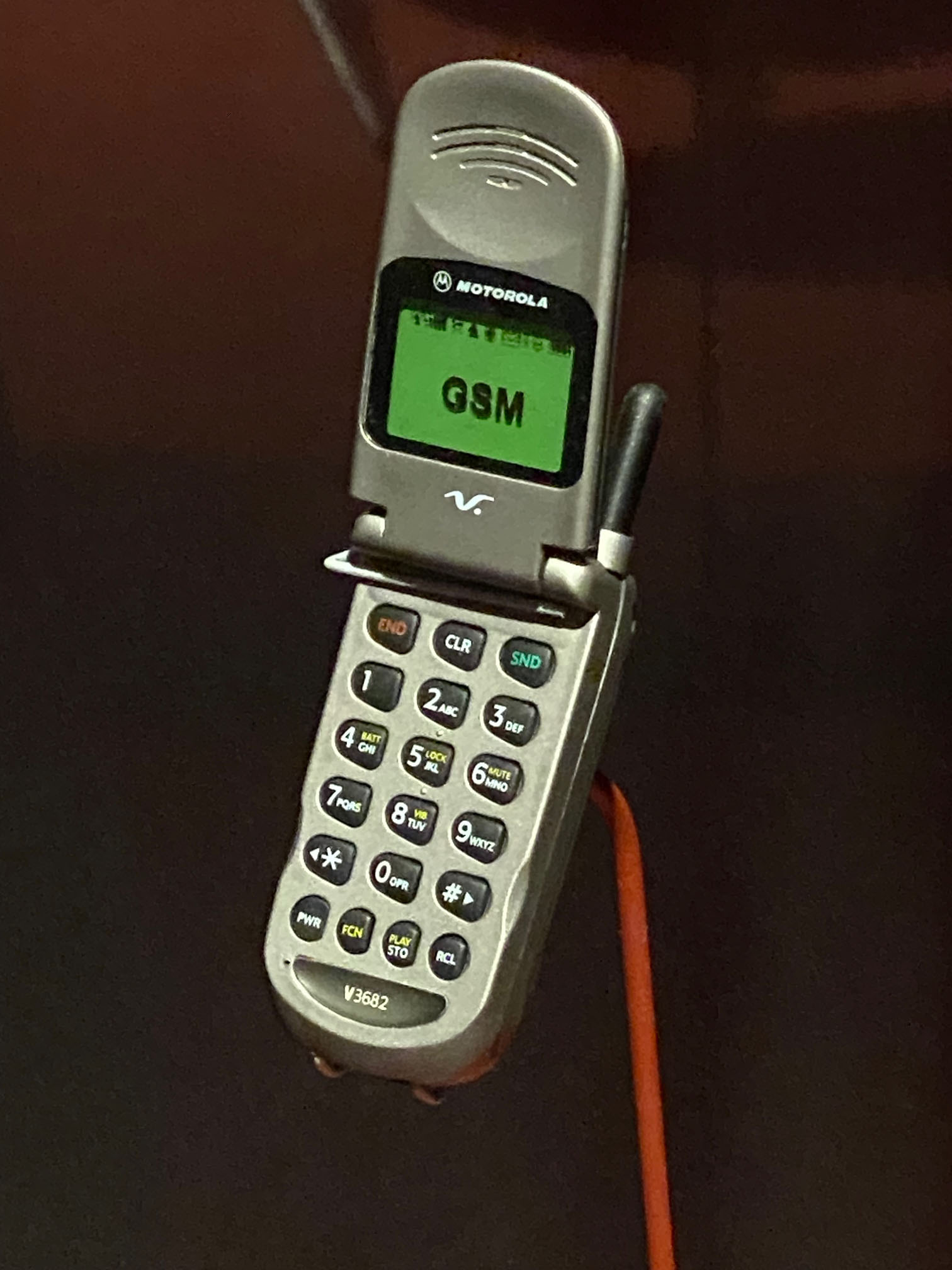
Although the tech world seems to be bringing it back this season, it’s nice to see the design innovation that began it all – 1996 Motorola flip phone!
Sony’s 1979 “Walkman” audio cassette player (Model TPS L-2) – the first portable listening “bubble”; designed with two headphone jacks for sharing.
1996 Motorola cellular telephone (Model V3682) – the lightest, smallest mobile device (“flip phone”) – designed by Albert Nagele.
And speaking of technology at your fingertips, it’s always nice to see MoMA display full-size 1926 Frankfurt kitchen that influenced every modern kitchen that came after it. After WWI, Germany undertook a big modernization project to alleviate the housing crisis. Grete Lihetzk, who designed this kitchen was the only woman on the design team, but she made quite a mark! She studied efficiencies in factory designs and incorporated them into the kitchen – revolving stools, built-in storage, stain-resistant cutting surfaces, and drop-down ironing boards.
1926-1927 Frankfurt Kitchen designed by Grete Lihetzky – a revolutionary, efficient approach with features still used in kitchen design today.
Listen to MoMA’s audio guide to hear the backstories of the Rainbow Flag, early Mac OS design, graphic design improvements to familiar signs, and how artificial acrylic nails became a trend.
Here’s a short history of shapewear:
And learn about the Monobloc Chair (designer unknown). It’s everywhere!
How did a stylish, ambitious, saavy librarian toiling in the stacks of Princeton’s library at age 22 transform herself into the trusted confidante of the richest man in the world, helping him to build a celebrated collection of manuscripts, books, and art?
Find out in Belle da Costa Greene: A Librarian’s Legacy, the blockbuster exhibition at The Morgan Library and Museum on display through May 4, 2025. To celebrate its 100th birthday, the Morgan Library & Museum wanted to honor its first director, Belle da Costa Greene.
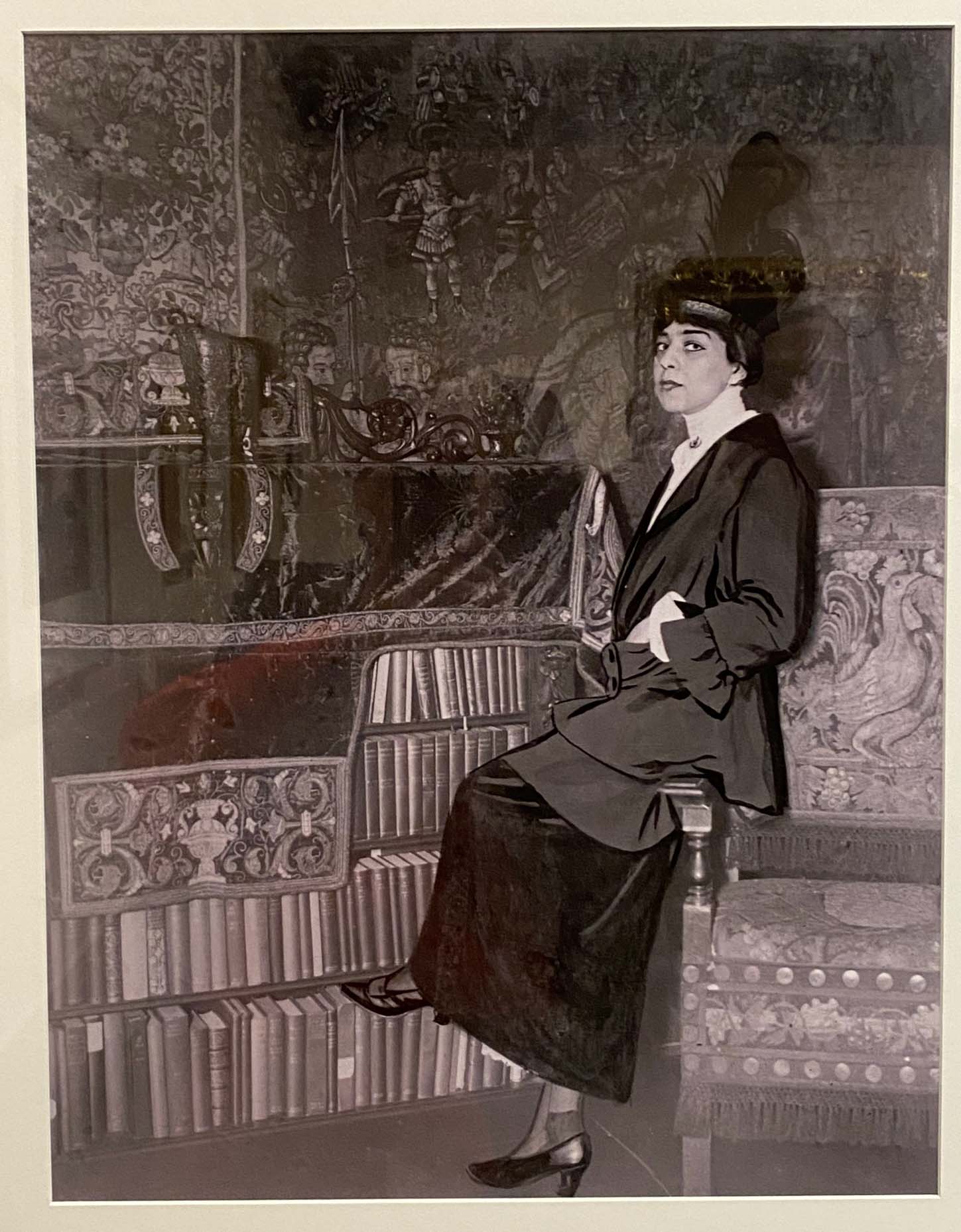
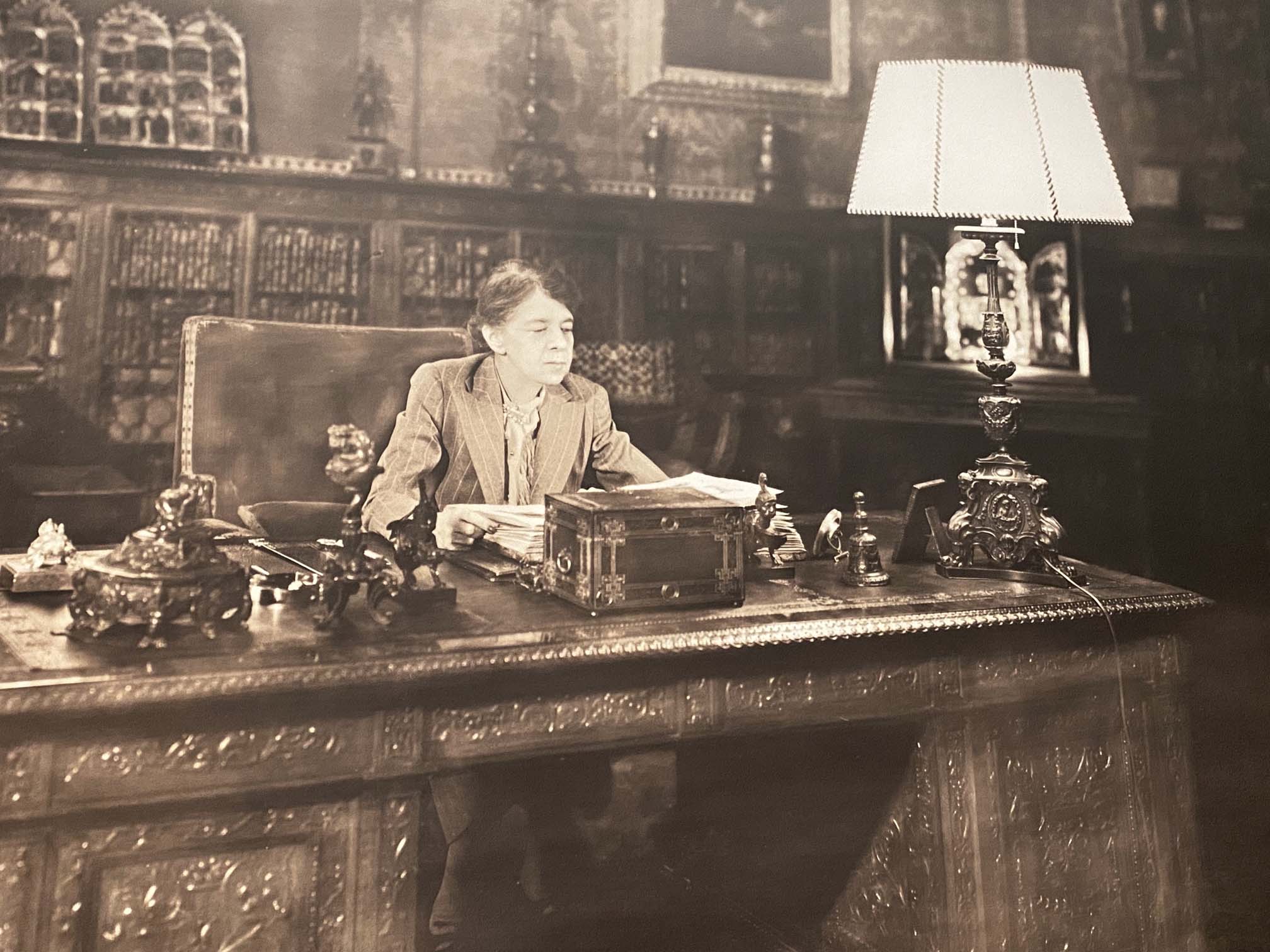
Belle Greene’s 1915 portrait at home; Paul Thompson photo for a news story on NYC high-salaried women. Courtesy: Getty/Bettmann.
Belle decended from an illustrious line of African-American intellectuals, lawyers, cultural leaders, and social-justice advocates, but lived her entire life passing for white in the early 20th century.
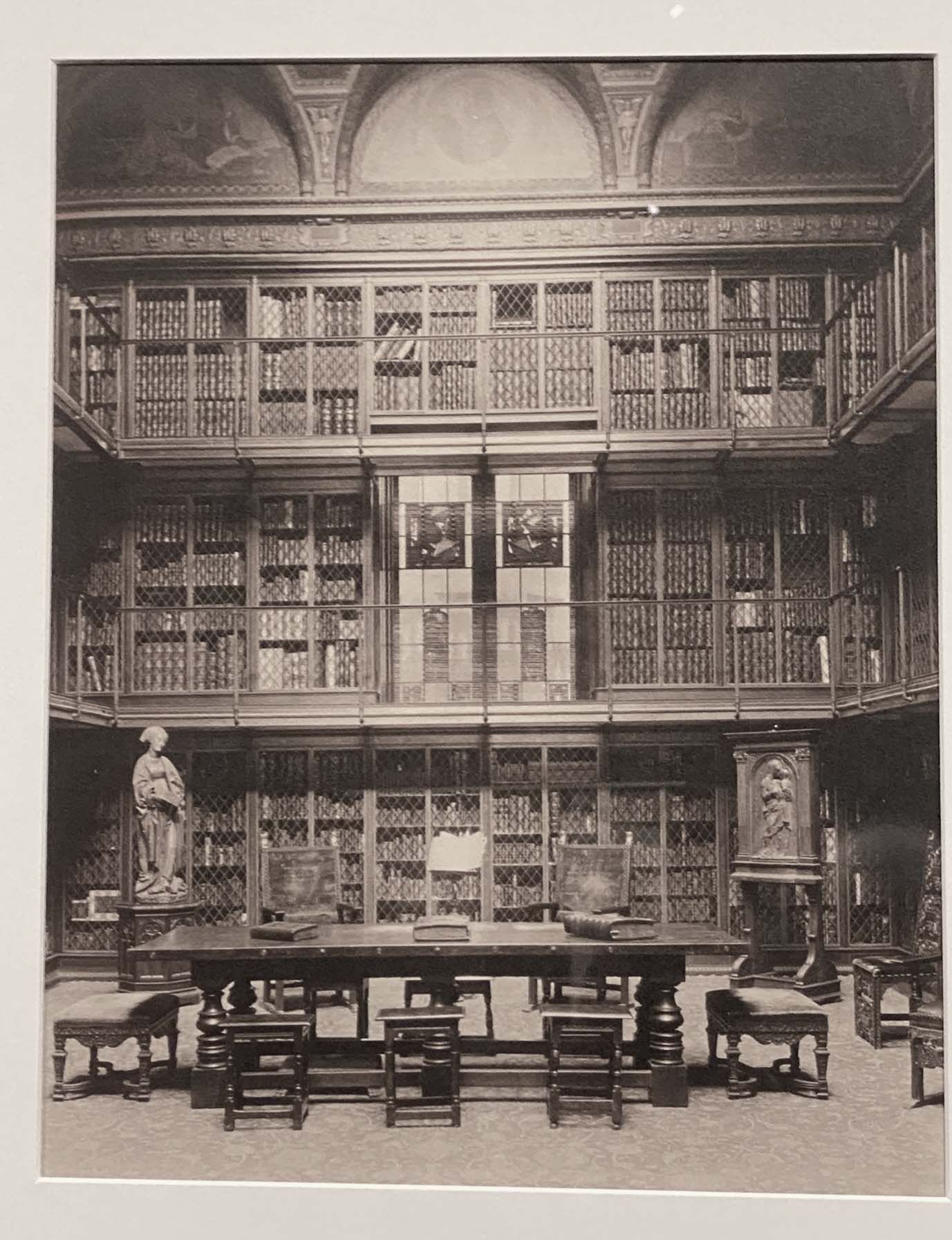
Tebbs & Knell’s 1923-1935 photograph of Mortan Library’s East Room with most of the 11,000 volumes acquired by Belle Greene.
As a young, culturally oriented woman, Belle dreamed of working in the brand-new field of library science. Her impressive intellectual curiosity and research skills attracted benefactors who helped her with tuition at the best schools. Ultimately in 1901, she landed a job at Princeton’s library (when the campus was still segregated).
She came under the mentorship of library-science champiom Junius Spencer Morgan, J.P.’s nephew who eventually recommended her to his uncle who was building a private library to rival the best in Britain and France. The rest was history.
The exhibition tells Belle’s personal story, documents her acquisition triumphs for Morgan, shows her fame as one of the highest paid professional women in New York, and explains how she spent four decades building Mr. Morgan’s library into a premiere cultural institution.
Belle deftly navigated through society by gaining acclaim as a scholar, curator, and cultural innovator – often as the only woman on the auction bidding floor or at scholarly societies.
When she set her mind to something, she usually found a way to acquire it – even if it took years of waiting and entreaties. It was a quality that J.P. Morgan admired in her. He paid her handsomely, and trusted her completely to acquire works across Europe in his name.
Illustration for The World Magazine (May 21, 1911), showing Belle in action with at the auction of Robert Hoe’s library.
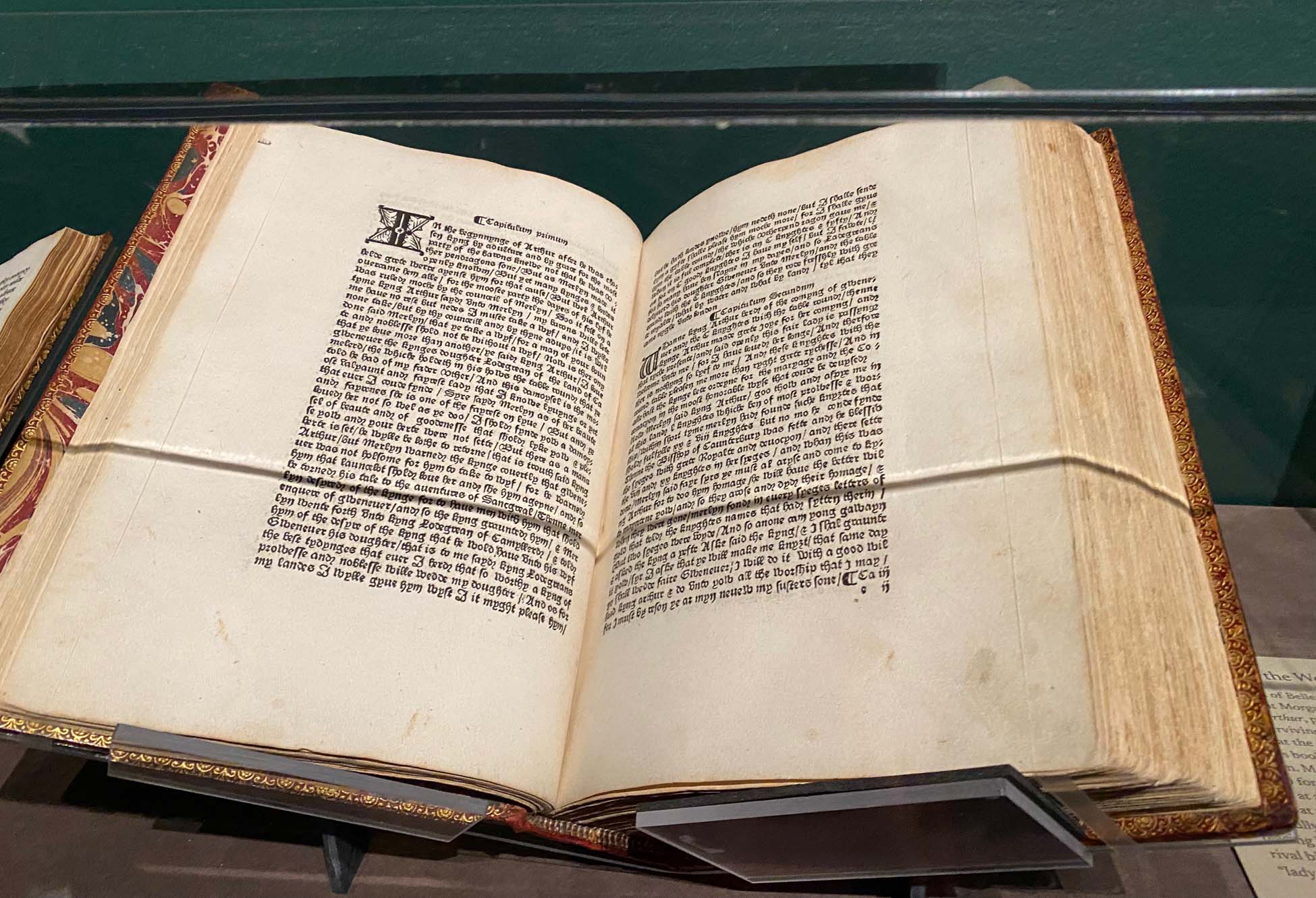
Belle Greene’s prized acquisition – the only surviving 1485 print edition of Thomas Malory’s Le Morte d’Arthur.
She even convinced Morgan to embrace classical Islamic art from India and Persia for the collection before other collectors caught on to their beauty and drove up prices.
In 1911, Belle purchased this 1750-75 album of Persian and Mughal paintings owned by British Museum expert Charles Hercules Read.
When Morgan died in 1913, his son, Jack, asked Belle to continue in her position and oversee the construction of the Annex on 36th Street.
In 1916 (without permission), Belle snuck over to Europe during World War I to convince an English collector to part with the much admired “Crusader Bible,” a gorgeous illuminated 13th century manuscript. Mr. Morgan had once made an offer for it. After Morgan died in 1913, Belle met with the collector in person, struck a deal, brought it back, and presented it to Jack Morgan for the collection.
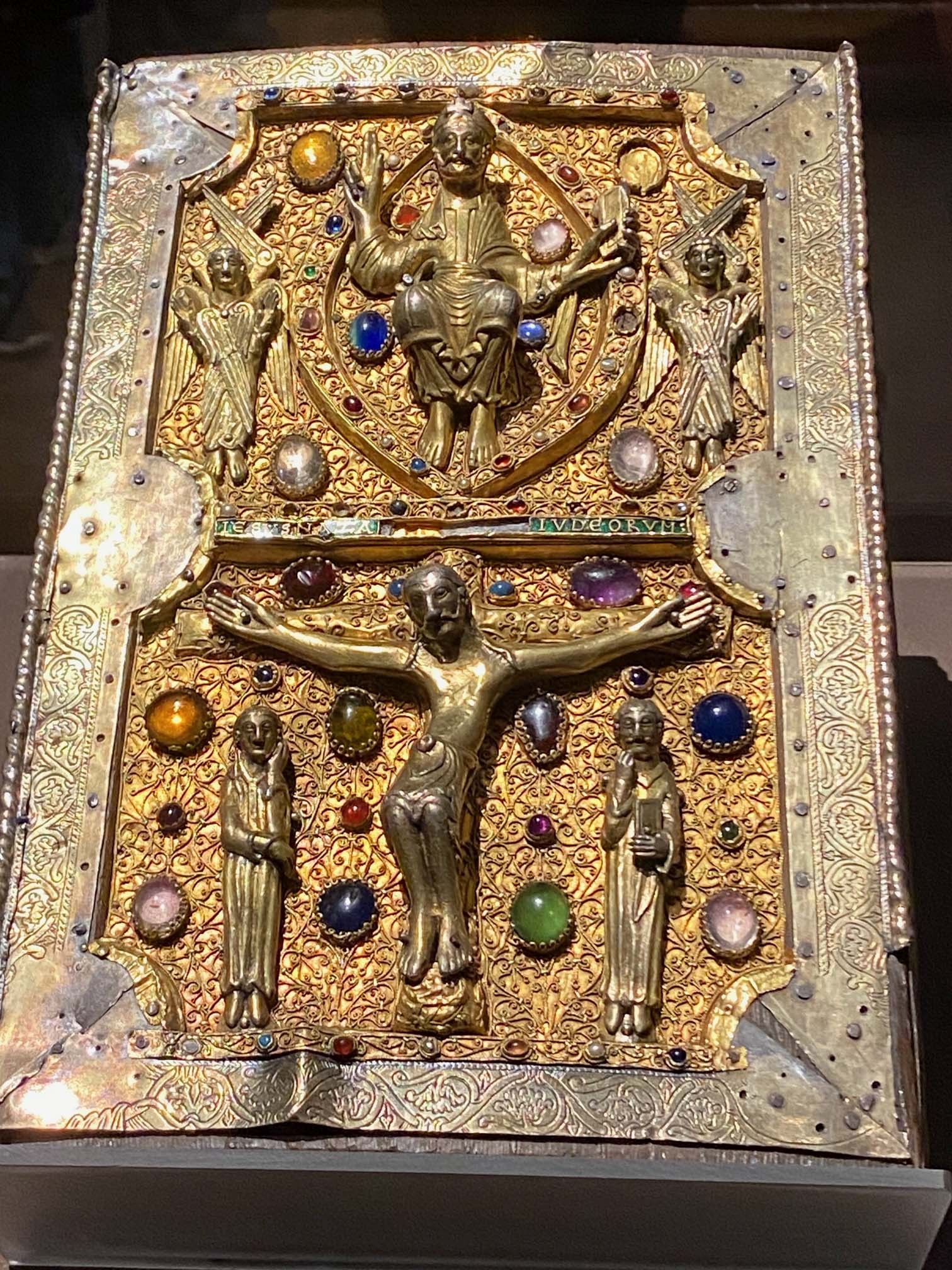
Jeweled cover of 1051-64 Gospels of Judith of Flanders – a 1926 purchase by Belle Greene and Jack Morgan.
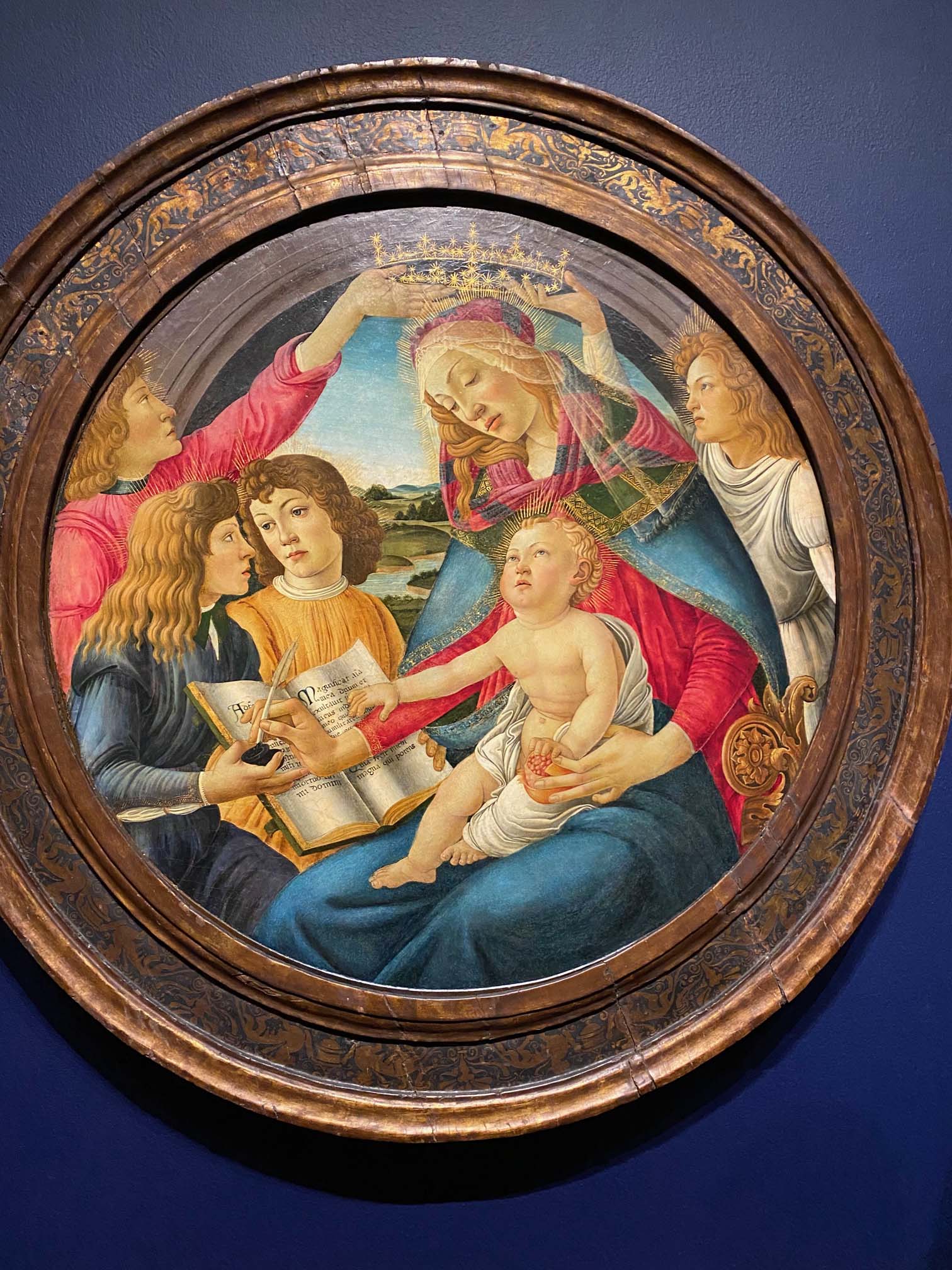
1490 Madonna of the Magnificent, a Florentine painting that Belle conserved, still hanging in Morgan’s study.
Her expertise in medieval illumination and manuscripts made her a friend and advisor for life among American and European scholars, collectors, and museum curators. The Metropolitan Museum made her a trustee for life, and often consulted with her on medieval masterpieces, fakes and forgeries, and other acquisitions.
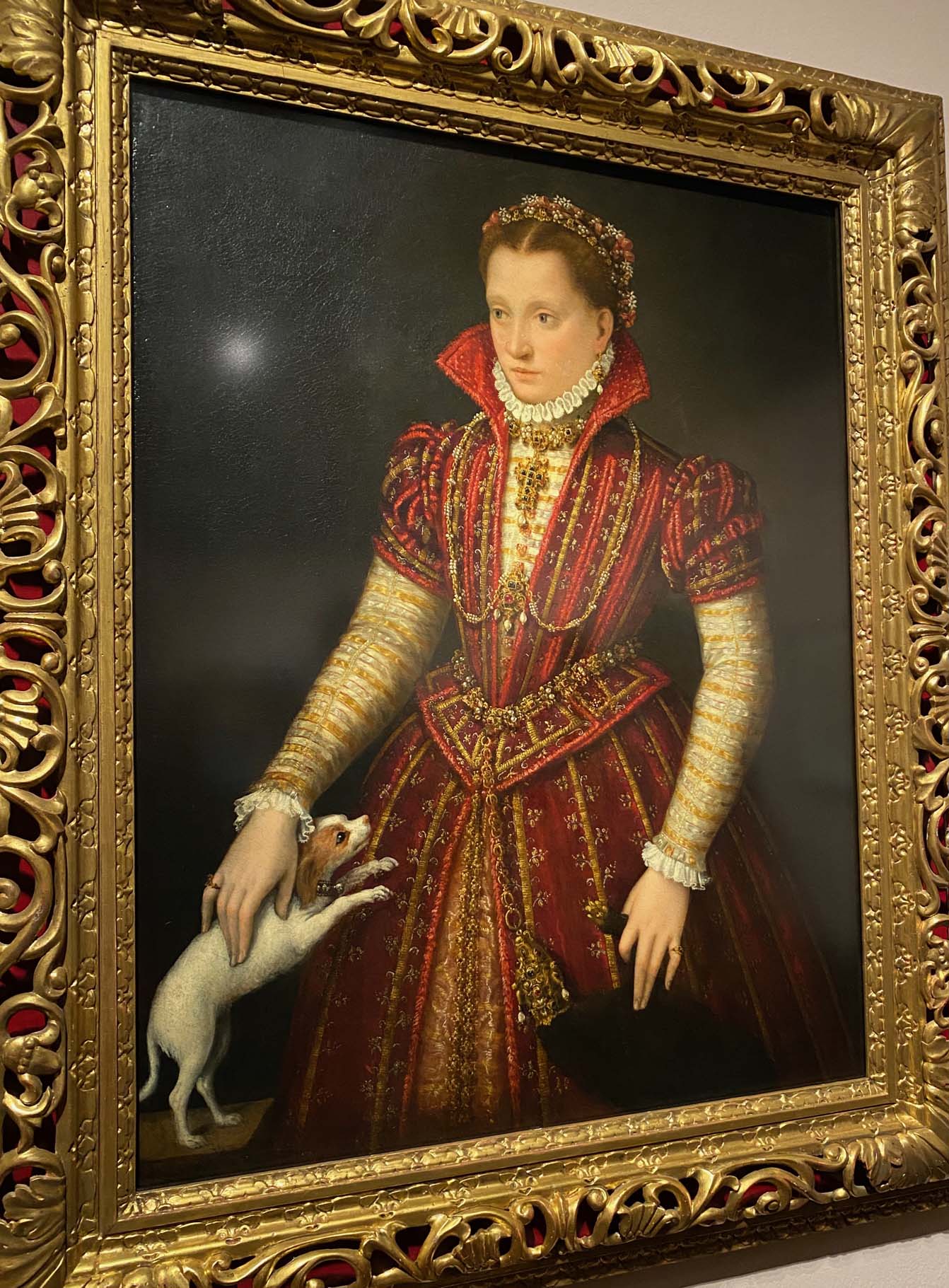
In Belle’s personal art collection – Lavinia Fontana’s 1580 Marriage Portrait of a Bolognese Noblewoman. Courtesy: National Museum of Women in the Arts.
From Belle’s jewelry– Benedetto Pistrucci’s 1840-1850 jasper and gold Head of Medusa. Courtesy: The Metropolitan Museum.
The curators tell her story across two galleries using items from the Morgan’s collection (including the many portraits of her!) as well as paintings, prints, photographs and documents from 20 other lenders. Take a peek into the exhibition and hear the Morgan’s curators summarize Belle’s ground-breaking achievements:
Explore the works at your leisure here as you complete a 3D digital walk-through on the Morgan’s website. You can also listen to the audio tour from right inside the virtual gallery.
Get to know this legend, and take a look at our favorite exhibition pieces in our Flickr album.
The ony question is – who will play Belle in the movie?
1950 photo of Bella reviewing her last acquisition, a 10th century Gospel Book from France. Courtesy: Harvard University’s Berenson Library in Florence, Italy.
Take a look at generations of 20th century craft mentorship in Craft Front & Center: ConversationPieces, on view at MAD Museum through April 20, 2025. The exhibition shines a light on how innovators shaped subsequent generations of craft artists at schools and art colonies across the United States. The curators have pulled from the MAD collection to show us the work of student and teacher side by side in several disciplines – fiber arts, ceramics, and glass.
Many of the mentors either taught at or were influenced by the Bauhaus, the legendary early 20th century design incubator.
Who are the generational inspirations for Eve Biddle’s 2019-2023 tiny ceramic sculptures, New Relics?
Bauhaus students could take classes in weaving, ceramics, typography, and metalwork alongside traditional fine arts classes. They were expected to excel in their applied-arts training and mix in aesthetics learned in their fine arts classes.
Bauhaus innovator Margeurite Friedlander Wildenhain’s 1966 Square and Textured Vase
When the Nazis closed the progressive school in 1933, many German-Jewish refugee teachers and students fled, transplanting Bauhaus design and educational philosophies across the world.
MAD highlights several artists – including Anni Albers, Trude Guermonprez, Margeurite Friedlander Wildenhain, and Maija Grotell – who came to the United States and integrated Bauhaus practice into curriculums at Black Mountain College, the California College of Arts and Crafts, Cranbrook, and new craft workshops they began.
One of the best-known 20th century textile artists, Anni Albers is featured in the show by a fine-art “pictoral textile” made on a small handloom. At the Bauhaus, Albers she trained under master weaver Gunta Stölzl, and eventally took over as head of the textile workshop. Albers moved to Black Mountain College in North Carolina with her husband, painter Josef Albers, and was the first textile artist invited by MoMA to have a one-person exhibition.
Anni Albers’s 1959 textile Sheep May Safely Graze made on a small handloom using gauze weave technique
Anni also designed commercial textiles for Knoll for years. Her influence on the next generation of painters and textile artists was profound.
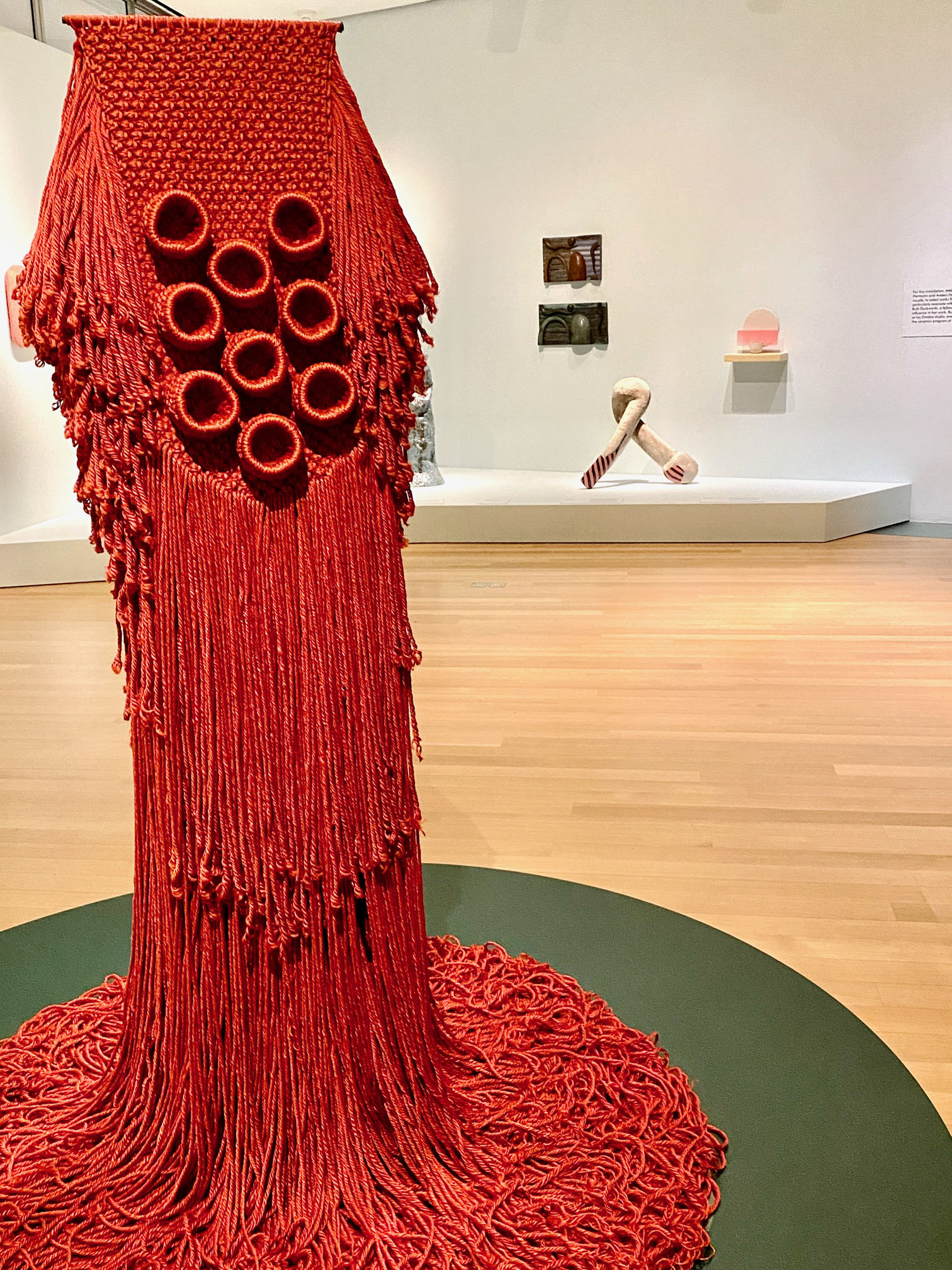
MAD features work by two fiber-arts innovators (and Albers admirers) who pushed boundaries by crafting commanding, large-scale sculptures. Sheila Hicks (who studied with Josef at Yale) and Claire Zeisel (who studied with the former Bauhaus faculty at Chicago’s IIT) are credited as the leaders of America’s textile arts movement. Tufts burst from the wall in Hicks’ piece, and Zeisel’s hovers in the center of the gallery like a shaman.
Sheila Hicks’s 1968 Dark Prayer Rug, inspired by Anni Albers and Mexican and Moroccan textile artists.
Claire Zeisler’s 1967 Red Wednesday with braid and cords twisting the sculpture’s armature
Trude Guermonprez, an unconventional materials artist known for innovations in three-dimensional weaving once worked at Berlin’s textile engineering academy; later, she consulted with industrial textile firms, as did Anni Albers.
Next to Guermonprez’s dynamic 3D hanging woven sculpture, MAD shows us a piece by Kay Sakimachi, a student who met Guermonprez in 1951 at the California College of Arts and Crafts summer craft workshop.
Guermonprez encouraged students to use latest technology, and here we see how Kay used a 1959 invention by DuPont – monofilament that’s better known today as fishing line. Kay’s woven it into an ethereal hanging sculpture.
Innovative fishing-line weaving 1968 Kunoyuki by Kay Sakimachi alongside 1962 Banner by her mentor, Trude Guermonprez.
In ceramics, MAD displays a series of vessels that transform into sculptures, starting with a modest, contained piece by Margeurite Friedlander Wildenhain, one of the first Bauhaus students and the first woman in Germany to be honored as a master potter. After emigrating to the United States in 1940, Wildenhain founded Pond Farm Workshops in Sonoma County, California ad instituted a rigorous Bauhaus instructional approach.
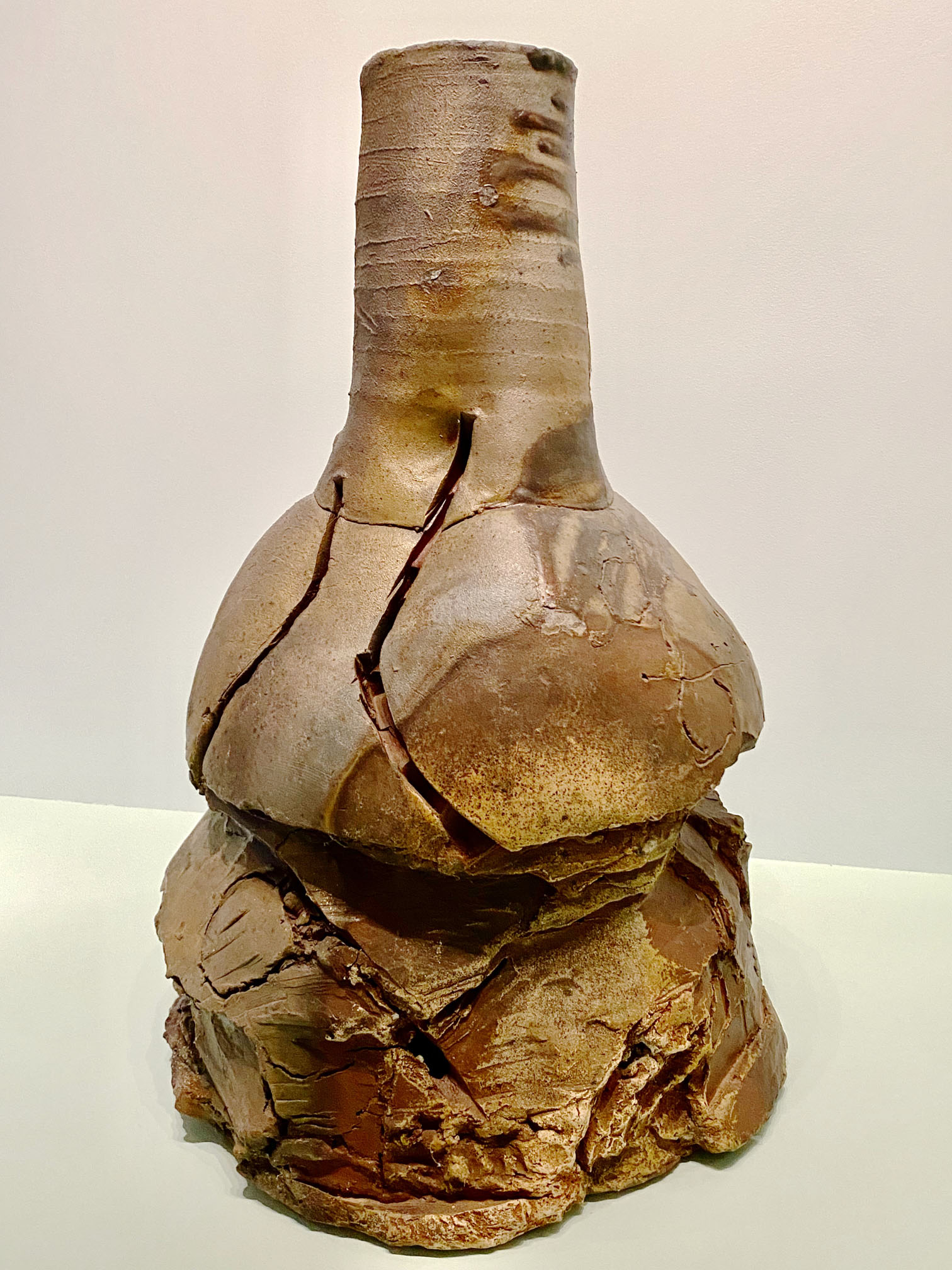
Frances Senska, her ceramics student, applied Wildenhain’s instructional principles to her own classes at Montana State, where student Peter Voulkos learned how to breathe new life into clay. Voulkos shashed, prodded, and poked clay, vigorously transforming the humble medium into wild, dramatic expressions.
Peter Voulkos’s 1992 stoneware Sibley, an example of his revolutionary approach to ceramic form.
Mary Ann Unger 1994 terra cotta Hoist – an approach to ceramic sculpture inspired by teacher Peter Voulkos
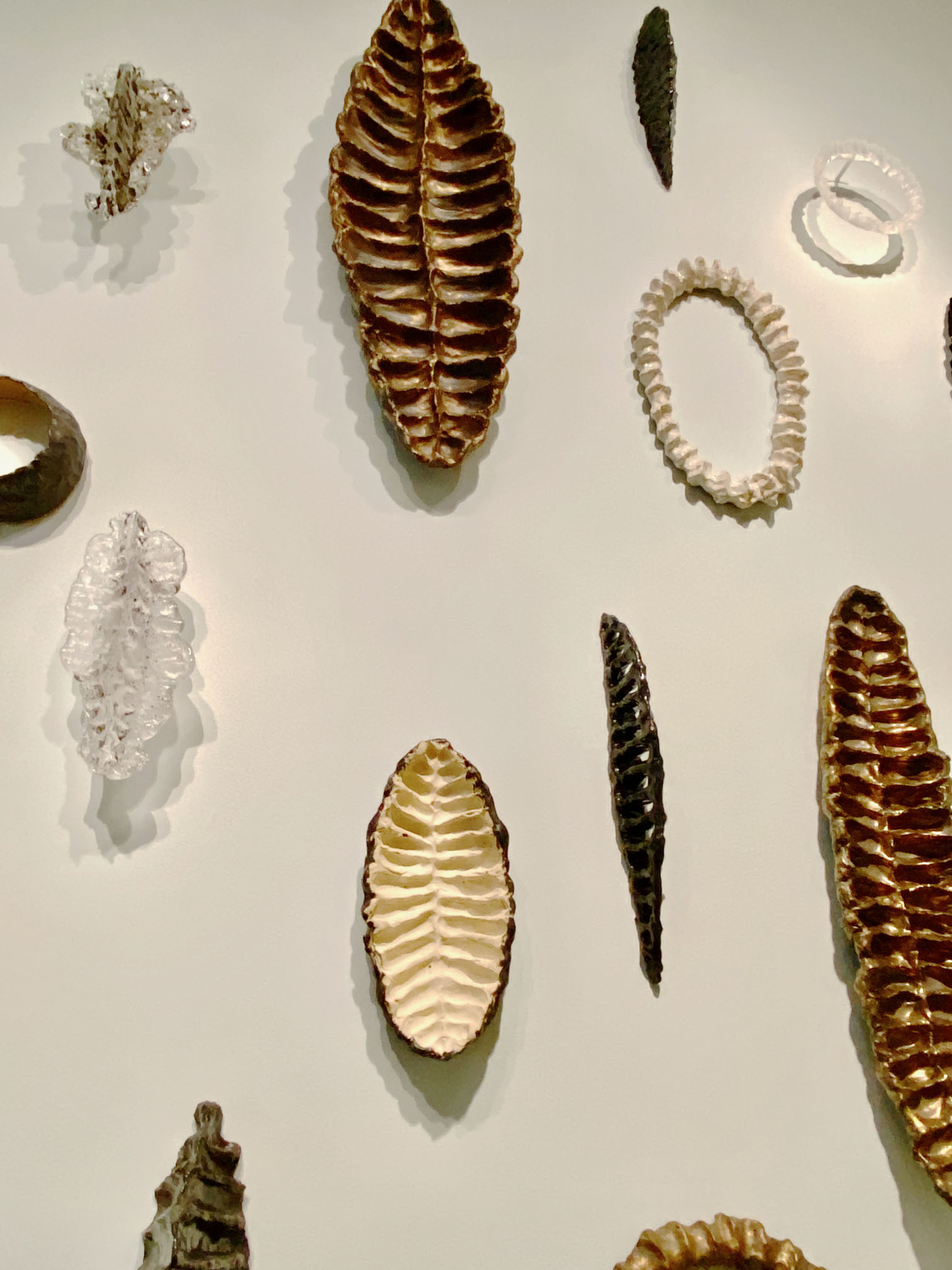
In turn, his UC-Berkeley student, Mary Ann Unger injected whimsey and improvisation into her sculptures, which allowed her daughter, Eve Biddle, to push it even further. MAD shows Biddle’s ingenious installation of creative ceramic geodes, trilobites, and spines crawling around the gallery wall.
Ceramics mentors even play a role in the development of America’s Studio Glass movement, which begins with Harvey Littleton, whose dad was a physicist on the first reasarch team at Corning Glass Works (he later developed Pyrex). MAD displays Harvey’s gorgeous glass arcs.
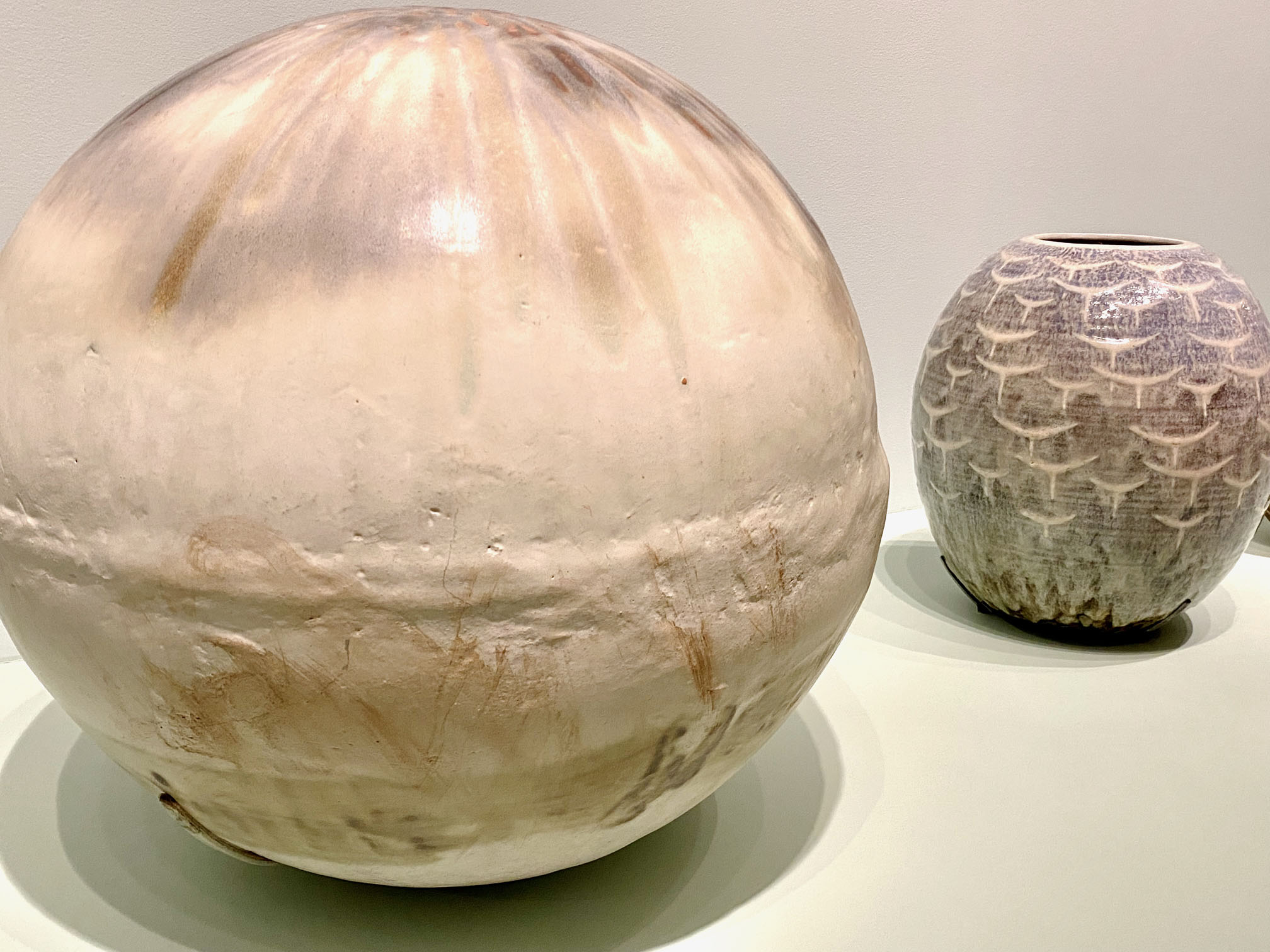
Work by student and teacher: Toshiko Takaezu’s 1995 stoneware Mist #2, part of her Moon series, with Maija Grotell’s 1953 glazed earthenware vase
On weekends, Harvey spent lots of time with his dad in the Corning lab, assuming he would follow in dad’s footsteps as a physicist at the University of Michigan. But after Harvey experienced UM art classes, he switched major. Eventually, he was specializing in ceramics under Maija Grotell at Cranbrook Academy of Art (who also taught ceramic superstar Toshiko Takaezu).
Littleton’s travels to observe the Italian glassmaking masters at Verano inspired him to apply his kiln and physics skills to experimental glassmaking. Back home, e pioneered low-temperature glass-blowing techniques that enabled glass artists to create work in studio setting and not a factory.
Littleton achievement was established the first university-based glass-blowing program at University of Wisconsin-Madison. A lucky undergraduate, Dale Chihuly, learned from the master, and the rest was history for American glass making.
Glass sculptures by teacher and student – 1983 Double Blue Arches by innovator Harvey Littleton and 1968 Wine Bottle by created by Dale Chihuly in Venice under a Fulbright Fellowship.
After receiving his MFA in ceramics at RISD, Chihuly traveled to Venice (like his mentor), and observed how the team worked together to create a finished work of glass art. In 1971, he founded Pilchuk Glass Works in Washington State, where he emphasized the collaborative, collective process. Chihuly’s own sculptural wonders emerged, plus the next generation of indigenous glass artist gained experience in collaborative expression – Tony Jojolla and Preston Singletary.
There are many more stories told in this illuminating exhibition from the MAD collection. Take a look in our Flickr album.
Tony Jojolla’s 1996-1997 Large Glass Olla, a traditional Pueblo pot made of glass at Dale Chihuly’s Pilchuk School; at right, Chihuly’s 1978 Untitled Basket
Take an epic tour through ancient Egyption iconography through the eyes of African-American artists and thinkers in Flight into Egypt: Black Artists and Ancient Egypt, 1876 – Now, on view at the Metropolitan Museum through February 17. It’s quite a ride with African-American artists and writers through decades of deep history.
The wonders never cease, from Cleopatra’s “throne” welcoming you into the galleries to Simone Leigh’s giant queen Sharifa, Henry Taylor’s vision of Michelle Obama as (maybe?) Queen Hapshetsut, epistles of the Harlem Renaissance, Afro-futurist super-heroines, and a neon Nefertiti taking her bow.
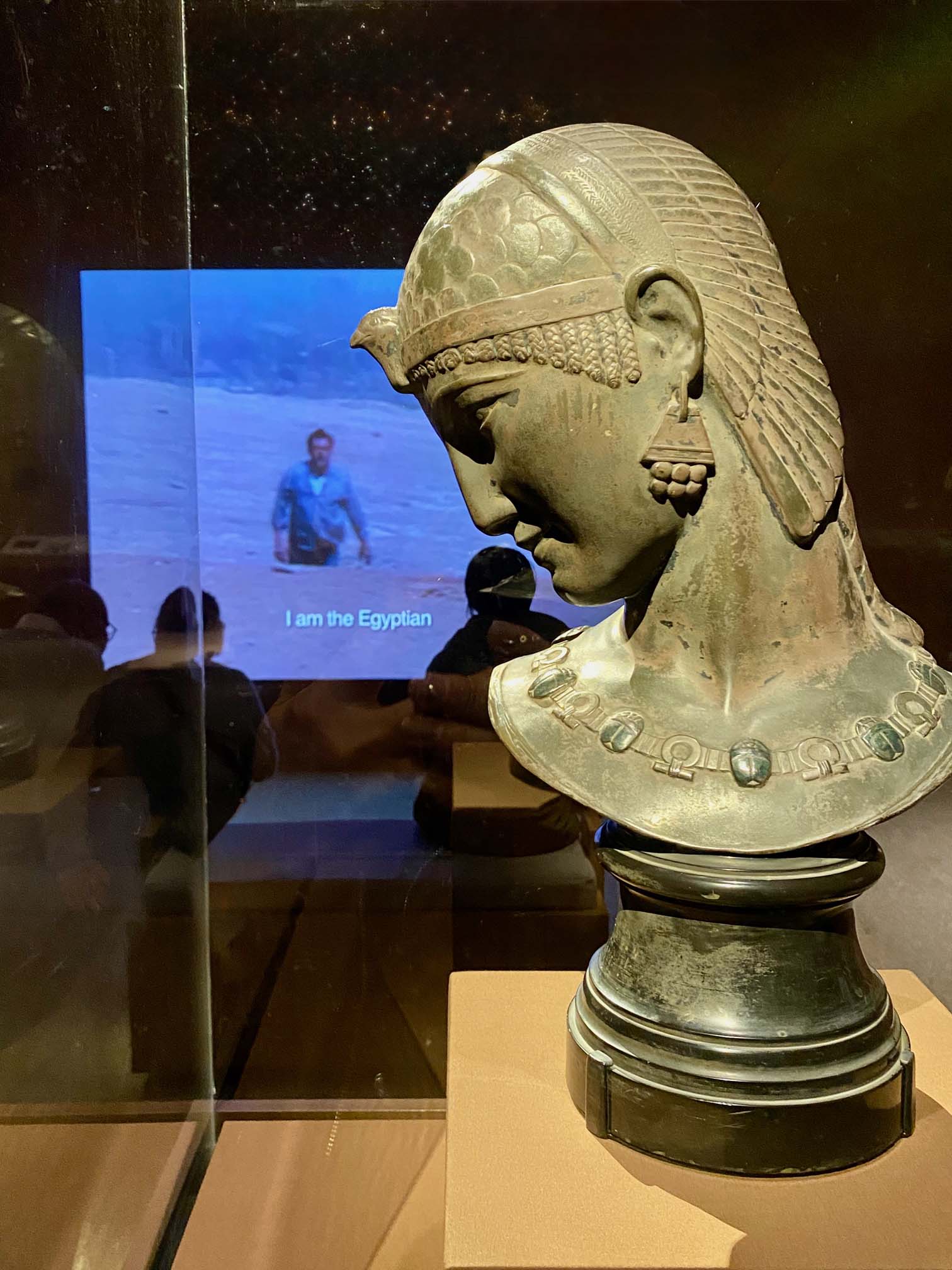
1930 bronze and silver Bride of the Nile (Arous El Nil), Bust by Egyptian sculptor Mahmoud Moktar. In the Heritage Studies gallery. Courtesy: HAR Collection.
The Met, home to the largest Egyptian art collection in the Western Hemisphere (followed by Brooklyn!), decided to create a contemporary counterpoint to its heralded wing and showcase all the ways African-American artists have looked to ancient histories of the Nile, contemplated their relationships to Egypt, and integrated Egyptian spirituality into the current narrative.
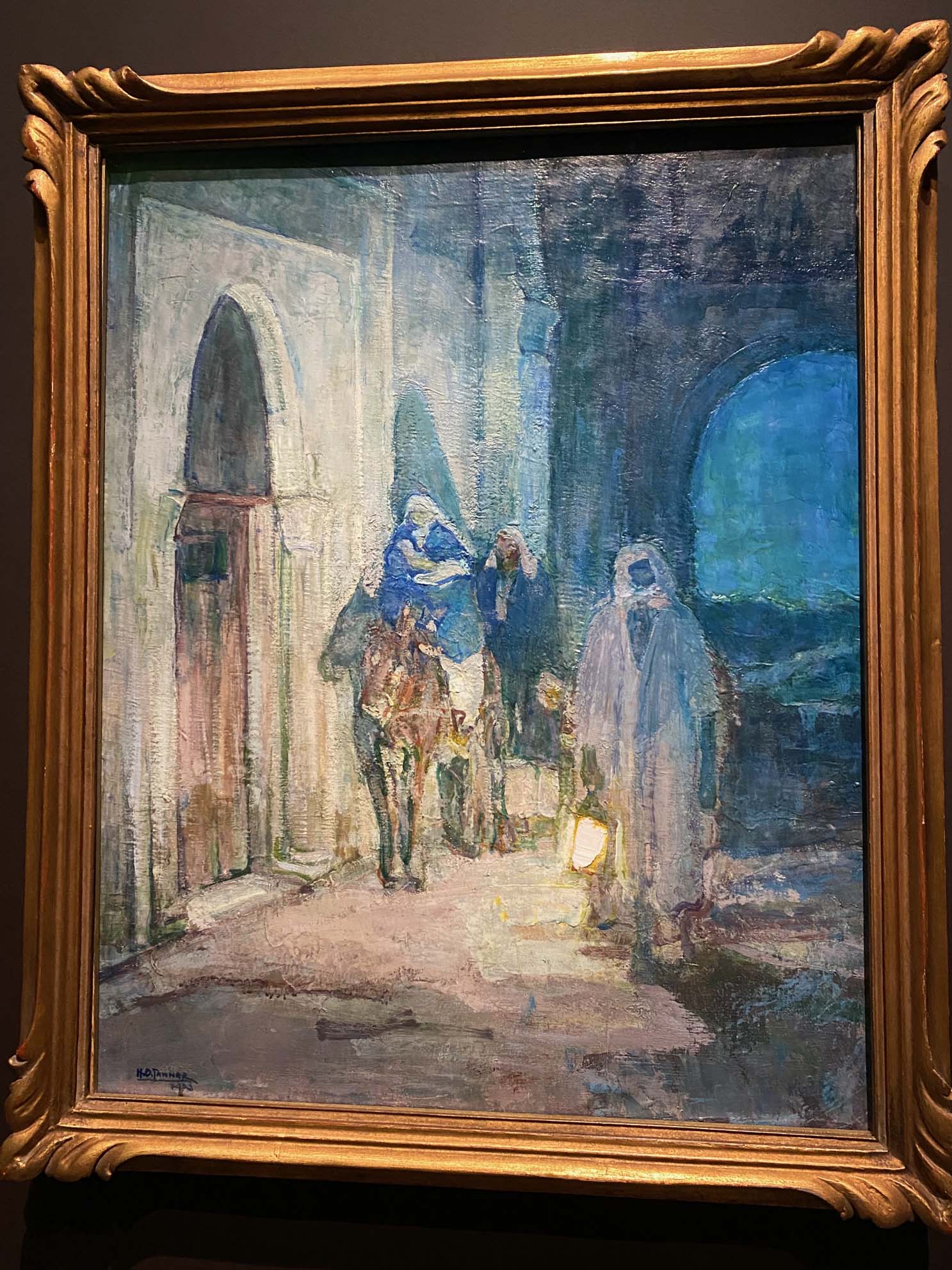
Henry O. Tanner’s 1923 painting Flight into Egypt, based on sketches made during his travels in Egypt.
Jean-Michel Basquiat’s 1982 painting Kings of Egypt II. In the Kings and Queens gallery. Courtesy: Rotterdam’s Museum Boijmans Van Beuningen.
Over 200 paintings, sculptures, videos, and installations are presented in this massive show, which also includes performances produced by Met Live Arts. See some of our favorite works in our Flickr album.
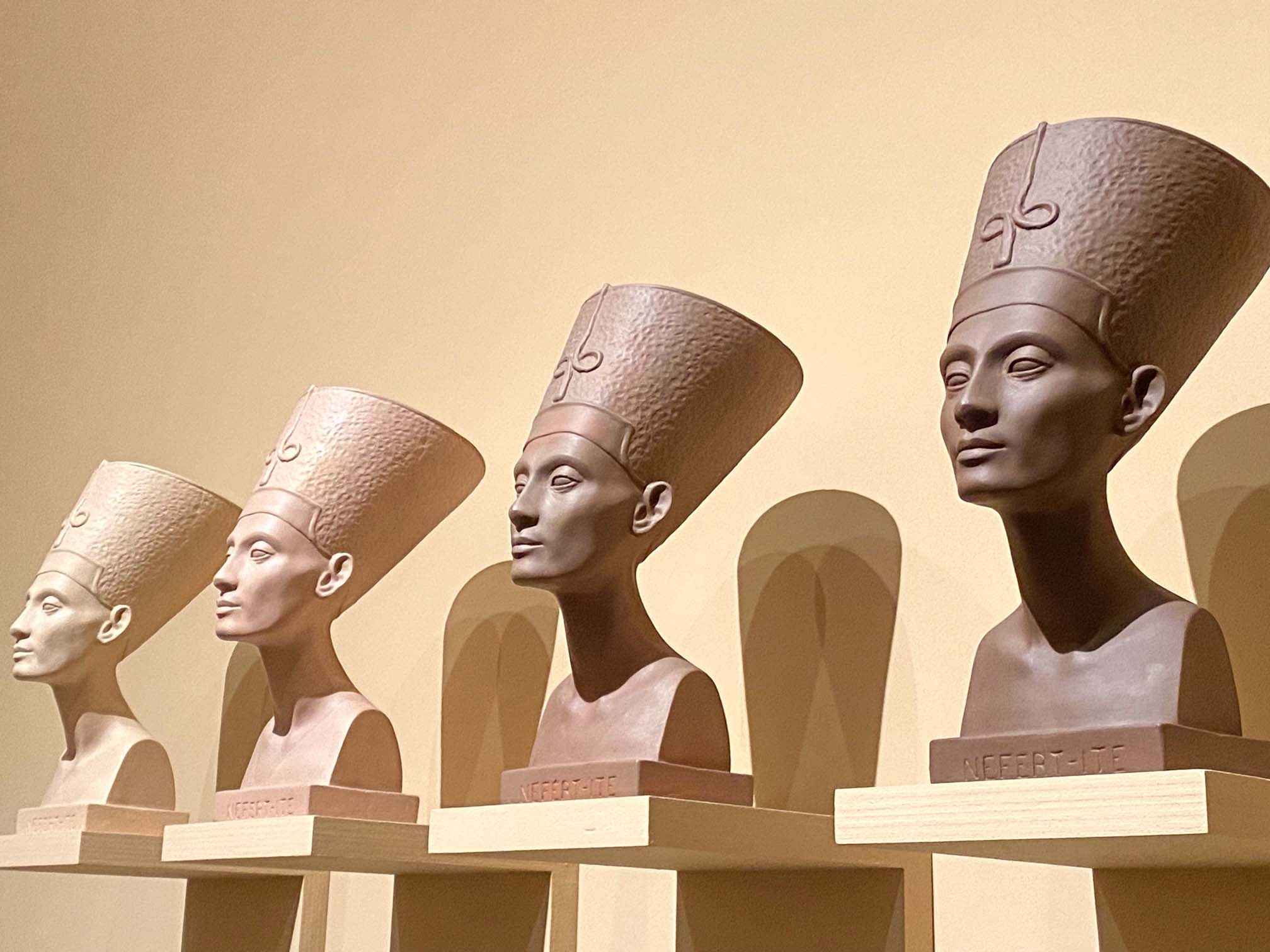
1993 Grey Area (Brown Version) by Fred Wilson – busts of Nefertiti painted in varied skin shades, reflecting the unresolved opinions on the racial makeup of the ancient Egyptians. From the Kings and Queens gallery. Courtesy: Brooklyn Museum
Watch this video walk-through with the curator, who’s accompanied by two artist in the show – Fred Wilson, whose “Grey Area (Brown Version)” sculpture inspired the curator’s theme, and acclaimed abstractionist Julie Mehretu, who herself was born in Ethiopia and experienced the monuments of Egypt at a very young age:
There’s also a gallery devoted to contemporary work by Egyptian artists –a body of work that’s often overlooked in Western art museums. Here’s a closer look at how an Egyptian artist – who’s also a security guard at the Met – was invited by the curator to participate in this exhibition:
For learn more, here’s a link to the Met’s exhibition guide, and a curated playlist for the show. Take an exciting journey through these visual and musical revelations!
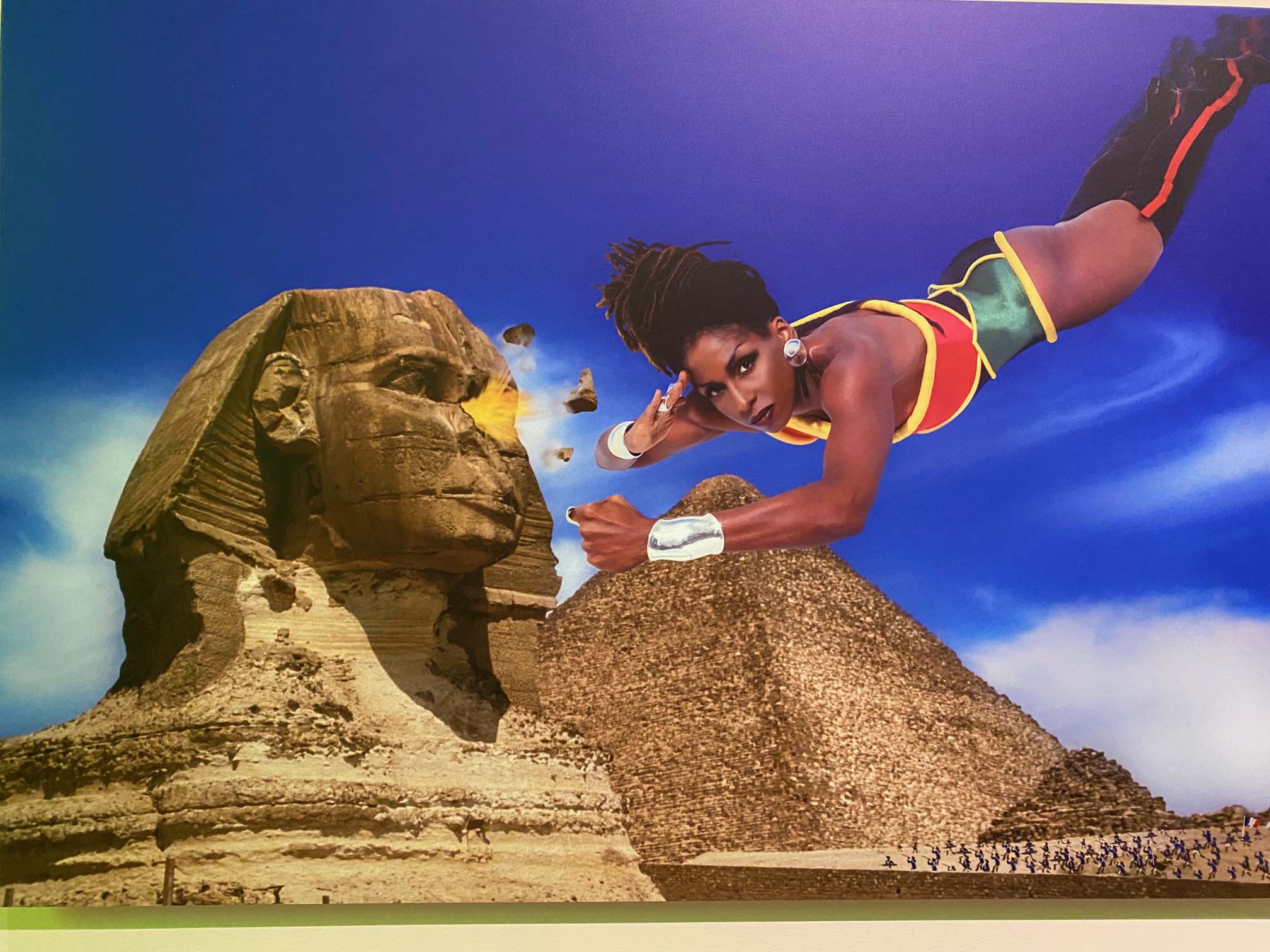
Renee Cox’s 1998 digital print (printed 2024) Rajé to the Rescue, featuring an Afrofuturist super-heroine. In the Space is the Place gallery. Courtesy: the artist.
Six years before she became transfixed with the drama of the colorful New Mexico desert, Georgia O’Keeffe began translating another magnificent, magical view from her skyscraper home in Manhattan. You can see all her transformational aerial cityscapes in Georgia O’Keeffe: “My New Yorks” on view at Atlanta’s High Museum of Art through February 16, 2025.
Created by the Art Institute of Chicago, the show assembles Georgia’s breakthrough city paintings and puts them squarely into the context of her better-known nature close-ups and other modernist takes – just the way she wanted it.
O’Keeffe’s 1927 Radiator Building – Night, New York. Courtesy: Crystal Bridges Museum of American Art
Listen to the Art Institute curators talk about Georgia’s approach to New York landscapes, her life in the city’s Roaring Twenties, and what inspired her walking Manhattan’s grid at a time of of such transformational urban change:
As a total modernist, Georgia couldn’t wait to move into the Shelton Hotel, a brand-new skyscraper, with her brand-new husband (Stieglitz) in 1924. As half of New York’s art-world “power couple” it’s most likely that Georgia was one of the first women to enjoy high-rise living in Manhattan.
O’Keeffe’s 1926 The Shelton with Sunspots, N.Y. Courtesy: Art Institute of Chicago
The Shelton (still there at Lexington and 49th Street) was an apartment-hotel built in Midtown around Grand Central. Although it was first envisioned as a men’s residence, the marketing team soon pivoted a more expanded market with newspaper ads that would attract women, couples, and artists!
Read more about the Shelton, Georgia’s life there, and see 1920s photographs on the Art Institute’s blog post.
Georgia and Alfred moved in, captivated by the views of the East River and rapidly changing Manhattan skyline, where new skyscrapers were popping up like daisies. Alfred took photographs and Georgia recorded ths shifting light, atmosphere, and moods of the rapidly changing landscape.
O’Keeffe’s 1928 East River from the 30th Story of the Shelton Hotel. Courtesy: New Britain Museum of American Art.
As the exhibition demonstrates, Georgia didn’t limit herself to urban landscapes at the time. She was still depicting the natural world, but was determined to channel the rising modern city. At the time, Alfred and her fellow artists strongly discouraged her from displaying her urban work, arguing that painting cityscapes was “best left to the men.” You can just imagine what our Georgia thought about that! Naturally, it was full steam ahead!
Before Google Street view, Georgia walked the Midtown Grid, exploring (and remembering) her neighborhood streets as they transformed into skyscraper canyons. More high rises! The Empire State Building! Rockefeller Center!
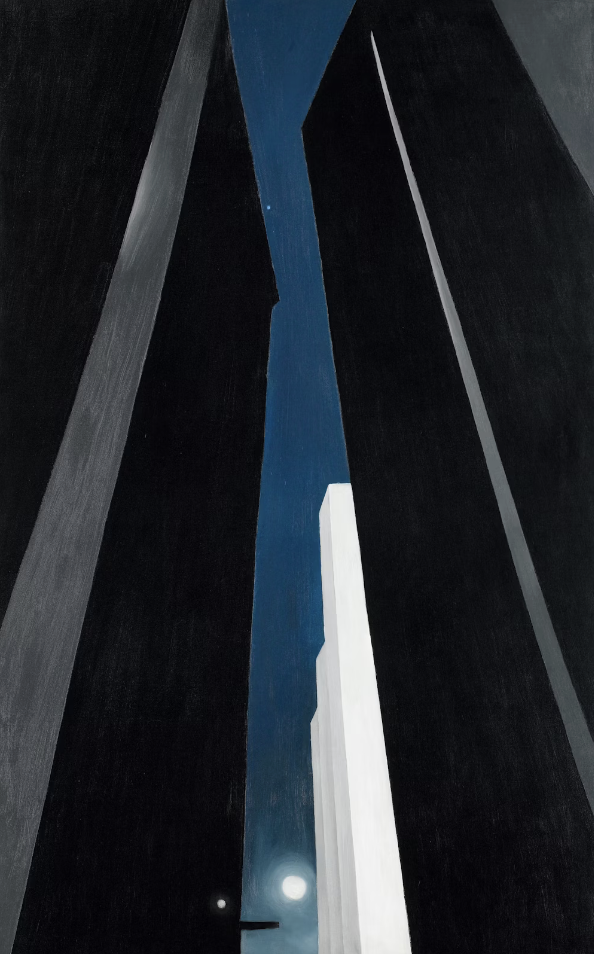
O’Keeffe’s 1926 City Night. Courtesy: Minneapolis Institute of Art
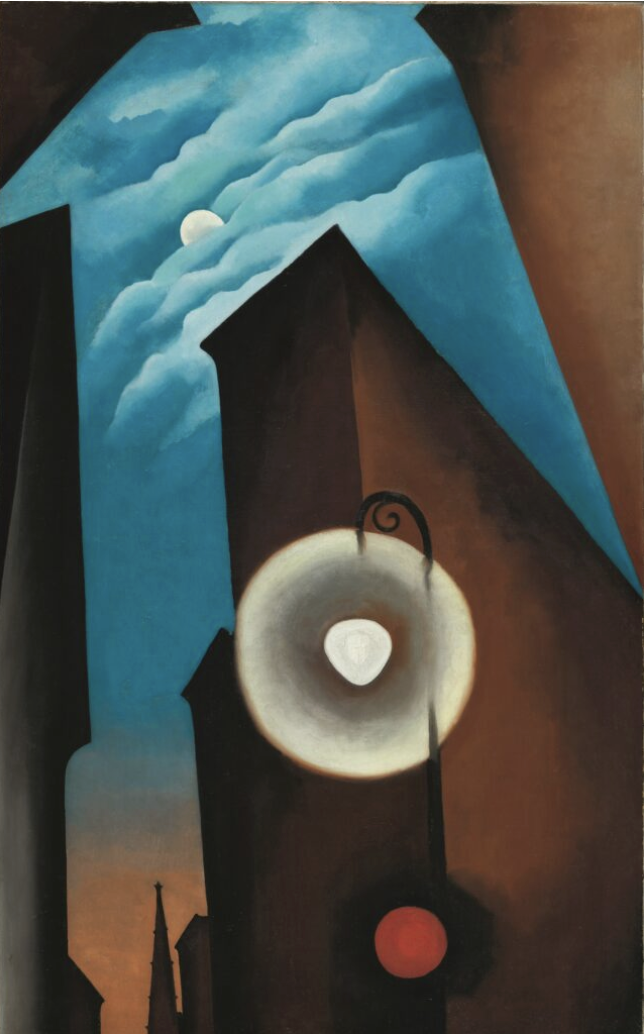
O’Keeffe’s 1925 New York with Moon. Courtesy: Carmen Thyssen Collection
Who knows if Georgia ever experienced Manhattanhenge, but she certainly enjoyed the verticality and sky views between the buildings. A nature-lover, modernist, and virtuoso painter!
Despite Stieglitz’s misgivings about her city paintings, when she finally had her annual one-woman show at his gallery, her city painting was the first work that sold!
The curators have hung some of Georgia’s paintings just as she displayed them – side-by-side flower close-ups, other nature-inspired works, and City views – to provide the full experience of a modern woman’s mastery.
O’Keeffe’s 1924 From the Lake, No. 1. Courtesy: Des Moines Art Center
O’Keeffe’s 1929 Black Cross, New Mexico. Courtesy: Art Institute of Chicago
For more, here’s a longer discussion about Georgia rip-roaring 1920s life and work by one of the Chicago Art Institute curators for Georgia O’Keeffe Museum members.
Contemporary artists say they can hear their ancestors speak across generations. All they have to do is hold their community’s ancient pots – living beings that connect them to the Earth and the people from the past who made them.
You can hear these modern and ancient voices and see ceramic masterworks in Grounded in Clay: The Spirit of Pueblo Pottery, an exhibition on view the The Museum of Fine Arts, Houston through January 12, 2025; continuing at the St. Louis Art Museum March 7 to September 14, 2025; and on display at the Pueblo Cultural Center in Albuquerque from March 2026 to February 2027.
In video at Museum of Indian Arts and Culture, Clarence Cruz (Okay Owingeh) reflects on a pots’s personal meaning
Clay is central to Pueblo culture, and this show is special, because it’s the first major exhibition of Pueblo pots curated entirely by the indigenous community – artists, leaders, teachers, and museum professionals.
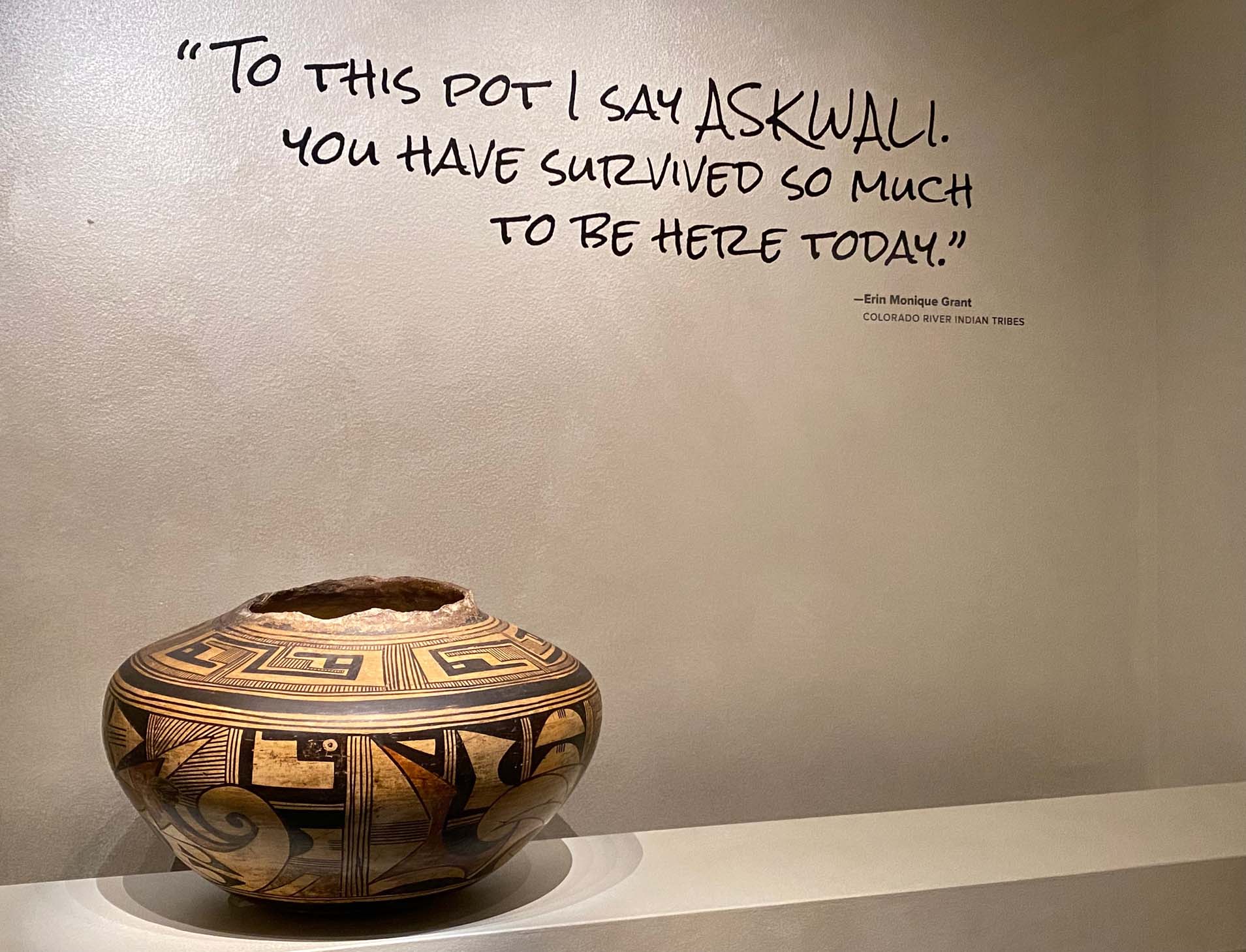
1900 Tewa-Hopi Hno jar selected by Erin Monique Grant (Colorado River Indian Tribes); it reminded her of her Hopi family. Courtesy: Vilcek Collection.
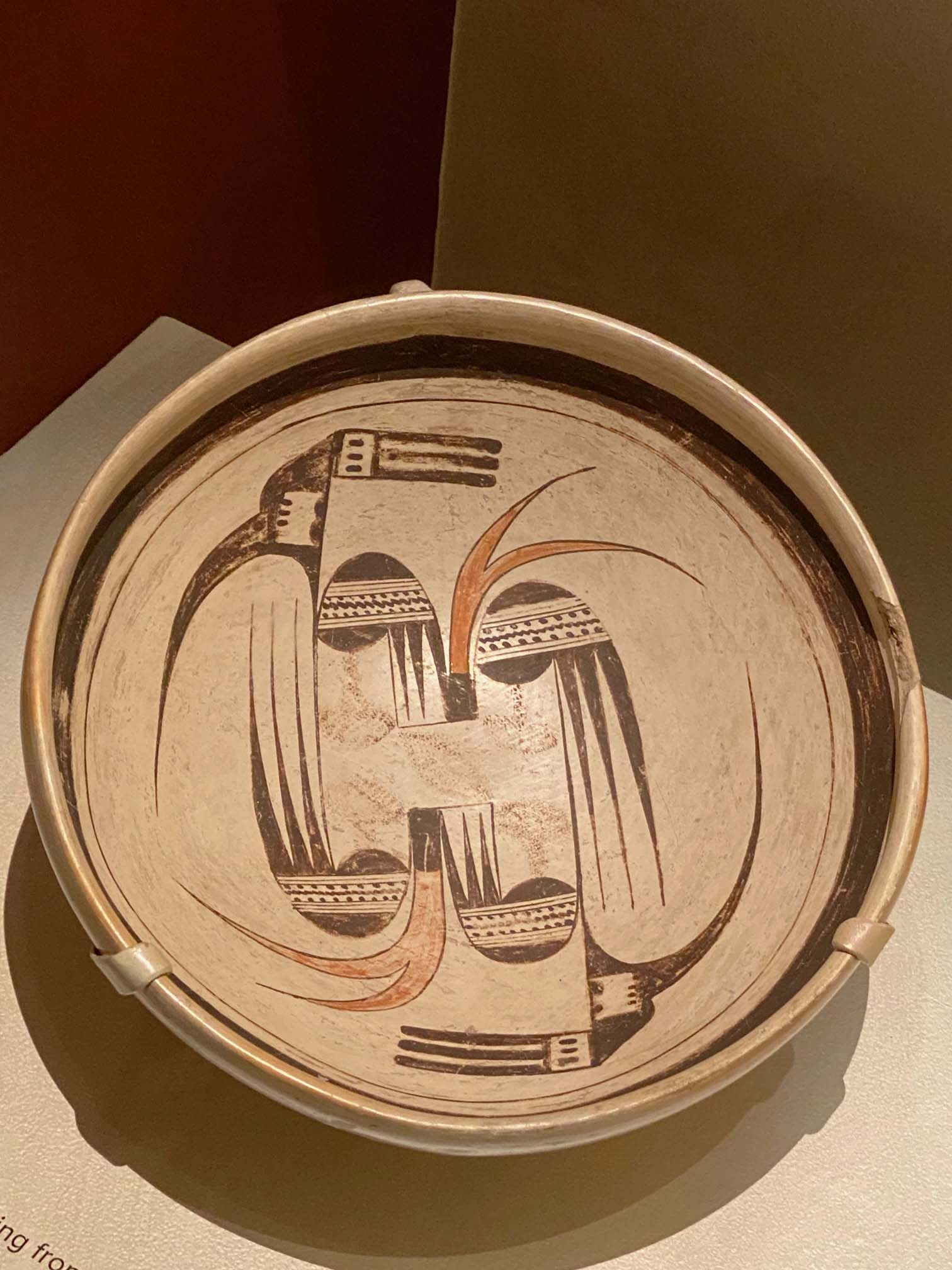
1907-1910 bowl by Nampeyo (Tewa/Hopi) selected by her great-great-grandson artist Dan Namingha. Courtesy: SAR
New York’s Vilcek Foundation co-sponsored the community-curation project, exhibition, and project website. The organizers consulted with sixty curators from 22 pueblo communities across the Southwest to select work from the IARC collection and write about the spirit of these works. Communications weren’t always easy, since Internet service (email) is still spotty on some tribal lands.
But The Pueblo Collective’s inclusive approach to create the exhibition and catalog is now considered a template for major art institutions to work with tribal communities to convey their stories and culture to the public..
The IARC collection is legendary, spanning prehistoric to modern-day works. This video takes you inside IARC archive to meet a few of the Pueblo curators and the pots they selected:
Utilitarian vessels, ancient legacies, and intergenerational connections are themes explored in the 2023 installation at Santa Fe’s Museum of Indian Arts and Culture. The exhibition design artfully integrated the words and thoughts of the curators in, around, and above the spectacular selections. Take a look at some of our favorites in our Flickr album.
Two 19th-century Tesuque water jars: a jar chosen by artist Marita Hinds (Tesuque), who saw it on a 1980s class field trip; and one admired by potter Bernard Mora (Tesuque) for its personality and imperfections. Courtesy: SAR
In some cases, a curator chose an Ancestral Pueblo pot from the 1100s and reflected on how well it’s survived today. In other cases, a curator discovered their grandmother’s pot stored for decades within the IARC collection. What a joy to bring it out and let it breathe! Listen in….
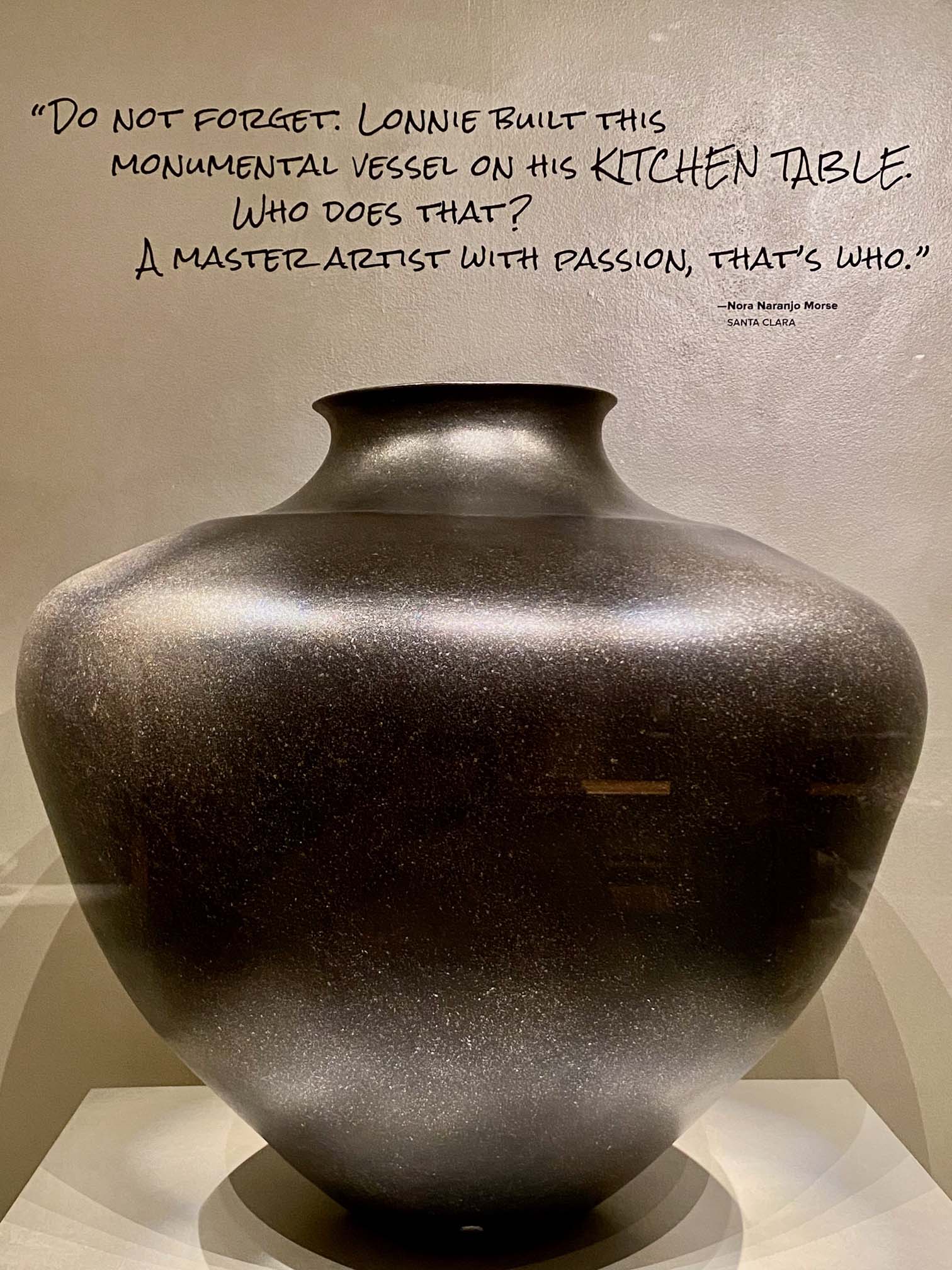
This statement about Lonnie Vigil’s magnificent vessel by Nora Naranjo Morse says it all. The MIAC gallery space recreated a Pueblo kitchen so we can experience the environment in which most Pueblo potters create their work.
1995 micaceous clay jar made by Lonnie Vigil (Nambe) selected by Nora Naranjo Morse (Santa Clara) because it glitters like stars. Courtesy: SAR
Santa Fe’s Museum of Indian Arts and Culture’s replica of Pueblo kitchen where most pottery is created
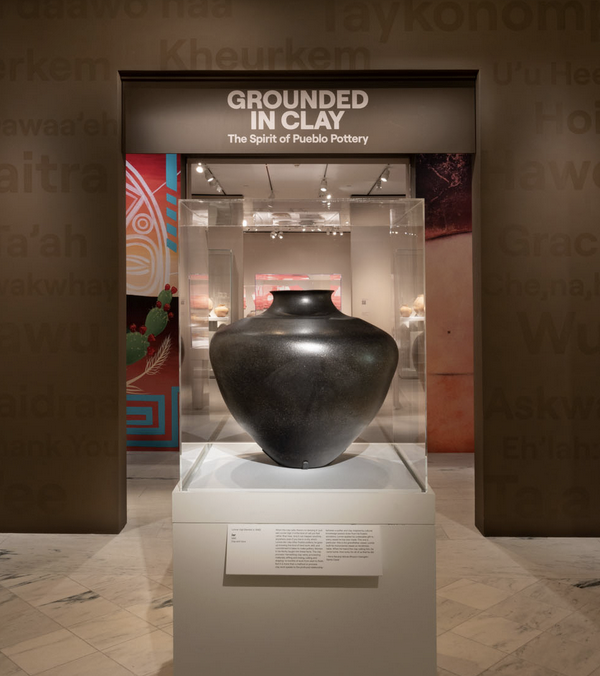
And here’s how the Met featured Lonnie’s showstopping work – made on his kitchen table – prominently in the American Wing entrance!
Micaceous clay jar by Lonnie Vigil (Nambe) in the show’s entrance at the Met’s American Wing. Photo by Richard Lee; courtesy: The Metropolitan Museum
The project website presents the curators’ biographies, their selections, and stories.
Listen to the Met’s 2023 panel with five curators behind this magnificent community-curated indigenous exhibition and find out why they believe understanding the vessels’ power is important:
It’s a showcase for art created at the beginning of the 20th century – a time when European experimentation in abstraction, urban skyscrapers and other engineering marvels, Einstein’s breakthroughs, and the success of the women’s suffrage movement made artists optimistic about the future.
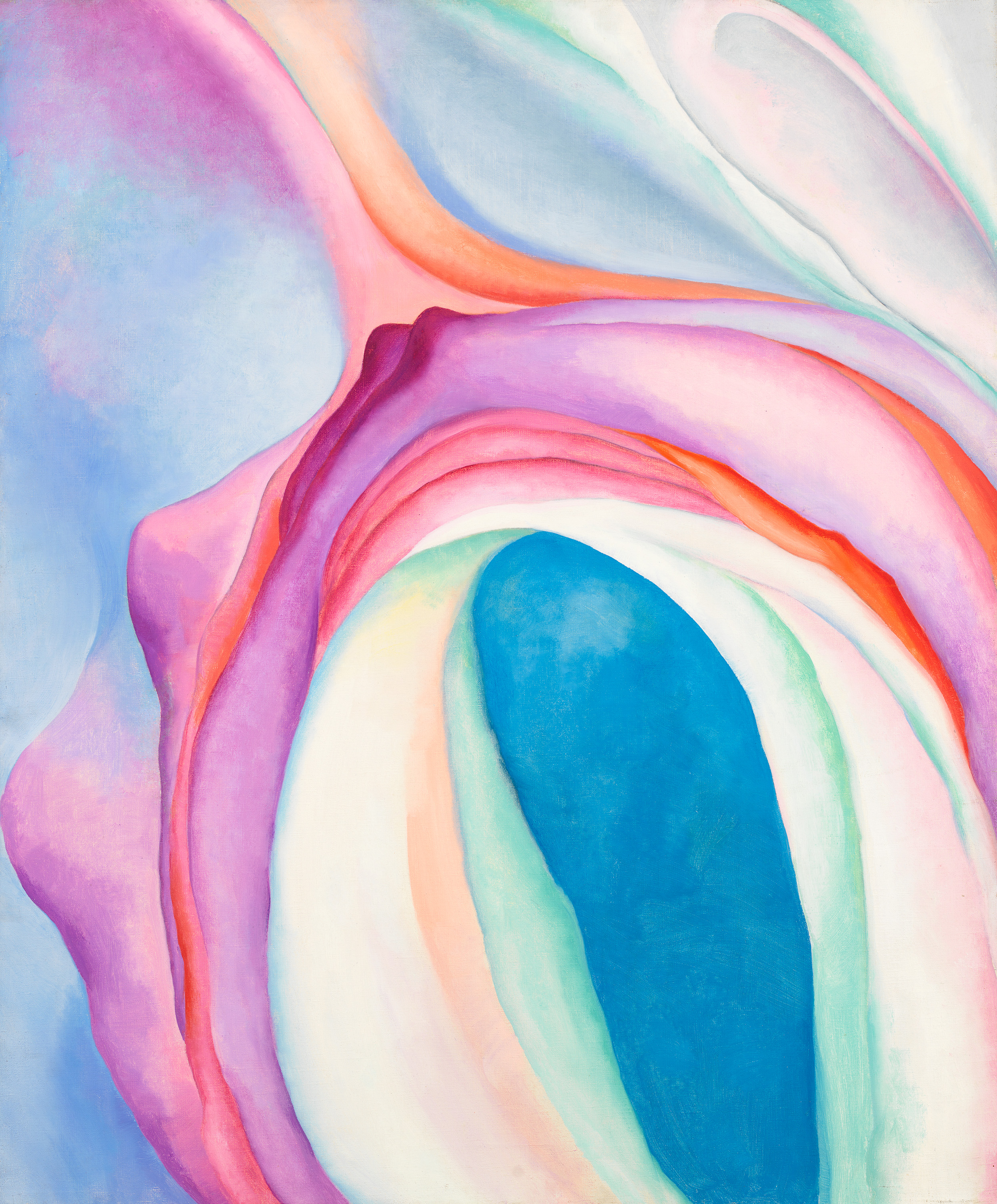
The show features work by well-known (and well loved) artists like lyrical abstractionist Georgia O’Keefe (Music, Pink and Blue No.2) and transcendentalist Agnes Pelton (Ahmi in Egypt).
But the news story here is the Whitney’s interest in pulling work by their contemporaries out of storage to provide a more expansive look at early American modernism. Nearly half of the works on display have not been out of the stacks for more than 30 years!
Look at Albert Bloch’s 1916 Mountain, which hasn’t been shown at The Whitney in 50 years. It’s somewhat shocking when you consider that Bloch was the only American invited to join the ground-breaking Der Blaue Reiter in 1911. It’s fitting that Bloch’s nearly forgotten, expressionist landscape was resurrected and featured as the show’s icon – a traveler on an upward journey toward a town on the hill amidst modernist peaks.
Albert Bloch’s 1916 Mountain.
The Whitney’s also pulled Carl Newman’s 1917 Bathers out of storage for this show and hung it side-by-side with Bloch.
Newman was an Academy-trained artist from Philly, but after getting swept up in the Parisian avant-garde one summer, he tried throwing art conventions out the window.
Color, rainbows, naughty nudes, pleasure craft – a scandalous and joyous mix!
Carl Newman’s 1917 oil on linen painting, Untitled (Bathers)
And what about another “forgotten” convention-breaker? The vibrant 1926 Street Scene is by Yun Gee, a Chinese immigrant modernist who started his art career in San Francisco, but found more acceptance and exhibition opportunities in Paris. Gee was the only Chinese artist running in European modernist circles, and it’s nice to see his cubist expression of San Francisco’s Chinatown right where it belongs in the Whitney’s pantheon.
Yun Gee’s 1926 oil of San Francisco’s Chinatown, Street Scene. Courtesy: estate of Yun Gee.
Works by some of our modernist favorites are also featured – synchronist master Stanton Macdonald Wright, shape-shifter Arthur Dove, and former Brancusi studio assistant and abstracted design leader, Isamu Noguchi.
Henrietta Shore’s 1923 oil, Trail of Life – a recent acquisition by the Whitney to add Shore to its collection.
The stories and careers go on. The exhibition features artists from the West Coast, artists that fled to Paris and found success there, and some modernists that just couldn’t make a go of it and stopped making art entirely.
Henrietta Shore, the Los Angeles innovator who Edward Weston credits as a great influence on his style, was one who eventually opted out.
It’s a beautiful walk through the early 20th century to meet a new set of painters using abstraction to channel an optimistic future – E.E. Cummings (yes, the poet!), Blanche Lazzell of Provincetown, Aaron Douglas of the Harlem Renaissance, and Pamela Colman Smith of Tarot card fame.
Installation view of great modernists. In vitrine: Pamela Colman Smith’s 1909 Rider-Waite-Smith Tarot Deck. Left to right: O’Keeffe’s 1918 Music, Pink and Blue No. 2; Stettheimer’s 1931 Sun; E.E. Cummings’s 1925 Noise Number 13; Macdonald-Wright,’s 1918 Oriental – Synchromy in Blue-Green; Richmond Barthé,’s 1933 African Dancer; Jay Van Everen’s 1924 Abstract Landscape. Photograph by Ron Amstutz.
Here’s a short video by curator Barbara Haskell where she talks about what it was like to find “forgotten” paintings and other stories behind the Whitney’s fascinating modernist reveal:
Iconic imagery, big statements, technical mastery, and long-distance endurance are all on display from the second you enter Jasper Johns: Mind/Mirror at The Whitney – the mind-bending retrospective of one of the century’s most celebrated artists.
Then you realize that this 12-part extravaganza is only half the story – a mirror image of the Whitney retrospective that is also on display 90 minutes south at the Philadelphia Museum of Art.
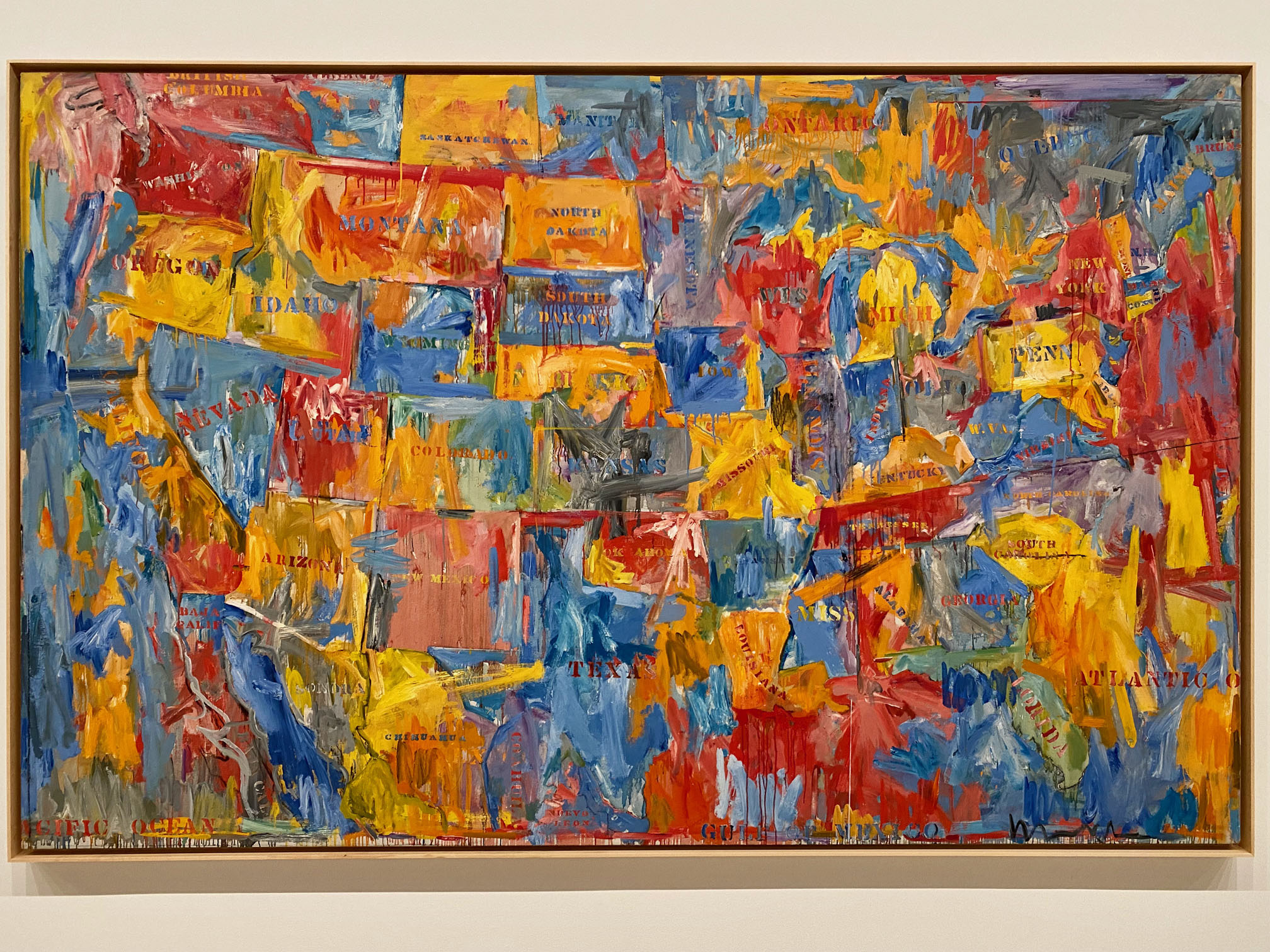
1961 Map by Jasper Johns. Courtesy: MoMA
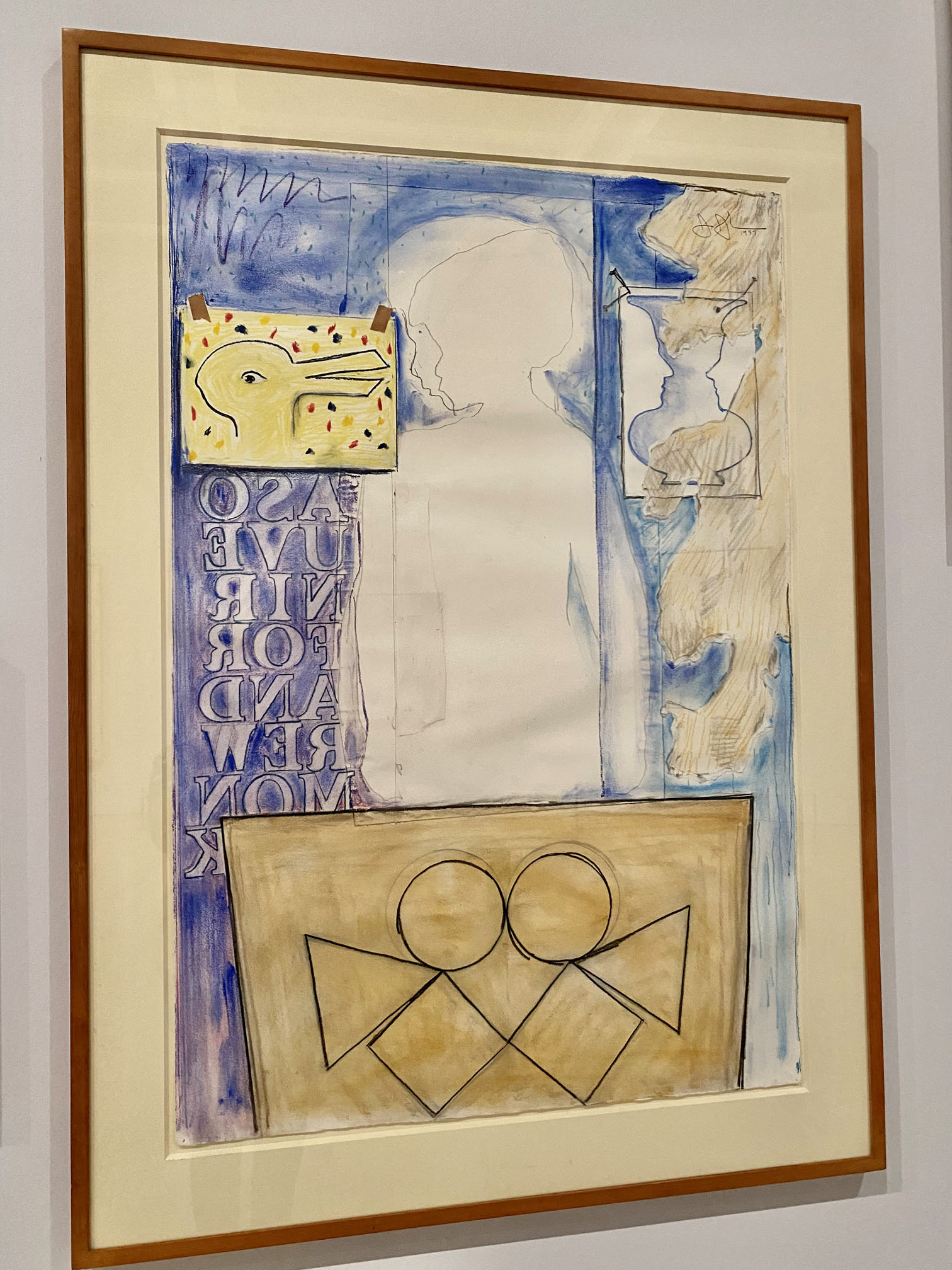
1982 Savarin monotype of Johns’ 1960 bronze.
Each has different works and minutely different themes (the number paintings vs. the flag), but reflect the same scale and scope of the artist’s astonishing 70-year career.
Most art lovers know that the early work of Johns and Rauschenberg in the late 1950s and early 1960s helped to redirect the New York art scene from Abstract Expressionism toward Pop. But show puts a much-needed spotlight on the rest of Johns’ career – how he kept experimenting with media, pushing his own boundaries, manipulating paint to evoke an emotional response, and not letting any art-world “ism” impede his creative journey over the next 50 years.
Hear what the show’s two curators, Scott Rothkopf (NYC) and Carlos Basualdo (Philly), have to say about Johns, the “rules” he “broke,” and the mark his work left upon 20th century American art:
The sheer magnitude and quality of the artist’s output is on full display as you take the journey through the Whitney – masterful paintings, prints, drawings, watercolors, and sculptures.
See some of our favorite works in our Flickr album.
Exhibition entrance with full scope of Johns prints.
As soon as the elevator doors open at The Whitney, viewers are confronted with a curved wall that contains dozens of surprises – a chronology of prints stretching from Johns’ early days in New York through works completed as recently as 2019. Walking left to right, the wall serves as a mini-retrospective as well as the intro to the larger show. Bravo to the team for this brilliant, engaging welcome.
But then you see works done in South Carolina, where Johns took in the beach and sky and recollected back to his childhood in the South. Big, bold, mystical, evocative puzzles taking the form of large-scale canvases, small intimate sculptures, and all forms of drawing and mark making.
1964 Studio with paint cans, created at the South Carolina beach.
1967 Harlem Light from Johns’ 1968 Leo Castelli gallery show. Courtesy: Seattle Art Museum.
You experience a room where the team has brought together work originally shown by Leo Castelli in his New York townhouse gallery in 1968. The exhibition designers mimic the size of the original gallery to let you experience the same thrill of interacting with these big, colorful, slightly conceptual, architectural paintings.
The centerpiece of the Whitney exhibition is a spectacular gallery created by the exhibition team to showcase the retrospective’s theme – how Johns used doubles and “mirroring” to explore perception and entice viewers to ponder the works more carefully. The exhibition designer explains and shows how the famed bronze Ballantine ale cans are the fulcrum around which Johns’ subsequent work revolves:
There are hundreds of loans from other museums and private collectors, and the two museums even swapped some of their own holdings.
And Johns himself has loaned never-before-exhibited works, including watercolors and drawings that he did in the 1980s. Although the colors draw you in, they represent the artist’s process of working through the ravages of HIV and loss inside the art community.
The curatorial precision of the show allows you to experience an evolving appreciation of Johns’ later work – experimental monotypes in the print studio, contemplation of the arc of life in monumental elegiac grey paintings, and sculptures completed in the 2000s. See more on the Whitney website about the works in the show.
1990 watercolor from Johns’ collection with mysterious, surreal, personal imagery.
The latter are displayed in natural light, which allows you to enjoy the cast bronze and aluminum number blocks as the sun shines over the Hudson from different angles. The changes illuminate the hand work, gestures, and conceptual rigor over time – a fitting encapsulation of this two-city tribute to Mr. Johns.
Reverse side of 2008 bronze 0-9 sculpture. Private collection.
The drawings at the Morgan, David Hockney: Drawing from Life, on view through May 30, are a tribute to the friendships maintained and the artistic experimentations sustained over the artist’s 83-year lifetime.
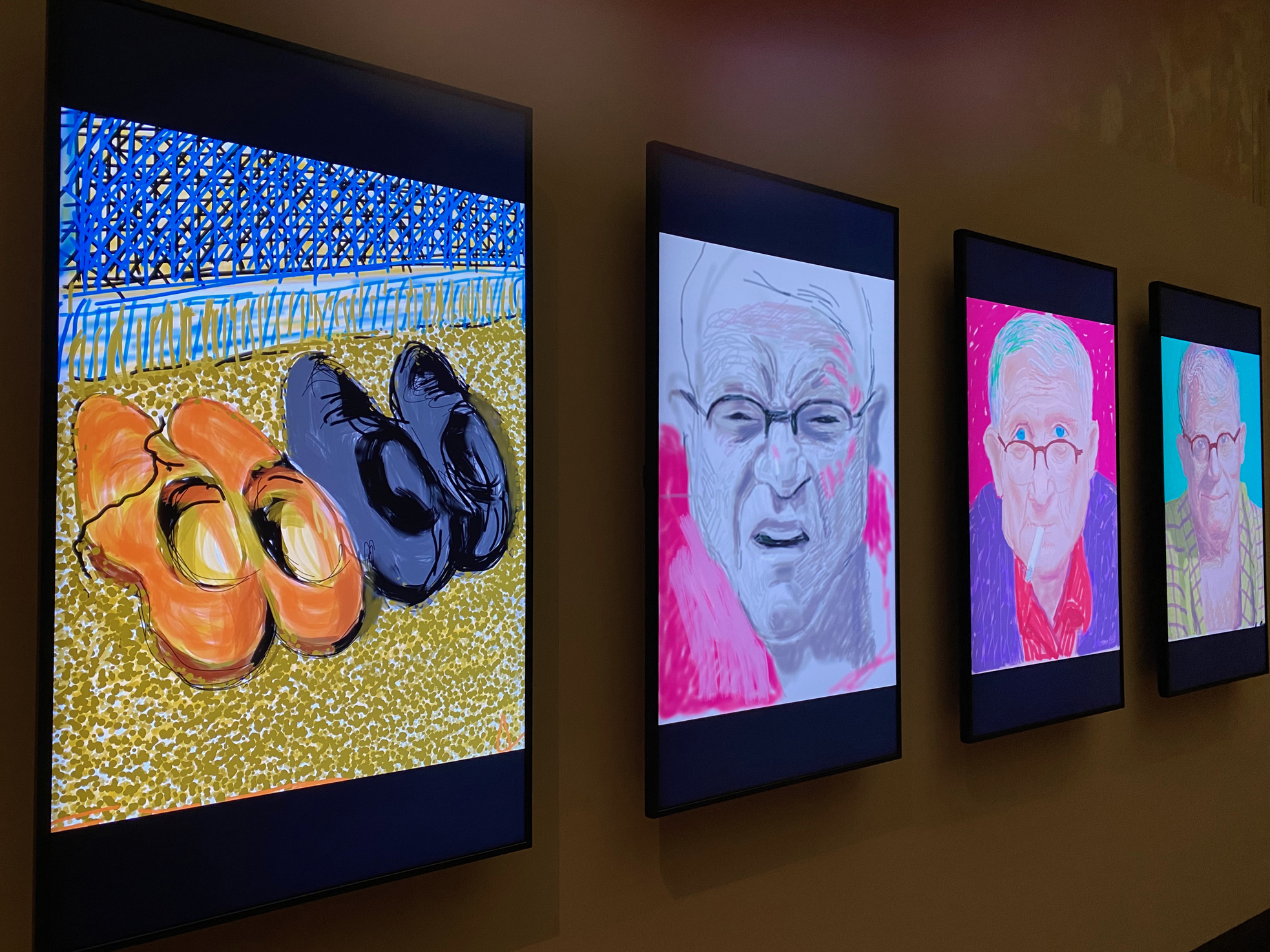
Hockney self-portraits through the years.
The show was created by the National Portrait Gallery in London and centers on 100 portraits of five people who sat for Hockney across the decades – his mother and several close friends.
The exhibition is organized by person, so you can compare how each person looked from the beginning of Hockney’s studies, across the years, and most recently when they came to visit him in Normandy, where he lives now.
Most of the works are from the Hockney Foundation or from the artist’s own personal collection, which makes the show extra-special.
The exhibition begins with a series of self-portraits that Hockney did as a teen, and features his etching series about his first trip to America in the early 60s. Then it jumps to the many portraits he did of his mother in England.
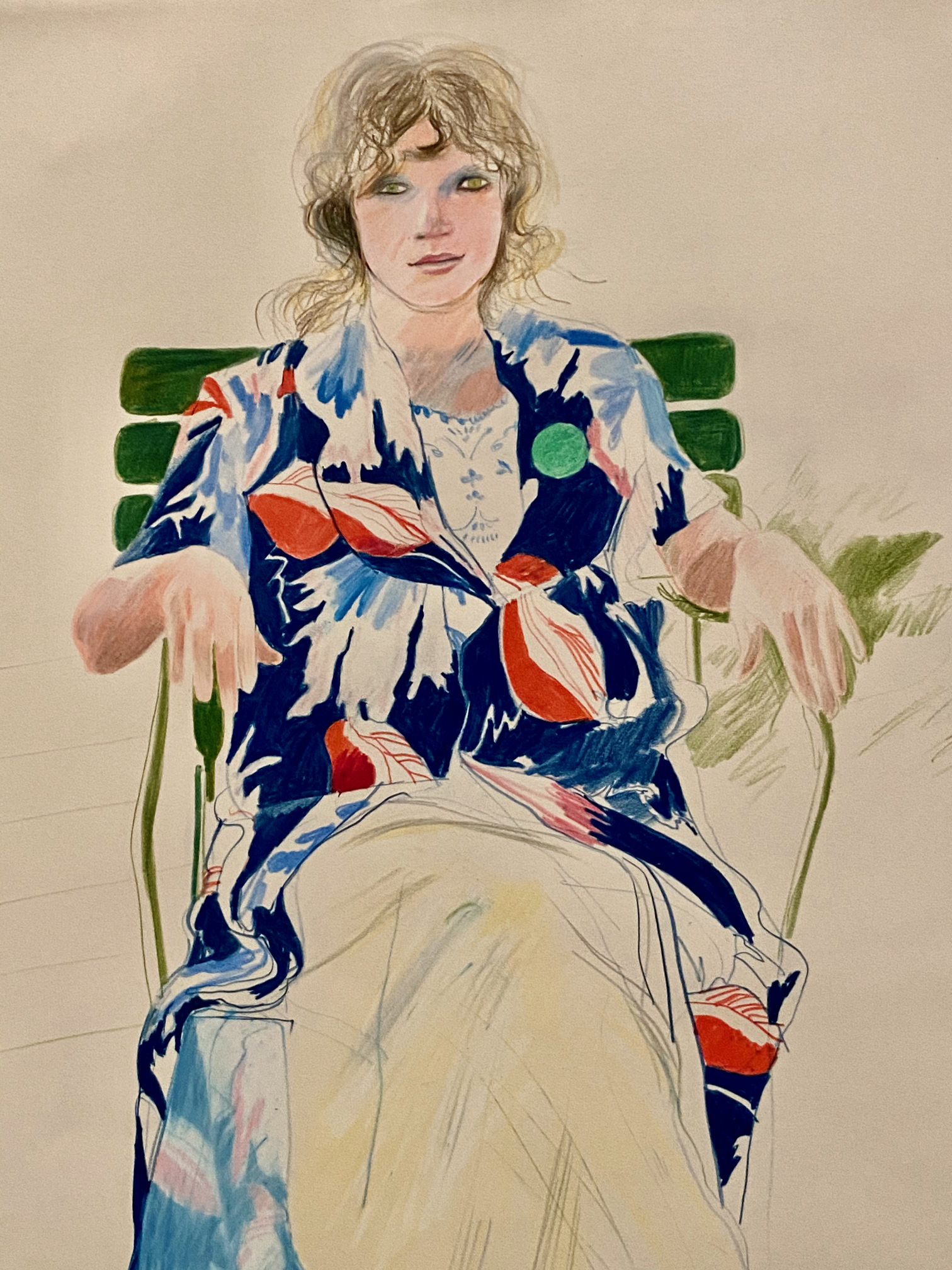
Colored pencil portrait, Celia, Carennac, August 1971
Digital wall of Hockney 2010 iPad drawings
Charcoal drawing Maurice Payne, October 9, 2000
Each series shows off his masterful accomplishments in precise colored pencil, mixed-media collage, watercolor, crayon, arranged Polaroid mosaics, etchings, ink washes, tight pencil sketches, and the biggest leap of all – digital drawings from his iPad.
Walking past the portraits, self-portraits, sketchbooks, and digital drawings, it’s quite a tribute to an artist who never stopped looking, wanting to sit with his favorite people, and slowed down to adopt techniques by other masters that he admired.
Take a look at works by a pop-culture virtuoso. Here’s a brief introduction to the exhibition by the Morgan’s director:
Take a walk through the exhibition on the Morgan’s website here, and join a YouTube tour with the curator here.
Once you navigate the twists and turns of one of the furthest reaches of the Metropolitan Museum of Art’s American Wing (past the Versailles panorama and past the Rockefeller room), you’ll come to a treasure trove of Gilded Age interior design – Aesthetic Splendors: Highlights from the Gift of Barrie and Deedee Wigmore, on view through April 18.
What did rich people in the 1880s and 1890s want? The exhibition will show you.
1880s Herter Brothers cabinet, Britcher landscape, and reproduction wallpaper evoke the Wigmore’s home
Sanford Gifford’s 1879 An Indian Summer Day in Claverack Creek
The curators pay tribute to these avid Aesthetic Movement collectors by framing these promised gifts with reproduction period wallpaper and fixtures, and it’s hard to decide where to look first.
The approach to this marvelous exhibition gives modern gallery-goers an experience of what Gilded Age interior designers had in mind – cramming foyers and drawing rooms with lush paintings, flashy techno brass furniture, Japanese-style ceramics, art pottery, and fringed upholstered seats decorated with Arts & Crafts tiles that throwback to mythical times.
The mix of styles and techniques – some old and some new – reflect a time when consumption of luxury goods ran wild with the ascension of New York City as the trading and shipping capital of the world. Many of the pieces reflect new machine-made technology mixed in with a bit of medieval nostalgia via the British Arts and Crafts movement.
Look closely at all these showstoppers in our Flickr album.
Detail of 1880 Modern Gothic cabinet by Kimbel and Cabus with tile by Minton & Co.
Although the exhibition is slightly hidden away, the landscapes appearing throughout the show provide windows to lush valleys of the Rockies (thank you, Mr. Bierstadt!), autumn colors of the Catskills, and spectacular, tranquil shorelines on Maine’s rocky coast. All are either in their original fancy frames or reproductions from the era.
Alfred Thompson Bricher’s 1899 Low Tide, Hetherington’s Cove, Grand Manan in Maine
Most of the works are oil paintings, but (in case you didn’t know) New York was also the epicenter of the movement to make watercolor paintings the equal of any fine salon work. The curators have included work by the masterful William Trost Williams, so you can enjoy a side-by-side comparison of the techniques he used to give those oil painters a run for their money. Every time we’ve visited this show, visitors simply stand transfixed, drinking in the saturated, tranquil views of the faraway.
The ceramics, cloisonné tabletops, andirons, and many large-scale pieces reflect the period’s mania for anything with a hint of Japanese or Chinese style – delicate birds flitting through bamboo and fierce dragons swirling in magical space. Designers for the upper classes were captivated by images from kimonos, scrolls, screens, and ceramics from the East and made sure that custom commissioned pieces were on trend.
Bradley & Hubbard’s 1895 phoenix andirons
Sapphire encircled by grapevines on 1910 gold and platinum Tiffany necklace
The mesmerizing beacon within the show is the spectacular array of Tiffany necklaces in the center – dramatic opals and sapphires, often encircled by intricate grapevines in gold or another nod to nature-by-design. The effect of these beauties side by side is magical, and you can imagine a Gilded Age beauty making an entrance with one of these dazzlers.
The Met just announced that its September 2022 Costume Institute exhibition would be displayed in the period rooms of the American Wing, so we’ll see if Mr. Bolton and his team deploy any period finery in the more-is-more 19th-century area.
Read more about pieces in this fantastic donation on the MetCollects blog and flip through close-ups of some the featured works.































 itsnewstoyou