Abstracting Nature in Albuquerque

How do abstract artists visually channel their response to awesome landscapes? You’ll get a glimpse of how ten artists approach natue and atmospheric phenomenon in Abstracing Nature, an engaging contemporary exhibition at the Albuquerque Museum, on view thorugh October 12.

Works by grand-master abstractionists Richard Diebenkorn and Agnes Martin greet you right at the entrance. 

Diebenkorn isn’t normally associated with New Mexico, but decades before embarking upon his epic Ocean Park series, he spent two years (1950-1952) at the University of New Mexico (1950-1952) working toward his MFA before returning to the West Coast.

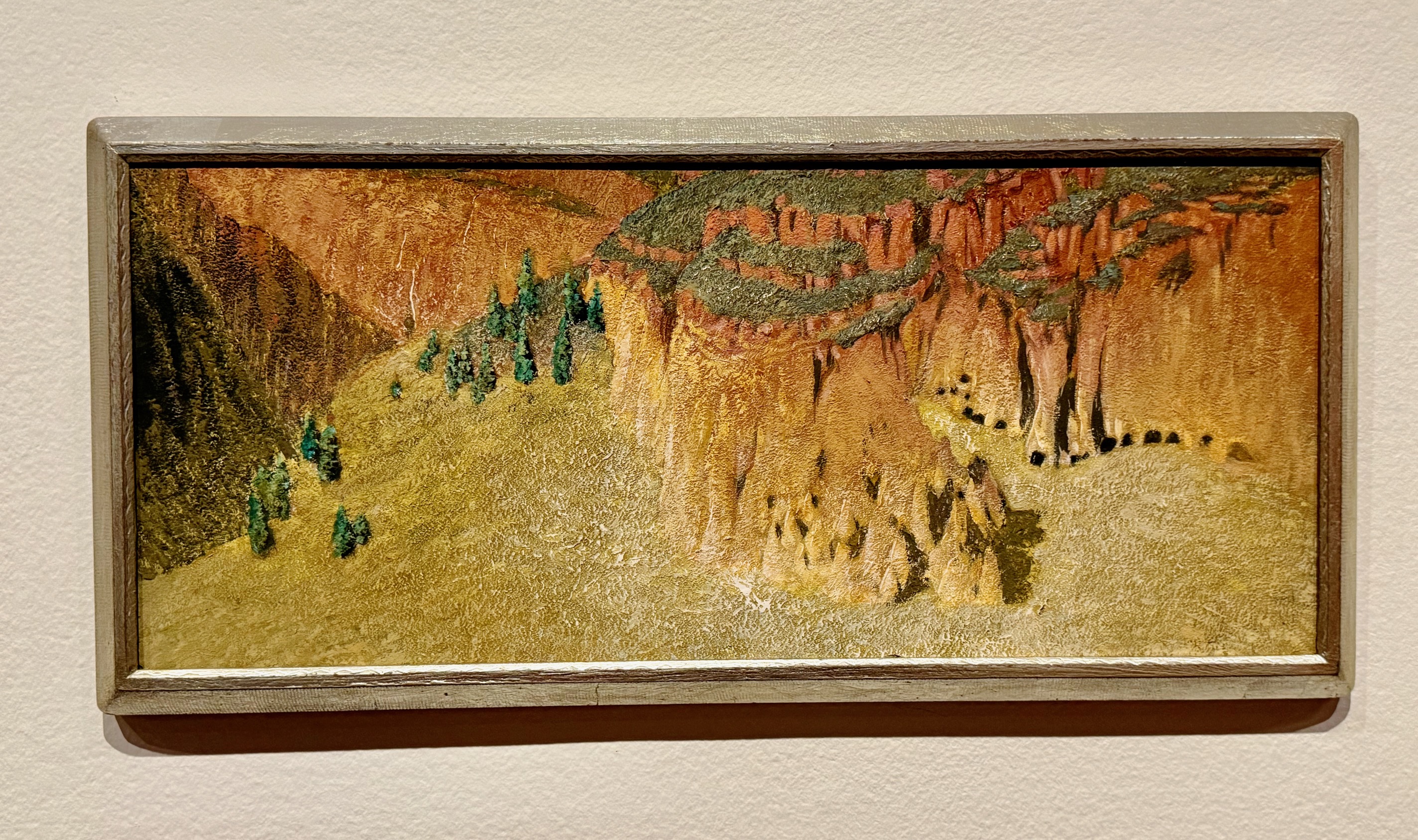
Richard Diebenkorn’s 1952 Untitled (Albuquerque), featuring deep earth tones and undulating forms.

The Diebenkorn on display is a recent museum acquisition from those years. Complete abstract expressionist approach to the colors and undulating geologic forms he saw surrounding the post-war boom town.
Martin – the abstractionist grand-dame of New Mexico – made no attempt to hide the fact that her grids and minimal approach were expressions of the tranquililty and serenity she saw and felt from her retreats in Cuba and Galisteo, New Mexico.  She was channeling her emotional, meditative response in her surroundings – not following the reductivist, minimalist trend fo the East and West Coast gallery scene.

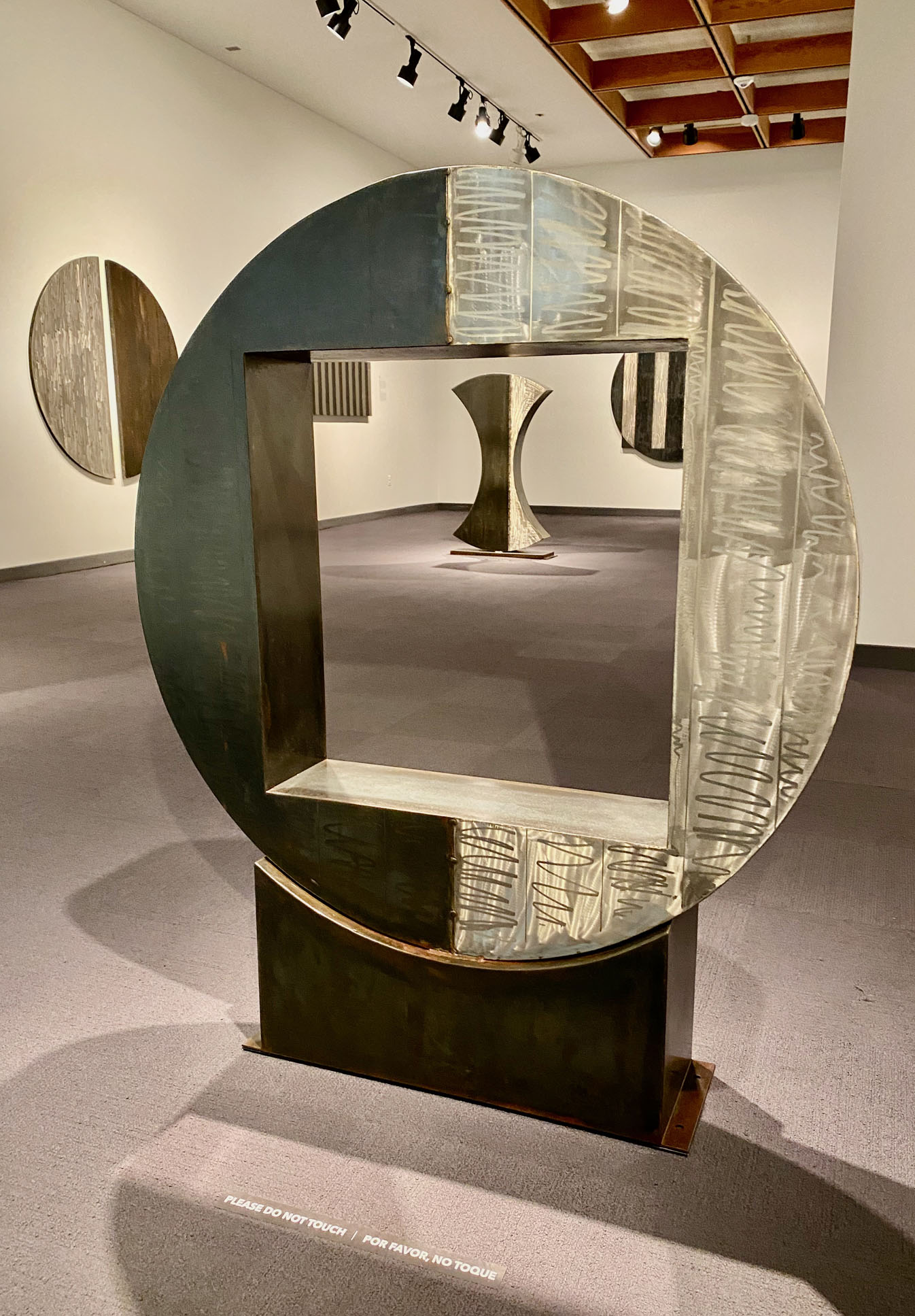
By getting up close to the two Martin paintings, you can appreciate her hand-drawn approach. Several stainless-steel sculptures by Agnes Martin’s great friend and student Karen Yank are nearby. The gleaming, hard-edged pieces do not resemble her mentor’s approach, except for the light, gestural touches across the surface.

Agnes Martin’s 1980 acrylic Untitled #6. Courtesy: New Mexico Museum of Art.
Karen Yank’s 2023 steel View with Silhouette VII and other sculptures visible through the portal. Courtesy: the artist.

The large pastels by Emmi Whitehorse look to the landscape and sacred colors of the Navajo Nation inspiration – a poetic approach most evident in Yei Retires to Mt. Taylor. Dramatic blue gestures suggest the spiritual turquoise color associated with the Navajo’s soutnern sacred mountain Tsoodzil.

Emmi Whitehorse 1985 pastel abstraction on canvas Yei Retires to Mt. Taylor.

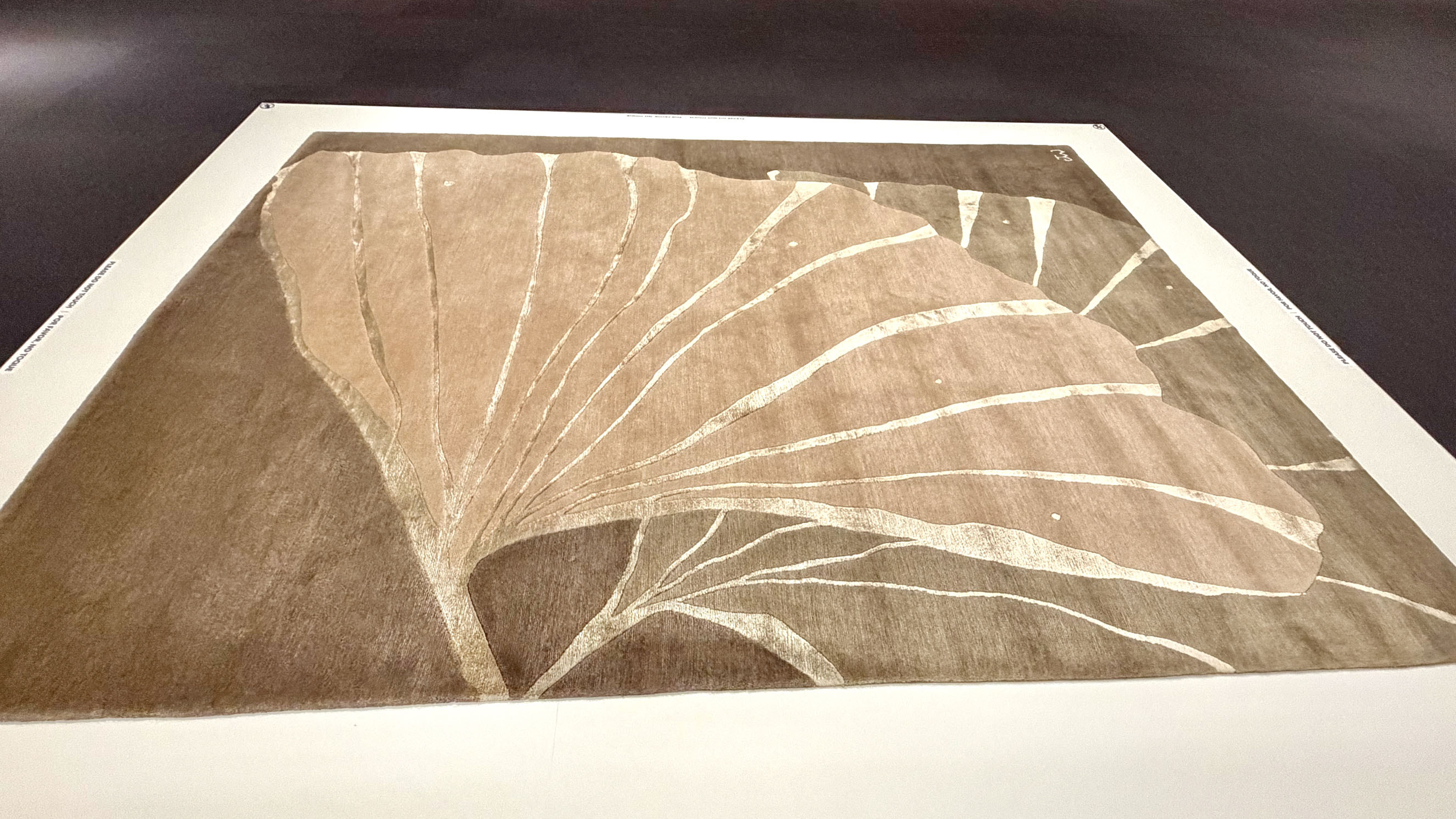
Abstractions used by textile artist Joan Weissman come from a place of process in which she starts with recognizable nature studies but allows her iterations to become more abstract.  Approaching her seemingly abstract Ginko, only gradually do visitors see that the hand-knotted rug (created at large scale by Pakistani artisans) is an extreme close-up of a leaf. 

Joan Weissman’s 2006 Ginko, a wool and silk hand-knotted rug, highlighting the intricacies of the leaf. Courtesy: the artist

2023 Hearing the Sun by Marietta Patricia Leis. Courtesy: the artist

Mariette Patricia Leis translates her experience of nature more formally. In one case, six seemingly minimalist wall-mounted panels are painted to reflect how we perceive the color of sunlight in different atmospheres and at different times of the day.

Another is a series of abstract panels suggesting horizons across volcanic surfaces during Iceland’s 24 hours of darkness.

Enjoy walking through the full exhibition in our Flickr album.

Detail of 2018 Vacuities by Marietta Patricia Leis inspired by Iceland’s winter night sky. Courtesy: the artist.

Here’s a close look at Judy Tuwaletstiwa’s 2001 Divination. She transformed sand by creating an arrangement of glass objects – cubes, spheres, and organic shapes – all displayed across a soft sand base.

Like the rest of the work in this exhibition, it allows us to think about the natural world, our perception of it, and the many ways that the experience can be transformed into art.

Marsden Hartley: A Modernist on the Move

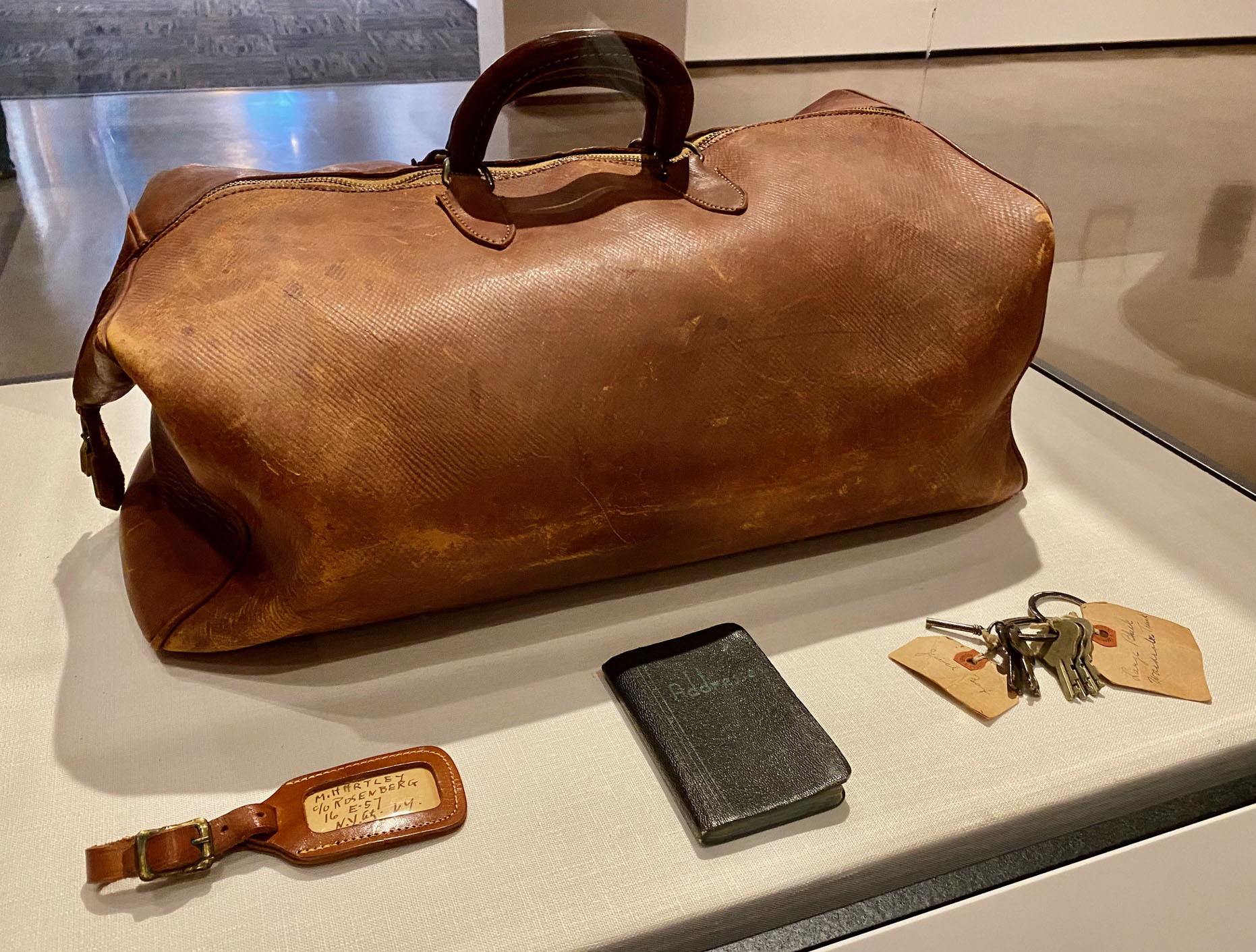
With his traveling valise sitting in the center of the introductory gallery and a map nearby, you understand instantly that superstar artist Marsden Hartley was a man on the go.

Marsden Hartley: Adventurer in the Arts, on view at the New Mexico Museum of Art in Santa Fe through July 20, 2025, uses his personal possessions, works painted on two continents, and non-stop itinerary to demonstrate how landscape, life, and modern-art legends led him to create an epic body of work.

Take a look at our favorites in our Flickr album.

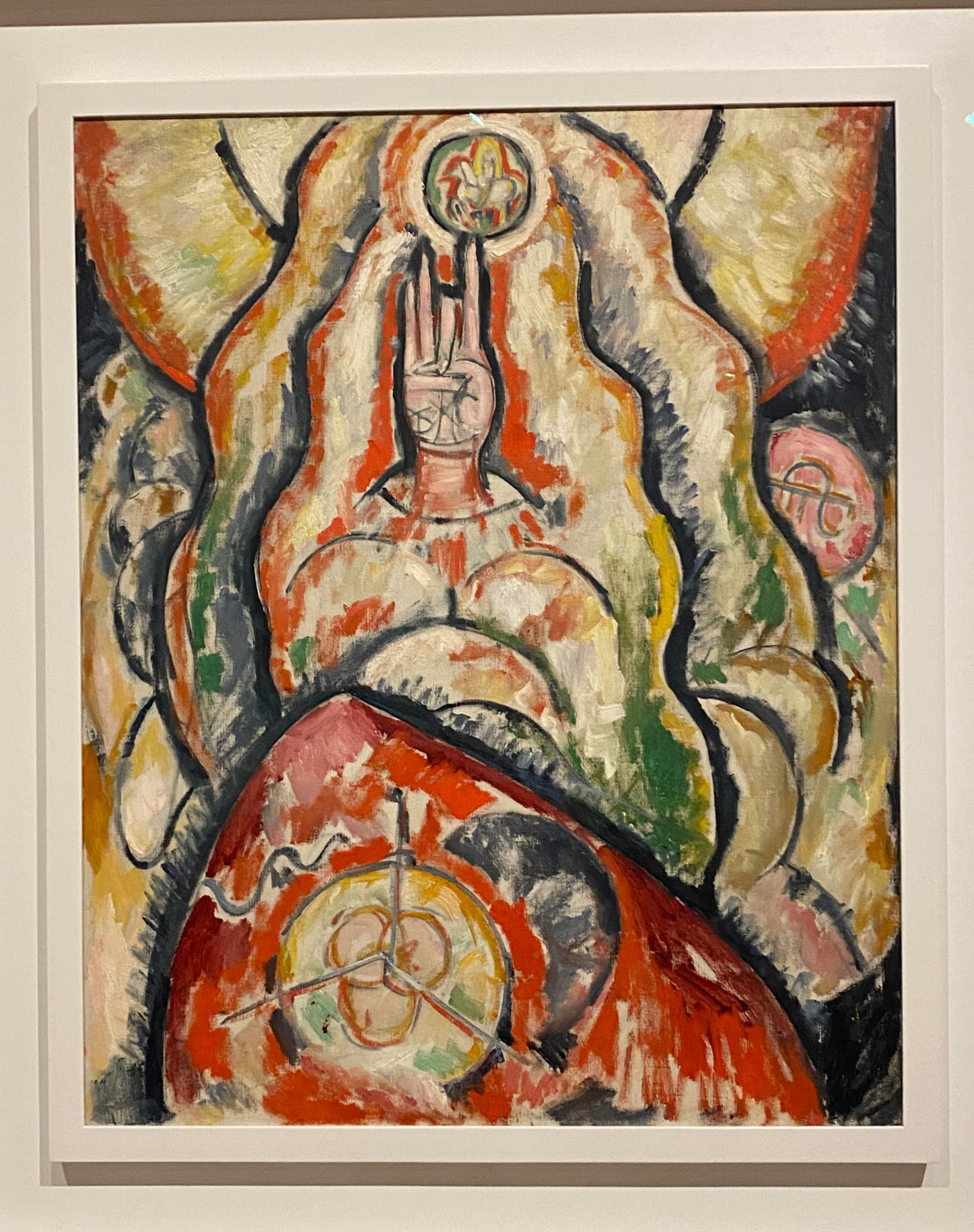
Hartley’s 1914 Berlin Series, No. 2 – flat, abstracted natural symbols. Courtesy: Jan T. and Marica Vilcek Collection.
Ready to travel – Hartley’s leather valise, address book and luggage tags. Courtesy: the artist’s estate; Bates College Museum of Art.

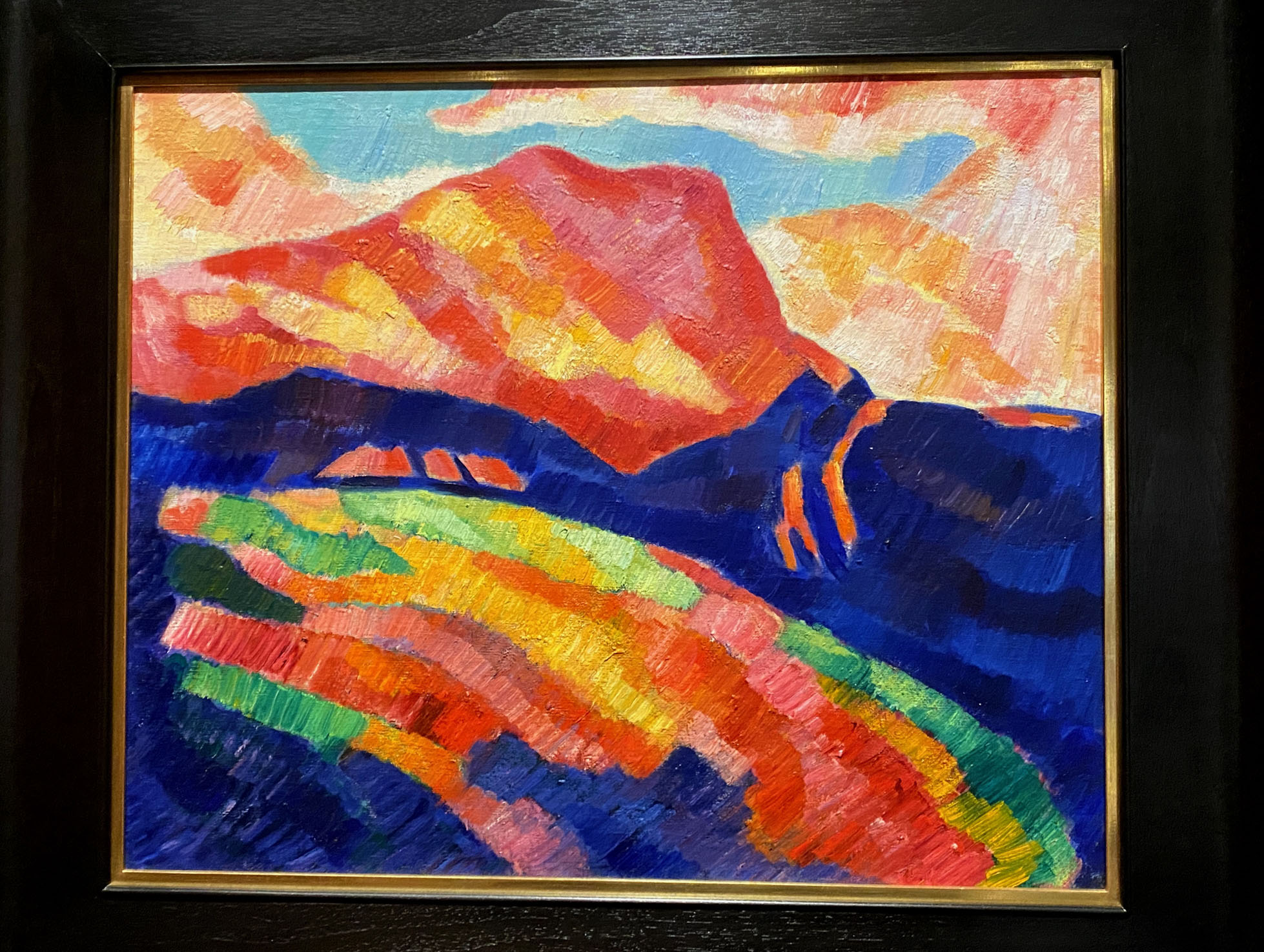
Looking around, there’s a wall of Maine mountainscapes he did in his thirties, a painting done just after Stieglitz sent him to Paris to soak up the vibes in Gertrude Stein’s salon, his accessories of rings and cigarette cases from Berlin in the 1920s, a Fauve-ist impression of Mount Saint-Victoire at Cezanne’s old stomping grounds in Aix, and photos of him and his dog at his Maine studio in the 1940s.

Hartley’s 1927 oil Mont Sainte-Victoire – painted in Aix, France where Cezanne once lived. Courtesy: Jan T. and Marica Vilcek Collection.

The exhibition merges Hartley’s paintings from the Jan T. and Marica Vilcek Collection with items donated by his favorite niece to Bates College in Maine – items he collected as he traveled; sketches and stuff sent to his neice; his camera, books, and snapshots; his studio paintbox, and other personal art. Together, the exhibition tells a story of innovation, personal journey, and relentless art making.

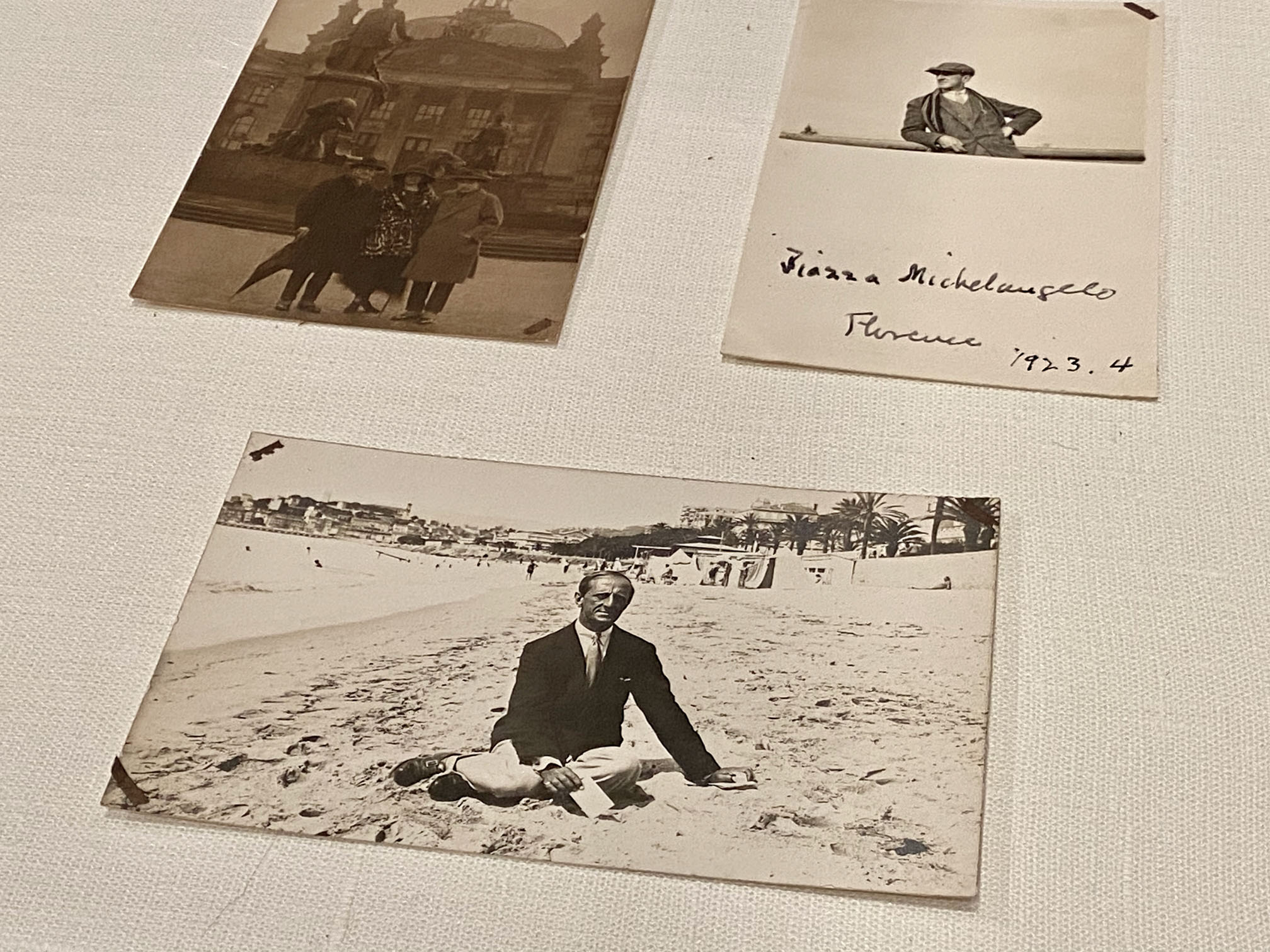
Hartley’s personal photos from his 1920s European adventures. Courtesy: Bates College Museum of Art

Hartley emerged from a hardscrabble childhood to see, feel, and experience art, nature, and transcendental spiritualism in New York, Boston, and Maine in 1890s.

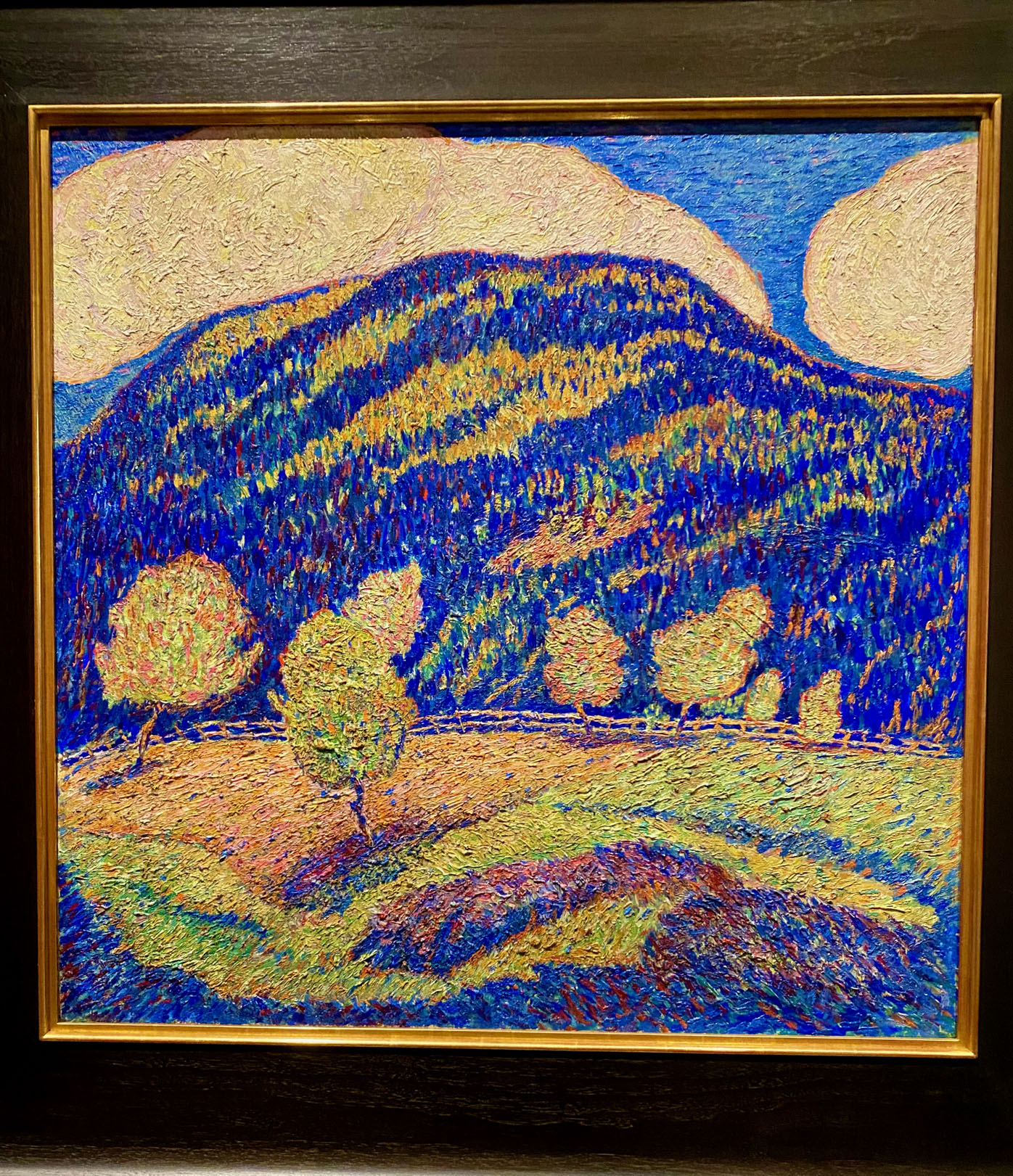
He loved painting mountains and depicted water, earth and sky as a color-filled flat plane filled with jabbing brushstrokes – an approach that stuck with him throughout his life as he journeyed through New Mexico, the Alps, Mexico, and back in Maine.

Hartley’s 1907-08 oil Silence of High Noon – Midsummer painted in Stoneham Valley, Maine. Courtesy: Jan T. and Marica Vilcek Collection.

By the time he was in his early thirties, he had shown his landscapes to The Eight, knocked on Stieglitz’s gallery door, and got a one-man show (and a dealer for the next 20 years) at 291, the hottest modern art gallery in America.

Hartley’s 1910 Untitled (Maine Landscape)– water cascading down a rock face. Courtesy: Jan T. and Marica Vilcek Collection.

Getting to Europe in 1912, the color, cubism, and symbolism of the Blue Rider, Matisse, and Picasso made his head spin. His German friends introduced him to Kandinsky’s book Concerning the Spiritual in Art. He went out of his way to meet the man himself, and his painterly wheels turned.

The second gallery presents a large work from his Cosmic Cubism series – an airy, dreamy arrangement of signs, spiritual symbols, colors, and planes – along with drawings from his Amerika series, based loosely on Native American symbols and other abstract shapes. On view for only the second time in the United States, Schiff is a dazzling creation drawing signs and symbols from Native American and Egyptian cultures that spill out onto the painted frame.

Hartley’s 1912-1913 Portrait Arrangement, No. 2, created in Paris. Courtesy: Courtesy: Jan T. and Marica Vilcek Collection.
Schiff – part of the Amerika series Hartley painted in Germany. Courtesy: Vilcek Collection.
April 5 – July 20, 2025

Up to this point, Hartley’s only encounter with indigenous American culture came from visits to ethnography museums in Paris and Berlin, but that would soon change. The advent of World War I tore apart the avant-garde, his social circles, and the direction of his work. Although these Berlin abstractions were long considered by late 20th century critics to be the high point of his career, Hartley abandoned this artistic path when forced to return to the United States, started over, kept wandering, and went back to landscapes and still lifes to discover his “American” expressionist vision.

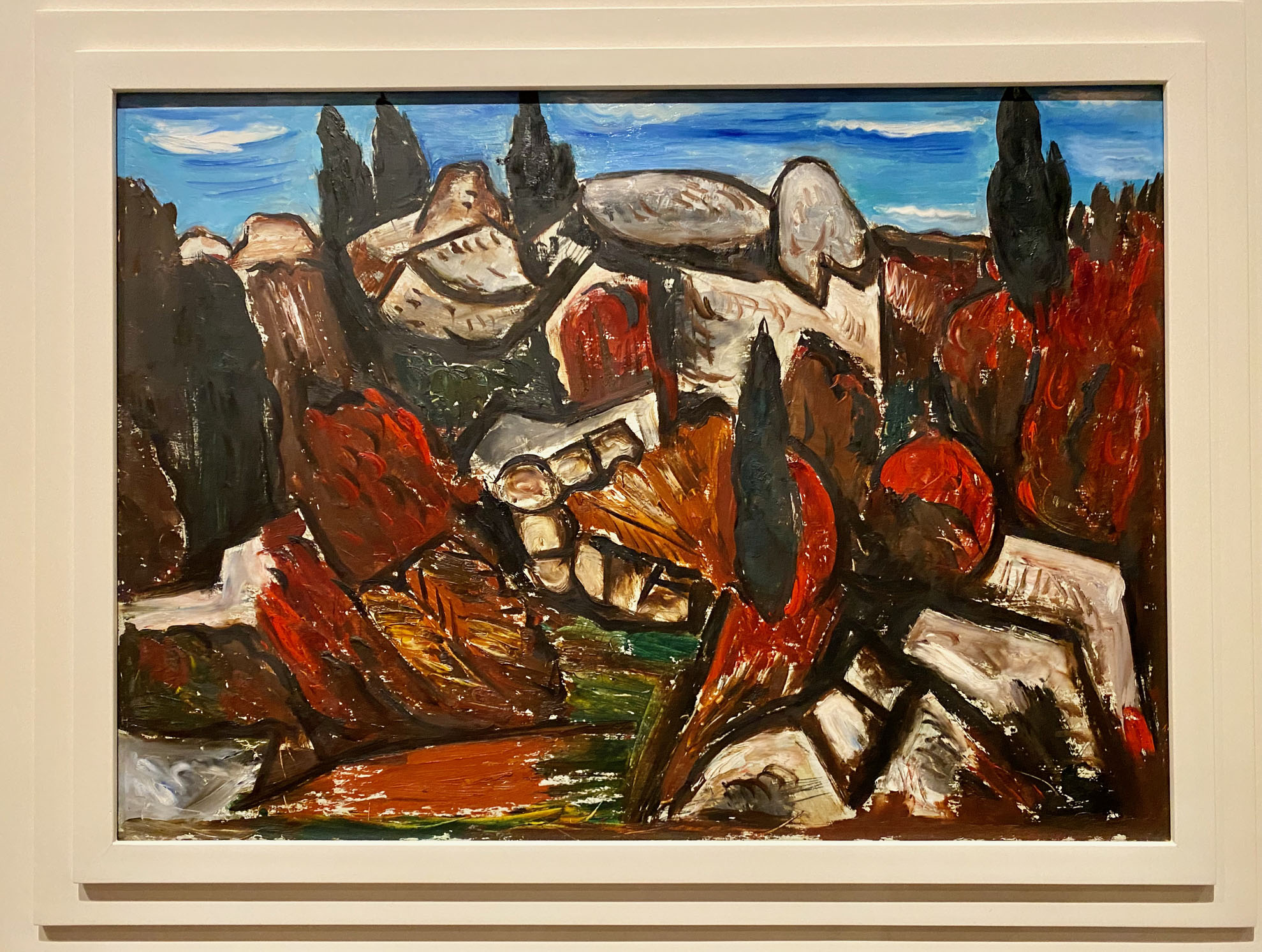
Hartley’s 1934 Autumn Landscape, Dogtown – a colorful painting made near Gloucester, Maine. Courtesy: Jan T. and Marica Vilcek Collection.

The exhibition does not unfold chronologically. Instead, it shows how much friends, place, and spiritual encounters affected him.

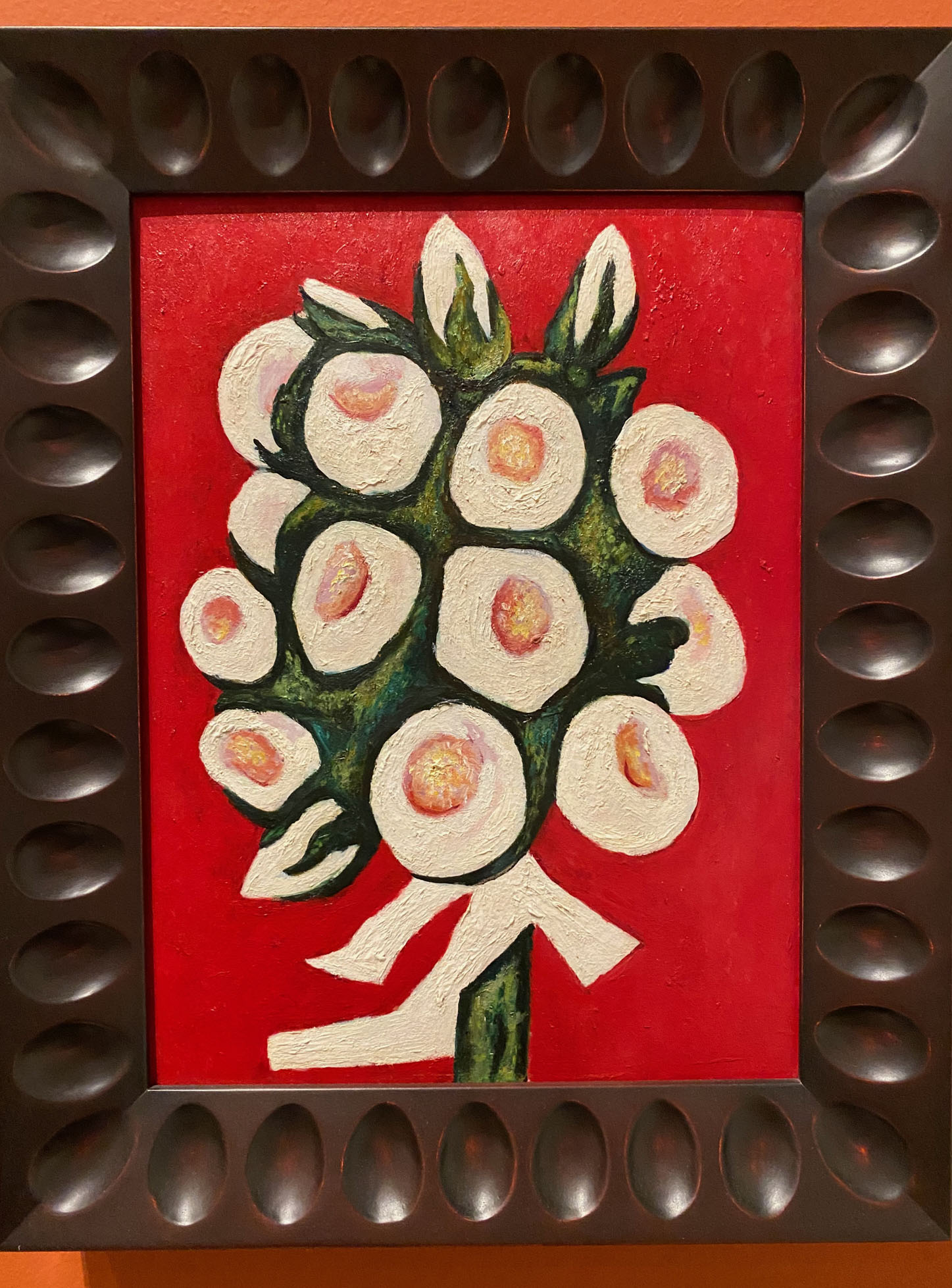
Near the Berlin abstractions are highly expressionist 1930s rockscapes from Maine and pointy Alpine peaks from his return to Bavaria. There’s an example of his stripped-down 1916 “synthetic cubist” work in Provincetown, a 1917 New England still life painted in Bermuda when he was budget-bunking with Demuth, and a red-saturated still life that is a therapeutic tribute to his Nova Scotia friends who died at sea in the late Thirties.

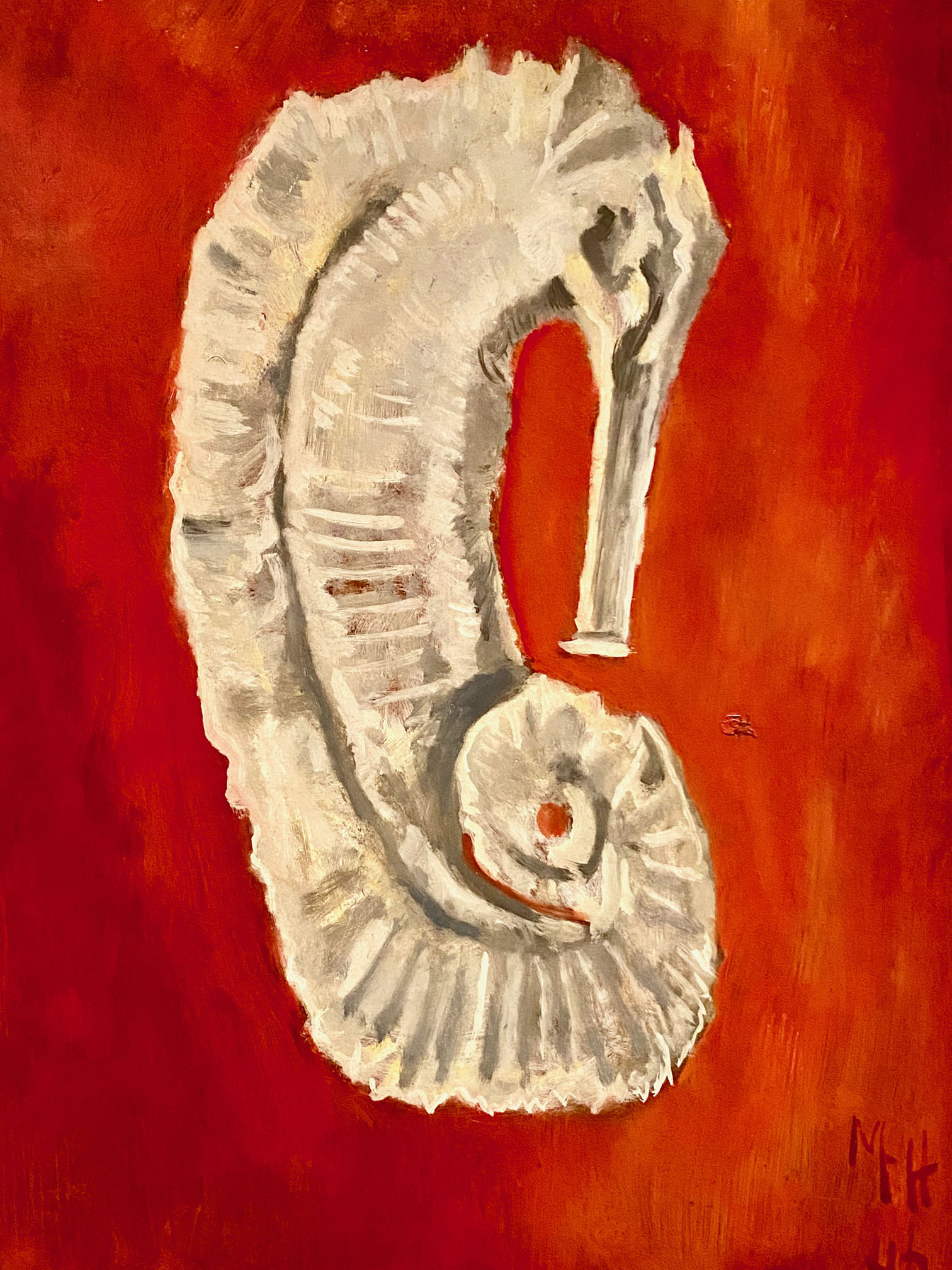
Hartley’s 1942 White Sea Horse – part of a series with vivid backgrounds done in Maine. Courtesy: Jan T. and Marica Vilcek Collection
Hartley’s 1935-39 Roses for Seagulls that Lost Their Way –made in Bermuda to honor his Nova Scotia friends lost at sea. Courtesy: Jan T. and Marica Vilcek Collection.

In the middle of this gallery are vitrines with highly personal, everyday stuff from a painter who never settled down, stayed on the move, and always kept creating.

Here’s his camera, a scrapbook of personal photos, his 1923 published book of poetry, a few books from his library, and a little toy and pressed flowers sent to his niece.    

Hartley’s photos from his 1917-1918 trip to Santa Fe. Courtesy: Bates College Museum of Art

Except for the Provincetown piece, all the surrounding paintings have direct, bold outlines, vivid colors, and vigorous, unglamorized visions – a fitting prelude to the last gallery of New Mexico landscapes.

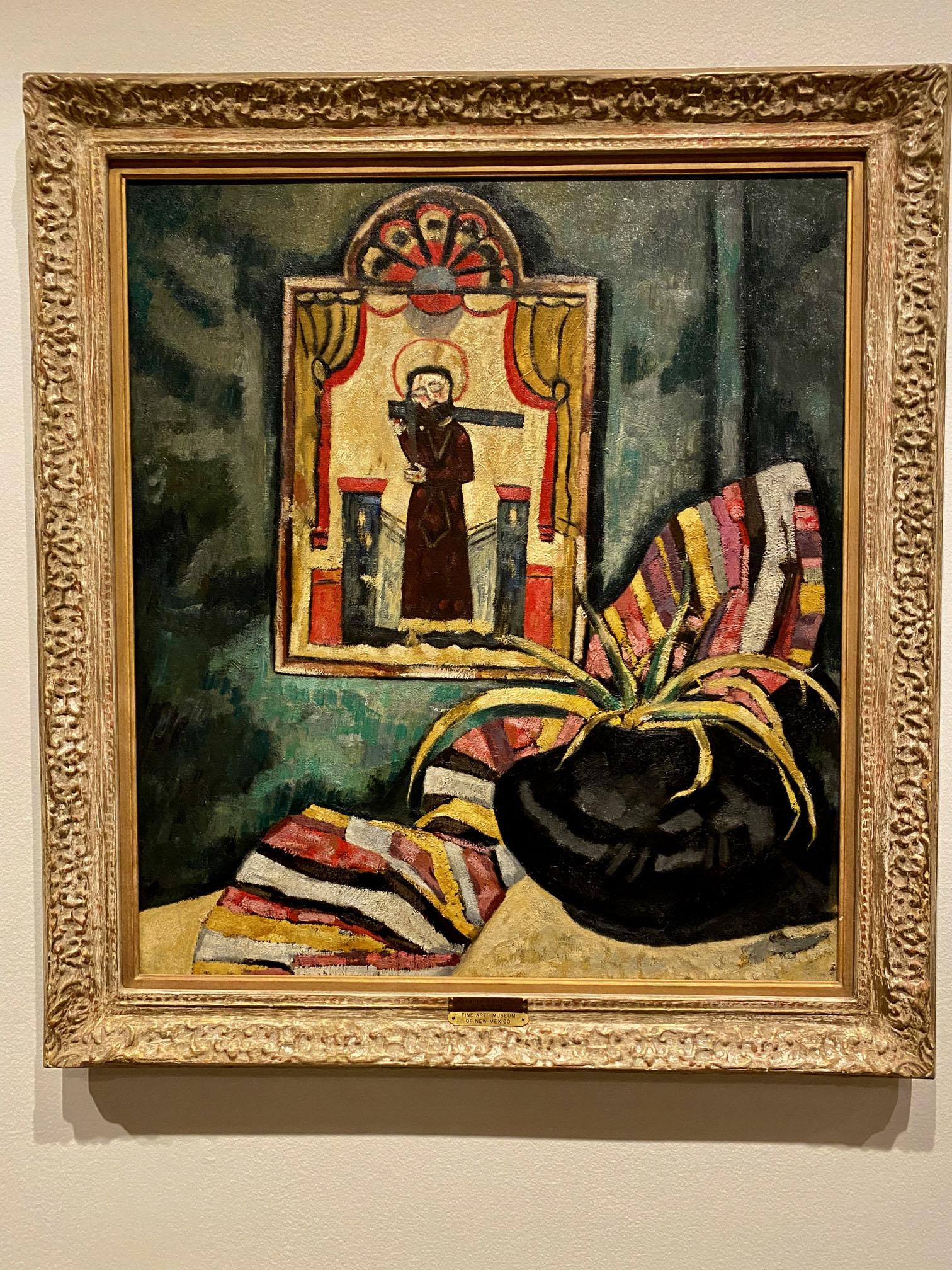
Hartley’s 1919 El Santo painted in New Mexico.

The final gallery provides a panorama of landscapes, plus a dramatic image of a ridge of Mexican volcanoes. Hartley only spent part of

1918 in Taos and Santa Fe, where he traversed the hills, attended Pueblo ceremonies, and wrote about the indigenous culture. He also completed his El Santo still life with a black-on-black ceramic vase, a striped textile, and a Northern New Mexican retablo of a suffering Jesus.  

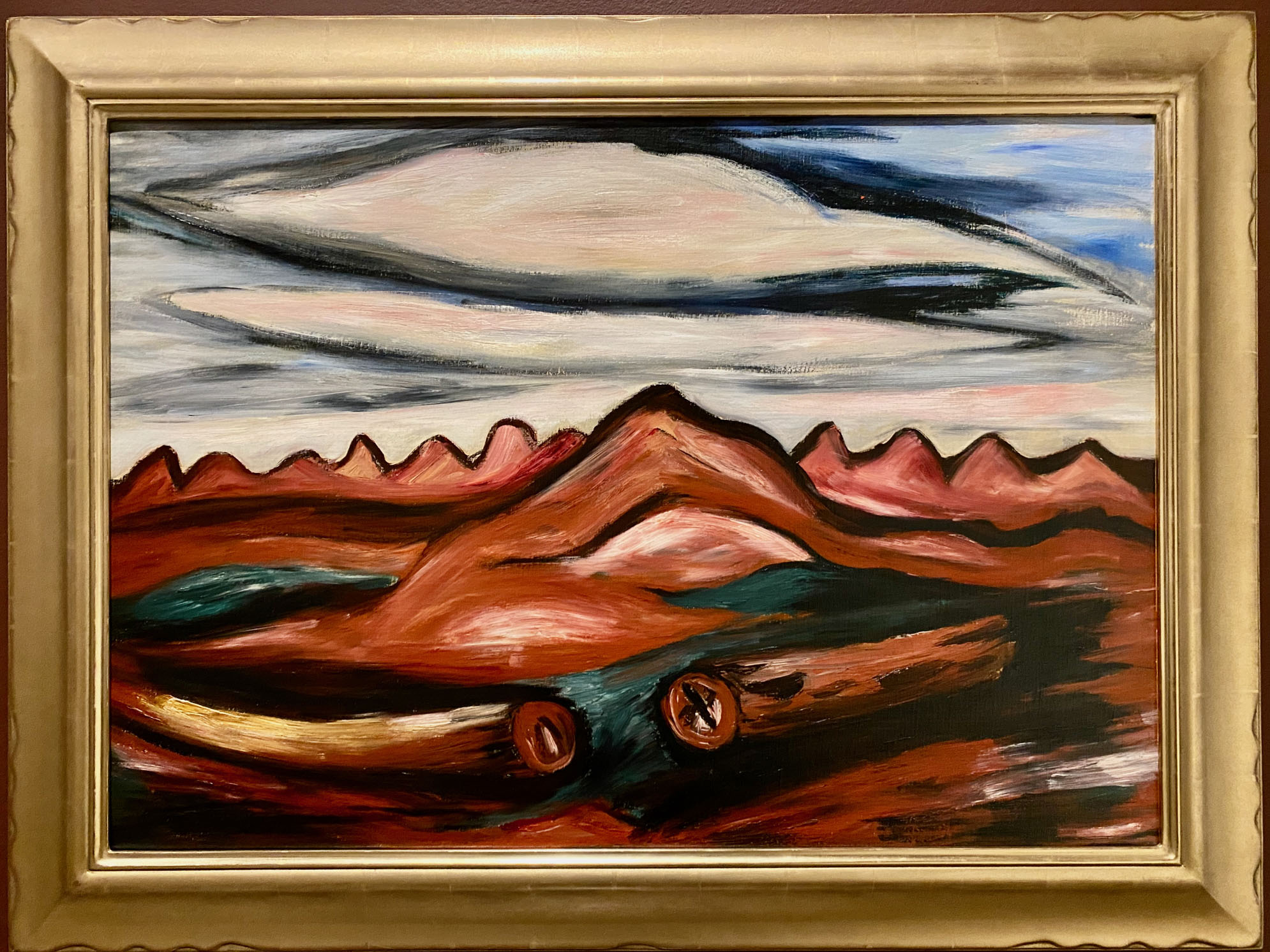
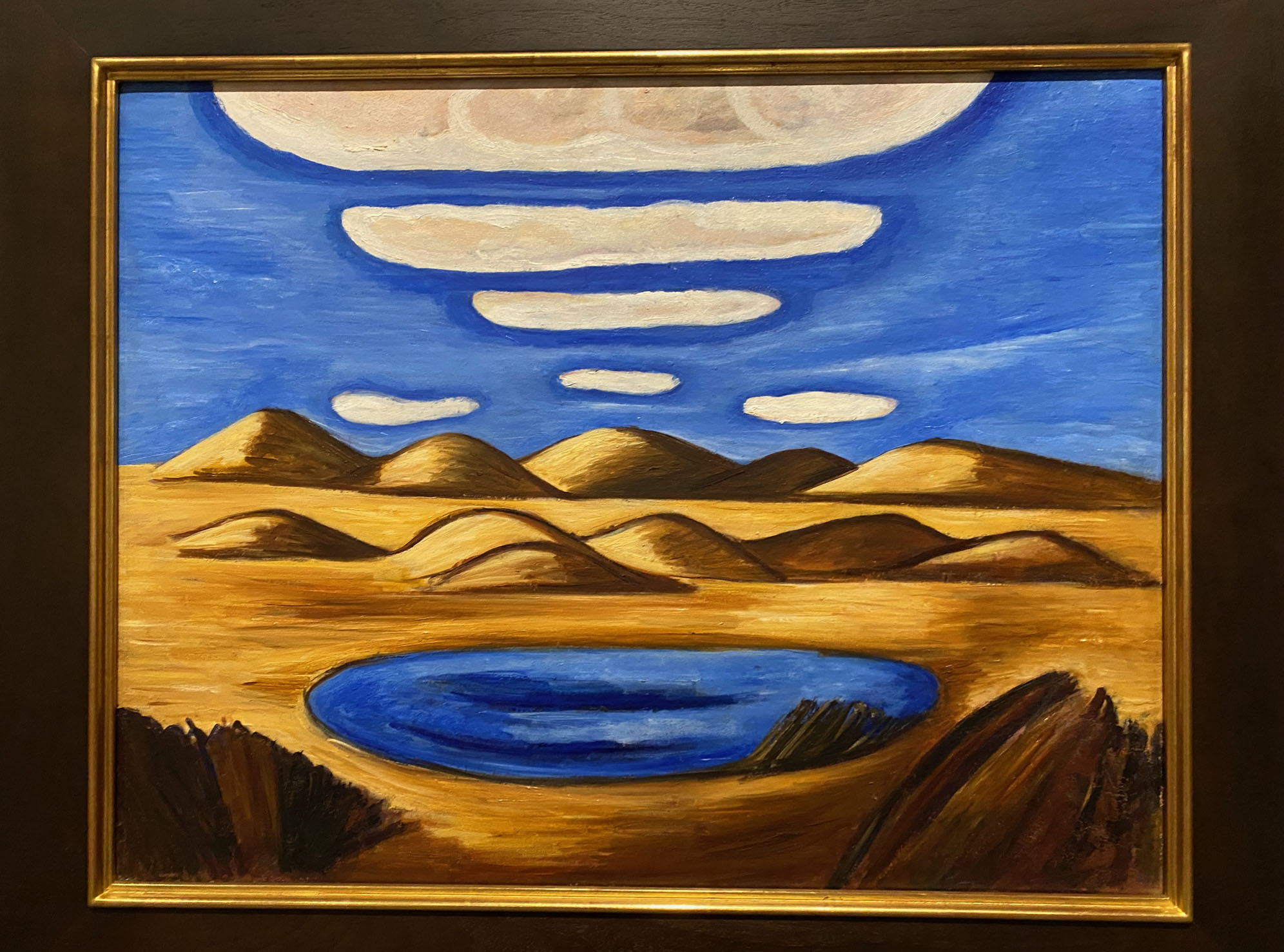
But it might be a surprise to learn that all of the Southwest landscapes were painted in Berlin in the 1920s – fittingly called his New Mexico “recollections” – or in Mexico in the 1930s.

Floating clouds, expressive lines, and abstracted mountains – all from his vivid mind and recollections of spiritual and physical experiences long past.  In the 21st century, increasing numbers of art historians and artists have looked to this phase of Hartley’s work for insight and inspiration – bold brushwork, expressive memory, and both a spiritual and emotional creative process.

Hartley’s 1923 oil New Mexico Recollection #14– painted in Berlin based upon memories of his year in the Southwest. Courtesy: Jan T. and Marica Vilcek Collection.
Hartley’s 1932 oil Lost Country – Petrified Sand Hills – a symbolic landscape inspired by mystical texts he discovered while painting in Mexico. Courtesy: Jan T. and Marica Vilcek Collection.

Toward the end of his life, the accolades, awards, honors, and retrospective exhibitions came his way, but Hartley remained the hardscrabble “painter of Maine,” barely interested in cashing the checks.

His niece, who preserved her uncle’s posessions and legacy after his death in 1943, took a train trip to New Mexico for the first time to see the landscapes that so inspired her uncle. Upon emerging from the train at the stop near Santa Fe, she looked up to take in the big, dramatic, cloud-filled sky. Thinking of all her uncle’s landscapes, she said, “Those clouds…I’d recognize them anywhere!”

If you see this show in Santa Fe, you will, too.

Louise Zelda Young’s 1943 photo Marsden Hartley’s Studio, Corea, Maine, where he worked in his final years. Courtesy: Bates College Museum of Art.

How Philadelphia Made American Artists

How does it feel to have the eyes of 200 years of art history upon you, peering out from portraits, history paintings, and scenes of everyday people? What stories do they have to tell you? And who gets to tell the history and make the story?

Find out by contemplating works by over 100 artists nurtured and celebrated by PAFA in Making American Artists: Stories from the Pennsylvania Academy of Fine Arts, 1777-1976, currently on view at the Albuquerque Museum through August 11, 2024…but coming soon to a museum near you (see below)!

Charles Willson Peale’s 1779 George Washington at Princeton, painted during the War of Independence. Courtesy: PAFA

While renovations are happening at the Academy in Philadelphia, the curators have chosen some of PAFA’s most iconic works to be shipped cross-country and installed “in conversation” with works by PAFA artists who may not be household names but were nonetheless ahead of their time.

It’s all a tribute to legacies preserved in the oldest art museum + art school in the United States, founded in 1805 by the dynamic duo of William Rush and Charles Willson Peale, both Continental Army militia (and artists!) during the American Revolution.

1810 painted pine sculpture Eagle by PAFA co-founder and Revolutionary War veteran William Rush.

Mr. Rush carved the bow figures on most of the ships for America’s first Naval fleet. All of those ships are now long gone, so it’s nice to see that we can admire his majestic Eagle in this exhibit.

Mr. Peale, one of the Sons of Liberty who served under and painted General Washington, later founded America’s first natural history museum on the second floor of Independence Hall. He also passed his talent on to the next generation through his very large family of artistic prodigies.

These two artists of the Revolution walked the walk and talked the talk and passionately felt the young nation needed an art academy.

PAFA’s first hundred years had some ground-breaking firsts – the first exhibition that included both male and female artists (1811), admission for Black artists (1857), and first female instructor (1878).

Charles Willson Peale’s 1822 self portrait (painted at age 81), The Artist in His Museum proudly showing his collection, turkey, and mastodon. Courtesy: PAFA

The show kicks off with a masterful history painting by Benjamin West, a Pennsylvania painting genius who landed in England in 1763, helped to found the Royal Academy, and somehow remained best friends with both King George III and Benjamin Franklin at the same time. He revolutionized history painting by depicting contemporary subjects and taught (in London) a who’s who of Americans artists – Peale, Stuart, Sully, Morse (who invented the telegraph and code), and Fulton (who invented steamships).

Benjamin West’s 1771-1772 Penn’s Treaty with the Indians, an imaginary scene painted to rehabilitate Penn’s image at the time, although it does feature Lenape chief Tamanend;. Courtesy: PAFA

In addition to masterworks by West and Gilbert Stuart, the exhibition showcases many works by female and African-African artists associated with PAFA – Patience Wright (America’s first professional sculptor), Cecilia Beaux (first female teacher), Henry O. Tanner (first successful African-American painter), and superstar Mary Cassatt.

1784-1786 wax relief portrait of George Washington by Patience Wright, the oldest American sculpture in the PAFA collection
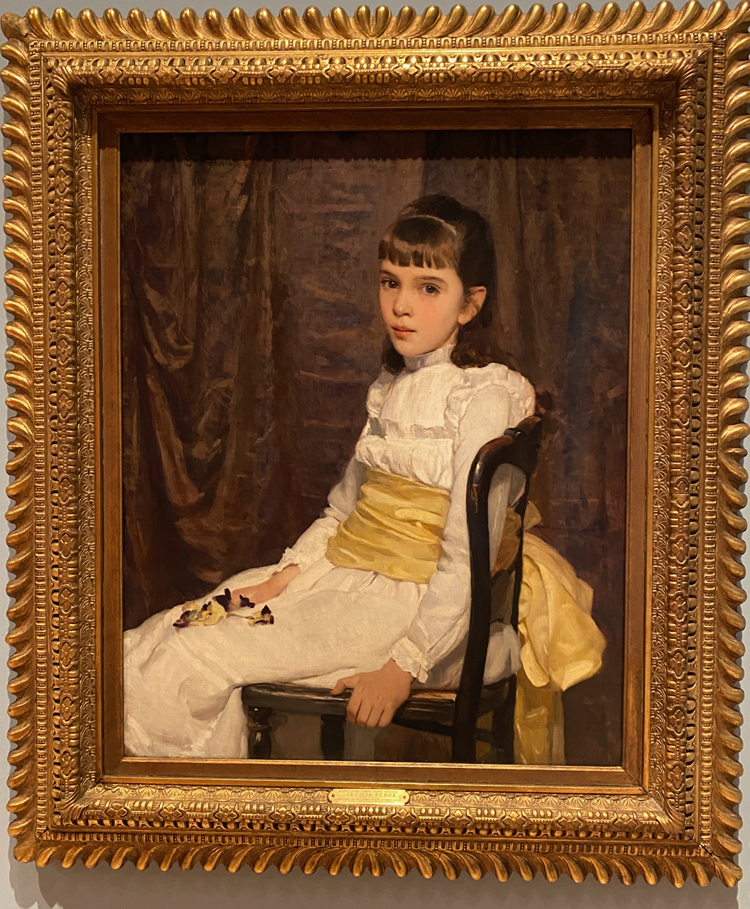
1887 A Little Girl by Cecilia Beaux, an acclaimed female portraitist known for her insightful psychological depictions of young women. Courtesy: PAFA

In the day, grand history paintings were primarily the work of men, but the exhibition emphasizes that many enterprising 19th century women still found ways to make it in the art world. They specialized in “lesser genres,” like portraits, still lifes, and scenes of everyday life. Check out our favorites in our Flickr album.

Making American Artists really comes alive by adding 20th century works on the walls. Alongside the Founding Fathers, the portrait section features liberated women, bohemian artists, and proud Black artists with attitude.

Margaret Foster Richardson’s 1912 A Motion Picture – an honest self-portrait reflecting society’s changing views of professional women. Courtesy: PAFA
Barkley L. Hendricks’ 1968 J.S.B III, a fashionable, life-sized, postmodern portrait of his PAFA classmate James Brantley. Courtesy: PAFA

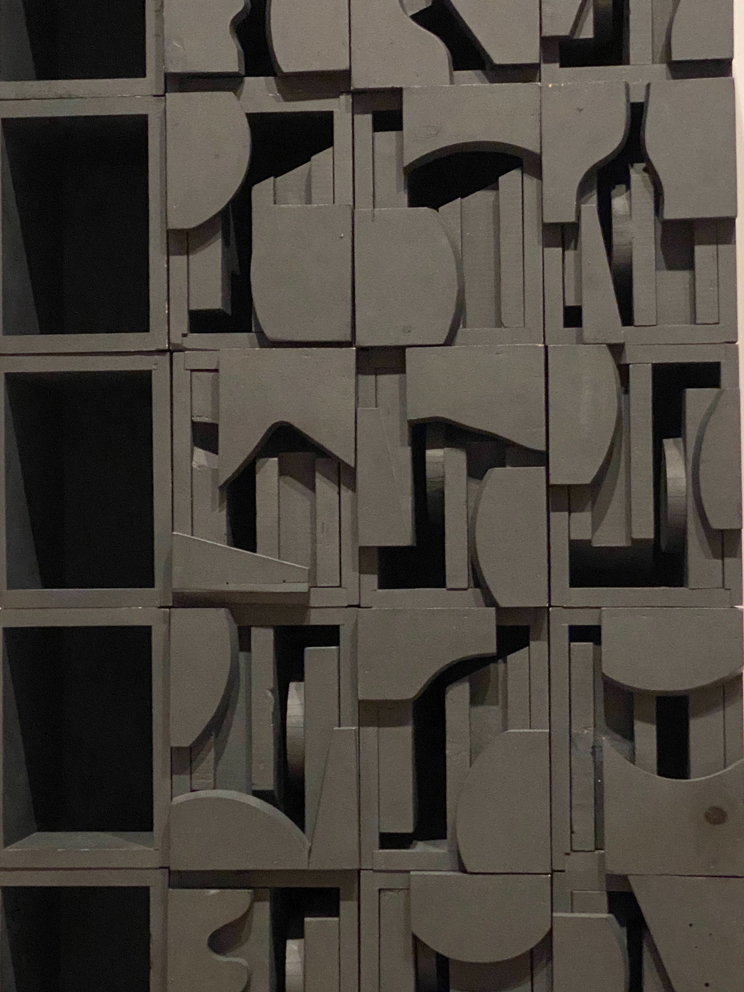
The section of the exhibition on still life focuses on early female painters who made decent incomes from their work, as well as modernist superheroes O’Keeffe and Nevelson. The history painting section presents 20th century show-it-like-it-is artists, like Horace Pippin and Alice Neel.

Georgia O’Keeffe’s 1923 Red Cana, an early abstracted floral still life. Courtesy: PAFA
Detail of Louise Nevelson’s 1972 South Floral. Still life section. Courtesy: PAFA

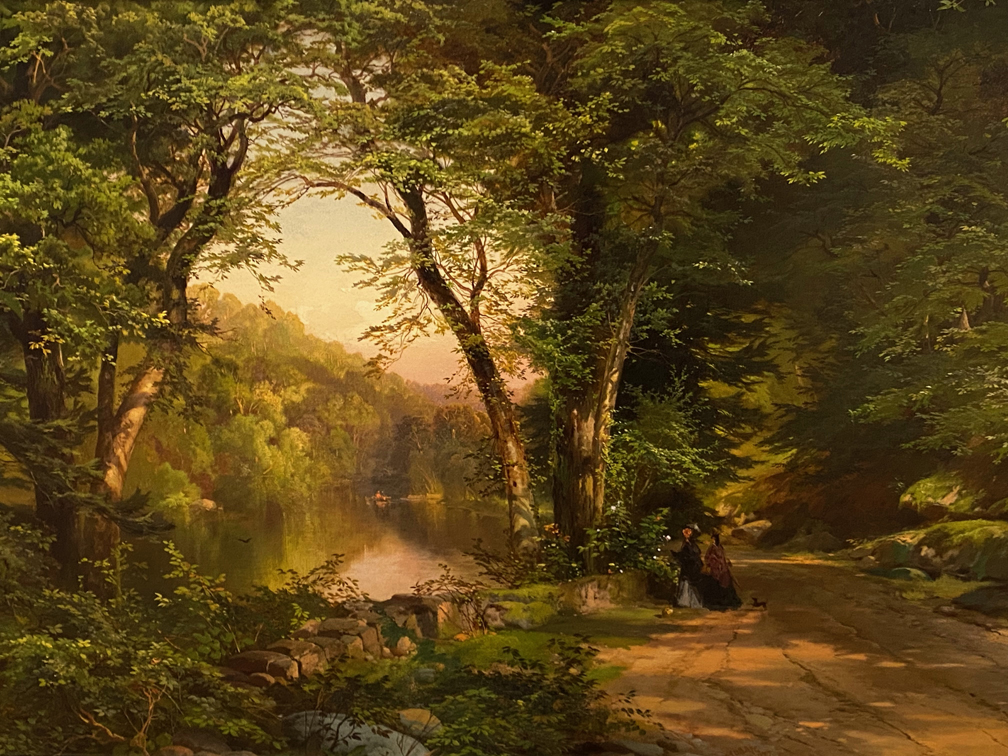
We’re reminded that many of the great masters of American landscape, like Thomas Moran, got their starts by painting bucolic views of Philadelphia’s Wissahickon and Schulkyll Rivers. Painting Philadelphia’s river landscapes may have even inspired the rise of the Hudson River School.

Thomas Moran’s 1870 Two Women in the Woods enjoying the green along the Wissahickon in Philadelphia. Courtesy: PAFA

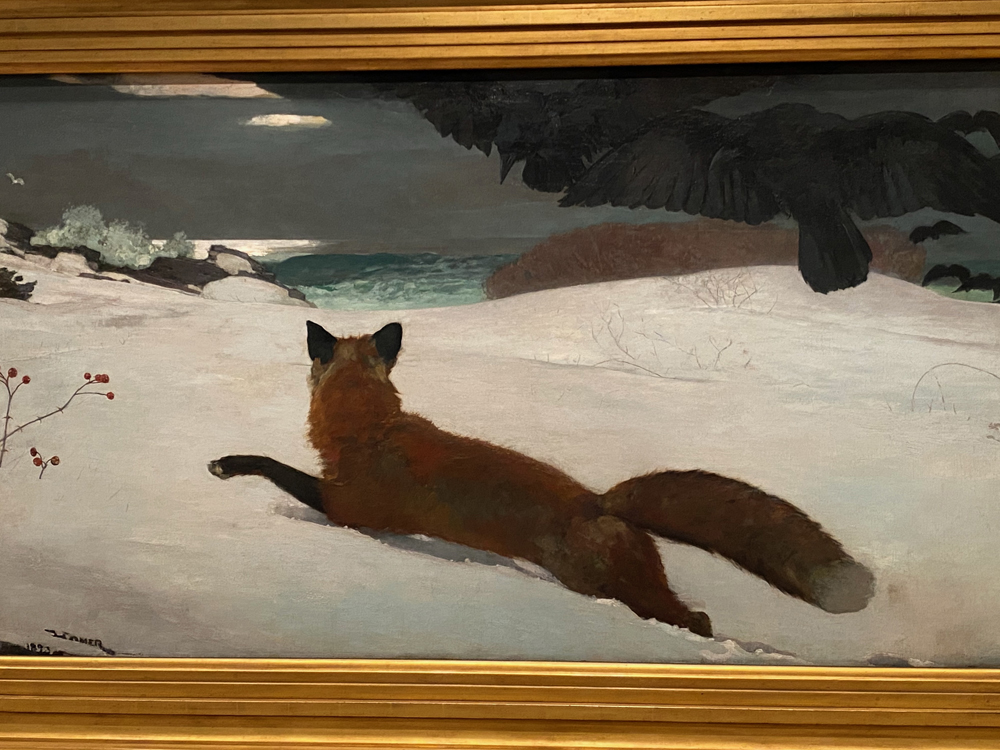
And it was PAFA that gave Winslow Homer his professional start.

Winslow Homer’s 1893 Fox Hunt, where predator becomes the prey; Homer’s first painting to enter a museum collection. Landscape section. Courtesy: PAFA

The entire exhibition is a fresh look at American masters who created an astonishing legacy at one of our oldest art institutions ­and upstarts who never quite got their due. There’s so much to appreciate from this fresh, 21st century perspective!

Earlier this year, Making American Artists was at the Wichita Art Museum. Its next stop is the Philbrook Museum of Art in Tulsa, Oklahoma (September 25, 2024), followed by a spectacular road show: Everson Museum of Art in Syracuse (February 2025), the Peabody-Essex in Springfield, Massachusetts (June 2025), and the Taubman Museum of Art in Roanoke, Virginia (October 2025).

Don’t miss it. While you’re waiting, listen in to curator Anna O. Marley’s May talk at the Albuquerque Museum: