Contemporary Pueblo Architecture Honors Ancient Beliefs

Any visitor to Chaco Canyon National Historial Park (850-1250 CE) makes the journey to appreciate innovative masonry of the Great Houses, the precision of the ancient road system, and the astronomically aligned walls, windows, and kivas. But how do contemporary Pueblo architects incorporate these traditional beliefs in their 21st century projects?

A fascinating, in-depth exhibition, Restorying our Heartplaces: Contemporary Pueblo Architecture – on view at Albuquerque’s Indian Pueblo Cultural Center through December 7, 2025 – explores how modern Indigenous architects incorporate traditional world views into their work.
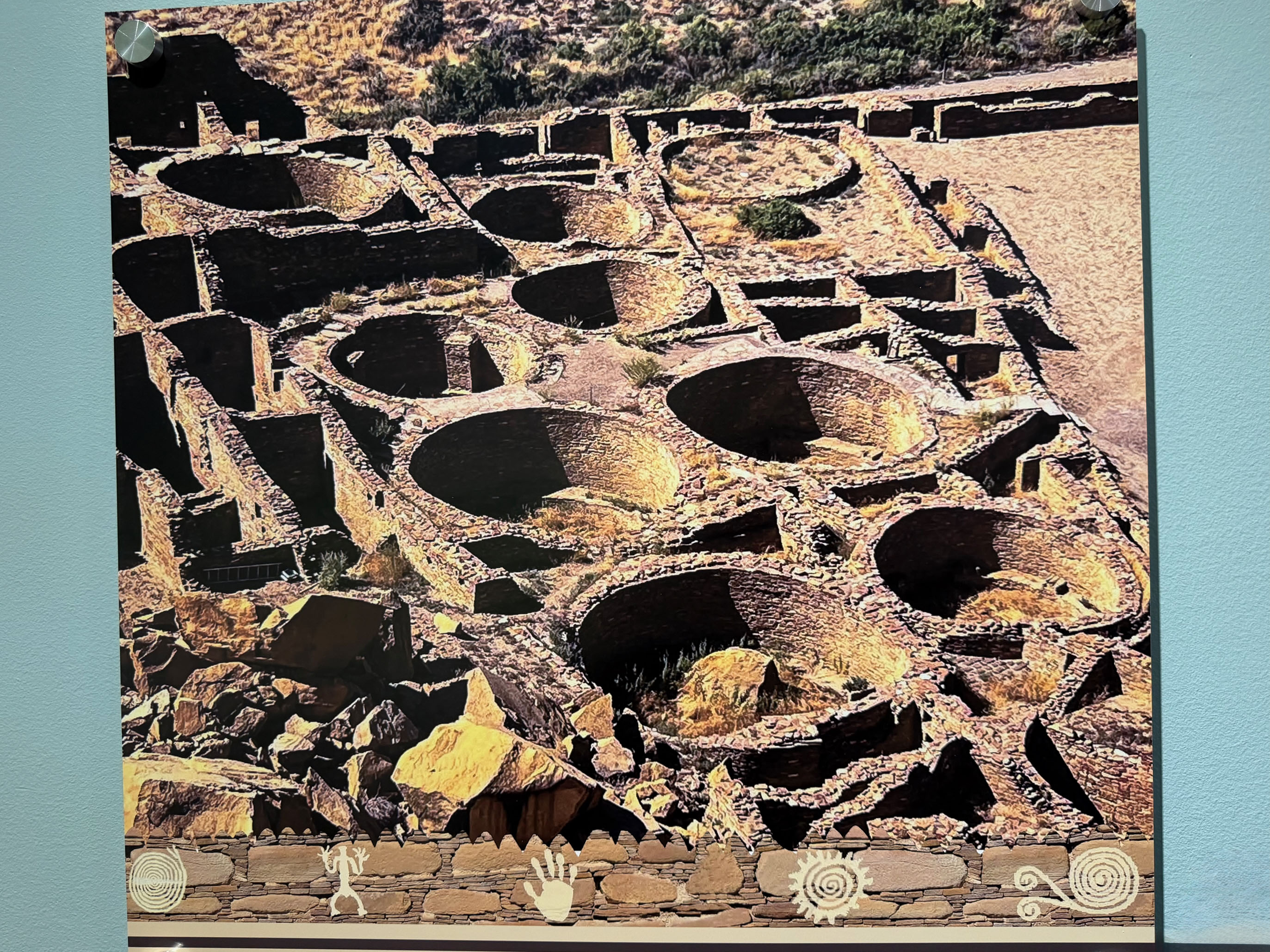
2023 photo Kivas at Pueblo Bonito,Chaco Canyon by curator Ted Jojola (Islela Pueblo) showing advanced masonry and architectural concepts.

For example, just look at the design of the National Museum of the American Indian’s Resource Center – an organic design, aligned to the four cardinal directions, with extensive use of cedar wood.
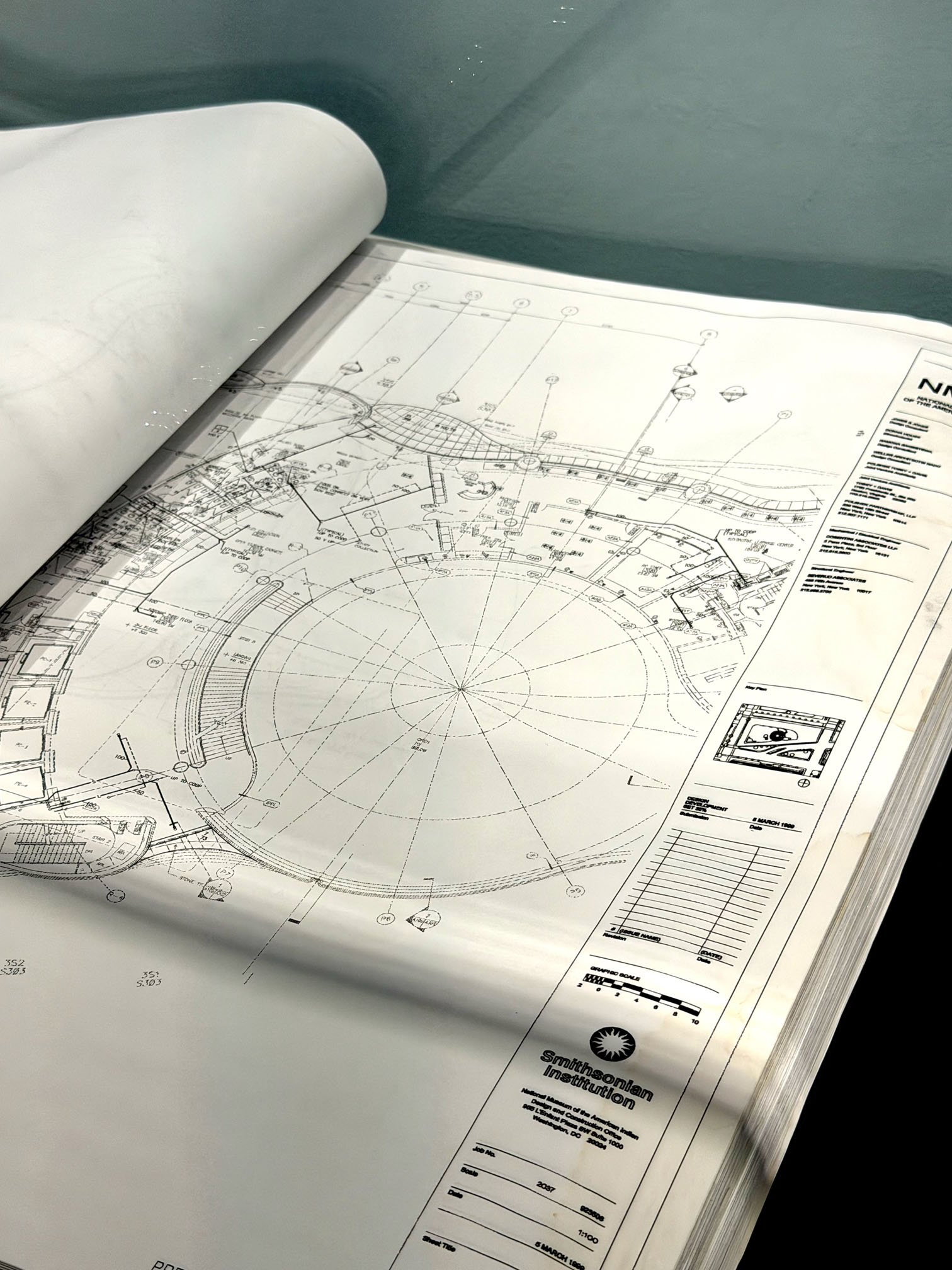
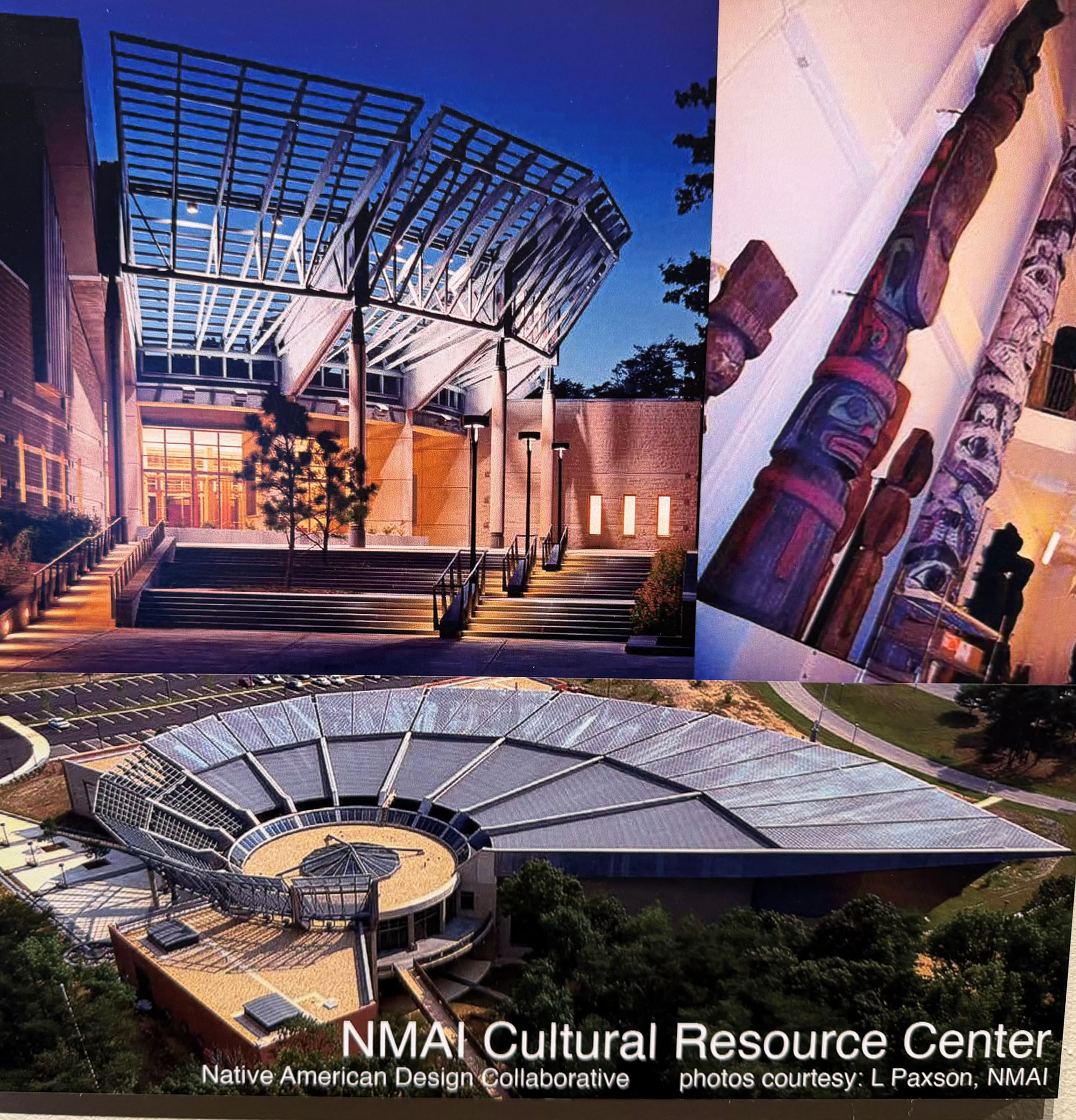
1999 plans for the National Museum of the American Indian Resource Center. Courtesy: Ted Jojola (Isleta Pueblo)
Views of the 1999 National Museum of the American Indian Cultural Resource Center in Suitland, Maryland. Courtesy: Lynn Paxson.

This exhibition coincides with the 50th anniversary of the 1975 Indian Self-Determination and Education Assistance Act – legislation that shifted Native American policy in the United States from assimilation to self-determination. Tribes were now able to initiate and run justice, government, health and education departments of their own – a change that triggered a construction boom for new schools and administrative buildings.

The show opens as an immersive experience in a large, circular gallery that introduces the core belief system and origin story of the Ancient Puebloans. Across a large screen in a vivid animation, the Pueblo people emerge into this world from a previous world. You watch them migrating outward in a spiral – symbols that are reflected across the art, murals, and photographs on the surrounding walls.
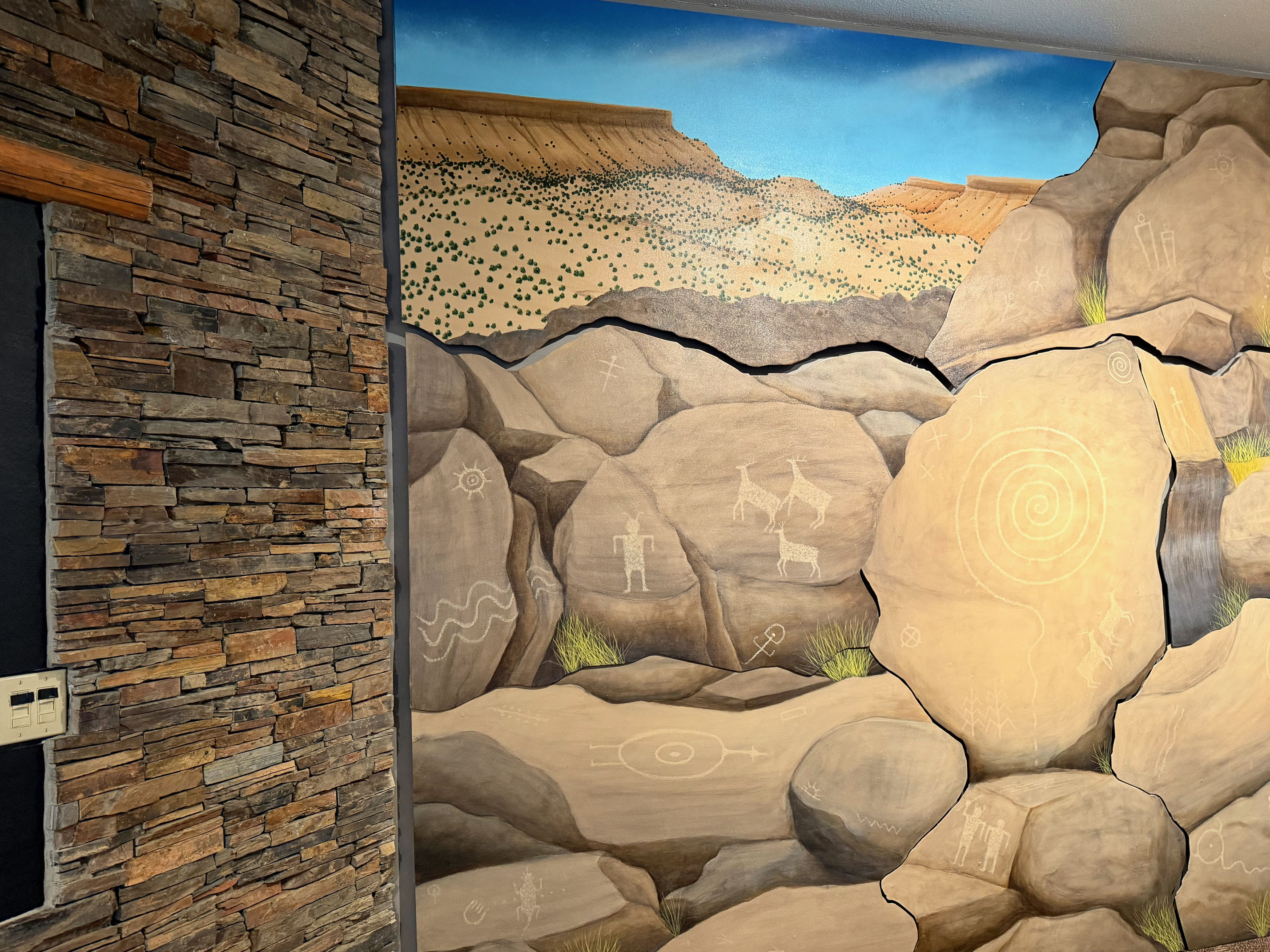
Mural by Dominic Aquero (Cochiti) with symbols of Pueblo creation; T-door represents the spiritual passage between two worlds (sky and Earth)

This experience sets the stage for the rest of the exhibition by showing how the stonework and beliefs reflected by the architecture of Ancient Puebloan centers points the way forward for Pueblo architects today.

2022 print by Gerald Dawavandewa (Hopi Cherokee) with T-shaped door for passage between worlds (sky and Earth]

The exhibition describes Ancient Puebloan architectural innovations – passive solar heating, precise window alignment, and masonry approaches. How did the Ancients achieve such precision in their dramatic Chaco and Mesa Verde buildings?

The curators present engineering and survey tools from archaeological excavations and modern survey backpacks side by side – plumb bobs, levels, and measuring devices.

Ancient stone and ceramic plumb bobs (from California and from Hewitt excavation at Rito de los Frijoles, Bandelier). Courtesy: Museum of Indian Arts & Culture/Lab of Anthropology.
Modern survey tools: level, tape measure, compass, brass plumb bob, wood, and string. Courtesy: curator Ted Jojola (Isleta Pueblo)

They also add comparisons of selenite used as window panels in Old Acoma’s Sky City (among the longest-inhabited communities in the US) and the contemporary architectural approach to windows in the recently built Acoma museum – a thoughtful reflection of the past

The exhibition directly addresses past HUD housing approaches on tribal lands – pushing suburban-style low-income housing, which moved families away from the traditional Pueblo plaza (the HeartPlace) and provided pitched-roof designs that blunted community cultural practices that utilized traditional Pueblo flat-roof construction.

The curators remind us of the continual upkeep required by adobe construction – a repeated communal task typically undertaken by a community’s women that happened on a regular, cyclical basis.  It’s also a reminder that Pueblo communities view buildings as living presences that evolve – not just concrete objects exist in a “finished” state.

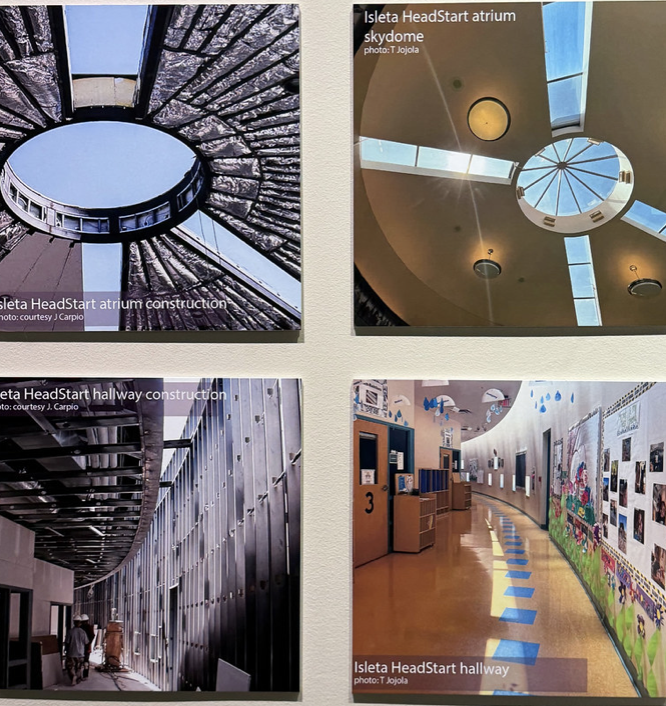
Views of the 2000 campus for the Institute of American Indian Arts in Santa Fe. Courtesy: Paul Fragua (Jemez Pueblo)
Views of 2004 building designed by Janet Carpio (Laguna/Isleta Pueblos) for Pueblo of Isleta’s Headstart/Child Care Center.

Wall panels, blueprint books, and architectural models are used to demonstrate the contemporary innovations of Pueblo architects – the Resource Center of the National Museum of the American Indian (1999), the campus of the Institute of Amercian Indian Arts in Santa Fe (2000), and the Headstart Child Care Center for Isleta Pueblo (2004). Both incorporate design elements echoing the spiral migration path, alignment to the cardinal directions, and colors and elements of the Earth.

A huge multimedia interactive theater punctuates the walk-through – an immersive visit to Acoma’s new Cultural Center and Haa’ku Museum with tribal members and designers explaining the architectural details and how the buildings reflect the landscape and traditional belief systems.

Immersive interactive experience of Acoma’s new Cultural Center and Haa’ku Museum. Courtesy: Anna Seed Productions, Electric Playouse, and UNM ASPIRE.

The exhibition features the work of the Indiginous Design and Planning Institute (iD+Pi) at UNM and presents dramatic architectural models of the past, present, and future of the community of Nambe Pueblo.

Look through the exhibition in our Flickr album here – a future-forward look at the continuing progression of innovative architectural designs and the next generation of designers and architects respecting and integrating the Pueblo world view with buildings considered to be living, breathing HeartPlaces for the community. 
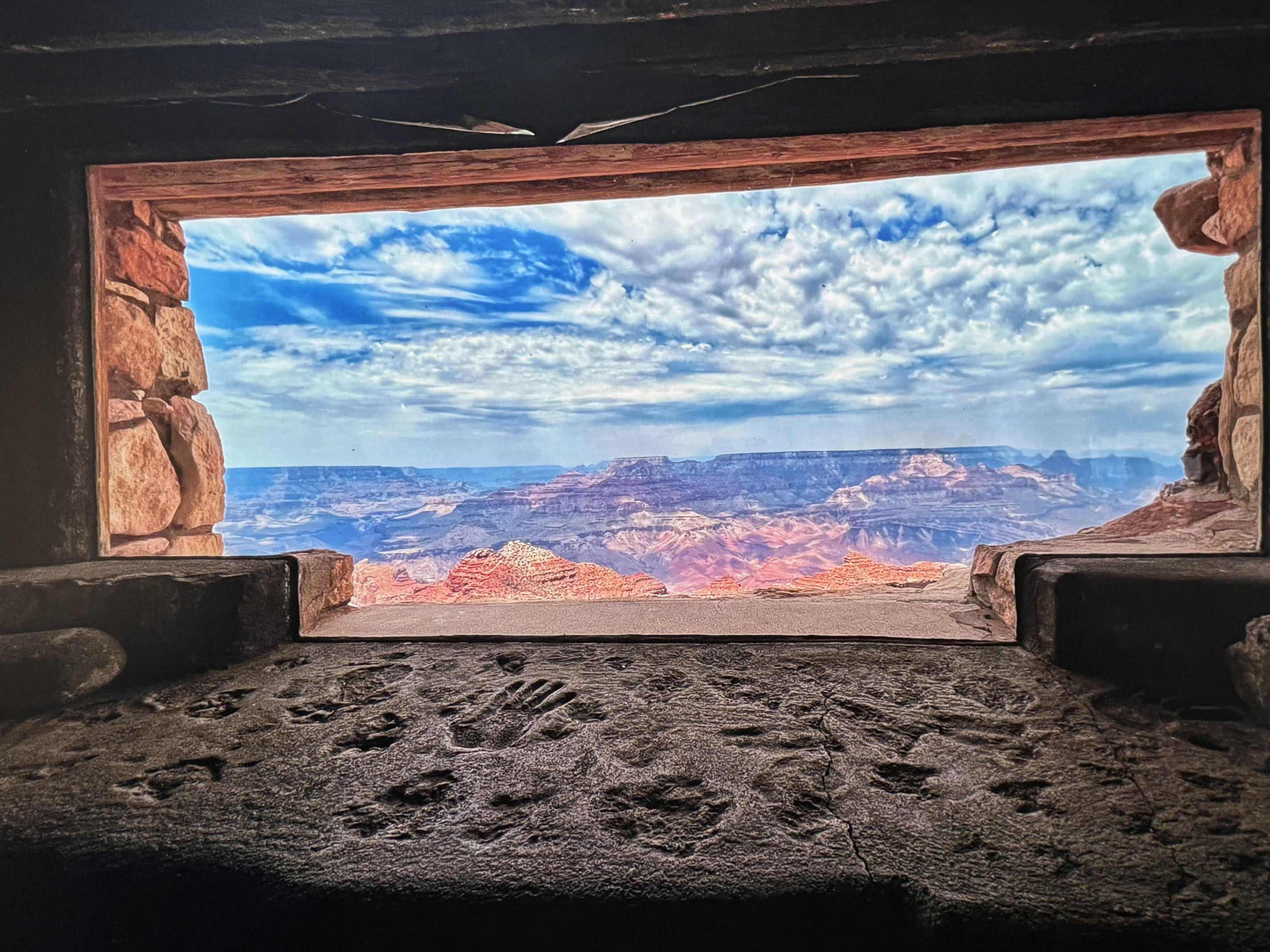
2023 photo by curatorTed Jojola (Islela Pueblo) North Window View from Desert View Watchtower, Grand Canyon showing the T-shaped doorway symbolizing passage between worlds

As the curators made clear in their opening-day remarks, a similarly extensive exhibition could explore architectural innovation and spiritualism across Navajo Nation. Let’s hope that happens!
Judith Lowry Retrospective and Her Great Basin Legacy

She grew up on US military bases all over the world, and was thankful that her parents exposed her to the best museums, art, and culture in every country they resided. As an adult member of the Pit River Tribe, she moved back to her ancestors’ land in California and Nevada’s Great Basin, and began telling stories of her family’s history and modern Indigenous experience.

The Art of Judith Lowry showcases 40 years of this artist’s work in Reno, Nevada at the Nevada Museum of Art through November 16, 2025 – large-scale painting, triptychs, and installations.

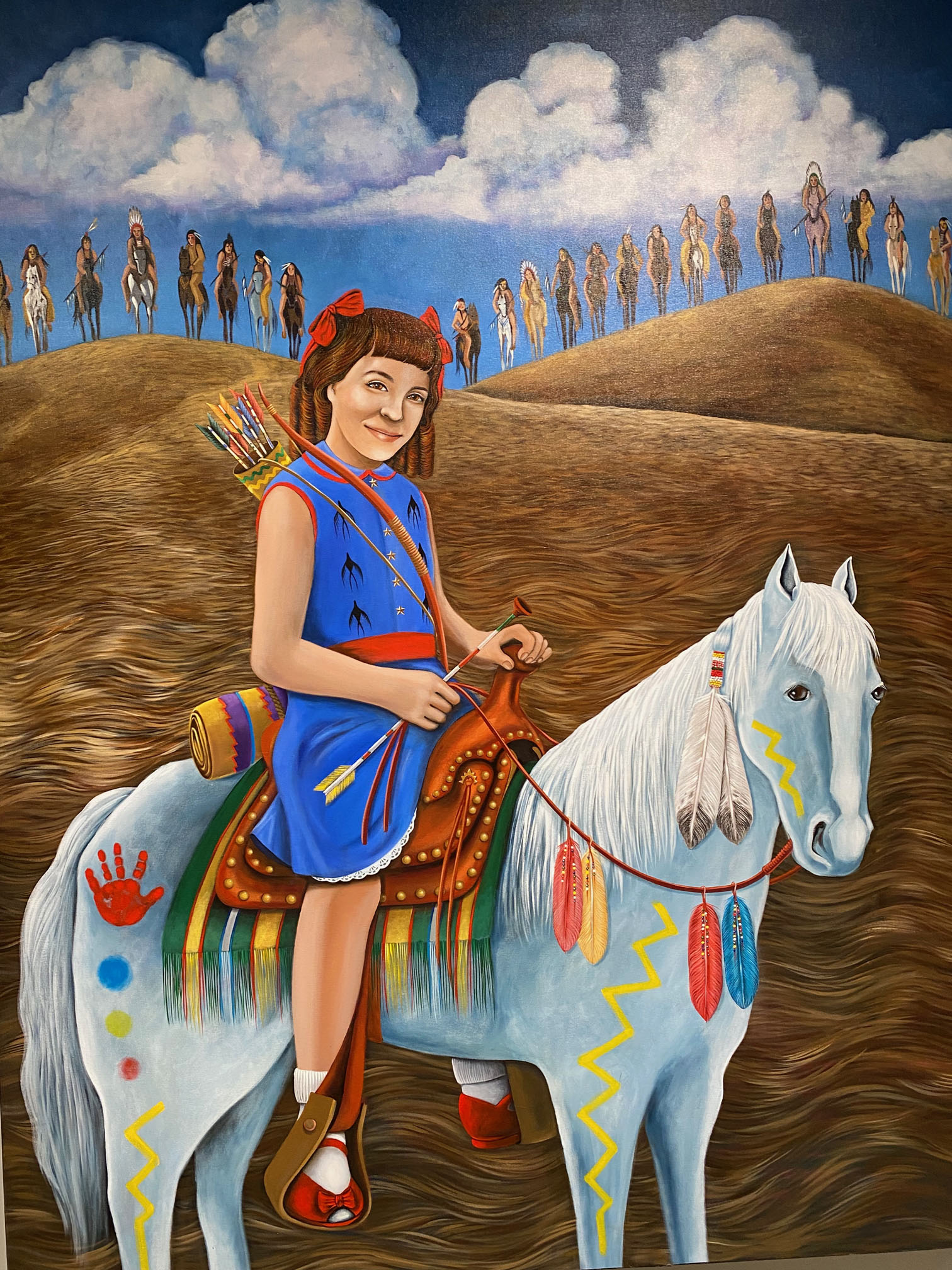
Lowry’s 1997 Red Ribbons depicts herself as a light-skinned Native American teen equipped for battle. Courtesy: The Wheelwright Museum of the American Indian, Santa Fe.

The museum assembled Lowry’s most celebrated work from major collections across the United States, but is also using the occasion to celebrate Lowry’s own (and her husband’s) gift to the museum with a companion installation of The Lowrey and Croul Collection of Native American Art.

Take a look at some at our favorites from both shows in our Flickr album.

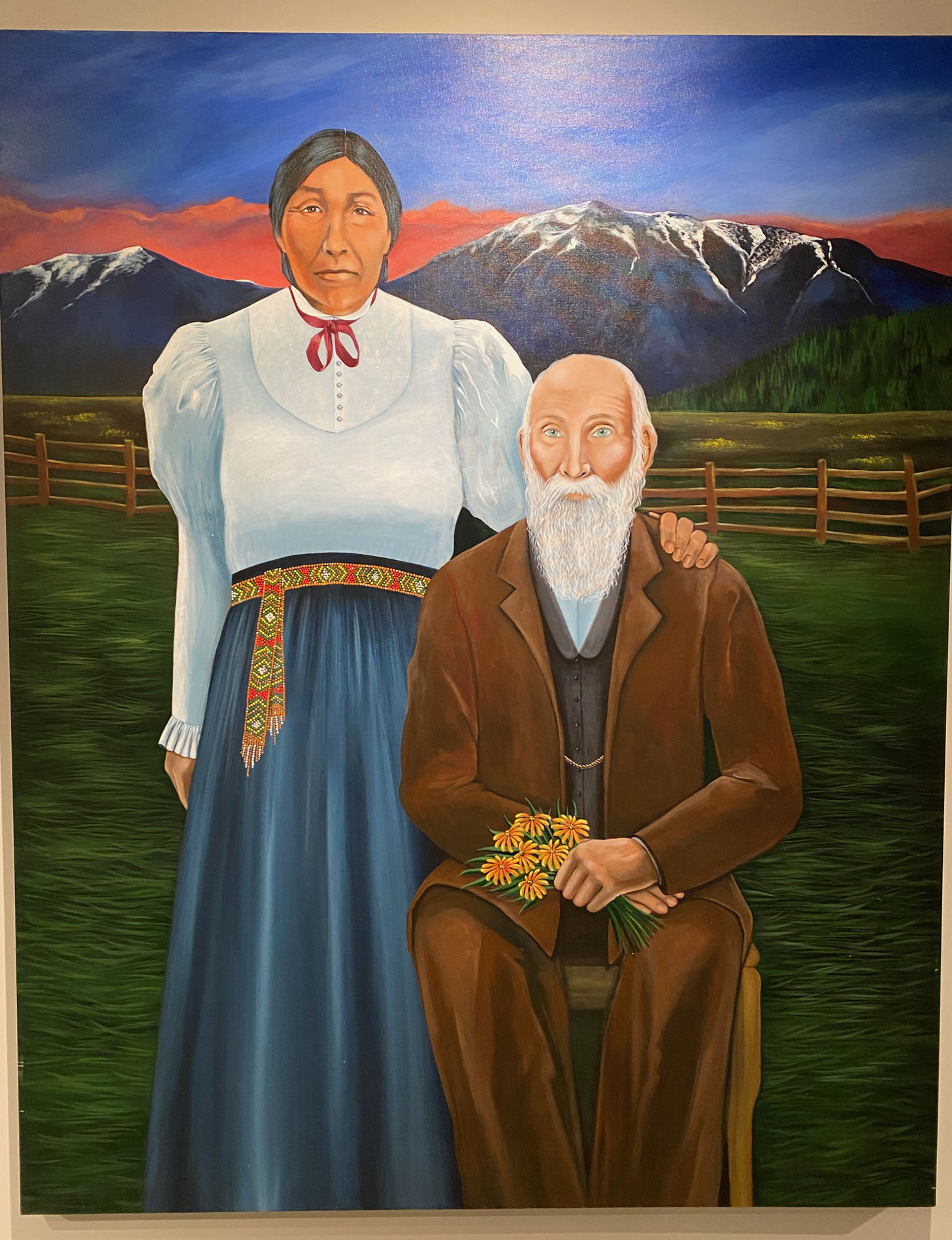
The entry of the exhibition shows how Lowry explores her complex family history at the turn of the last century in frontier ranch lands along the California-Nevada border – images of her biracial great-grandparents and a beautifully mystical depiction of her grandmother. Her regal portrait shows her ancestor’s face tatoos coupled with perfect Victorian dress and small references to the tragedies that befell her family – a symbolic approach Lowry adapted from her deep appreciation of Renaissance works by Bellini, da Vinci, and other masters.

Lowry’s 1997 The Good Marriage – her Native American great-grandmother and German-Irish great-grandfather at their Greenville, California ranch. Courtesy: private collection.
Lowry’s 1999/2012 Edna at Honey Lake depicts her biracial grandmother holding one of her many children who did not survive to adulthood.

A case in the center of the gallery presents Lowry’s paintings for her children’s book about her father and uncle’s Indian boarding-school experience, break out, and unauthorized journey back home.

She also presents family photos and representations of her own growing-up with rich stories and excerpts from her family photo albums. The experience of reading personal history, seeing her ancestors’ faces, and looking at the painted details on her epic canvases is a deep, warm experience that allows you to feel like you’re welcomed into Lowry’s complex and loving family.

Lowry’s 1995 triptych Family: Love’s Unbreakable Heaven showing the moment she understood her family’s unique biracial identity while living at an American military base in Germany. Courtesy: The Rockwell Museum, Corning, New York.

Many of the paintings are satiric takes on the pressures facing contemporary Native Americans navigating life in modern American society – startling theatrical juxtapositions in Indian casinos, retail emporiums, and Renaissance altarpieces.

Lowry’s 1996 Shopping – a sales associate shows the Virgin of Guadalupe’s cloak to a pre-Columbian mother and daughter who are shopping for prom. Courtesy: Peabody Essex Museum

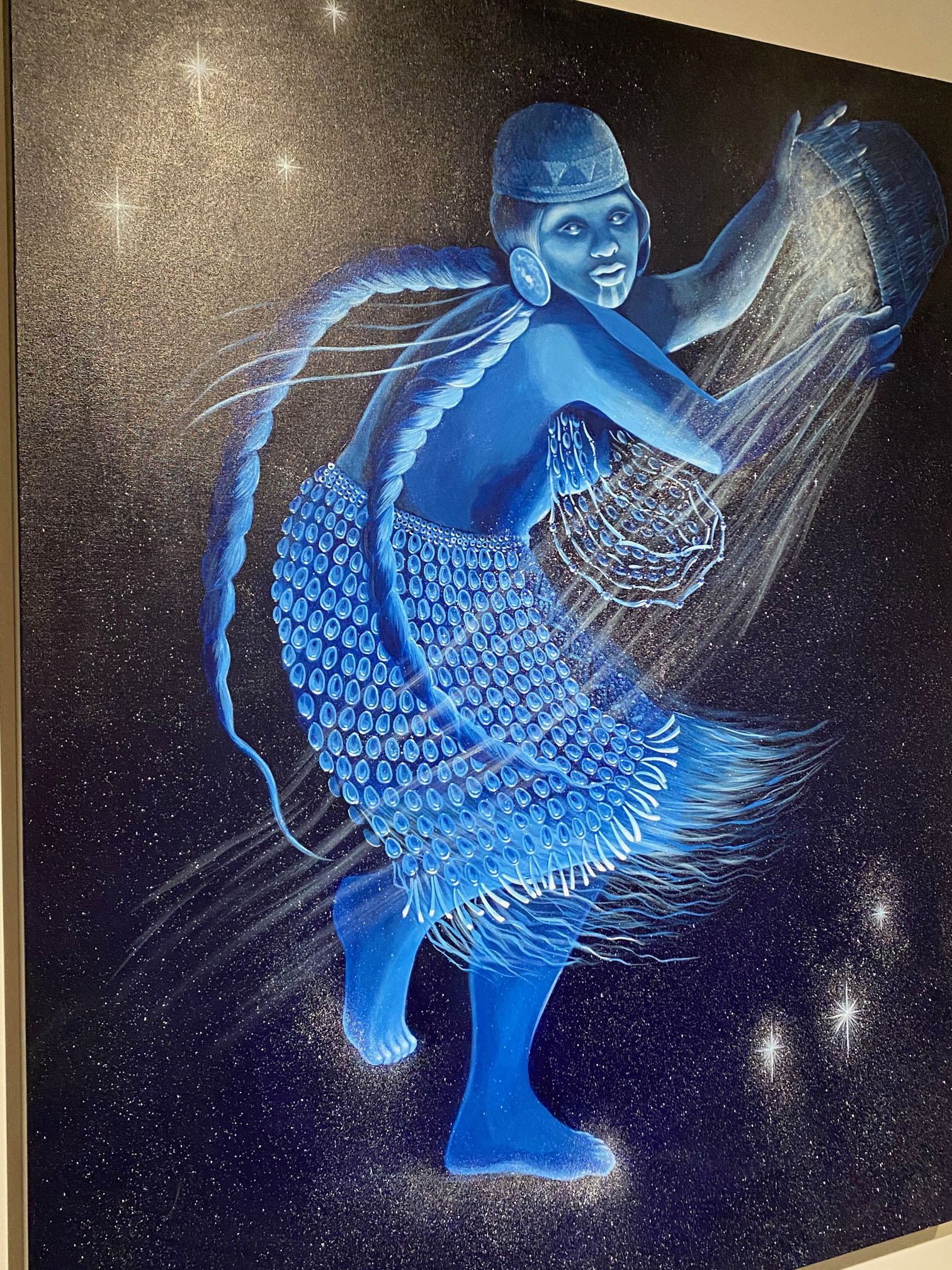
Some of the most arresting works allow us to enter a spiritual realm – magical depictions of legends, stories, and lessons that she heard from her dad growing up.  Lowry’s large-scale, dramatic canvases are immersive – letting us enter the world of the girl-power Star Maidens, who who dance across the sky holding baskets of stars and tossing comets.

Lowry’s 2003 Northern Coast panel from the series Weh-Pom and the Star Sisters celebrating female autonomy and strength. Courtesy: National Museum of the American Indian, Smithsonian
Lowry’s 2003 Southern Coast panel from the story of the the Star Sisters holding their own in the sky and rejecting the advances of trickster Coyote Weh-Pom. Courtesy: National Museum of the American Indian, Smithsonian.

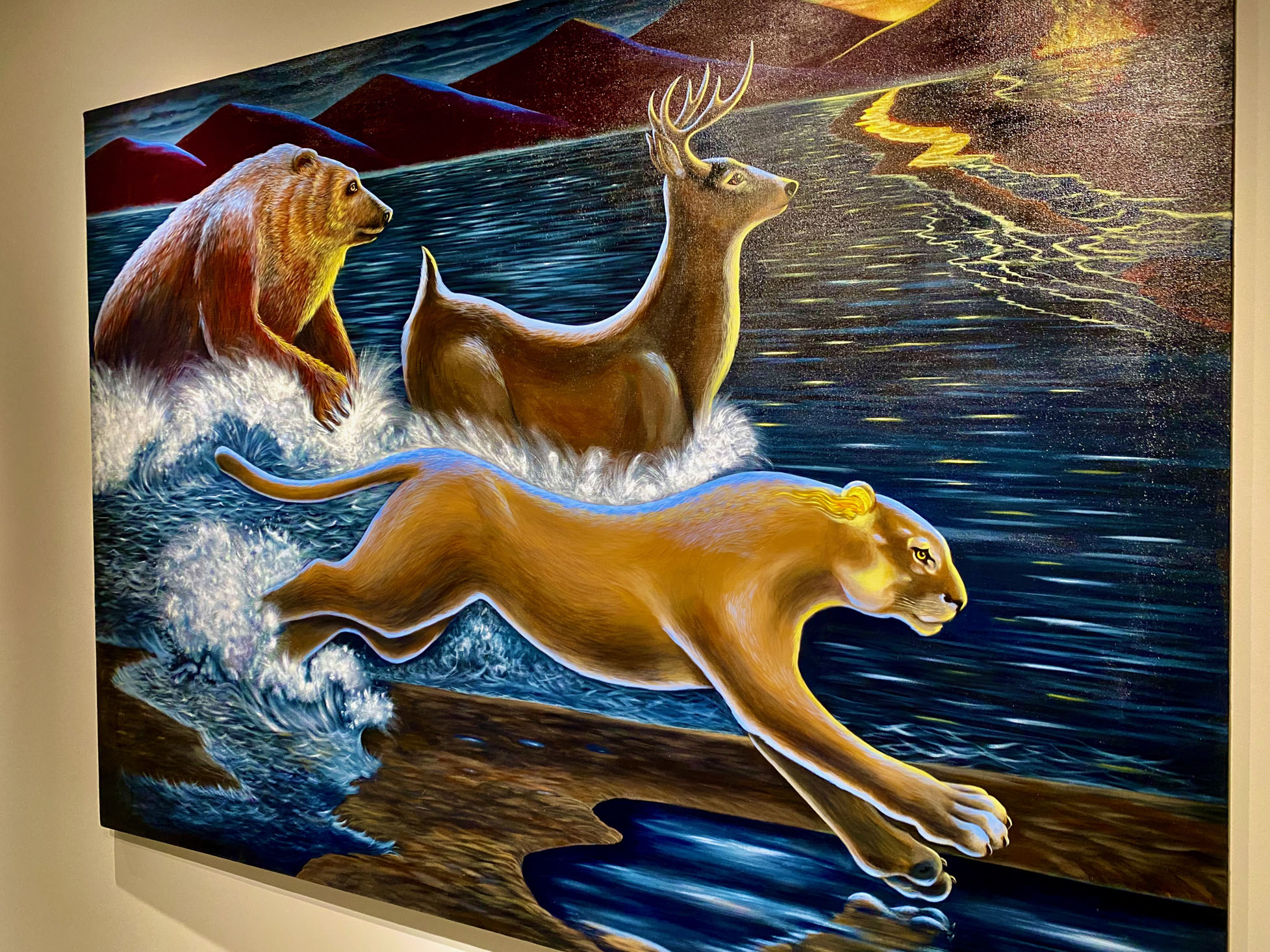
Or letting us enjoy the epic, triumphant forces of natural world that led to the environment Lowry now inhabits in the shadow of the Sierra Nevadas.

Lowry’s 2001 The Race for Fire showing animal spirits charging to retrieve fire from the mountains after a devastating flood. Courtesy: Maidu Museum and Historic Site, Roseville, California.

But at the end of her retrospective, Lowry presents the ultimate immersive experience – an imagined native Northern California roundhouse where visitors can enter, think, and see mystical images of Lowry’s inspiring female ancestors, tribal story-carriers, and cultural symbols.  Visitors enter quietly and linger respectfully, taking in all the details of the painted walls and dome.  See our short video to see Lowry’s comforting interior.

Lowry’s 2005/2025 mixed-media installation K’um degoi-dom (Home Place), an imagined Native California roundhouse covered in snow; built for quiet reflection. Courtesy: private collection

After immersion in this spiritual space, visitors enter a bright contemporary gallery displaying some of the 125 contemporary Indigenous works that Lowry and her husband Brad Croul donated to the Nevada Museum – honoring the accomplishments of the notable artists working in the region in the 1990s. The gallery is filled with art by famed Northern California indigenous artists (inspirations and friends like Harry Fonseca and Jean LeMarr. The gift significantly expands the museum’s indigenous contemporary collection.

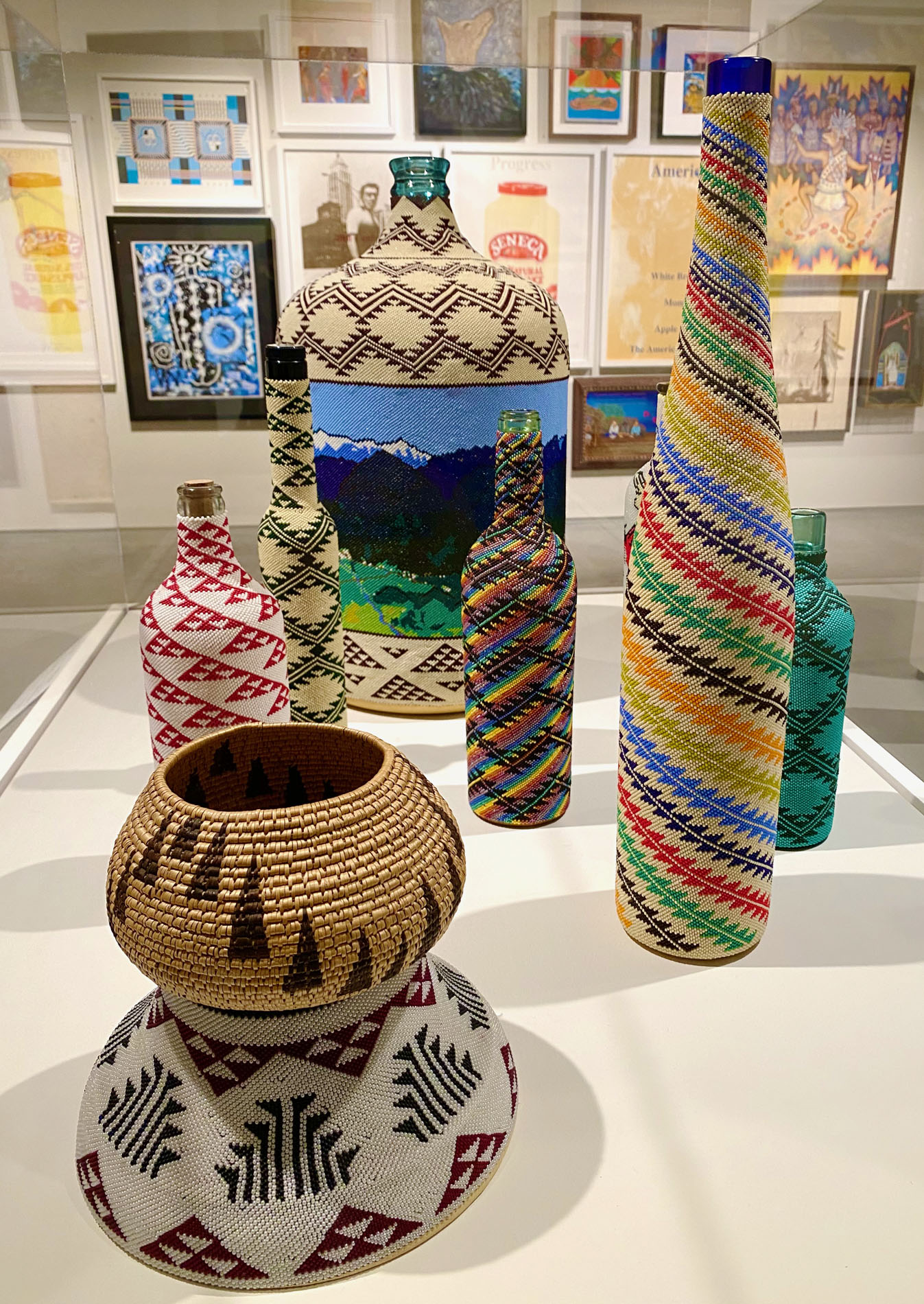
It’s also a nice punctuation that the spectacular case of beaded glasswork by Lorena Gorbet also features a treasured piece of Judith’s family history – a beautiful grasshopper-stitch basket made by Judith’s great-aunt Annie Gorbet when she was only fourteen years old. 

1914 red maple and willow Grasshopper Stitch Basket by 14-year-old Annie Gorbet [Yamani Maidu (Mountain Maidu)] (Judith’s great aunt) and undated beaded glass water jug and bottles by Annie’s granddaughter, Lorena Gorbet
Car Crash Necklace by Brian Tripp (Karuk); created from auto reflector fragments, river rock, duct tape, fabric, and string.

Lowry’s work and generous collection provide a loving immersion into family, friends, and spiritual traditions of the Great Basin. It’s a rich tribute to a prolific contemporary artist – one who cares about her culture and committed to ensuring its legacy for her region.