Making Yesterday’s Fashion Totally Now

History repeats – a silk Robe d’anglaise from 1765 and a 2009 ribbon-and-wire creation by Agatha Ruiz de la Prada

History repeats – a 1765 silk Robe d’anglaise with Agatha Ruiz de la Prada’s 2009 ribbon-and-wire runway creation

Within FIT’s upstairs gallery, you’ll receive a master class (from the masters) on how to take something old, inject it with an inspired twist, and create Vogue-ready looks ready for the modern world in FIT’s show RetroSpective, running through November 16.

FIT curator Jennifer Farley did an outstanding job of selecting iconic looks associated with well-dressed woman from previous centuries and pulling interpretation after interpretation on that theme from FIT’s collection. Historical references, empire waists, hoop skirts, and leg-o-mutton sleeves all get the old/new side-by-side treatment in the galleries.
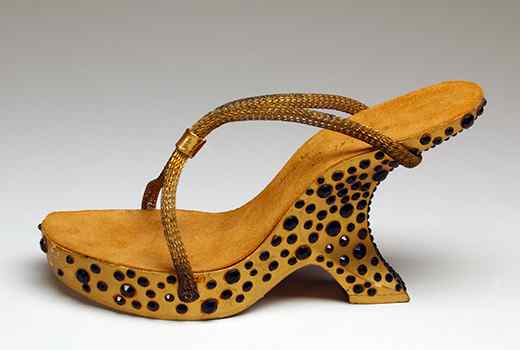
History reinterpreted –elevated sandal created by David Evins for Elizabeth Taylor in her 1961 epic, Cleopatra

History reinterpreted –elevated sandal created by David Evins for Elizabeth Taylor in her 1961 epic, Cleopatra

How did forward-looking designers mine ancient cultures, textures, and materials and make them look current? Look no further than the Grecian evocation of Madame Grés, sandals designed by David Evins for Liz’s 1961 Cleopatra look, Valerie Porr’s 1960s take on Guinevere, and Versace gone baroque. Click on the links to see the pieces on the show’s website.

Was there ever a time that rhinestone buckles weren’t applied to dainty evening shoes? Apparently not in the last several centuries, since examples from the 1740s are displayed alongside Peter Yapp 1910 satin pumps, 1959 Julianelli suede pumps, and 1995 red-velvet Manolos.
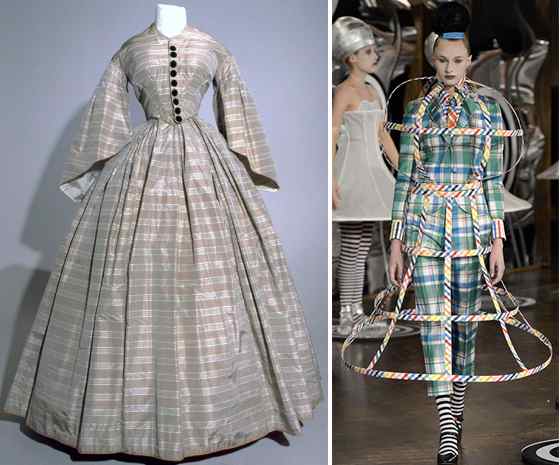
Hoop dreams from 1860 and Thom Browne’s Spring 2013 collection

Hoop dreams from 1860 and Thom Browne’s Spring 2013 collection

In the section on bustles, you’ll see beautiful 1870s creations alongside bustle-inspired works by Schiaparelli (1939), Herrera (1988), and Anna Sui (1999). But across the aisle in the section on hoop skirts, you expect to see 1860s dresses next to more modern works by Hishinuma (1996), Rochas (2004), and Thom Browne (2013). But who could expect to see hoops from the Fifties – Hoop-la (1956), which kept your bouffant skirt fluffed out, and the amazing Belle O’ the Ball collapsible skirt hoop (in its original box!), which allowed every girl-on-the-go to sleep easier knowing that her bouffant could be perfectly pouffed wherever she travelled.
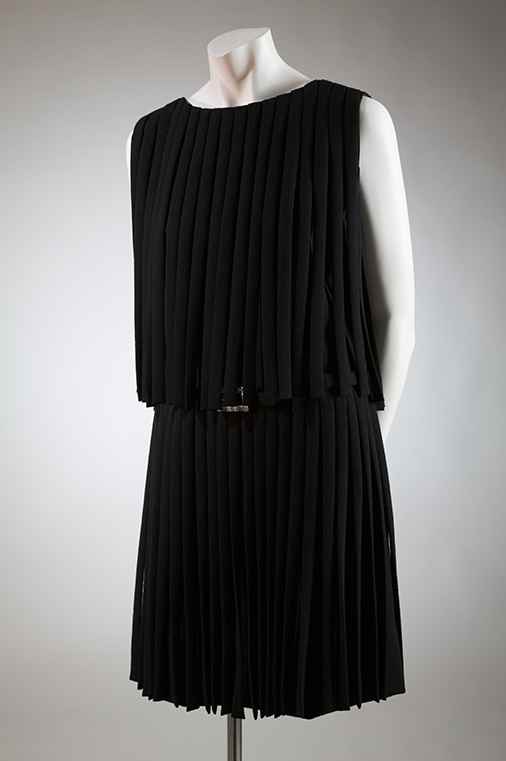
Lauren Bacall’s wool crepe 1965 flapper-inspired dress by Norman Norell

Lauren Bacall’s wool crepe 1965 flapper-inspired dress by Norman Norell

If you love fashion, get to this show and enjoy additional meditation on the decades of transformations associated with the New Look, corsets, platform pumps, playsuits, paper dresses, clogs, grunge, and graffiti. If you can’t get to the show, take some time to look through the show’s website to see about a third of what’s there and to read more about each concept and creation. FIT did a beautiful job on it.

And maybe someone from FIT can explain how Norell made such a perfectly pleated 1965 flapper dress for Lauren Bacall out of wool crepe?
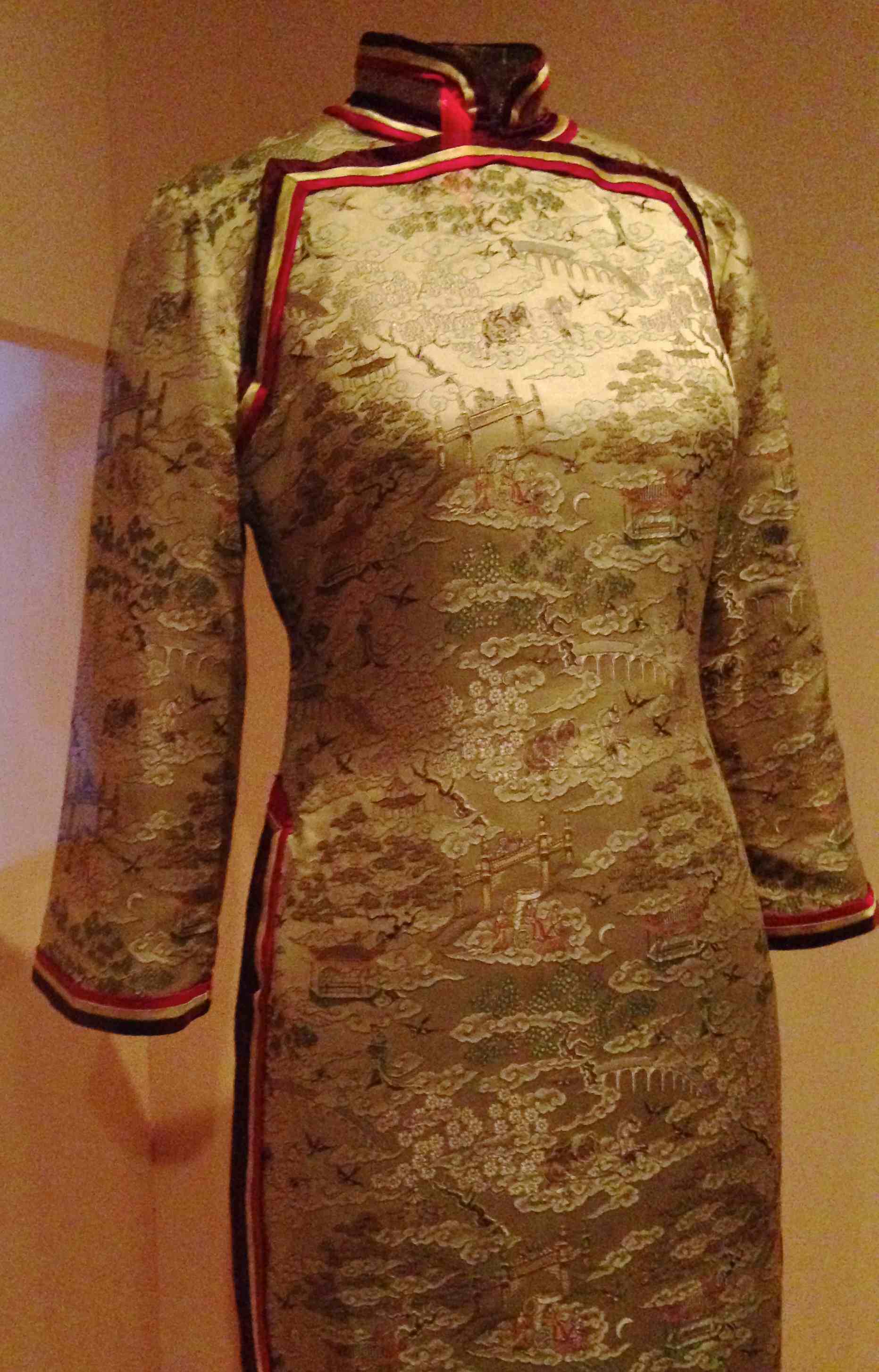

Shanghai Glamour Tribute in NYC Chinatown

1940 Qipao (cheongsam) designed and worn by Madame Wellington Koo, the wife of China's ambassador to France. Note the tricolor piping.

1940 Qipao (cheongsam) designed and worn by Madame Wellington Koo, the wife of China’s ambassador to France. Note the tricolor piping.

If you think Shanghai is the most modern city in China today, its association with forward-looking design and trend is nothing new. It’s been on the vanguard of style back for over 100 years, and the Museum of Chinese in America is paying tribute by looking back to the 1920s, when it was called the “Paris of the East”.

MoCA’s fashion history tribute, Shanghai Glamour: New Women 1910s-40s, is mounted in an intimate gallery on the first floor, right next to it’s acclaimed show of contemporary Chinese-American fashion designers, Front Row. But this show takes you back to a time when women in Shanghai began breaking out of traditional roles, pursuing academic careers, and sporting unique, cutting-edge fashion that was all their own.

Dance-hall hostesses and courtesans in Shanghai led the charge toward 20th-century fashions as early as the 1910s, and other “modern” women didn’t want to be left behind. Shorter dresses and more fitted styles were leaving behind the traditional wide-cut Manchu cover-ups. Check out the slim look of the aviatrix depicted in this 1918 magazine. Whether Shanghai women were flying planes back then or not, Shen Bochen’s magazine illustration indicated the shape of things to come.

Modern 1918 aviatrix, as illustrated by China's leading socio-political cartoonist Shen Boehen

Modern 1918 aviatrix, as illustrated by China’s leading socio-political cartoonist Shen Boehen

Although it was a time when coquettes still flirted with ostrich feather fans, modern Shanghai women were being celebrated in special issues of Vogue and other pop culture magazines. It’s nice that MoCA’s curator has featured a few magazines right alongside the fashions, which are no loan from the China National Silk Museum in Hangzhou.

Take a look at the installation on our Flickr feed, where you can glimpse the evolution of Shanghai’s famous form-fitting qipao, or cheongsam, one of China’s most iconic contributions to world of fashion.

By the Twenties, cheongsams got tighter and more embellished as they were adopted by movie stars, daughters of the rich and powerful, diplomats’ wives, really smart women, and other over-achievers. Throughout the 20th century, Hollywood appropriated Shanghai’s sleek invention to represent exotic beauty, intrigue, cunning, and glamour.

Green silk and black velvet evening shoes worn by fashionable women in the Twenties, lent by FIT

Green silk and black velvet evening shoes worn by fashionable women in the Twenties, lent by FIT

Get downtown to Centre Street before November 3 to go back in time with dancing dresses of silk georgette, embroidered and embellished silk silhouettes, colorful silks, vintage films of Shanghai style, and several pair of stylish strappy silk shoes on loan from FIT’s collection.

Mondrian Goes Digital Electronic at MoMA

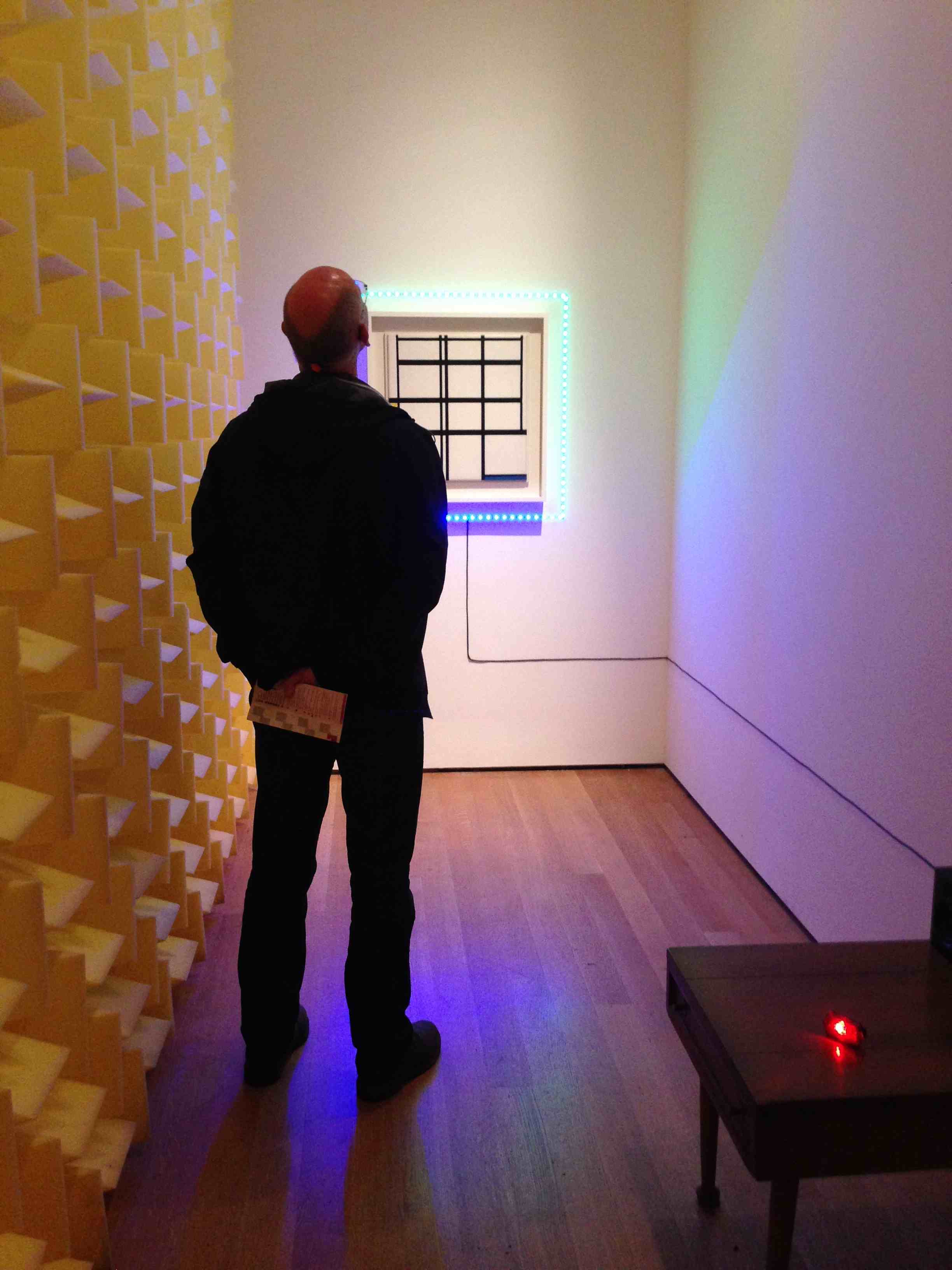
Mondrian’s Composition in Yellow, Blue, and White, I inside Haroon Mizra's installation Frame for a Painting

Mondrian’s Composition in Yellow, Blue, and White, I is framed in LEDs inside Haroon Mizra’s sound installation Frame for a Painting

Mondrian’s in the house (literally), starring in a fun interactive installation tucked away near the exit to Soundings: A Contemporary Score, MoMA’s first exhibition devoted entirely to the work of creative contemporary artists working in sound.

The show, which runs through November 3, has plenty of fascinating, thoughtful works in hallways, around bends, and in darkened galleries, such as Tristan Perich’s Microtonal Wall in the entrance hallway, which lets you experience the sound of 1,500 1-bit speakers up close and personal. Listen to it at the bottom of his MoMa artist page.

IMG_2939But the delightful surprise installation is a long, narrow almost hidden room, where Haroon Mizra has installed his ever-changing Frame for a Painting. On the occasion of being at MoMA, he’s chosen Mr. Mondrian’s Composition in Yellow, Blue, and White, I from MoMA’s collection and given this small, jazzy gridwork its own ultra-modern, swinging London, mid-century electro-pad. See it on our Flickr feed.

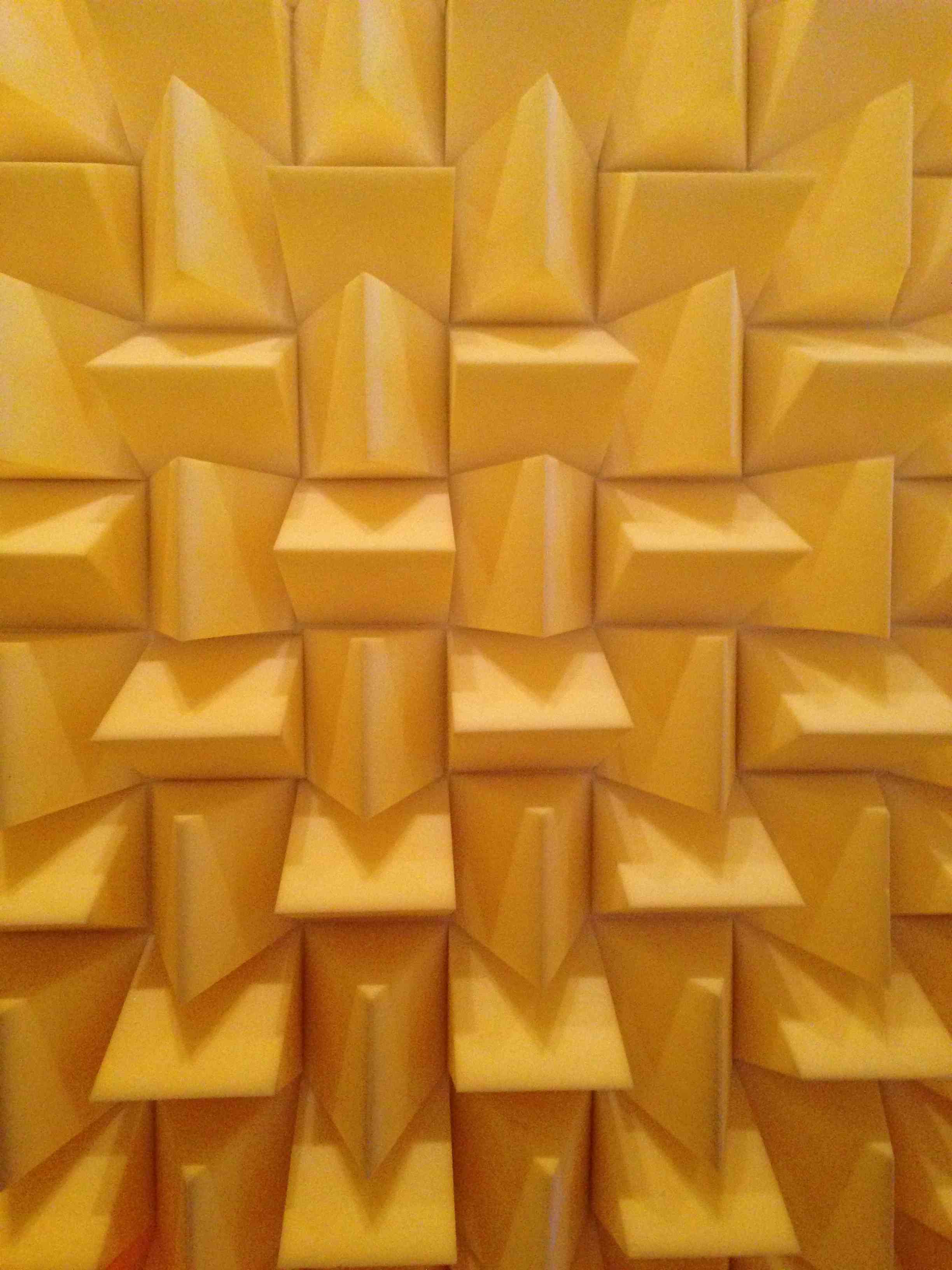
The narrow room has pointy yellow acoustic foam covering the tall walls. At the far end, you see Composition framed in a rectangle of electric blue LED lights that flash in sync to a pulsing electronic sound track. You have to maneuver around a low Danish modern side table from which a bright red bicycle light pulses and bleeps.

It’s a nice tribute to this favorite Modern master, and one of the few nooks in the show where visitors are taking photos and making little Vine videos like crazy. Composition harkens back to 1937, the table to the 1950s, and the sounds to the dawn of electronic music. It feels like a crazy time machine in an over-the-top conceptual 1960s living room.  Surely Mr. Mondrian would approve of the precision and interrupted rhythm. In any case, Composition certainly seems to enjoy being liberated from the white-wall treatment upstairs.

Close-up of the foam lining all the walls of Mondrian's slim room

Close-up of the foam lining all the walls of Mondrian’s slim room

Another work in the show that you might remember is a sound piece that used to be installed on the High Line in 2010 – Stephen Vitiello’s A Bell for Every Minute, which features New York City bells that he recorded and are heard every 60 seconds. You can get a taste of the experience listening to Bell Study, an audio track embedded at the bottom of his artist page used as an underlay in his longer audio piece.

Also check out the track from Jana Winderen’s Ultrafield, which slows down the ultrasound communications of bats, fish, and underwater insects so that we can hear the “hidden” sounds of our fellow species for the first time. Listen in to Jana’s work and check out the other artists on MoMA’s interactive show site.

And feel free to record and add your own everyday sounds to MoMA’s show site.

Rich & Famous at Green-Wood’s 175th Anniversary

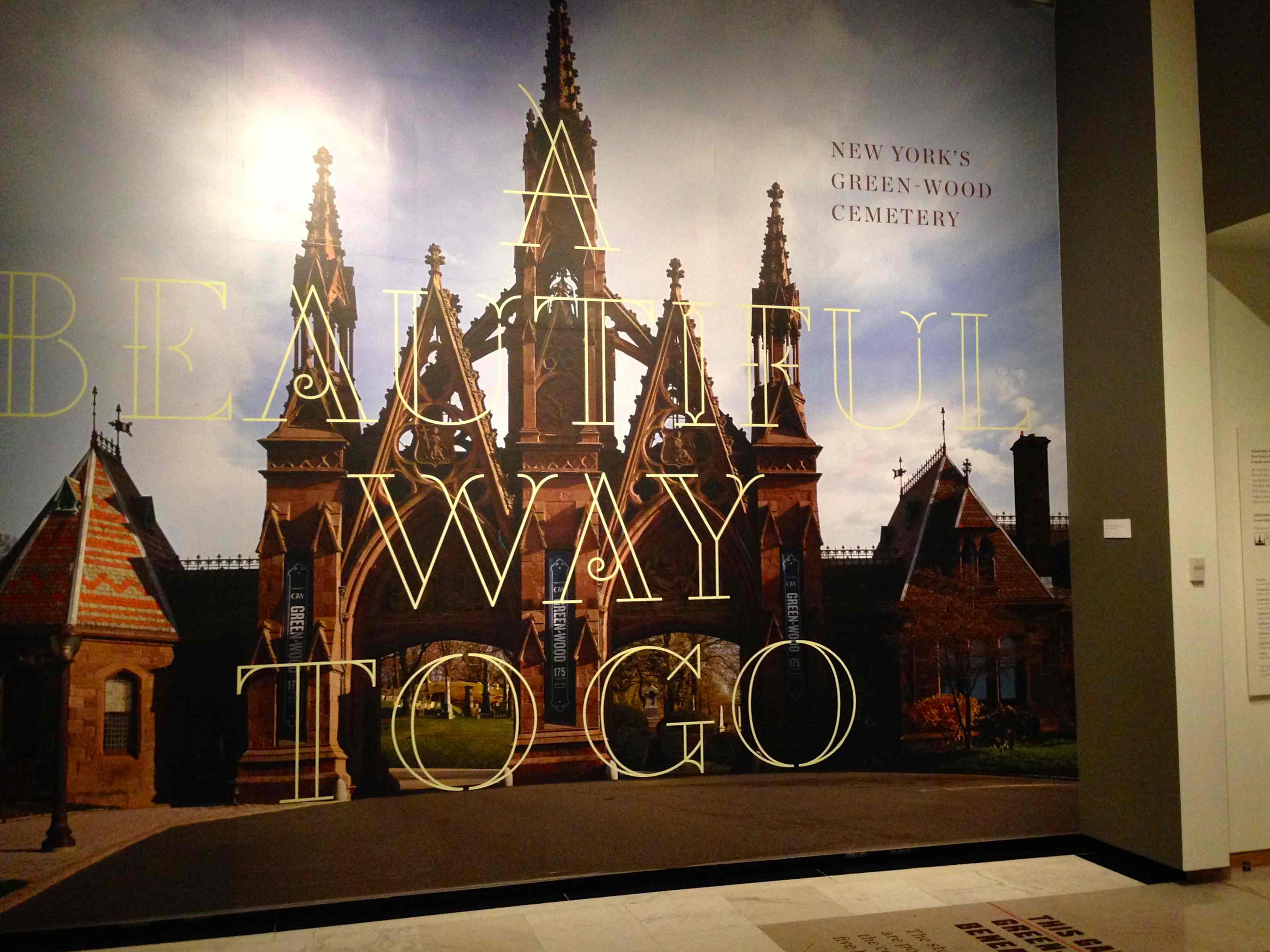
Show entrance featuring Green-Wood’s spectacular Gothic architecture.

Show entrance featuring Green-Wood’s spectacular Gothic architecture.

It’s big, green, historic, beautiful, and has more celebrities inside than you could ever imagine possible in an out-of-the-way spot in Brooklyn. Any day of the week, you can take a trip out to the lush woodlands, hills, and statuary gardens of Green-Wood Cemetery (and you should!), but every NYC history geek needs to visit the Museum of the City of New York’s A Beautiful Way to Go: New York’s Green-Wood Cemetery before October 13 to plumb the riches that have been assembled to celebrate its 175-year history.

We’re providing a walk-through on our Flickr feed, but the virtual experience is no match for the first-hand encounters with objects associated with the New York titans that are interred within the 478 acres of hills and countryside of Green-Wood itself – Tiffany, Duncan Phyfe, Boss Tweed, and even The Little Drummer Boy.

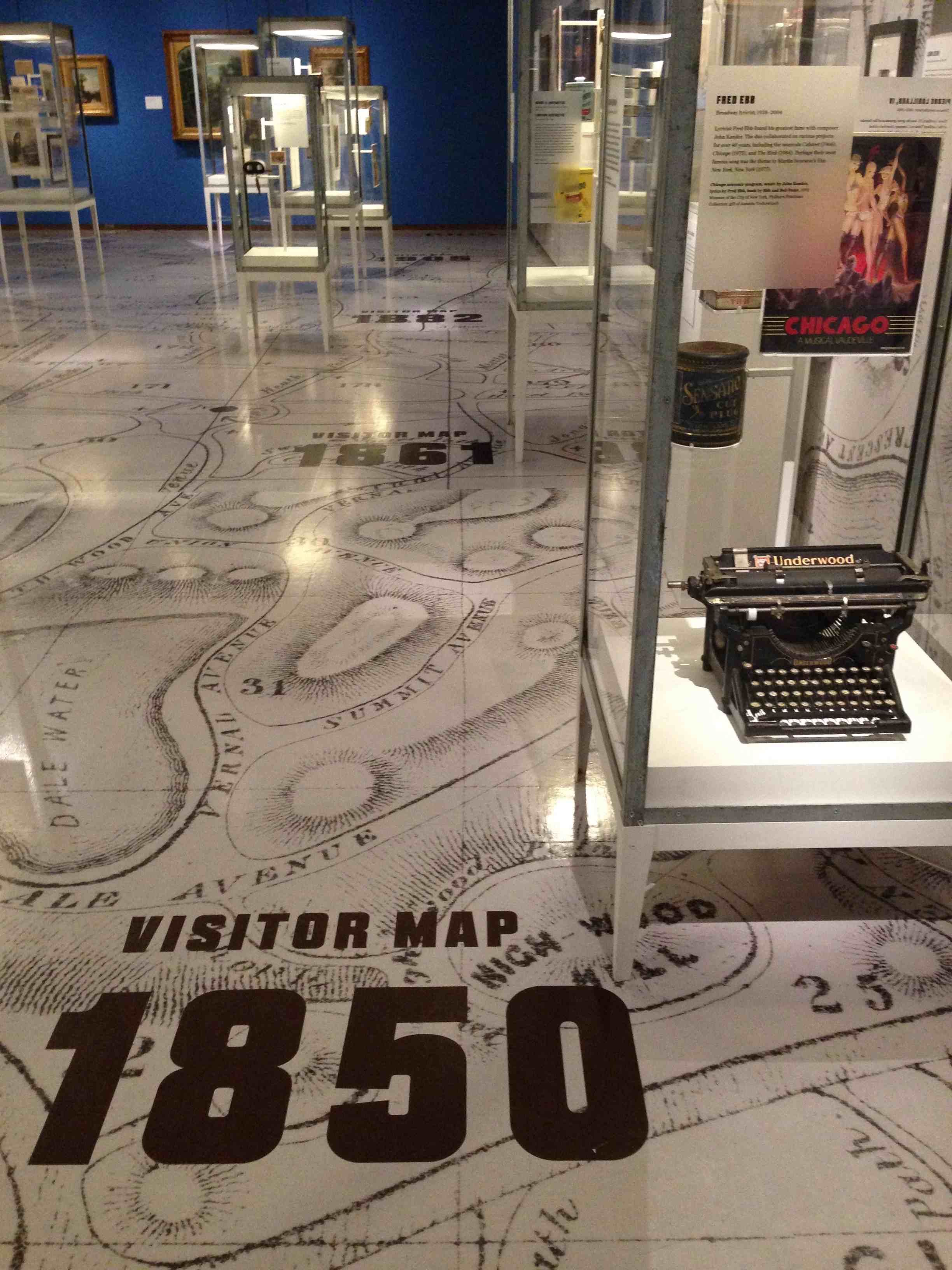
The floor map and vitrines with items associated with Green-wood’s most famous

The floor map and vitrines with items associated with Green-wood’s most famous

Consider the retail giants and brands: All five Brooks Brothers (who invented ready-made suits in 1849), the six Steinways who made pianos in Queens, Ebhard Faber (remember pencils?), the Domino Sugar owners (who once had 98% of the entire US market and who gave most of their vast art collection to the Met), the creator of Chiclets, the founder of Pan Am, and even F.A.O. Schwartz (yes, it’s a person).

MCNY has put the map of Green-wood on the floor of the gallery and has placed vitrines with objects associated with the rich and famous sort-of where they would be in the actual cemetery. Walking through the show is like random-access memory. You don’t know what or who you’ll stumble upon.

The tribute includes artists (from Currier & Ives and Asher Durand to Leon Golub, Nancy Spero, and Jean-Michel Basquiat); composers (Frank Ebb, Mr. Bernstein, and disco legend Paul Jibara); and inventors of things like the safety razor, the sewing machine, soda fountains, and the safety pin (think about that). Yes, it all happened in New York.

Spanish-language poster for "The Wizard of Oz" as a tribute to Frank Morgan, who played The Wizard

Spanish-language poster for “The Wizard of Oz” as a tribute to Frank Morgan, who played The Wizard

Green-wood is New York’s equivalent of the Pere Lachaise Cemetery in Paris, full of vistas, trees, paths, lakes, works by celebrity sculptors, military memorials, and elaborate, ornate above-ground tombs. Lachaise spawned an international mania for sylvan-glade cemeteries when it opened in 1804, and when Mr. Pierrepont was laying out the Brooklyn street system in the early 1800s, he left a big, open green spot in the plan, where Green-Wood is today. It opened in 1838, predating Central Park, and grew into the No. 2 tourist attraction in the United States (after Niagara) by the 1850s.

An 1875 Howe Sewing Machine by the inventor of the sewing machine, Elias Howe.

An 1875 Howe Sewing Machine by the inventor of the sewing machine, Elias Howe.

The show’s front hall has spectacular landscape photos taken last year by Jeff Chien-Hsing Liao, serving as luring calling cards to take the actual expedition to Green-Wood and its celebrated trolley tours led by uber-historian Jeff Richman.

Front Row at Chinese Fashion Runway

Vivienne Tam’s 2007 embroidered/quilted silk cheongsam and Peter Som’s 2010 chartreuse and yellow silk dress.

Silk dresses from Vivienne Tam’s 2007 and Peter Som’s 2010 collections

In a brilliant move to honor some of the City’s fashion favorites, the Museum of Chinese in America is welcoming everyone downtown to see their bright, joyful tribute, Front Row: New York City’s Chinese-American Designers, which they’ve extended until December 1.

The show’s been a hit, with many museumgoers and fashion insiders making the trek downtown to wonderfully welcoming MOCA.

Inside the gallery, you’ll see a grand celebration of the contributions made to NYC’s fashion scene by a host of greats– the irrepressible Anna Sui, evocative Vivienne Tam, minimalist superstar Yeohlee, sumptuous Vera Wang, Jason Wu (one of Michelle Obama’s favorite), and eleven others.

Take a look at what we saw on our Flickr feed.

Striped dress by Wayne Lu and two by Anna Sui

Striped dress by Wayne Lu and two by Anna Sui

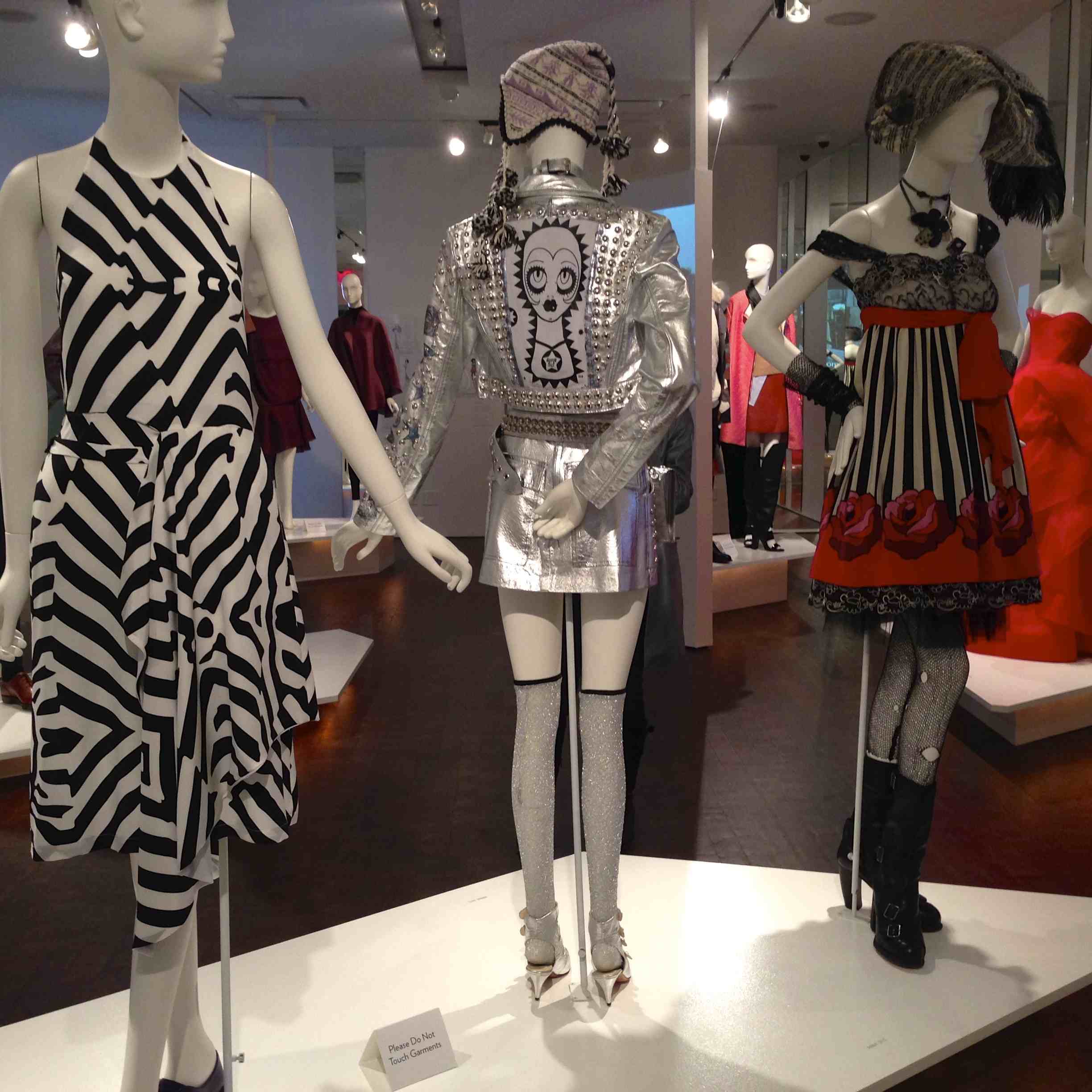
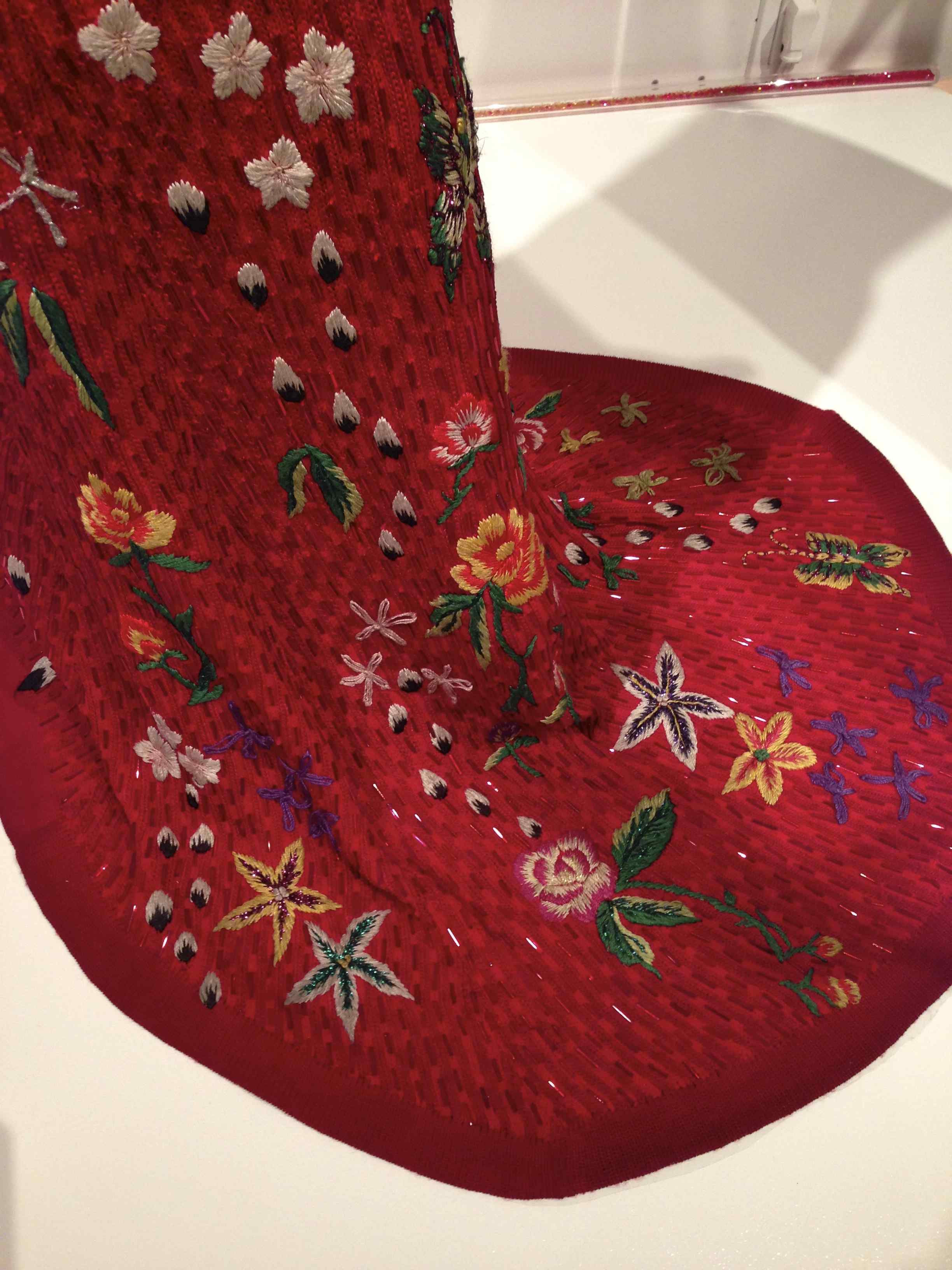
Some of the dazzlers include Vera Wang’s cardinal red ballgown embellished with horsehair trim, Zang Toi’s red knit embroidered red-carpet gown, and Anna Sui’s silver leather punk ensemble first seen on the runway on Linda Evangelista back in 1993. Take a look. It easily holds up today, particularly with the addition of the Peruvian tassel cap. For a bit of nostalgia, check out the vintage New York Times coverage of that show, which also features great reviews of Zang Toi and Yeohlee, too.

Curator and featured designer Mary Ping did a great job showcasing iconic looks, video clips of memorable runway shows, and video interviews with the designers. She worked with an advisory committee from the Met, FIT, and Parsons, and the overall effect is top-class – smaller than shows that the Costume Institute or FIT mount in their main galleries, but every bit as thoughtful, well documented, and illuminating.

Organza and horsehair trim on Vera Wang's Spring 2013 gown.

Organza and horsehair trim on Vera Wang’s Spring 2013 gown.

At a time when the Garment Center has gotten a little quiet and most manufacturing has shifted to China and other Asian countries, it’s a nice touch just to include just a sampling of the behind-the-scenes work of this illustrious and talented group – a few notebook sketches and some of the paper patterns from Yeohlee’s 38th Street atelier.

Embroidered train of Zang Toi’s 1991 red-carpet knit dress worn by Gong Li

Embroidered train of Zang Toi’s 1991 red-carpet knit dress worn by Gong Li

As Tim Gunn would say, “Go, go, go!”

Thousands Flock to the Light

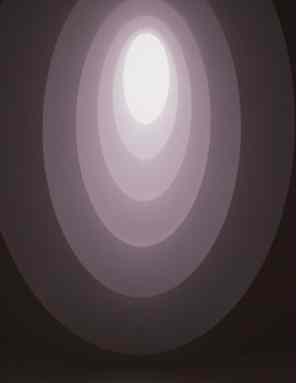
Imagine you are laying on the floor of the Guggenheim rotunda and that you are looking up at James Turrell’s new work. This is what you’d see.

James Turrell’s Aten Reign. Source: Guggenheim

The colors slowly, slowly morph for the next hour, changing from pink to green to yellow until they work through the entire color cycle. As yellow fades, you see the white, glowing sun…or is it the moon?

Aten Reign moment in the Guggenheim atrium, James Turrell’s site-specific spectacular. Source: Guggenheim

Aten Reign moment in the Guggenheim atrium, James Turrell’s site-specific spectacular. Source: Guggenheim

You need to get there to experience the spectacular light before September 25, when James Turrell takes his leave of New York, the end of his first major show here. The museum’s exhibition site is wonderful, but it’s no match for the out-of-this-world, cosmic experience of his masterful Aten Reign.

The Guggenheim has blocked off the famous skylight and any view of the atrium from its gallery spiral. Viewing the light show from the ground floor, all viewers see are these rings of slowly changing light with an oval center – a natural shape that Mr. Turrell loves.

Out-of-towners expecting to have the fun of walking up the ramp and looking down on ever-tinier ground-floor visitors will be disappointed. But other magical Turrell encounters await.

On Level 2, we found celebrated security guard, Jeffrey Martinez (see this week’s New York Times profile on him) holding throngs in rapt attention explaining the magic wrought by Mr. Turrell with his corner floor-to-ceiling strip of light. Martinez told us that although it appeared to be a vertical “light”, we were actually seeing an illumination emanating from behind the false wall. The New York Times was right to single him out for a story, because it felt like we were meeting a celebrity with art-world smarts, gently cautioning people against trying to touch and asking them to “stand back” to give the piece some space.

Afrum I (White), 1967, one of Mr. Turrell’s early cross-corner projections. Source: Guggenheim

Afrum I (White), 1967, one of Mr. Turrell’s early cross-corner projections. Source: Guggenheim

Upstairs, the show presents two more light installations that mimic two of the twenty 2D etchings precisely ringing a small gallery. Mr. Turrell creates the illusion, on paper, of light glowing from the white cubes surrounded by the ink. You just have to see them and then turn the corner to see “square” beams of light illuminating two walls. In the second room, Afrum I (White) astounds. You think you’re seeing a levitating white cube of light. Magical.

Hear him talk about his view of Mr. Wright’s philosophy and building and why they are so right for one another:

Enough said. Go see it.

Spoiler alert: The Guggenheim’s YouTube site has several videos about how Turrell and the team created the magic on the spiral.

LA Whimsy Runs Riot at The Met

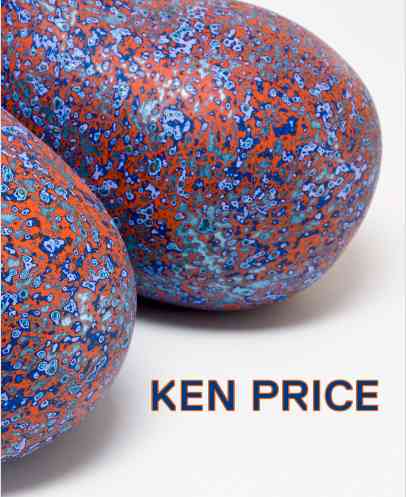
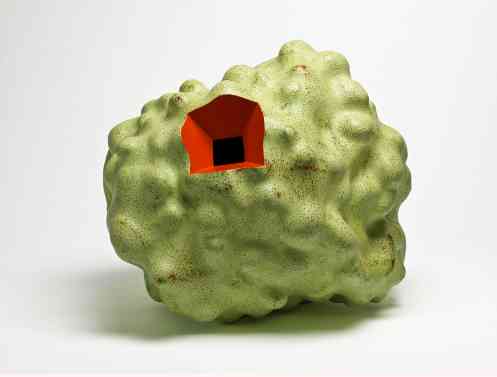
The catalog cover shows a close-up of Price’s finely sanded surface

Catalog cover close-up of Price’s finely sanded ceramic surfaces

If you want to feel happy, step into the Frank Gehry-designed space at the back of the first floor of the Metropolitan Museum of Art before September 22 to see Ken Price Sculpture: A Retrospective. You’ll find colorful abstract ceramic sculptures that absolutely defy you to smile.

Blobs, twists, eggs with things popping out, and joyful fantasy shapes abound in the clean, white space. It’s impossible to make sense out of any of it, except the feeling that you are let loose inside the mind of a California artist, who claimed to have a “highway to the unconscious.”

Price, a superstar on the West Coast, is fairly unknown here in the East, so it’s nice to get to know him. As a student, he was tutored by legendary ceramic artist Peter Voulkos and then worked mostly around Venice, California (and occasionally Taos) for the next 50 years, producing delightful, collectable pieces, and hanging out with LA greats Rusha, Irwin, Keinholz, Bell, and Bengston.

Pastel, 1995, fired and painted clay. Courtesy: James Corcoran Gallery. © Ken Price. Photo: © Fredrik Nilsen.

Pastel, 1995, Ken Price’s fired and painted clay sculpture, courtesy of the James Corcoran Gallery. © Ken Price. Photo: © Fredrik Nilsen.

The show begins with Price’s most recent work and works back through time, so you’ll encounter some of the larger, crazier, colorful pieces right as you walk in. Some of the ceramic surfaces of look pebbly and coarse, but this is right where Price worked his magic. He painted coat after coat atop his fired pieces, and then meticulously sanded it all down to make a silky smooth surface. You really can’t tell unless you’re eyeball-to-eyeball with the blob sculptures, but the cover of the catalog (top left) gives you a hint.

This experience suggests the type of fun, contemporary shows that The Met will mount when it takes up residence at the Whitney’s building on Madison, once that institution decamps for the High Line in 2015.

Take 3 minutes to let curator Stephanie Barron walk you through LACMA’s installation earlier this year, which is pretty much what you’ll experience on Fifth Avenue. She tells you a little about Gehry’s gallery approach and talks about her relationship with the fun, fabulous Ken Price. Enjoy the spin, and get over to The Met for some real California fun.

Wood Goes Against Grain at MAD

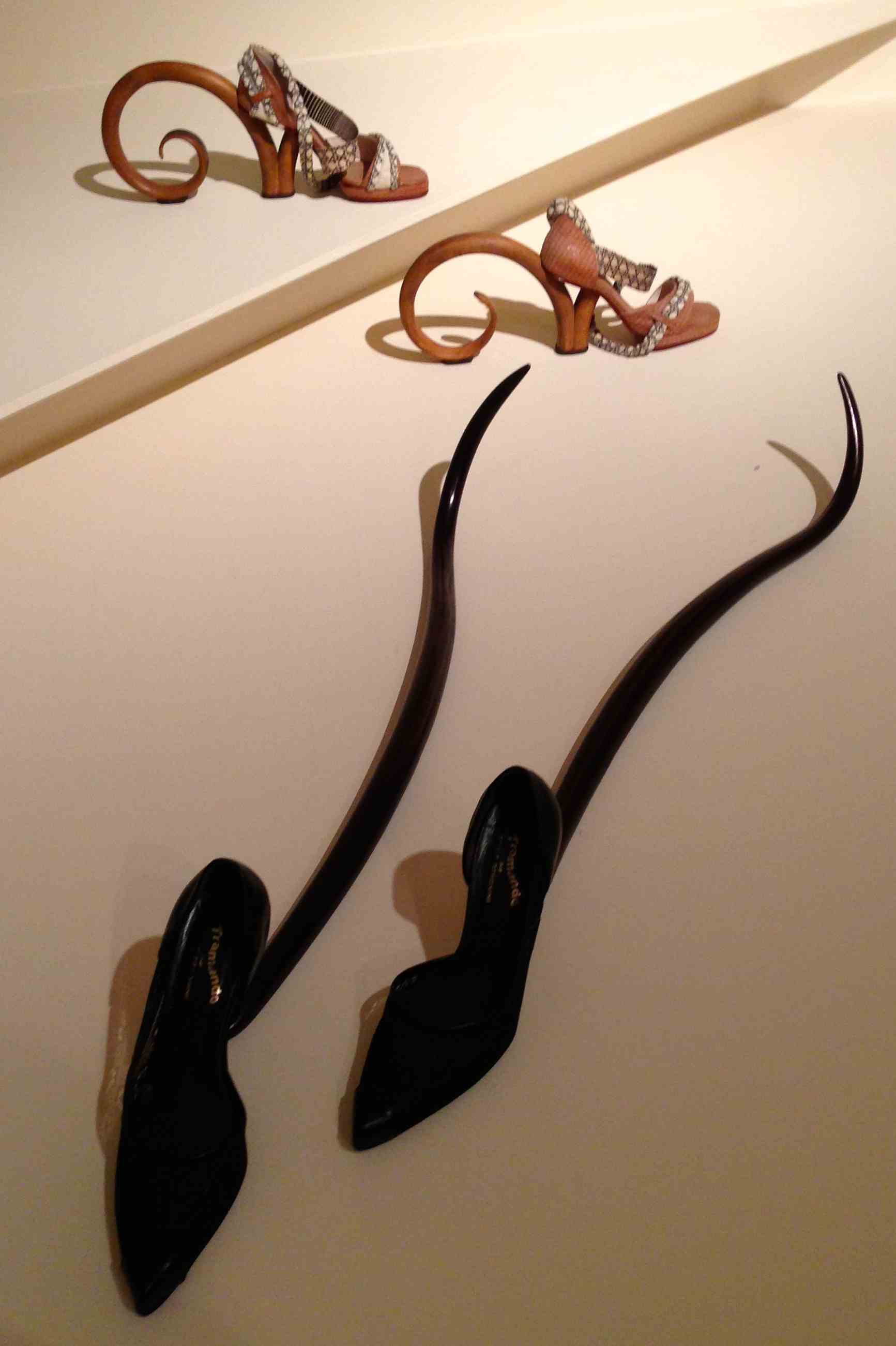
Pablo Reinoso's whimsical wooden shoes

Pablo Reinoso’s whimsical wooden shoes

All those years walking up and down the aisles at craft fairs may have you convinced that there’s nothing new in wood art. Get over to the final days of Against the Grain: Wood in Contemporary Art, Craft, and Design at the Museum of Art and Design.

It’s not what you’d expect, and curator Lowery Stokes Sims has done a magnificent job in telling us what’s trending now with forward-looking artists on the scene.

In short, she focuses her two-floor exhibition on seven trends that she sees: Artists, like Ai Weiwei, working on socio-political themes, whimsical designers who make us smile, digital artists pushing the envelope with wood, collages, virtuoso technique, takes on trees, and works that just capitalize on the beautiful texture in the wood itself.

Check out our Flickr feed for views of some of our favorite works, and MAD’s four-minute video as Sims herself walks you through the show, the artists, and her thinking about the pieces and themes.

Steam-bent ash chairs by Christopher Kurtz

Steam-bent ash chairs by Christopher Kurtz

But let’s focus on some of our favorites, which you can see on Flickr.

Wood as fashion: What about these shoes by Pablo Reinoso? If you’re thinking Dutch wooden shoes, think again, because these dainties are inspired by Thonet chairs, that he’s embellished with long, wooden “tails”. Or wooden hats by fashionable Moody & Farrell of London.

Music: How did Maria Elena Gonzalez go from looking at a fallen birch tree to creating paper-thin birch rolls that can create stunning music on a player piano? Watch and hear it all on this video of her player piano in action.

Laurel Roth's Hominid Chimpanze (2011) from vere wood with Swarovsky crystals in the teeth

Laurel Roth’s Hominid: Chimpanze (2011) from vere wood with Swarovsky crystals in the teeth

How-did-they-do-that category: Bud Latvin’s gravity-defying wooden spiral sculptures, Christopher Kurtz’s impossible steam-bent chairs, and Elisa Strozyk’s wooden textile.

Recycled surprises: Think about what it took to turn 8,000 recycled chopsticks into a collapsible sofa. Good going, Yuya Yoshida.

If you can get to this show today or tomorrow, go. If not, take time to meet Leonard Drew in his studio, see his wood works in progress, and hear what success in wood feels like:

Stylish NYC Micro-Housing Showcased at MCNY

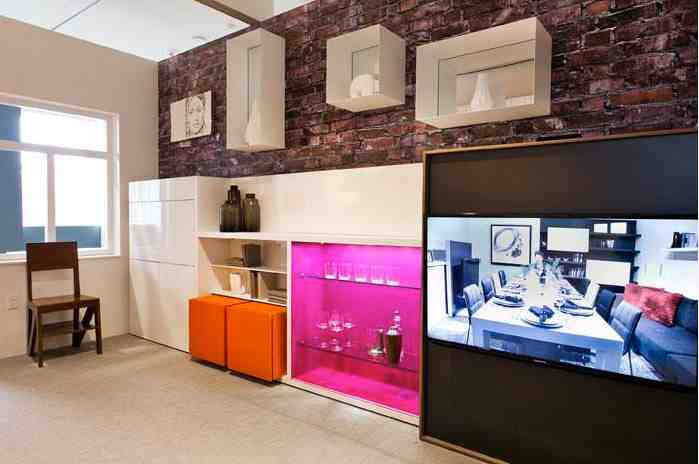
The TV wall slides away to reveal storage shelves

The 325 square-foot solution on display at MCNY: the TV wall slides away to reveal storage shelves. Source: MCNY

With all the single people living in Manhattan and the outer boroughs, it’s kind of shocking to find that building stylish, affordable micro-units is still illegal in most of the City. What’s a renter to do?

Get over to Museum of the City of New York pronto and take a look at the future in the hugely popular show, Making Room: New Models for Housing New Yorkers.

It’s no surprise that the housing stock here doesn’t match the demand. MCNY and the Citizens Housing & Planning Council got together to put on a show that raises the possibility of change, showcases several innovative solutions proposed by design teams, and presents a full-scale, walk-through model apartment: a 325 square-foot micro-space (built and furnished by Clei and Resource Furniture).

The sofa turns into a bed

The sofa turns into a bed. Source: MCNY

Apparently our City’s is due to grow by 600,000 people over the next 20 years, so the question becomes – where is everyone going to live? How can people live affordably? Is there a way to create living spaces that are flexible as families grow? Listen as CHPC’s Jerilyn Perine lays it all out in this fascinating 11-minute presentation at the 2011 kick-off to the project, focusing on housing demand, illegal rentals, and rental history in New York.

Currently, the City regulates things such as occupancy, density, minimum room size, parking areas, lot coverage, the number of dwelling units that can be on a single lot, and the proportion of living vs. working space in some parts of town. And, yes, most neighborhoods prohibit building spaces like the micro-studio at the center of the MCNY show. CHPC’s projects imagined what could be if some of those regulations (well intended) were relaxed.

Read about the background of CHPC’s Making Room project and design competition and find links to related TED talks, sites, and the proposed design solutions – stacks of prefabricated apartments, mini-bungalows for the Bronx, and repurposed industrial spaces in Brooklyn. The CHPC site shows details of each of the five featured plans.

But the star of the MCNY show is the model studio. Here’s a video of what you can experience for a few more days. (The show was held over by popular demand.) Note the transformation of the Cubista (the ottoman-looking piece of furniture that unfolds), and so many other smart small-space design choices.

Unicorn Natural History

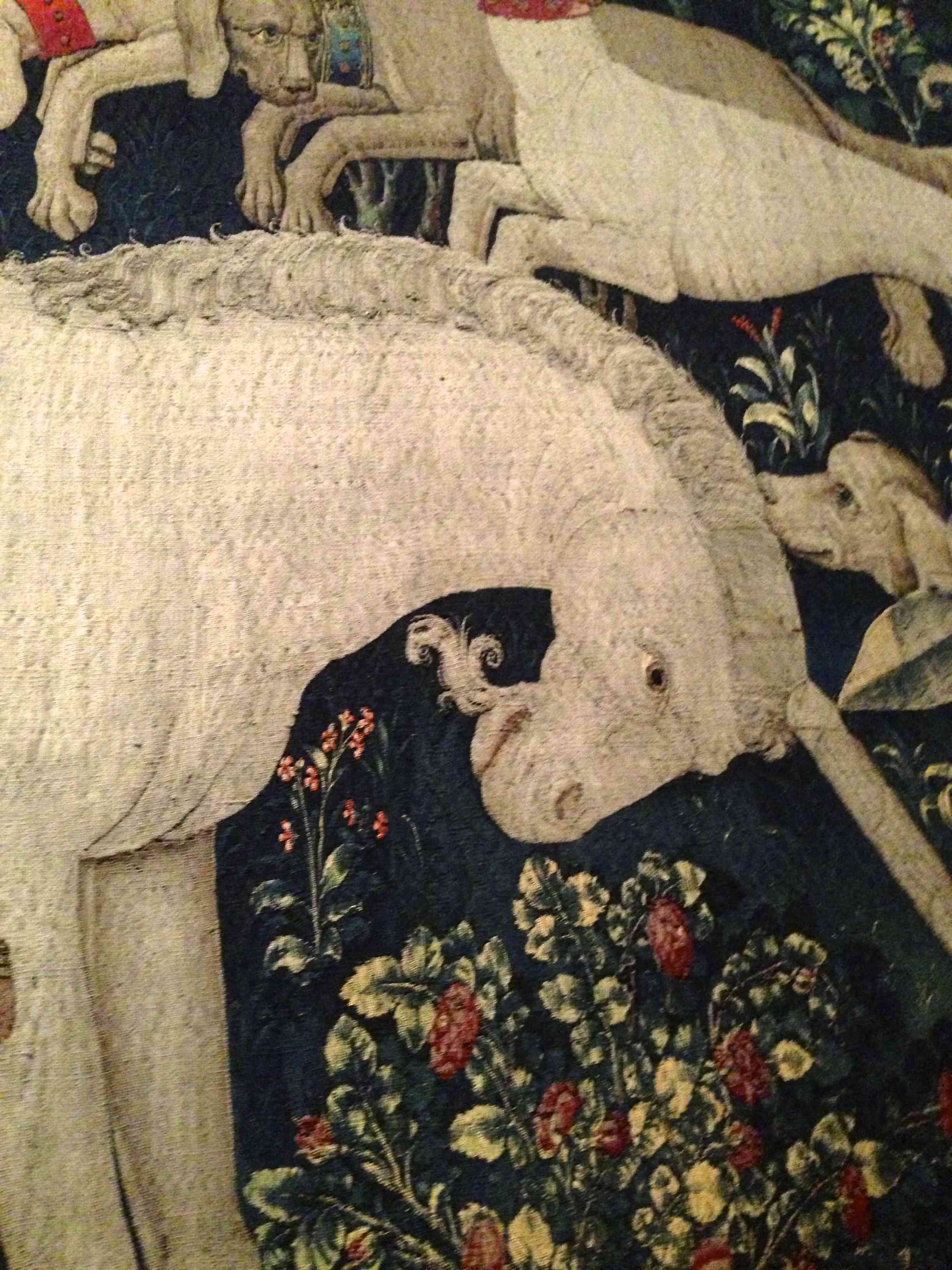
Detail from "The Unicorn Defends Itself" (1495-1505), a large tapestry in the main gallery.

Detail from The Unicorn Defends Itself (1495-1505), a large tapestry in the main gallery.

Who says unicorns aren’t real? Mr. Rockefeller’s tapestry unicorns have been the celebrity draw for the last 75 years uptown at The Cloisters, and are the cavorting centerpieces of the show, Search for the Unicorn. But it took some brave curators to finally display all the unicorn-themed stuff in the Met’s collection and truly reveal the place this beloved icon has held in science, medicine, and art for the last 2,000 years.

The small micro-show in the Romanesque gallery just inside the entrance presents ivory coffers, playing cards, etchings, a carved-bone parade saddle, and coats of arms featuring unicorns in all manner of activity.

But the surprises are loans from NYPL and the National Library of Medicine in Bethesda showing the unicorn’s inclusion in scientific texts, which attest to sightings and miracle cures from the impressive cloven-hoofed trotter.

Pome’s 1694 identification of species in General History of Drugs. Courtesy: US National Library of Medicine, Bethesda.

Pome’s 1694 identification of species in General History of Drugs. Courtesy: US National Library of Medicine, Bethesda.

Conrad Gesner’s Histories of the Animals (1551), the most popular natural history book during the Renaissance, included the unicorn among its 1,200 woodcut images of the world’s quadrupeds. Gesner, who also published images of fossils for the first time here, was a stickler for documentation, and asserts that unicorns had been seen in Mecca by a reliable source. He wrote several pages about how to discern real from fake unicorn horns and told how it should be used to purify water, counteract poisons, and treat epilepsy.

General History of Drugs, which achieved global circulation after it was published in 1694, was written by Pierre Pome, the pharmacist to Louis XIV known for his expertise in medicines and treatments from exotic cultures. Pome gave unicorns their own chapter and described five species living in the Arabian desert and in proximity to the Red Sea. In Chapter 33, he correctly proclaimed “unicorn horn” to be narwhal tusk.

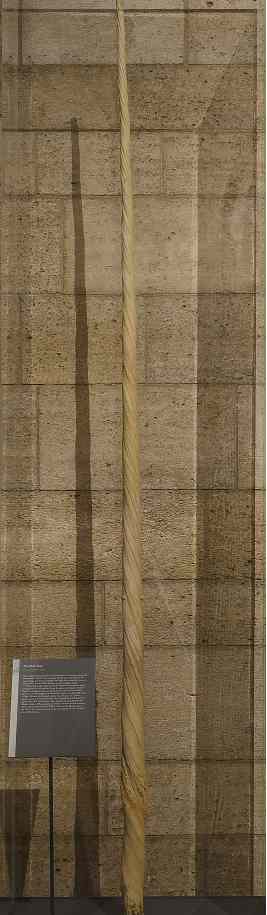
Narwahl tooth (a.k.a. unicorn horn). Source: Metropolitan Museum of Art.

Narwahl tooth (a.k.a. unicorn horn). Source: Metropolitan Museum of Art.

The narwhal’s gracefully shaped, unicorn-looking incisor tooth is given a place in the show, too. One from a private collector is in the Romanesque gallery alongside one of the tapestries, The Unicorn in Captivity (the one in the fenced-in pasture); the second stands behind glass opposite the rest of the tapestries in their usual gallery.

Fancied by rich and powerful in years gone by, Charlemagne, Suleyman the Magnificent, Charles VI of France, and Lorenzo de Medici all owned this Arctic collectible.

We couldn’t take photos inside the show, but don’t worry. The Met’s done a fantastic job documenting everything online, so take time to peruse all the items in the show. Then click on our Flickr site to see the famous Unicorn gallery and glimpse the Cloisters on a perfect summer day.

Do you have 13 minutes? If so, you’ll enjoy the hilarious introduction to the show by curator Barbara Drake Boehm and her speculation on why it took the Cloisters 75 years to mount a show on unicorns. The natural history of unicorns starts around 3:40, and she’ll take you through all the key library materials. Watch to the end to find out where the unicorn was last sighted in the 21st century. It wasn’t Toys ‘R’ Us.