Craft Mentorship in Spotlight at MAD

Take a look at generations of 20th century craft mentorship in Craft Front & Center: Conversation Pieces, on view at MAD Museum through April 20, 2025. The exhibition shines a light on how innovators shaped subsequent generations of craft artists at schools and art colonies across the United States. The curators have pulled from the MAD collection to show us the work of student and teacher side by side in several disciplines – fiber arts, ceramics, and glass.

Many of the mentors either taught at or were influenced by the Bauhaus, the legendary early 20th century design incubator.
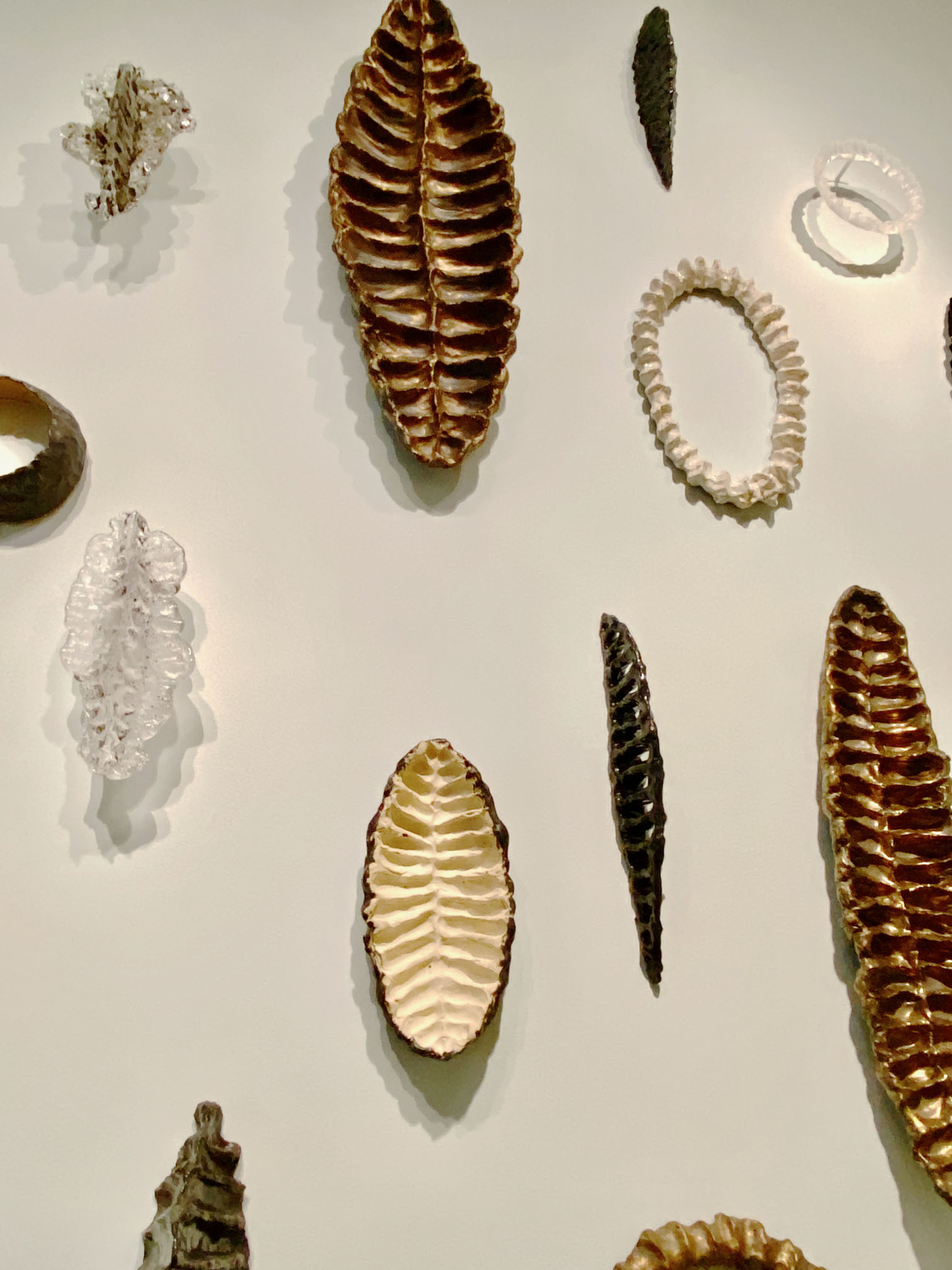
Who are the generational inspirations for Eve Biddle’s 2019-2023 tiny ceramic sculptures, New Relics?

Bauhaus students could take classes in weaving, ceramics, typography, and metalwork alongside traditional fine arts classes. They were expected to excel in their applied-arts training and mix in aesthetics learned in their fine arts classes.

Bauhaus innovator Margeurite Friedlander Wildenhain’s 1966 Square and Textured Vase

When the Nazis closed the progressive school in 1933, many German-Jewish refugee teachers and students fled, transplanting Bauhaus design and educational philosophies across the world.

MAD highlights several artists – including Anni Albers, Trude Guermonprez, Margeurite Friedlander Wildenhain, and Maija Grotell – who came to the United States and integrated Bauhaus practice into curriculums at Black Mountain College, the California College of Arts and Crafts, Cranbrook, and new craft workshops they began.

One of the best-known 20th century textile artists, Anni Albers is featured in the show by a fine-art “pictoral textile” made on a small handloom. At the Bauhaus, Albers she trained under master weaver Gunta Stölzl, and eventally took over as head of the textile workshop. Albers moved to Black Mountain College in North Carolina with her husband, painter Josef Albers, and was the first textile artist invited by MoMA to have a one-person exhibition.

Anni Albers’s 1959 textile Sheep May Safely Graze made on a small handloom using gauze weave technique

Anni also designed commercial textiles for Knoll for years. Her influence on the next generation of painters and textile artists was profound.

MAD features work by two fiber-arts innovators (and Albers admirers) who pushed boundaries by crafting commanding, large-scale sculptures. Sheila Hicks (who studied with Josef at Yale) and Claire Zeisel (who studied with the former Bauhaus faculty at Chicago’s IIT) are credited as the leaders of America’s textile arts movement. Tufts burst from the wall in Hicks’ piece, and Zeisel’s hovers in the center of the gallery like a shaman.

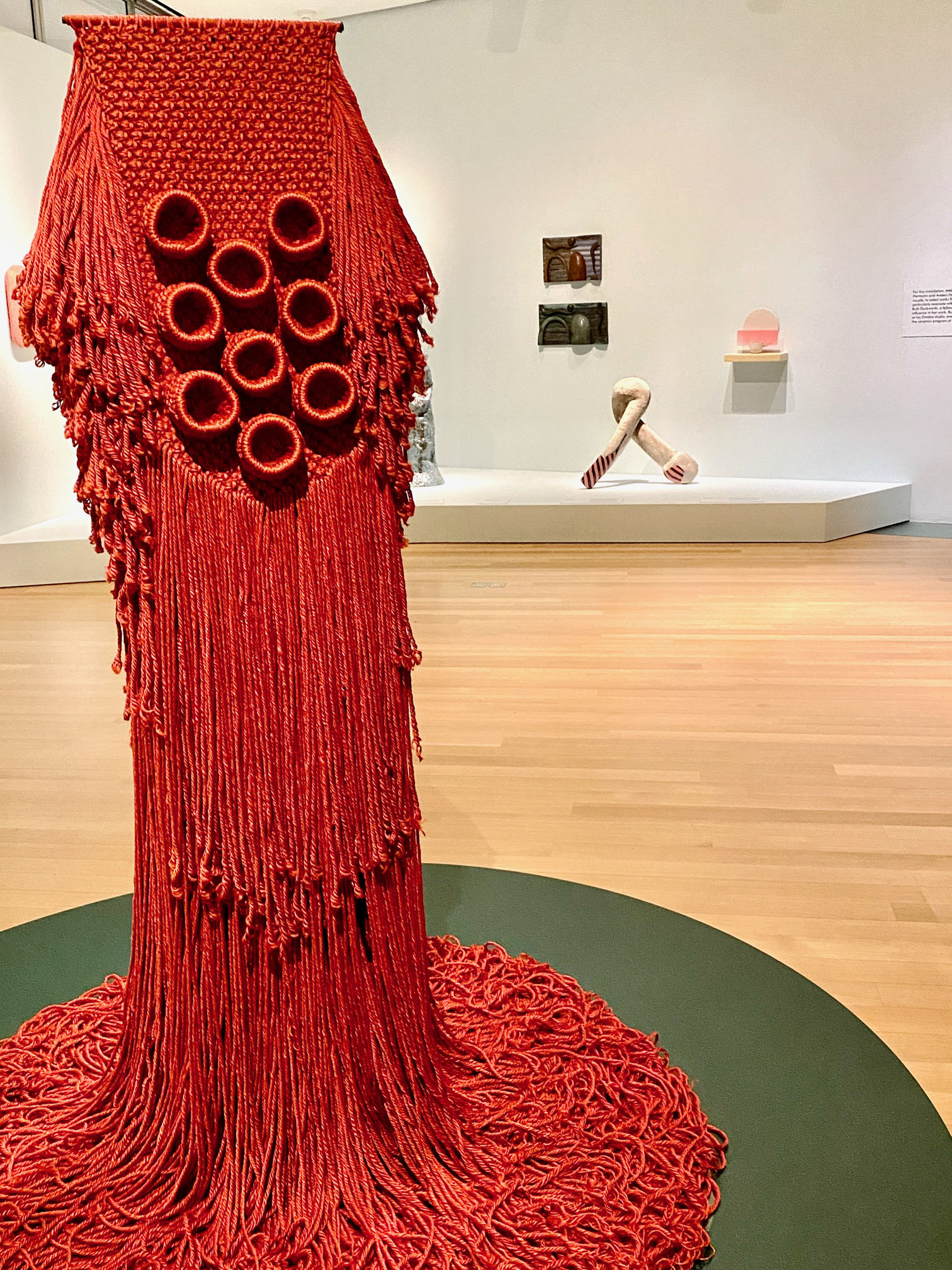
Sheila Hicks’s 1968 Dark Prayer Rug, inspired by Anni Albers and Mexican and Moroccan textile artists.
Claire Zeisler’s 1967 Red Wednesday with braid and cords twisting the sculpture’s armature

Trude Guermonprez, an unconventional materials artist known for innovations in three-dimensional weaving once worked at Berlin’s textile engineering academy; later, she consulted with industrial textile firms, as did Anni Albers.

Next to Guermonprez’s dynamic 3D hanging woven sculpture, MAD shows us a piece by Kay Sakimachi, a student who met Guermonprez in 1951 at the California College of Arts and Crafts summer craft workshop.

Guermonprez encouraged students to use latest technology, and here we see how Kay used a 1959 invention by DuPont – monofilament that’s better known today as fishing line. Kay’s woven it into an ethereal hanging sculpture.

Innovative fishing-line weaving 1968 Kunoyuki by Kay Sakimachi alongside 1962 Banner by her mentor, Trude Guermonprez.

In ceramics, MAD displays a series of vessels that transform into sculptures, starting with a modest, contained piece by Margeurite Friedlander Wildenhain, one of the first Bauhaus students and the first woman in Germany to be honored as a master potter. After emigrating to the United States in 1940, Wildenhain founded Pond Farm Workshops in Sonoma County, California ad instituted a rigorous Bauhaus instructional approach.

Frances Senska, her ceramics student, applied Wildenhain’s instructional principles to her own classes at Montana State, where student Peter Voulkos learned how to breathe new life into clay. Voulkos shashed, prodded, and poked clay, vigorously transforming the humble medium into wild, dramatic expressions.
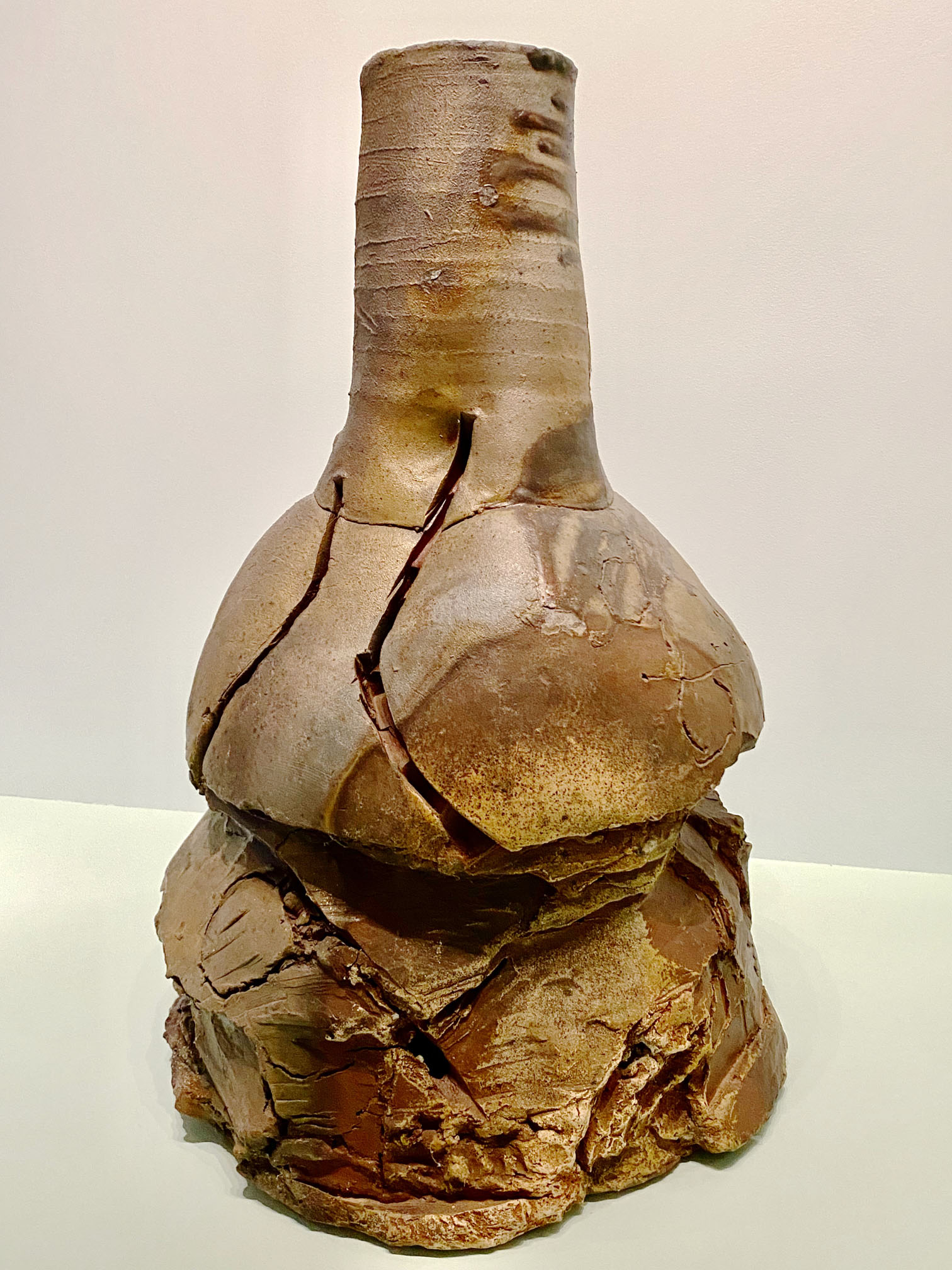
Peter Voulkos’s 1992 stoneware Sibley, an example of his revolutionary approach to ceramic form.
Mary Ann Unger 1994 terra cotta Hoist – an approach to ceramic sculpture inspired by teacher Peter Voulkos

In turn, his UC-Berkeley student, Mary Ann Unger injected whimsey and improvisation into her sculptures, which allowed her daughter, Eve Biddle, to push it even further.  MAD shows Biddle’s ingenious installation of creative ceramic geodes, trilobites, and spines crawling around the gallery wall.

Ceramics mentors even play a role in the development of America’s Studio Glass movement, which begins with Harvey Littleton, whose dad was a physicist on the first reasarch team at Corning Glass Works (he later developed Pyrex). MAD displays Harvey’s gorgeous glass arcs.
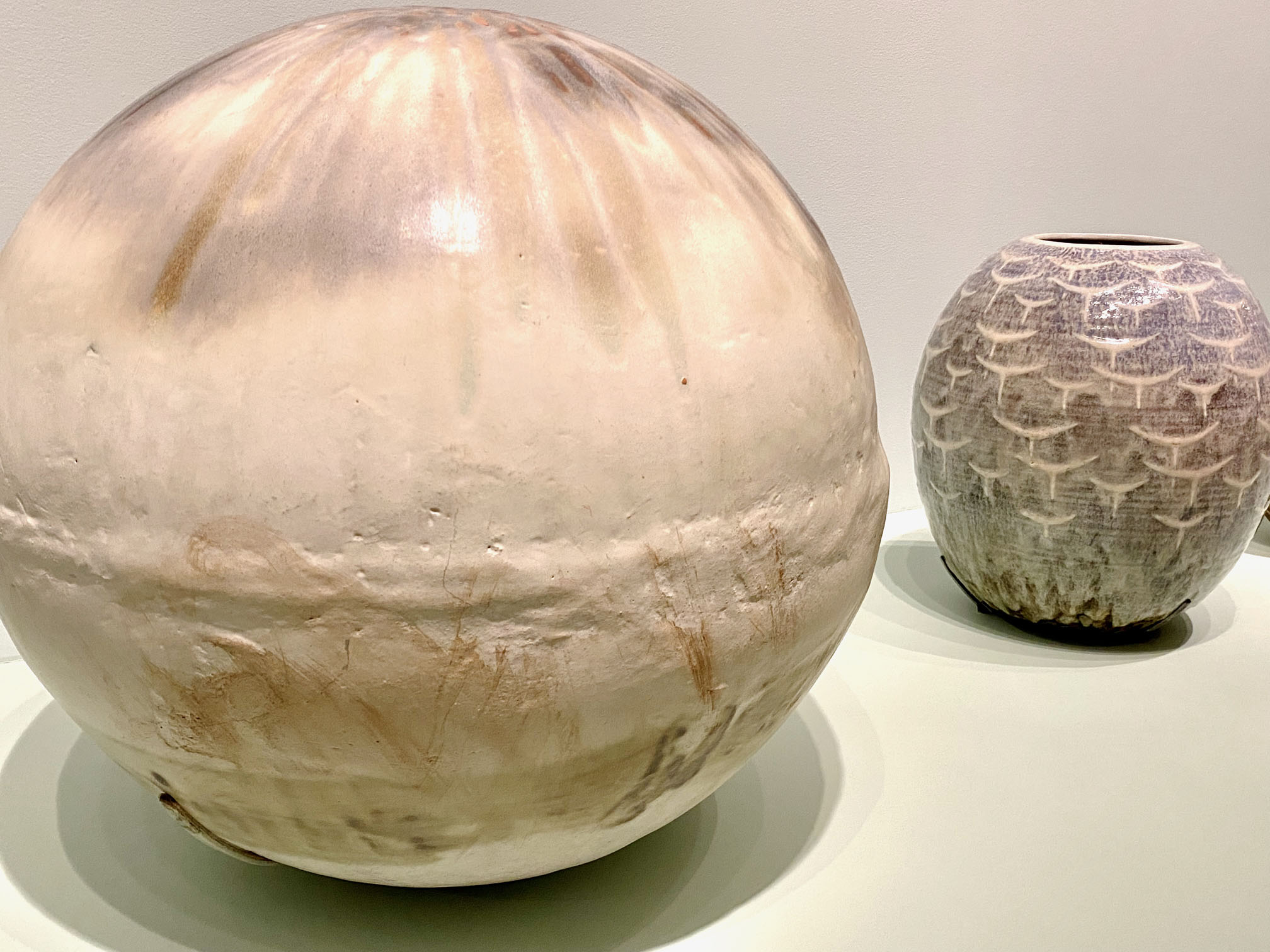
Work by student and teacher: Toshiko Takaezu’s 1995 stoneware Mist #2, part of her Moon series, with Maija Grotell’s 1953 glazed earthenware vase

On weekends, Harvey spent lots of time with his dad in the Corning lab, assuming he would follow in dad’s footsteps as a physicist at the University of Michigan. But after Harvey experienced UM art classes, he switched major. Eventually, he was specializing in ceramics under Maija Grotell at Cranbrook Academy of Art (who also taught ceramic superstar Toshiko Takaezu).

Littleton’s travels to observe the Italian glassmaking masters at Verano inspired him to apply his kiln and physics skills to experimental glassmaking. Back home, e pioneered low-temperature glass-blowing techniques that enabled glass artists to create work in studio setting and not a factory.

Littleton achievement was established the first university-based glass-blowing program at University of Wisconsin-Madison. A lucky undergraduate, Dale Chihuly, learned from the master, and the rest was history for American glass making.

Glass sculptures by teacher and student – 1983 Double Blue Arches by innovator Harvey Littleton and 1968 Wine Bottle by created by Dale Chihuly in Venice under a Fulbright Fellowship.

After receiving his MFA in ceramics at RISD, Chihuly traveled to Venice (like his mentor), and observed how the team worked together to create a finished work of glass art. In 1971, he founded Pilchuk Glass Works in Washington State, where he emphasized the collaborative, collective process.  Chihuly’s own sculptural wonders emerged, plus the next generation of indigenous glass artist gained experience in collaborative expression – Tony Jojolla and Preston Singletary.

There are many more stories told in this illuminating exhibition from the MAD collection. Take a look in our Flickr album.

Tony Jojolla’s 1996-1997 Large Glass Olla, a traditional Pueblo pot made of glass at Dale Chihuly’s Pilchuk School; at right, Chihuly’s 1978 Untitled Basket

Fashion Manifestos by Carla Fernández

What does “slow” fashion look like? A revolutionary Mexican haute couture designer shows how it’s done in Carla Fernandez Casa de Moda: A Mexican Fashion Manifesto, on display at the Denver Art Museum through October 16.

As a young woman, Carla met and got to appreciate Mexico’s indigenous communities as she traveled with her father, a renowned anthropologist. She loved collecting hand-made indigenous garments reflecting the distinct local styles she saw. 

As a student of art history and fashion design, the complex indigenous textile techniques in these out-of-the way communities seemed to stand in contrast to the ever-changing, always-disposable cycle of Western fashion.

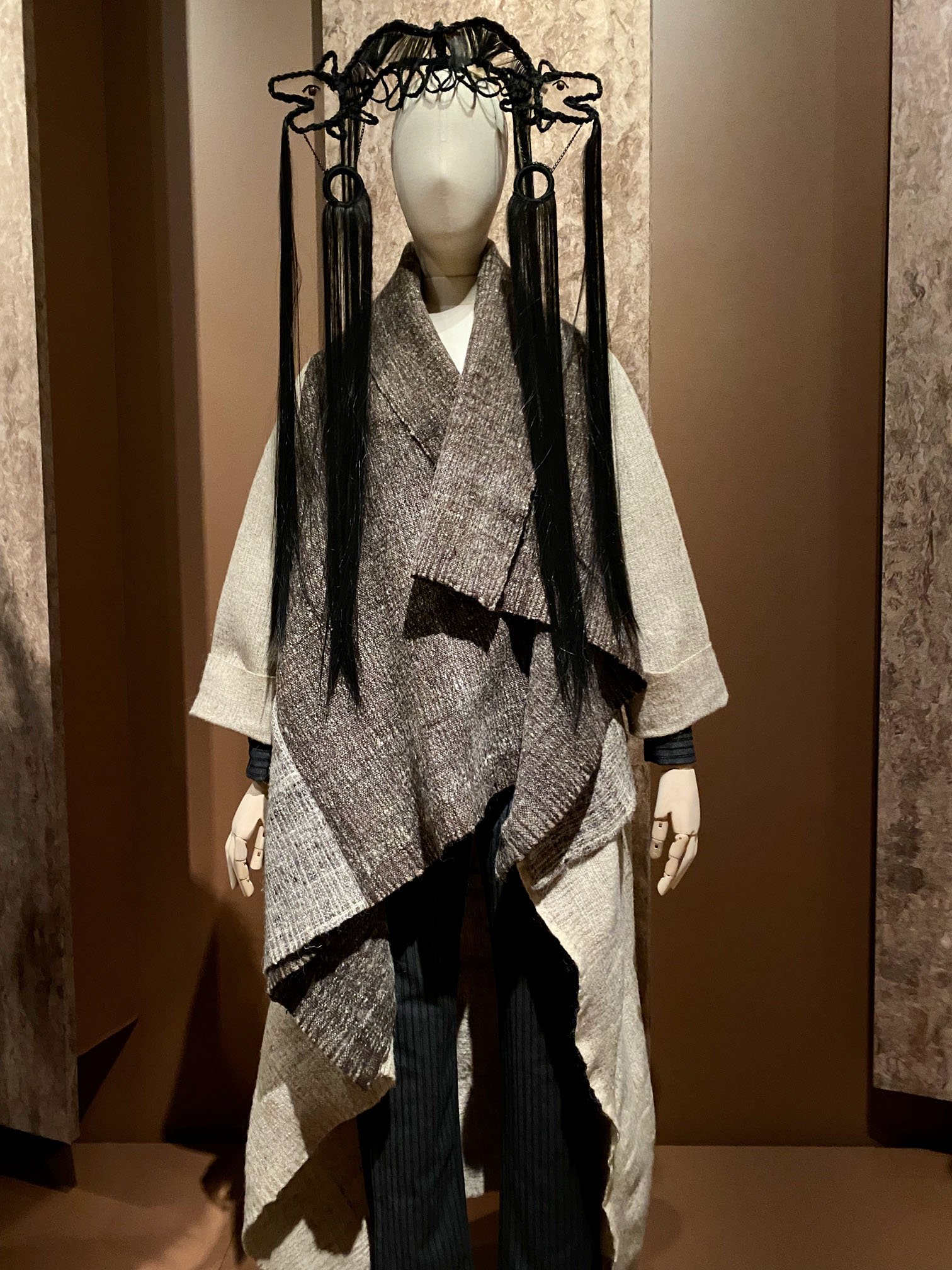
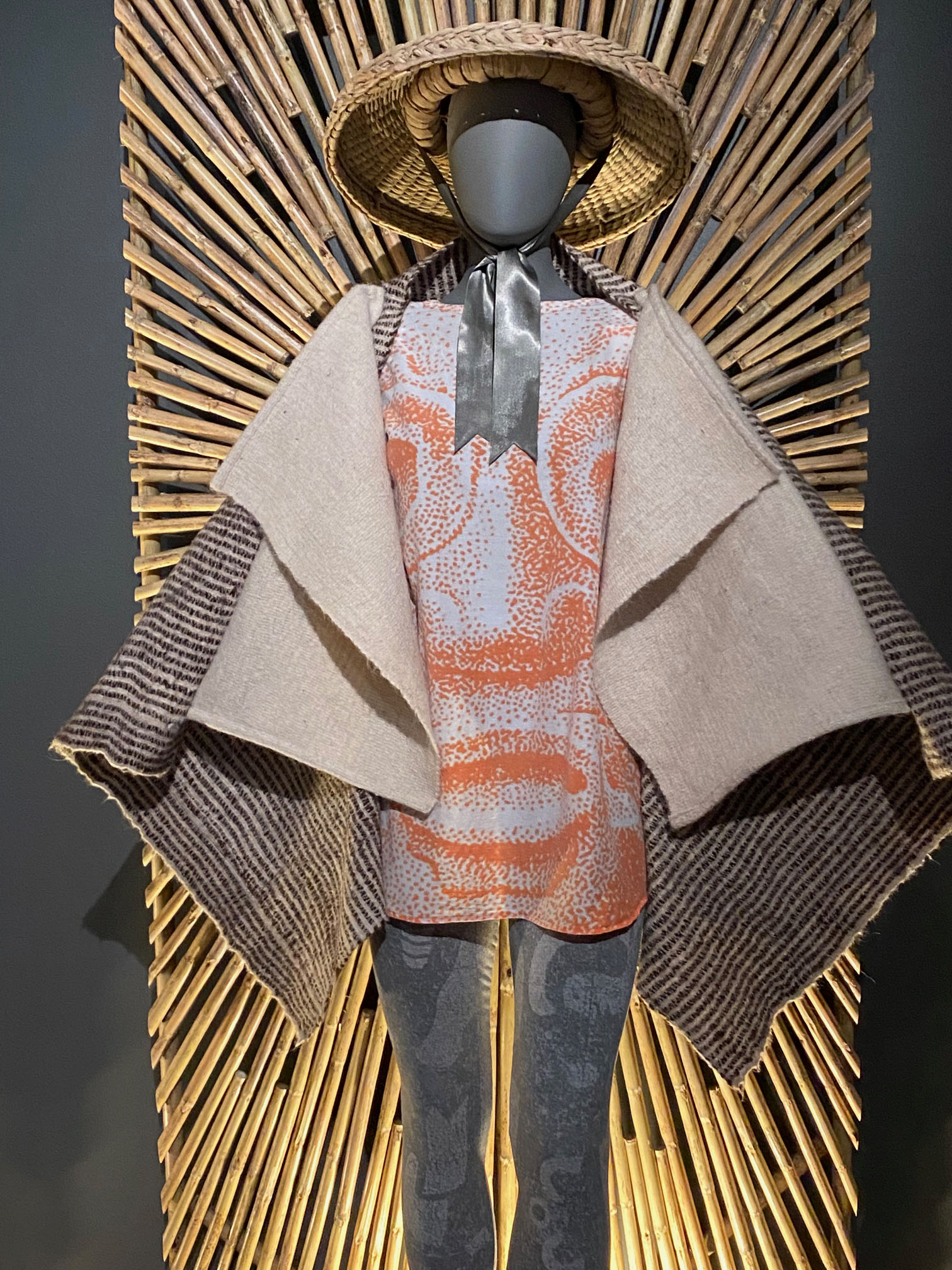
Carla Fernández 2014 jacket collaboration with Juanez Lopez Santis (San Juan Chamula, Chiapas) over digital-printed silk top and leggings.
2003 wool poncho – a Carla Fernández collaboration San Juan Chamula (Chiapas) artisans ­– over a 2009 pantsuit. From the collection of photographer/model Luisa Sáenz

Why not use these indigenous “haute couture” techniques for a high-fashion collection? Why not create a mix-and-match aesthetic using traditional, geometric shapes? Why not credit the artists?

As presented in her first-ever museum retrospective, the results are dramatic, detailed, intriguing, and one-of-a-kind – a completely different kind of fashion system that incorporates indigenous work, pays and credits community makers, and gives artisans the time to create pieces that collectors cherish.

Carla travels to mountain and desert communities to collaborate with textile artists.

With her fame growing, communities now invite her to drive over, see what they’re doing and brainstorm about potential collaborations. It’s an approach that involves time, dialogue, and mutual respect between the artisans and Carla-as-fashion-facilitator.

In her mobile studio (Taller Flora), they create hand-woven, dyed, and painted works of wearable art that Carla brings to the runway, but always with an eye toward collectors who value innovative, indigenous craft traditions.

The exhibition features runway looks, accessories, and videos of performance art that showcase different facets of her fashion manifesto – that artisan-made is the true “luxury” in a “fast fashion,” throw-away world.

2021 hand-painted coverall and digital-printed jumper and coat with Leonardo Linares (Mexico City); embroidered jumper with Antonia Vasquez (San Pedro Chenalhó, Chiapas).

Fiesta masks, leather caballero fretwork, whimsical basket-purses, and fuzzy handmade pom-poms provide home-grown Mexican flair to the cinched, draped, easy ensembles.

Take a look through our Flickr album, and enjoy this video of the installation at Denver Art Museum:

Every section of the exhibition demonstrates her commitment to stimulating innovation and creativity among indigenous makers.

Inspired by decorative fretwork on rodeo apparel, a 2022 wool poncho and pants done in collaboration with calado master Fidel Martínez (Chimalhuacán, State of Mexico).

As of 2022, Carla’s collaborated with more than 164 artisans in 39 communities in 15 Mexican states, with more to come. The show presents a map and identifies all of her collaborators.

To see and hear more about Carla’s collaborative process, watch the Denver Art Museum’s 2019 seminar on culture, cultural appropriation, and fashion in this YouTube video.

And join in on Carla’s beautiful, expressive fashion revolution by checking out her current and past collections on her website.

Virtual Museum Events – Julie Mehretu, Craft in Art, Viennese Lettering, and Niki de Saint Phalle

Kick off April by choosing from many virtual museum events about the latest art shows, women’s history events, and what’s happening here! Here are just a few highlights:

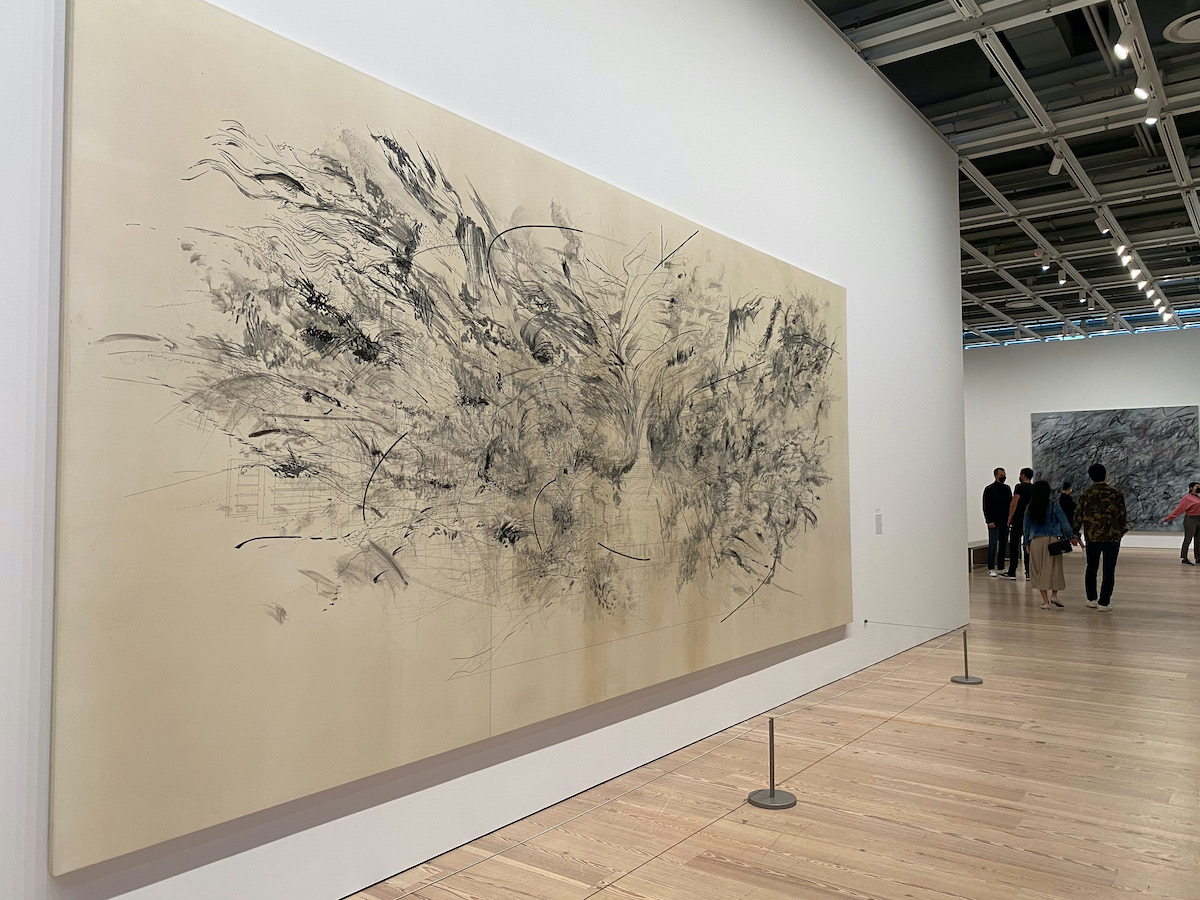
On Tuesday (April 6) at 6pm, meet Julie Mehretu at the Whitney Museum’s annual Annenberg Lecture. Julie will have a conversation with the Whitney’s director about how history, architecture, cities, protest, maps, and geography have influenced her work. Her magnificent mid-career retrospective is a must-see.

Julie Mehretu’s 2003 Transcending: The New International at The Whitney

Also at 6pm, the Skyscraper Museum presents Wright and New York: The Making of America’s Architect – an illustrated talk by Anthony Alofsin on how an early visionary design for a cathedral and skyscraper set the stage for the Wright’s later success.

At 6:30pm, bring your own pint to celebrate National Beer Day in this month’s Tavern Tastings series with Fraunces Tavern Museum and Connecticut’s Keeler Tavern Museum. The gals will tell you everything you ever wanted to learn about beer in 18th century taverns.

Simone Leigh’s 2008 Cupboard VIII in Making Knowing Craft in Art at The Whitney

On Thursday (April 8) at noon, join one of the Whitney’s teaching fellows in Art History from Home: Making Knowing to discuss how four artists use the materials and methods of craft to turn the idea of “fine art” on its head. Examples that you’ll discuss are selected from artworks featured in the Whitney’s expansive, fun exhibition, Making Knowing Craft in Art, 1950 – 2019. You’ll enjoy all of the twists and turns.

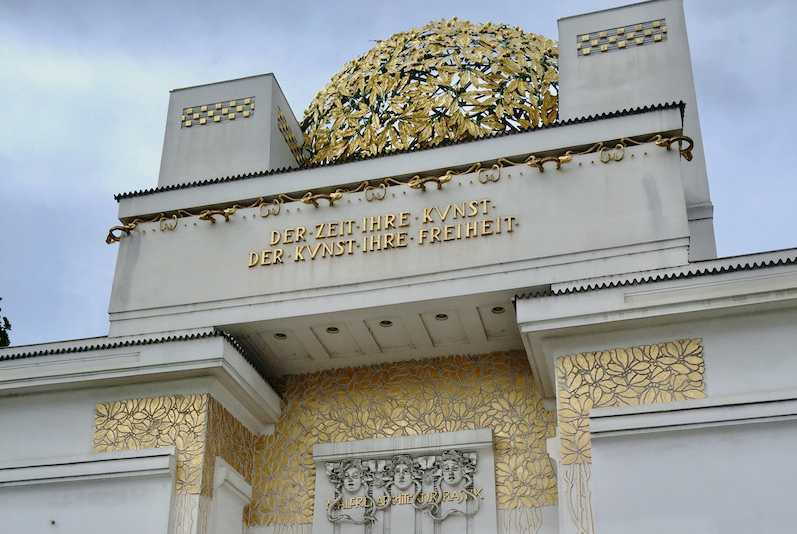
At 6:30pm, join Paul Shaw at Poster House for a tour of Viennese Lettering by some of the greats of the Vienna Secession movement. Paul will show examples of innovative lettering on posters, ads, and books and explain how all of this had an impact on artists of the Sixties and Seventies. The lecture is part of a series in honor of Julius Klinger: Posters for a Modern Age, currently on view at Poster House.

Letters on Vienna’s Secessionist Building – hear more at Poster House on Thursday

At 7pm, MoMA PS1 hosts Niki de Saint Phalle and the Art of Tarot to explore tarot’s influence on modern art and why the artist was inspired to create her monumental installation in Tuscany, Tarot Garden.

Niki de Saint Phalle’s life project in Tuscany, Tarot Garden.

There’s a lot more happening this week, so check the complete schedule. Most of the events are free, but it’s always nice to add a thank-you donation.

Museum Update

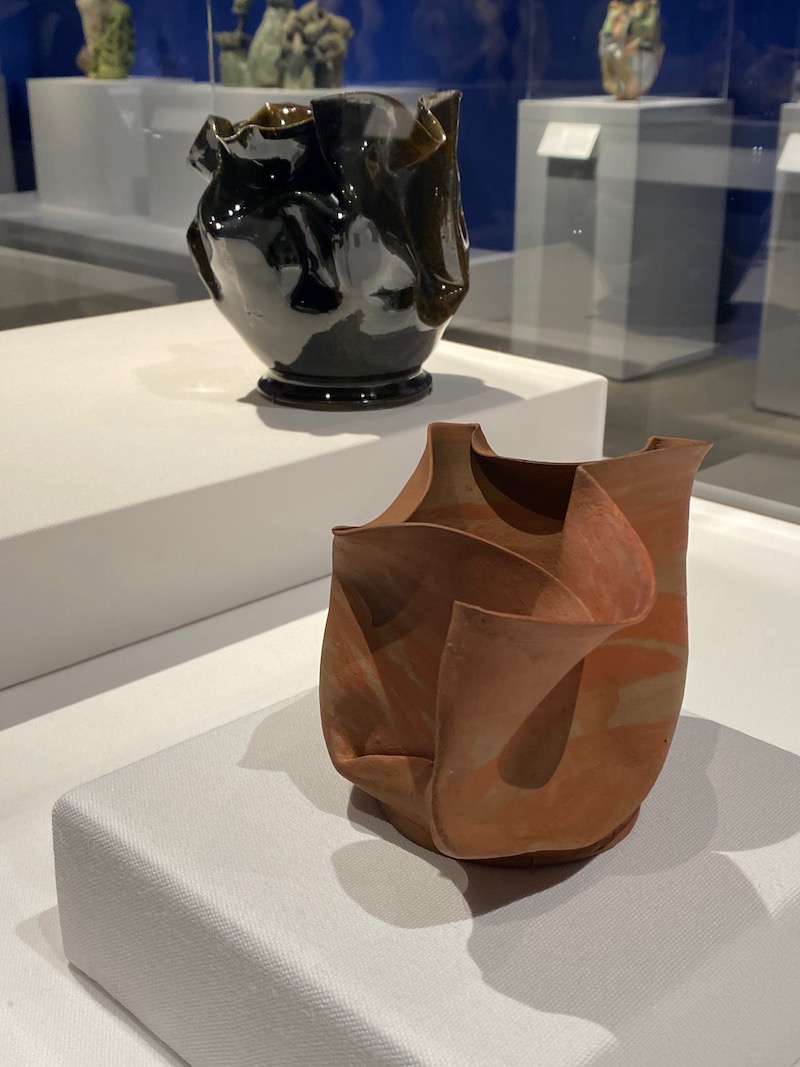
This week we checked out the new modern ceramics show at the Met, Shapes from Out of Nowhere: Ceramics from the Robert A. Ellison Jr. Collection, which showcases 75 works that are promised gifts to the Met. Among the highlights ­– several works by celebrated ceramicist George Ohr, whose late 19th century works predate midcentury shape, form, and abstraction. Lots of fans present when we visited. 

Rare George Ohr ceramics 1890–1900 in Out of Nowhere at The Met