Weekly NYC Virtual Museum Events on What Came Before

Recreation of Manhatta by the Welikea Project, presenting virtually with NYPL

On Tuesday November 10, New York museums and cultural institutions have packed the digital schedule with events that look to the past to inform our understanding of nature, the history of fake news, and the sometimes-forgotten participants in Veteran’s Day – the millions of WWII home-front workers:

At 1pm, the New York Public Library hosts a session with the ground-breaking Welikia Project, which recreates ecosystems that existed in New York City before Henry Hudson sailed into the harbor 400 years ago. The program will explain how the city’s current built environment syncs with the marshes, ponds, rivers, and hills that the Lenape knew so well.

“A Warning to Libellers”, an 1804 broadside attacking vice-president Burr. Collection: NYPL

At 6pm, the New-York Historical Society is taking the long look at the relationships between presidents and the press, going back to the time of the Founding Fathers, investigating how their surrogates spread fake news, and comparing then and now.

At 6pm, the Brooklyn Historical Society will take you behind the gates of the Brooklyn Navy Yard to present the stories and voices of everyday New Yorkers who kept up the riveting, launching, and maintenance of the Atlantic fleet during WWII.

1942 Brooklyn Navy Yard worker. Collection: Brooklyn Historical Society

Find the links to these and other museum events on our virtual events page here. Poster House is having all sorts of virtual get-togethers this week centered around its Chinese and Swiss poster shows, so look through our list. On other days of the week:

  • On Wednesday November 11 at 7:00pm, the Museum of the City of New York explores the history of celebrations in the city – parades, marches, and spontaneous outpourings of emotion on the streets.
  • On Thursday November 12, the Museum at FIT presents a conversation on sustainability in fashion at 6pm, and the International Center of Photography will present the five young photographers it commissioned to make work in response to the COVID crisis at 7pm.

    David Hockney, Self Portrait with Red Braces, 2003. © David Hockney. Photography by Richard Schmidt. Courtesy: The Morgan

  • On Friday at 3pm, there’s another chance to go on a virtual tour of the Morgan Library’s David Hockney portrait show.

Take a look and register for as many of the topics and events that you can fit into your schedule. Most of the events are free, but it’s always nice to add a thank-you donation.

Museum Updates
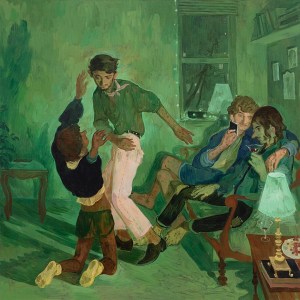
Last week, we dropped into the Metropolitan Museum to see if we could take a quick peek at the “rediscovered” painting in the Jacob Lawrence American Struggle series, but that didn’t happen, since the lines through the 20th-century wing stretched all the way back to the Rockefeller Wing. Anyone needing to get their Lawrence fix can see his historic Migration series on MoMA’s Fifth floor, and his WWII War Series in its own gallery at The Whitney.

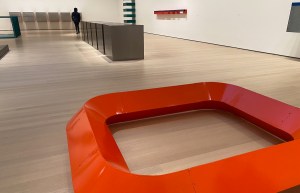
Donald Judd installation at MoMA

Anyone needing to chill out in a clean, white space can have the Donald Judd show at MoMA all to themselves weekdays (MoMA is open 7 days a week).  We swung by last Thursday and found a peaceful garden, empty Matisse Swimming Pool room, and acres of space around Persistence of Memory. Get there now!

If you missed the Museum at FIT conversation last week on Native America Fashion with designer Korina Emmerich and Choctaw-Cherokee artist Jeffrey Gibson, who currently has a three-gallery exhibition in Brooklyn, the conversation is now posted here on the museum’s YouTube channel.

Selfies for the 99%

1800 black-ink portrait of Alexander Hamilton painted by itinerant silhouettist William Bache

Before cameras or iPhones were invented, Americans yearned for a cheap, quick way to record an image of themselves.  Enter the 18th-century physiognotrace invention and masterful cutter, who could produce a likeness in just a few seconds with a flick of the scissors.

It’s the story told by the New-York Historical Society in its exhibition, In Profile: A Look at Silhouettes, on display through November 29.

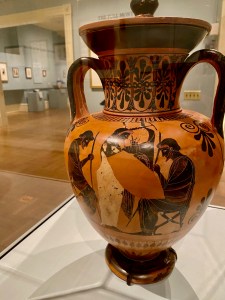
Drawn from the NYHS collection, the show tells the story of how the mania for classical images (think Greek urns) morphed into a democratic art form practiced by itinerant artists, French Revolution expats, showy raconteurs, and everyday people in the early part of the 18th century.

510-510 B.C. Greek amphora – a classical inspiration for 18th c. artists in a new democracy.

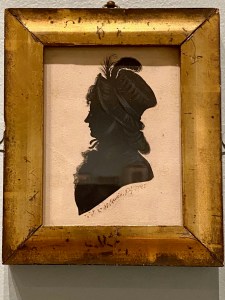
Silhouettes were cheaper than having your portrait painted, so nearly everyone could afford to have one.  In the beginning, 18th-century painters painted black-on-white silhouettes, but later moved toward cutting profiles into white paper and backing the cut-out with black paper. The show’s first gallery presents a who’s who of early America – Alexander Hamilton, Colonel Henry Luddington on horseback (who helped create General Washington’s “secret service”), and memorials of the General himself.

But a close read of the label copy reveals a greater surprise – the artists creating the images, including Robert Fulton (later inventor of the steamship) and Major John André, the popular party-circuit man-about-town in British-occupied New York and Philadelphia who was famously hanged as a spy by the Continentals.

1795 painted portrait by French expats Valdenuit and Saint-Mémin, pioneers in using the physiognotrace

The emphasis here is on inexpensive, everyday art for the 18th and 19th-century home. A contraption invented in France by a court musician, and brought to America by two noblemen-engineers fleeing the revolution in their home country, captivated the attention of the newly democratized land.

The physiognotrace machine illuminated the shadow of a sitter’s profile on a wall. Using a pantograph, the artist could quickly scale down the life-size image, trace it, and deftly cut four silhouettes at once from folded paper.  What a performance!

Famed portraitist, naturalist, and museum-creator Charles Wilson Peale, whose natural history museum was located on the second floor of Independence Hall in Philadelphia, just had to have it.  From 1802 on, crowds flocked to the museum, paid 25 cents admission, and created their own selfies amidst the mammoth skeleton, minerals, wax figures, Indian artifacts, and fossils on display.

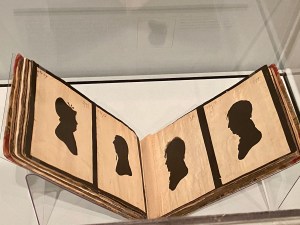
1802-1815 album from the Peale Museum

Mr. Peale charged one penny for the paper, and if you wanted a professionally cut small silhouette, you paid an additional 6 cents to Moses Williams, one of Peale’s sons, or a visiting silhouette virtuoso. Museum visitors would gather to watch the show and marvel at the furiously fast likenesses. In his first year, Willliams cut about 8,000 silhouettes, providing a really decent income for the former slave.

1824 portrait by famed freehand scissors artist William James Hubard

Since four images were made at each 6-cent sitting, the Peale Museum often asked to keep one of the duplicates. A full album of these is displayed in the second gallery, with names, dates, and likenesses of what could be called America’s first selfies.

Before photography’s invention in the 1840s, silhouettes were considered the way to go for inexpensive likenesses, and several cutting virtuosos received national acclaim, commissions, and fame.

Master Hubard, a renowned child-artist prodigy, built a highly successful gallery business cutting silhouettes and painting portraits, and William Bache, who roamed from Maine to New Orleans, offering a sliding scale of options to patrons from the most basic silhouette portrait to embellished works in gilded frames.

1841 Édouart portrait of congressman Millard Fillmore, later the US president

NYHS devotes an entire gallery to the master silhouettist of all time,  Augustin Édouart, who specialized in cutting full-length silhouette portraits freehand. His artworks placed the figures into painted settings, and the most spectacular works depicted rooms in the grand salons of America, populated with up to a dozen figures, including visiting celebrities.

The illusions and details were celebrated by art critics and the public, and ranked on a par with the most skillful portrait painters of his day. Unfortunately, just as he was concluding his US tour, photography was catching the public’s eye and the mania for black-and-white likenesses began to fade.

1870 machine-cut silhouette created for tourists flocking to Saratoga Springs

The exhibition concludes with a nod to the last wave of silhouette-making in America ­– a revival of interest in European folk-art paper cutting, the introduction of inexpensive black-on-white machine-cut silhouettes for the tourist trade, and work by contemporary artists who use silhouettes.

Enjoy looking through our Flickr album to see some of our favorites, including the epic wall-sized silhouettes of the five NYC boroughs cut by Béatrice Coron.

1870 machine-cut silhouette created for tourists flocking to Saratoga Springs

NYHS is to be congratulated on this fun, revealing presentation of this forgotten art form in the context of country’s growth into a vibrant democracy – likenesses of everyday people that could be had by anyone with either a penny or 25 cents to spare.

Weekly Virtual Museum Events in Music, Fashion, Science, and Dance

Ed Ruscha’s “Our Flag” in Brooklyn Museum. Photo: Jonathan Dorado

Since it’s been serving as one of New York City’s early-voting site, the Brooklyn Museum is kicking the week off (today at noon) with a lively conversation on the role art plays in a democracy with artist Ed Ruscha, music entrepreneur Jimmy Iovine, and music producer/art collector Swizz Beatz.

Find the link on our events page.

On Thursday, Brooklyn follows up with another live power panel to wrap up the final week of its Studio 54 exhibition.

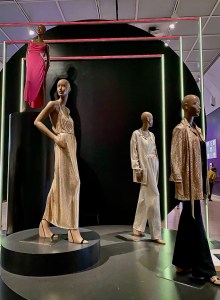
2019 Norma Kamali ensemble in Studio 54 at Brooklyn Museum

At 6pm, meet its creator, Ian Schrager, to look back with fashion innovator/icon Norma Kamali on the music, style, theatrics, and people that made the club an international sensation.

Also on Thursday, the Museum at FIT will host a conversation on Native America Fashion with designer Korina Emmerich and Choctaw-Cherokee artist Jeffrey Gibson, who currently has a three-gallery exhibition in Brooklyn. Although FIT pre-recorded this panel, YouTube viewers will be able to participate in the live Q&A.

Find the links to these and other museum events on our virtual events page here. Some serious science, history, and discussions are also happening:

2018 “Tribes File Suit to Protect Bears Ears” by artist Jeffrey Gibson at Brooklyn Museum

  • On Wednesday (November 4) at 7:00pm, the American Museum of Natural History hosts its popular monthly SciCafe. This month, a geophysicist will explain what happened when a comet hit the Earth 65 million years ago, weigh in on Cretaceous extinction theories, and explain how life recovers after a ground-zero impact.
  • At 8:00pm, the Tenement Museum will host a program explaining how Lower East Side immigrants dealt with the 1918 flu pandemic.
  • To round out the week on Friday (November 7) at 5:00pm, the Rubin Museum is co-hosting an online Himalayan heritage event in honor of Diwali, the Festival of Lights. At 7:30pm, the Guggenheim team will host a rough-cut viewing of some of the dance projects commissioned and developed during the pandemic in its Works & Process series.

Take a look and register for as many of the topics and events that you can fit into your schedule. Most of the events are free, but it’s always nice to add a thank-you donation.

Museum Updates

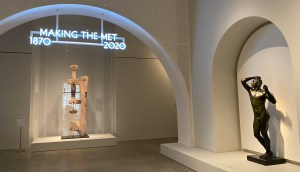
Entrance to Making the Met exhibition at the Metropolitan Museum of Art

If you missed, the Met’s event last week that previewed its current exhibitions and live events, the YouTube is available here, featuring short tours of Making the Met and About Time: Fashion and Duration.

This week at the Met, there were long lines of people waiting to get into the Jacob Lawrence exhibition on the last day and into the new fashion exhibition in its first week.

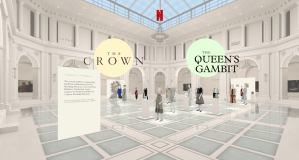
Screenshot of The Queen and the Crown online exhibition on the Brooklyn Museum website

If you don’t want to wait in line to see fashion, check out the Brooklyn Museum’s new on-line exhibition – The Queen and The Crown: A Virtual Exhibition of Costumes from “The Queen’s Gambit” and “The Crown”. Take a look at the way you can walk through Brooklyn Museum’s gallery and take a 360-degree view at each of the costumes. It’s really a lot of fun!

Virtual Museum Events on Meditation, Mao, and Met Music

Detail of 2019 watercolor and ink mantra by Charwei Tsai, displayed at the Rubin in last year’s exhibition The Power of Intention

For anyone needing a calm-me-down hour, the Rubin Museum is offering a wonderful service every Monday at 1:00pm, including today’s Mindfulness Meditation with Tracy Cochran. Next Monday (November 2), Lama Aria Drolma will be guiding you through the session.

You should know that the Rubin has lots of Himalayan tranquility available on its YouTube channel. Check out the Rubin Daily Offerings videos – short meditations on art offering lessons on navigating changing and challenging times – and last week’s virtual gala stream, Inside the Mandala.

Tonight, Poster House teams up with the China Institute to take you inside one section of The Sleeping Giant: Posters and The Chinese Economy. At 6:30pm tonight, listen as an expert on Chinese visual culture talks about Posters in the Mao Era, and then get down to 23rd Street to experience the full story on gorgeous posters from the Twenties through the 1990s.

Countertenor John Holiday performs Tuesday in a free program by Met Live Arts

On Tuesday (October 27), the Met Live Arts presents countertenor John Holiday in Hold On! Freedom is Coming!a special program featuring selections from classical Italian opera and Africa American composers of this century to honor the legacy of Jacob Lawrence.  This program will begin at 7:00pm on the Met’s YouTube channel.

Find the links to this and so many other great museum events on our virtual events page here. The schedule is tight, so plan wisely. For your consideration:

  • Tonight, get ready for Dia de Muertos with El Museo del Barrio’s 6:00pm event with Fanny Gerson, who will share her recipe for Pan de Muerto (“Bread of the Dead”) and the story behind it.
  • The preserved 1904 City Hall Station. Photo courtesy: New York Transit Museum

    On Tuesday (October 27) at 6:00pm, get in on a virtual tour of a spot on everyone’s bucket list in New York – the New York City Transit Museum is offering a look at the old, abandoned City Hall Station. It’s always impossible to get a ticket for the live underground tour, so donate $20 and see the treasured 1904 tiles and arches!

  • The same night at 7:00pm, NYPL’s Schomburg Center for Research in Black Culture is hosting the book launch for Red Rooster’s own Marcus Samuelsson, who has written on the rise of Black cooks and American food. Buy the book to donate to NYPL when you sign up.

Lattice Detour by Héctor Zamora on the Met rooftop

  • And with great fanfare on Thursday (October 29) at 6:00pm, the Met will fling open its virtual doors to recap John Holiday’s performance, zoom up to the roof for you to see Héctor Zamora’s installation, and preview About Time: Fashion and Duration with Vuitton’s Nicolas Ghesquiére. All free.

There are also more chances to catch ghostly goings on at the Merchant’s House Museum. Register for as many of the topics and events that fit into your schedule.

Most of the events are free, but it’s always nice to add a thank-you donation.

Museum Updates
We want to make sure everyone’s read the news about the recent discovery of one of missing paintings in the series by Jacob Lawrence on display at the Met. A museum visitor saw the show and realized that one of the missing paintings was hanging in her neighbor’s apartment!  Read this lead story in last Friday’s culture section of The New York Times.

We attended both Agnes Pelton presentations by The Whitney this week, and we just want to remind New Yorkers that the last day to see her show is Sunday, November 1. Her beautiful work next travels to her home town of Palm Springs.

Virtual Visits with a Fashion Icon and Rock History

Poster Inspiration with Anna Sui at Poster House

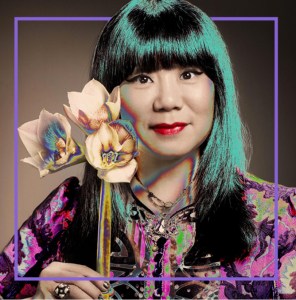
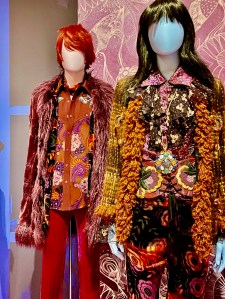
There’s no fashion designer more rock-and-roll than Anna Sui, who will be (virtually) at Poster House tonight (October 19) to show posters from the Sixties and Seventies and explain how they’ve inspired her eye-popping, fun, funny, and magical runway looks.  Take a peek at our Flickr album of her retrospective this year at MAD Museum, and you’ll see what we’re talking about.

Poster House, New York’s newest museum, has one of the best line-ups of virtual events in the City, so get in on this special “Poster Inspiration” event with Anna tonight at 6:30pm. Tickets are only $5, so chip in a few dollars extra to keep their programming rolling.  This week, Poster house is also hosting “Lippert & Lowry: Fireside Chats” on Instagram (October 21) and a virtual tour of their fantastic poster archive on October 22.
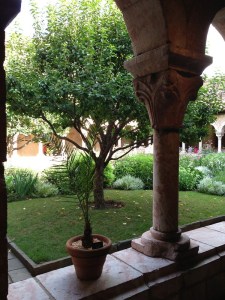
Anna Sui channels Sixties Fillmore psychedelic in her MAD Museum show this year

Continue the rock-and-roll vibe with Thursday’s morning virtual tour of “Bill Graham and the Rock & Roll Revolution” by the New-York Historical Society (October 22). Revisit the legendary Fillmore East and West. Find the links to this and so many other great museum events on our virtual events page here.  Here’s a few:

  • A double header on Agnes Pelton’s show at the Whitney: On October 20, curator Barbara Haskell will answer your questions live, and she’ll be back on October 22 with the panel that had been postponed, “Seeing Agnes Pelton.”
  • On October 20, makers are invited to a panel at the Cooper-Hewitt on to learn how to launch a design project, which is part of National Design Month.
  • On October 23, the Met will host artist Dred Scott speaking about Jacob Lawrence.
  • On October 24, horticulturalists can get an insider’s look at the medieval gardens as the Fall season begins at the Met Cloisters.

    Gardens at the Met Cloisters

There are also more chances to catch the Morgan Library’s virtual tour of the Hockney show, a full line-up of paranormal goings on at the Merchant’s House Museum, and more tours at the Tenement Museum. Take a look and register for as many of the topics and events that you can fit into your schedule.

Most events are free, but an extra thank-you donation helps everyone, big and small.

Reopening Update

Just a reminder to fashion fans that the Met will soon open its much-delayed fashion extravaganza, which should have debuted the first Monday in May.  It’s coming and we’ll keep you posted about a virtual event the Met has planned to give everyone a preview.

Jacob Lawrence’s Modern Lens on American History

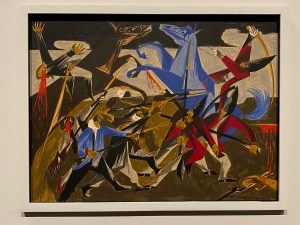
The Battle of Bennington, painted in 1954 – …again the rebels rushed furiously on our men. – a Hessian soldier

Nearly 65 years ago, a young WWII veteran immersed himself in history books up in Harlem and envisioned a modern way to bring key episodes of early American history to life on canvas.  Today, visitors to the Metropolitan Museum of Art are pouring over his 60-panel series – reassembled for the first time in decades – in the remarkable exhibition, Jacob Lawrence: The American Struggle, on view through November 1.

Known for his enormous body of work chronicling the African-American experience, Lawrence’s American history series is largely unknown. That’s why attending the show and working your way around the room to learn about each episode is such a revelation.  Which episodes did he pick? How did he use modern, angular style to depict the struggle for independence and economic progress?

Sacagawea and her brother reunite

His series “Struggle: From the History of the American People” brings forgotten pieces of history to life and depicts many from a new angle – Patrick Henry’s rousing revolutionary rhetoric, regional skirmishes against mercenaries, the enlisted man’s view of the perilous Delaware River crossing, and treasonous whispers that risked undermining the Continentals.

Inspired by the Mexican muralists, WPA storytellers, and the city around him, Lawrence chose dynamic composition, symbolic colors, and an everyday person’s experience of historic events to create an intriguing, historic, and emotional narrative. Take a look at some of our favorites in the exhibition on Flickr.

1940s American history book opened to map of Lewis & Clark’s 1804-1806 expedition

Inside the gallery, the Met presents two of the books that Lawrence consulted as he planned the series as well as his funding proposal to produce a much more expansive work from the American Revolution through World War I. The notes on display show that Lawrence had the parts of history that could tell the full American story all thought out. Unfortunately, the series wasn’t funded.

The panels on view are hung in the order they were presented at Charles Allan’s gallery in 1956-1957, beginning with the lead-up to the American Revolution. Lawrence tells the story his way through conflicts, close-ups, and long shots, working in stories of Black combatants and women, like Margaret Corbin who manned the guns at Fort Washington.

1956 painting of the Battle of Lake Erie – if we fall, let us fall like men, and expire together in one common struggle – Henry Clay, 1813

Many of the events he depicts from the early 1800s have largely been forgotten –impressment of sailors by the British, the Battle of Lake Erie, and the destruction of Washington D.C., and the Battle of New Orleans. The series ends with epic undertakings by everyday Americans – the building of the Erie Canal and the westward migration to the Ohio and beyond. It makes you want to learn more.

If you are in New York, be sure to see this important show in person; otherwise, take a look through this series in the Met’s website. Click on each image to read the backstory of Lawrence’s take on that slice of American history and the quotes he selected for each work. Go on a visual journey with an American modernist master here.

Listen in to this recent program produced by the Met in association with the Schomburg Center for Research in Black Culture – the same library where Lawrence did his research in the 1950s.

Listen as the Schomburg’s director Kevin Young, arts curator Tami Lawson, and the Getty’s associate curator LeRonn P. Brooks discuss Jacob Lawrence, his scholarship, the WPA, Harlem, and the milieu from which his art emerged. Hear how a genius was made:

Other major works by Jacob Lawrence are on view at the Whitney Museum – he is a featured New York artist in Vida Americana: Mexican Muralists Remake American Art and his War Series, created after he returned from serving in the Coast Guard in World War II, has its own special gallery inside the collections show on the seventh floor.


Tenement Museum Opens Window via Virtual Visits

Kitchen on the Tenement Museum’s virtual tour of the Moore family residence

We’re happy to see that the Tenement Museum, one of NYC’s most beloved cultural centers, is not only offering in-person neighborhood walks again, but hosting virtual tours of the cramped quarters where our European immigrant ancestors first gained a foothold in America. This week, there is an opportunity (October 15) for everyone to climb those narrow stairs on Orchard Street, see the neighborhood (October 17), and help sustain the museum.

Check out everything that’s happening in NYC museums online on our virtual events page here.

And speaking of small history museums, we also want to mention the virtual events being programmed at the Merchant’s House Museum, which continues to persevere despite the massive construction project happening on the other side of its 1830s walls. Check out their pre-Halloween programming this week and throughout the month, and see what it’s like inside the place deemed Manhattan’s “most haunted” house.

Disco reigns supreme at Brooklyn Museum’s Studio 54: Night Magic

On our list this week, we also want to draw your attention to:

  • The Fashion Institute of Technology and Museum at Eldridge Street’s presentation on Berlin’s fashion industry in the 1920s (October 13)
  • The Morgan Library’s discussion of European blockbooks in “Print-on-Demand in the 15th Century” (October 15)
  • The Brooklyn Museum’s program with three Studio 54-era disco divas, who talk about how their music shaped the era ($10 on October 15)
  • The Bard Graduate Center’s presentation on Eileen Grey and architectural drawings (October 17)

For Tiffany fans on October 13, the New-York Historical Society will show off its spectacular collection. If you’ve never seen the upstairs Tiffany gallery at NYHS and heard the stories behind the lamps, do not miss this.

Last week, the Whitney had to postpone its Agnes Pelton panel, but curator Barbara Haskell will be answering questions on October 20 in a virtual event.

Take a look and register for as many of the topics and events that you can fit into your schedule. Most of the events are free, but it’s always nice to add a thank-you donation.

Reopening Update

Poster featured at El Museo del Barrio graphic arts exhibition, Taller Boricua: A Political Print Shop in New York

The Bard Graduate Center Gallery had just opened its much-anticipated exhibition on Eileen Grey when the pandemic forced its closure. We’re happy to let New Yorkers know that BGC is opening up the doors to the in-person exhibition for two weeks, October 13-28. Reserve your timed tickets now.

We also checked out the newly reopened El Museo del Barrio to see the graphic arts exhibition on Taller Boricua, which presents over 200 works by artists at this historic print shop. There were plenty of visitors yesterday pouring over the works produced by activist Puerto Rican artists over the last 50 years. The museum at 104th and Fifth is open Saturday and Sunday.

Welcome back to the Museum Mile!

Agnes Pelton’s Meditation Chamber at The Whitney

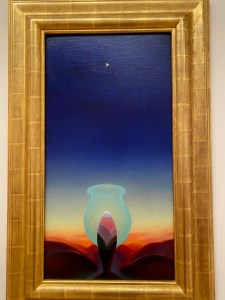
Agnes Pelton’s 1929 Star Gazer, suggesting rebirth in a desert landscape. Private collection.

Have you wanted to enter a light-filled, spiritual place and be transported to another realm? Get a ticket to the Whitney Museum of American Art enter the Agnes Pelton: Desert Transcendentalist, on view through November 1.

You’ll experience six decades of abstract paintings whose shapes fly, hover, and float above desert mountains and in deep space – another dimension that feels light, otherworldly, and pure. Take a look at our Flickr album.

She began developing her style in the early years of the 20th century when abstraction, the symbolic meaning of color, and spiritualism were being explored in the New York art world, and she took to heart what she read in Kandinsky’s influential 1910 treatise, On the Spiritual in Art.

1926 Meadowlark’s Song, Winter. Courtesy: Maurine St. Gaudens.

The exhibition opens with a figurative work in the style for which Agnes was first known to the New York art scene –  an ethereal artistic woman inhabiting a dreamy, semi-abstract, soft-colored landscape. Her work earned her inclusion in New York’s landmark 1913 Armory Show – the exhibition that introduced “modernism” to America – in Gallery D alongside other young American artists experimenting with bold color and abstraction.

But the Whitney exhibition (originally mounted by the Phoenix Art Museum) is actually focused on the next phase of Alice’s abstract work, which reflects her embrace of spiritualism, experience with New Mexico’s desert landscapes, and interaction with creative, like-minded thinkers in and around Taos in the Twenties. Although she often accepted commissions for portraits or landscapes throughout her life, she considered the abstract works the core of her artistic journey.

1934 Orbits. Courtesy: Oakland Museum.

Like her contemporary, Georgia O’Keeffe, Agnes found inspiration in the Southwest desert. However, Agnes had a different artistic approach, using color, natural form, and abstract shapes to lead viewers into another realm of consciousness that exists beyond the natural world.

Agnes’s journals and notebooks are filled with lessons from spiritual teachers and with sketches for paintings with notes on what the different forms and colors mean.

Visitors to the Whitney show move slowly, taking time to digest each canvas and to appreciate the artist’s care and thought. Swooping shapes, illuminated portals, and clusters of abstracted forms take center stage, posing questions, and leading you into another dimension.

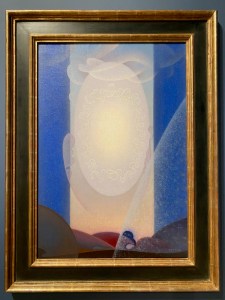
1947 Light Center, evoking one’s ability to transform. Private collection.

The center gallery features work done after Agnes moved to her desert home near Palm Springs in the Thirties, where she was transfixed by the quality of desert light.  She loved incorporating water and light into her works – two natural phenomenon that symbolize transformation and change.

The dark walls of the center gallery enhance the glowing nature of her spiritual canvases. Her technique is masterful, with layers of translucent washes applied to give the white ovals nearly a three-dimensional feel, like looking into the void of an Anish Kapoor sculpture, except that Agnes achieves the effect with simply a canvas.

Here’s a talk recorded last year at the Phoenix Art Museum in which Notre Dame professor Erika Doss explains Agnes Pelton’s spirituality and puts her work in the context of the modernist movement:

Reopening News

 The Whitney has just announced that the large outdoor public project on the Hudson waterfront by David Hammons will open this fall.  The other big announcement is that a one-year Biennial postponement will give artists and curators more time to view and prepare work that was put on hold by the shutdown. Read more about upcoming shows here.

At 7:00pm on October 20, Whitney curator Barbara Haskell will take your questions about Agnes in an online “Ask a Curator” event. Check our Virtual Museum Event page for all of the museum’s nearly daily virtual tours, talks, and walks on this and other exhibitions.

If you’re in New York, you can visit the Whitney five days each week, Thursday through Monday, with extended hours every Friday until 9:00pm. All exhibition spaces are open, including the magnificent collection show, which features mini-shows by Jacob Lawrence, Hopper, and Calder. Here’s our previous post about this fantastic exhibition.

Artists Crunch NYC Census Numbers

Herwig Sherabon’s 2019 Landscapes of Inequality NYC No. 2, showing median income per block

As the 2020 Census winds down across New York City, it’s nice to be reminded of the history and impact of what’s been revealed since 1790, when census-data gathering began. Who We Are: Visualizing NYC by the Numbers, on view at the Museum of the City of New York through October 18, presents not only rich archival material but an intriguing display of new data-visualizations that were commissioned specifically for this show.

Although the museum shutdown curtailed in-person viewing until a few weeks ago, the curators wisely transported the story and some of the works to an on-line exhibition that explained the history of the decennial census, why it matters to New York, and how new stories are told when artists get their hands on the data.

Tenement House Committee of 1894 map of nationalities inhabiting Lower Manhattan

When we visited in person, it was nice to see historic documents (or facsimiles of them) up close, like the page listing people and occupations (attorneys, stone cutters, boat makers) along Nassau Street in 1812 and the detailed illustrations of the “counting machines” used by men and women tallying the census on the cover of 1890 Scientific American. Take a look at our Flickr album.

But it’s also nice to see data visualizations from past decades, when no one had digital tools at their disposal and everything was drawn pen-and-ink and embellished with watercolor. And to see evidence of Congressional trailblazers, like Shirley Chisholm, getting out into the street to show their constituents the importance of being counted.
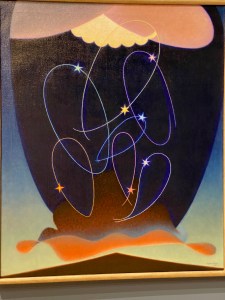
Detail of Jill Hubley’s 2019 Race in NYC from neighborhood data

Today’s news is full of stories about whether an undercount is happening in New York, but the MCNY collection shows newspaper after newspaper from the past, where politicians, social-justice advocates, and everyday citizens have voiced the same concerns. It’s useful to see the pie chart of the types of Federal programs whose dollars are apportioned based upon the census.

But the star attractions are the enormously compelling contemporary visualizations displayed in the “Art of Data” gallery. It’s a clean, modern, immersive experience walking among the giant projections of work.

Take a look at three of the works featured in MCNY’s on-line exhibition:

Here is the tree-ring-inspired Simulated Dendrochronology of Immigration to New York City, 1840 – 2017, created in 2019 by Northeast University designers Pedro Cruz, John Wihbey, and Felipe Shibuya. Left and right growth reflects immigration flow to the US from either Asia-Pacific or Europe.

Here, see how artist Neil Freeman uses 2017 American Community Survey data to reconstitute population blocks in New York City according to inequality and injustice in his 2019 video The Grid Series.

The shape of New York’s population blocks make another appearance in artist/developer Jill Hubley’s 2019 visualization Languages of New York.

Read more about each of these works on the MCNY’s site.

NYC Museum Virtual Events on Hockney, Pelton, and Design

David Hockney, Self Portrait with Red Braces, 2003. © David Hockney. Photography by Richard Schmidt. Courtesy: The Morgan

This week has a full line-up of (mostly free) programs featuring new exhibitions and topical issues from the art world and beyond. See the list of everything you can participate in on our virtual events page.

We welcome the reopening of the Morgan Library with this week’s most-talked-about exhibition on David Hockney’s portrait drawings from the National Gallery in London. This week’s virtual schedule gives you two opportunities (October 6 and 9) to take a virtual tour, but get the free tickets now since they are going fast!

This week on October 8, you’ll also get an opportunity to learn more from the Whitney about Agnes Pelton and her transcendentalist work from the curator herself, Barbara Haskell. Although the show originated in Phoenix and went to Santa Fe before its New York stop, the Whitney’s given over an entire floor to for you to enjoy the tranquility, spiritualism, and meditative power of Ms. Pelton’s works. Although Ms. Pelton participated in the historic 1913 Amory Show, she’s had zero recognition until now.

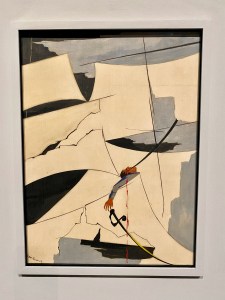
Agnes Pelton, Day, 1935. Courtesy: Phoenix Art Museum

Although the Cooper-Hewitt still hasn’t opened its doors, you’ll have an opportunity to celebrate the National Design Awards and National Design Month on line. This week features a virtual salon on October 8, but their website has a full roster of design, education, and maker events, too.

We also want to draw your attention to:

  • New-York Historical Society’s evening with Carl Bernstein and Maggie Haberman ($20 on October 8)
  • A live encore presentation from the New York Transit Museum on the cultural history of the 20th Century Limited (free on October 9)
  • October’s Sci Café from AMNH on hive minds and politics (free on October 8)

For Hamilton fans on October 8, Fraunces Tavern Museum will host an author who will dig up all the dirt between General Washington and his nemesis, General Charles Lee.

Last week, we joined ETHEL on the Met’s balcony on Friday night (a weekly digital event), and really enjoyed the digital effects that were added to a beautiful performance. We also dropped into the Brooklyn Book Fair courtesy of the Brooklyn Historical Society.

Take a look and register for as many of the topics and events that you can fit into your schedule. Most of the events are free, but it’s always nice to add a thank-you donation.

Reopening Update

Dancing dress by Giorgio di Sant’Angelo, as shown in Studio 54: Night Magic

It was great to be back at the Brooklyn Museum this week, where the community was enjoying the sunshine on the front plaza while waiting for timed ticket entry to the fantastic exhibition, Studio 54: Night Magic.  If you plan to go, budget enough time, because the time-capsule exhibition is massive.

For budget and safety reasons, only two floors of the museum are open, but that did not stop any of the art-seekers from checking out many of the special shows, study center, and permanent American gallery works. The first floor features an installation filled with amazing, inspiring photographs by a ground-breaking Parisian artist. Wow! Do not miss JR: Chronicles or Studio 54!!

Welcome back, Brooklyn!!