Why Do People Like Folk Art So Much?

It wasn’t a scientific survey, but Santa Fe’s Museum of International Folk Art asked each museum staff member to select a favorite piece from the collection, explain why, and then mounted an entire exhibition about the love of folk art – Staff Picks: Favorites from the Collection at MoIFA through August 18.

Everyone knows about the 10,000 objects displayed in the museum’s Girard wing, but MoIFS houses over 150,000 additional works from over 100 countries. Given the vast scope of the collection, how did everyone choose one special item to be featured in the show?

2010 Alligator with Ice Cream carved by Joe Ortega of Tesuque, New Mexico welcomes everyone to the exhibition.

Some of the security staff remembered works from past shows that they loved, and some working in the collections had favorites hidden in the archives. To make it a little easier, the exhibitions team divided the task up into different regions of the world (to give a sense of the global extent of the collection), and asked some colleagues to pick a specific region, including the folk-art rich environs of Northern New Mexico.

1960 Noah’s Ark by Chimayo, New Mexico carver Jose Mandragon – an inspiration to take an adventure.

So why did different staff members choose what they did? The exhibition (and our Flickr album) states the reason that each was selected.

Sometimes a painting, sculpture, or necklace reminded them of places they’ve visited or cultures they loved – like the painting that evoked the tropical vibe of rural Cuba by Joe Ortega, or the cart direct from a colorful folk festival in Sicily, or intricate, bejeweled work from artists of Nepal in the high Himalayas.

2014 painting San Lazaro by Cuban artist Luis Rodriguez Ricardo.

And who doesn’t love work that is pure whimsey and telegraphs sheer joy? Several staff members said they couldn’t resist works that just made them smile – the whimsical alligator sitting above the entry with his huge tri-color ice-cream cone, the recycled robot from California relaxing in his lounge chair with a drink in hand (summer fun!), and a super-happy circle of tiny Ecuadorian dolls, dolls, dolls!
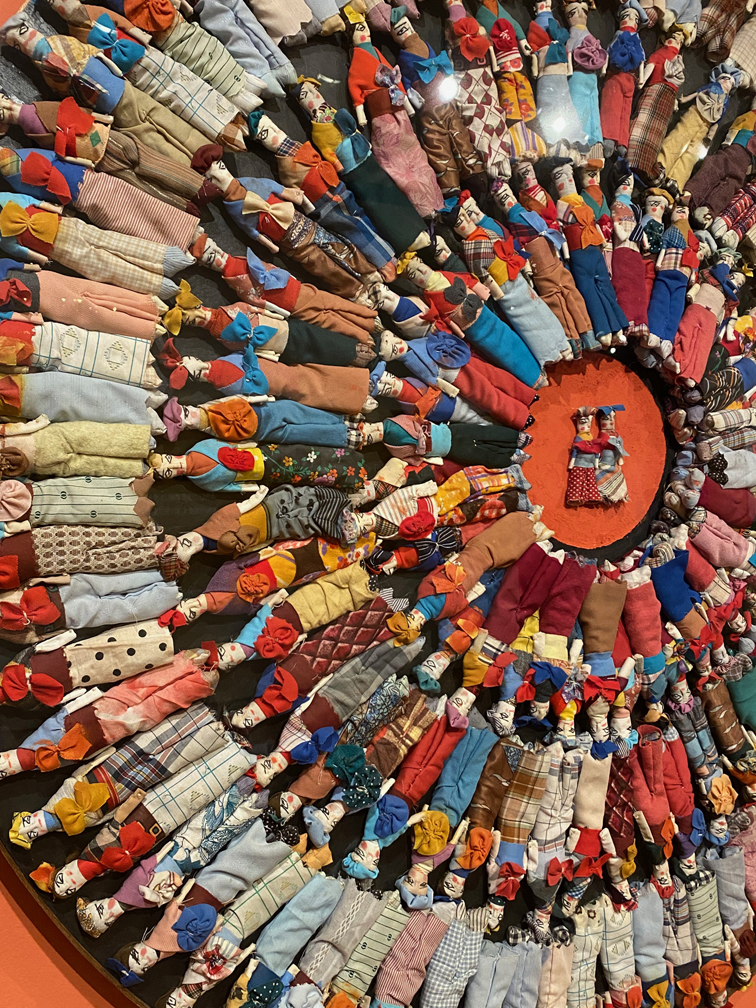
Close-up of Ecuadorian artist Osvaldo Viteri’s 1980 doll sculpture Se Nos Cayo La Luna Para Amar La Tierra (The Moon Fell So We Could Love the Earth).
BoBo bu Ko, a 1994 recycled materials sculpture by Alameda, California artist James Bauer

Sometimes you just have to stand back and admire the sheer determination, precision, and willpower of a particular artist. How did Rhode Island artist Henry Patrick Neugent collect and take apart all those cigar boxes and create two intricate tramp art cabinets with secret compartments?

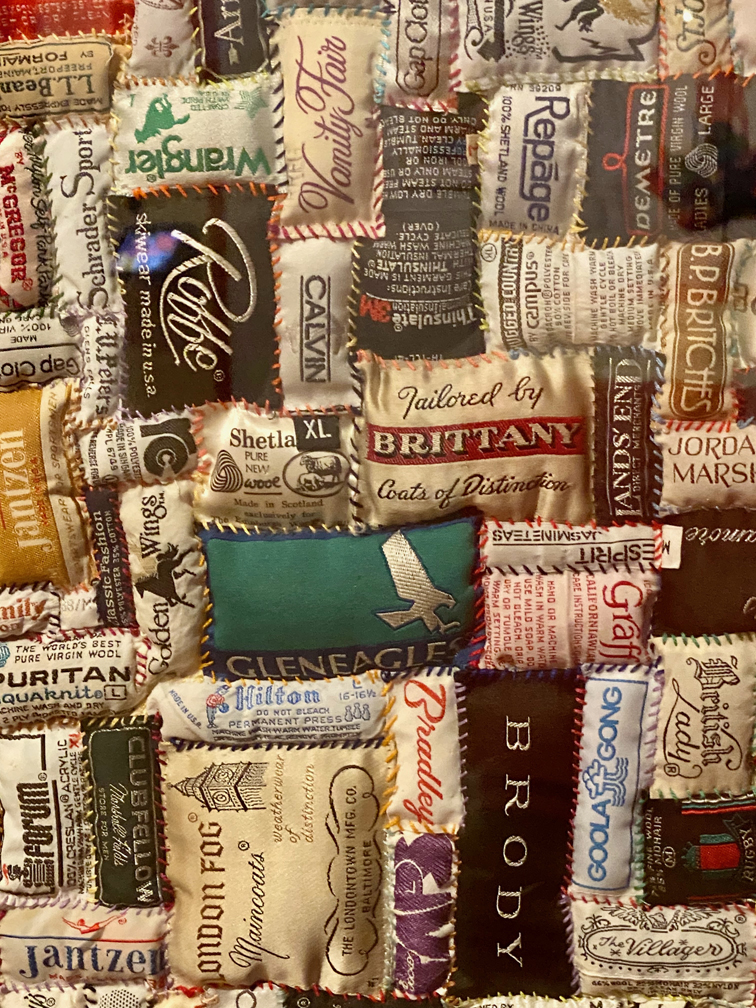
And what about the gigantic quilt made by New York textile artist Susie Brandt – she removed zillions of tiny tags from vintage shirt collars and jacket breast pockets and worked them into a log-cabin sort-of pattern. You could spend hours just reading and reflecting on the memories behind those tags – Jordan Marsh, B.P. Britches, and old Wrangler or L.L. Bean tags.

Top of early 20th century tramp art whimsey table from cigar boxes by Portsmouth, Rhode Island artist Henry Patrick Neugent
Detail of large quilt Sleep Product made of garment labels collected by New York artist Susie Brandt in 1986-1989.

One collections manager picked hers for the sheer technical genius.  Check out the 19th century Chinese undershirt designed to keep you cool under the heavier, decorated silk robes. It’s woven in a clever, open diamond pattern from bamboo and cotton!
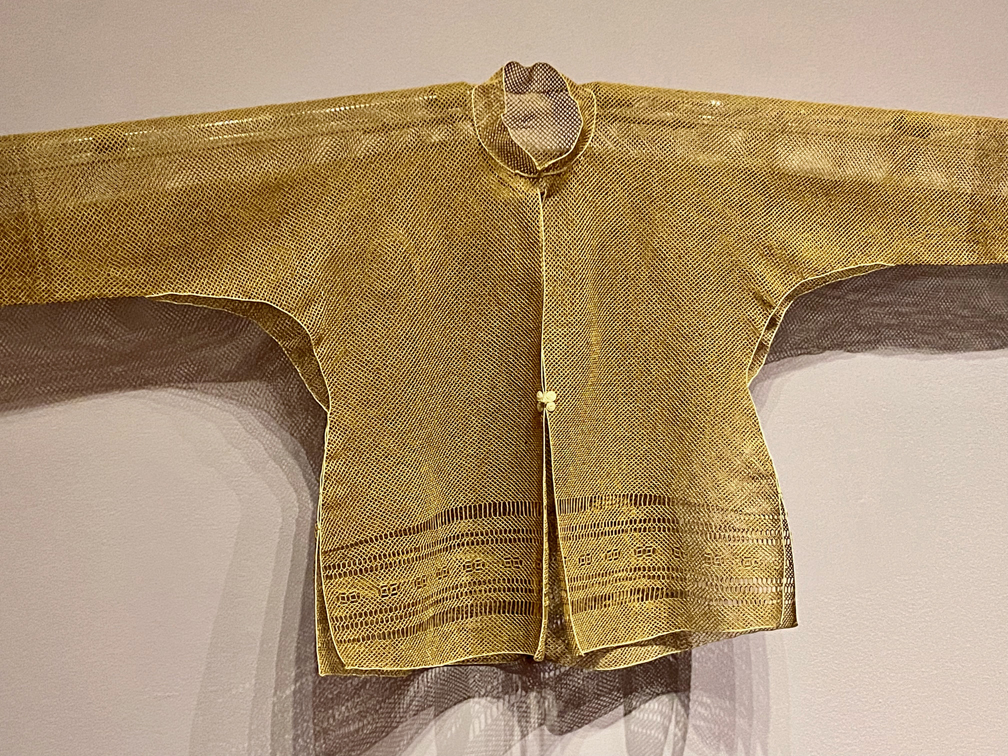
Innovative “cooling” 19th century Chinese bamboo and cotton undershirt.

An anthropologist on the team paid tribute to craft excellence is carried on generation to generation in North Carolina’s historic ceramic-making communities. She selected two pots by a father and son – Matt Luck’s corncob-stopper jug and a show-stopping double-faced jug created by his dad, Sid Luck (a fifth generation Seagrove potter), to commemorate the experience of living through Hurricane Fran.

The museum’s director selected a Zimbabwe thumb piano sheerly for its beautiful sound!

Two generations of Seagrove NC potters – Matt Luck’s 2012 pot with corncob stopper and Sid Luck’s 1996 double-faced jug
1992 thumb piano (mbira of the ancestors) made by a Shona artist from Zimbabwe.

The show is a tribute to the teamwork it takes to welcome the world to a popular folk-art destination and a delight to behold. A selection of these works will be on display at New Mexico’s Roundhouse in the Governor’s Gallery through April 25, 2025.

Take a Google walk through MoIFA’s massive Girard Wing here.

How Philadelphia Made American Artists

How does it feel to have the eyes of 200 years of art history upon you, peering out from portraits, history paintings, and scenes of everyday people? What stories do they have to tell you? And who gets to tell the history and make the story?

Find out by contemplating works by over 100 artists nurtured and celebrated by PAFA in Making American Artists: Stories from the Pennsylvania Academy of Fine Arts, 1777-1976, currently on view at the Albuquerque Museum through August 11, 2024…but coming soon to a museum near you (see below)!

Charles Willson Peale’s 1779 George Washington at Princeton, painted during the War of Independence. Courtesy: PAFA

While renovations are happening at the Academy in Philadelphia, the curators have chosen some of PAFA’s most iconic works to be shipped cross-country and installed “in conversation” with works by PAFA artists who may not be household names but were nonetheless ahead of their time.

It’s all a tribute to legacies preserved in the oldest art museum + art school in the United States, founded in 1805 by the dynamic duo of William Rush and Charles Willson Peale, both Continental Army militia (and artists!) during the American Revolution.

1810 painted pine sculpture Eagle by PAFA co-founder and Revolutionary War veteran William Rush.

Mr. Rush carved the bow figures on most of the ships for America’s first Naval fleet. All of those ships are now long gone, so it’s nice to see that we can admire his majestic Eagle in this exhibit.

Mr. Peale, one of the Sons of Liberty who served under and painted General Washington, later founded America’s first natural history museum on the second floor of Independence Hall. He also passed his talent on to the next generation through his very large family of artistic prodigies.

These two artists of the Revolution walked the walk and talked the talk and passionately felt the young nation needed an art academy.

PAFA’s first hundred years had some ground-breaking firsts – the first exhibition that included both male and female artists (1811), admission for Black artists (1857), and first female instructor (1878).

Charles Willson Peale’s 1822 self portrait (painted at age 81), The Artist in His Museum proudly showing his collection, turkey, and mastodon. Courtesy: PAFA

The show kicks off with a masterful history painting by Benjamin West, a Pennsylvania painting genius who landed in England in 1763, helped to found the Royal Academy, and somehow remained best friends with both King George III and Benjamin Franklin at the same time. He revolutionized history painting by depicting contemporary subjects and taught (in London) a who’s who of Americans artists – Peale, Stuart, Sully, Morse (who invented the telegraph and code), and Fulton (who invented steamships).

Benjamin West’s 1771-1772 Penn’s Treaty with the Indians, an imaginary scene painted to rehabilitate Penn’s image at the time, although it does feature Lenape chief Tamanend;. Courtesy: PAFA

In addition to masterworks by West and Gilbert Stuart, the exhibition showcases many works by female and African-African artists associated with PAFA – Patience Wright (America’s first professional sculptor), Cecilia Beaux (first female teacher), Henry O. Tanner (first successful African-American painter), and superstar Mary Cassatt.

1784-1786 wax relief portrait of George Washington by Patience Wright, the oldest American sculpture in the PAFA collection
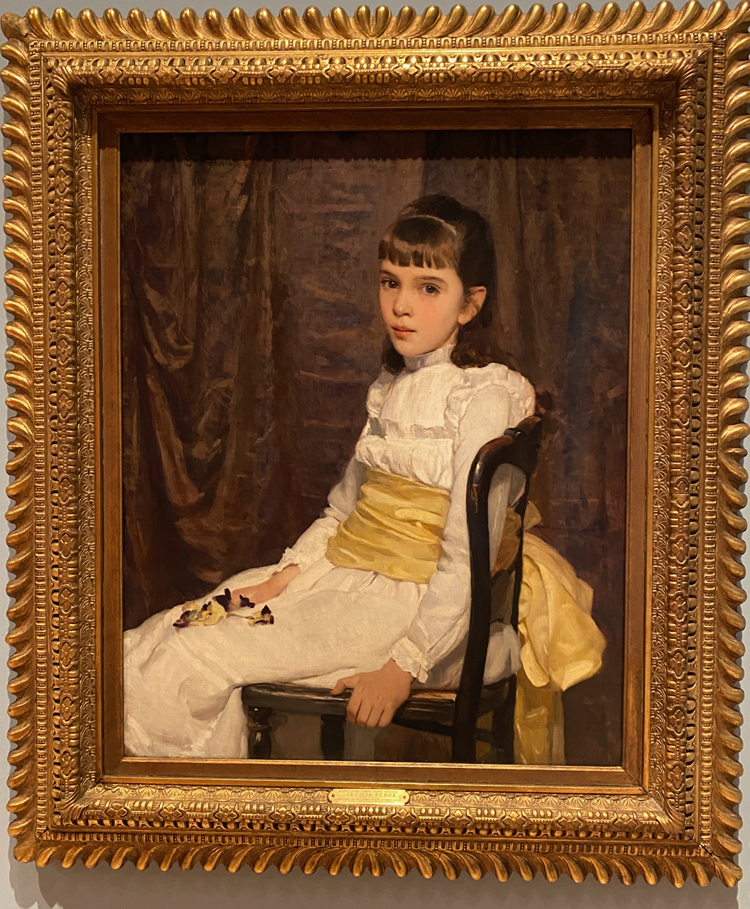
1887 A Little Girl by Cecilia Beaux, an acclaimed female portraitist known for her insightful psychological depictions of young women. Courtesy: PAFA

In the day, grand history paintings were primarily the work of men, but the exhibition emphasizes that many enterprising 19th century women still found ways to make it in the art world. They specialized in “lesser genres,” like portraits, still lifes, and scenes of everyday life. Check out our favorites in our Flickr album.

Making American Artists really comes alive by adding 20th century works on the walls. Alongside the Founding Fathers, the portrait section features liberated women, bohemian artists, and proud Black artists with attitude.

Margaret Foster Richardson’s 1912 A Motion Picture – an honest self-portrait reflecting society’s changing views of professional women. Courtesy: PAFA
Barkley L. Hendricks’ 1968 J.S.B III, a fashionable, life-sized, postmodern portrait of his PAFA classmate James Brantley. Courtesy: PAFA

The section of the exhibition on still life focuses on early female painters who made decent incomes from their work, as well as modernist superheroes O’Keeffe and Nevelson. The history painting section presents 20th century show-it-like-it-is artists, like Horace Pippin and Alice Neel.

Georgia O’Keeffe’s 1923 Red Cana, an early abstracted floral still life. Courtesy: PAFA
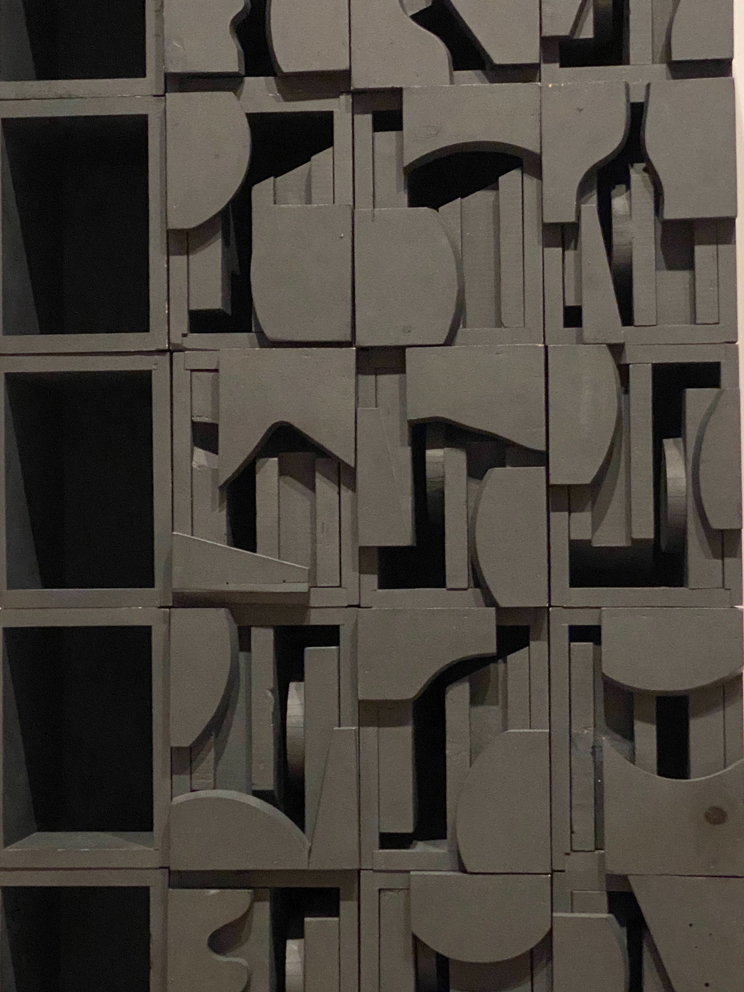
Detail of Louise Nevelson’s 1972 South Floral. Still life section. Courtesy: PAFA

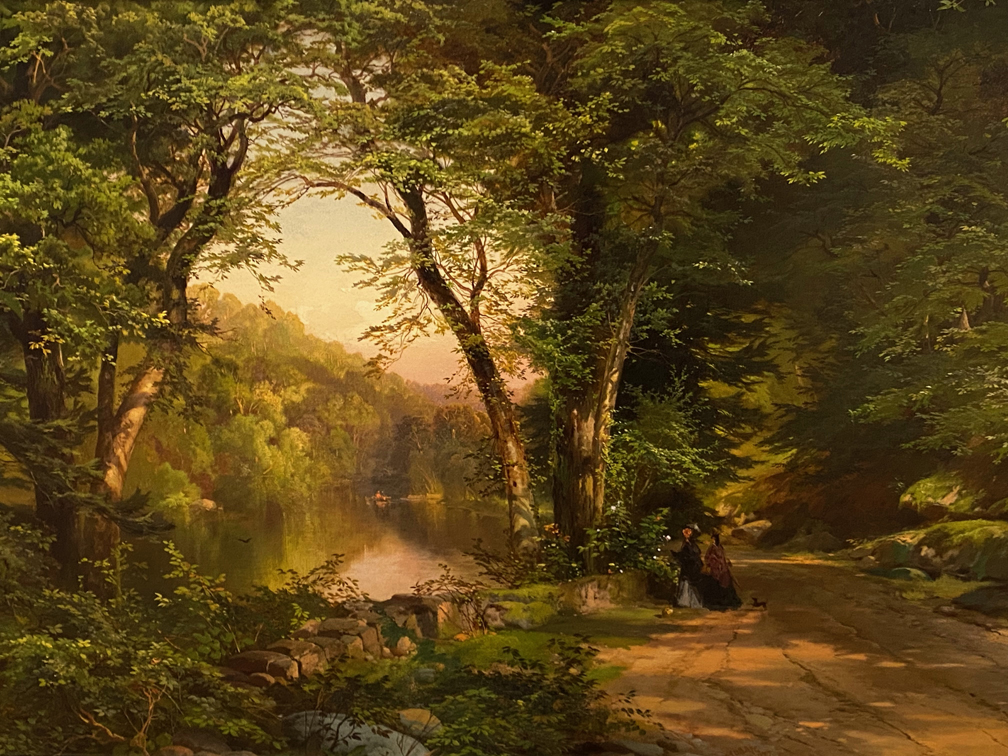
We’re reminded that many of the great masters of American landscape, like Thomas Moran, got their starts by painting bucolic views of Philadelphia’s Wissahickon and Schulkyll Rivers. Painting Philadelphia’s river landscapes may have even inspired the rise of the Hudson River School.

Thomas Moran’s 1870 Two Women in the Woods enjoying the green along the Wissahickon in Philadelphia. Courtesy: PAFA

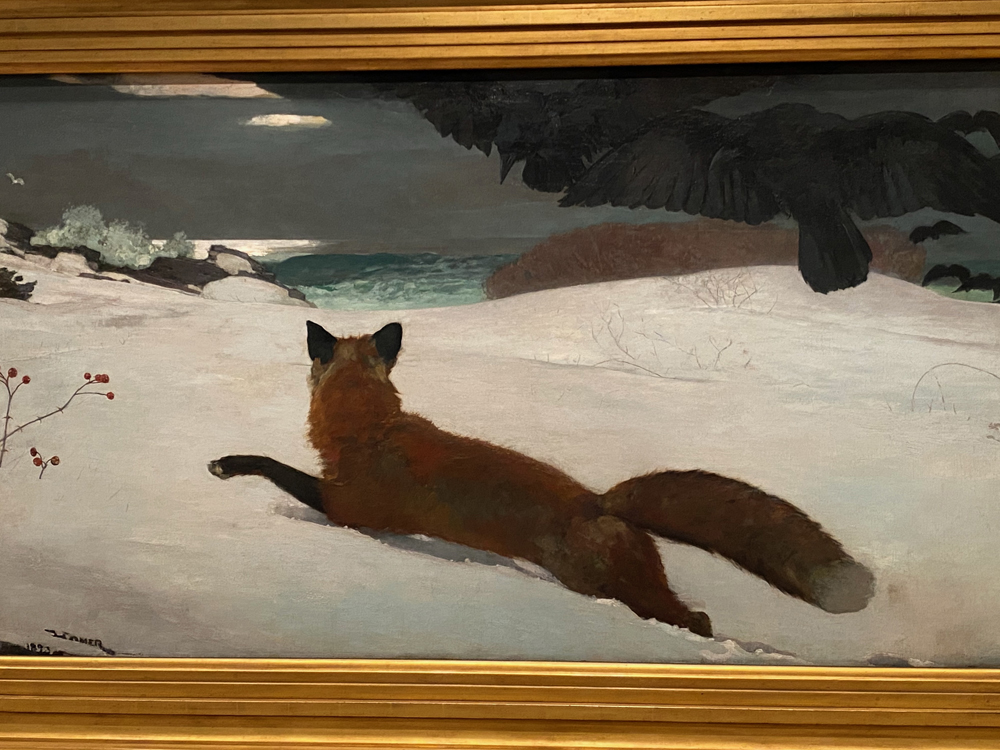
And it was PAFA that gave Winslow Homer his professional start.

Winslow Homer’s 1893 Fox Hunt, where predator becomes the prey; Homer’s first painting to enter a museum collection. Landscape section. Courtesy: PAFA

The entire exhibition is a fresh look at American masters who created an astonishing legacy at one of our oldest art institutions ­and upstarts who never quite got their due. There’s so much to appreciate from this fresh, 21st century perspective!

Earlier this year, Making American Artists was at the Wichita Art Museum. Its next stop is the Philbrook Museum of Art in Tulsa, Oklahoma (September 25, 2024), followed by a spectacular road show: Everson Museum of Art in Syracuse (February 2025), the Peabody-Essex in Springfield, Massachusetts (June 2025), and the Taubman Museum of Art in Roanoke, Virginia (October 2025).

Don’t miss it. While you’re waiting, listen in to curator Anna O. Marley’s May talk at the Albuquerque Museum:

How O’Keeffe Saw Trees

Whether she contemplated her surroundings among the greenery at Lake George or the multicolord rocks at Ghost Ranch, Georgia O’Keefe often started by sketching the trees around her.

in Rooted in Place, a special exhibit at the Georgia O’Keeffe Museum in Santa Fe through November 3, 2024, you are surrounded by Georgia’s watercolors, oils, and sketches interpreting (and abstracting) trees she encountered on her walks and international travels.

Take a look at our favorites in our Flickr album.

Georgia’s 1937 painting Gerald’s Tree I, a tree enjoyed by her friend, science historian Gerald Heard

The curators have selected works from the full span of Georgia’s life. The earliest are from her trips to Lake George, such as the glorious autumn maples surrounding the Stieglitz home.

The show’s curators leverage Georgia’s habit of collecting inspirational bits and pieces of nature from her Ghost Ranch walks, showing the twisted juniper she brought home alongside the dramatic oil painting in which it stars.

Piece of juniper that Georgia collected from the land surrounding her Ghost Ranch home.
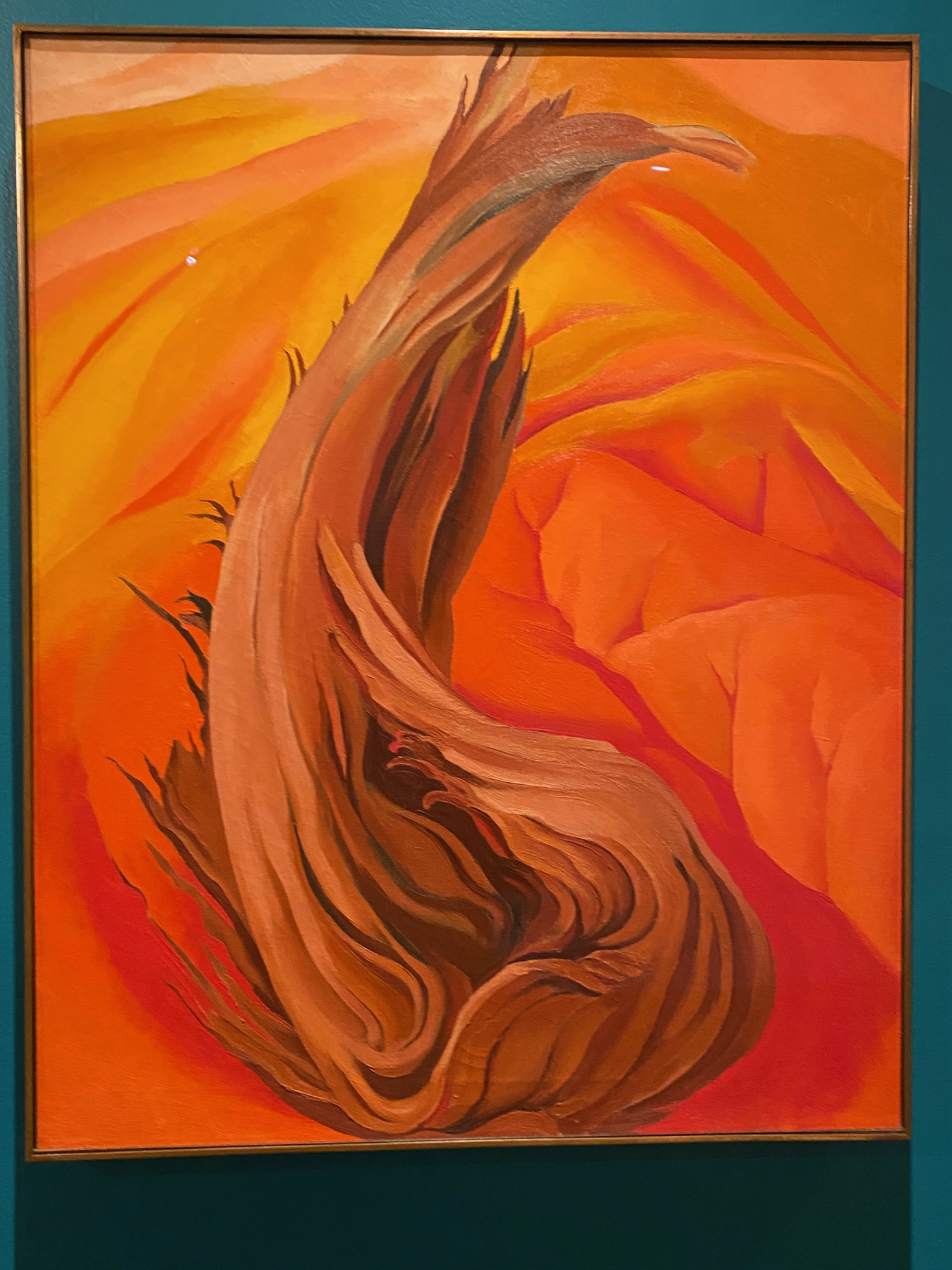
Georgia’s 1940 painting Stump in Red Hills

The museum’s collaboration with the Santa Fe Botanical Garden adds scientific insights about the three cornerstone species of New Mexico wilderness that from which Ms. O’Keeffe drew inspiration – pinons and junipers next to the red rock, and wide, leafy cottonwoods along the river.

Georgia’s 1930 Cottonwoods Near Abiquiu showing the breeze catching the wide branches

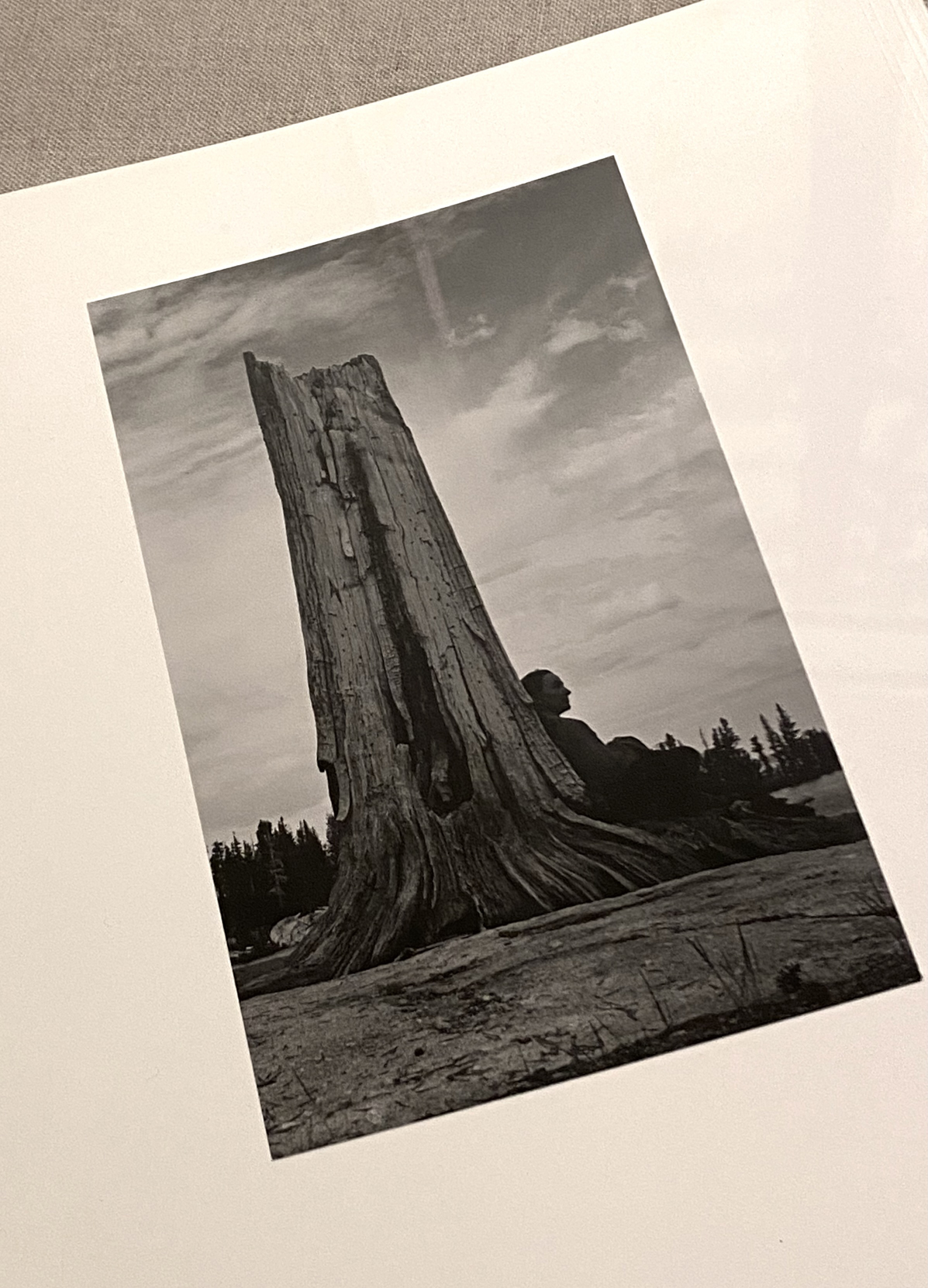
A gorgeous photo by Ansel Adams shows Georgia nestled up against one of her favorites nearby in the desert. She loved the fruit trees she planted near her home garden, but she never painted them.

When Georgia was a young student at the Art Institute of Chicago in 1905-1906, she studied with John Vanderpoel, well known for being a master educator in figure drawing. Looking at her drawing of a banyon tree from her trip to the Bahamas over thirty years later, it’s clear she employed those early lessons – bringing trees to life as living beings in her work ­– throughout her life.

Ansel Adams’1938 portrait of George O’Keeffe resting against a dramatic tree stump in northern New Mexico
Georgia’s 1934 figure-like drawing Banyon Tree created on her trip to Bermuda

Listen to the museum’s panel about Georgia’s approach to painting her favorite trees and the role they play in the ecosystem of northern New Mexico:

Past and Future of Santa Fe’s Indian Market

There’s no better way to see the best of the best at the Santa Fe Indian Market than to visit the remarkable retrospective assembled at the New Mexico History Museum in their honorary centennial exhibition, Honoring Tradition and Innovation: 100 Years of Santa Fe’s Indian Market, 1922-2022, on view through August 31.

The curators have gathered loans from private collections, museums, individual artists, and big-name galleries to give visitors a decade-by-decade chronicle of the people, families, maker innovations, and contemporary-art trends that converged to showcase works from one the most exciting confluences of creativity in the United States.

Santa Clara artist Nancy Youngblood’s 2018 polished pottery jar (best of pottery category award), granddaughter of Margaret Tafoya. Courtesy: private collection.

The items in the show – traditional pots, dazzling Navajo weavings, whimsical figurines, elaborately embroidered accessories and clothing, social-commentary photos and paintings – are so compelling that it takes two or three visits to actually focus on the thoughtful, illuminating text that accompanies each portion of the show.

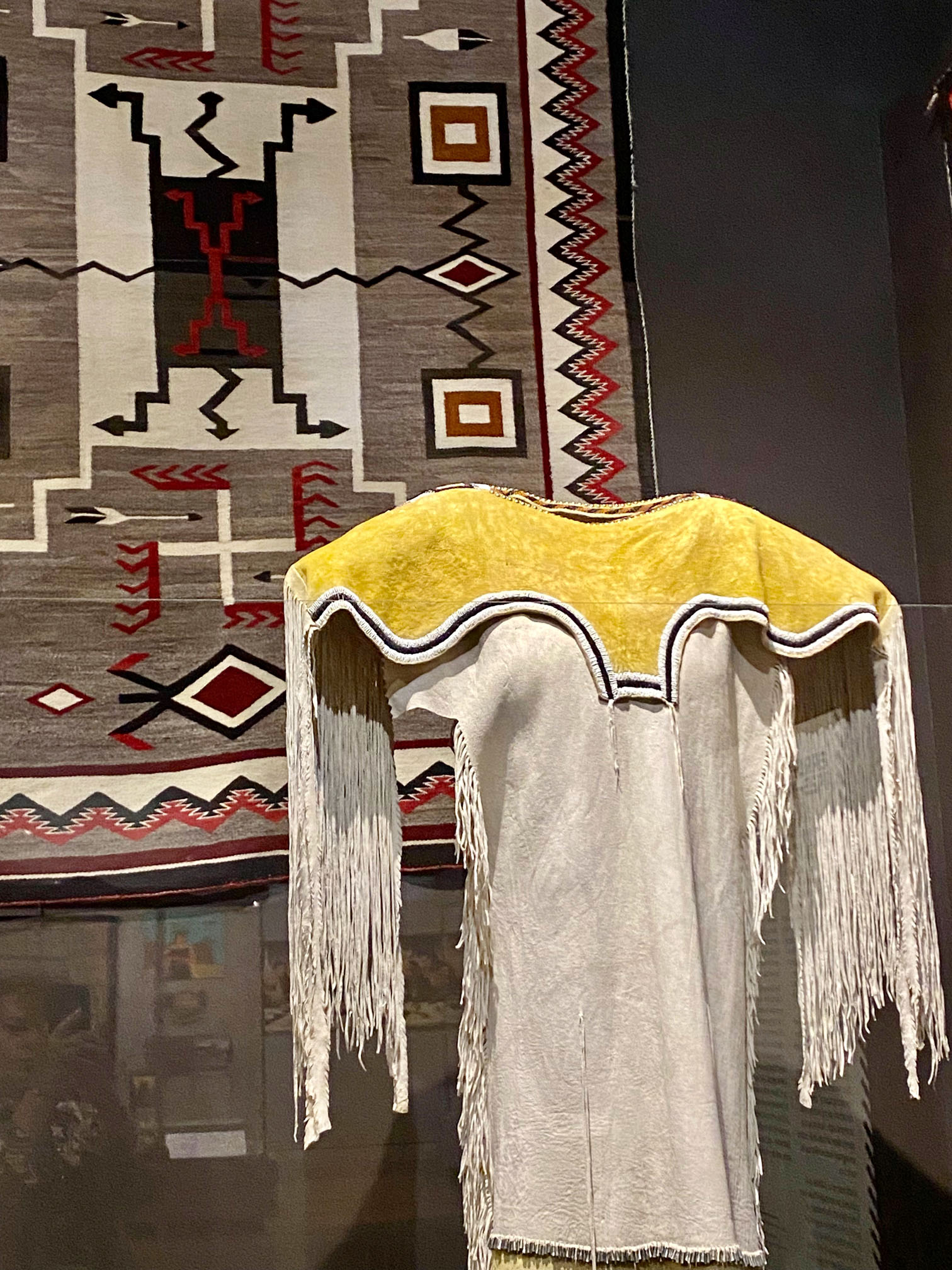
Embellished 1890 buckskin Apache/Ute dress; behind, a 1925-1930 Navajo rug. Courtesy: Cowboys and Indians Antiques, Historic Toadlena Trading Post Museum.

The organizers have provided a revealing chronology of the politics, economics, and social context of each decade of the arts festival, noting changes in the people, processes, power, and patronage over time.

The first gallery brings you back to the earliest days of the market – a time when there were no Indian curators or judges (unlike today!) and when Native makers were not even allowed to sell their own work or interface directly with non-Native buyers. 

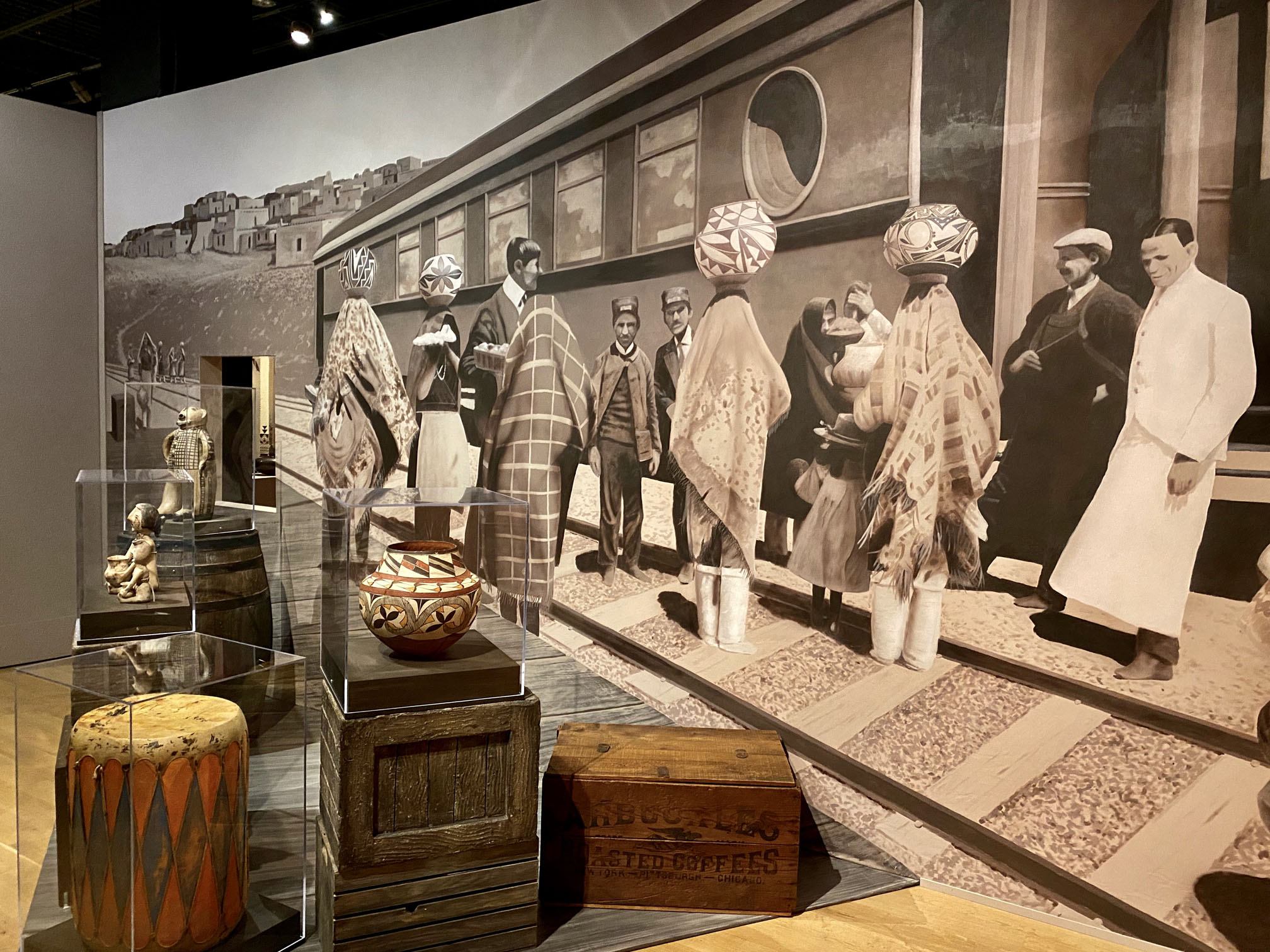
The wall mural harkens back to the days when Pueblo people sold their pots and creations to tourists along the railroad, which in the late 1890s and early 1900s brought curious travelers, East Coast dandies, and traveling showpeople out to the Western badlands.

David Rock’s mural with early Native-made collectibles – early 1900s pottery and 1920s drum.

Turn-of-the-century tom-toms, curios, and older pots are displayed near the rail-top mural; Navajo rugs and beaded moccasins from the period are arrayed across the way. It’s an arrangement that evokes what might be displayed in an old trading post, or at least in the early 1920s Santa Fe markets.

Many of these makers in New Mexico were still living on their ancestral lands, but across the United States, the majority of Indigenous populations had either been relocated to reservations or boarding schools.

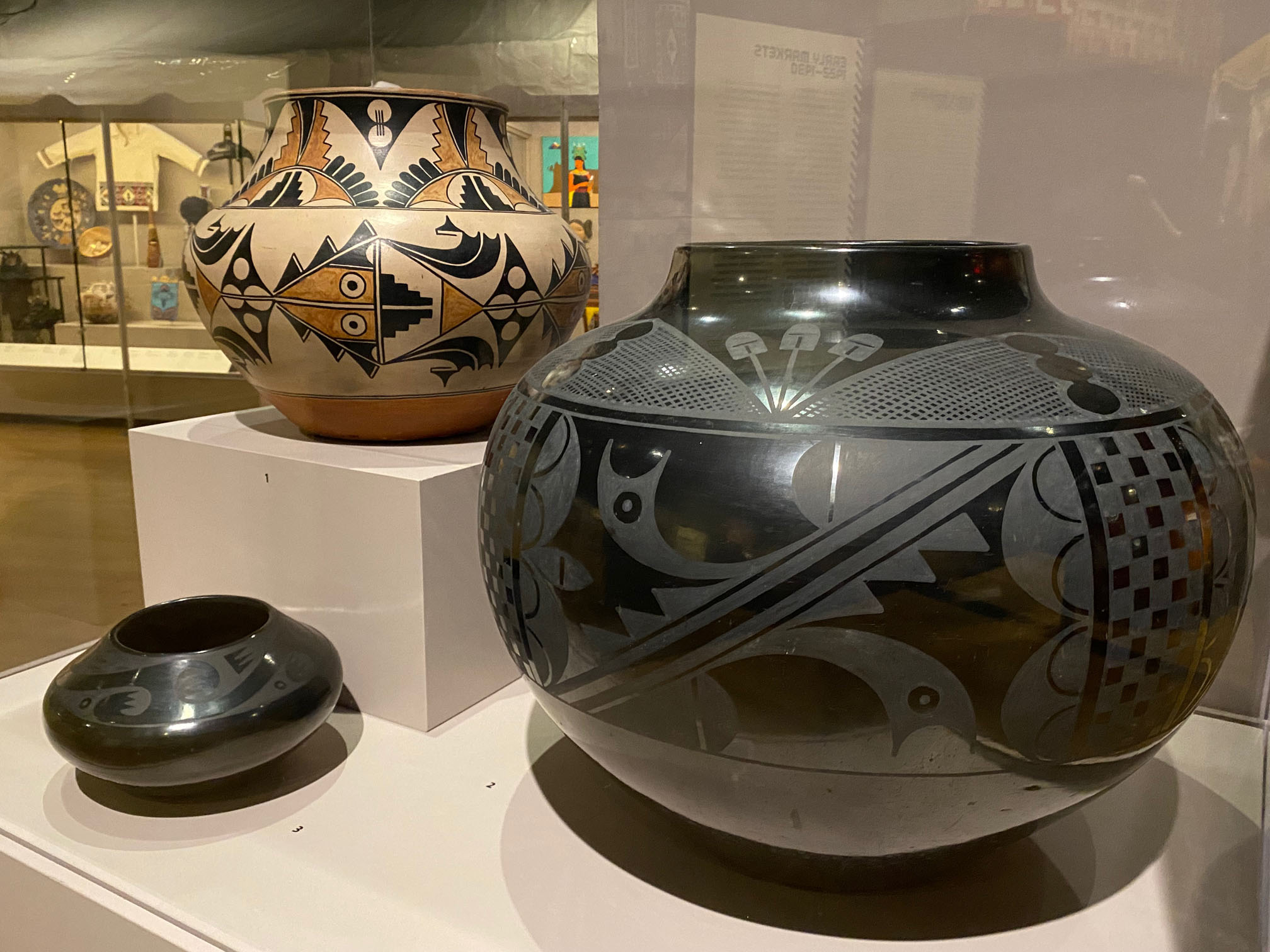
The inter-generational mastery of New Mexico’s Pueblo artists is featured in several vitrines holding examples of black-on-black (and other) masterworks by the Martinez family at San Ildefonso (go, Maria!) and the Tafoyas of Santa Clara, with Margaret’s famous bear-paw imprints.

Work by famed San Ildefonso artist Maria Martinez: 1922 polychrome, large 1942 black pot (award-winner painted by Julian Martinez); and 1928 jar. Courtesy: MICA, SAR

The surrounding gallery features dazzling painted pottery works by Zuni and Acoma from the 1920s – all drawn from the School for Advanced Research (SAR) collection, which began in 1922 to preserve classic works, SAR is the source of the acclaimed exhibition now at the Metropolitan Museum, Grounded in Clay: The Spirit of Pueblo Pottery. Sometimes the artists who made the pot is known; but often the maker is lost to history.

1928 Acoma jar. Courtesy: SAR

In the 1930s and 1940s across the United States, tribal mortality rates increased and their other economic lifelines decreased. But these conditions in the Southwest made the Market an even more important source of family revenue. Throughout the 1940s, the Santa Fe Market boomed.

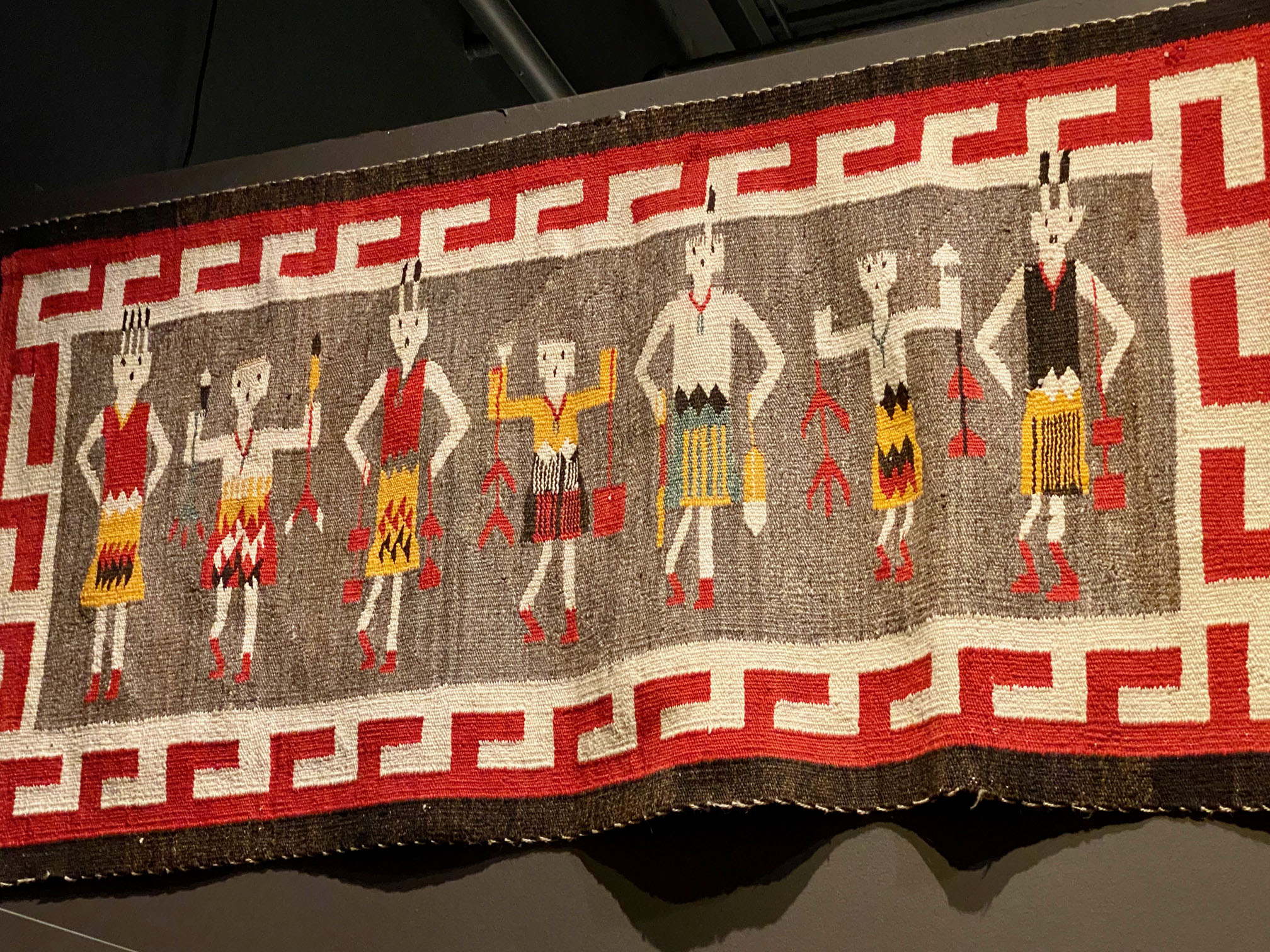
1920-1930 Navajo hand-spun wool rug with figures representing the fire dance. Courtesy: Historic Toadlena Trading Post Museum.

By the 1950s, Federal government instituted policies to encourage Indians to leave their land and move into cities. Unfortunately, Santa Fe Indian Market policies had the same depressing effect – the organizers reduced both the number of artists allowed to show and amount of prize money that could be won.

By 1959, the SF Indian Market was on life support, with a few private donors stepping in with funding just to let it survive.

But during the 1960s, changes were afoot. The Institute for American Indian Arts began in Santa Fe, where Lloyd Kiva New gave Native artists “permission” to throw off traditional conventions and make contemporary art. Across the United States, social-justice movements focused on indigenous people’s rights demanded policy changes to reverse the impact of oppression. By 1968, Congress had passed the Indian Civil Rights Act.

What did that mean for the Market? The majority of works on display in the museum gallery are from the post-1970s period, when the scope, range, voice, virtuosity, and experimentation reflected the times.

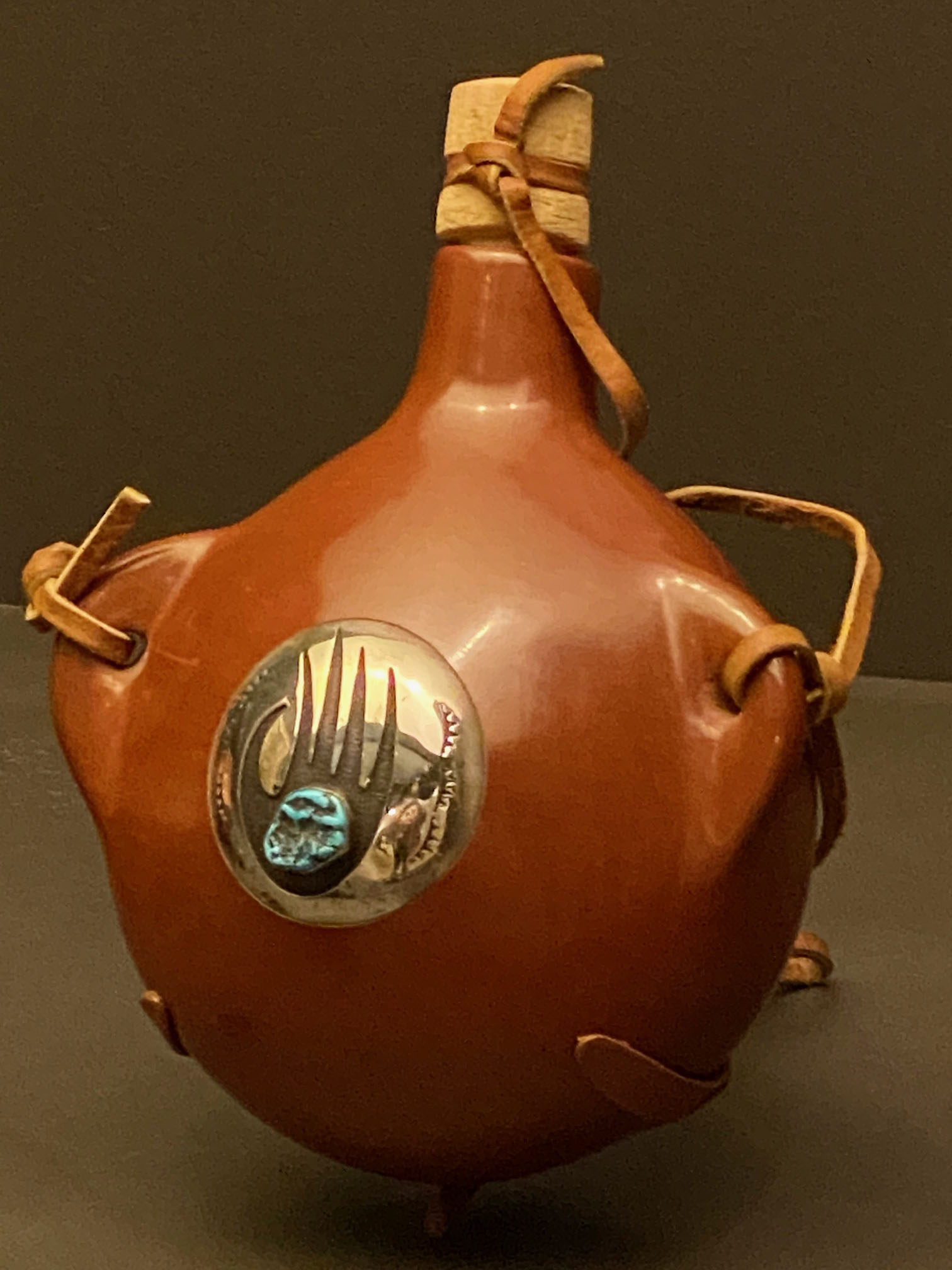
1974 pottery canteen with turquoise and silver by San Ildefonso artists Rose Gonzales and Tse Pe. Courtesy: private collection.

Here are some examples – the glorious, gleaming, turquoise-inlaied 1980s vessel by by Zia/Jemez/San Ildefonso artist Dora Tse Pe and the virtuoso painting on a jar by by Acoma artist Dorothy Toriio.

1980s pottery jar by Zia/Jemez/San Ildefonso artist Dora Tse Pe. Courtesy: private collection.
1990 pottery jar by Acoma artist Dorothy Toriio. Courtesy: King Galleries.

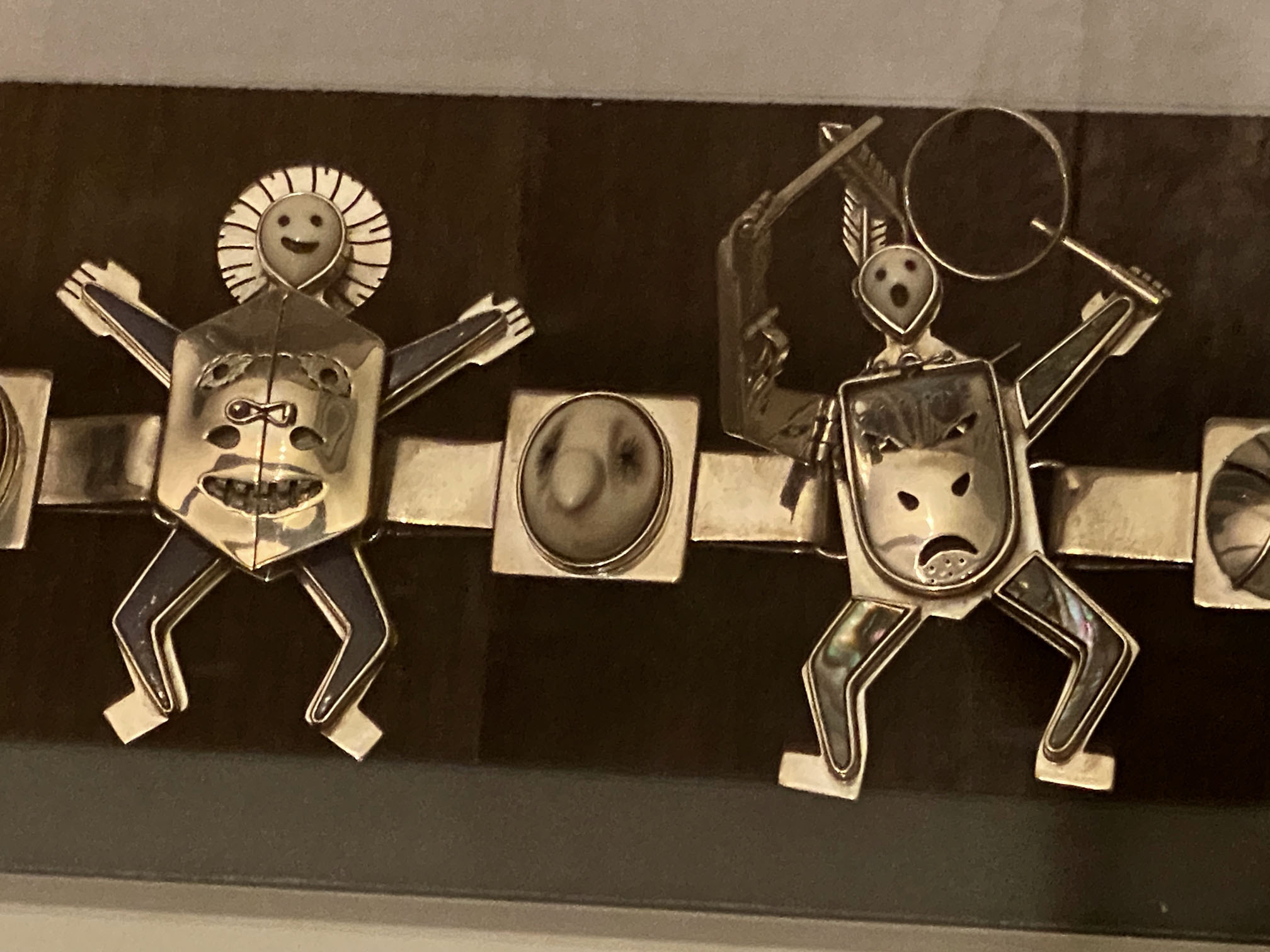
Or, consider the virtuoso silverwork and inlaid belt by Aleutian master Denise Wallace; edgy, theatrical 1990s Cochiti figurines by Virgil Ortiz; and a 1999 horsehair basket woven by Tohono O’odham artist Leona Antone. See more in our Flickr album.

Silver 1986 “Aleut Dancer Belt” by Aleut artist Denise Wallace with abalone, fossil ivory, and lapis; Best in Non-traditional Jewelry Award. Courtesy: private collection.

The show’s finale catapults the story of Indian Market into the future.  First, there’s a cluster of sculptural and video works by Virgil Ortiz, featuring his sci-fi, super-powered, time-traveling warriors from the future who travel back to 1680 to fortify the success of the Pueblo Revolt and save Pueblo culture.

“Kootz (Runner-twin brother of Tahu)” 2018 high-fire clay sculpture with “warning” LED lights by Cochiti artist Virgil Ortiz. – a character from his sci-fi 2180 ReVOltage Series. Courtesy: the artist
“Tahu (Blind Archer)” 2018 sculpture with LED lights by Cochiti artist Virgil Ortiz.. Courtesy: the artist

Second, there’s a photo wall of families and their young children, who create work to enter in to the children’s division. It leaves visitors with the strong feeling that not only will forward-looking artists keep innovating and creating, but that the kids will be all right.

Still of 2022 “Made in Native America” video by Cochiti artist Virgil Ortiz, featuring sci-fi costumes. Courtesy: the artist

Pedro Reyes Takes Direct Action in Santa Fe

You first see a group of anonymous protestors – statues that appear to be taking it to the streets with placards and bullhorns. Elevated at different levels, they present a monument to non-violent protest – a fitting opening to Pedro Reyes: DIRECT ACTION, on view at SITE Santa Fe through May 1.

Reyes believes in participatory art projects that transform art-making into social action.

The Protesters, Reyes’ 2016-2017 monument to unified voices that bring about change from non-violent protest. Courtesy: the artist, private collectors.
Memento, 2022 – vases made from gun parts by Albuquerque and Santa Fe students. All for sale.

The products of his 2022 Memento are right behind you – an array of fun flowers popping out of tall vases. Look closer.

The airy containers are transformed guns from a New Mexico buyback program that incentivized people to exchange their guns for grocery or home-store gift cards. The vases, made by welding-class students from Albuquerque and Santa Fe, are all for sale, with proceeds going to fund activities by New Mexicans to Prevent Gun Violence.

Turning the corner into the next installation, you encounter a wall of videos and shovels in a similar transformation – Palas por Pistoles – that Reyes organized in a particularly violence-prone community in western Mexico.

Reyes’ Palas por Pistoles (2006-present) – shovels made from melted-down gun parts, which were used by schools and museums to plant trees.

Reyes asked people to donate guns to be melted down for an art project promoting environmental peace. He received 1,527 weapons, crushed them in a public-art event, and commissioned a foundry to make shovels. Schools and museums used the shovels to plant 1,527 trees.

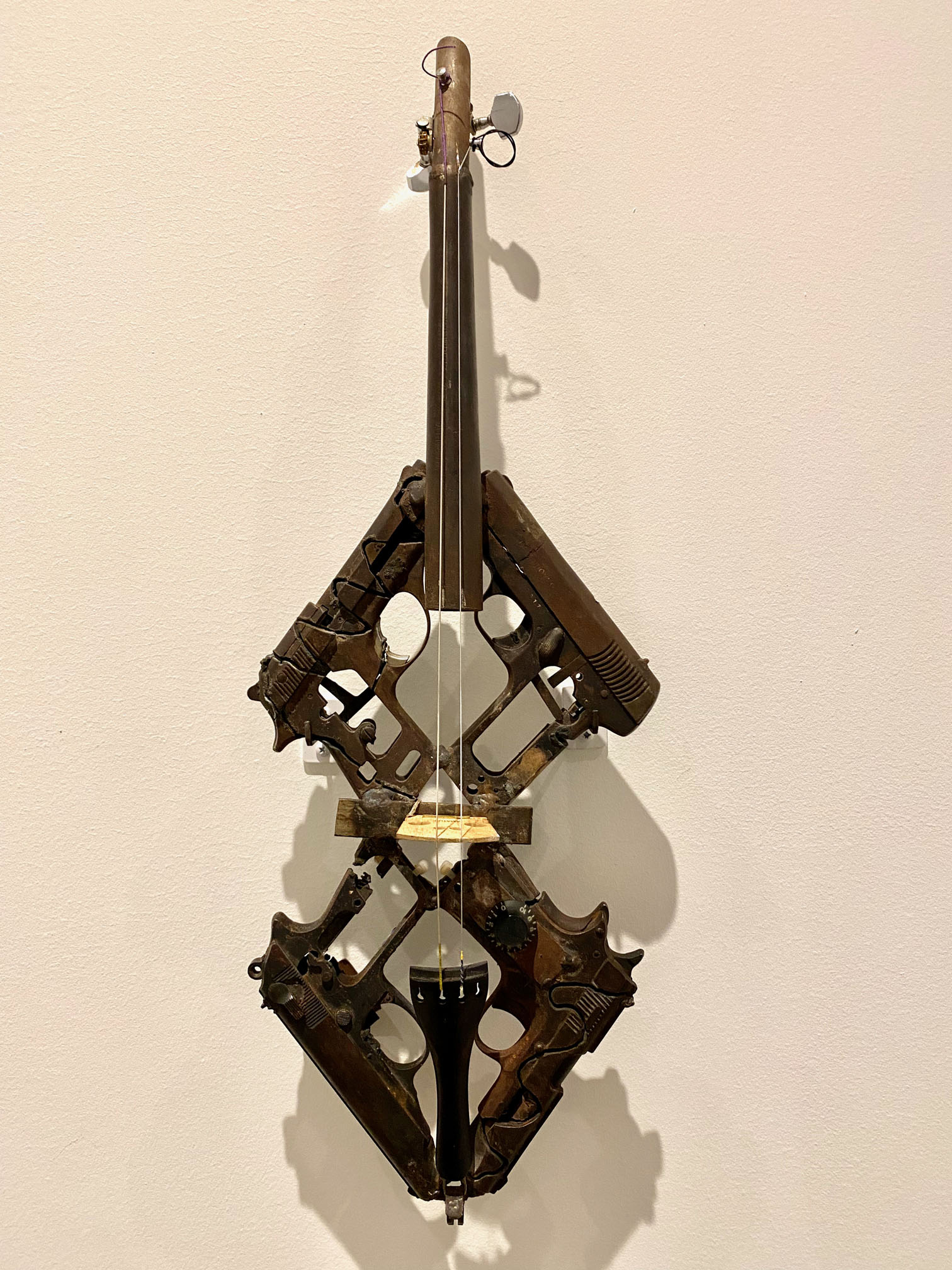
Every turn in the gallery reveals a different type of installation and project – libraries for “the people,” sculptures referencing language systems, posters protesting nuclear arms, and musical instruments and contraptions created from weapons.

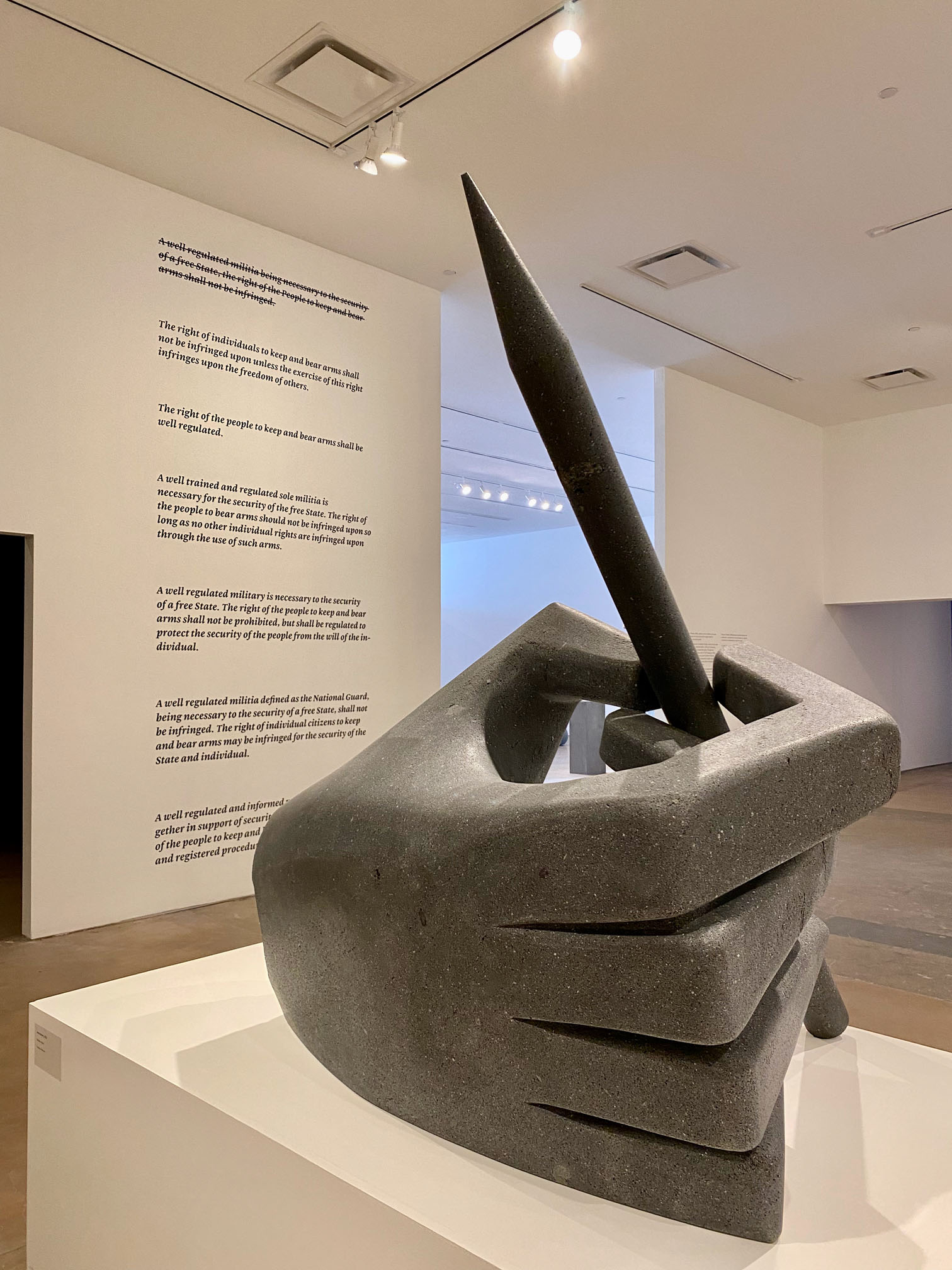
You can’t miss the artist’s large volcanic-rock hand with pencil – an emblem of Reyes’ Amendment project that held community meetings where rewrites to the Second Amendment were proposed and discussed. The idea is that with so much discussion on policies these days, it’s better to write down the “amendments to the Amendment” in pencil! A list of suggestions is prominently posted nearby.

2002 Amendment volcanic stone hand writes the Second Amendment in pencil to facilitate changes in wording as necessary. On wall, multiple drafts of the Second Amendment generated in a Tampa, Florida community project.
Reyes’ 2022 marble sculpture, Colloquium (Parafrasis) depicting the architecture of speech; in background, icons of solutions to social problems from The People’s United Nations (pUN) project – food insecurity, population, gun control, mass incarceration.

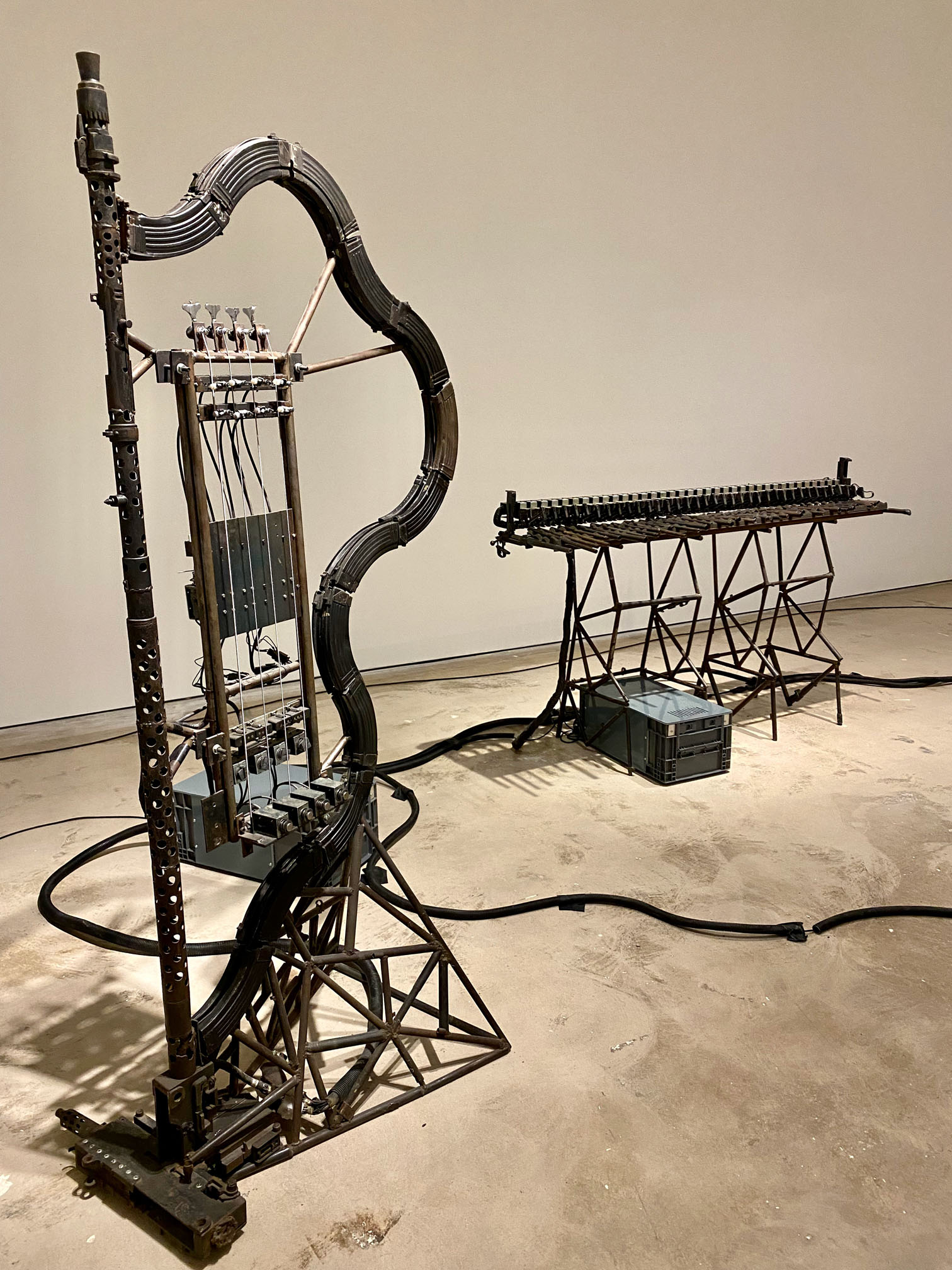
Visitors tend to linger in the Disarm gallery, closely examining the various automated musical instruments created from firearms. Every few minutes, one of the pieces awakens to pluck a string or tap out a slow sequence. It’s a bit startling, not knowing which of the seven is going to activate next.

Harpanet and Cañonófono in Disarm Mechanized, mechanized instruments made from recycled gun and rifle parts. Courtesy: Enrique Rojas.
Reyes’ 2012 Disarm (Violin) from destroyed weapons, played in SITE Santa Fe concerts in 2023. Courtesy: the artist.

Take a look at our Flickr album to see more of the exhibition and to hear the sounds made by the Disarm instruments.

SITE Santa Fe provides “activators” for Reyes’ Music Machine installation – an experience that demonstrates how one artist’s imagination can make you stop and think, even if it’s toward the end of a deep, contemplative show.  Reyes features iconic firearms from three European countries – Austrian Glocks, Swiss Carbines, and Italian Barettas – that have been transformed into classy music boxes. When activated, each plays a musical composition by a famous composer from that country.

Gallery educator Red Hart about to activate Reyes’ Machine Music – crank-operated music boxes made of Swiss Carbine rifles, Italian Barettas, and Austrian Glock pistols.

Hear the artist talk about each of these works in the SITE Santa Fe audio guide, and take time to ponder taking direct action as you visit this beautifully installed, socially relevant, and thought-provoking show.

No Nukes installation with series of 2022 hand-painted Zero Nukes posters in different languages, representing many countries. Courtesy: the artist.

Fronteras del Futuro in the Southwest

Pow! Wham! What? It’s superheroes, avatars, and mixed-media channeling sci-fi social consciousness in an engaging, colorful, thought-provoking mix in the super-fun Fronteras del Futuro: Art in New Mexico and Beyond exhibition at Albuquerque’s National Hispanic Cultural Center through March 12.

These artists love mixing pop culture images, found objects, and historic iconography to question where we’ve been and where we’re going. Take a look at our favorites in our Flickr album.

Some artists use pop culture to get our attention on deeper issues. The back-to-the-future B-movie poster series by Angel Cabrales prompts reflection on societal attitudes about immigrants and border issues.

2016 B-movie poster by Angel Cabrales to spur discussion on immigration and border issues. Courtesy: the artist.

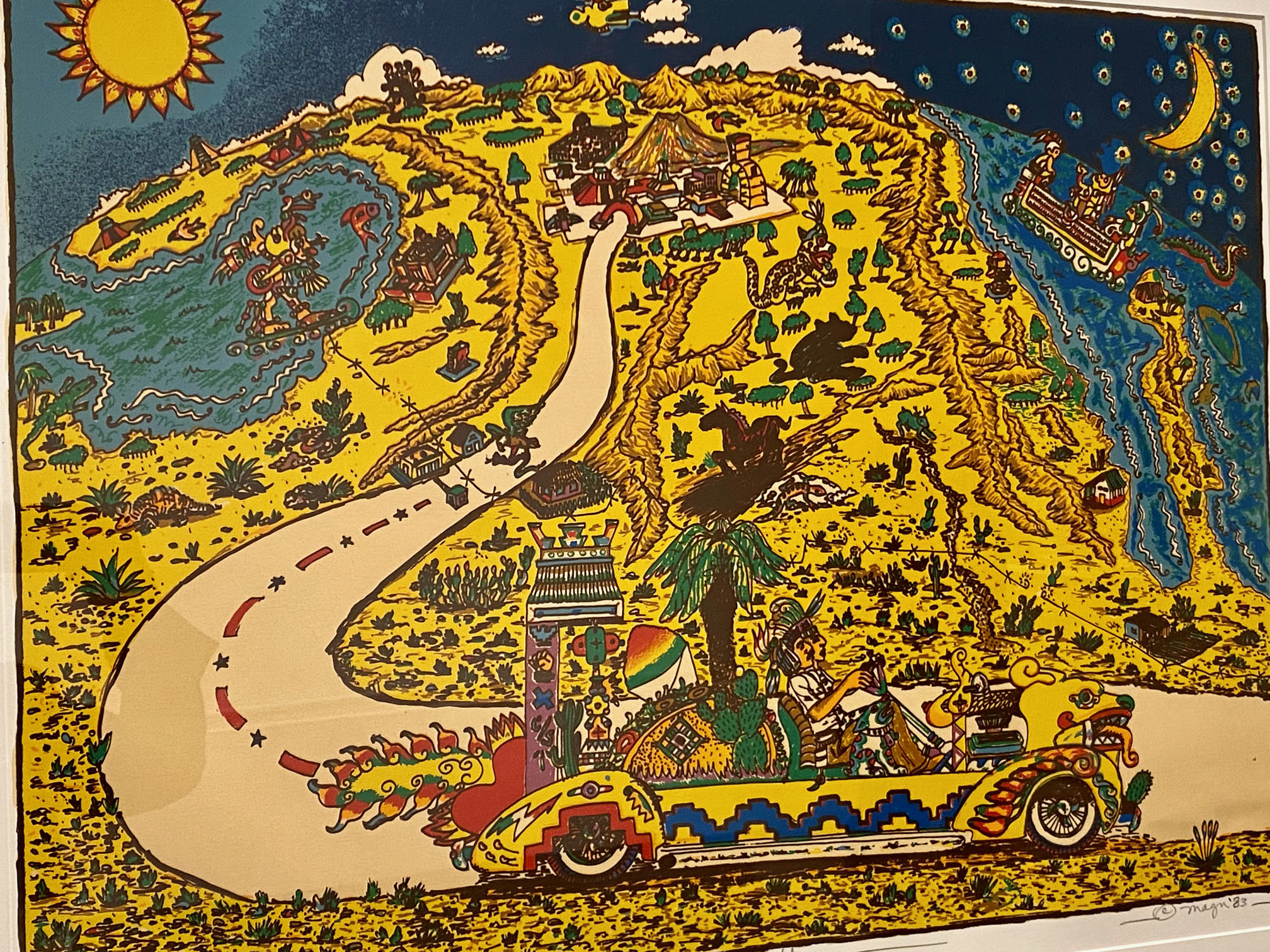
Gilbert “Magú” Luján’s silkscreen merges the epic scope of Mesoamerican history into a contemporary context. A stylish Aztec couple takes a cross-border journey from Aztlán to Texas in a pre-Columbian-styled low rider.

1983 silkscreen Return to Aztlán by Gilbert “Magú” Luján; a cross-border journey and reflection on pre-Columbian roots and heritage.

One of the most epic achievements is a wall-length, accordian-folded letterpress codex – a collaboration by Enrique Chagoya, Guillermo Gómez-Peña, and Felicia Rice. Codex Espangliensis features pop-culture superheroes, pre-Columbian imagery, comics, and social declarations to explore New World history from 1492 to the present.

Designed to be read right to left: cover and first pages of Codex Espangliensis from Columbus to the Border Patrol, a hand-colored letterpress accordian-folded book.
Pages from 1999 Codex Espangliensis from Columbus to the Border Patrol, a hand-colored letterpress book by Enrique Chagoya, Guillermo Gómez-Peña, and Felicia Rice.

Another set of artists rummages around to find tossed-off computer parts, circuit boards, skateboard parts, and other found items to create their works.

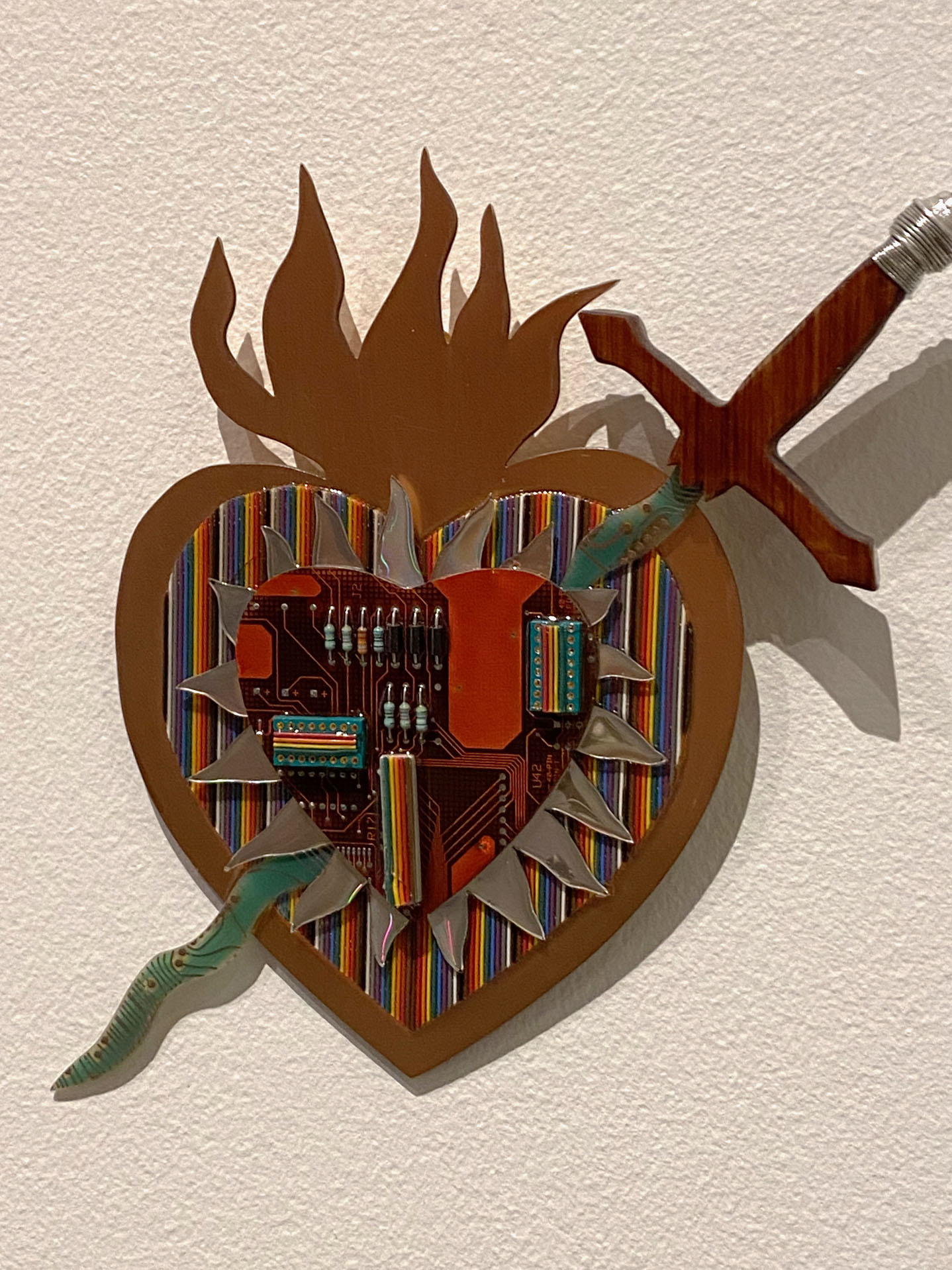
Marion Martinez’s 2002 Pierced Heart/Milagro; circuit boards and wood. Courtesy: the artist
Esteban Borjorquez’s 2018 Zena of Urion – a sci-fi creation from discarded items. Courtesy: the artist.

Marion Martinez grew up near Los Alamos National Laboratory, and started visiting its salvage area to find components from which to assemble her artworks – transforming discarded tech into beautiful icons of Northern New Mexican heritage.

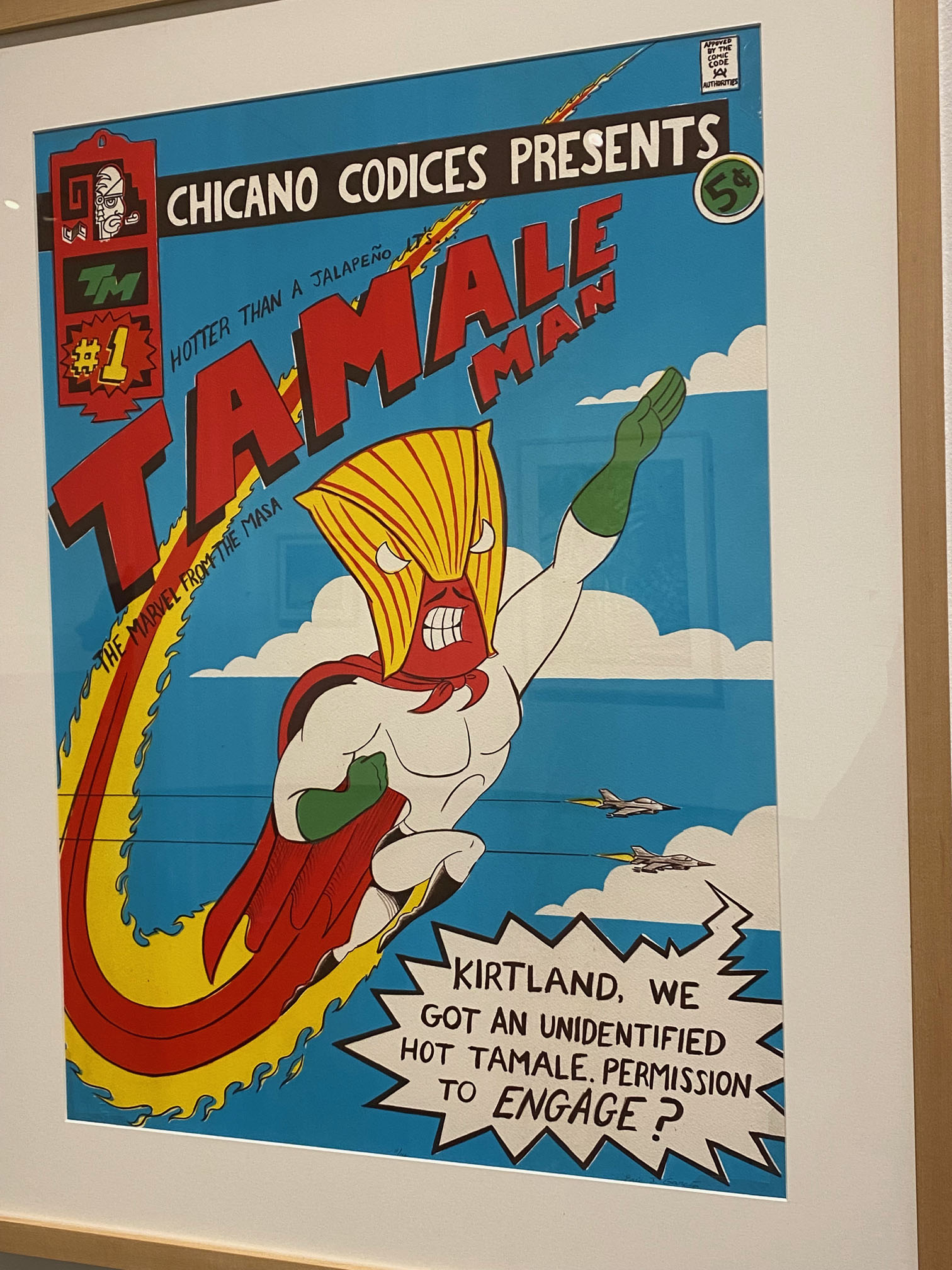
Eric J. Garcia’s 2005 lithograph Tamale Man.

Roswell political cartoonist Eric J. Garcia takes another angle on mixing New Mexico’s cultural, culinary, and nuclear history. His Tamale Man series features the transformation of a guy munching a tamale at the first blast at the Trinity Site into a radioactive superhero.

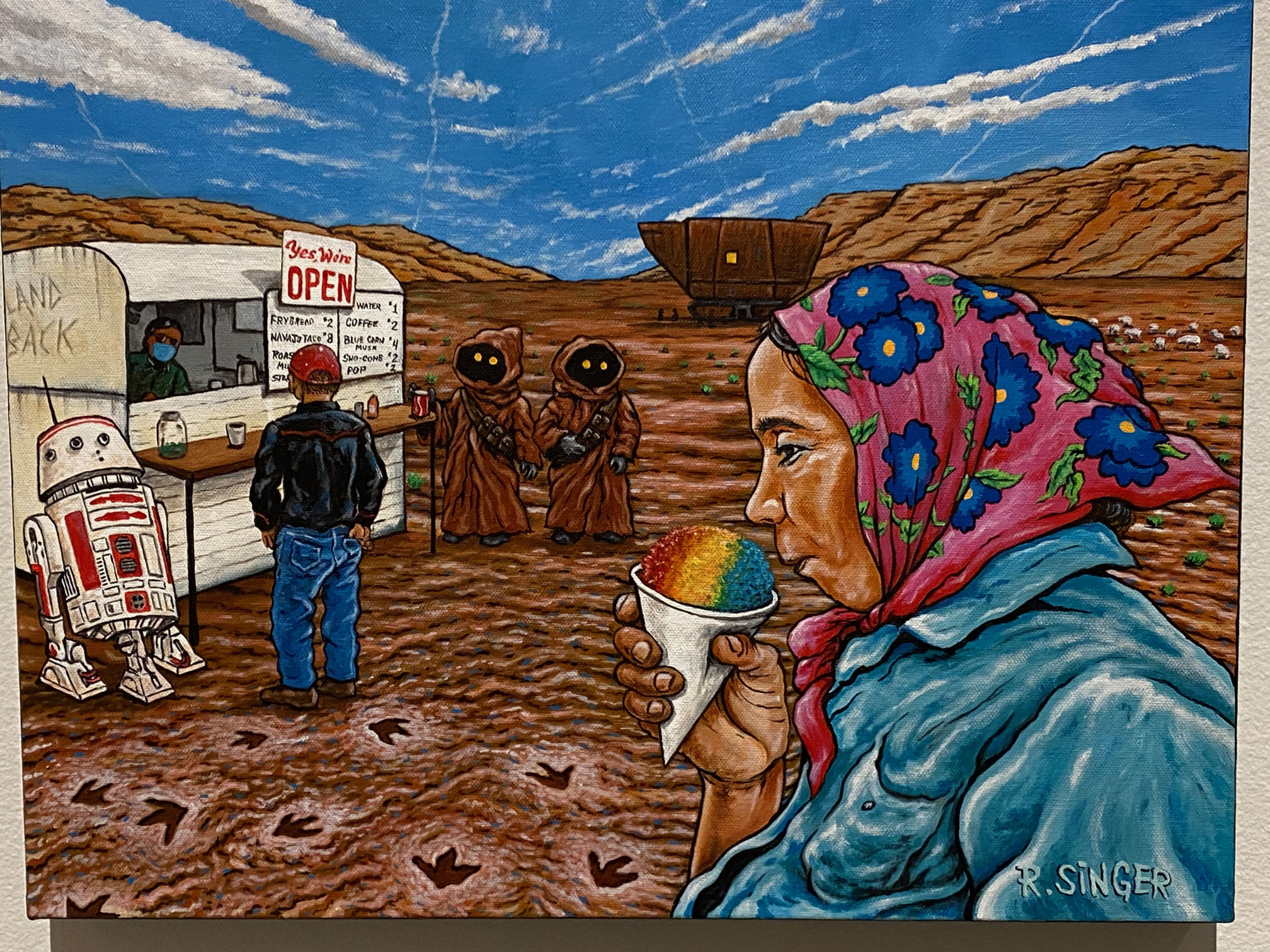
Ryan Singer’s painting series blends his childhood fascination with Star Wars and other futuristic sagas with his Navajo heritage and upbringing.

Ryan Singer’s 2021 acrylic, Rainbow Flavor.

Meet Ehren Kee Natay, a Diné artist, whose work opens the exhibition with a loving tribute to his grandfather, the first Native American to release a commercial record:

Whitney Resurrects American Optimism from Storage

To get a taste of exuberant optimism, travel back with the Whitney Museum of American Art in At the Dawn of a New Age: Early Twentieth-Century American Modernism, on view through February 26.

It’s a showcase for art created at the beginning of the 20th century – a time when European experimentation in abstraction, urban skyscrapers and other engineering marvels, Einstein’s breakthroughs, and the success of the women’s suffrage movement made artists optimistic about the future.

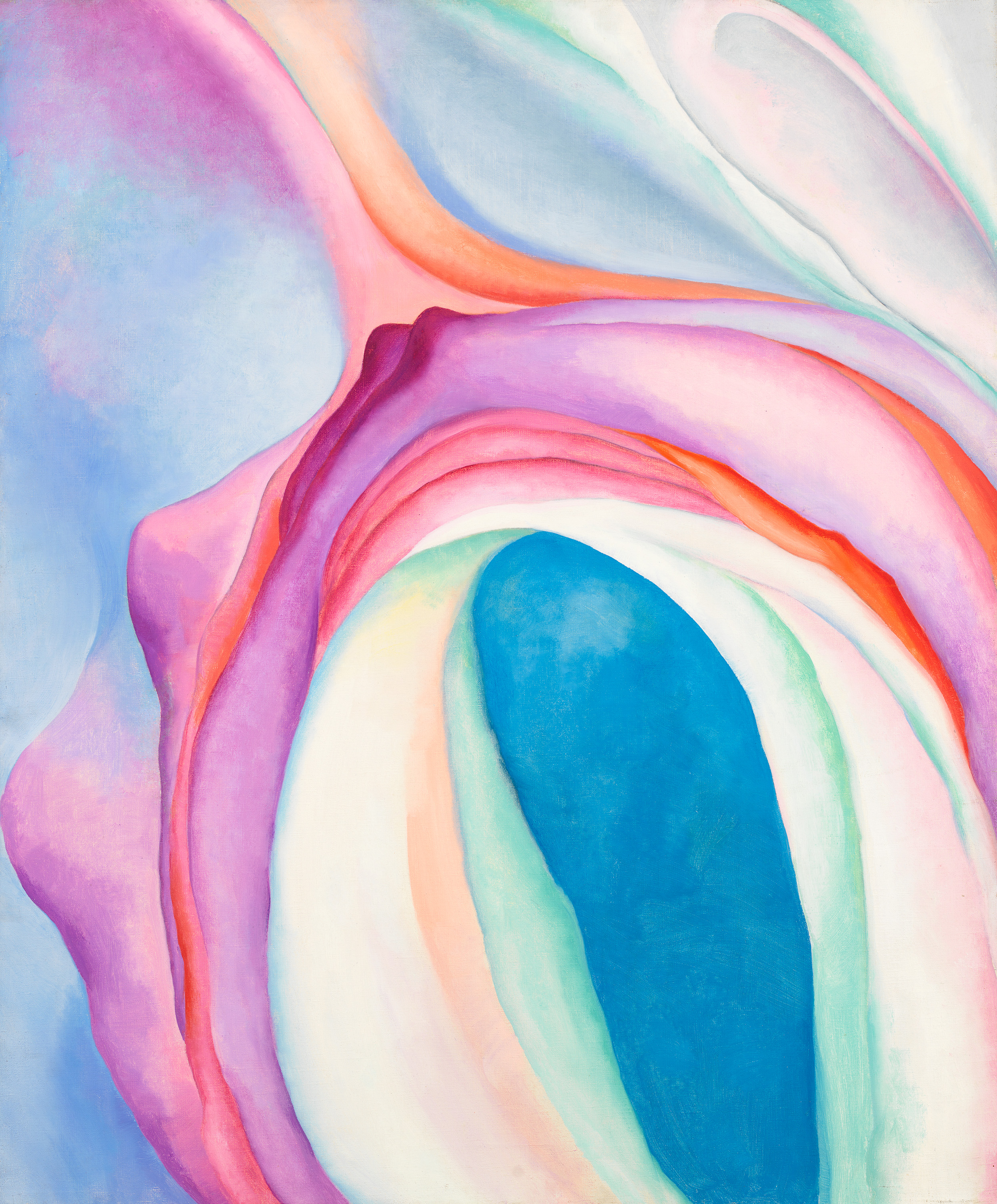
The show features work by well-known (and well loved) artists like lyrical abstractionist Georgia O’Keefe (Music, Pink and Blue No.2) and transcendentalist Agnes Pelton (Ahmi in Egypt).

Georgia O’Keeffe’s 1918 oil, Music, Pink and Blue No. 2. © 2022 Georgia O’Keeffe Museum / Artists Rights Society (ARS), New York

But the news story here is the Whitney’s interest in pulling work by their contemporaries out of storage to provide a more expansive look at early American modernism. Nearly half of the works on display have not been out of the stacks for more than 30 years!

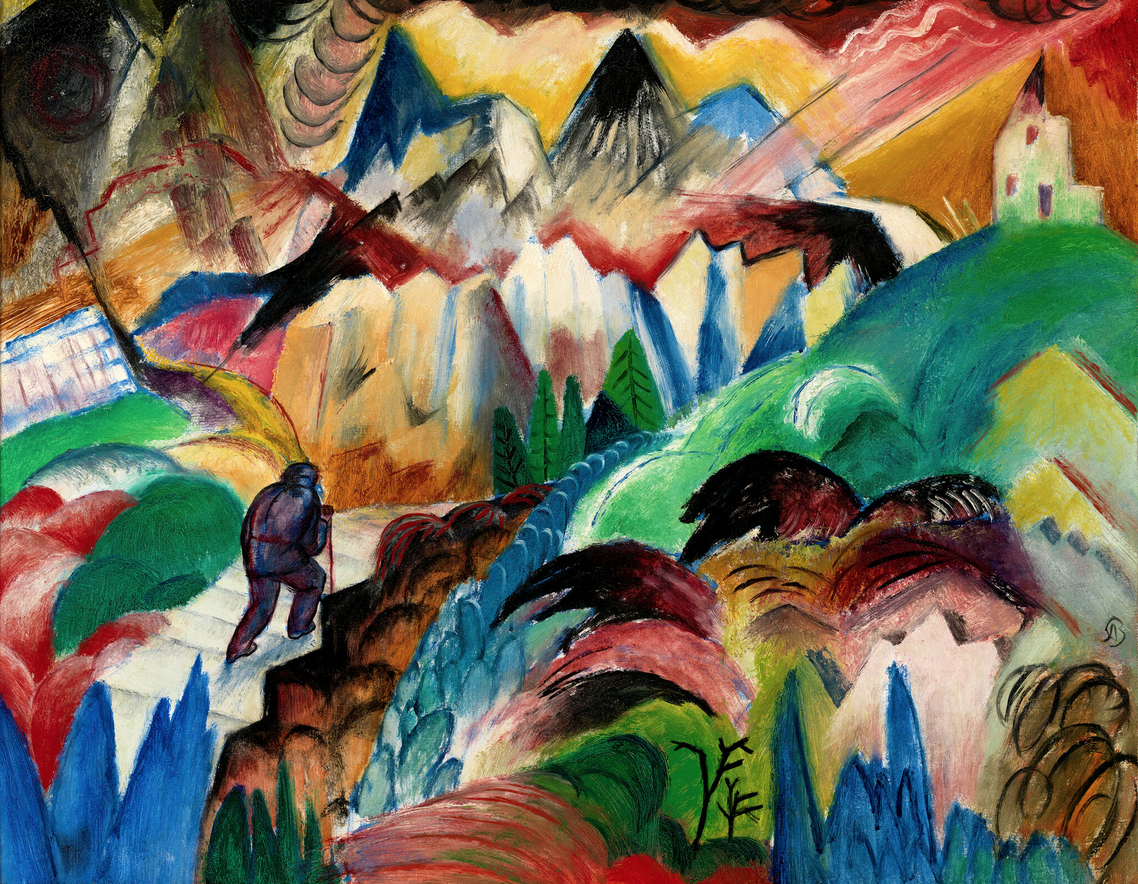
Look at Albert Bloch’s 1916 Mountain, which hasn’t been shown at The Whitney in 50 years. It’s somewhat shocking when you consider that Bloch was the only American invited to join the ground-breaking Der Blaue Reiter in 1911. It’s fitting that Bloch’s nearly forgotten, expressionist landscape was resurrected and featured as the show’s icon – a traveler on an upward journey toward a town on the hill amidst modernist peaks.

Albert Bloch’s 1916 Mountain.

The Whitney’s also pulled Carl Newman’s 1917 Bathers out of storage for this show and hung it side-by-side with Bloch.

Newman was an Academy-trained artist from Philly, but after getting swept up in the Parisian avant-garde one summer, he tried throwing art conventions out the window. 

Color, rainbows, naughty nudes, pleasure craft – a scandalous and joyous mix!

Carl Newman’s 1917 oil on linen painting, Untitled (Bathers)

And what about another “forgotten” convention-breaker? The vibrant 1926 Street Scene is by Yun Gee, a Chinese immigrant modernist who started his art career in San Francisco, but found more acceptance and exhibition opportunities in Paris. Gee was the only Chinese artist running in European modernist circles, and it’s nice to see his cubist expression of San Francisco’s Chinatown right where it belongs in the Whitney’s pantheon.

Yun Gee’s 1926 oil of San Francisco’s Chinatown, Street Scene. Courtesy: estate of Yun Gee.

Works by some of our modernist favorites are also featured – synchronist master Stanton Macdonald Wright, shape-shifter Arthur Dove, and former Brancusi studio assistant and abstracted design leader, Isamu Noguchi.

Henrietta Shore’s 1923 oil, Trail of Life – a recent acquisition by the Whitney to add Shore to its collection.

The stories and careers go on. The exhibition features artists from the West Coast, artists that fled to Paris and found success there, and some modernists that just couldn’t make a go of it and stopped making art entirely.

Henrietta Shore, the Los Angeles innovator who Edward Weston credits as a great influence on his style, was one who eventually opted out.

It’s a beautiful walk through the early 20th century to meet a new set of painters using abstraction to channel an optimistic future – E.E. Cummings (yes, the poet!), Blanche Lazzell of Provincetown, Aaron Douglas of the Harlem Renaissance, and Pamela Colman Smith of Tarot card fame.

Installation view of great modernists. In vitrine: Pamela Colman Smith’s 1909 Rider-Waite-Smith Tarot Deck. Left to right: O’Keeffe’s 1918 Music, Pink and Blue No. 2; Stettheimer’s 1931 Sun; E.E. Cummings’s 1925 Noise Number 13; Macdonald-Wright,’s 1918 Oriental – Synchromy in Blue-Green; Richmond Barthé,’s 1933 African Dancer; Jay Van Everen’s 1924 Abstract Landscape. Photograph by Ron Amstutz.

Here’s a short video by curator Barbara Haskell where she talks about what it was like to find “forgotten” paintings and other stories behind the Whitney’s fascinating modernist reveal:

Scandinavian Folk Dressing Takes a Stand

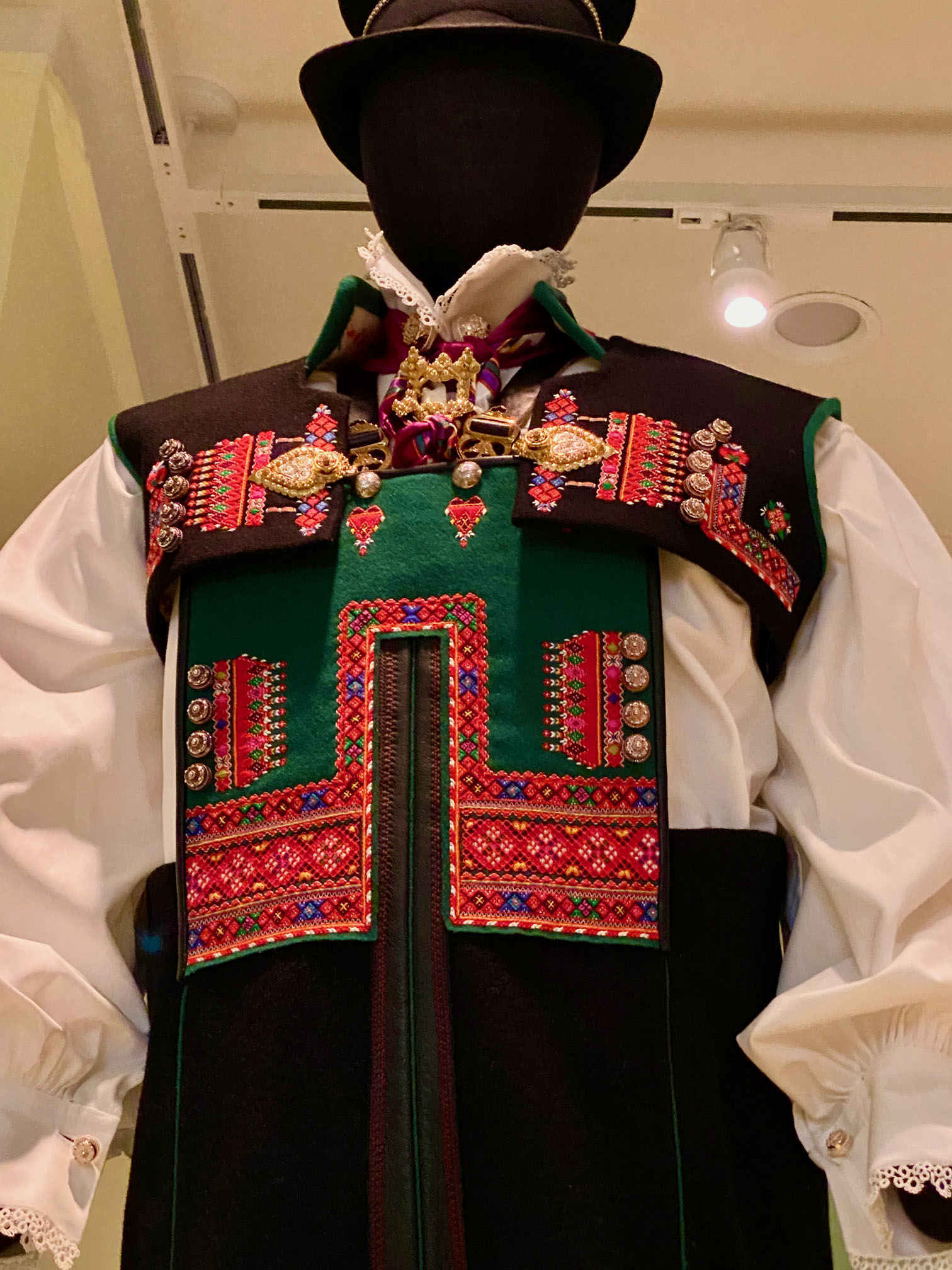
Forget about the picturesque fjords and pastoral views reindeer herders that we imagine when we envision Scandinavia. Completely different stories of history, revolution, oppression, and cultural revival are told by the array of colorful, decorative, embellished and loved clothing in Dressing with Purpose: Belonging and Resistance in Scandinavia, on view at the International Folk Art Museum in Santa Fe through February 19.

You’re introduced to the iconic folk clothing of three cultures when you enter the exhibition – Sweden, Norway, and Sápmi, the homeland of the indigenous Sami people that stretches across the northern boundaries of Russia and the three other Scandinavian countries.

Detail of mid-19th to early 20th century woman’s dräkt from Sweden’s Delsbo parish in Häsingland historical province.
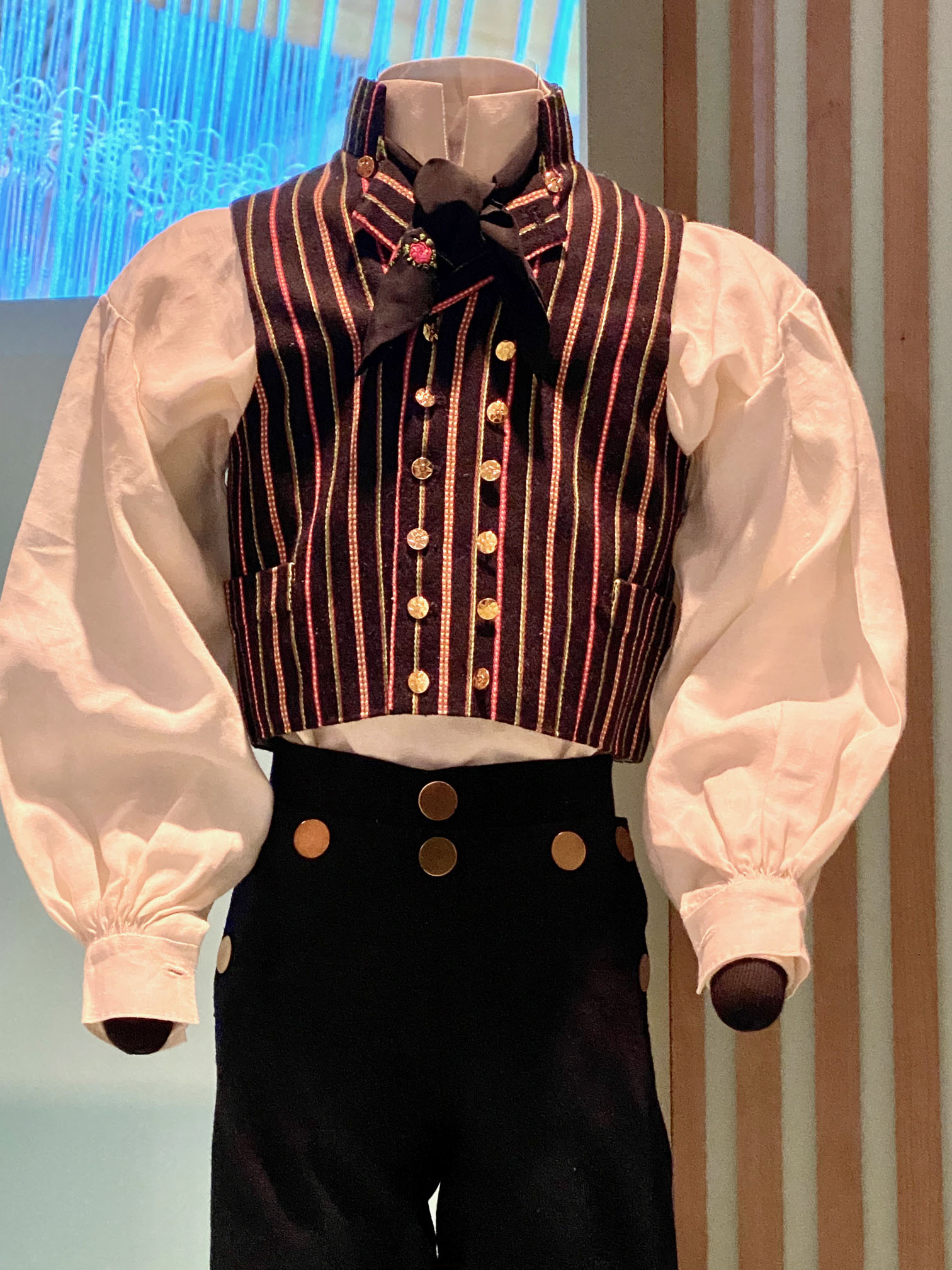
Young Swedish man’s dräkt, made in 1992 by Birgitta Lördal and Maj-Lis Halvarsson of Häsingland historical province.

But then it’s a deep dive into what each of these colorful creations represent.

The story behind Sweden’s folk costumes (folksdräkt) extends back into the 19th century, when rural peasants lived in a fairly hierarchical society and relied on their church clothes to signify where they ranked on the status ladder. Each community developed its own details and styling. In some communities, women used almanacs to help them keep track of various clothing combinations.

The exhibition displays an array of men’s and women’s country ensembles.

There are also examples of striking, elaborately silk-embroidered shawls that were essential to women’s status dressing.

In the 1800s, a series of economic and agricultural misfortunes caused rural Swedes to leave their communities and either migrate to the United States or to middle-class jobs in the city.

Swedish intellectuals worried that the rural population drain meant that country traditions and craftsmanship would vanish. Around 1900, cultural leaders prompted a craft awareness and revival movement ­– retail shops, showcases for hand-crafted clothing, and national museums.

Detail of woman’s 1834 silk-embroidered linen shawl, a status symbol worn on specified occasions; Leksand parish in Sweden’s Dalarna province.

Today, many Swedes gladly purchase and buy kits to make folksdräkt for festivals, parades, and other events.

The curators have even included items from a new cottage industry – protective garment bags specifically designed to store your folk costume!

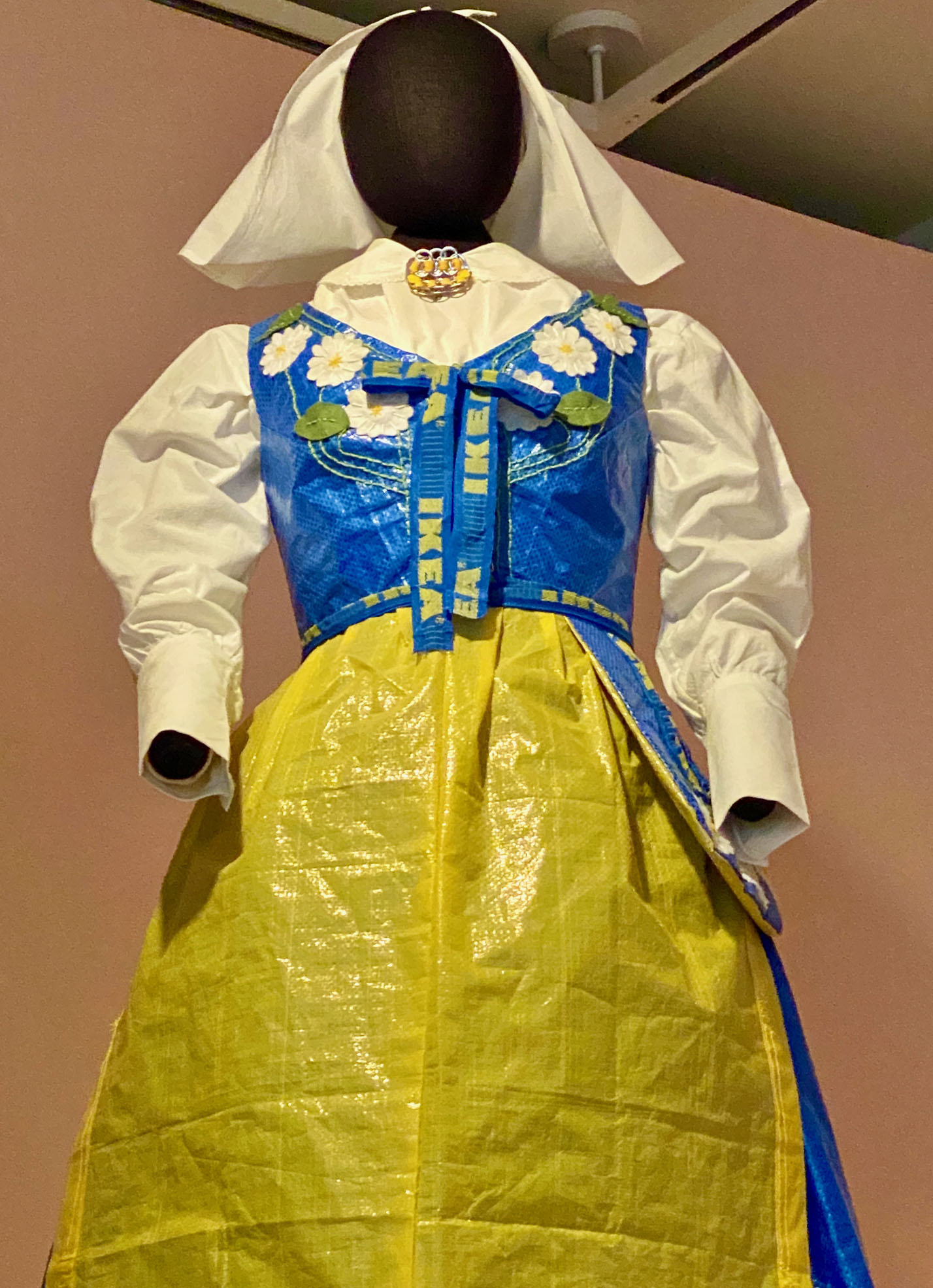
In a whimsical touch, the curators have included a contemporary take from artist Heidi Mattsson – the Swedish national costume made from Ikea shopping bags, a cotton nightshirt and napkin, and sodacan pop tops!

And the curators have included several other inventive modern takes on national wear.

Heidi Mattsson’s 2018 Swedish national costume fashioned from napkin, soda can pop tops, cotton nightshirt, and Ikea shopping bags. I
Täpp Lars Arnesson’s 2016 winter dräkt for his young daughter in Malung parish in Sweden’s Dalarna province; blended decorative elements from other parishes.
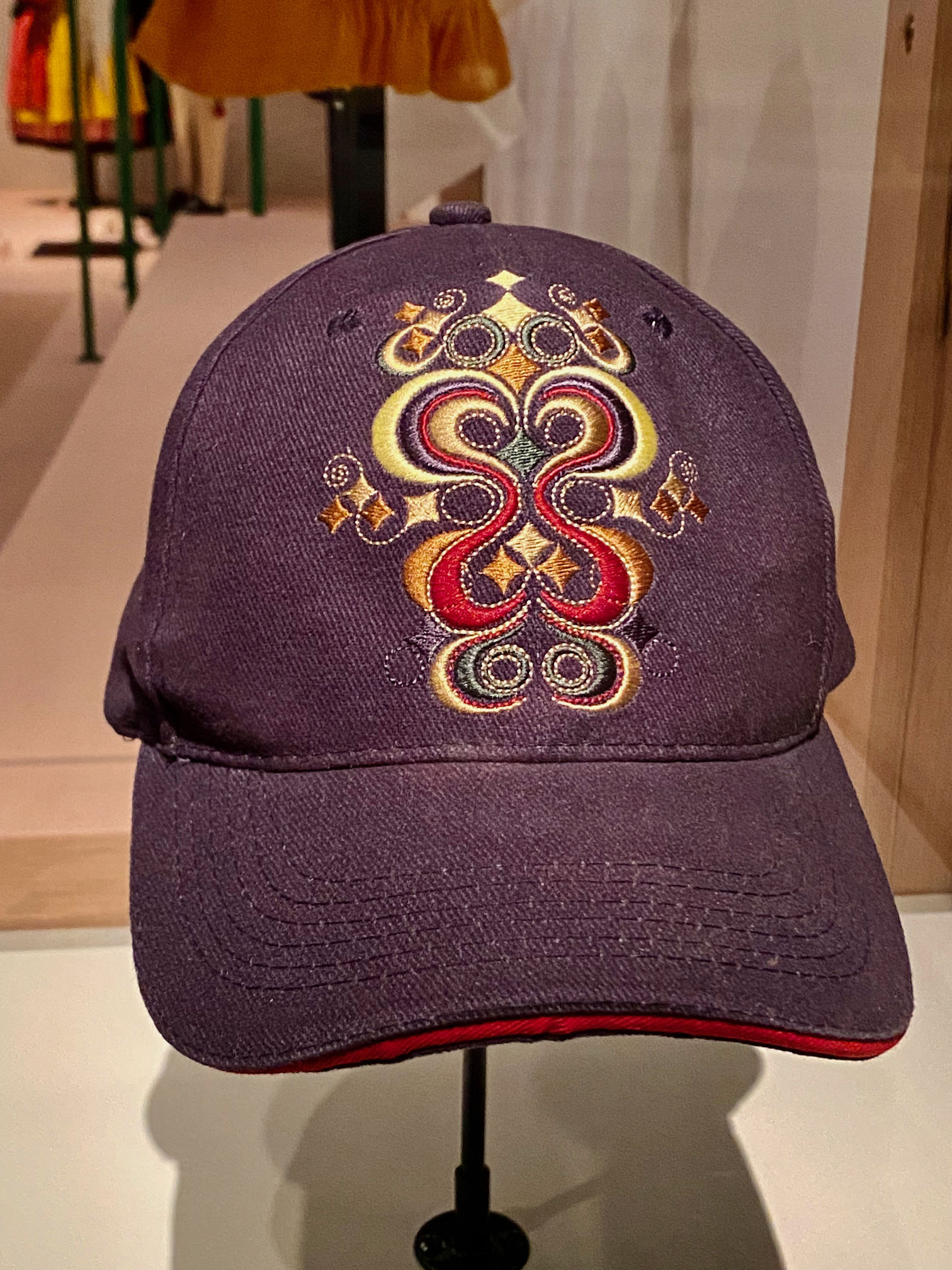
2017 embroidered baseball cap created in Leksand parish in Sweden’s Dalarna province, using traditional symbols. Private collection.

The story told by Norweigan folk dress is more tightly linked to the long revolutionary fight for independence throughout the 19th century. Rural Norwegian peasants were land owners. To city dwellers laboring under Danish and Swedish domination in the 1800s, rural people epitomized the “independent everyman” who had more control over their personal destinies.

During Norweigans’ century-long fight for independence, political activists began adopting bunader, contemporary clothing inspired by preindustrial rural clothing as a sartorial statement about their desire for freedom. It popped up at youth rallies and dances.

1900 national costume – red bodice with beaded insert and dark skirt – typical of Norway’s Hardanger district, depicted in photo.
Hans Kristiansen Lybeck’s fantasy drakt, worn in Oslo’s National Constitution Day parade in 1906. Courtesy: Vesterheim Norweigan-American Museum, Decorah, Iowa.

In 1903, activist and regional dance expert, Hulda Garborg, outlined a philosophy for nationalized clothing and popularized it.  Everyone’s enthusiasm for and pride in the national costume kept going, even after independence in 1905. Even in the 21st century, it’s a sure-fire tourism draw up in Norway’s fjord country.

Close-up of Reidun Dahle Nuquist’s embroidered red-jacket bunad, made in East Telemark, Norway by a relative in 1960-1963. She wore it for her wedding and throughout her life.
Man’s 2018 bunad by Inger Homme and other artists in Valle in Norway’s Setesdal district; silver, gold, brass jewelry by Hasla AS.

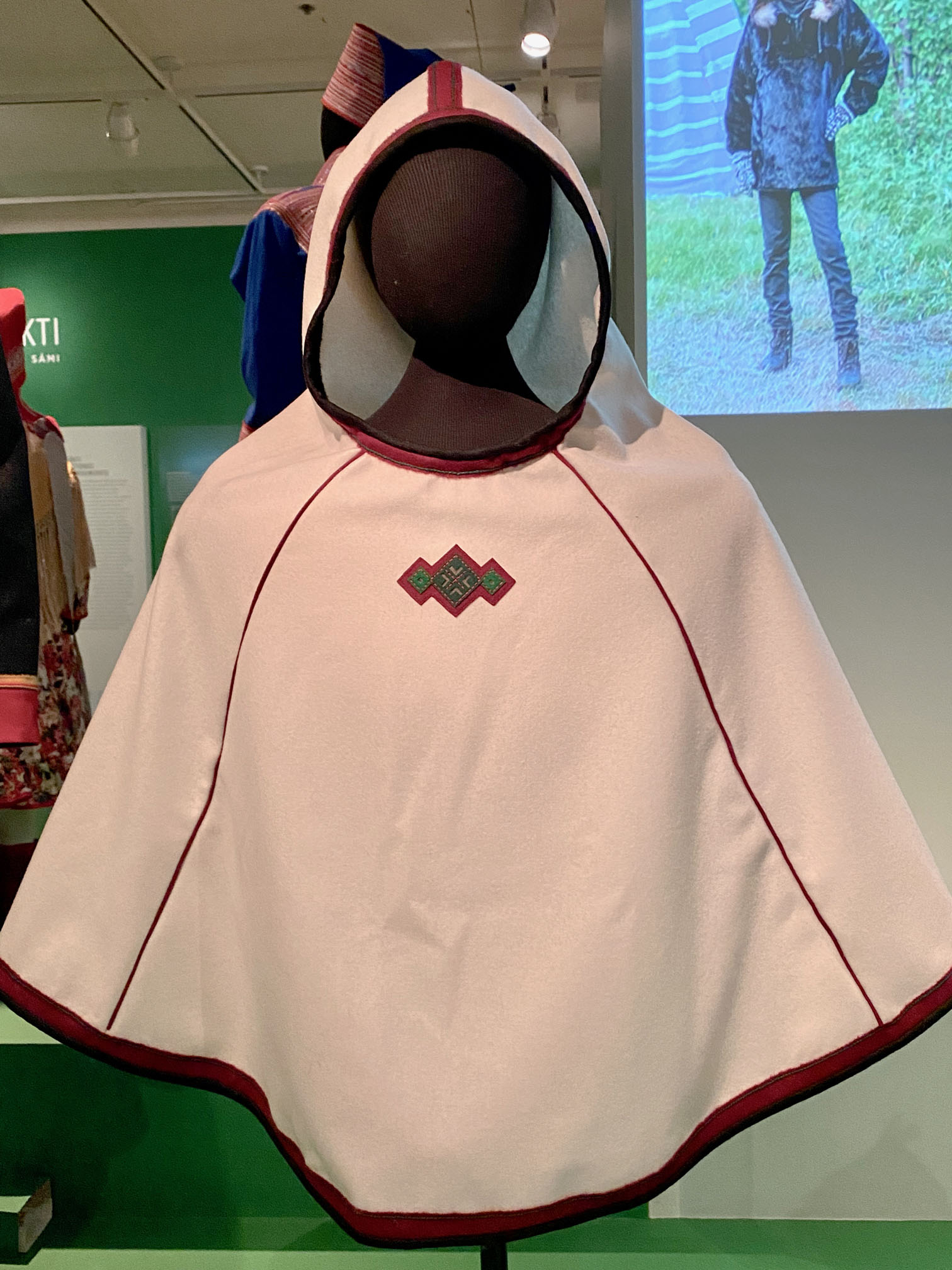
In the Sápmi portion of the exhibition, the clothing and art is mostly contemporary, with a focus on making declarative statement about indigenous rights.

Long an oppressed minority, the Sámi people have been subject to racial injustice, forced relocation of children to boarding schools, and industrialization of their traditional lands north of the Arctic Circle. In many jurisdictions, they were forbidden to wear their traditional garb.

Symbol of Sámi pride: Jenni Laiti’s 2017 gákti creation from Karasjok – in Finnmark, the Norwegian side of Sápmi. Courtesy: the artist.

Around 1970, the Sámi were able to organize and raise public awareness about their status and why they opposed government dam building in Sápmi. Across their land, people began proudly wearing the traditional gákti and other symbols of their culture and engaging in direct political action on issues affecting them.

1966 summer gákti for a Sámi couple – wool tunics embellished with rose-colored ribbons and rickrack; made in Guovdageaidnu in Finnmark (Norwegian side of Sápmi)
Contemporary Sámi design: 2017 ready-to-wear cotton and poly “party outfit” by Stoorstålka (clothing line by Lotta W. Stoor and Per Niila Stålka) of Norrbotten (Swedish side of Sápmi).

The exhibition has posters and artwork proudly proclaiming native rights and identity, including an appropriated Sámi-style Rosie the Riverter image. For the contemporary eye, some of the most exciting clothing in the exhibition are by young Sámi designers and activists – ranging from Sámi-inspired home goods, modern woven designs, and even ready-to-wear party dresses from Sámi clothing lines.

The examples from Sámi makers demonstrate how design and fashion can help to reconnect young people with their ancestors’ heritage that society blotted out.

Jorunn Lokvold’s 2020 Igvu gákti with geometric applique, a style reconstructed in 1995.
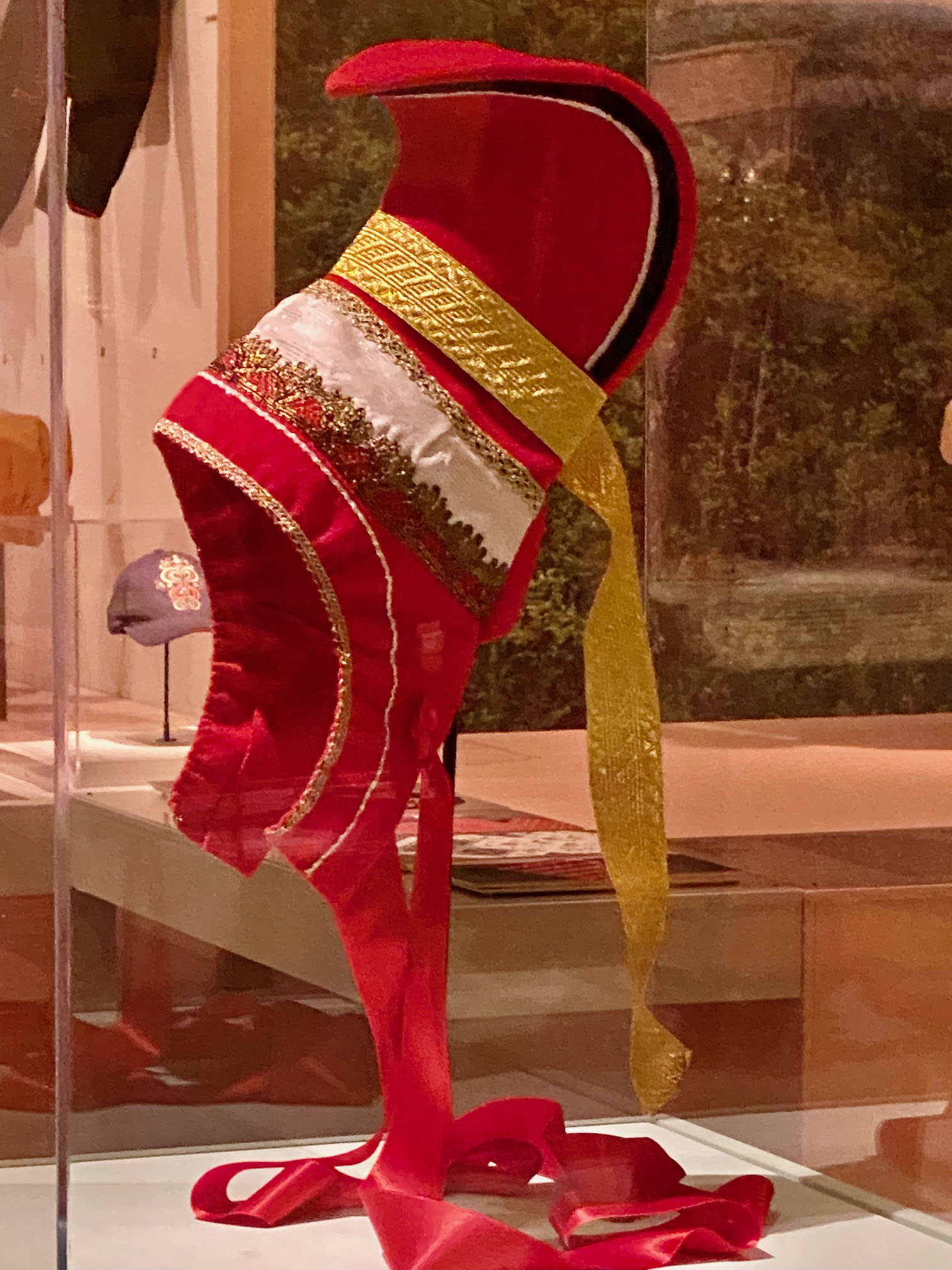
Outi Pieski’s 2020 Ladjogahpir, a revival of a headdress symbolic of Sámi women’s resistance; from Utsjoki (Finnish side of Sápmi).

This wonderful exhibition demonstrates exactly how old traditions can be reinvented to gain traction, even in the 21st century. Take a look through our Flickr album.

Resistance and revival continue in the far North. Meet Jenni Laiti, one of the Sámi artists, activists, and change-makers, who introduces you to art-making in the Arctic:

Contemporary Artists Talk with Thomas Cole

There’s a big conversation going on about epic landscapes, people’s impact upon the wilderness, and personal connections to nature. It involves four contemporary artists and American master Thomas Cole, mid-19th century landscape painter and visionary, through February 12 at the Albuquerque Museum.

Plus, visitors are able to step back in time to visit Cole’s studio, arranged much as it was at the moment of his untimely death at the age of 47 – an unfinished canvas, paint palettes, his paint box, plaster casts, and mementos of his wilderness walks and trips abroad.

1835-1845 paint box, palette, and tools in Cole’s studio. Courtesy: Greene County Historical Society’s Bronck Museum.

This section of the four-in-one exhibition is Thomas Cole’s Studio: Memory and Inspiration. The curators have also surrounded the studio recreation with a wide range of Cole’s studies and finished works, including his last completed commissioned work. Take a closer look in our Flickr album.

Unfinished Landscape with Clouds, paints, plaster casts, and furniture in Cole’s studio when he died in 1848. Courtesy: Thomas Cole National Historic Site.

Cole redefined American landscape painting in the 1830s and 1840s by merging the style of romantic European landscapes with the dramatic skies, vistas, and mountains of New York’s Adirondack wilderness. His work kick-started the Hudson River School of landscape painting, and by the time of his untimely death at age 47, he was America’s best known and best loved artist.

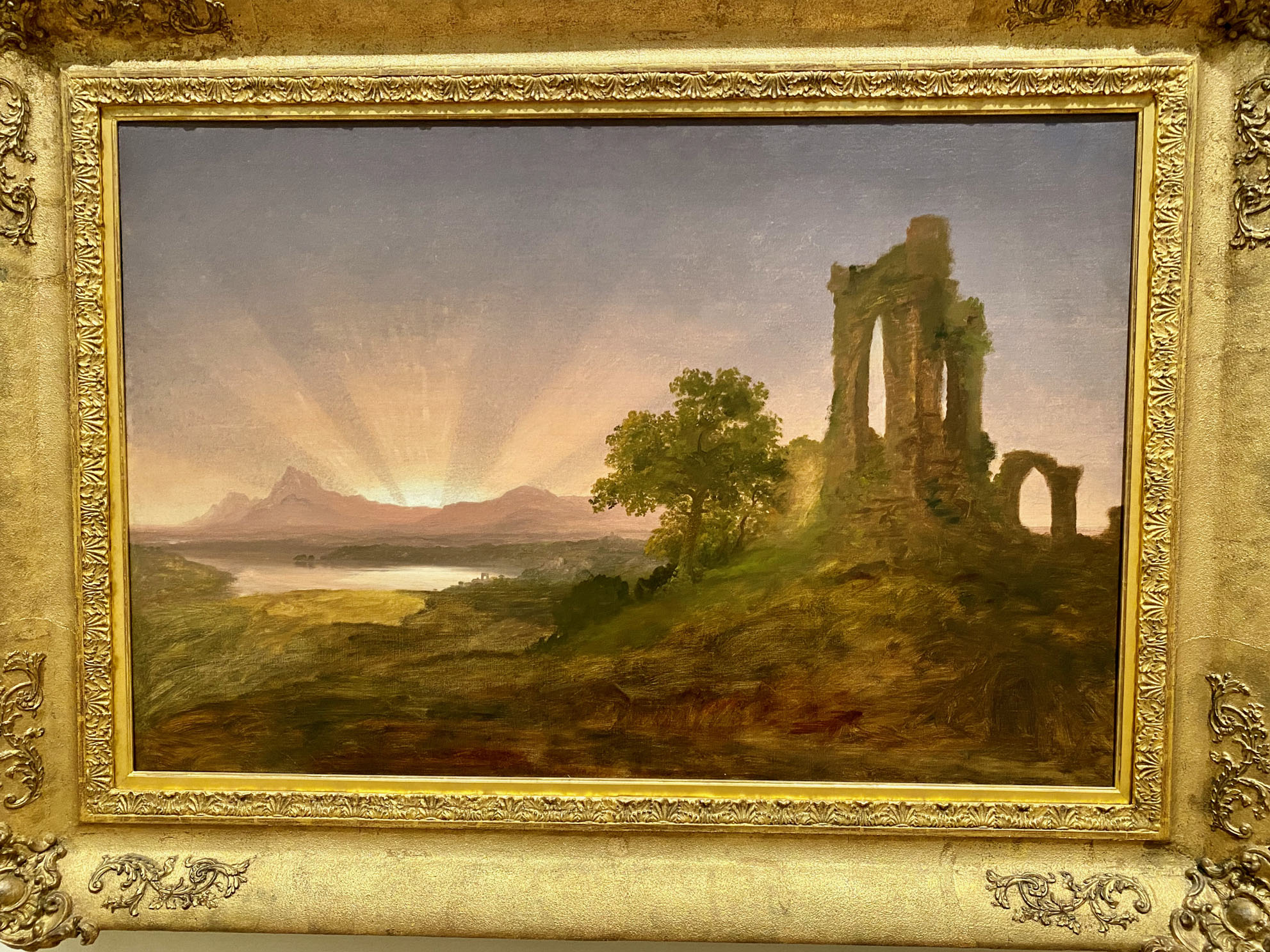
Cole’s 1848 Gothic Ruins at Sunset, an unfinished work from his studio. Private collection.
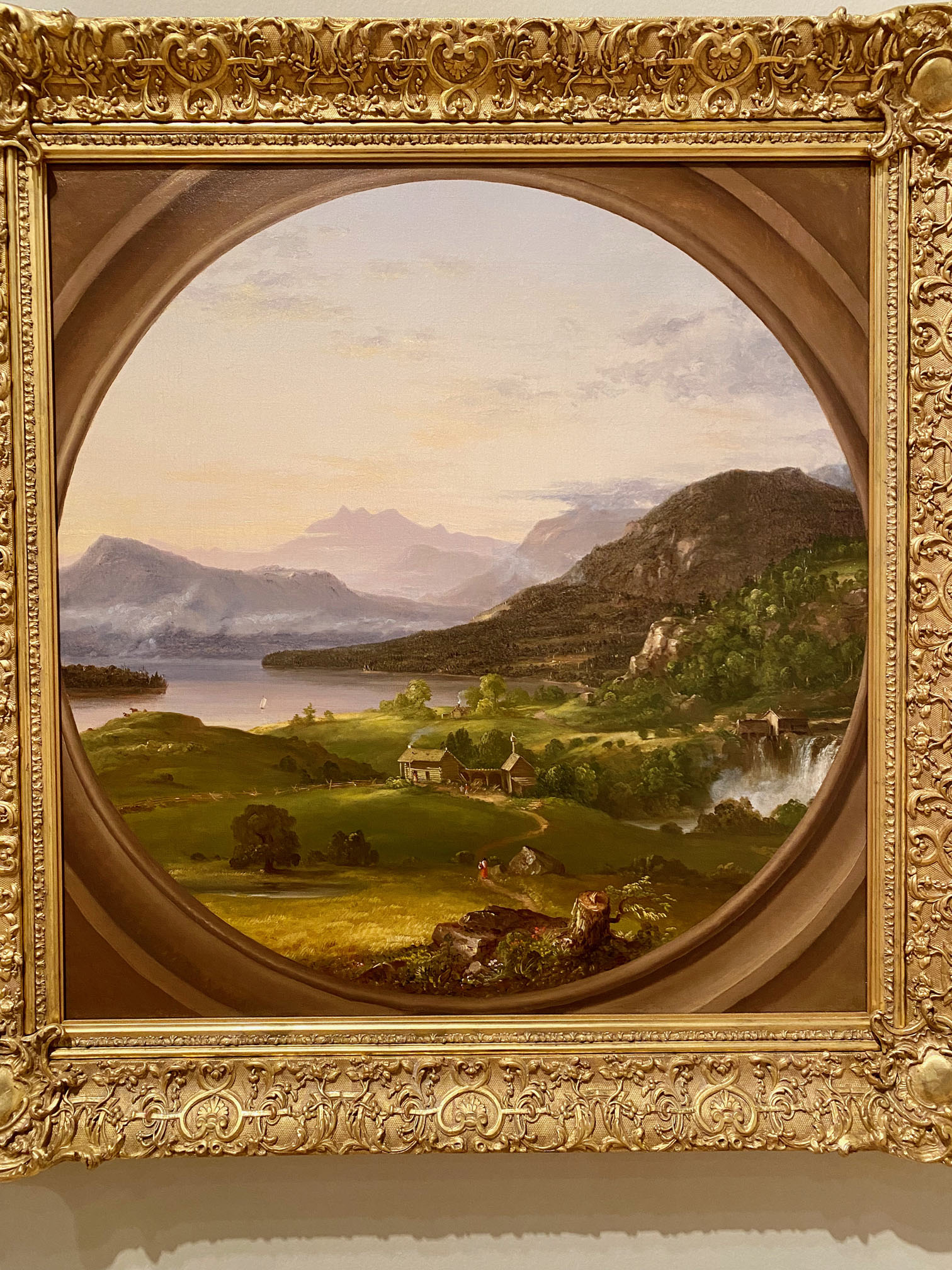
Cole’s 1846 Schroon Lake, showing a civilized landscape at the edge of mountain wilderness. Courtesy: Adirondack Experience

During his life (1801-1848), Cole witnessed how pristine American wilderness was changed by proliferating settlements, roads, bridges, mills, and commerce along the rivers. Sometimes he chose to paint sights, like Niagara Falls, minus human intrusion; other times he gently inserted “civilization” into magnificent landscapes, as in Schroon Lake.

Cole had been a mentor to innovative landscape painters like Durand, Church, Kensett, and Cropsey. When Cole passed away suddenly, they were devastated. His wife left his studio just as it was, and for the next ten years she welcomed painters to make the pilgrimage to visit it, spend time, and gain inspiration.

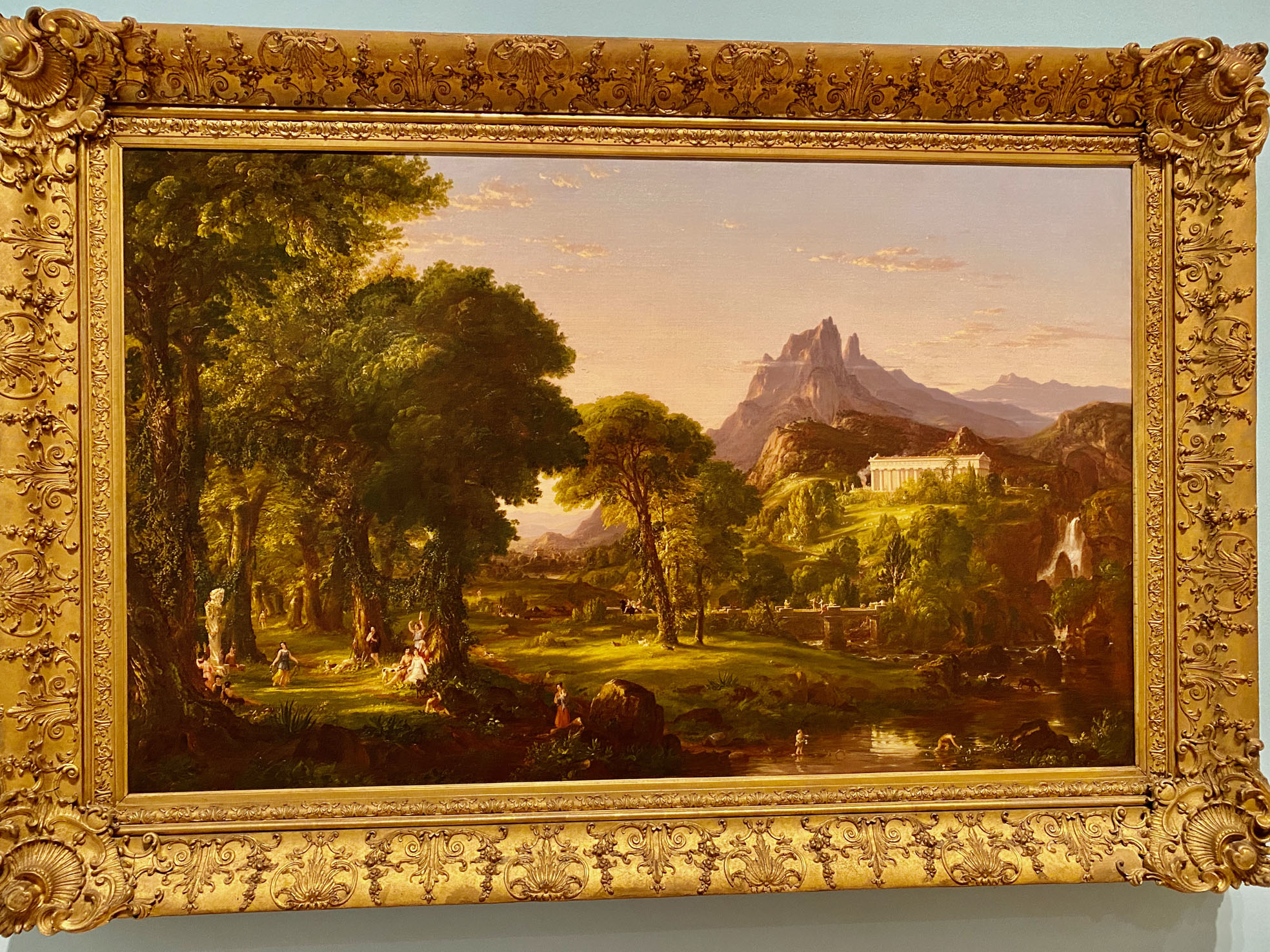
Visitors enter this exhibition and confront Cole’s large 1838 work, Dream of Arcadia, showing a mythical time when civilization existed in harmony with nature.  Can this ideal state truly exist?

Thomas Cole’s 1938 Dream of Arcadia. Courtesy: Denver Art Museum.

The Thomas Cole National Historic site, which organized three of the four shows, answers this question through the eyes of two well-known contemporary artists – Kiki Smith, who owned a house along a creek a short distance from where Cole lived, and Shi Guori, who created camera obscura images at Hudson Valley sites where Cole stood and painted.

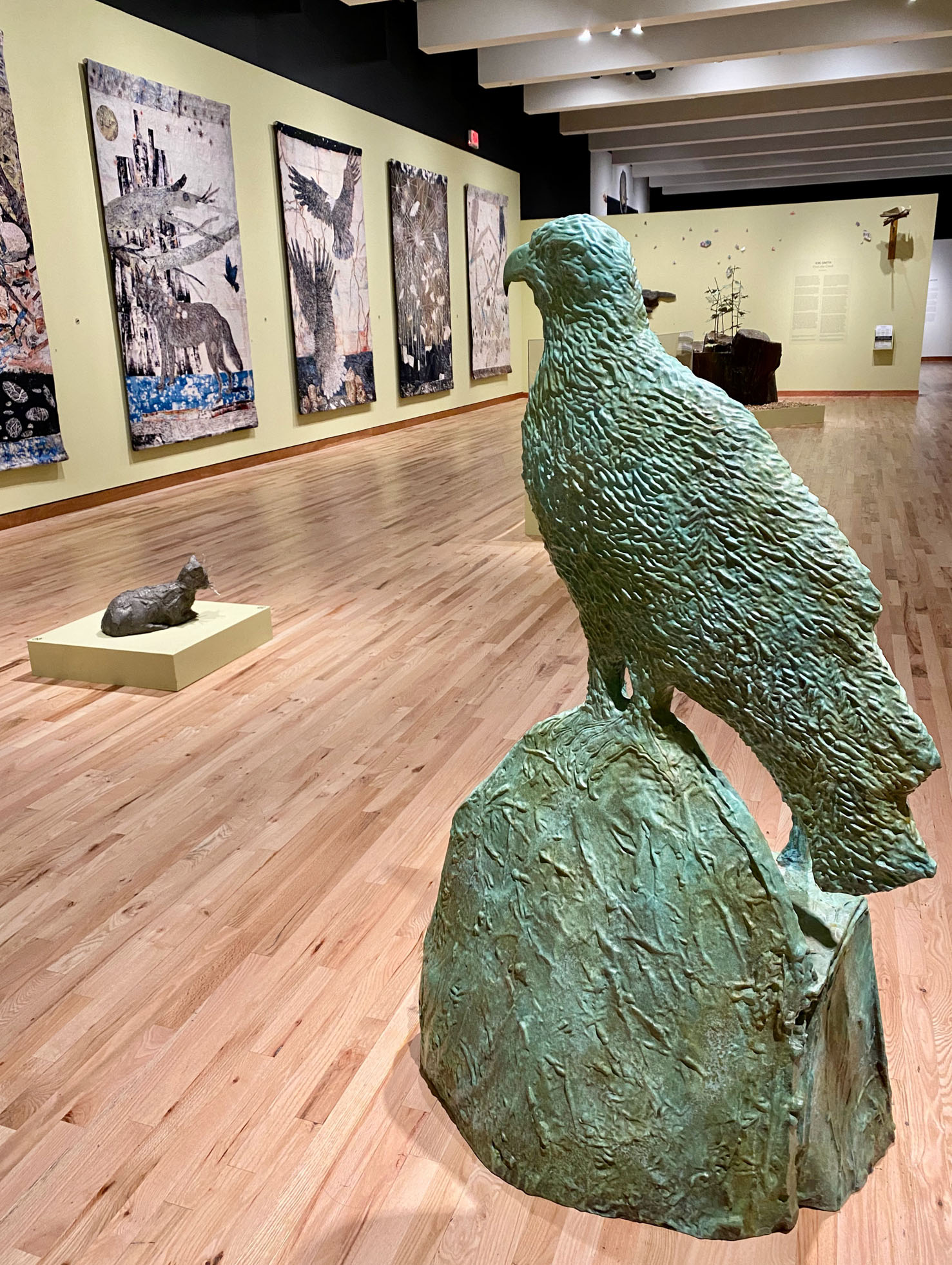
Kiki Smith: From the Creek is an immersive exhibition populated by the birds, beasts, insects, and plants along Catskill Creek – an area that Cole walked and knew well.

Kiki Smith’s 2016 bronze Eagle in the Pines in gallery with 2012-2014 jacquard tapestries

Visitors look up, down, and around to see owls, eagles, wolves, and pheasant peering back at them from perches, tapestries, frames, and vitrines…observing and being observed. Take a look at here.

2019 bronze Coxsackie sculpture of owl at the exhibition entrance.
Detail of Kiki Smith’s 2012 Cathedral jacquard tapestry (published by Magnolia Editions).

Kiki’s work always brings an air of other-worldly mystery. Here, it’s easy to enjoy all of her varied creations, which display her deep connection to nature and ask us to contemplate the cycles of life that busy people sometimes forget to notice. Cole’s paintings had the same impact.

Shi Guori’s Katerskill Falls, New York, July 26-28, 2019 – a 72-hour exposure made where Thomas Cole sketched in 1824. Courtesy: private collection.

Shi Guori: Ab/Sense – Pre/Sense presents monumental camera obscura images of landscapes Cole painted in the Hudson Valley 180 years ago. When he was growing up in China, Guori experienced the shock of rapid environmental disruption as Mao’s Cultural Revolution transformed the countryside.

Guori studied Cole’s documentation of similar 19th-century transformation in the Northeast, and traveled back to sites that Cole documented to bear witness to natural settings – somewhat still undisturbed – that resonated with Cole.

Guori built large camera-obscura tents, sat inside for up to 72 hours, and exposed light-sensitive paper to create his images. Images of Cole’s oil paintings at the same site are mounted nearby with Guori’s meditations on the experience.

Shi Guori’s camera obscura image The Clove, Catskill Mountains, New York, April 25, 2019. Courtesy: the artist
Basis for camera obscura work by Shi Guori: Thomas Cole’s 1827 oil The Clove. Image: Connecticut’s New Britain Museum of American Art.

In one case, Guori turned Cole’s own sitting room into a camera, capturing not only furniture that he would have used, but showing the image of nature that Cole surely would have spent hours gazing upon. View more of Guori’s work here.
Shi Guori’s camera obscura image View of the Catskill Mountains from Thomas Cole’s House, August 12, 2019 – which turned Cole’s sitting room into a camera. Courtesy: the artist

The fourth exhibition, Nicola López and Paula Wilson: Becoming Land, present large-scale environmental meditations on Southwestern desert landscapes. The Albuquerque curators selected these two popular New Mexico artists to get a bit of cross-cultural discussion going with Mr. Cole.

Glimpse some of the work in their gallery here.

Wilson, who works in Carrizozo, creates gigantic, mixed-media installations that prompt viewers to consider the interconnection among different people, desert landscapes, agricultural technologies, and even the debris left by civilization.

Paula Wilson’s 2021 monumental printed and painted installation, Yucca Rising. From the artist.

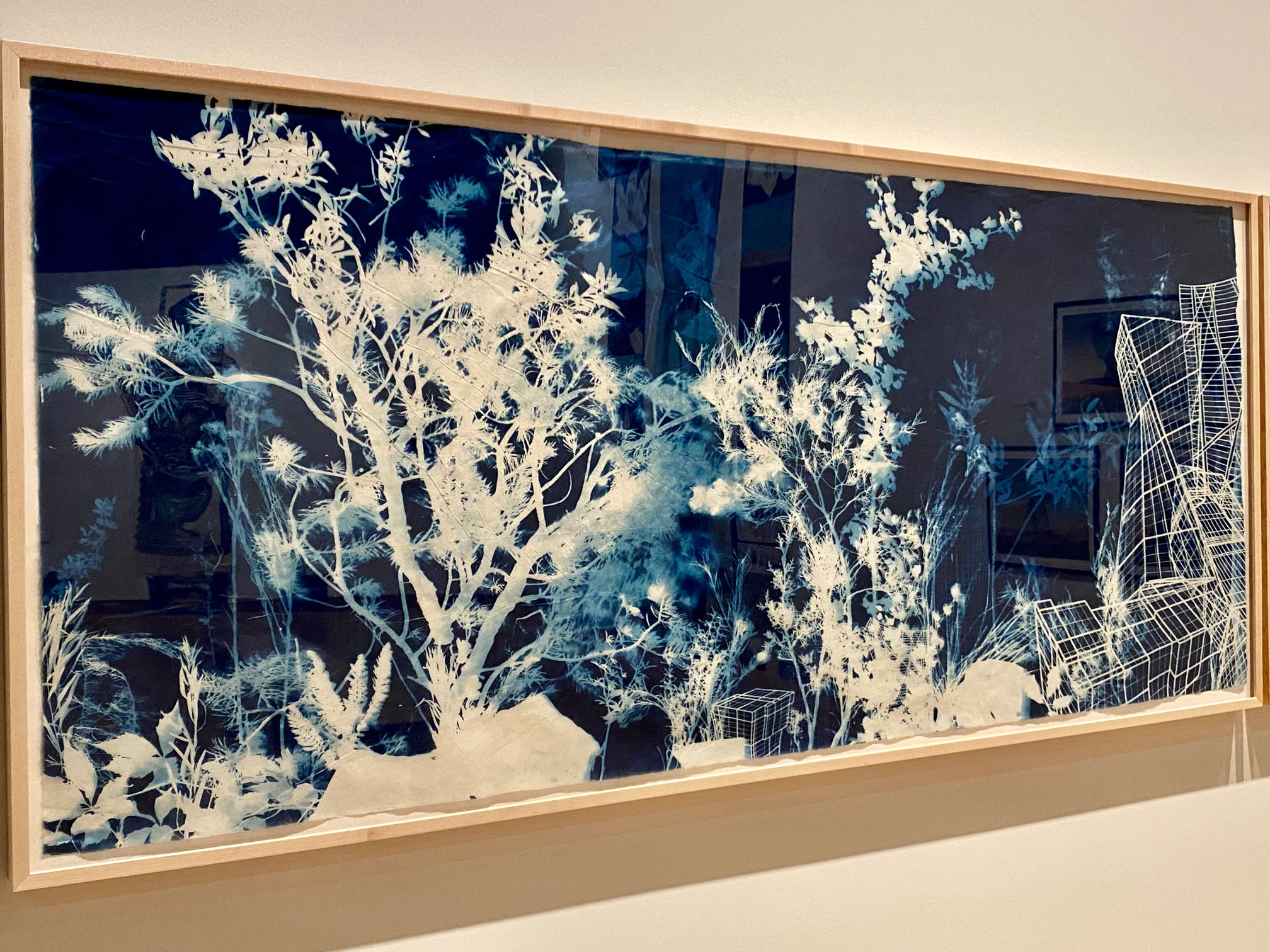
López, who works and teaches in New York, presents a large-scale cyanotype. Unlike Guori, who traveled to the Catskills to create his ghostly images with light, López was unable to travel during the pandemic and made this monumental work at home with the materials around her – a driveway, nearby desert plants, and the blazing New Mexico sun.
Detail of 2021 NeverWild cyanotype by Nicola López – ghostly images of New Mexico plants dwarfing mysterious architectural structures in the desert.

Congratulations to the Albuquerque Museum for inviting Thomas Cole’s team to collaborate in mounting such a beautiful, thought-provoking show.

Wit, Humor & Satire in Albuquerque

If you want to have a good laugh or contemplate a biting piece of social satire, head over to Wit, Humor & Satire at the Albuquerque Museum, on view through January 29.

Pulled from the museum’s permanent collection, themed sections of the show present artists’ side-glance takes on Western mythology, art jokes, image puns, and politics.

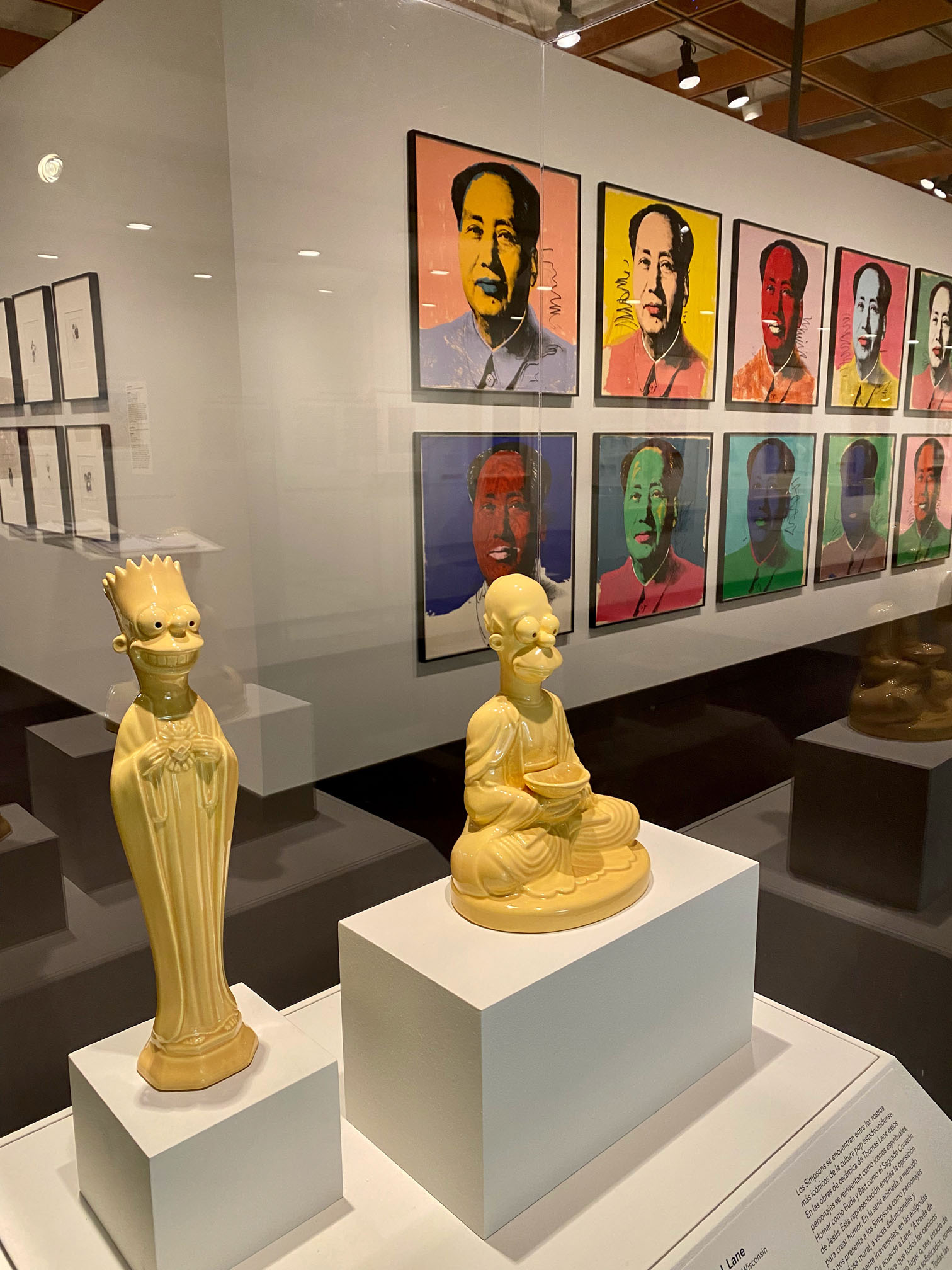
Right in the entry, you see the huge wall of Warhol Mao Tse-Tungs in blazing Pop Art colors, alongside Thomas J. Lane’s satirical ceramics – Bart Simpson impersonating Jesus and Homer as Buddha. Irreverant satire mixed with social commentary in impeccable execution.

Art history “jokes” and political portraits: Thomas J. Lane’s satirical Simpson ceramics with Warhol’s monumental 1972 Mao Tse Tung silkscreens.

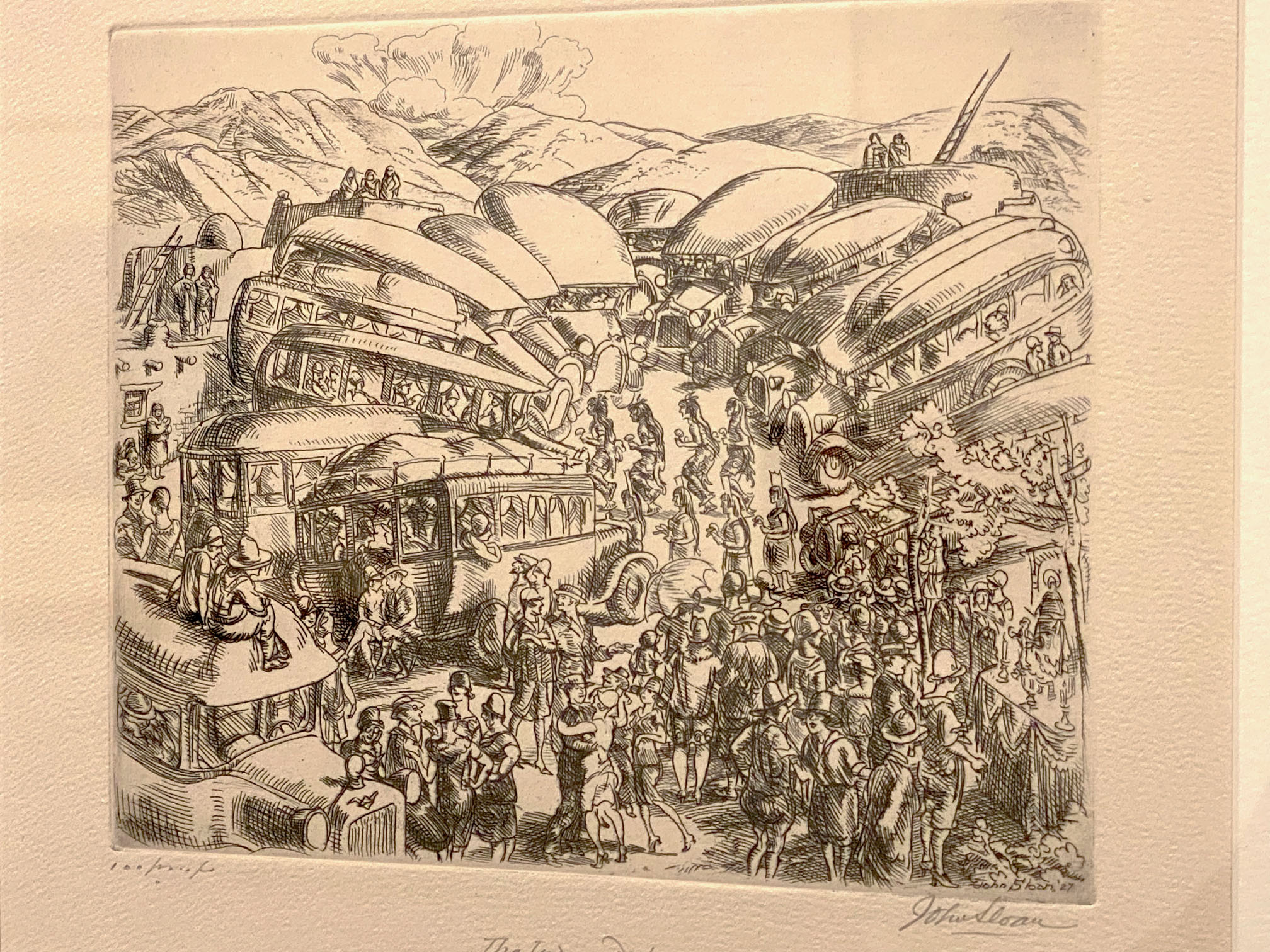
There’s a dark 18th-century Goya etching in the first gallery and a funny Sloan print skewering 1920s tourists, but most of the offerings are more recent vintage, particularly whimsical sculptures and social commentary of the Seventies, Eighties, and Nineties. 

Comments on Commodification: John Sloane’s 1927 Indian Detour etching, a satire showing hoards of souvenir-buying tourists descending upon Indian pueblos on their Fred Harvey packaged excursions.

It’s nice to encounter clever Sixties and Seventies Warhol, Rauchenberg, and Red Grooms prints in other humorous sections of the show, and to revisit Southwestern superstars like the T.C. Canon and Scholder, who like challenging stereotypes of what people think of Western people and cultures.

Political commentary: Red Grooms’ 1976 silkscreen Bicentennial Bandwagon,”which references America’s troubled past versus all-out patriotic celebration of American history.

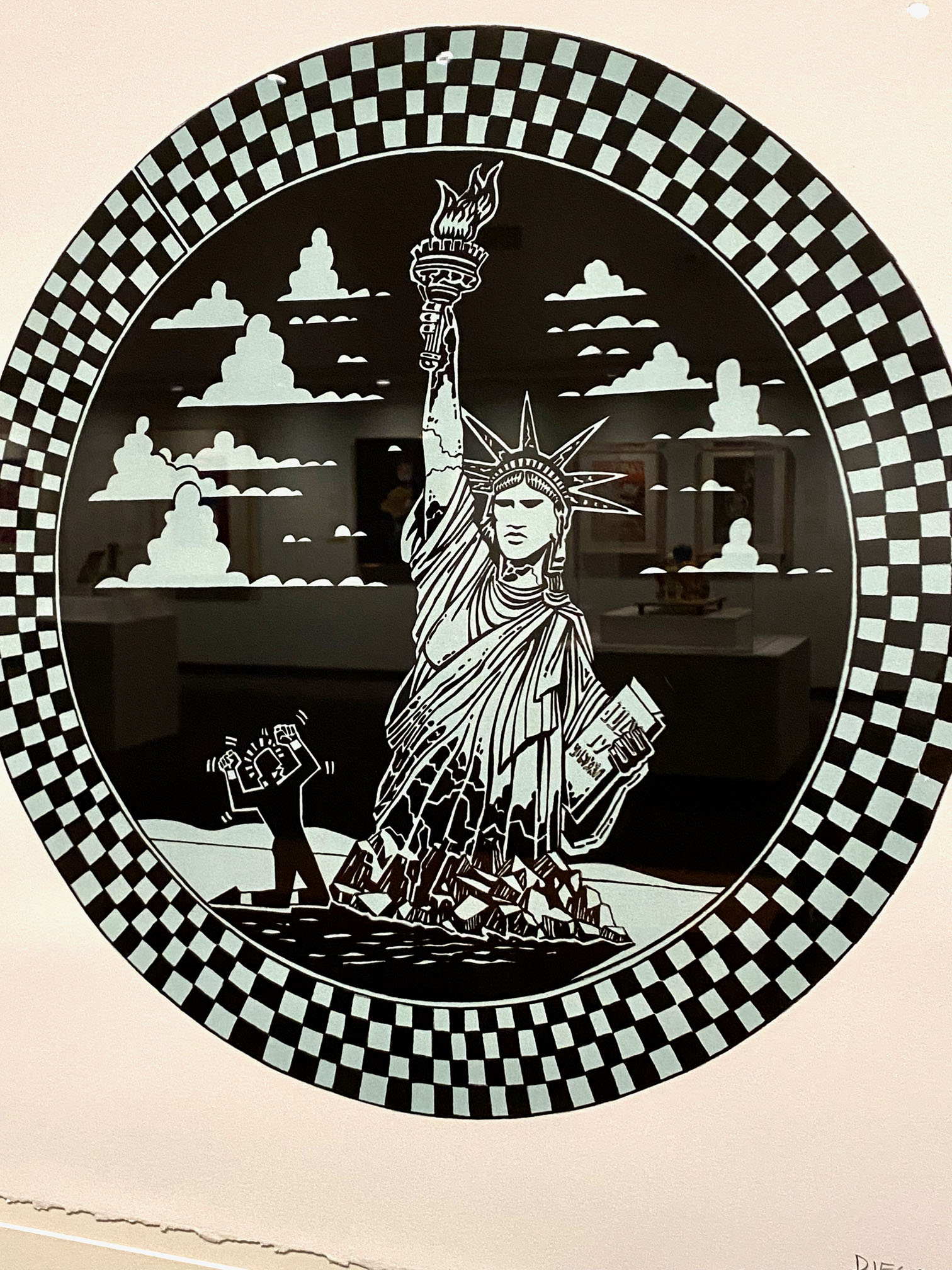
Most of the anti-War and social commentary are in the back half of the gallery, with strong pieces by Bob Haozous, John L. Doyle, and Sue Coe. Diego Romero lays it out with a lithograph that resembles his normal medium of politics-on-a-plate.

War: 1990 steel-plated sculpture El Piloto by Bob Haozous, depicting a skeleton pilot whose nose is a plane with a bomb trailing.
Political commentary: Diego Romero’s 2011 Apocalypto lithograph.

Another stand-out is the first poster ever designed by Keith Haring – a combination of images that came to define subterranean visual protest in the dark, scary times of 1980s New York. He debuted it for an anti-nuclear rally in Central Park, but his unforgettable images and icons soon became ubiquitous on City streets and subways, on T-shirts, and downtown art galleries.

Indigenous humor and commentary are well represented by Jason Garcia’s water-carrying pueblo gals in a contemporary landscape and Wendy Red Star’s Native seasons studio-portraiture spoof.

War commentary: Keith Haring’s first poster – his 1982 Anti-Nuclear Weapons Poster, featuring his iconic “radiant baby”.
Western mythologies: Subversive autumnal studio self-portrait from Wendy Red Star’s 2006 digital print series Four Seasons, which highlights artificial elements.

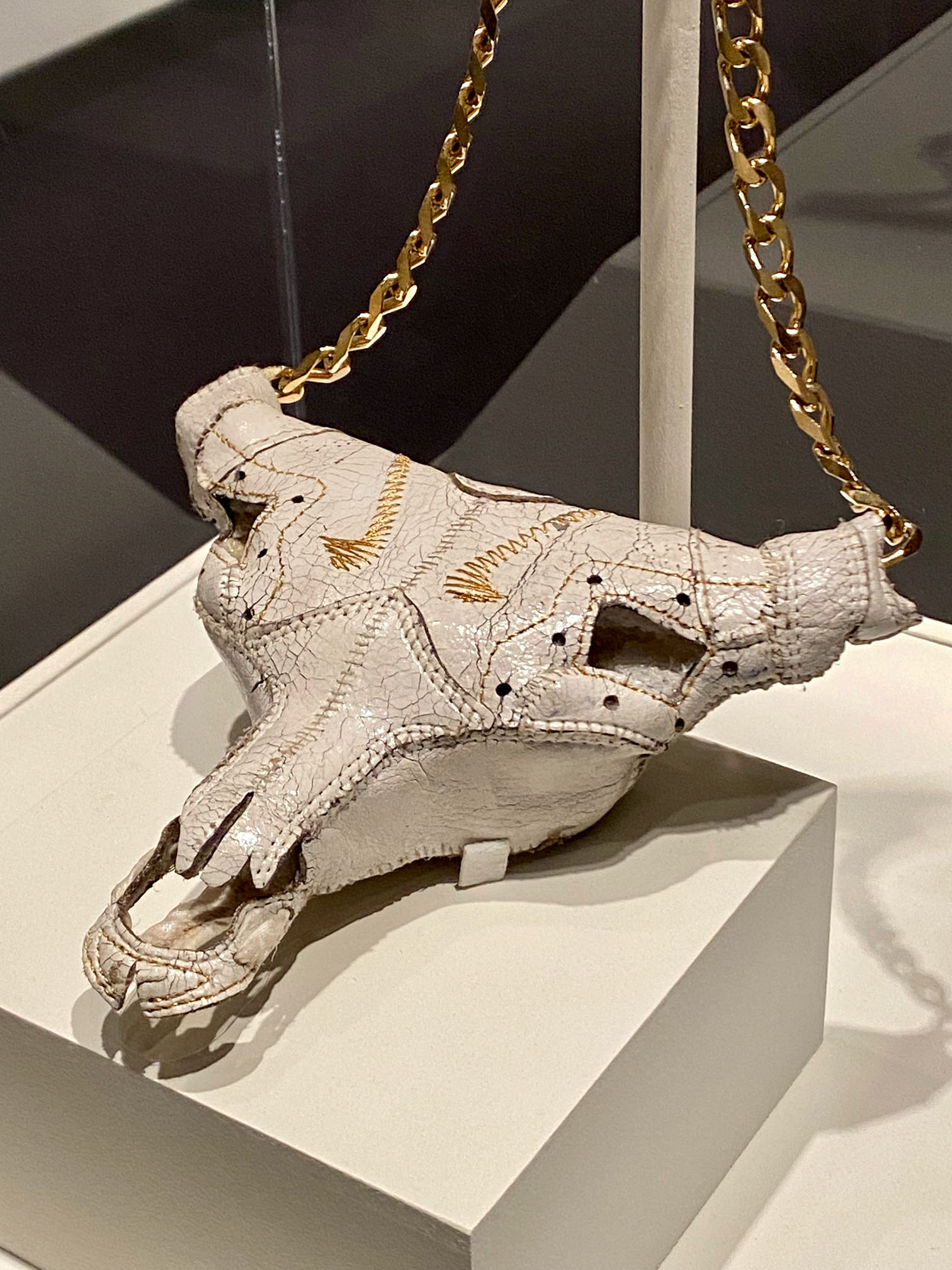
Too bad that no one knows who made the 1960s traditional Zuni pop-culture Disney necklace. But it’s fun to contemplate the Nike-sneaker sculpture/neckpiece by Sean Paul Gallegos.

Exploring wit: 1960s silver Zuni necklace by unknown artist featuring Disney characters inlaid with shell, coral, turquoise, and jet.
Commodification commentary: 2015 satiric “high fashion” neckpiece by Sean Paul Gallegos, created from recycled Nike sneakers and gold thread.

There’s a lot to think about and enjoy in this provocative show. Visit our Flickr album to enjoy more of our favorite works.