Channel Your Inner Coward

Noel Coward, that is, by going for the full immersion experience at NYPL of the Performing Arts at Lincoln Center’s show that covers every inch of his creative life. Spend an hour or two probing the films, videos, music, and items that overflow at the exhibition, Star Quality: The World of Noel Coward.

It will definitely inspire you to write that musical revue, star in your own drama, entertain around a piano, paint a landscape that you love, snag a cameo in a film, be a friend to one and all, and party like it’s 1999.

You can begin by visiting the special website the NYPL has created and digging around in the decade-by-decade archive that keeps unfurling before you. Not all of the photos are dated, but you’ll see stage production photos from the original 1920s productions of Easy Virtue and The Vortex, Private Lives from the 30s, and Blithe Spirit from the 40s (go, Mildred Natwick!). There’s plenty of Lunt-Fontanne to go around in subsequent decades, and some classic shots of Elaine Stritch in Sail Away from the 60s.

If you need a quick refresher on all Coward’s shows, check out his portion of the Playbill vault.

But the walk-through at Lincoln Center goes well beyond just the songs, reviews, and drawing-room comedies with tales of his debut as a precocious child actor, iconic dressing gowns, inscribed gold and silver cigarette cases, a piano festooned with his favorite celebrity portraits, his “spy” career during WWII, his Vegas career (tuxedo in the desert?), and his TV/film work.

In fact, the lights, camera, and action are on full display with NYPL’s multiple viewing stations around the show, including some early 1930s footage of Coward’s musical stage reviews that are filmed from the wings, including a parade of “Children of the Ritz” and the Broadway debut of “Mad About the Boy”.

Go to see this now, and don’t miss the slide show of recently discovered private 3-D photos from the 1950s that is just inside the door.

Curtain Comes Down on Follies

Unfortunately, the show has closed: The Great American Revue exhibition at NYPL’s Library of Performing Arts at Lincoln Center ended its run last weekend.

Performer in one of The Passing Show revues (1912-1919), which spoofed politicians and Broadway shows (kind of like “Forbidden Broadway”)

Today, Broadway pretty much consists of musicals and dramas, but back in the day, the “tired businessman” was entertained by chorus lines, comics, impersonators, satirists, and the best songwriters. (Think Cohan, Berlin, Rogers & Hart.)

Perhaps the note found in the archives inside a Follies costume swatch book sums it up: “Costume designs are attached. Lyrics will be written if you are interested.”

This terrific NYPL show explored how follies and revues evolved between the years 1902 (the dawn of the Hammerstein Roof Garden shows) to 1938 (when topical revues of the Great Depression, such as Pins and Needles made their mark).

The curators’ chronology and commentary is brilliant, chronicling the four stages of development: beginnings, experimenting with formats, celebrating the “body as performance”, and the emergence of political satires (1930s). (Download the show’s mini-program to get the Cliff Notes version.)

Chorus line from Earl Carroll’s Vanities (1923-1940), which featured the Most Beautiful Girl in the World

Who knew that the original Hippodrome was also built by the team that built Coney Island’s Luna Park? Who knew that George White invented “souvenir programs”? Who knew that Martha Graham got her start in settlement-house venues way back when the Neighborhood Playhouse was at the Henry Street Settlement? Who knew that audience participation shows and mini-revues on rooftop eating-drinking gardens predated the Brooklyn Bowl mash-up by 100 years?

Shakespeare at the River

Don’t miss Twelfth Night, the latest production offered by the New York Classical Theater at the second half of the River to River Festival.

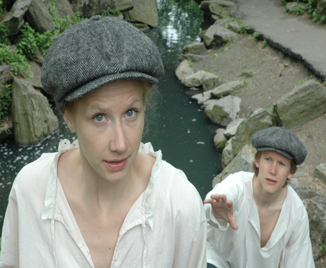
Set against the backdrop of Castle Clinton, the players enact a Shakespeare comedy as if the cases of mistaken identity were unfolding in turn-of-the-last-century New York.

Last season, the group led everyone across hill, dale, bay, and the historic buildings of Governor’s Island in Henry V. This year’s show may not involve sea travel, but is set against the backdrop of the Hudson. And it’s a chance to see free Shakespeare without standing in a line for 12 hours.

The show begins at Castle Clinton each night at 7pm. Twelfth Night continues for a few nights (until July 22) after the other official River to River festivities end on the 15th. Two more weeks; go check the calendar.

Circus on 45th

Even if you think you’ve seen it all in Times Square, be sure to catch the sights in store all summer on West 45th Street inside the magical spiegeltent.

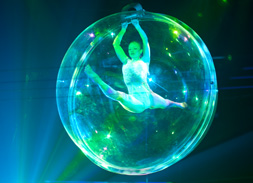
Behind the tattered fence on an empty lot in the Theater District, you’ll enter a glistening beer/music/variety hall complete with stained-glass windows, velvet booths, multiple mirrors, a carousel horse, and a central stage that’s the platform for a dozen vaudeville, burlesque, and acrobatic acts.

Empire is the latest offering from Spiegelworld (the folks who pitched their tent down at the South Street Seaport a few years ago). I don’t want to give anything away…just go, grab a beer, and enjoy the lights, costumes, illusions, and daring feats of skill, all spinning, whirling, and teetering just a few feet away. Amazing!

Venus in Transit or Fur

In an out-of-this-world coincidence, Venus (the planet) gave Venus in Fur (the play) a run for its money yesterday, pulling in gigantic audiences in New York City just a few days before the Tony Awards.

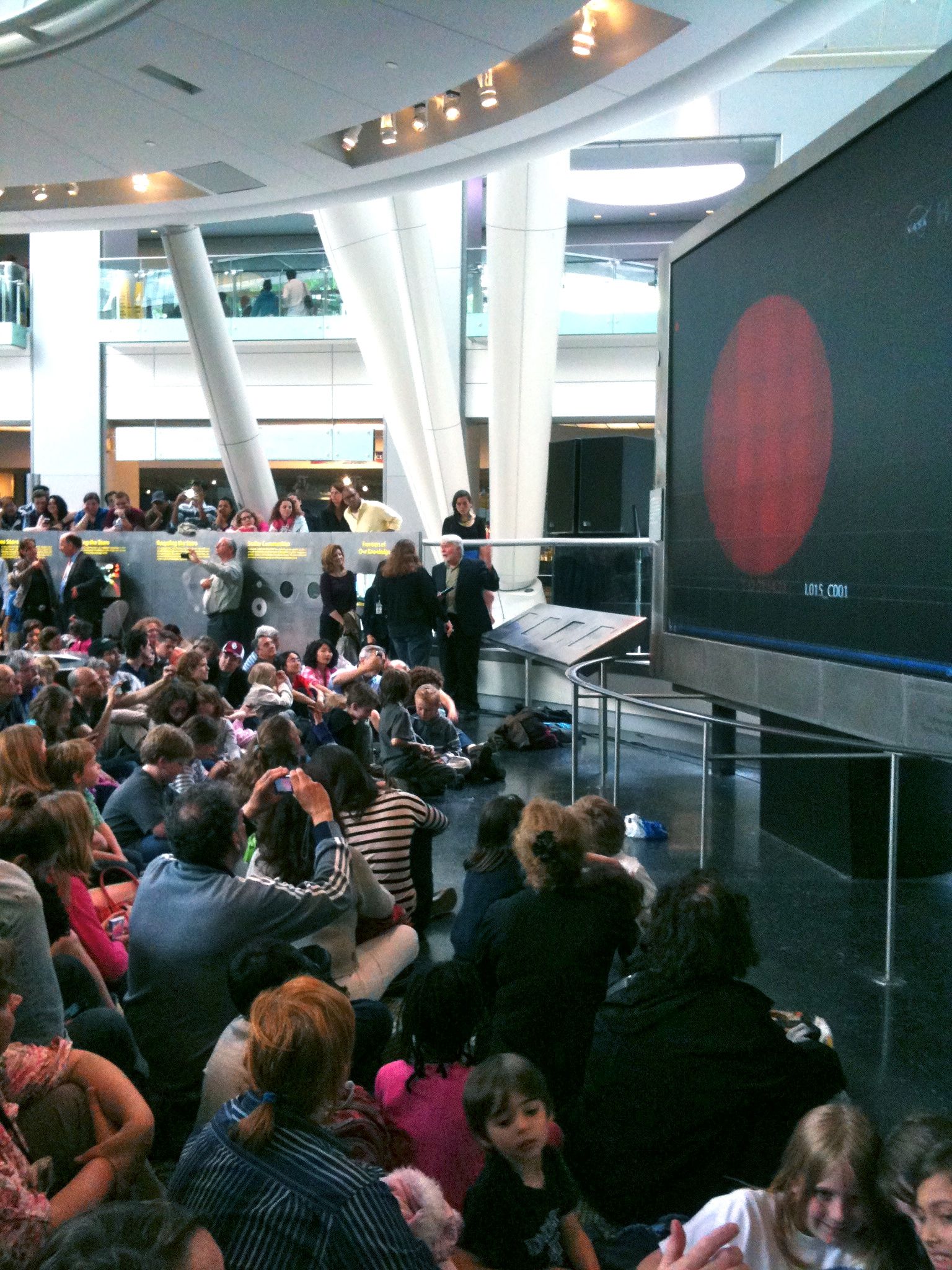
On an intermittently cloudy day, crowds flocked to the Hayden Planetarium (AMNH) to watch Venus (the planet) begin its stroll across the face of the Sun via the NASA feed projected on the giant screen in the Cullman Hall of the Universe. Venus put on similar shows in 1882 and 2004. Hundreds of science geeks heard astronomer Steve Bayer interpret what they were seeing on the live simulcast generated from Hawaii’s Mauna Kea Observatory.

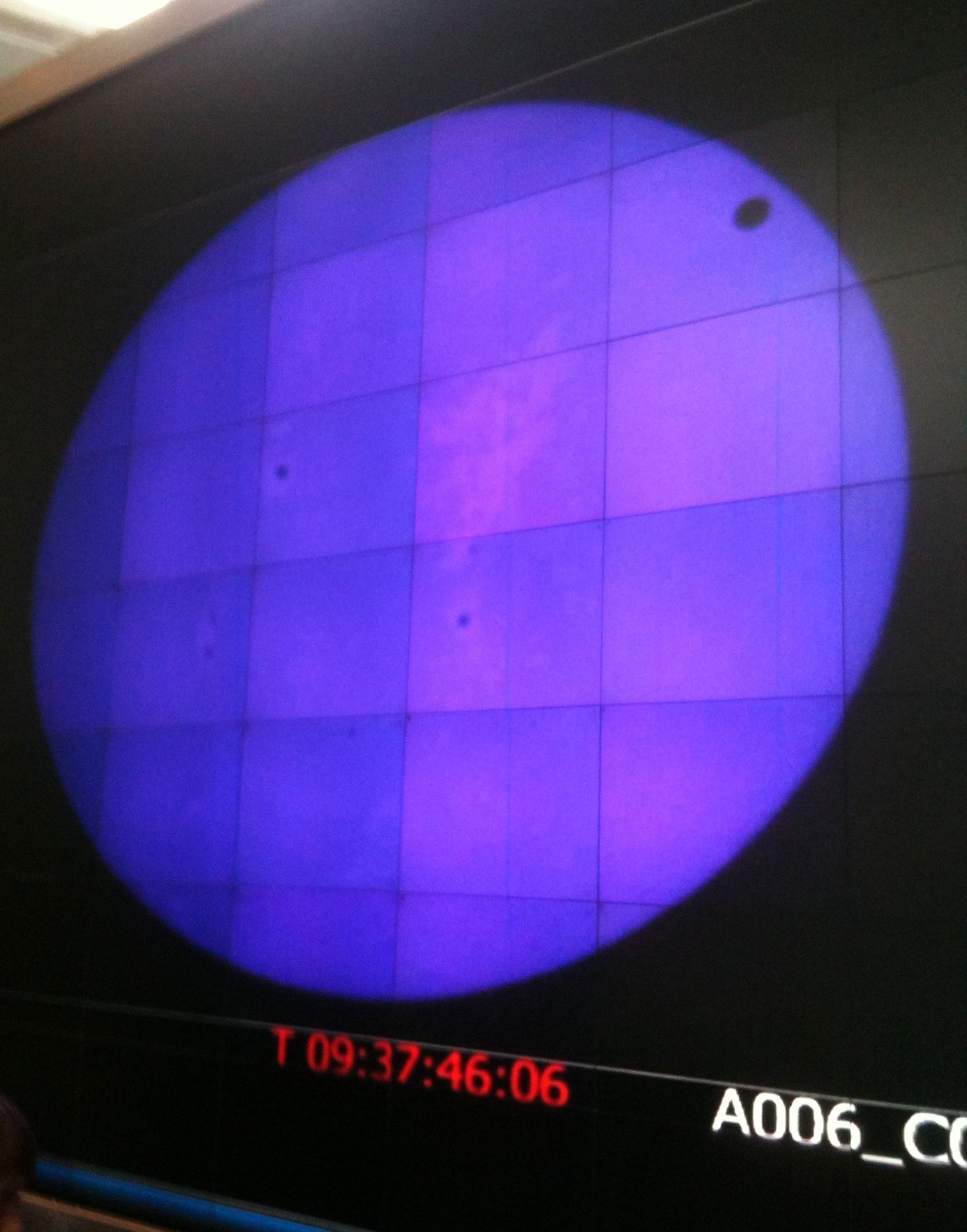
Venus (the planet) appeared as a tiny dot at the “8 o’clock” position on the Sun’s disk and kept on moving across until well after midnight (like the movements of Tony Award and theater attendees). The AMNH cut the live feed around 7pm, but not before the planetarium paparazzi snapped photos of the disk, and the diminutive moving Venus dot with and without friends, families, and kids in front of the giant screen to commemorate this once-in-a-lifetime event. Check out the photos.

Our only questions are 1) will Venus in Fur favorite Nina Arianda get similar attention at the Tony Awards next Sunday a few blocks south at the Beacon, and 2) will you see Venus in Fur before it completes its Broadway transit in two weeks?

Venus begins its journey across the Sun

Oil Drills in Manhattan

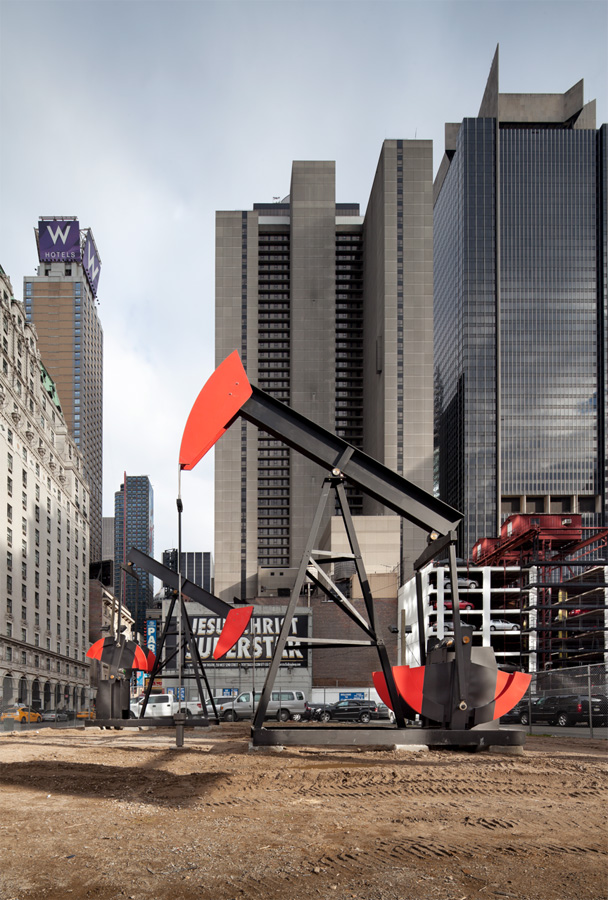
 Have you seen the latest art installation in the Theater District? It’s Josephine Mecksper’s Manhattan Oil Project – two 25-foot tall oil pumps churning away 4 hours a day (twice a day) weekdays and 8 full hours each weekend.

Go to the undeveloped land on the southeast corner of Eighth Avenue and 46th Street and bring your friends (and camera) before it’s gone.

Sponsored by Yvonne Force Villareal’s Art Production Fund, which produces hard-to-produce artist installations, this one had special help from Sotheby’s and The Shubert Organization, which know a thing or two about mining riches in Manhattan.

Is it actually pumping oil? Feel free to stand there and answer out-of-towners questions on that one.


Beaton Leaving New York

It’s the final countdown at the Museum of the City of New York’s tribute to Cecil Beaton’s New York Years – an installation of scrapbooks, books, drawings, stage costumes, set designs, and photographs by one of the 20th century’s leading chroniclers of celebrity, night life, and royalty.

The array of fashion, society, stage and screen icons is astonishing – from deWolfe and Elsa Maxwell through Monroe, Garbo, both Hepburns, and right up to Jagger…all shot in New York, many for Vogue (including that famous photo of those Charles James gowns).

You’ll get the idea as you step back in time via this British Pathé film documenting Beaton’s 1968 exhibition at London’s National Portrait Gallery.

And who knew there was a licensed fabric collection inspired by his work? Check out this blog featuring some his best photos.

When Theater was Fashion

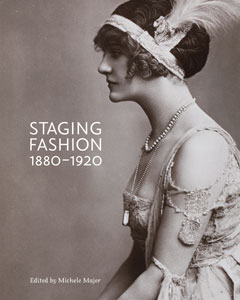
With everyone still mourning the demise of Bill’s Gay Nineties, fans of US theater of the early 1900s can gaze for one more week at the fashionable women who trod the boards way back then at the Bard Graduate Center’s show, Staging Fashion, 1880-1920.

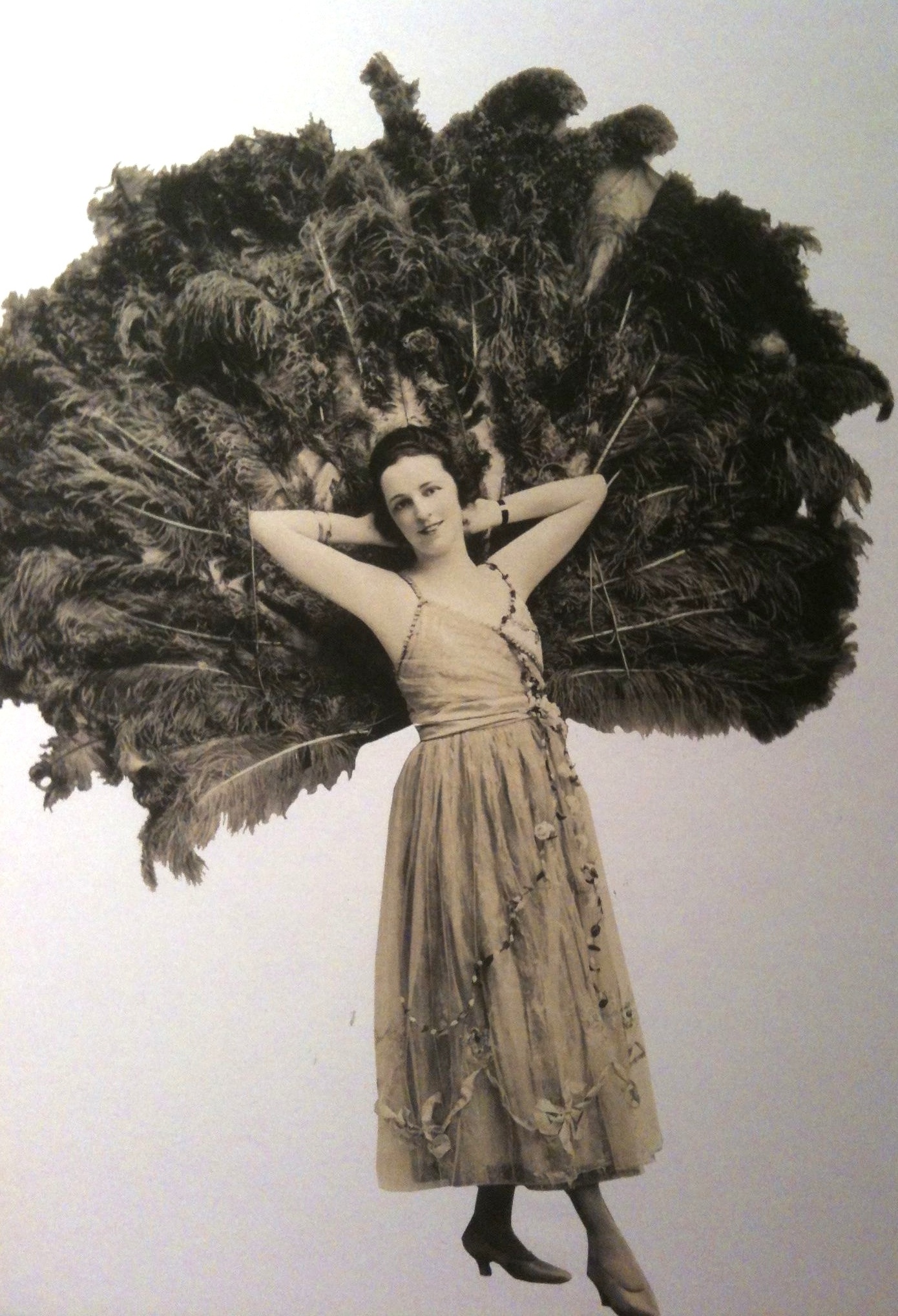
Like the FIT’s Youthquake show, graduate students contributed heavily to this exhibition gem, which explores the intersection of theater and fashion back when stage actresses first became pop icons. Photographers needed celebrities to promote their studios; actresses needed to keep fans supplied with a steady flow of images; and designers wanted the latest to be seen on glamorous, trend-setting actresses.

The show on Bard’s top-floor gallery features clothes and images of three of the most popular actresses – Jane Hading, Lily Elsie, and Billie Burke. Check out the highlights – mass-produced postcards, theater fan magazines, advertisements, and personal testimonials for consumer products. Has pop culture really changed much? Judge for yourself.

Historic Performances at Historic Congregations

Did you know that some of the best performances are taking place this weekend at two of NYC’s most historic houses of worship?

  • The Queen’s Chamber Band & Choir gathers around the harpsichord to celebrate Bach’s Birthday tonight at 8pm at one of the oldest congregations in the City, the First Moravian Church at Lexington & 30th Street. Although the church building itself dates from 1849, the actual congregation dates back to 1748, when Johann Sebastian Bach (1685-1750) himself was still composing. Be sure to take a peek at the unusual and historic 1840s organ behind you in the loft. If you can’t make it in person, enjoy the Queen’s Chamber Band’s beautiful Bach on YouTube.
  • Although the Hell’s Kitchen synagogue was founded in 1917, when you walk through the doors of the Actors Temple at 339 West 47th Street, you’ll enter a 1923 national landmark frequented by the greats of vaudeville, nightclubs, and live TV. Personalities like Al Jolson, Jack Benny, Shelley Winters, Harpo Marx, and even Frank Sinatra. The space was designed to multitask as a house of worship, gathering space, and (can’t you guess?) a theater. Appearing every Saturday and Sunday you can catch the terrific ensemble of Laydon Gray’s Black Angels over Tuskegee, the gripping true-life tale of WWII’s first African-American fighter-pilot squadron (currently in its third year). Go see it and take a trip through history.  


Last Look at Soon-to-Close Theater Museum

Friends enjoy reviewing the wall of 1900s showgirl cards, showing scantily clad actresses in “classical” garb

With Rick McDonald at the piano of the 1924 speakeasy, Bill’s Gay Nineties, last Thursday night, the crowd was singing, the joint was jammed, and dozens of hungry diners were climbing the stairs to sit in the gaslight glow of the second-floor dining room, packed with carefully preserved playbills, theater cards, and lithographs of the men and women who built the foundation of the American theater and founded the form that is American popular entertainment — George M. Cohan, Buffalo Bill Cody, Enrico Caruso, Tony Pastor. The list goes on and on.

This temple to theater, created in the 1920s by the original Bill’s wife, a former Ziegfeld girl, is about to close on March 24.

How fortunate that we met a master vaudevillian and Coney Island sideshowman, Todd Robbins, who (between a few tableside magic tricks) walked us through the history of the place, the legacy of the hundreds of show people gazing down on our dining table, and stories of how George Burns, Jack Benny, and the pantheon of American entertainers found solace around Bill’s piano (just like us) in decades past.

How comforting to be amongst other time-travelers in this unique and soon-to-be-gone living, breathing archive of the last 150 years of American entertainment. Take a walk around Bill’s with us. These Flickr photos are sometimes a little blurry and hard to make out, but they seem appropriately evocative for a room, history, and gathering spot that will soon be like the celebrities on these walls…fading but important memories of spectacular, vibrant nights spent singing and sharing the high points of the latest Broadway debut.