Tony Week Pilgrimage to NYPL

Al's studio at New York Public Library of the Performing Arts

Al watches over his studio at NYPL for the Performing Arts

Tony favorite Kinky Boots is playing at the Hirschfeld, but as you contemplate the number of awards it will pick up Sunday night, walk over to the entrance of NYPL at Lincoln Center to pay tribute to Al himself. Peek through the window of NYPL for the Performing Arts to see the nook where every Broadway star since the 1920s had their portrait done –the studio of Al Hirschfeld, the man who immortalized them all.

Look through the window and you’ll see his drawing table, lamp, and the cozy, cushioned barber chair where he perched day after day, recording entertainment history over the decades with his unmistakable whimsical flair and line. The Lincoln Center library is a fitting home for Al’s studio furniture, since he consulted the NYPL theater archives for a lot of his work.

Liza in Minnelli On Minnelli (1999), one of more than 20 portraits Al did of her. In color for The New York Times. Source: Library of Congress.

Liza in Minnelli On Minnelli (1999), one of more than 20 portraits Al did of her. Source: Library of Congress.

It’s hard to believe that Hirschfeld first began drawing celebrity caricatures in the 1920s, and continued his illustrious career for the next eighty years. Click on this link to his dealer’s site (Margo Feiden) to scroll through all the plays and musicals he’s covered, documenting the quirks, panache, and performances of everyone from Fanny Brice to Martin Short.

You can click through the “time table” of Al’s work at the gallery site, or in the Timeline of the Hirschfeld Foundation’s website. Every drawing after 1948 was done from a cushioned barber chair in which he could swivel to his heart’s content. Initially, he found it on the Bowery for $3.00, but the one you’ll see in the Performing Arts library entrance is the replacement (the original just wore out), which he bought in 1993 from a barber shop in the Chrysler Building.

So, pay tribute to Broadway’s most beloved artist. And before we post about the Impressionist Line show at the Frick, why not watch a 20th century master of line make his mark so you can imagine all the creativity that emanated from the table you see in the window. The clip from The Line King, uploaded to YouTube by Al’s grandson, documents the legend drawing a caricature of Paul Newman as he appeared in Our Town. 

Liberace Sparkles at Time Warner

Purple Cuff

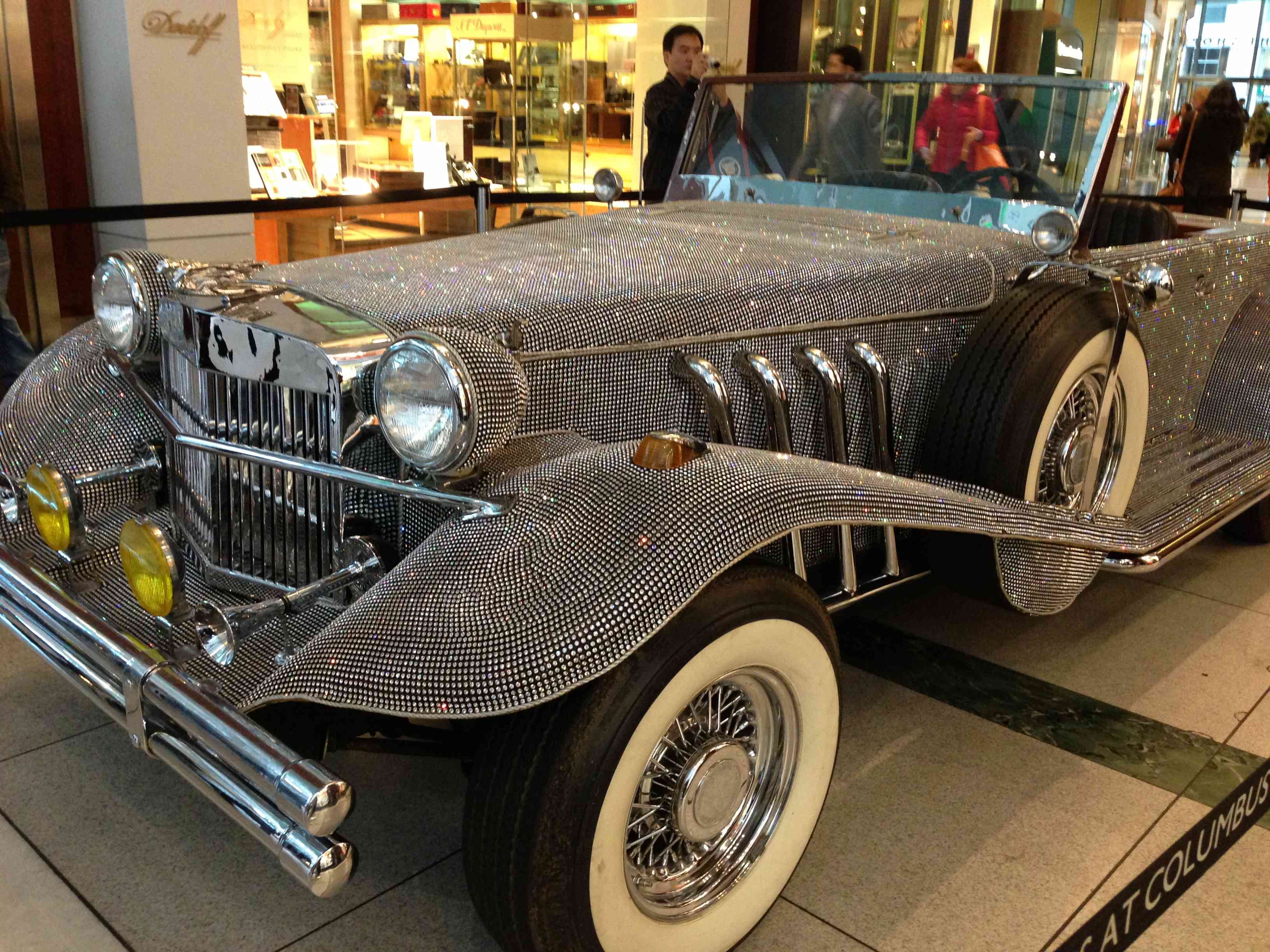
Dazzling rhinestones and teardrop crystals are providing the antidote to a rainy summer weekend inside the Time Warner Center, where HBO has installed Liberace’s piano, signature suits, and a tower of champagne to celebrate of the debut of the Michael-Douglas-as-Liberace pic Behind the Candelabra.

Up the escalators on the Third Floor, crowds were swimming through glitter Nirvana – Lee’s head-to-toe glamour looks: white cravats, bejeweled lapels, matching boots with rhinestone-studded heels, and the all-important cuff, which framed those flying ring-encrusted hands.

Purple BootsEnjoy it all in the Flickr gallery, because it’s all about the details. Besides, there’s no more Liberace Museum to visit in Vegas, so this is your chance to check out a bit of his million-dollar legacy.

Branding for the HBO film was everywhere, featuring giant pictures of Matt Damon and Michael D, but people mostly hovered about the glass cases to see look after look loaned by the barely-surviving Liberace Foundation.

RoadsterThere were no capes in sight, but plenty of fur-trimmed boots, beaded fringe, and a giant Swarovski crystal. Downstairs throngs were circling Lee’s rhinestone Duesenberg and admiring the bling on the Baldwin.

Check out the HBO movie, but run over to Time Warner to see (for real) what made this man a show business legend. Open 9am to 9pm through May 27.

Morgan Deconstructs Degas’s 19th c. Cirque-du-Soleil Experience

Edgar Degas, Miss La La at the Cirque Fernando, 1879. Oil on canvas. Source: National Gallery © National Gallery, London / Art Resource, NY

Edgar Degas, Miss La La at the Cirque Fernando, 1879. Oil on canvas. Source: National Gallery © National Gallery, London / Art Resource, NY

Long before Cirque du Soleil began selling $180 seats to eight shows in Las Vegas or Floating Kabarette came to Brooklyn, high society and avant-garde crowds were flocking to extravagant theaters on Montmartre in Paris to see the finest aerialists from Europe.

The Morgan Library’s exquisite micro-show, Degas, Miss La La, and the Cirque Fernandodocuments the meticulous work of Mr. Degas to portray the magic, daring, and wonder inside a 2,000-seat arena where he experienced the artistry of one of the must-see acts of 1879 – a mixed-race German aerialist who hung from a trapeze clenching an apparatus in her teeth from which she dangled a firing cannon.

As in the Met’s blockbuster show, Impressionism, Fashion, and Modernity (which also features a circus-themed painting in its last gallery), the Morgan makes the case that Degas selected this subject because was associated with the height of fashion (along with café concerts and racetracks). Although this particular work was the only circus image Degas would ever paint, just tackling the dazzle and glamour of Miss La La dangling 70 feet in the air (before the cannon stunt) showed that he was capturing what was “happening” among high society and artsy types in their “modern” life.

A vibrant pastel study of the artist by Mr. Degas. Source: Tate, London/Art Resource, NY

A vibrant pastel study of the artist by Mr. Degas. Source: Tate, London/Art Resource, NY

Although we can marvel at how well Degas captured this fleeting moment, the Morgan lays bare that this work was planned in meticulous detail. They’ve displayed preparatory works, sketchbooks, and even architectural drawings of the theatre’s interior that Degas created to work out the feeling, look, composition, and setting for this spectacular work. As Degas said, “No art was less spontaneous than mine.”

If you love Impressionism and theatricality, get over to the Morgan to enjoy the mechanics behind the creative process and flip through the digital version of our artist’s sketchbook (which was to fragile to be sent from France) right inside the colorful upstairs gallery.

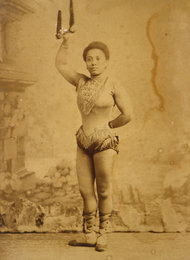
Visit Mr. Degas and Ms. La La before May 12, when they leave for the Continent. (Sorry, no video, but here’s a photo of the star herself.)

Photograph of the artist, Miss La La (c. 1880). Albumen silver print. Source: Zimmerli Art Museum, Rutgers University

Photograph of the artist, Miss La La (c. 1880). Albumen silver print. Source: Zimmerli Art Museum, Rutgers University

Easter Parade with Horses at Grand Central

GCT security keeping an eye on the red horse

GCT security keeping an eye on the red horse

The colors, crowds, finery, and promenade in Grand Central is every bit as celebratory as the famed Easter Parade on Fifth Avenue, except there’s live music and horses. It’s all part of Nick Cave’s monumental performance Heard NY going on each day at 11am and 2pm in Vanderbilt Hall.

Get there early and take your cameras to see The Ailey School students don the two-person horse costumes, created out of raffia, to whoosh and swirl away to the drums and harp. Take a look at the Flickr photos of yesterday’s 11am performance.

Creative Time and MTA Arts for Transit have decided to use both sections of Vanderbilt Hall for simultaneous performances, so you have lots of options to see the 30 magnificent horses close up. Afterward, you’ll see the volunteers grooming the horses, so there’s lots of opportunity to check out the loving detail that Cave has given each of them.

Half of the 30-horse herd

Half of the 30-horse herd

The raffia flies, the dancers whirl, and it’s breathtaking to see the horses come alive before your eyes and cavort about with their distinct personalities. Even if you go to the Easter Parade at St. Patrick’s on Sunday, you’ll still have time to catch their final 2pm performance.  If you want to see another example of Nick’s work, check out our post on The Armory Show a few weeks ago. For now, enjoy this wonderful promo:

70s East Village and Catholic School Mash-Up at MoMA PS1

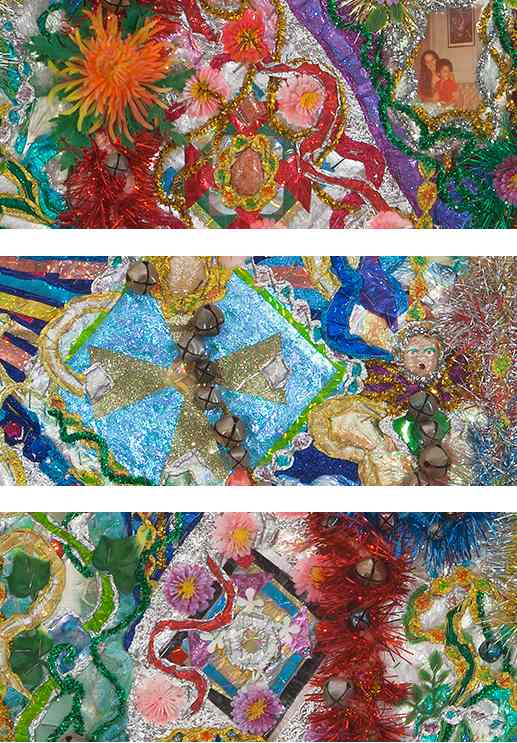
Glittery details from Thomas Lanigant-Schmidt’s 1986 collage, The Infant of Prague as a Personification of Liberation Theology. Source: International Collage Center.

Glittery details from Thomas Lanigant-Schmidt’s 1986 collage, The Infant of Prague as a Personification of Liberation Theology. Source: International Collage Center.

As a young gay runaway in the 1960s, Thomas Lanigan-Schmidt landed in New York City, looked at the trash littering the East Village streets where he roamed, and felt a strange attraction to the cellophane wrappers, fabric, and other dumpster treasures he retrieved. This is the jumping off point for the glittery art retrospective at MoMA PS1, Thomas Lanigan-Schmidt: Tender Love Among the Junk.

From his years of Catholic schooling and altar-boy duty, it wasn’t a stretch for Lanigan-Schmidt to use his street stuff to create glimmering duplicates of chalices, patents, and other altar accouterments. Or to work in the occasional high-school or East Village gay-life reference.

Soon, dozens of precious tin-foil creations were filling his walls. Why not go for an entire transformation? He hung diaphanous painted veils, dressed in drag as a “Czarina Tatlina” (an art-world reference to Russian Constructivism), and began to offer tours of his Gilded Summer Palace to friends. Word of this trash-to-fantasy performance spread, and he soon had a group of fans, including downtown theater innovator Charles Ludlam and famed Metropolitan Museum curator Henry Geldzahler.

Installation view. © MoMA PS1. Photo: Matthew Septimus

Installation view. © MoMA PS1. Photo: Matthew Septimus

Get out to PS1 for this trip. The installation photo here gives you an idea of his brilliance. The area is decorated as a chapel with icons, pilgrims, brownstones, and 1950s school posters. The devotional ledges are packed with tennis figures, aerosol-can consumer products (Secret, Wizard), and Perrier bottles. The walls are filled with Smurf and Miss Piggy plates with bugs in between. And there’s a sort-of East Village Gregorian chant playing in the room.

You’ll enter the recreation of his Czarina’s Gilded Summer Palace and Sacristy of the Hamptons (1969), see many gold-foil Rats (yes, there was a time before gentrification on Ave B/C!), and read through his actual Catholic school workbooks. You’ll love the vibe of experiencing this in an old public school building, too.

As soon as you walk in the door, you’ll find a piece of paper with a copy of his 1989 essay “1969 Mother Stonewall and the Golden Rats”, his first-hand recollection of the night that made history. So, take a walk back in time by seeing this important, unforgettable retrospective. In the meantime, enjoy a virtual visit with this former altar-boy/chronicler of the East Village past in his studio today:

Theatrical Staging Suits Dickens Characters at NYPL

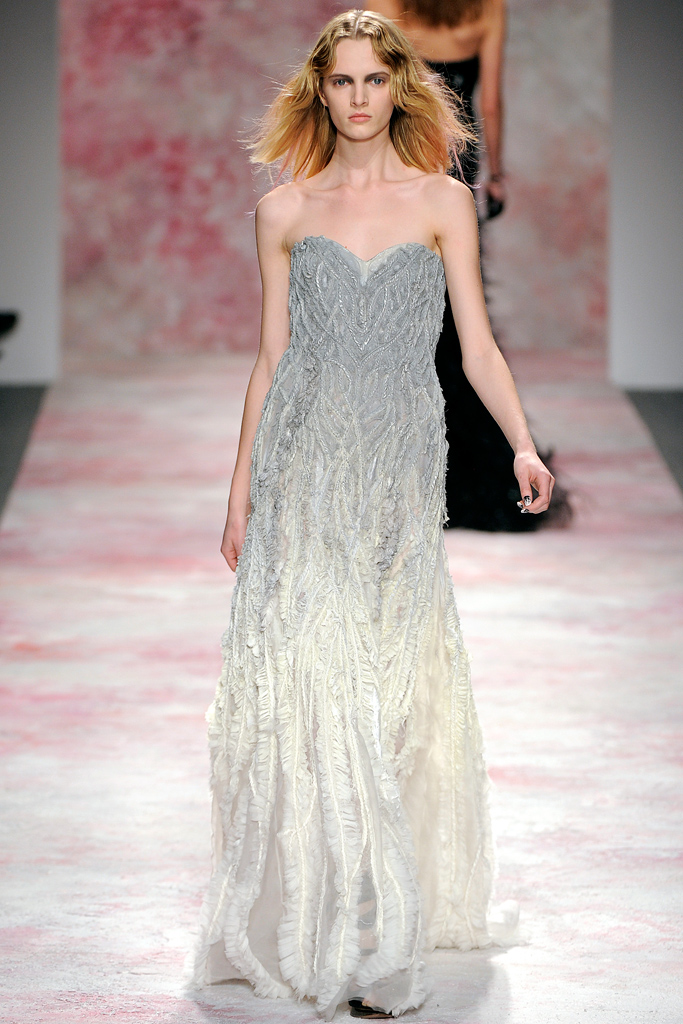
Daria Strokous walks the Fall 2011 runway in Prabal Gurung’s gown, part of a collection inspired by Miss Havisham. Photo: Caroloa Gualnari/GoRunway.com

Daria Strokous walks the Fall 2011 runway in Prabal Gurung’s gown, part of a collection inspired by Miss Havisham. Photo: Caroloa Gualnari/GoRunway.com

This runway model is surely not from a Dickens novel, but her dress was inspired by one of his characters. NYC designer Prabal Gurung, who first read Dickens in his native Nepal, used Great Expectation’s Miss Havisham as his inspiration for his Fall 2011 collection.

Lucky for us, the New York Public Library curators selected this evocative gown for inclusion in their 200th birthday tribute to the beloved author – NYPL’s exhibit Charles Dickens: The Key to Character.

Entering through the dramatic red-swagged doorway, you step back in time to a drawing room loaded with cabinets of curiosities, a crackling fire, a hanging birdcage, books, seashell collections, taxidermy, a zootrope, tiny Doulton porcelains, and Dickens-related treasures from NYPL and other collections, including the infamous cat-paw letter opener.

These worlds within worlds are arranged to shine a light on the over 3,592 characters created by Dickens in his lifetime. Above the fireplace is a reproduction photograph of his little nephew who inspired the character of Tiny Tim. Other ephemera posted near the case with the wooden leg show Warren’s Blacking Warehouse, where Dickens toiled away as a child laborer himself, many years before creating the characters of the Artful Dodger, Fagin, and Oliver Twist. A revealing letter demonstrates why his own father inspired him to create Micawber in David Copperfield.

Miss Havisham illustration by Charles Green (c. 1877) and installation view of the NYPL show

Miss Havisham illustration by Charles Green (c. 1877) and installation view of the NYPL show

See this beautifully designed show, which also delves into the author’s passion for theater and his own performances of particularly dramatic scenes. The décor, the Gurung gown, the 1870 edition of The Mystery of Edwin Drood, the 1867 ticket stubs from the Dickens reading tour, early films of his novels that you watch through peepholes, and photos from recent Broadway productions will have you sliding seamlessly back and forth through the last 200 years to meet truly remarkable characters.

Crisp Hepburn Clothing Tribute at Lincoln Center

There’s no surprise that the wardrobe on display in the Katherine Hepburn: Dressed for Stage and Screen exhibition is sharp, clean, and perfectly turned out. Finishing its run at NYPL at Lincoln Center this month, the Library has imported this stunning tribute developed by Kent State University. Check out this promo produced by WNET Channel 13:

The first clothes you encounter are a collection of her famous trousers and jodphurs, but tucked away in the corner to the right of the entrance is an item that underscores the purpose of this tribute – the Ernest Trova statuette that she received in 1985 from the Council of Fashion Designers of America for Lifetime Achievement (and inspiration).

Photo from NYPL’s Billy Rose Collection. This dress is in the show.

Photo from NYPL’s Billy Rose Collection, but the dress is in the show.

A fashion icon for the 20th Century, the show highlights her collaborations with the best designers throughout her life. The first gallery features her stage clothes – Valentina’s creations for the Broadway production of The Philadelphia Story, which look like they were made yesterday, and the Chanel outfits that she commissioned for her performances in Coco. Apparently she did not think that Cecil Beaton’s vision could compare to the real thing, so she wore genuine Chanel in the play. Beaton did get Hepburn to wear some of his creations, and you’ll see a gorgeous black gown there, too.

It was the same story for films. Edith Head said, ““One does not design for Miss Hepburn, one designs with her.” Hepburn bought hats directly from Hattie Carnegie for Alice Adams.  Margaret Furse, who loved working with the perfectionist Hepburn, said that she was glad to “share credit” for the contemporary designs in A Delicate Balance. You’ll see her solution – to simply let Bergdorf Goodman make the leopard-print caftan and other stuff.

Almost everything for Hepburn later in life had high necklines and longish sleeves. Still, the stunner is the revealing form-fitting black gown she wore in Adam’s Rib (1949) by Walter Plunkett, the designer who also did Gone With The Wind. (It’s the one in the video promo.)

Her theatrical make-up kit is also on display in the back room. Who else? Max Factor.

Warhol’s New Year’s Eve Finale at the Met

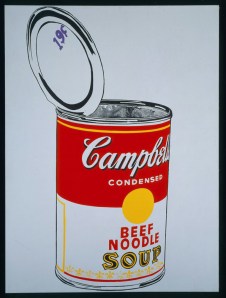
Andy Warhol. Big Campbell's Soup Can, 19¢ (Beef Noodle), 1962. Acrylic and graphite on canvas, The Menil Collection, Houston. © 2012 The Andy Warhol Foundation for the Visual Arts, Inc. / Artists Rights Society (ARS), New York

Andy Warhol. Big Campbell’s Soup Can, 19¢ (Beef Noodle), 1962. Acrylic & graphite on canvas, The Menil Collection, Houston. © 2012 The Andy Warhol Foundation for the Visual Arts, Inc. / ARS, New York

New Year’s Eve is the last day of a major tribute to the man who encouraged us to view brands, news, celebrities, identity-shifting, multiples, and commerce as art – Regarding Warhol: Sixty Artists, Fifty Years.

 The curators have organized the big, second-floor galleries along these themes, and paired Andy’s work with the work of fifty contemporary artists whose own work is indebted to Andy’s redefinition of modern life.

As the show begins, it’s almost as if Andy’s contemplating the implications of the upcoming fiscal cliff talks with the wall quote, “Buying is much more American than thinking.”

To prove his point, you’ll find Andy’s little-seen Dr. Scholl’s Corns (1961) (a gift from Halston to the Met), alongside better-known Brillo boxes and other brand icons from the Whitney, Menil, and Warhol Foundation collections. The curators have included Tom Sach’s Chanel Chainsaw (1996) and Hans Haake’s political pop masterwork, a giant cigarette box created in 1990 in response to Jesse Helms’s attack on Mapplethorpe and the NEA with the cigarettes wrapped in the Bill of Rights and branded “Phiip Morris Funds Jesse Helms”.

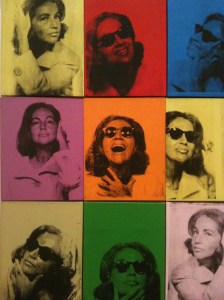
Fragment of Andy Warhol’s silkscreen on canvas, Ethel Scull 36 Times. Jointly owned by the Whitney Museum of American Art and The Metropolitan Museum of Art; Gift of Ethel Redner Scull, 2001

Fragment of Andy Warhol’s silkscreen on canvas, Ethel Scull 36 Times. Jointly owned by the Whitney Museum of American Art and The Metropolitan Museum of Art; Gift of Ethel Redner Scull, 2001

Alongside Andy’s Screen Test films are portraits by Tillman, Close, and Avedon, as well as a needlepoint of Liza in her heyday and a brilliant Sugimoto portrait of Fidel Castro (except that it’s a wax museum likeness).  Andy’s dollar-sign print multiples are hung near another quote: “Being good in business is the most fascinating kind of art.” An entire wall covered in Takashi Murakami and Koons multiples stand in evidence.

If you can’t celebrate in person at the Met, download Rebecca Lowery’s timeline of Warhol’s impact from the exhibition catalog. Or watch the 90-minute video featuring the curator Mark Rosenthal debating if Warhol actually is the most influential artist of the last fifty years. Or, view the films and listen to the music that the Met streamed live last October:  The Metropolitan Museum of Art – Dean and Britta—13 Most Beautiful: Songs for Andy Warhol’s Screen Tests.

NYC Spider Theater Due to Close

Bronze Spider 1, 1995 by Ms. Bourgeois lurks at the show’s entrance

About the best spider theater in town is about to close in a few weeks – the live-animal floor show inside the American Museum of National History’s Spiders Alive! exhibition, where an actual spider-handler enthralls the crowds with myth-busting tales while introducing the arachnid star of the show, a Chilean Rose Hair Tarantula. Nearly 20 live species are crawling around the terrariums, but crowds are flocking to the live demo/theater area of the show and sitting spellbound until intermission. Go see it!

Since the AMNH never does anything second-rate, it’s fitting to note that welcoming visitors to the show is an art-world superstar. Lurking inconspicuously in the “canoe” lobby area outside the show is one of the smaller bronze spiders crafted by Louise Bourgeois. It’s smaller than the babies that graced the 1999 opening of Tate Modern’s Turbine Hall in London (and later the Guggenheim in Bilbao and Rockefeller Center), but who cares? Stop by for a glimpse.

Robert Cuccioli, AMNH curator Norman Platnik, Reeve Carney and multiple Spider-Men take in AMNH’s “Spiders Alive!” © AMNH\R. Mickens

And lest you think that AMNH ignored the other obvious art-world connection, it didn’t, as shown by this amusing photo in September, when the cast of that other spider-themed show came to visit AMNH curator Normal Platnik for a walk-through.

Check out the opening-day YouTube promo below, but go meet the spiders up close and personal before they leave after January 6. If you’re a sci café geek that wants more, go poke around the AMNH World Spider Catalog.

Join the Revolution This Week in Brooklyn

Did you know that the British landing of 22,000 troops in Brooklyn in August 1776 was the largest sea invasion until D-Day? Or that the face-off along Flatbush was the largest and most fateful battle of the Revolution?

The site of the Continental Army’s line of defense at Battle Pass along the Flatbush Road during the Battle of Brooklyn on August 27, 1776 (Prospect Park)

It will be easy to get up to speed on this historic turning point this week by joining any of the activities happening in and around the key sites (Prospect Park, The Old Stone House, Green-Wood Cemetery, Fulton Ferry, and The Brooklyn Navy Yard) as Brooklyn hosts Battle Week 2012.

Yesterday was the vigorous, cross-country hike up to Battle Pass in Prospect Park to learn about the brave defense, and on to the grand finale at The Old Stone House to relive the historic battle with expert William Parry.  The good news is that Parry will be doing it all again on Tuesday, August 21. Don’t miss this or the rest of the schedule posted on the Stone House’s Battle Week calendar. Highlights:

August 22: You’ll have to decide between a canoe tour with the Gowanus Dredgers or a history lecture on our waterfront’s role in the battle at Pier 1 at Brooklyn Bridge Park.

August 23: The spectacular pub at the top of BLDG 92 at the Navy Yard hosts Battle of Brooklyn-inspired team trivia.

August 25: Witness a reenactment of how Glover’s Marblehead Regiment facilitated Washington’s undercover escape with our Army at Brooklyn Bridge Park’s pebble beach.

August 26:  Have a full day at the big battle site, Green-Wood Cemetery, with tours, parades, the Continental Army, horses, cannons, muskets, Hessians, Redcoats, and George Washington. (We’ve also heard that Ben Franklin could make an appearance, but shouldn’t he be concentrating on the U.S. Postal Service?)

The Old Stone House, where 400 brave Marylanders fought against 2,000 British, Hessians, and Cornwallis to delay their assault on the Continental Army, which escaped

August 27: The Battle on Bergen art performance by Proteus Gowanus at Smith & Bergen at their Liberty Pole.

August 29: A follow-up talk about Washington’s Retreat at Pier 1 of Brooklyn Bridge Park.

If you want to prepare, watch the video tour recorded by John Turturro, and check out the interactive map on the Old Stone House website.