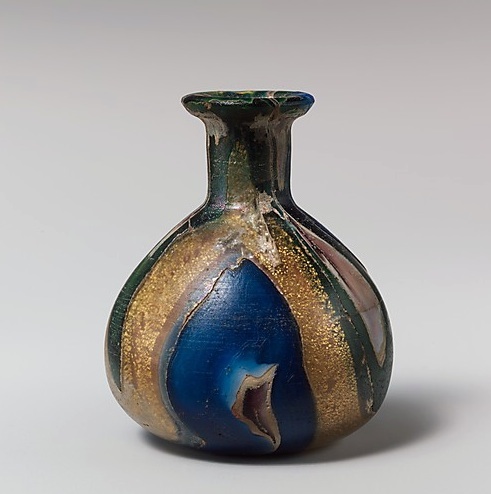
Tiny Show Tells Big Story at NY Historical Society

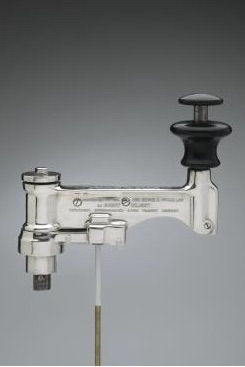
Tiffany & Co., Sterling silver controller handle used to operate NYC’s first subway train, 1904. Source: NYHS

Tiffany & Co., Sterling silver controller handle used to operate NYC’s first subway train, 1904. Source: NYHS

Has anything changed in New York in the last 400 years?

To celebrate the debut of a history book by Sam Roberts, the New-York Historical Society has filled its tiny second-floor gallery with A Brief History of New York: Selections from A History of New York in 101 Objects. Perhaps it’s always been about infrastructure, finance, and tourism. See for yourself through Sunday, November 30.

Many of the stories intertwine, and it’s fun to get insights from reading the backstories of the items on display, like the 1500s arrowhead and the 1700s oyster. We all know that New York City was the oyster capital of North America until the 1920s, but did you know that they were so abundant that crushed shells were used to line Pearl Street and provide the major component of the foundation mortar for Trinity Church on Wall Street?

Consider that the earliest guidebook to New York City (formerly New Amsterdam) was written in 1670, long before double-decker buses were trolling the mean streets.

New York's first guide book from 1640

New York’s first guide book from 1640

Mass-market media manipulations were born here as long ago as 1809, when young Washington Irving (who first used “Gotham” as a synonym the city in 1807) began posting missing-persons advertisements in a variety of city papers (the New York Evening Post is on display) to drive sales of his satirical political “history” of New York by a fictional Diedrich Knickerbocker. Move over, Buzzfeed.

City infrastructure highlights include Mr. Randal’s field books for laying out the Manhattan street grid in the early 1800s (see the digitized results here) and a snippet from the first transatlantic cable, deployed in 1854-1858. Queen Victoria sent an 88-word telegram to New York, which was officially received in an astounding 17 hours — an innovation at the time but significantly slower than dial-up AOL.

Visitors absolutely love the wooden water pipes on display at NYHS, but the show shares the fact that these were deployed by Aaron Burr, who got the state license to build New York’s first water system as part of his mission with The Manhattan Company. We’re used to hearing about the crumbling infrastructure under the streets today and contractors under-funding city technology projects, but this item underscores that it’s not a new story.
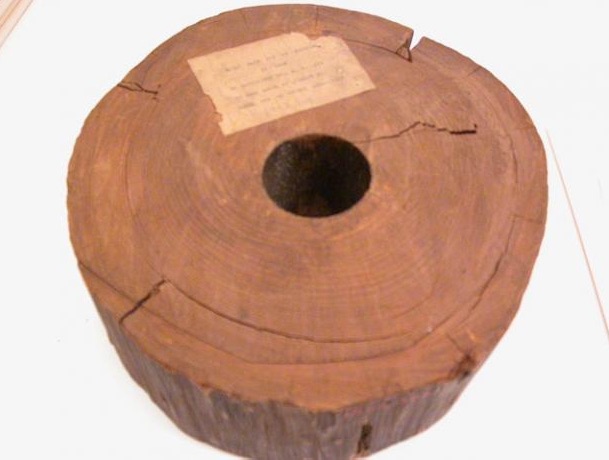
Section of water pipe, 1770-1804. The note says it was put into service in 1804 on Washington Street near Liberty Street and pulled out of the ground around 1911.

Section of water pipe, 1770-1804. The note says it was installed on Washington Street (near Liberty) in 1804 and pulled out of the ground around 1911.

Burr made money but let this innovative delivery system deteriorate. Instead of keeping the infrastructure up-to-date, he use the cash to build The Manhattan Bank (today JPMorgan Chase) to break the monopoly held by Mr. Hamilton’s Bank of New York – a rivalry that later escalated toward an historically tragic outcome. (See their dueling pistols in the lobby.)

On a happier note, one of the brightest objects in the show is the sterling silver Tiffany handle used to operate the first subway train in New York in 1904. Dignitaries used it to make the first run from City Hall up to 103rd Street on a day when 150,000 tickets were sold and New Yorkers took their first ride.
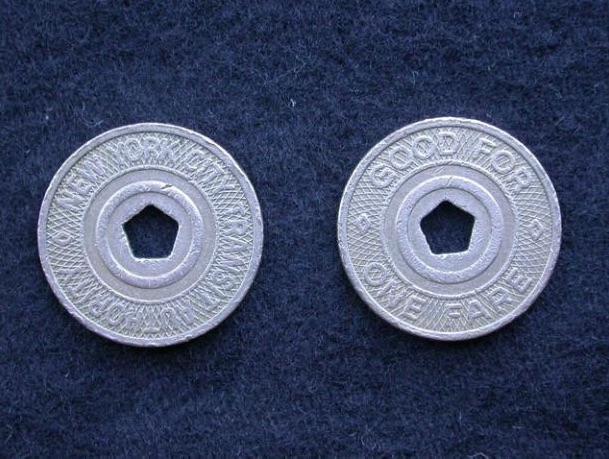
Subway tokens (1995-2003). Source: NYHS

Subway tokens (1995-2003). Source: NYHS

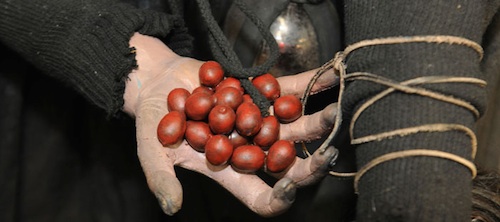
Although they only went extinct in 2003, the subway tokens mounted behind glass seem like ancient history – little round artifacts that look as though they should have been dangling from beaded wampum belts and not carried around as currency in the 20th century.

Thanks to NYHS for providing us with this illuminating capsule collection.

Sinclair Dinosaur Sneaks In and Out of Grand Central

Entrance to the show, featuring the 1964 monorail, transport of the future

Entrance to the show, featuring the 1964 monorail, transport of the future

Although he’s featured at the back, the famous Sinclair dinosaur from the 1964 New York World’s Fair has generated a lot of attention inside the New York Transit Museum’s show Traveling in the World of Tomorrow: The Future of Transportation at New York’s World’s Fairs, closing today.

Drawn in by the spectacular photo of the monorail, commuters and tourists visiting Grand Central have been roaming through the gallery and gift shop, checking out the photos, murals, and Dinoland movie that whisk them back to the transportation pavilions of the history-making 1939 and 1964 New York world’s fairs. What’s a dinosaur doing in the World of Tomorrow? It’s all about the car.

The 1939 World’s Fair was built on top of the Corona garbage dump during the height of the Great Depression, putting visionary architects and day laborers to work.

A 1964 New York Times photo of the Sinclair Dinosaur and Stegosaurus passing by the Empire State Building on their way to the Queens fairgrounds

A 1964 New York Times photo of the Sinclair Dinosaur and Stegosaurus passing by the Empire State Building on their way to the Queens fairgrounds

A futuristic subway station was built to deliver visitors to the fairgrounds from the A Line. You could enter a spaceship-shaped Flash Gordon amusement ride and watch the first 3D Technicolor movie ever produced inside the Chrysler pavilion.

The best was the legendary Futurama, where people could imagine a time where everyone owned their own car. The ride took them to the faraway year of 1960. Superhighways and curly exit ramps bisect acres of tall skyscrapers, with cars traveling on autopilot at the amazing speed of 55 miles per hour. Incredible!

Dinoland brochure from the Queens Historical Society

Dinoland brochure from the Queens Historical Society

Fast forward: The Sinclair dinosaur is part of the 1964 experience. By then, every family owned its own car. Sinclair’s long-necked, supersized Brontosaurus was a familiar icon to any family stopping to gas up along the newly completed interstate highway system, so why not mix a little magic, promotion, and science?

Sinclair built Dinoland and populated it with life-size replicas of nine dinosaurs. The exhibition has plenty of Dinoland souvenirs along with a movie clip of families seeing the Jurassic giant for the first time.

Robert Moses and Walt Disney look at the model of the 1964 World’s Fair. From MTA Bridges & Tunnels archives

Robert Moses and Walt Disney look at the model of the 1964 World’s Fair. From MTA Bridges & Tunnels archives

The show also pays tribute to the man who also brought another group of Mesozoic superstars to life inside the fairgrounds. Walt Disney designed four of the fair’s animatronics displays, including the robot cavemen and dinosaurs glimpsed in the Ford Motor Company’s “Magic Skyway” ride. There’s a terrific photo of New York’s Robert Moses alongside Walt, looking out over the model of the 1964 fairgrounds, and you can see the actual model itself, right inside.

Missed the show? You won’t see all the movies and hear the soundtracks that made the exhibition so exciting, but you can take a look at the galleries on our Flickr feed.

The 1964 car that everyone wanted — the Ford Mustang, which debuted at the fair

The 1964 car that everyone wanted — the Ford Mustang, which debuted at the fair

The Paper Bag Was Her Design

MoMA honors Margaret Knight, 1870s inventor of the flat-bottomed paper bag

MoMA honors Margaret Knight, 1870s inventor of the flat-bottomed paper bag

What will the MoMA curators pull out of the design collection next? Designing Modern Women 1890–1990, running through October 19, puts the spotlight on furniture, textiles, graphics, performance, kitchens, and even inflatables designed by some innovative women over the last century. How can you not love a show that begins with 1890s modern-dance provocateur Loïe Fuller and ends with 1980s pop icon Grace Jones?

The crowd last weekend was loving every bit of it, pausing to watch videos sprinkled throughout the show and marvel at designs – some 80 to 100 years old that are as modern today as they were at their creation.

The next time you carry away your morning muffin from the coffee counter in that little white paper bag, ponder that the flat-bottomed paper bag was invented in the 1870s by Margaret E. Knight and Charles B. Stilwell. Ms. Knight not only invented this classic, but also invented the machine that made it and was one of the first American women ever to receive a patent.

1901 dinner service by Jutta Sika and Koloman Moser

1901 dinner service by Jutta Sika and Koloman Moser

No, the dinner service is not from Pottery Barn. It was created in 1901 by the Austrian design team of Jutta Sika and Koloman Moser. Didn’t I just see a copy of Eileen Gray’s 1927 adjustable table at the D & D Building? Open shelving in your new, modern kitchen? Yes, that was Charlotte Perriand’s idea, and MoMA has (for the first time) installed this full-size, fully efficient, ground-breaking kitchen from her 1952 project with Le Corbusier.

And what about the Slinky? Invented by Betty and Richard James in 1945. You’ll have fun peering into the design cases and learning more about the women behind some remarkable things.

Slinky was designed by Betty and Richard James in 1945

Slinky was designed by Betty and Richard James in 1945

In the 1960s portion of the show, you’ll see those famous Fillmore posters designed by Bonnie Maclean. And there’s an entire wall filled with iconic pop and punk graphics – all created by female designers – that should be familiar to anyone that traversed the downtown CBGBs scene.

There’s no digital media to accompany this fantastic show, so take a walk through our Flickr site. All of the items are from MoMA’s own collection, and we’ve taken slight liberties by arranging the photos in the show album in chronological order of the year that each design debuted.

And to bring it all back to the beginning of this design innovation tribute: Here’s a glimpse of 1897 Art Nouveau performance art by Loïe Fuller, courtesy of the Lumiere Brothers. The color you see here is a result of hand-tinting the film, but her actual perfomances used new theatrical stage lighting for which she held numerous patents. Listen to the MoMA curators explain her influence, but get over to MoMA (or the Flickr site) to take in this super-fun tribute to 100-plus years of smart women who thought differently and made it happen.

Groundbreakers App Ties History and Beauty Together

AppTitle

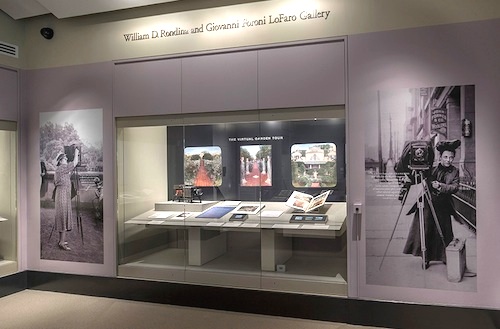
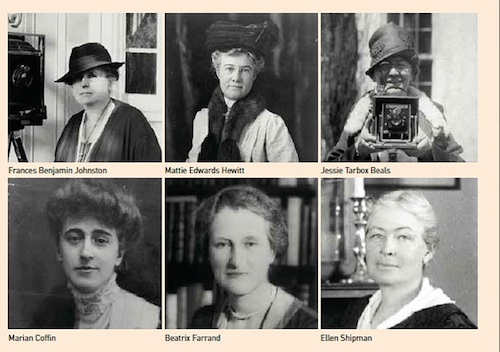
The New York Botanical Garden carved out an ambitious agenda in its Groundbreakers show – to tie the stories of six women of landscaping history, present a two-gallery recreation of an historic garden, pay tribute to the contributions of several landscapes within NYBG itself, create a poetry walk, and wrap it up with the history of early 20th-century photography and high-gloss publishing. They did it with GPS and an iPhone app, courtesy of Bloomberg.

Closing this weekend, Groundbreakers: Great American Gardens and the Women Who Designed Them is still worth downloading from iTunes, just to get a glimpse into the lives of six landscape-gardening pioneers, see their work, and understand the popularization of American gardening long before the dawn of HGTV or Lifestyles of the Rich and Famous. Here’s the link.

Photos of Ms. Johnston (left), lantern slides and projector, and Beals (right) on NYC street in 1902. Courtesy: NYBG

Photos of Ms. Johnston (left), lantern slides and projector, and Beals (right) on NYC street in 1902. Courtesy: NYBG

Here’s the story: back in the day (early 1900s), garden design and photography were two of the few career avenues available to women.

Way before Instagram, Photoshop, and two-way phone cameras, documenting the lush gardens involved lugging a gigantic, large-format camera up and down garden paths and around water features, processing black-and-white negatives into prints, turning some into newly-invented lantern slides, and having each slide painstakingly colored by hand. It helped if you had a car and an able-bodied assistant to help navigate the flagstone-lined paths with all the heavy gear.

Six American landscape pioneers who changed the course of American gardening. Courtesy: NYBG

Six American landscape pioneers who changed the course of American gardening. Courtesy: NYBG

Also, after the Industrial Revolution, aesthetically minded women (predating Lady Bird Johnson) felt it was time for American homescapes to get a little more spruced up.

The rich and famous were beginning to hire landscape designers to fix up the areas behind their East Side townhomes and acreages around their country estates. Why not document this and inspire upper middle class homeowners to follow suit?

The exhibition gives us a look at how artist visionaries, authors, and the publishing industry worked in tandem to record how landscape architects were creating romantic backyard landscapes and popularize beautification. Although seeing actual lantern slides, projectors, and gigantic tripods is amazing, one of the highlights is a recreation of the slide show by Frances Benjamin Johnston that basically blazed the trail of a new vision of what was possible – one image after another of gorgeous, visionary landscapes on the grounds of homes on the East Coast, California, England, and France.

NYBG recreated the evocative Moon Gate from the Rockefeller garden, inspired by their experience of the Forbidden City and designed by Beatrix Farrand

NYBG recreated the evocative Moon Gate from the Rockefeller garden, inspired by their experience of the Forbidden City and designed by Beatrix Farrand

In the Conservatory, the team at NYBG recreated Mrs. Rockefeller’s garden, originally designed by Beatrix Farrand, to highlight how the garden was conceived, used, and enhanced by the Asian art Mr. and Mrs. John D. collected. Since Farrand took on this project in 1926, NYBG has the sounds of America’s Jazz Age wafting through the galleries. Take a look on our Flickr page.

Another great feature of this show and the app – NYBG’s GPS feature shows you where you are in the expansive garden and encourages you to visit features where these groundbreakers had a hand – such as Marian Coffin’s ornamental conifer collection and Ferrand’s Rose Garden.

Get a closer view of the spectacular Groundbreakers in NYBG’s news-style video:

If you have a bit more time, listen to this curator lecture on the Beautiful Garden movement in America in 1900 and see the photos used by Johnston home to show suburbanites exactly how it should be done. You’ll witness garden images that hadn’t been seen since 1930. Take a look and get inspired:

Click here for other videos: a lecture about Beatrix Farrand created Mrs. Rockefeller’s garden and how the NYBG team recreated it in the stunning Victorian conservatory.

The Sistine Chapel of Fashion Virtuosity

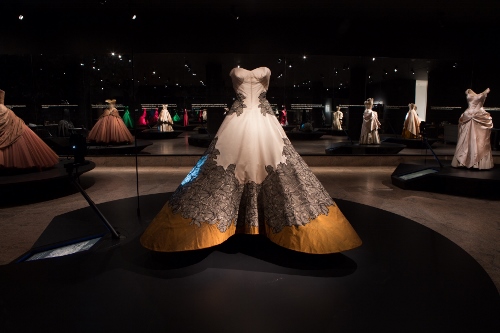
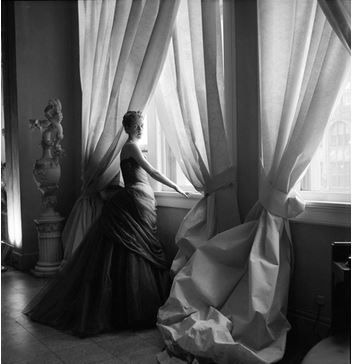
Clover Leaf Ball Gown – a 1953 silk faille, shantung, and black lace sculpture by Mr. James. Part of the Brooklyn Collection at The Met

Clover Leaf Ball Gown – a 1953 silk faille, shantung, and black lace sculpture by Mr. James. Part of the Brooklyn Collection at The Met

When the Brooklyn Museum handed its fashion archive over to the Met in January 2009, the first thought that crossed everyone’s mind was the mind-bending masterworks that would now be sheltered under the protective wing of the Costume Institute’s crack conservation team — “Oooh, maybe the Met will do a Charles James show!”

We’re glad to report that the Met has done this master proud and given his humble admirers a fitting place to worship in its triumphant two-gallery show, Charles James: Beyond Fashion, which ends this weekend, August 10.

1952 portrait by Michael A. Vaccaro / LOOK Magazine. Courtesy: The Met;  Library of Congress

1952 portrait by Michael A. Vaccaro / LOOK Magazine. Courtesy: The Met; Library of Congress

Mr. James is credited with being among the first to perfect the strapless gown in the 1930s, an inspiration for Mr. Dior’s “New Look” in the 1940s, and the epitome of Vogue glamour dressing in the 1950s. He could do things with fabric that others simply couldn’t do or wouldn’t dare…well, maybe except for Madame Gres. He pushed silhouettes and fabrics further than most anyone could conceive and had the temperamental nature, drive for perfection, and uncompromising attention to detail that characterize any of history’s greatest, most passionate artists.

You always look at his creations and ask yourself, “How did he do it?” How did he get a spiral of fabric to stand out as it wraps sinuously around a sleek, strapless electric green silk mermaid dress? Is that sexy Thirties frock actually cut from one scarf?  How did he create virtual moving sculptures from the world’s most expensive fabric?

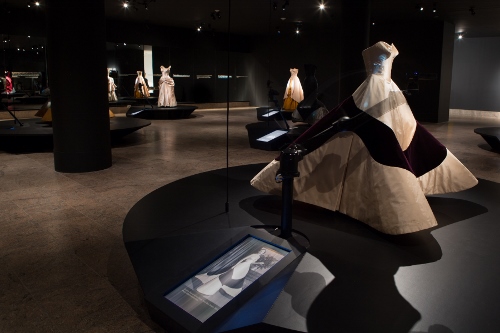
Innovative digital display tells the back story of Mrs. Hearst’s Clover Leaf Gown – too big for Ike’s inaugural, but just right for Queen Elizabeth II’s coronation

Innovative digital display tells the back story of Mrs. Hearst’s Clover Leaf Gown – too big for Ike’s inaugural, but just right for Queen Elizabeth II’s coronation

Long known for his innovative engineering, the Met came to a brilliant solution to explain the magic that Mr. James wrought over his decades of no-two-alike work – hire an architectural firm to show us.

Enter Diller Scofidio + Renfro, who have mounted these sculptures in silk inside an infinity-room gallery and paired each masterpiece with its own personal robot and humongous iPad-type display. Look at the dress and refer to the screen as the dress digitally deconstructs and is assembled again.

Cecil Beaton’s 1955  photo of Nancy James in the Swan Gown. Courtesy: The Met; Cecil Beaton Studio Archive at Sotheby's

Cecil Beaton’s 1955 photo of Nancy James in the Swan Gown. Courtesy: The Met; Cecil Beaton Studio Archive at Sotheby’s

The crowds waft from dress to dress in no particular order, clustering silently to watch digital magic, see where the robot is pointing, and view photos of Mrs. Randolph Heart, Jr., Gypsy Rose Lee, or Josephine Abercrombie in said gown. The robot with the 1954 Swan Ball Gown captivates viewers by moving underneath to televise close-up views of some of the 1,080 square feet of tulle that Mr. James used to create the oomph.

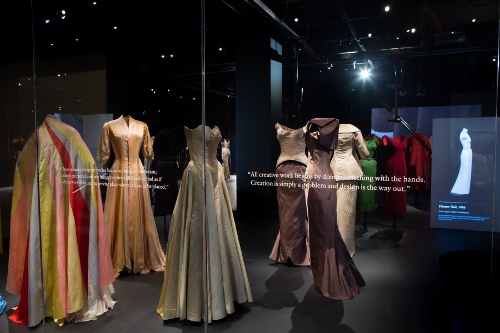
The mirrored walls of the upstairs gallery and the see-through dividers downstairs are emblazoned with the wisdom of the man himself. He seems to be talking right to you as you wonder how he made the fabric do what it’s doing (“It’s the air that’s sculpted, not the silk”) or how he thought about the world of fashion (“We who have been ahead in style have usually been ahead in our thinking”).

Downstairs gallery, newly named for Ms. Wintour, filled with James creations

Downstairs gallery, newly named for Ms. Wintour, filled with James creations

The second gallery (welcome back, ground floor Costume Institute!) displays his wool creations and sharply shaped cocktail wear. It’s interesting that James considered some of these genuinely more innovative than his often-photographed gowns. The curators have placed another of his “first” in a room at the back – the predecessor of today’s puffer coat. On loan from the V&A, it remarkably dates from the 1930s – his soft, sensual, silky answer to the boxy fur jackets that Ms. Schiaparelli was showing in Europe at the time.

We have to thank Mr. James for his vision and for making sure the Brooklyn design lab had so many examples of his masterpieces to teach and inspire future generations of Seventh Avenue designers. As he says, “In fashion, even what seems most fragile must be built on cement.”  Lesson learned.

The Met’s a great steward. Just listen to the love in the tour of the show by its curators:

If you have more time, hear what Zac Posen has to say to the co-curator about The Master:

Poison Packs Punch at AMNH Night at the Museum Adult Sleepover

The sleepover site under the Blue Whale

The sleepover site under the Blue Whale

The first-ever adult Night at the Museum sleepover at the American Museum of Natural History last night was a hit, thanks to the enthusiasm and star power of Dr. Mark Siddall, the curator of the fantastic exhibition, The Power of Poison, closing August 10.

Early in the evening, Siddall mingled with sleepover guests at dinner in the Powerhouse and later in a series late-night talks from the Victorian theater inside the Poison show where costumed performers normally show visitors how to gather clues to solve a period murder mystery involving poison. (Think “I’ve got poison in my pocket” from A Gentleman’s Guide to Love and Murder.)

After dinner, the adventurers, some in costumes themselves, made quick trips with their stuffed animals to the cots under the Blue Whale and bounded up the stairs through the low-light galleries to reach the shark IMAX, live animal demos, fossil tours, and Siddall’s Poison briefings.

The Victorian theater inside Poison. Photo: AMNH/D. Finnan

The Victorian theater inside Poison. Photo: AMNH/D. Finnan

You had to pass through the always eerie Hall of Reptiles and Amphibians (hello, Komodo dragons!) to enter the magical kingdom of the Poison galleries.

Once inside, you were transported to a tropical rainforest, with golden poison-dart frogs under a dome, huge models of dangerous insects, and a toxin-eating Howler Monkey lurking on a branch.

Beyond the tropics, the show morphed into a land of make-believe…or was it? Tableaux with a sleeping Snow White, the witches of Macbeth, and the Mad Hatter were captivating, with the label copy bringing you back down to earth by explaining the role played by poisons and toxins in these scenes and what exactly witches’ brew contained.

Supplies for the toxic witches’ brew. Source: AMNH

Supplies for the toxic witches’ brew. Source: AMNH

A Chinese emperor (the one with the terra cotta army, no less!) ingests mercury in one diorama, thinking it’s going to give him immortality. Wrong move. Glancing down, you find out that as recently as 1948, mercury-laced teething powder was still being used on babies in the United States.

A spectacular illusion along the way is a magical set of Greek vases whose painted figures came to life to tell stories of how poison helped Hercules and doomed Ms. Medea.

The Magic BookThe lively vases are a prelude to the exhibition team’s greatest wonder – the Enchanted Book – a gigantic tome where ancient illustrations leap to life as you turn big, think parchment pages. Visitors could not get enough of that magic book. Somehow the AMNH digital team replicated it on the website, so click here to take a look at The Power of Poison: An Enchanted Book and turn the pages on line.

Here’s a glimpse of one story from the belladonna page, providing the backstory on how witches fly:

A lot of Siddall’s spectacular, magical, immersive, theatrical exhibition explains the science behind venoms, the “arms races” in the natural world, poison’s role in children’s stories, and how to analyze clues in solving murder mysteries.

Check out the Victorian-style introduction to Poison with Dr. Mark Siddall, its creator, and get a little taste of what the sleepover guests saw and heard.

To ward off any bad dreams about toxins or creepy crawlers, a lot of the late-nighters nestled in to watch vintage Abbott and Costello and Superman films and post Instagrams from the cozy, pillow-lined pit in center of the Hall of Planet Earth.

See the Today show’s recap (video after the commercial).

PS: If you can’t get to this show before August 10, download the iPad app, Power of Poison: Be a Detective that allows you to experience the last portion of the show. It’s been nominated for a 2014 Webby Award in the Education and Reference category.

Sky High NYC Real Estate at Skyscraper Museum

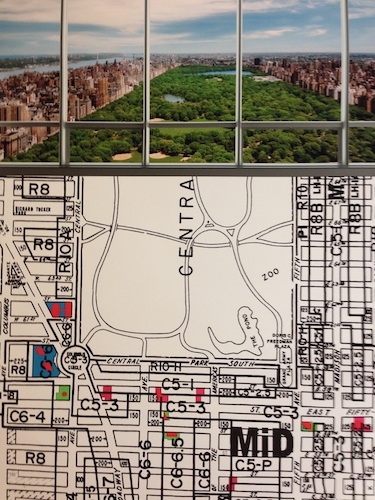
A photo of the future view from an apartment in One57, with the Midtown zoning map. Source: Skyscraper Museum

A photo of the future view from an apartment in One57, with the Midtown zoning map. Source: Skyscraper Museum

People get pretty emotional about their New York skyline. Recent news has swirled around Comcast wanting to put its name atop Rockefeller Center (goodbye, G.E.), the soon-to-be obstructed view of Manhattan from New Jersey’s Lincoln Tunnel entrance, and the super-slim ultra-tall residential skyscrapers sprouting up along the south edge of Central Park.

What’s going up at Hudson Yards? Will more sky-high slivers be overtaking the Empire State Building? The downtown skyline? Thankfully, the Skyscraper Museum is walking us all through the plans in its show, closing this weekend, Sky High & the Logic of Luxury. In a fantastic on-line and in-gallery show, the museum lays out the thinking behind six super-tall residential real estate developments, gives us the historic context of tall buildings here, and introduces us to the architects and developers behind the trend.

Take an installation walk-through.

Stars of the show, left to right: 432 Park Avenue, One57, 111 West 57th, Four Seasons at 30 Park Place, 56 Leonard, Hudson Yards Tower D.

Stars of the show, left to right: 432 Park Avenue, One57, 111 West 57th, Four Seasons at 30 Park Place, 56 Leonard, Hudson Yards Tower D.

The show – both in the museum and on the web – begins with a definition of  “slim” skyscraper and the long history of super-skinny in Manhattan. The history goes as far back to 1889 with the super-tall (at eleven stories) Tower Building at 50 Broadway – the beginning of the first phase of super-slim buildings. The MetLife Tower, finished in 1909, still towers to the east of Shake Shack at Madison Square. (Note, however, that the clock face is the only original part of the exterior left after a 1960s renovation.)

Illustrations of the world’s tallest skyscrapers in 1899 to 1918, all in Manhattan.

Illustrations of the world’s tallest skyscrapers in 1899 to 1918, all in Manhattan.

After New York’s zoning laws went into effect in 1916 (the first in the United States), hotels started growing taller and skinnier (e.g. the Sherry Netherland in 1927, the Pierre in 1930). Residences didn’t get that way until much more recently with the post-1961 legal change that allowed developers to buy air rights and build really high.

Enter Trump in the 1980s with multiple residential towers covered in dark glass, and the super-tall building (One Madison Park) that went bankrupt during the recession. But now, the entire movement is gaining steam again, with prices, views, and amenities reaching higher and higher.

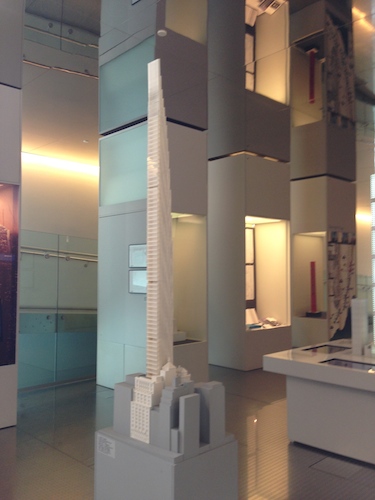
The buildings featured in this show (in case you haven’t looked up) shoot up between 50 and 90 stories. Some are clustered at the foot of Central Park (check out 432 Park Avenue, One57, and 111 West 57th). Some are rising downtown – Four Seasons at 30 Park Place and 56 Leonard.

Architect model of 111 West 57th Street soars over surrounding buildings

Architect model of 111 West 57th Street soars over surrounding buildings

And, of course, some will be encircled by the High Line Phase III, such as Hudson Yards Tower D.

Take a look at the fantastic, detailed museum exhibition site and get to know your new neighbors.

Be sure to zoom in on the chart on the museum’s web site, showing the history of Manhattan sky-high apartment prices. Also, check out our Flickr photstream of the museum show.

Want to see the future? Take a look:

Last Call for the Whitney Biennial Uptown

Detail of Elijah Burgher’s “The Pattern of All Patience 1” (2014), featuring magical symbols, installed on the second floor

Detail of Elijah Burgher’s The Pattern of All Patience 1 (2014), featuring magical symbols, installed on the second floor

It’s the last time the Whitney Biennial is holding its big, expansive, colorful, and provocative shindig on the Upper East Side, since it will decamp to its new riverside home at the foot of the High Line next year. Go before it ends on May 25.

It’s amazing to think that this is the 77th time that the Whitney has hosted either an annual or biennial show to showcase the best of American art, as controversial and impossible a task as that may be. This year, the Whitney threw in the towel in trying to showcase “the best” of what’s going on in contemporary art coast to coast. It just wasn’t possible given the expanse, diversity, and barrier-breaking works that American artists are cranking out right now.

Instead, the Whitney invited three innovative curators to choose what should be shown on each of three floors and around town. (Yes, there are offsite works, too.)

“Pillar of Inquiry/Supple Column” (2013-2014) by fiber artist superstar Sheila Hicks

Pillar of Inquiry/Supple Column (2013-2014) by fiber artist superstar Sheila Hicks

The divide-and-conquer approach works, resulting in a fun variety of media, installations, paintings, sculptures, textile art, performance, and collections-as-art. The team pulled it all together in only 18 months while still doing their day jobs at Chicago’s Art Institute, London’s Tate Modern, and Philadelphia’s ICA.

Visit our Flickr album and walk through the press preview with us, where several artists were on hand in the galleries with their work.

It’s a happier, lighter show compared to past Biennials, but that doesn’t mean that the artists ignore social commentary or darker sides of human nature. It just means that you won’t feel as though you need a graduate degree in Conceptual Art to enjoy and ponder the work you’ll encounter.

Highlights: Charlemagne Palestine has created a surprisingly spooky installation in the stairwell that features sonorous sounds emanating from speakers adorned with stuffed animals. LA painter Rebecca Morris has two bright, gigantic delightful paintings on the second floor, curated by Philadelphia’s Anthony Elms, which features several satisfying collections-as-art installations by Julie Ault, Richard Hawkins, and Catherine Opie.

Pterosaur and giant theropod are featured in Shio Kusaka’s third-floor ceramics display

Pterosaur and giant theropod are featured in Shio Kusaka’s fourth-floor ceramics display

Fans of NYC’s 1970s art scene (when Soho was still industrial) will be captivated by The Gregory Battcock Archive, peering at the ephemera collected by one of the decade’s most prominent art critics who died under mysterious circumstances in 1980. Amazingly, it was all found by artist Joseph Grigley wafting around garbage bins in an abandoned storage facility. Grigley’s created a disciplined, loving, and intimate installation of reclaimed Battcock mementos, memories, and letters with Cage, Warhol, Moorman, Paik, Ono, and other 70s superstars.

The top floor takes a down-home approach to some very enjoyable paintings, sculptures, installations, and ceramics. Midwest curator Michelle Grabner said that she wishes she could just camp out there for the run of the show. You’ll enjoy it, too — a dreamy installation by Joel Otterson, a monumental yarn pillar by uber-fiber-artist Sheila Hicks, a witty desk and bookcase by master woodsman-sculptor David Robbins, and shelf of delicate and whimsical ceramics by Shio Kusaka.

Knits with commentary by Lisa Anne Auerbach, including We Are All Pussy Riot

Knits with commentary by Lisa Anne Auerbach, including We Are All Pussy Riot

The third floor, curated by Stuart Comer (who’s recently moved to MoMA), features a lot of screens and digital media, essentially making you think about art in the age of the iPhone. As you step out of the elevator, you’ll encounter Ken Okiishi’s series of painted panels. Oh, wait! They’re actually abstract paintings on upended flat-screen TV displays – sort of like what would happen if Kandinsky’s Seasons were done at the Samsung plant.

The mixing of media keeps morphing in room after room of clever installations by Triple Canopy (antiques meet 3D printing) and Lisa Anne Auerbach (knitting meets social commentary, and zines meet the Giant in Jack and the Beanstalk). See Lisa’s work and listen to her explain her knitting:

There are dozens of other videos and audio guide stops posted on the Biennial web site (click on “watch and listen”), as well as bios of all the artists.

Alert: MAD’s own design biennial opens July 1.

Subversive Chinese Brush-Up at the Met

Yang Jiechang’s Crying Landscape (2003) shares the Gallery for Art of Ancient China with a sandstone stele from the Northern Wei dynasty (489-495) and the 1319 Buddha of Medicine.

Yang Jiechang’s Crying Landscape (2003) shares the Gallery for Art of Ancient China with a sandstone stele from the Northern Wei dynasty (489-495) and the 1319 Buddha of Medicine.

Normally, the galleries for Asian Art at the Metropolitan Museum of Art are pretty tranquil. But through April 6, you’ll find them buzzing with contemporary art lovers reveling in the hunt to find the most famous, subversive, subtle works by Chinese painters, sculptors, and digital artists residing amidst centuries-old treasures in the widely popular exhibition, Ink Art: Past as Present in Contemporary China.

The Met gave the Chinese art curators free reign to pluck sly works from the in-house contemporary collections created by Chinese artists over the last 20 years, grab monumental works from private collectors, and mount a tribute to how post-Cultural Revolution innovators parse the traditions associated with centuries-old art making in their ancestral country.

How do the hottest artists on the planet turn calligraphy and inked woodblocks into biting social commentary? Take a stroll through the second floor Asian art wing.

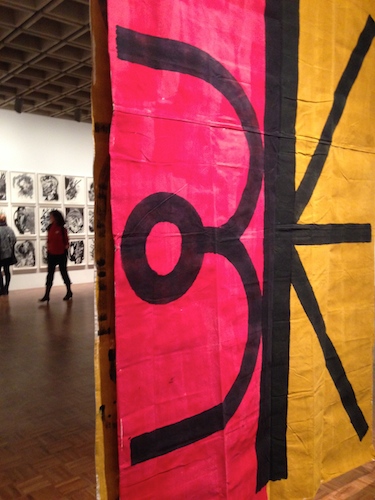
Inspired by Cultural Revolution posters, the letters in Wu Shanzhuan’s Character Image of Black Character Font (1989) have no meaning.

Inspired by Cultural Revolution posters, the letters in Wu Shanzhuan’s Character Image of Black Character Font (1989) have no meaning. Courtesy: Private collector, the artist.

Just past the balcony-bar area, the monumental 1319 Buddha of Medicine mural from Shanxi Province, China, casts a benign presence over the Gallery for Art of Ancient China. But just stage right, two larger-than-life works on paper preview how Chinese artists twist the “then” into the “now”.

Yang Jiechang’s Crying Landscape panels are painted in the beautiful, colorful “old school” flat Asian style but depict decidedly unbeautiful industrial and political subjects. Similarly, Qiu Zhirie’s Nanjing Yangzi River Bridge ink triptych features masterful, large-scale ink-brush technique but uses art-world icons to relay a disturbing story. It’s an installation triumph that will haunt you every time you pass through that room again.

Large-scale calligraphy by many of the artists makes ink-pot-and-brush tradition echo with gestures as large as Rothko’s. In the galleries with meticulously crafted “landscape” drawings and images, you’ll ask how this modern crew managed to produce scrolls with such heft and detail. Take a walk-through of the show through our Flickr site.

In 1995, Ai Weiwei corporatized a Han Dynasty (206 B.C. – 9 A.D.) earthenware jar.

In 1995, Ai Weiwei corporatized a Han Dynasty (206 B.C. – 9 A.D.) earthenware jar. Courtesy: M + Sigg, the artist

Along the way to back of the wing, the curators play hide-and-seek, putting Ai Weiwei’s “enhanced” Han Dynasty jar right in the aisle with the “unmodernized” earthenware vessels, and mounting Hong Hoo’s subtly colored, hilarious historical “atlas” silkscreens in a case that practically dares unfocused visitors to pass them by as they drift toward the Astor Court.

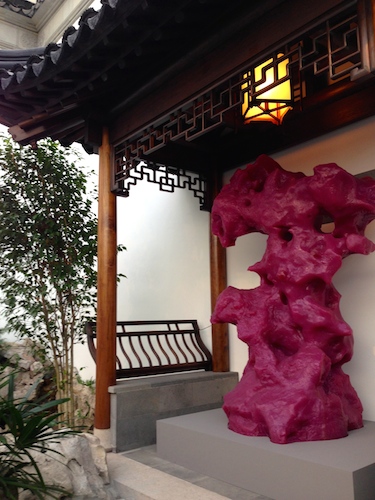
Hopefully by the time they get to the rock garden they will notice Zhang Jianjun’s crazy pink silicone rubber “scholar rock” right next to the real ones. Zhan Wang’s stainless steel scholar rock and Shou Fan’s side chairs are beautifully arranged in the Ming Dynasty room just off the Court, along with more of Ai Weiwei’s furniture hijinx.

After you’re done getting a feel for how the galleries have been transformed, go back into the Met’s exhibition web site to study the brushwork and details and get to know some of the artists.

Zhang Jianjun’s 2008 silicone rubber Scholar Rock (The Mirage Garden) sits in a 17th-century pagoda in the Met’s Astor Court

Zhang Jianjun’s 2008 silicone rubber Scholar Rock (The Mirage Garden) sits under a 17th-century pagoda in the Met’s Astor Court. Courtesy: Sigg Collection, the atist

Although the web site appears to be more plain-vanilla than jazzy, you’ll be surprised to see that the digital back-end of the Met archives lets you zoom into each of the paintings to see the handsome handwork of each of these wunderkinds from each thematic section of the show. You can even peruse the gigantic scrolls up close, section by section.

The video room, where art lovers can relax and watch a rotating collection of work, is a nice touch. The modern digital sign to the side tells you exactly where you are in the rotation.

Here’s a link to one of the featured videos: Get to know the constantly transforming cityscape of Beijing through Chen Shaoxiong’s 2005  Ink City, and see what happens when a contemporary artist paints daily life in Beijing with traditional tools and ports his day-to-night experience to video.

Exquisite Journey Through Time via Modern Venetian Glass

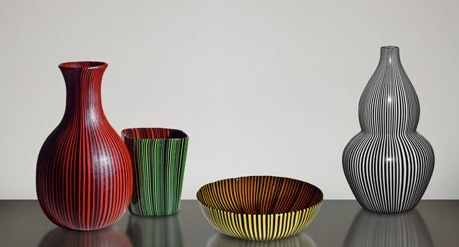
Scarpa’s striped Rigati e tessuti glass pieces (1938–1940). Sources: private collection; Carraro Collection (Venice); European Collection

Scarpa’s striped Rigati e tessuti glass pieces (1938–1940). Sources: private collection; Carraro Collection (Venice); European Collection

The gorgeous art and design show at the Metropolitan Museum of Art, Venetian Glass by Carlo Scarpa: The Venini Company, 1932–1947, is deceptive.

It’s a tribute to one of the top innovators in Murano glass, stepping visitors through more than two dozen styles and innovations that he brought to glass-making, but it also provides a brilliant introduction to the virtuosity that characterized decorative luxury items as far back as the first century B.C. See it before March 2.

Scarpa was inspired by 18th c. Chinese porcelain. Source: The Met

Scarpa was inspired by 18th c. Chinese porcelain. Source: The Met

Scarpa, a trained architect, began working as an artistic consultant at Paolo Venini’s glass factory in Venice right after he graduated, but soon his creativity and vision catapulted him into the job of artistic director and into the spotlight with every new collection he debuted at the Venice Biennale.

At the start of the show, you’ll see his Bollicine group (1932-1933) with tiny air bubbles incorporated into each white, blue, black, and green piece. In awe of the artistry of Eastern Asia, he fused this modern technique with a reliance on traditional shapes from one of his favorite periods of Chinese porcelain – the Qing dynasty (1644-1911), where ceramic artists crafted bold, dramatic single-color works. Check. Let’s take a page out of that book and put it to use in creating sleek, modern icons of Italian design.

At the far side of the circular Lehman Wing gallery, the Met curators have put together a shelf that fools you from a distance. You’ll think that the gorgeously modern works are all opaque glass masterpieces by Scarpa, but only half are. The rest are beautifully arranged works from 18th and 19th century China from the Met’s own collection.

Scarpa’s bubble-glass liqueur set (1935). Source: The Met.

Scarpa’s bubble-glass liqueur set (1935). Source: The Met.

Venini and Scarpa felt it was important to document the specific silhouettes that they created, and the Met has matched the archive shape with many of the modern glass works in the collection.

Just look at each label and wonder what the 18th century Chinese ceramicists would think of their shapes being transformed into glass marvels.

Working your way around the gallery, you’ll experience astonishing artistry resulting from dozens of technical approaches – for example, glass with rough, irregular surfaces (Corrosi 1936-1938), glass blown from thin slabs made of alternating clear and colored glass rods (Mecca filigrana 1934-1936), boldly striped pieces, and iridescent glass (Iridati, 1940). The variety and effects are astonishing and it’s easy to float dreamily through this art for art’s sake show.

Luxury Italian modern glass from the early 1st century A.D. Source: The Met, gift of Henry G. Marquand, 1881

Luxury Italian modern glass from the early 1st century A.D. Source: The Met

The curators also make use of the Met’s vast collection of ancient glass to remind modernists that the glassmaking tradition extends back nearly two millennia along the Mediterranean and Adriatic shores.

Be sure to look for the Met’s cast glass created in Greece between the 2nd century and 1st century B.C. and in Rome from the late 1st century B.C. to the early 1st century A.D. Glass was a super-high-end luxury item back in those days.

You’ll be blown away by how modern it all looks.

This mosaic glass dish may look like Italian 1980s, but it’s Greek from the 2nd-1st century B.C. Source: The Met

This mosaic glass dish may look like Italian 1980s, but it’s Greek from the 2nd-1st century B.C. Source: The Met