You’ve seen them everywhere over town…the enigmatic dotted signs with the face of Yayoi Kusama peering out. During Fashion’s Night Out, the Vuitton store was ablaze in polka dots, all a tribute to this reclusive Japanese pop-art sensation who burst upon the Manhattan art scene in the 1960s.
This is the last weekend to see her retrospective in person at The Whitney, but if you can’t make it, enjoy the Vuitton collection that she inspired (they’ve created a whole website).
Take a peek into the show.
And click on this link to see a documentary clip about this Kusama’s life. Be surprised and find out how to merge into infinity!
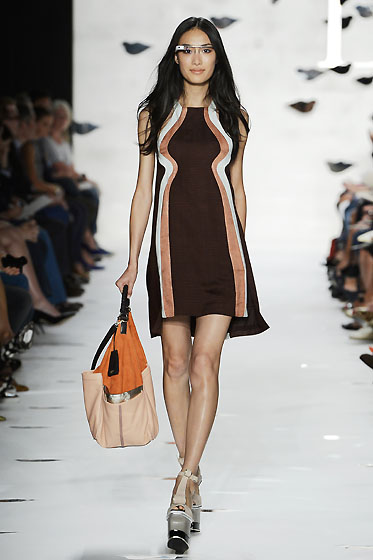
When Diane von Furstenberg and her models walked the runway at NYC’s recently concluded Fashion Week, they decided to give the world an inside peek at how it feels by recording the experience with Google Glass, the still-in-Beta avant-eyewear.
The innovative accessory shoots video, snaps pix, streams messages, and apparently looks good, so Diane decided to snap on the specs and take you with her (and her posse) on a fashion-tech flashbulb-popping stroll.
What’s cooler than Diane’s embrace of the new? Her Spring/Summer 2013 collection and her attitudes about life, potential, and empowerment. Take a look. Thanks, Diane!
Let me guess. You didn’t get to see the spectacular design show that ended yesterday on Governor’s Island. While their mansion up on 91st Street is being renovated, The Cooper-Hewitt (a.k.a. Smithsonian) outdid itself by mounting a show inside Building 110 on New York Harbor’s hottest party-picnic location.
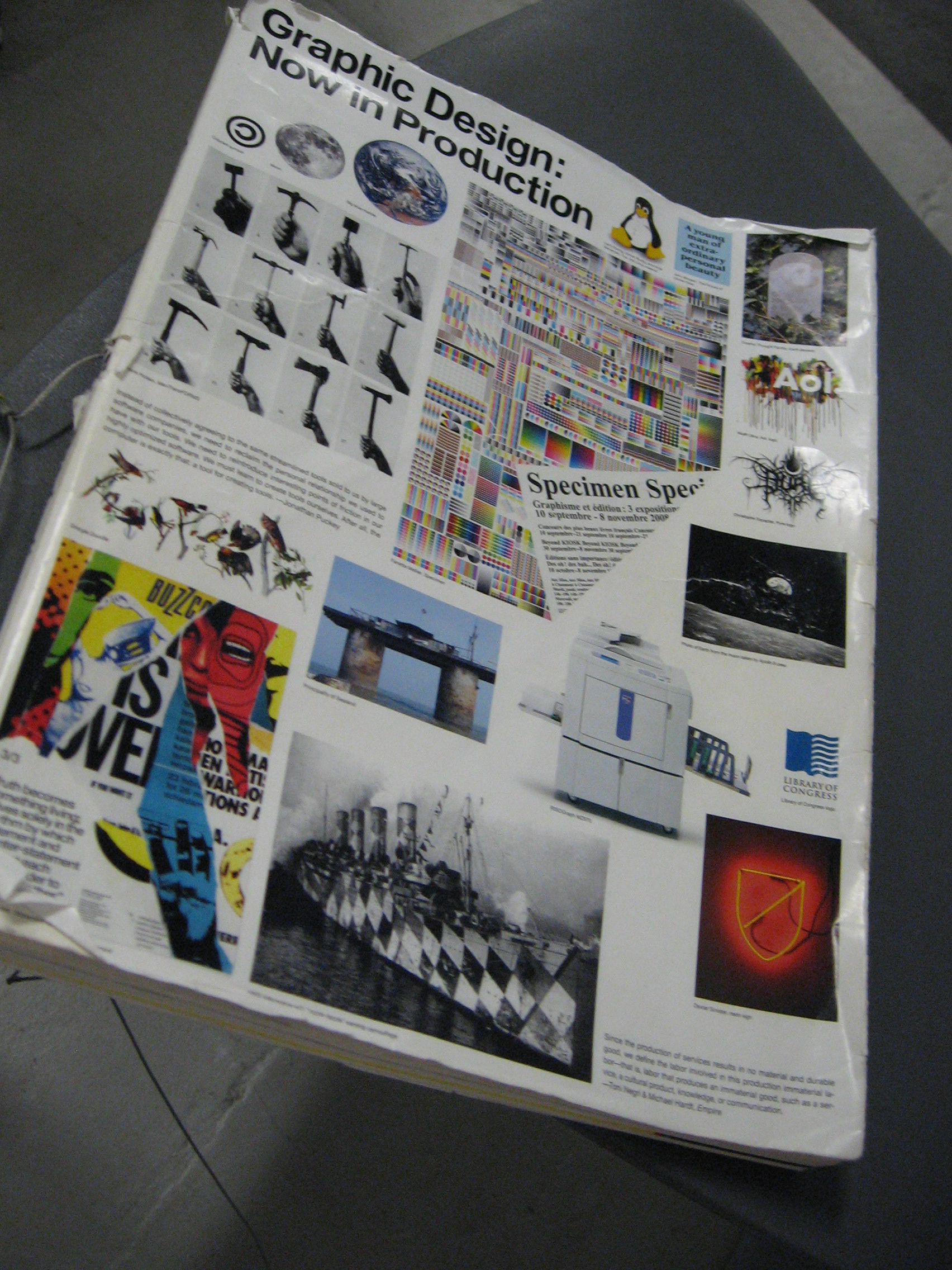
Graphic Design: Now in Production gathers great design produced since 2000 to feature what creative minds are offering. The summertime crowd loved it, and people flowed right from the ferry into the show and through the aisles where works were grouped around themes like storefronts, branding, typography, and print (it lives!). Check out the action on the Flickr feed.
The show is vibrant, interactive, mind-blowing, provocative, and fully documented in a 10-minute walk-through video with the curator Elleln Lupton that pretty much replicates the experience.
If you’re in LA, the show opens September 30 at UCLA’s Hammer Museum before migrating in 2013-2014 to Grand Rapids, Houston, Winston-Salem, and RISD.
Among our favorites are Brand New’s display, which asks visitors to vote (“before” or “after”) on redesigned corporate logos, and CognitiveMedia’s “RSA Animate: Changing Education Paradigms.”
During the summer heat wave, there’s a way to cool down in Chelsea and let the team from the Science Gallery at Trinity College challenge you to think differently about the splashing water you take for granted.
Take advantage of the final weeks of Surface Tension: The Future of Water at Eyebeam Art & Technology Center on West 21st Street, an incubator for digital art/design experimentation. For the past two-plus months, they’ve hosted an exhibition (first curated in Dublin) on the social-economic-political tensions created by water scarcity.
As soon as you walk into Eyebeam, you’ll be struck by the plethora of infographics that show you just how much water bounty that we have in the United States versus the availability and consumption per capita in the rest of the world. What’s your water footprint?
One of the ways you’ll find out is by looking at The Virtual Water Project, a celebrated infographic by German designer Tim Kekeritz, that depicts everyday objects and the amount of water required to produce them. Download the iPhone app. For $1.99, it will blow your mind (but not your budget) and continue to deliver a truly a conscious-raising experience of epic proportion.
Another unforgettable experience is Bit.Fall by artist Julius Popp, an installation that translates words from Internet newsfeeds into bits that are reconverted into a stunning waterfall of words:
There’s so much great stuff: multiple takes on water consumption, conservation, next-gen thinking, third-world innovations, and art-meets-technology solutions. Like Tele-Present Water by David Bowen, which recreates actual water movements from NOAA data being collected from a random buoy out in the ocean.
If you can’t get over to Chelsea for an hour, just click through the thought-provoking objects, artworks, design solutions, documentaries, and thought pieces by the scientists, artists, engineers, and designers whose works are on display on the Dublin microsite.
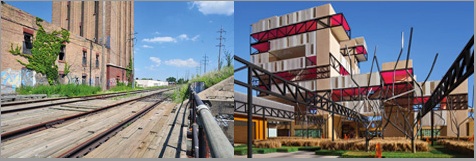
You’ve seen Danny Boyle transform the Olympic stadium from a 19th Century industrial landscape into the digital home of today. What happens when you give a 21st century design team the chance to do the same with Chicago’s suburban industrial wasteland?
The proposed transformation of Cicero’s abandoned railside factories into a 21st century village where people work and live is particularly interesting. Abandoned factories currently take up 30% of Cicero. What if you redesigned it and let people buy only the parts of the home they need (vs. everyone living in a brick bungalow with a yard)? See the video and solution by Studio Gang Architects.
Also, check out WORKac’s creation of “Nature-City” in a down-and-out Oregon suburb, Keizer. What happens when you integrate organic farming businesses and wildlife crossings into a village? Or MOS’s proposed transformation of The Oranges, New Jersey from a grid to a walking city.
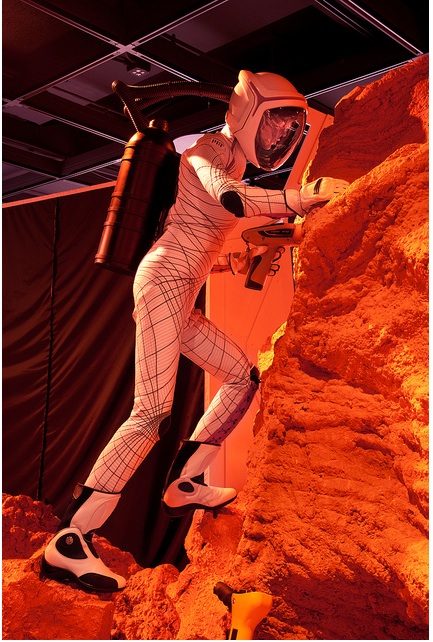
If the wizards at MIT have their way, the future look on Mars (for us) will be spandex, nylon, and polymer. It’s the look that’s featured in the soon-to-close show at AMNH, Life Beyond Planet Earth: The Future of Space Exploration.
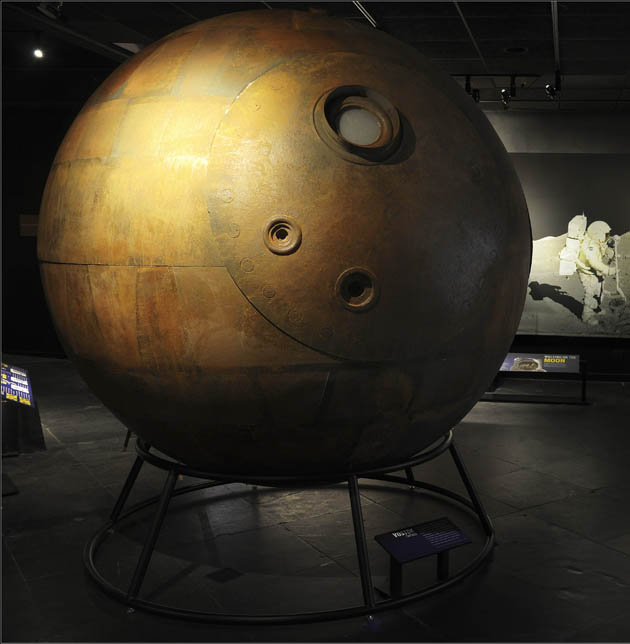
Some of the highlights include a model of Yuri Gagarin’s 1961 space capsule (don’t walk by it in the entry to the show!), Soviet and US space helmets, the “smell” of the Moon, a model of Sir Richard Branson’s space-tourist vehicle, and a space elevator. (Didn’t you ever wonder how you’d get back from another planet?)
There are two great interactive opportunities – sitting down at a small console to skim over the surface of Mars and a big, well-lit interactive table (near the spacesuit) that lets you and others trigger modifications to Mars that eventually transform it into a habitable Earth colony.
Again, you can’t beat those 1950s letters to the Hayden Planetariumto get the juices flowing about the promise of space travel. Now, were do we order the suits?
Entering the black-draped Wachenheim gallery off the New York Public Library’s main Fifth Avenue entrance is a quick way to travel back in time to view manuscripts, memoirs, and mementos of the 18th and 19th centuries’ most creative literary minds.
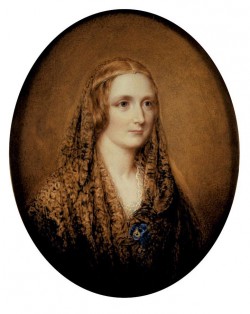
Portrait of Mary Shelley
Tragic love, unbridled romance, women’s liberation, wicked family disconnects, and man-machine mash-ups converge in a tantalizing true tale in the tiny exhibition jewel, Shelley’s Ghost: The Afterlife of a Poet. The intertwined lives of Shelley and his wife, Mary (author of Frankenstein), Lord Byron, and their circle of friends are the subject.
To untangle this web of infamous ground-breakers, the Bodleian Libraries of Oxford and the NYPL have collaborated on assembling some rarities — one of the earliest English-language treatises on women’s rights (courtesy of Mary’s mother Mary Wollenstonecraft), Mary’s first draft of her horror novel, Shelley’s baby rattle and guitar, assorted notes and diaries, and Shelley’s treatise on the advantages of a vegetarian diet.
As this exhibit’s run comes to an end, literary (and scandal) hounds are flocking to this space, Thank goodness that NYPL and Oxford have seen fit to commission a short graphic novella of Mary Shelley’s incredible life, an innovative (free) Frankenstein-themed iPad app, and throw much of the scholarship up on the web for the iPad-less fans. Bonus: listen to some of the diary entries, personal letters, and works read online by Oxford-trained actors.
Screenshot of NYPL Biblion’s free Frankenstein iPad app
It’s time to live the dream. No doubt you’ve seen the American Museum of Natural History’s show about what it’s like to explore Beyond Planet Earth. (AMNH has even dug out 1950s letters to the Hayden on its web site.)
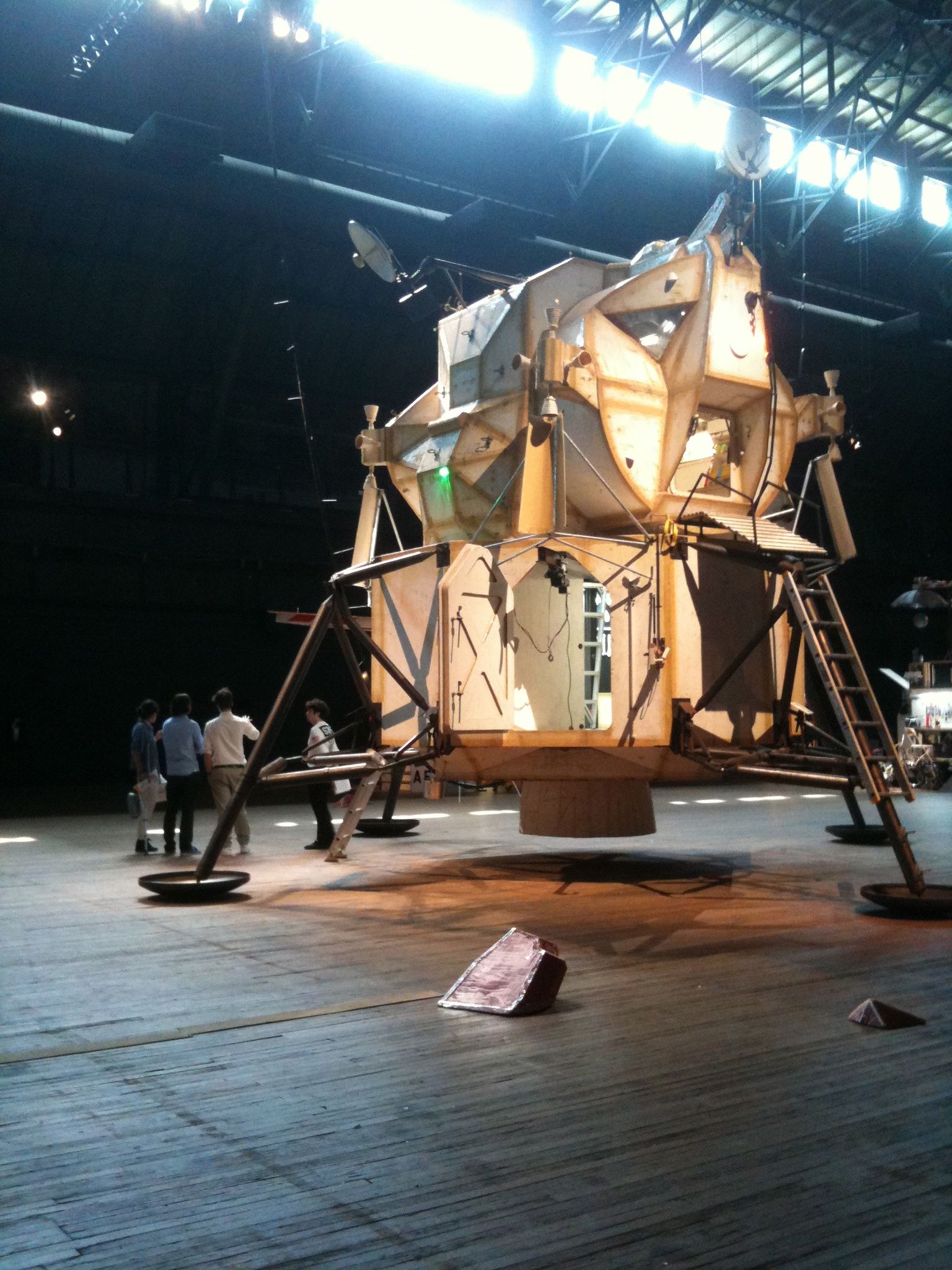
But drop into the Park Avenue Armory to experience it for yourself. Tom Sachs has created the surface of Mars and an exploratory base out of materials that he scrounged near his art studio. The results are spectacular, fun, and a trip worth taking.
You’ll go through orientation to enter Space Program: Mars, but once you’re on the base, you can stroll around, take the test to enter the LEM, chat with the dozens of lab-coated workers, tour the museum, or just sit and view it all from the bleachers in front of Mission Control. Seriously, you can be entertained all day. Check out the inspiring trailer and a few on-site photos.
If you’ve wanted to travel to Mars, now’s your chance, before the show blasts off June 17.
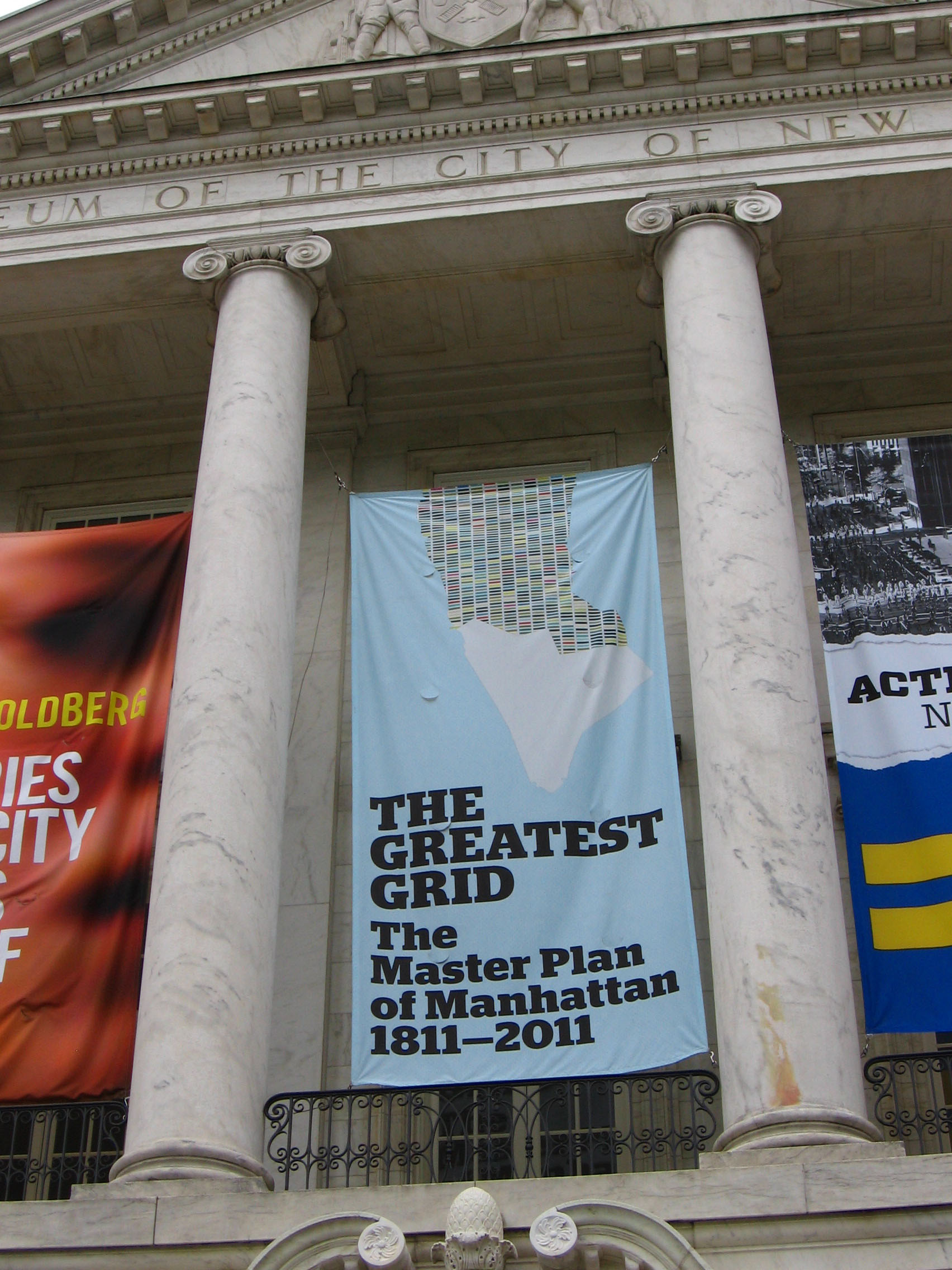
How much fun can you have with the Manhattan Grid? Plenty, if you have computer access and can make a trip (before July 15) to the The Greatest Grid exhibition at the Museum of the City of New York.
Plan to spend a couple of hours wrapping your mind around how the farmland in your neighborhood was leveled by hand and horse cart to make the wide, smooth streets and sidewalks we’re used to today. (You’ll quickly see that the East Side’s Second Avenue Subway construction isn’t that big a disruption after all!)
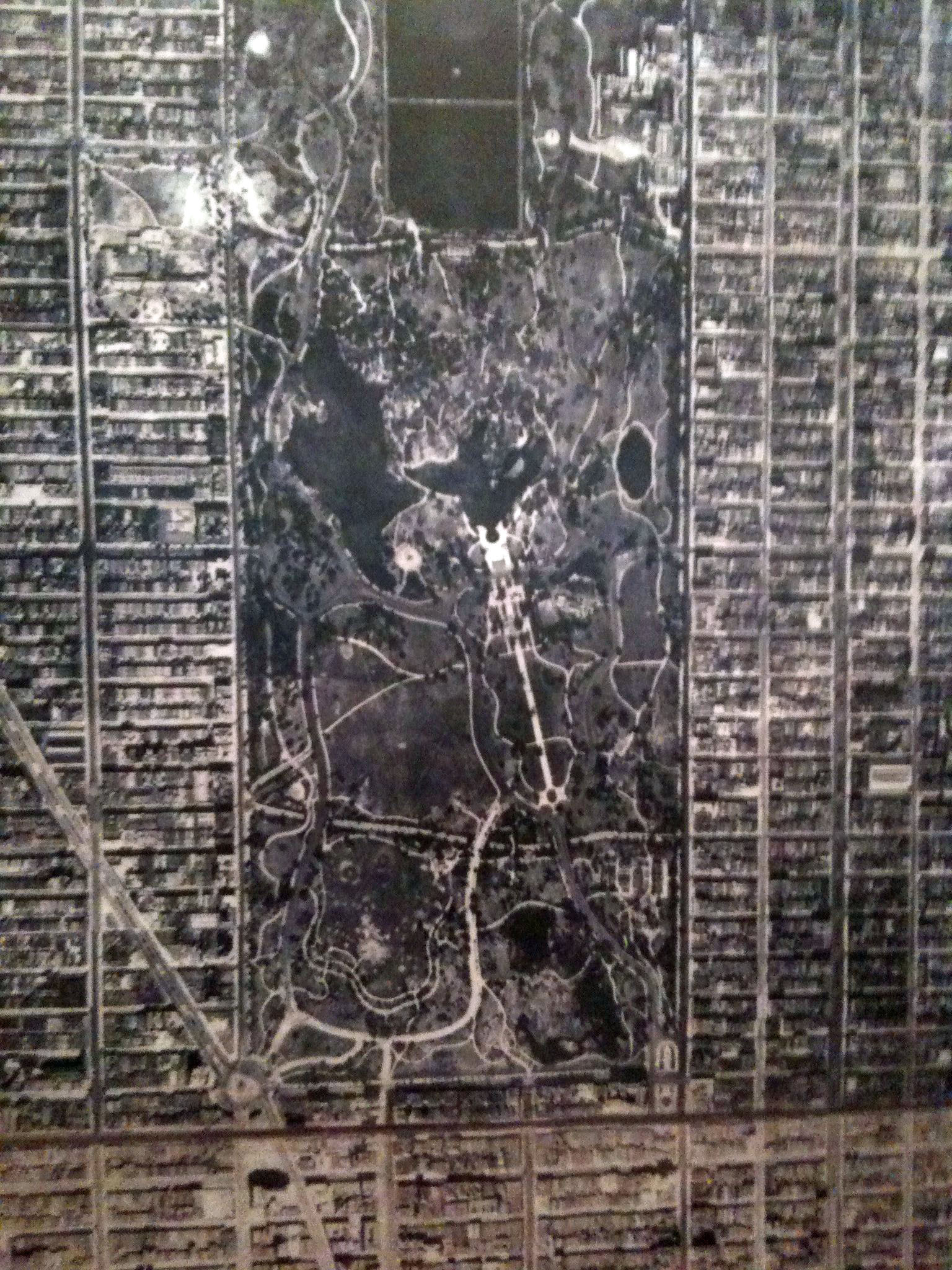
Also, take a look at the digital maps posted by The New York Times, including Randel’s big 1811 map of the grid (the centerpiece of the MCNY show), the 1836 farm map, and other interactive images created by the NYT team. Clicking through the views on the left will reveal all sorts of interesting history.
Check out the Channel 7 Eyewitness News video, featuring an interview with the curator (NYU’s Hillary Ballon) and a peek inside the show.
Want to do a little time travel on the modern version of the Manhattan grid or another borough? It’s easy. Go to NYCityMap and type in an address. When the schematic map appears, clock on the “Photo Camera” icon at the top of the map and you’ll see an aerial view of the neighborhood. Move the slide bar to enjoy the view to any time between 1924 and today to see what the block was like way back when.
Our continued Social Media Week wrap-up summarizes the top consumer trends identified by Ann Mack, a professional trend-spotter with JWT North America:
Internet + smartphones + social media have turned information into a constantly updated stream that we take wherever we go. We’ve become hyper-documentarians:
We upload the equivalent of eight years of content every 24 hours.
Over 845 million people are now on Facebook uploading 250 million photos each day.
200 million daily Tweets is the equivalent a 10-million page book every 24 hours.
The extreme social transparency that this flow generates is creating a type of social angst – the Fear of Missing Out (FOMO), which will likely increase.
Social networks will figure out ways to fine-tune our personal data and further customize ads, content, search results, and shopping choices that we see; however, some users will say things have gone too far and push back against personalization.
In the future, consumers may trend toward more random on-line experience…the way things used to be when we first “discovered” the Internet. It’s possible that some, especially Millennials, will unplug and just go back to connecting with pals face-to-face. On the other hand, more digital tools will be used as “butlers”.
In the meantime, brands might be able to tap into social-media users’ interest in “doing good”, collaborating, and being part of a bigger network. The challenge for marketers will be to figure out how to harness FOMO to drive spending while doing more social good.




 itsnewstoyou