
Hockney’s Personal Drawings at The Morgan

The drawings at the Morgan, David Hockney: Drawing from Life, on view through May 30, are a tribute to the friendships maintained and the artistic experimentations sustained over the artist’s 83-year lifetime.

Hockney self-portraits through the years.

The show was created by the National Portrait Gallery in London and centers on 100 portraits of five people who sat for Hockney across the decades – his mother and several close friends.

The exhibition is organized by person, so you can compare how each person looked from the beginning of Hockney’s studies, across the years, and most recently when they came to visit him in Normandy, where he lives now.

Most of the works are from the Hockney Foundation or from the artist’s own personal collection, which makes the show extra-special.

The exhibition begins with a series of self-portraits that Hockney did as a teen, and features his etching series about his first trip to America in the early 60s. Then it jumps to the many portraits he did of his mother in England.
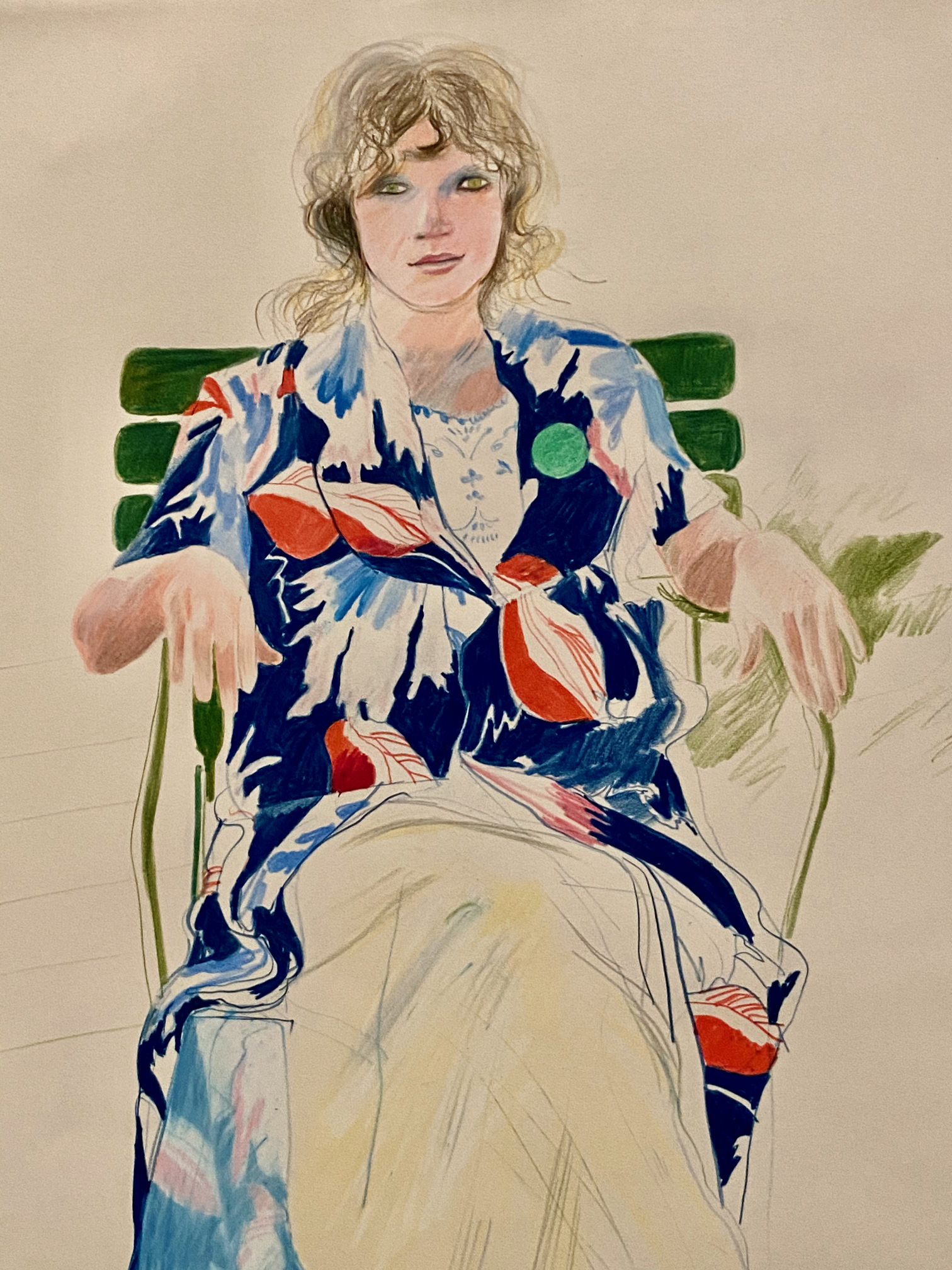
Colored pencil portrait, Celia, Carennac, August 1971
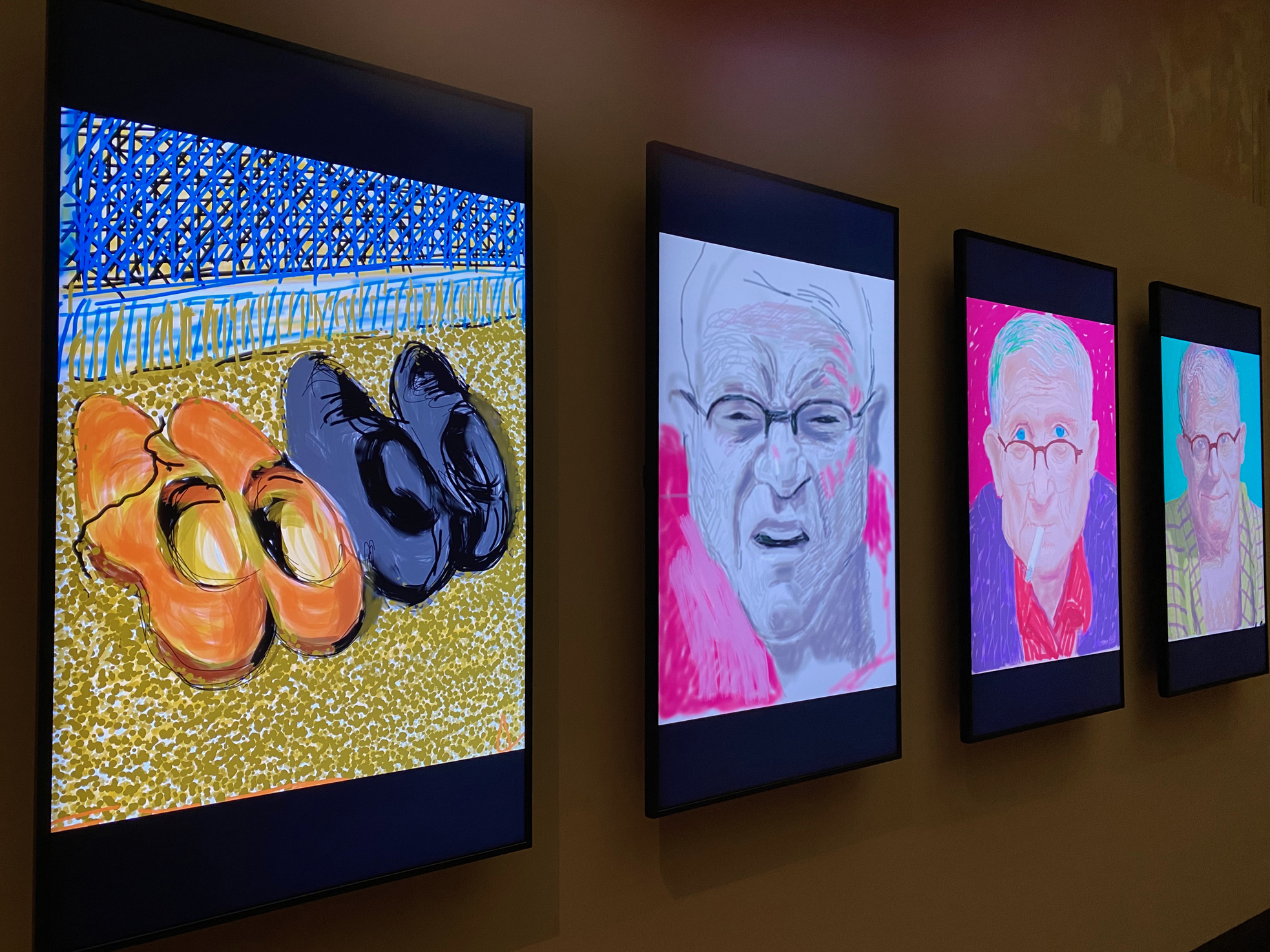
Digital wall of Hockney 2010 iPad drawings
Charcoal drawing Maurice Payne, October 9, 2000

Each series shows off his masterful accomplishments in precise colored pencil, mixed-media collage, watercolor, crayon, arranged Polaroid mosaics, etchings, ink washes, tight pencil sketches, and the biggest leap of all – digital drawings from his iPad.

Walking past the portraits, self-portraits, sketchbooks, and digital drawings, it’s quite a tribute to an artist who never stopped looking, wanting to sit with his favorite people, and slowed down to adopt techniques by other masters that he admired.

Take a look at works by a pop-culture virtuoso. Here’s a brief introduction to the exhibition by the Morgan’s director:

Take a walk through the exhibition on the Morgan’s website here, and join a YouTube tour with the curator here.

And see our favorites in our Flickr album here.
Jewelry for America Dazzles at The Met

Sparkling, historic, masterful jewels, settings, and stories await intrepid visitors who can find the out-of-the-way mezzanine gallery within the Metropolitan Museum’s American Wing. Jewelry for America, on view through May 8, chronicles the rise of the jewelry making arts through the Met’s own gorgeous collection.

Cases of jewelry from the mid-1700s though today are surrounded by period paintings that show how women (and men!) of different American eras sported, draped, and embellished themselves with the glittery treasures shown nearby.

The curators take five eras and angles, weaving in details of colonial dependency, Westward expansion, global discoveries, luxury consumption, high-end designers, and jewelry art trends.

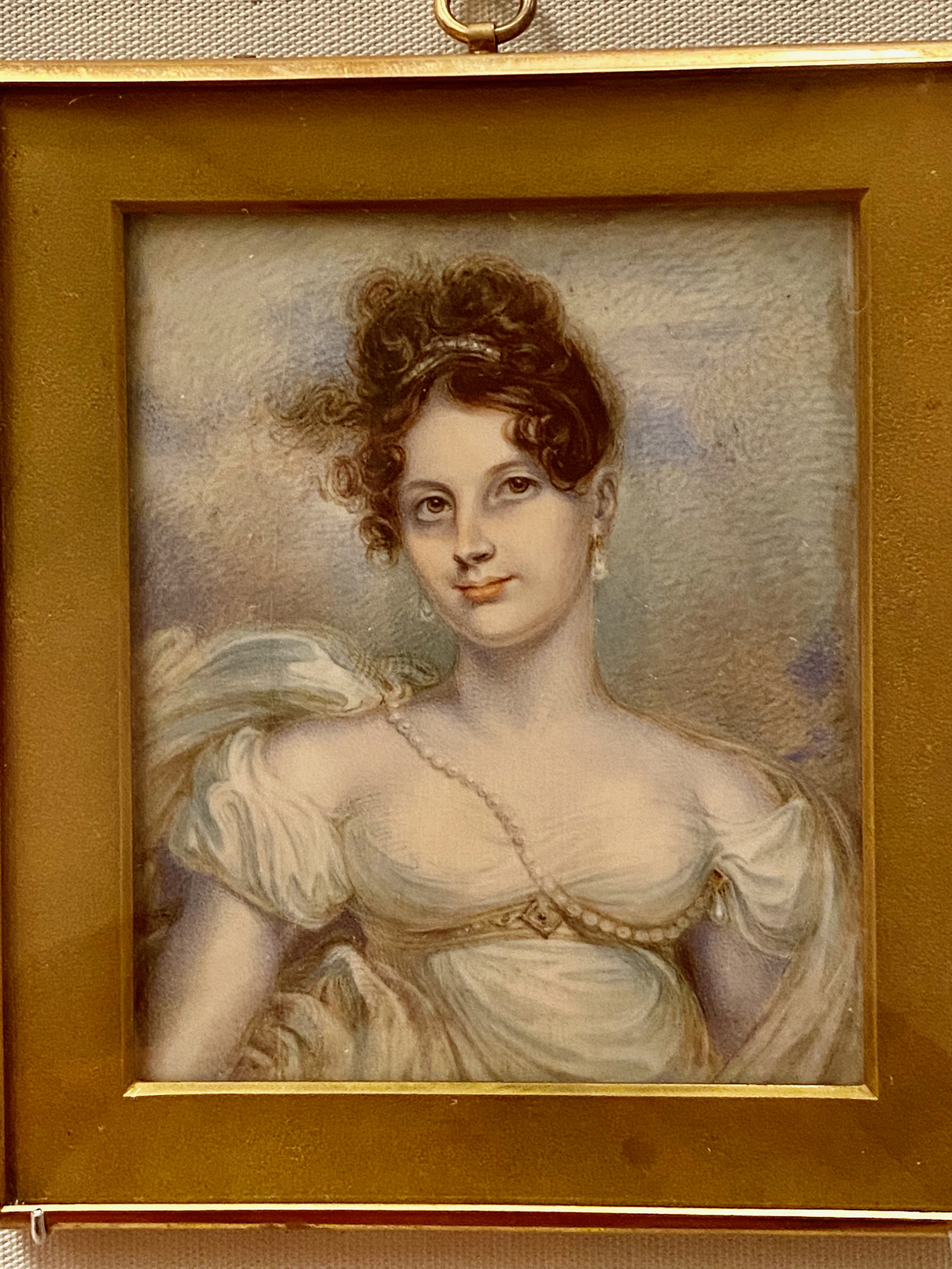
Robert Fulton’s 1813 wedding portrait of Susan Hayne Simmons, wearing her pearls Empire-style
Rare 1783 Society of the Cincinnati badge by L’Enfant, awarded to Washington’s Continental Army officers

But while looking at the small, finely crafted pieces, you can delight in just looking for looking’s sake.

The first section focuses upon the colonial era through the early 19th century, when toddlers wore coral necklaces and bracelets to keep them “safe” and it was popular to weave the hair of a loved one into a locket, fob, brooch, or little container hanging from a necklace.

But the most historic piece in this first section is the small Society of Cincinnati badge designed by Pierre Charles L’Enfant, for the group of Continental Army officers who served under Washington.

The next portion of the show introduces the rise of American jewelers in the mid-1800s with brooches and earrings inspired by nature, antiquity, and bygone eras, such as Tiffany’s 1856 transformation of an historic Connecticut oak tree into gold accessories and the artistic 1880 silver necklace by Shleiber & Co inspired by coins unearthed in Pompeii.

Tiffany’s 1889-1896 enameled and jeweled orchid brooch, designed by J. Paulding Farnham

In addition to Tiffany’s renowned, naturalistic orchid brooches and hair ornaments that wowed spectators at turn-of-the-century world’s fairs, the show also includes gorgeous nature-inspired statement pieces from workshops in Newark, New Jersey – high-end suppliers to famous celebrities and socialites in New York.

1924 silver box with enamel plaques by Eda Lord Dixon and her husband, Laurence

There are dozens of necklaces, pins, and special boxes adorned with diamonds, platinum, artistic enamels, opals, emeralds, and other precious gems.

The final portion of the show portrays the rise of the artist-jeweler, showcasing jazzy, one-of-a-kind pieces by mid-century creators like Art Smith and Calder, and finishing up with Elsa Peretti, Verdura, and cuffs by Kenneth Jay Lane from Lauren Bacall’s collection

1948 and 1946 custom cuffs by Greenwich Village artist Art Smith

Enjoy our favorites in our Flickr album, and read more of the history of American jewelry on the Met’s website.

Early 20th century Pueblo necklaces worn by Navajo leader Henry Chee Dodge