Frankenthaler and Friends Put Action into Prints

An exhibition of dramatic, action-filled prints by legendary Abstract Expressionists shows how experts at the new printmaking workshops during the Sixties and Seventies gave art-world mavericks the tools to take their ideas to new dimensions.

Push & Pull: The Prints of Helen Frankenthaler and Her Contemporarieson view at the University of New Mexico Art Museum through May 17, 2025, is a must-see journey into collaboration and experimentation at mid-century.

UNM recently received a gift of 20 magnificent artworks from the Helen Frankenthaler Print Initiative.
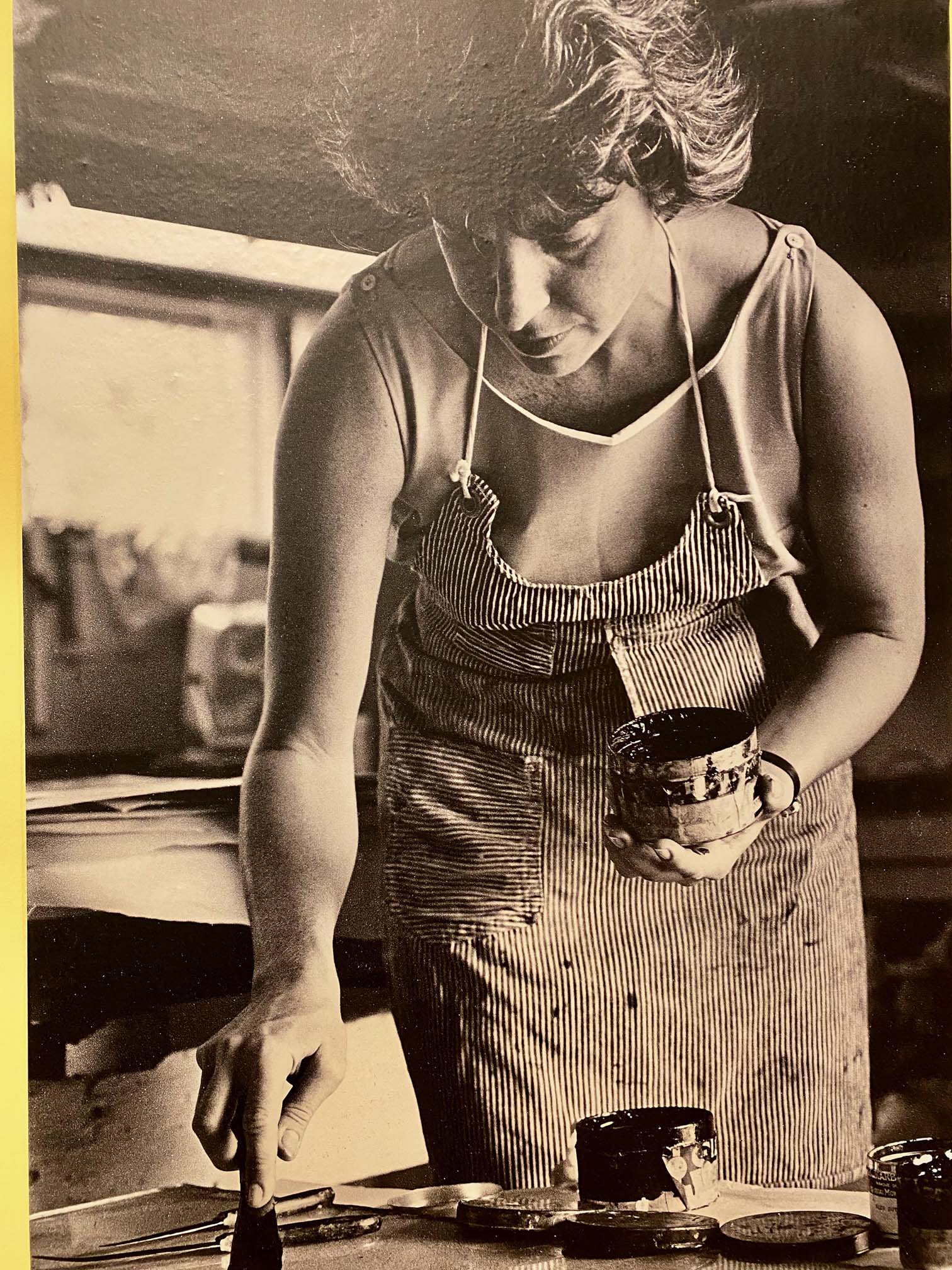
Hans Namuth’s 1964 photo of Frankenthaler working at ULAE in West Islip, NY. Courtesy: artist’s estate and University of Arizona’s Center for Creative Photography

The main gallery shows them alongside prints by Elaine de Kooning, telling the story of how these remarkable abstractionists collaborated with different workshops, used their distinctive styles to create portfolios, and formed decades-long bonds with master printers.

Helen Frankenthaler grew up and studied in the ever-evolving New York City art world. Her studies with Hans Hoffman – known for teaching abstractionists how to capitalize upon the “push pull” of color – and her technique of physically soaking and staining colors across canvases laid on her studio floor put her squarely at the intersection of the Abstract Expressionist and Color Field painting movements.

Frankenthaler had her first big solo painting exhibition in 1960, and began her printmaking experiments the following year. Some of her earliest works in the exhibition are silkscreens – some in the color-field direction, and some more gestural.
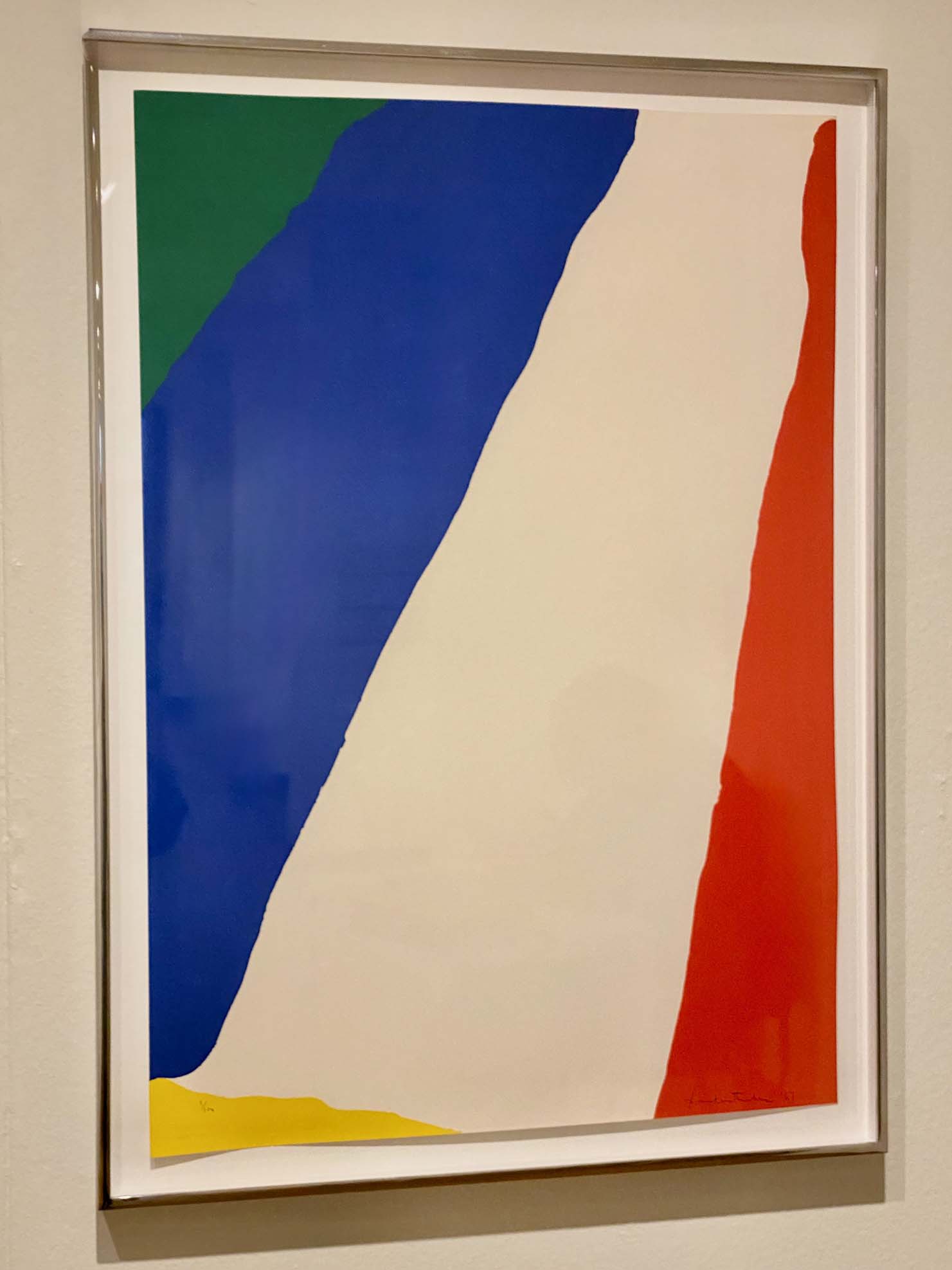
Frankenthaler’s 1967 untitled silkscreen (1/100); published by Chiron Press in New York; collaborating printer Patricia Yamashiro.
Frankenthaler’s 1970 silkscreen (artist’s proof) (19/24) from her What Red Lines Can Do portfolio, published by Multiples, Inc., NY; collaborating printers Sheila Marbain and Patricia Yamashiro.

Frankenthaler’s prints are grouped according to her work with various presses, such as Universal Limited Art Editions (ULAE), Tyler Graphics Ltd., and Tamarind Institute. Often with the guidance of print masters, she experimented to see how her “soak stain” could be layered and pressed multiple times across the lithography stone.

The exhibition curators display a series of proofs and experiments at Tyler Graphics to demonstrate the artist’s creative process with the expert printmaking team.

Frankenthaler’s 1978 lithograph Bronze Smoke (36/38) published by ULAE in Bayshore, NY; collaborating printers Thomas Cox and Bill Gordon.
Frankenthaler’s 1987 Sudden Snow lithograph proof (4/12); published by Tyler Graphics Ltd. (Mount Kisco, NY); collaborating printers Roger Campbell, Lee Funderburt, Michael Herstand, and Kenneth Tyler.

Later experiments show off Frankenthaler’s experimentation with woodcuts and monoprints. Here, she inked a woodblock and ran it multiple times to produce a “ghost print” of the wood, then applied bright red over the wood knots and added bright blobs of floating colors atop the natural backdrop.
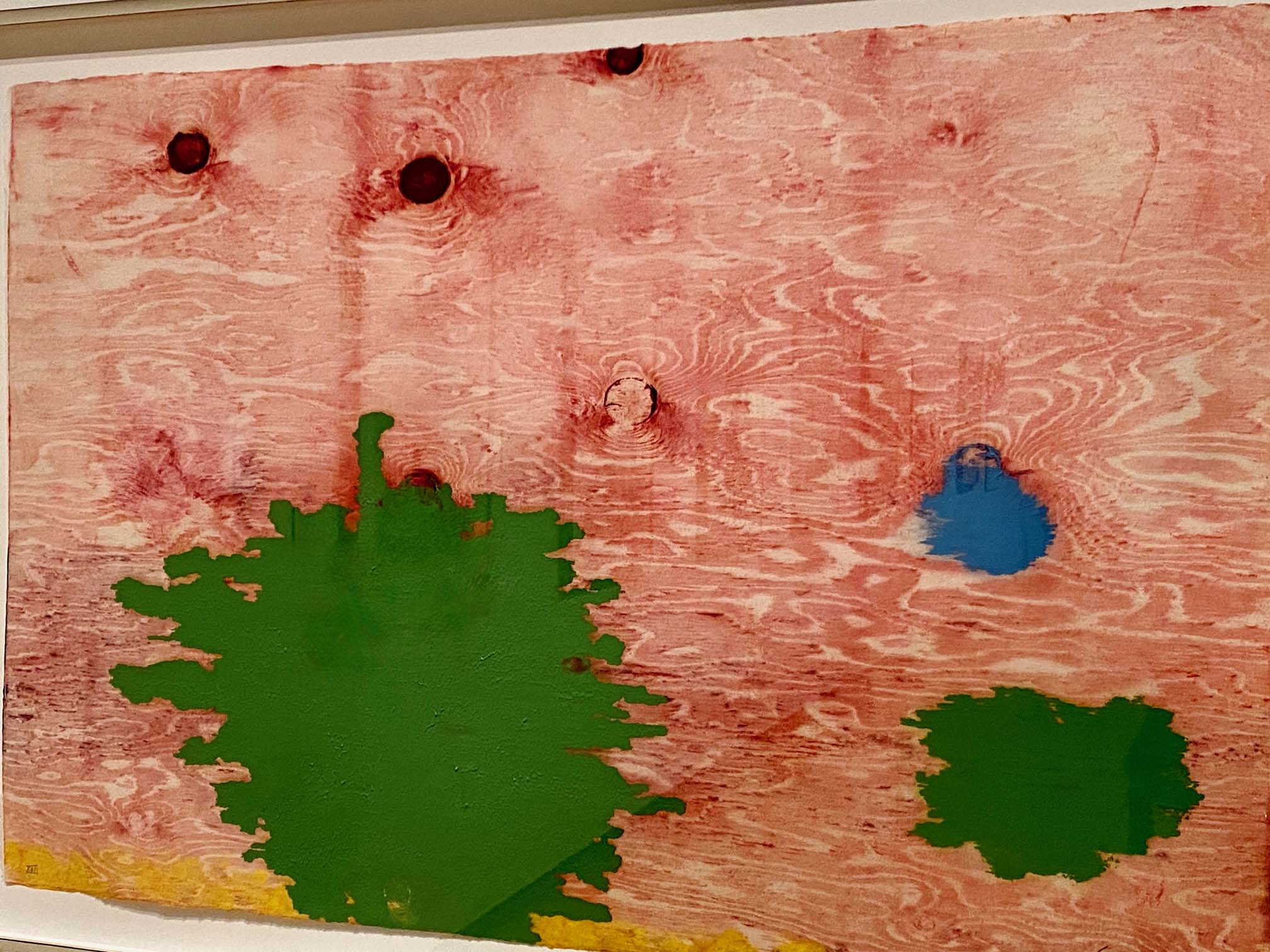
Helen Frankenthaler’s 1991 Monotype XVII, published by Garner Tullis, NY; collaborating printers Emanuele Cacciatore, Benjamin Gervis, and Garner Tullis.

The exhibition also showcases two dramatic print series by action painter Elaine de Kooning made at the Tamarind Institute. Check out Elaine’s wild lithographs of bulls.

Elaine de Kooning’s 1973 lithograph Taurus XI published by Tamarind Institute in Albuquerque; collaboraring printers John Sommers and Ben Q. Adams. Courtesy: Tamarind Archive.

The curators also showcase Elaine’s multiverse interpretation of a famous Parisian sculpture in the Jardin de Luxembourg. The series mounted across the long wall gives gallery goers a close-up look at the intricate collaboration between Tamarind’s workshop masters and a midcentury mark maker.

The exhibition also includes prints from plenty of other mid-century abstractionists from the UNM collection – Motherwell, Diebenkorn, and Lewitt – as well as prints by current UNM students who were asked to create art inspired by Frankenthaler and company.

Take a look at all of these action-packed prints in our Flickr album.
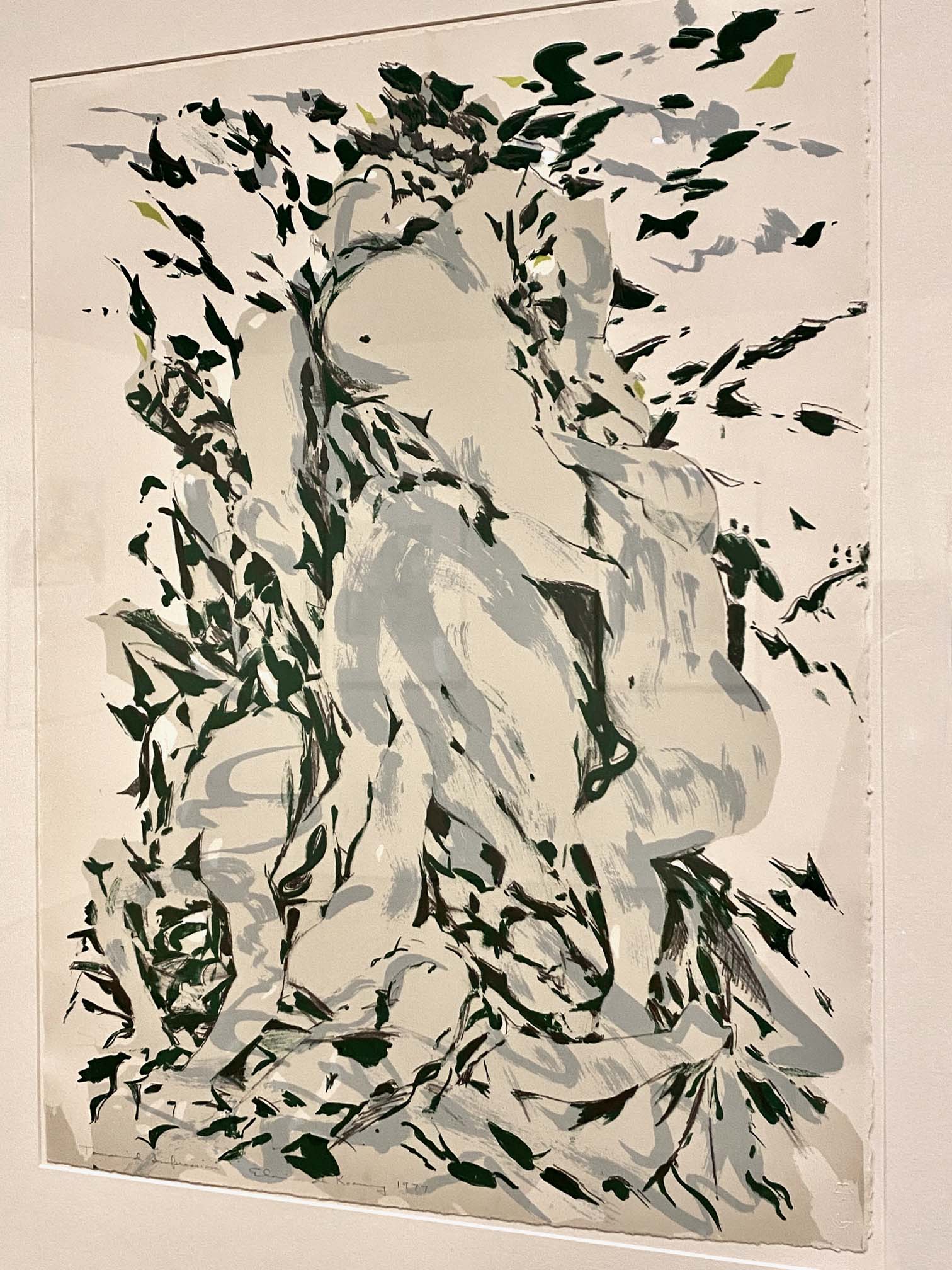
Elaine de Kooning’s 1977 lithograph Jardin de Luxembourg II; published by Tamarind Institute; collaborating printers John Sommers and Marlys Dietrick. Courtesy: Tamarind Archive Collection.
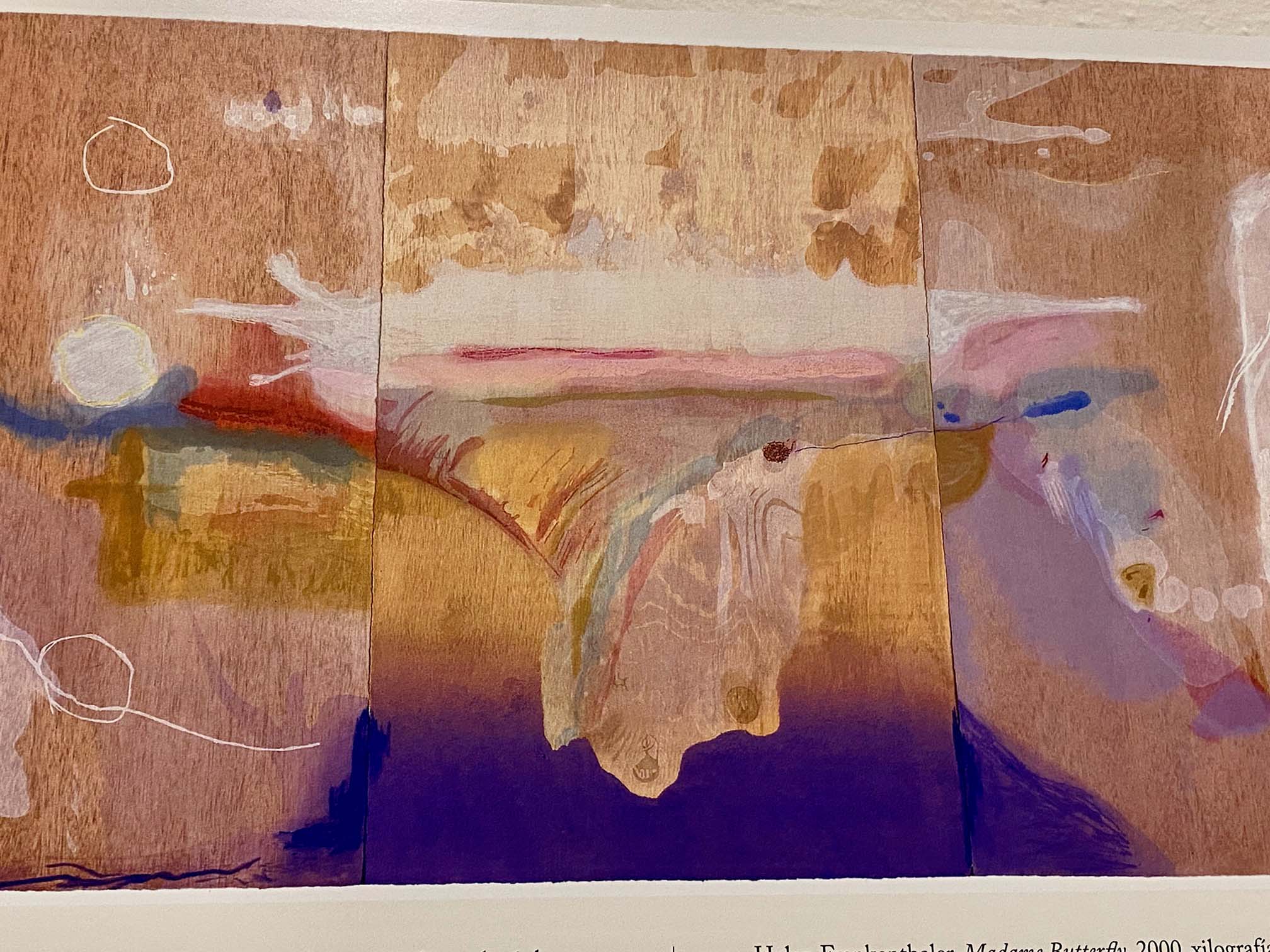
Photo of Frankenthaler’s 2000 woodcut Madame Butterfly made from 46 woodblocks; published by Tyler Graphics Ltd. Courtesy: Canberra’s National Gallery of Art.
Edward Olecksak’s 1972 photo of Helen Frankenthaler and Bill Goldston working on Venice II at ULAE in West Islip, New York. Courtesy: Frankenthaler Foundation Archives

Belle da Costa Greene at The Morgan

How did a stylish, ambitious, saavy librarian toiling in the stacks of Princeton’s library at age 22 transform herself into the trusted confidante of the richest man in the world, helping him to build a celebrated collection of manuscripts, books, and art?

Find out in Belle da Costa Greene: A Librarian’s Legacy, the blockbuster exhibition at The Morgan Library and Museum on display through May 4, 2025. To celebrate its 100th birthday, the Morgan Library & Museum wanted to honor its first director, Belle da Costa Greene.

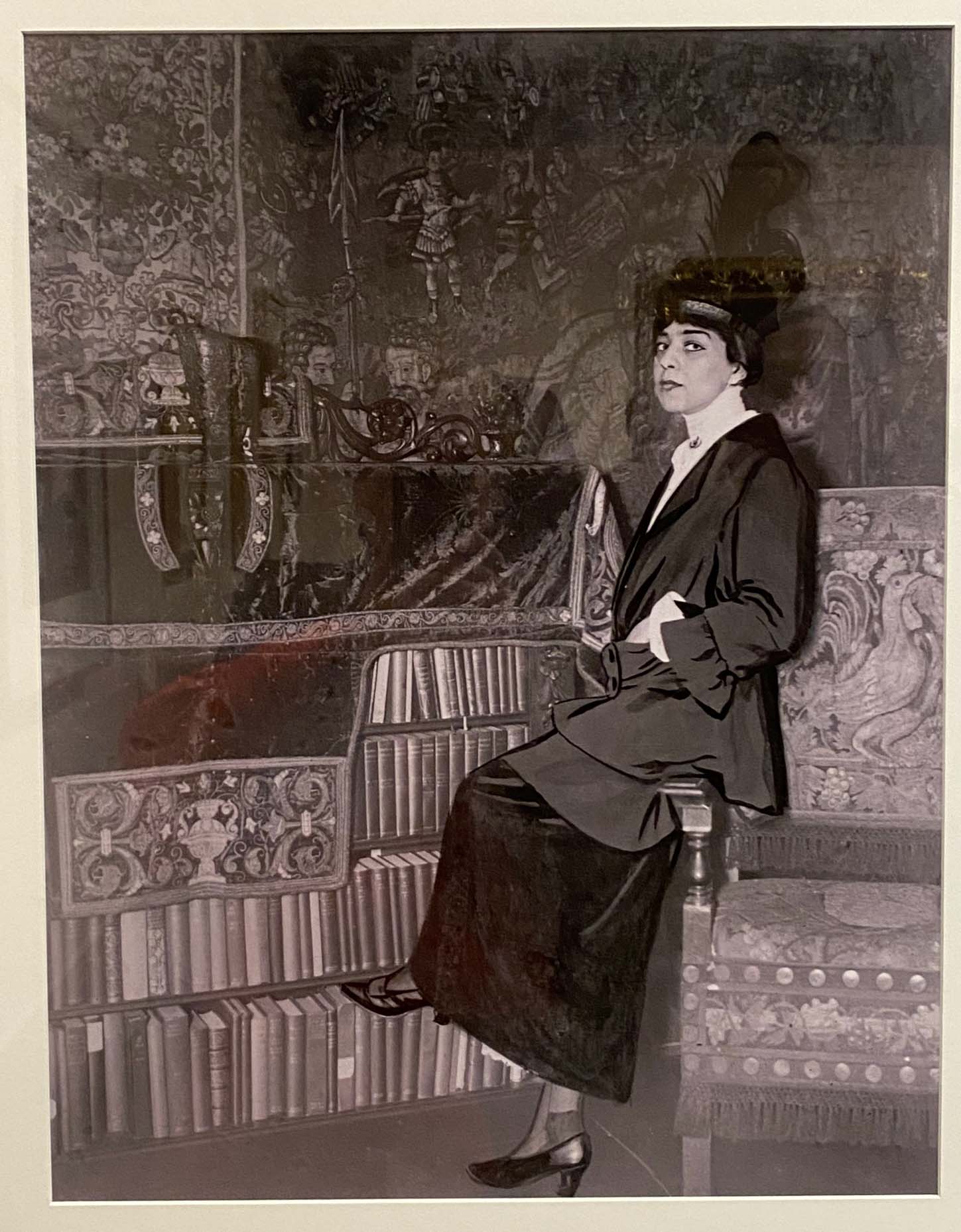
Belle Greene’s 1915 portrait at home; Paul Thompson photo for a news story on NYC high-salaried women. Courtesy: Getty/Bettmann.

Belle decended from an illustrious line of African-American intellectuals, lawyers, cultural leaders, and social-justice advocates, but lived her entire life passing for white in the early 20th century.

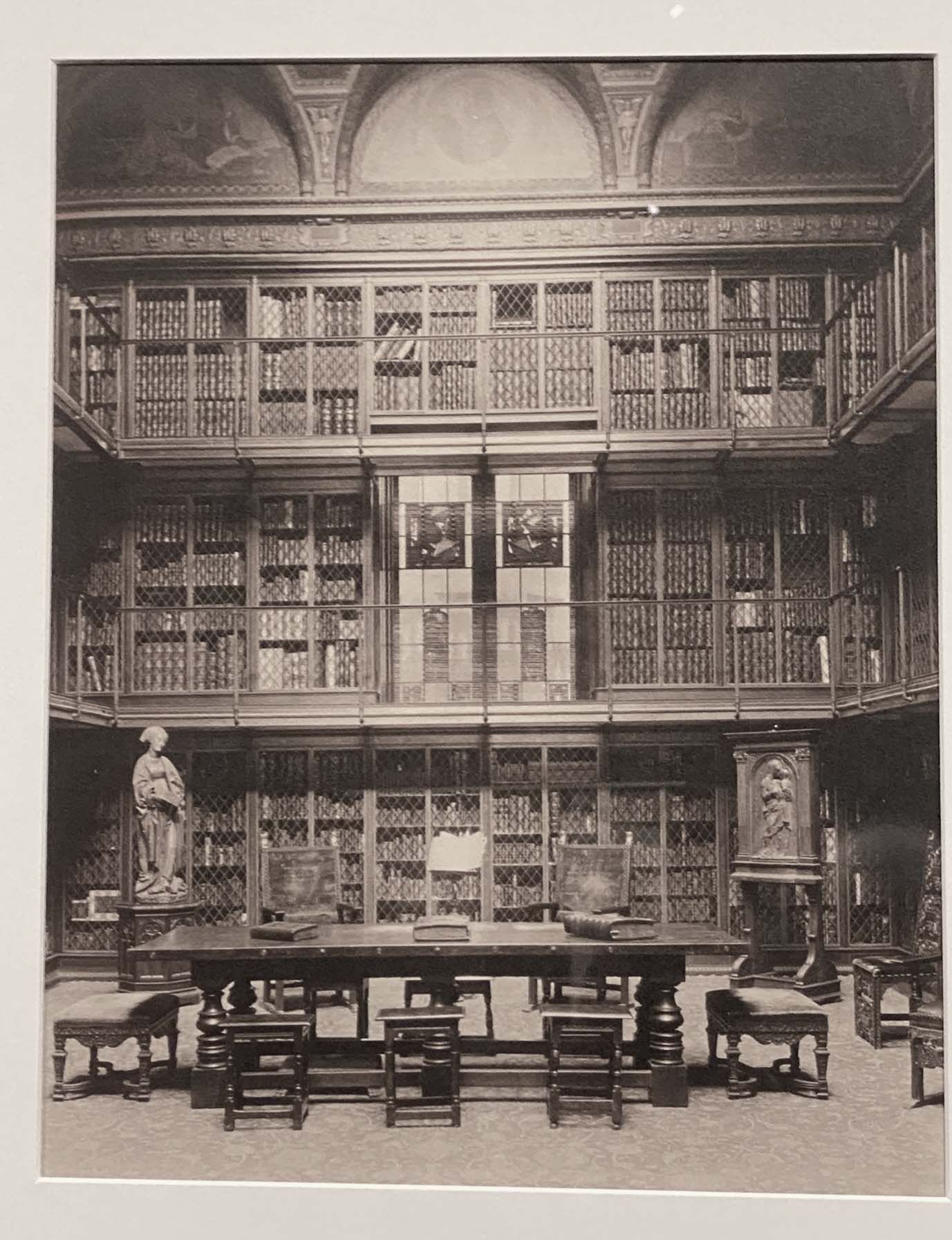
Tebbs & Knell’s 1923-1935 photograph of Mortan Library’s East Room with most of the 11,000 volumes acquired by Belle Greene.

As a young, culturally oriented woman, Belle dreamed of working in the brand-new field of library science.  Her impressive intellectual curiosity and research skills attracted benefactors who helped her with tuition at the best schools. Ultimately in 1901, she landed a job at Princeton’s library (when the campus was still segregated).

She came under the mentorship of library-science champiom Junius Spencer Morgan, J.P.’s nephew who eventually recommended her to his uncle who was building a private library to rival the best in Britain and France. The rest was history.

The exhibition tells Belle’s personal story, documents her acquisition triumphs for Morgan, shows her fame as one of the highest paid professional women in New York, and explains how she spent four decades building Mr. Morgan’s library into a premiere cultural institution.

Belle deftly navigated through society by gaining acclaim as a scholar, curator, and cultural innovator – often as the only woman on the auction bidding floor or at scholarly societies.

When she set her mind to something, she usually found a way to acquire it – even if it took years of waiting and entreaties. It was a quality that J.P. Morgan admired in her. He paid her handsomely, and trusted her completely to acquire works across Europe in his name.

Illustration for The World Magazine (May 21, 1911), showing Belle in action with at the auction of Robert Hoe’s library.
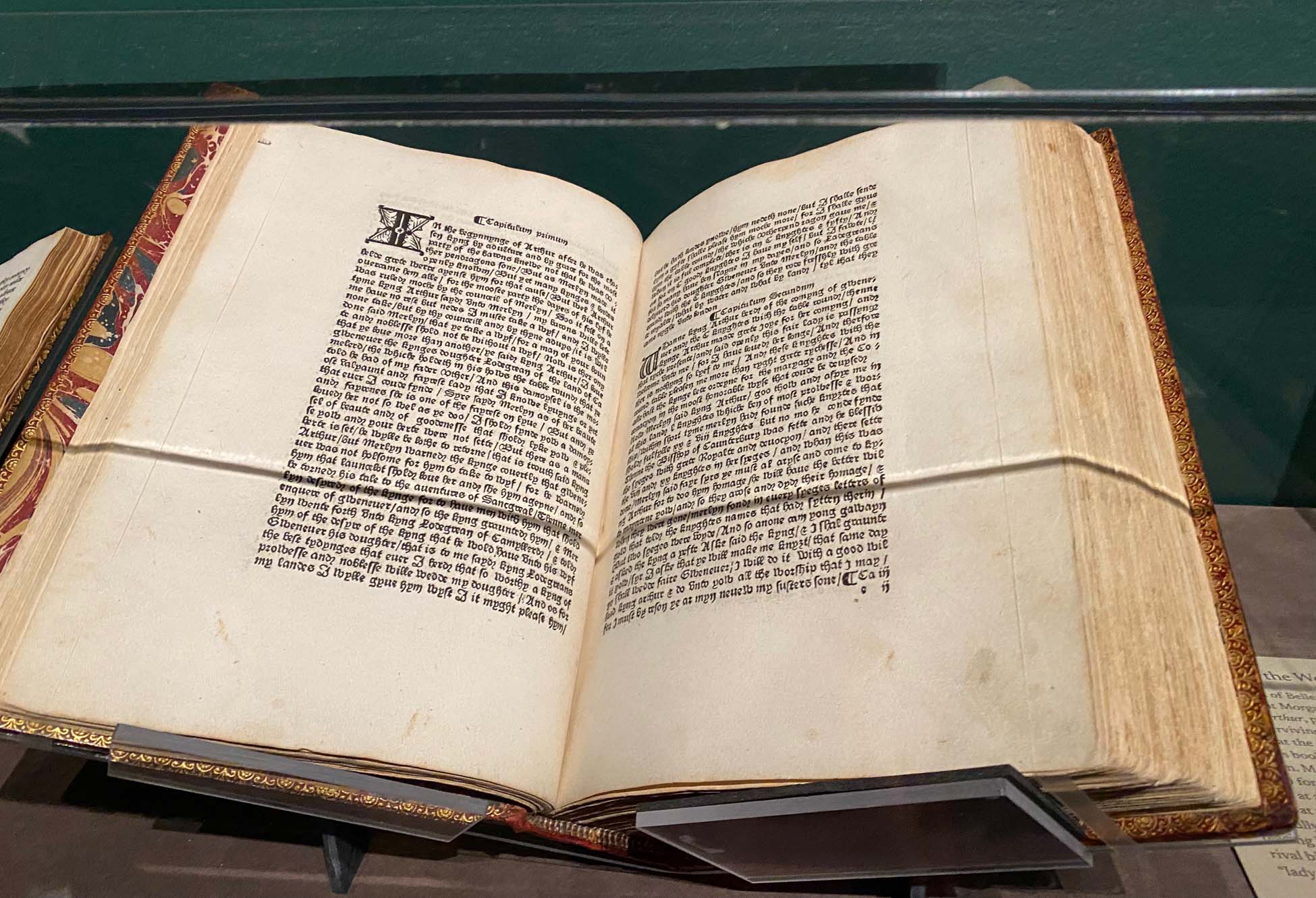
Belle Greene’s prized acquisition – the only surviving 1485 print edition of Thomas Malory’s Le Morte d’Arthur.

She even convinced Morgan to embrace classical Islamic art from India and Persia for the collection before other collectors caught on to their beauty and drove up prices.

In 1911, Belle purchased this 1750-75 album of Persian and Mughal paintings owned by British Museum expert Charles Hercules Read.

When Morgan died in 1913, his son, Jack, asked Belle to continue in her position and oversee the construction of the Annex on 36th Street.

In 1916 (without permission), Belle snuck over to Europe during World War I to convince an English collector to part with the much admired “Crusader Bible,” a gorgeous illuminated 13th century manuscript. Mr. Morgan had once made an offer for it. After Morgan died in 1913, Belle met with the collector in person, struck a deal, brought it back, and presented it to Jack Morgan for the collection.

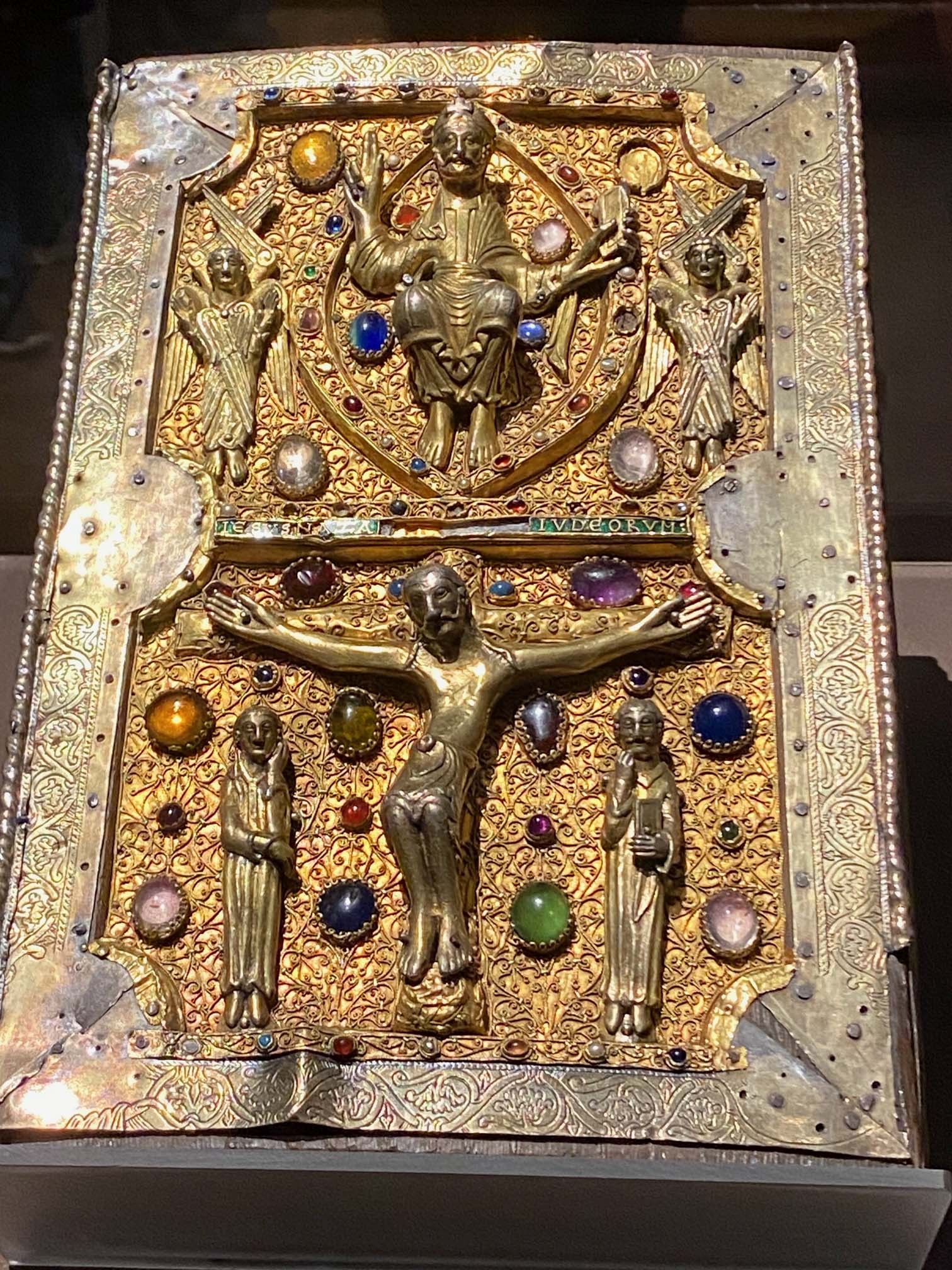
Jeweled cover of 1051-64 Gospels of Judith of Flanders – a 1926 purchase by Belle Greene and Jack Morgan.
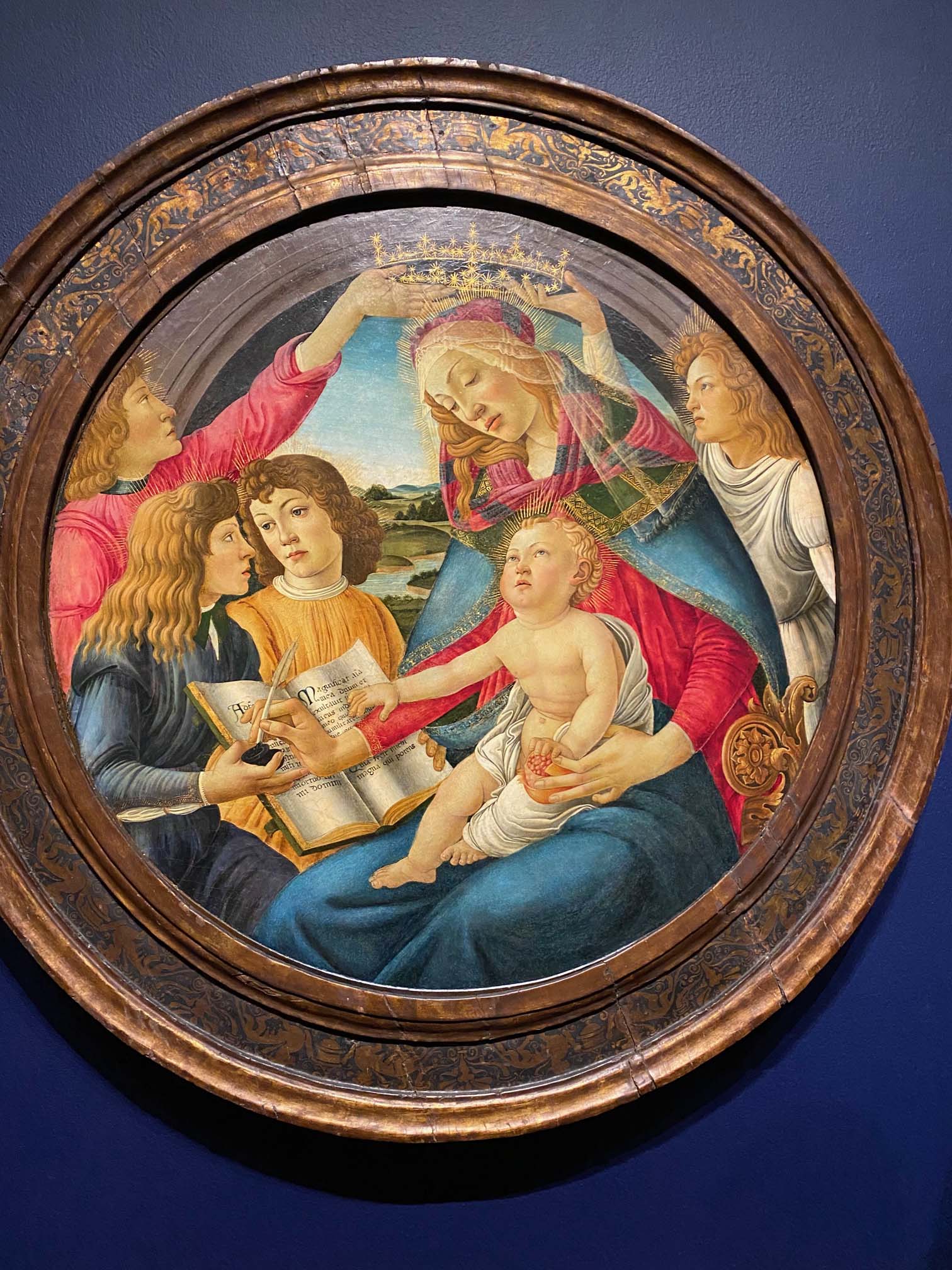
1490 Madonna of the Magnificent, a Florentine painting that Belle conserved, still hanging in Morgan’s study.

Her expertise in medieval illumination and manuscripts made her a friend and advisor for life among American and European scholars, collectors, and museum curators. The Metropolitan Museum made her a trustee for life, and often consulted with her on medieval masterpieces, fakes and forgeries, and other acquisitions.

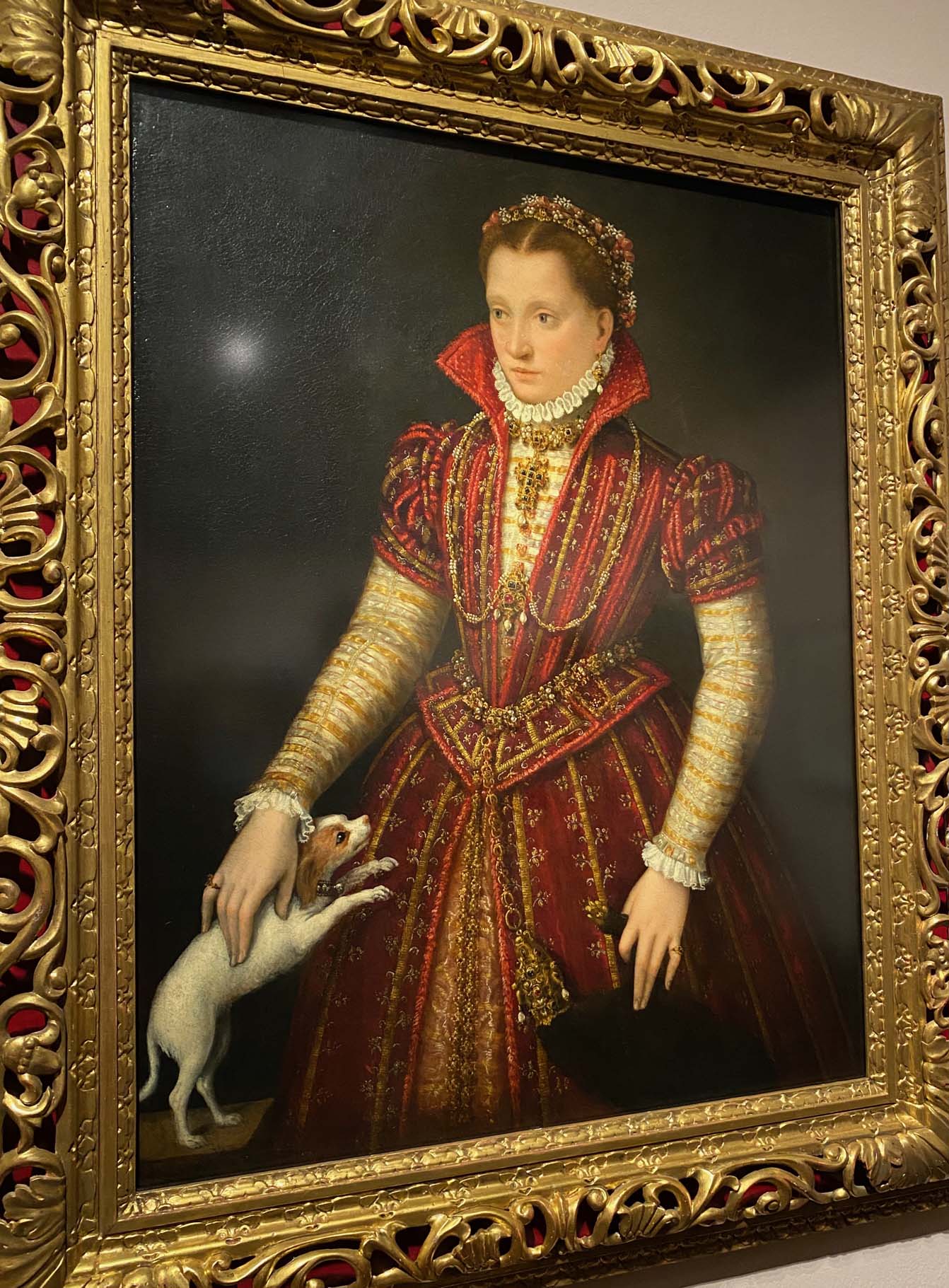
In Belle’s personal art collection – Lavinia Fontana’s 1580 Marriage Portrait of a Bolognese Noblewoman. Courtesy: National Museum of Women in the Arts.
From Belle’s jewelry– Benedetto Pistrucci’s 1840-1850 jasper and gold Head of Medusa. Courtesy: The Metropolitan Museum.

The curators tell her story across two galleries using items from the Morgan’s collection (including the many portraits of her!) as well as paintings, prints, photographs and documents from 20 other lenders.  Take a peek into the exhibition and hear the Morgan’s curators summarize Belle’s ground-breaking achievements:

Explore the works at your leisure here as you complete a 3D digital walk-through on the Morgan’s website. You can also listen to the audio tour from right inside the virtual gallery.

Get to know this legend, and take a look at our favorite exhibition pieces in our Flickr album

The ony question is – who will play Belle in the movie?

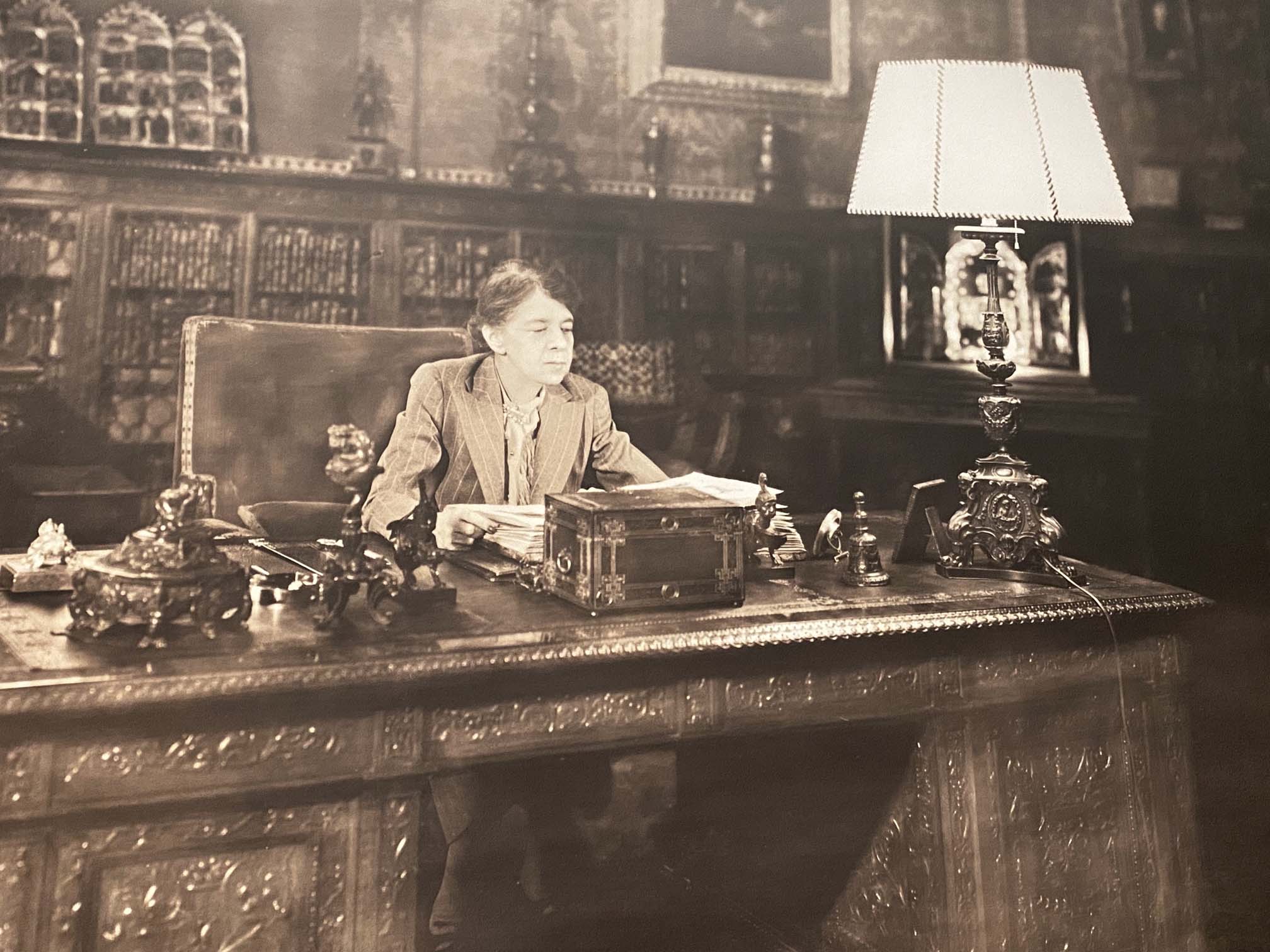
1950 photo of Bella reviewing her last acquisition, a 10th century Gospel Book from France. Courtesy: Harvard University’s Berenson Library in Florence, Italy.