Sixties Surreal at The Whitney

After more than 55 years, the camel herd is back at the Whitney. When they first appeared in 1969, the dromedaries were a media sensation. Who could resist the delight of seeing the life-sized camel sculptures by 28-year-old science nerd Nancy Graves nonchalantly going about their business in the pristine, white Breuer building?

At the new Whitney, the camels are welcoming everyone to Sixties Surreal – a superb exhibition (on view through January 19, 2026) that pulls out an array of engaging, cheeky work from that tumultuous decade. The show presents work by over 100 artists who chose to remain on the fringes of the big-time art world, creating pieces that poke at the Establishment, consumer culture, and social norms.
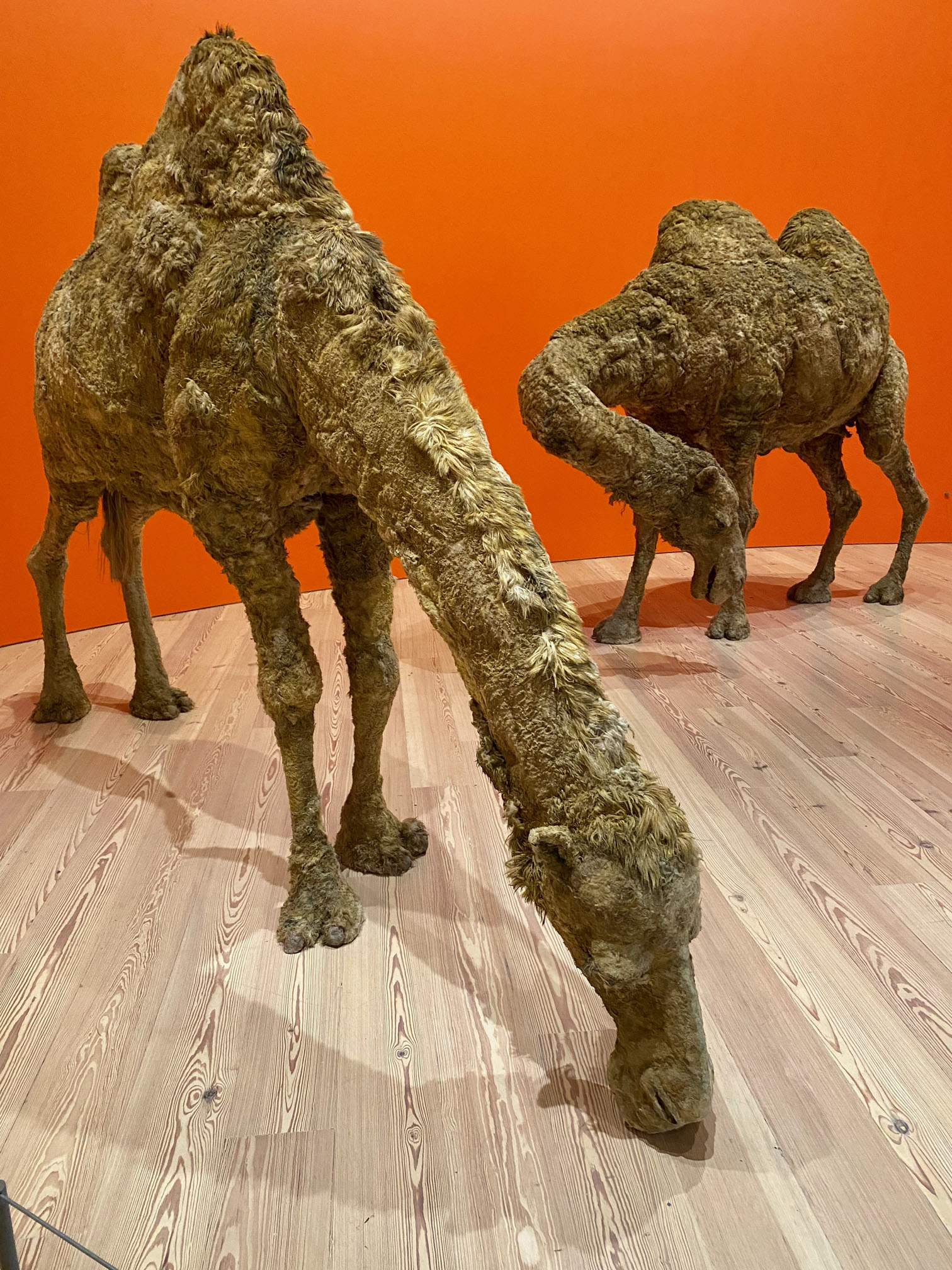
Strange, surrealistic 1968-1969 mixed-media, life-sized Camel sculptures by Nancy Graves; initially shown in her solo 1969 Whitney show. Courtesy: National Gallery of Canada, Ottawa.

The Whitney makes the case that American artists of the Sixties were not echoing the themes of European Surrealism (dreams, subconscious desires); but they did adapt a few of that group’s visual techniques to reflect and critique what was happening in America in off-center, slightly surreal ways.
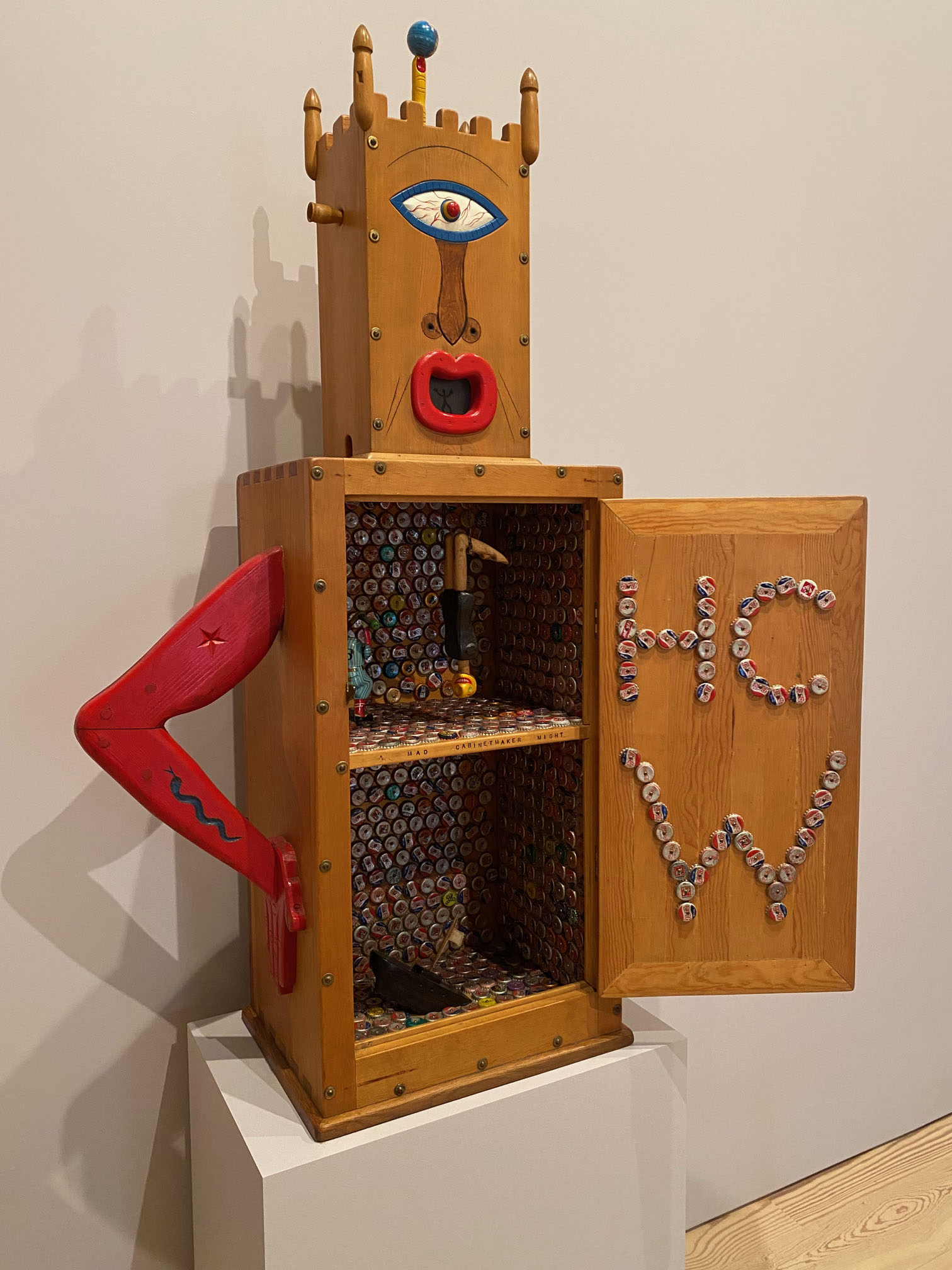
H.C. Westerman’s 1958 Memorial to the Idea of Man If He Was an Idea – a finely crafted “person” with an extremely complicated interior of bottle caps, toys, glass, metal, etc. Courtesy: Museum of Contemporary Art Chicago.
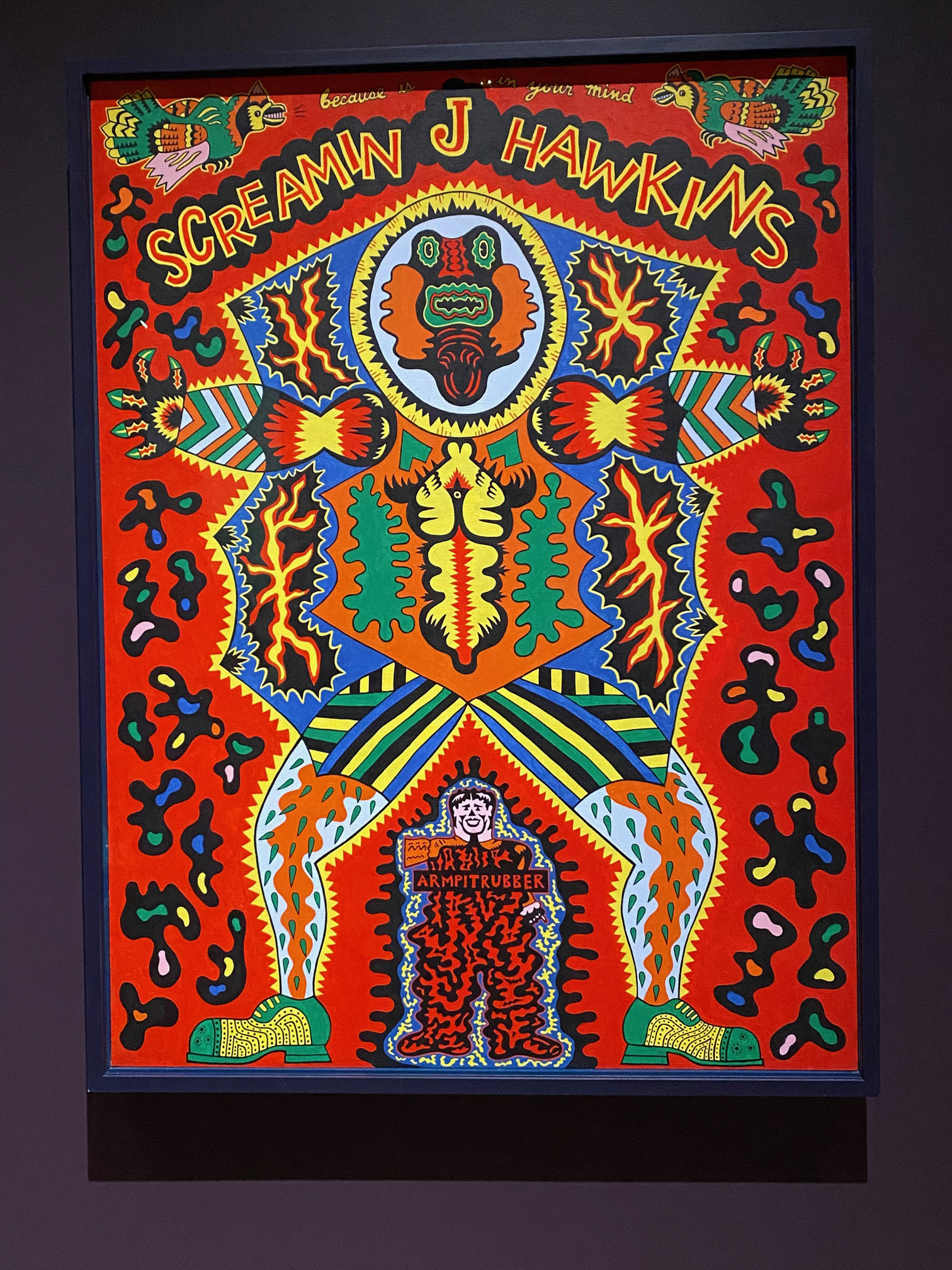
Karl Wirsum’s 1968 acrylic Screamin’ Jay Hawkins – a surreal, high-octane album cover painting for an early-rock icon. Courtesy: Art Institute of Chicago.

The Sixties was a decade when cultures were clashing, TVs were showering a kaleidoscope of images into people’s living rooms, nuclear catastrophes loomed, and people were landing on the Moon.
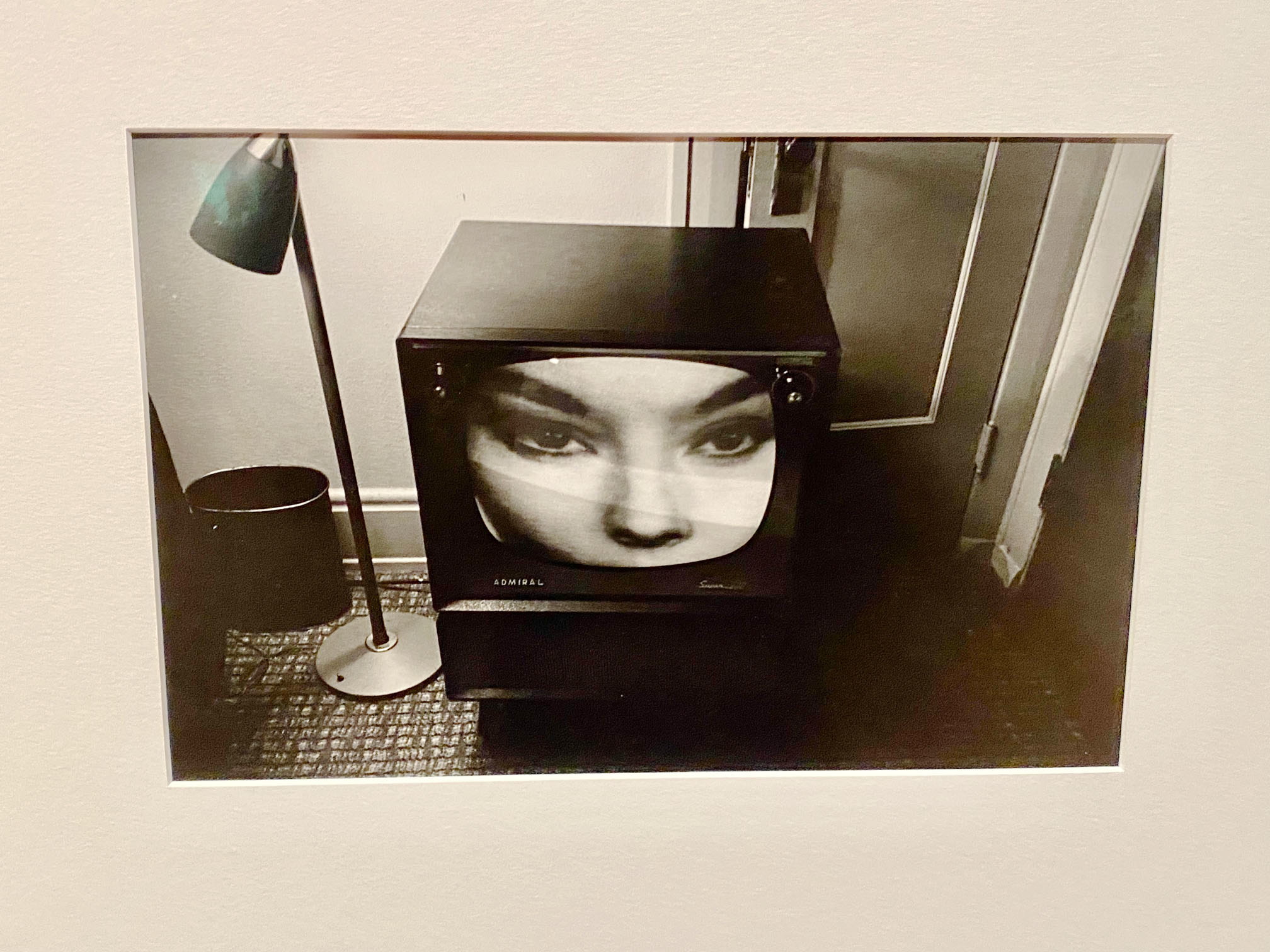
Lee Friedlander’s 1963 photograph Florida showing the surrealistic, disorienting impact of TVs in every home. Courtesy: Museum of Modern Art.

The exhibition shows how artists who didn’t belong to trendy “isms” still managed to create work that has stood the test of time – the Hairy Who of Chicago, the funk-and-pun artists of California, the downtown post-minimalists of New York, emerging Native American modernists, and social-justice artist-advocates.

Take a look at some of our favorites in our Flickr album.
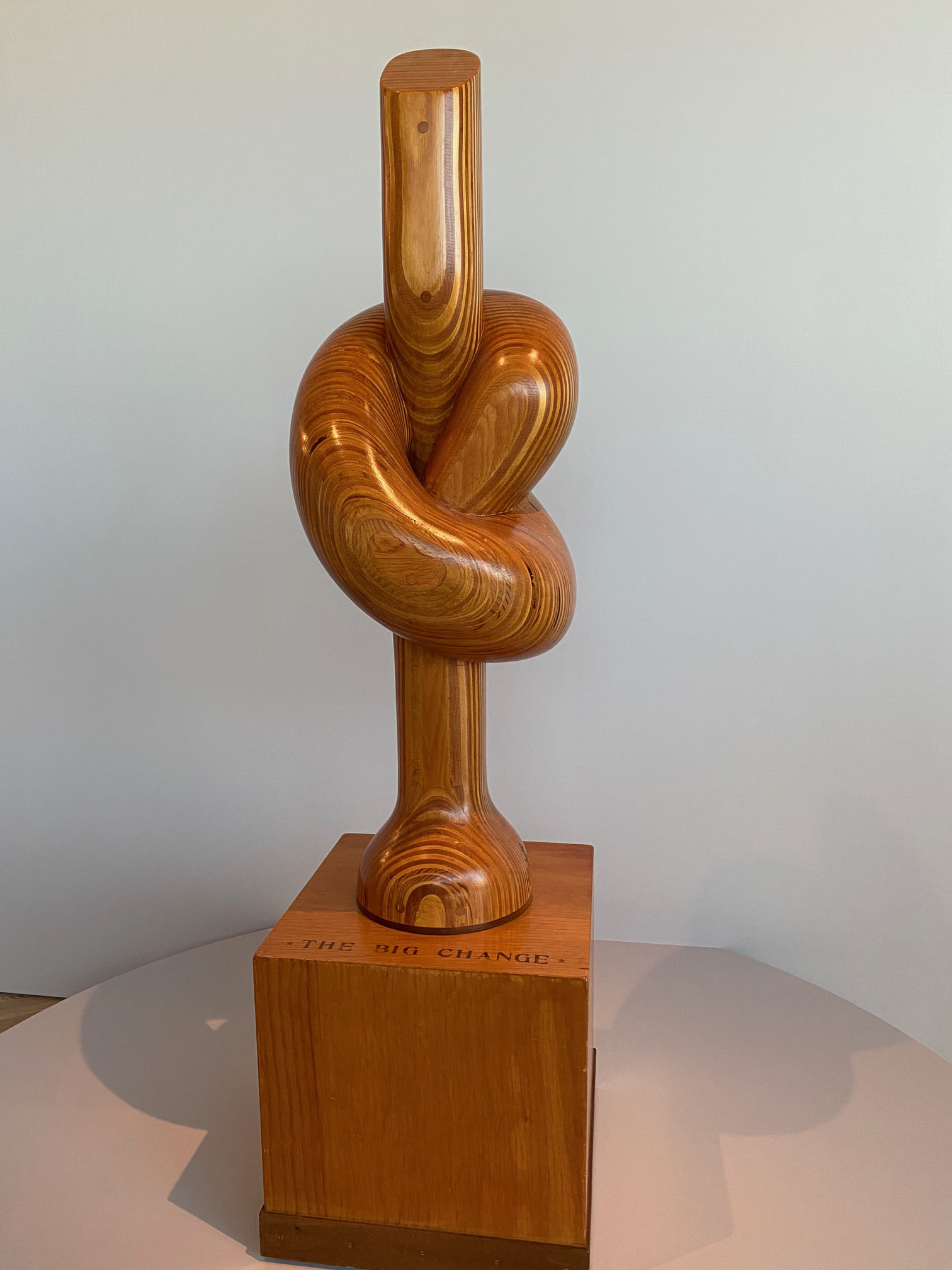
H.C. Westerman’s 1963 impossible wooden “knot” sculpture The Big Change – an allusion to all the social-political changes happening in America. Courtesy: The Art Institute of Chicago.

At a time when hard-edged minimalism and Pop Art ruled, the curators want us to see and experience (again) artists whose work was featured key exhibition showcases like Lucy Lippard’s 1966 Eccentric Abstration show at Fischbach Gallery in New York and Peter Selz’s 1967 Funk show at the Berkeley Art Museum. Each were full of work that defied contemporary art-world conventions.

The Whitney’s chosen to showcase several pieces of one of the artistic godfathers of the funk movement – H.C. Westerman. His satiric “minimalistic” shag carpet sculpture sits next to a William T. Wiley painting, but it’s wonderful to contemplate two virtuoso carved pieces  – The Big Change and Memorial to the Idea of Man If He Was an Idea.

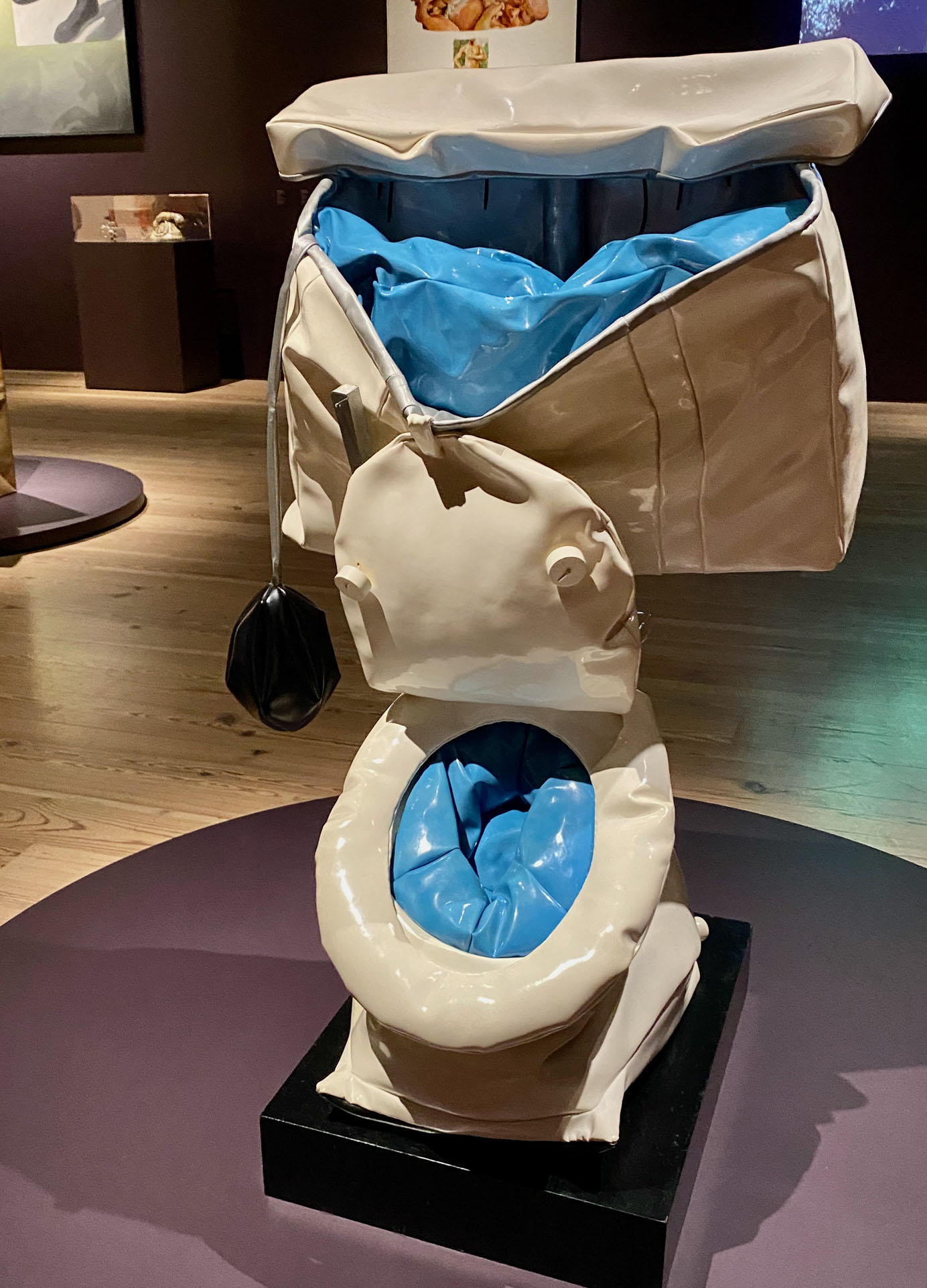
The first gallery presents disquieting creations that present strange, out-of-context juxtapositions, weird images, and out-of-proportion everyday objects that seem to reflect the feeling that we’re living in an off-kilter world.  A large Rosenquist hovers over the gallery, but its muted tones and dissonant images evoke a far different mood than his famous, epic, over-the-top F-111.

Alex Hay’s 1968 strange, oversized painted fiberglass and epoxy Paper Bag sculpture. At rear, James Rosenquist’s 1961 oil The Light That Won’t Fail I, full of unsettling juxtapositions.
Claes Oldenburg’s 1966 mixed-media Soft Toilet – an unsettling, oversized fixture from the American bathroom.

Another section presents work – many from repurposed or recycled material – with sensuous forms that suggest – but not directly depict – the human body. It’s nice to see such an array of soft, draped, and biomorphic work by artists like Kusama, Eva Hesse, Kay Segimachi, and nearly forgotten Miyoko Ito.
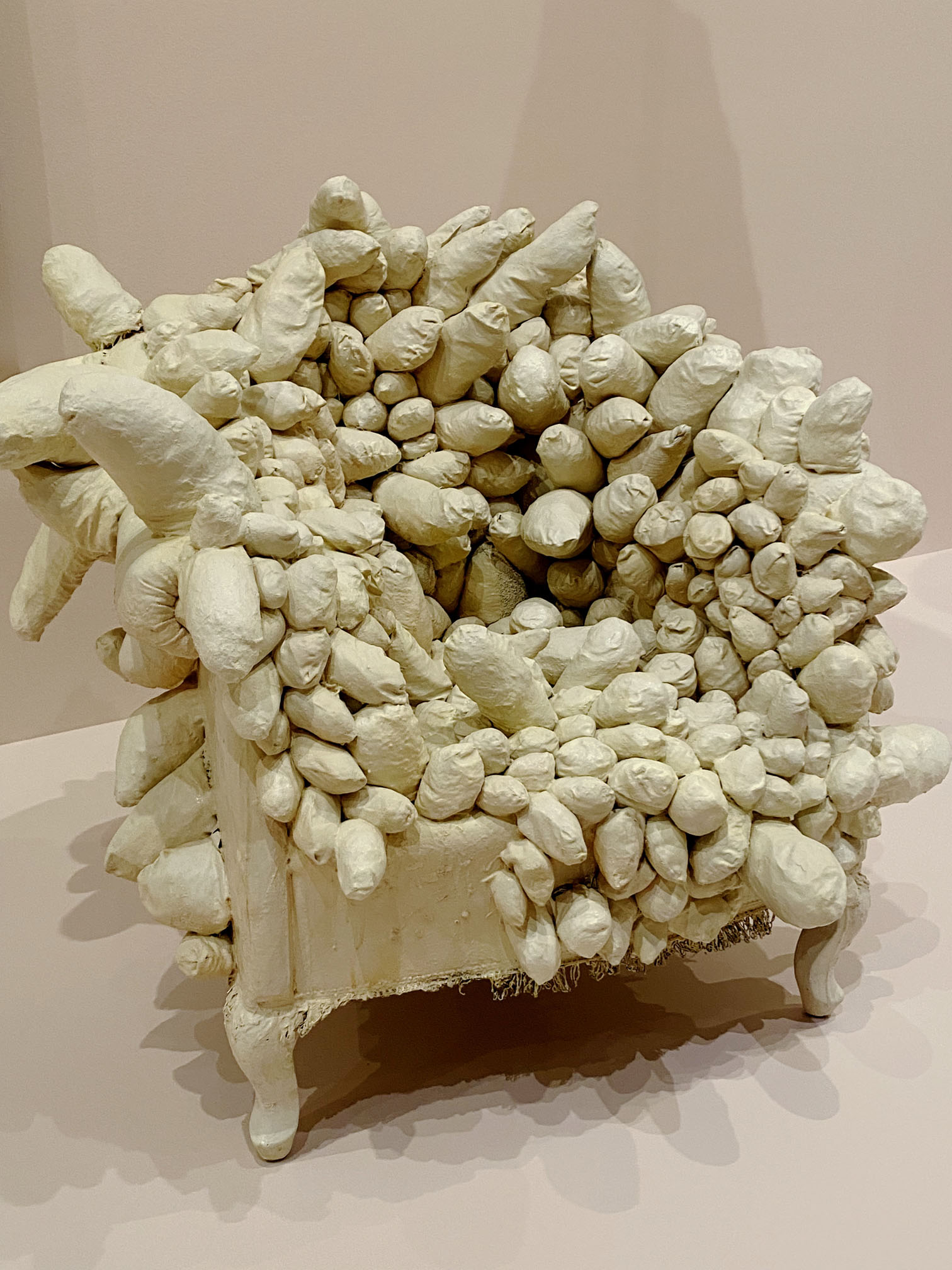
Kusama’s 1963 provocative hand-sewn, soft fabric-chair sculpture, Accumulation, which caused a sensation among New York critics.
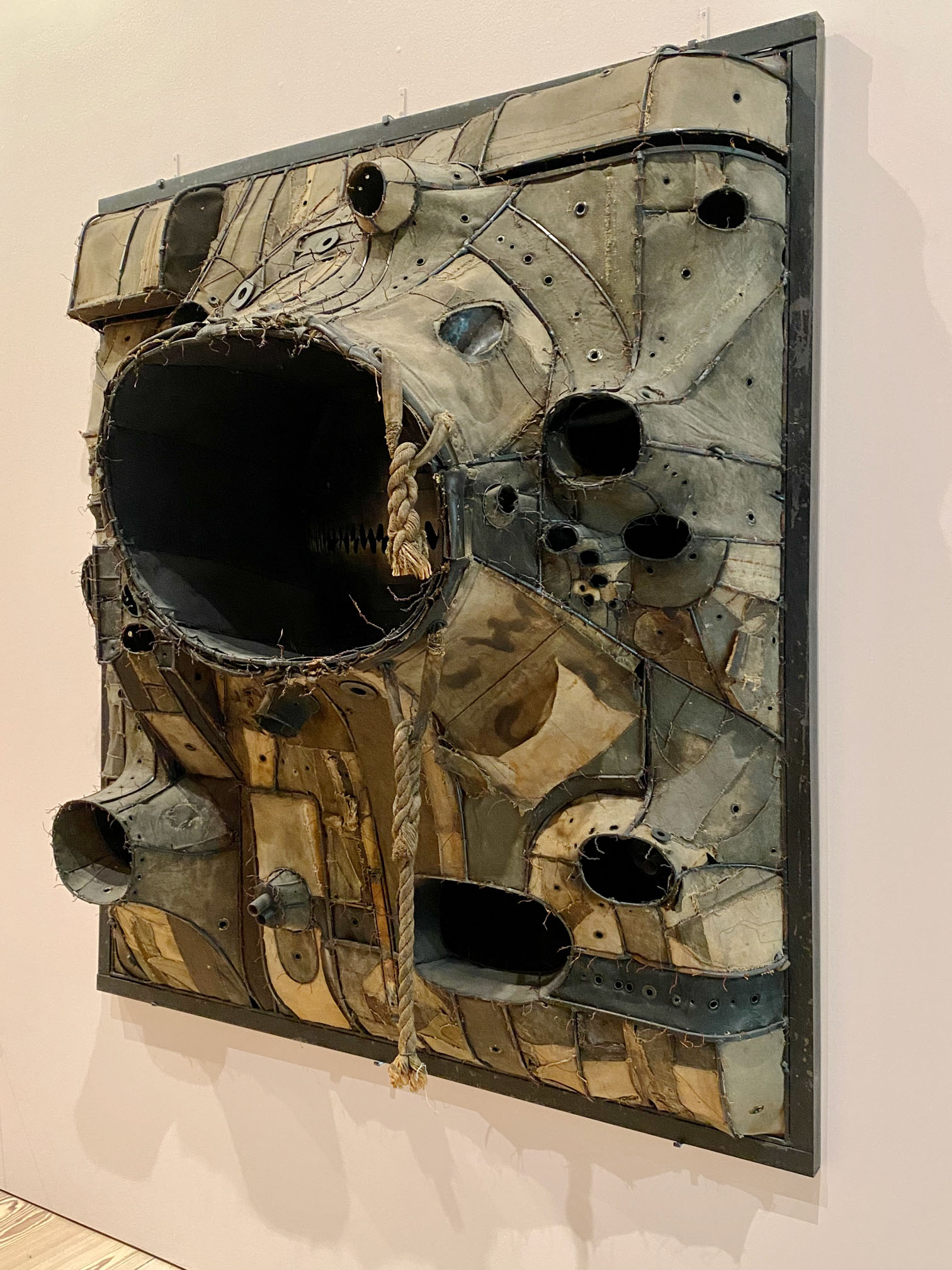
 Lee Bonticou’s 1961 welded, stitched canvas abstraction, created from scavenged steel, weathered canvas, clamps, wire, and rope from conveyor belts.

The far end of the exhibition presents works that take a stand to push for change in the world. Jasper Johns and Fritz Scholder let their paint do the talking. But others use a dada tactic to get the point across – hard-edge collages and assemblages.
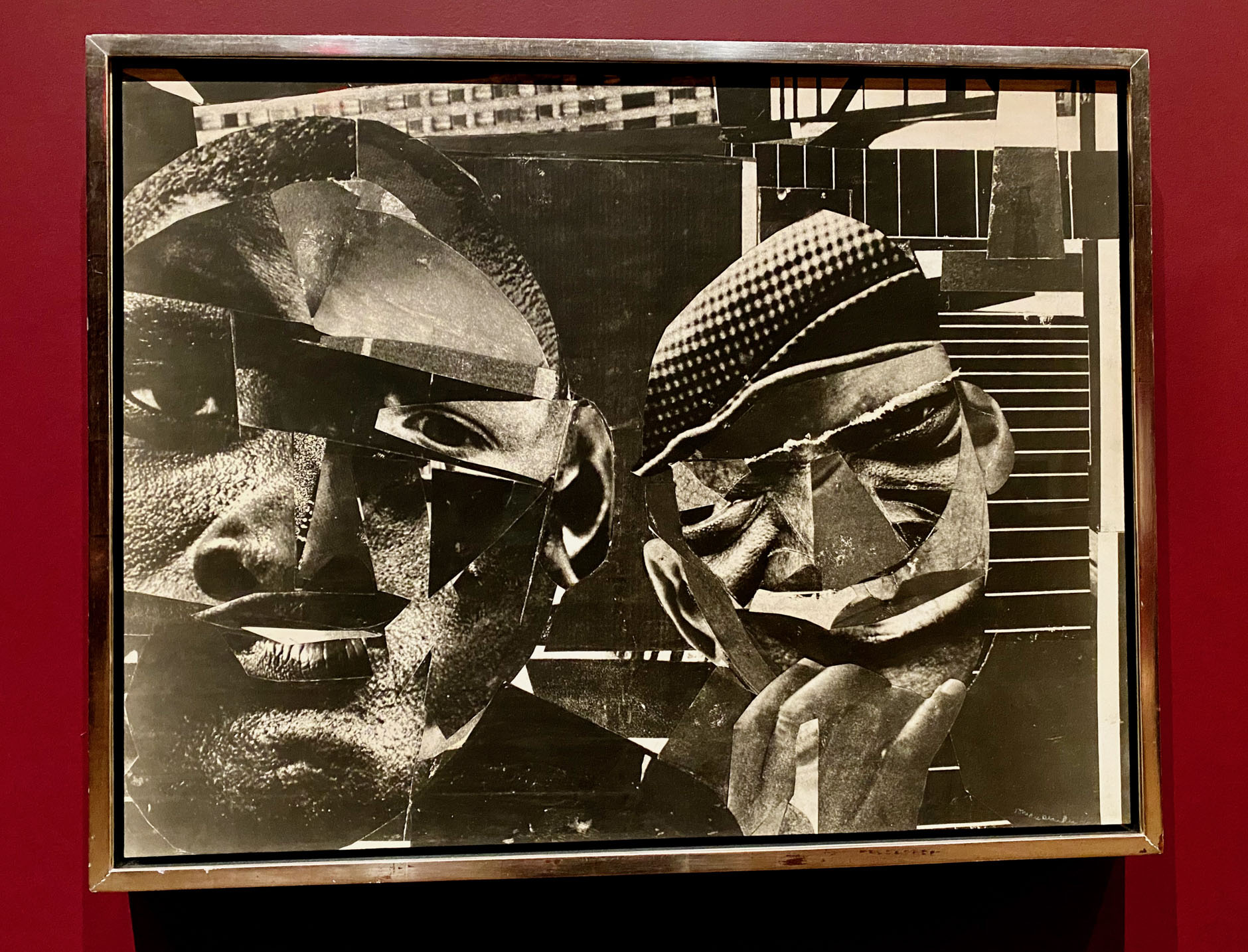
Social surreal: Romare Beardon’s 1964 Pittsburgh Memory 2/6 – mounted collage of photograph fragments creating the surreal experience of being Black in a big America city. Courtesy: private collection.

Works by Romare Beardon, John Outterbridge, Ralph Arnold, and Melvin Edwards create surreal dissonance that still packs a punch decades later.
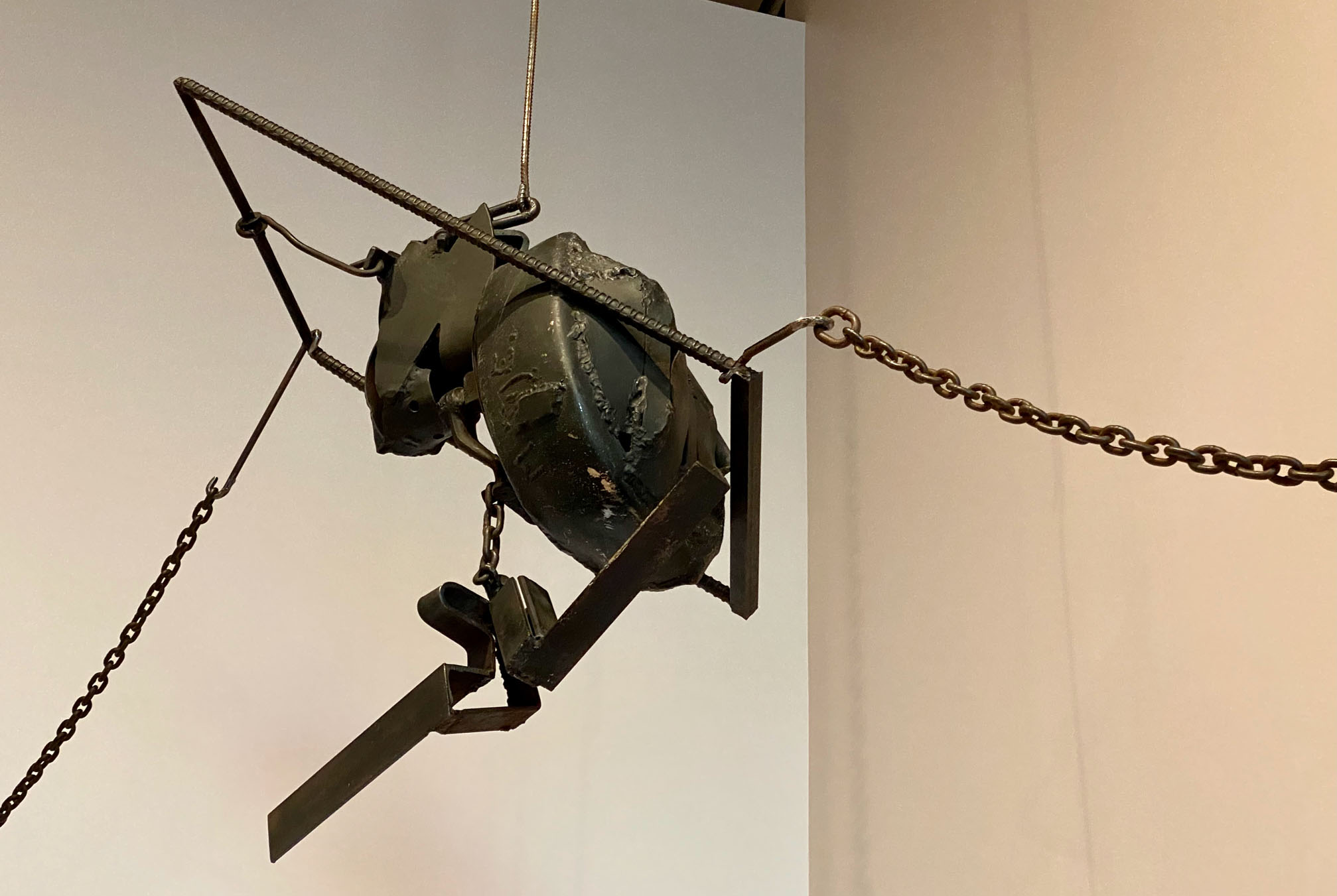
1966 Cotton Hangup by Melvin Edwards – suspended abstraction from recycled industrial equipment; evokes historic violence and oppression against African Americans. Courtesy: Studio Museum in Harlem

The show concludes with a selection of works by artists reflecting alternative spiritual practices and beliefs. At a time when organized institutions and religions were being questioned, why not turn inward?
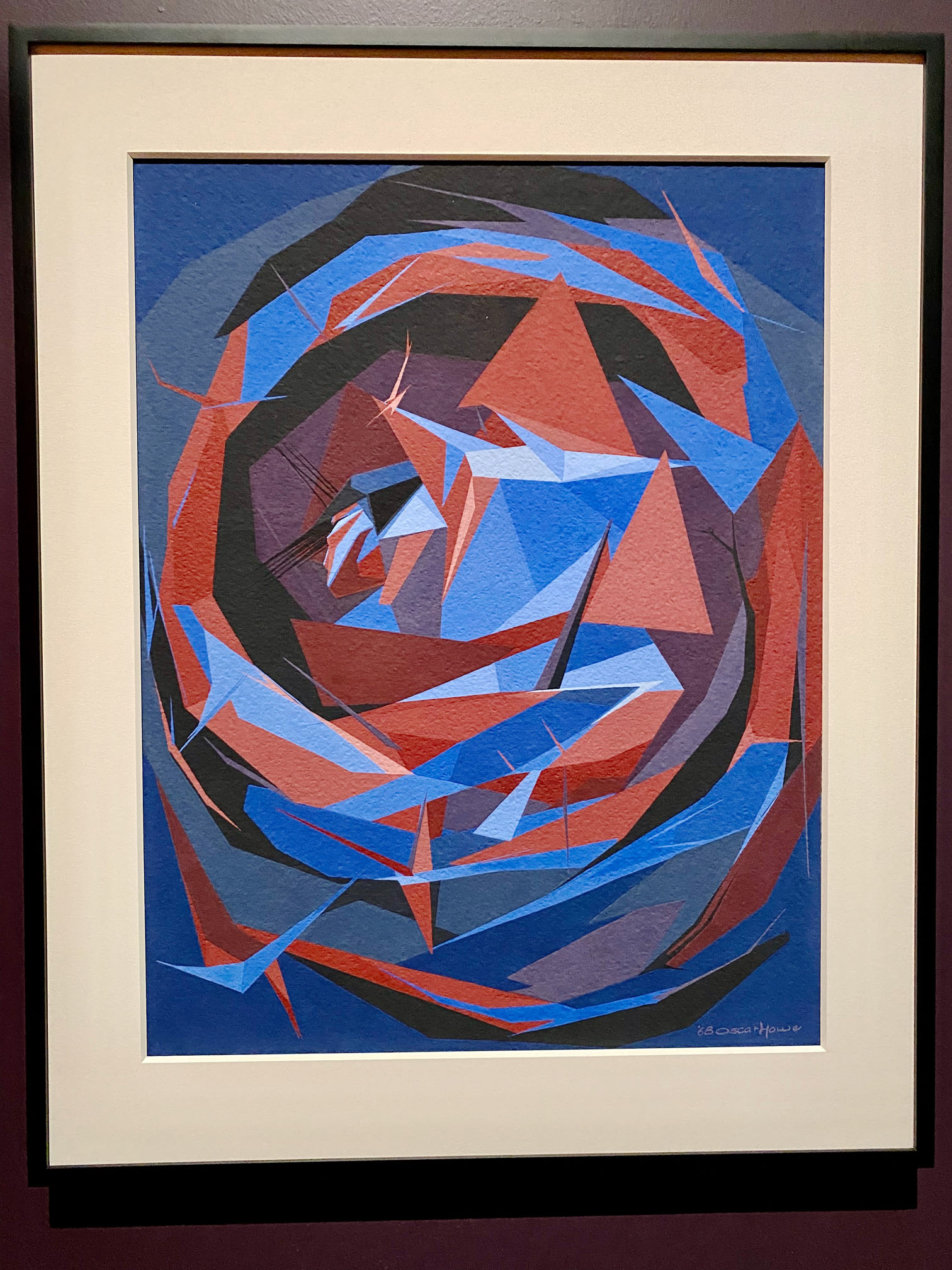
Oscar Howe’s 1968 painting Retreat – an Indigenous-modernist impression of a traditional Dakota ceremony.
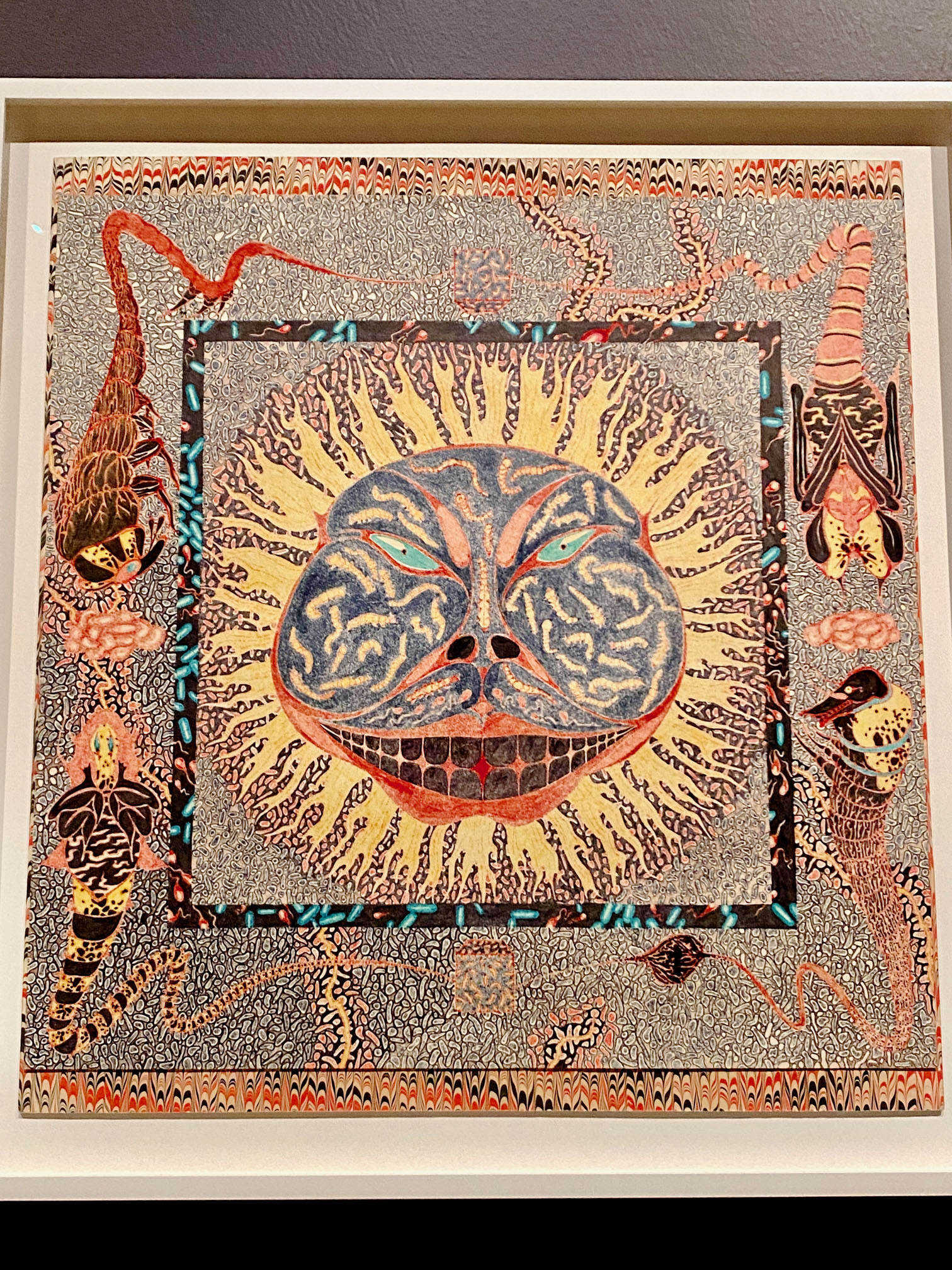
Ching Ho Cheng’s 1967 Sun Drawing, a meditative approach using a felt-tipped pen on found paper.

Have fun strolling through the Whitney’s Sixties Surreal galleries to a totally throwback Sixties soundtrack:

To hear more about specific works, listen to the curators talk about individual works in the audio guide here.
Whitney Resurrects American Optimism from Storage

To get a taste of exuberant optimism, travel back with the Whitney Museum of American Art in At the Dawn of a New Age: Early Twentieth-Century American Modernism, on view through February 26.

It’s a showcase for art created at the beginning of the 20th century – a time when European experimentation in abstraction, urban skyscrapers and other engineering marvels, Einstein’s breakthroughs, and the success of the women’s suffrage movement made artists optimistic about the future.

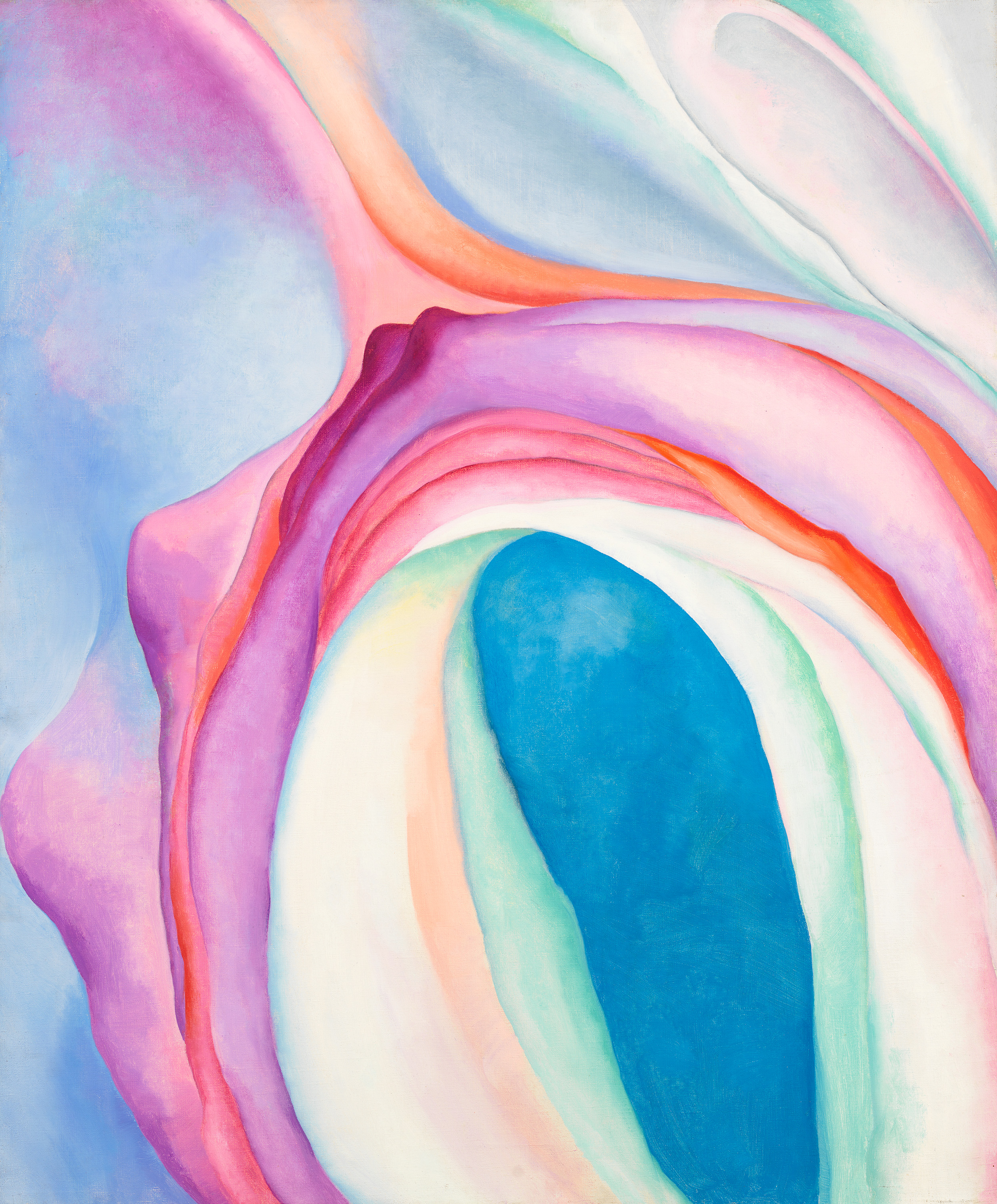
The show features work by well-known (and well loved) artists like lyrical abstractionist Georgia O’Keefe (Music, Pink and Blue No.2) and transcendentalist Agnes Pelton (Ahmi in Egypt).

Georgia O’Keeffe’s 1918 oil, Music, Pink and Blue No. 2. © 2022 Georgia O’Keeffe Museum / Artists Rights Society (ARS), New York

But the news story here is the Whitney’s interest in pulling work by their contemporaries out of storage to provide a more expansive look at early American modernism. Nearly half of the works on display have not been out of the stacks for more than 30 years!

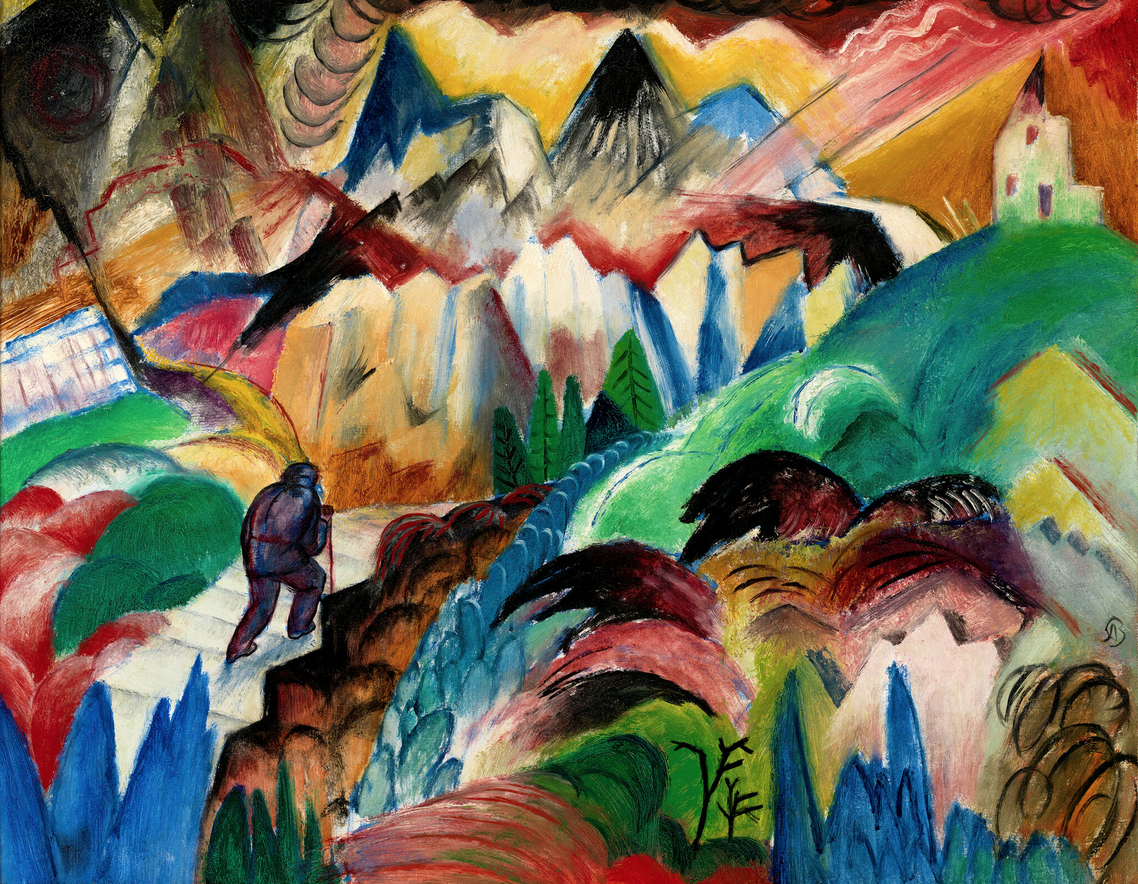
Look at Albert Bloch’s 1916 Mountain, which hasn’t been shown at The Whitney in 50 years. It’s somewhat shocking when you consider that Bloch was the only American invited to join the ground-breaking Der Blaue Reiter in 1911. It’s fitting that Bloch’s nearly forgotten, expressionist landscape was resurrected and featured as the show’s icon – a traveler on an upward journey toward a town on the hill amidst modernist peaks.

Albert Bloch’s 1916 Mountain.

The Whitney’s also pulled Carl Newman’s 1917 Bathers out of storage for this show and hung it side-by-side with Bloch.

Newman was an Academy-trained artist from Philly, but after getting swept up in the Parisian avant-garde one summer, he tried throwing art conventions out the window. 

Color, rainbows, naughty nudes, pleasure craft – a scandalous and joyous mix!

Carl Newman’s 1917 oil on linen painting, Untitled (Bathers)

And what about another “forgotten” convention-breaker? The vibrant 1926 Street Scene is by Yun Gee, a Chinese immigrant modernist who started his art career in San Francisco, but found more acceptance and exhibition opportunities in Paris. Gee was the only Chinese artist running in European modernist circles, and it’s nice to see his cubist expression of San Francisco’s Chinatown right where it belongs in the Whitney’s pantheon.

Yun Gee’s 1926 oil of San Francisco’s Chinatown, Street Scene. Courtesy: estate of Yun Gee.

Works by some of our modernist favorites are also featured – synchronist master Stanton Macdonald Wright, shape-shifter Arthur Dove, and former Brancusi studio assistant and abstracted design leader, Isamu Noguchi.

Henrietta Shore’s 1923 oil, Trail of Life – a recent acquisition by the Whitney to add Shore to its collection.

The stories and careers go on. The exhibition features artists from the West Coast, artists that fled to Paris and found success there, and some modernists that just couldn’t make a go of it and stopped making art entirely.

Henrietta Shore, the Los Angeles innovator who Edward Weston credits as a great influence on his style, was one who eventually opted out.

It’s a beautiful walk through the early 20th century to meet a new set of painters using abstraction to channel an optimistic future – E.E. Cummings (yes, the poet!), Blanche Lazzell of Provincetown, Aaron Douglas of the Harlem Renaissance, and Pamela Colman Smith of Tarot card fame.

Installation view of great modernists. In vitrine: Pamela Colman Smith’s 1909 Rider-Waite-Smith Tarot Deck. Left to right: O’Keeffe’s 1918 Music, Pink and Blue No. 2; Stettheimer’s 1931 Sun; E.E. Cummings’s 1925 Noise Number 13; Macdonald-Wright,’s 1918 Oriental – Synchromy in Blue-Green; Richmond Barthé,’s 1933 African Dancer; Jay Van Everen’s 1924 Abstract Landscape. Photograph by Ron Amstutz.

Here’s a short video by curator Barbara Haskell where she talks about what it was like to find “forgotten” paintings and other stories behind the Whitney’s fascinating modernist reveal: