Frankenthaler and Friends Put Action into Prints

An exhibition of dramatic, action-filled prints by legendary Abstract Expressionists shows how experts at the new printmaking workshops during the Sixties and Seventies gave art-world mavericks the tools to take their ideas to new dimensions.

Push & Pull: The Prints of Helen Frankenthaler and Her Contemporarieson view at the University of New Mexico Art Museum through May 17, 2025, is a must-see journey into collaboration and experimentation at mid-century.

UNM recently received a gift of 20 magnificent artworks from the Helen Frankenthaler Print Initiative.
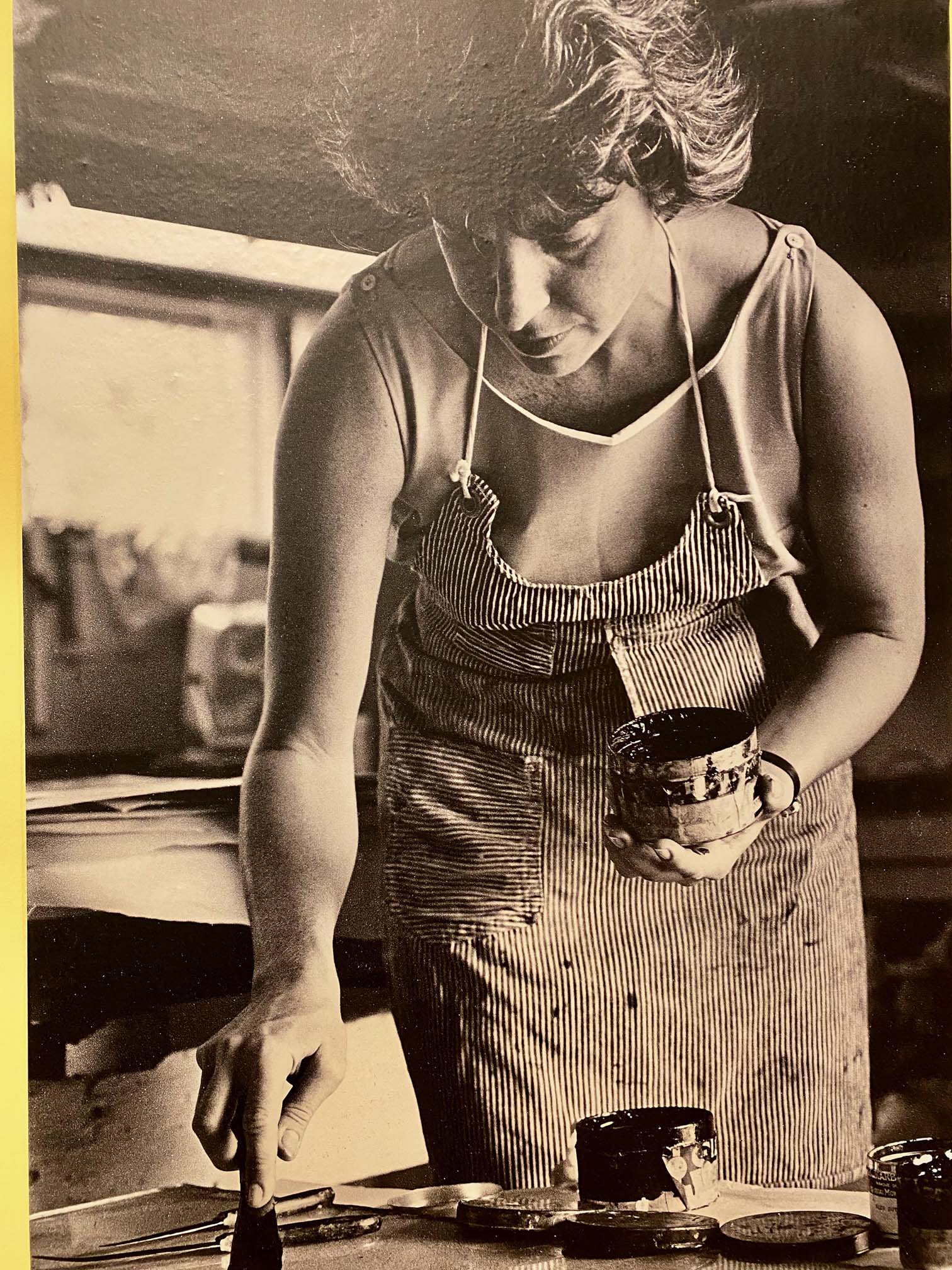
Hans Namuth’s 1964 photo of Frankenthaler working at ULAE in West Islip, NY. Courtesy: artist’s estate and University of Arizona’s Center for Creative Photography

The main gallery shows them alongside prints by Elaine de Kooning, telling the story of how these remarkable abstractionists collaborated with different workshops, used their distinctive styles to create portfolios, and formed decades-long bonds with master printers.

Helen Frankenthaler grew up and studied in the ever-evolving New York City art world. Her studies with Hans Hoffman – known for teaching abstractionists how to capitalize upon the “push pull” of color – and her technique of physically soaking and staining colors across canvases laid on her studio floor put her squarely at the intersection of the Abstract Expressionist and Color Field painting movements.

Frankenthaler had her first big solo painting exhibition in 1960, and began her printmaking experiments the following year. Some of her earliest works in the exhibition are silkscreens – some in the color-field direction, and some more gestural.
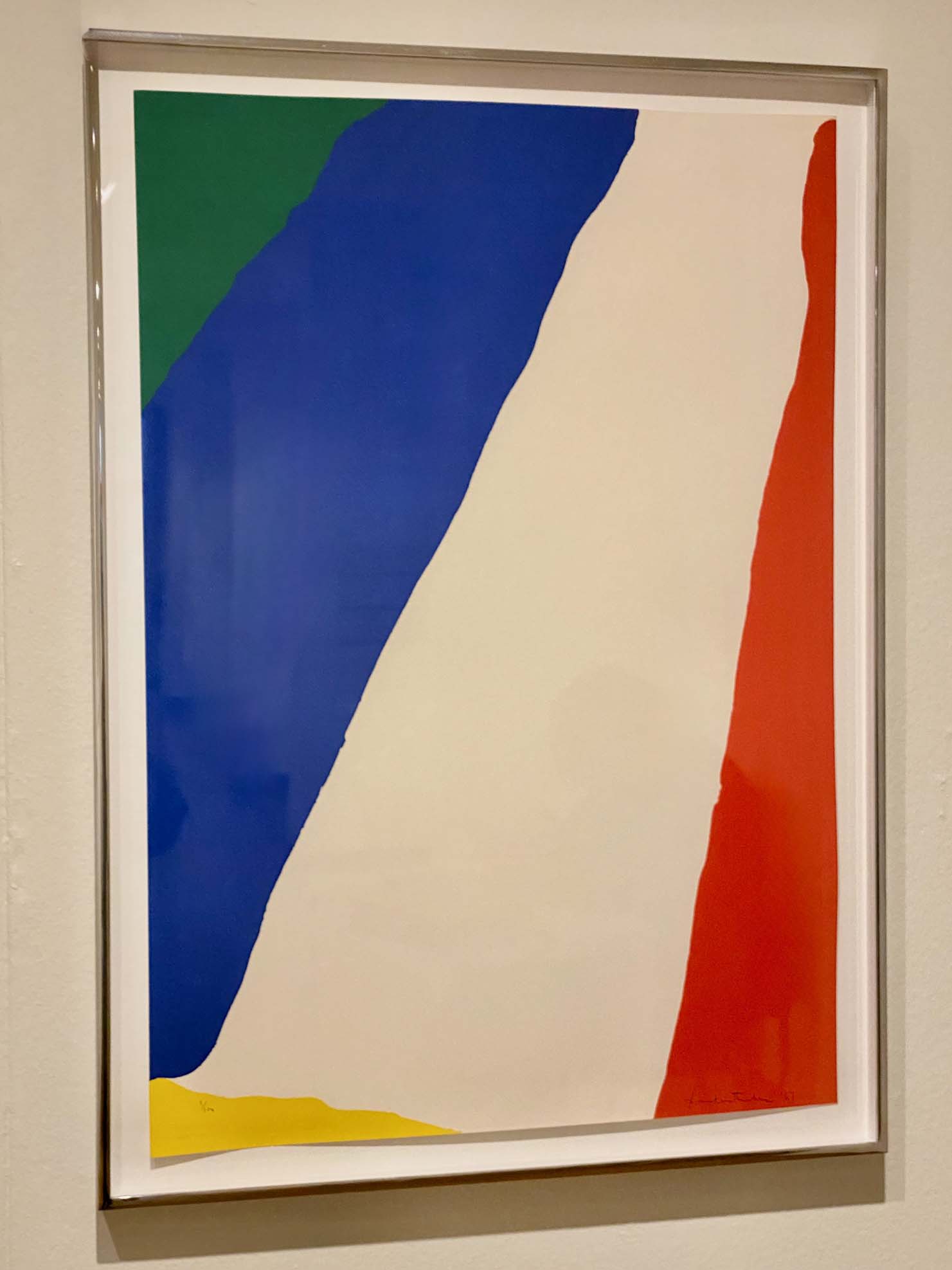
Frankenthaler’s 1967 untitled silkscreen (1/100); published by Chiron Press in New York; collaborating printer Patricia Yamashiro.
Frankenthaler’s 1970 silkscreen (artist’s proof) (19/24) from her What Red Lines Can Do portfolio, published by Multiples, Inc., NY; collaborating printers Sheila Marbain and Patricia Yamashiro.

Frankenthaler’s prints are grouped according to her work with various presses, such as Universal Limited Art Editions (ULAE), Tyler Graphics Ltd., and Tamarind Institute. Often with the guidance of print masters, she experimented to see how her “soak stain” could be layered and pressed multiple times across the lithography stone.

The exhibition curators display a series of proofs and experiments at Tyler Graphics to demonstrate the artist’s creative process with the expert printmaking team.

Frankenthaler’s 1978 lithograph Bronze Smoke (36/38) published by ULAE in Bayshore, NY; collaborating printers Thomas Cox and Bill Gordon.
Frankenthaler’s 1987 Sudden Snow lithograph proof (4/12); published by Tyler Graphics Ltd. (Mount Kisco, NY); collaborating printers Roger Campbell, Lee Funderburt, Michael Herstand, and Kenneth Tyler.

Later experiments show off Frankenthaler’s experimentation with woodcuts and monoprints. Here, she inked a woodblock and ran it multiple times to produce a “ghost print” of the wood, then applied bright red over the wood knots and added bright blobs of floating colors atop the natural backdrop.
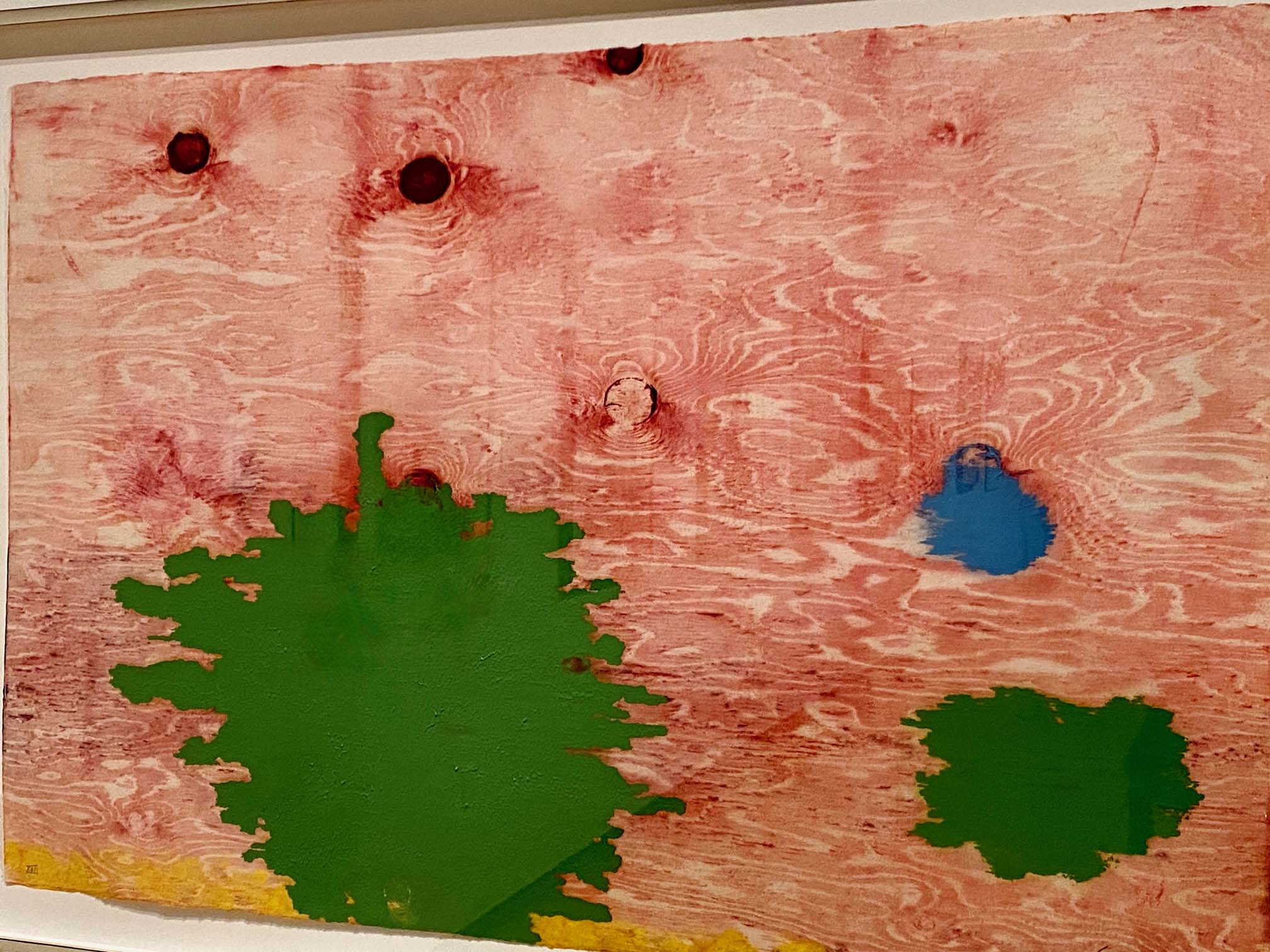
Helen Frankenthaler’s 1991 Monotype XVII, published by Garner Tullis, NY; collaborating printers Emanuele Cacciatore, Benjamin Gervis, and Garner Tullis.

The exhibition also showcases two dramatic print series by action painter Elaine de Kooning made at the Tamarind Institute. Check out Elaine’s wild lithographs of bulls.

Elaine de Kooning’s 1973 lithograph Taurus XI published by Tamarind Institute in Albuquerque; collaboraring printers John Sommers and Ben Q. Adams. Courtesy: Tamarind Archive.

The curators also showcase Elaine’s multiverse interpretation of a famous Parisian sculpture in the Jardin de Luxembourg. The series mounted across the long wall gives gallery goers a close-up look at the intricate collaboration between Tamarind’s workshop masters and a midcentury mark maker.

The exhibition also includes prints from plenty of other mid-century abstractionists from the UNM collection – Motherwell, Diebenkorn, and Lewitt – as well as prints by current UNM students who were asked to create art inspired by Frankenthaler and company.

Take a look at all of these action-packed prints in our Flickr album.
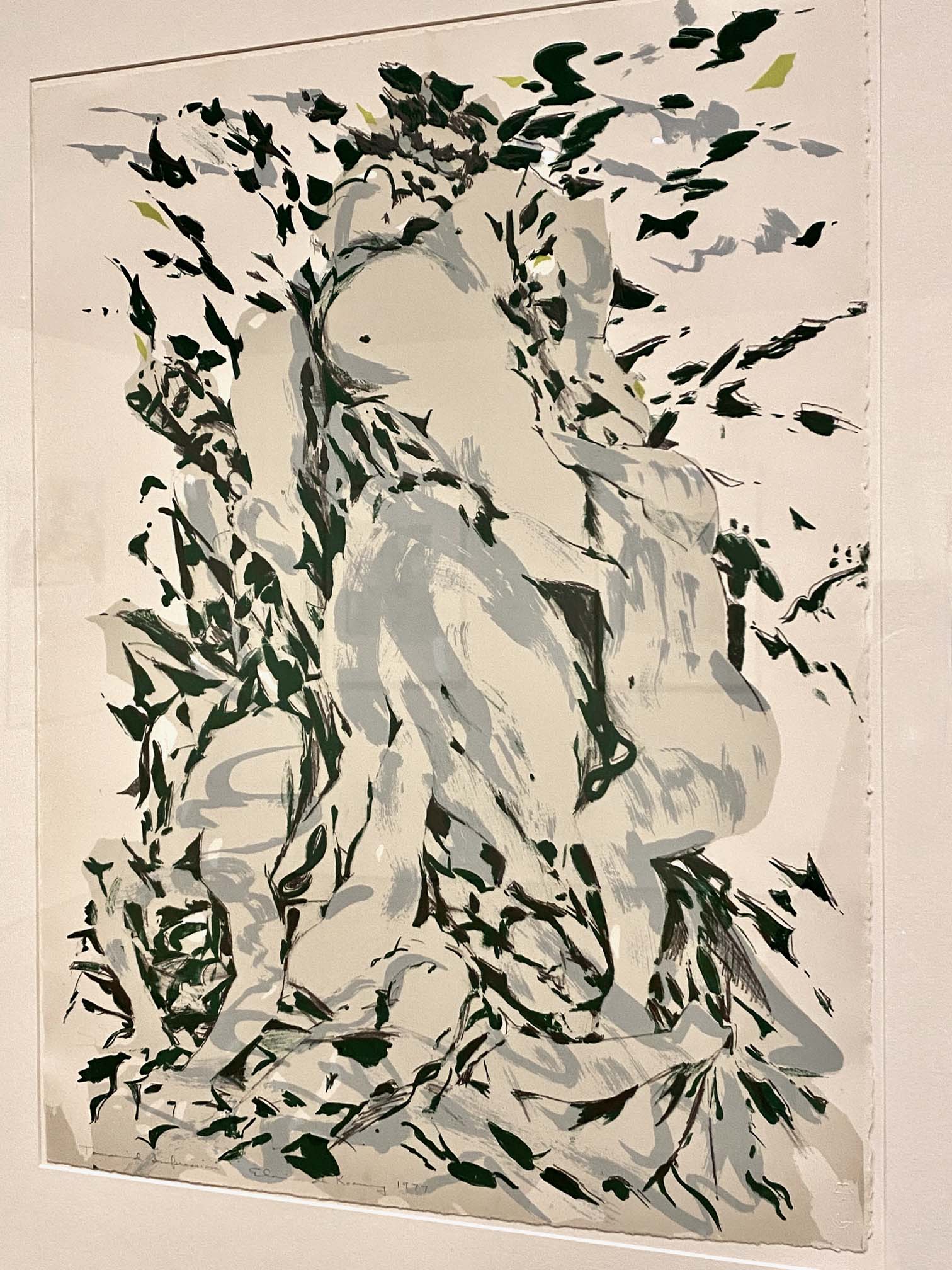
Elaine de Kooning’s 1977 lithograph Jardin de Luxembourg II; published by Tamarind Institute; collaborating printers John Sommers and Marlys Dietrick. Courtesy: Tamarind Archive Collection.
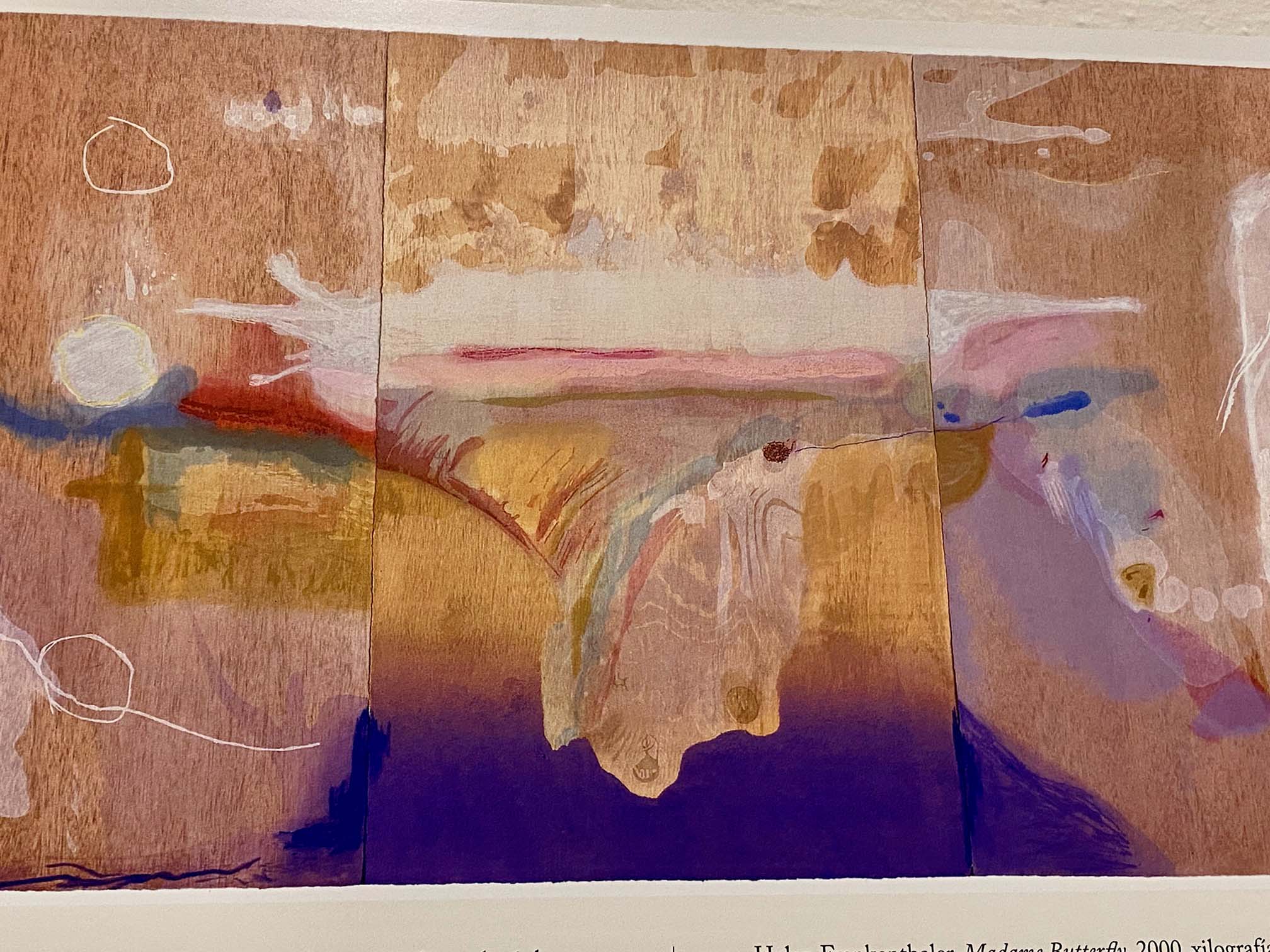
Photo of Frankenthaler’s 2000 woodcut Madame Butterfly made from 46 woodblocks; published by Tyler Graphics Ltd. Courtesy: Canberra’s National Gallery of Art.
Edward Olecksak’s 1972 photo of Helen Frankenthaler and Bill Goldston working on Venice II at ULAE in West Islip, New York. Courtesy: Frankenthaler Foundation Archives

Pelton & Jonson’s Transcendental Desert Art

Decending into the ground-floor gallery of the University of New Mexico Art Museum, visitors find themselves in a transcendental chamber, filled with abstraction, color, and spiritual emanations.

Pelton & Jonson: The Transcendent 1930s, on view in Albuquerque through March 15, features the work, letters, and personal photographs documenting the professional and personal friendship between two artists that wanted people to see realities beyond the visible world. Artists Raymond Jonson, former UNM professor, and Agnes Pelton, the visionary New York artist who relocated to the Western desert, felt they were kindred spirits, and the exhibition shows us why.

Agnes Pelton’s 1930 painting The Voice – suggesting enlightened dialogue within human consciousness.

As a young artist, Jonson was thunderstruck by the modern art he witnessed in the 1913 Armory Show when it came to Chicago (which included a painting by his future friend, Agnes Pelton from her “imaginative” period of work). Jonson read Kandinsky’s influential The Art of Spiritual Harmony when it was published in English in 1914, and increasingly pushed his work toward pure shape and design that could evoke a deeper response from the viewer.

By 1930, he and his wife moved to Santa Fe. He began teaching, curating shows, and continuing to pursue abstraction. When concepts were simply too much for a single canvas, he conceived a triptych.

Raymond Jonson’s 1930 tryptich – Time Cycle: Morning, Noon, and Night

Around 1931, new-age/Jungian composer, author, and painter Dane Rudhyar told Jonson about Pelton’s abstractions, and put them in touch.  For the next 30 years, Jonson and Pelton corresponded about art making, materials, abstraction, and spiritual connections.

By this time, Pelton had had 14 solo exhibitions and been in 20 group shows. Her interest in spiritual practices kept growing, and the lure of the new-age communities in southern California beckoned her. During a 1932 yoga-retreat trip to Cathedral City, she decided to stay put and paint in the peaceful desert for the rest of her life

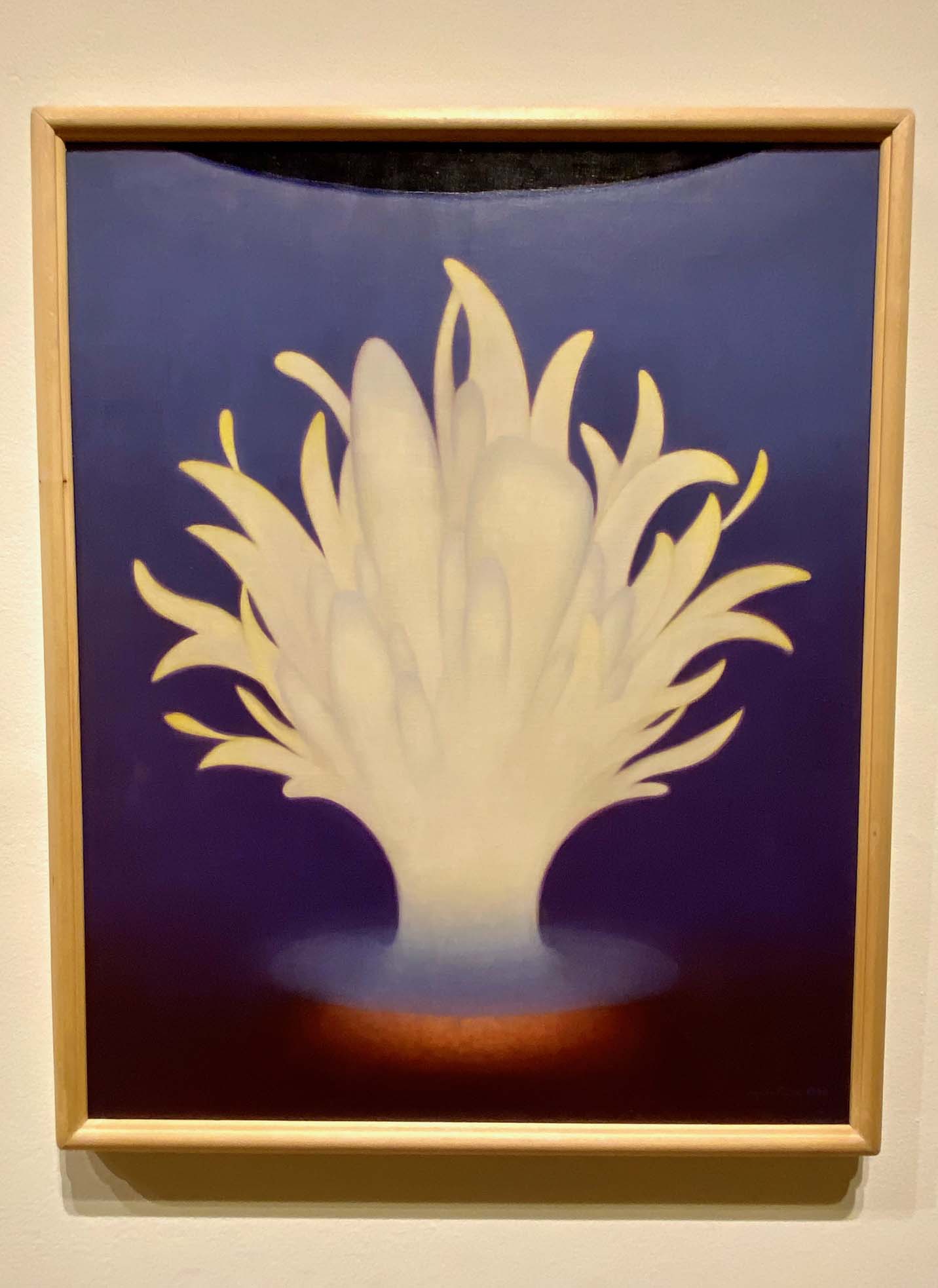
Pelton’s 1930 White Fire – showing light radiating from the inner self – from Jonson’s 1933 exhibition
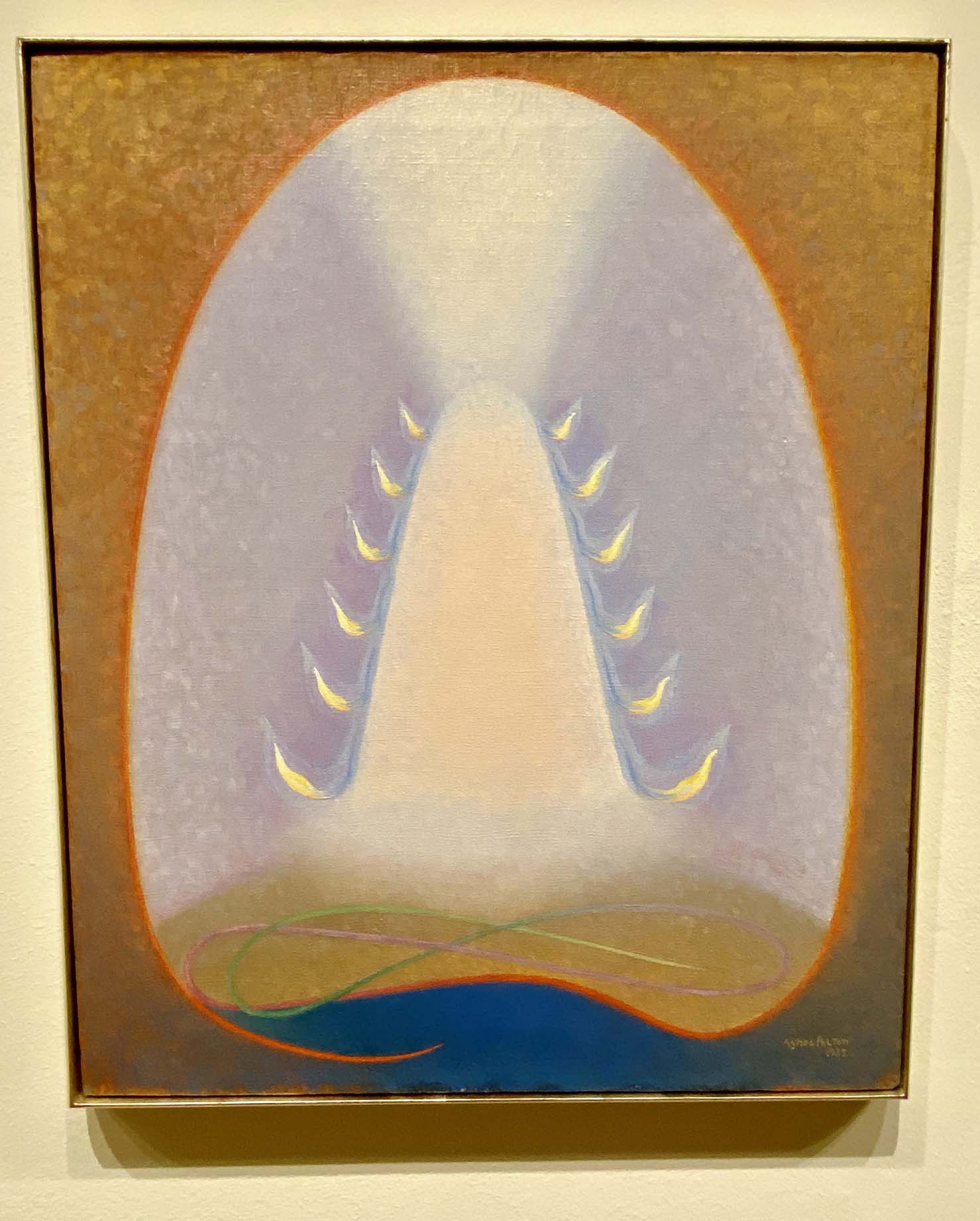
Pelton’s 1932 Mount of Flame – symbolizing the beauty in the abstract – from Jonson’s 1933 exhibition.

In 1933, Jonson invited Pelton to participate in a Santa Fe exhibition alongside himself and Cady Wells. This current exhibition at UNM commemorates this convergence by reuniting some of the original works by Pelton, Wells, and Jonson.  See some of the pieces in our Flickr album.

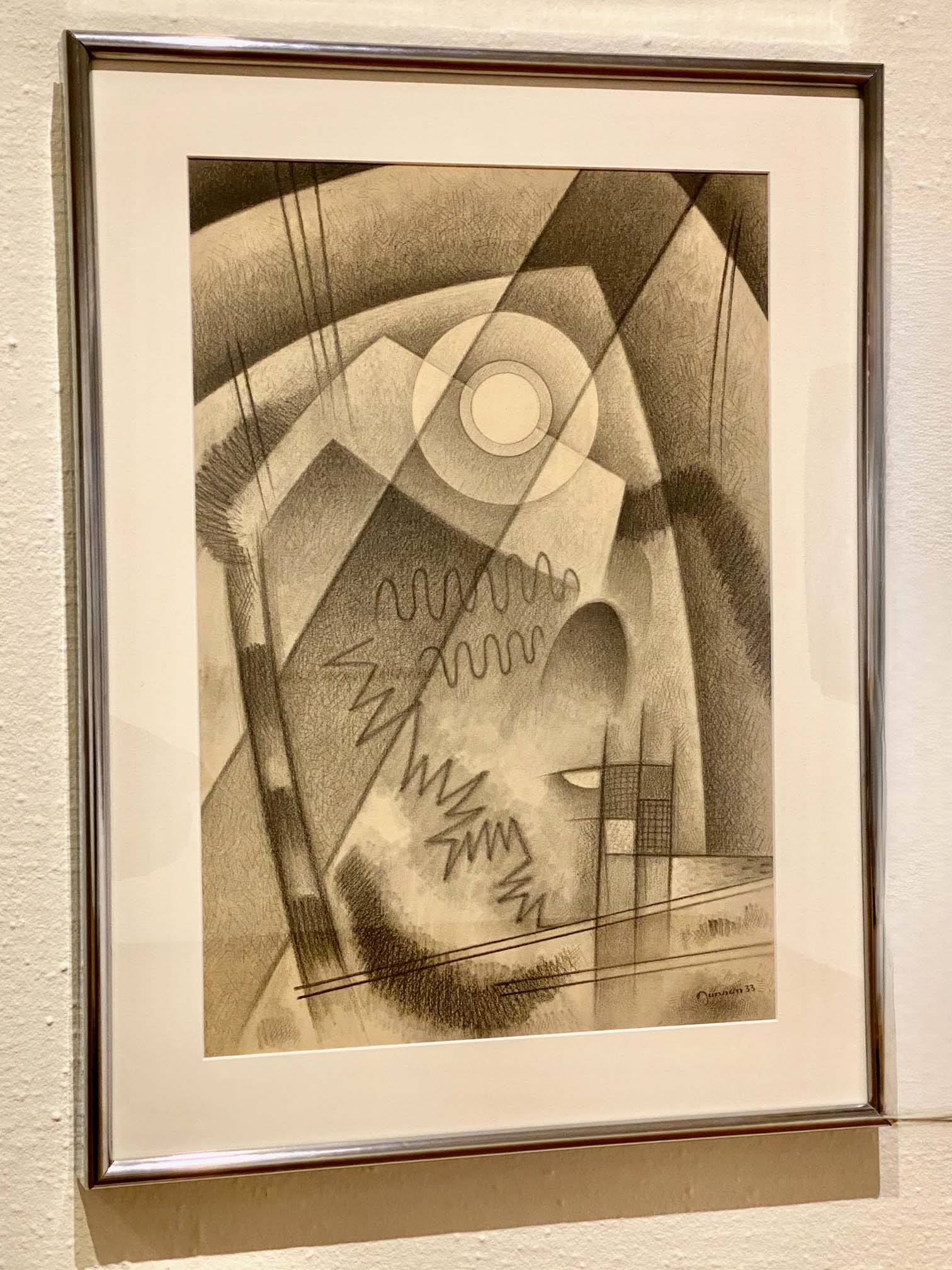
From the 1933 exhibition: Jonson’s 1933 charcoal drawing Ascending Circle

Jonson and his wife took a road trip to visit Pelton in 1935 – their one and only meeting. Although they were at a distance, the letters kept coming, and when Jonson and others in New Mexico organized the Transcendental Painting Group in 1938, she was invited to participate and serve as the grand dame/president.

In recent years, Agnes Pelton’s work has been resurgent due to the traveling exhibition organized in 2019 by the Phoenix Art Museum, which traveled to the Whitney in 2020. Read our review here.

To hear how this Albuquerque exhibition came together, listen in on Christian Waguespack’s interview with curator Mary Statzer:

UNM is lucky to have over 600 works by Raymond Jonson in its collection, and all the letters, sketches, publications, and journals he kept. For more on Raymond Jonson’s life and work, visit his portal on the UNM website.

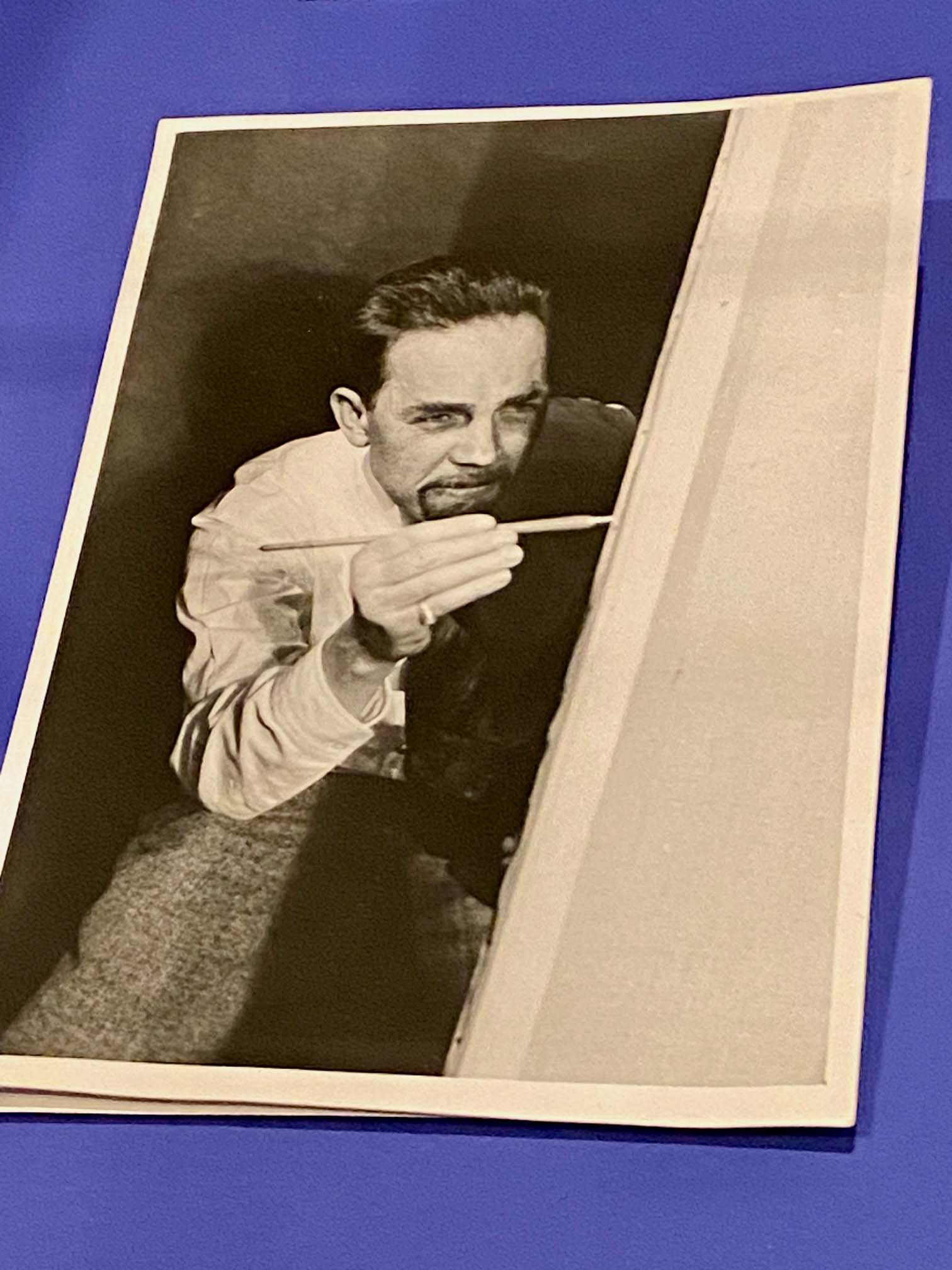
Jonson touching up work at his solo exhibition in Tulsa in a 1937 photo by F. Von James.
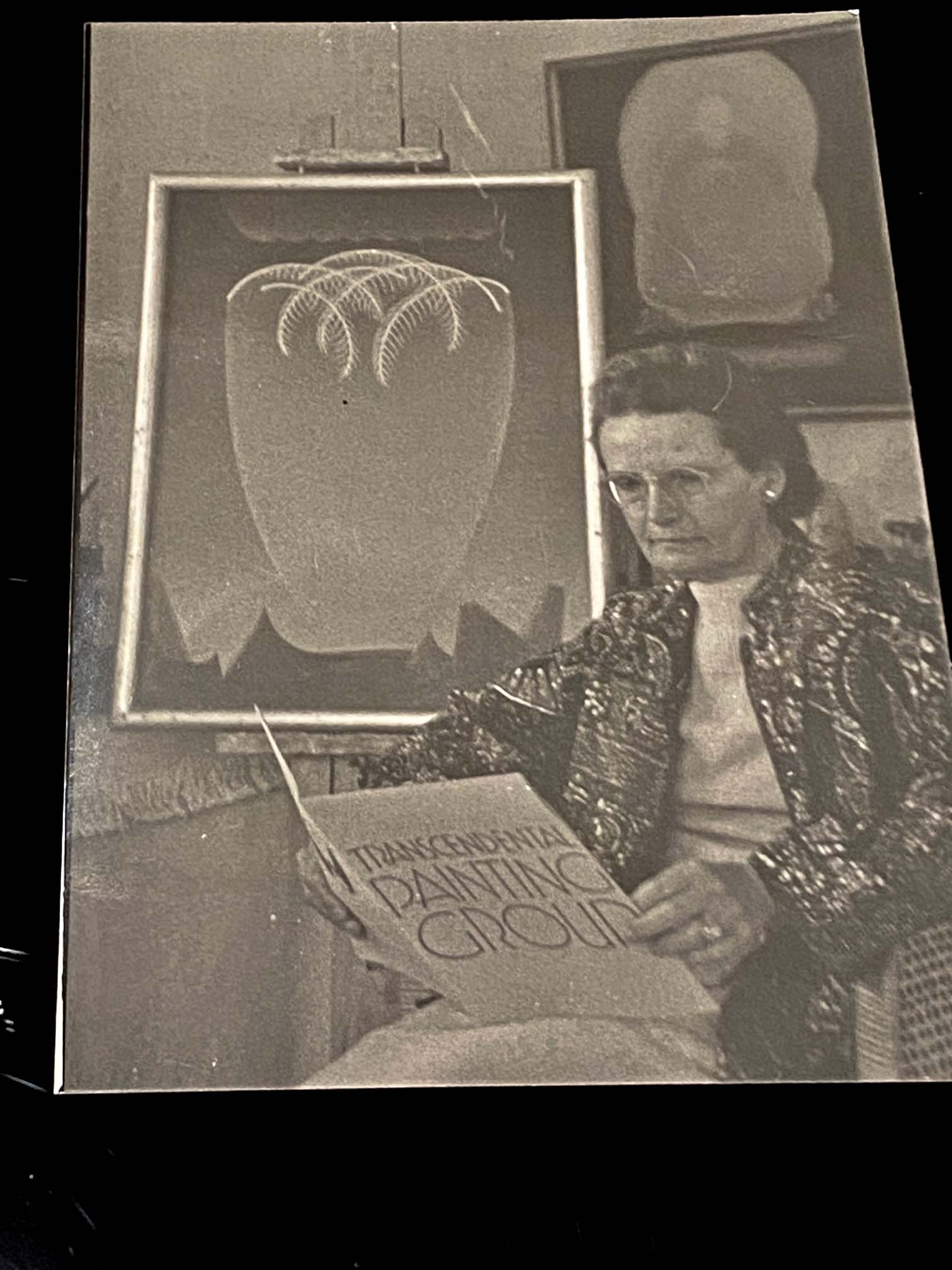
1935-1940 photo of Pelton reading the TPG brochure in her Cathedral City studio with Mount of Flame behind her.