Man Ray at The Met

After Man Ray saw European Cubism at the 1913 Armory Show, he knew what he had to do in his own art – abandon all of the constraints of contemporary American art and dive headfirst into Dada and push the boundaries – go rogue.  

Some say that Man Ray became America’s most important 20th century artist. Marcel Duchamp – who became one of Man Ray’s best friends and collaborators – would certainly agree. All the evidence for Man Ray’s status is right here in the Met’s survey of Man Ray’s formative years (1914-1929), Man Ray: When Objects Dream on view through February 1, 2026.

Man Ray’s 1930 Self-Portrait with Camera – a solarized portrait. Courtesy: The Jewish Museum.

Walking in, you look through the exhibition’s architectural aperture to an endless array of Man Ray’s famed rayographs – dreamy abstract black-and-white cameraless images – lining parallel black gallery walls. Nearly sixty have been gathered for this occasion from international public and private collections.

See our favorite works in the exhibition in our Flickr album.
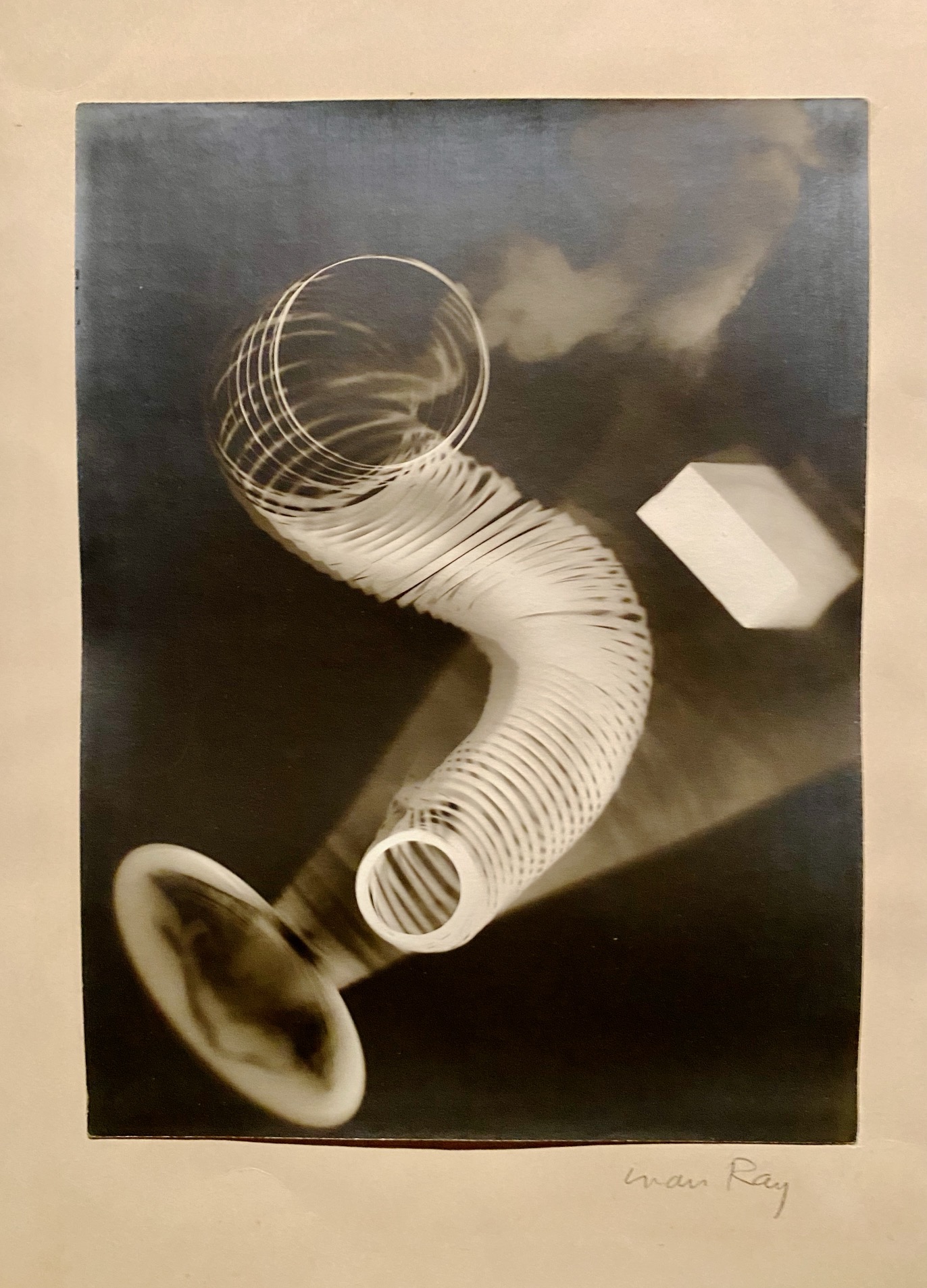
Man Ray’s 1922 Rayograph published in Les Fuilles Libres (Loose Pages) magazine – a coiled wire puffing smoke emerges from a glass.  Courtesy: private collection.
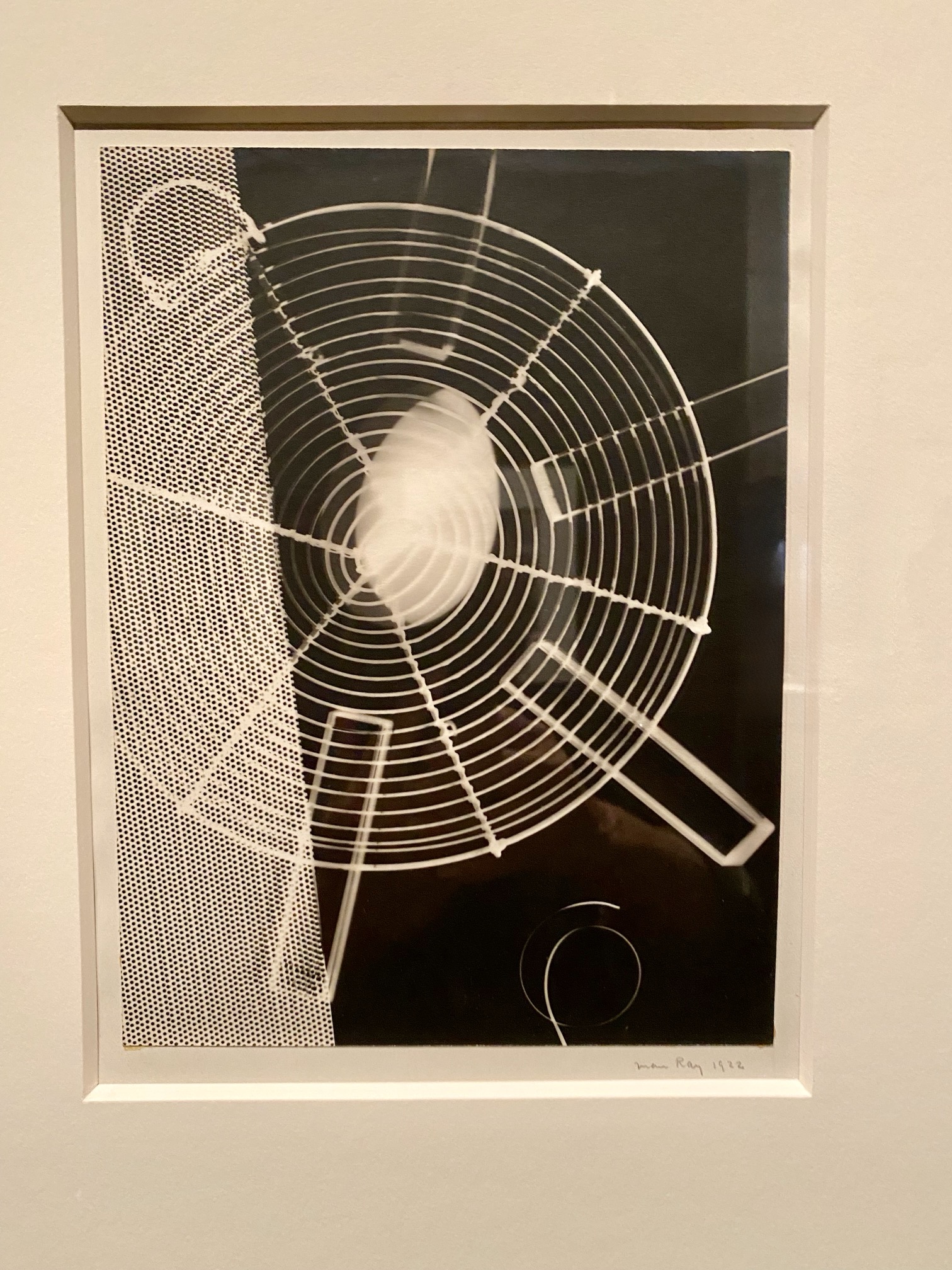
Man Ray’s 1922 gelatin silver print Rayograph incorporating an everyday wire rack for dramatic effect.  Courtesy: Yale University Art Gallery.

Although the rayographs form the core of this show, you also see the oil paintings, airbrush drawings, sculptures, movies, and game boards – works that are rarely seen, but illustrate why Man Ray rapidly took center-stage in the modern avant-garde community.

While working as a commercial artist and photographer, he used his free time to make unconventional, revolutionary works that banished representation. In 1916, he wrote a “new art” treatise on how to condense motion and dynamic shapes into two dimensions.
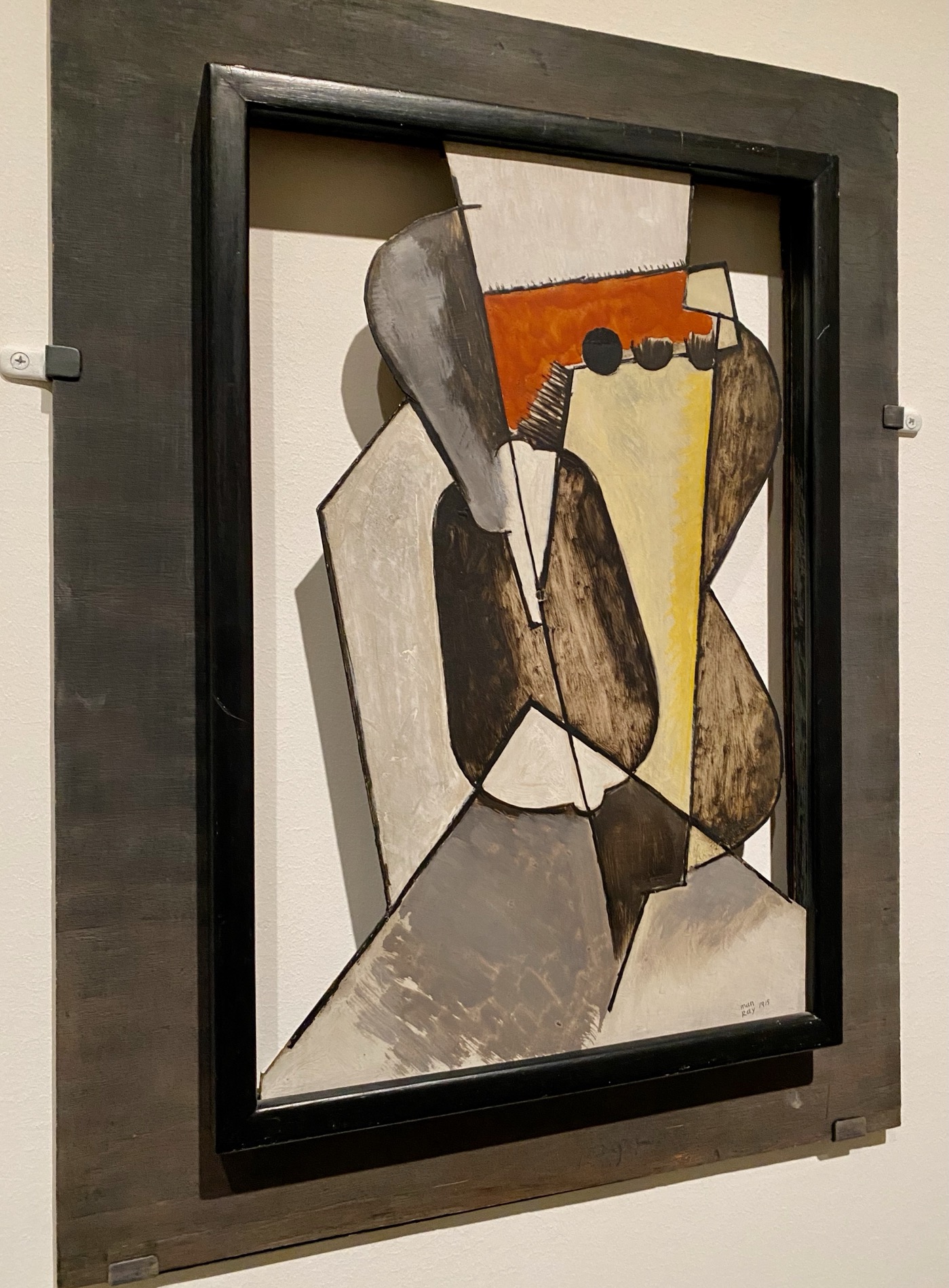
Man Ray’s 1915 oil on board Cut-Out from his first solo show in New York in 1919 – representing three dimensions within two.
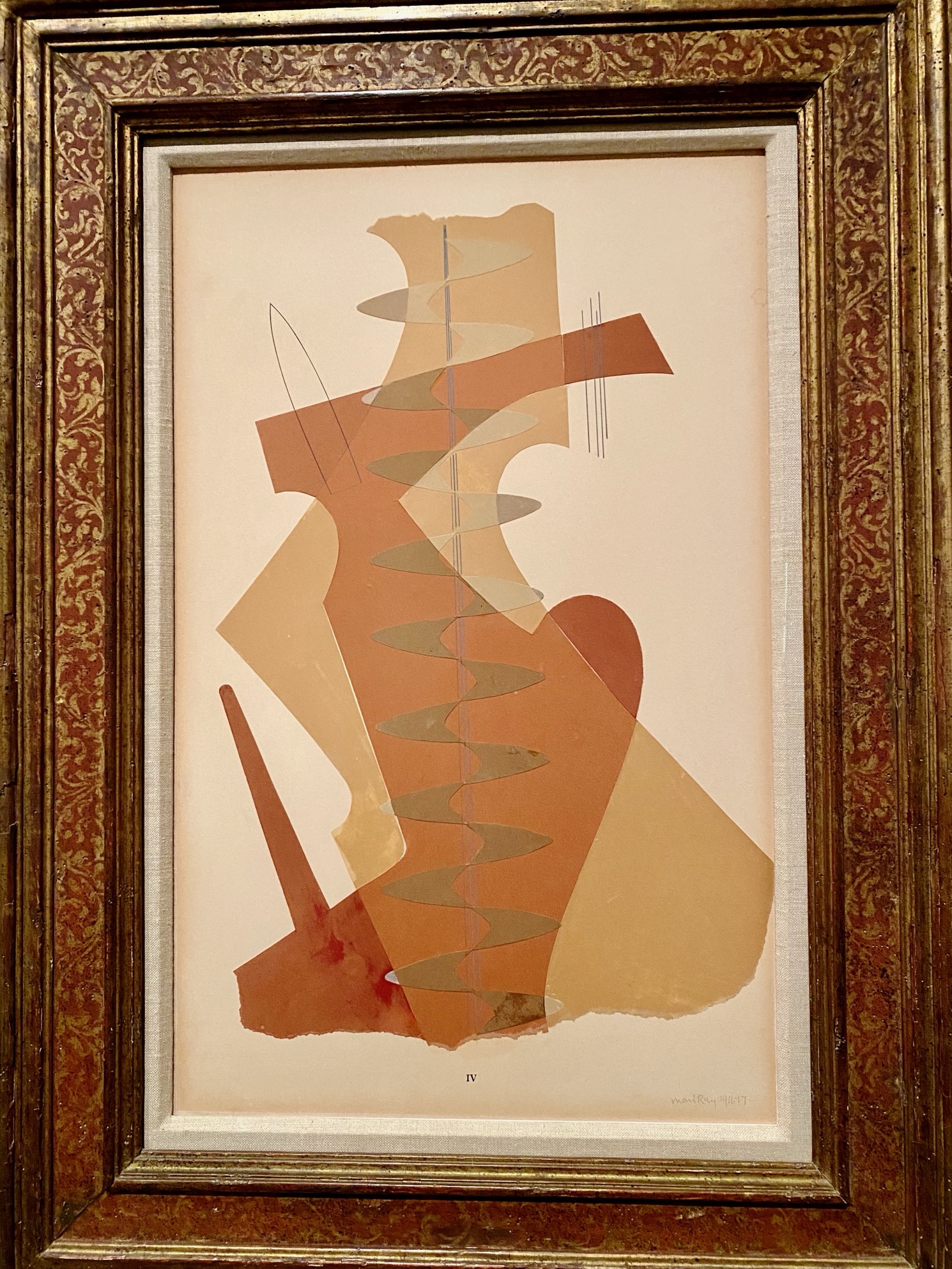
Man Ray’s 1916-1917 collage and pen-ink drawing The Meeting. Courtesy: The Whitney Museum of American Art.

By 1917, he was making large-scale works, portraying a Rope Dancer mid-performance with stencils, cut-up pieces of colored paper, and big colored spaces representing her shadows.
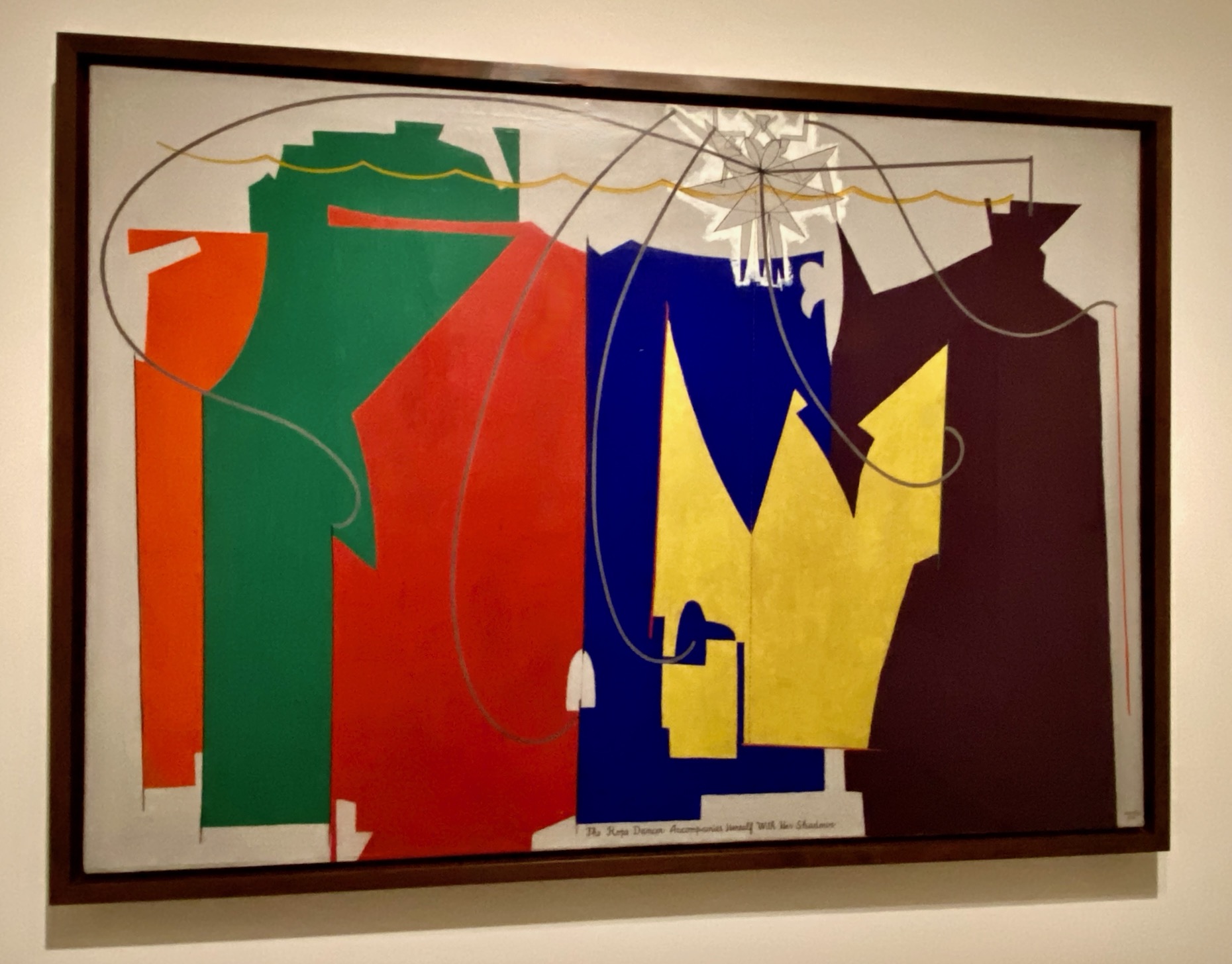
Man Ray’s 1916 oil painting The Rope Dancer Accompanies Herself with Her Shadows planned with cut paper. Courtesy: MoMA

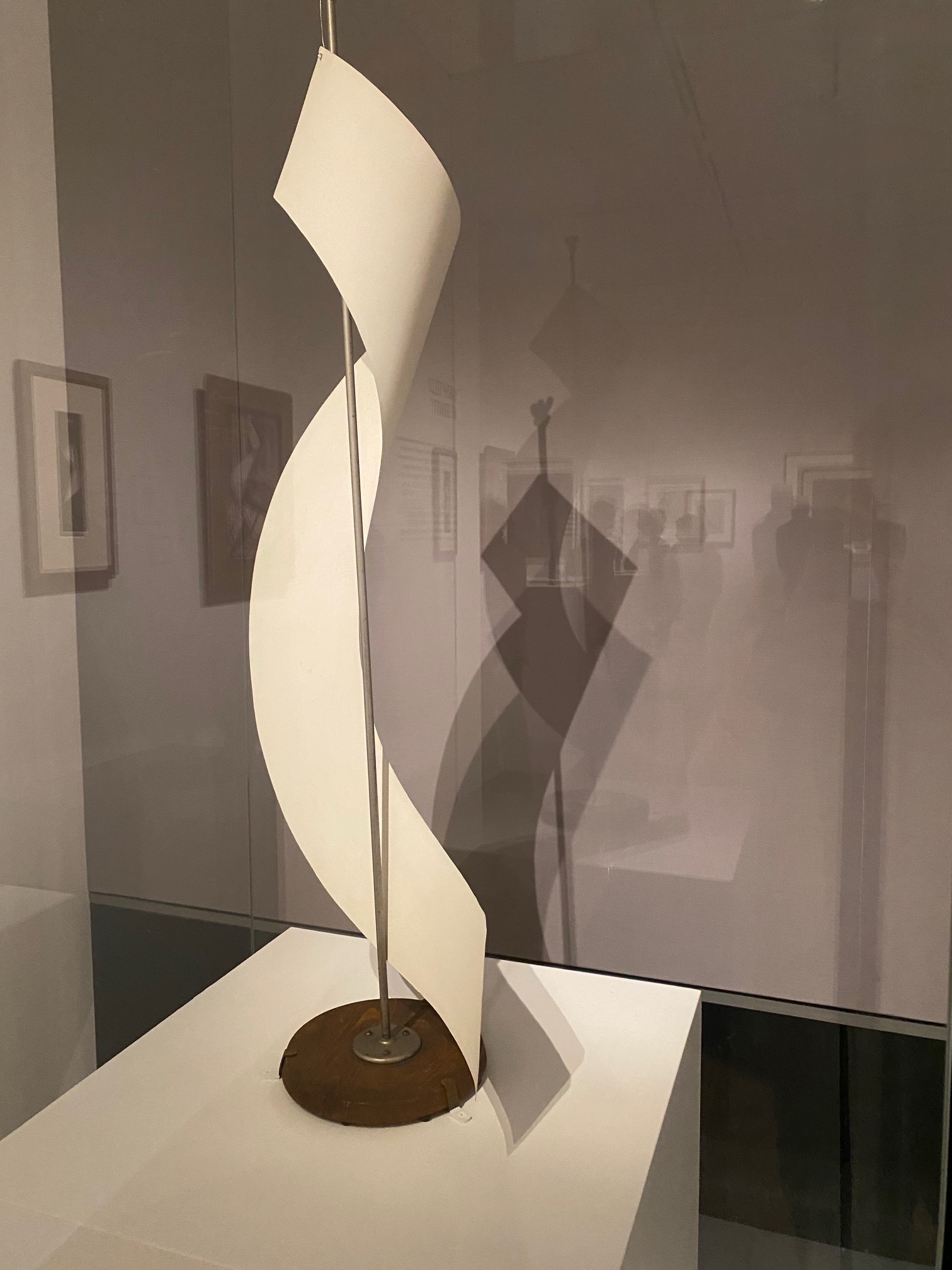
His sculptures were made in true anarchist-Dada fashion – from junk found on the street or in his apartment-building trash can. In one gallery, a precarious grouping of dramatically lit wooden hangars is installed overhead like a chandelier. The cast shadows look pretty good, too.  His spiraling Lampshade, a sensuously curved metal sculpture is nearby, alongside paintings and avant-garde portraits where he repurposed the great shape.
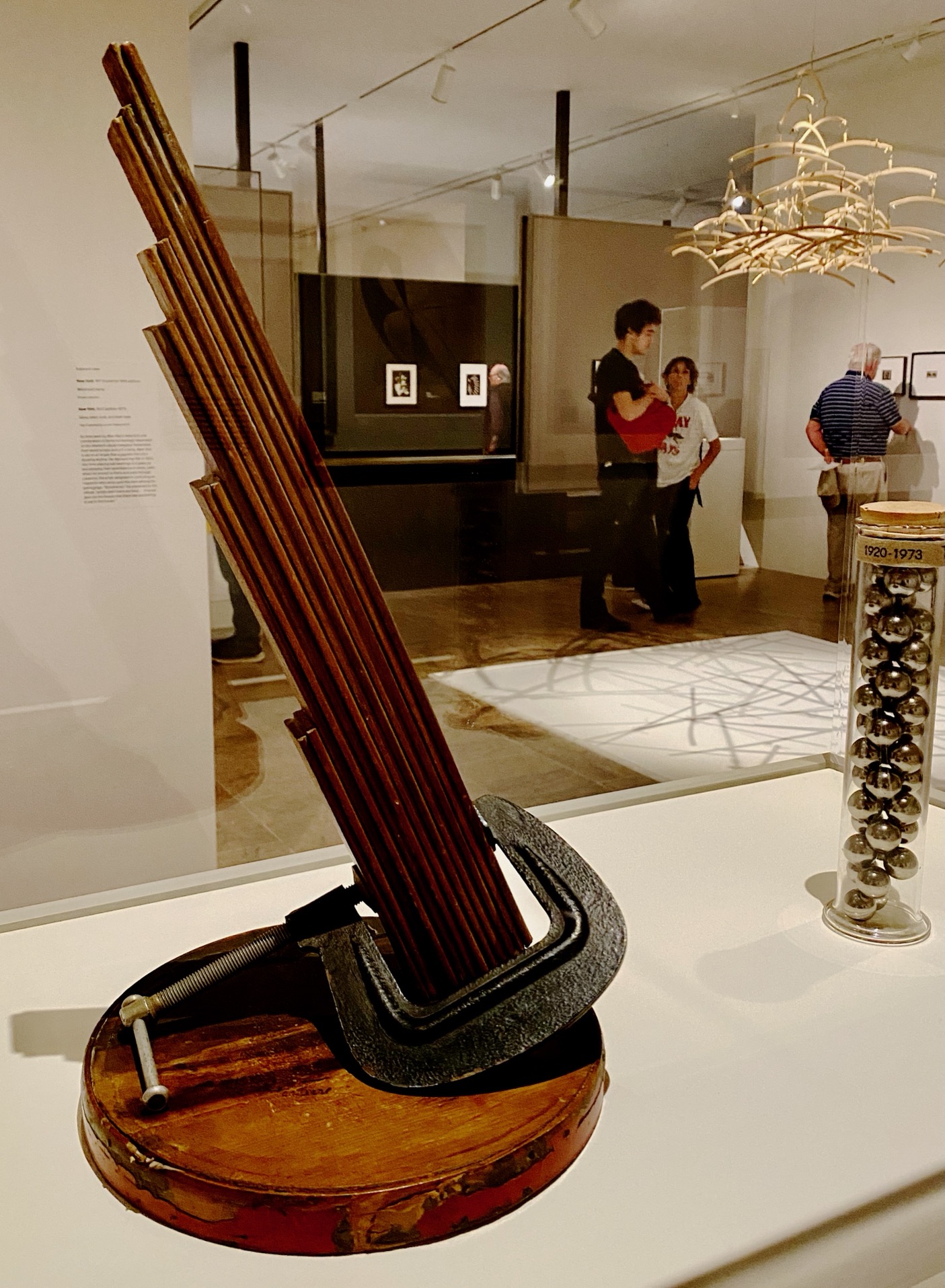
Man Ray’s 1917 wood and clamp sculpture New York like a tilted skyscraper; at right, 1920 sculpture New York – a mysterious stack of ball bearings in a glass container. Courtesy: private collection; Tate.
Man Ray’s 1921 Lampshade – a dynamic painted tin and metal sculpture; inspired by a paper lampshade found in the trash a year earlier. Courtesy: Yale University Art Gallery.

He even made game boards and chess sets to symbolize his philosophy about the best way to make art – spur-of-the-moment imagination, abstract planning, clear intention, and an element of surprise.
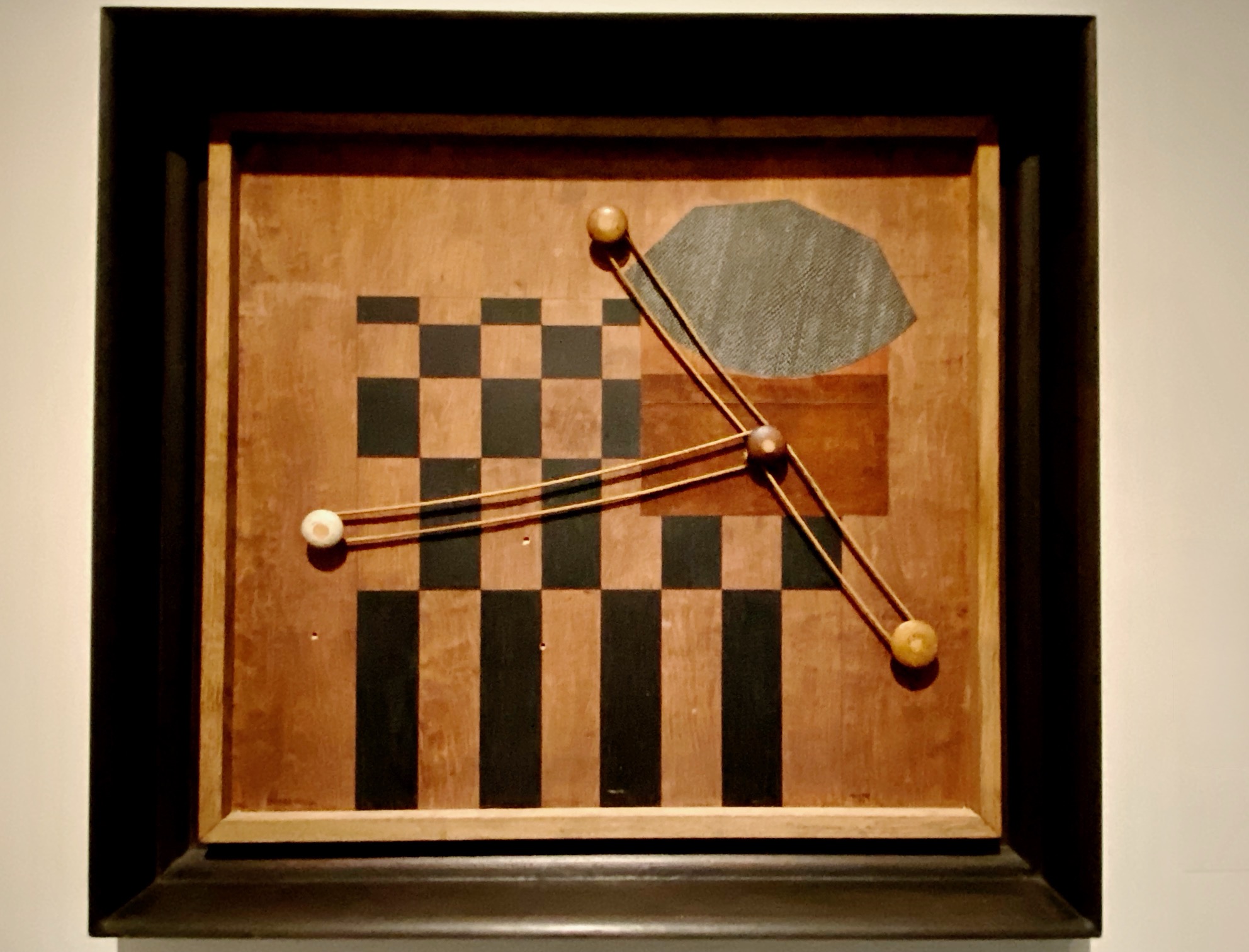
The philosophy of the chessboard: Man Ray’s 1917 Boardwalk – an assemblage of oil, furniture knobs, and yarn on wood. Courtesy: Staatsgalerie Stuttgart.

For Man Ray’s fine-art photographs, he preferred using inanimate, everyday objects to humans. And as he progressed as an artist, he didn’t use a camera.  In 1917, he started making glass-plate prints (cliché-verre) with sinuous, patterned line drawings. Soon, he was innovating with Aerographs – abstract pencil-and-airbrush drawings inspired by new technology (“drawing in air”).
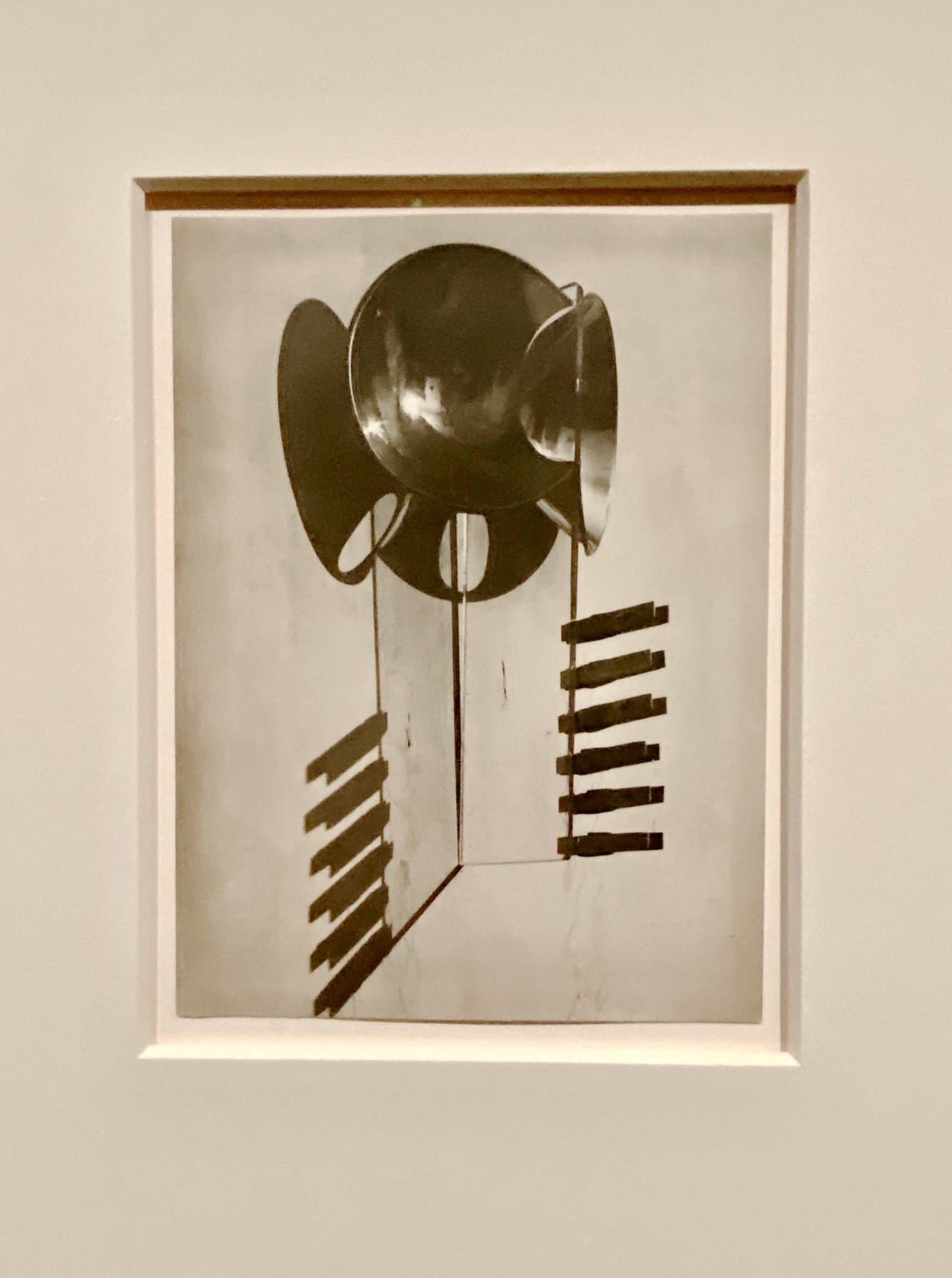
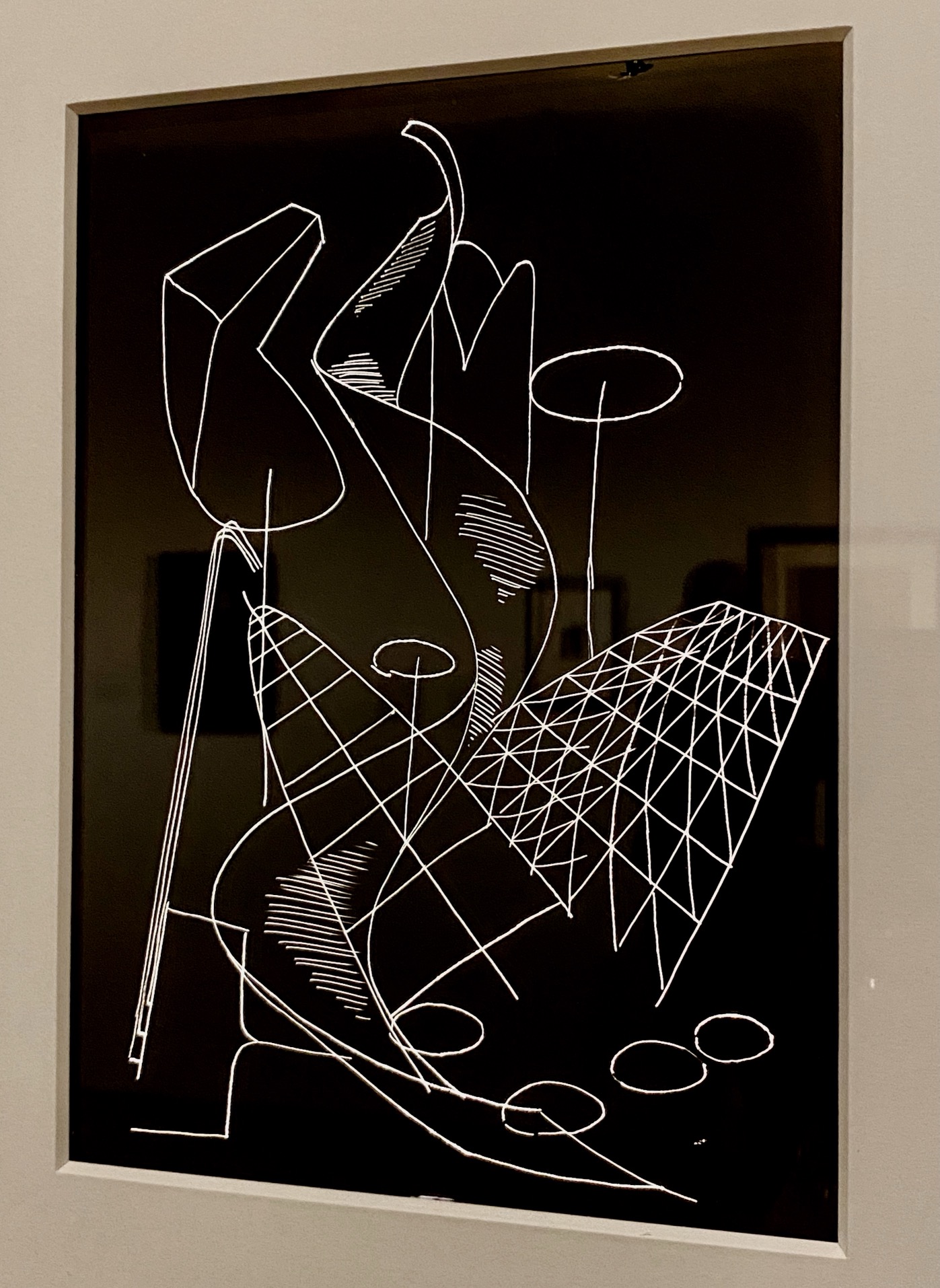
Man Ray’s 1918-1920 gelatin silver print “Integration of Shadows” – an assemblage of clothespins, glass, and reflectors; printed after 1935. Courtesy: private collection.
Before the rayograph: Man Ray’s 1917 untitled glass-plate negative (cliché-verre). Courtesy: Centre Pompidou, Paris

Man Ray primarily spent his time in Paris during the 1920s. Once he began making rayographs in his studio, he was content playing with unusual juxtapositions of everyday objects, studio lights, and various types of photographic exposures. It’s reported that in 1922, he created over 100 rayographs and abandoned painting altogether. (But he took it up again the next year!)

The curators make a point of juxtaposing several rarely-seen paintings with specific rayograms from the same period to make a point – the artist might have returned to experimental paintings as a compliment to some of the shapes and feelings he was exploring through photography.
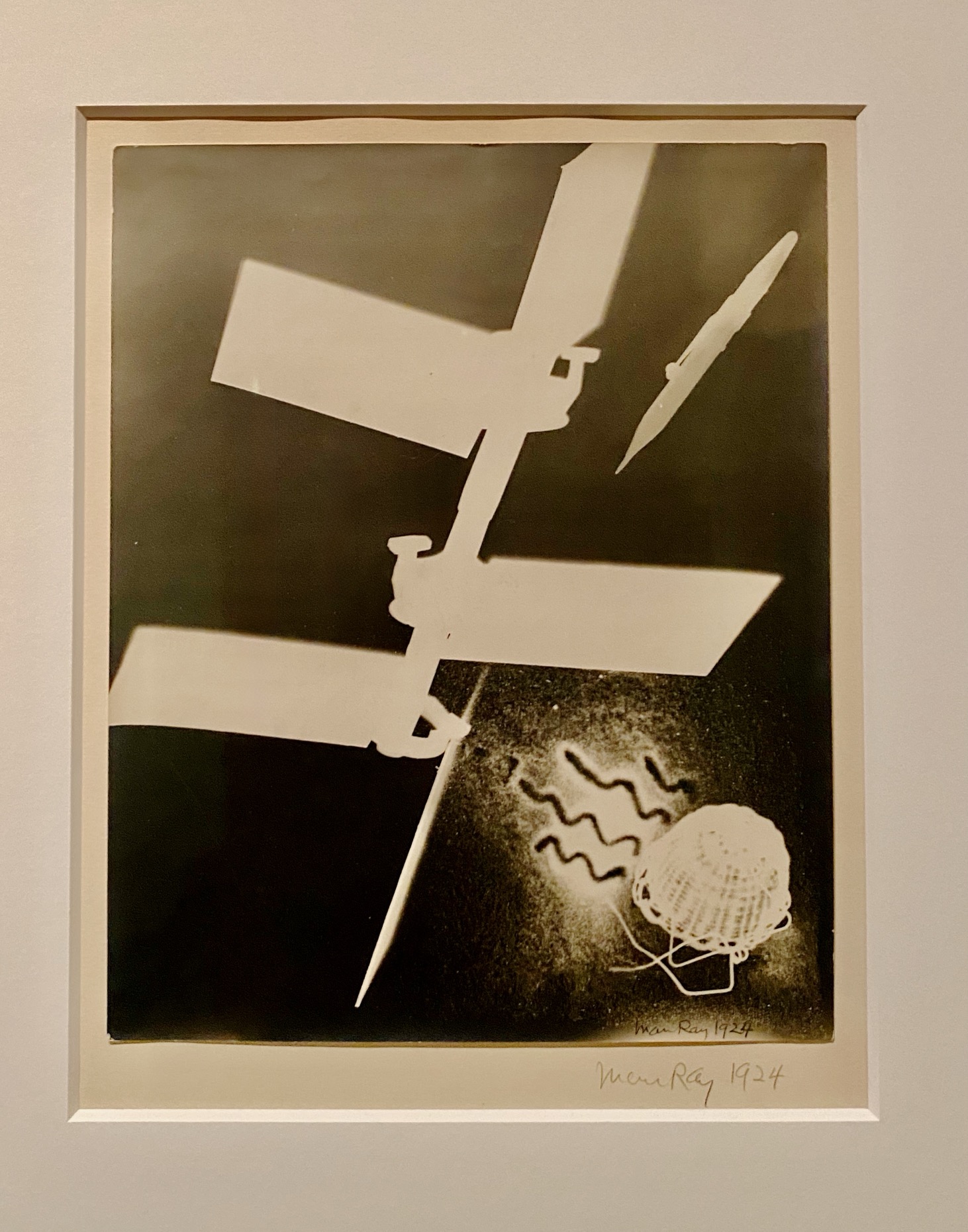
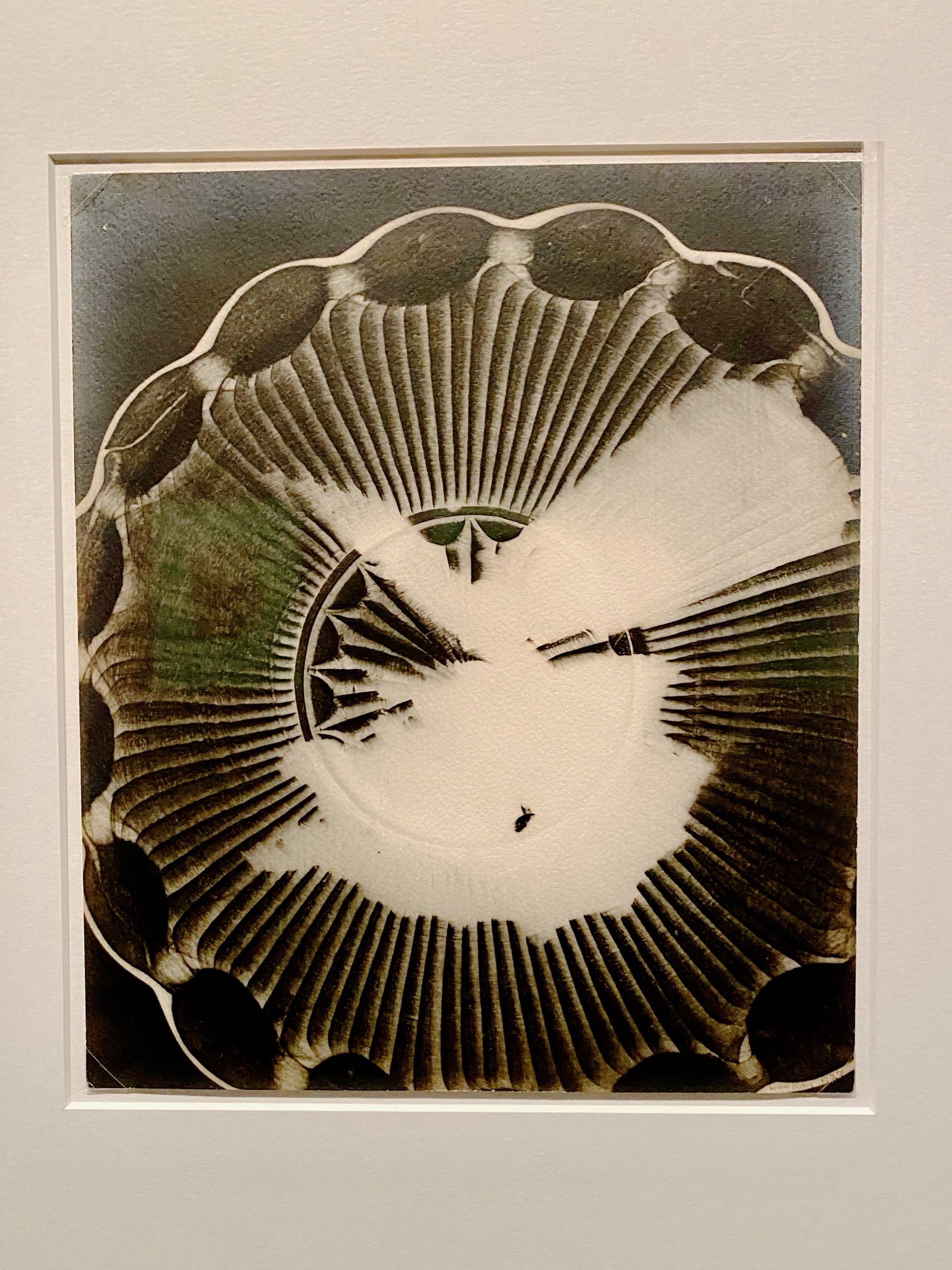
Man Ray’s 1924 gelatin silver print “Rayograph.”  Courtesy: Whitney Museum of American Art.
Man Ray’s 1927 gelatin silver print Rayograph – an experimental exploration of printing his images on textured paper.  Courtesy: private collection.

His unusual, dream-like images were eagerly applauded by the inner circle of European poets and artists who would soon be the official founders of Surrealism. They were intrigued by dreams, psychoanalysis, inner worlds, and startling juxtapositions. In fact, the title of the Met’s show comes a phrase written by Man Ray’s fan, poet Tristan Tzara – “when objects dream” refers to Man Ray’s mesmerizing work.

Man Ray’s ability to make magic with the camera – distorted images, adding surprising symbols, and creating tableaux of otherworldly floating objects – only added to the  enthusiasm for his work.
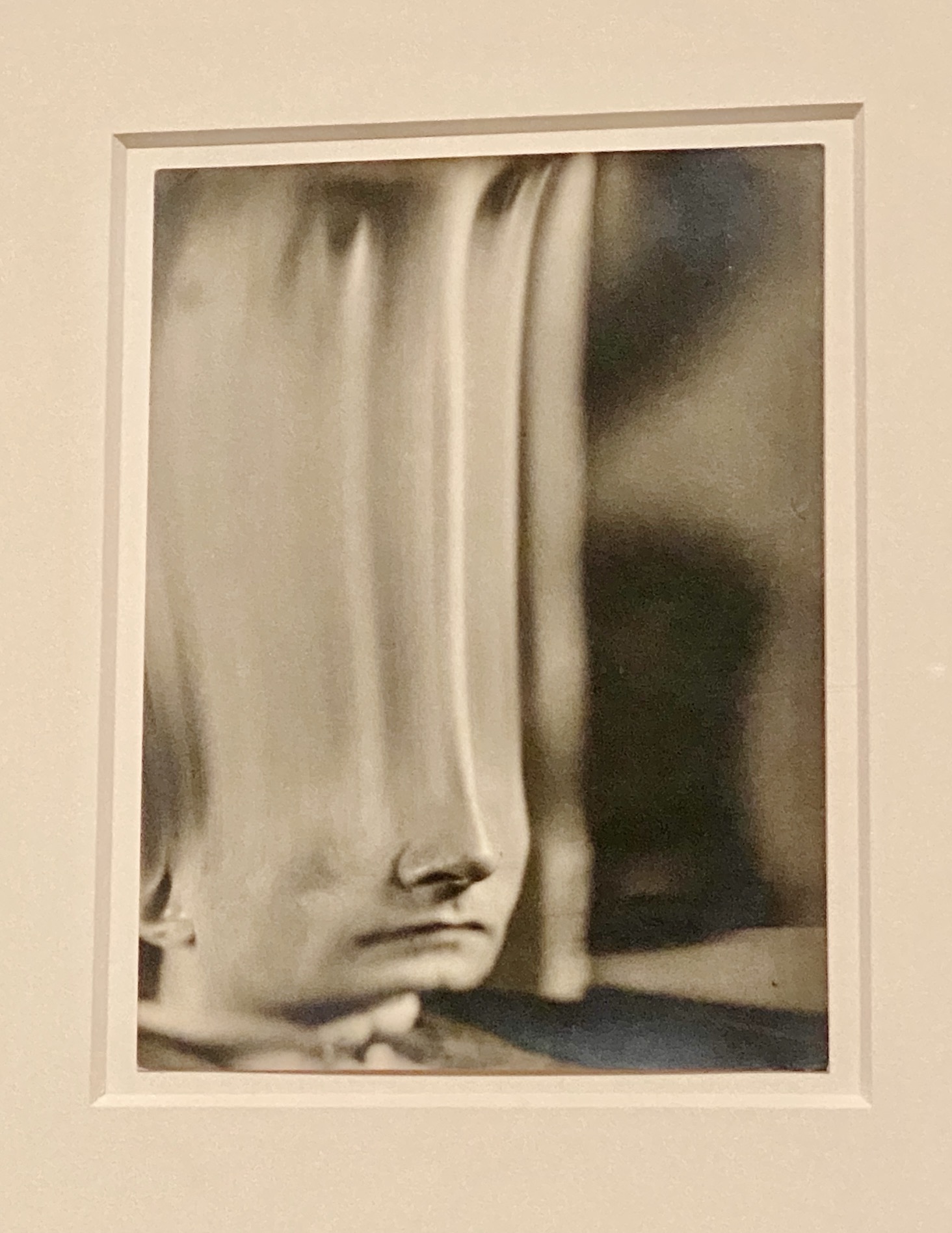
Man Ray’s 1925-1928 gelatin silver print Marcel Duchamp. Courtesy: private collection.
Man Ray’s 1924 gelatin silver print Le Violon d’Ingres featuring performer Kiki de Montparnasse – published in the proto-Surrealist journal Littérature.

The exhibition concludes with Man Ray’s beautiful solarized prints (a technique co-invented with model/photographer Lee Miller), symbolic paintings, and photographs that have become icons of Surrealism.

Hear the curators talk about the exhibition as they walk through this beautiful, inspiring show:

Take a look through all of the artwork in the exhibition here on the Met’s website. For more on Man Ray’s life and collaborations, listen to a longer Met telecast about his 1920s work with Lee Miller, Kiki de Montparnasse, and Berenice Abbott here.
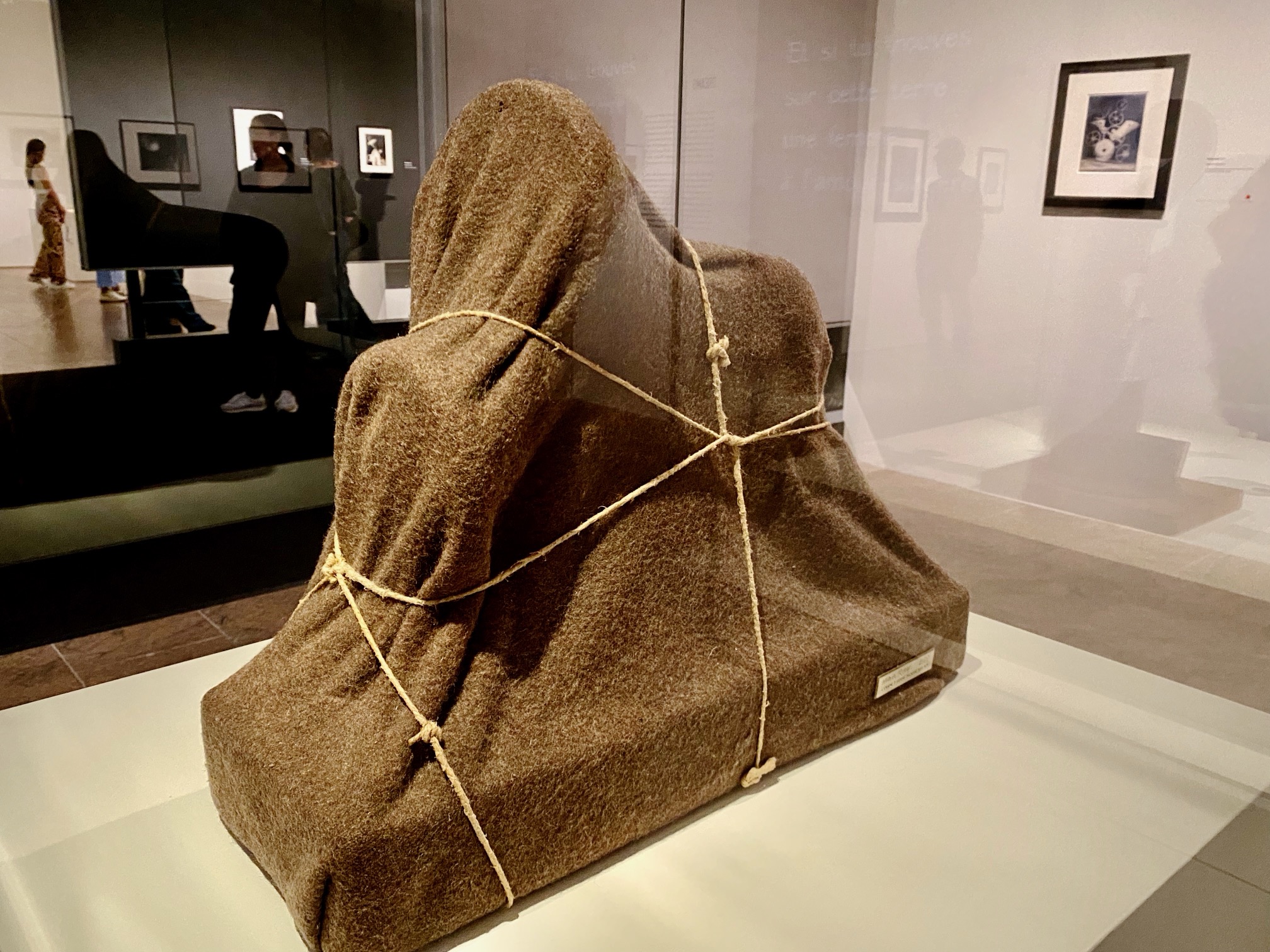
Man Ray’s 1920 sculpture L’enigme d’Isidore Ducasse (The Enigma of Isidore Ducasse) a mysterious wood, iron, wool, and rope assemblage to stir the subconscious (1971 edition). Courtesy: private collection.

Sixties Surreal at The Whitney

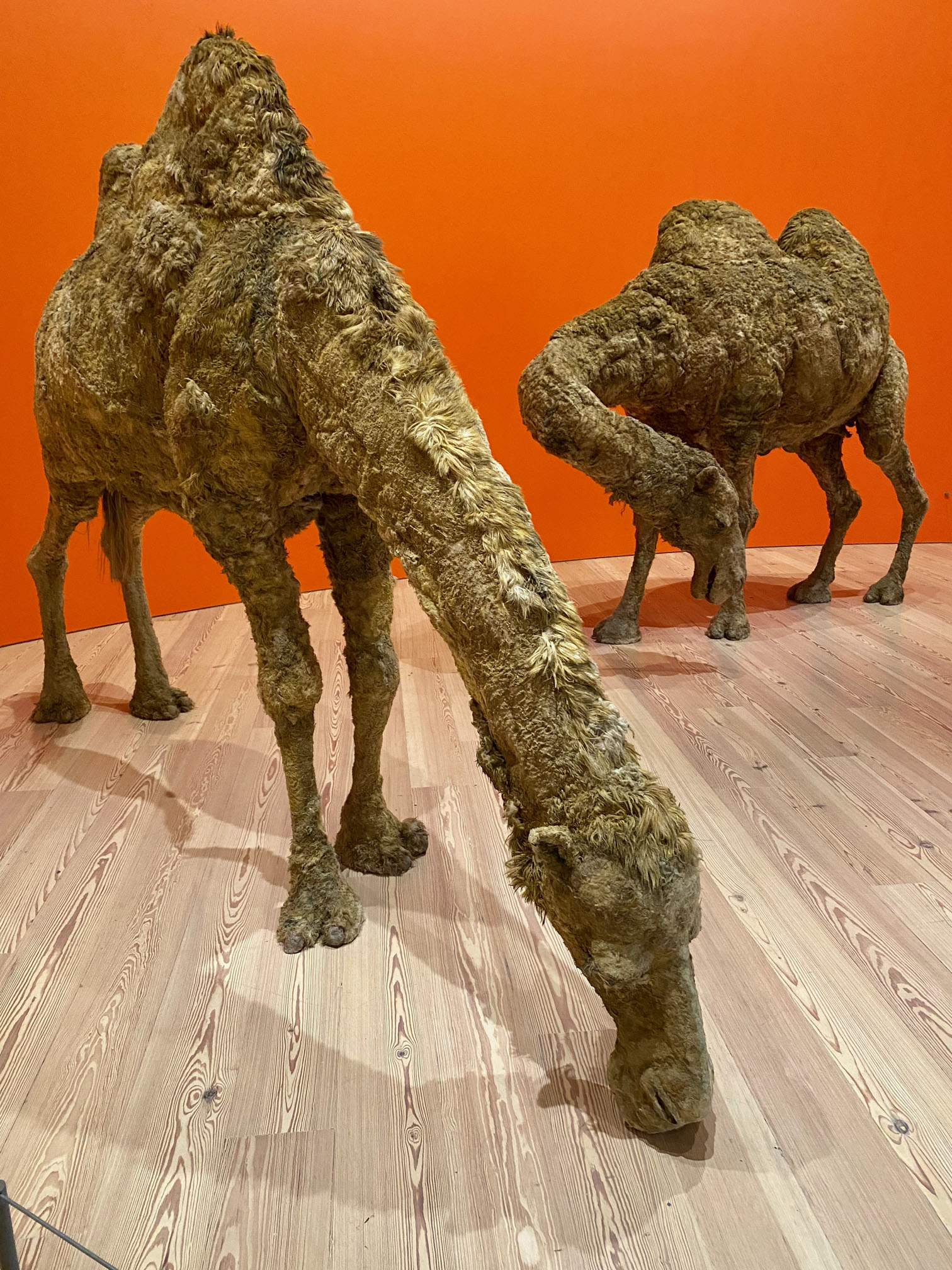
After more than 55 years, the camel herd is back at the Whitney. When they first appeared in 1969, the dromedaries were a media sensation. Who could resist the delight of seeing the life-sized camel sculptures by 28-year-old science nerd Nancy Graves nonchalantly going about their business in the pristine, white Breuer building?

At the new Whitney, the camels are welcoming everyone to Sixties Surreal – a superb exhibition (on view through January 19, 2026) that pulls out an array of engaging, cheeky work from that tumultuous decade. The show presents work by over 100 artists who chose to remain on the fringes of the big-time art world, creating pieces that poke at the Establishment, consumer culture, and social norms.

Strange, surrealistic 1968-1969 mixed-media, life-sized Camel sculptures by Nancy Graves; initially shown in her solo 1969 Whitney show. Courtesy: National Gallery of Canada, Ottawa.

The Whitney makes the case that American artists of the Sixties were not echoing the themes of European Surrealism (dreams, subconscious desires); but they did adapt a few of that group’s visual techniques to reflect and critique what was happening in America in off-center, slightly surreal ways.

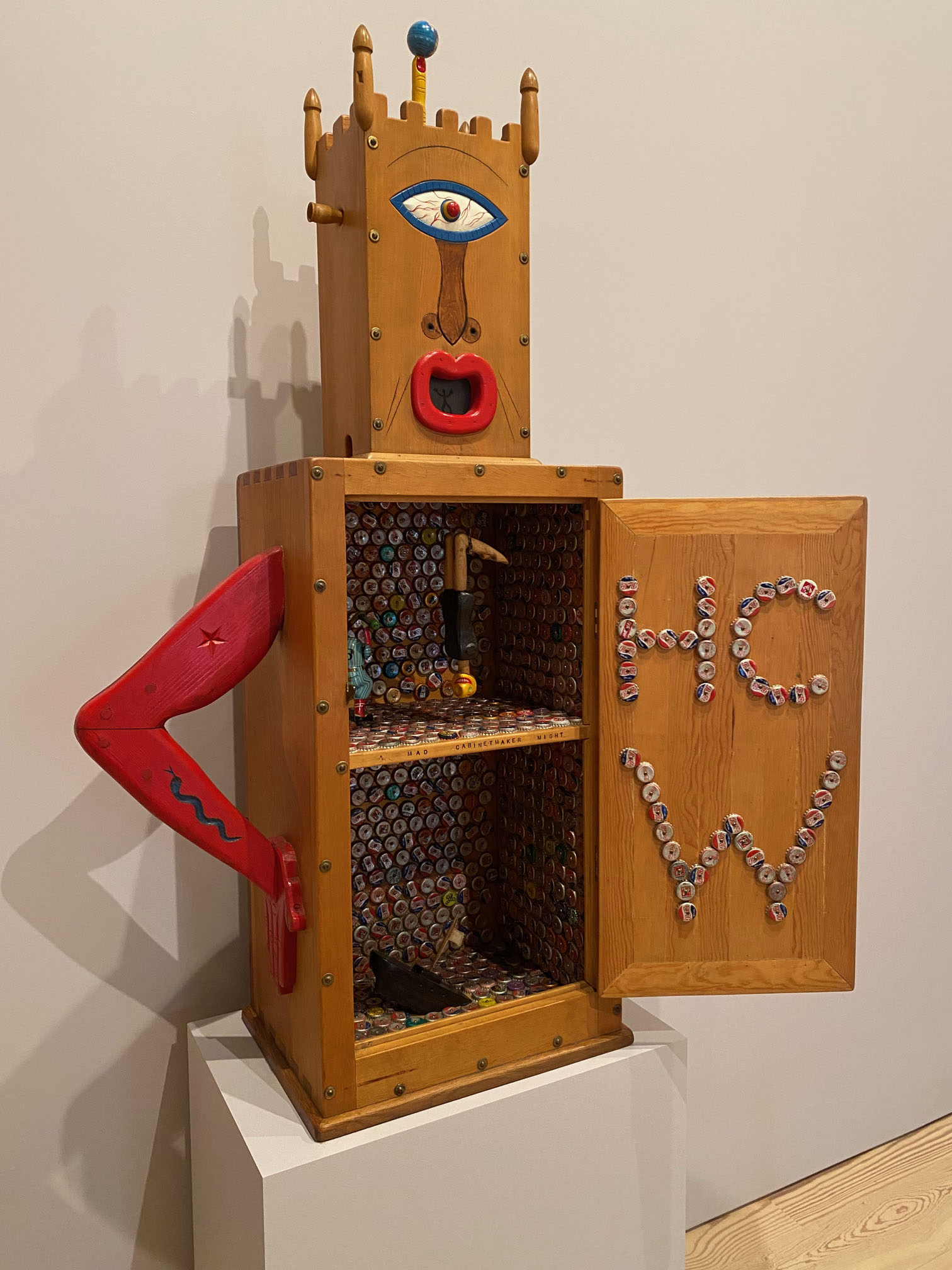
H.C. Westerman’s 1958 Memorial to the Idea of Man If He Was an Idea – a finely crafted “person” with an extremely complicated interior of bottle caps, toys, glass, metal, etc. Courtesy: Museum of Contemporary Art Chicago.
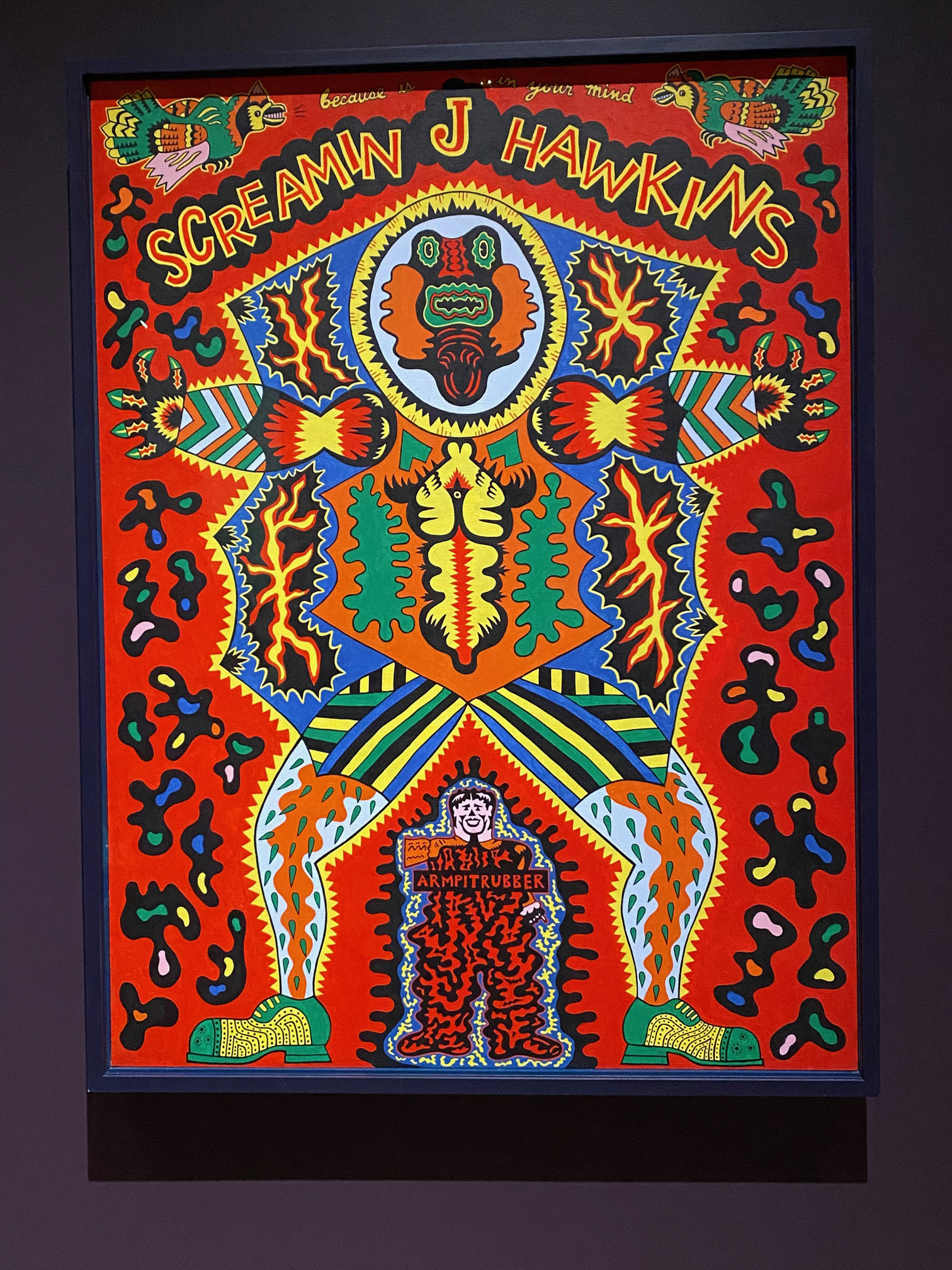
Karl Wirsum’s 1968 acrylic Screamin’ Jay Hawkins – a surreal, high-octane album cover painting for an early-rock icon. Courtesy: Art Institute of Chicago.

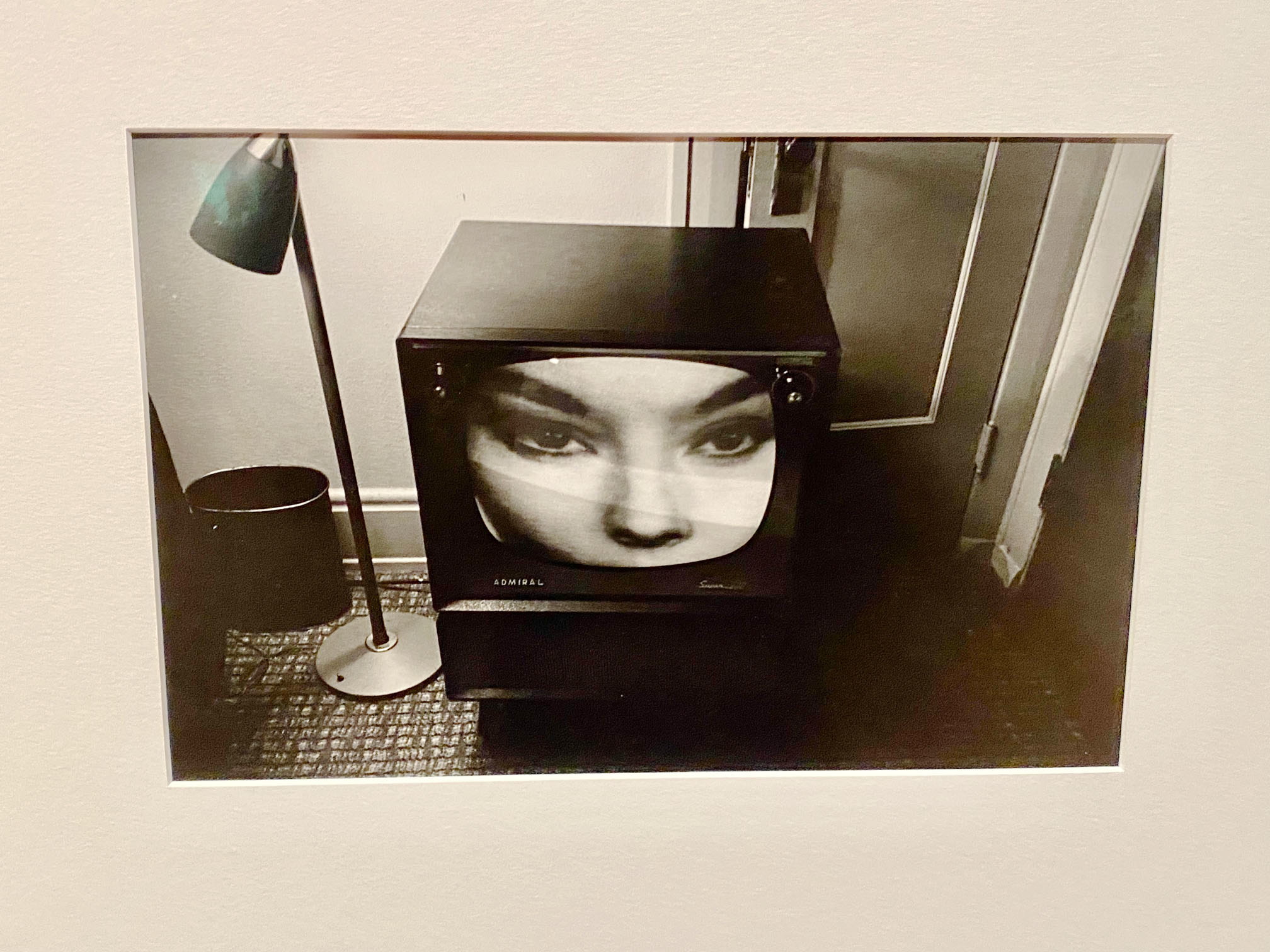
The Sixties was a decade when cultures were clashing, TVs were showering a kaleidoscope of images into people’s living rooms, nuclear catastrophes loomed, and people were landing on the Moon.

Lee Friedlander’s 1963 photograph Florida showing the surrealistic, disorienting impact of TVs in every home. Courtesy: Museum of Modern Art.

The exhibition shows how artists who didn’t belong to trendy “isms” still managed to create work that has stood the test of time – the Hairy Who of Chicago, the funk-and-pun artists of California, the downtown post-minimalists of New York, emerging Native American modernists, and social-justice artist-advocates.

Take a look at some of our favorites in our Flickr album.

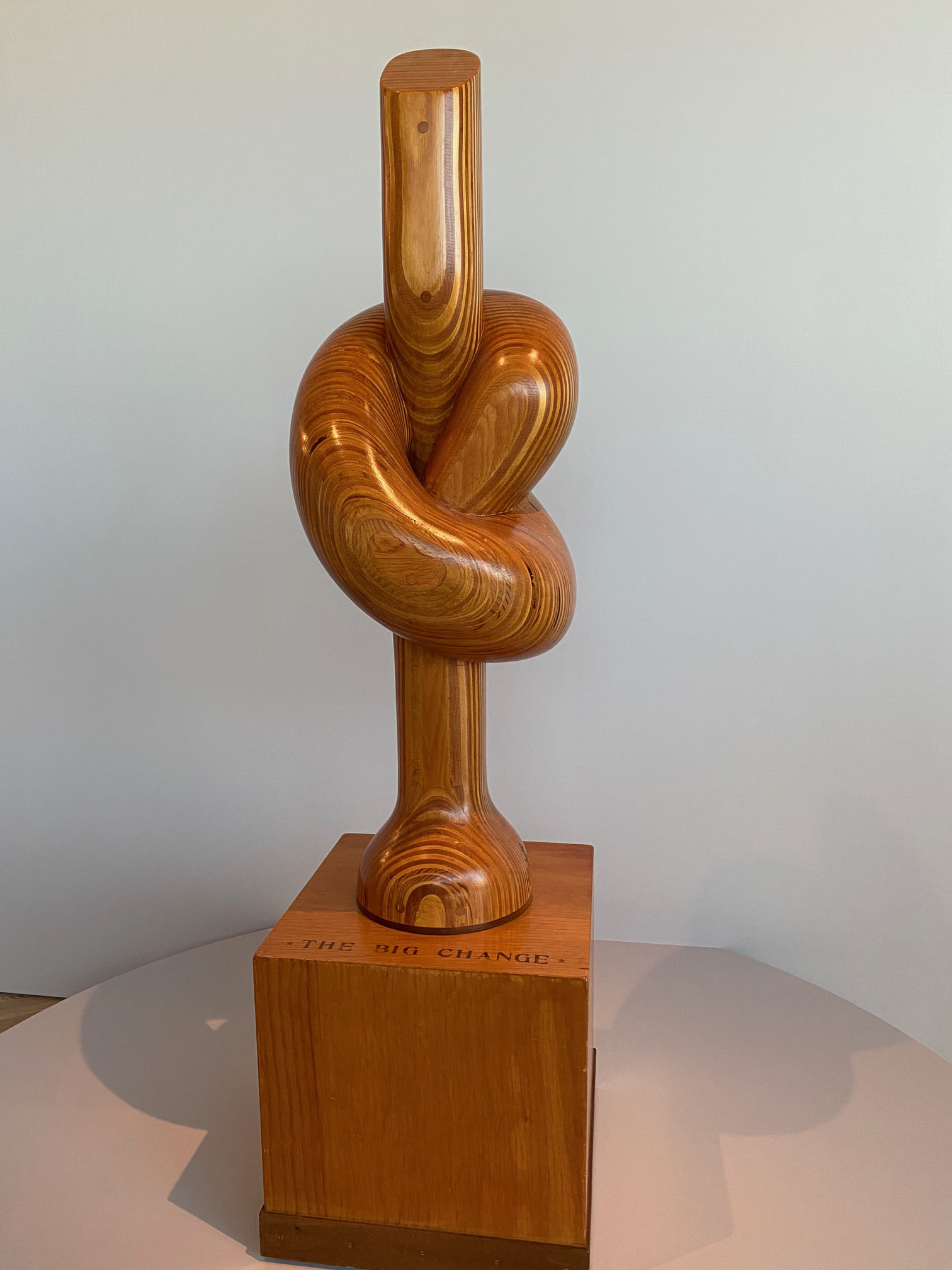
H.C. Westerman’s 1963 impossible wooden “knot” sculpture The Big Change – an allusion to all the social-political changes happening in America. Courtesy: The Art Institute of Chicago.

At a time when hard-edged minimalism and Pop Art ruled, the curators want us to see and experience (again) artists whose work was featured key exhibition showcases like Lucy Lippard’s 1966 Eccentric Abstration show at Fischbach Gallery in New York and Peter Selz’s 1967 Funk show at the Berkeley Art Museum. Each were full of work that defied contemporary art-world conventions.

The Whitney’s chosen to showcase several pieces of one of the artistic godfathers of the funk movement – H.C. Westerman. His satiric “minimalistic” shag carpet sculpture sits next to a William T. Wiley painting, but it’s wonderful to contemplate two virtuoso carved pieces  – The Big Change and Memorial to the Idea of Man If He Was an Idea.

The first gallery presents disquieting creations that present strange, out-of-context juxtapositions, weird images, and out-of-proportion everyday objects that seem to reflect the feeling that we’re living in an off-kilter world.  A large Rosenquist hovers over the gallery, but its muted tones and dissonant images evoke a far different mood than his famous, epic, over-the-top F-111.

Alex Hay’s 1968 strange, oversized painted fiberglass and epoxy Paper Bag sculpture. At rear, James Rosenquist’s 1961 oil The Light That Won’t Fail I, full of unsettling juxtapositions.
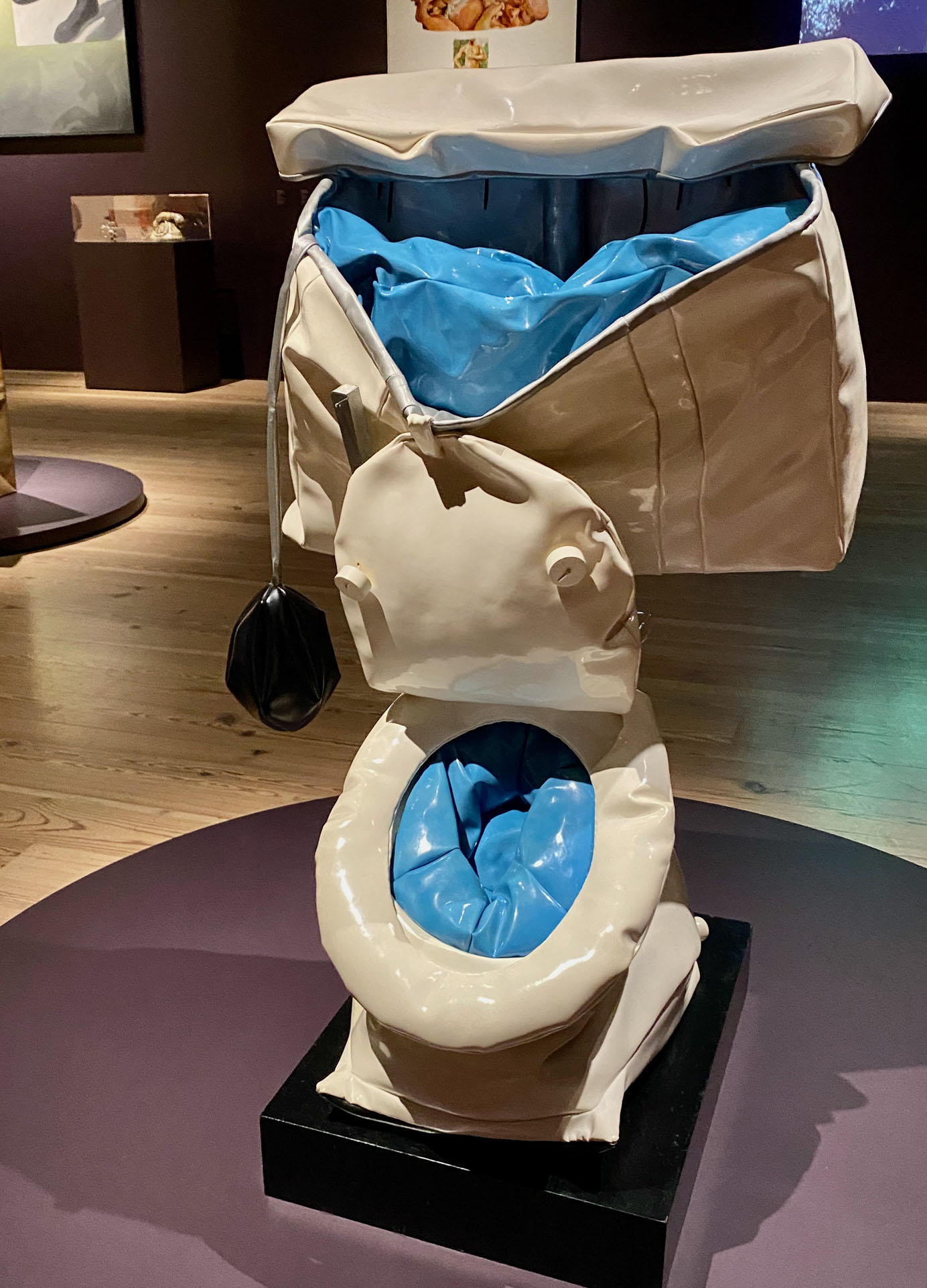
Claes Oldenburg’s 1966 mixed-media Soft Toilet – an unsettling, oversized fixture from the American bathroom.

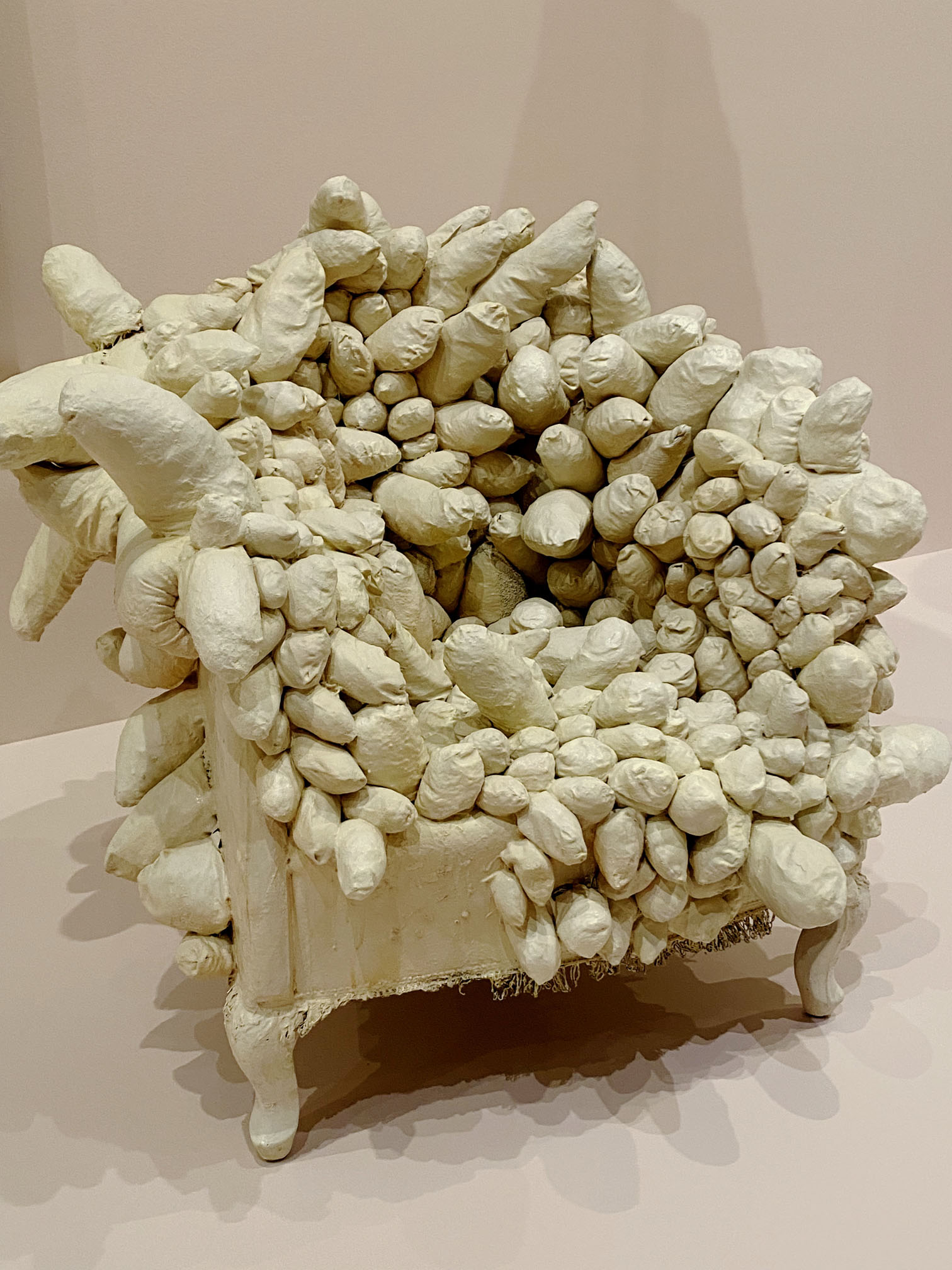
Another section presents work – many from repurposed or recycled material – with sensuous forms that suggest – but not directly depict – the human body. It’s nice to see such an array of soft, draped, and biomorphic work by artists like Kusama, Eva Hesse, Kay Segimachi, and nearly forgotten Miyoko Ito.

Kusama’s 1963 provocative hand-sewn, soft fabric-chair sculpture, Accumulation, which caused a sensation among New York critics.
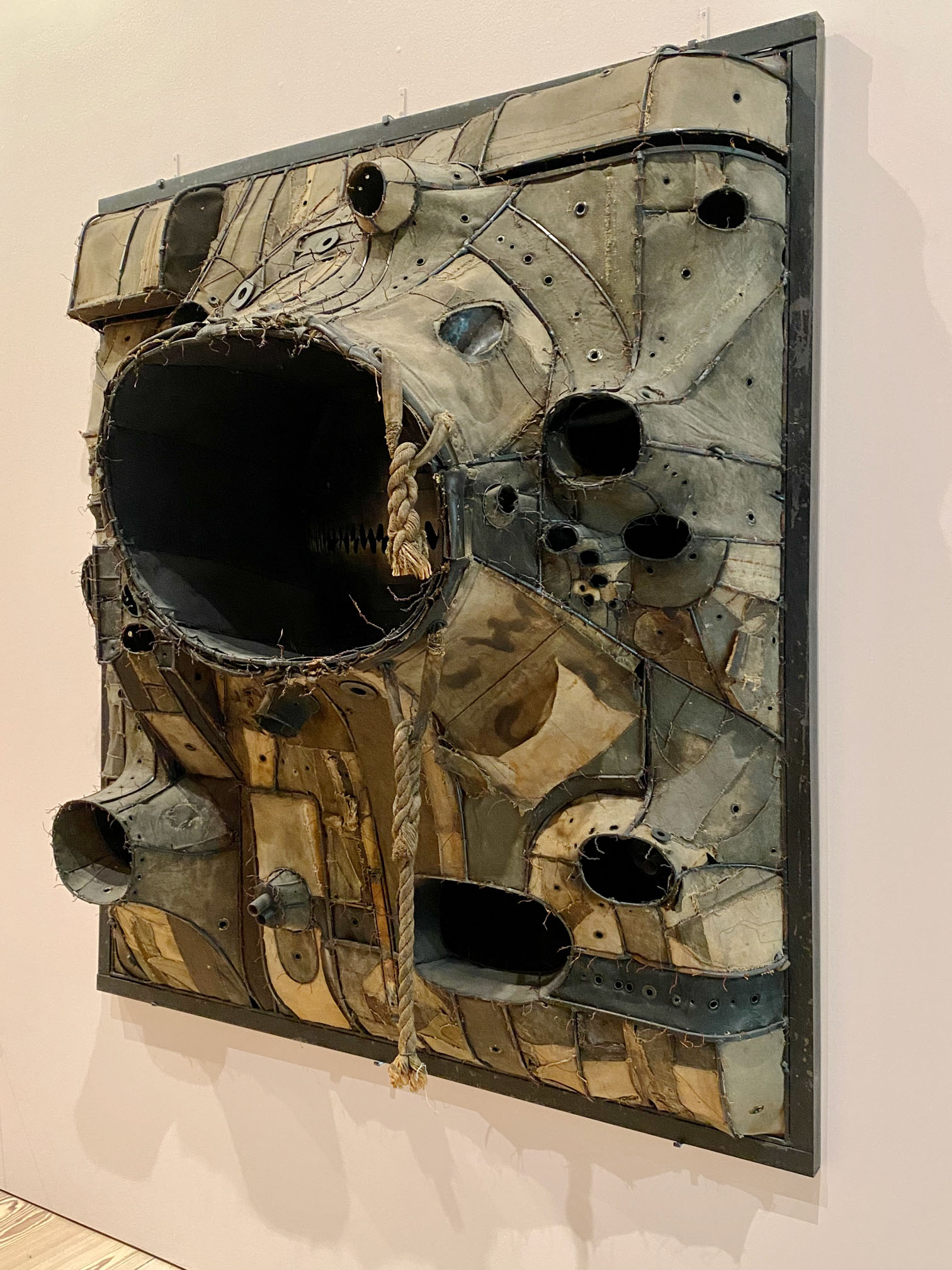
 Lee Bonticou’s 1961 welded, stitched canvas abstraction, created from scavenged steel, weathered canvas, clamps, wire, and rope from conveyor belts.

The far end of the exhibition presents works that take a stand to push for change in the world. Jasper Johns and Fritz Scholder let their paint do the talking. But others use a dada tactic to get the point across – hard-edge collages and assemblages.

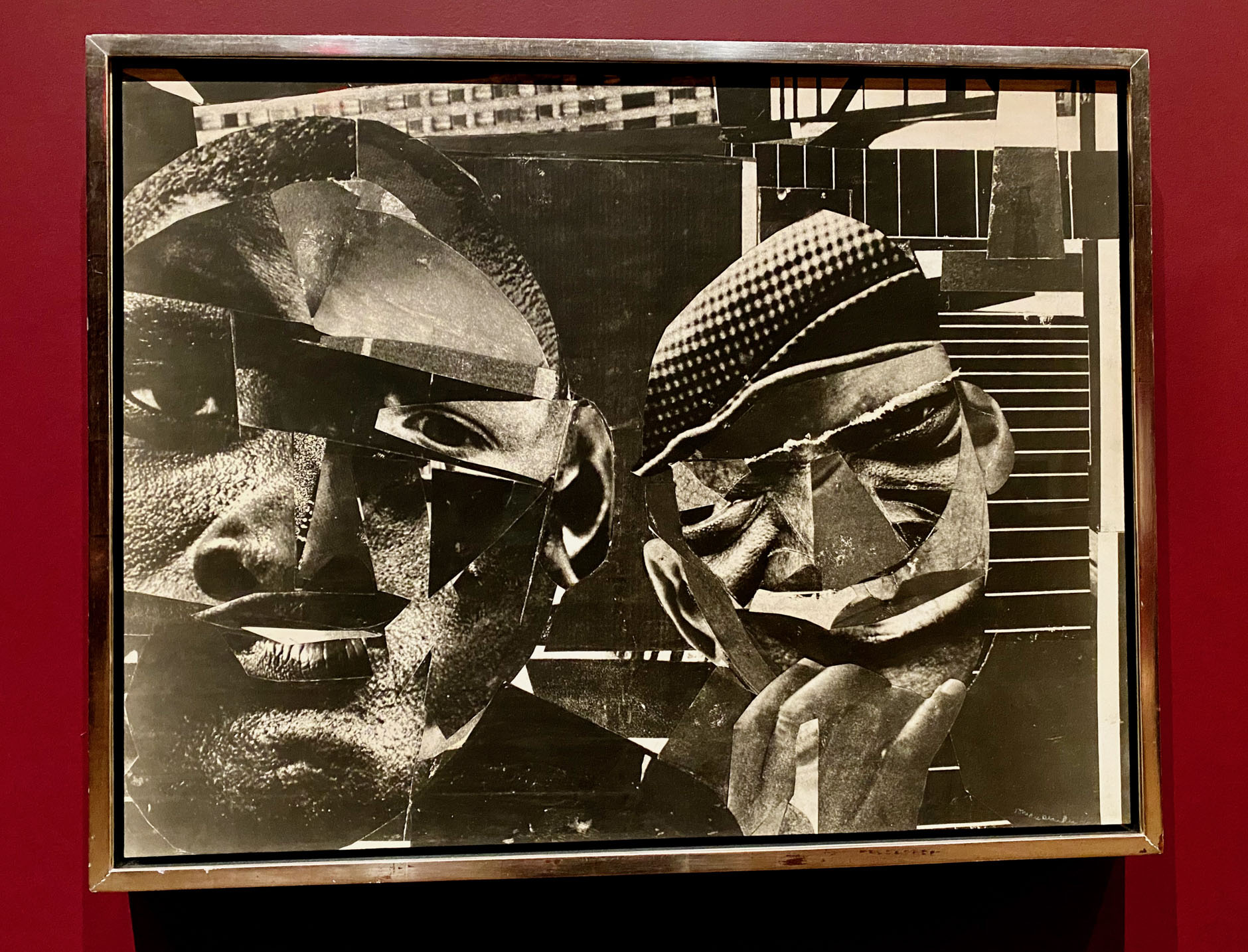
Social surreal: Romare Beardon’s 1964 Pittsburgh Memory 2/6 – mounted collage of photograph fragments creating the surreal experience of being Black in a big America city. Courtesy: private collection.

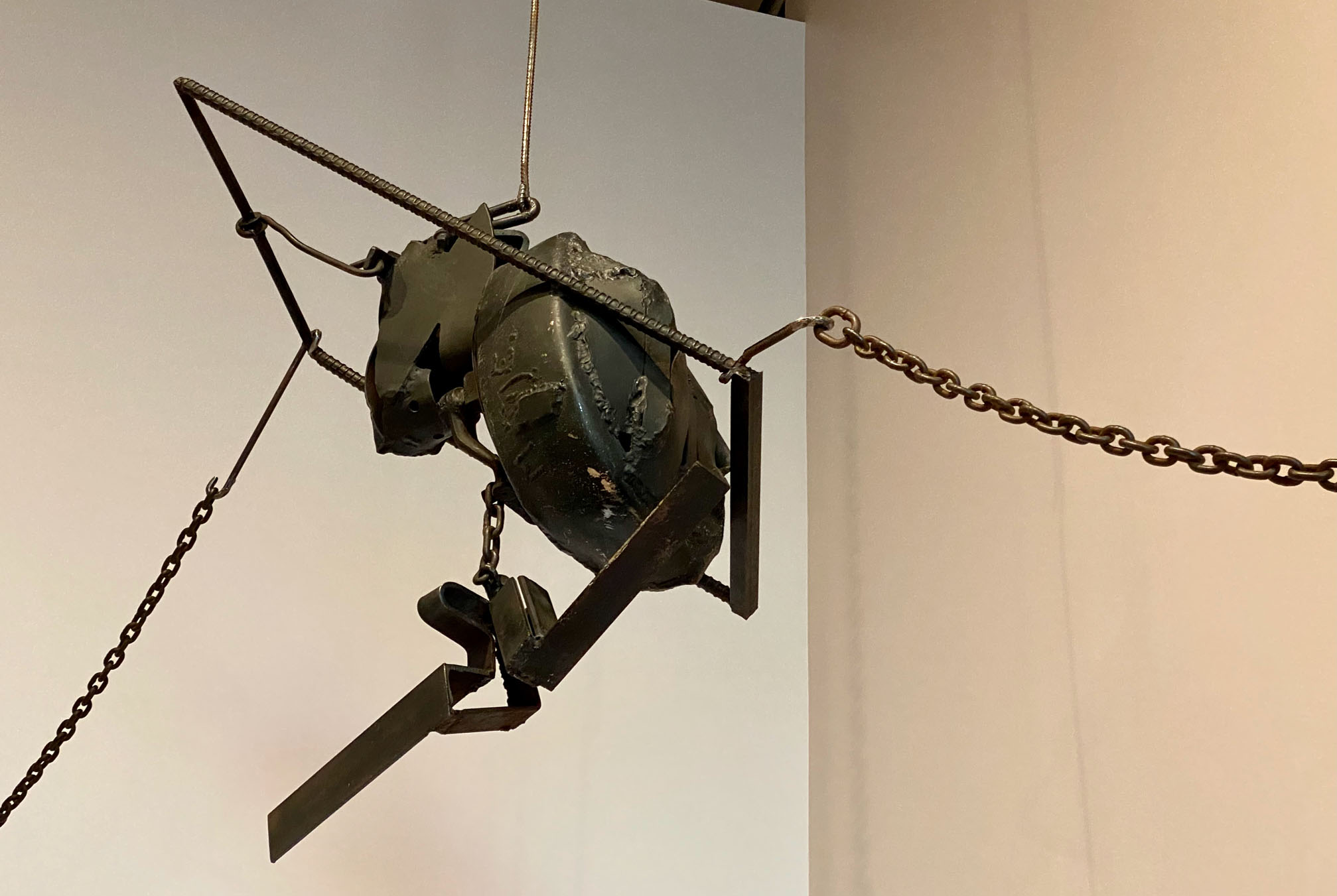
Works by Romare Beardon, John Outterbridge, Ralph Arnold, and Melvin Edwards create surreal dissonance that still packs a punch decades later.

1966 Cotton Hangup by Melvin Edwards – suspended abstraction from recycled industrial equipment; evokes historic violence and oppression against African Americans. Courtesy: Studio Museum in Harlem

The show concludes with a selection of works by artists reflecting alternative spiritual practices and beliefs. At a time when organized institutions and religions were being questioned, why not turn inward?

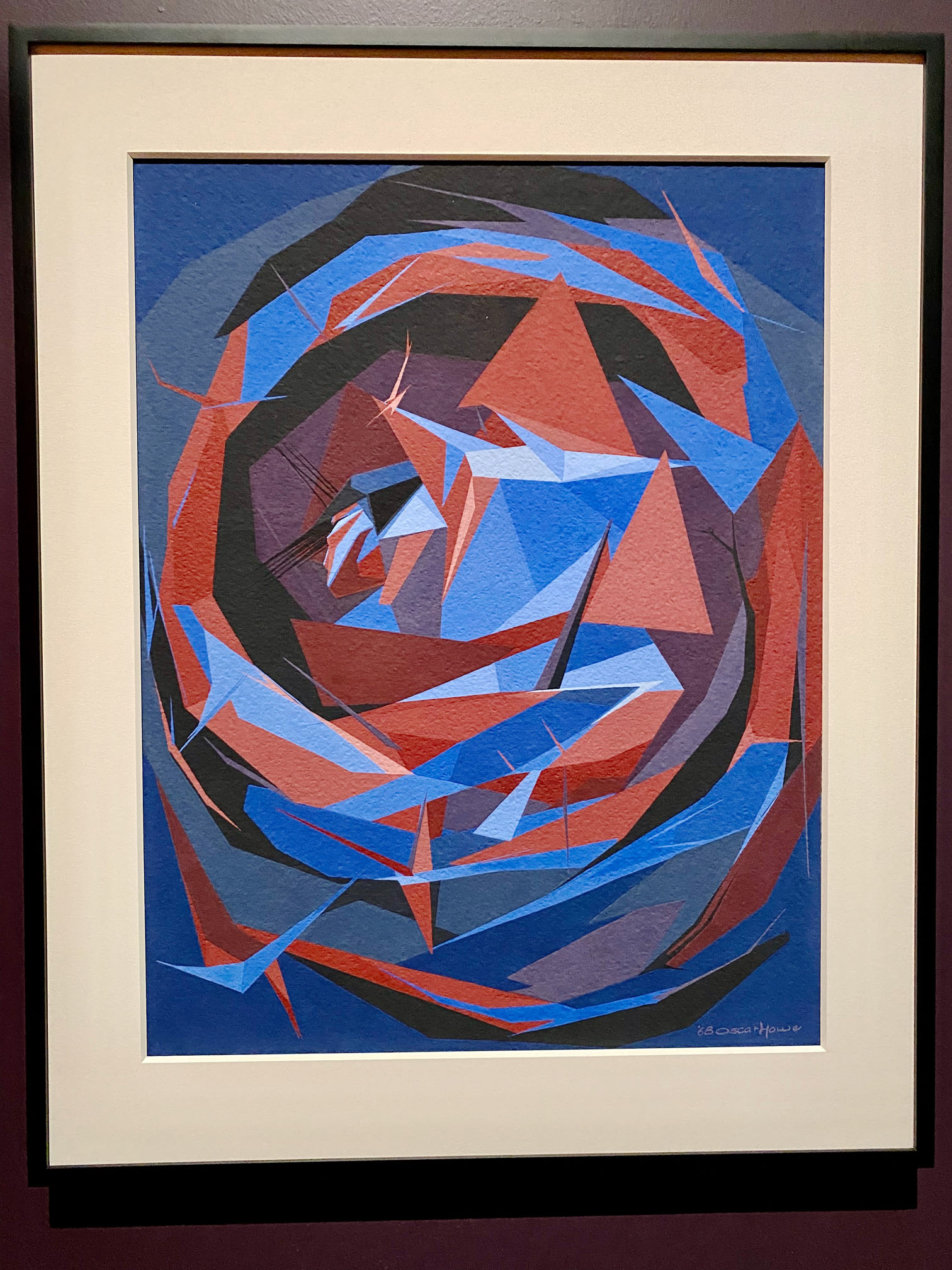
Oscar Howe’s 1968 painting Retreat – an Indigenous-modernist impression of a traditional Dakota ceremony.
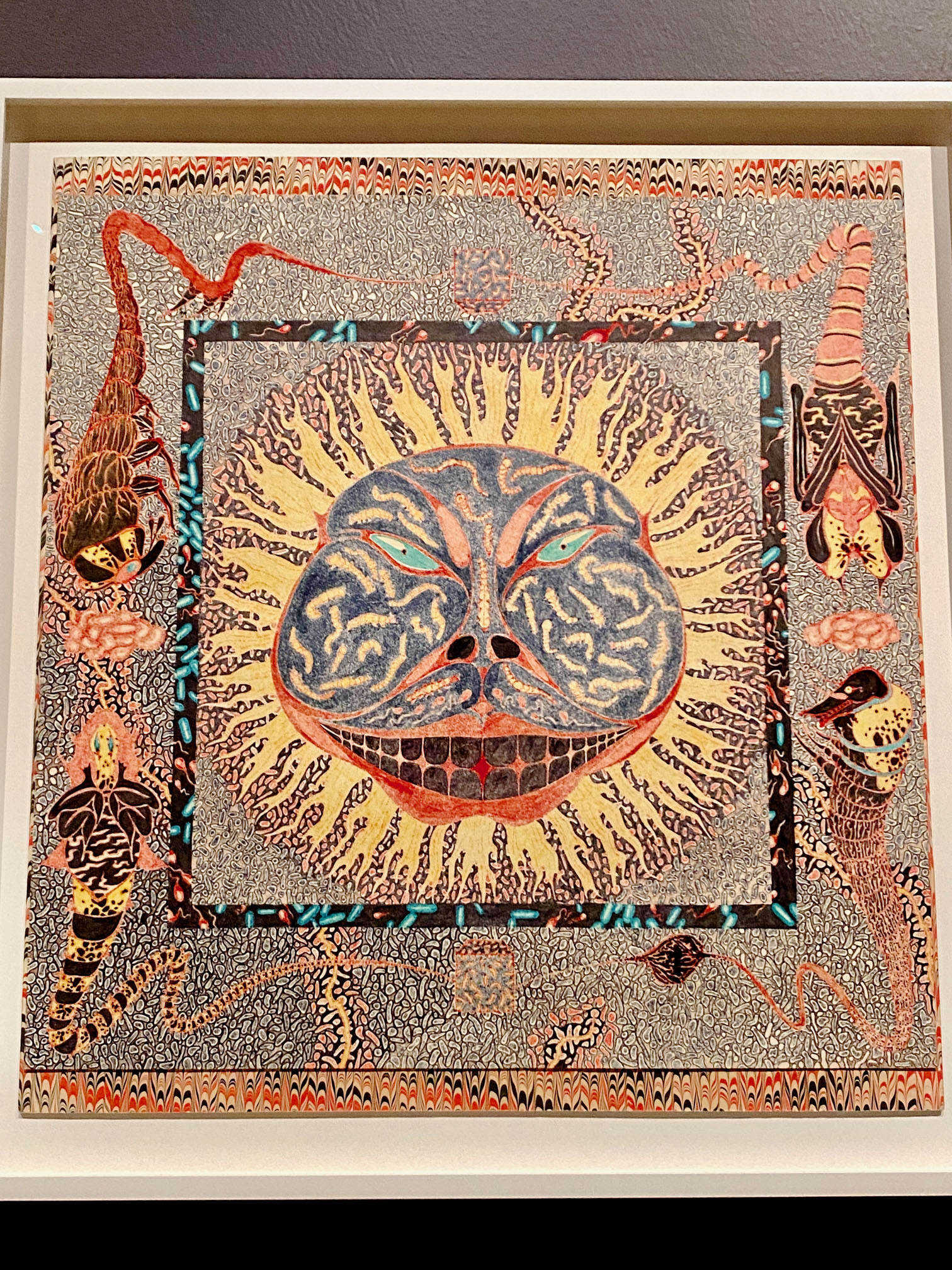
Ching Ho Cheng’s 1967 Sun Drawing, a meditative approach using a felt-tipped pen on found paper.

Have fun strolling through the Whitney’s Sixties Surreal galleries to a totally throwback Sixties soundtrack:

To hear more about specific works, listen to the curators talk about individual works in the audio guide here.