Out West in New Mexico

The artist stories and works presented in Out West: Gay and Lesbian Artists in the Southwest 1900-1969, at the New Mexico Museum of Art through September 2, 2023, shed light on artists who lived a bit more “under the radar” in the early 20th century, compared to the post-1969 era when loud and proud artists unleashed their voices in response to the Stonewall Riots.

The exhibition focuses on how early modernists used “coded” symbols in their work, explores the legacies of two-gendered Native American artists, and introduces mid-century work by mid-century contemporary artists working.

Marsden Hartley’s 1919 still life El Santo, featuring Hispanic Catholic objects of northern New Mexico.
Russel Cheney’s 1929 New Mexico/Penitente showing a bulto, axe, and flowers associated with the Penitente brotherhood.

Take a look at our favorites in our Flickr album.

The show opens with works by Marsden Hartley and Russell Cheney – painted 10 years apart (1919 and 1929) that feature items associated with rituals by Northern New Mexico’s Penitentes – Catholic men’s associations that kept faith alive during the 19th century when clergy were scarce in their remote mountain towns.

Hartley and Cheney were captivated by the religious rituals of these mysterious, faithful “brotherhoods” that persevered for centuries, despite periodic bans by New Mexico’s Catholic Church – not unlike the early 20th century gay men’s associations whose underground culture gave rise to “coded” rituals and language.

Hence, these works feature images of the suffering Christ, yucca plants used for self-mortification rituals, adobe churches, and props associated with processional death carts – symbols of religious brotherhood that represent the importance of brotherhood among the early 20th century gay community.

The second portion of the show introduces us to the many painters, photographers, and sculptors who not only drew artistic inspiration from the Southwest, but found communities that welcomed gay and lesbian artists. Works by artists, such as Agnes C. Sims and Cady Wells, are paired with portraits by a Southwestern who’s who of modern portraiture and photography – Will Shuster, Laura Gilpin, Ansel Adams, and Anne Noggle.

Modernist Deer Dance cedar sculptures carved in 1945 by Agnes C. Sims, a tribute to native cultures
Laura Gilpin’s 1942 photographic portrait of artist Agnes C. Sims

There’s even a “portrait” stitched by maverick Cady Wells of his very best friend, modernist Rebecca James. Well known for his expressionist paintings and his large collection of Northern New Mexican religious art, Wells subversively went all in on petit-point – an art form traditionally associated with “women’s work” and beloved by Ms. James.

Detail of 1953 petit-point stitchery “portrait” of Rebecca S. James by her friend, Cady Wells – his work in a traditional “feminine” genre of craft.
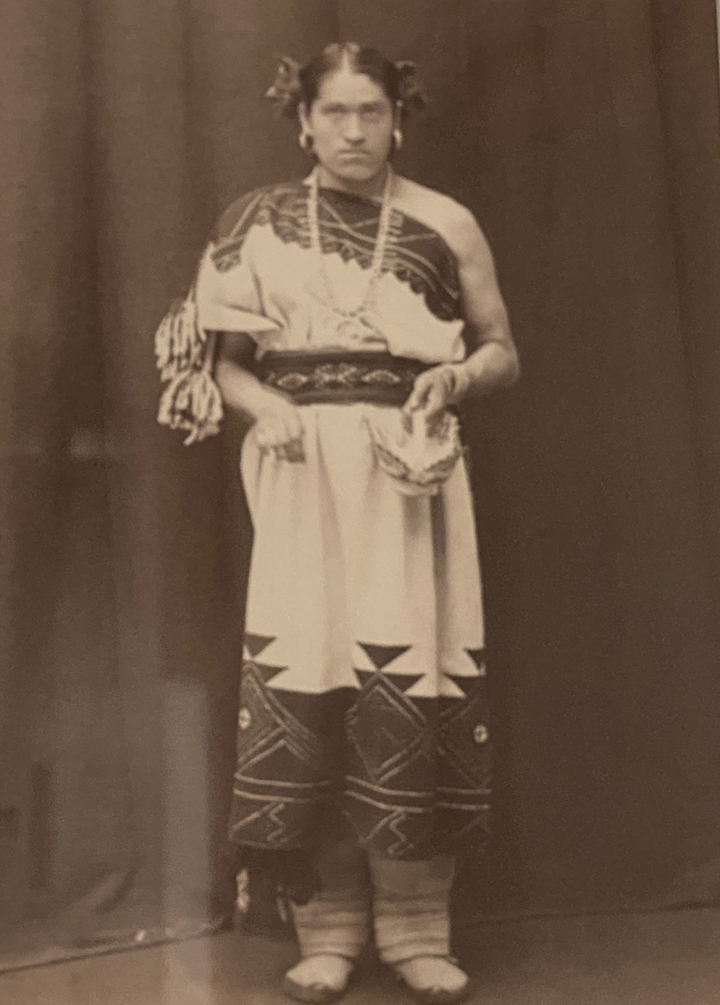
John K. Hillers’ 1879-1880 albumen portrait of Lahmana We’wha of Zuni Pueblo. Courtesy: Palace of the Governors Photo Archive.

This section also includes the stories of important two-spirit Native American artists – individuals who are born “male” but who take on spiritual and other tribal roles traditionally associated with women. The first is We’wha, a respected 19th-century expert in and advocate for Zuni arts and traditions– a favorite of Smithsonian anthropologists who demonstrated weaving in D.C. and even presented a special work directly to President Grover Cleveland as a wedding gift.

Another is R.C. Gorman’s portrait of Hosteen Klah, a Navajo two-spirit, one of the the Wheelwright Museum’s co-founders. Gorman, one of the best recognized and flamboyant 20th century contemporary Native artists, excelled in colorful mid-century works. Gorman made history in Taos by opening the first Native-owned gallery in the United States.

Navajo artist R.C. Gorman’s 1960 painting Night of the Yei – a celebration of Navajo spiritual traditions.

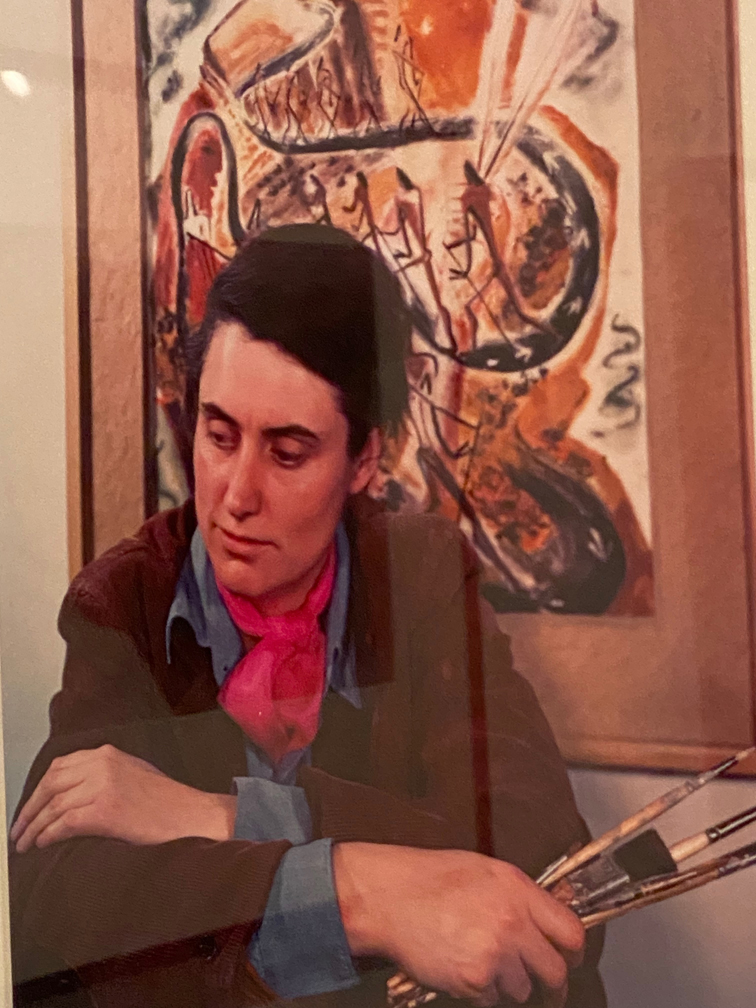
The final portion of the show includes two works by female rule-breakers. The first is a rare Agnes Martin 1954 abstract-expressionist work typical of her experimentation prior to her acclaimed grid series. It’s much more aligned to the biomorphic symbolism of early Pollack and Rothko – reflecting what was happening earlier in her New York career during the heyday of the Cedar Street Tavern crowd.

Agnes Martin’s untitled 1954 painting. Courtesy: University of New Mexico Art Museum.

Second ia a never-before-seen 1997 installation by feminist-art innovator Harmony Hammond, who was also represented in this year’s Whitney Biennial. Hammond, who curated one of Santa Fe’s first LGBTQ exhibitions back in 1999, used to travel backroads of the Southwest, finding abandoned towns and homesteads and collecting left behinds. In this show, she presents What Have You Done With Our Desire, a mixed-media piece using ancient kitchen linoleum – an allusion to circumstances leading to repression of gay women’s sexuality.

Harmony Hammond’s never-before-seen 1997 mixed-media installation What Have You Done with Our Desire. Courtesy: the artist.

For more about these and other artists, listen to curator Christian Waguespak’s talk about LGBTQ artists in the Southwest at the Harwood Museum in Taos.

Why Do People Like Folk Art So Much?

It wasn’t a scientific survey, but Santa Fe’s Museum of International Folk Art asked each museum staff member to select a favorite piece from the collection, explain why, and then mounted an entire exhibition about the love of folk art – Staff Picks: Favorites from the Collection at MoIFA through August 18.

Everyone knows about the 10,000 objects displayed in the museum’s Girard wing, but MoIFS houses over 150,000 additional works from over 100 countries. Given the vast scope of the collection, how did everyone choose one special item to be featured in the show?

2010 Alligator with Ice Cream carved by Joe Ortega of Tesuque, New Mexico welcomes everyone to the exhibition.

Some of the security staff remembered works from past shows that they loved, and some working in the collections had favorites hidden in the archives. To make it a little easier, the exhibitions team divided the task up into different regions of the world (to give a sense of the global extent of the collection), and asked some colleagues to pick a specific region, including the folk-art rich environs of Northern New Mexico.

1960 Noah’s Ark by Chimayo, New Mexico carver Jose Mandragon – an inspiration to take an adventure.

So why did different staff members choose what they did? The exhibition (and our Flickr album) states the reason that each was selected.

Sometimes a painting, sculpture, or necklace reminded them of places they’ve visited or cultures they loved – like the painting that evoked the tropical vibe of rural Cuba by Joe Ortega, or the cart direct from a colorful folk festival in Sicily, or intricate, bejeweled work from artists of Nepal in the high Himalayas.

2014 painting San Lazaro by Cuban artist Luis Rodriguez Ricardo.

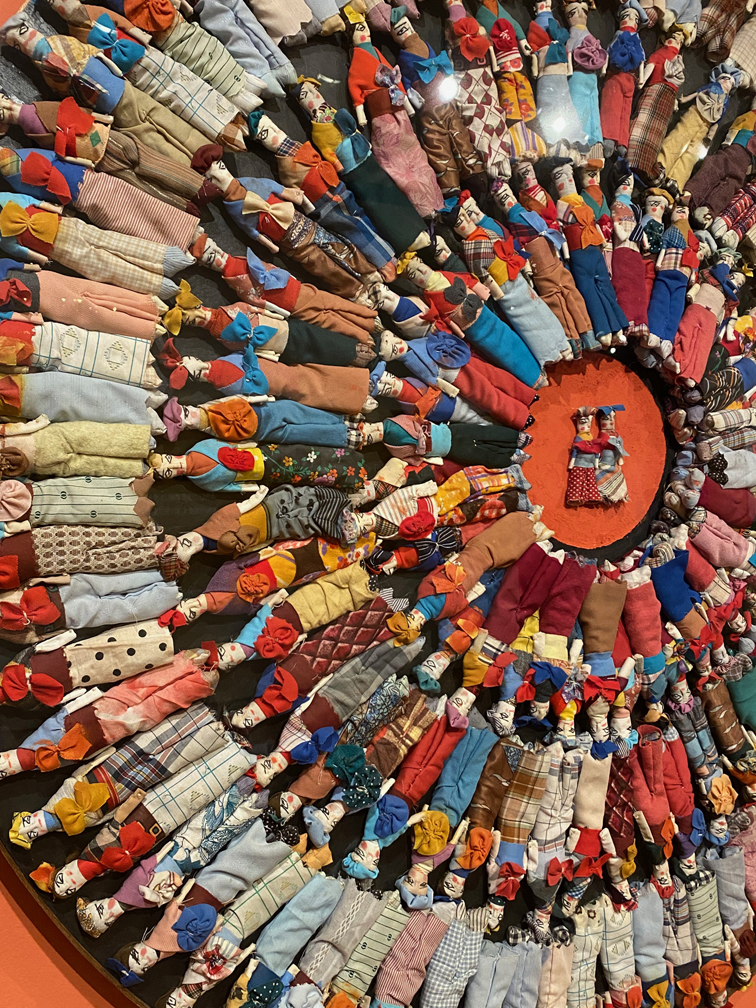
And who doesn’t love work that is pure whimsey and telegraphs sheer joy? Several staff members said they couldn’t resist works that just made them smile – the whimsical alligator sitting above the entry with his huge tri-color ice-cream cone, the recycled robot from California relaxing in his lounge chair with a drink in hand (summer fun!), and a super-happy circle of tiny Ecuadorian dolls, dolls, dolls!

Close-up of Ecuadorian artist Osvaldo Viteri’s 1980 doll sculpture Se Nos Cayo La Luna Para Amar La Tierra (The Moon Fell So We Could Love the Earth).
BoBo bu Ko, a 1994 recycled materials sculpture by Alameda, California artist James Bauer

Sometimes you just have to stand back and admire the sheer determination, precision, and willpower of a particular artist. How did Rhode Island artist Henry Patrick Neugent collect and take apart all those cigar boxes and create two intricate tramp art cabinets with secret compartments?

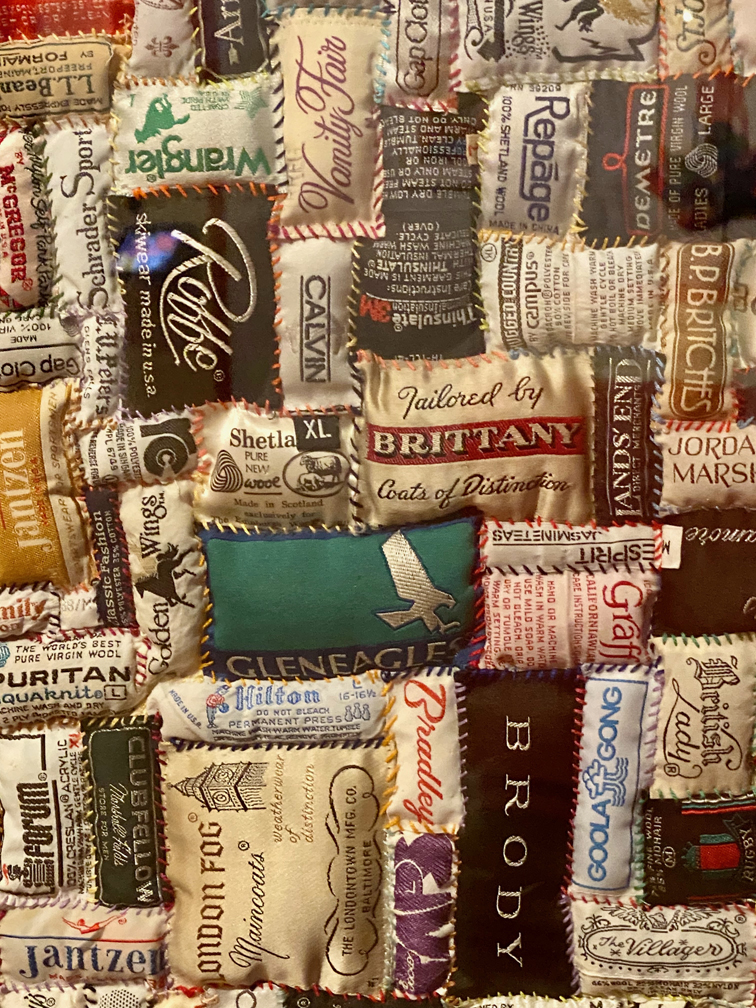
And what about the gigantic quilt made by New York textile artist Susie Brandt – she removed zillions of tiny tags from vintage shirt collars and jacket breast pockets and worked them into a log-cabin sort-of pattern. You could spend hours just reading and reflecting on the memories behind those tags – Jordan Marsh, B.P. Britches, and old Wrangler or L.L. Bean tags.

Top of early 20th century tramp art whimsey table from cigar boxes by Portsmouth, Rhode Island artist Henry Patrick Neugent
Detail of large quilt Sleep Product made of garment labels collected by New York artist Susie Brandt in 1986-1989.

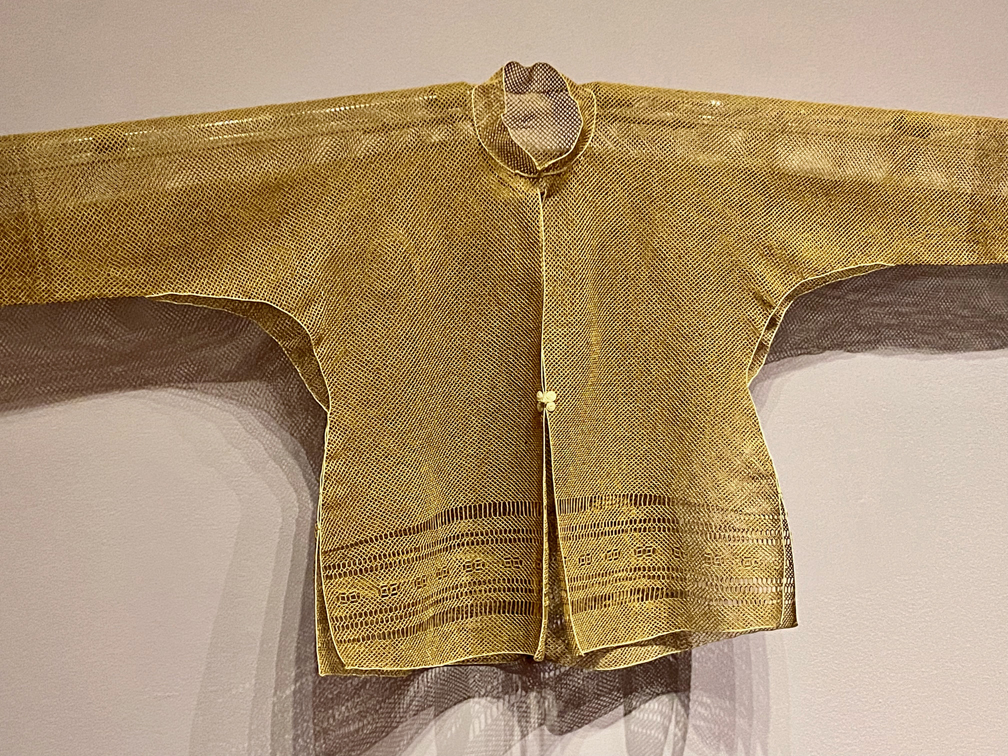
One collections manager picked hers for the sheer technical genius.  Check out the 19th century Chinese undershirt designed to keep you cool under the heavier, decorated silk robes. It’s woven in a clever, open diamond pattern from bamboo and cotton!

Innovative “cooling” 19th century Chinese bamboo and cotton undershirt.

An anthropologist on the team paid tribute to craft excellence is carried on generation to generation in North Carolina’s historic ceramic-making communities. She selected two pots by a father and son – Matt Luck’s corncob-stopper jug and a show-stopping double-faced jug created by his dad, Sid Luck (a fifth generation Seagrove potter), to commemorate the experience of living through Hurricane Fran.

The museum’s director selected a Zimbabwe thumb piano sheerly for its beautiful sound!

Two generations of Seagrove NC potters – Matt Luck’s 2012 pot with corncob stopper and Sid Luck’s 1996 double-faced jug
1992 thumb piano (mbira of the ancestors) made by a Shona artist from Zimbabwe.

The show is a tribute to the teamwork it takes to welcome the world to a popular folk-art destination and a delight to behold. A selection of these works will be on display at New Mexico’s Roundhouse in the Governor’s Gallery through April 25, 2025.

Take a Google walk through MoIFA’s massive Girard Wing here.

How O’Keeffe Saw Trees

Whether she contemplated her surroundings among the greenery at Lake George or the multicolord rocks at Ghost Ranch, Georgia O’Keefe often started by sketching the trees around her.

in Rooted in Place, a special exhibit at the Georgia O’Keeffe Museum in Santa Fe through November 3, 2024, you are surrounded by Georgia’s watercolors, oils, and sketches interpreting (and abstracting) trees she encountered on her walks and international travels.

Take a look at our favorites in our Flickr album.

Georgia’s 1937 painting Gerald’s Tree I, a tree enjoyed by her friend, science historian Gerald Heard

The curators have selected works from the full span of Georgia’s life. The earliest are from her trips to Lake George, such as the glorious autumn maples surrounding the Stieglitz home.

The show’s curators leverage Georgia’s habit of collecting inspirational bits and pieces of nature from her Ghost Ranch walks, showing the twisted juniper she brought home alongside the dramatic oil painting in which it stars.

Piece of juniper that Georgia collected from the land surrounding her Ghost Ranch home.
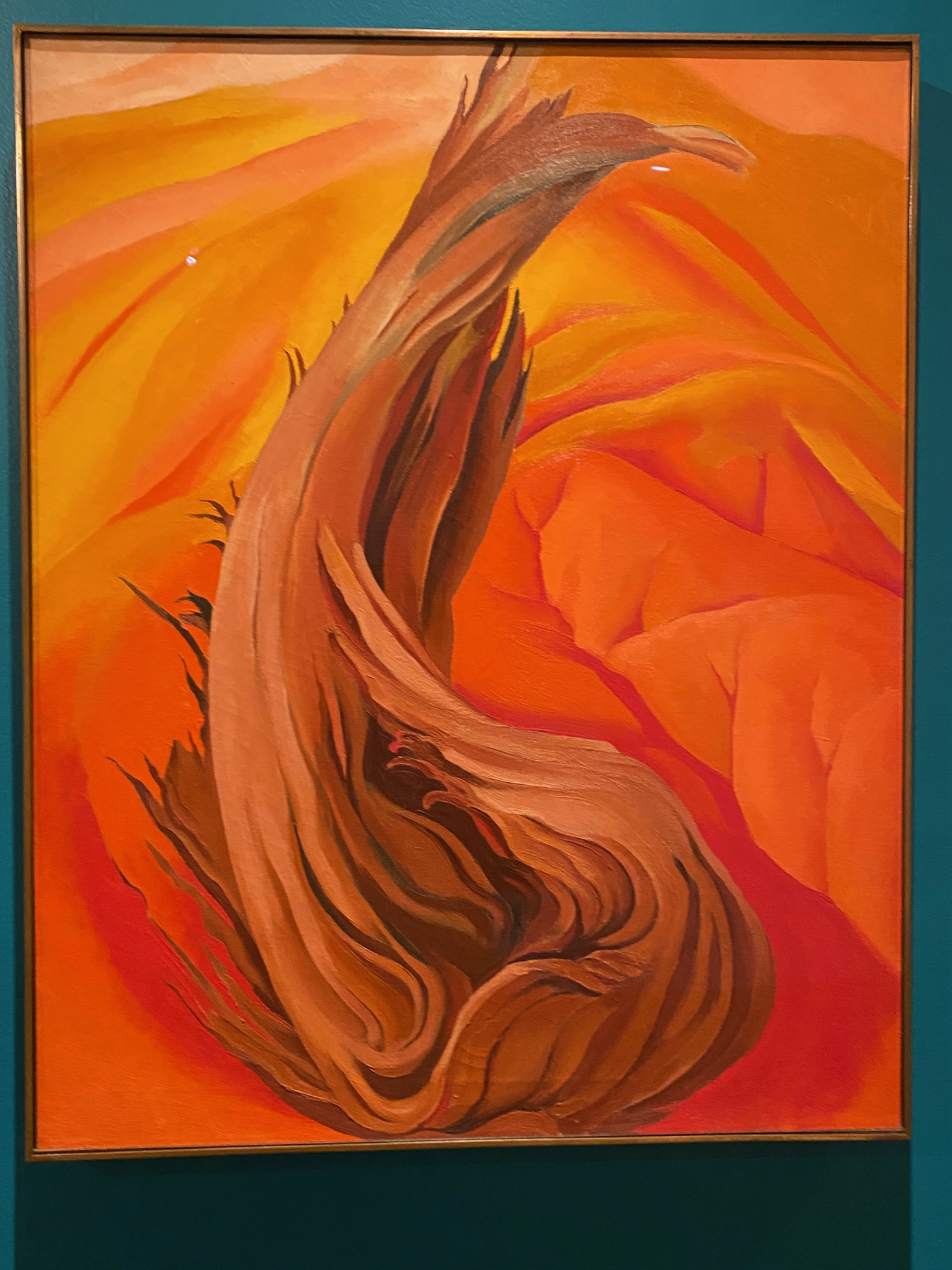
Georgia’s 1940 painting Stump in Red Hills

The museum’s collaboration with the Santa Fe Botanical Garden adds scientific insights about the three cornerstone species of New Mexico wilderness that from which Ms. O’Keeffe drew inspiration – pinons and junipers next to the red rock, and wide, leafy cottonwoods along the river.

Georgia’s 1930 Cottonwoods Near Abiquiu showing the breeze catching the wide branches

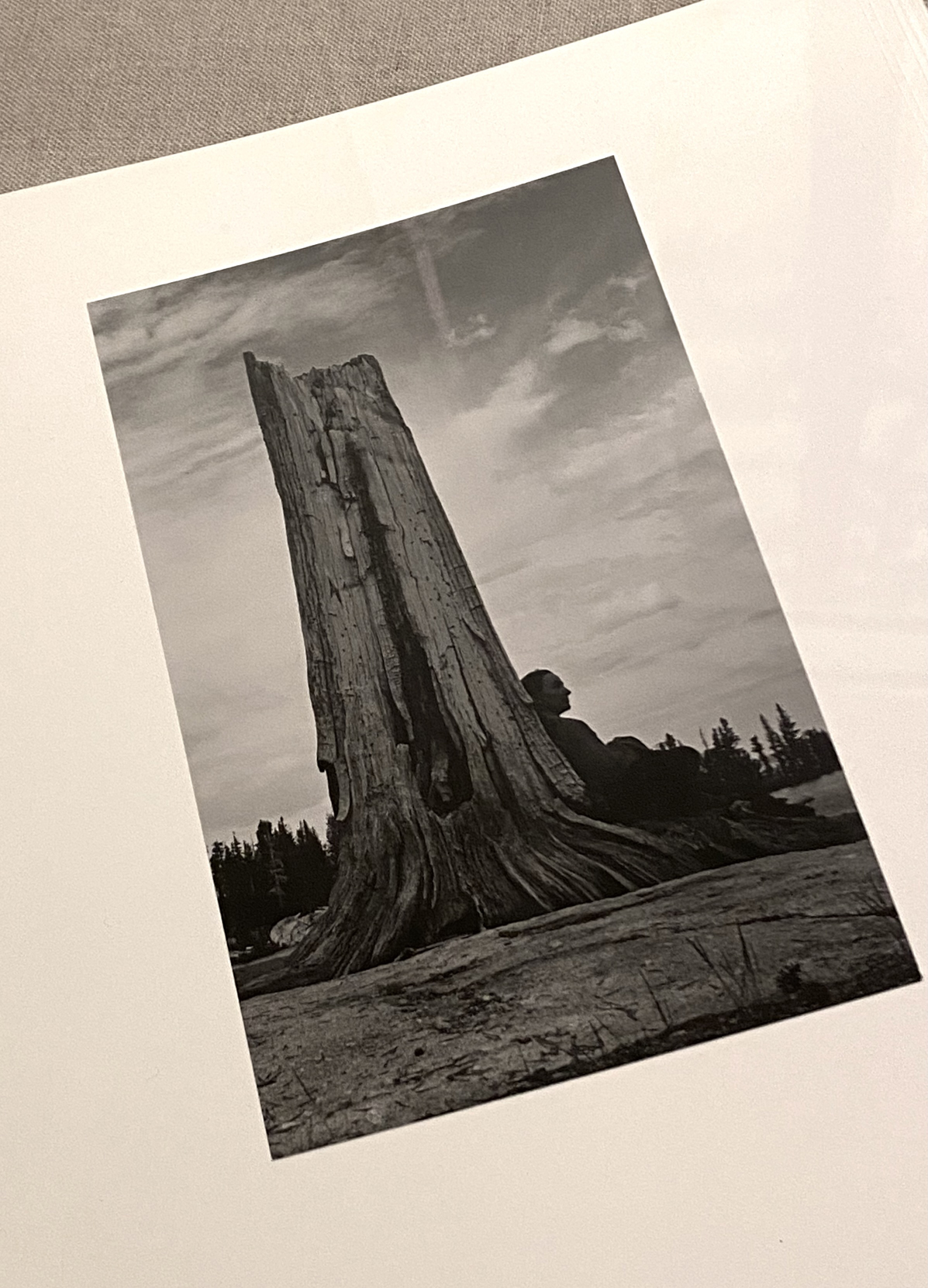
A gorgeous photo by Ansel Adams shows Georgia nestled up against one of her favorites nearby in the desert. She loved the fruit trees she planted near her home garden, but she never painted them.

When Georgia was a young student at the Art Institute of Chicago in 1905-1906, she studied with John Vanderpoel, well known for being a master educator in figure drawing. Looking at her drawing of a banyon tree from her trip to the Bahamas over thirty years later, it’s clear she employed those early lessons – bringing trees to life as living beings in her work ­– throughout her life.

Ansel Adams’1938 portrait of George O’Keeffe resting against a dramatic tree stump in northern New Mexico
Georgia’s 1934 figure-like drawing Banyon Tree created on her trip to Bermuda

Listen to the museum’s panel about Georgia’s approach to painting her favorite trees and the role they play in the ecosystem of northern New Mexico:

Past and Future of Santa Fe’s Indian Market

There’s no better way to see the best of the best at the Santa Fe Indian Market than to visit the remarkable retrospective assembled at the New Mexico History Museum in their honorary centennial exhibition, Honoring Tradition and Innovation: 100 Years of Santa Fe’s Indian Market, 1922-2022, on view through August 31.

The curators have gathered loans from private collections, museums, individual artists, and big-name galleries to give visitors a decade-by-decade chronicle of the people, families, maker innovations, and contemporary-art trends that converged to showcase works from one the most exciting confluences of creativity in the United States.

Santa Clara artist Nancy Youngblood’s 2018 polished pottery jar (best of pottery category award), granddaughter of Margaret Tafoya. Courtesy: private collection.

The items in the show – traditional pots, dazzling Navajo weavings, whimsical figurines, elaborately embroidered accessories and clothing, social-commentary photos and paintings – are so compelling that it takes two or three visits to actually focus on the thoughtful, illuminating text that accompanies each portion of the show.

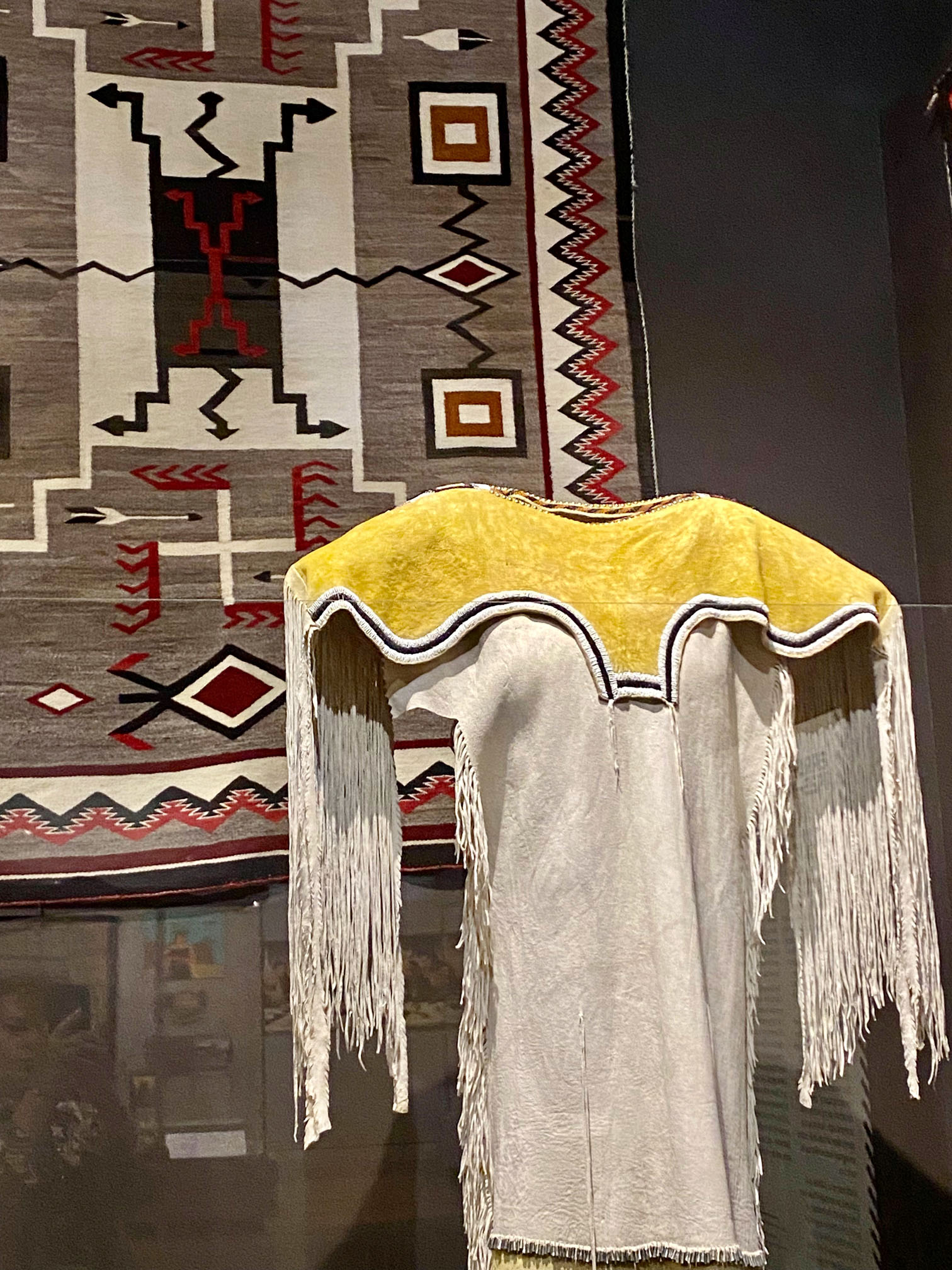
Embellished 1890 buckskin Apache/Ute dress; behind, a 1925-1930 Navajo rug. Courtesy: Cowboys and Indians Antiques, Historic Toadlena Trading Post Museum.

The organizers have provided a revealing chronology of the politics, economics, and social context of each decade of the arts festival, noting changes in the people, processes, power, and patronage over time.

The first gallery brings you back to the earliest days of the market – a time when there were no Indian curators or judges (unlike today!) and when Native makers were not even allowed to sell their own work or interface directly with non-Native buyers. 

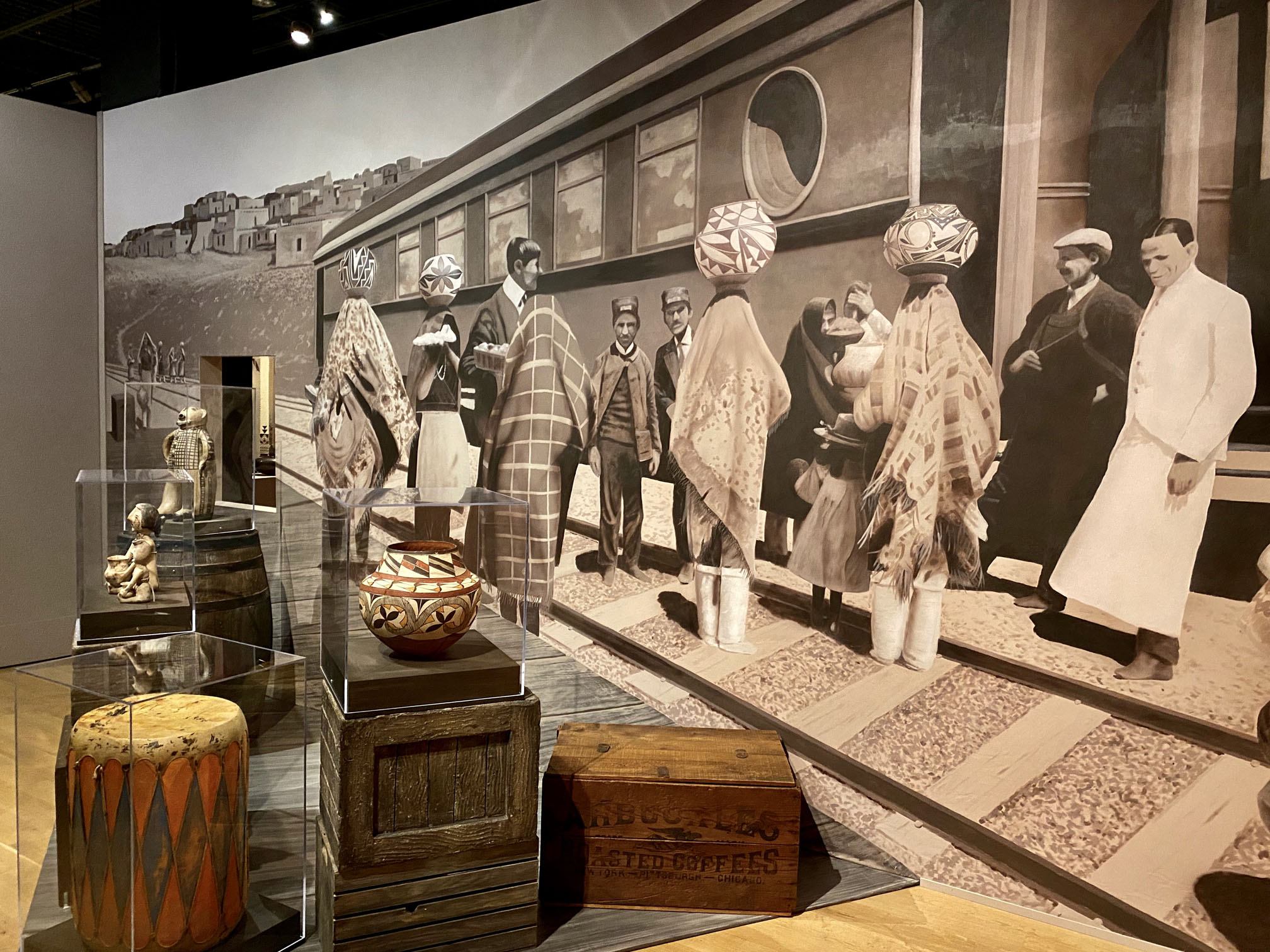
The wall mural harkens back to the days when Pueblo people sold their pots and creations to tourists along the railroad, which in the late 1890s and early 1900s brought curious travelers, East Coast dandies, and traveling showpeople out to the Western badlands.

David Rock’s mural with early Native-made collectibles – early 1900s pottery and 1920s drum.

Turn-of-the-century tom-toms, curios, and older pots are displayed near the rail-top mural; Navajo rugs and beaded moccasins from the period are arrayed across the way. It’s an arrangement that evokes what might be displayed in an old trading post, or at least in the early 1920s Santa Fe markets.

Many of these makers in New Mexico were still living on their ancestral lands, but across the United States, the majority of Indigenous populations had either been relocated to reservations or boarding schools.

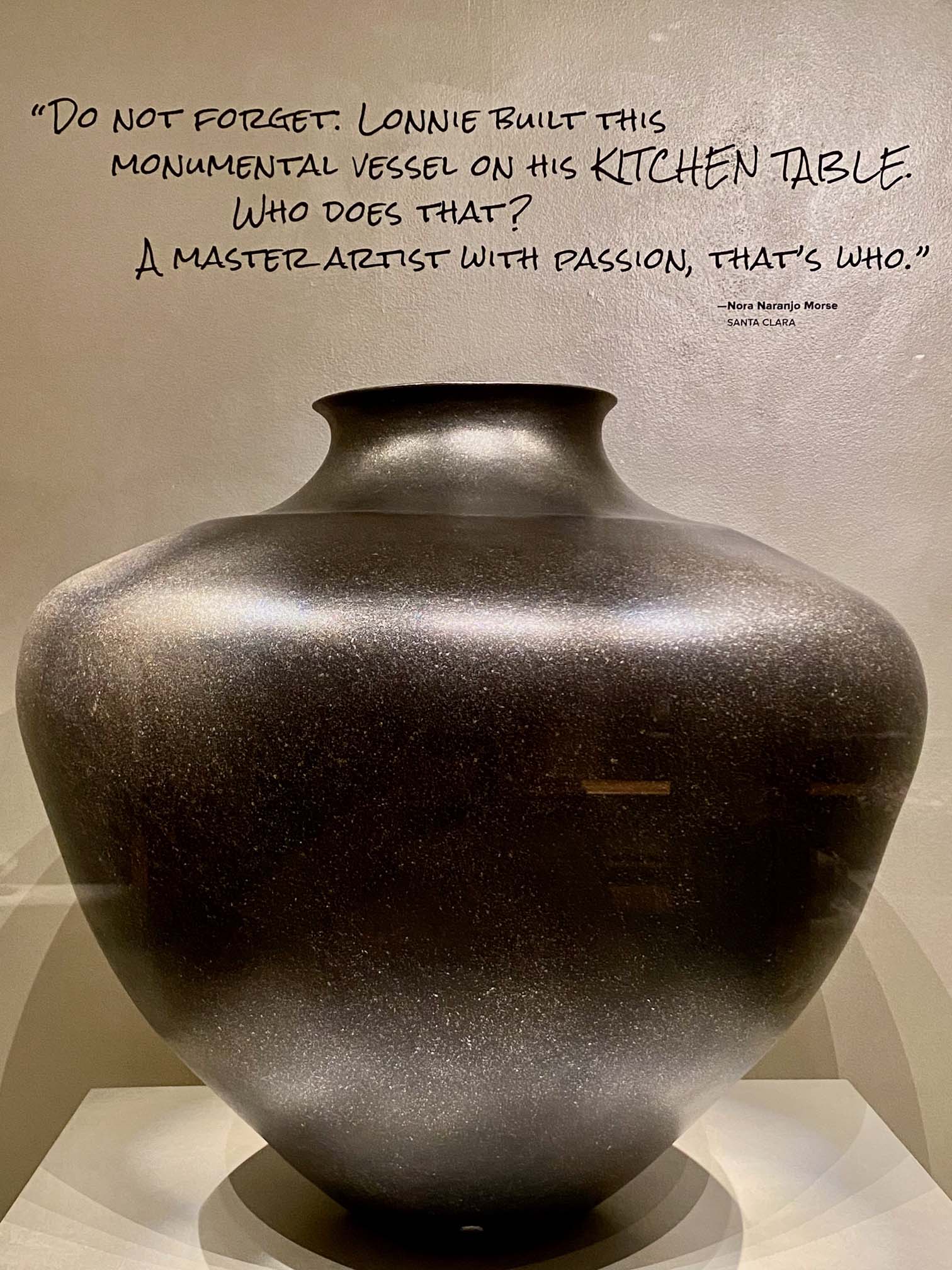
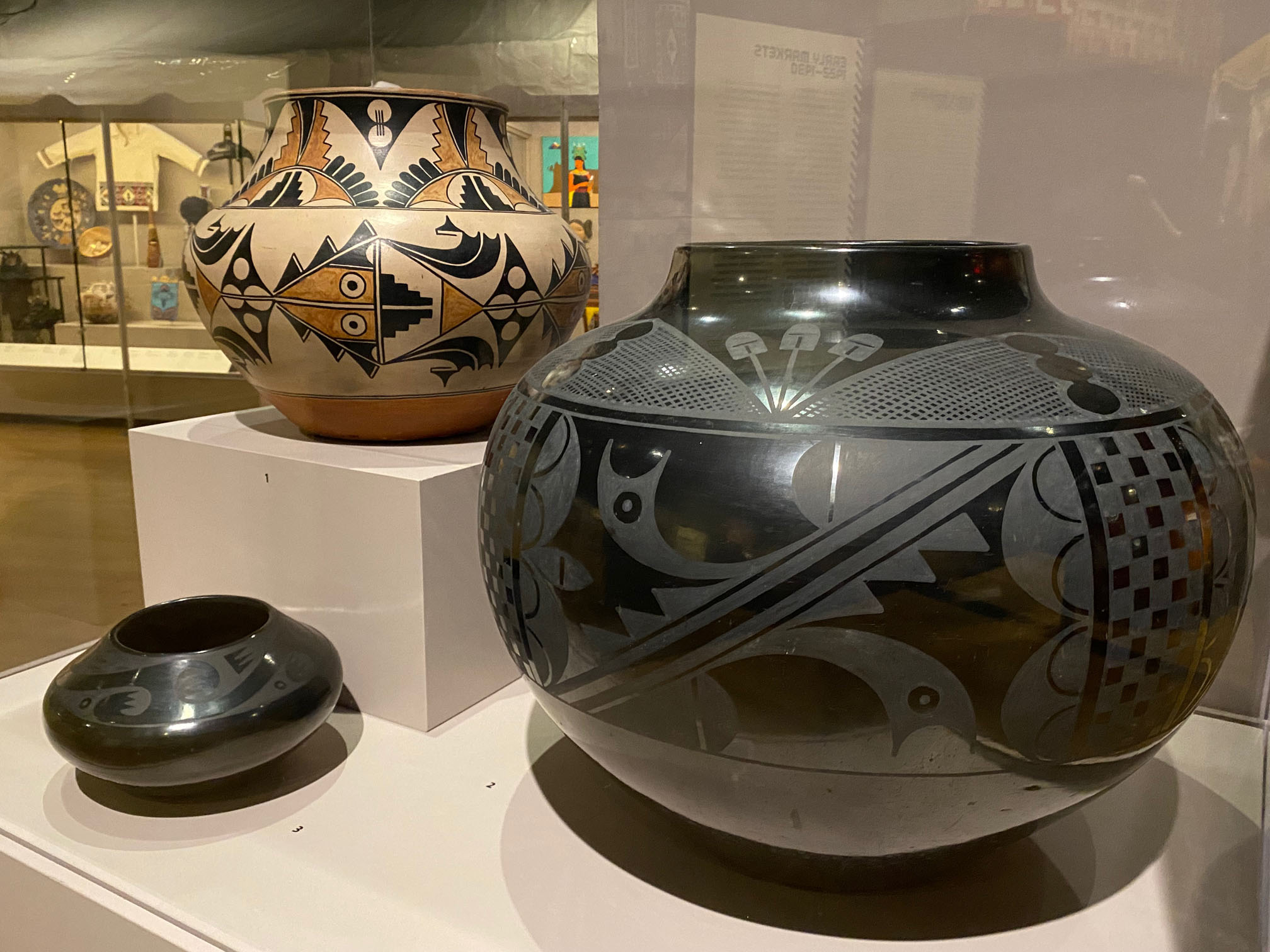
The inter-generational mastery of New Mexico’s Pueblo artists is featured in several vitrines holding examples of black-on-black (and other) masterworks by the Martinez family at San Ildefonso (go, Maria!) and the Tafoyas of Santa Clara, with Margaret’s famous bear-paw imprints.

Work by famed San Ildefonso artist Maria Martinez: 1922 polychrome, large 1942 black pot (award-winner painted by Julian Martinez); and 1928 jar. Courtesy: MICA, SAR

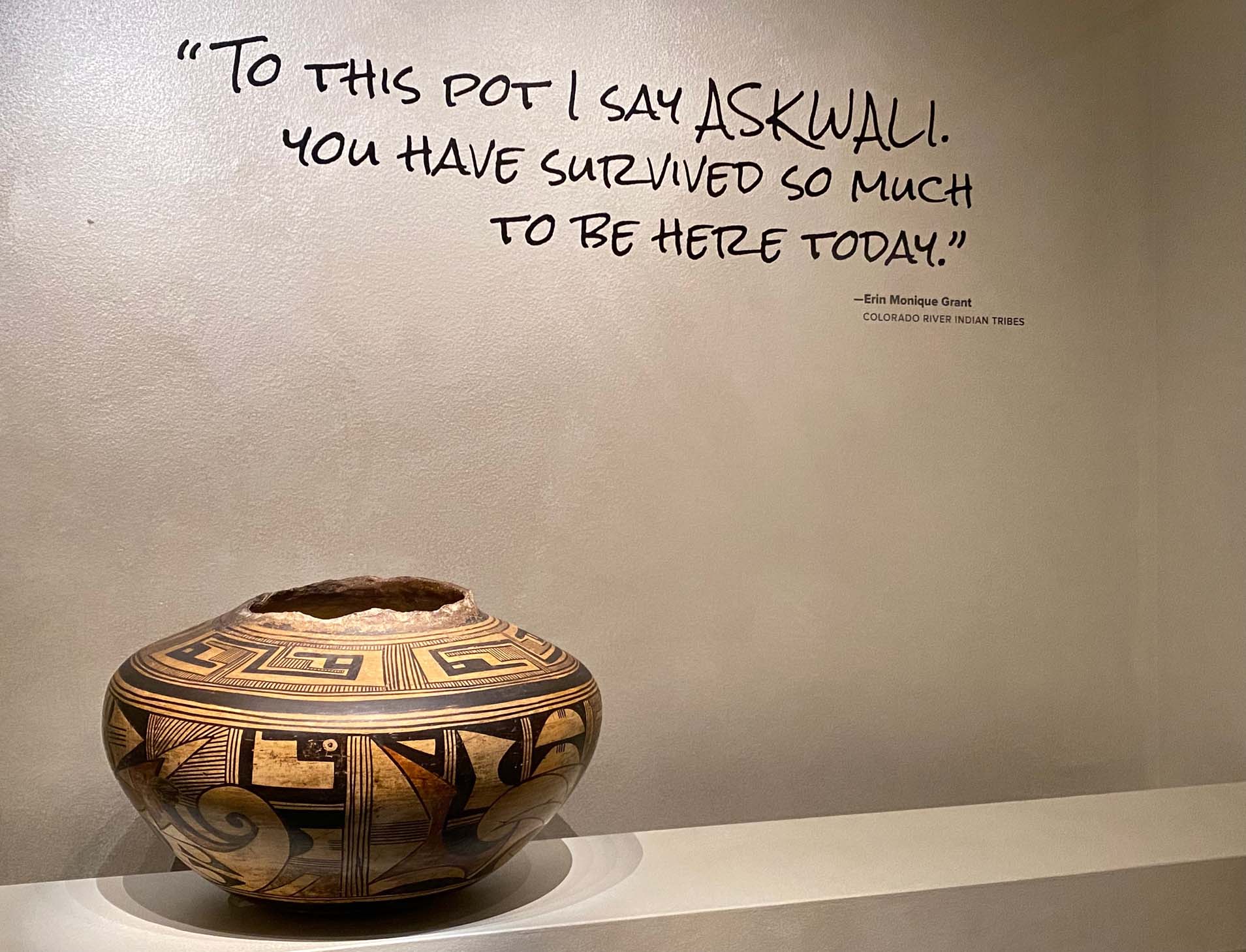
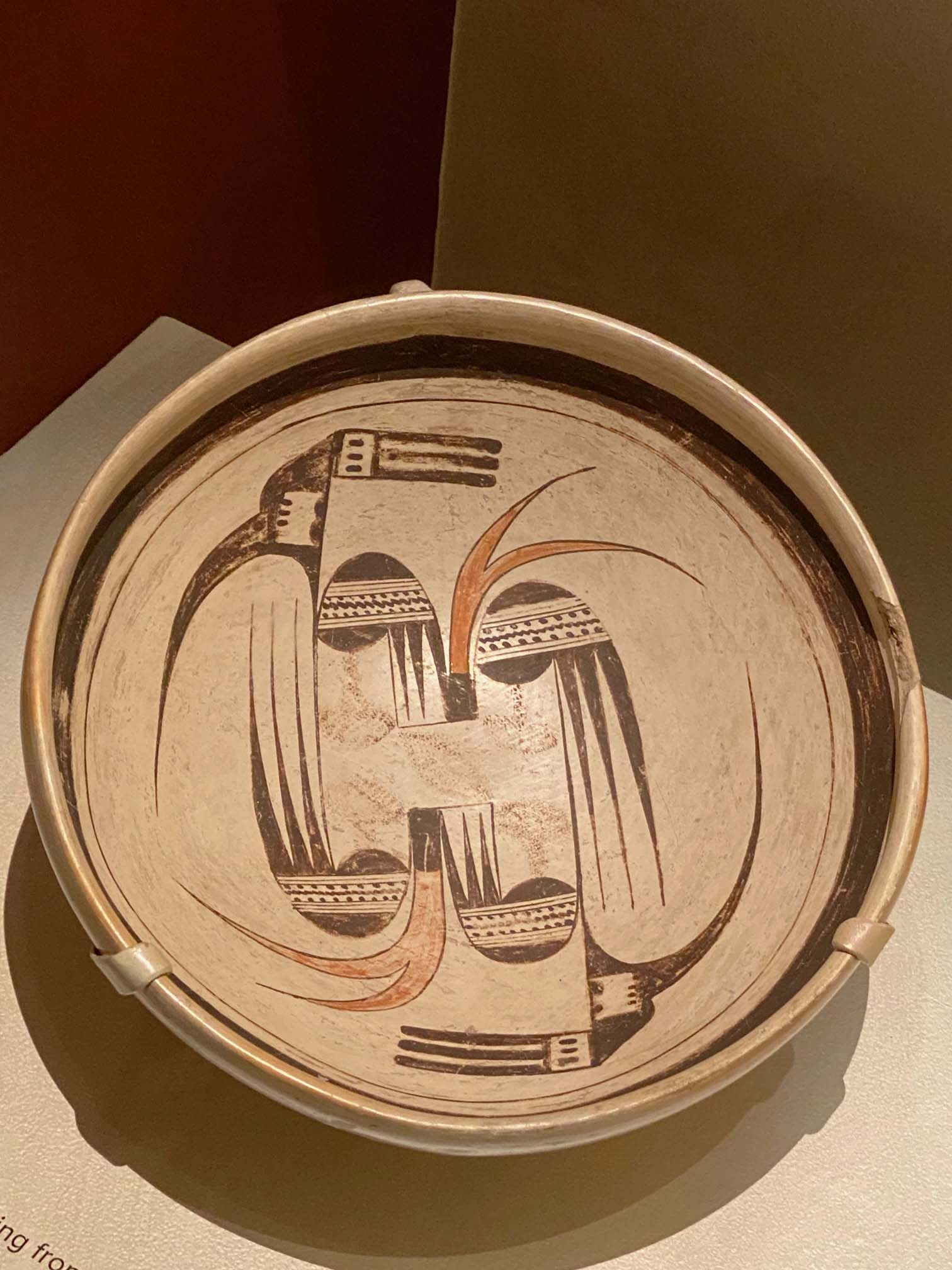
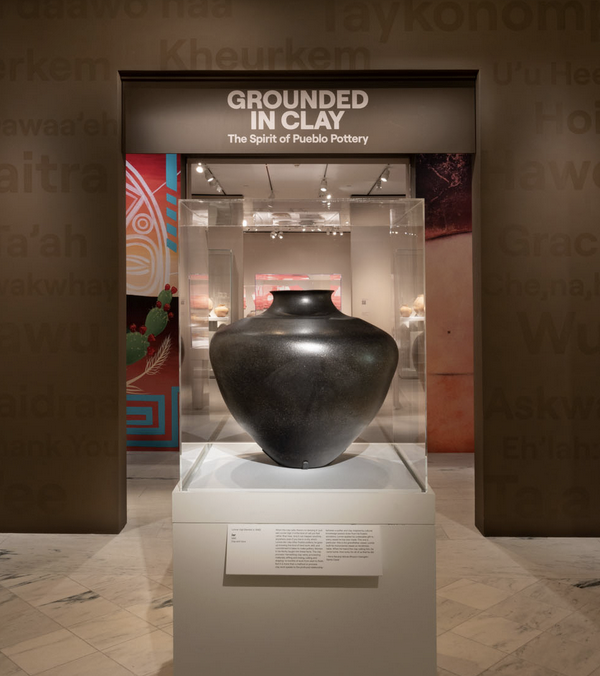
The surrounding gallery features dazzling painted pottery works by Zuni and Acoma from the 1920s – all drawn from the School for Advanced Research (SAR) collection, which began in 1922 to preserve classic works, SAR is the source of the acclaimed exhibition now at the Metropolitan Museum, Grounded in Clay: The Spirit of Pueblo Pottery. Sometimes the artists who made the pot is known; but often the maker is lost to history.

1928 Acoma jar. Courtesy: SAR

In the 1930s and 1940s across the United States, tribal mortality rates increased and their other economic lifelines decreased. But these conditions in the Southwest made the Market an even more important source of family revenue. Throughout the 1940s, the Santa Fe Market boomed.

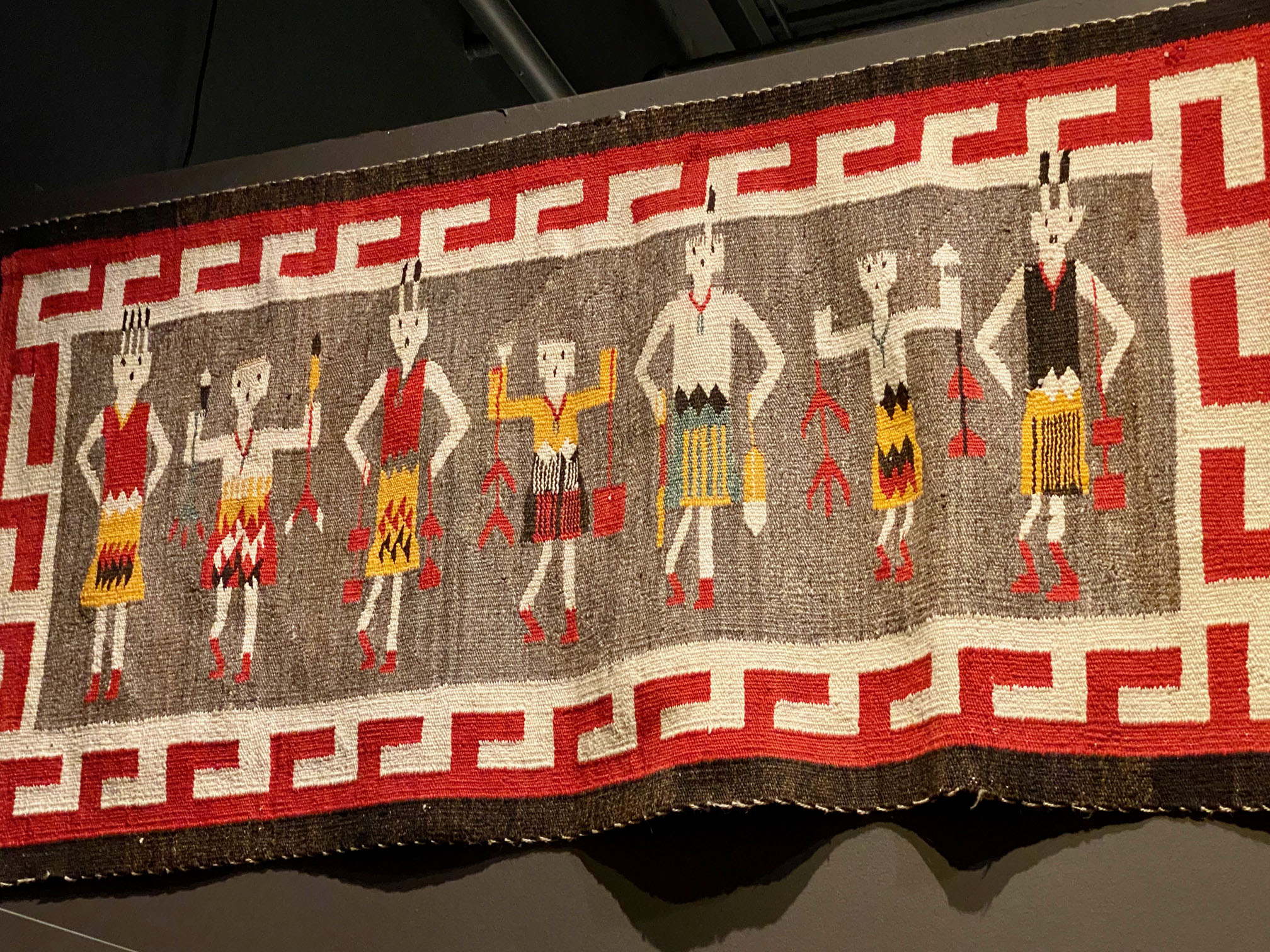
1920-1930 Navajo hand-spun wool rug with figures representing the fire dance. Courtesy: Historic Toadlena Trading Post Museum.

By the 1950s, Federal government instituted policies to encourage Indians to leave their land and move into cities. Unfortunately, Santa Fe Indian Market policies had the same depressing effect – the organizers reduced both the number of artists allowed to show and amount of prize money that could be won.

By 1959, the SF Indian Market was on life support, with a few private donors stepping in with funding just to let it survive.

But during the 1960s, changes were afoot. The Institute for American Indian Arts began in Santa Fe, where Lloyd Kiva New gave Native artists “permission” to throw off traditional conventions and make contemporary art. Across the United States, social-justice movements focused on indigenous people’s rights demanded policy changes to reverse the impact of oppression. By 1968, Congress had passed the Indian Civil Rights Act.

What did that mean for the Market? The majority of works on display in the museum gallery are from the post-1970s period, when the scope, range, voice, virtuosity, and experimentation reflected the times.

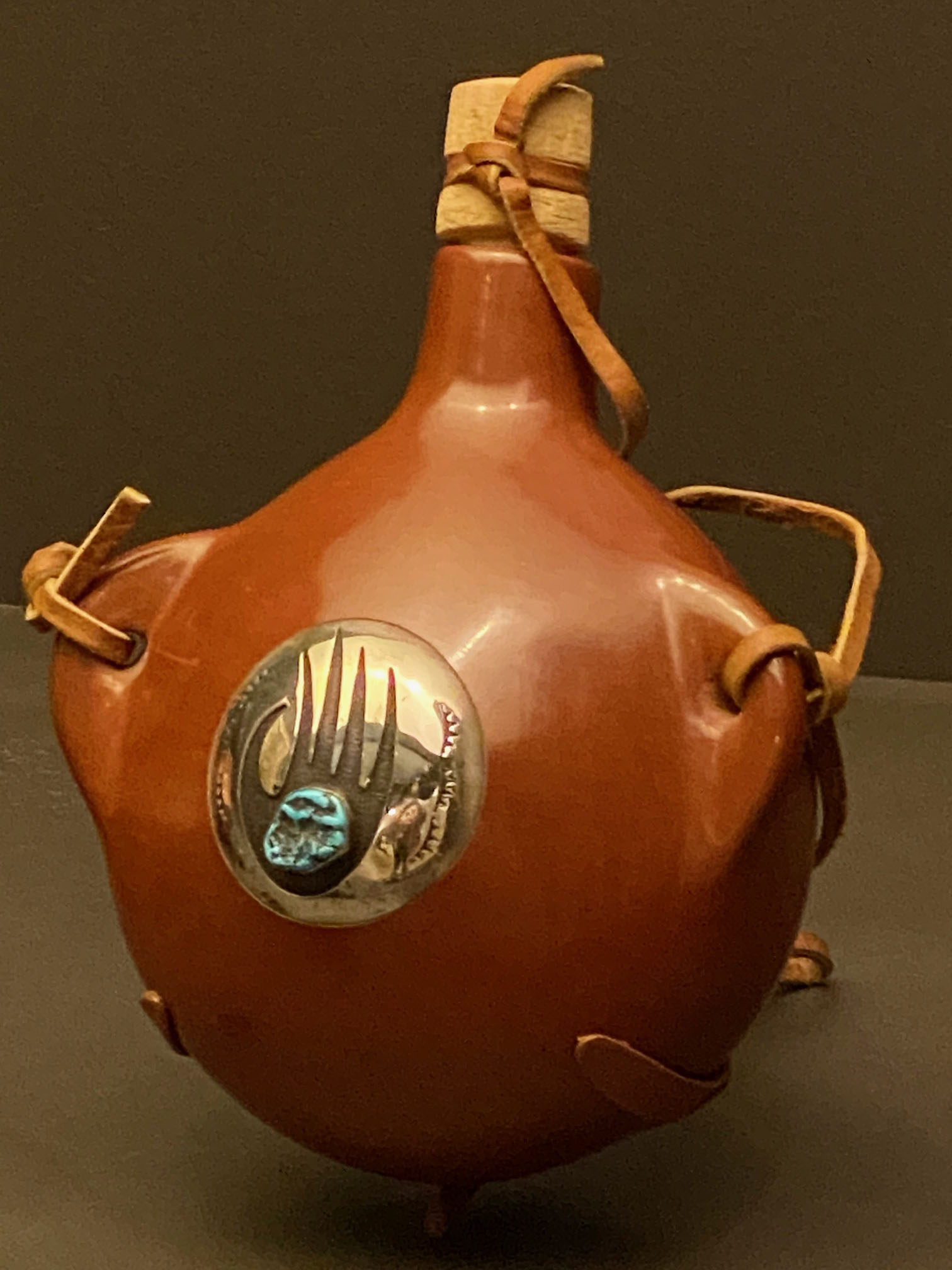
1974 pottery canteen with turquoise and silver by San Ildefonso artists Rose Gonzales and Tse Pe. Courtesy: private collection.

Here are some examples – the glorious, gleaming, turquoise-inlaied 1980s vessel by by Zia/Jemez/San Ildefonso artist Dora Tse Pe and the virtuoso painting on a jar by by Acoma artist Dorothy Toriio.

1980s pottery jar by Zia/Jemez/San Ildefonso artist Dora Tse Pe. Courtesy: private collection.
1990 pottery jar by Acoma artist Dorothy Toriio. Courtesy: King Galleries.

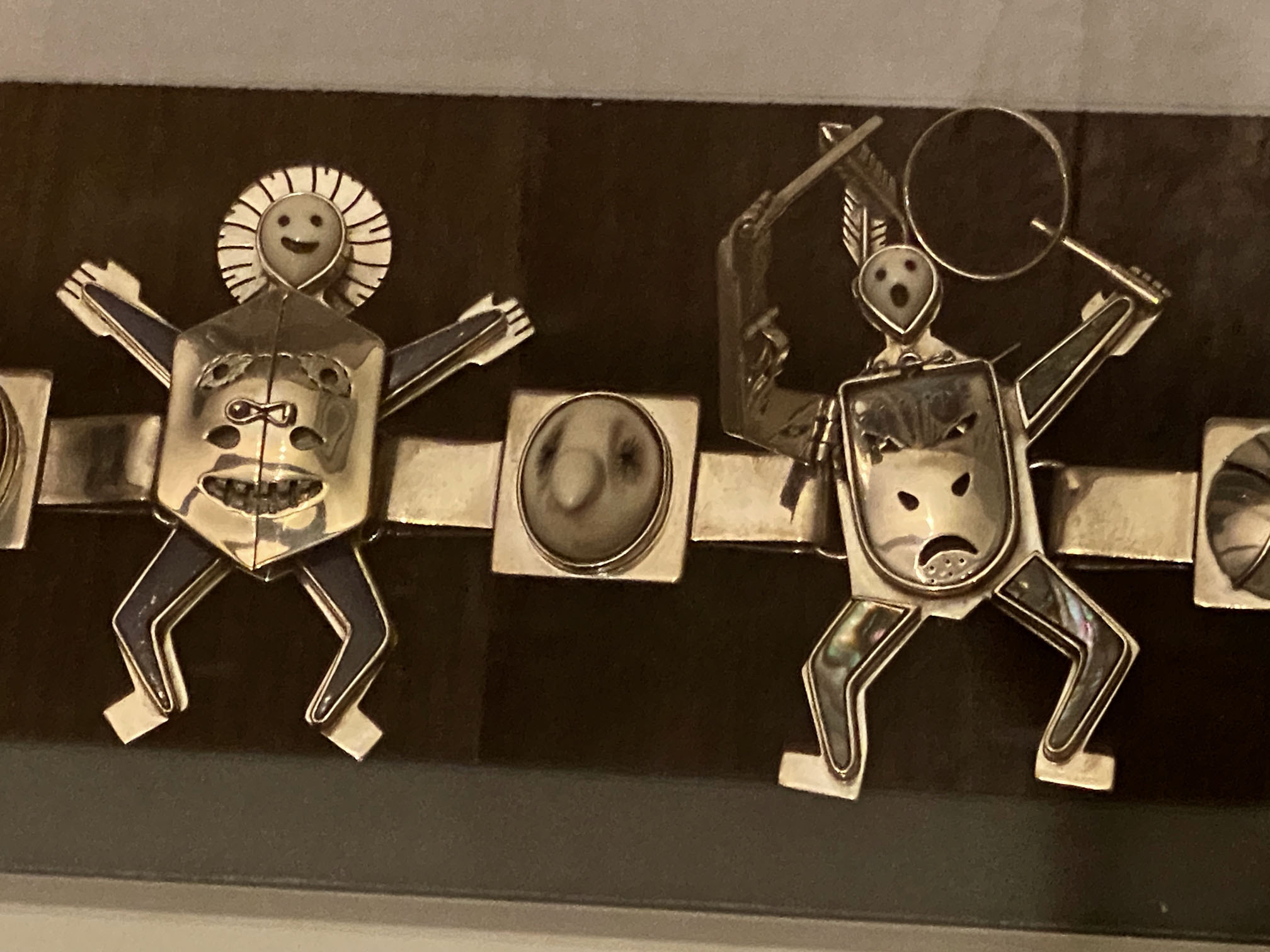
Or, consider the virtuoso silverwork and inlaid belt by Aleutian master Denise Wallace; edgy, theatrical 1990s Cochiti figurines by Virgil Ortiz; and a 1999 horsehair basket woven by Tohono O’odham artist Leona Antone. See more in our Flickr album.

Silver 1986 “Aleut Dancer Belt” by Aleut artist Denise Wallace with abalone, fossil ivory, and lapis; Best in Non-traditional Jewelry Award. Courtesy: private collection.

The show’s finale catapults the story of Indian Market into the future.  First, there’s a cluster of sculptural and video works by Virgil Ortiz, featuring his sci-fi, super-powered, time-traveling warriors from the future who travel back to 1680 to fortify the success of the Pueblo Revolt and save Pueblo culture.

“Kootz (Runner-twin brother of Tahu)” 2018 high-fire clay sculpture with “warning” LED lights by Cochiti artist Virgil Ortiz. – a character from his sci-fi 2180 ReVOltage Series. Courtesy: the artist
“Tahu (Blind Archer)” 2018 sculpture with LED lights by Cochiti artist Virgil Ortiz.. Courtesy: the artist

Second, there’s a photo wall of families and their young children, who create work to enter in to the children’s division. It leaves visitors with the strong feeling that not only will forward-looking artists keep innovating and creating, but that the kids will be all right.

Still of 2022 “Made in Native America” video by Cochiti artist Virgil Ortiz, featuring sci-fi costumes. Courtesy: the artist

Pedro Reyes Takes Direct Action in Santa Fe

You first see a group of anonymous protestors – statues that appear to be taking it to the streets with placards and bullhorns. Elevated at different levels, they present a monument to non-violent protest – a fitting opening to Pedro Reyes: DIRECT ACTION, on view at SITE Santa Fe through May 1.

Reyes believes in participatory art projects that transform art-making into social action.

The Protesters, Reyes’ 2016-2017 monument to unified voices that bring about change from non-violent protest. Courtesy: the artist, private collectors.
Memento, 2022 – vases made from gun parts by Albuquerque and Santa Fe students. All for sale.

The products of his 2022 Memento are right behind you – an array of fun flowers popping out of tall vases. Look closer.

The airy containers are transformed guns from a New Mexico buyback program that incentivized people to exchange their guns for grocery or home-store gift cards. The vases, made by welding-class students from Albuquerque and Santa Fe, are all for sale, with proceeds going to fund activities by New Mexicans to Prevent Gun Violence.

Turning the corner into the next installation, you encounter a wall of videos and shovels in a similar transformation – Palas por Pistoles – that Reyes organized in a particularly violence-prone community in western Mexico.

Reyes’ Palas por Pistoles (2006-present) – shovels made from melted-down gun parts, which were used by schools and museums to plant trees.

Reyes asked people to donate guns to be melted down for an art project promoting environmental peace. He received 1,527 weapons, crushed them in a public-art event, and commissioned a foundry to make shovels. Schools and museums used the shovels to plant 1,527 trees.

Every turn in the gallery reveals a different type of installation and project – libraries for “the people,” sculptures referencing language systems, posters protesting nuclear arms, and musical instruments and contraptions created from weapons.

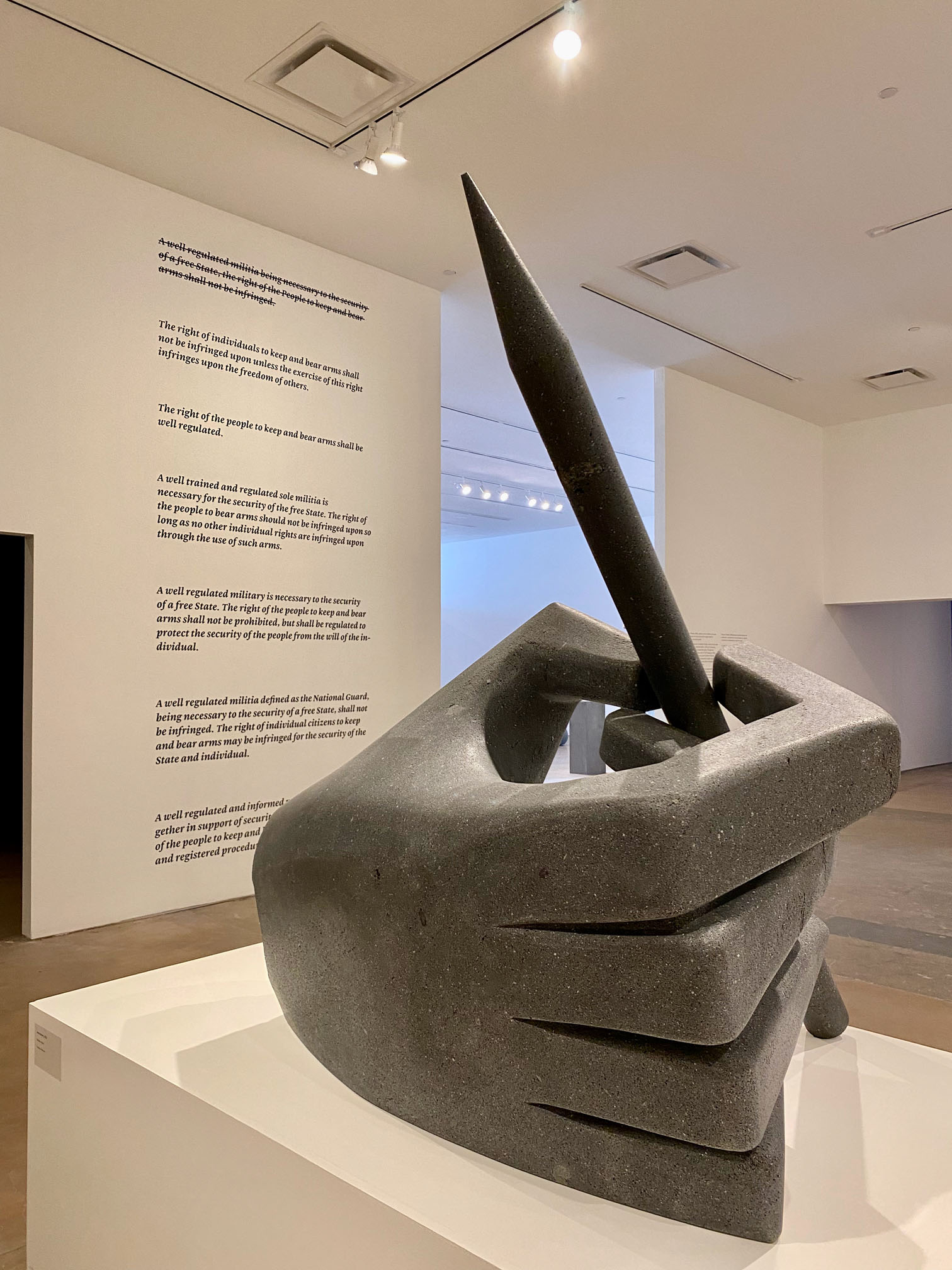
You can’t miss the artist’s large volcanic-rock hand with pencil – an emblem of Reyes’ Amendment project that held community meetings where rewrites to the Second Amendment were proposed and discussed. The idea is that with so much discussion on policies these days, it’s better to write down the “amendments to the Amendment” in pencil! A list of suggestions is prominently posted nearby.

2002 Amendment volcanic stone hand writes the Second Amendment in pencil to facilitate changes in wording as necessary. On wall, multiple drafts of the Second Amendment generated in a Tampa, Florida community project.
Reyes’ 2022 marble sculpture, Colloquium (Parafrasis) depicting the architecture of speech; in background, icons of solutions to social problems from The People’s United Nations (pUN) project – food insecurity, population, gun control, mass incarceration.

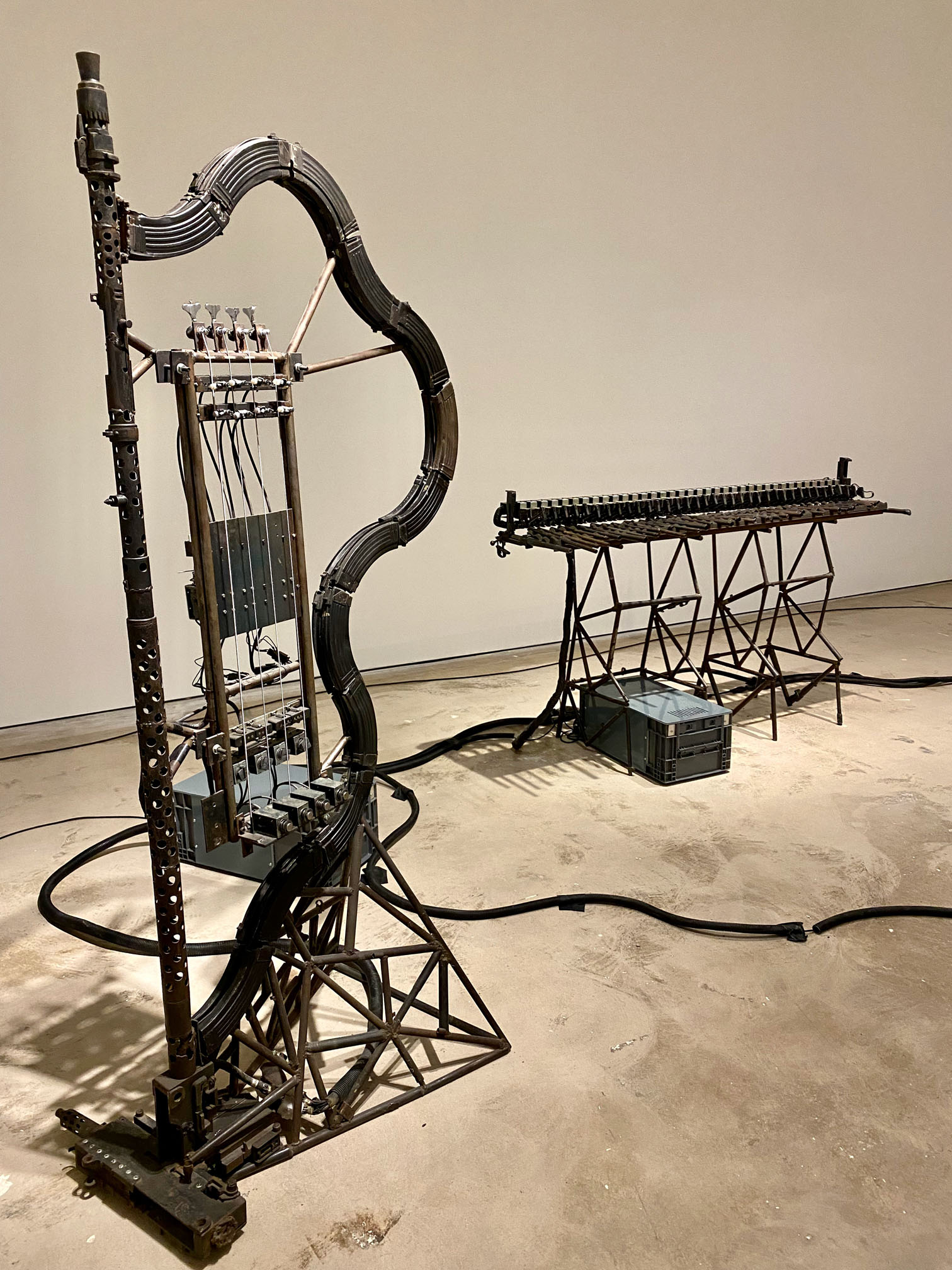
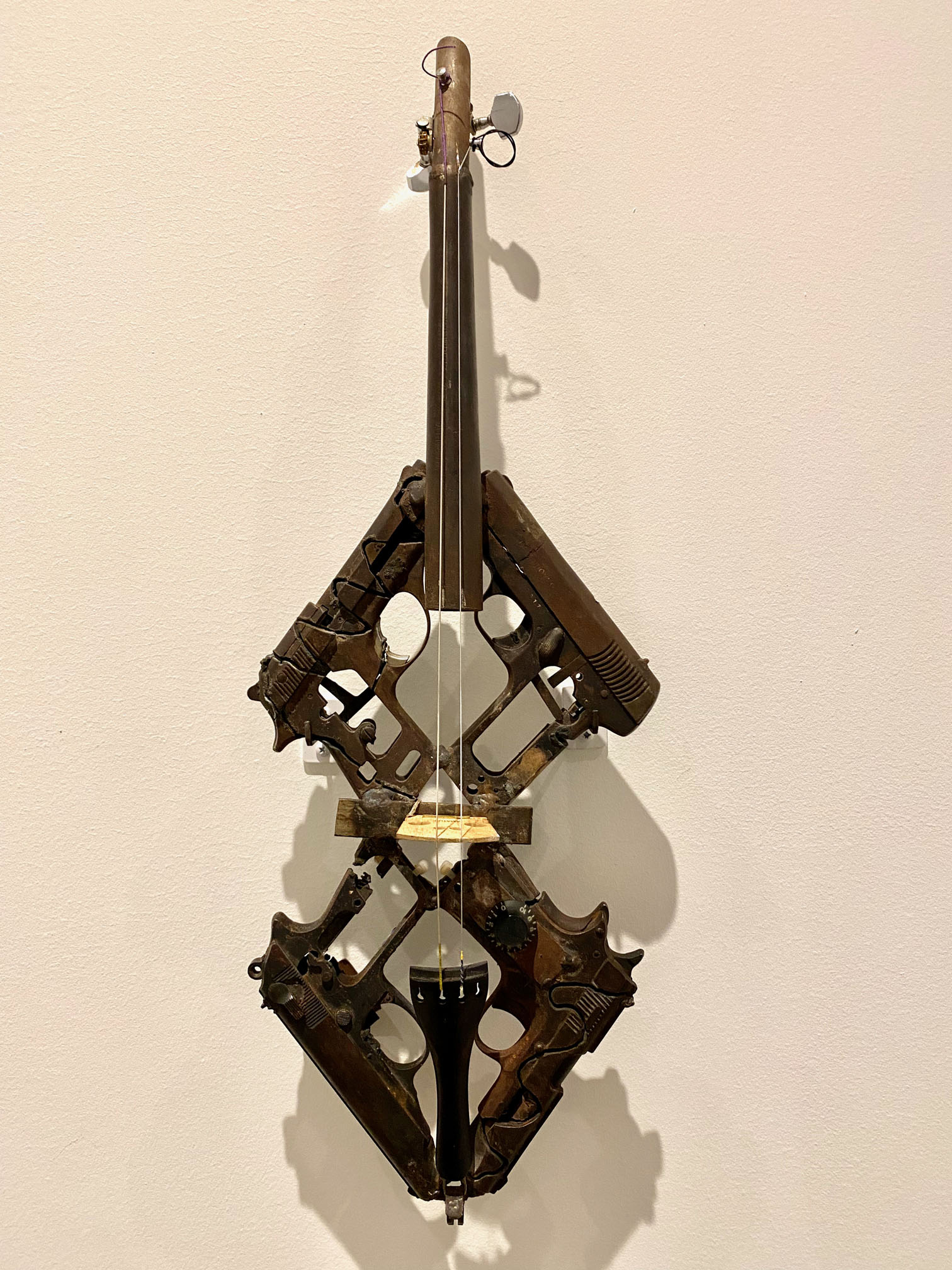
Visitors tend to linger in the Disarm gallery, closely examining the various automated musical instruments created from firearms. Every few minutes, one of the pieces awakens to pluck a string or tap out a slow sequence. It’s a bit startling, not knowing which of the seven is going to activate next.

Harpanet and Cañonófono in Disarm Mechanized, mechanized instruments made from recycled gun and rifle parts. Courtesy: Enrique Rojas.
Reyes’ 2012 Disarm (Violin) from destroyed weapons, played in SITE Santa Fe concerts in 2023. Courtesy: the artist.

Take a look at our Flickr album to see more of the exhibition and to hear the sounds made by the Disarm instruments.

SITE Santa Fe provides “activators” for Reyes’ Music Machine installation – an experience that demonstrates how one artist’s imagination can make you stop and think, even if it’s toward the end of a deep, contemplative show.  Reyes features iconic firearms from three European countries – Austrian Glocks, Swiss Carbines, and Italian Barettas – that have been transformed into classy music boxes. When activated, each plays a musical composition by a famous composer from that country.

Gallery educator Red Hart about to activate Reyes’ Machine Music – crank-operated music boxes made of Swiss Carbine rifles, Italian Barettas, and Austrian Glock pistols.

Hear the artist talk about each of these works in the SITE Santa Fe audio guide, and take time to ponder taking direct action as you visit this beautifully installed, socially relevant, and thought-provoking show.

No Nukes installation with series of 2022 hand-painted Zero Nukes posters in different languages, representing many countries. Courtesy: the artist.

Art of Indigenous Fashion at IAIA

How do Native American designers transform traditional beading, ancient symbols, social commentary, and tribal embroidery into contemporary fashion? 

Answers are on display in the exhibition, Art of Indigenous Fashion at Santa Fe’s IAIA Museum of Contemporary Native Art (MoCNA) through January 8. It’s a fitting exhibition that opened in conjunction with the tenth anniversary of the Southwestern Association for Indian Arts (SWIA) Indigenous Fashion show.

Take a look at our favorite pieces in our Flickr gallery.

2015 Jamie Okuma wool dress with shells. Courtesy: National Museum of the American Indian
2022 Recon Watchmen costumes by Virgil Otiz (Cochiti Pueblo). Courtesy: the artist.

The show puts the work of 2022 Native American Treasure honoree Virgil Ortiz front and center, with three imposing Recon Watchmen costumes. No, it’s not runway fashion. But these futuristic sci-fi ensembles from the year 2180 are made for a film where protectors travel back in time to help the New Mexico pueblos successfully fight their opressors in the Revolt of 1680.

Ortiz (Cochiti Pueblo) combines film, fabric, headresses, and history to tell the story of a real-life Native revolution that Pueblo kids never learned in their New Mexican history classes. Look close at the awesome printed silk cloaks, lamé “armor”, and dramatic sculpted masks of these dramatic Native superheroes.

Next, you see how Native artists combined art and fashion from the mid-20th century until now.

Several historic pieces are by the godfather of Native American contemporary fashion (and early leader of IAIA), Lloyd Kiva New (Cherokee), who had a successful contemporary line in Scottsdale in the 1940s and1950s.

The clothes in this exhibition feature buttons and clasps made by Charles Loloma, a Hopi innovator in contemporary Native jewelry, who also had a shop in Scottsdale and joined New at IAIA in the Sixties. Lucky that collectors saved these gems for us.

1950s and 1960s ensembles by Lloyd Kiva New (Cherokee). Private collection.
2016 ribbon dress by Jamie Okuma ((Luiseño/Shoshone/Bannock)) and 2018 silk dress by Orlando Dugi (Dine’). Courtesy: the artist; IAIA

The rest of the work in the exhibition represents the 2000s, primarily three types – ensembles taking a luxurious haute-couture approach, wearable social commentary, and sly conceptual art-as-fashion installations.

The 2000 embroidered, appliqued wool “Chilkat” cape by Pamela Baker (Tlingit/Haida) is regal enough to wear at any black-tie affair.

The same for Orlando Dugi’s (Dine’) 2018 feathered and beaded evening dress with a subtle golden eagle and touches of sparkling corn pollen. Dugi is a self-taught couturier, who meticulously applies each bead and feather himself.

Two dramatic red-carpet dresses by Lesley Hampton (Anishinaabe) that have appeared at recent Emmy and Golden Globe Award events are reminders of the inroads being made by Native Americans artists in the entertainment sector.

Among the most dramatic social-commentary work, Canadian design team Decontie & Brown (Penobscott Nation) has two attention-grabbers – a “wedding dress” offering the wearer protective spikes from unwanted advances and radiating power-feathers, and the “I Am A Reflection…” mirrored man’s coat. Absorbed in the kaleidoscope of the coat’s reflected light, viewers contemplate Decontie & Brown’s message as they marvel at the visual magic.

Decontie & Brown’s 2017 Armored Beauty wedding dress and 2021 upcycled I Am a Reflection…Mirror Coat. Courtesy: the artists
2018 It’s in Our DNA, It’s Who We Are ensemble by Anita Fields reflecting tribe’s past and present. Courtesy: Minneapolis Museum of Art

The elegant embroidered cashmere shift by Sho Sho Esquiro (Kaska Dena/Cree) has delicate somber black wings fluttering across the back. But these are paired with a front shouting the savage message of 20th-century Indian boarding school government policy. Beautiful but chilling.

Anita Fields (Osage) is represented by a suspended fashion installation in the center of main gallery – a wildly oversized embroidered top hat and wedding coat titled “It’s In Our DNA, It’s Who We Are.” Intertwined strands are emblazoned on the front; images of the unfortunate treaty her tribe signed in 1808 line the inside.

Outside the main gallery, MoCNA has invited Mohawk multimedia artist Skawennati to create a digital mural and installation of her “Activist Avatars,” cyber-protesters modeling a virtual clothing line. Multiple screens of social-justice protesters in power-to-the-people cammo and calico march toward viewers in the MoCNA screening room to an energetic Native hip-hop track.

Skawennati’s (Mohawk) 2022 Calico and Camouflage: Assemble! multichannel video installation.

Many of the artists represented in this show – Patricia Michaels, Jason Baerg, Jamie Okuna, Sho Sho Esquiro, and others – were featured in this year’s Indigenous Fashion show. Watch the 2022 SWIA Fashion Designers runway videos here.

2019 silk and leather Sunset Dress by Jason Baerg (Cree Métis), symbolizing dynamic optimism and referencing trees, sky, and earth. Courtesy: the artist.

Transgressive Photography Shown in Santa Fe

Want to meet some people who enjoy breaking the rules?  You’ll meet plenty of mavericks who challenged the norm in Transgressions and Amplifications: Mixed-Media Photography of the 1960s and 1970s, an exhibition on view at the New Mexico Museum of Art in Santa Fe through January 8, 2023.

Edward Weston and Ansel Adams set a high bar for classic, modernist photography, but the generation of image-makers who followed were driven to experiment, shake things up, and see where it all led. 

Detail of 1983 Joyce Niemanas Grandfather Polaroid collage
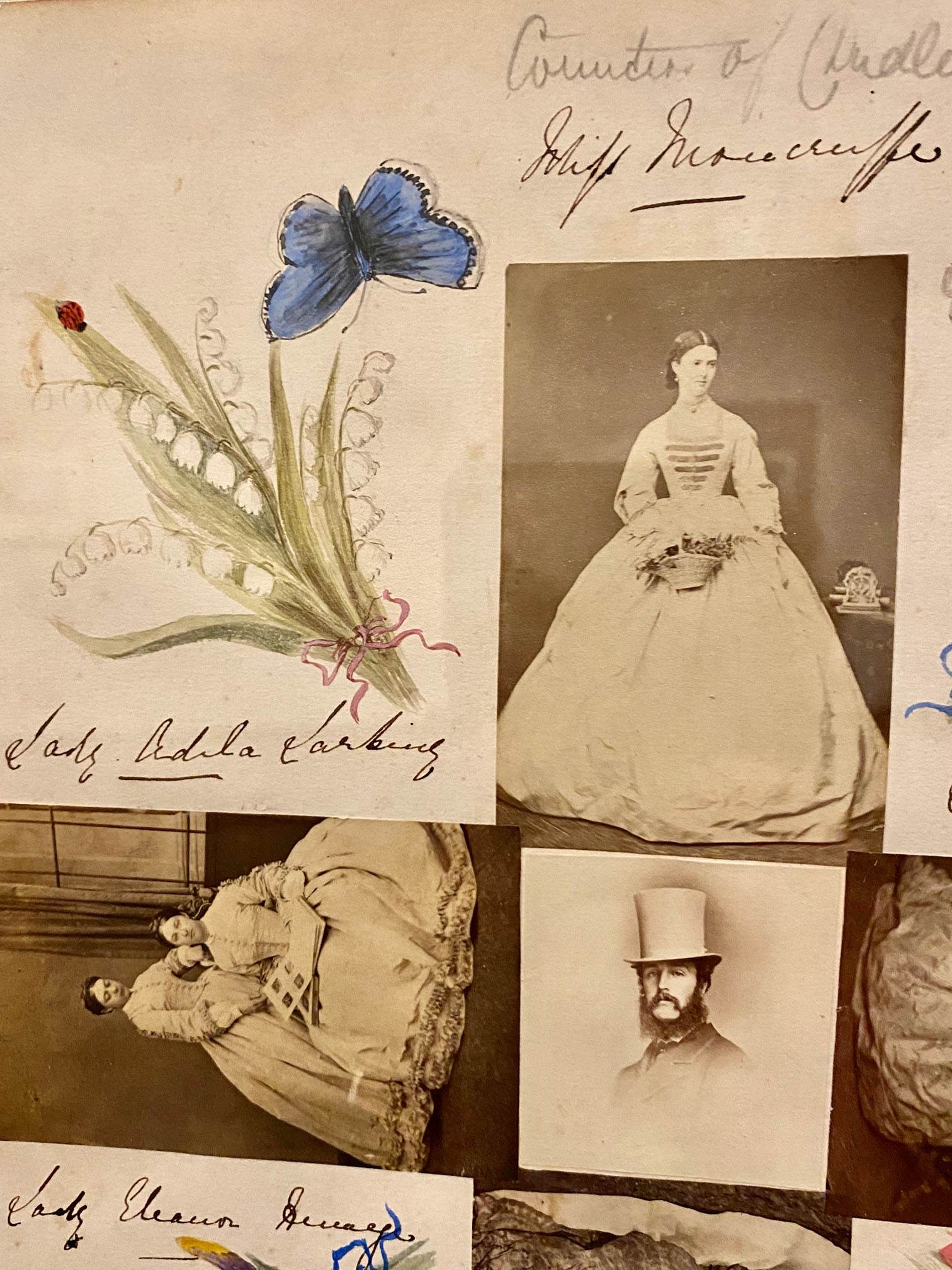
Detail of 1864 Lady Filmer’s album mixing watercolor and albumen print collage. Courtesy: UNM Art Collection.

Why not go back a hundred years and make new images with historic photo techniques (sun prints, anyone)? Has anyone tried embroidering photos? What about mashing up photo-silkscreen prints with readymade collages decorated with rubber stamps?

Can Polaroids be turned into fine art? Or making a sculpture or kitch card deck out of photos?  What about dreamscapes? What about creatively repurposing magazine photos or TV images?

A stroll through the gallery shows a broad range of creative 20th-century minds at work, with at least one case showcasing some 19th century pioneers.

Meet Lady Mary Georgina Filmer, a London society gal who mastered the art of photocollage as early as the 1860s. A page from one of her albums shows how she merged topsy-turvey photo images, botanical watercolors, and text to tell stories her own way – a true stay-at-home pioneer!

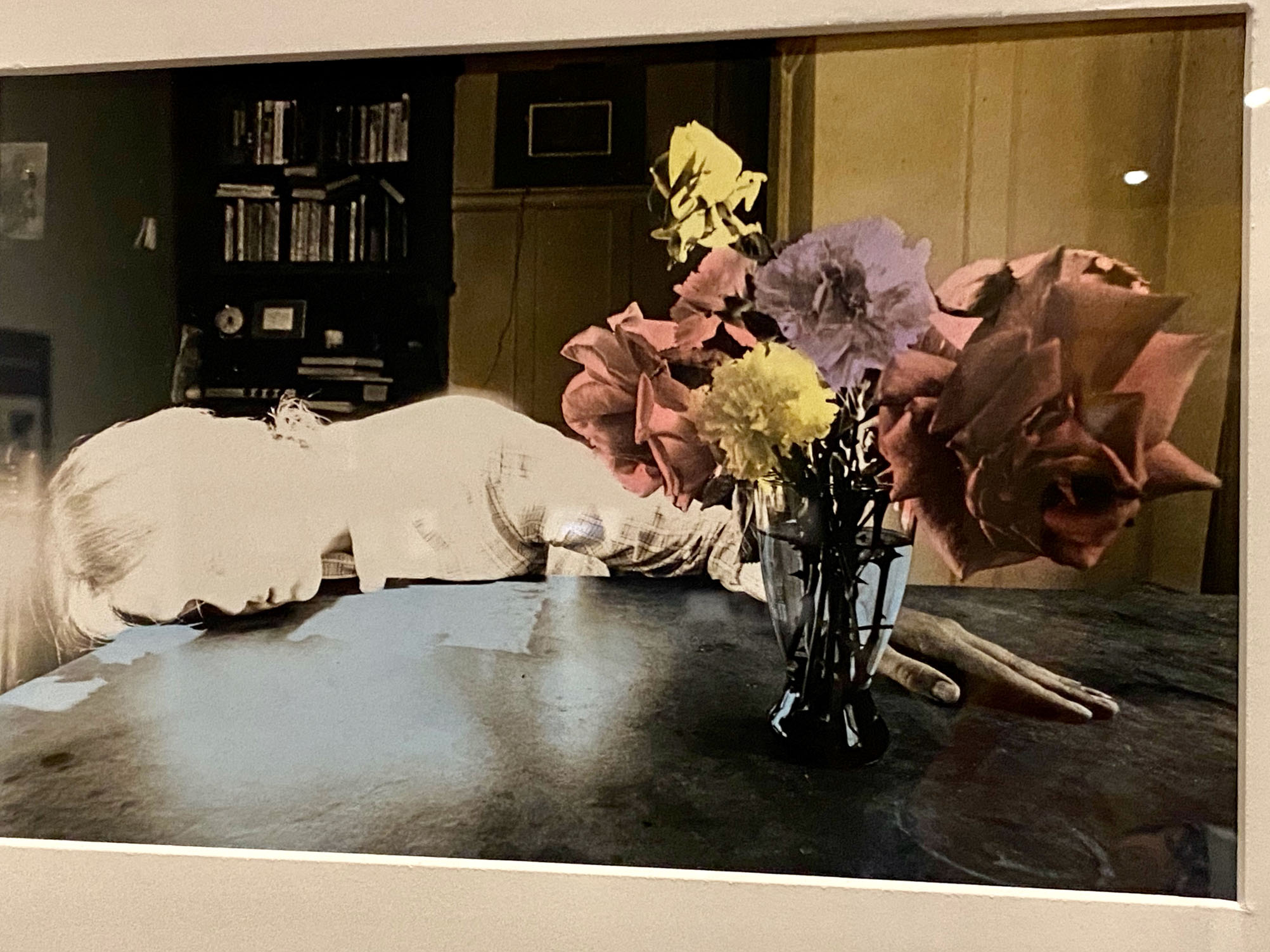
Lady Filmer’s album looks out on dozens of other Americans who went back into the time machine to toy with making albumen prints, stereographs, hand-colored photos, drawing, and cyanotypes. Example: the arresting 1970s hand-colored gelatin silver print by Karen Truax where she ghosts-out her central figure.

1970-1974 gelatin silver print Supernal by Karen Truax, featuring a bleached-out central figure and hand-colored domestic interior

For anyone curious about these old-timey methods, the curators have provided visitors with a place to relax, leaf through books about it, and watch YouTube videos on the gallery iPad.

Another gallery features artists who took photography mixed-media to the next level, like Rauchenburg’s litho that appropriates Bonnie and Clyde movie stills and an over-the-top abstraction by Thomas Barrow that combines gelatin silver print technique with a crazy-quilt of stencils, spray paint, and objects. So totally Eighties!

Detail of Thomas Barrow’s 1980 gelatin silver print Discrete Multivariate Analysis, mixing lights, objects, stencils, and spray paint

The third gallery displays lots of fool-the-eye and 3-D delights. What’s the most fun? Jerry McMillan’s photo-offset inside a “paper bag?” Betty Han’s Soft Daguerreotype of Xeroxed weeds on fabric? Probably Robert Heinecken’s T.V. Dinner/Shrimp. Hard to choose.

Robert Heinecken’s 1971 Van Dyke print T.V. Dinner/Shrimp, #1C. Courtesy: University of Arizona’s Center for Creative Photography.

Other sections of the exhibition show how 1970s photographers made images in which photography itself was the subject and told highly personal stories.

Take a look at some of our favorites in our Flickr album.

Artist book: Keith Smith’s 1972 gelatin silver print Book 32 – a 3D take on photography.

And don’t forget the coda that features a dramatic images by more recent photographers that make provocative social statements and represent voices that were not fully represented within the university system during the 1960s and 1970s.

Lorna Simpson’s 1991 Black, a dye diffusion transfer print with engraved plastic plaques

O’Keeffe Museum Shows Georgia at Home

One of the most photographed artists of the 20th century, everyone is used to seeing Georgia O’Keeffe in her “formal” pose and gear – angular black hat, stark wrap dress, punctuated by her modernist Calder pin, standing against the New Mexico sky peering solemnly into the future.

In its latest offering, the Georgia O’Keeffe Museum is giving fans a special treat (and a different view) through its exhibition, Georgia O’Keeffe, a Life Well Lived: Photographs by Malcolm Varon, on display in Santa Fe through October 31.

2021 print of Varon’s 1977 photo of Georgia relaxing at Ghost Ranch. Courtesy: the artist
Georgia’s 1946 Part of the Cliff, a painting inspired by the view through her studio window.

The show features a smiling, at-ease 89-year-old surrounded by family, friends, companions, and pets – images quite apart from the GOK that we all admire and revere. How did this happen?

In the 1960s in New York, photographer Malcolm Varon established quite a reputation for documenting painters’ works in a way that captured a lot of their spirit. No wonder that in the mid-1970s, he was summoned out to Ghost Ranch and Abiquiu to document some of Georgia’s huge body of work.

While he was working with the artist during the summer of 1977, a journalist arrived to interview the icon for a feature in ARTnews.

No photographer had been attached to the story, so Georgia came up with hew own solution – ask her colleague Malcolm to shoot her in the setting of her Ghost Ranch home.

Since Malcolm was already familiar with the operations around Ghost Ranch and Abiquiu, he ended up taking about 300 photos of her homes, the landscapes that inspired her, and the people who kept things humming.

2021 prints of Varon’s 1977 portraits of Ida Archuleta, Candelaria Lopez, and Estiben Suazo, the people who managed Georgia’s homes and properties. Courtesy: the artist.

Despite Georgia’s reputation as a loner living out in the middle of nowhere, Malcolm appreciated that the day-to-day operations in the outback were quite fun, busy, natural, and happy at her two studio compounds.

ARTnews made a few selections from Varon’s photographs and ran them in the feature, but the majority of the 300 shots were never printed or seen…until now.

Visitors at the GOK museum pour over every detail of the portraits and landscapes, enjoying a new, different glimpse of the artist and her world – Varon’s portrait of Georgia’s sister, beautiful portraits of her property caretakers (whose families still take care of the GOK home for the museum), and her assistant Juan Hamilton.

The curators present several paintings from the 1940s showing the same cliffs, landscapes, and skies that Varon captured in the summer of 1977. Visitors have fun shifting back and forth between the oil paintngs and photos.

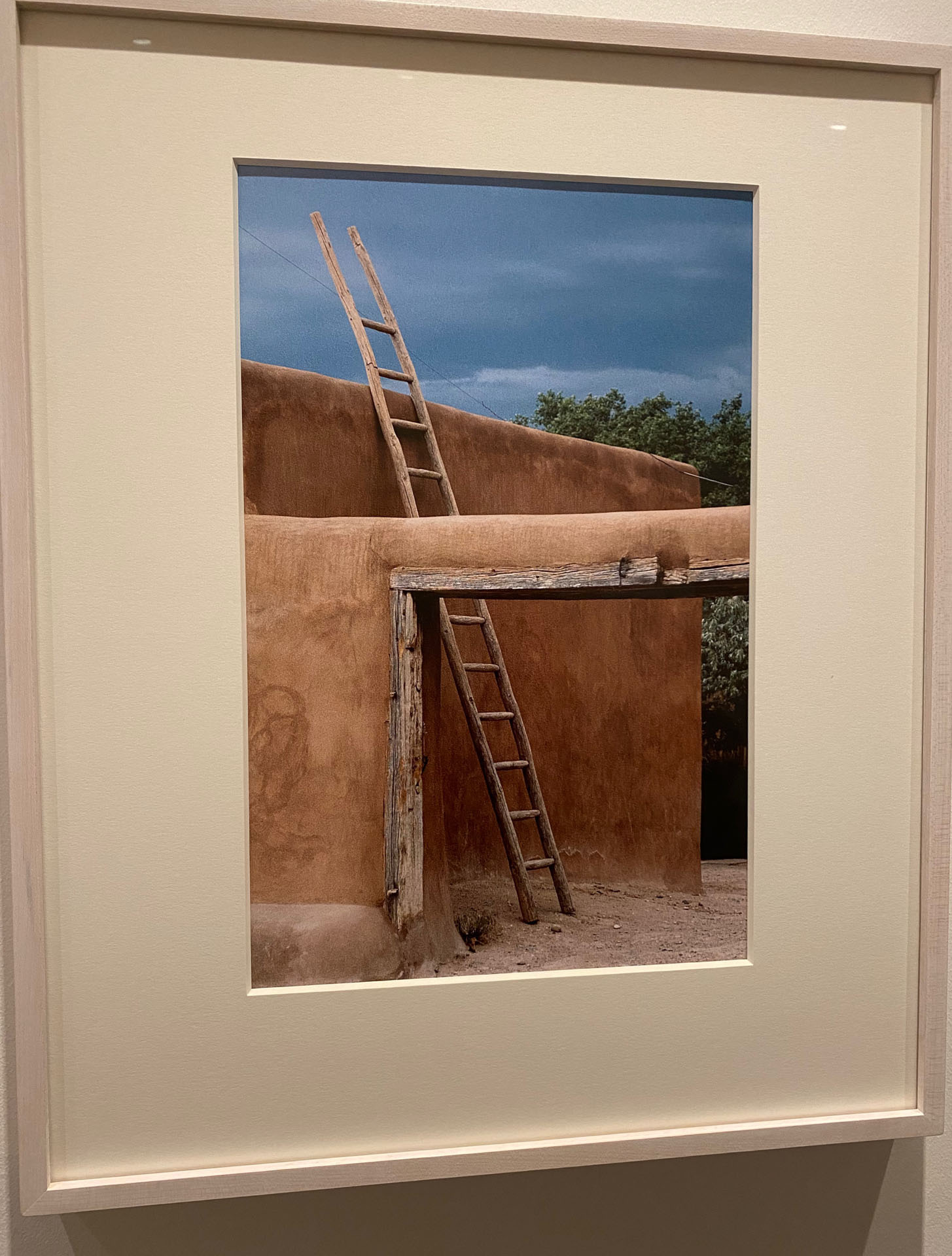
2021 print of Varon’s 1977 photograph of the tall ladder at Georgia’s Abiquiu home – a platform from which she surveyed the world. Courtesy: the artist

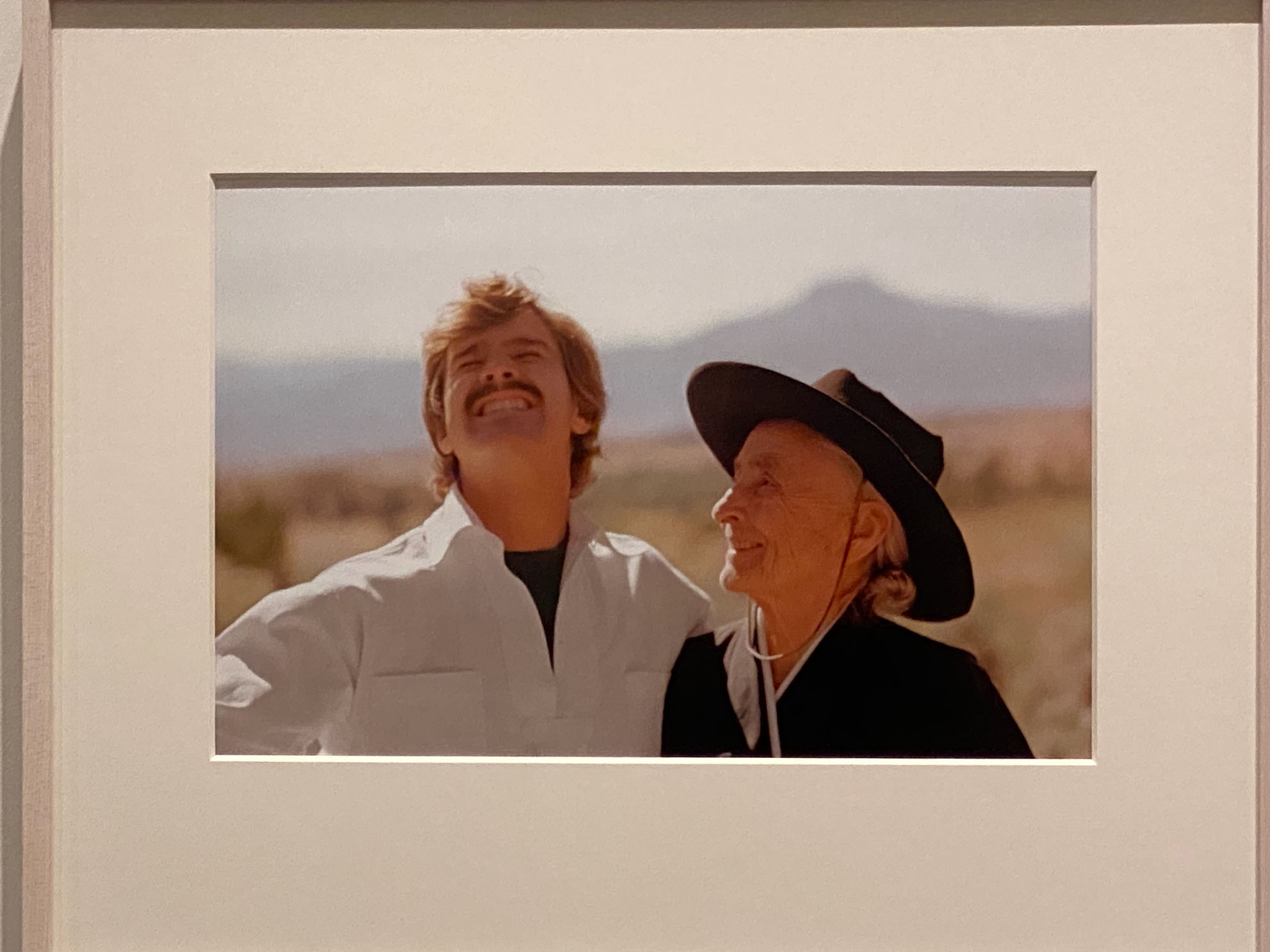
2021 print of Varon’s 1977 fun photograph of Georgia at Ghost Ranch with her friend and assistant, artist Juan Hamilton with the Pedernal as backdrop. Courtesy: the artist

Take a look at some of our favorites in our Flickr album.

Listen in as the curators of this delightful show draw back the curtain on the legendary O’Keeffe, her relationship with photography, and what happened when a trusted friend got her to smile for the camera:

Jeffrey Gibson at SITE Santa FE

What happens when a Native American MacArthur genius is asked by SITE Santa Fe to create an art exhibition during a time of a global pandemic and social justice marches? And invite him to a location where Native Americans make up a significant percentage of the population?

The result is Jeffrey Gibson: The Body Electric – a constantly surprising gallery journey where shape-shifting, cultural disassociation, beadwork, kitsch-image appropriation, gender-identity questions, and science-fiction inspiration reigns.

The show is filled with life-size beaded dolls and garments, films, pulsing papered walls, mysterious film experiences, and social statements either woven or stamped onto clothes (or are they banners?).

Gibson’s 2021 White Swan mixed-media painting in wall-papered gallery with a beaded, life-size, genderless “doll”
2020 Red Moon and Desert Sky minimalist sculptures created from strands of dance fringe.

Gibson, who is based in New York, is an intertribal artist who is a member of Mississippi Band of Choctaw and half Cherokee. However, his influences were forged from prestigious art schools, international travel, and living in non-Native societies.

The opportunity to come to Santa Fe, host a cinema series and several performances, and stay out West for a while was an open door to explore inter-cultural influences, host discussions with appreciative audiences, and show off his wide intellectual and artistic breadth.

In many of his works, Jeffrey mixes traditional “Indian” materials like beads or fringe with slogans, sayings, dime-store “Indian” images, and big-time art-world references.

See some our favorites from this exhibit in our Flickr album and hear Jeffrey explain his influences in SITE Santa Fe’s audio guide.

The little beaded birds that greet visitors in the first gallery and the big beaded life-sized “dolls” in the second were inspired by Jeffrey’s early work in the ethnographic collections of the Field Museum, where he encountered Haudenosaunee-made beaded tourist-trade whimsies and traditional “third gender” dolls for the first time. Why not make his own, but over-size them?

2021 My Joy My Joy My Joy, a mixed-media beaded bird inspired by Victorian-era Native American tourist whimsies

The nearby video gallery features a kaleidoscopic multichannel video of Sarah Ortegon, an award-winning Eastern Shoshone/Northern Arapaho jingle dress dancer, performing to the energetic Sisters track by A Tribe Called Red. This piece – She Never Dances Alone – refers to the dancers who came to the Standing Rock Reservation and lent their support to the 2016 pipeline protests though dance.

Here’s Sarah Ortegon in Gibson’s 2019 Times Square installation of She Never Dances Alone here…wait for it:
2021 They Play Endlessly mixed-media crazy quilt of paint, beads, words, and found objects.

And here’s another look at Gibson’s 2020 exhibition at the Brooklyn Museum, where he mixed works from his studio with artifacts and art from Brooklyn’s own collection.

And check out Gibson’s work our album documenting the Smithsonian’s National Museum of the American Indian exhibition of Native painting, Stretching the Canvas.

If you’re near Nashville, you’ll be able to see Gibson’s The Body Electric at the Frist Art Museum February 3 – April 23, 2023.