Virtual Visits with a Fashion Icon and Rock History

Poster Inspiration with Anna Sui at Poster House

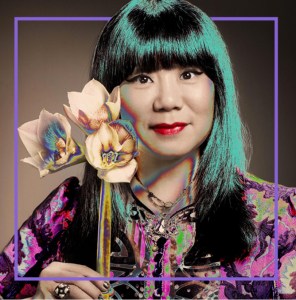
There’s no fashion designer more rock-and-roll than Anna Sui, who will be (virtually) at Poster House tonight (October 19) to show posters from the Sixties and Seventies and explain how they’ve inspired her eye-popping, fun, funny, and magical runway looks.  Take a peek at our Flickr album of her retrospective this year at MAD Museum, and you’ll see what we’re talking about.

Poster House, New York’s newest museum, has one of the best line-ups of virtual events in the City, so get in on this special “Poster Inspiration” event with Anna tonight at 6:30pm. Tickets are only $5, so chip in a few dollars extra to keep their programming rolling.  This week, Poster house is also hosting “Lippert & Lowry: Fireside Chats” on Instagram (October 21) and a virtual tour of their fantastic poster archive on October 22.
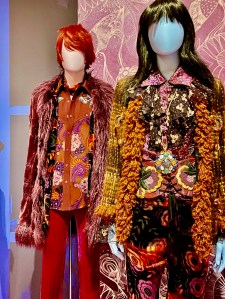
Anna Sui channels Sixties Fillmore psychedelic in her MAD Museum show this year

Continue the rock-and-roll vibe with Thursday’s morning virtual tour of “Bill Graham and the Rock & Roll Revolution” by the New-York Historical Society (October 22). Revisit the legendary Fillmore East and West. Find the links to this and so many other great museum events on our virtual events page here.  Here’s a few:

  • A double header on Agnes Pelton’s show at the Whitney: On October 20, curator Barbara Haskell will answer your questions live, and she’ll be back on October 22 with the panel that had been postponed, “Seeing Agnes Pelton.”
  • On October 20, makers are invited to a panel at the Cooper-Hewitt on to learn how to launch a design project, which is part of National Design Month.
  • On October 23, the Met will host artist Dred Scott speaking about Jacob Lawrence.
  • On October 24, horticulturalists can get an insider’s look at the medieval gardens as the Fall season begins at the Met Cloisters.
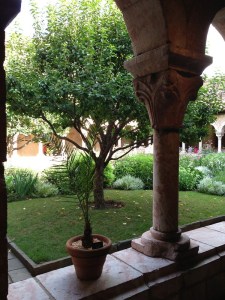
    Gardens at the Met Cloisters

There are also more chances to catch the Morgan Library’s virtual tour of the Hockney show, a full line-up of paranormal goings on at the Merchant’s House Museum, and more tours at the Tenement Museum. Take a look and register for as many of the topics and events that you can fit into your schedule.

Most events are free, but an extra thank-you donation helps everyone, big and small.

Reopening Update

Just a reminder to fashion fans that the Met will soon open its much-delayed fashion extravaganza, which should have debuted the first Monday in May.  It’s coming and we’ll keep you posted about a virtual event the Met has planned to give everyone a preview.
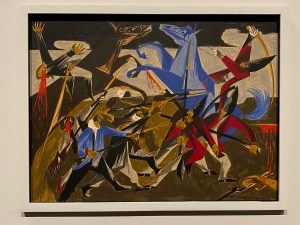
Jacob Lawrence’s Modern Lens on American History

The Battle of Bennington, painted in 1954 – …again the rebels rushed furiously on our men. – a Hessian soldier

Nearly 65 years ago, a young WWII veteran immersed himself in history books up in Harlem and envisioned a modern way to bring key episodes of early American history to life on canvas.  Today, visitors to the Metropolitan Museum of Art are pouring over his 60-panel series – reassembled for the first time in decades – in the remarkable exhibition, Jacob Lawrence: The American Struggle, on view through November 1.

Known for his enormous body of work chronicling the African-American experience, Lawrence’s American history series is largely unknown. That’s why attending the show and working your way around the room to learn about each episode is such a revelation.  Which episodes did he pick? How did he use modern, angular style to depict the struggle for independence and economic progress?

Sacagawea and her brother reunite

His series “Struggle: From the History of the American People” brings forgotten pieces of history to life and depicts many from a new angle – Patrick Henry’s rousing revolutionary rhetoric, regional skirmishes against mercenaries, the enlisted man’s view of the perilous Delaware River crossing, and treasonous whispers that risked undermining the Continentals.

Inspired by the Mexican muralists, WPA storytellers, and the city around him, Lawrence chose dynamic composition, symbolic colors, and an everyday person’s experience of historic events to create an intriguing, historic, and emotional narrative. Take a look at some of our favorites in the exhibition on Flickr.

1940s American history book opened to map of Lewis & Clark’s 1804-1806 expedition

Inside the gallery, the Met presents two of the books that Lawrence consulted as he planned the series as well as his funding proposal to produce a much more expansive work from the American Revolution through World War I. The notes on display show that Lawrence had the parts of history that could tell the full American story all thought out. Unfortunately, the series wasn’t funded.

The panels on view are hung in the order they were presented at Charles Allan’s gallery in 1956-1957, beginning with the lead-up to the American Revolution. Lawrence tells the story his way through conflicts, close-ups, and long shots, working in stories of Black combatants and women, like Margaret Corbin who manned the guns at Fort Washington.

1956 painting of the Battle of Lake Erie – if we fall, let us fall like men, and expire together in one common struggle – Henry Clay, 1813

Many of the events he depicts from the early 1800s have largely been forgotten –impressment of sailors by the British, the Battle of Lake Erie, and the destruction of Washington D.C., and the Battle of New Orleans. The series ends with epic undertakings by everyday Americans – the building of the Erie Canal and the westward migration to the Ohio and beyond. It makes you want to learn more.

If you are in New York, be sure to see this important show in person; otherwise, take a look through this series in the Met’s website. Click on each image to read the backstory of Lawrence’s take on that slice of American history and the quotes he selected for each work. Go on a visual journey with an American modernist master here.

Listen in to this recent program produced by the Met in association with the Schomburg Center for Research in Black Culture – the same library where Lawrence did his research in the 1950s.

Listen as the Schomburg’s director Kevin Young, arts curator Tami Lawson, and the Getty’s associate curator LeRonn P. Brooks discuss Jacob Lawrence, his scholarship, the WPA, Harlem, and the milieu from which his art emerged. Hear how a genius was made:

Other major works by Jacob Lawrence are on view at the Whitney Museum – he is a featured New York artist in Vida Americana: Mexican Muralists Remake American Art and his War Series, created after he returned from serving in the Coast Guard in World War II, has its own special gallery inside the collections show on the seventh floor.


Tenement Museum Opens Window via Virtual Visits

Kitchen on the Tenement Museum’s virtual tour of the Moore family residence

We’re happy to see that the Tenement Museum, one of NYC’s most beloved cultural centers, is not only offering in-person neighborhood walks again, but hosting virtual tours of the cramped quarters where our European immigrant ancestors first gained a foothold in America. This week, there is an opportunity (October 15) for everyone to climb those narrow stairs on Orchard Street, see the neighborhood (October 17), and help sustain the museum.

Check out everything that’s happening in NYC museums online on our virtual events page here.

And speaking of small history museums, we also want to mention the virtual events being programmed at the Merchant’s House Museum, which continues to persevere despite the massive construction project happening on the other side of its 1830s walls. Check out their pre-Halloween programming this week and throughout the month, and see what it’s like inside the place deemed Manhattan’s “most haunted” house.

Disco reigns supreme at Brooklyn Museum’s Studio 54: Night Magic

On our list this week, we also want to draw your attention to:

  • The Fashion Institute of Technology and Museum at Eldridge Street’s presentation on Berlin’s fashion industry in the 1920s (October 13)
  • The Morgan Library’s discussion of European blockbooks in “Print-on-Demand in the 15th Century” (October 15)
  • The Brooklyn Museum’s program with three Studio 54-era disco divas, who talk about how their music shaped the era ($10 on October 15)
  • The Bard Graduate Center’s presentation on Eileen Grey and architectural drawings (October 17)

For Tiffany fans on October 13, the New-York Historical Society will show off its spectacular collection. If you’ve never seen the upstairs Tiffany gallery at NYHS and heard the stories behind the lamps, do not miss this.

Last week, the Whitney had to postpone its Agnes Pelton panel, but curator Barbara Haskell will be answering questions on October 20 in a virtual event.

Take a look and register for as many of the topics and events that you can fit into your schedule. Most of the events are free, but it’s always nice to add a thank-you donation.

Reopening Update

Poster featured at El Museo del Barrio graphic arts exhibition, Taller Boricua: A Political Print Shop in New York

The Bard Graduate Center Gallery had just opened its much-anticipated exhibition on Eileen Grey when the pandemic forced its closure. We’re happy to let New Yorkers know that BGC is opening up the doors to the in-person exhibition for two weeks, October 13-28. Reserve your timed tickets now.

We also checked out the newly reopened El Museo del Barrio to see the graphic arts exhibition on Taller Boricua, which presents over 200 works by artists at this historic print shop. There were plenty of visitors yesterday pouring over the works produced by activist Puerto Rican artists over the last 50 years. The museum at 104th and Fifth is open Saturday and Sunday.

Welcome back to the Museum Mile!

Agnes Pelton’s Meditation Chamber at The Whitney

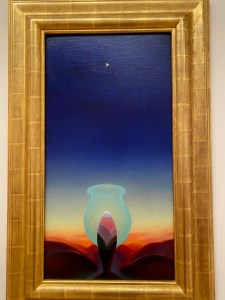
Agnes Pelton’s 1929 Star Gazer, suggesting rebirth in a desert landscape. Private collection.

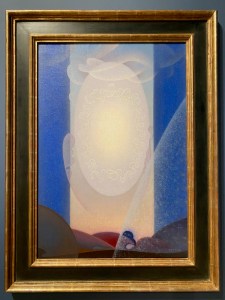
Have you wanted to enter a light-filled, spiritual place and be transported to another realm? Get a ticket to the Whitney Museum of American Art enter the Agnes Pelton: Desert Transcendentalist, on view through November 1.

You’ll experience six decades of abstract paintings whose shapes fly, hover, and float above desert mountains and in deep space – another dimension that feels light, otherworldly, and pure. Take a look at our Flickr album.

She began developing her style in the early years of the 20th century when abstraction, the symbolic meaning of color, and spiritualism were being explored in the New York art world, and she took to heart what she read in Kandinsky’s influential 1910 treatise, On the Spiritual in Art.

1926 Meadowlark’s Song, Winter. Courtesy: Maurine St. Gaudens.

The exhibition opens with a figurative work in the style for which Agnes was first known to the New York art scene –  an ethereal artistic woman inhabiting a dreamy, semi-abstract, soft-colored landscape. Her work earned her inclusion in New York’s landmark 1913 Armory Show – the exhibition that introduced “modernism” to America – in Gallery D alongside other young American artists experimenting with bold color and abstraction.

But the Whitney exhibition (originally mounted by the Phoenix Art Museum) is actually focused on the next phase of Alice’s abstract work, which reflects her embrace of spiritualism, experience with New Mexico’s desert landscapes, and interaction with creative, like-minded thinkers in and around Taos in the Twenties. Although she often accepted commissions for portraits or landscapes throughout her life, she considered the abstract works the core of her artistic journey.

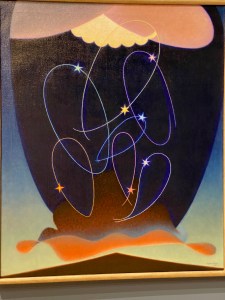
1934 Orbits. Courtesy: Oakland Museum.

Like her contemporary, Georgia O’Keeffe, Agnes found inspiration in the Southwest desert. However, Agnes had a different artistic approach, using color, natural form, and abstract shapes to lead viewers into another realm of consciousness that exists beyond the natural world.

Agnes’s journals and notebooks are filled with lessons from spiritual teachers and with sketches for paintings with notes on what the different forms and colors mean.

Visitors to the Whitney show move slowly, taking time to digest each canvas and to appreciate the artist’s care and thought. Swooping shapes, illuminated portals, and clusters of abstracted forms take center stage, posing questions, and leading you into another dimension.

1947 Light Center, evoking one’s ability to transform. Private collection.

The center gallery features work done after Agnes moved to her desert home near Palm Springs in the Thirties, where she was transfixed by the quality of desert light.  She loved incorporating water and light into her works – two natural phenomenon that symbolize transformation and change.

The dark walls of the center gallery enhance the glowing nature of her spiritual canvases. Her technique is masterful, with layers of translucent washes applied to give the white ovals nearly a three-dimensional feel, like looking into the void of an Anish Kapoor sculpture, except that Agnes achieves the effect with simply a canvas.

Here’s a talk recorded last year at the Phoenix Art Museum in which Notre Dame professor Erika Doss explains Agnes Pelton’s spirituality and puts her work in the context of the modernist movement:

Reopening News

 The Whitney has just announced that the large outdoor public project on the Hudson waterfront by David Hammons will open this fall.  The other big announcement is that a one-year Biennial postponement will give artists and curators more time to view and prepare work that was put on hold by the shutdown. Read more about upcoming shows here.

At 7:00pm on October 20, Whitney curator Barbara Haskell will take your questions about Agnes in an online “Ask a Curator” event. Check our Virtual Museum Event page for all of the museum’s nearly daily virtual tours, talks, and walks on this and other exhibitions.

If you’re in New York, you can visit the Whitney five days each week, Thursday through Monday, with extended hours every Friday until 9:00pm. All exhibition spaces are open, including the magnificent collection show, which features mini-shows by Jacob Lawrence, Hopper, and Calder. Here’s our previous post about this fantastic exhibition.

NYC Museum Virtual Events on Hockney, Pelton, and Design

David Hockney, Self Portrait with Red Braces, 2003. © David Hockney. Photography by Richard Schmidt. Courtesy: The Morgan

This week has a full line-up of (mostly free) programs featuring new exhibitions and topical issues from the art world and beyond. See the list of everything you can participate in on our virtual events page.

We welcome the reopening of the Morgan Library with this week’s most-talked-about exhibition on David Hockney’s portrait drawings from the National Gallery in London. This week’s virtual schedule gives you two opportunities (October 6 and 9) to take a virtual tour, but get the free tickets now since they are going fast!

This week on October 8, you’ll also get an opportunity to learn more from the Whitney about Agnes Pelton and her transcendentalist work from the curator herself, Barbara Haskell. Although the show originated in Phoenix and went to Santa Fe before its New York stop, the Whitney’s given over an entire floor to for you to enjoy the tranquility, spiritualism, and meditative power of Ms. Pelton’s works. Although Ms. Pelton participated in the historic 1913 Amory Show, she’s had zero recognition until now.

Agnes Pelton, Day, 1935. Courtesy: Phoenix Art Museum

Although the Cooper-Hewitt still hasn’t opened its doors, you’ll have an opportunity to celebrate the National Design Awards and National Design Month on line. This week features a virtual salon on October 8, but their website has a full roster of design, education, and maker events, too.

We also want to draw your attention to:

  • New-York Historical Society’s evening with Carl Bernstein and Maggie Haberman ($20 on October 8)
  • A live encore presentation from the New York Transit Museum on the cultural history of the 20th Century Limited (free on October 9)
  • October’s Sci Café from AMNH on hive minds and politics (free on October 8)

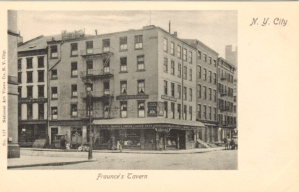
For Hamilton fans on October 8, Fraunces Tavern Museum will host an author who will dig up all the dirt between General Washington and his nemesis, General Charles Lee.

Last week, we joined ETHEL on the Met’s balcony on Friday night (a weekly digital event), and really enjoyed the digital effects that were added to a beautiful performance. We also dropped into the Brooklyn Book Fair courtesy of the Brooklyn Historical Society.

Take a look and register for as many of the topics and events that you can fit into your schedule. Most of the events are free, but it’s always nice to add a thank-you donation.

Reopening Update

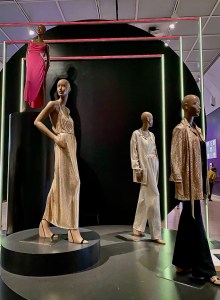
Dancing dress by Giorgio di Sant’Angelo, as shown in Studio 54: Night Magic

It was great to be back at the Brooklyn Museum this week, where the community was enjoying the sunshine on the front plaza while waiting for timed ticket entry to the fantastic exhibition, Studio 54: Night Magic.  If you plan to go, budget enough time, because the time-capsule exhibition is massive.

For budget and safety reasons, only two floors of the museum are open, but that did not stop any of the art-seekers from checking out many of the special shows, study center, and permanent American gallery works. The first floor features an installation filled with amazing, inspiring photographs by a ground-breaking Parisian artist. Wow! Do not miss JR: Chronicles or Studio 54!!

Welcome back, Brooklyn!!

Amy Sillman Gets Shapes to Talk at MoMA

1957 Arp sculpture and view of works by Leger, Frankenthaler and Bonticou

A big, red blob on the fifth floor at MoMA is the welcome sign to one of the most engaging exhibitions in New York ­– the come-hither array of modern artworks in the latest Artist’s Choice show, Amy Sillman: The Shape of Shape, on display through October 4.

But here’s the catch for MoMA visitors – the show has more than 75 works but no labels, no identification, no dates. Just the clue that Amy chose works to explore the role of “shape” in modern art. Small artworks are arranged knee-level on risers (kind of like stadium seating), with larger paintings tilted against the wall.  A few are hung in the traditional way, but it feels as if MoMa’s collection is looking at you and hankering for a conversation. Check it out in our Flickr album.

Rectilinear frame conversation between 1989 Albert Oehlen painting and 1935 “Construction” by Gertrude Green

In our first visit back to the re-opened MoMA, visitors circulated through the room, looking intensively, talking about what they saw, and discussing how pieces might be connected. Although the gallery guide was available via QR code, no one during our visit appeared to seek it out. Everyone seemed quite content to parachute into 110 years of modern visuals and just go for the ride.

What did Amy choose? Abstracted forms, organic shapes, human bodies, and not-bodies – all arranged in a way that makes you feel that one is somehow related to its neighbor. You can’t quite describe why the entire room felt like a tight ensemble, even though one piece might feel like fun and the next a little scary.

It was interesting how unsettled visitors felt by 1970s works by Christina Ramburg and Julian Schnabel. This is exactly what Amy was going for, according to what we overheard her tell students in the gallery yesterday. She wanted to evoke the anxious feelings that most artists experience as they paint, draw, and sculpt and to reflect the times today without being didactic.

Along the east wall – 2008 acrylic by Charline von Heyl, 1920 Arp sculpture, and 1976 drawing by Jay DeFeo

Amy came of age during the Seventies when museums and intellectuals had given abstract expressionism its “heroic” status and crowned minimalists and conceptual artists as successors in the march of modernism. For this Artist’s Choice exhibition, Amy examined MoMA’s vast archive from a different perspective, looking at famous and not-so-famous creators whose work evoked myths, an interest in shadows, tension, anxiety, bodies, and whimsey.

Shadowy Black figures in a dark painting by Zimbabwean artist Thomas Mukarobgwa are echoed by a shadowy figure in a work by Leger. The tiny 1920 stacked Arp sculpture seems to be playing a “Mini-Me” role next to the large, layered 2008 Charline von Heyl acrylic.

Shadows also play key roles in a Lois Lane painting paired with a Kirschner wooduct. See for yourself and make a connection. Download Amy’s zine here to learn more about the works she chose and how she installed them. (She designed it during the quarantine months when the show was shut down.)

Here’s a short overview of the show hosted by MoMA painting/sculpture curator Michelle Kuo:

But you should really dig into the in-depth conversation (with over 10,000 views!) between Amy and Michelle, if you’ve ever been to art school or painted. They talk about art making, art history, Amy’s inspiration from Munch’s little-known litho of a woman hugging a bear, and the way she chose lesser-known works that could have a conversation with you in 2020:

More on MoMA’s reopening
MoMA on 53rd Street is open every day with timed ticketing, and now that the free-ticket offer has concluded, it seems easy to find a time to visit. The Queens outpost at P.S.1 is open until 8:00pm Thursday through Sunday, and is currently showing the acclaimed (and long-anticipated exhibition) Marking Time: Art in the Age of Mass Incarceration through April 4.

Join Live Virtual Events at NYC Museums

Tour “Sahel: Art and Empires on the Shores of the Sahara” at The Met this week

Are you missing your favorite New York museums? We’re happy to report that many of the cultural powerhouses, like the Whitney, The Met, and MoMA have reopened, although timed tickets in the opening weeks have been a little hard to get.

There’s a quick and easy way to get inside, however, by attending one of the live virtual programs being offered.  Check out our new page on events! As you can see, there’s a lot of opportunities to connect.

1929 “Calla Lily Vendor” by Alfredo Ramos Martinez in The Whitney’s must-see exhibition “Vida Americana”

New York museums have been keeping their events going online, and joining in is a great way to meet curators, docents, tour some blockbuster shows, and join in on the discussions happening around town about art and the social-justice movement (past and present), women’s issues and history, and even listen to ETHEL play classical music from the virtual Met balcony on Friday night.

For smaller museums, the virtual events have been a great way to broaden programming to a national or international audience.  In recent on-line programs produced by Fraunces Tavern, it’s been nice to see colonial history buffs from Virginia and New England join in on the discussion. At last week’s New York Transit Museum’s talk on the 20th Century Limited, a few UK railroad enthusiasts joined in the chat room!

Hear about the preservation of Washington and Hamilton’s hangout, Fraunces Tavern, one of NYC’s oldest buildings this week

So, it’s a great way to be in the virtual room where it’s happening with others who love history and conversation as much as you do!  Take a look at the array of topics and events and register.

Most of the events are free, although after the months-long shut down here, it’s always nice to give a thank-you donation.

Reopening Update

This week, we’ll welcome the opening of the Guggenheim and Jewish Museum along Fifth Avenue and the International Center of Photography at its new home on Essex on the Lower East Side, where the Tenement Museum has begun neighborhood walking tours again.

Welcome back!!

Enjoy this beautiful four-hour meditative Met Live Arts performance by Lee Mingwei and Bill T. Jones at The Met this week

Building a Retail Empire on Wearable Art

Vera’s 1950 silk “Fish Scroll” scarf, featured on the cover Harper’s

So many of the great female entrepreneurial success stories begin at the kitchen table, and the story currently being told by the Museum of Arts and Design (MAD) in Vera Paints a Scarf: The Art and Design of Vera Neumann, on view through January 26, is no exception.

Fashionistas today may be too young to remember when the American height of chic was to sport a scarf by Vera. Back in the Sixties and Seventies, Vera pretty much had a lock on the retail market for bold, colorful silk scarves through major department-store behemoths.

The exhibition is a tribute to a woman who took her love of painting, travel, nature, and culture to the wardrobe and accessory drawers of all fashionable American households, and ended up partnering with many top manufacturers to push her aesthetic and flare into mid-century modern homes.

Vera’s silk scarves, based upon watercolors, hung as art at MAD

Although her name is not well known by young people today, MAD’s exhibition is a fitting tribute to a woman who virtually invented the concept of “lifestyle” brand. It’s hard to believe that an aspiring artist born in Connecticut in 1907 would grow up and develop her company to pack such a punch in retail.

A graduate of Cooper Union and Traphagen in the 1920s, during the Depression, Vera and her husband set up a silkscreen on their little Manhattan kitchen table and began printing her paintings on surplus parachute silk. Within a few years, her beautiful silks were being retailed at B. Altman, Lord & Taylor, and other nice shops in the city. Her joyous prints were a success!

Vera’s 1960-1965 silk blouses with paintings of blue poppies and woodland images

Building her business through the war years, Vera took her first foray into fashion in the 1950s, creating tops and blouses that she came to market as “wearable art.” Rather than simply printing yards of repeating patterns, she went a step further – engineering prints in panels, so when pattern cutters and sewers assembled her shirts, her beautiful patters would strategically appear in the final product, enhancing cuffs, collars, edges, and hems.

Of course, everything was priced for the widest possible market, so a woman seeking a bit of fashion flair could buy a Vera without blowing her budget. She followed the art-plus-commerce philosophy – a Bauhaus innovation – and maximized accessibility of mid-century modern design by expanding into home textiles, tabletop accessories, and dishes.

1979 “The Birches” china dining set for Mikasa with matching tablecloth

As her business grew, Vera came to rely upon the next generation (Perry Ellis got his start with her) to keep the design development chugging along while she traveled to Asia and other parts of the world to feed the constant demand for new inspiration for her collections.

MAD has assembled a beautiful, loving exhibition of Vera’s output, showing how her original watercolor work made its way into her commercial ventures – scarves, clothes, and home décor. Perhaps most remarkable is that this powerhouse kept traveling, painting, and channeling joy into her textiles well into her eighties – an inspirational lesson in love of life, art, craft, and culture.

1971 “Northwest Coast” silk scarf

Thank you, Vera! Long may your prints wave!

And thank you to MAD for sharing Vera’s lifetime of creations and inspiring story!

See more photos of this wonderful exhibition in our Flickr album.

Drawing with the Patience of an Astronomer

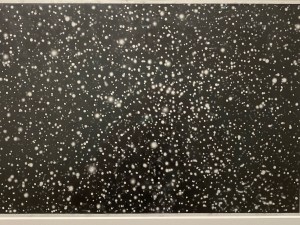
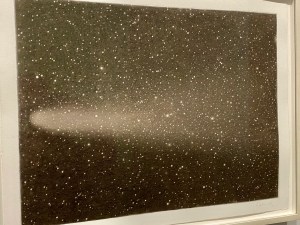
1983 Star Field III drawing, graphite on acrylic ground on paper

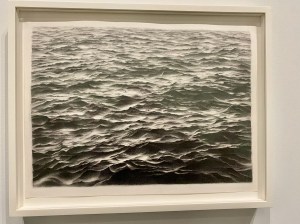
She’s gone where no draftsman has gone before – up into the atmosphere, to distant galaxies, across the limitless sea, and into uninhabited expanses of desert.

Vija Celmins: To Fix the Image in Memory, the two-floor retrospective at the Met Breuer through January 12, presents five decades of exacting observation of the unknowable distilled into small graphite and charcoal drawings like nothing you’ve ever seen.

1969 drawing, graphite on acrylic ground on paper

The casual observer might mistake the works for photographs, since her goal has been precise replication of waves, stars, and other natural phenomenon. Close examination, however, reveals systematic build-up of marks and erasures that have all but eliminated gesture and other indications of personality.

The experience is incredible, showing how her early years as a Southern California artist – using photographs of the freeway and her earliest memories as a child growing up in WWII in Latvia – were the building blocks for the methods, patience, and artwork of her most acclaimed body of work.

Untitled (Night Sky #10) charcoal drawing, 1994-1995

The Met Bruer’s entire fourth floor is given over to selections from her series of meticulous drawings of the Pacific’s waves, early photos transmitted back from the Moon, the night sky as seen from the desert, and the Southwestern desert itself.

Occasionally she broke from graphite drawings to make an oil painting of the night sky, creating the deepest blacks she could to let the viewer get lost in the space.

To Fix the Image in Memory I-XI, eleven stones and eleven bronze “stones” and painted to resemble the originals, 1977-1982

Visitors’ favorites are the rock samples she collected from her desert journeys. Never one to shy away from the impossible, they are presented side-by-side to nearly identical painted bronze sculptures. Which one is the actual rock? You could stand in the gallery and listen all day to the quiet deliberations among her fans.

Take a look at some of our favorites on our Flickr site, and listen to the artist discussing it all:

Fresh Look at Gertrude Whitney’s Collection

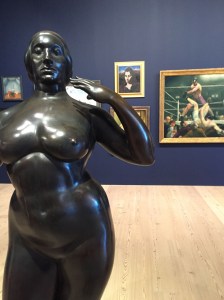
Lachaise 1912-1927 bronze Standing Woman with works acquired by Gertrude Vanderbilt Whitney herself

The Whitney’s Collection: Selections from 1900 to 1965 is a full-floor installation that focuses on the institution’s origin in 1930 as an eclectic, lively space where of-the-moment art could make a statement to the world – the same as today.

But rather than concentrate exclusively on all of the masterworks of American art that the museum owns, this show integrates some practically forgotten works and artists that the curators feel deserve a fresh look. So, walking through this chronological show, everyone gets a taste of something completely unexpected.

See some of our favorites here on Flickr.

When the elevator doors open, the first gallery is a tribute to the passion of Gertrude Whitney, the only American artist to establish a major museum. Lachaise’s bronze beauty beckons visitors to take a closer look at paintings that Gertrude herself acquired. Photographs of the Whitney’s earliest incarnation downtown are nearby to set the context.

Anne Goldthwaite’s 1926 Rebecca, purchased by Gertrude Vanderbilt Whitney 

It wasn’t a museum collection in the traditional sense, because Gertrude acquired paintings and sculptures by artists that she wanted to support. Better-known works by Bellows, Benton, and Bluemner are on display here, but so is a beautiful, rarely shown 1926 portrait by Anne Goldthwaite, a women’s rights activist from Alabama whose work was included in the 1913 Armory Show, but is not that well known today.

Subsequent galleries group artists inspired by uniquely American landscapes ­– urban engineering achievements of New York (Man Ray, Stella, Stettenheimer), O’Keeffe’s evocations of nature’s spirituality, and clean, idealized visions of modern industrial campuses (Demuth, Sheeler).

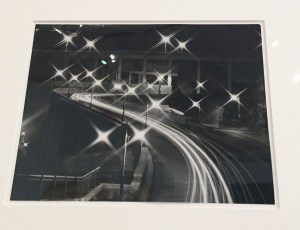
Andreas Feininger’s 1940 photo of the West Side Highway

Photographs dot the walls, including Herbert W. Gleason’s other-worldly 1908 images of Walden Pond and a modern 1940 image of the West Side Highway by Feininger, which anyone can see through windows in the Whitney’s Hudson-facing interior staircase.

A dark side gallery features one of the Whitney’s greatest treasures – Calder’s Circus, which has been newly conserved and restored. The ringmaster, bareback rider, and trapeze artists – all based upon actual performers from the Twenties ­– occupy the spotlight, surrounded by Calder’s performance props, Victrola, and whistles.

Here’s a recent video containing excerpts of how Circus was brought to life by the master himself and how it’s been conserved for posterity by a team at the Whitney:

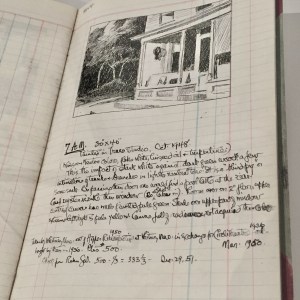
An additional highlight in another gallery is the “show within a show” of Edward Hopper works and drawings – his early work from Paris, the solitary American townscapes, and a sketchbook in which he documented every painting he made. Everyone spends time here.

Edward Hopper’s ledger book documenting all his work 

A melancholy dark gallery is hung with paintings by American émigré artists whose work evokes surrealist experimentation, the war, urban isolation, and growing societal dissonance. A counterpoint (and surprise) is a 1939 animated film by experimental film pioneer Mary Ellen Bute, a symphonic short shown to the crowds at Radio City Music Hall before movie features.

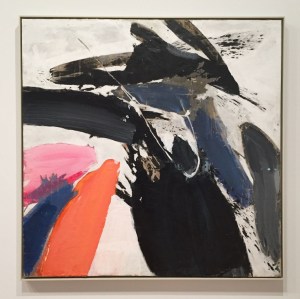
The gallery devoted to Fifties abstraction showcases the usual suspects (Pollack, de Kooning, Kline), but intersperses new acquisitions and lesser-known players, such as a 1959 abstract canvas by Ed Clark, an African-American artist who trained in Paris courtesy of the GI Bill, which holds its own against the other AE powerhouses in the room.

Ed Clark’s 1959 abstract poured-acrylic painting 

Big David Smith and Barnett Newman sculptures reign on the outdoor terrace, right next to the joyful Pop Art gallery, dominated by a massive, four-panel 1964 Wesselmann and an engaging multi-person self-portrait (with dog) by Marisol in the corner.

The walk-through is a reminder of the riches that anchored the first 30 years of the Whitney and the efforts that the museum is taking to find powerful artwork from the archive that enhances the traditional narrative of 20th century American art history.

Go soon before the team changes it out for the next collection installation, and take the audio tour on the Whitney website.

Getting a breath of fresh air: Barnett Newman’s 1966 Here III and David Smith’s 1961 Lectern Sentinel