London Siege Ends

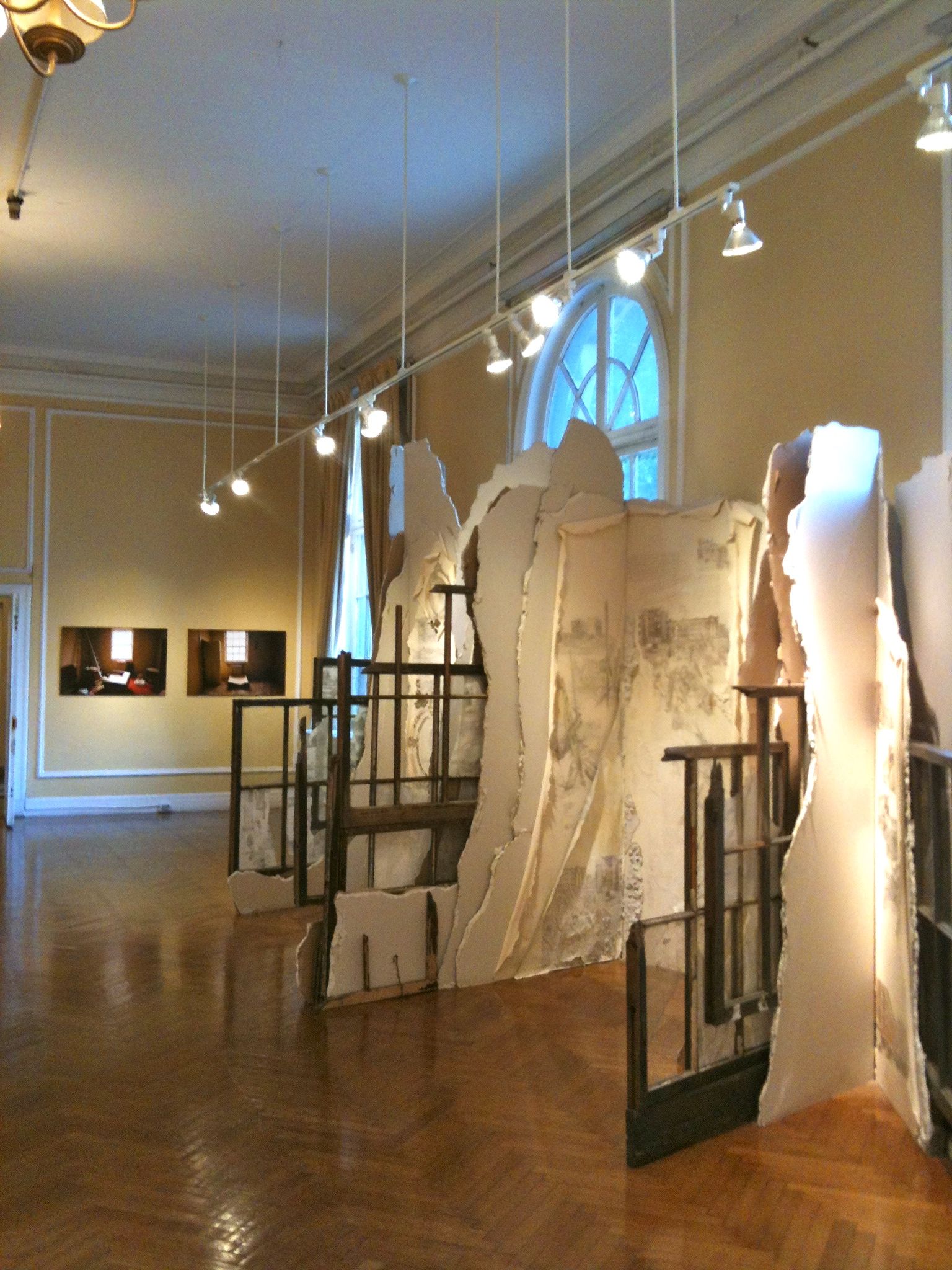
Interruption, displacement, spatial challenge, and scrounged street materials are just a few of the components of the New Museum’s fourth-floor sculpture installation by London artist Phyllida Barlow, which continues only for the remainder of this week.

Installation view of Phyllida Barlow’s “Siege” installation at The New Museum

Part of the post-minimalist generation of London sculptors (Eva Hesse contemporaries), Barlow surprises visitors with a completely monumental, low-tech exploration in what she calls a “very, very awkward” space, particularly for visitors confronted by her work as they step out of the elevator.

Barlow says that the first time she saw her project space, it was “shocking” in its directness, which provided her with an exciting challenge. “Stepping out of the elevator, it’s as though you’ve stepped on stage,” she says, hoping that visitors find a “performative element” to their experience.

 “Once you’re in there, there’s kind of no escape,” she says, calling it a “kind of a hostage space.” No fooling. You get to poke in, around, and about the work that she aptly names Siege.

The New Museum gives us several audio tracks in which Barlow explains her process, but go down to the Bowery to experience Siege first-hand and then listen in on what Barlow has to say. It’s like having your own, private Stonehenge experience inside a white cube.

Romantic Dark Side

Entering the black-draped Wachenheim gallery off the New York Public Library’s main Fifth Avenue entrance is a quick way to travel back in time to view manuscripts, memoirs, and mementos of the 18th and 19th centuries’ most creative literary minds.

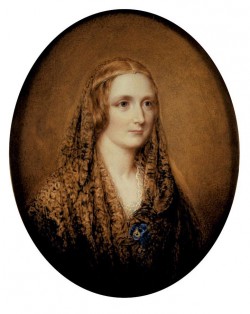
Portrait of Mary Shelley

Tragic love, unbridled romance, women’s liberation, wicked family disconnects, and man-machine mash-ups converge in a tantalizing true tale in the tiny exhibition jewel, Shelley’s Ghost: The Afterlife of a Poet. The intertwined lives of Shelley and his wife, Mary (author of Frankenstein), Lord Byron, and their circle of friends are the subject.

To untangle this web of infamous ground-breakers, the Bodleian Libraries of Oxford and the NYPL have collaborated on assembling some rarities — one of the earliest English-language treatises on women’s rights (courtesy of Mary’s mother Mary Wollenstonecraft), Mary’s first draft of her horror novel, Shelley’s baby rattle and guitar, assorted notes and diaries, and Shelley’s treatise on the advantages of a vegetarian diet.

As this exhibit’s run comes to an end, literary (and scandal) hounds are flocking to this space, Thank goodness that NYPL and Oxford have seen fit to commission a short graphic novella of Mary Shelley’s incredible life, an innovative (free) Frankenstein-themed iPad app, and throw much of the scholarship up on the web for the iPad-less fans.  Bonus: listen to some of the diary entries, personal letters, and works read online by Oxford-trained actors.

Screenshot of NYPL Biblion’s free Frankenstein iPad app

Bronx Senior Home = Art

“This Side of Paradise” installation view

The final days have come to pass for one of the most innovative art sites in the Bronx – the multi-artist/multi-organizational show This Side of Paradise at the Andrew Freedman Home on the Grand Concourse.

For the past several months, visitors have entered the long-shuttered gates, crossed the lawn under gigantic trees, and entered once-grand rooms where formerly wealthy seniors sat out their golden years to experience two floors of art works by Bronx sculptors, painters, videomakers, and installation artists. Take a look at the entrance and first floor.

No Longer Empty organized the project with participation by members of The Bronx Arts Alliance, featuring new works, Bronx collections, and recent artist-in-residence programs. On the second floor: The Bronx Documentary Center displayed Tim Hetherington’s film Diary in a wreck of a room; Wave Hill’s artist Adam Parker Smith bedazzled another nearby room; and photographer Sylvia Plachy placed her 1980 Village Voice portraits of the former residents in Room 246 amid furniture and knick-knacks evoking her long-ago visit.

Nicky Enright’s “The Ravages” (2012)

Edgy Venetian Glass

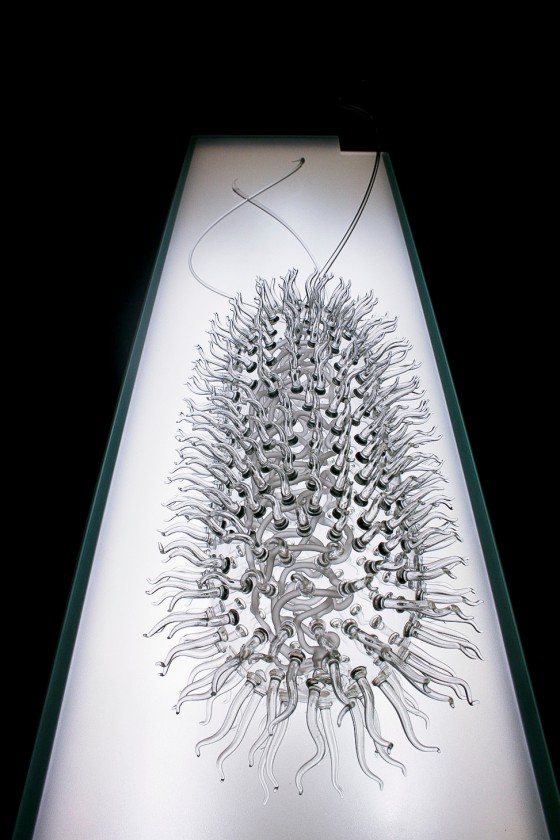
Luke Jerram’s Virus Installation: E. Coli (2010)

The finest collectors in the world put a premium on exquisite Murano glass. Take a few minutes to see the new twist that’s on display at Columbus Circle at the Museum of Arts and Design in Glasstress New York, a show that’s a mix of installation, concept, and pedestal work.

Curator/entrepreneur Adriano Berengo paired the finest Venetian glassmakers with some of the world’s best contemporary artists (e.g. Vic Munoz, Thomas Schutte, the Starn twins) for an exhibition ranking at the top of fan favorites at the 2009 and 2011 Venice Biennales.

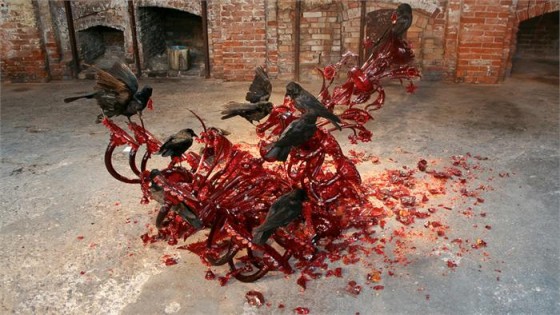
MAD is presenting the provocative show for a few more days. Luke Jerram’s Carroña crows-with-shatttered-chandelier installation is the most eye-catching, but there’s plenty to more to contemplate about how the Murano craftsmen made such exquisite fabrications of some pretty wild artistic notions (like Luke Jerram’s glass-blown virus reproductions.)

Javier Perez’s Carroña (2011) on display in Venice

Last-Minute Invite to Gertrude’s Place

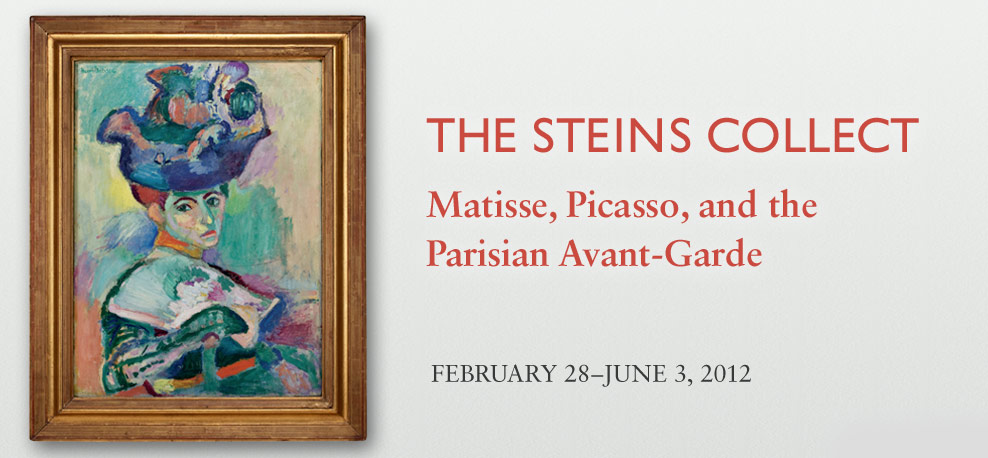
There are only a few days left to go visit the Steins (Gertrude, Leo, and the rest of the family). They’re at the Met in The Steins Collect: Matisse, Picasso, and the Parisian Avant-Garde.

Instead of the tiny, little studio they inhabited in Paris, the Met has spread out all of the Matisses and Picassos they ever owned over nine galleries. Sure, there is a smattering of Cezannes, Renoirs, and a few others, but the show is really about the how the Steins kick-started the careers of Henri and Pablo.

If you’ve seen Woody Allen’s re-creation of Gertrude’s place in Midnight in Paris, you might be surprised that learn that it was only a 460 square-foot studio. But what a collection of paintings moved around on those walls! Take a look. The Met has produced a brief video comprised of old photos from the decades that the Steins lived, entertained, collected, and schmoozed in that miniscule space, which had such an outsized influence on the direction of the 20th century avant-garde.

It took the Met eight years to pull all the works together (to raise money to buy more work, the Steins often sold off beloved favorites to the Cone sisters in Baltimore or Mr. Barnes in Philadelphia). If you want to know more, view the recording of the two-hour panel that the curator hosted back in April.

And go over and pay Gertrude and the family one last visit.

Mars on Park Avenue

It’s time to live the dream. No doubt you’ve seen the American Museum of Natural History’s show about what it’s like to explore Beyond Planet Earth. (AMNH has even dug out 1950s letters to the Hayden on its web site.)

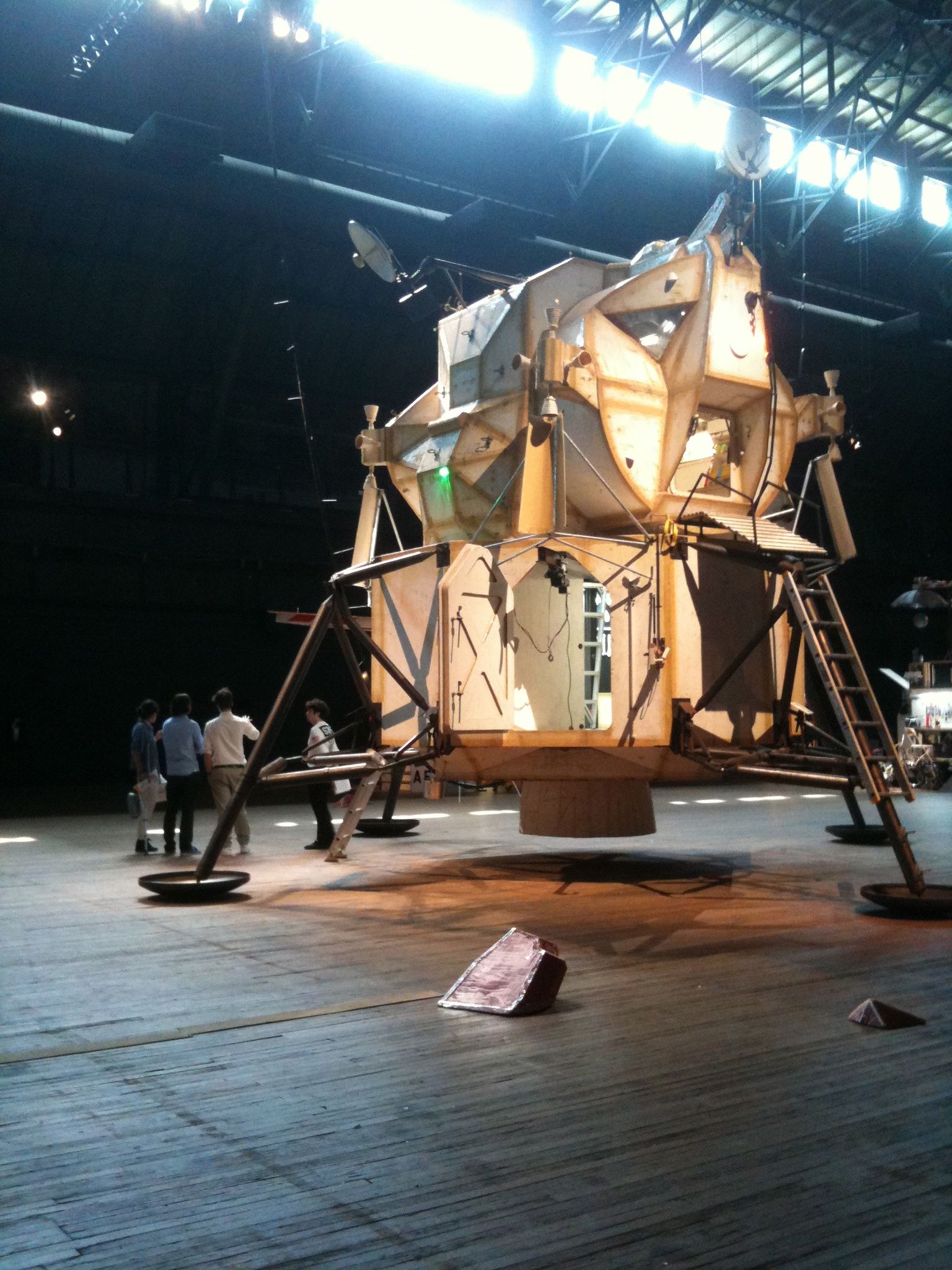
But drop into the Park Avenue Armory to experience it for yourself. Tom Sachs has created the surface of Mars and an exploratory base out of materials that he scrounged near his art studio. The results are spectacular, fun, and a trip worth taking.

You’ll go through orientation to enter Space Program: Mars, but once you’re on the base, you can stroll around, take the test to enter the LEM, chat with the dozens of lab-coated workers, tour the museum, or just sit and view it all from the bleachers in front of Mission Control. Seriously, you can be entertained all day. Check out the inspiring trailer and a few on-site photos.

If you’ve wanted to travel to Mars, now’s your chance, before the show blasts off June 17.

Find a Good Weave

Ernesto Neto, The Sun Lits Life, Let the Son installation at Tanya Bonakdar Gallery

This week is the time to see some really innovative weaving by three completely different artists.

In Chelsea, relax into the colorful crocheted poly-chord environmental sculptures created by Brazilian artist Ernesto Neto at Tanya Bonakdar’s 21st Street Chelsea gallery. The participatory experience is more intimate than Neto’s Park Avenue Armory installation three years ago, but features his signature dangling spice-filled pods. Be sure you climb to the second floor to recline on the Blue Hammock and Green Hammock. Enjoy the photos here, but experience it all in person before the final day, May 25.

If you missed Sheila Hicks’s 50-year retrospective last year at Philadelphia’s ICA, celebrate her achievement at Sikkema Jenkins one block away on 22ndStreet. The array of fiber work from 1958 to today is cooler and more high-concept. Runs until June 2.

Aricoco, nest-un-settled (aging), 2011

At Columbus Circle, meet young Brooklyn artist Aricoco upstairs at the studios on the 6th Floor of the Museum of Art and Design. Known for her interdisciplinary works and performances, such as her RUNawayHOME cocoon, ask her what she’s weaving out of the red and white plastic shopping bags she sourced in Chinatown.

Manhattan’s Digital Grid

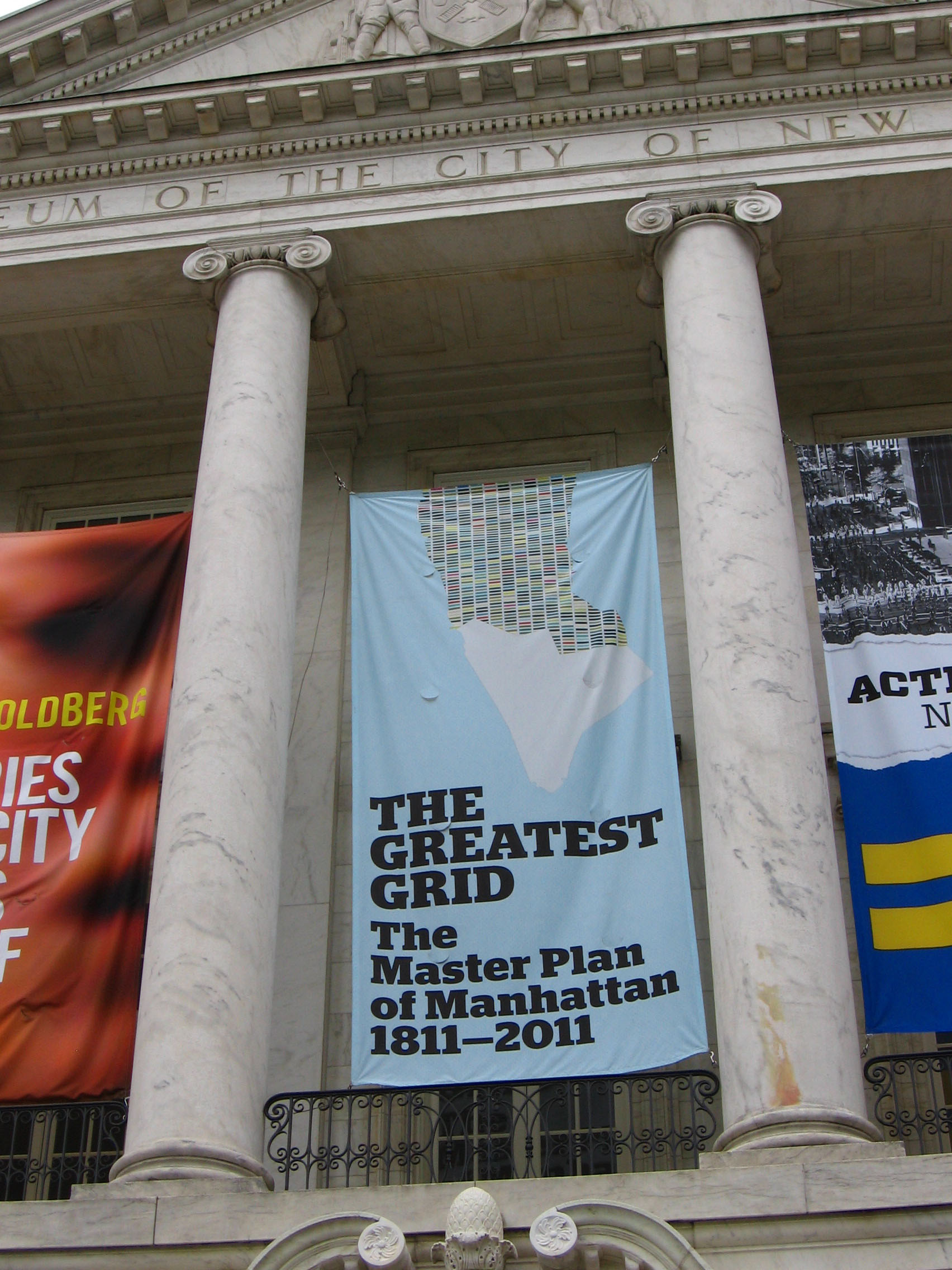
How much fun can you have with the Manhattan Grid? Plenty, if you have computer access and can make a trip (before July 15) to the The Greatest Grid exhibition at the Museum of the City of New York.

Plan to spend a couple of hours wrapping your mind around how the farmland in your neighborhood was leveled by hand and horse cart to make the wide, smooth streets and sidewalks we’re used to today. (You’ll quickly see that the East Side’s Second Avenue Subway construction isn’t that big a disruption after all!)

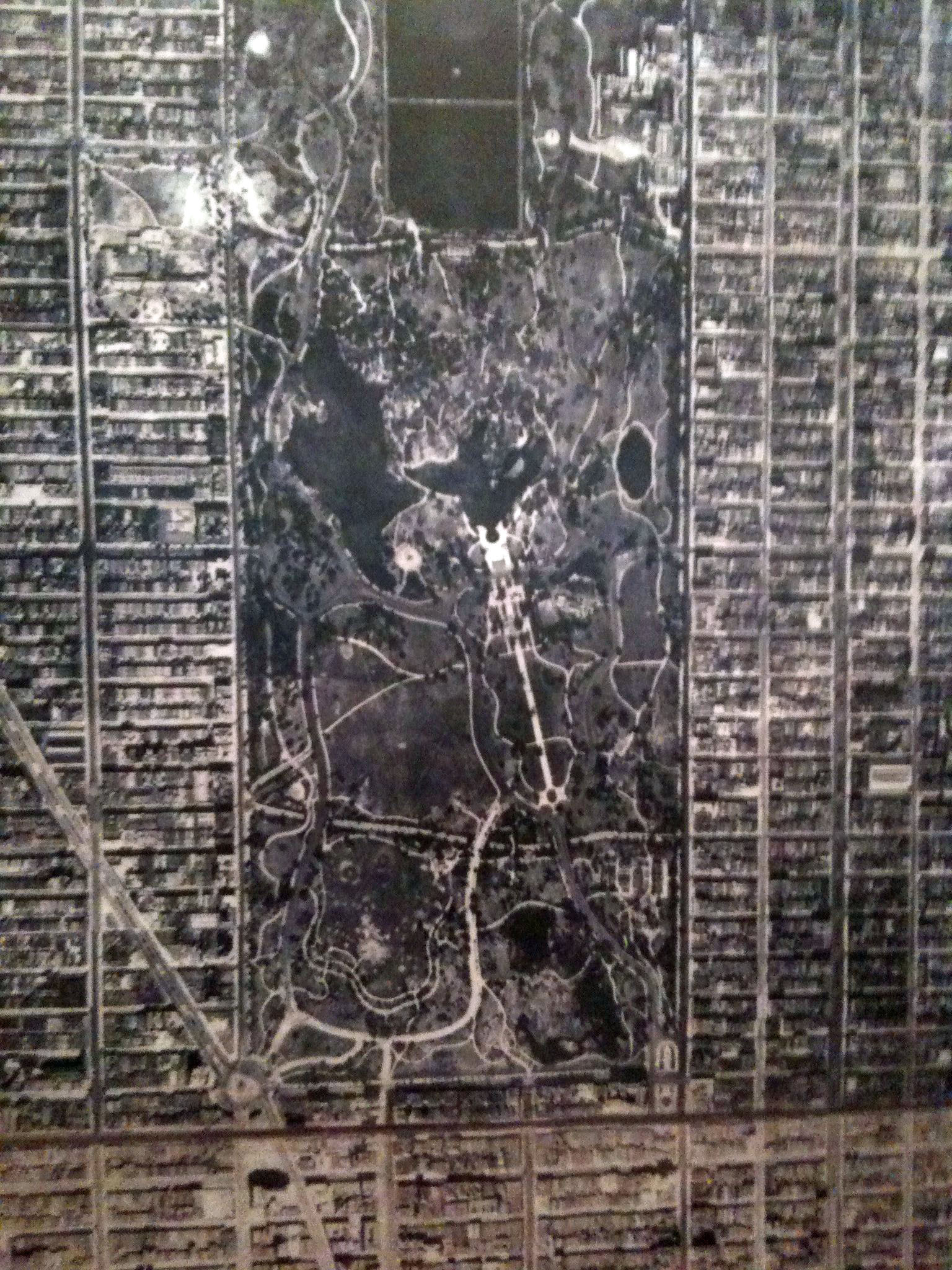
Go online and check out one of the exhibit’s highlights – a digital composite of 92 farm maps drafted in 1818-1820 by John Randel, Jr. to show how the grid would bisect various hills, rivers, streams, swamps and pastures in years to come. Zoom in on your street and see who owned your property in the early 1800s, and read how MCNY worked with the City create this cool online map.

Also, take a look at the digital maps posted by The New York Times, including Randel’s big 1811 map of the grid (the centerpiece of the MCNY show), the 1836 farm map, and other interactive images created by the NYT team. Clicking through the views on the left will reveal all sorts of interesting history.

Check out the Channel 7 Eyewitness News video, featuring an interview with the curator (NYU’s Hillary Ballon) and a peek inside the show.

Want to do a little time travel on the modern version of the Manhattan grid or another borough? It’s easy. Go to NYCityMap and type in an address. When the schematic map appears, clock on the “Photo Camera” icon at the top of the map and you’ll see an aerial view of the neighborhood. Move the slide bar to enjoy the view to any time between 1924 and today to see what the block was like way back when.

Ferry to Frieze

The international art crowd has descended upon a deserted island that is crammed with sculpture, installations, art talks, events, high-end food, and 180 galleries from all corners of the world. It’s the Frieze Art Fair (New York edition) and there are two more days to catch it on little-visited Randall’s Island in New York’s East River.

One of the nicest ways to get there is via the free New York Water Taxi, which offers a spectacular ride up the East River. Check out the photos. If you can’t get out there today or tomorrow, check out the virtual walk-through of the caterpillar tent and sculpture garden.

For other virtual fun, go shopping on the Frieze Art Fair virtual site, read more about the special projects that were commissioned for the fair, take advantage of the podcasts of the special talks, and listen to some of the sound projects.

Hope to see you at the fair!

Entrance to the Frieze Art Fair on Randall’s Island

Florence, Machine & McQueen

Nostalgic for the Met’s McQueen show last year? In the run-up to 2012’s Costume Institute Gala at the Met next Monday, Vogue is running its fantastic video of last year’s gala featuring, well…everybody. Just try to count the famous faces in this video.

You’ll get a glimpse of the red carpet, the grand staircase, cater waiters, celebs, designers, Scottish bagpipers, the exhibition itself, and Florence holding forth at the Temple of Dendur with vocals, charisma, and lighting that Lee would have loved (very Plato’s Atlantis).

In case you didn’t know, this year’s fete will celebrate Schiaparelli and Prada, who are taking up residence at the Met through mid-August in an exhibit that opens to the public on May 10, featuring videos by Baz Luhrmann with fictional “conversations” between these two design icons. Preview some of the featured fashions and theme.

And be sure to set your calendar to see the live web stream of the glitterati on this year’s Costume Institute red carpet on May 7, sponsored by the Met, Vogue, and Amazon.