
Who better to ask us to pay attention to environmental impacts than people whose ancestors have been stewards of the land for millennia? Earth, air, fire, and water is the thematic structure for this beautiful, throught-provoking contemporary art show Essential Elements: Art, Environment, and Indigenous Futures, on view at Santa Fe’s Museum of Indian Arts and Culture through April 5, 2026.
The curators have selected 31 artists from 18 tribal communities across the United States to draw our attention to how tribal communities and the rest of us can listen to the Earth and imagine positive outcomes in the future.
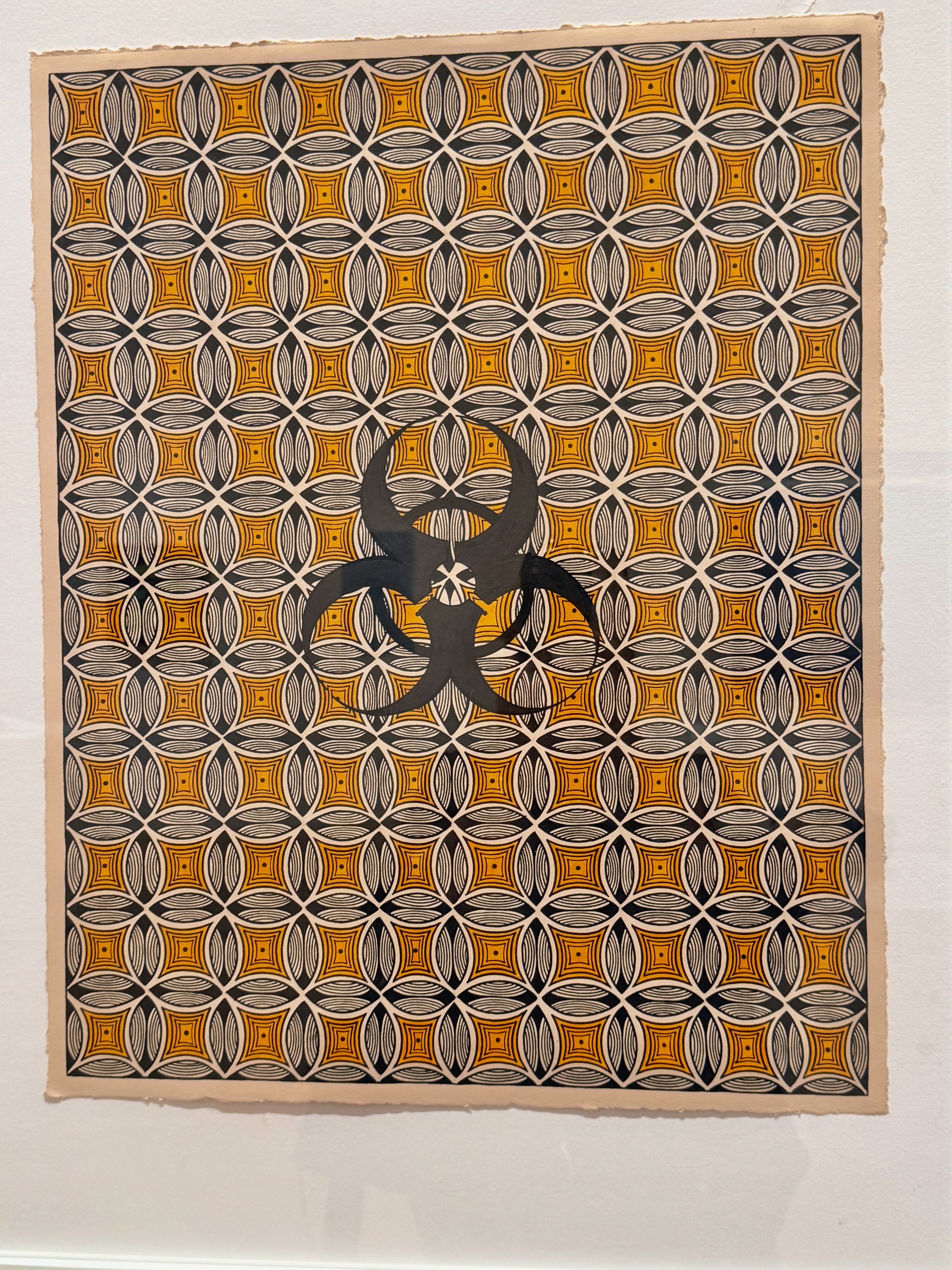
Some jewelry, paintings, drawings, pots, and installations draw attention to traditional symbols of the Earth’s health (traditional symbols, wildlife living in a healthy environment), but many include pointed references to recent wildfires and other devastating alterations affecting tribal agriculture and people’s health.
Take a look at some of our favorite work in our Flickr album.
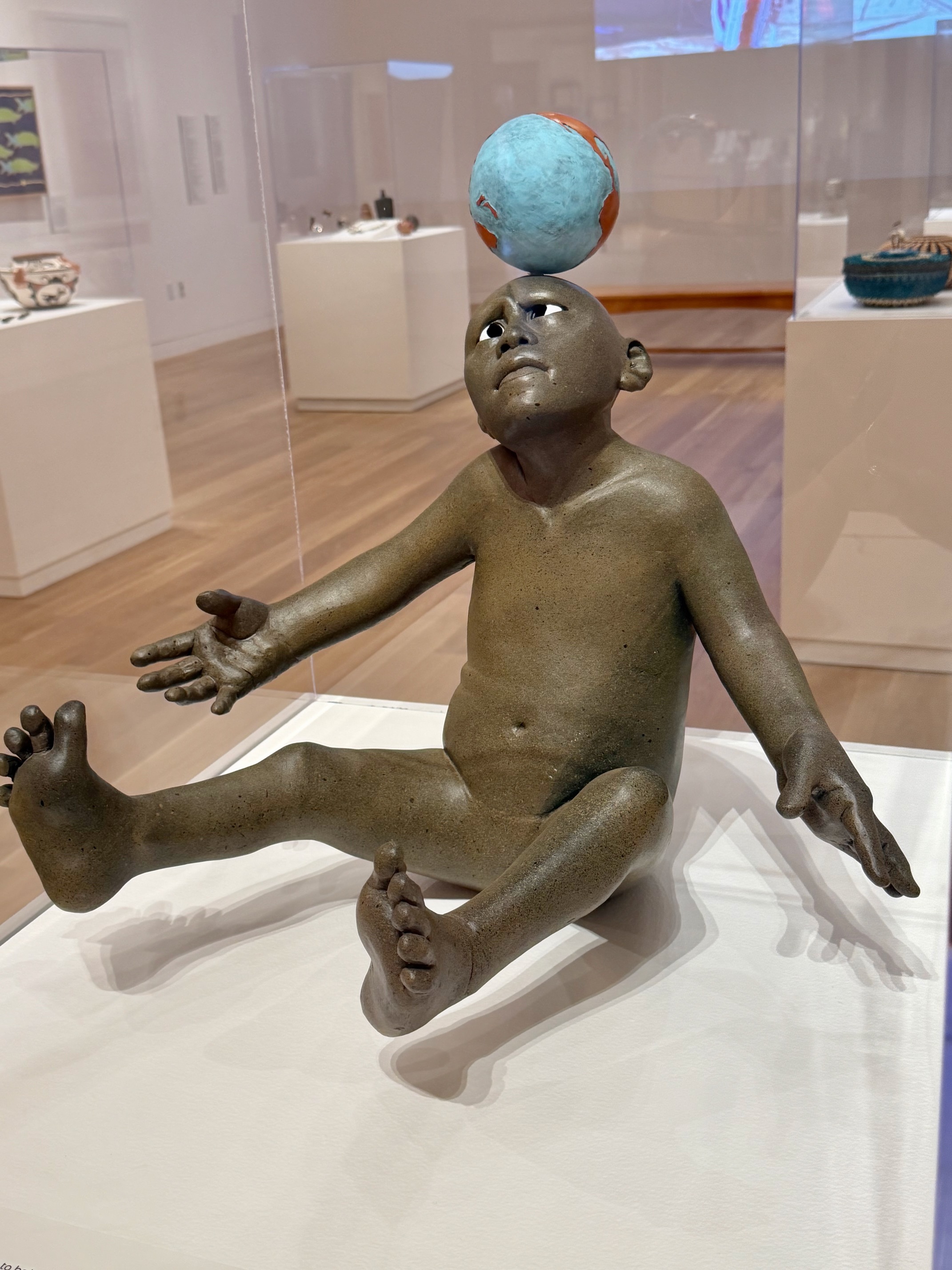
The Earth section begins with Roxanne Swentzell’s large ceramic sculpture Unstable World, which sets the tone for the rest of the show – Native art that calls attention to our current environmental balancing act. Nearby, several Diné artists ring the alarm bell about the insidious damage being done to Navajo Nation and nearby pueblos – and their own families – from the long legacy of open-pit uranium mining and contamination from nuclear testing.
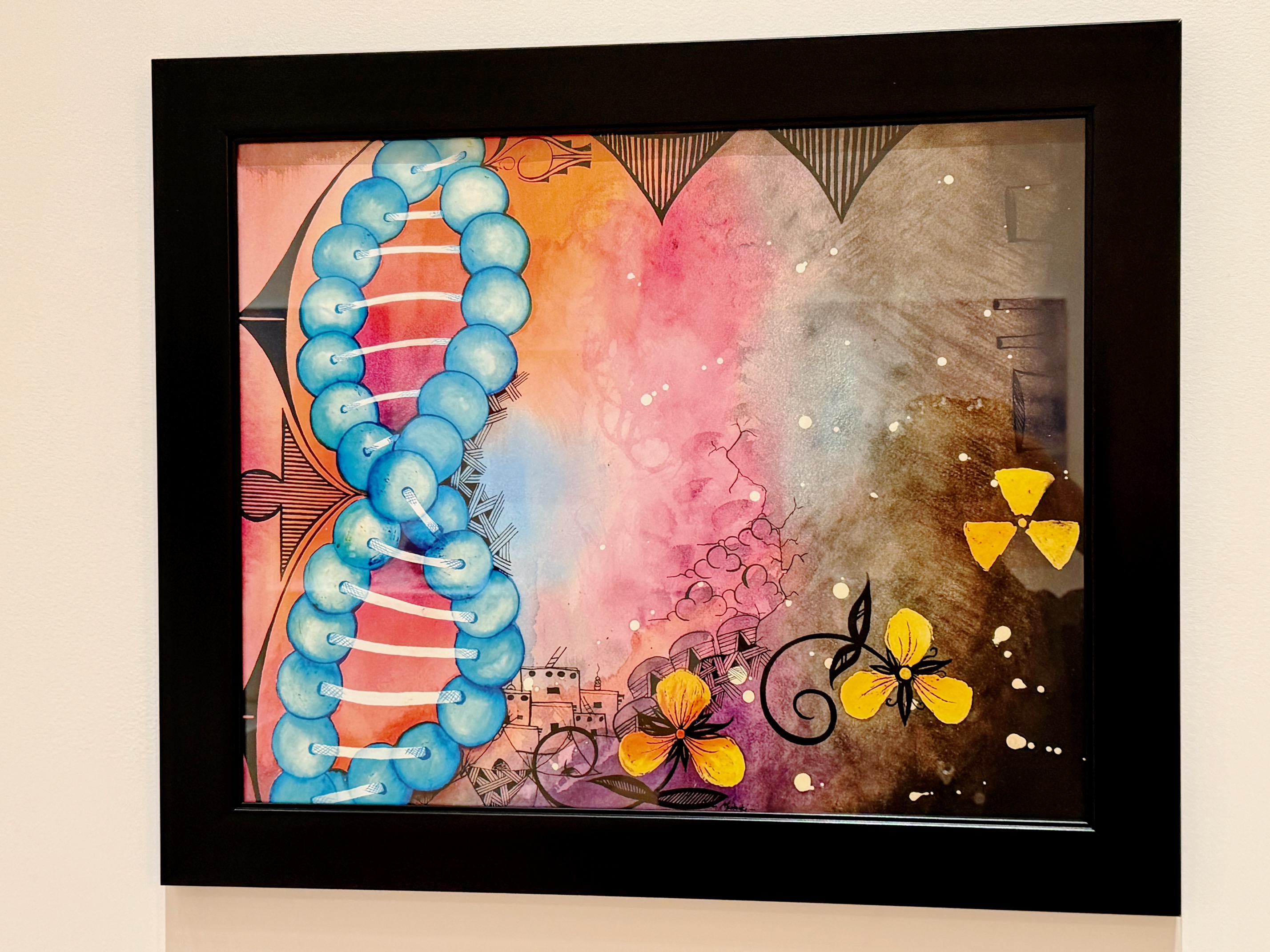
Rowan Harrison’s intricate drawings are made to raise awarness of intergenerational health challenges and to honor and support to cancer victims. The curators have given lots of space to Diné artist Shayla Blatchford’s photo-interview Anti-Uranium Mapping Project, including a sobering map of the nearly 500 abandoned uranium mines scattered across her homeland. Biologist-artist-public health advocate Mallery Quetawki (Zuni Pueblo), creates abstracted works. Only when you get close do you see the shapes are radiation symbols of uranium contamination working its way into DNA strands.
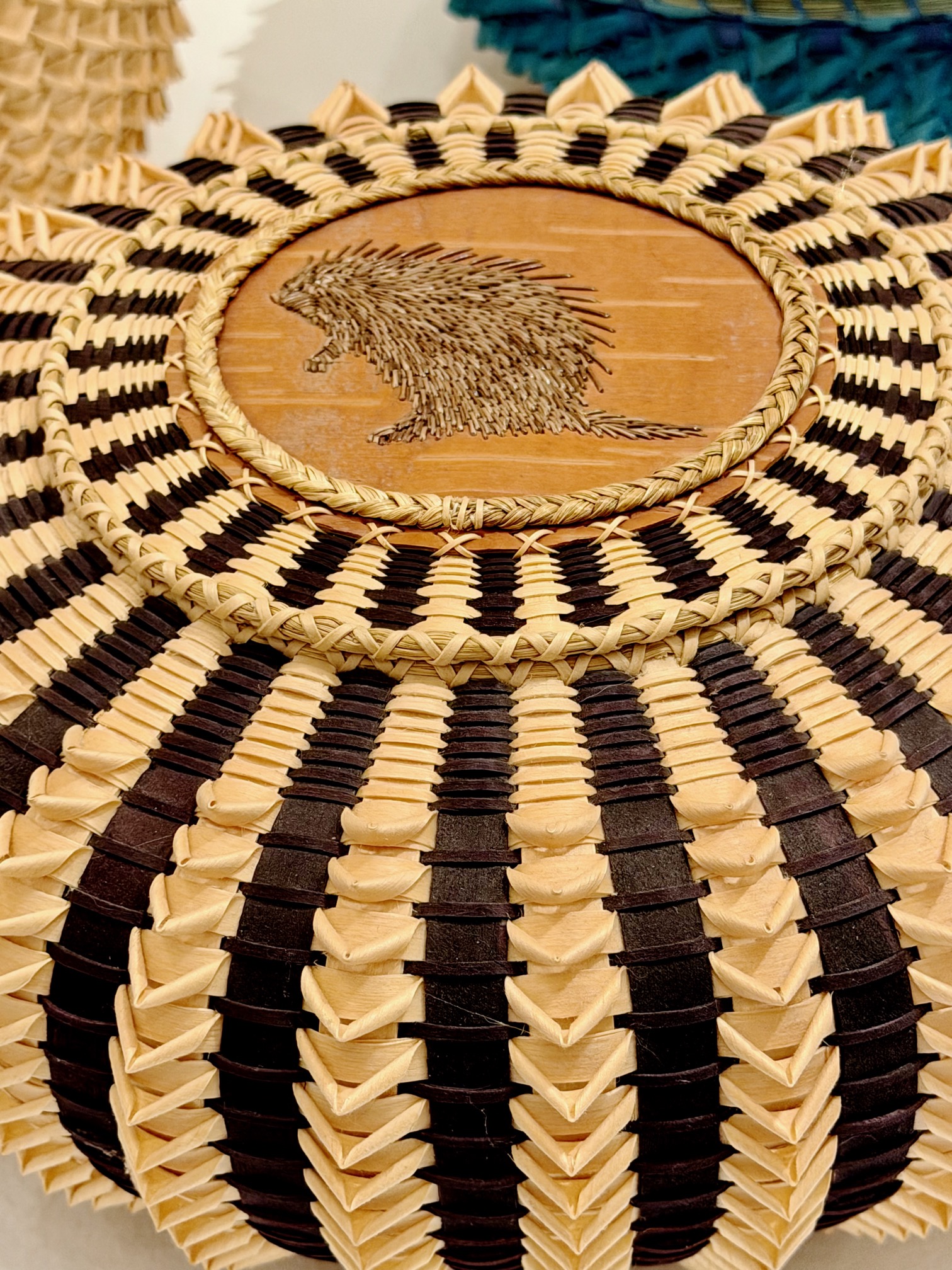
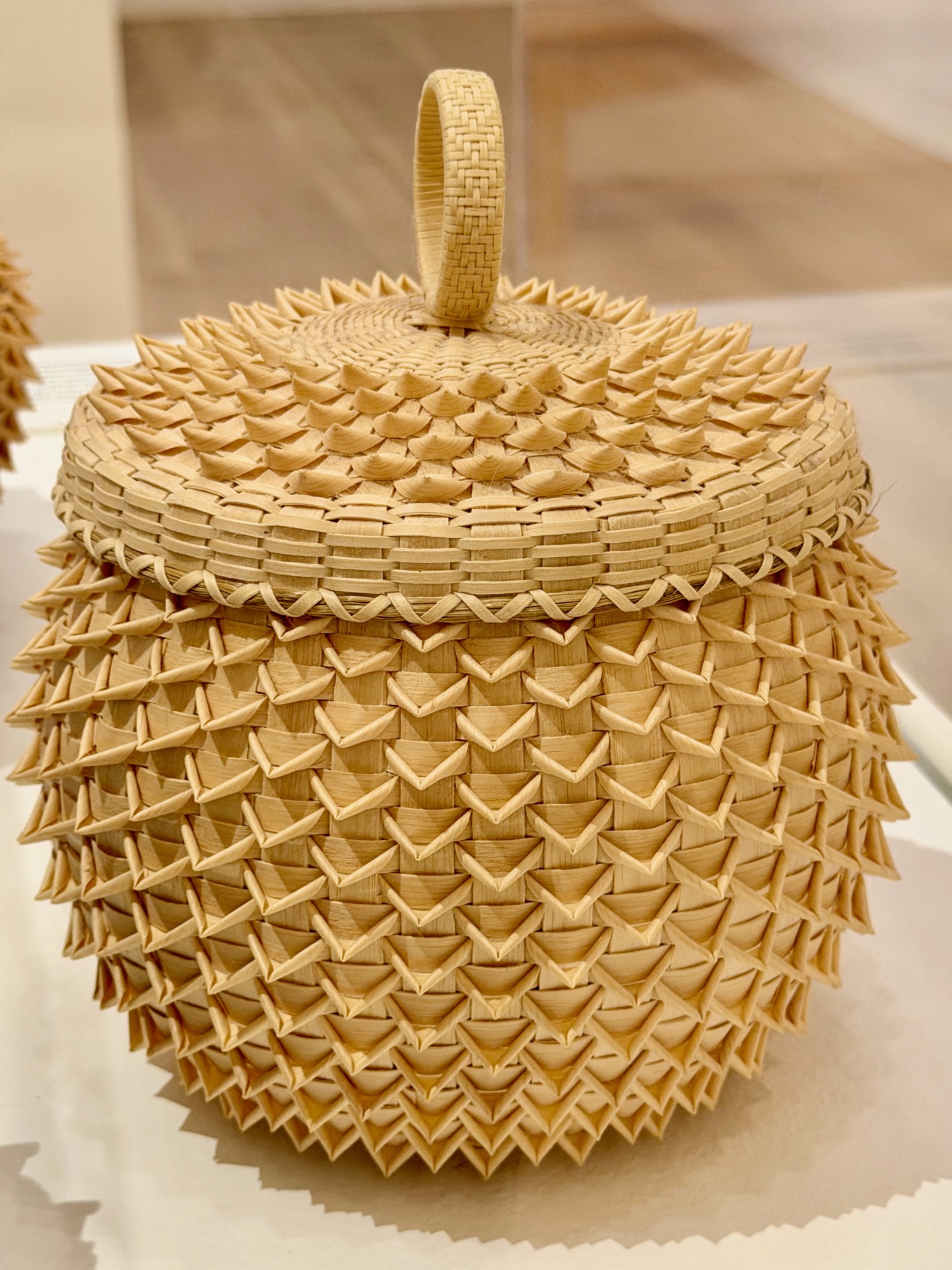
Beautiful, intricately woven baskets are displayed nearby. As you admire the creations of Jeremy Frey (Passamaquoddy), a 2025 recipient of the MacArthur Fellowship “genius” grant, it’s unsettling to learn that Jeremy and other Eastern art virtuosos are concerned that their baskets could be the last. Black ash and other natural materials are disappearing from their homelands at an alarming rate due to the triumph of invasive plant species.
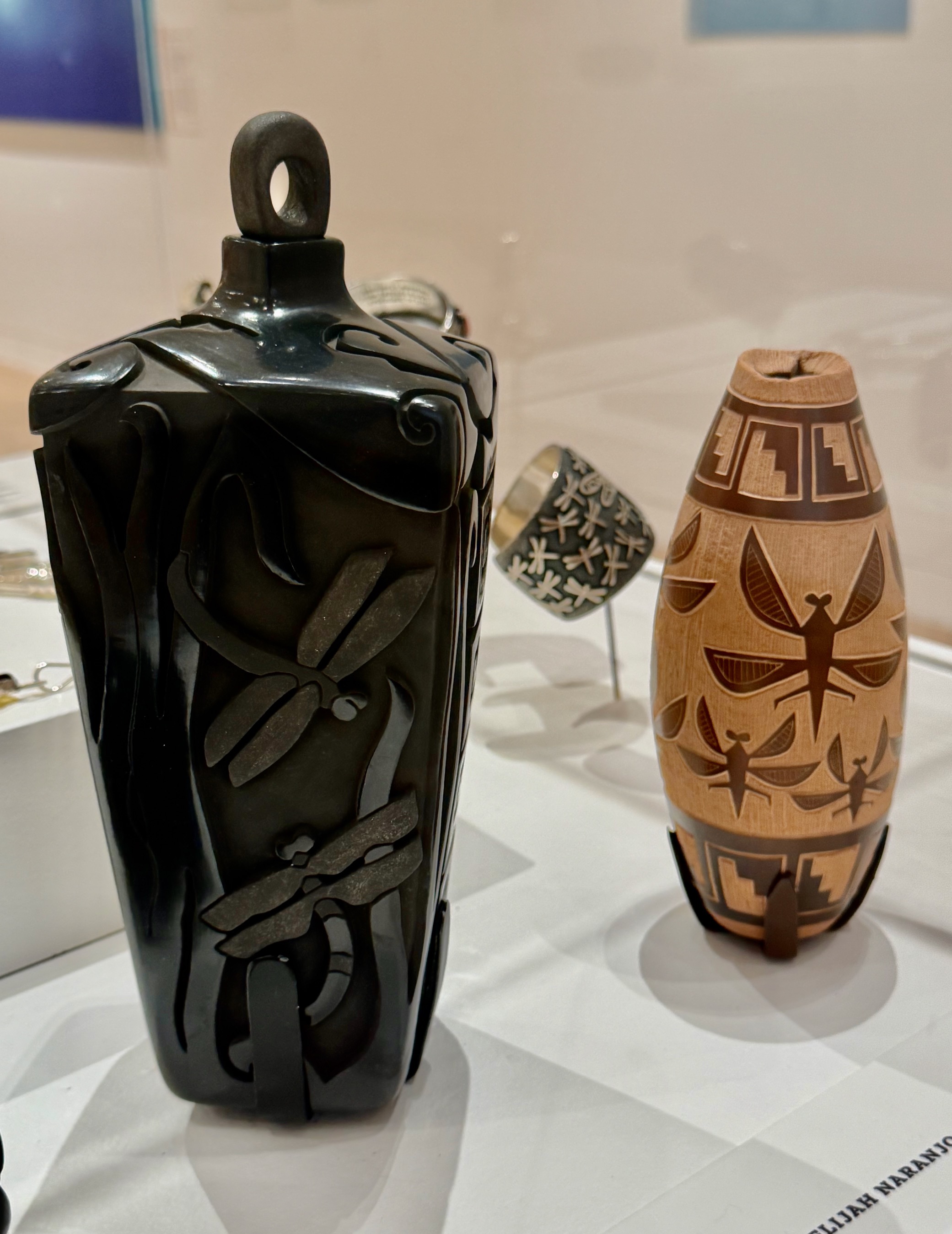
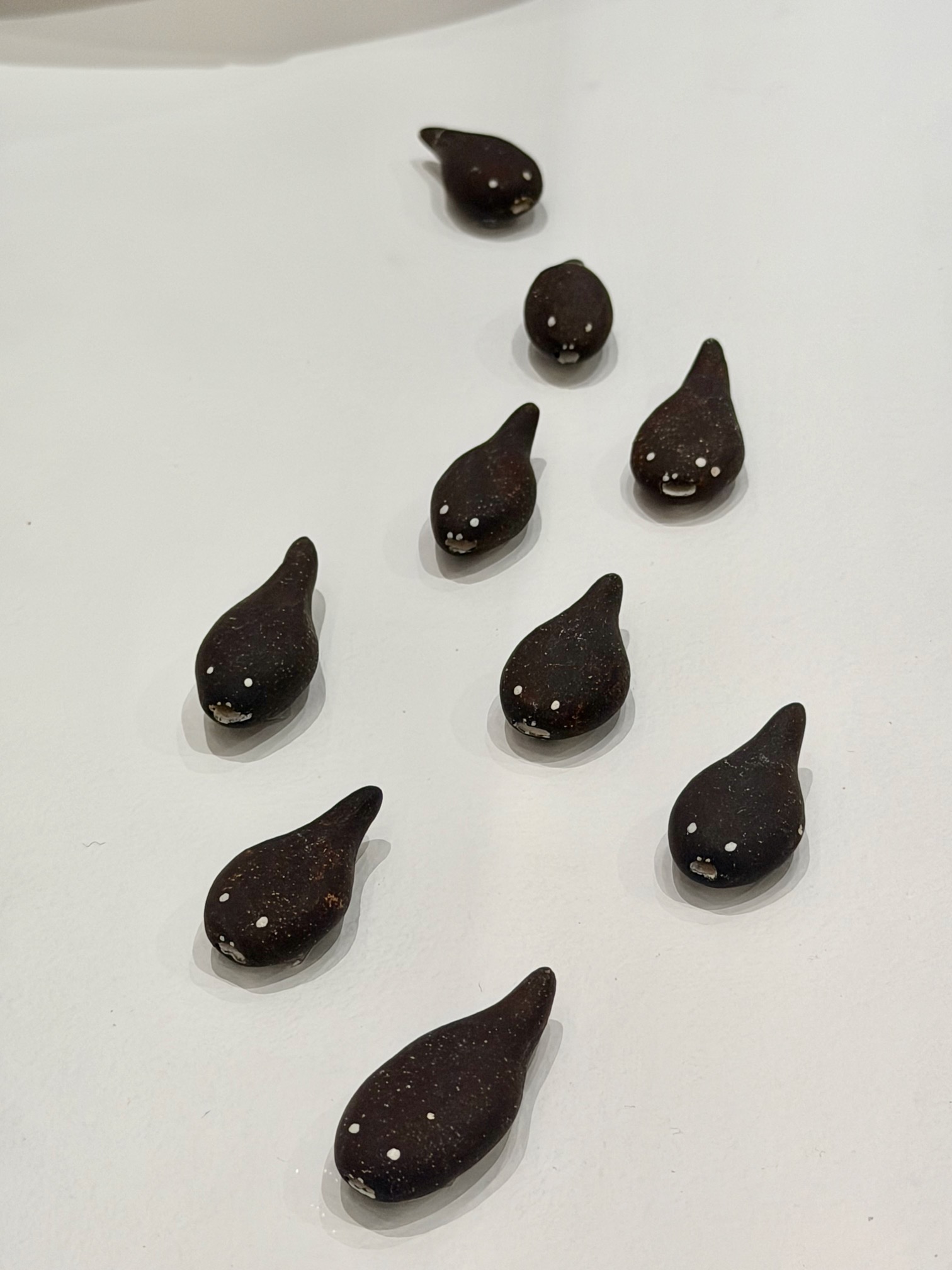
Other jewelry and ceramics artists incorporate images of animals, insects, and other indicators of what the world looks like when clean water and healthy air abound – dragonflies, tadpoles and frogs, and Avanyu, the all-important Puebloan water spirit. Multimedia artist Cannupa Hanska Luger is seen (via video) in a ritual performance “from the future” to ensure people’s continual gratitude for food, shelter, and tools.
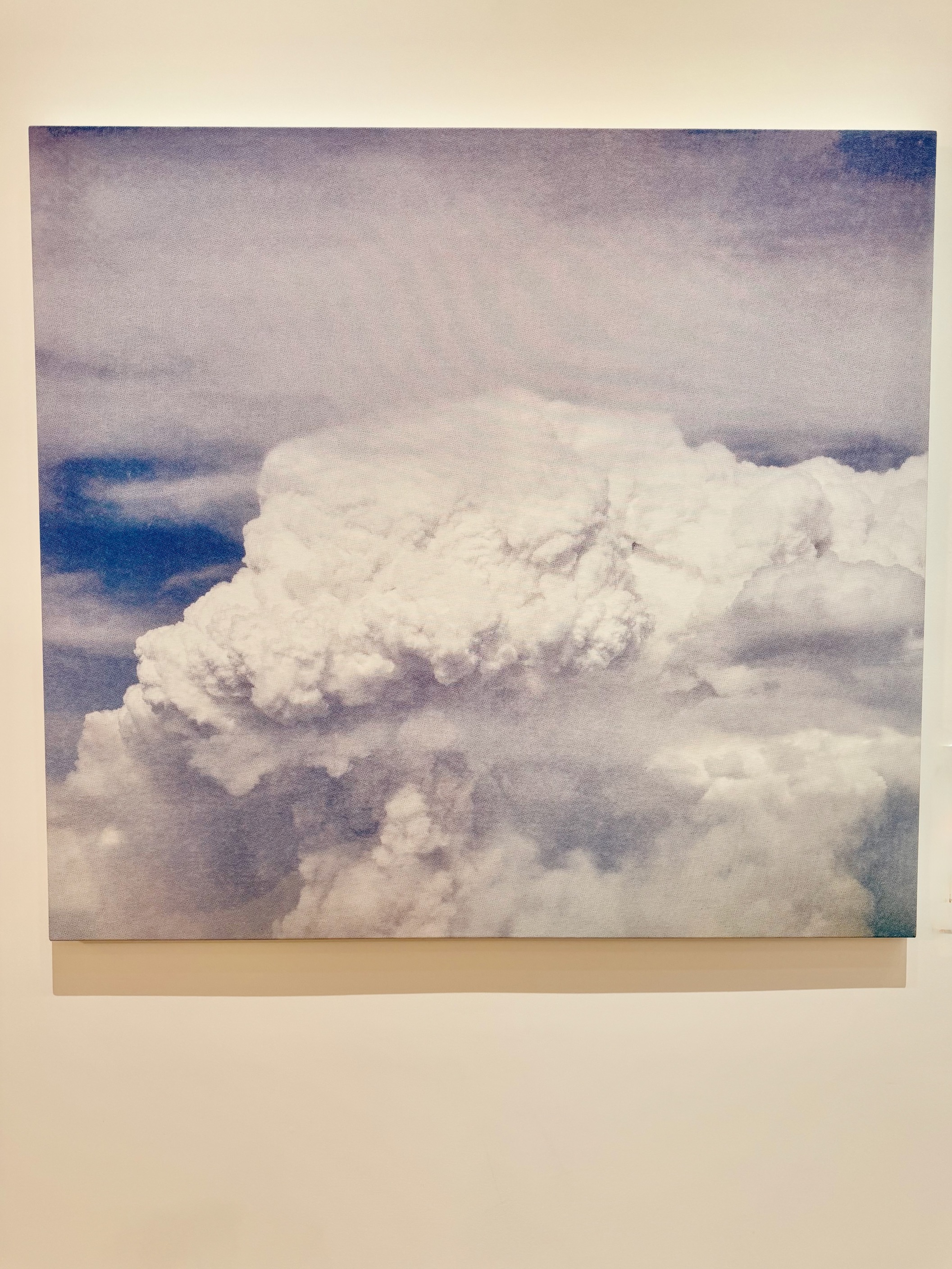
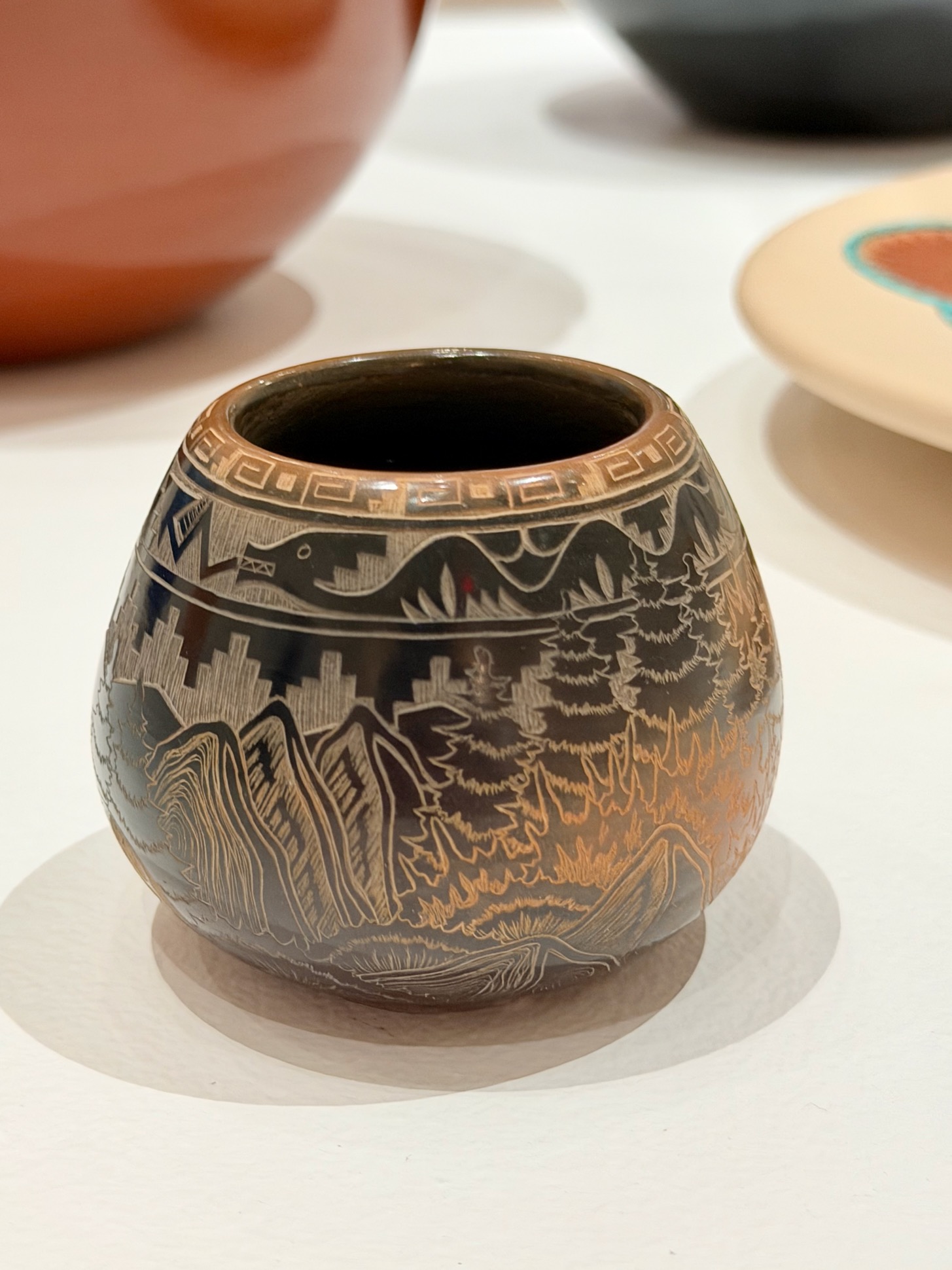
Considering the string of recent devastating wildfires that have plagued New Mexico in recent years, the artwork in the exhibition representing the element of fire is truly resonant. Kevin Naranjo made a tiny ceramic jar into which he carved his recollection of the wildly destructive 2011 Las Conchas Fire. Michael Namingha’s spectacular digital image is not just a pretty view of the sky. It’s the image of a cloud that only appears above an extremely intense heat source – exactly what he photographed during the 2022 Hermit’s Peak Fire or that New Mexicans witnessed in the Trinity blast.
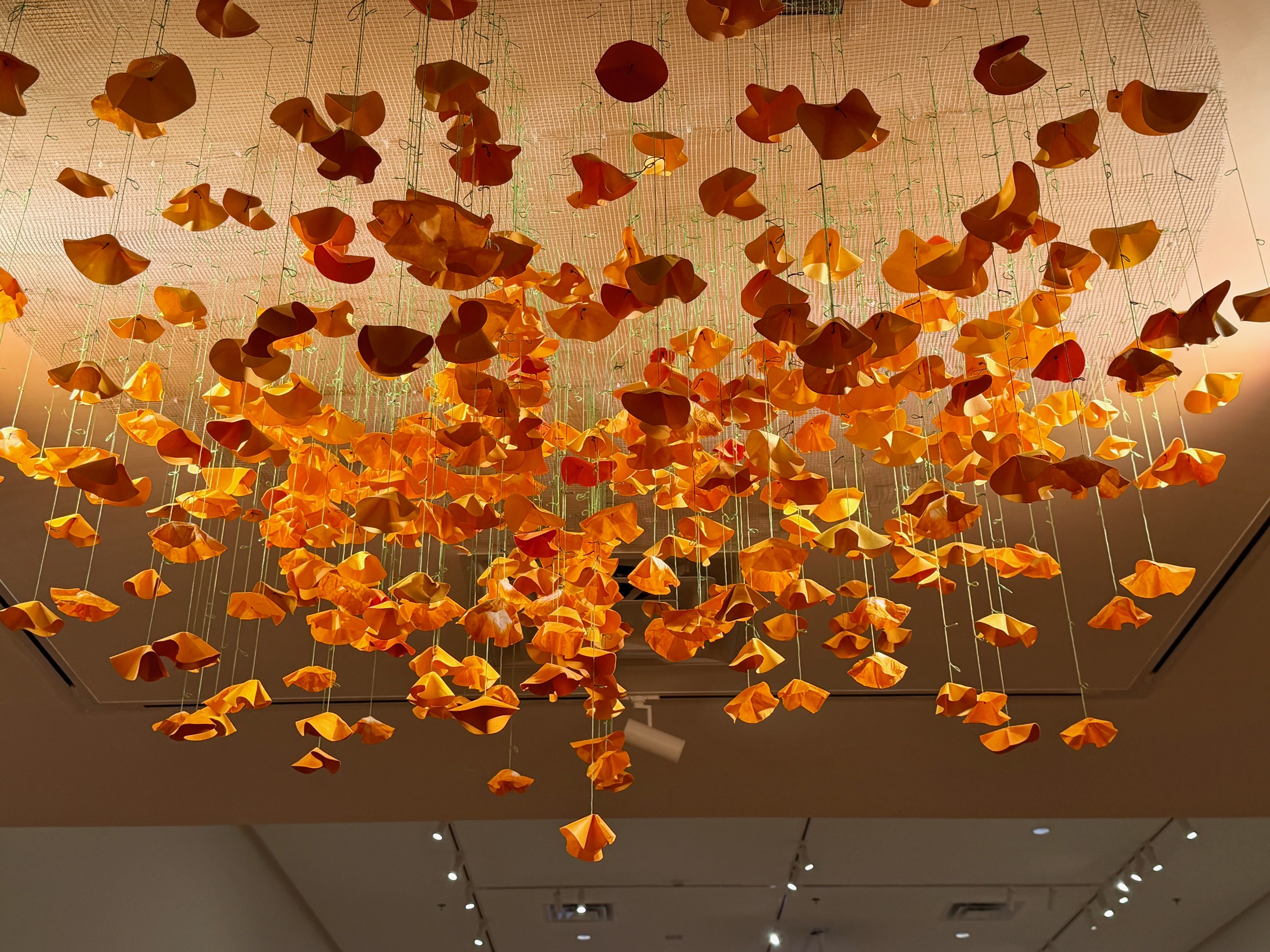
Overhead, as you enter or leave this thought-provoking experience, you see paper poppies – the first flowers that bloom after a fire. Artist Leah Mata Fragua (Northern Chumash) is going a step further with her art after this exhibition ends. She’ll take her paper blossoms back home and burn them in a ritual that recycles her beautiful art back into the Earth.
 itsnewstoyou