
There’s no better way to see the best of the best at the Santa Fe Indian Market than to visit the remarkable retrospective assembled at the New Mexico History Museum in their honorary centennial exhibition, Honoring Tradition and Innovation: 100 Years of Santa Fe’s Indian Market, 1922-2022, on view through August 31.
The curators have gathered loans from private collections, museums, individual artists, and big-name galleries to give visitors a decade-by-decade chronicle of the people, families, maker innovations, and contemporary-art trends that converged to showcase works from one the most exciting confluences of creativity in the United States.

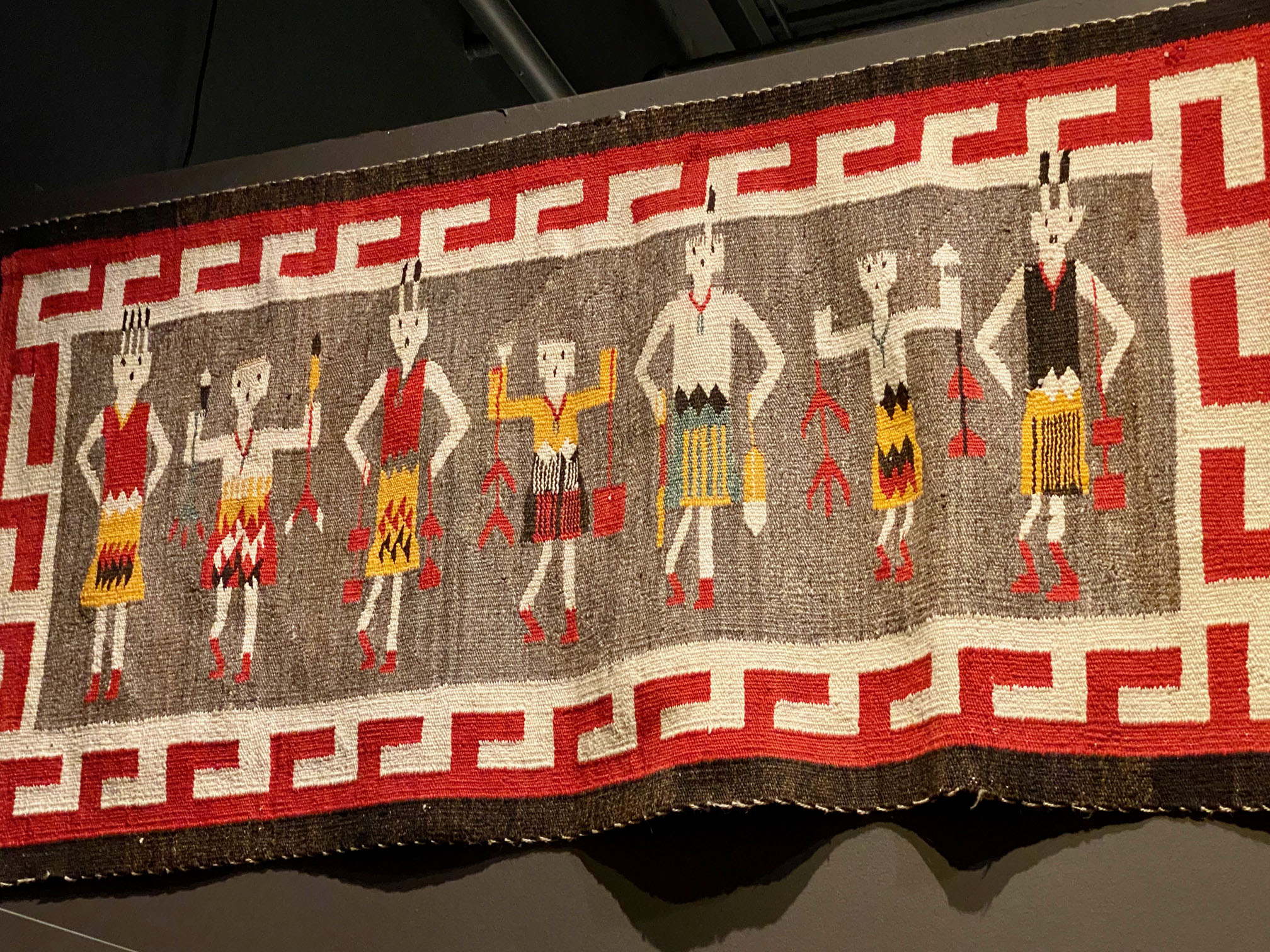
The items in the show – traditional pots, dazzling Navajo weavings, whimsical figurines, elaborately embroidered accessories and clothing, social-commentary photos and paintings – are so compelling that it takes two or three visits to actually focus on the thoughtful, illuminating text that accompanies each portion of the show.
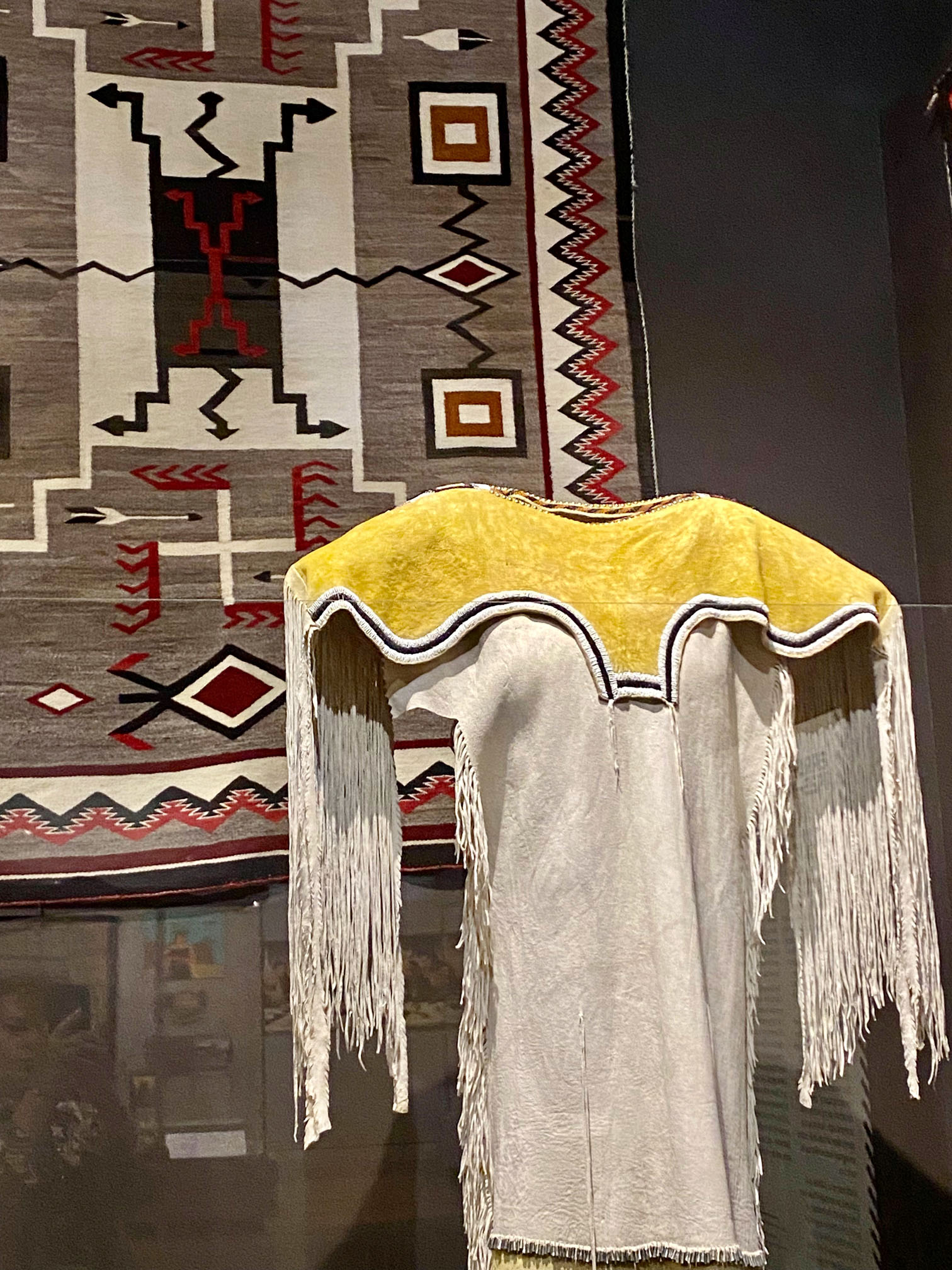
The organizers have provided a revealing chronology of the politics, economics, and social context of each decade of the arts festival, noting changes in the people, processes, power, and patronage over time.
The first gallery brings you back to the earliest days of the market – a time when there were no Indian curators or judges (unlike today!) and when Native makers were not even allowed to sell their own work or interface directly with non-Native buyers.
The wall mural harkens back to the days when Pueblo people sold their pots and creations to tourists along the railroad, which in the late 1890s and early 1900s brought curious travelers, East Coast dandies, and traveling showpeople out to the Western badlands.
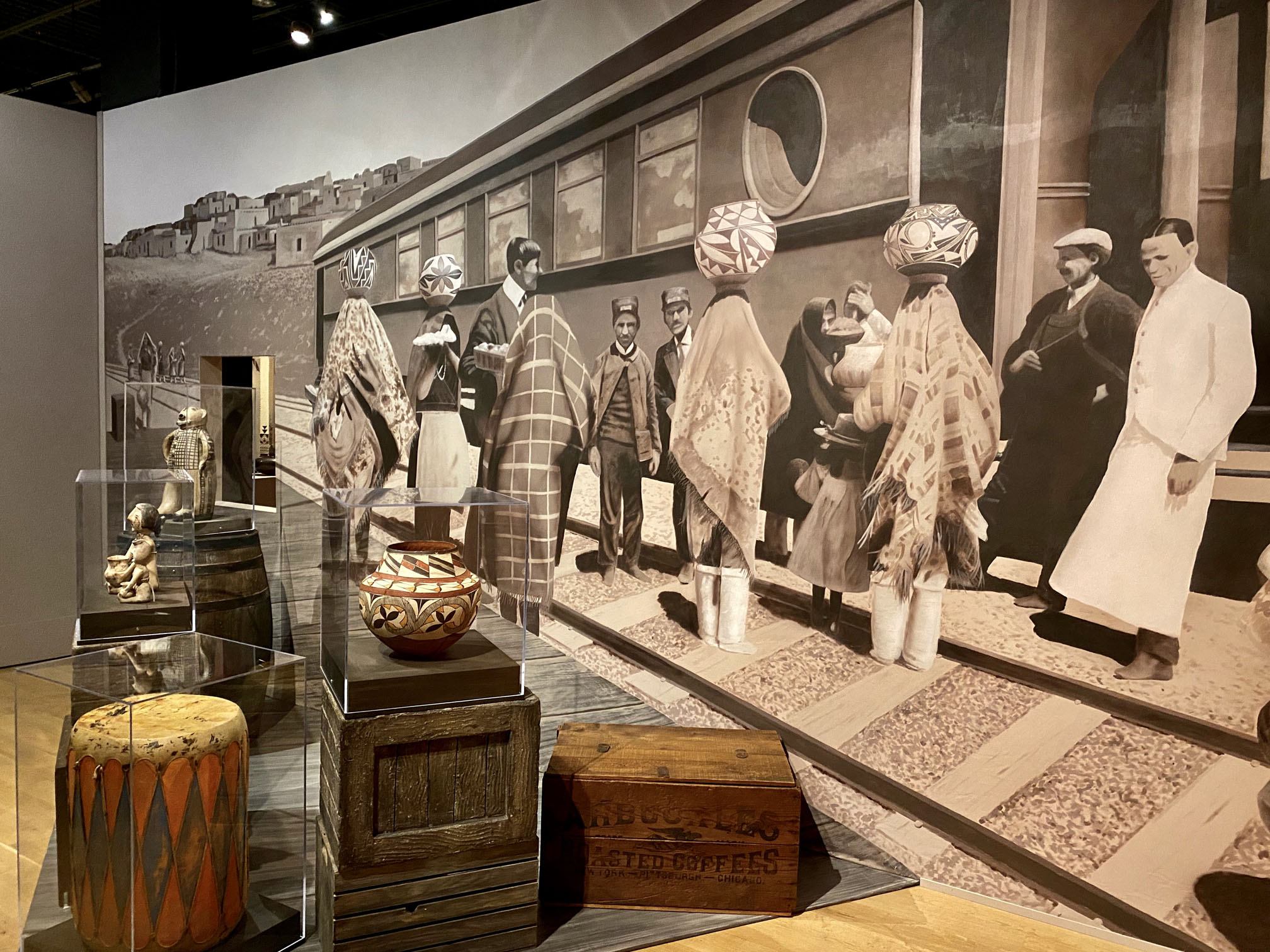
Turn-of-the-century tom-toms, curios, and older pots are displayed near the rail-top mural; Navajo rugs and beaded moccasins from the period are arrayed across the way. It’s an arrangement that evokes what might be displayed in an old trading post, or at least in the early 1920s Santa Fe markets.
Many of these makers in New Mexico were still living on their ancestral lands, but across the United States, the majority of Indigenous populations had either been relocated to reservations or boarding schools.
The inter-generational mastery of New Mexico’s Pueblo artists is featured in several vitrines holding examples of black-on-black (and other) masterworks by the Martinez family at San Ildefonso (go, Maria!) and the Tafoyas of Santa Clara, with Margaret’s famous bear-paw imprints.
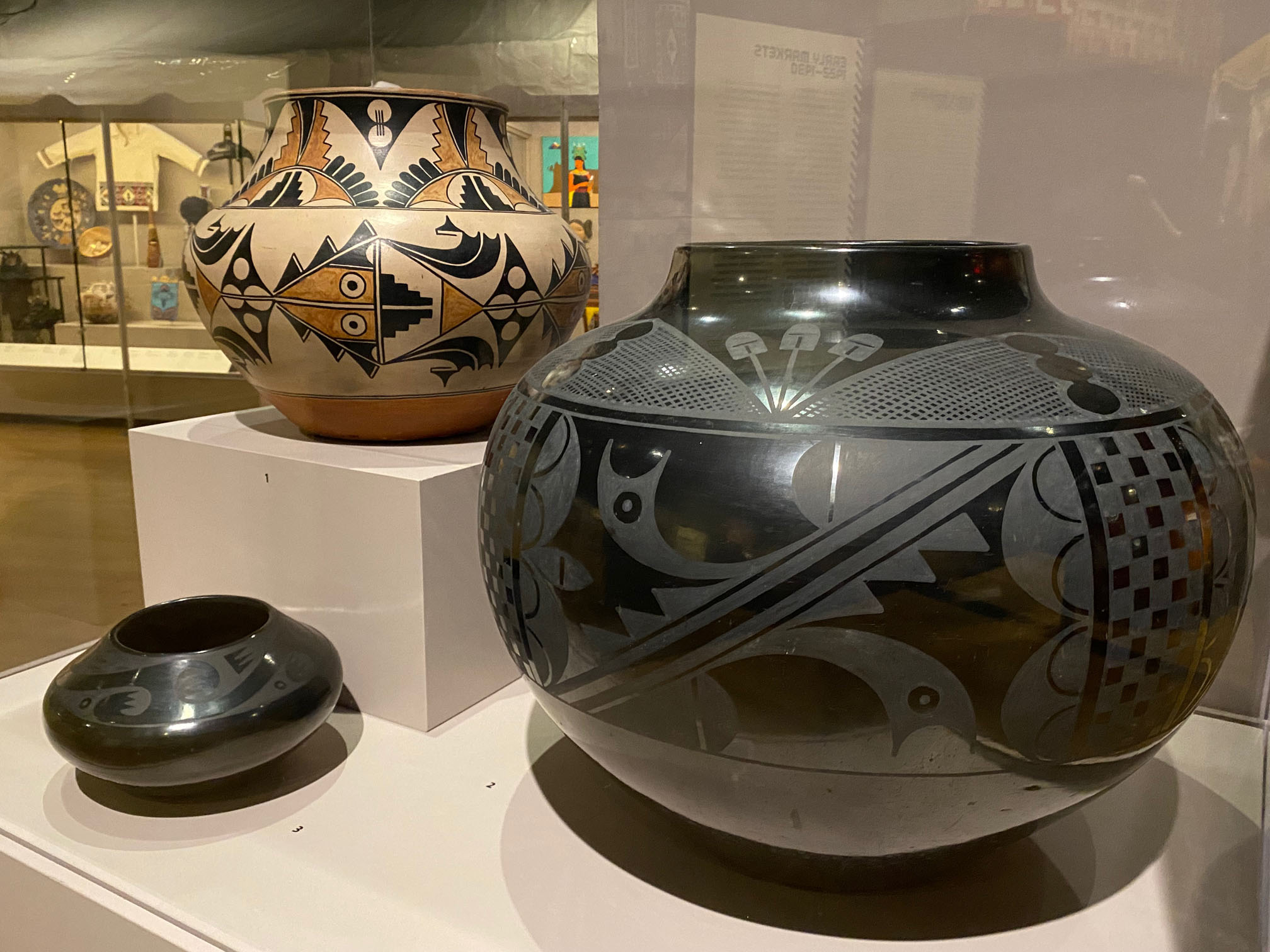
The surrounding gallery features dazzling painted pottery works by Zuni and Acoma from the 1920s – all drawn from the School for Advanced Research (SAR) collection, which began in 1922 to preserve classic works, SAR is the source of the acclaimed exhibition now at the Metropolitan Museum, Grounded in Clay: The Spirit of Pueblo Pottery. Sometimes the artists who made the pot is known; but often the maker is lost to history.

In the 1930s and 1940s across the United States, tribal mortality rates increased and their other economic lifelines decreased. But these conditions in the Southwest made the Market an even more important source of family revenue. Throughout the 1940s, the Santa Fe Market boomed.
By the 1950s, Federal government instituted policies to encourage Indians to leave their land and move into cities. Unfortunately, Santa Fe Indian Market policies had the same depressing effect – the organizers reduced both the number of artists allowed to show and amount of prize money that could be won.
By 1959, the SF Indian Market was on life support, with a few private donors stepping in with funding just to let it survive.
But during the 1960s, changes were afoot. The Institute for American Indian Arts began in Santa Fe, where Lloyd Kiva New gave Native artists “permission” to throw off traditional conventions and make contemporary art. Across the United States, social-justice movements focused on indigenous people’s rights demanded policy changes to reverse the impact of oppression. By 1968, Congress had passed the Indian Civil Rights Act.
What did that mean for the Market? The majority of works on display in the museum gallery are from the post-1970s period, when the scope, range, voice, virtuosity, and experimentation reflected the times.
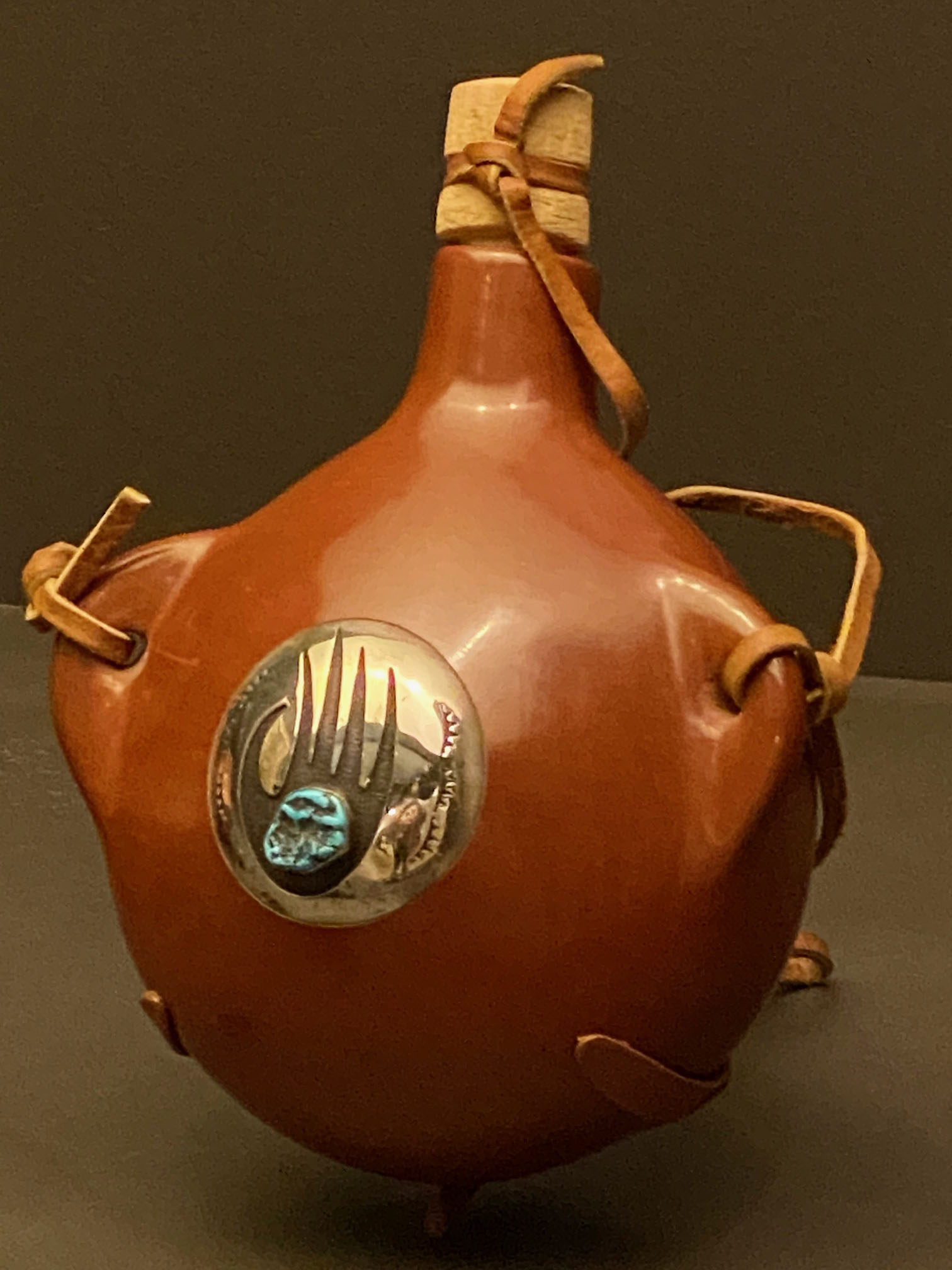
Here are some examples – the glorious, gleaming, turquoise-inlaied 1980s vessel by by Zia/Jemez/San Ildefonso artist Dora Tse Pe and the virtuoso painting on a jar by by Acoma artist Dorothy Toriio.


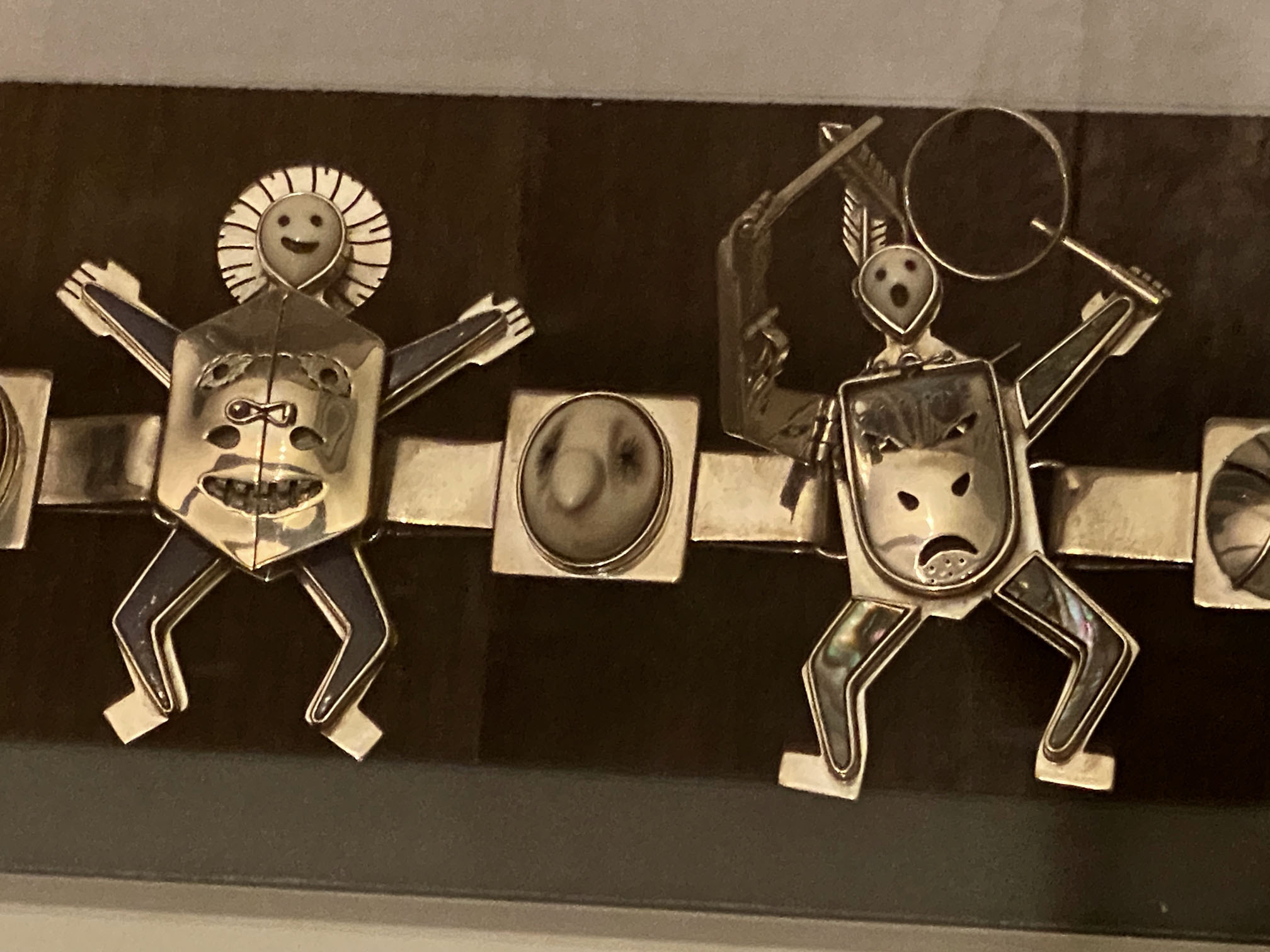
Or, consider the virtuoso silverwork and inlaid belt by Aleutian master Denise Wallace; edgy, theatrical 1990s Cochiti figurines by Virgil Ortiz; and a 1999 horsehair basket woven by Tohono O’odham artist Leona Antone. See more in our Flickr album.
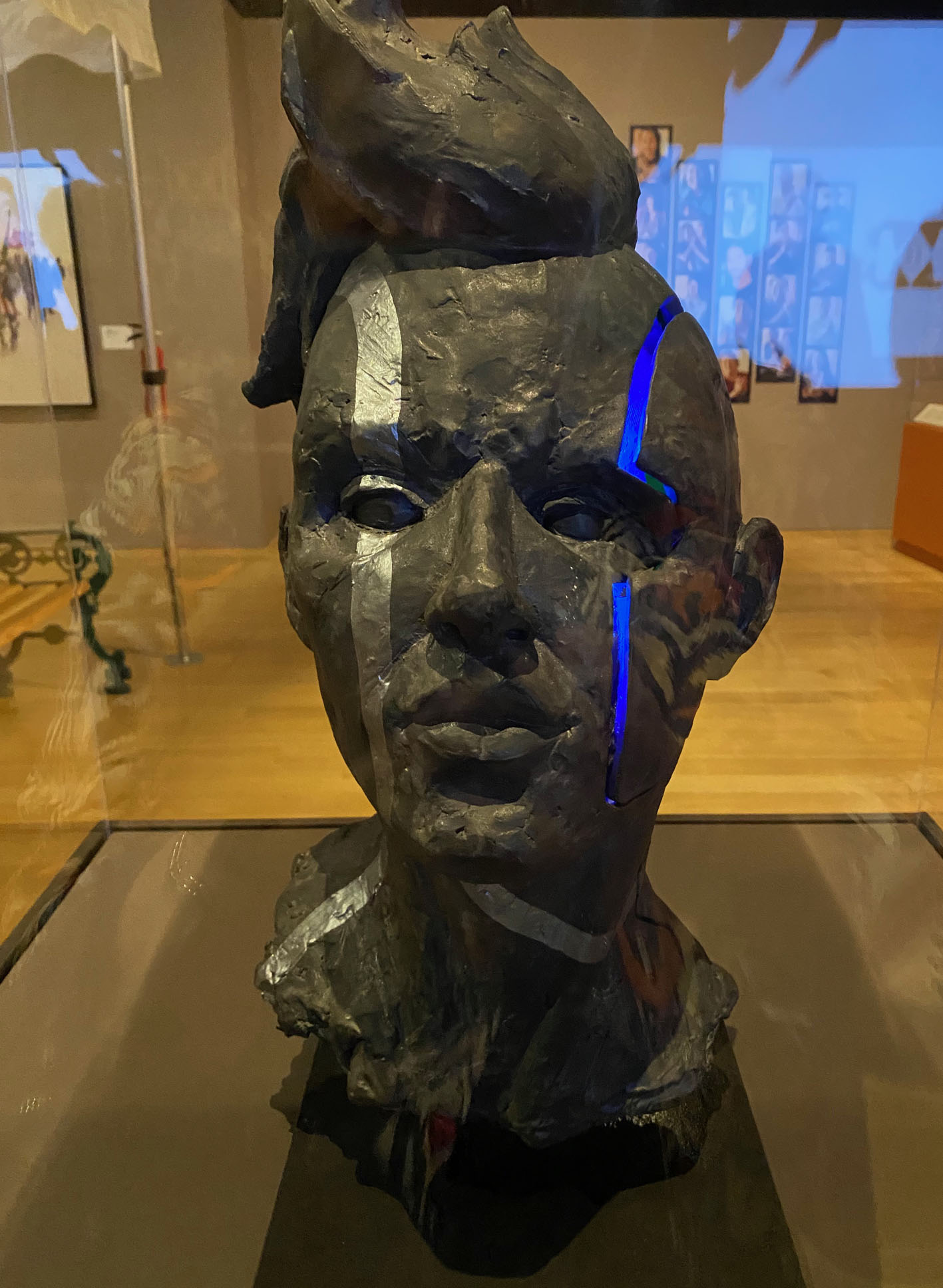
The show’s finale catapults the story of Indian Market into the future. First, there’s a cluster of sculptural and video works by Virgil Ortiz, featuring his sci-fi, super-powered, time-traveling warriors from the future who travel back to 1680 to fortify the success of the Pueblo Revolt and save Pueblo culture.

Second, there’s a photo wall of families and their young children, who create work to enter in to the children’s division. It leaves visitors with the strong feeling that not only will forward-looking artists keep innovating and creating, but that the kids will be all right.

 itsnewstoyou
Hello Susan, Thank you for this extraordinary dash through such a spectacular exhibition of art, and for your very helpful review, historical notes, and well-studied observations. It’s frustrating to know that the show is about to wrap today and there’s not likely to be an opportunity to visit it three or four or a dozen times, to engage it as thoroughly as you have, and as I would have to do to even begin to appreciate it as well as it deserves. Still, your report was an excellent cyber-sage smudging ceremony, clearing the air, bringing light and understanding, respect for the inspiration and talents of the artisans, and it leaves us with knowledge, compassion, silence, and fire.Miigwich. Gary
Gary Knowles487 Presidential LaneMadison, WI 53711Off/HM 608-231-3884Openair@aol.comIG: Openair93Twitter: @GaryKnowles @TravelWisconsin Journal and Topics Newspaper – “Getaways”-DesPlaines, IL – 16 papers Big Radio Network -” Getaways & Events”- Monroe, WIWisconsin Public Radio – “Central Time” – Periodic Travel Adviser Reports- Midwest Travel Journalists Association – Active Member & Past-President Society of American Travel Writers -Active MemberWI Governor’s Tourism Legacy Award -2017