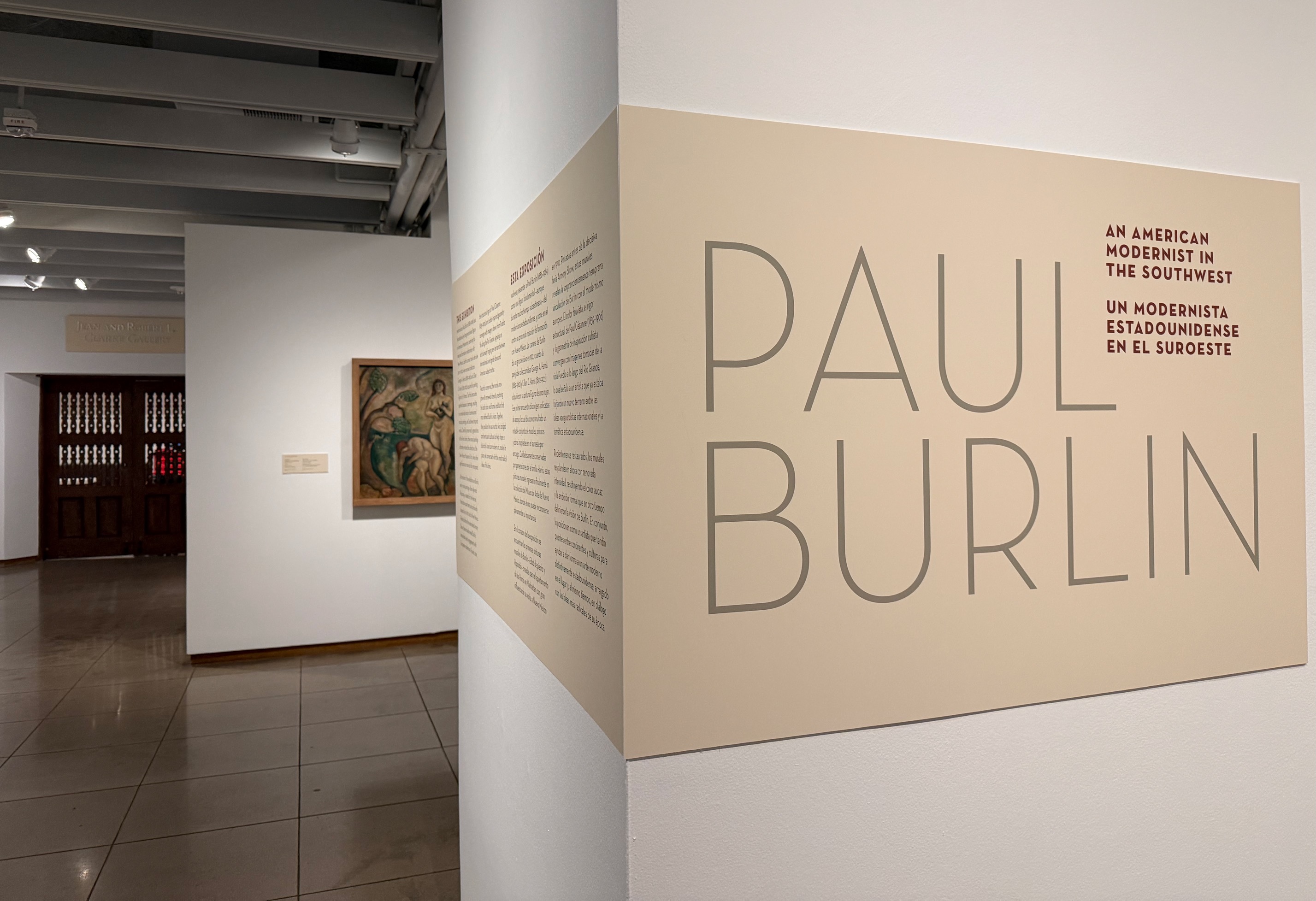
At 27, he was the youngest artist juried into the ground-breaking 1913 Armory Show, and had just delivered his first big commission – cutting-edge murals channelling his recent trip to Santa Fe – to the Harrises, his first major Manhattan art patrons. Paul Burlin: American Modernist in the Southwest is a capsule exhibition that lets us experience one artist’s evolution through the earliest years of American modernism and the birth of the Santa Fe Art Colony (1912-1917). The show is on view at the New Mexico Museum of Art in Santa Fe through November 29, 2026,
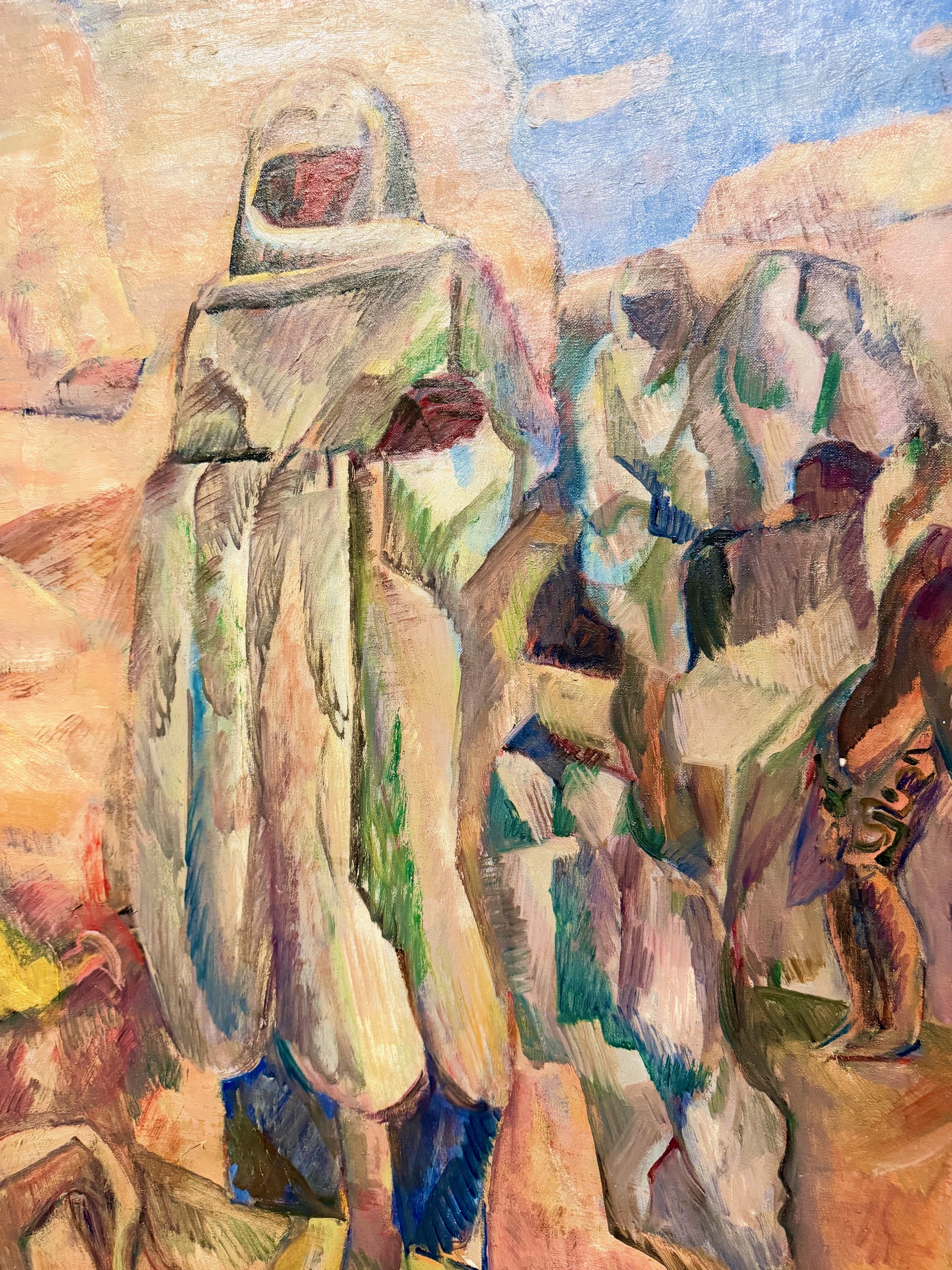
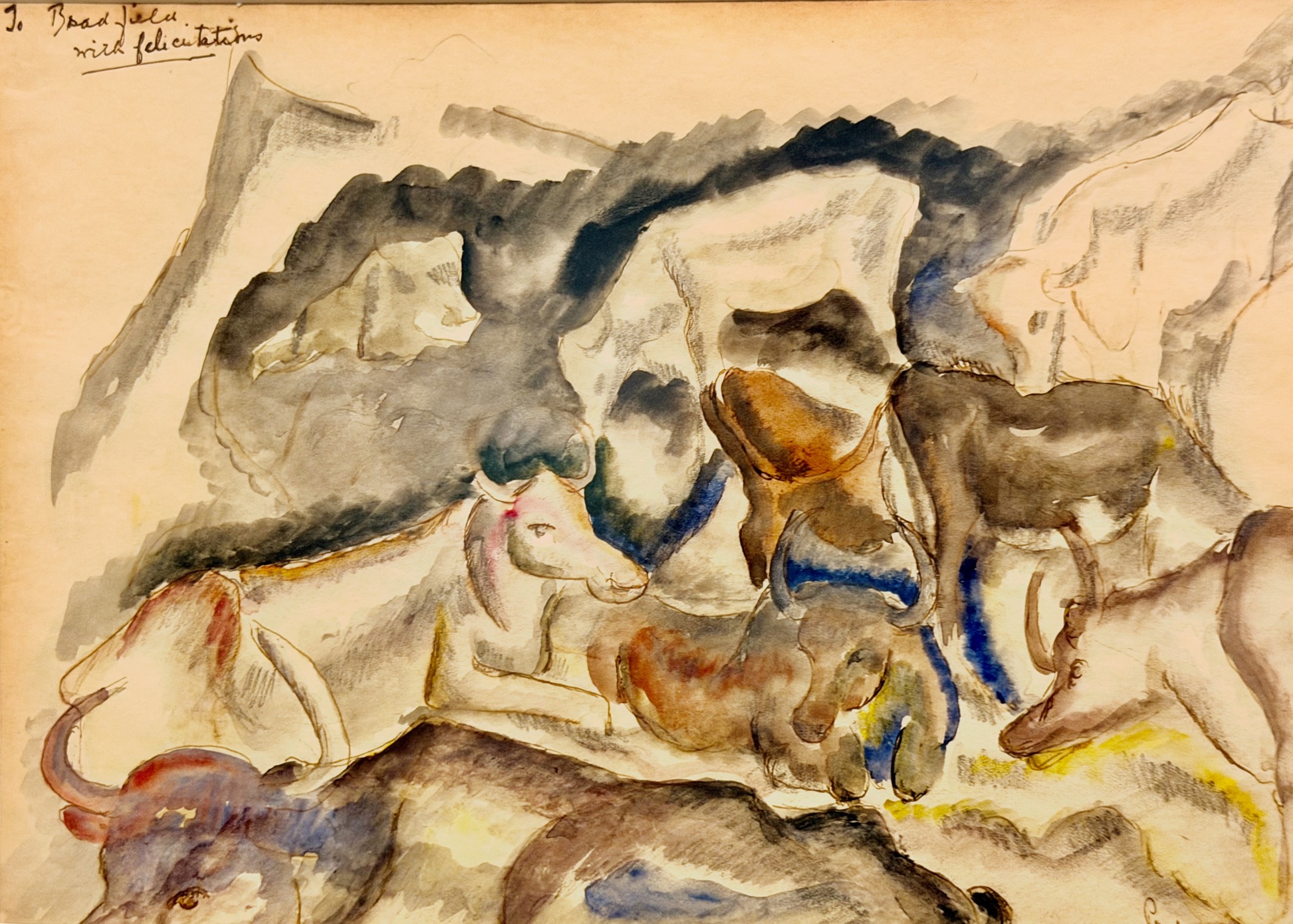
The exhibition celebrates the Harris family’s recent donation of these murals to the museum and their magnificent restoration. Many of the works show how a young early 20th century artist successfully channeled his Southwest adventures just as European art innovations were percolating in Manhattan art circles. Take a walk-through of the show in our Flickr album.
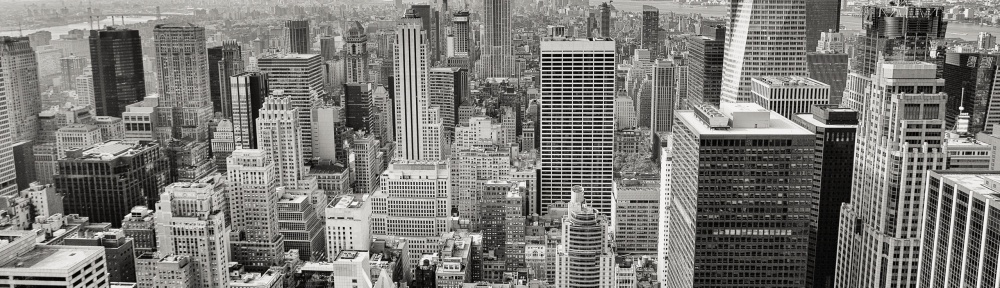
Paul Burlin was born in New York’s Lower East Side immigrant neighborhood in 1886, but left the tenements when he was sixteen. He changed his name, and was determined to reinvent himself as the modern, dynamic City was rising around him. He worked as an illustrator to make ends meet, and took night classes at the Art Students League.
The “Ashcan School” of artists (led by Robert Henri) had a huge impact on him – the trend toward depicting the gritty, everyday life of everyday New Yorkers – not just rich society people. In 1908-1908, he jumped at the chance to go to Europe and saw works by Renaissance masters and innovators like Van Gogh, Gaugin, and the early Cubists.
By 1910, he had an art studio in the historic Tenth Street Studio Building – a hub of progressive art in the Village. That year, he hopped a train to Santa Fe – a remote, “primitive” town that made a lasting impression on him. For the first time, Burlin saw jagged canyons and eroding vistas, met Native Americans, and attended pueblo dances.
That year on the Santa Fe Plaza, Edgar Lee Hewitt and Jesse Nusbaum were renovating the Palace of the Governors, and the New Mexico State Legislature had just established “the Museum of New Mexico” that Hewitt woud run.
Back in New York City, Burlin saw Picasso’s first American exhibition at the Stieglitz gallery. At Tenth Street, he incorporated everything he experience in his whirlwind year into his work. The Daniels Gallery gave him an exhibition the following year, and his career took off.
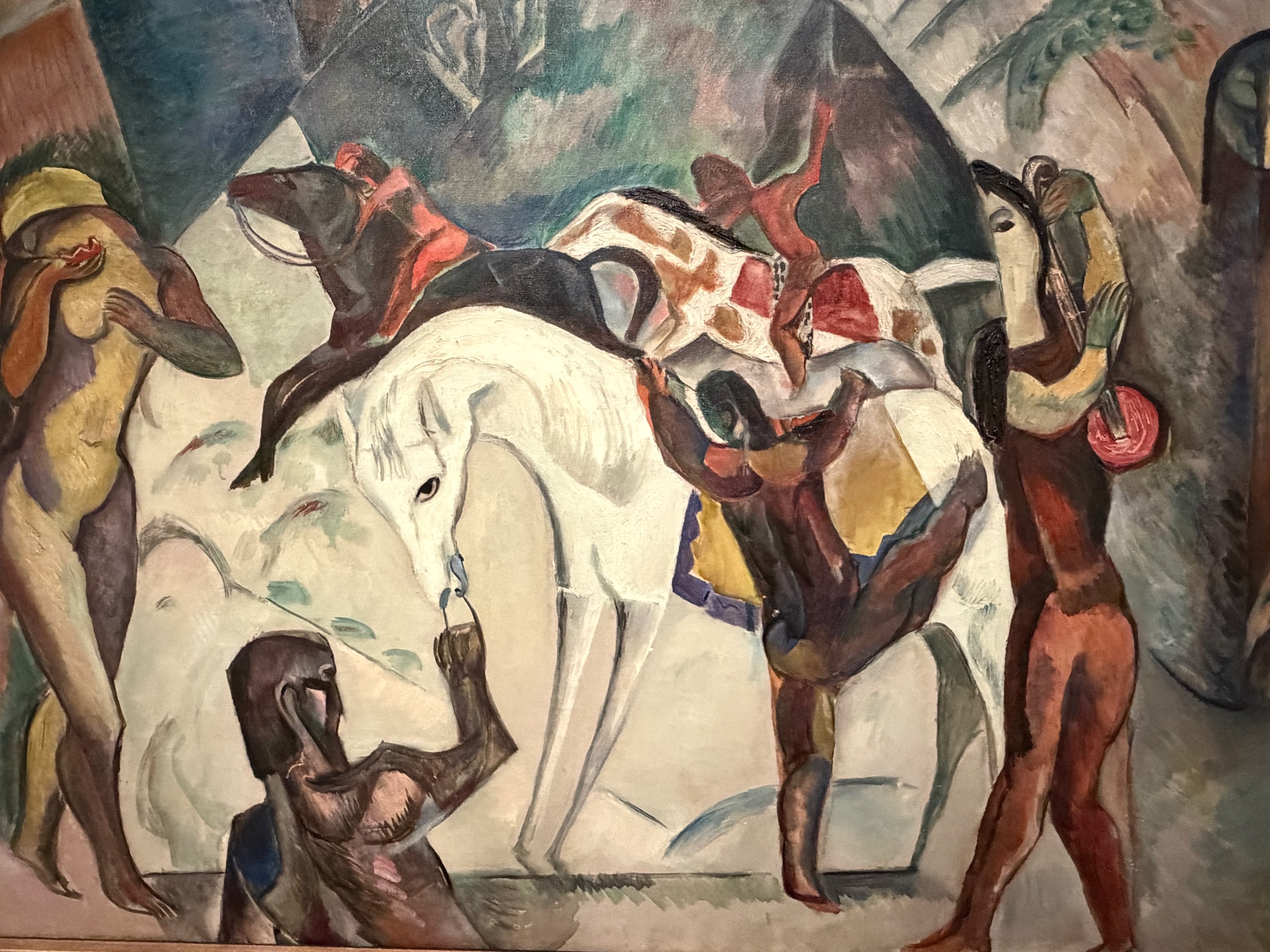
Mr. and Mrs. George A. Harris of New York were enamored Burlin’s imaginative, modern work that they saw at the gallery. They immediately bought one of his paintings and then commissioned Burlin to create several painted murals for their Upper West Side home.
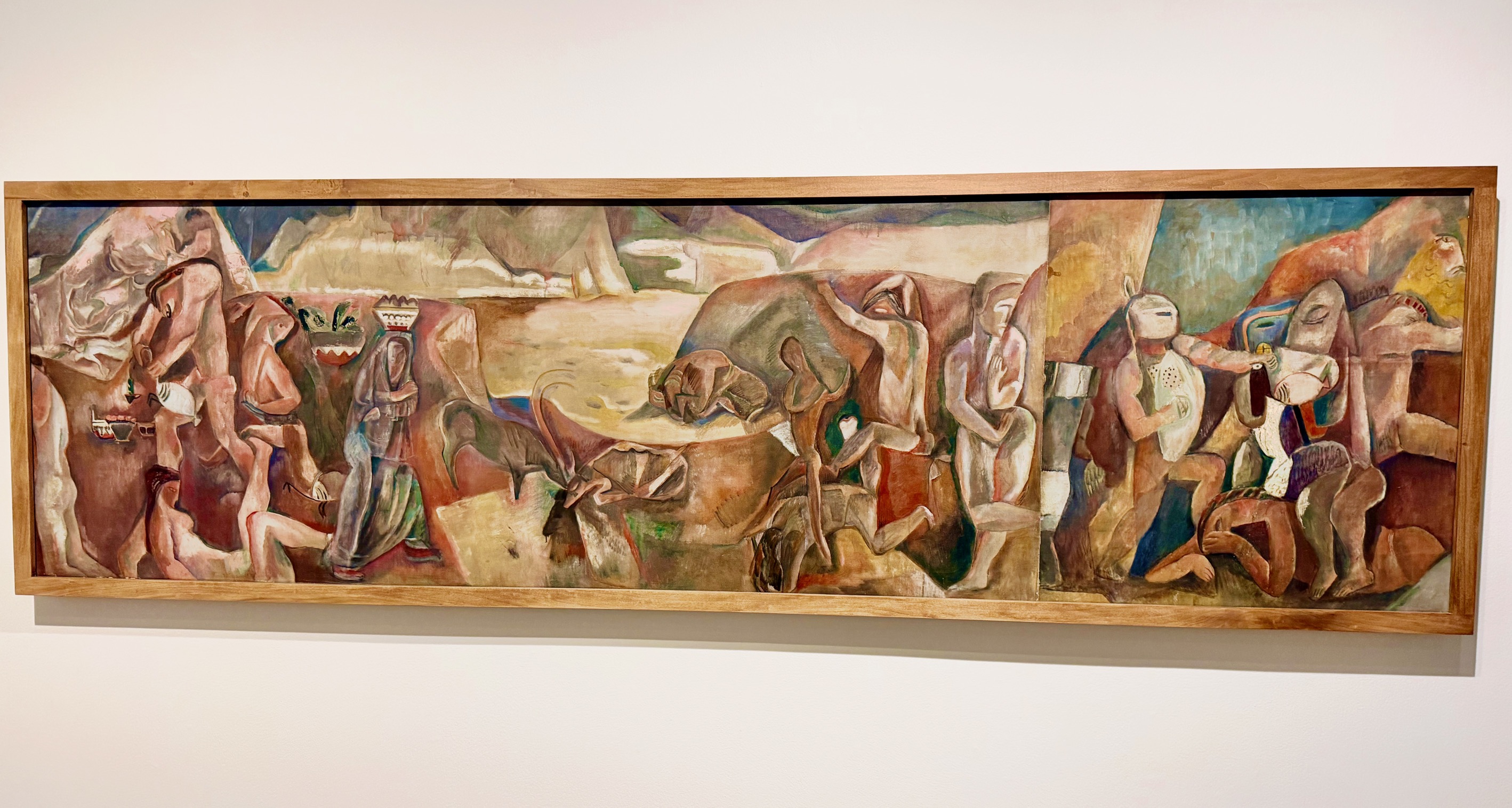
Stone Age could be described be a primordial landscape, populated with nude figures (think Cezanne!) and the kind of animals you might see in prehistoric cave paintings. The browns and reds give it a cave-painting feel, but he’s also added elements of the Pueblo world. There’s a Pueblo woman in a shawl at the center, and other Pueblo pottery artifacts to the left. On the right, the helmet and shield are reminiscent of ancient Greek soldiers, surrounded by Cubist angles.
Another mural, Rhapsody, was also a mash-up of cultural influences, urban and tribal. His approach certainly delighted his patrons, because a few years later (see below), they commissioned more murals for their other homes.
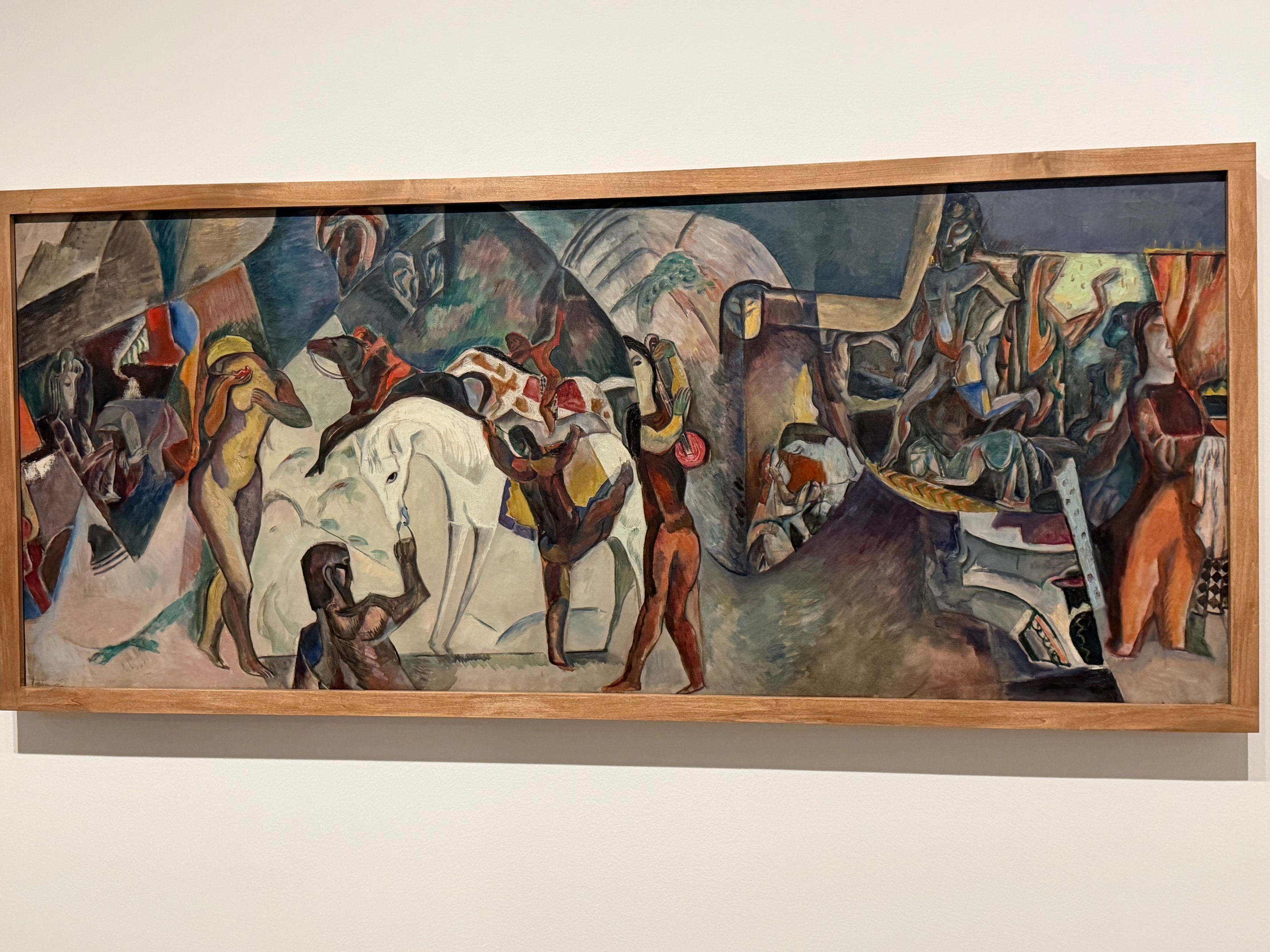
As he was finishing his first murals, William Glackens (one of The Eight) appeared at his Tenth Street studio and invited Burlin to submit his work to the 1913 Armory Show, the historic showcase of the best in modern American and European modernism art.
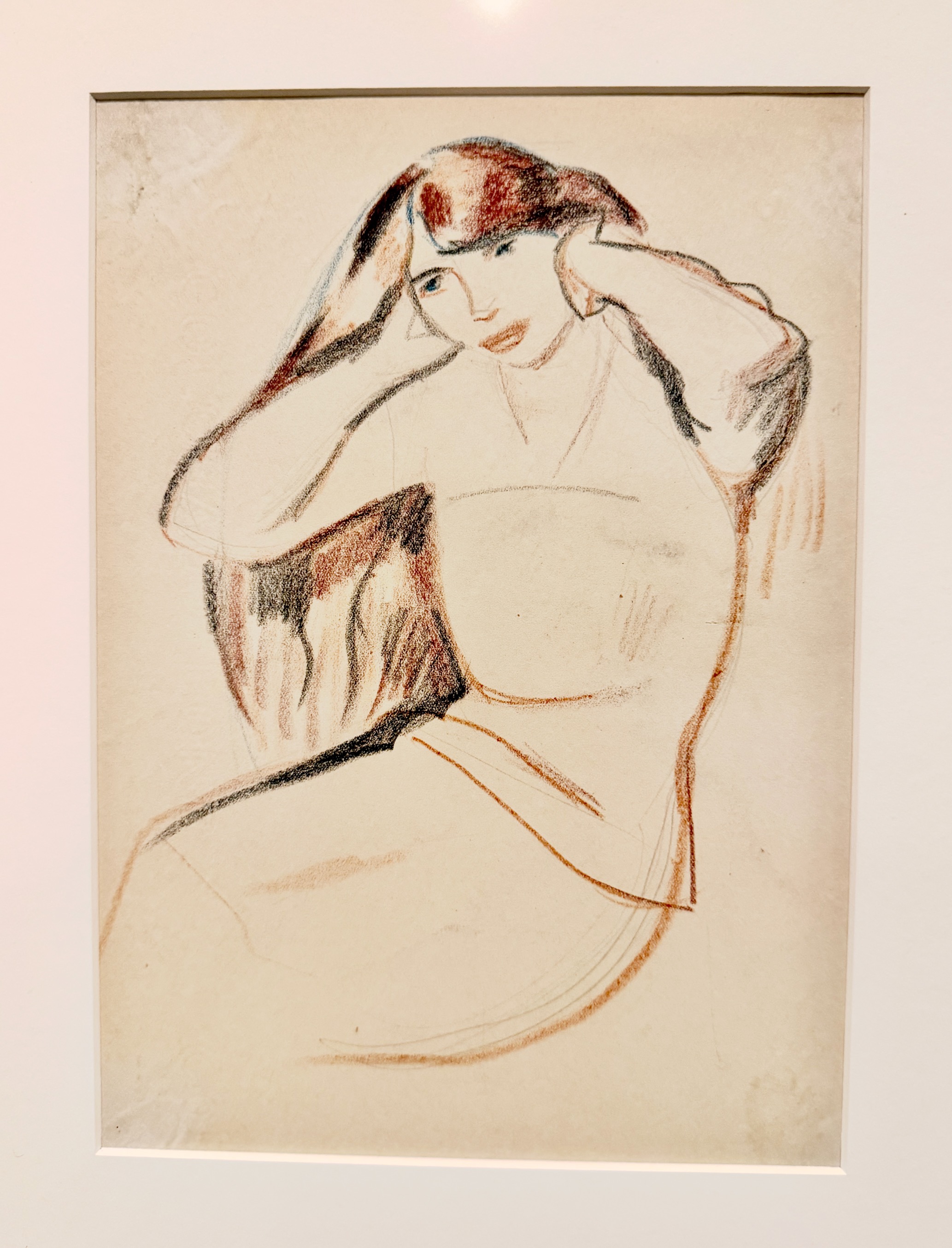
Secure in his art-world reputation and gallery connections in New York, Paul decided to relocate and immerse himself in painting far away from busy New York streets in a more “authentic” American environment. When the the Armory show closed, he moved to Santa Fe, becoming the first East-Coast modernist to move there, securing his spot as a genuine pioneer of the soon-to-grow Santa Fe Art Colony. And Edgar Lee Hewitt was happy to give him a free studio space in the Palace of the Governors!
Two years later, Burlin met the love of his life in Santa Fe, ethnomusicologist Natalie Curtis. The Santa Fe Art Colony grew, and this cosmopolitan couple were at its center, even though they shuttled back and forth to New York for Burlin’s exhibitions.
By 1917, Burlin has completed and shipped his “second commission” back to New York. In one, Burlin channeled the influence of Gaugin’s Tahiti images and Cezanne’s Bathers – heroic figures inhabiting a primeval green landscape.
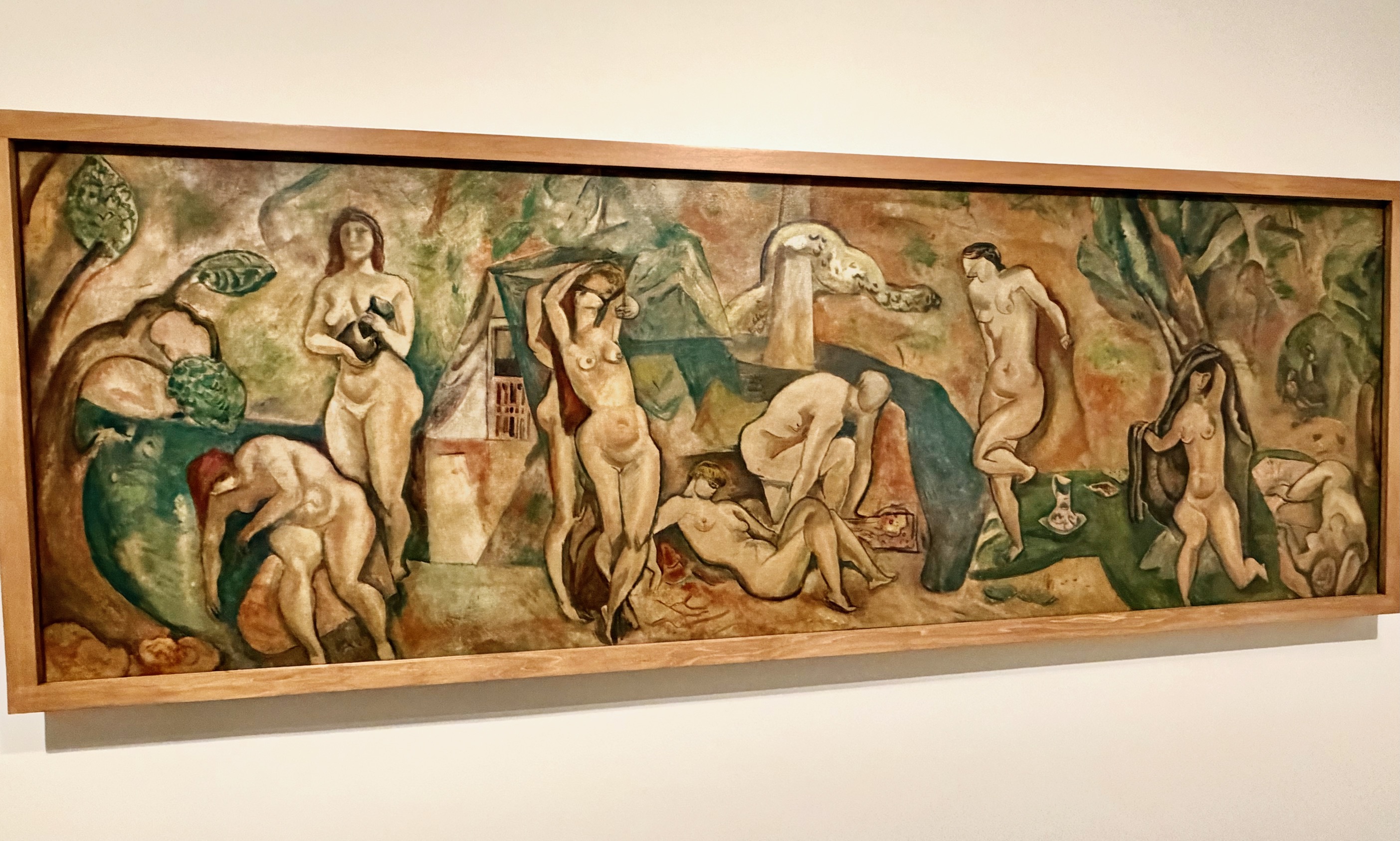
Burlin and Natalie both found their immersions into Southwest Pueblo culture exhilarating. Like the green “Eden” of the first panel, Burlin was inspired by Gaugin’s post-Impressionist color and brushwork to bring the ancient reglia, colors, movement, and rhythm of traditional Pueblo dances to life.
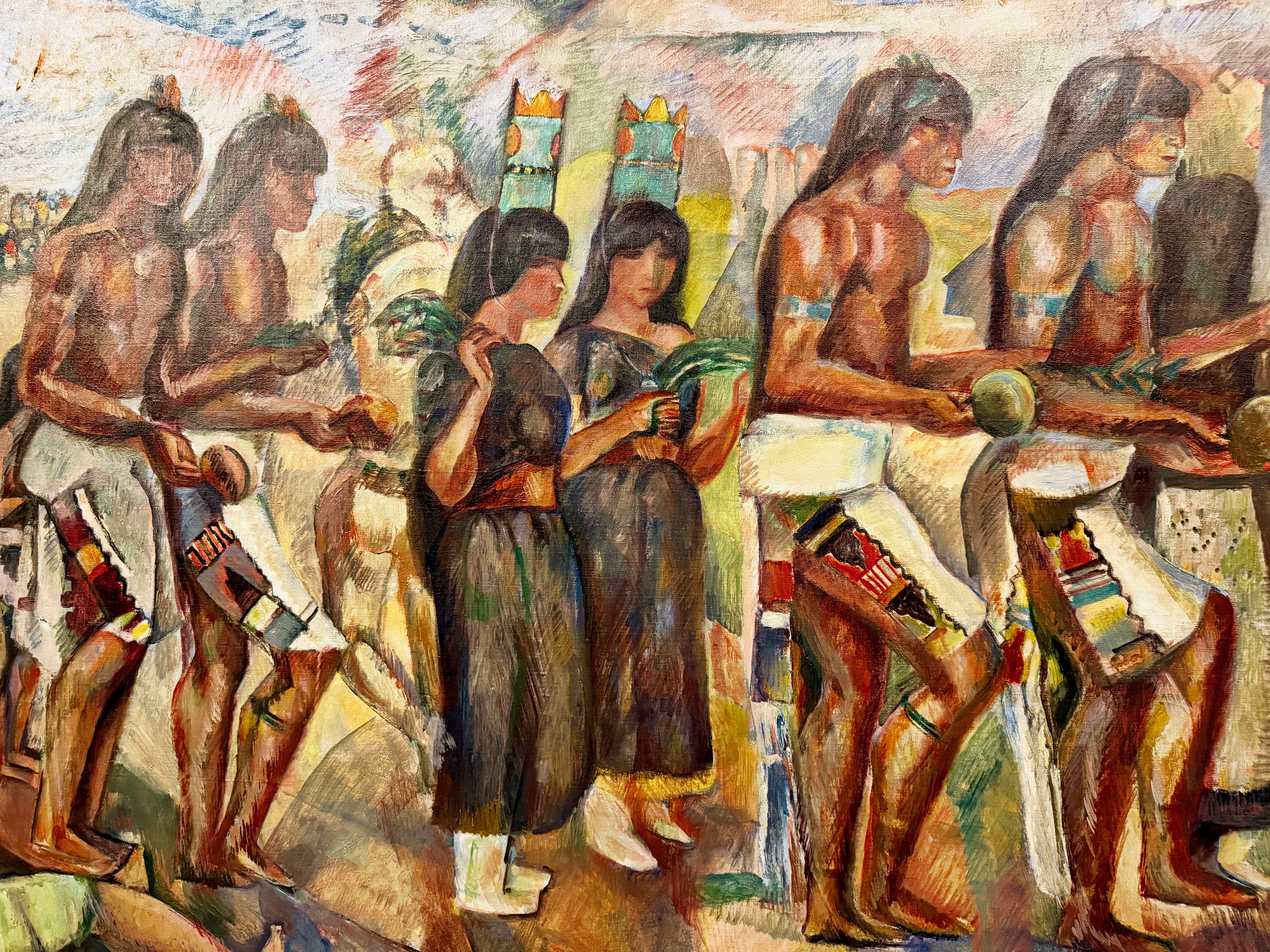
For the Santa Fe art community, the year 1917 was monumental. The spectacular Spanish Colonial-Pueblo Revival style New Mexico Museum of Art opened its doors on the Santa Fe Plaza. The inaugural exhibit featured paintings by Paul Burlin alongside Robert Henri, George Bellows, John Sloan, and Gerald Cassidy.
Burlin was a successful artist throughout his life, although he later moved on from his early-career style and changed with the times. By the 1940s and 1950s, he was a full-on abstractionist – the style featured prominently in the 1971 posthumous tribute exhibition of his work at the Museum of Modern Art.
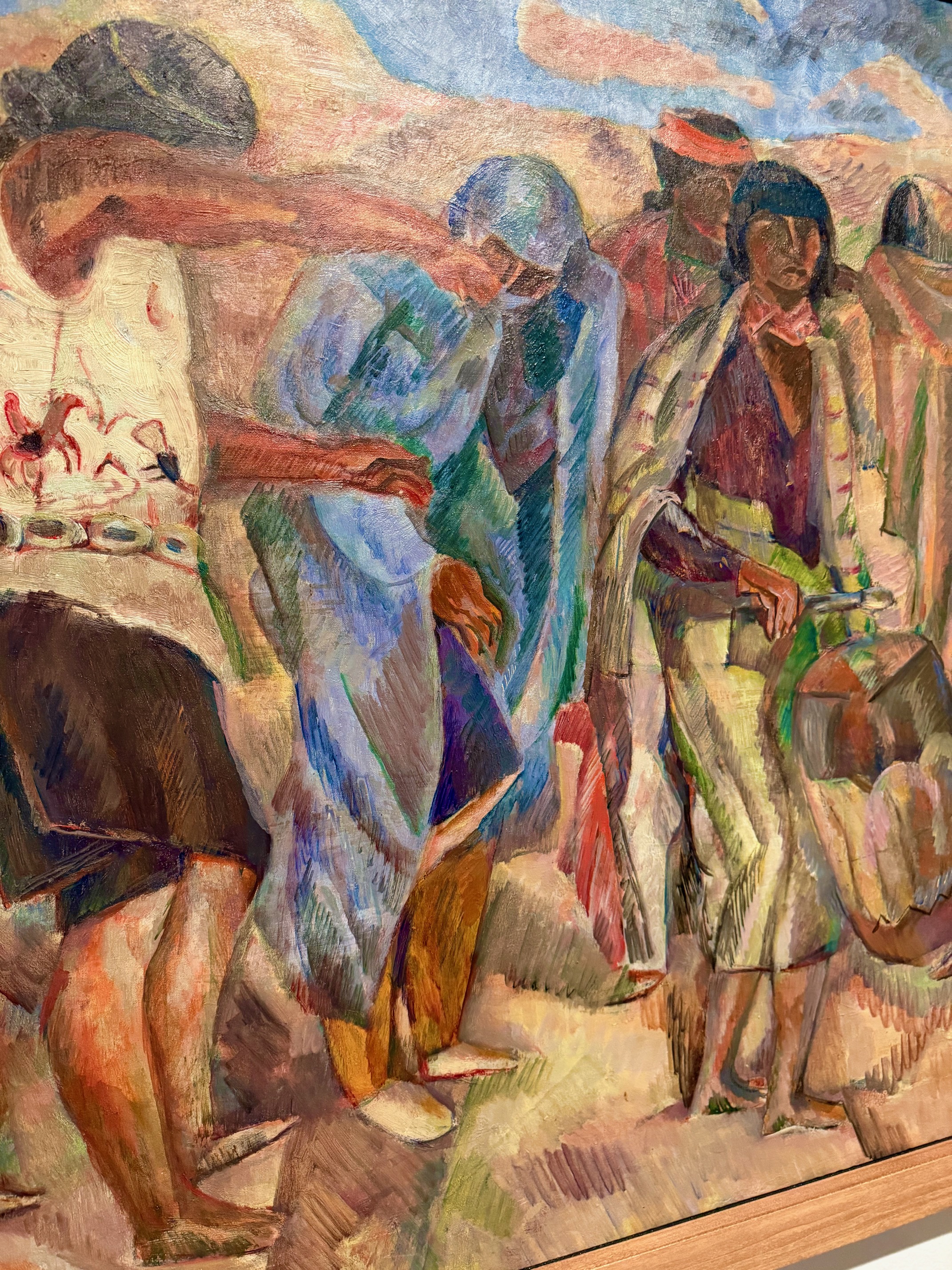
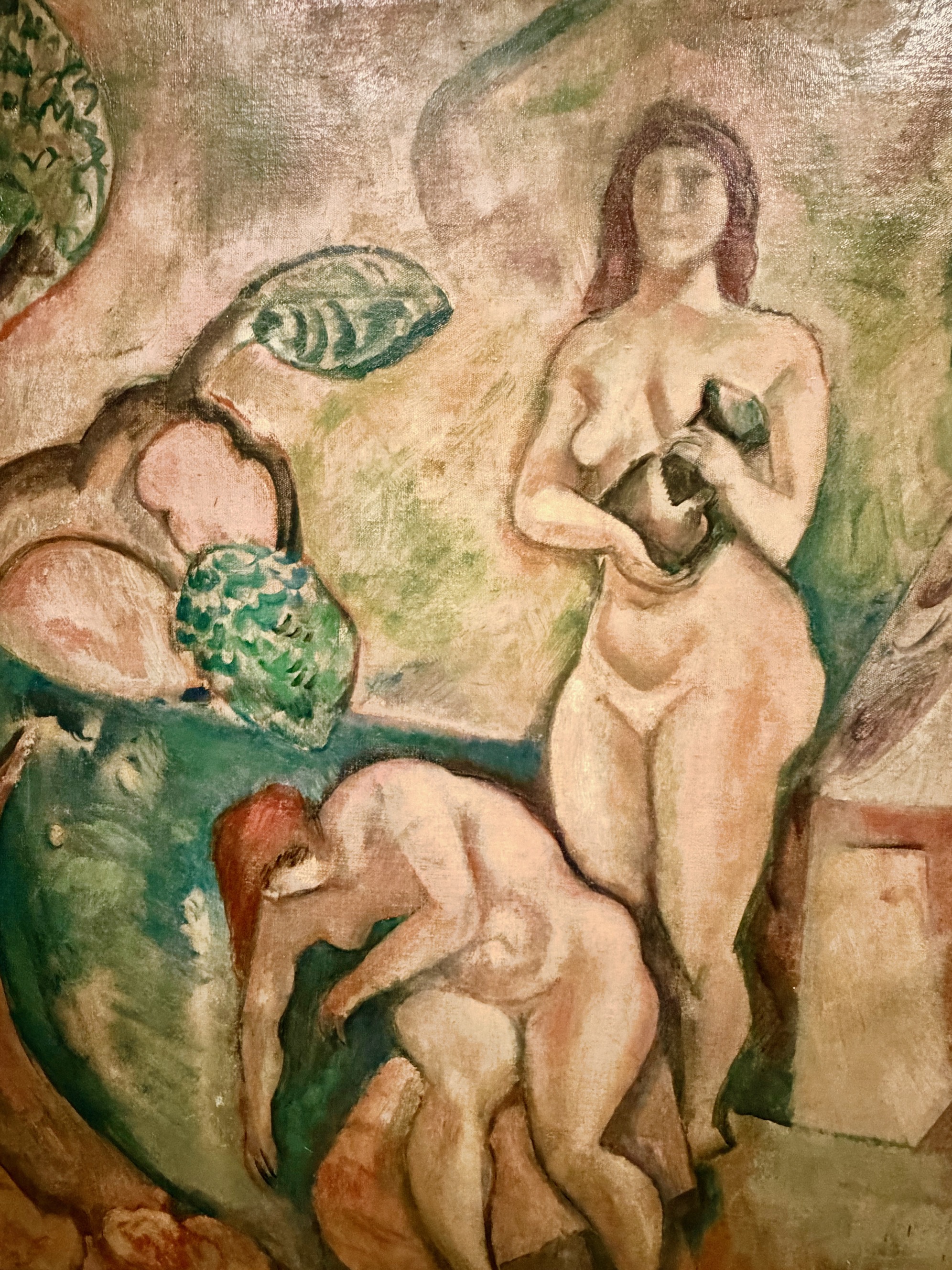
In the 1990s, the the Harris heirs corresponded with the New Mexico Museum of Art about a potential for a future bequest of Burlin’s New York City murals to the museum. In 2016, nearly 100 years after the 1917 murals left Santa Fe, the two sets of commissioned murals and several other Burlin works returned to the Santa Fe Plaza. The panels were a bit sooty from being hung so near fireplaces over the decades, but the museum restoration team patiently brought them back to their true, original, fresh glory.
Thanks to the museum for the restoration of work by a young, scrappy artist who rose from the Lower East Side and gave a small, dusty, out-of-the-way town a jolt of European and American artistic electricity – an innovator whose work and generosity showed the next wave of arriving artists how to channel the Southwestern landscape and ancient Spanish and Indigenous traditions successfully into their own modern visions.