
How do abstract artists visually channel their response to awesome landscapes? You’ll get a glimpse of how ten artists approach natue and atmospheric phenomenon in Abstracing Nature, an engaging contemporary exhibition at the Albuquerque Museum, on view thorugh October 12.
Works by grand-master abstractionists Richard Diebenkorn and Agnes Martin greet you right at the entrance.
Diebenkorn isn’t normally associated with New Mexico, but decades before embarking upon his epic Ocean Park series, he spent two years (1950-1952) at the University of New Mexico (1950-1952) working toward his MFA before returning to the West Coast.

The Diebenkorn on display is a recent museum acquisition from those years. Complete abstract expressionist approach to the colors and undulating geologic forms he saw surrounding the post-war boom town.
Martin – the abstractionist grand-dame of New Mexico – made no attempt to hide the fact that her grids and minimal approach were expressions of the tranquililty and serenity she saw and felt from her retreats in Cuba and Galisteo, New Mexico. She was channeling her emotional, meditative response in her surroundings – not following the reductivist, minimalist trend fo the East and West Coast gallery scene.
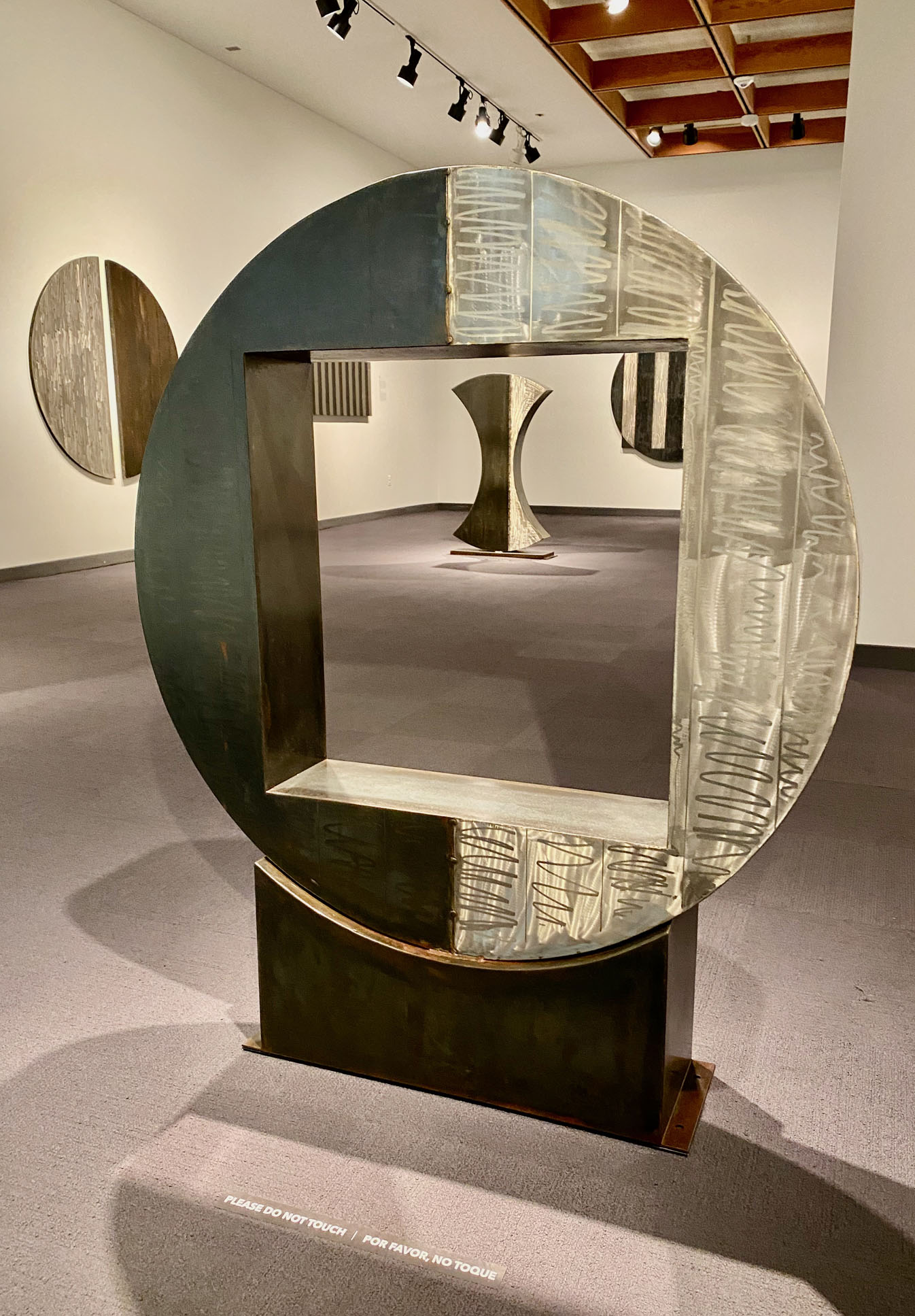
By getting up close to the two Martin paintings, you can appreciate her hand-drawn approach. Several stainless-steel sculptures by Agnes Martin’s great friend and student Karen Yank are nearby. The gleaming, hard-edged pieces do not resemble her mentor’s approach, except for the light, gestural touches across the surface.

The large pastels by Emmi Whitehorse look to the landscape and sacred colors of the Navajo Nation inspiration – a poetic approach most evident in Yei Retires to Mt. Taylor. Dramatic blue gestures suggest the spiritual turquoise color associated with the Navajo’s soutnern sacred mountain Tsoodzil.

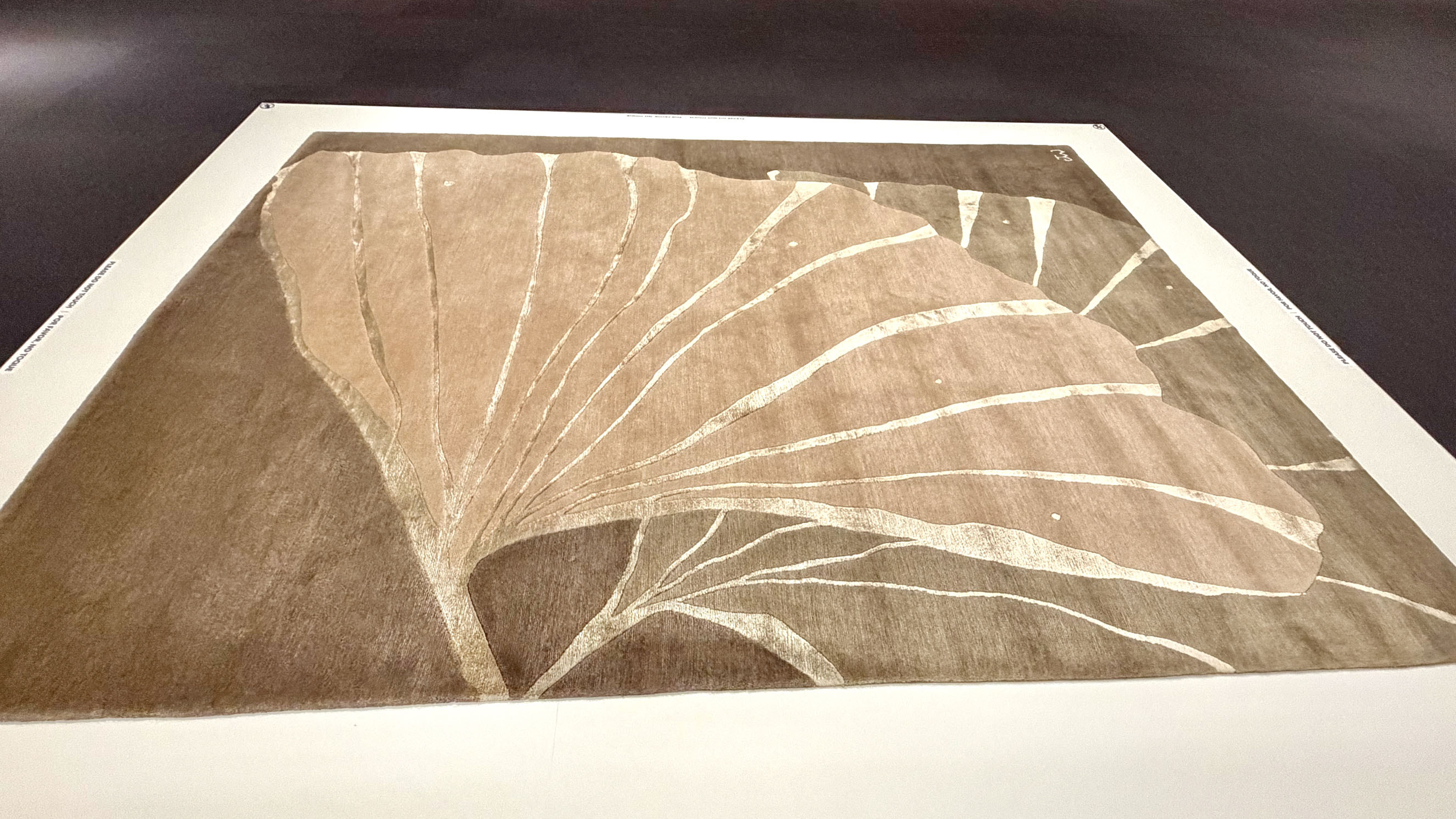
Abstractions used by textile artist Joan Weissman come from a place of process in which she starts with recognizable nature studies but allows her iterations to become more abstract. Approaching her seemingly abstract Ginko, only gradually do visitors see that the hand-knotted rug (created at large scale by Pakistani artisans) is an extreme close-up of a leaf.

Mariette Patricia Leis translates her experience of nature more formally. In one case, six seemingly minimalist wall-mounted panels are painted to reflect how we perceive the color of sunlight in different atmospheres and at different times of the day.
Another is a series of abstract panels suggesting horizons across volcanic surfaces during Iceland’s 24 hours of darkness.
Enjoy walking through the full exhibition in our Flickr album.

Here’s a close look at Judy Tuwaletstiwa’s 2001 Divination. She transformed sand by creating an arrangement of glass objects – cubes, spheres, and organic shapes – all displayed across a soft sand base.
Like the rest of the work in this exhibition, it allows us to think about the natural world, our perception of it, and the many ways that the experience can be transformed into art.
 itsnewstoyou