
The joyful retrospective Eugenie Shonnard: Breaking the Mold, on view at Santa Fe’s New Mexico Museum of Art through September 1, 2025, tells the story of a determined young artist in turn-of-the-century Brooklyn who seized opportunities to follow her dream, learn from the best, forge lifelong friendships, and transform inspirations of the nature and culture around her into fine art.
In 1927, Shonnard took up full-time residence as Santa Fe’s first academically trained sculptor. For years, the community considered her the “dean of sculpture”, but after she passed away in 1978 at the age of 91, gradually her legacy and accomplishments faded into obscurity.
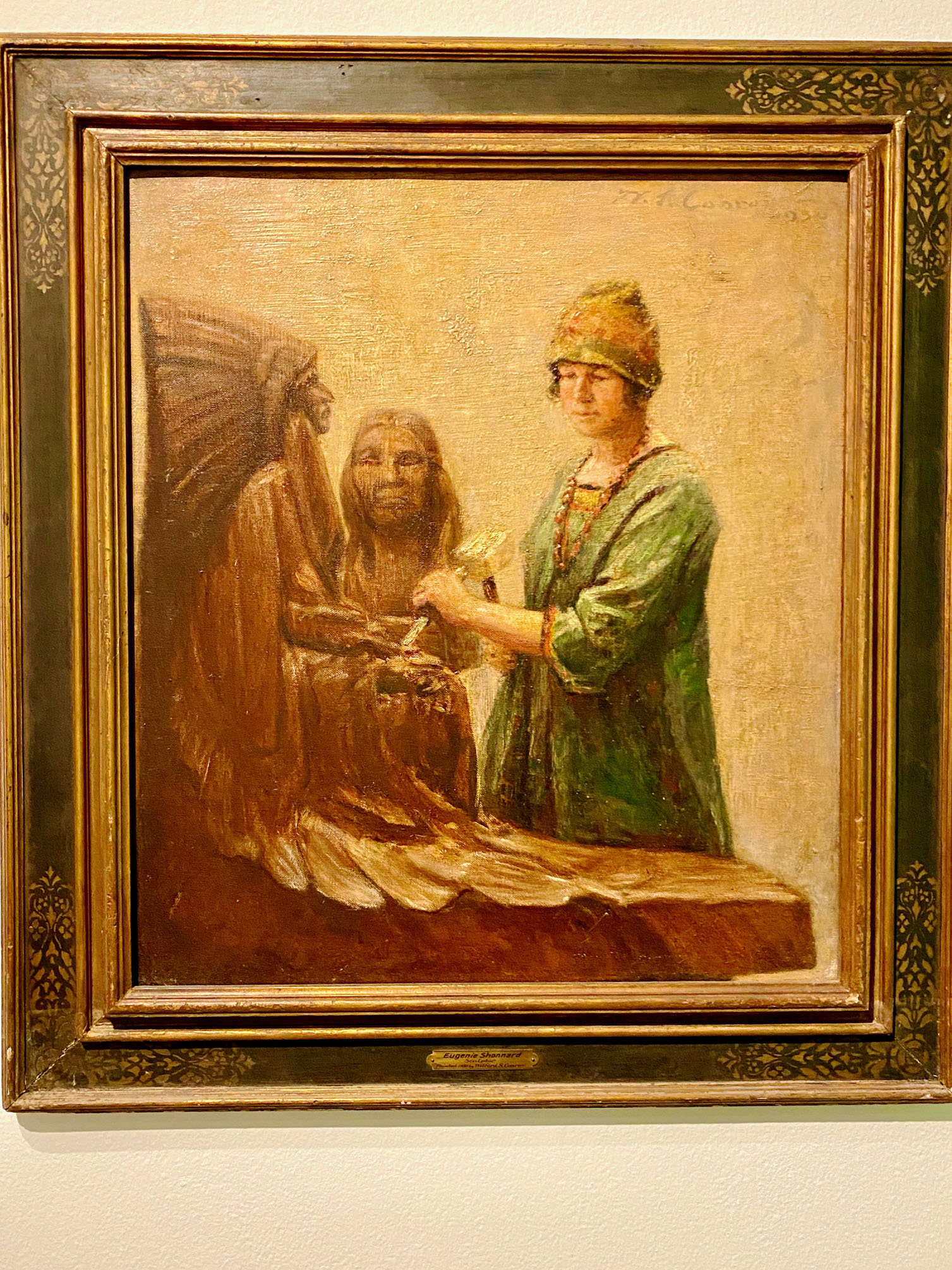
This year, the Museum chose to showcase Shonnard’s range of accomplishments – sculpture, painting, furniture, and architectural design. The strategy has worked, since most visitors remark, “What a beautiful body of work! Why haven’t we heard about her before?
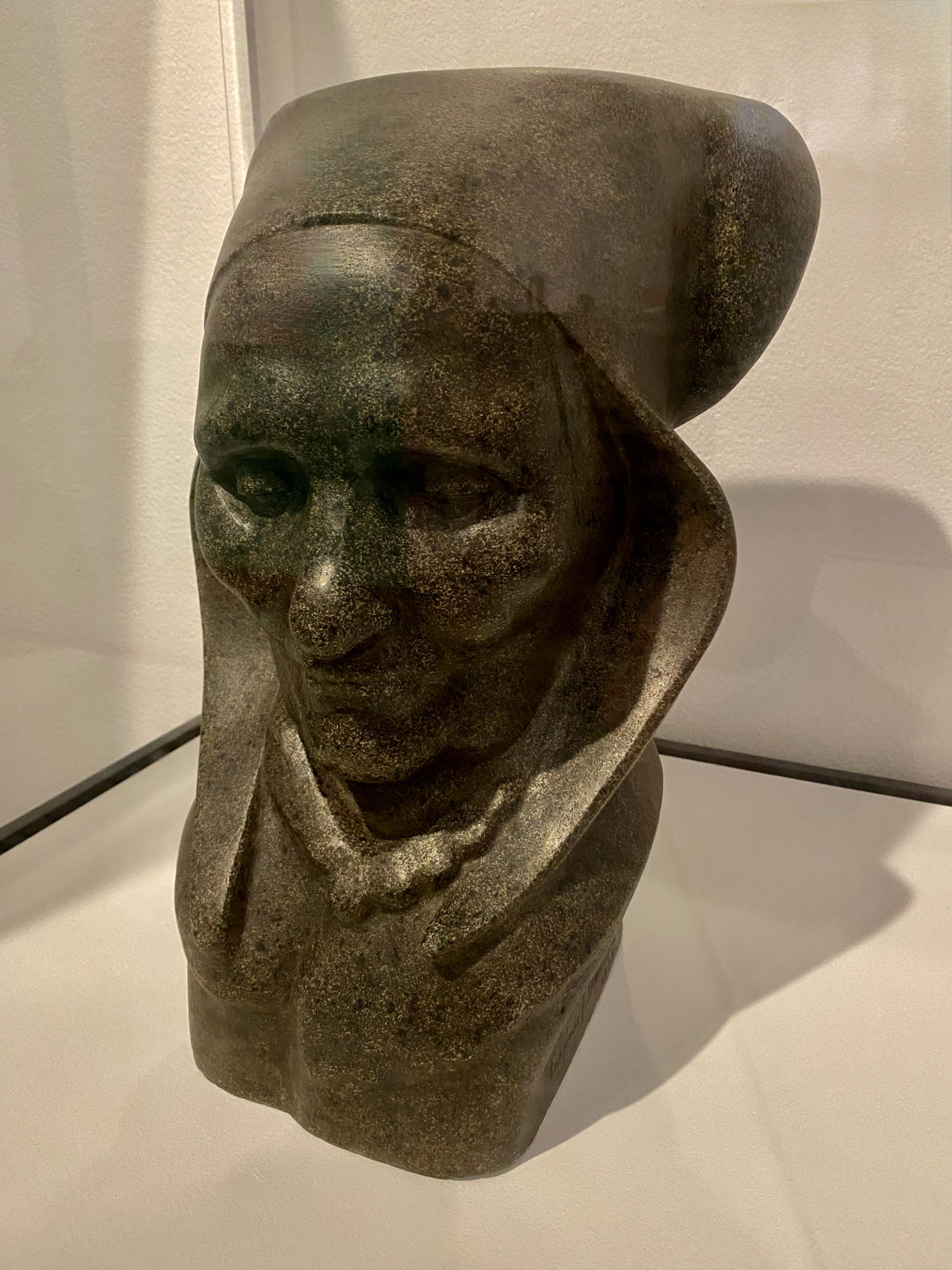
Looking at the strong, robust sculptures of Breton peasants and Native American celebrity Dr. Charles Eastman featured in the introductory gallery, you would never guess that Shonnard started life as a sickly child whose wealthy parents kept her close to home. She spent lots of time outdoors with pets, nature, and the serenity of the Hudson Valley.

Always considered a talented watercolorist, her teenage life took quite a turn when her mother allowed her to enroll in the New York School of Applied Design for Women – a school that taught proficiency in the “lesser arts” like lacemaking, wallpaper design, and book illustration, and cover design so that young women could have “appropriate” careers.
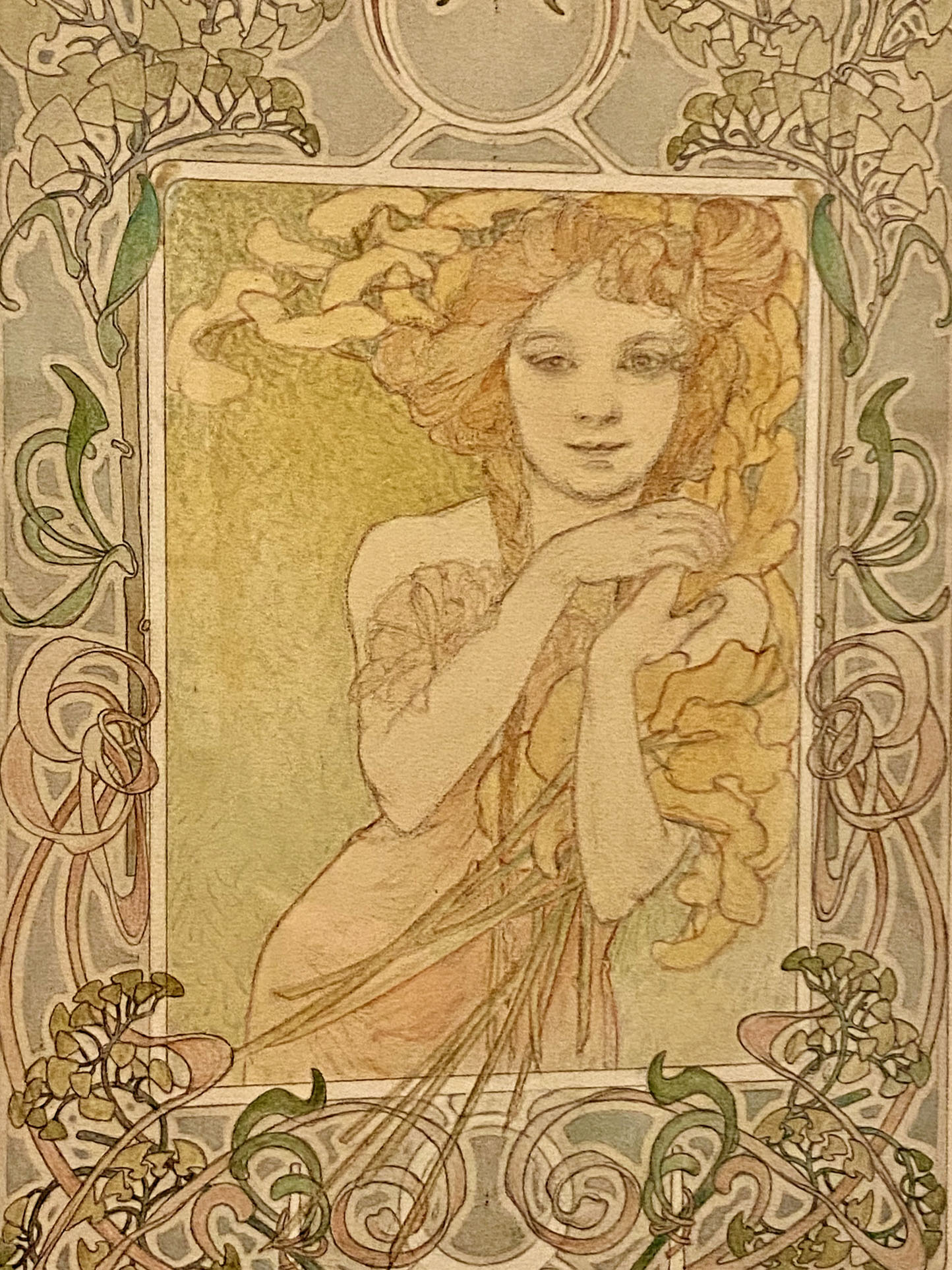
The most sought-after course was a figure drawing class taught by a visiting European professor – the famous Art Nouveau superstar Alphonse Mucha. A master draughtsman and designer, he taught students how to convey human expression in quick, sure, animated line and to use expressive, organic designs from nature to give their work a modern something extra.
Mucha immediately recognized Shonnard’s skill in blending human empathy and line, and advised her to think beyond what was offered at her school. He suggested that she go to Paris, train with top European sculptors (he’d provide letters of introduction), and seriously purse a “fine arts” path.
Although her doctors advised her against making the long transatlantic passage, she and her mother set off for Paris in 1911. She loved it! She followed up with Mucha’s suggestions (and contacts), began her fine-arts sculptural training, and met other young American female sculpture students (like Gertrude Vanderbilt Whitney and Malvina Hoffman) who were soaking up all of the influences that the Parisian modern art scene offered.
Although he had retired from teaching students, Rodin made an exception for Shonnard and told her he’d be happy to review her work periodically. She worked across a variety of sculptural media (stone, clay, wood) in the atelier of Antoine Bourdelle (an early adoptor of Art Deco who also taught Matisse), showed with the American Woman’s Art Association, and exhibited at the Paris Salon.
When World War I forced Shonnard’s return to New York, she enrolled at the Art Students League for classes with superstar American sculptor James Earle Fraser.

Combining everything she learned from Rodin, Mucha, Bourdelle, and Fraser, she began to excel in stripping her depictions of her subjects down to the essentials that captured each person (or animal’s) inner spirit.

Her career began to take off – commissions for sculptures, shows in New York, and acclaim for her portraits of people and gentle animals. Shonnard made the most of it, showing at New York galleries and the Booklyn Museum, working with her mentor Mucha, and criss-crossing America and Europe in the 1920s.
Like decades of artists before her, she was often drawn to Brittany to capture the spirituality, nature, and culture of the people in her art.
In 1925, she made a fortuitous stop in New Mexico at the invitation of museum director Edger Lee Hewitt, who introduced her to the thriving art community and innovative Native American artists.
As with Brittany, much about the Southwest resonated with her – dramatic landscapes, spirituality of ancient New Mexican cultures, and the unique architecture and religious art of old churches. She also drove out into the country to create plein air watercolors of the same Abiquiu landscapes that later inspired O’Keeffe.

Her sculptures inspired by her New Mexico experience created a sensation in Paris in 1926 – beautiful, direct-carved portraits from the faraway Southwest on display next to her work from Brittany.

By 1927, Shonnard moved permanently to Santa Fe and began her own full-time studio from which she produced commissions, designed Southwest-inspired furniture, and explored Spanish and Pueblo cultures more deeply.
The exhibition includes designs for private chapel commissions with John Gaw Meem, examples of her furniture, and keenstone panels – her lightweight material invention that liberated her from manipulating heavy granite and wood in her studio, so she could keep carving and sculpting with a lighter material well into her seventies.
People who knew Shonnard said that she exuded a positive spirit throughout her life, seeking harmony with nature, animals, and people. It’s fitting that this retrospective includes a large room populated with her beloved birds, woodland, and backyard animals, and concludes with works by local artists she admired and whose works she collected – Maria and Juan Martinez and Awa Tsireh.


Get to know this Santa Fe legend by looking through all her beautiful work (and work by her mentors) in our Flickr album.
 itsnewstoyou