
Since its founding in 1937 as an institution documenting Navajo ceremonial art, Santa Fe’s Wheelwright Museum of the American Indian has shifted toward collecting contemporary Native American art and serving as a platform to boost careers of emerging artists.
The latest exhibition pays tribute to its last 50 years in Echoes: Selections from the Wheelwright Museum’s Permanent Collection, on view through June 8, 2025
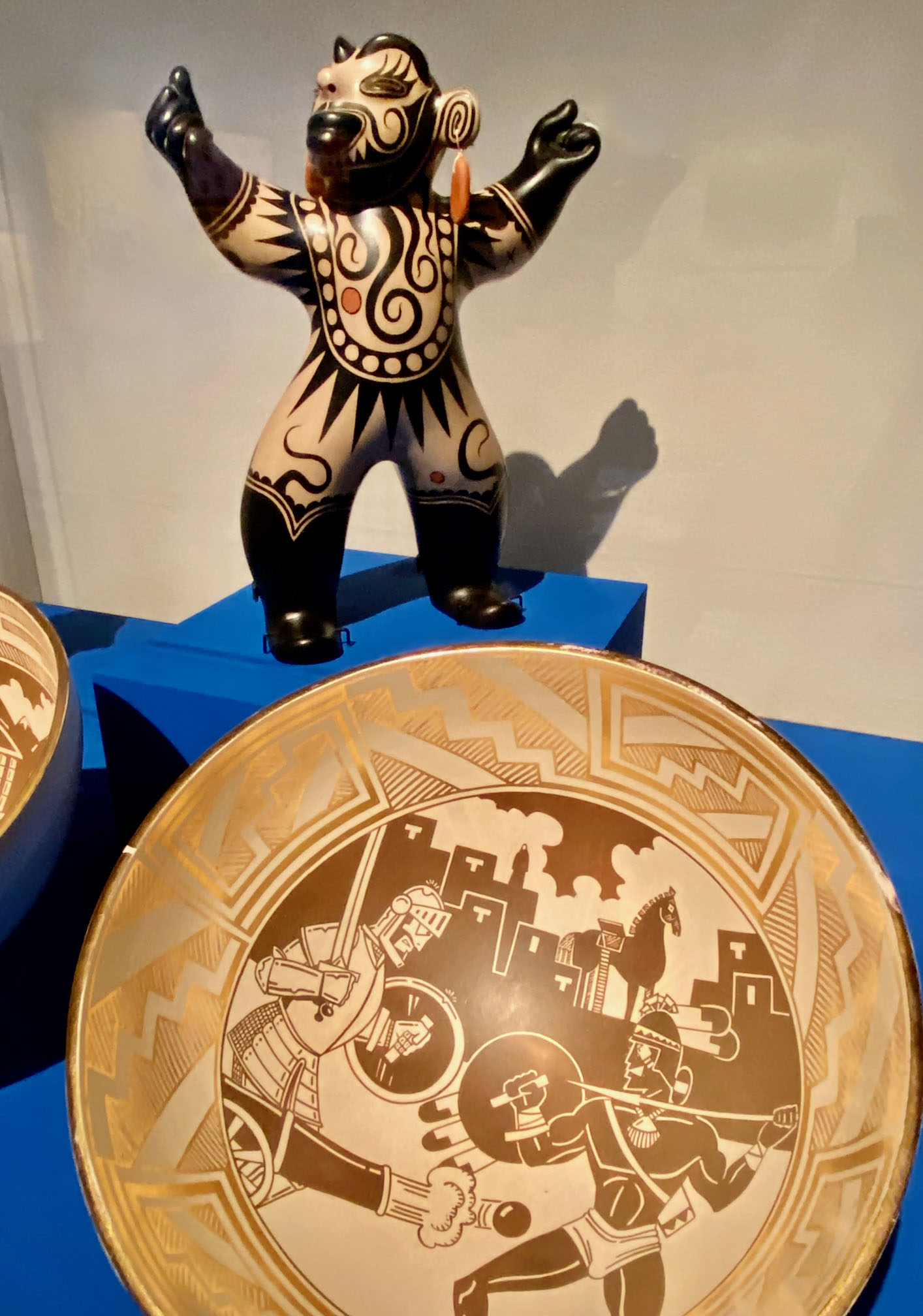
The exhibit showcases well-known artists – like Tony Abeyta, T.C. Cannon, Virgil Ortiz, Rose B. Simpson, Bob Hazous, and Emmi Whitehorse – but the curators deliberately chose early-career works that haven’t been seen for a while.
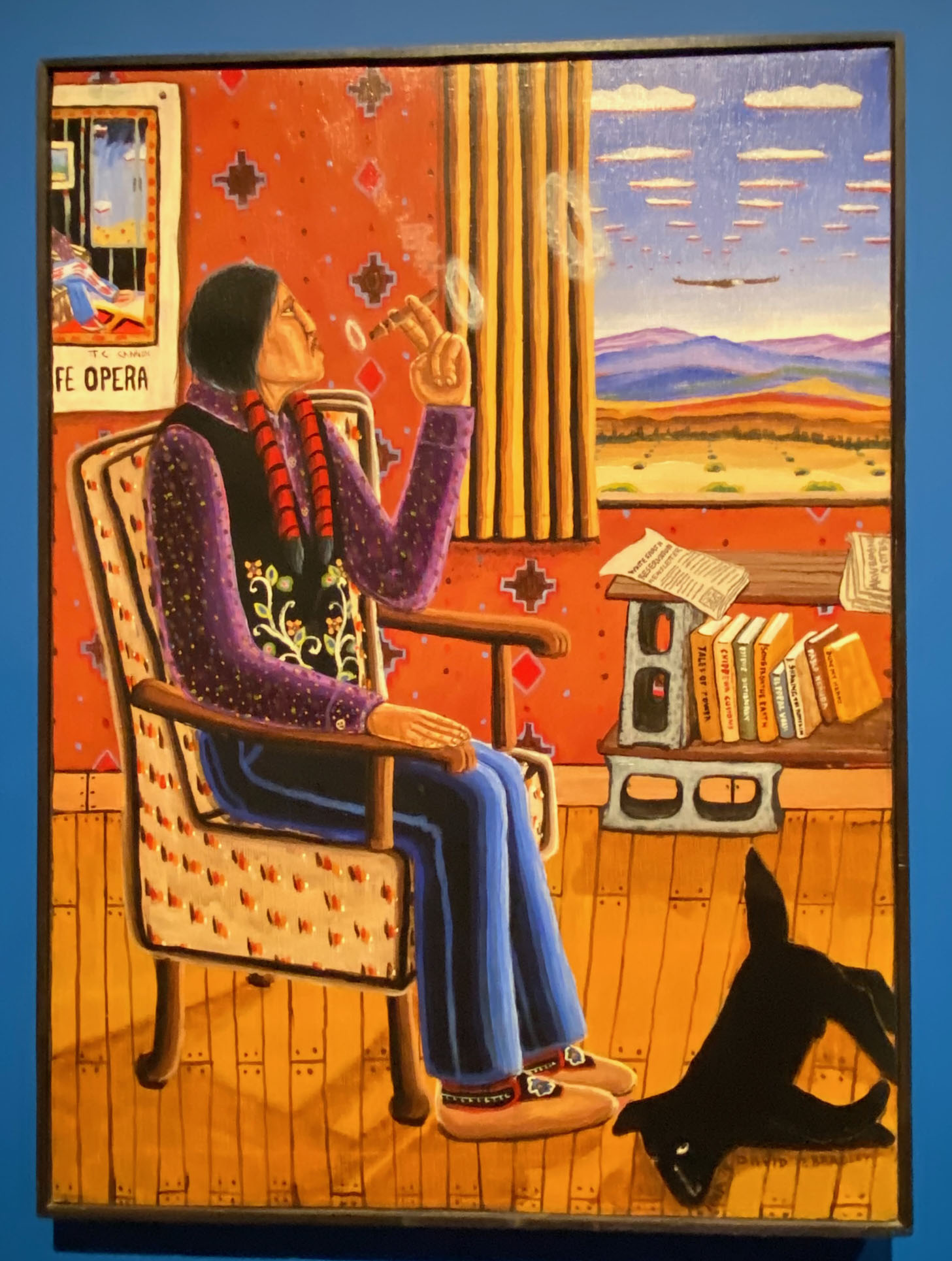
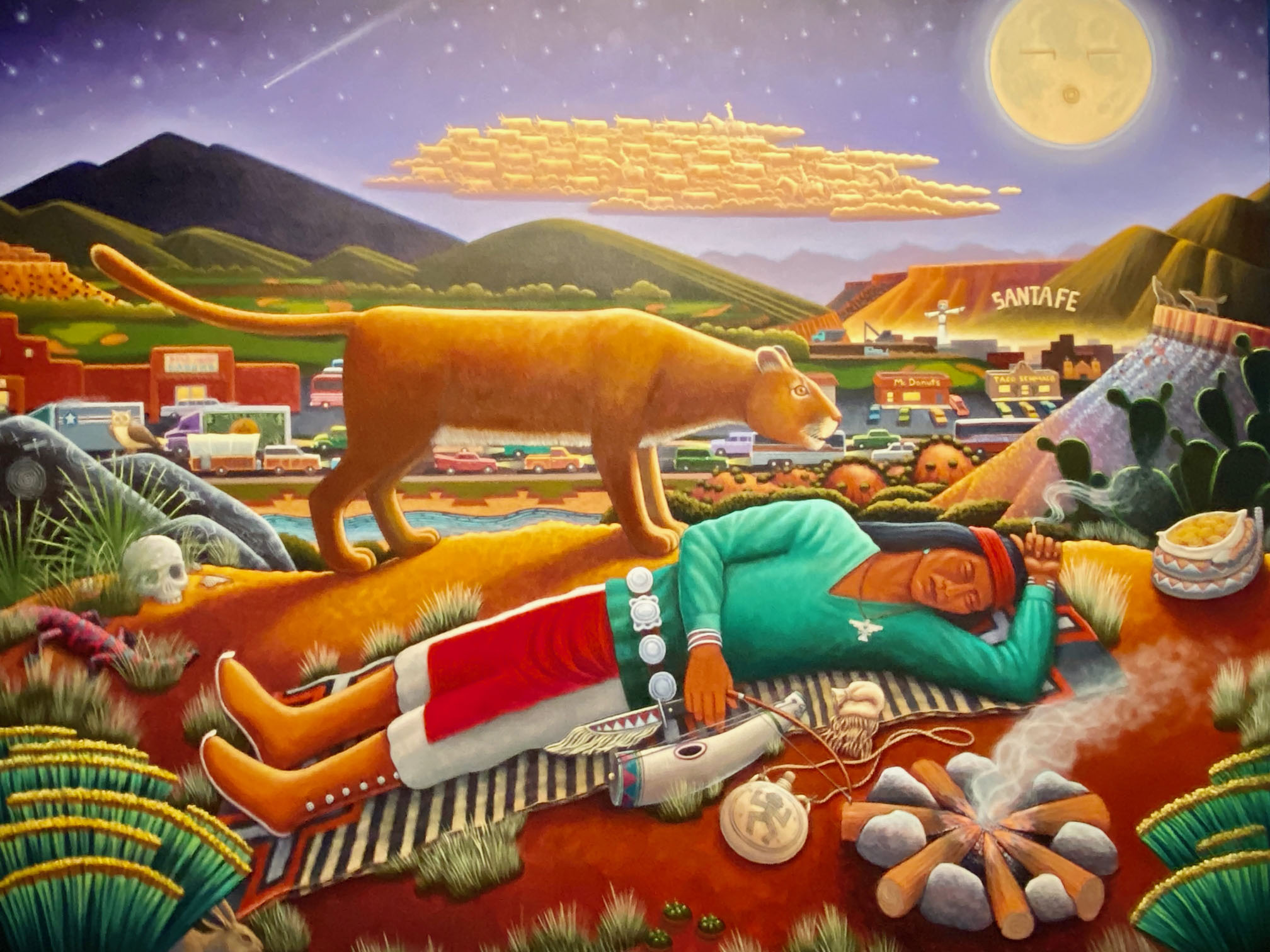
For example, on a wall honoring T.C. Cannon, the curators showcase a crazy, irreverent David Bradley work painted in T.C.’s bold, satirical style, but display a rather conservative (and rarely seen) woodcut by T.C. himself.

Contemporary textile artist Ramona Sakiestewa’s comment that her work represents “visual echoes of what came before” inspired the title of the exhibition. Sakiestewa’s tapestry incorporates colors and motifs of traditional Hopi wicker plaques. This theme is carried throughout the show.

A grouping of intricately painted Acoma ceramics pays tribute to the Wheelwright’s 1981 exhibition Sky City Salute that honored two matiarchs of that art form – Lucy Lewis, who lived at Acoma before and after tourists began beating a path to the ancient mesa-top city, and Marie Z. Chino. The curators match it with work by Marie’s grandson, Robert Patricio, who channels traditional themes into a modern ceramic context.

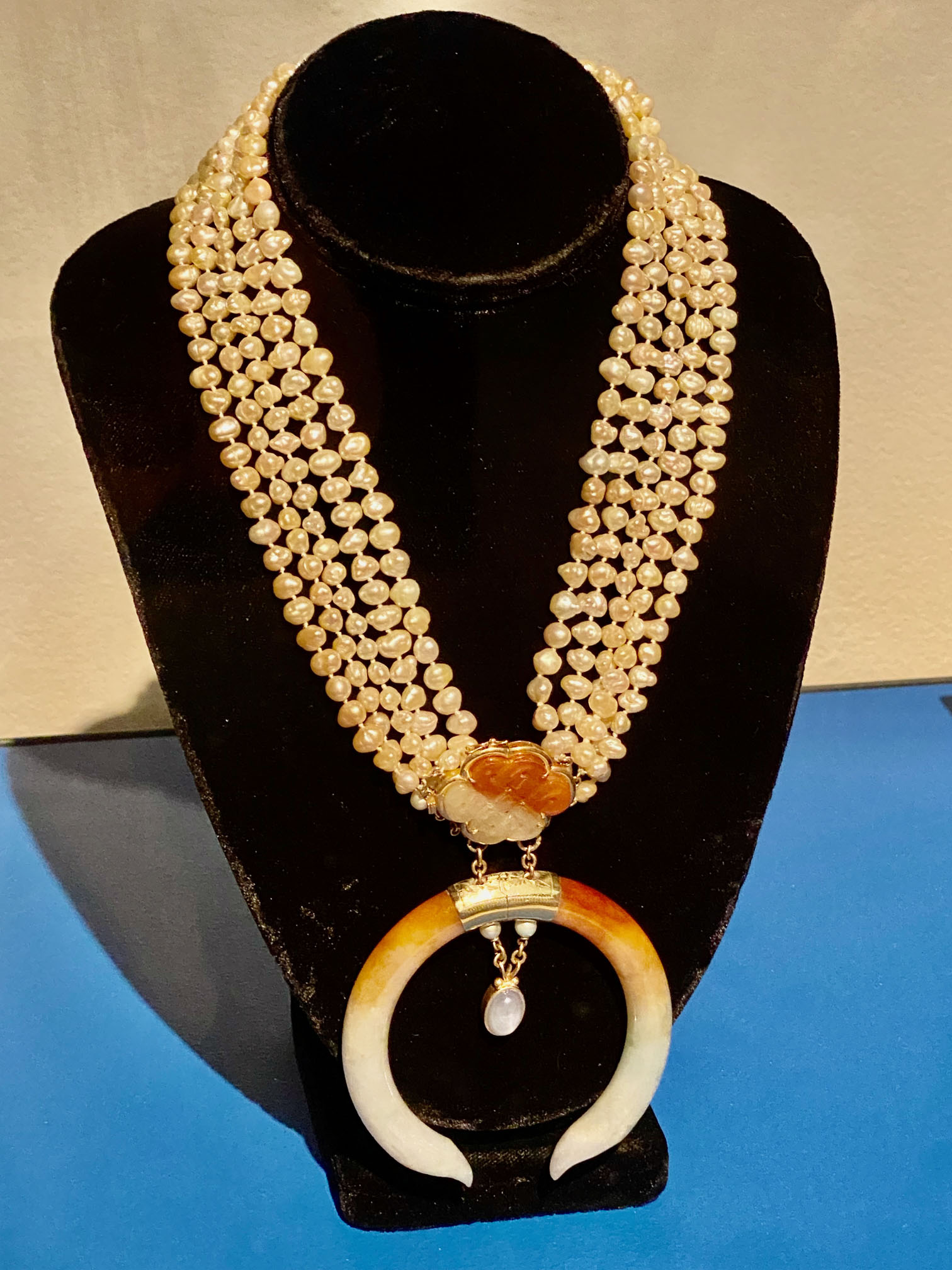
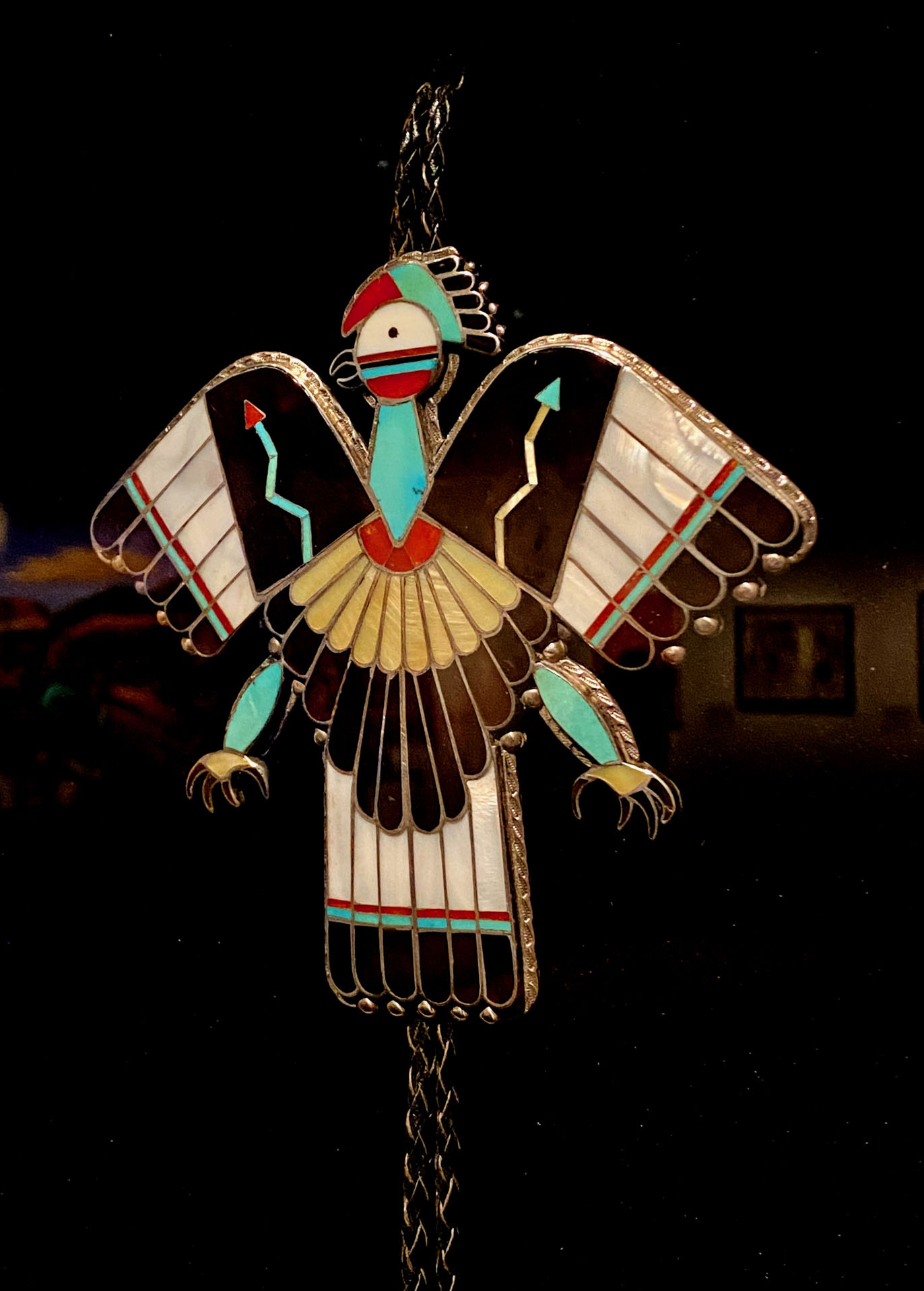
Another grouping references the Wheelwright’s 2011 show Radical Recycled Jewelry Makeover with a bold piece by Kenneth Johnson and the Wheelwright’s stellar collection of Zuni bolo-tie inlays.
The “salon wall” is peppered with paintings that tell the interconnected histories and styles of nine Native artists – the trajectory from flat-style styles of the 1920s and 1930s to more open innovation of Ben Harjo and Linda Lomahaftewa, some of earliest graduates at the Institute of American Insitute Arts (IAIA).
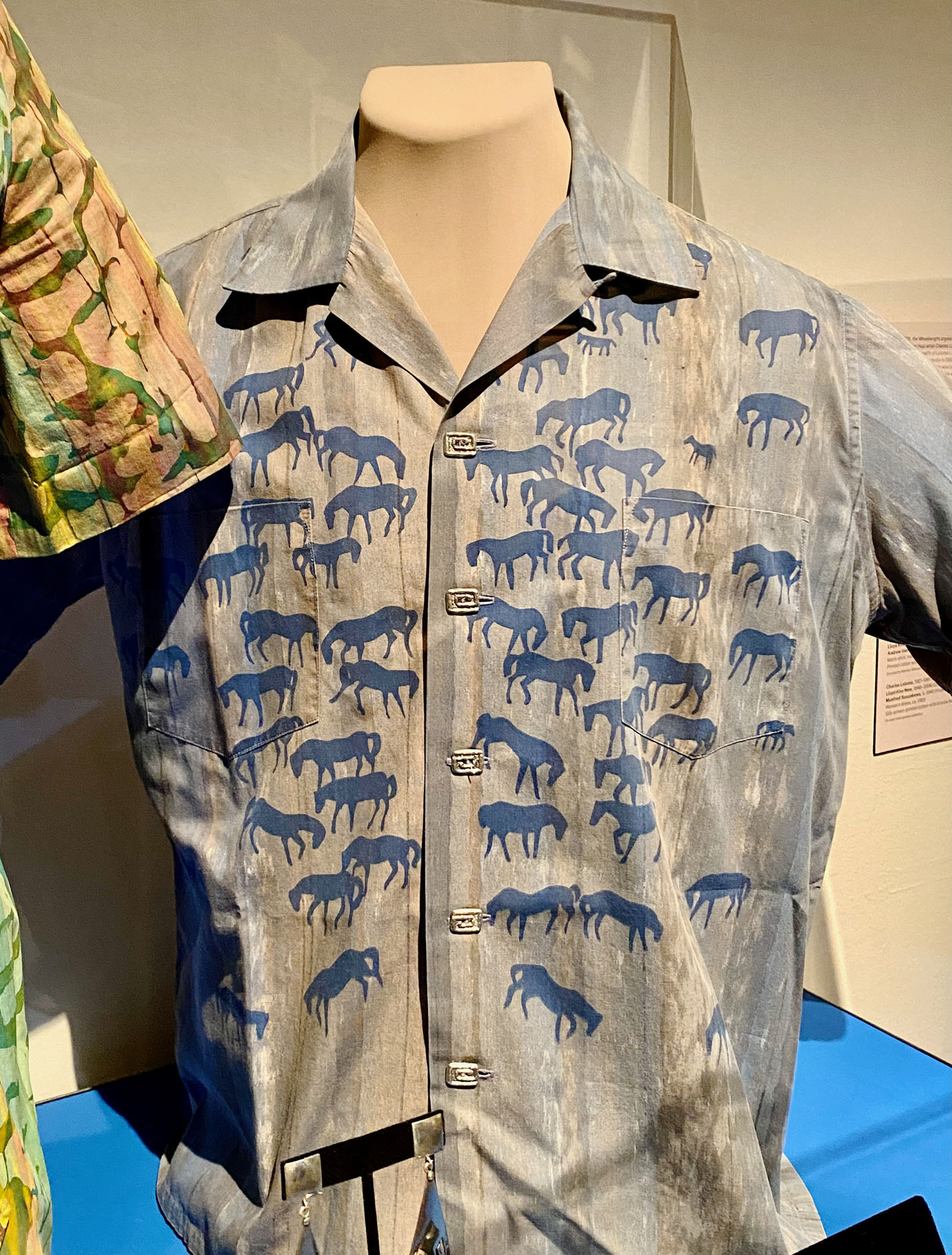
The exhibition also presents another group of work to acknowledge the artists who began working together in Scottsdale in the 1950s and who began IAIA in 1962 – clothing designed by co-founder/president Lloyd Kiva New and jewelry by instructor Charles Loloma..

Beaded Converse sneakers by Marie Flying Horse, clever collage by Arthur Amiotte, a dinosaur pot by William Andrew Pacheco, art-world satire by Bob Hazous, and colorful Seurat references by Shonto Begay all add up to a vibrant walk through the last half-century of contemporary art innovations inside the hogan on Museum Hill.
Take a look at our favorites on Flickr.
 itsnewstoyou