
Building on the groundwork laid in the artist-curated exhibition Grounded in Clay: The Spirit of Pueblo Pottery (opening in St. Louis on March 7), Santa Fe’s Museum of Indian Arts and Culture asked five Navajo textile artists, photographers, and scholars to delve into MIAC’s historic collections to tell the story of Diné weavng.
Horizons: Weaving Between the Lines with Diné Textiles, on view through February 2, 2025, presents historic and contemporary weavings alongside epic photographs of Navajo Nation landscapes to show the connections textile artist have to ancestors, their mentors, the community, the land, and their materials.
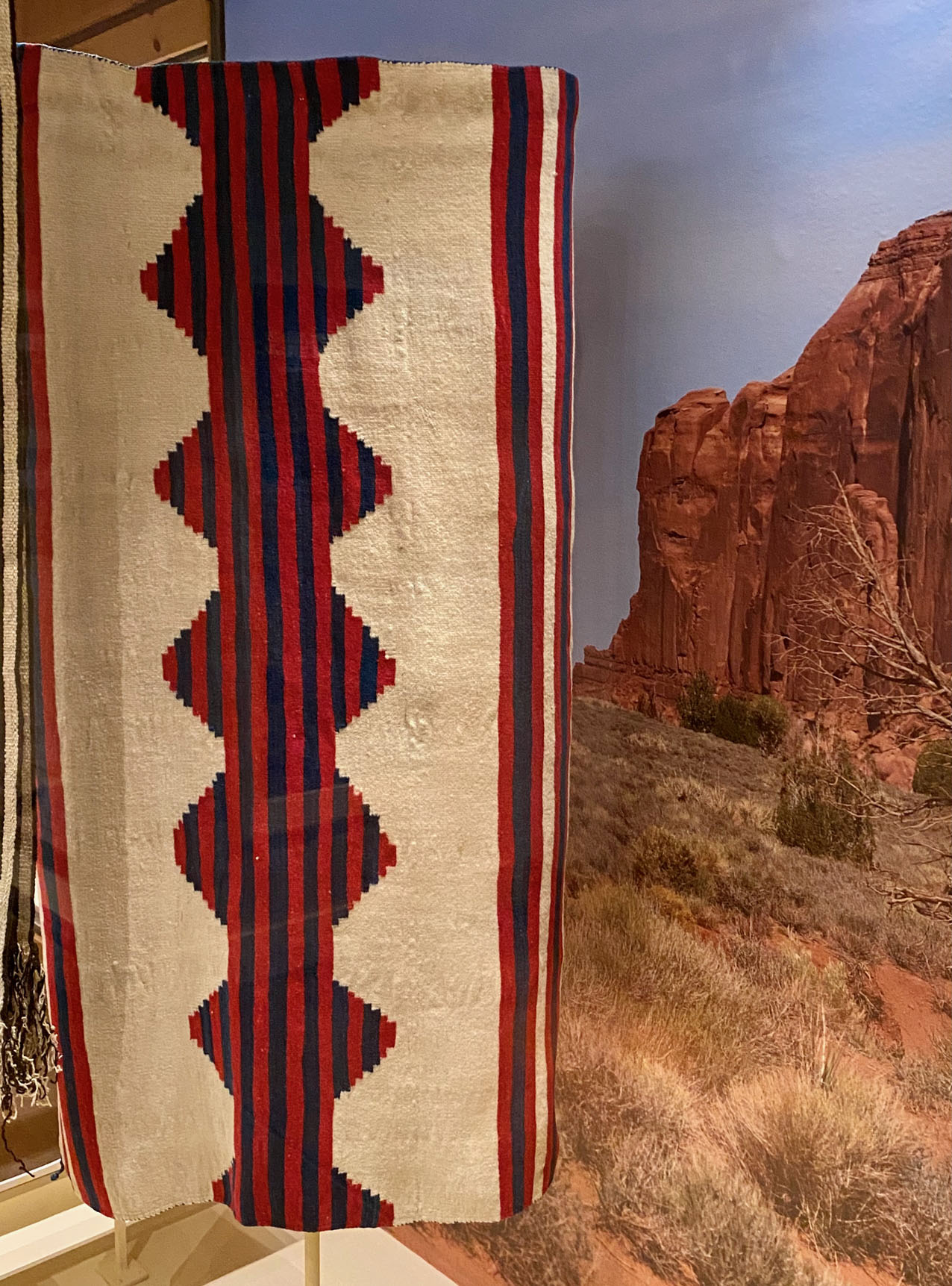
Appropriately, the story told by over 30 historic textiles is presented in MIAC’s Masterpieces gallery.
The entrance presents a dazzling display – a pictorial blanket woven in the 1890s set against a photomural of co-curator Rapheal Begay’s family sheep corral. It’s a visual testament to the importance of wool, life, and the 27,000 square miles of Navajo Nation.
The blanket’s creator (unknown today) was an astute observer of the life on the land and translated it all into warp and weft – cow punchers, cattle, boots, birds, and new-fangled railroad cars, that only arrived in Navajo Country around the 1880s. Click here to see the detail.

Nothing was newer than the railroad, at the time this artist depicted it – a steam-fed invention from the East that would change western life forever, but that also brought a wide array of colorful yarn that could be mixed and matched with vegetal dyes to create new Native designs.
The intertwined history of Diné (“The People” in the Navajo language), textile art, and the land is told through quotes and recollections by the exhibition’s Native collaborators. While examining masterful geometric weaving techniques in 19th-century works, visitors are provided with an historic context – the types of art materials introduced to captives imprisoned at Bosque Redondo after the Long Walk, the images that could be interpreted as a longing for the homeland by the incarcerated, and coded spiritual affirmations.
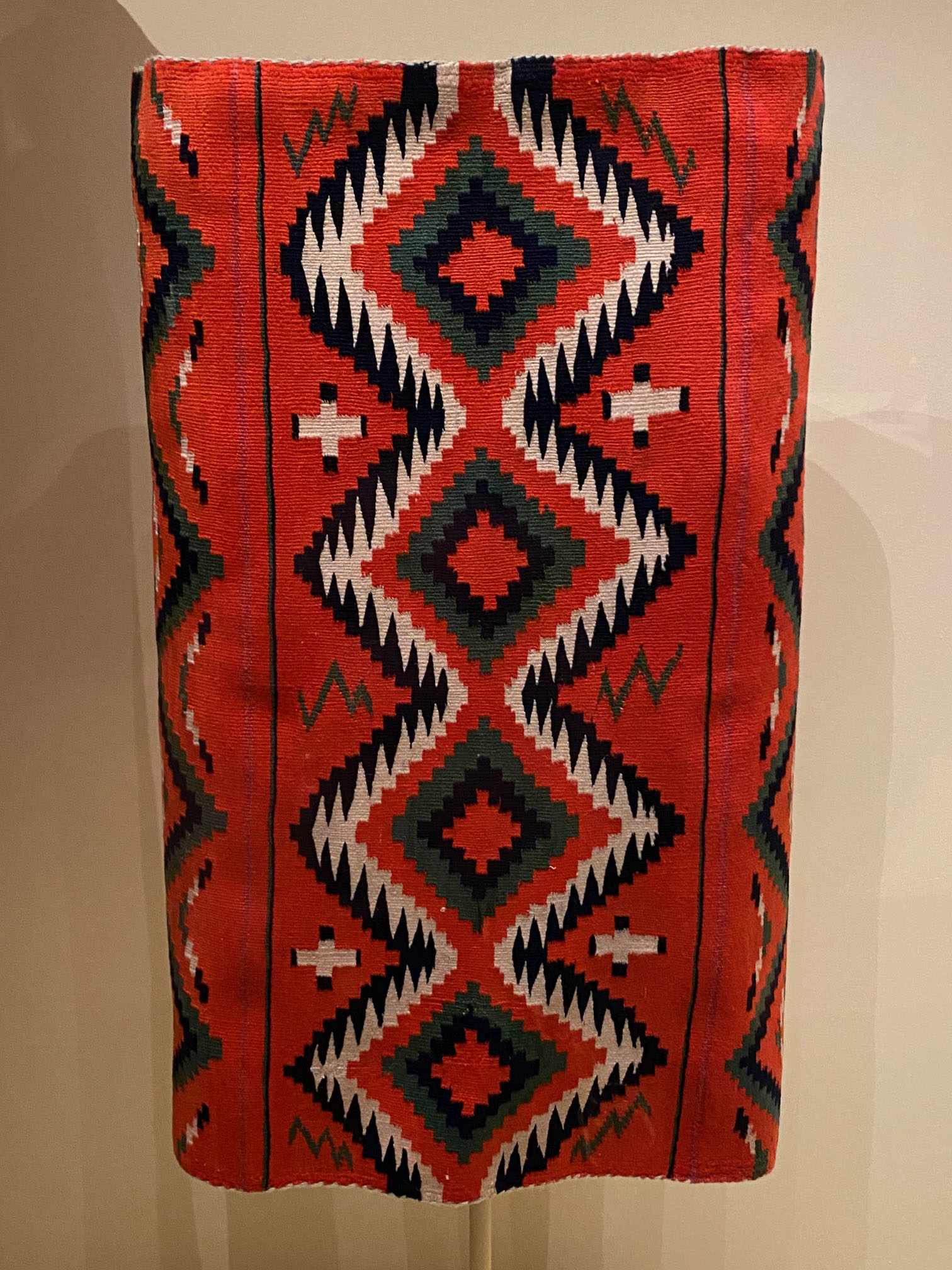
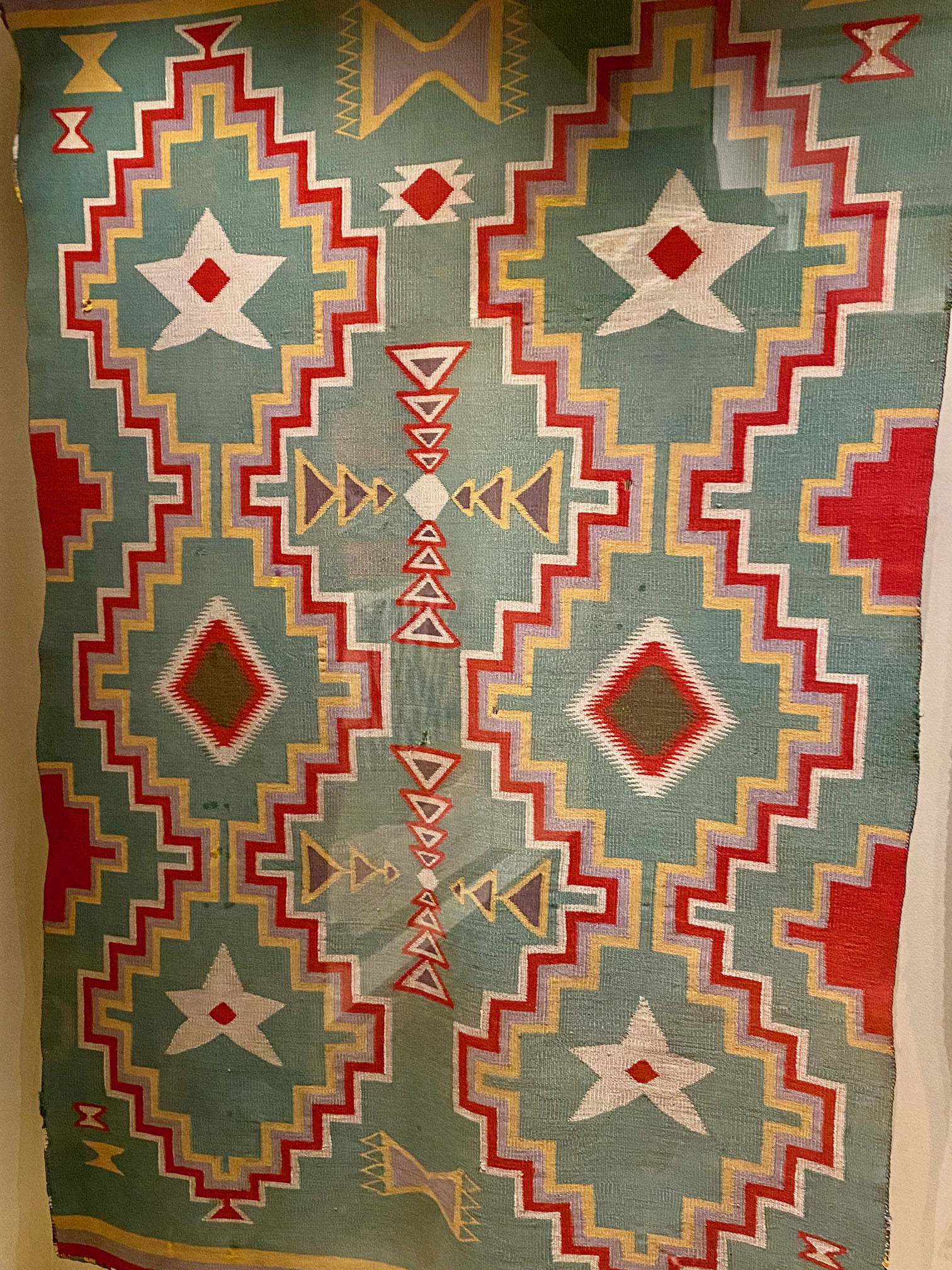
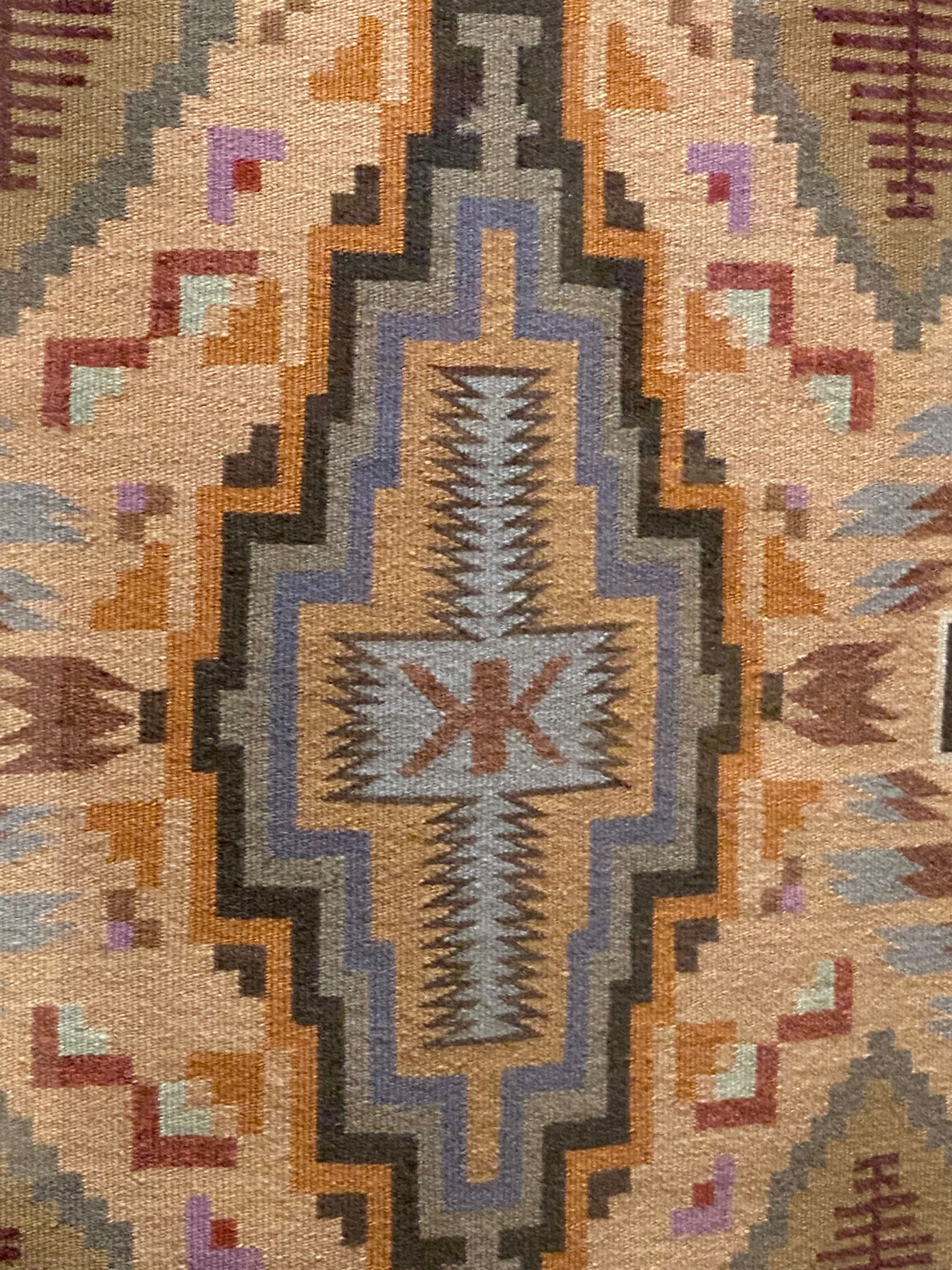
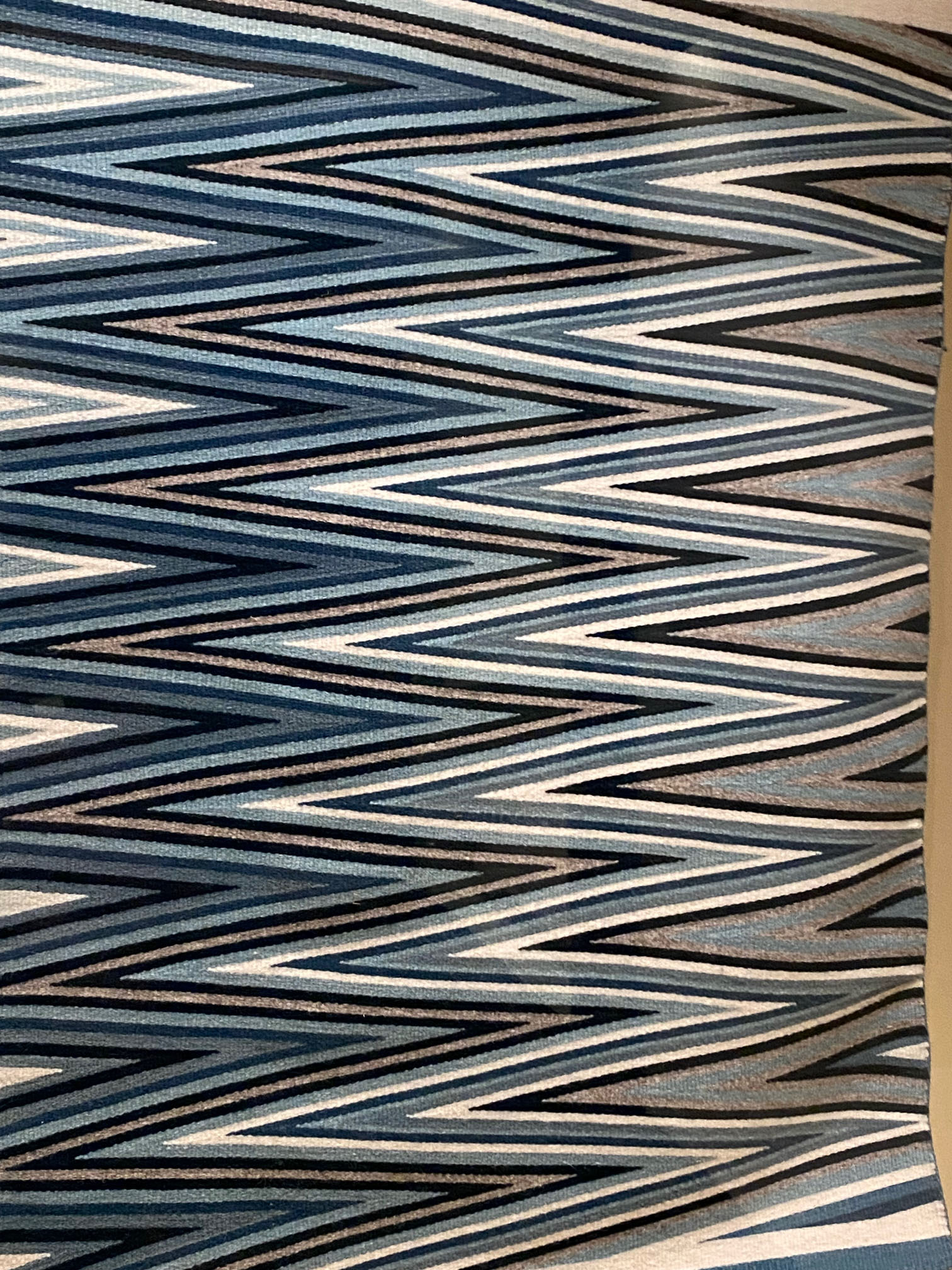
The participants in the exhibition make sure that viewers also experience how the landscape inspires the work of the past and contemporary Native textile artists. Diné fiber artist Tyrrell Tapaha includes her two-panel dress in which incorporates images of the Utah clouds and mountains that bring her spiritual peace. The masterful wall hanging by Lillie Joe uses the palette of the desert to create a mesmerizing geometric dazzler.

The curators feature both the photography of co-curator Rapheal Begay and Darby Raymond-Overstreet to allow gallery visitors to experience the awesome beauty of the homeland that inspires artists. Digital artist Raymond-Overstreet overlays geometric textile patterns across his luscious, beautiful landscapes.
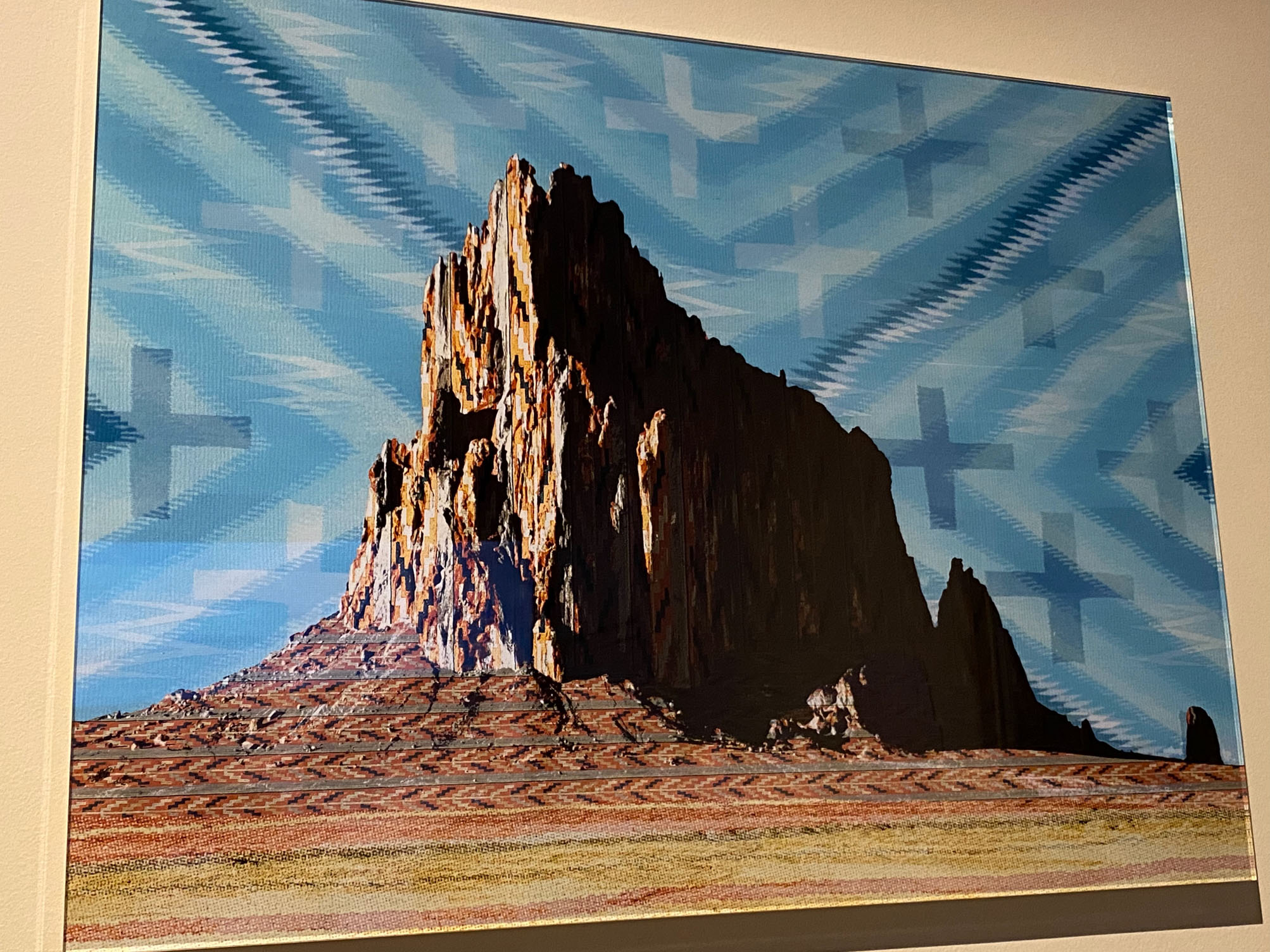
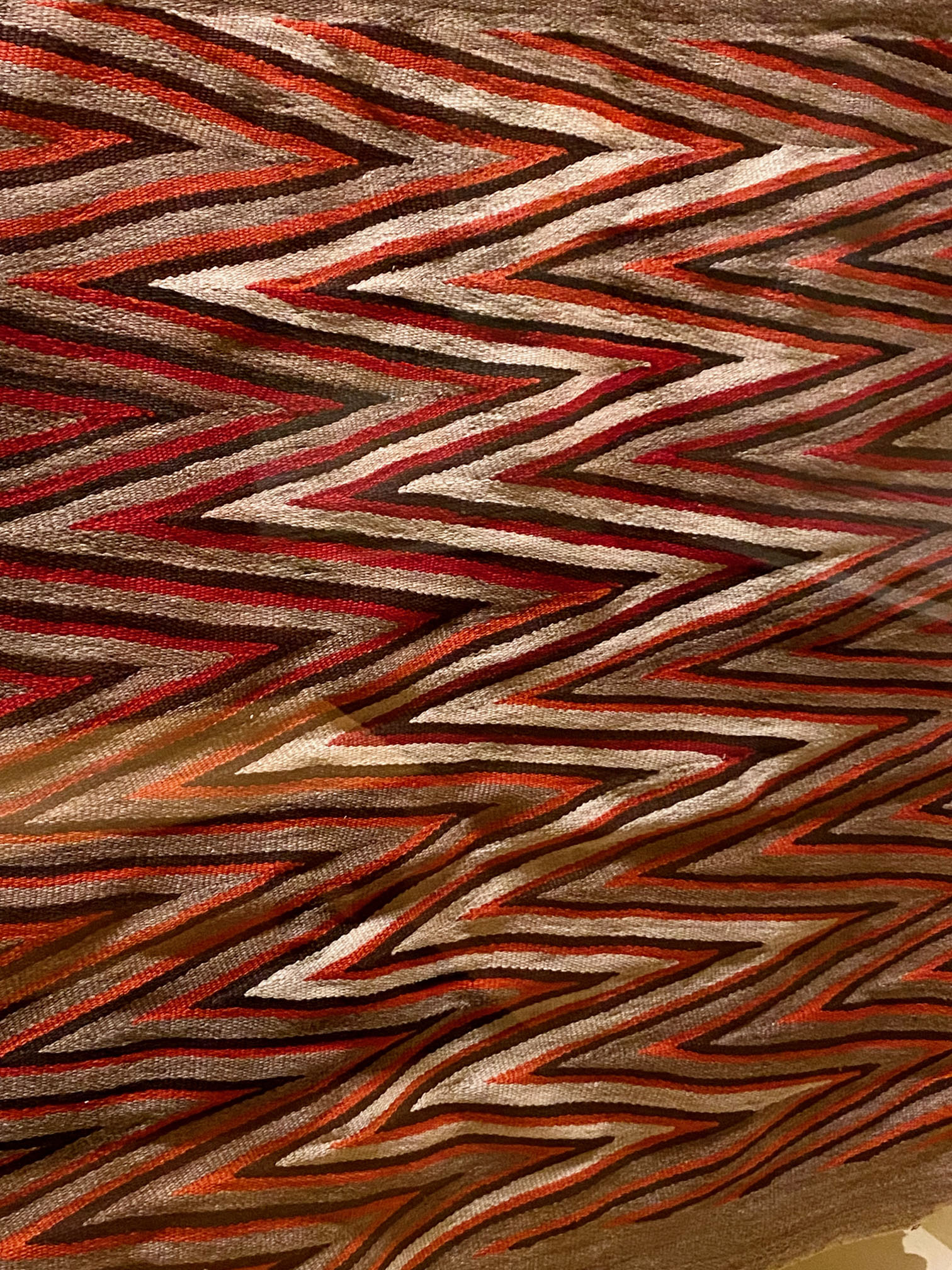
Take a look at some of our favorite works in our Flickr album. And enjoy these historic and contemporary dazzlers.

 itsnewstoyou