
It wasn’t a scientific survey, but Santa Fe’s Museum of International Folk Art asked each museum staff member to select a favorite piece from the collection, explain why, and then mounted an entire exhibition about the love of folk art – Staff Picks: Favorites from the Collection at MoIFA through August 18.
Everyone knows about the 10,000 objects displayed in the museum’s Girard wing, but MoIFS houses over 150,000 additional works from over 100 countries. Given the vast scope of the collection, how did everyone choose one special item to be featured in the show?

Some of the security staff remembered works from past shows that they loved, and some working in the collections had favorites hidden in the archives. To make it a little easier, the exhibitions team divided the task up into different regions of the world (to give a sense of the global extent of the collection), and asked some colleagues to pick a specific region, including the folk-art rich environs of Northern New Mexico.

So why did different staff members choose what they did? The exhibition (and our Flickr album) states the reason that each was selected.
Sometimes a painting, sculpture, or necklace reminded them of places they’ve visited or cultures they loved – like the painting that evoked the tropical vibe of rural Cuba by Joe Ortega, or the cart direct from a colorful folk festival in Sicily, or intricate, bejeweled work from artists of Nepal in the high Himalayas.

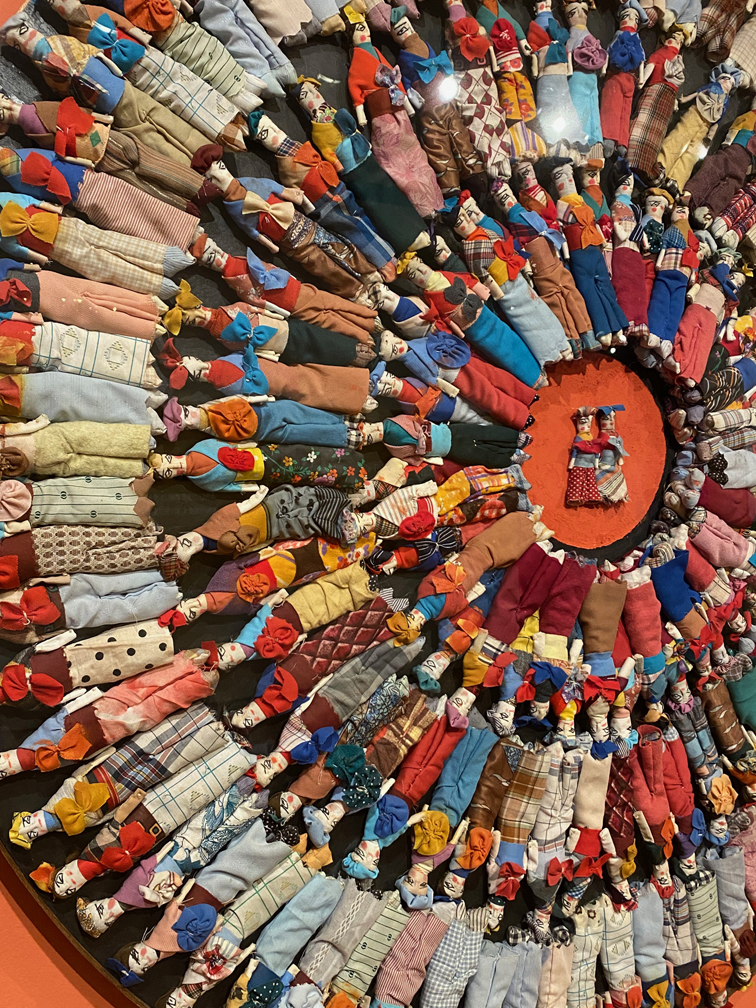
And who doesn’t love work that is pure whimsey and telegraphs sheer joy? Several staff members said they couldn’t resist works that just made them smile – the whimsical alligator sitting above the entry with his huge tri-color ice-cream cone, the recycled robot from California relaxing in his lounge chair with a drink in hand (summer fun!), and a super-happy circle of tiny Ecuadorian dolls, dolls, dolls!

Sometimes you just have to stand back and admire the sheer determination, precision, and willpower of a particular artist. How did Rhode Island artist Henry Patrick Neugent collect and take apart all those cigar boxes and create two intricate tramp art cabinets with secret compartments?
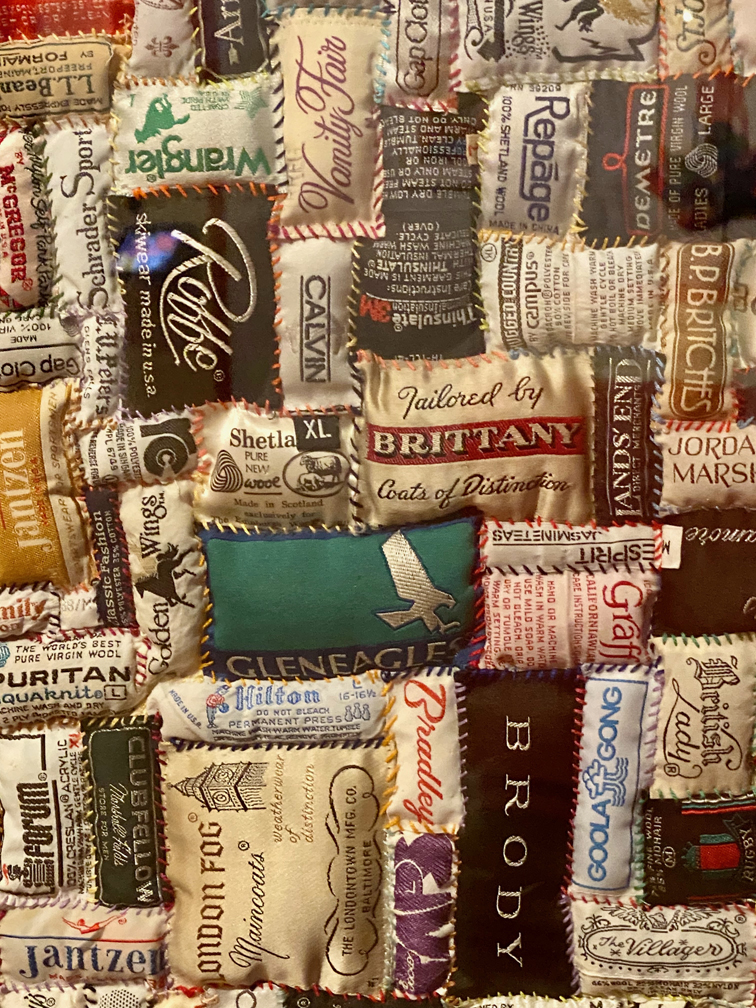
And what about the gigantic quilt made by New York textile artist Susie Brandt – she removed zillions of tiny tags from vintage shirt collars and jacket breast pockets and worked them into a log-cabin sort-of pattern. You could spend hours just reading and reflecting on the memories behind those tags – Jordan Marsh, B.P. Britches, and old Wrangler or L.L. Bean tags.

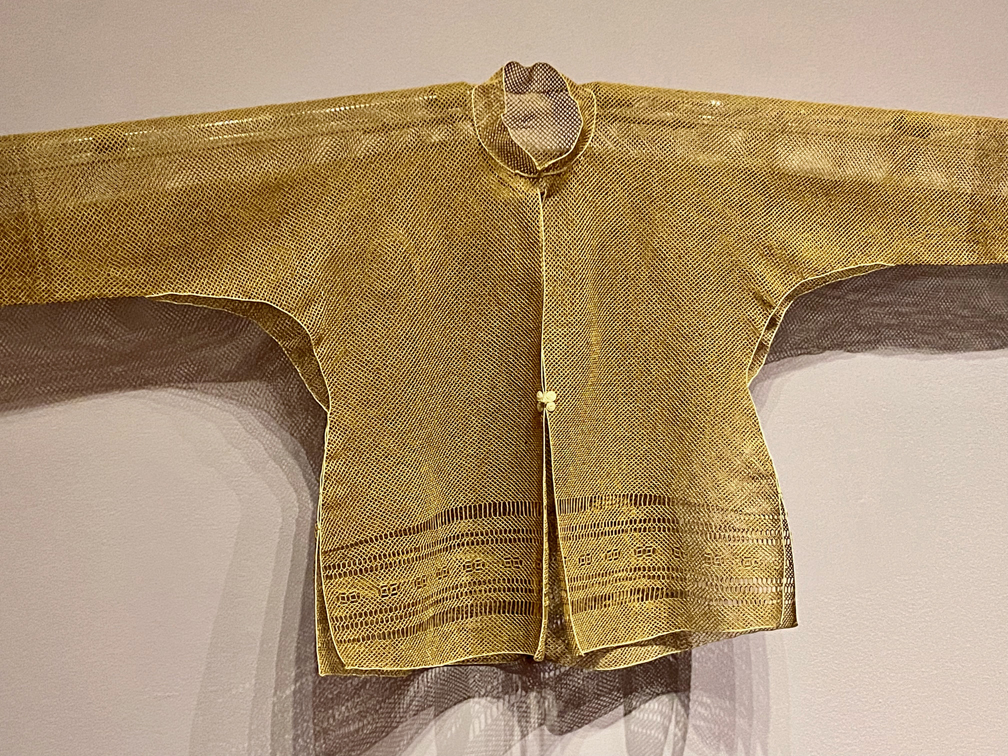
One collections manager picked hers for the sheer technical genius. Check out the 19th century Chinese undershirt designed to keep you cool under the heavier, decorated silk robes. It’s woven in a clever, open diamond pattern from bamboo and cotton!
An anthropologist on the team paid tribute to craft excellence is carried on generation to generation in North Carolina’s historic ceramic-making communities. She selected two pots by a father and son – Matt Luck’s corncob-stopper jug and a show-stopping double-faced jug created by his dad, Sid Luck (a fifth generation Seagrove potter), to commemorate the experience of living through Hurricane Fran.
The museum’s director selected a Zimbabwe thumb piano sheerly for its beautiful sound!


The show is a tribute to the teamwork it takes to welcome the world to a popular folk-art destination and a delight to behold. A selection of these works will be on display at New Mexico’s Roundhouse in the Governor’s Gallery through April 25, 2025.
Take a Google walk through MoIFA’s massive Girard Wing here.
 itsnewstoyou