
1890s Pleasure Island (Staten) Honored at MCNY

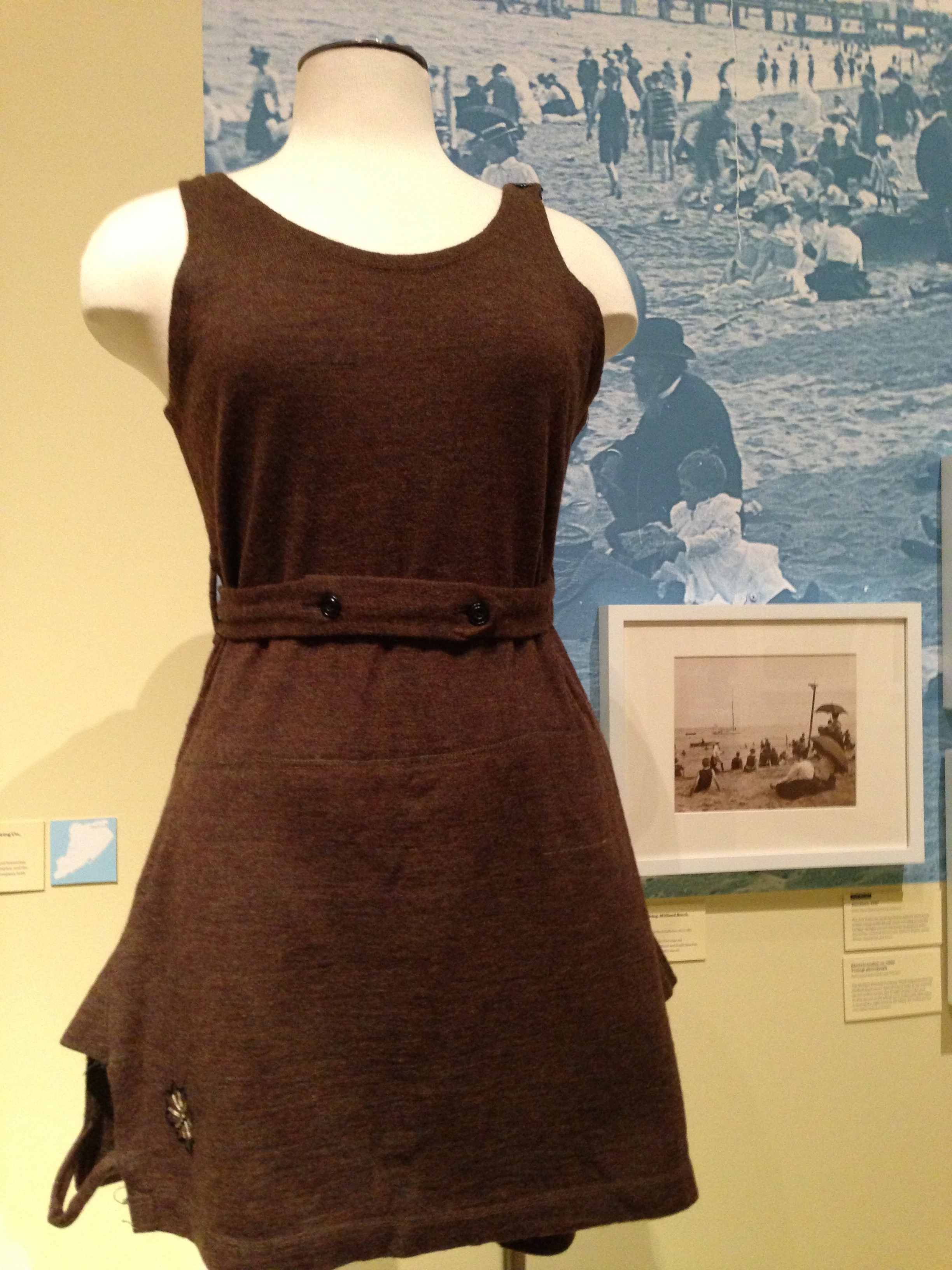
Installation view of woolen bathing suit (1905) and images of the 1890s Staten Island shore

Installation view of woolen bathing suit (1905) and images of the 1890s Staten Island shore

Over 100 years ago, the 59-mile square island rising up over New York harbor was the epitome of chic, cool sport – fantastic beaches, sunny farmland through which the well-heeled could enjoy an energetic fox hunt, and where one could witness the latest in tennis and cricket gear, to say nothing of the first tennis tournament in the United States.

It was all happening on Staten Island, playground to the upper, upper middle class, as chronicled in the Museum of the City of New York’s show, From Farm to City: Staten Island, 1661-2012. The shows covers the recent history of bridge-building and suburban development, but among the most fascinating parts of the show are those chronicling how our sometimes-forgotten borough gave the birth to modern sporting culture.

The Dutch bought it all from the Lenape in 1657, and SI thrived for centuries as the food supplier to Manhattan and the home of the overland stage service, operating between Philadelphia and Manhattan.
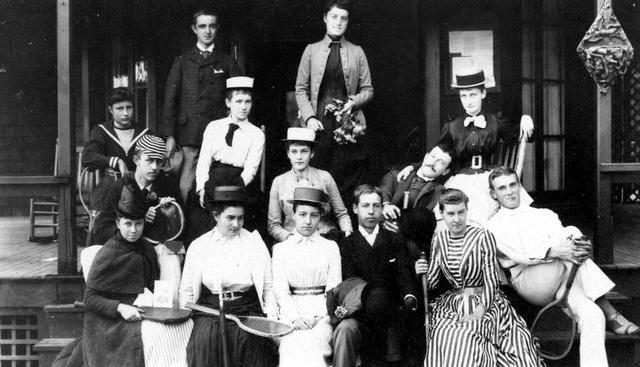
Alice Austen's photo of Tennis Clothing (1893). Source: Alice Austen House

Alice Austen’s photo of Tennis Clothing (1893). Source: Alice Austen House

But in the late 1870s, the Staten Island Cricket and Baseball Club became the epicenter of the lawn tennis craze (imported from England via Bermuda), and by the 1890s, the edge of the island had boardwalks and amusements to rival Coney Island.

Victorian sporting culture was well documented by Staten Island photography pioneer Alice Austen, whose photos have been enlarged to wall murals by the curators to convey the sense of fun, sun, and cachet in the exhibition. The historic home where she grew up has recently posted her work online, an incomparable look at everyday life here in the 1890s.
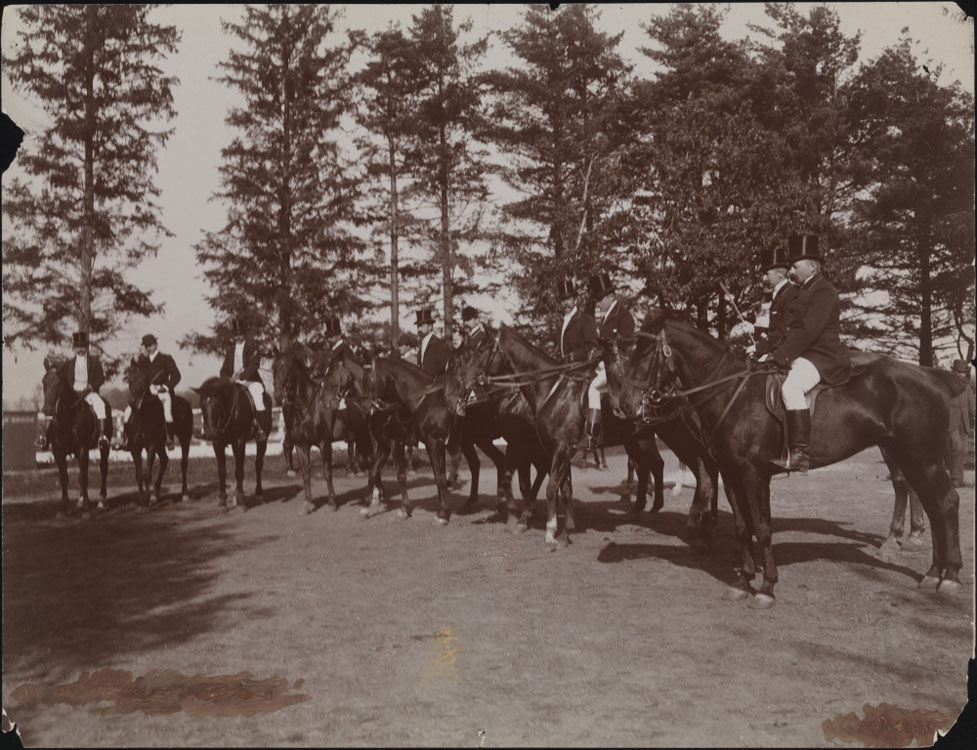
Richmond County Hunt Club in 1895. Source: MCNY

Richmond County Hunt Club in 1895. Source: MCNY

If you want to compare the past with today on Staten Island, MNCY has done a spectacular job of taking its historic maps and putting them into digital overlay of today’s world. Check out this great online resource to view the view in 1750 or 1829 compares to today. Click on the blue dots to see images of what used to be.
Extreme Renaissance Sportswear Back at The Met

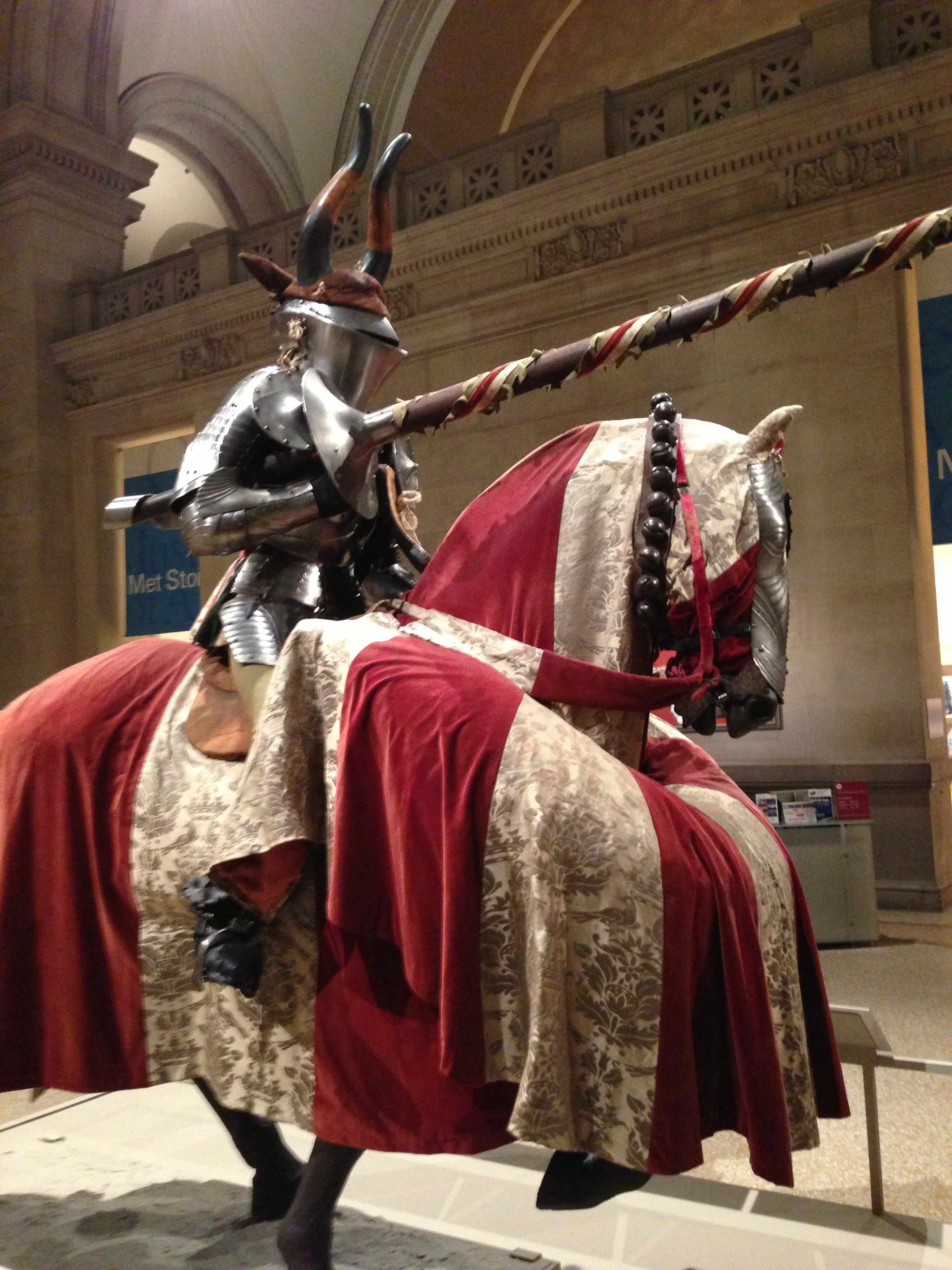
JoustAfter a brief Yuletide absence, the spectacular Armor for the Joust of Peace has been returned to the Great Hall of the Metropolitan Museum of Art, just inside the main entrance, to honor 100 years of the Arms and Armor Department.

Not seen in all its splendor since the 1980s, you’re looking at what extreme sports dressing looked like back in 1500. It all took place as the Renaissance was dawning across Europe, so this outfit was designed for safety and sport – not combat. The objective: unseat your opponent during a horseback charge across an open field with a blunt lance.

Jousts happened on open fields without barricades to separate the horses, so the horse’s head armor completely covered its eyes (yes, galloping blind). A straw-filled bumper hung around his chest for protection. This jouster’s wear was super-heavy (over 80 pounds for the body and 21 for the helmet), with the padded helmet physically bolted to the body armor to protect against whiplash when the inevitable impact occurred.

Solid covering over the horse's eye

Solid covering over the horse’s eye

The Met’s first curator of arms, Bashford Dean, found this German ensemble (even though some pieces were missing) and purchased it in 1904, setting the stage for many, many subsequent acquisitions (oh, about 14,000 more).  It lacked an original helmet, but when Dean saw the one on display (an 1891 recreation made by Parisian armorer superstar Daniel Tacheaux), Dean not only snapped it up, but hired Tacheaux to be the Met’s first armor conservator.

The shield and upper-thigh protectors are also restorations, and so is the horse’s brocade and velvet. But standing so close to this magnificent mount below the arches of the Great Hall, it’s easy to imagine you’re hearing the hoofbeats and roar of the sports crowd, and know that it’s not coming from the gift shop.Detail

Party Like It’s 1913 at Grand Central

Just after the clock strikes midnight on GCT's 100th birthday

After the clock struck midnight on GCT’s 100th birthday

At midnight tonight, the crews, security, police, and station manager were on hand to see the famous clock above the information desk signal the beginning of Grand Central Terminal’s 100th birthday. Just like a film set, everyone was concentrating on pulling magic out of a hat for the public birthday celebration that begins today.

If you’re within commuting distance, get over to Grand Central today to rub shoulders with celebrities, artists, and officials commemorating 100 years of our beautiful terminal.   At 10am, see Cynthia Nixon, our poet laureate Billy Collins, Keith Hernandez, Caroline Kennedy, Melissa Manchester, and (yes) the Vanderbilt family pay tribute in a rededication birthday celebration.

Check the web site for the afternoon schedule of honors, music, giveaways, and  1913 prices (one day only!)  for shoe shines (10¢), fries (10¢), loaves of rye bread (6¢), pasta (5¢), and cocktails at Michael Jordan’s (75¢).

IMG_1706Also, be sure you seek out the replica of the Terminal made out of Lego bricks in the Station Master’s Office. Then, dance the afternoon and night away (until 9:30) with Grammy Award-winning big band Vince Giordano and the Nighthawks. The celebration continues all year, but more on that later.

If you can’t get there, enjoy the new history timeline from your desktop (especially the part in 1976 with Jackie).

Or watch the Metro-North guys polishing up the chandeliers in Patrick Cashin’s photos on the MTA Flickr feed.