NYC High Line Wilderness Being Swept Away

It’s not going to be swept away by Hurricane Sandy…We’re just alerting you to the fact that the last section of the High Line looping the West Side Rail Yards is about to undergo its final construction transformation from 30th Street up to 34th Street, right across the street from the Javits Convention Center.

As soon as the hurricane subsides, crews will start transforming the railroad-bed wilderness into a beautiful promenade designed by James Corner Field Operations, Diller Scofidio + Renfro, and planting designer Piet Oudolf. The City acquired the property from CSX Transportation this summer – the final piece of rail property to complete the High Line vision.
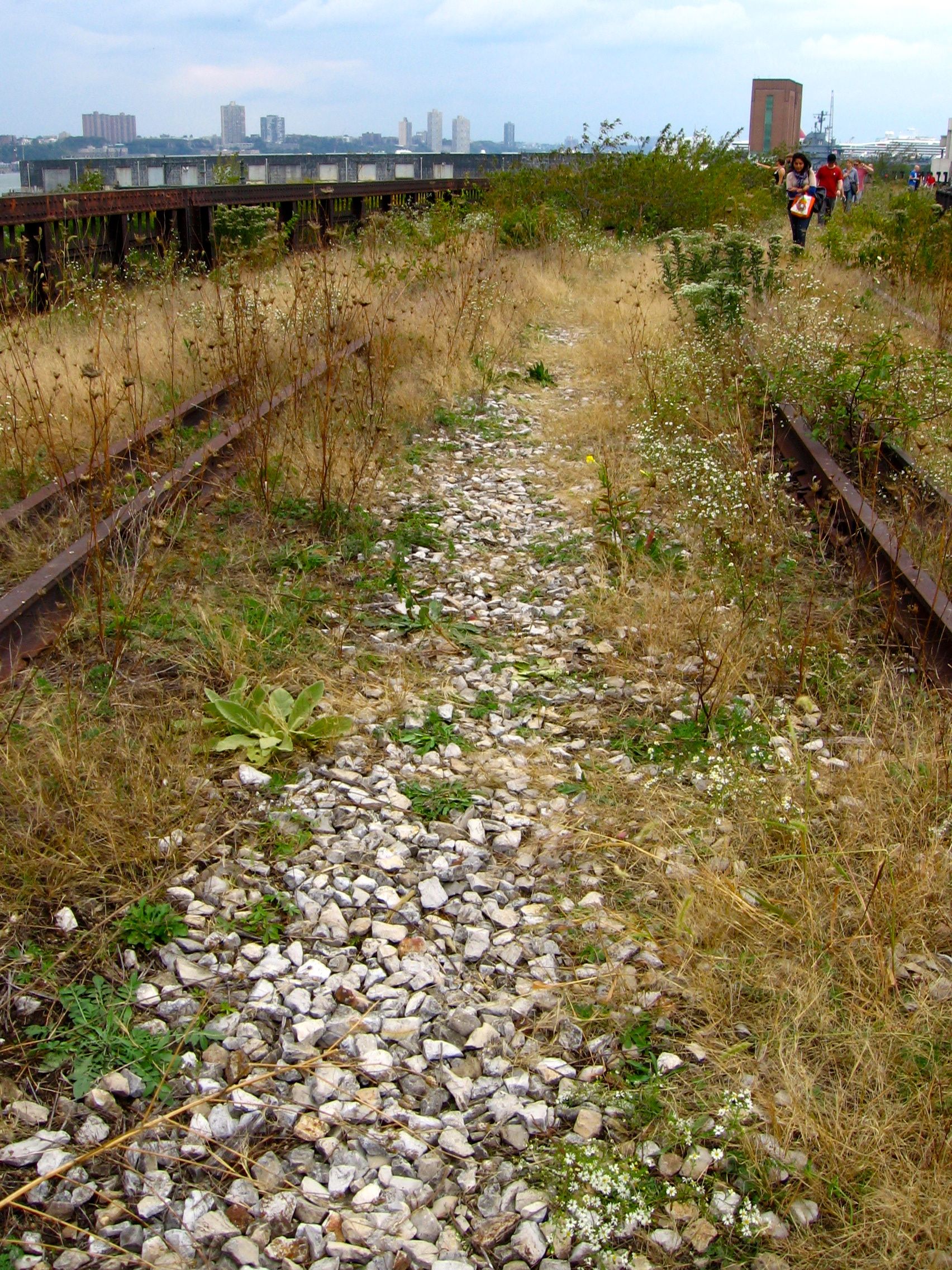
Earlier this month, the High Line opened up this final frontier to foot traffic as part of Open House New York, and we’re providing a last virtual look on the Flickr site.  Enjoy the trees, the views, the historic photos, and graffiti of the old elevated railway before the skyscrapers start rising over the old Penn Central yards.

And be sure to find the theropod dinosaur lurking in the weeds above Eleventh Avenue!
Hirschhorn Goes Overboard at Gladstone

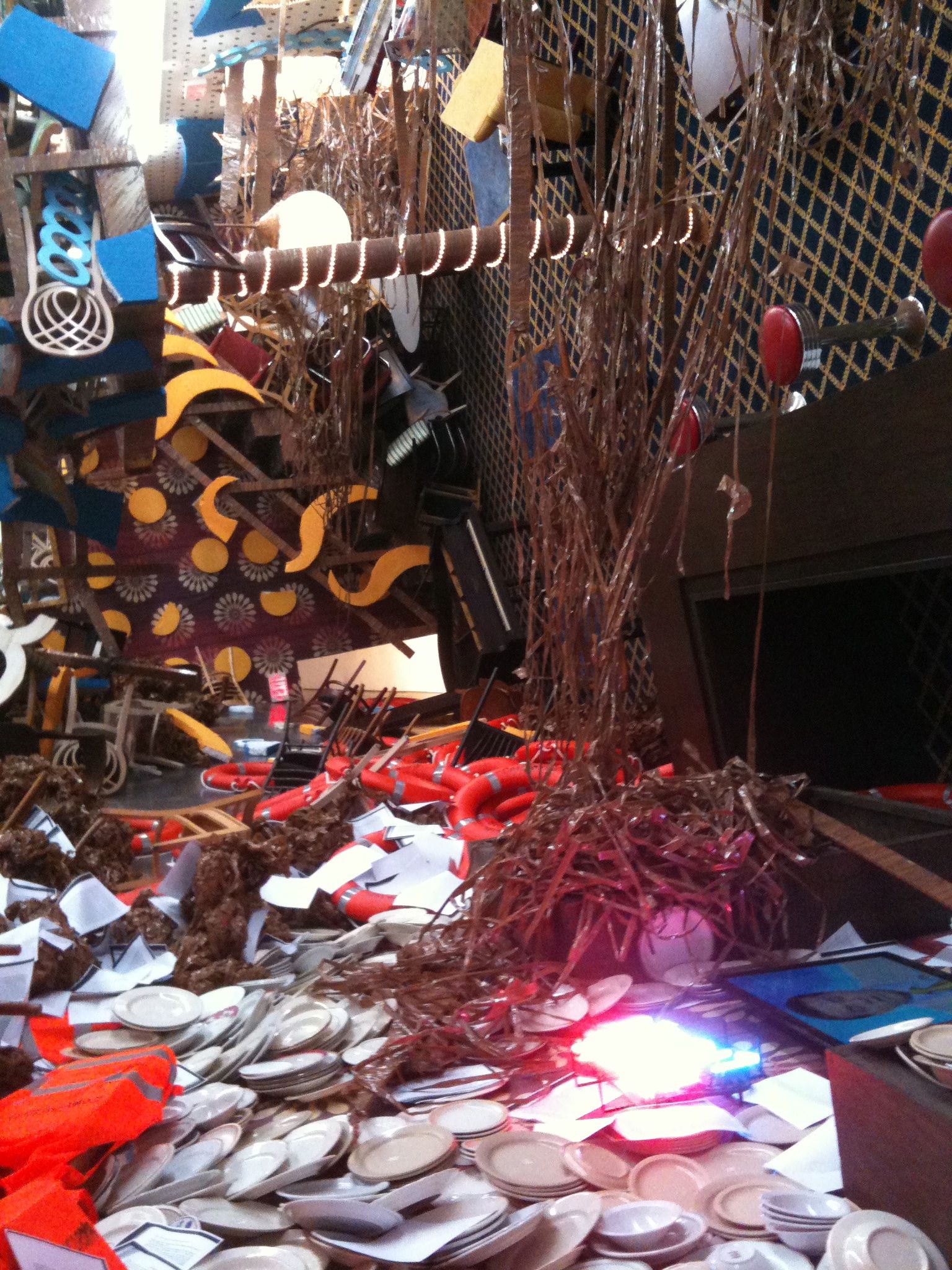
This may look like a Judy Pfaff installation, but it’s a close-up of the engaging, room-size environmental work by social commentator Thomas Hirschhorn on view until October 20 at Gladstone Gallery in Chelsea.

Concordia, Concordia is a riff on the tumultuous, larger-than-life grounding tumble of the Italian cruise ship, Costa Concordia in January 2012. Gladstone has other close-ups on its website, but its worth a walk over to 530 West 21st to get the full experience for yourself.

Hirschhorn was inspired by the furniture-akimbo nature of the interior photos of the luxury liner and the refusal of the ship’s captain to tend to the self-inflicted disaster.  There’s a lot to look at – including Hirschhorn’s cheeky inclusion of The Raft of the Medusa.  Look hard. You’ll find it. There’s no safe place.

Coe Multimedia Accessory Collection at The Met

Detail of Possible bag (1900) from the Coe Collection at The Met

McQueen and the Paris runways have nothing over the 18th and 19th-century Native Americans who knew how to mix unusual materials and meanings into symbolic, functional, innovative, and salable accessories. A collector with an eye for the interesting is honored in the Met’s Michael C. Rockefeller wing in the micro-show, The Coe Collection of American Indian Art.

Ted Coe of Santa Fe was inspired to collect both ancient and contemporary works by Native Americans that caught his attention, amassing thousands of pieces that he bequeathed to the Met. He mounted a truly innovative show at AMNH in 1986, which linked old and new traditions in Native American art making, Lost and Found Traditions: Native American Art 1965-1985. The Met’s curators decided to honor his work by selecting forty objects.

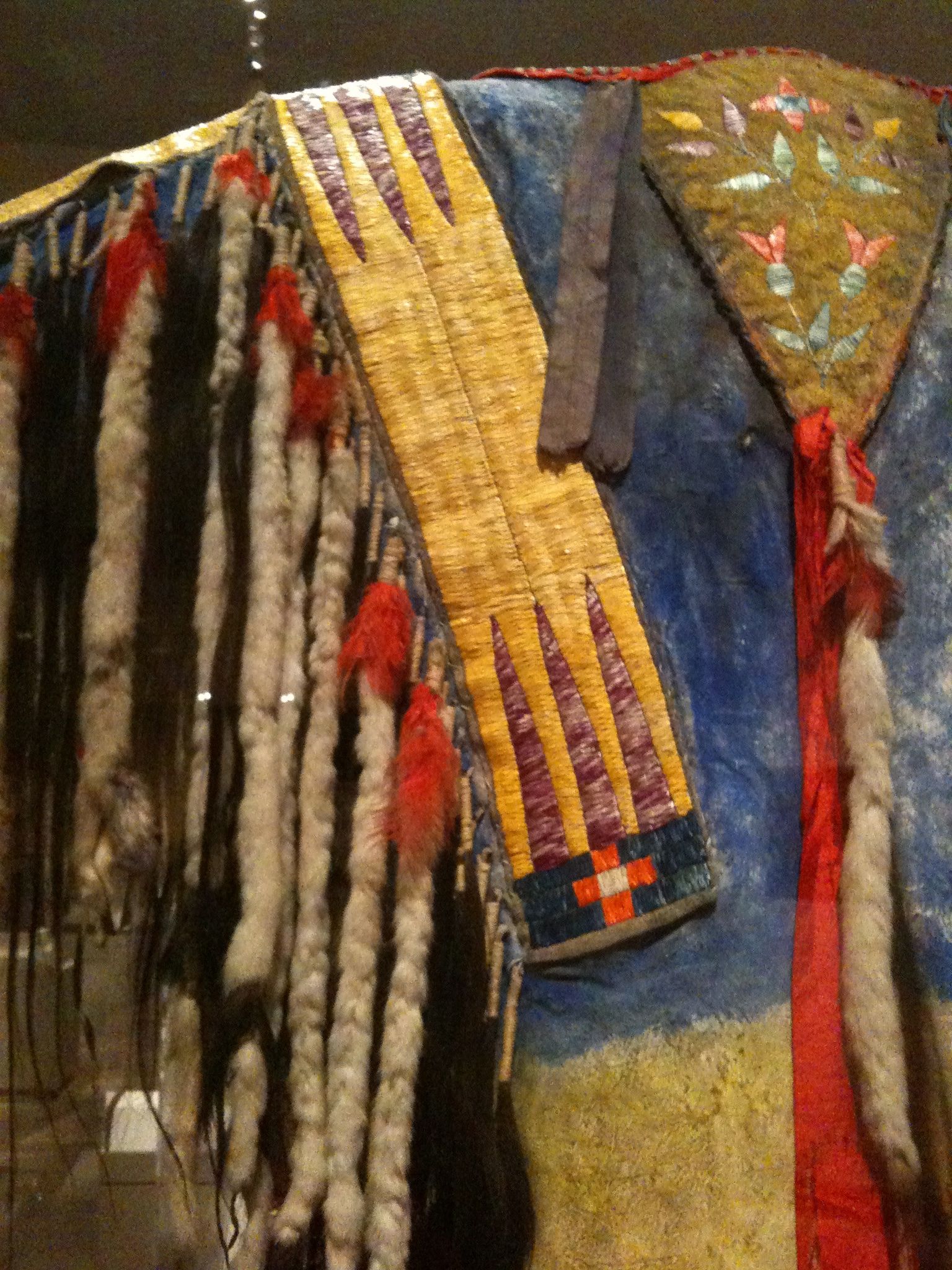
Detail of Arikara Leadership shirt (1860) from Coe collection at The Met

The show isn’t all about wearable art, but we decided to focus on a few details that you might find of interest. We’ve organized the Flickr feed to document some of the oldest to the newest creations on display, ranging from mid-Mississippian carved stone tools from 4,000 B.C. to the cheeky dough bowl (1994) made by Chochiti potter Diego Ramirez.

In between, you’ll see an array of sophisticated and rough creations made by artists from the 1700s to early 1900s for Native American leaders, nomads, and tourists – all designed, embellished, and crafted in a variety of materials. Who knew that nuns taught Canadian tribal artists to embroider with moose hair? Enjoy the details.