Afghanistan in MoMA’s Atrium

Afghanistan is in the house as part of MoMA’s tribute to Italy’s art povera superstar in their soon-to-close exhibition Alighiero Boetti: Game Plan. Although Boetti’s retrospective takes up room on MoMA’s other floors, it’s the Afghanistan-made kilims and other art works that really serve as the focal point of the visitor experience. Check out the photos.

Get there to see the series of embroideries on tissue and the grid-within-grid rugs with patterns designed by art students and woven by Afghan artisans. Up until the Soviet invasion in 1979, Boetti worked with artists there to carry out intricate woven collaborations – including over 150 maps of the world. Boetti traced the maps on canvas and let the weavers add whatever text they wanted and pick all the colors. A few are on display here, and you can hear a pretty amazing description about the logistics of Boetti’s collaborations from MoMA curators in a short audio.

Installation view of Alighiero Boetti map (1979), embroidered by Afghani craftswomen

You’ll enjoy the densely packed embroidery Everything, and the amazing tapestry of the thousand longest rivers in of the world (1976-1982). It took Botetti and his wife years to classify all of the rivers, and if you’ve ever seen this on display before at MoMA (it’s in their collection), it’s an amazing textile that never fails to draw a crowd.  You’ve got to see it in person.

Check out MoMA’s interactive site for the exhibition, but run over to examine all the Afghani creations up close. Enjoy the trip.

What’s Up with Those Dots, Yayoi?

You’ve seen them everywhere over town…the enigmatic dotted signs with the face of Yayoi Kusama peering out. During Fashion’s Night Out, the Vuitton store was ablaze in polka dots, all a tribute to this reclusive Japanese pop-art sensation who burst upon the Manhattan art scene in the 1960s.

This is the last weekend to see her retrospective in person at The Whitney, but if you can’t make it, enjoy the Vuitton collection that she inspired (they’ve created a whole website).

Take a peek into the show.

And click on this link to see a documentary clip about this Kusama’s life. Be surprised and find out how to merge into infinity!

How di Suvero Makes Steel Move

Rust Angel sculpture (1995) by Mark di Suvero at the edge of the Parade Ground at Governors Island

Even if you haven’t caught the monumentally good outdoor installation of Mark di Suvero’s work on Governors Island (check out the photos), the folks at Storm King Art Center are making sure that you don’t miss it.

Thankfully they asked filmmaker Dirk Van Dall to capture how it was all transported down the Hudson from Storm King’s 500-acre campus an hour north of the City. The short film follows di Suvero around the Island to inspect the (literal) heavy lifting.

In 2010, di Suvero won National Medal of Arts, and in the film he talks about his lifelong fascination with steel, his early employment at the Fulton Fish Market, how neighborhood kids inspired him to begin creating large-scale fun works, and how he makes the seemingly immobile move. Listen in.

Drop in at the Governors Galleries this weekend to talk with the Storm King folks, and join their walking tour of the works at 2pm.

Ride the M-15 to the 19th Century

The SBS M-15 (First Avenue) bus drops you right at the door to the 19th century lifestyles and handiwork inside the South Street Seaport Museum’s Compass: Folk Art in Four Directions show, mounted by the American Folk Art Museum (which has just hired a new director and is now on better financial footing after selling its 53rd Street building to MoMA and decamping back to its space near Lincoln Center).

The Seaport (currently under the management of the Museum of the City of New York) invited the Folk Art folks to curate a show for four of its newly opened galleries, and it’s a joyful, informative stunner. Stacy Hollander, senior curator, selected art that reflects the spirit of the Seaport’s Schemerhorn Row, a series of six 1810 buildings that originally housed coffeehouses, hotels, and other small businesses serving the bustling sea trade.

Whale ivory and bone canes (1860); AFAM

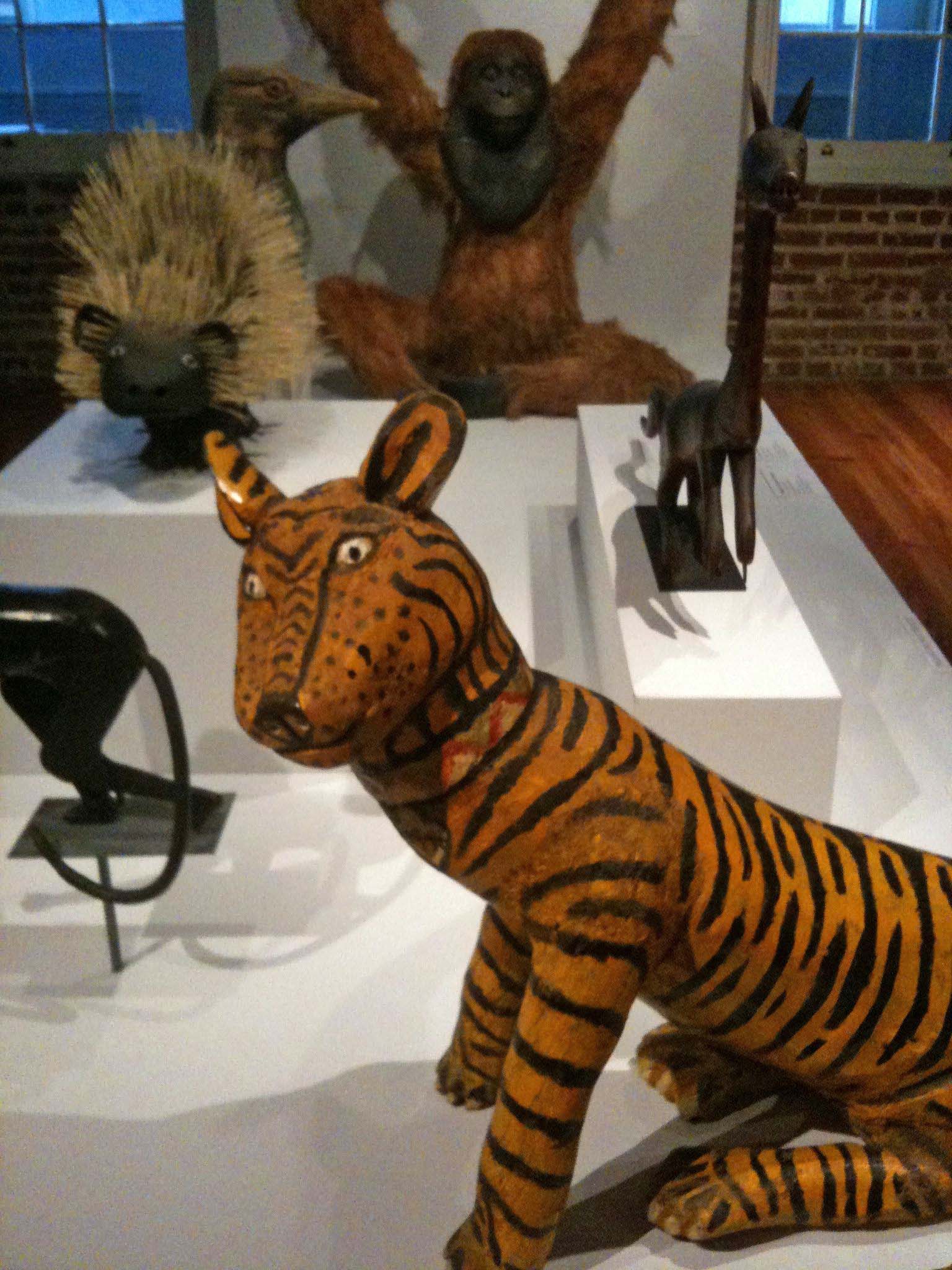
In the Exploration gallery, you’ll encounter a vibrant folk-art menagerie, evoking the exotic adventures awaiting seafarers, who would be gone for years at a time, carvings done during the voyages, whale-bone walking canes, and imports from China. In the “social networking” gallery, the Seaport has exposed an original wall, covered in 19th-century graffiti, from the coffee houses of old downtown, when Water Street was the actual East River waterfront.

Everyone should support both of these museums (and get free admission if you sign up for the Seaport’s mailing list). The Museum and the SBS M-15 are in operation seven days a week.

Girls Who Wear (Google) Glasses

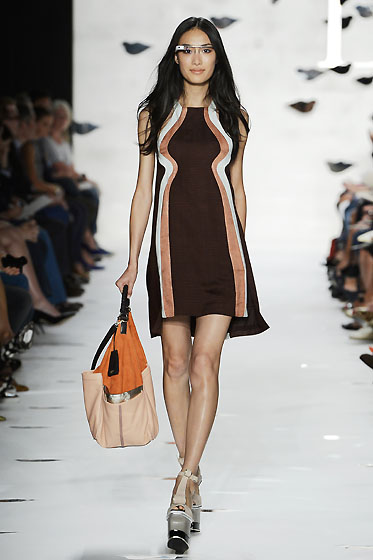
DVF’s Look #17 for Spring/Summer 2013

When Diane von Furstenberg and her models walked the runway at NYC’s recently concluded Fashion Week, they decided to give the world an inside peek at how it feels by recording the experience with Google Glass, the still-in-Beta avant-eyewear.

The innovative accessory shoots video, snaps pix, streams messages, and apparently looks good, so Diane decided to snap on the specs and take you with her (and her posse) on a fashion-tech flashbulb-popping stroll.

What’s cooler than Diane’s embrace of the new? Her Spring/Summer 2013 collection and her attitudes about life, potential, and empowerment. Take a look. Thanks, Diane!

Historic Silver Hoard on 77th Street

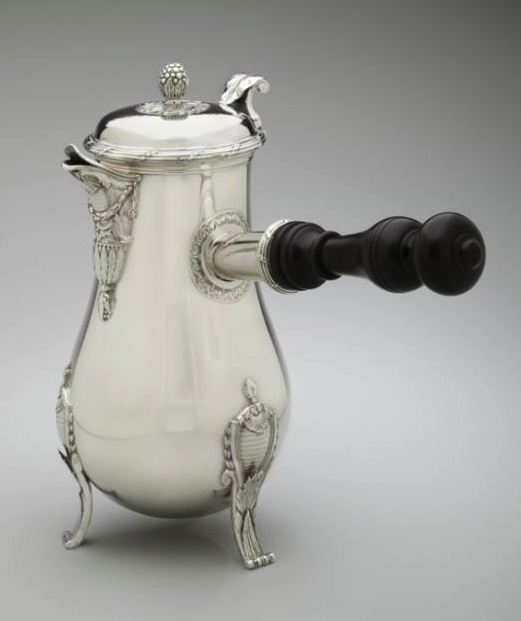
Silver coffeepot by Jacques-Nicolas Roettiers (1775-1776) sold by Gouvernor Morris to Robert R. Livingston, his successor as minister to France. NYHS, Gift of Mr. Goodhue Livingston

The New York Historical Society has done it again, hauling out all sorts of ornate, expensive, lovely silver items to tell the City’s history in the soon-closing exhibition Stories in Sterling: Four Centuries of Silver in New York.

Every time you peer into the reflections of dozens of silver pieces, the curators draw you into an historic event, person, or point in time in our collective urban history – silver brandywine bowls used by 1700s Dutch women to celebrate new babies, silver German medals modified into “passports” for travelers crossing Indian land in the 1750s, a silver coffeepot sold by Gouverneur Morris in 1801 to Robert Livingston after Thom J turned it down, and an elaborate 1863 Tiffany sugar bowl presented to the heroic engineer manning the guns on the Monitor in its showdown with the Merrimac the year before. Take a look at the on-line gallery.

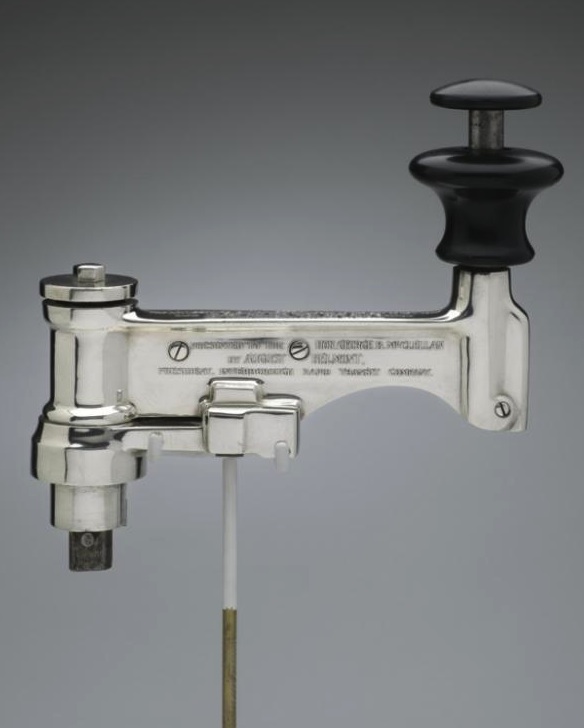
Silver subway controller handle (1904). NYHS, Gift of George B. McClellan, Jr.

Did you know that consumer culture of the 1880s required that up-to-date Victorian families have specialized serving implements and devices for every food imaginable? To prove this point, NYHS features just a smidgen of the 381 silver dinner service items presented to Commodore Perry in 1885 by the City’s Chamber of Commerce as thanks for his success in opening up trade with Japan — silver berry spoons, asparagus tongs, mustard spoons, nutpicks, bonbon dishes, and a zillion other things.

Most unexpected item: the Tiffany silver subway control handle that Mayor George B. McClellan Jr. used to drive our first subway train in 1904. He was supposed to take the IRT only as far as 42nd Street, but couldn’t let go of this slice of silver until he reached 103rd .

What Happens (to Dresses) after Fashion’s Night Out

Everyone enjoyed the party atmosphere last Thursday during Fashion’s Night Out, with beautiful people, clothes, and accessories on display and tributes to retail and design history. (Check out the Flickr feed of the action on Madison and down Fifth.)

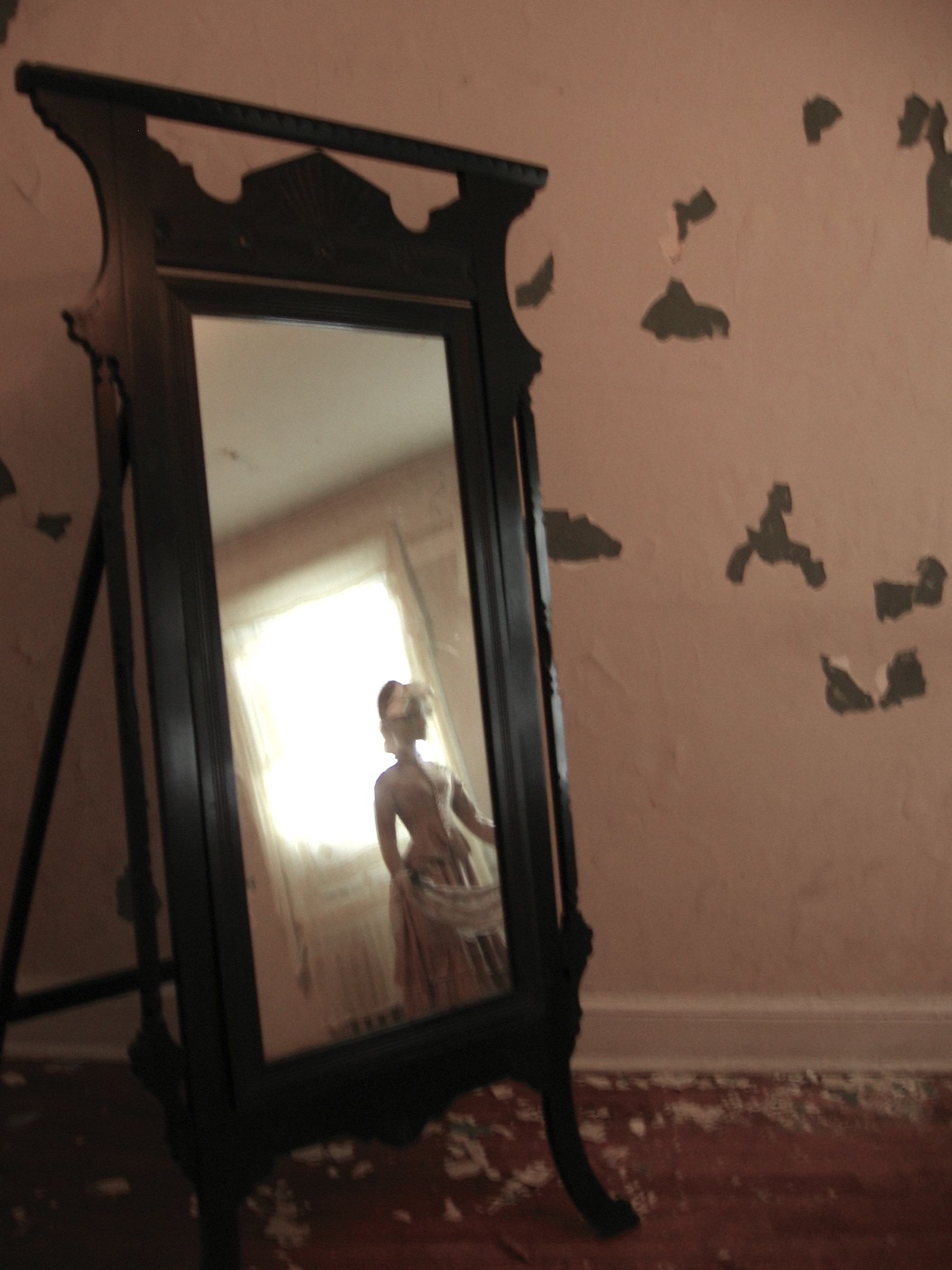
But what happens when the party ends? That question is what inspired two curators from Saratoga Springs to create a micro-show from fashion museum cast-offs — Tattered and Torn (On the Road to Deaccession).

Empire Historic Arts Fund (founded by curators Rodney DeJong and Michael Levinson) gathered together less-than-perfect examples of 19th-century couture and used the abandoned rooms of the Governor’s Galleries on Governors Island to evoke the passage of time for fashion, finery, and fanfare. Rooms that once housed the U.S. Coast Guard as recently as the 1960s felt far older, perhaps due to the dreamlike state evoked by the presence of peeling paint, claustrophobic rooms, and props with which the curators surrounded their proud mannequins.

When you enter, the dresses look glamorous, but upon closer inspection, you can see that the silk has peeled away, seams have come apart, and the total elegance that must have accompanied these dresses’ debuts has passed into history. Take a look.

Considering the $250 budget for this installation, the curators have done a fine job of paying tribute to the history of fashion, creating a memorable experience on the Island, and letting us meditate on the still-beautiful details of fabric and design up close in a quiet place.

(The show is tucked away the far east side of the Island, beyond the Parade Ground, in Building 315 facing the Brooklyn waterfront. It’s the last building on your way toward Yankee Pier.)

Virtual Trip to Design Island

Let me guess. You didn’t get to see the spectacular design show that ended yesterday on Governor’s Island. While their mansion up on 91st Street is being renovated, The Cooper-Hewitt (a.k.a. Smithsonian) outdid itself by mounting a show inside Building 110 on New York Harbor’s hottest party-picnic location.

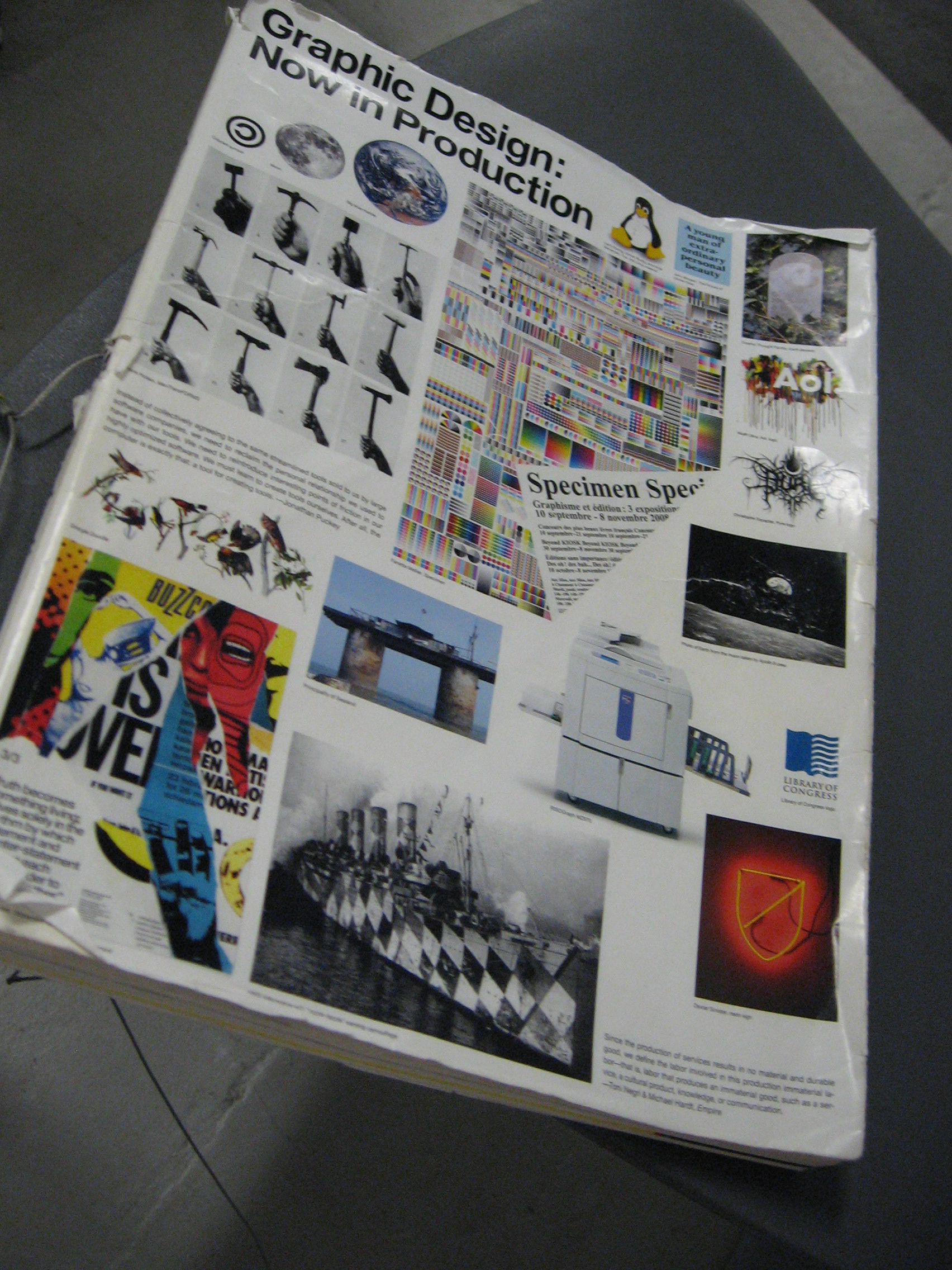
Graphic Design: Now in Production gathers great design produced since 2000 to feature what creative minds are offering. The summertime crowd loved it, and people flowed right from the ferry into the show and through the aisles where works were grouped around themes like storefronts, branding, typography, and print (it lives!). Check out the action on the Flickr feed.

The show is vibrant, interactive, mind-blowing, provocative, and fully documented in a 10-minute walk-through video with the curator Elleln Lupton that pretty much replicates the experience.

If you’re in LA, the show opens September 30 at UCLA’s Hammer Museum before migrating in 2013-2014 to Grand Rapids, Houston, Winston-Salem, and RISD.

Among our favorites are Brand New’s display, which asks visitors to vote (“before” or “after”) on redesigned corporate logos, and CognitiveMedia’s “RSA Animate: Changing Education Paradigms.”