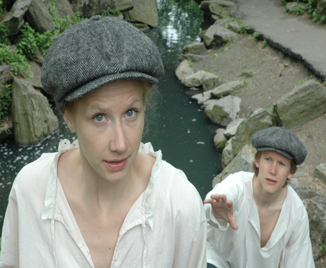
Curtain Comes Down on Follies

Unfortunately, the show has closed: The Great American Revue exhibition at NYPL’s Library of Performing Arts at Lincoln Center ended its run last weekend.
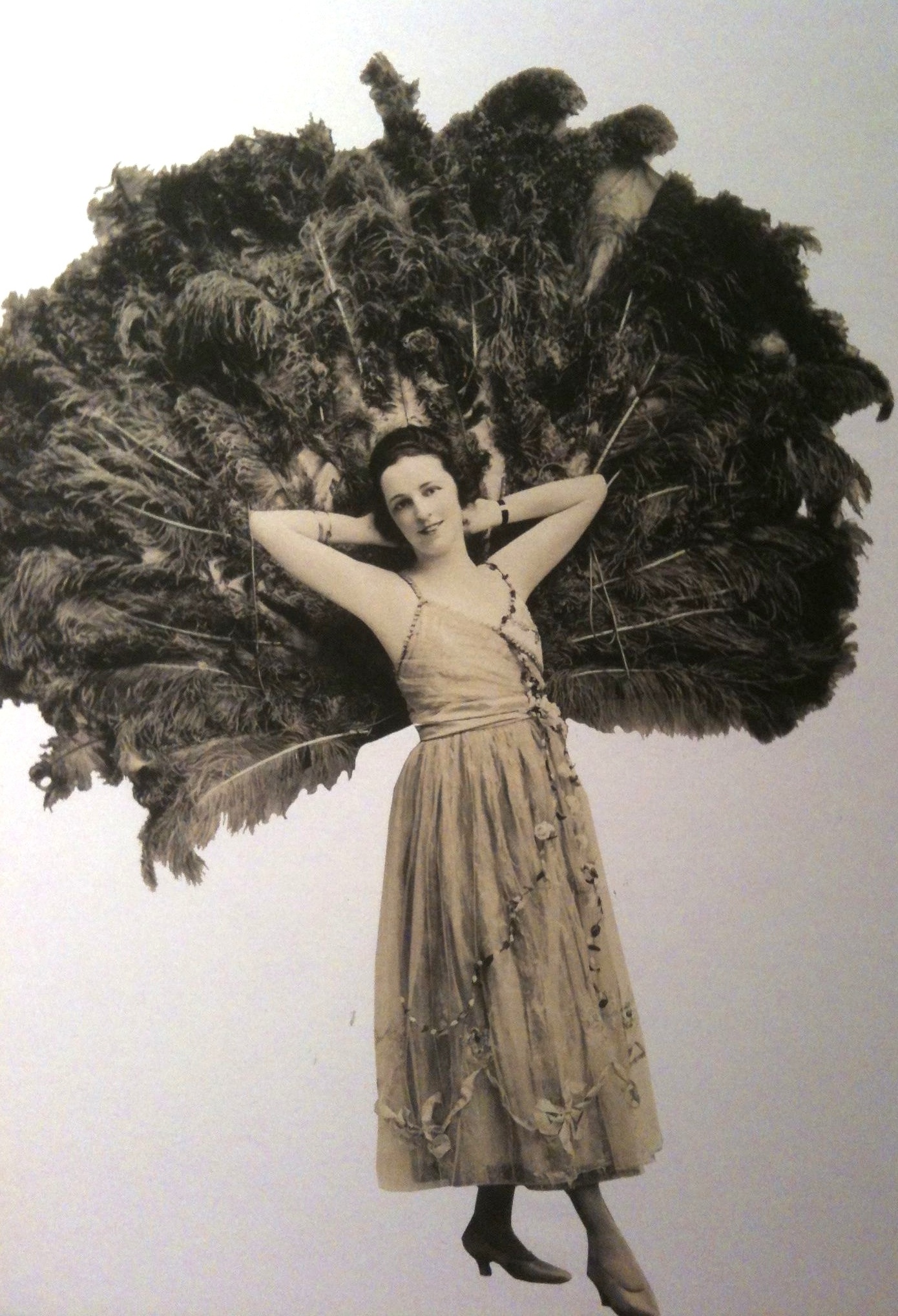
Performer in one of The Passing Show revues (1912-1919), which spoofed politicians and Broadway shows (kind of like “Forbidden Broadway”)

Today, Broadway pretty much consists of musicals and dramas, but back in the day, the “tired businessman” was entertained by chorus lines, comics, impersonators, satirists, and the best songwriters. (Think Cohan, Berlin, Rogers & Hart.)

Perhaps the note found in the archives inside a Follies costume swatch book sums it up: “Costume designs are attached. Lyrics will be written if you are interested.”

This terrific NYPL show explored how follies and revues evolved between the years 1902 (the dawn of the Hammerstein Roof Garden shows) to 1938 (when topical revues of the Great Depression, such as Pins and Needles made their mark).

The curators’ chronology and commentary is brilliant, chronicling the four stages of development: beginnings, experimenting with formats, celebrating the “body as performance”, and the emergence of political satires (1930s). (Download the show’s mini-program to get the Cliff Notes version.)

Chorus line from Earl Carroll’s Vanities (1923-1940), which featured the Most Beautiful Girl in the World

Who knew that the original Hippodrome was also built by the team that built Coney Island’s Luna Park? Who knew that George White invented “souvenir programs”? Who knew that Martha Graham got her start in settlement-house venues way back when the Neighborhood Playhouse was at the Henry Street Settlement? Who knew that audience participation shows and mini-revues on rooftop eating-drinking gardens predated the Brooklyn Bowl mash-up by 100 years?
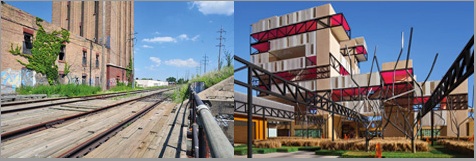
Olympic-Sized Dreams for the Suburbs

You’ve seen Danny Boyle transform the Olympic stadium from a 19th Century industrial landscape into the digital home of today. What happens when you give a 21st century design team the chance to do the same with Chicago’s suburban industrial wasteland?

See for yourself at MoMA’s show “Foreclosed: Rehousing the American Dream.” Although it closes tomorrow, the MoMA website has replicated everything on line–videos, maps, manifestos, and plans.

The proposed transformation of Cicero’s abandoned railside factories into a 21st century village where people work and live is particularly interesting. Abandoned factories currently take up 30% of Cicero. What if you redesigned it and let people buy only the parts of the home they need (vs. everyone living in a brick bungalow with a yard)? See the video and solution by Studio Gang Architects.

Cicero, Illinois and the proposal for the Vertical Neighborhood in the Garden in the Machine project by Studio Gang Architects. © 2011 James Ewing, photograph courtesy James Ewing.

Also, check out WORKac’s creation of “Nature-City” in a down-and-out Oregon suburb, Keizer. What happens when you integrate organic farming businesses and wildlife crossings into a village? Or MOS’s proposed transformation of The Oranges, New Jersey from a grid to a walking city.

Enjoy meeting our own artistic visionaries with Olympic-sized dreams on line.

What You’ll Be Wearing in Space

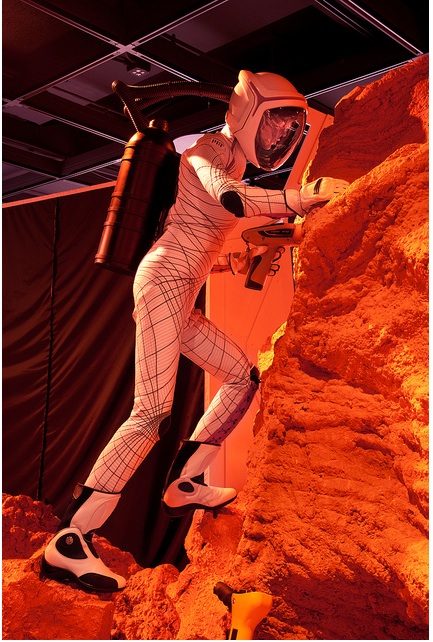
BioSuit™, a form-fitting next-generation spacesuit prototype by MIT aeronautics and astronautics professor Dava Newman displayed in the AMNH exhibition. © AMNH\D. Finnin

If the wizards at MIT have their way, the future look on Mars (for us) will be spandex, nylon, and polymer. It’s the look that’s featured in the soon-to-close show at AMNH, Life Beyond Planet Earth: The Future of Space Exploration.

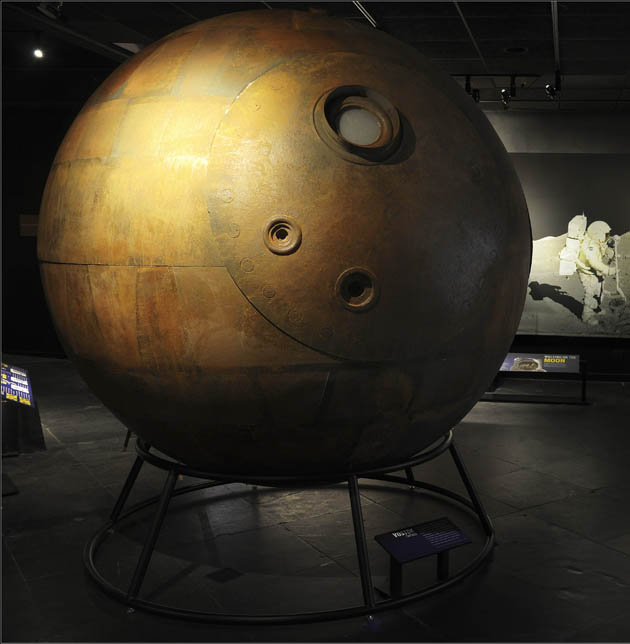
Some of the highlights include a model of Yuri Gagarin’s 1961 space capsule (don’t walk by it in the entry to the show!), Soviet and US space helmets, the “smell” of the Moon, a model of Sir Richard Branson’s space-tourist vehicle, and a space elevator.  (Didn’t you ever wonder how you’d get back from another planet?)

There are two great interactive opportunities – sitting down at a small console to skim over the surface of Mars and a big, well-lit interactive table (near the spacesuit) that lets you and others trigger modifications to Mars that eventually transform it into a habitable Earth colony.

Again, you can’t beat those 1950s letters to the Hayden Planetariumto get the juices flowing about the promise of space travel. Now, were do we order the suits?

Exhibition model of the Vostok capsule, in which Yuri Gagarin became the first person in space on April 12, 1961. © AMNH\R. Mickens

Cool MoMA Summer Pop

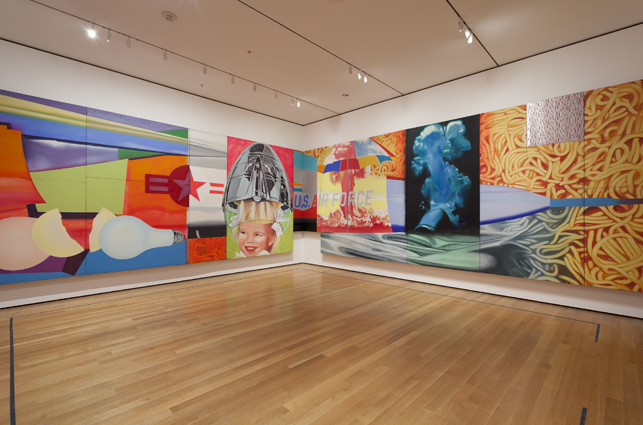
There’s no better way to cool down during the heat wave than by visiting MoMA’s Fourth Floor to see the last days that one of Pop’s masterpieces is on view: Rosenquist’s epic F-111.

The great thing about this display is that the spectacular 84-foot-long, 23-section work is installed just as it was first put on public display in Castellli’s gallery on East 77th Street back in 1965…in a small 22 x 23-foot room in which the spectacular panels and images wrap around you (instead of spread out on a long, long wall).

The thrill of this installation is being so bombarded with color, image, shine, and texture but not being able to take it all in at once. You can take time to meditate on the forces ripping through American culture in 1964, when Rosenquist created this opus.

And listen to him tell about it on the MoMA web site.  Get to MoMA and see for yourself. It’s a visual Sixties yin to Avedon’sb/w yang.

Installation view of James Rosenquist: F-111 (1964-65) at MoMA. Gift of Mr. and Mrs. Alex L. Hillman and Lillie P.Bliss Bequest, both by exchange. © 2012 James Rosenquist/Licensed by VAGA, New York, NY. Photo by Jonathan Muzikar

Classical Israeli Hip Hop

What do you see when a classically trained African American fine artist from LA decides to mash up Jewish Eastern European folk art with portraits of passionate Israeli hip-hop men of color?

Kehinde Wiley portrait of Jewish Ethiopian Israeli hip-hop artist Kalkian Mashasha

Find out at the most recent installment of Kehinde Wiley’s series, The World Stage, which will soon end its run at The Jewish Museum. It’s the Israel portion of Wiley’s effort to “chart the presence of black and brown people around the world.” It’s a stunner partly because of the paintings, the models, the provocative country choice, the Museum, and the physical Fifth Avenue setting.

Traveling to Tel Aviv during 2011, Wiley wanted to see, meet, and document men of color in a country that he really only associated with an anxious source of conflict. When he scoured the discos, malls, and promenades, he found that hip-hop practitioners and fans associated regardless of their identity as Ethiopian Jews, Arab Israelis, and other native-born Jews. That’s who you’ll meet on the walls and in the video.

If you’ve seen Wiley’s other work, you know that he smothers his canvases and subjects in pattern. In this case, inspired by the collection at the Jewish Museum, you’ll have the treat of actually viewing patterned 19th-cetury textiles and Eastern European paper cuts from the collection that inspired him. Plus, you can enjoy the echo between the curlicues on canvas and on the wood paneling of the (former) Felix Warburg mansion.

Wiley wanted to “broaden the discussion” about Israel, race, culture, and art, and his skill, vision, creativity, and deep-dive into the Tel Aviv youth scene delivers big time. Enjoy walking the Tel Aviv streets with the artist at work. (And for more, look at the other discussions and videos here.)

Best gift items associated with a current exhibition: Wiley’s skateboard deck and dog tags featuring his proud subjects.

Avedon Wide Open

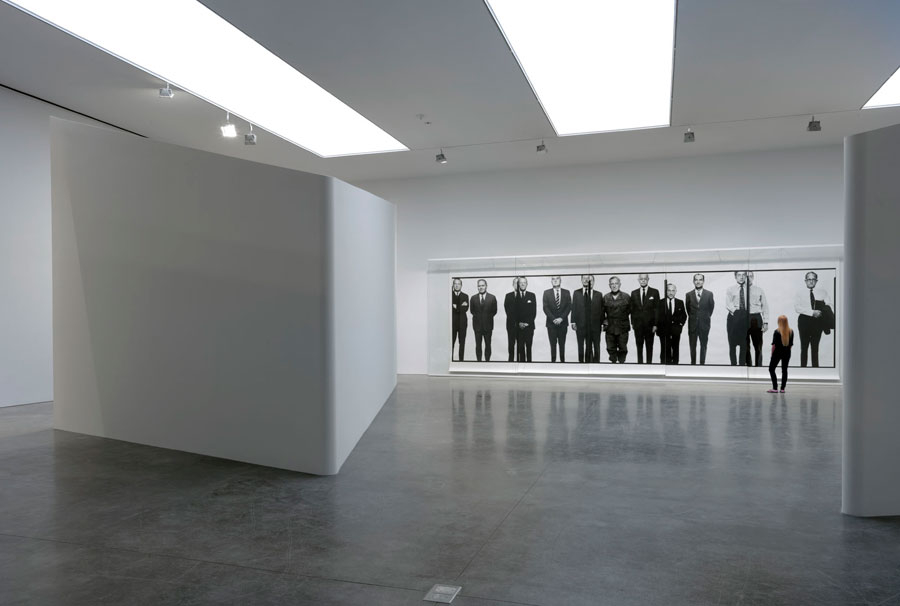
Sorry, but there’s no fashion photography here — just an amazing, controversial, challenging, and mind-bending eyeful at Gagosian’s Richard Avedon show, Murals and Portraits.

Installation photo of Richard Avedon: Murals and Portraits by Rob McKeever

Four large-scale multi-portraits are brilliantly and reverently installed in the 21st Street space, which has been transformed by architect David Adjaye with all-white X-shaped walls that only heighten the drama of the experience.

Four pathways draw you toward meeting groups that you might not otherwise encounter –1969 portraits of the Chicago Seven and Andy Warhol’s Factory crew, a 1970 portrait of Alan Ginsberg’s extended family, and a 1975 portrait of the government’s Mission Council running the Vietnam War from Saigon. Download the PDF to match the names to the players.

Peeking into the corners of the white spaces, there are dozens of other portraits from the 1960s and 1970s – all related to the four main photomurals and guaranteed to push some buttons. It’s an education in how a fashion master applies his talents to social consciousness, tearing down boundaries, and sly provocation that is not to be missed.

Shakespeare at the River

Don’t miss Twelfth Night, the latest production offered by the New York Classical Theater at the second half of the River to River Festival.

Set against the backdrop of Castle Clinton, the players enact a Shakespeare comedy as if the cases of mistaken identity were unfolding in turn-of-the-last-century New York.

Last season, the group led everyone across hill, dale, bay, and the historic buildings of Governor’s Island in Henry V. This year’s show may not involve sea travel, but is set against the backdrop of the Hudson. And it’s a chance to see free Shakespeare without standing in a line for 12 hours.

The show begins at Castle Clinton each night at 7pm. Twelfth Night continues for a few nights (until July 22) after the other official River to River festivities end on the 15th. Two more weeks; go check the calendar.

Virtual Indie Declarations

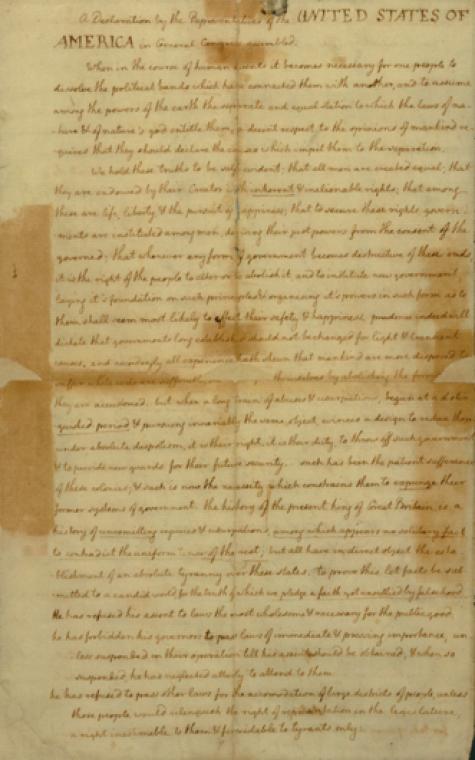
It’s never really the Fourth of July in New York without seeing Tom J’s annotated copy of his Declaration of Independence that’s usually shown this time of year at the New York Public Library.

Because Tom’s two-page handwritten draft was diplayed all year in NYPL’s 100th anniversary exhibition, the Library has decided that “It will be given a rest of a few years…” Even though you’re not able to visit Tom’s Declaration in person, the library’s digital team has made it available on line, along with a number of its other revolutionary treasures. Check out:

Ben Franklin’s June 21, 1776 note to General Washington (written while Tom was toiling away in the Philadelphia’s sweltering summer heat) that “a Declaration of Independence is preparing”.

Tom’s original draft of the Declaration with his paragraph objecting to the slave trade, which Congress forced him to edit out. (Check out this blog posting at NYPL and click on the images for a larger view.)

Tom’s clean draft that became official.

Also check out the first news report on the Declaration in The Pennsylvania Evening Post (dated July 6, 1776), telling everyone that something was up, followed by the classifieds on page 2.